Walls and Fortifications of Medieval Riga
Walls and Fortifications of Medieval Riga
The first German settlement in Riga was protected by a ditch, earthen rampart, and wooden palisades. In 1207 construction began on a stone defensive wall, which by the 13th century enclosed the entire town. The wall originally stretched about 2.2 km, with a height of roughly 3.5 m.
During the 14th and 15th centuries it was raised to 11–13 m, and an internal arcade about 3 m thick was added to support ramparts and walkways. Between 25 and 29 towers were built along the circuit, initially rectangular, later semi-circular or round. With the spread of firearms, Riga developed a new system of earthwork fortifications; the first ramparts are mentioned in 1422, and a more systematic programme began in 1537.
The first German settlement in Riga was protected by a ditch, earthen rampart, and wooden palisades. In 1207 construction began on a stone defensive wall, which by the 13th century enclosed the entire town. The wall originally stretched about 2.2 km, with a height of roughly 3.5 m.
During the 14th and 15th centuries it was raised to 11–13 m, and an internal arcade about 3 m thick was added to support ramparts and walkways. Between 25 and 29 towers were built along the circuit, initially rectangular, later semi-circular or round. With the spread of firearms, Riga developed a new system of earthwork fortifications; the first ramparts are mentioned in 1422, and a more systematic programme began in 1537.
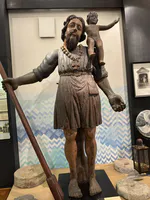
St Christopher
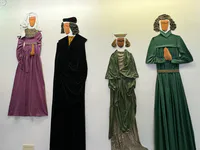
Urban Elite Attire from Medieval Riga
From Manufactories to Mechanised Industry in Riga
Manufacturing and Early Industry in Riga
In the second half of the 18th century, manufactories became increasingly important in Riga. They were usually located in the suburbs, and their owners were mainly merchants who possessed the capital needed to buy raw materials and pay wages. Manufactories developed in sectors not monopolised by the guilds: woodworking and metalworking, and the production of paper, sugar, textiles, bricks and ceramics.
In the 1820s steam engines began to be used, and in the 1830s, first in the textile industry and then in other sectors, production shifted to mechanised factories. Most raw materials and fuel were imported from abroad. The workforce in the manufactories consisted largely of Russian serfs, supervised by skilled German and English masters.
In the second half of the 18th century, manufactories became increasingly important in Riga. They were usually located in the suburbs, and their owners were mainly merchants who possessed the capital needed to buy raw materials and pay wages. Manufactories developed in sectors not monopolised by the guilds: woodworking and metalworking, and the production of paper, sugar, textiles, bricks and ceramics.
In the 1820s steam engines began to be used, and in the 1830s, first in the textile industry and then in other sectors, production shifted to mechanised factories. Most raw materials and fuel were imported from abroad. The workforce in the manufactories consisted largely of Russian serfs, supervised by skilled German and English masters.
From Manufactories to Mechanized Factories in Riga
From Manufactories to Factories
In the second half of the 18th c. manufactories became increasingly important in Riga. Located mainly in the suburbs, they were usually owned by merchants who had capital to buy raw materials and pay workers. These enterprises developed in sectors not monopolized by guilds: woodworking, metalworking, and the production of paper, sugar, textiles, bricks, and ceramics.
In the 1820s steam engines began to be used, and in the 1830s, first in the textile industry and then in other branches, manufactories moved toward mechanized factory production. Most raw materials and fuel were imported. The workforce consisted largely of Russian serfs, supervised by skilled German and English masters.
In the second half of the 18th c. manufactories became increasingly important in Riga. Located mainly in the suburbs, they were usually owned by merchants who had capital to buy raw materials and pay workers. These enterprises developed in sectors not monopolized by guilds: woodworking, metalworking, and the production of paper, sugar, textiles, bricks, and ceramics.
In the 1820s steam engines began to be used, and in the 1830s, first in the textile industry and then in other branches, manufactories moved toward mechanized factory production. Most raw materials and fuel were imported. The workforce consisted largely of Russian serfs, supervised by skilled German and English masters.
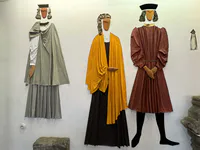
Medieval Clothing of Riga's Elite
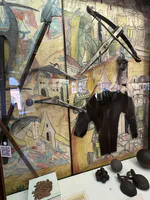
Livonian Weapons and Defense Tools
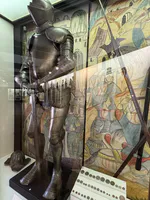
Knight’s Armor and Weapons
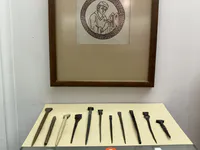
Medieval Styli for Wax Tablets
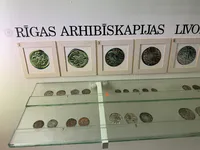
Coins of the Archbishopric of Riga
The Great Guild of St Mary and Riga’s Merchant Elite
The Great Guild of St Mary
In 1354 Riga’s German merchants formed the Guild of St Mary, or Great Guild. Its members controlled the so-called “guest trade,” the intermediary commerce between Russian and Western European merchants, and profits from this brokerage became their main source of wealth. Goldsmiths and the so-called literati—lawyers and theologians—could join as equal members. By the mid-16th c. up to 200 burgher families belonged to the Great Guild.
In 1354 Riga’s German merchants formed the Guild of St Mary, or Great Guild. Its members controlled the so-called “guest trade,” the intermediary commerce between Russian and Western European merchants, and profits from this brokerage became their main source of wealth. Goldsmiths and the so-called literati—lawyers and theologians—could join as equal members. By the mid-16th c. up to 200 burgher families belonged to the Great Guild.
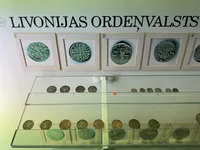
Livonian Order Coins
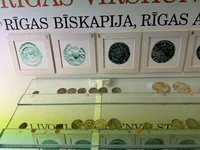
Coins of Riga Archbishopric and Livonian Order
Weights and Measures in Riga’s Trading Life
Weights and Measures in Riga
Under the terms of the capitulation of 1710, Riga retained autonomy over its system of measures. In accordance with long-standing trading traditions, all goods had to be weighed at designated municipal weighing stations, where sworn weighmasters appointed by the magistrate carried out the work. In the City Weigh House, the official Riga standards of measurement were kept, and merchants’ measures were periodically checked against these.
The law of 1842 introduced a unified system of Russian measures across the entire territory of the Russian Empire, to be implemented from 1845, and this system was also adopted in Riga.
Under the terms of the capitulation of 1710, Riga retained autonomy over its system of measures. In accordance with long-standing trading traditions, all goods had to be weighed at designated municipal weighing stations, where sworn weighmasters appointed by the magistrate carried out the work. In the City Weigh House, the official Riga standards of measurement were kept, and merchants’ measures were periodically checked against these.
The law of 1842 introduced a unified system of Russian measures across the entire territory of the Russian Empire, to be implemented from 1845, and this system was also adopted in Riga.
The Livonian War and Riga’s Shifting Political Fate
The Livonian War and Riga
The Livonian War (1558–1583) reshaped Riga’s political future. Russia, Sweden, Lithuania, and Poland fought for dominance over the Baltic, with Russia seeking direct access to the sea for trade with Europe. Russian forces destroyed Livonian political structures, including the Livonian Order and the archbishopric of Riga. In 1561 the last grand master, Gotthard Kettler, became duke of Courland and Semigallia and a vassal of the Polish-Lithuanian king.
Weakened by war, Russia later lost its gains and, in 1582–1583, signed peace treaties with the Polish-Lithuanian Commonwealth and Sweden. Livonian lands were divided among Poland-Lithuania, Sweden, and Denmark. Riga itself suffered little direct destruction, although Russian armies approached the city several times. From 1561 Riga was effectively an independent city for about twenty years, only submitting to Polish king Stefan Batory in 1581.
The Livonian War (1558–1583) reshaped Riga’s political future. Russia, Sweden, Lithuania, and Poland fought for dominance over the Baltic, with Russia seeking direct access to the sea for trade with Europe. Russian forces destroyed Livonian political structures, including the Livonian Order and the archbishopric of Riga. In 1561 the last grand master, Gotthard Kettler, became duke of Courland and Semigallia and a vassal of the Polish-Lithuanian king.
Weakened by war, Russia later lost its gains and, in 1582–1583, signed peace treaties with the Polish-Lithuanian Commonwealth and Sweden. Livonian lands were divided among Poland-Lithuania, Sweden, and Denmark. Riga itself suffered little direct destruction, although Russian armies approached the city several times. From 1561 Riga was effectively an independent city for about twenty years, only submitting to Polish king Stefan Batory in 1581.
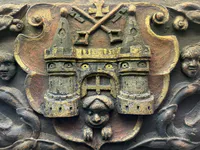
Coat of Arms of Riga
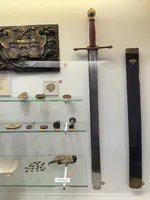
Executioner’s Sword and Scabbard
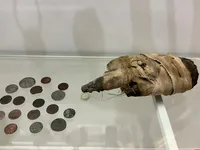
Severed Hand and Counterfeit Coins Exhibit
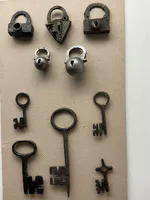
Medieval Riga Locks and Keys
Big Christopher and the Legend of Riga’s Foundation
Big Christopher and the Legend of Riga’s Foundation
The figure of St Christopher (Krištop / Kristaps), the Christ-bearer, was revered in Livonia from the 15th century as protector against dangers of water, patron of travellers, and later of water-related crafts and porters. In medieval Riga, Latvian transport workers chose St Christopher as their patron, and his feast day on 25 June was widely celebrated.
According to legend, a giant once lived near the stream Rīdzene, carrying people across where there was no bridge. One night he heard a child crying for help, carried him over the river and gave him shelter. In the morning the child had vanished, leaving behind a pile of pure gold. When the giant died, this treasure was used to build Riga, and a sculpture of the giant with the child was placed near his cave in eternal memory. The famous statue of “Big Christopher” preserves this legend as part of Riga’s origin story.
The figure of St Christopher (Krištop / Kristaps), the Christ-bearer, was revered in Livonia from the 15th century as protector against dangers of water, patron of travellers, and later of water-related crafts and porters. In medieval Riga, Latvian transport workers chose St Christopher as their patron, and his feast day on 25 June was widely celebrated.
According to legend, a giant once lived near the stream Rīdzene, carrying people across where there was no bridge. One night he heard a child crying for help, carried him over the river and gave him shelter. In the morning the child had vanished, leaving behind a pile of pure gold. When the giant died, this treasure was used to build Riga, and a sculpture of the giant with the child was placed near his cave in eternal memory. The famous statue of “Big Christopher” preserves this legend as part of Riga’s origin story.
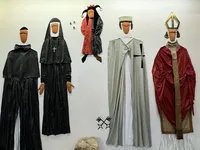
Clergy and Orders of Riga in Late Middle Ages
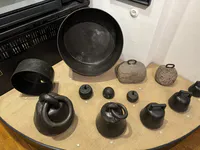
Weights and Trade Crafts in Medieval Riga
Christianization and Conquest: The Making of Medieval Riga
Christianization of Livonia
In the second half of the 12th century, missionaries of the Western Church arrived in the lower Daugava alongside German traders. In 1186 the Archbishop of Bremen appointed Meinhard, an Augustinian missionary, as bishop of Livonia, establishing his see at Ikšķile. This marked the beginning of a new era for the peoples of the eastern Baltic, drawing them into the orbit of the Western Church and European culture.
Christianization, however, went hand in hand with crusade and conquest. The campaigns that followed—organised by Meinhard’s successors Berthold and Albert—brought not only new religious structures but also violent subjugation of the region’s indigenous inhabitants under foreign rule.
The Diocese and Archbishopric of Riga
After Bishop Berthold was killed near Riga around 1196–1198, Albert of Buxhövden became bishop at Ikšķile. According to Henry of Latvia’s chronicle, the construction of the new town of Riga began in summer 1201. In 1202 Albert transferred the episcopal residence there, accelerating the town’s growth into a major settlement.
Over the 13th century Riga evolved into a fully fledged European medieval city, home to several monastic houses whose orders oversaw missionary work and charitable institutions. In recognition of his role, Albert received Livonian lands as a fief from King Philip, becoming a prince of the Holy Roman Empire in 1207. The Diocese of Riga (raised to an archbishopric in 1255) encompassed portions of Liv and Latgalian territories, which Albert and his successors governed jointly with the cathedral chapter.
In 1211 Albert laid the foundation stone of the new Cathedral of St Mary, the Riga Dom. Initially planned as a Romanesque basilica, it was later reworked into one of the Baltic region’s most important Gothic sacred buildings. The cathedral, the chapter hall, and the monastic quarters formed a single complex connected by a cloister arcade. The inner courtyard, known as the “Green Cemetery,” served as a burial ground.
Swordbrothers and the Livonian Order
When missionary efforts met resistance, crusading warfare intensified. The crusaders’ military arm was the Order of the Swordbrothers (the “Brotherhood of the Knights of Christ”), founded in 1202 by the abbot of the Cistercian monastery at Daugavgrīva. The order’s headquarters were in Riga, and it fought to subdue and convert the local populations.
In 1236 the order—formally subordinate to the bishop of Riga—suffered a devastating defeat at the Battle of Saule. Its remnants were incorporated into the Teutonic Order in 1237, forming the Livonian branch known as the Livonian Order. This new order continued to play a central political and military role in the region.
In the second half of the 12th century, missionaries of the Western Church arrived in the lower Daugava alongside German traders. In 1186 the Archbishop of Bremen appointed Meinhard, an Augustinian missionary, as bishop of Livonia, establishing his see at Ikšķile. This marked the beginning of a new era for the peoples of the eastern Baltic, drawing them into the orbit of the Western Church and European culture.
Christianization, however, went hand in hand with crusade and conquest. The campaigns that followed—organised by Meinhard’s successors Berthold and Albert—brought not only new religious structures but also violent subjugation of the region’s indigenous inhabitants under foreign rule.
The Diocese and Archbishopric of Riga
After Bishop Berthold was killed near Riga around 1196–1198, Albert of Buxhövden became bishop at Ikšķile. According to Henry of Latvia’s chronicle, the construction of the new town of Riga began in summer 1201. In 1202 Albert transferred the episcopal residence there, accelerating the town’s growth into a major settlement.
Over the 13th century Riga evolved into a fully fledged European medieval city, home to several monastic houses whose orders oversaw missionary work and charitable institutions. In recognition of his role, Albert received Livonian lands as a fief from King Philip, becoming a prince of the Holy Roman Empire in 1207. The Diocese of Riga (raised to an archbishopric in 1255) encompassed portions of Liv and Latgalian territories, which Albert and his successors governed jointly with the cathedral chapter.
In 1211 Albert laid the foundation stone of the new Cathedral of St Mary, the Riga Dom. Initially planned as a Romanesque basilica, it was later reworked into one of the Baltic region’s most important Gothic sacred buildings. The cathedral, the chapter hall, and the monastic quarters formed a single complex connected by a cloister arcade. The inner courtyard, known as the “Green Cemetery,” served as a burial ground.
Swordbrothers and the Livonian Order
When missionary efforts met resistance, crusading warfare intensified. The crusaders’ military arm was the Order of the Swordbrothers (the “Brotherhood of the Knights of Christ”), founded in 1202 by the abbot of the Cistercian monastery at Daugavgrīva. The order’s headquarters were in Riga, and it fought to subdue and convert the local populations.
In 1236 the order—formally subordinate to the bishop of Riga—suffered a devastating defeat at the Battle of Saule. Its remnants were incorporated into the Teutonic Order in 1237, forming the Livonian branch known as the Livonian Order. This new order continued to play a central political and military role in the region.
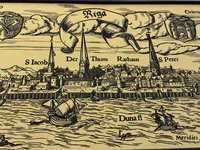
Riga in the 16th c.
Clothing, Status, and the Law Against Luxury in Riga
Clothing, Status, and Sumptuary Laws
In the 18th century, clothing and lifestyle in Riga were regulated by a “Law Against Luxury”, which applied mainly to Latvians living in the city. As some Latvians became wealthier, they began to fight for the right to dress and live on an equal footing with Germans. Members of the higher estates in Riga adopted the fashions of Western Europe. Fashionable garments made from inexpensive fabrics were soon being worn by less affluent burghers as well.
Foreigners living in Riga—both from other countries and from the interior provinces of the Russian Empire—preserved the distinctive character of their traditional dress.
In the 18th century, clothing and lifestyle in Riga were regulated by a “Law Against Luxury”, which applied mainly to Latvians living in the city. As some Latvians became wealthier, they began to fight for the right to dress and live on an equal footing with Germans. Members of the higher estates in Riga adopted the fashions of Western Europe. Fashionable garments made from inexpensive fabrics were soon being worn by less affluent burghers as well.
Foreigners living in Riga—both from other countries and from the interior provinces of the Russian Empire—preserved the distinctive character of their traditional dress.

Emblem of the Great Guild
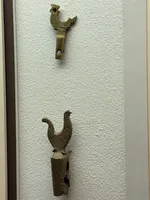
Rooster-Shaped Wine Tap Keys
The Miracle Tale of Riga’s First City Christmas Tree
The Miracle Tale of the Christmas Tree
In 1510 the Brotherhood of Blackheads, a powerful association of young merchants and ship captains, played a major role in Riga’s public life, sponsoring festivities and supporting churches and the city. On the eve of the winter solstice they decided to cut down the largest spruce they could find, intending to burn it by the Daugava as part of the traditional log-burning celebrations.
The tree turned out so tall that burning it in town seemed dangerous. While the brothers debated, local children discovered the tree on the riverbank and began to decorate it with nuts, apples, woollen threads pulled from their mittens, and garlands of dried flowers and berries. The more they decorated, the more materials seemed to appear “as if by magic”. By nightfall the frost had covered the ornaments, and the tree sparkled in the moonlight.
Impressed by the sight, one merchant suggested erecting the tree in the centre of the marketplace for everyone’s joy as a “Christmas tree – a gift by which we should delight one another every Christmas”. Thus, according to Riga’s tradition, the first city Christmas tree was born.
In 1510 the Brotherhood of Blackheads, a powerful association of young merchants and ship captains, played a major role in Riga’s public life, sponsoring festivities and supporting churches and the city. On the eve of the winter solstice they decided to cut down the largest spruce they could find, intending to burn it by the Daugava as part of the traditional log-burning celebrations.
The tree turned out so tall that burning it in town seemed dangerous. While the brothers debated, local children discovered the tree on the riverbank and began to decorate it with nuts, apples, woollen threads pulled from their mittens, and garlands of dried flowers and berries. The more they decorated, the more materials seemed to appear “as if by magic”. By nightfall the frost had covered the ornaments, and the tree sparkled in the moonlight.
Impressed by the sight, one merchant suggested erecting the tree in the centre of the marketplace for everyone’s joy as a “Christmas tree – a gift by which we should delight one another every Christmas”. Thus, according to Riga’s tradition, the first city Christmas tree was born.
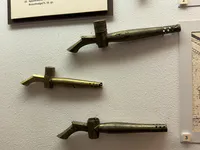
Brass Wine Taps
From Pagan Settlements to the Rise of Medieval Riga
From Pagan Settlements to Medieval Riga
On the site of today’s Old Town of Riga (Vecrīga), two settlements existed in the 12th century: one at the mouth of the River Rīga by a natural harbour, the other on the bank of the Daugava. Each consisted of small farmsteads enclosed by palisades, with wooden walkways for streets and yards. Houses were heated by clay or stone stoves and hearths, and nearby burial grounds mark the earliest communities.
In the late 12th c., German merchants, missionaries and crusaders began to appear in the lower Daugava region. In 1186 the Archbishop of Bremen appointed Meinhard, an Augustinian missionary, as bishop of Livonia, based in Ikšķile. This marked a new era for the peoples of the eastern Baltic: they were drawn into the orbit of the Western Church and Latin European culture, but also subjected to crusading warfare and violent subjugation by foreign rulers.
After Bishop Berthold’s death in battle near Riga (1196–1198), Albert of Buxhövden became bishop in Ikšķile. According to Henry of Latvia’s chronicle, in the summer of 1201 construction began on the new town of Riga, and in 1202 Albert moved his episcopal seat there. The city flourished rapidly into a major medieval centre. In the 13th century several monasteries of religious orders were founded, active in missionary, pastoral and charitable work. In return for his services, Albert received Livonian lands as a fief from King Philip and in 1207 became a prince-elector of the Holy Roman Empire. The Diocese of Riga (elevated to an archbishopric in 1255) controlled parts of Liv and Latgalian territories, administered jointly by bishop and cathedral chapter.
In 1211 Albert laid the foundation stone of the new Cathedral of St Mary, Riga’s Dom Cathedral. Initially conceived as a Romanesque basilica, it was later modified and completed as one of the most important Gothic churches in the Baltic. Together with the chapter hall and monastic buildings, linked by a cloister arcade, it formed a unified architectural ensemble. The inner courtyard, known as the “Green Cemetery,” served as a burial ground, anchoring the new Christian city in both sacred space and memory.
On the site of today’s Old Town of Riga (Vecrīga), two settlements existed in the 12th century: one at the mouth of the River Rīga by a natural harbour, the other on the bank of the Daugava. Each consisted of small farmsteads enclosed by palisades, with wooden walkways for streets and yards. Houses were heated by clay or stone stoves and hearths, and nearby burial grounds mark the earliest communities.
In the late 12th c., German merchants, missionaries and crusaders began to appear in the lower Daugava region. In 1186 the Archbishop of Bremen appointed Meinhard, an Augustinian missionary, as bishop of Livonia, based in Ikšķile. This marked a new era for the peoples of the eastern Baltic: they were drawn into the orbit of the Western Church and Latin European culture, but also subjected to crusading warfare and violent subjugation by foreign rulers.
After Bishop Berthold’s death in battle near Riga (1196–1198), Albert of Buxhövden became bishop in Ikšķile. According to Henry of Latvia’s chronicle, in the summer of 1201 construction began on the new town of Riga, and in 1202 Albert moved his episcopal seat there. The city flourished rapidly into a major medieval centre. In the 13th century several monasteries of religious orders were founded, active in missionary, pastoral and charitable work. In return for his services, Albert received Livonian lands as a fief from King Philip and in 1207 became a prince-elector of the Holy Roman Empire. The Diocese of Riga (elevated to an archbishopric in 1255) controlled parts of Liv and Latgalian territories, administered jointly by bishop and cathedral chapter.
In 1211 Albert laid the foundation stone of the new Cathedral of St Mary, Riga’s Dom Cathedral. Initially conceived as a Romanesque basilica, it was later modified and completed as one of the most important Gothic churches in the Baltic. Together with the chapter hall and monastic buildings, linked by a cloister arcade, it formed a unified architectural ensemble. The inner courtyard, known as the “Green Cemetery,” served as a burial ground, anchoring the new Christian city in both sacred space and memory.
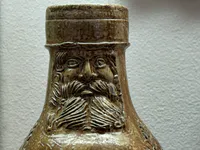
Bearded Man Rhenish Stoneware Jug
Libraries, Education and Printing in Early Modern Riga
Libraries, Education and Printing in Early Modern Riga
Riga’s city library was founded in 1524 after the Reformation, when the magistrate took over the property of dissolved monasteries, including their book collections. From 1553 to 1891 it operated in a specially adapted wing of the Dom Cathedral monastery, preserving early printed books and donated collections that document the growth of urban learning.
From the late 16th to early 17th century, economic expansion and closer ties with Western Europe gradually shifted Riga’s culture from purely religious themes to a more secular outlook. New schools, including Latvian-language schools, were founded; social stratification became more visible in daily life; and the growing demand for educated citizens led to a multi-layered school system. Besides municipal schools under magistrate control, numerous private schools opened, and by the late 17th century a collegiate school board oversaw education.
Printing followed the same trajectory. In 1588 Nicolaus Mollin founded the first Riga press under magistrate authority, serving the entire Baltic region. A second, private printing house operated from 1675 under J. G. Wilcken. Over the 17th century, Latin publications were joined by more books in German and Latvian. Many German works were intended for pastors who did not speak Latvian, while Latvian-language books were mainly religious texts and primers.
Riga’s city library was founded in 1524 after the Reformation, when the magistrate took over the property of dissolved monasteries, including their book collections. From 1553 to 1891 it operated in a specially adapted wing of the Dom Cathedral monastery, preserving early printed books and donated collections that document the growth of urban learning.
From the late 16th to early 17th century, economic expansion and closer ties with Western Europe gradually shifted Riga’s culture from purely religious themes to a more secular outlook. New schools, including Latvian-language schools, were founded; social stratification became more visible in daily life; and the growing demand for educated citizens led to a multi-layered school system. Besides municipal schools under magistrate control, numerous private schools opened, and by the late 17th century a collegiate school board oversaw education.
Printing followed the same trajectory. In 1588 Nicolaus Mollin founded the first Riga press under magistrate authority, serving the entire Baltic region. A second, private printing house operated from 1675 under J. G. Wilcken. Over the 17th century, Latin publications were joined by more books in German and Latvian. Many German works were intended for pastors who did not speak Latvian, while Latvian-language books were mainly religious texts and primers.
Riga’s Two-Century Struggle with Its Overlords
Riga’s Struggle with Its Overlords
Supreme rulers not only limited Riga’s political autonomy but also curtailed its economic interests, especially the powerful Livonian Order, which posed the greatest threat. Conflicts between Riga and the order began in the 1260s and escalated into war from 1297 to 1330, ending in the citizens’ defeat and Riga’s subordination as an order city.
Riga’s archbishops alternately supported the city or the order, depending on circumstances. In 1452 the disadvantageous Salaspils treaty established joint rule by the archbishop and the Livonian Order, though the archbishop renounced his claims in 1474. In the 1480s clashes resumed; after initial victories, Riga suffered a crushing defeat in 1491 and was forced to sign the Valmiera agreement, effectively restoring dual rule. This two-century struggle for supremacy, and the overlords’ right to mint coins, is reflected in Riga’s monetary system: during periods of dual power, the order and the archbishop issued money jointly.
Supreme rulers not only limited Riga’s political autonomy but also curtailed its economic interests, especially the powerful Livonian Order, which posed the greatest threat. Conflicts between Riga and the order began in the 1260s and escalated into war from 1297 to 1330, ending in the citizens’ defeat and Riga’s subordination as an order city.
Riga’s archbishops alternately supported the city or the order, depending on circumstances. In 1452 the disadvantageous Salaspils treaty established joint rule by the archbishop and the Livonian Order, though the archbishop renounced his claims in 1474. In the 1480s clashes resumed; after initial victories, Riga suffered a crushing defeat in 1491 and was forced to sign the Valmiera agreement, effectively restoring dual rule. This two-century struggle for supremacy, and the overlords’ right to mint coins, is reflected in Riga’s monetary system: during periods of dual power, the order and the archbishop issued money jointly.
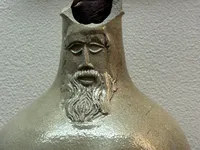
Rhenish Bearded Man Jug
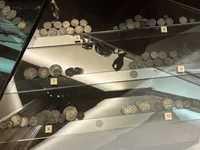
Medieval Currency in the Hanseatic League
The Livonian War and Riga’s Changing Political Fate
The Livonian War (1558–1583)
The Livonian War fundamentally altered Riga’s political future. Competing for control of the Baltic Sea, Russia, Sweden, Lithuania and Poland sought dominance over Livonia’s trade routes. Russia’s main goal was secure access to the Baltic and free commerce with Western Europe.
Russian forces destroyed the Livonian political order, including the Livonian Order and the power of the Riga archbishop. In 1561 the last grand master, Gotthard Kettler, became Duke of Courland and Semigallia and vassal of the Polish-Lithuanian king. Exhausted, Russia lost most of its gains and concluded peace with Poland–Lithuania (1582) and Sweden (1583), after which Livonian lands were divided among these powers and Denmark.
Riga itself suffered relatively little direct destruction, though Russian armies often approached the city. From 1561 Riga was de facto an independent city for about twenty years, but in 1581 it was forced to submit to the Polish king Stephen Báthory.
The Livonian War fundamentally altered Riga’s political future. Competing for control of the Baltic Sea, Russia, Sweden, Lithuania and Poland sought dominance over Livonia’s trade routes. Russia’s main goal was secure access to the Baltic and free commerce with Western Europe.
Russian forces destroyed the Livonian political order, including the Livonian Order and the power of the Riga archbishop. In 1561 the last grand master, Gotthard Kettler, became Duke of Courland and Semigallia and vassal of the Polish-Lithuanian king. Exhausted, Russia lost most of its gains and concluded peace with Poland–Lithuania (1582) and Sweden (1583), after which Livonian lands were divided among these powers and Denmark.
Riga itself suffered relatively little direct destruction, though Russian armies often approached the city. From 1561 Riga was de facto an independent city for about twenty years, but in 1581 it was forced to submit to the Polish king Stephen Báthory.
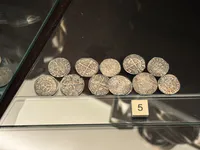
Hanseatic Coins
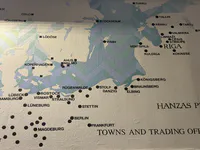
Hanseatic League Towns and Trading Offices
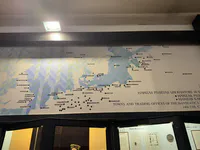
Map of the Hanseatic League Network
Riga and the Hanseatic Trade Networks
Riga and Hanseatic Trade
Trade formed the economic backbone of medieval Riga. By the late 13th century the city’s favourable position on the Daugava made it one of the principal commercial centres on the Baltic. Goods from Russian and Lithuanian lands converged here for exchange with Western and Eastern Europe.
From the east, merchants brought wax, furs, flax, and hemp; from the west came textiles, salt, herring, wine, silver, and other manufactured goods. In 1282 Riga concluded a confederation with Lübeck and Visby and entered the Hanseatic League, the powerful association of north German trading cities. From the later 14th century, Livonian Hanseatic towns formed the so-called “Livonian Third,” and Riga oversaw the Hanseatic trading office in Polotsk during the 14th–15th centuries.
Trade formed the economic backbone of medieval Riga. By the late 13th century the city’s favourable position on the Daugava made it one of the principal commercial centres on the Baltic. Goods from Russian and Lithuanian lands converged here for exchange with Western and Eastern Europe.
From the east, merchants brought wax, furs, flax, and hemp; from the west came textiles, salt, herring, wine, silver, and other manufactured goods. In 1282 Riga concluded a confederation with Lübeck and Visby and entered the Hanseatic League, the powerful association of north German trading cities. From the later 14th century, Livonian Hanseatic towns formed the so-called “Livonian Third,” and Riga oversaw the Hanseatic trading office in Polotsk during the 14th–15th centuries.
Riga’s 18th-Century Urban Growth and Fortifications
Urban Development and Fortifications
In the 18th century, the fortification system created by the Swedes continued to be improved. According to the Riga development plan of 1769, an open esplanade free of buildings was created around the city enclosed by ramparts, and Kubes Hill was levelled. In the second half of the 18th century there were attempts to modernise Riga by creating a unified urban ensemble of buildings with public squares and planted areas, and by introducing new urban planning regulations.
The suburbs grew rapidly. By the end of the 18th century their area far exceeded that of the inner city confined by ramparts, whose possibilities for new construction had been exhausted. As the city expanded, it became necessary to improve transport connections, upgrade the streets, lay pavements and install better infrastructure.
In the 18th century, the fortification system created by the Swedes continued to be improved. According to the Riga development plan of 1769, an open esplanade free of buildings was created around the city enclosed by ramparts, and Kubes Hill was levelled. In the second half of the 18th century there were attempts to modernise Riga by creating a unified urban ensemble of buildings with public squares and planted areas, and by introducing new urban planning regulations.
The suburbs grew rapidly. By the end of the 18th century their area far exceeded that of the inner city confined by ramparts, whose possibilities for new construction had been exhausted. As the city expanded, it became necessary to improve transport connections, upgrade the streets, lay pavements and install better infrastructure.
The Miraculous Tale of Riga’s First Christmas Tree
The Miraculous Tale of the Christmas Tree
In 1510 the Brotherhood of Blackheads, uniting young merchants and ship captains, played a major role in Riga’s public life through donations and festivities. Before the winter solstice, they decided to cut the largest fir they could find to burn on the Daugava shore, extending the usual custom of burning a wooden log. The chosen tree was so huge that, once brought to the city, they hesitated to burn it near houses and postponed their decision.
Children from the neighborhood discovered the fir by the river, marveled at it, and began decorating its branches with nuts, apples, colored woolen threads, and garlands of dried flowers and berries. The materials seemed to replenish themselves as they worked. By nightfall the tree was covered with frost and shimmered in the moonlight. A merchant, struck by its beauty, proposed that it become a Christmas tree in the center of the city. Townspeople brought it to the main market square, added ribbons, toys, and ornaments, and the tree itself became a celebration. The story spread quickly, and the decorated tree was proclaimed a Christmas gift that should delight the city every year—a tradition preserved to this day.
In 1510 the Brotherhood of Blackheads, uniting young merchants and ship captains, played a major role in Riga’s public life through donations and festivities. Before the winter solstice, they decided to cut the largest fir they could find to burn on the Daugava shore, extending the usual custom of burning a wooden log. The chosen tree was so huge that, once brought to the city, they hesitated to burn it near houses and postponed their decision.
Children from the neighborhood discovered the fir by the river, marveled at it, and began decorating its branches with nuts, apples, colored woolen threads, and garlands of dried flowers and berries. The materials seemed to replenish themselves as they worked. By nightfall the tree was covered with frost and shimmered in the moonlight. A merchant, struck by its beauty, proposed that it become a Christmas tree in the center of the city. Townspeople brought it to the main market square, added ribbons, toys, and ornaments, and the tree itself became a celebration. The story spread quickly, and the decorated tree was proclaimed a Christmas gift that should delight the city every year—a tradition preserved to this day.
City Government and Self-Rule in Medieval Riga
City Government in Medieval Riga
In 1201 Riga became the bishop’s residence, and the bishop (from 1255, the archbishop) was the city’s supreme ruler. The Sword-Brothers, and from the late 13th c. the Livonian Order, also fought for control. A vogt or judge appointed by the bishop represented these rulers, and legal relations were governed by the so-called Wisby–Riga city law.
After an uprising in 1221, townspeople partially freed themselves from feudal overlordship. The general assembly of citizens gained decisive importance and elected the town council (rat), originally 12 and later 20 ratmen. Four burgomasters headed the council, one serving as chief burgomaster. From the late 13th c., when the rat began choosing its own members from among major merchants, the general assembly lost its role. The rat became the highest self-government body, the supreme court, the tax authority, and the command of the city’s armed forces.
In 1201 Riga became the bishop’s residence, and the bishop (from 1255, the archbishop) was the city’s supreme ruler. The Sword-Brothers, and from the late 13th c. the Livonian Order, also fought for control. A vogt or judge appointed by the bishop represented these rulers, and legal relations were governed by the so-called Wisby–Riga city law.
After an uprising in 1221, townspeople partially freed themselves from feudal overlordship. The general assembly of citizens gained decisive importance and elected the town council (rat), originally 12 and later 20 ratmen. Four burgomasters headed the council, one serving as chief burgomaster. From the late 13th c., when the rat began choosing its own members from among major merchants, the general assembly lost its role. The rat became the highest self-government body, the supreme court, the tax authority, and the command of the city’s armed forces.
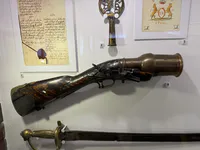
Cat Head Hand Mortar with Flintlock Mechanism
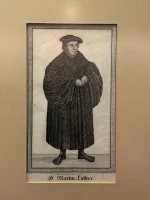
Engraving of Martin Luther
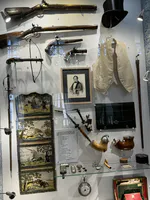
Gentleman’s Hunting Set
The Sword-Brothers and the Rise of the Livonian Order
The Sword-Brothers and the Livonian Order
At the end of the 12th c., failed missionary work in the Baltic led to a crusade organized by Meinhard’s successors Berthold and Albert. It was supported by the Order of the Sword-Brothers (the Brotherhood of the Knights of Christ), founded in 1202 by the abbot of Daugavgrīva Cistercian monastery, Theodoric. The master’s residence was in Riga. In 1236 the order, nominally subject to the Riga archbishop, was defeated at the Battle of Saule. Its remnants were joined to the Teutonic Order in 1237, and the eastern Baltic branch became known as the Livonian Order.
At the end of the 12th c., failed missionary work in the Baltic led to a crusade organized by Meinhard’s successors Berthold and Albert. It was supported by the Order of the Sword-Brothers (the Brotherhood of the Knights of Christ), founded in 1202 by the abbot of Daugavgrīva Cistercian monastery, Theodoric. The master’s residence was in Riga. In 1236 the order, nominally subject to the Riga archbishop, was defeated at the Battle of Saule. Its remnants were joined to the Teutonic Order in 1237, and the eastern Baltic branch became known as the Livonian Order.
Riga’s Enlightenment-Era Culture and Public Life
Culture and Public Life
From the second half of the 18th century onward, Riga gradually became a centre of vibrant cultural and public life, encouraged by the spread of Enlightenment ideas. The city’s location on the postal route between Riga and St Petersburg helped attract famous foreign performers. A permanent theatre troupe was based here, and a newly built permanent theatre staged works from the contemporary European repertoire.
Organ music was especially popular, and secular concerts were increasingly held in churches. A symphony orchestra was founded. Riga’s residents formed private musical ensembles and collected artworks. In the first half of the 19th century local artists began to organise exhibitions; among them were well-known portraitists, landscape painters and genre artists. Nevertheless, theatre, music and the fine arts remained accessible mainly to a narrow circle of intellectuals and the upper classes, while travelling circuses and various comic shows continued to enjoy wide popularity among ordinary townspeople.
From the second half of the 18th century onward, Riga gradually became a centre of vibrant cultural and public life, encouraged by the spread of Enlightenment ideas. The city’s location on the postal route between Riga and St Petersburg helped attract famous foreign performers. A permanent theatre troupe was based here, and a newly built permanent theatre staged works from the contemporary European repertoire.
Organ music was especially popular, and secular concerts were increasingly held in churches. A symphony orchestra was founded. Riga’s residents formed private musical ensembles and collected artworks. In the first half of the 19th century local artists began to organise exhibitions; among them were well-known portraitists, landscape painters and genre artists. Nevertheless, theatre, music and the fine arts remained accessible mainly to a narrow circle of intellectuals and the upper classes, while travelling circuses and various comic shows continued to enjoy wide popularity among ordinary townspeople.
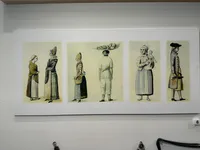
Riga's Social Diversity Through Dress
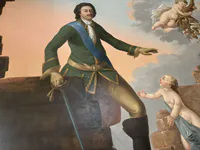
Tsar Peter I
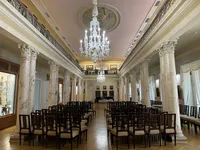
Column Hall
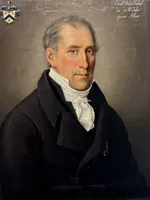
Ernst Anton Truhart
Urban Growth, Population Change, and Social Hierarchy
Urban Growth, Population, and Social Hierarchy
In the 18th c. Riga’s Swedish-era fortifications were further improved. According to the 1769 development plan, an open esplanade belt around the walled city was created and Kubes Hill was leveled. From the later 18th c. urban planners sought to modernize Riga with coherent ensembles of buildings, public squares, and planted areas, guided by new planning norms. Suburbs expanded rapidly; by the end of the century their area far exceeded the walled inner city, whose building capacity was exhausted. As the city grew, improving transport, upgrading streets, and laying pavements became urgent needs.
War and the Great Plague had killed around 94% of Riga’s inhabitants and nearby residents, but in the second half of the 18th c. the city recovered and entered a period of rapid growth. Around 1767 about 19,000 people lived in the city and suburbs; by 1860 about 65,000 residents, or around 74,000 including military personnel. Until the late 18th c. only members of the magistrate and the Great and Small Guilds, united as the community of burghers, were considered full citizens. After the 1785 urban statute and the introduction of a poll tax in the Baltic provinces, a wider urban community emerged, including all registered residents. In the first half of the 19th c. city dwellers were divided into six estates: honorary citizens, guild merchants, “literati” (professionals), townsmen, guild craftsmen, and free people, servants, and workers; nobles and clergy also lived in Riga.
A “regulation against luxury” in the 18th c. governed dress and lifestyle, especially for Latvians living in the city. The wealthiest among them began to demand the right to dress and live on equal terms with Germans. Members of the upper urban strata followed European fashion, while less affluent burghers ordered stylish garments from cheaper fabrics. Migrants from other countries and inner Russian provinces tended to preserve their traditional clothing.
In the 18th c. Riga’s Swedish-era fortifications were further improved. According to the 1769 development plan, an open esplanade belt around the walled city was created and Kubes Hill was leveled. From the later 18th c. urban planners sought to modernize Riga with coherent ensembles of buildings, public squares, and planted areas, guided by new planning norms. Suburbs expanded rapidly; by the end of the century their area far exceeded the walled inner city, whose building capacity was exhausted. As the city grew, improving transport, upgrading streets, and laying pavements became urgent needs.
War and the Great Plague had killed around 94% of Riga’s inhabitants and nearby residents, but in the second half of the 18th c. the city recovered and entered a period of rapid growth. Around 1767 about 19,000 people lived in the city and suburbs; by 1860 about 65,000 residents, or around 74,000 including military personnel. Until the late 18th c. only members of the magistrate and the Great and Small Guilds, united as the community of burghers, were considered full citizens. After the 1785 urban statute and the introduction of a poll tax in the Baltic provinces, a wider urban community emerged, including all registered residents. In the first half of the 19th c. city dwellers were divided into six estates: honorary citizens, guild merchants, “literati” (professionals), townsmen, guild craftsmen, and free people, servants, and workers; nobles and clergy also lived in Riga.
A “regulation against luxury” in the 18th c. governed dress and lifestyle, especially for Latvians living in the city. The wealthiest among them began to demand the right to dress and live on equal terms with Germans. Members of the upper urban strata followed European fashion, while less affluent burghers ordered stylish garments from cheaper fabrics. Migrants from other countries and inner Russian provinces tended to preserve their traditional clothing.
Schools and Education Reform in 19th-Century Riga
Schools and Education Reform
Despite Riga’s incorporation into the Russian Empire, the existing education system initially remained unchanged. The magistrate oversaw both elementary schools and higher-level institutions such as the Lyceum and the Cathedral School. Education could also be obtained in private schools, and home schooling was widespread.
The Russian education reform of 1802 brought schools under state control. Riga’s schools were included in the Dorpat (Tartu) educational district, where the University of Dorpat served as the main higher-education centre. The schools were reorganised. At the Cathedral School and the Lyceum, prominent representatives of the Enlightenment worked as teachers, and under the influence of new ideas the curriculum changed. Religious instruction gradually lost its privileged status, while the natural sciences, mathematics and philosophy became more important.
Teaching increasingly took place in German, including in Latvian schools, but after the reform the Russian language was also introduced into school programmes. Riga developed into a scientific centre where new scholarly societies were founded and notable intellectuals were active.
Despite Riga’s incorporation into the Russian Empire, the existing education system initially remained unchanged. The magistrate oversaw both elementary schools and higher-level institutions such as the Lyceum and the Cathedral School. Education could also be obtained in private schools, and home schooling was widespread.
The Russian education reform of 1802 brought schools under state control. Riga’s schools were included in the Dorpat (Tartu) educational district, where the University of Dorpat served as the main higher-education centre. The schools were reorganised. At the Cathedral School and the Lyceum, prominent representatives of the Enlightenment worked as teachers, and under the influence of new ideas the curriculum changed. Religious instruction gradually lost its privileged status, while the natural sciences, mathematics and philosophy became more important.
Teaching increasingly took place in German, including in Latvian schools, but after the reform the Russian language was also introduced into school programmes. Riga developed into a scientific centre where new scholarly societies were founded and notable intellectuals were active.
Calendar Unrest: Urban Conflict in Early Modern Riga
The “Calendar Unrest” and Urban Social Conflict
Riga’s economic growth sharpened tensions between the patrician-dominated magistrate and the increasingly powerful guilds. Economic disputes over trade and city finances evolved into political struggle, reaching a climax during the so-called “calendar unrest”.
The patriciate, seeking support against the burgher opposition, turned to the Polish king and backed his Counter-Reformation policies. As a result, urban disturbances took on the character of resistance not only to local elites but also to Polish rule and efforts at Catholicisation. Royal backing for the patricians, combined with divisions inside the opposition, ultimately allowed the magistrate to retain power.
Riga’s economic growth sharpened tensions between the patrician-dominated magistrate and the increasingly powerful guilds. Economic disputes over trade and city finances evolved into political struggle, reaching a climax during the so-called “calendar unrest”.
The patriciate, seeking support against the burgher opposition, turned to the Polish king and backed his Counter-Reformation policies. As a result, urban disturbances took on the character of resistance not only to local elites but also to Polish rule and efforts at Catholicisation. Royal backing for the patricians, combined with divisions inside the opposition, ultimately allowed the magistrate to retain power.
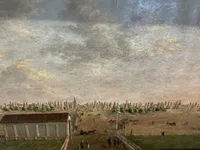
Riga's Petersburg Suburb After the Fire
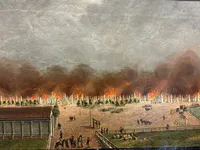
Fire in the Petersburg Suburb of Riga
Riga’s Rise as a Hanseatic Trade Power on the Baltic
Trade and the Hanseatic League
Trade formed the economic foundation of medieval Riga. By the late 13th c. its favorable location made it one of the main commercial centers on the Baltic Sea, concentrating trade between Russian and Lithuanian lands and Western and Eastern Europe. From the east came wax, furs, flax, and hemp; from the west, cloth, salt, herring, wine, silver, and other goods. In 1282 Riga concluded a confederation with Lübeck and Visby and entered the Hanseatic League. From the second half of the 14th c. Livonian Hanse towns formed the so-called “Livonian third,” and in the 14th–15th cc. Riga administered the Hanseatic office in Polotsk.
Trade formed the economic foundation of medieval Riga. By the late 13th c. its favorable location made it one of the main commercial centers on the Baltic Sea, concentrating trade between Russian and Lithuanian lands and Western and Eastern Europe. From the east came wax, furs, flax, and hemp; from the west, cloth, salt, herring, wine, silver, and other goods. In 1282 Riga concluded a confederation with Lübeck and Visby and entered the Hanseatic League. From the second half of the 14th c. Livonian Hanse towns formed the so-called “Livonian third,” and in the 14th–15th cc. Riga administered the Hanseatic office in Polotsk.
The Reformation Transforms Riga’s City and Church
The Reformation in Riga
The Reformation, which began in 16th-c. Germany, strongly affected Riga’s social, political, and spiritual life. Driven by dissatisfaction with Catholicism and a wish for a cheaper, simpler, more democratic church, it grew into a broad anti-feudal movement. In Riga, opposition to the Catholic Church also meant challenging supreme secular power, so all urban groups joined the struggle, and the city became a center of the Reformation in Livonia.
The movement began in 1521 with preaching of Martin Luther’s teachings and escalated from religious debates to open conflict. In 1524 icons were smashed, church wealth was confiscated, and Catholic clergy and monks were expelled. A moderate Lutheran Reformation prevailed, and the Bukult Treaty of 1546 forced the archbishop to acknowledge Protestant victory while retaining his status as supreme ruler. The city council’s power grew, the church was subordinated to the city, monasteries were turned into poorhouses, schools passed under council control, a city library was founded, and the first Latvian schools and hymn and religious text translations appeared.
The Reformation, which began in 16th-c. Germany, strongly affected Riga’s social, political, and spiritual life. Driven by dissatisfaction with Catholicism and a wish for a cheaper, simpler, more democratic church, it grew into a broad anti-feudal movement. In Riga, opposition to the Catholic Church also meant challenging supreme secular power, so all urban groups joined the struggle, and the city became a center of the Reformation in Livonia.
The movement began in 1521 with preaching of Martin Luther’s teachings and escalated from religious debates to open conflict. In 1524 icons were smashed, church wealth was confiscated, and Catholic clergy and monks were expelled. A moderate Lutheran Reformation prevailed, and the Bukult Treaty of 1546 forced the archbishop to acknowledge Protestant victory while retaining his status as supreme ruler. The city council’s power grew, the church was subordinated to the city, monasteries were turned into poorhouses, schools passed under council control, a city library was founded, and the first Latvian schools and hymn and religious text translations appeared.
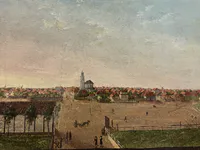
Riga's Petersburg Suburb Before the Fire
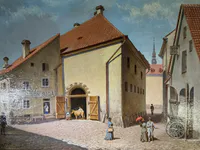
Postal Station
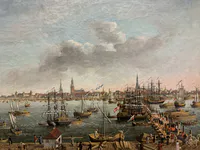
View of Riga from the Daugava
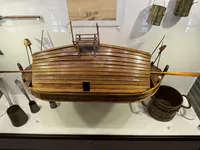
Model of an 18th-c. Riga Barge
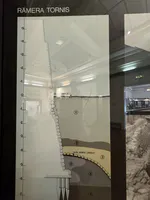
Stratigraphy Diagram of Rāmera Tower
Education, Printing, and Everyday Life in Early Modern Riga
Education, Printing, and Everyday life in Early Modern Riga
In the late 16th and early 17th cc. Riga’s culture and daily life changed significantly. Economic growth, closer ties with Western Europe, and humanist ideas shifted cultural interests from purely religious themes to more secular ones. New schools, including Latvian schools, opened; the first city printing houses were founded; books in Latvian appeared; the first regular newspaper was published; and the city library expanded. At the same time, increasing social differentiation sharpened class distinctions in everyday life.
Economic prosperity created a growing need for educated people and led to a wider network of schools. In addition to municipal schools under magistrate control, more private schools opened. By the late 17th c. a college of school overseers managed educational affairs. Riga’s first printing house, founded by N. Mollin in 1588, served all of the Baltic region under magistrate supervision. A second, private press run by E. G. Wilcken was authorized in 1675. Alongside Latin works, more books appeared in German and Latvian. Most German-language books targeted pastors who did not know Latvian, while Latvians received mainly religious books and primers.
In the late 16th and early 17th cc. Riga’s culture and daily life changed significantly. Economic growth, closer ties with Western Europe, and humanist ideas shifted cultural interests from purely religious themes to more secular ones. New schools, including Latvian schools, opened; the first city printing houses were founded; books in Latvian appeared; the first regular newspaper was published; and the city library expanded. At the same time, increasing social differentiation sharpened class distinctions in everyday life.
Economic prosperity created a growing need for educated people and led to a wider network of schools. In addition to municipal schools under magistrate control, more private schools opened. By the late 17th c. a college of school overseers managed educational affairs. Riga’s first printing house, founded by N. Mollin in 1588, served all of the Baltic region under magistrate supervision. A second, private press run by E. G. Wilcken was authorized in 1675. Alongside Latin works, more books appeared in German and Latvian. Most German-language books targeted pastors who did not know Latvian, while Latvians received mainly religious books and primers.
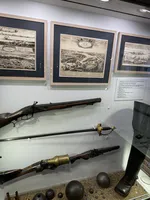
Weapons and Engravings from Great Northern War
Riga’s Medieval Council: From Feudal Rule to Self-Government
City Government and the Council (Rat)
When Riga became the bishop’s residence in 1201, the bishop (from 1255 the archbishop) was the city’s supreme ruler. His authority was challenged by the Swordbrothers and, later, by the Livonian Order. A bishop’s official—vogt or judge—represented lordly power in the city, while legal relations were governed by Visby–Riga city law.
After an uprising in 1221, the townspeople partially freed themselves from direct feudal control. The key organ of self-government became the town council, or rat, elected at a general assembly. Initially consisting of 12 councillors (ratmen), its number rose to 20 in the 14th century, headed by four burgomasters, one of them the chief burgomaster. From the late 13th century the council increasingly co-opted its own members from among the great merchants, reducing the role of the general assembly. The rat functioned as the highest municipal authority, supreme court, tax office, and command of the city’s armed forces.
When Riga became the bishop’s residence in 1201, the bishop (from 1255 the archbishop) was the city’s supreme ruler. His authority was challenged by the Swordbrothers and, later, by the Livonian Order. A bishop’s official—vogt or judge—represented lordly power in the city, while legal relations were governed by Visby–Riga city law.
After an uprising in 1221, the townspeople partially freed themselves from direct feudal control. The key organ of self-government became the town council, or rat, elected at a general assembly. Initially consisting of 12 councillors (ratmen), its number rose to 20 in the 14th century, headed by four burgomasters, one of them the chief burgomaster. From the late 13th century the council increasingly co-opted its own members from among the great merchants, reducing the role of the general assembly. The rat functioned as the highest municipal authority, supreme court, tax office, and command of the city’s armed forces.
The Brotherhood of Blackheads in Medieval Riga
The Brotherhood of Blackheads
From the 13th c., many Baltic towns saw associations of young, unmarried foreign merchants. Their first patron was St George, later St Maurice. The Brotherhood of Blackheads took its name from the symbolic black head of St Maurice. In Riga this brotherhood became especially powerful and wealthy; its statutes are known from 1416. The Blackheads organized much of the city’s public life and took part in urban politics. Their Riga headquarters was the “New House,” built in the 1330s on the Town Hall Square, the city’s administrative and economic center. From 1713 it was known as the House of Blackheads.
From the 13th c., many Baltic towns saw associations of young, unmarried foreign merchants. Their first patron was St George, later St Maurice. The Brotherhood of Blackheads took its name from the symbolic black head of St Maurice. In Riga this brotherhood became especially powerful and wealthy; its statutes are known from 1416. The Blackheads organized much of the city’s public life and took part in urban politics. Their Riga headquarters was the “New House,” built in the 1330s on the Town Hall Square, the city’s administrative and economic center. From 1713 it was known as the House of Blackheads.
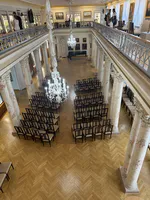
The Grand Hall
Port Trade, Guild Power, and Imperial Economic Policy
Port Trade and Commercial Measures
Riga’s trade was shaped by Russian imperial economic policy. The city became one of the empire’s key ports, second only to St Petersburg. Exports, dominated by agricultural products and raw materials (with manufactured goods appearing for the first time), were roughly twice the value of imports, which largely consisted of salt, sugar, and textiles. At the same time, Riga remained a hub for regional trade.
Commercial links with suppliers along the Daugava basin and in distant Russian provinces strengthened the city’s role, but outdated medieval trading structures and the monopoly of the Great Guild held back development. From the late 18th c. the imperial government gradually curtailed the Guild’s privileges, abolishing them entirely only in the mid-19th c. Under the 1710 capitulation Riga retained its traditional system of weights and measures: all goods were weighed at official city scales by sworn weighers, using standards kept in the House of Weights. A law of 1842 introduced a unified Russian system of measures across the empire from 1845, including Riga.
Riga’s trade was shaped by Russian imperial economic policy. The city became one of the empire’s key ports, second only to St Petersburg. Exports, dominated by agricultural products and raw materials (with manufactured goods appearing for the first time), were roughly twice the value of imports, which largely consisted of salt, sugar, and textiles. At the same time, Riga remained a hub for regional trade.
Commercial links with suppliers along the Daugava basin and in distant Russian provinces strengthened the city’s role, but outdated medieval trading structures and the monopoly of the Great Guild held back development. From the late 18th c. the imperial government gradually curtailed the Guild’s privileges, abolishing them entirely only in the mid-19th c. Under the 1710 capitulation Riga retained its traditional system of weights and measures: all goods were weighed at official city scales by sworn weighers, using standards kept in the House of Weights. A law of 1842 introduced a unified Russian system of measures across the empire from 1845, including Riga.
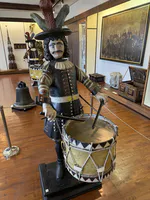
Military Drummer
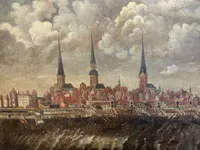
Riga Under Swedish Rule
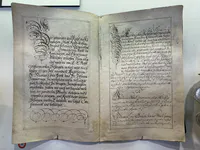
Guild Statute of the Riga Ropemakers’ Guild
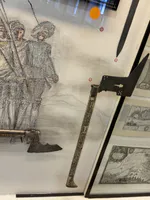
Powder Flask and Axe-Gun Combination
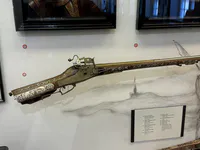
Hunting Wheellock Rifle from Riga
Trade and the Great Guild in Imperial Riga
Trade and the Great Guild in Imperial Riga
Riga’s trade was shaped by Russian imperial economic policy, and the city became one of the empire’s most important ports, second only to St. Petersburg. Exports, dominated by agricultural products and industrial raw materials, were twice as large as imports, which mainly consisted of salt, sugar, and textiles. At the same time, Riga served as a regional trade center.
Commercial growth relied on links with major suppliers along the Daugava basin and distant Russian provinces. However, outdated medieval trade forms and the monopoly rights of the Great Guild hindered development. From the second half of the 18th c. the imperial government gradually restricted these privileges, abolishing them only in the mid-19th c.
Riga’s trade was shaped by Russian imperial economic policy, and the city became one of the empire’s most important ports, second only to St. Petersburg. Exports, dominated by agricultural products and industrial raw materials, were twice as large as imports, which mainly consisted of salt, sugar, and textiles. At the same time, Riga served as a regional trade center.
Commercial growth relied on links with major suppliers along the Daugava basin and distant Russian provinces. However, outdated medieval trade forms and the monopoly rights of the Great Guild hindered development. From the second half of the 18th c. the imperial government gradually restricted these privileges, abolishing them only in the mid-19th c.
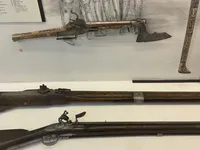
Weapons and the Swedish Conquest of Riga
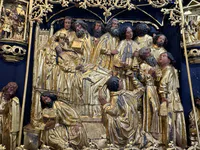
Dormition of the Virgin Relief
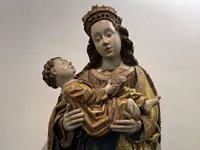
Madonna and Child
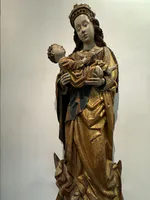
Madonna and Child
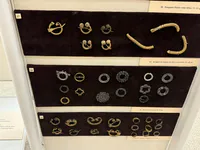
Baltic and Germanic Ornaments
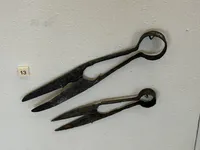
Medieval Iron Spring Shears
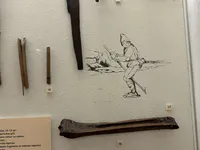
Medieval Bone Skates for Ice Gliding
Medieval Toys and Gaming Dice
Culture and Education Transform Riga, 18th–19th Centuries
Culture and Education in 18th–19th c. Riga
From the second half of the 18th c. Riga gradually became a vibrant cultural and social center, shaped by Enlightenment ideas. Its location on the postal route between Riga and St Petersburg brought renowned foreign performers to the city. A permanent theatre troupe operated here, and the new permanent theatre staged contemporary European plays. Organ music was popular, churches increasingly hosted secular concerts, and a symphony orchestra was founded. Private musical ensembles and art collections appeared, and in the first half of the 19th c. local artists organized exhibitions featuring portrait, landscape, and genre painting. However, theatre, music, and art remained largely accessible to a narrow educated and elite circle; most townspeople preferred traveling circuses and comedic performances.
Despite incorporation into the Russian Empire, Riga initially retained its traditional school system. The magistrate oversaw both elementary schools and higher-level institutions such as the Cathedral School and the Lyceum; private schools and home education were also widespread. The 1802 Russian education reform placed schools under state control and integrated Riga into the Dorpat (Tartu) educational district, with Dorpat University as its center. Curricula changed under Enlightenment influence: religious instruction lost its privileged status, while natural sciences, mathematics, and philosophy gained importance. Teaching increasingly used German, including in Latvian schools, and after reform, Russian was added to programs. Riga developed into a scientific center, home to new scholarly societies and prominent intellectuals.
From the second half of the 18th c. Riga gradually became a vibrant cultural and social center, shaped by Enlightenment ideas. Its location on the postal route between Riga and St Petersburg brought renowned foreign performers to the city. A permanent theatre troupe operated here, and the new permanent theatre staged contemporary European plays. Organ music was popular, churches increasingly hosted secular concerts, and a symphony orchestra was founded. Private musical ensembles and art collections appeared, and in the first half of the 19th c. local artists organized exhibitions featuring portrait, landscape, and genre painting. However, theatre, music, and art remained largely accessible to a narrow educated and elite circle; most townspeople preferred traveling circuses and comedic performances.
Despite incorporation into the Russian Empire, Riga initially retained its traditional school system. The magistrate oversaw both elementary schools and higher-level institutions such as the Cathedral School and the Lyceum; private schools and home education were also widespread. The 1802 Russian education reform placed schools under state control and integrated Riga into the Dorpat (Tartu) educational district, with Dorpat University as its center. Curricula changed under Enlightenment influence: religious instruction lost its privileged status, while natural sciences, mathematics, and philosophy gained importance. Teaching increasingly used German, including in Latvian schools, and after reform, Russian was added to programs. Riga developed into a scientific center, home to new scholarly societies and prominent intellectuals.
Riga’s Medieval Walls and Towers of Defense
Riga’s Medieval Fortifications
The first German settlement in Riga was protected by a ditch, an earthen rampart, and wooden palisades. In 1207 construction began on a stone defensive wall, which by the 13th c. enclosed the entire town. The wall was about 2.2 km long and originally 3.5 m high; in the 14th–15th cc. it was raised to 11–13 m, with a 3 m thick inner arcade. Between 25 and 29 towers were built, at first rectangular and later semicircular or round. The spread of firearms prompted a new system of earthen fortifications. The first ramparts are mentioned in 1422, and systematic construction of these earthworks began in 1537.
The first German settlement in Riga was protected by a ditch, an earthen rampart, and wooden palisades. In 1207 construction began on a stone defensive wall, which by the 13th c. enclosed the entire town. The wall was about 2.2 km long and originally 3.5 m high; in the 14th–15th cc. it was raised to 11–13 m, with a 3 m thick inner arcade. Between 25 and 29 towers were built, at first rectangular and later semicircular or round. The spread of firearms prompted a new system of earthen fortifications. The first ramparts are mentioned in 1422, and systematic construction of these earthworks began in 1537.
Medieval Gaming Tabletop
Big Kristaps and the Legend that Built Riga
Big Kristaps and the Legend of St Christopher
St Christopher (Kristaps), “Christ-bearer,” was revered in Christian tradition as a protector from dangers of water, the patron of travelers and later of water-related trades and porters. His cult appeared in Livonia in the first half of the 15th c., with his feast on 25 June celebrated as a holiday. In early 16th-c. Riga, brotherhoods of Latvian transport workers chose St Kristaps as their patron, and in Latvian folklore his name became linked to the founding of Riga.
According to legend, a giant once carried people across the small river Rīdzene where there was no bridge. He lived in a cave near the city walls. One night he heard cries for help, lit a lantern, and saw a poor child on the opposite bank. He carried the child to safety and sheltered him; by morning the child had vanished, leaving pure gold where he had slept. The giant stored the treasure in a large barrel, and after his death this gold was used to build Riga. A sculpture of the giant with the child was placed as a lasting memorial near the site of his cave.
St Christopher (Kristaps), “Christ-bearer,” was revered in Christian tradition as a protector from dangers of water, the patron of travelers and later of water-related trades and porters. His cult appeared in Livonia in the first half of the 15th c., with his feast on 25 June celebrated as a holiday. In early 16th-c. Riga, brotherhoods of Latvian transport workers chose St Kristaps as their patron, and in Latvian folklore his name became linked to the founding of Riga.
According to legend, a giant once carried people across the small river Rīdzene where there was no bridge. He lived in a cave near the city walls. One night he heard cries for help, lit a lantern, and saw a poor child on the opposite bank. He carried the child to safety and sheltered him; by morning the child had vanished, leaving pure gold where he had slept. The giant stored the treasure in a large barrel, and after his death this gold was used to build Riga. A sculpture of the giant with the child was placed as a lasting memorial near the site of his cave.
Social Conflict and Riga’s Tumultuous “Calendar Unrest”
Social Conflict and the “Calendar Unrest”
Riga’s socio-economic development sharpened contradictions between the magistrate and the guilds. Economic conflicts grew into political struggle and culminated during the so-called “calendar unrest.” The city patriciate, facing a powerful burgher opposition that sought control over urban finances and power, turned to the Polish king for support and backed his Counter-Reformation policies.
As a result, social disturbances also became a protest against Polish rule and the drive to restore Catholicism. Royal backing for the patricians, together with divisions inside the opposition, allowed the magistrate to retain power in its hands.
Riga’s socio-economic development sharpened contradictions between the magistrate and the guilds. Economic conflicts grew into political struggle and culminated during the so-called “calendar unrest.” The city patriciate, facing a powerful burgher opposition that sought control over urban finances and power, turned to the Polish king for support and backed his Counter-Reformation policies.
As a result, social disturbances also became a protest against Polish rule and the drive to restore Catholicism. Royal backing for the patricians, together with divisions inside the opposition, allowed the magistrate to retain power in its hands.
Fishermen’s Property Marks
The Great Guild of St Mary and Riga’s Merchant Elite
The Great Guild of St Mary
In 1354 Riga’s German merchants formed the Guild of St Mary, known as the Great Guild. Its members controlled so-called “guest trade,” acting as intermediaries between Russian, Lithuanian and Western European merchants; these brokerage profits became their main source of wealth. As equal members they also admitted goldsmiths and educated “literati” such as jurists and theologians. By the mid-16th century, up to 200 burgher families of Riga belonged to the Great Guild.
In 1354 Riga’s German merchants formed the Guild of St Mary, known as the Great Guild. Its members controlled so-called “guest trade,” acting as intermediaries between Russian, Lithuanian and Western European merchants; these brokerage profits became their main source of wealth. As equal members they also admitted goldsmiths and educated “literati” such as jurists and theologians. By the mid-16th century, up to 200 burgher families of Riga belonged to the Great Guild.
Early Riga: From River Settlements to Medieval City
Early Riga: From Settlements to Medieval City
In the 12th century, two settlements occupied the site of present-day Old Riga (Vecrīga): one near the mouth of the River Rīga by a natural harbour, and another on the bank of the Daugava. Each consisted of small farmsteads enclosed by palisades, with timber-paved yards and streets. Houses were heated by clay or stone hearths, and nearby burial grounds served the communities.
By the late 12th century, German merchants, missionaries, and crusaders were active in the lower Daugava. In 1201 the local Livs granted Bishop Albert a site for a new town adjacent to their villages. Over time, this German foundation merged with the native settlements, forming the medieval city of Riga.
In the 12th century, two settlements occupied the site of present-day Old Riga (Vecrīga): one near the mouth of the River Rīga by a natural harbour, and another on the bank of the Daugava. Each consisted of small farmsteads enclosed by palisades, with timber-paved yards and streets. Houses were heated by clay or stone hearths, and nearby burial grounds served the communities.
By the late 12th century, German merchants, missionaries, and crusaders were active in the lower Daugava. In 1201 the local Livs granted Bishop Albert a site for a new town adjacent to their villages. Over time, this German foundation merged with the native settlements, forming the medieval city of Riga.
Stone Float
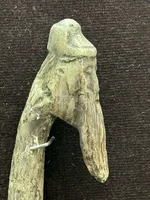
Single-Headed Wooden Idol
Exports and Early Manufactories in 17th-Century Riga
Economy and Early Manufactories in 17th-Century Riga
In the 17th century Riga’s total exports grew significantly and far outstripped imports in both volume and value. The city became a key outlet for products from Lithuania and Belarus and functioned primarily as an export harbour: imported goods were fewer and of lesser economic weight than the large flows of raw materials shipped westward.
At the same time, the first manufactories appeared in Riga and its surroundings in various branches of production. Labour shortages meant they relied heavily on low-productivity forced labour from serfs and soldiers. Limited capital, a weak internal market, feudal privileges, resistance from the magistrate and traditional guilds, and strong competition all hampered development and led many manufactories to fail. A 1694 strike by masons’ journeymen illustrates growing tensions in this fragile early industrial sector.
In the 17th century Riga’s total exports grew significantly and far outstripped imports in both volume and value. The city became a key outlet for products from Lithuania and Belarus and functioned primarily as an export harbour: imported goods were fewer and of lesser economic weight than the large flows of raw materials shipped westward.
At the same time, the first manufactories appeared in Riga and its surroundings in various branches of production. Labour shortages meant they relied heavily on low-productivity forced labour from serfs and soldiers. Limited capital, a weak internal market, feudal privileges, resistance from the magistrate and traditional guilds, and strong competition all hampered development and led many manufactories to fail. A 1694 strike by masons’ journeymen illustrates growing tensions in this fragile early industrial sector.
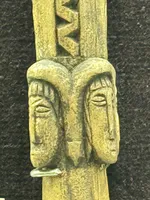
Fragment of a Four-Headed Idol from Riga
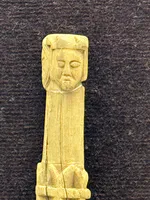
Medieval Wooden Idol Carving
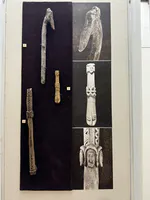
Wooden Idols from Medieval Riga
Crafts, Guilds, and Social Divides in Medieval Riga
Crafts and the Small Guild
In medieval Riga, crafts played a secondary role compared to trade. Most artisans produced for local needs, with only a few processing transit goods such as furs, flax and hemp. First to develop were trades supplying food, followed by metalwork, clothing and shoemaking. From the 14th century, craftsmen specialising in the same branch formed guilds (craft corporations) to defend their interests and limit competition.
In 1352 Riga’s craft guilds united in the Small Guild. Masters were the key producers, assisted by apprentices and journeymen, who could later become masters themselves. Between the 13th and 15th centuries this system fostered craft development, but in the 16th century strict regulations began to hinder innovation and made it harder for journeymen to attain master status. Alongside privileged German guilds, “non-German” guilds emerged; their masters were allowed to work only for non-German clients in Riga and its surroundings.
In medieval Riga, crafts played a secondary role compared to trade. Most artisans produced for local needs, with only a few processing transit goods such as furs, flax and hemp. First to develop were trades supplying food, followed by metalwork, clothing and shoemaking. From the 14th century, craftsmen specialising in the same branch formed guilds (craft corporations) to defend their interests and limit competition.
In 1352 Riga’s craft guilds united in the Small Guild. Masters were the key producers, assisted by apprentices and journeymen, who could later become masters themselves. Between the 13th and 15th centuries this system fostered craft development, but in the 16th century strict regulations began to hinder innovation and made it harder for journeymen to attain master status. Alongside privileged German guilds, “non-German” guilds emerged; their masters were allowed to work only for non-German clients in Riga and its surroundings.
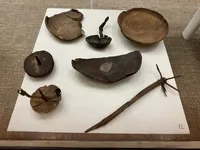
Household Items of Riga Residents
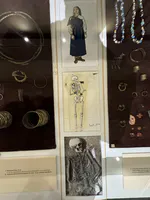
Latvian Woman's Burial Artifacts
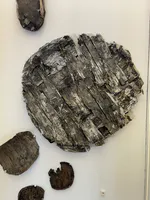
Birch Bark Lid and Fragments
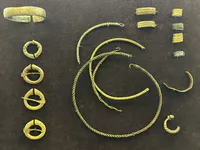
Curonized Liv Jewelry
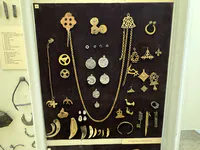
Jewelry of the Daugava Livs
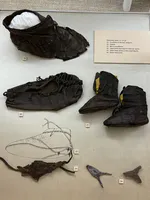
Footwear of Riga Inhabitants
Riga’s Transformation Under Russian Imperial Rule
Riga Under the Russian Empire
After Riga was incorporated into the Russian Empire, it became the administrative center of the Riga (later Livland) Governorate. Imperial authority was represented by the governor-general and his offices, while local power remained in the hands of the magistrate and the lower administrative and judicial institutions created in the previous century.
From 1787 to 1797 Riga formed part of Catherine II’s unified system of provincial government as the center of the Riga Viceroyalty, with a reformed city self-government. A city head, magistrate, and council were elected in 1787, and capital, rather than old privileges, decided eligibility. Paul I abolished the viceroyalty but preserved some reforms; the magistrate resumed work, though with certain restrictions.
After Riga was incorporated into the Russian Empire, it became the administrative center of the Riga (later Livland) Governorate. Imperial authority was represented by the governor-general and his offices, while local power remained in the hands of the magistrate and the lower administrative and judicial institutions created in the previous century.
From 1787 to 1797 Riga formed part of Catherine II’s unified system of provincial government as the center of the Riga Viceroyalty, with a reformed city self-government. A city head, magistrate, and council were elected in 1787, and capital, rather than old privileges, decided eligibility. Paul I abolished the viceroyalty but preserved some reforms; the magistrate resumed work, though with certain restrictions.
Trade and Early Manufactories in 17th-Century Riga
Trade and Early Manufactories in 17th-c. Riga
In the 17th c. Riga’s exports grew sharply and far outstripped imports. The city became primarily an export port, supplied over long distances from regions such as Lithuania and Belarus. Imports remained much smaller in volume, value, and overall economic importance.
At the same time, the first manufactories appeared in Riga and its surroundings in various branches of production. A shortage of free labor led to the use of less productive work by serfs and soldiers. Limited capital investment, an undeveloped internal market, feudal privileges defended by the magistrate and old guilds, and strong competition caused many manufactories to fail. A 1694 strike by stonemasons’ apprentices reveals the tensions within this fragile industrial sector
In the 17th c. Riga’s exports grew sharply and far outstripped imports. The city became primarily an export port, supplied over long distances from regions such as Lithuania and Belarus. Imports remained much smaller in volume, value, and overall economic importance.
At the same time, the first manufactories appeared in Riga and its surroundings in various branches of production. A shortage of free labor led to the use of less productive work by serfs and soldiers. Limited capital investment, an undeveloped internal market, feudal privileges defended by the magistrate and old guilds, and strong competition caused many manufactories to fail. A 1694 strike by stonemasons’ apprentices reveals the tensions within this fragile industrial sector
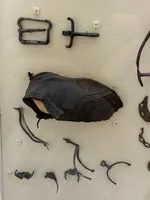
Rider and Horse Gear
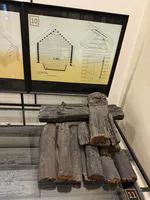
Fragment of a Log Structure
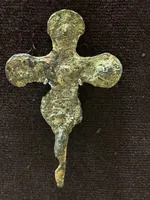
Medieval Bronze Cross-Shaped Fibula
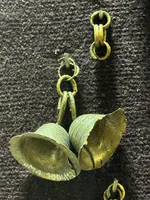
Bell-Shaped Bronze Ornament
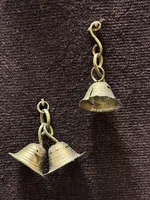
Bronze Bell-Shaped Pendants
The First Museums in Riga: From Himsel to Riga Museum
The First Museums in Riga
The first museum in Riga was founded in 1773, based on a natural-scientific and art collection assembled by the physician Nikolaus von Himsel. The collection had been started by his grandfather, the doctor Nikolaus Martini, and expanded by his father, Joachim Gebhard von Himsel. Named the Himsel Museum, it was initially displayed in the Anatomical Theatre on Kaleju Street and, in 1791, moved into purpose-built rooms in the Dome complex shared with the city library.
In 1858 a new “Riga Museum” was created on Skunu Street, where learned societies such as the Society for the Study of the History and Antiquities of the Baltic Provinces of Russia, the Riga Naturalists’ Society, and the Literary-Practical Citizens’ Union exhibited their collections to the public.
The first museum in Riga was founded in 1773, based on a natural-scientific and art collection assembled by the physician Nikolaus von Himsel. The collection had been started by his grandfather, the doctor Nikolaus Martini, and expanded by his father, Joachim Gebhard von Himsel. Named the Himsel Museum, it was initially displayed in the Anatomical Theatre on Kaleju Street and, in 1791, moved into purpose-built rooms in the Dome complex shared with the city library.
In 1858 a new “Riga Museum” was created on Skunu Street, where learned societies such as the Society for the Study of the History and Antiquities of the Baltic Provinces of Russia, the Riga Naturalists’ Society, and the Literary-Practical Citizens’ Union exhibited their collections to the public.
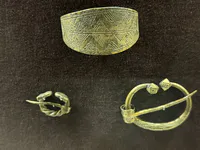
Bronze Jewelry
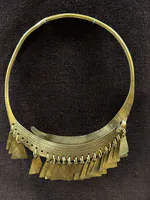
Bronze Neck Ring with Dangling Pendants
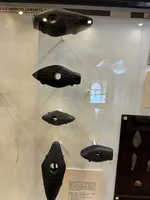
Neolithic Boat-Shaped Axes
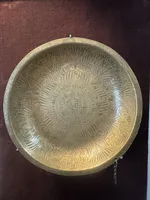
Hanseatic Brass Basin Imported to Riga
Wine Cellars of Medieval Riga: Trade, Status, and Storage
Wine Cellars of Riga
Wine was among the most expensive imports in medieval Riga. It was consumed by townspeople and re-exported to Russian lands. Wine served not only as a trade commodity and form of payment but also as a mark of honor and favor. Special buildings were constructed to store it, and these wine cellars also functioned as ornate drinking halls. The wine cellars of the Riga magistrate are mentioned in documents from 1293.
Wine was among the most expensive imports in medieval Riga. It was consumed by townspeople and re-exported to Russian lands. Wine served not only as a trade commodity and form of payment but also as a mark of honor and favor. Special buildings were constructed to store it, and these wine cellars also functioned as ornate drinking halls. The wine cellars of the Riga magistrate are mentioned in documents from 1293.
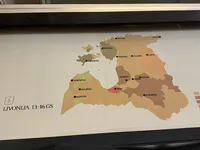
Medieval Livonia's Territorial Divisions
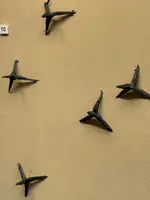
Livonian Caltrops
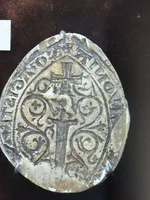
Seal of the Livonian Brothers of the Sword
Riga’s Two-Century Struggle with Its Overlords
Riga’s Struggle with its Overlords
Supreme overlordship not only limited Riga’s political autonomy but also curtailed its economic interests, especially when the politically and militarily powerful Livonian Order sought to dominate the city. Conflicts between Riga and the Order began in the 1260s and escalated into open war from 1297 to 1330, ending in the citizens’ defeat and transforming Riga into an “order town”.
Riga’s archbishops alternately sided with the city or the Order, depending on circumstances. In 1452 the unfavourable Salaspils Treaty established joint rule of archbishop and Livonian Order over Riga. Though the archbishop later renounced some claims, renewed clashes in the 1480s led to another war. After initial victories, Riga suffered a crushing defeat in 1491 and was forced to sign the Valmiera agreement, effectively restoring dual overlordship.
This two-century struggle left its mark on the city’s coinage: the right to mint money belonged to the supreme ruler, and during periods of shared power the archbishop and the Order issued coins jointly.
Supreme overlordship not only limited Riga’s political autonomy but also curtailed its economic interests, especially when the politically and militarily powerful Livonian Order sought to dominate the city. Conflicts between Riga and the Order began in the 1260s and escalated into open war from 1297 to 1330, ending in the citizens’ defeat and transforming Riga into an “order town”.
Riga’s archbishops alternately sided with the city or the Order, depending on circumstances. In 1452 the unfavourable Salaspils Treaty established joint rule of archbishop and Livonian Order over Riga. Though the archbishop later renounced some claims, renewed clashes in the 1480s led to another war. After initial victories, Riga suffered a crushing defeat in 1491 and was forced to sign the Valmiera agreement, effectively restoring dual overlordship.
This two-century struggle left its mark on the city’s coinage: the right to mint money belonged to the supreme ruler, and during periods of shared power the archbishop and the Order issued coins jointly.
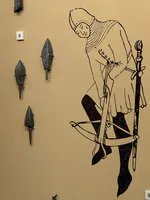
Medieval Crossbowman and Arrowheads
How the Reformation Transformed Life in Riga
The Reformation in Riga
The Reformation, which began in Germany in the 16th century, profoundly reshaped Riga’s social, political and spiritual life. In Riga, opposition to Catholicism also meant resistance to episcopal overlordship, so all urban strata joined the movement. Lutheran preaching started in 1521; religious disputes soon turned into open attacks on the Catholic Church. In 1524 images were smashed, church wealth was confiscated, and Catholic clergy and monks were expelled.
Moderate Lutheranism ultimately prevailed. The Reformation formally ended in 1546 with the Bukultu agreement: the archbishop retained his status as supreme lord but had to accept Protestant victory in the city. The council’s power grew, churches came under municipal control, former monasteries were turned into poor relief institutions, schools passed to the council, and Riga’s first city library was founded. The period also saw the opening of the first Latvian schools and the earliest Latvian hymns and religious texts.
The Reformation, which began in Germany in the 16th century, profoundly reshaped Riga’s social, political and spiritual life. In Riga, opposition to Catholicism also meant resistance to episcopal overlordship, so all urban strata joined the movement. Lutheran preaching started in 1521; religious disputes soon turned into open attacks on the Catholic Church. In 1524 images were smashed, church wealth was confiscated, and Catholic clergy and monks were expelled.
Moderate Lutheranism ultimately prevailed. The Reformation formally ended in 1546 with the Bukultu agreement: the archbishop retained his status as supreme lord but had to accept Protestant victory in the city. The council’s power grew, churches came under municipal control, former monasteries were turned into poor relief institutions, schools passed to the council, and Riga’s first city library was founded. The period also saw the opening of the first Latvian schools and the earliest Latvian hymns and religious texts.
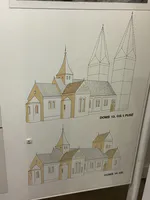
Riga Cathedral: Architectural Evolution
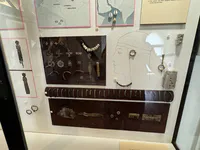
Medieval Baltic Jewelry and Personal Items
The Great Northern War and the Shift to Russian Rule
The Great Northern War and Russian Rule
Centuries of struggle for dominance over the Baltic Sea ended with Russia’s victory in the Great Northern War (1700–1721). Riga, as one of Sweden’s key strongholds on the Baltic, was deeply involved; military operations in Latvia continued until 1710. After Riga’s capitulation that year, all of Livonia was incorporated into the Russian Empire.
Under the Treaty of Nystad in 1721, Sweden formally recognized the transfer of Livonia and Riga to Russia. The 1710 capitulation decisively redirected Baltic history, marking a political shift from western to eastern influence.
Centuries of struggle for dominance over the Baltic Sea ended with Russia’s victory in the Great Northern War (1700–1721). Riga, as one of Sweden’s key strongholds on the Baltic, was deeply involved; military operations in Latvia continued until 1710. After Riga’s capitulation that year, all of Livonia was incorporated into the Russian Empire.
Under the Treaty of Nystad in 1721, Sweden formally recognized the transfer of Livonia and Riga to Russia. The 1710 capitulation decisively redirected Baltic history, marking a political shift from western to eastern influence.
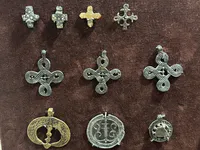
Medieval Crosses and Pendants
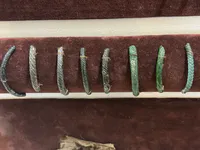
Glass Bracelets from Medieval Riga
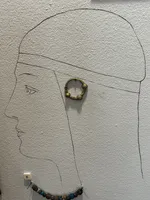
Bronze Earring and Glass Beads from Medieval Riga
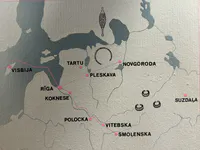
Eastern Trade Routes to Medieval Riga
From Swedish Stronghold to Russian Rule: Riga in 1710
The Great Northern War and Riga’s Shift to the Russian Empire
The centuries-long struggle for dominance in the Baltic Sea culminated in Russia’s victory in the Great Northern War (1700–1721). Riga, one of Sweden’s key strongholds on the Baltic, was directly drawn into the conflict. Military operations in Latvia continued until 1710, when Riga capitulated to Russian forces and all of Livonia was incorporated into the Russian Empire.
Under the Treaty of Nystad (1721), Sweden formally recognised the transfer of Livonia and Riga to Russia. The city’s surrender in 1710 marked a turning point in Baltic history, signalling a long-term political reorientation of the region from West to East.
The centuries-long struggle for dominance in the Baltic Sea culminated in Russia’s victory in the Great Northern War (1700–1721). Riga, one of Sweden’s key strongholds on the Baltic, was directly drawn into the conflict. Military operations in Latvia continued until 1710, when Riga capitulated to Russian forces and all of Livonia was incorporated into the Russian Empire.
Under the Treaty of Nystad (1721), Sweden formally recognised the transfer of Livonia and Riga to Russia. The city’s surrender in 1710 marked a turning point in Baltic history, signalling a long-term political reorientation of the region from West to East.
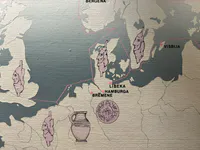
Western Trade Routes to Medieval Riga
The First Museums in Riga: From Himsel to City Collections
The First Museums in Riga
In 1773 the first museum in Riga was founded. Its core was the natural-history and art collection of the Riga physician Nikolaus von Himsel, a collection begun by his grandfather, the Riga doctor Nikolaus Martini, and continued by his father, the physician Joachim Gebhard von Himsel. The museum was named the Himsel Museum in honour of its donor. At first the collections were exhibited in the Anatomical Theatre at 34/36 Kaleju Street, but in 1791 the Himsel Museum was moved to newly constructed premises in the Cathedral complex, shared with the city library.
In 1858 another institution, the so-called Riga Museum, was established at 11 Skunu Street. Here the scholarly societies of Riga displayed their collections to the public, including the Society for the Study of the History and Antiquities of the Baltic Provinces of Russia (founded 1834), the Riga Society of Naturalists (1845), and the Literary-Practical Citizens’ Union (1802), among others.
In 1773 the first museum in Riga was founded. Its core was the natural-history and art collection of the Riga physician Nikolaus von Himsel, a collection begun by his grandfather, the Riga doctor Nikolaus Martini, and continued by his father, the physician Joachim Gebhard von Himsel. The museum was named the Himsel Museum in honour of its donor. At first the collections were exhibited in the Anatomical Theatre at 34/36 Kaleju Street, but in 1791 the Himsel Museum was moved to newly constructed premises in the Cathedral complex, shared with the city library.
In 1858 another institution, the so-called Riga Museum, was established at 11 Skunu Street. Here the scholarly societies of Riga displayed their collections to the public, including the Society for the Study of the History and Antiquities of the Baltic Provinces of Russia (founded 1834), the Riga Society of Naturalists (1845), and the Literary-Practical Citizens’ Union (1802), among others.
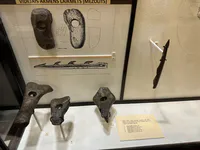
Mesolithic Tools from Daugava River
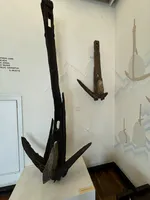
Wooden Anchors with Stone Weights
Crafts and Guilds Shaping Medieval Riga’s Economy
Crafts and Guilds in Medieval Riga
In medieval Riga, crafts played a smaller economic role than trade. Artisans mainly supplied townspeople, with only a few processing transit goods such as furs, flax, and hemp. First to develop were trades providing food, followed by metalworking and the production of clothing and footwear. From the 14th c. craft specialization increased.
Artisans in the same branch formed guilds (zechs) as professional unions to resist competition and defend shared interests. In 1352 Riga’s guilds united as the Small Guild. In the 14th–15th cc. the master was the chief producer, assisted by apprentices and journeymen who could later become masters. By the 16th c. journeymen had become the main labor force. While the guild system supported craft growth from the 13th to 15th cc., strict regulation in the 16th c. began to hinder technical innovation and made it harder for journeymen to advance. Alongside privileged German guilds, “non-German” guilds emerged, whose masters were allowed to work only for non-German clients in Riga and its surroundings.
In medieval Riga, crafts played a smaller economic role than trade. Artisans mainly supplied townspeople, with only a few processing transit goods such as furs, flax, and hemp. First to develop were trades providing food, followed by metalworking and the production of clothing and footwear. From the 14th c. craft specialization increased.
Artisans in the same branch formed guilds (zechs) as professional unions to resist competition and defend shared interests. In 1352 Riga’s guilds united as the Small Guild. In the 14th–15th cc. the master was the chief producer, assisted by apprentices and journeymen who could later become masters. By the 16th c. journeymen had become the main labor force. While the guild system supported craft growth from the 13th to 15th cc., strict regulation in the 16th c. began to hinder technical innovation and made it harder for journeymen to advance. Alongside privileged German guilds, “non-German” guilds emerged, whose masters were allowed to work only for non-German clients in Riga and its surroundings.
From Pagan Settlements to Christian Riga in the 12th–13th Centuries
Origins and Christianization of Riga
In the 12th c., two settlements stood where Old Riga (Vecrīga) is today: one at the mouth of the Rīga river by a natural harbor, the other on the Daugava. Each consisted of small farmsteads enclosed by palisades, with wooden-paved yards and streets. Houses were heated by clay or stone stoves and hearths, and nearby burial grounds served the communities.
In the late 12th c., German merchants, missionaries, and crusaders appeared in the lower Daugava. In 1186 the Bremen archbishop appointed Meinhard, an Augustinian missionary, as bishop of Livonia, with his see at Ikšķile. This drew the peoples of eastern Baltic lands into the orbit of the Western church and culture, while also bringing crusades and violent subjugation. In 1201 the local Livs granted Bishop Albert a site beside their settlements, where he founded a new German town. Over time it merged with the earlier communities to form medieval Riga.
In the 12th c., two settlements stood where Old Riga (Vecrīga) is today: one at the mouth of the Rīga river by a natural harbor, the other on the Daugava. Each consisted of small farmsteads enclosed by palisades, with wooden-paved yards and streets. Houses were heated by clay or stone stoves and hearths, and nearby burial grounds served the communities.
In the late 12th c., German merchants, missionaries, and crusaders appeared in the lower Daugava. In 1186 the Bremen archbishop appointed Meinhard, an Augustinian missionary, as bishop of Livonia, with his see at Ikšķile. This drew the peoples of eastern Baltic lands into the orbit of the Western church and culture, while also bringing crusades and violent subjugation. In 1201 the local Livs granted Bishop Albert a site beside their settlements, where he founded a new German town. Over time it merged with the earlier communities to form medieval Riga.
The Founding of Riga’s City Library in the Reformation Era
The founding of Riga city library
Riga’s city library was created in 1524 as a result of the Reformation, when the magistrate took over the property of dissolved monasteries, including their book collections. Its first location is unknown, but from 1553 to 1891 the library operated in a specially adapted wing of the cathedral monastery. Among its holdings were incunabula from the 16th c. and early donation lists, such as the 1664 gift register to the city library.
Riga’s city library was created in 1524 as a result of the Reformation, when the magistrate took over the property of dissolved monasteries, including their book collections. Its first location is unknown, but from 1553 to 1891 the library operated in a specially adapted wing of the cathedral monastery. Among its holdings were incunabula from the 16th c. and early donation lists, such as the 1664 gift register to the city library.
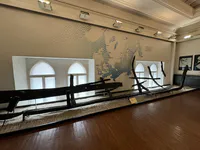
Trading Ship Hull
The Brotherhood of Blackheads in Medieval Riga
The Brotherhood of Blackheads
By the 13th century, many Baltic cities saw the rise of associations of young, unmarried foreign merchants. Their patron was first St George and later St Maurice. The Brotherhood of Blackheads took its name from the symbolic depiction of St Maurice as a Black African head.
The Riga Brotherhood of Blackheads became particularly wealthy and influential; its statutes are known from 1416. The Blackheads organised much of the city’s social and ceremonial life and played a role in urban politics. Their headquarters in Riga was the New House (from 1713 the House of Blackheads), built in the 1330s on the Town Hall Square in the city’s administrative and commercial centre.
By the 13th century, many Baltic cities saw the rise of associations of young, unmarried foreign merchants. Their patron was first St George and later St Maurice. The Brotherhood of Blackheads took its name from the symbolic depiction of St Maurice as a Black African head.
The Riga Brotherhood of Blackheads became particularly wealthy and influential; its statutes are known from 1416. The Blackheads organised much of the city’s social and ceremonial life and played a role in urban politics. Their headquarters in Riga was the New House (from 1713 the House of Blackheads), built in the 1330s on the Town Hall Square in the city’s administrative and commercial centre.
Wine Trade and Cellars in Medieval Riga
Wine Trade and Cellars
Wine was among the most expensive imported goods in medieval Riga. It was consumed by townspeople and re-exported to Russian lands, used both as payment in commercial transactions and as a prestigious gift to show favour and honour. To store it, cities built special wine cellars that also functioned as elegant drinking halls. The wine cellars of the Riga magistrate are mentioned in documents as early as 1293.
Wine was among the most expensive imported goods in medieval Riga. It was consumed by townspeople and re-exported to Russian lands, used both as payment in commercial transactions and as a prestigious gift to show favour and honour. To store it, cities built special wine cellars that also functioned as elegant drinking halls. The wine cellars of the Riga magistrate are mentioned in documents as early as 1293.
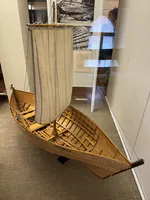
Model of Medieval Trading Ship
From Plague to Prosperity: Riga’s Changing Society
Residents and Social Structure of Riga
In the second half of the 18th century Riga overcame its post-war depression and entered a period of rapid growth. During the war and the Great Plague, 94% of the inhabitants of Riga and its surroundings had perished. By 1767 the city and its suburbs had around 19,000 inhabitants; by 1860 this had risen to about 65,000, or roughly 74,000 including those in military service.
Until the end of the 18th century, full citizens of Riga were still considered to be only the members of the Riga magistrate and of the Great and Small Guilds, united in the so-called community of burghers. After the 1785 municipal law and the introduction of a poll tax for residents of the Baltic provinces, a broader community of town residents emerged, including not only full burghers but all registered inhabitants of Riga.
In the first half of the 19th century the city’s population was divided into six estates: honorary citizens; guild merchants; the so-called “literati”; townspeople (meshchane); members of craft guilds; and free people, servants and workers. Alongside these urban estates, nobles and clergy also lived in Riga. One of the prominent figures of this society was Baroness Johanna von Laudon.
In the second half of the 18th century Riga overcame its post-war depression and entered a period of rapid growth. During the war and the Great Plague, 94% of the inhabitants of Riga and its surroundings had perished. By 1767 the city and its suburbs had around 19,000 inhabitants; by 1860 this had risen to about 65,000, or roughly 74,000 including those in military service.
Until the end of the 18th century, full citizens of Riga were still considered to be only the members of the Riga magistrate and of the Great and Small Guilds, united in the so-called community of burghers. After the 1785 municipal law and the introduction of a poll tax for residents of the Baltic provinces, a broader community of town residents emerged, including not only full burghers but all registered inhabitants of Riga.
In the first half of the 19th century the city’s population was divided into six estates: honorary citizens; guild merchants; the so-called “literati”; townspeople (meshchane); members of craft guilds; and free people, servants and workers. Alongside these urban estates, nobles and clergy also lived in Riga. One of the prominent figures of this society was Baroness Johanna von Laudon.
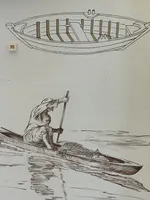
Boat Structure and Fishing Scene
Riga Bishopric and the Rise of St Mary’s Cathedral
Riga Bishopric and the Cathedral of St Mary
After Bishop Berthold was killed in battle near Riga (1196–1198), Albert of Buxhoeveden became bishop in Ikšķile. According to Henry of Latvia’s chronicle, construction of Riga began in 1201, and in 1202 Albert moved the episcopal seat there, accelerating the town’s growth into a major medieval city. By the 13th c. several monastic houses of spiritual orders operated in Riga, combining missionary work with charitable institutions. In return for his services, Albert received Livonian lands as a fief from King Philip and in 1207 became an imperial prince-elector of the Holy Roman Empire. The Riga bishopric—an archbishopric from 1255—ruled over parts of Liv and Latgalian territories together with the cathedral chapter.
In 1211 Albert consecrated the foundation stone of the new Cathedral of St Mary (Riga Dom). Building began in the form of a Romanesque basilica, but changes to the plan in the later 13th c. transformed it into one of the Baltic region’s most important Gothic sacred buildings. The cathedral, the chapter hall, and monastic rooms formed a single architectural ensemble, linked by a cloister arcade. The inner courtyard, known as the “Green Cemetery,” served as a burial place.
After Bishop Berthold was killed in battle near Riga (1196–1198), Albert of Buxhoeveden became bishop in Ikšķile. According to Henry of Latvia’s chronicle, construction of Riga began in 1201, and in 1202 Albert moved the episcopal seat there, accelerating the town’s growth into a major medieval city. By the 13th c. several monastic houses of spiritual orders operated in Riga, combining missionary work with charitable institutions. In return for his services, Albert received Livonian lands as a fief from King Philip and in 1207 became an imperial prince-elector of the Holy Roman Empire. The Riga bishopric—an archbishopric from 1255—ruled over parts of Liv and Latgalian territories together with the cathedral chapter.
In 1211 Albert consecrated the foundation stone of the new Cathedral of St Mary (Riga Dom). Building began in the form of a Romanesque basilica, but changes to the plan in the later 13th c. transformed it into one of the Baltic region’s most important Gothic sacred buildings. The cathedral, the chapter hall, and monastic rooms formed a single architectural ensemble, linked by a cloister arcade. The inner courtyard, known as the “Green Cemetery,” served as a burial place.
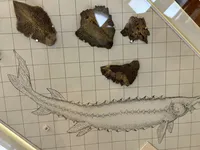
Atlantic Sturgeon Remains from Medieval Riga
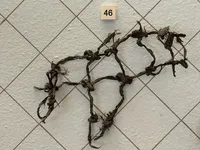
Medieval Fishing Net Fragment
Riga’s Role in the Russian Imperial Administration
Riga in the Russian Imperial Administration
After its incorporation into the Russian Empire, Riga became the administrative center of the Riga (later Livonian) province. Imperial authority was represented by the governor-general and his institutions, while local power remained with the magistrate and the existing lower-level administrative and judicial bodies.
From 1787 to 1797 Riga was integrated into the unified state system developed by Catherine II. The Livonian province was transformed into the Riga viceroyalty with its own urban self-government. In 1787 a mayor, magistrate, and town council were elected, with capital rather than old privileges determining eligibility. Emperor Paul I later abolished the viceroyalty but retained some reforms, and the magistrate resumed work with certain limitations.
After its incorporation into the Russian Empire, Riga became the administrative center of the Riga (later Livonian) province. Imperial authority was represented by the governor-general and his institutions, while local power remained with the magistrate and the existing lower-level administrative and judicial bodies.
From 1787 to 1797 Riga was integrated into the unified state system developed by Catherine II. The Livonian province was transformed into the Riga viceroyalty with its own urban self-government. In 1787 a mayor, magistrate, and town council were elected, with capital rather than old privileges determining eligibility. Emperor Paul I later abolished the viceroyalty but retained some reforms, and the magistrate resumed work with certain limitations.
Net Weights from Medieval Riga
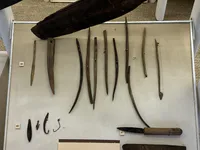
Fishing Tools from Medieval RIga
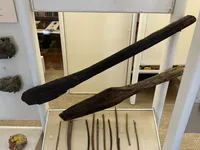
Wooden Oar Blades from Medieval Riga
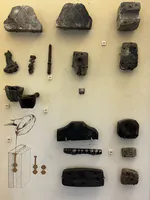
Metal Casting Tools and Molds
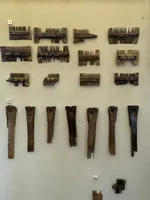
Combs from Medieval Riga
The Museum of Riga and Navigation
The Museum of Riga and Navigation, rooted in an 18th‑century collection created by local physicians and scholars, is among the oldest public museums in Europe. Located in the historic Riga Cathedral ensemble, it follows the city’s growth from early fortified settlements and a medieval trade hub to a major Baltic port under shifting foreign powers. Vaulted halls and former monastic spaces create an atmospheric setting for this long urban history.
Exhibits reveal Riga’s role in the Hanseatic League, its guilds and brotherhoods, and the spread of Christianity and the Reformation, alongside displays on fortifications, crafts and daily life. Maritime and navigation sections emphasize the city’s enduring ties to the Daugava River and the Baltic Sea, from merchant shipping to measuring systems and port commerce, offering a compact, engaging overview of the forces that shaped Latvia’s capital.
Exhibits reveal Riga’s role in the Hanseatic League, its guilds and brotherhoods, and the spread of Christianity and the Reformation, alongside displays on fortifications, crafts and daily life. Maritime and navigation sections emphasize the city’s enduring ties to the Daugava River and the Baltic Sea, from merchant shipping to measuring systems and port commerce, offering a compact, engaging overview of the forces that shaped Latvia’s capital.
Popular categories
Advertising space