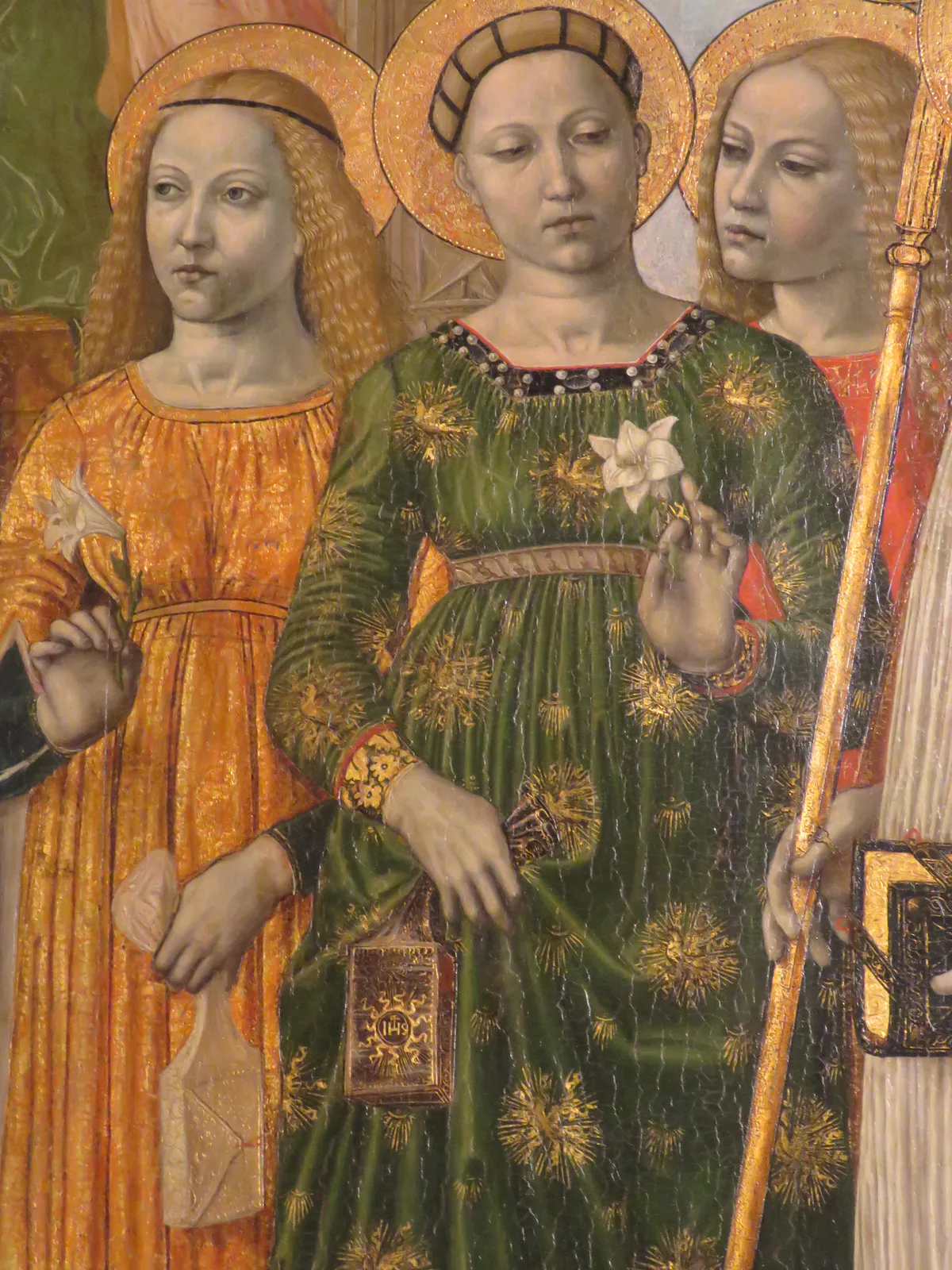
Santa Conversazione (detail)
Ambrogio Bergognone
This panel 1490-95) features a trio of female saints bearing lilies, symbolizing purity. Adorned with gold and intricate embroidery, their garments suggest sanctity and nobility. The solemn expressions and clasped books evoke wisdom and devotion, emphasizing the fusion of holiness and human dignity in late Gothic religious art.
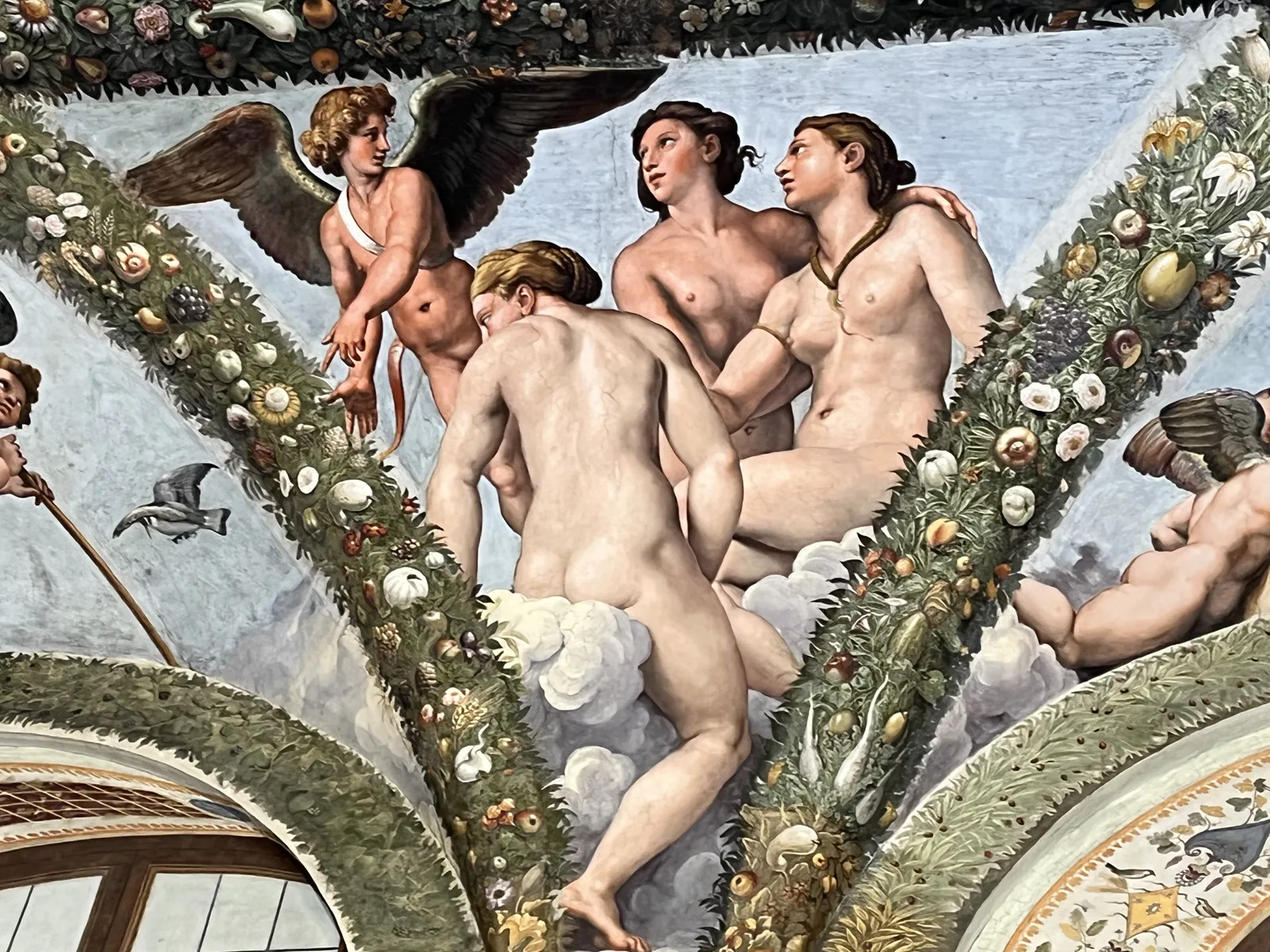
Cupid and the Three Graces
Raphael
In this fresco (1518), Raphael portrays Cupid with the Three Graces, who embody beauty, charm, and joy. The scene reflects the harmony of love and divine favor, integral to Psyche’s myth. Framed by Giovanni da Udine’s botanical festoons, it blends mythology with Renaissance ideals of grace and abundance.
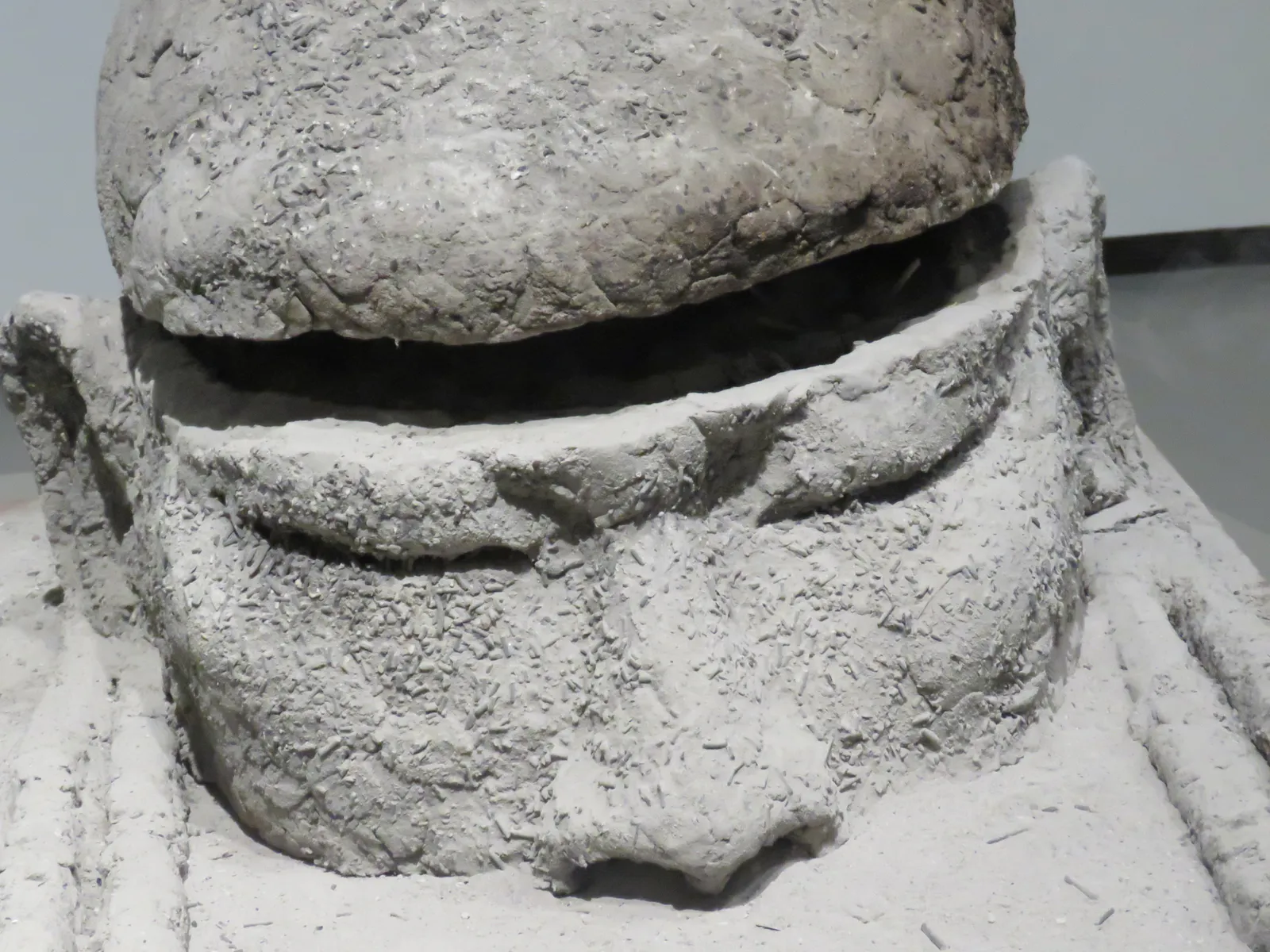
Sudden Awakening
Zhang Huan
This large Buddha head sculpture (2006) lies fragmented on the ground, its heavy upper section slightly shifted above closed eyes and rough, ash-coated features. Formed from ash and steel, it draws on materials linked to ritual burning and industrial residue. The broken, weighty face reveals how contemporary Buddhist art confronts impermanence and the tension between spiritual ideals and material collapse.
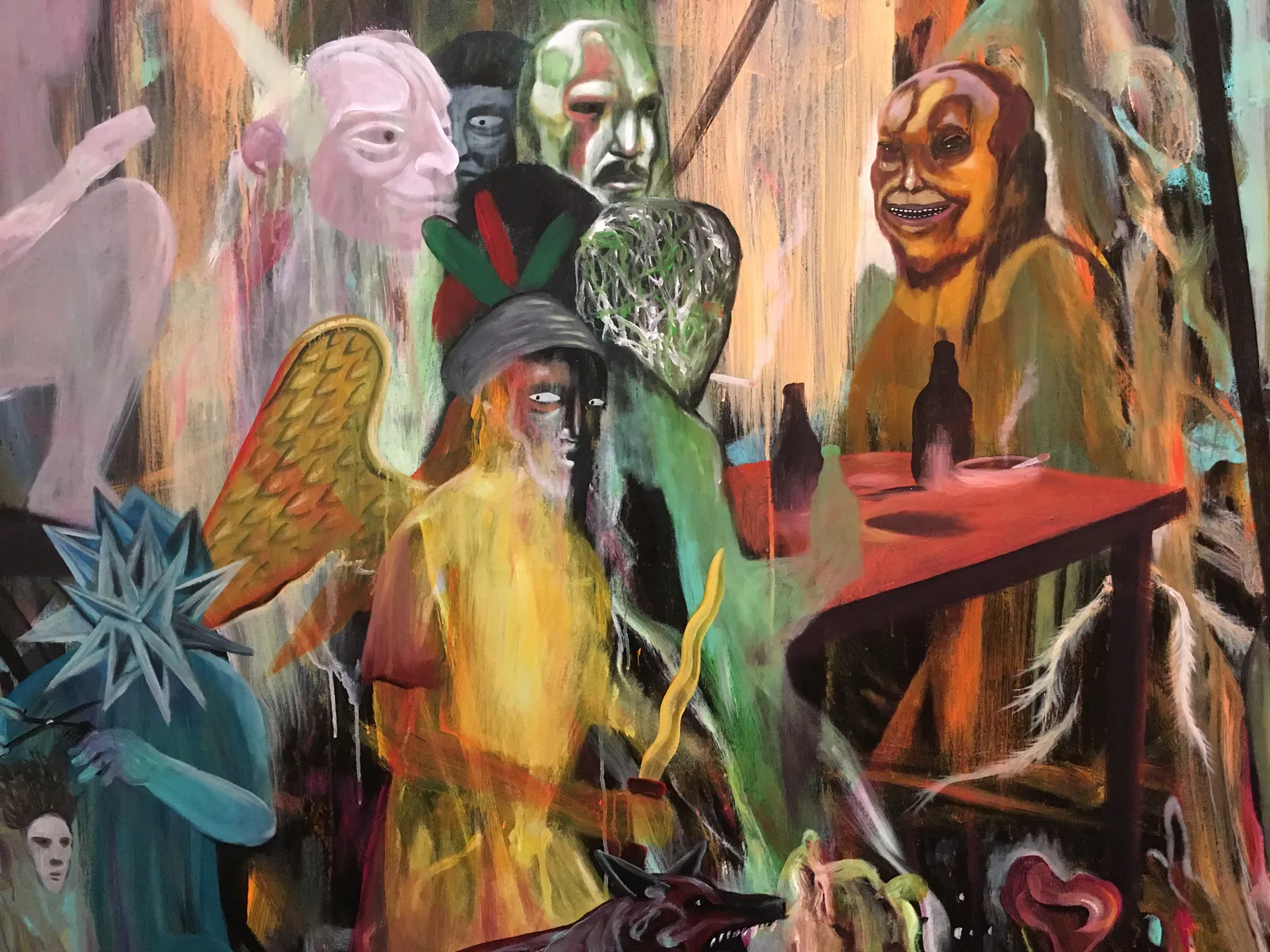
The Comedy, Parody, and Tragedy
Rodel Tapaya
This painting (2018) from Tapaya’s Urban Labyrinth series swirls with hybrid beings, masks, and mythic figures at a chaotic table. Angelic wings, demonic grins, and spectral visages blur folk imagination with urban satire. Tapaya weaves Philippine mythology into contemporary critique, where humor and menace mirror the fractured realities of modern city life.
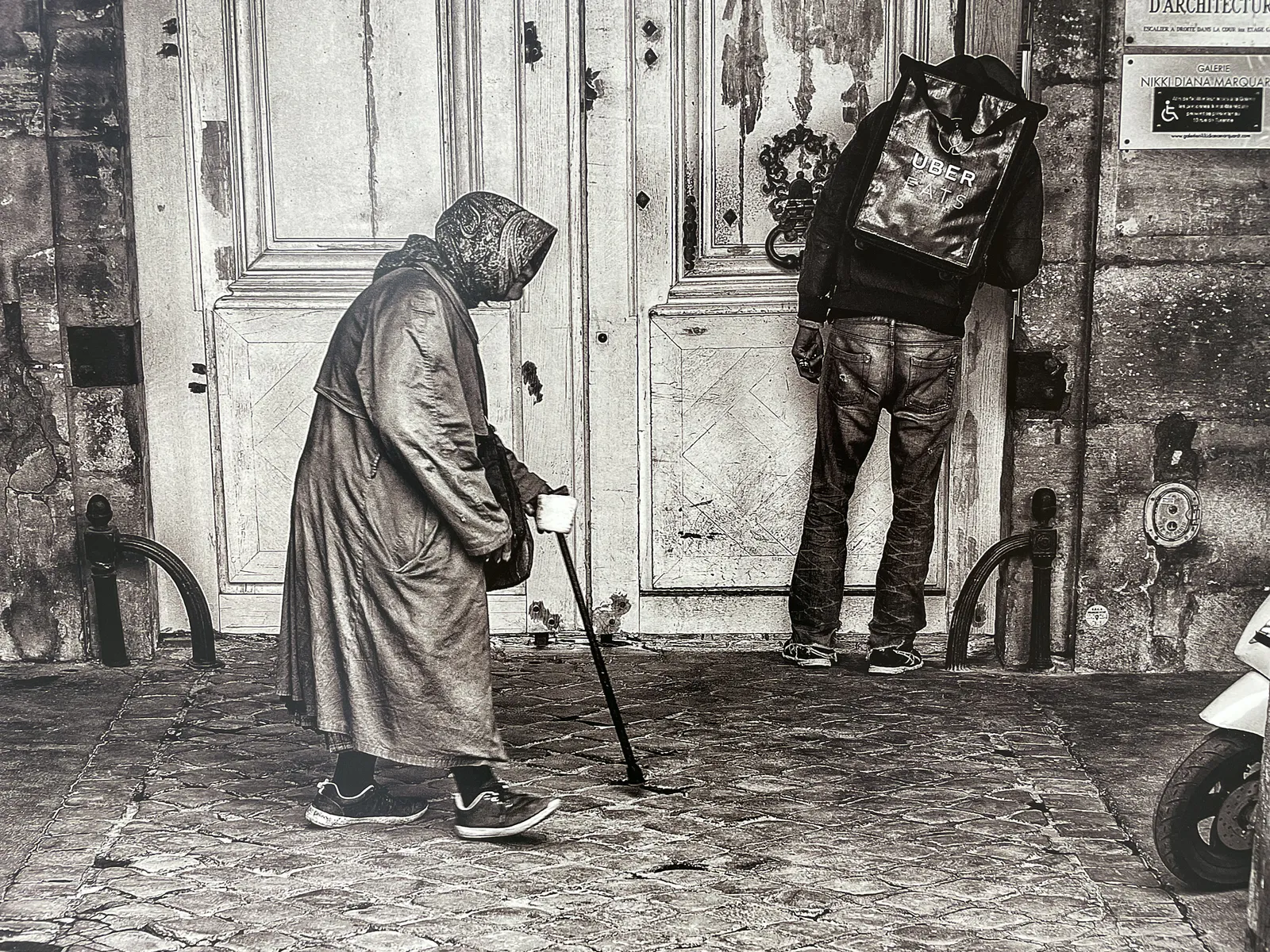
Uber Eats
Roger Zayas
This photo (2017), taken in the historic Marais district of Paris, captures a striking urban contrast: an elderly woman with a cane passes a food courier bent over a doorway. Zayas underscores generational divides and social invisibility, reflecting on aging and shifting economic realities in the European metropolis.
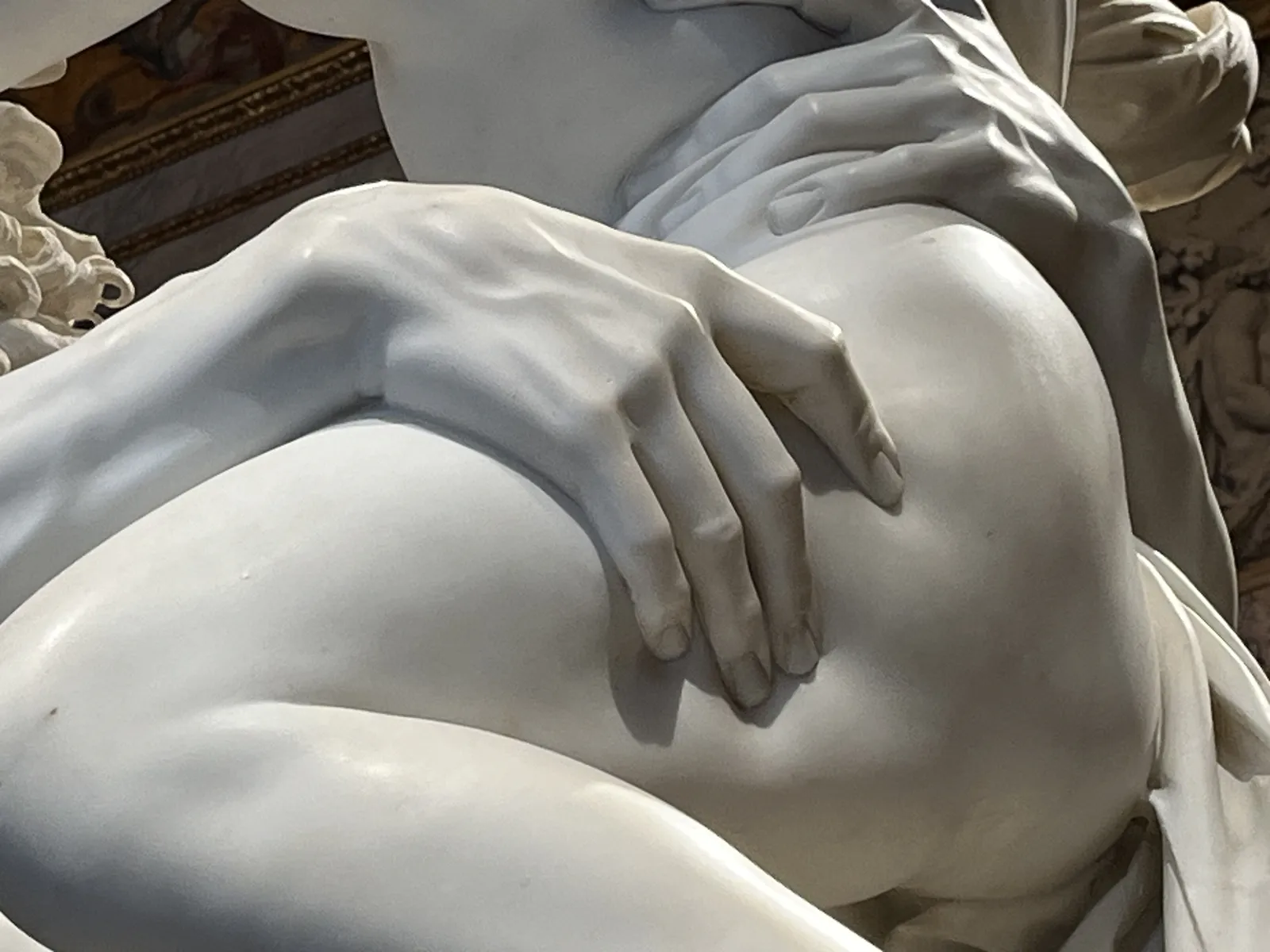
The Rape of Proserpina (detail)
Gian Lorenzo Bernini
This gripping close-up from Bernini’s marble group (1621–22) captures Pluto’s hand pressing into Proserpina’s flesh. The marble appears to yield under his grip, a dazzling illusion of softness and force. Bernini’s technical brilliance here transforms stone into living drama, amplifying the sculpture’s emotional and physical realism.
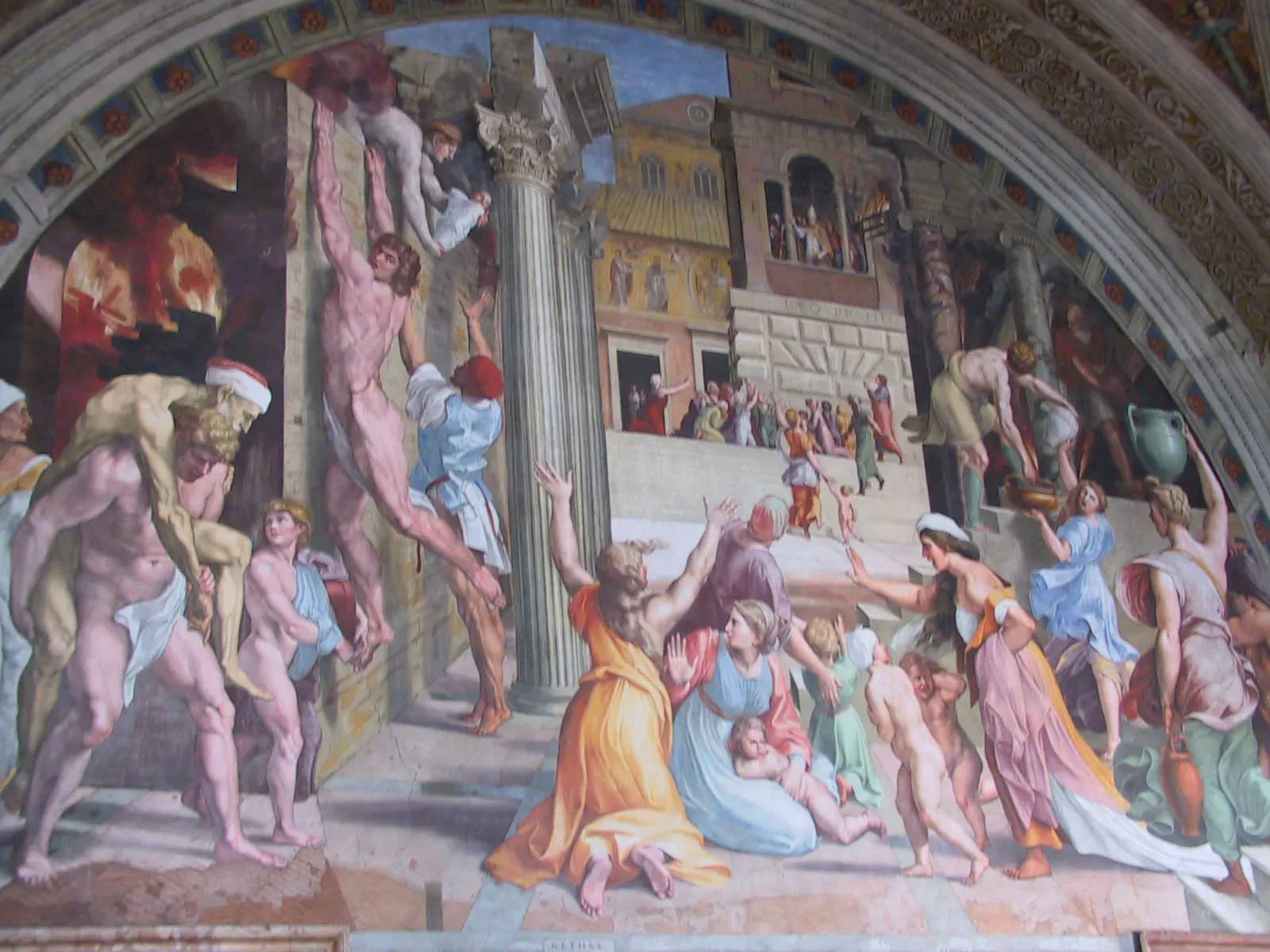
Fire in the Borgo
Rapahael and Giulio Romano
This fresco (1514) captures a legendary fire in Rome's Borgo district, illustrating divine intervention through Pope Leo IV's prayer. The fresco, part of the Raphael Rooms in the Vatican, blends classical and Renaissance elements, showcasing dynamic figures and architectural precision. This work reflects the era's belief in the power of faith and the church's central role in societal protection and order.
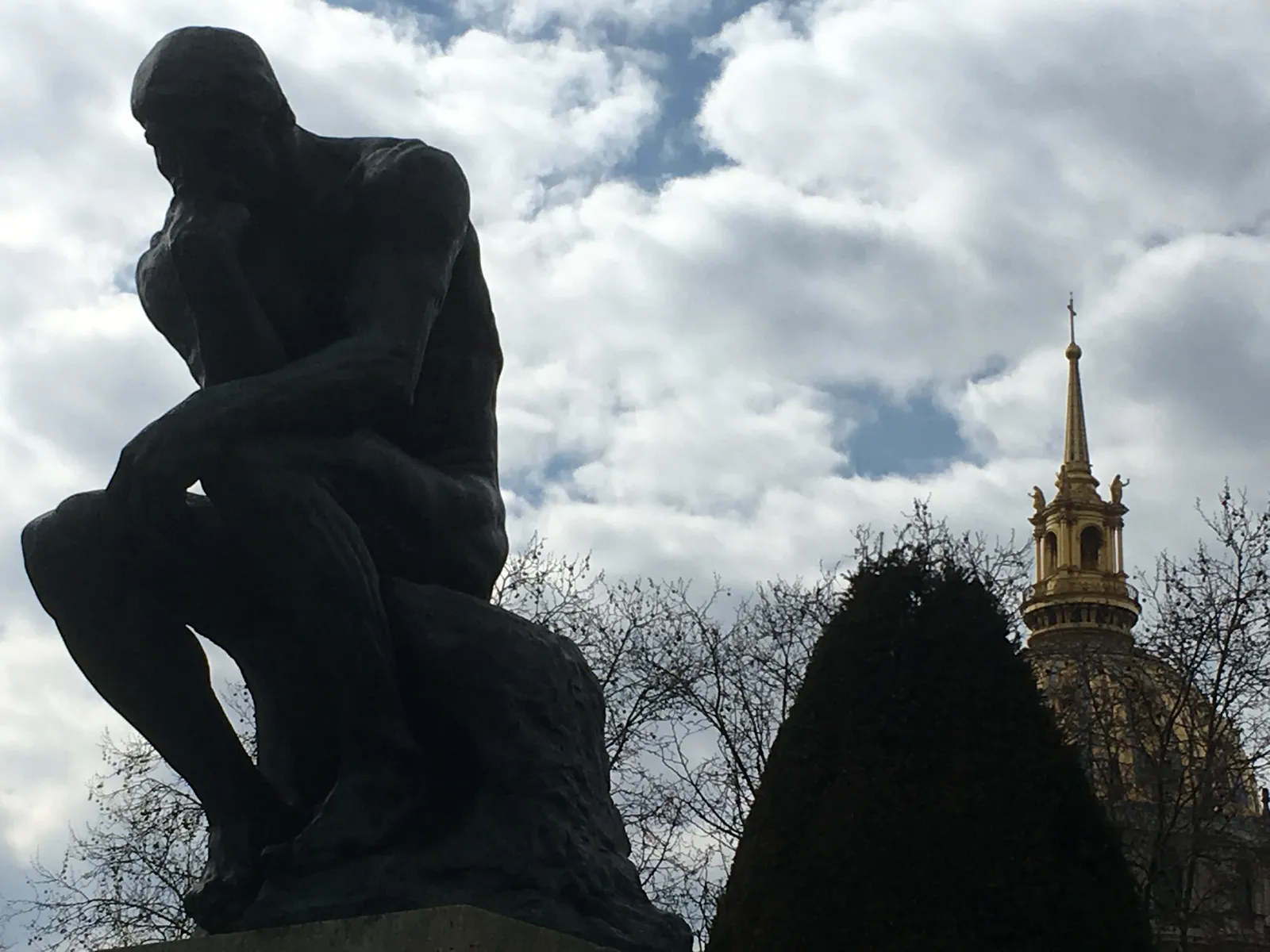
The Thinker
Auguste Rodin
Rodin's iconic bronze sculpture, The Thinker(1904), depicts a nude male figure in deep contemplation, symbolizing profound thought. Originally part of The Gates of Hell, it reflects on philosophy and introspection. This one is the monumental casting, with 27 full-sized versions worldwide. The masterpiece invites viewers to ponder life's complexities, embodying the universal quest for understanding and intellectual pursuit.
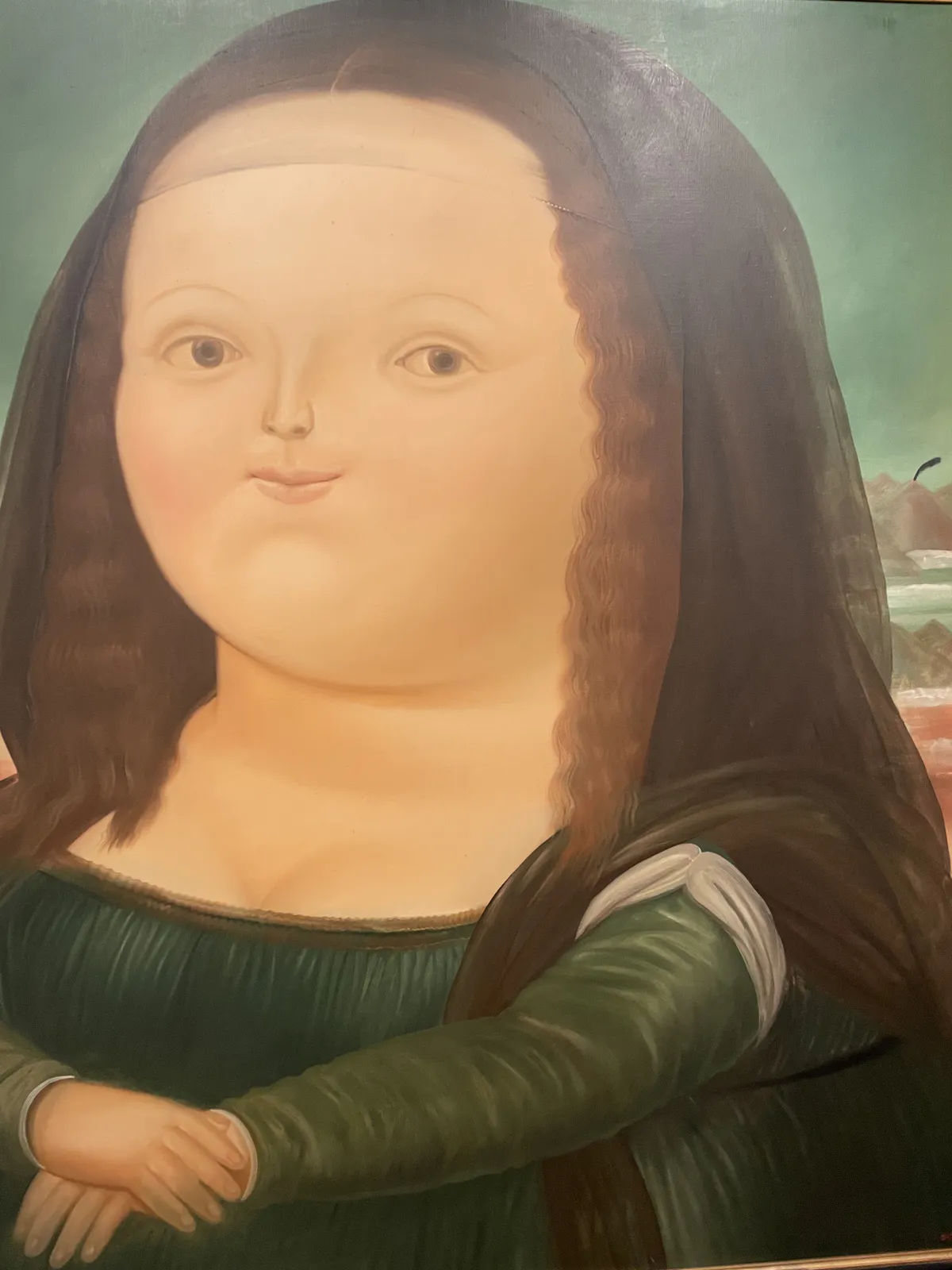
Mona Lisa, Age Twelve
Fernando Botero
In this whimsical reimagining (1959), Botero transforms da Vinci’s iconic subject into a voluminous child. Created in his signature Boterismo style, the painting blends parody with homage. Born from a cleaning lady’s remark, the work helped launch Botero’s career, celebrating exaggerated form as a tool for both humor and artistic identity.
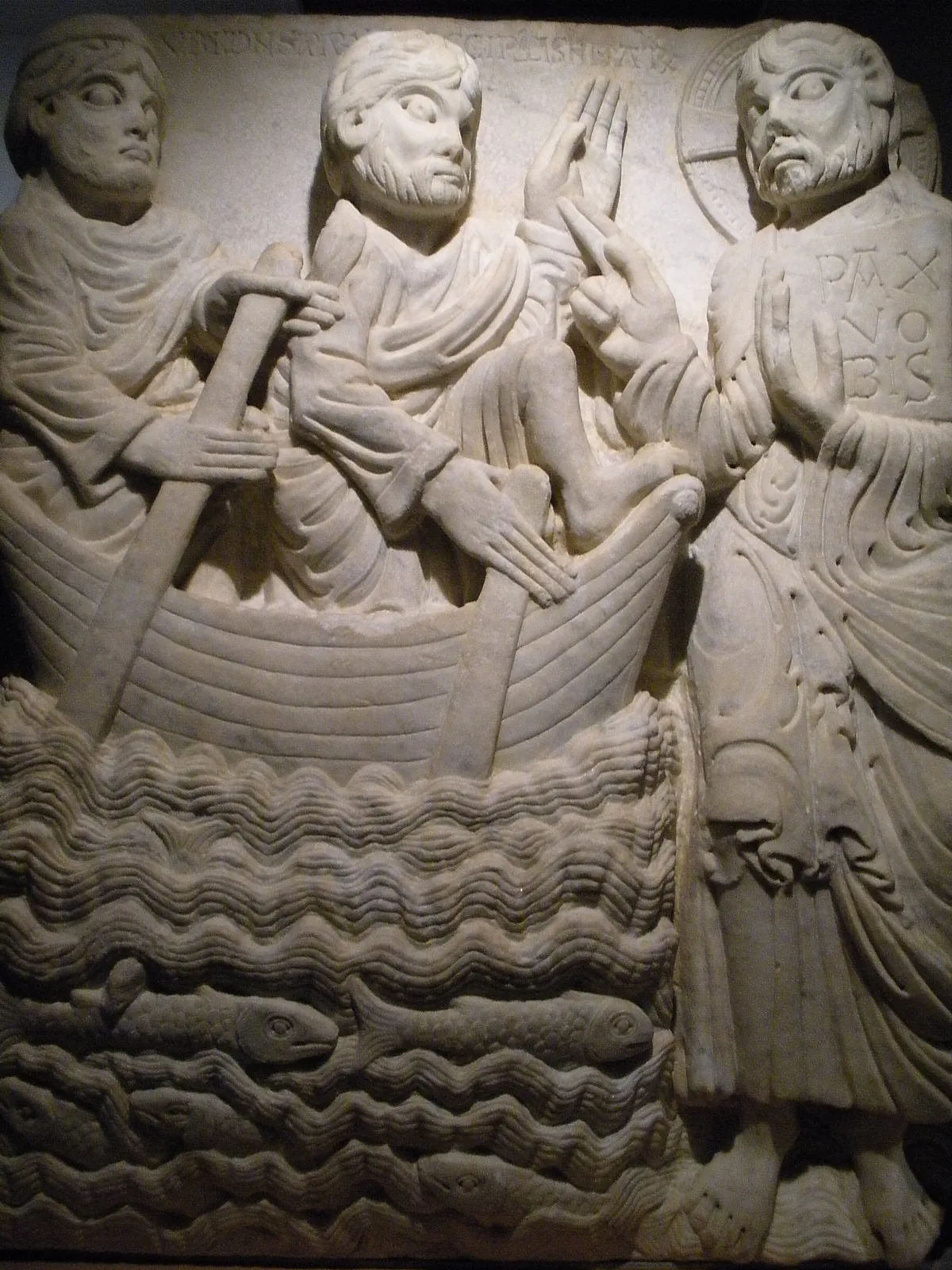
The Appearance of Christ to the Disciples
Master of Cabestany
This 12th-c. Romanesque sculpture by the Master of Cabestany depicts Christ revealing himself to his disciples after the resurrection. The artist is known for figures with large heads, flat foreheads, long noses, and almond-shaped eyes. Likely from the monastery of Sant Pere de Rodes, the work exemplifies the Master of Cabestany’s influence across Southern Europe, from Tuscany to Navarre.
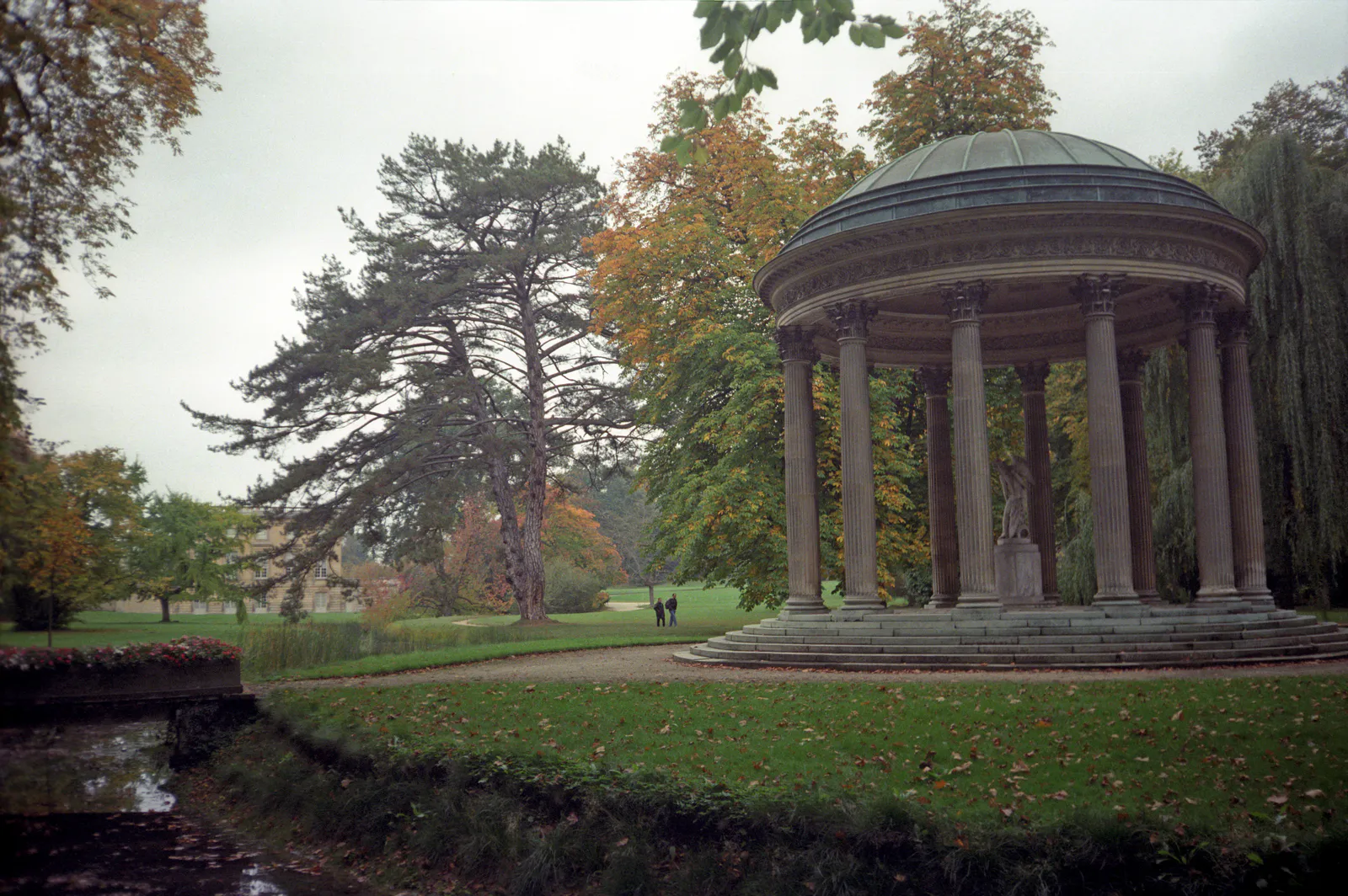
Temple of Love
Richard Mique
Erected in the gardens of the Petit Trianon (1778), this neoclassical rotunda shelters a sculpture of Cupid and symbolizes Marie Antoinette’s idealized vision of romance and pastoral escape. Designed by architect Richard Mique, the temple reflects Enlightenment-era aesthetics and the queen’s longing for simplicity within Versailles’ opulence.
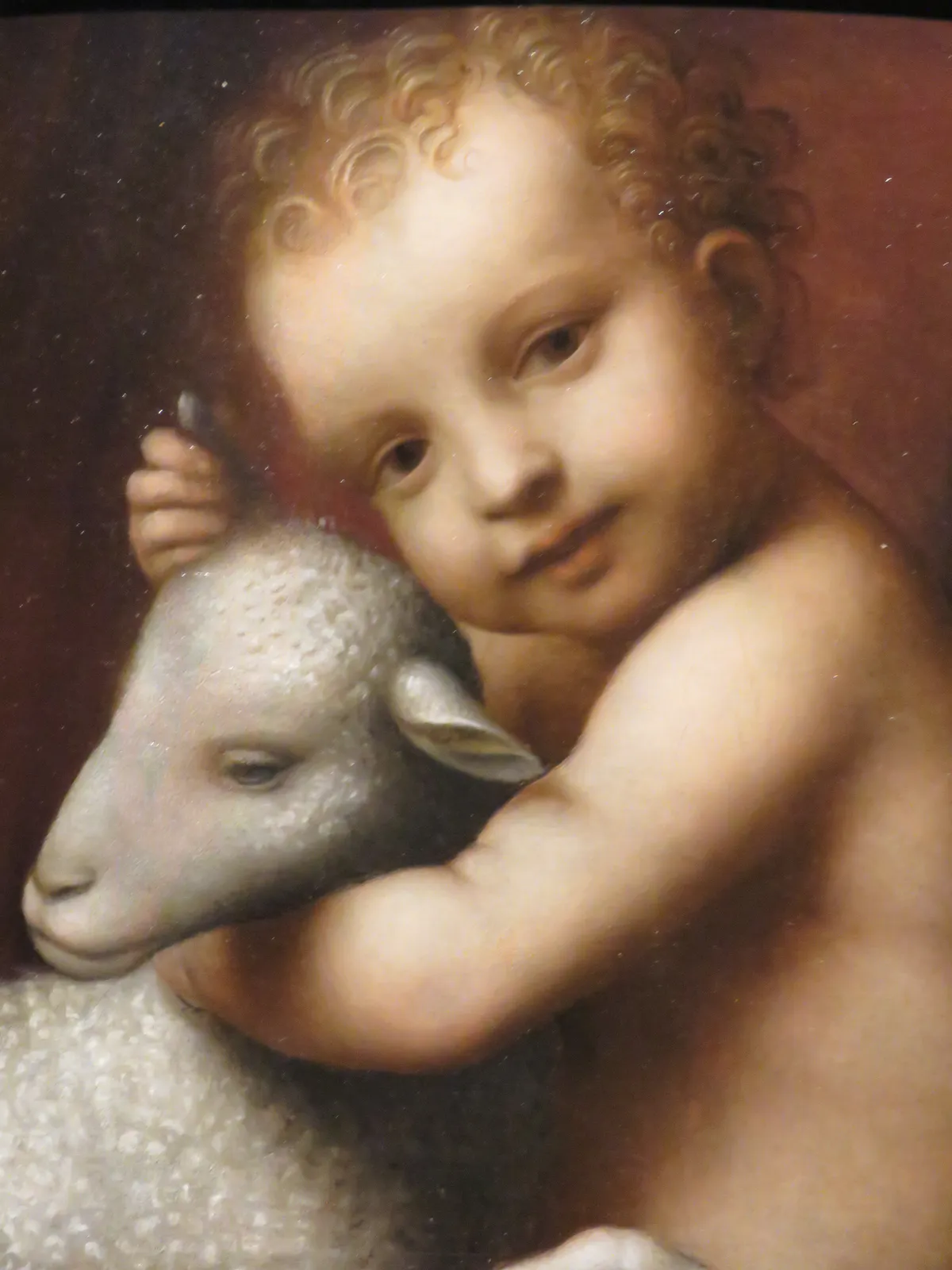
The Infant Jesus with a Lamb
Bernardino Luini
This oil and tempera on panel (c. 1525) captures the tenderness of the Infant Jesus, or Gesu Bambino, embracing a lamb—a symbol of his future sacrifice as the Lamb of God. Luini’s High Renaissance style blends divine purity and human innocence, creating a serene image of spiritual love and redemptive foreshadowing.
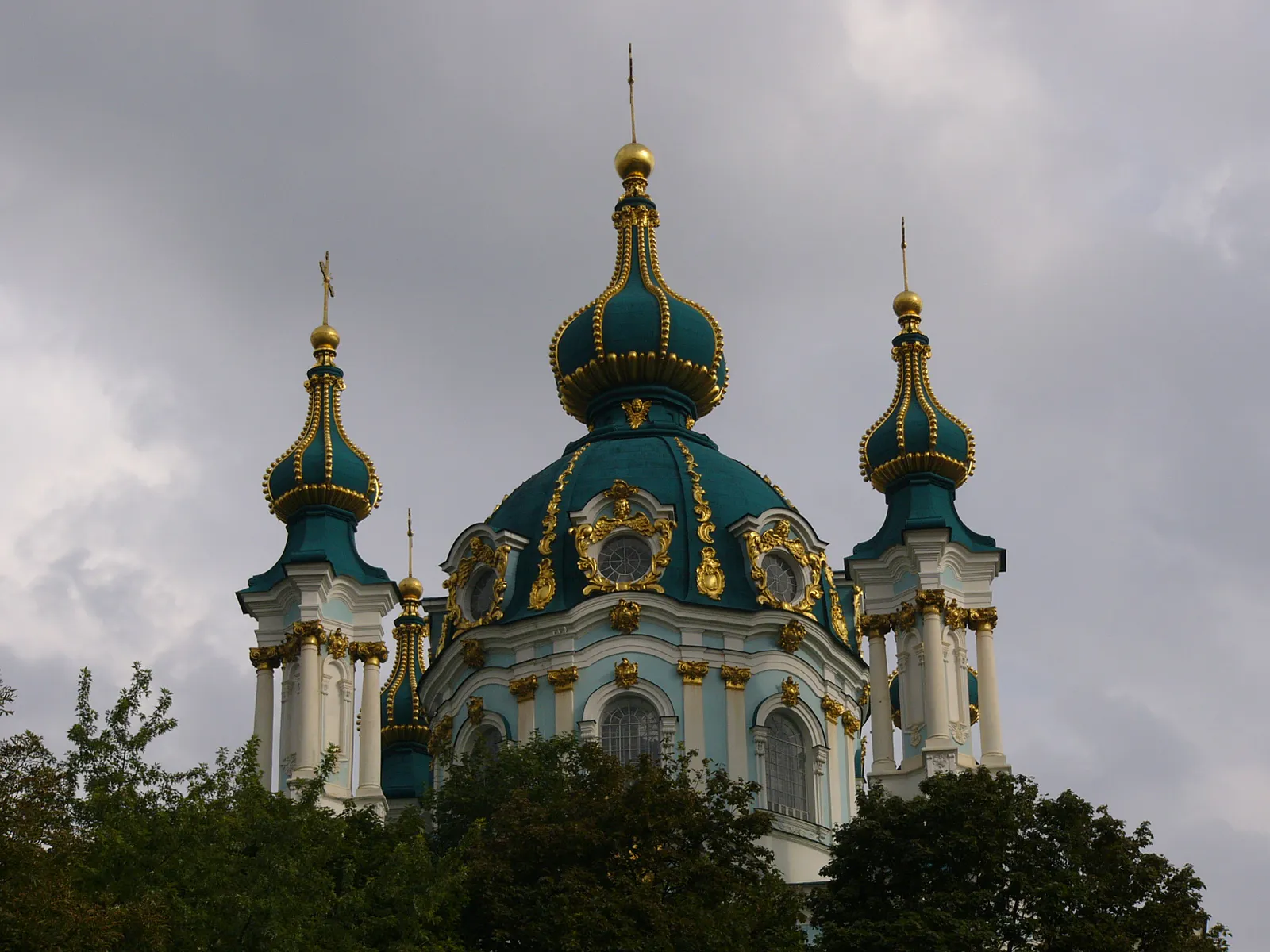
St. Andrew's Church
Bartolomeo Rastrelli
St. Andrew’s Church (1747–54) crowns a Kyiv hill with gilded domes and turquoise ornament typical of late Baroque design introduced by the Italian architect Bartolomeo Rastrelli. Its dynamic composition and elaborate detailing adapt Western forms to Orthodox liturgy. The church stands as a landmark of 18th-c. imperial architecture in Eastern Europe.
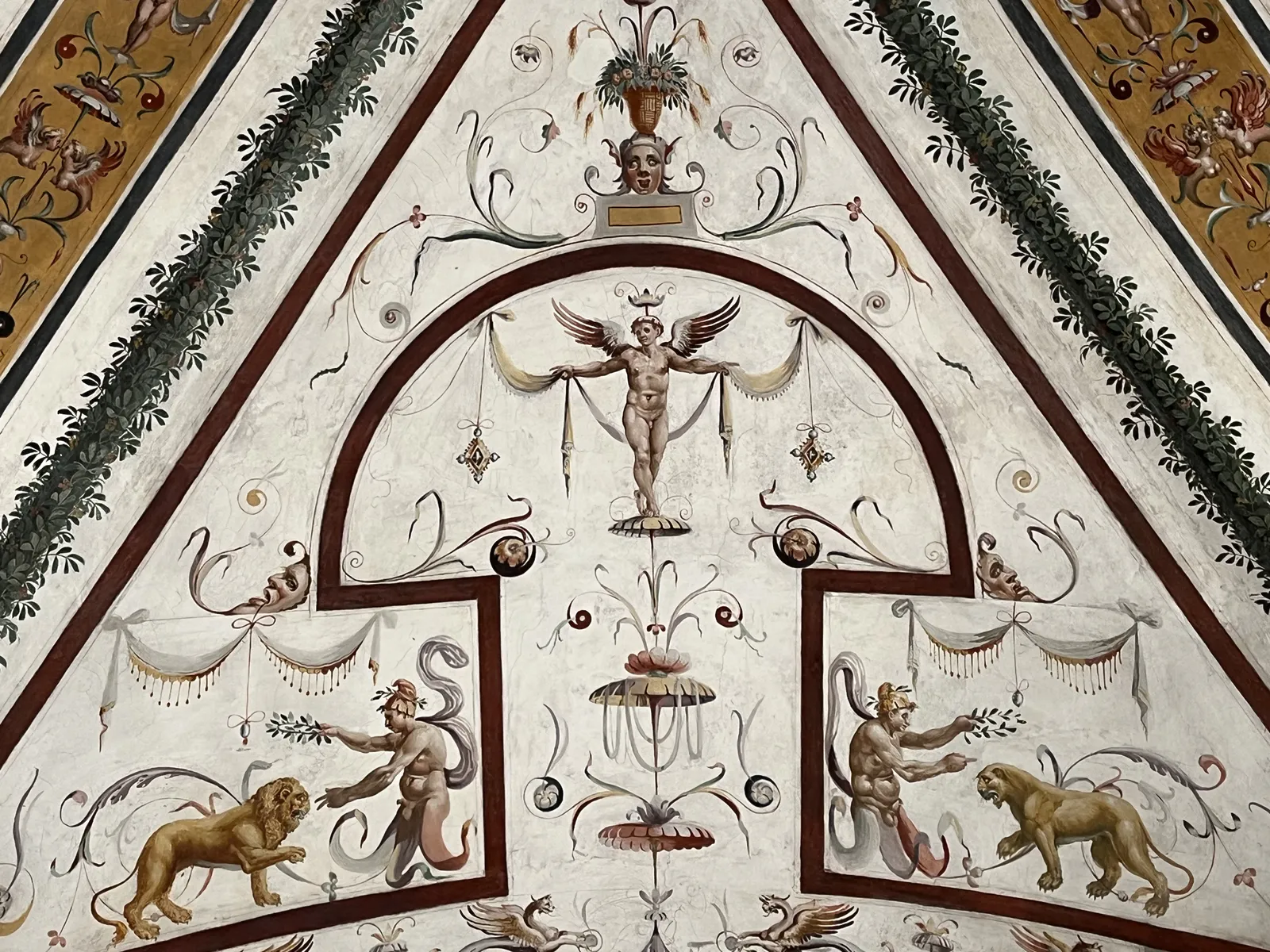
Grotesque Ceiling Decoration
Bonaccorsi Pietro (Perin del Vaga) and Rietti Domenico
This fresco (c. 16th c.) blends Renaissance whimsy with ancient Roman influence, reviving the grotesque style unearthed in Nero’s Domus Aurea. Figures with human and animal features balance symmetrical vines, mythical beasts, and theatrical masks. The composition celebrates harmony through fantasy, playfully bridging antiquity and imagination.
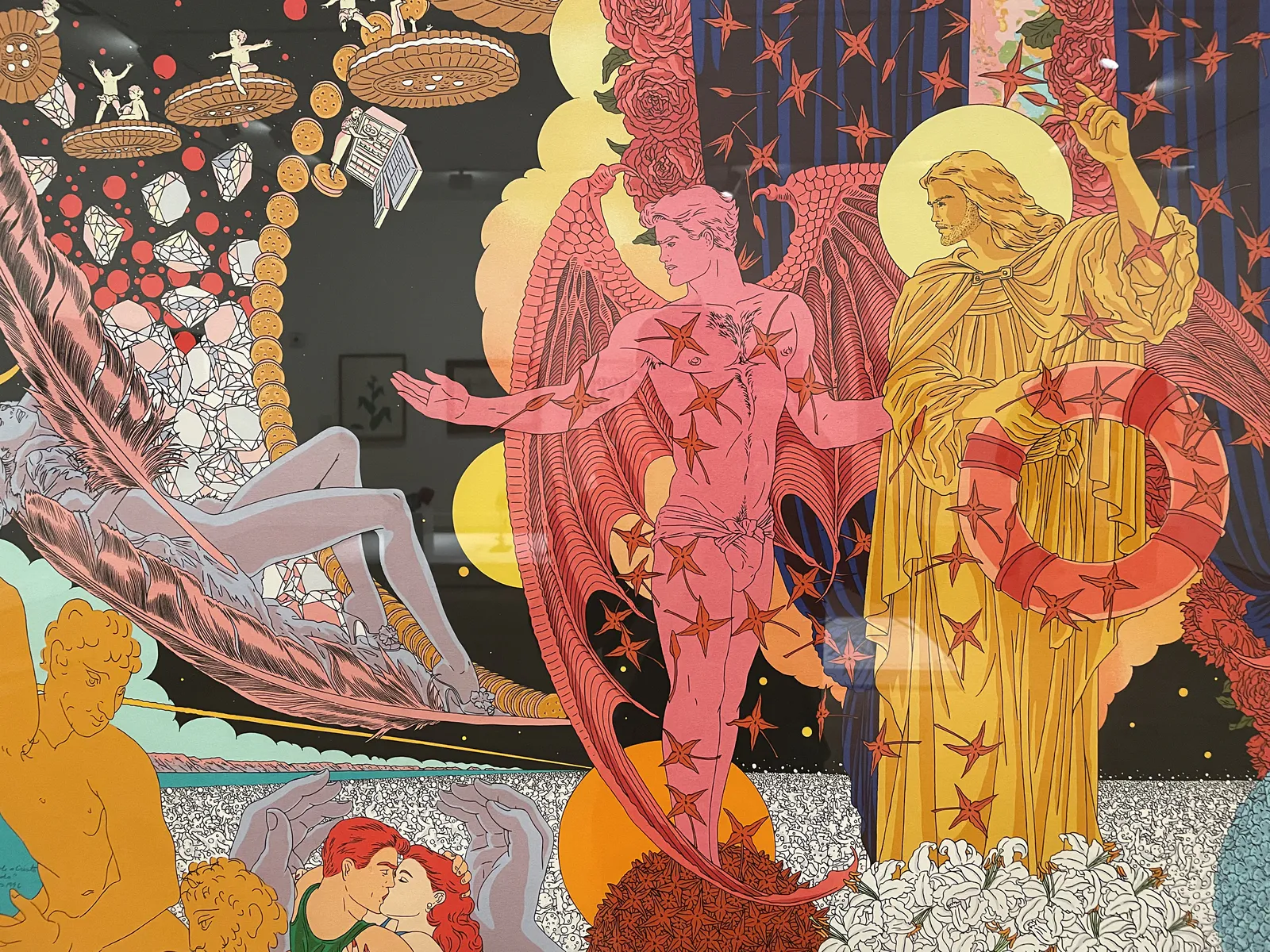
The Devil Showing Christ the Delights of the World
Álvaro Barrios
In this pop-infused lithograph (1996), Barrios reimagines Christ’s temptation with dazzling surrealism. A winged devil offers worldly pleasures—luxury, sex, and consumer goods—while Christ holds a lifebuoy, a symbol of spiritual rescue. Blending biblical narrative with pop culture, the work critiques material excess and invites reflection on salvation in an age of spectacle.
“When the path is beautiful, do not ask where it leads.” — Zen proverb
Welcome to my travel photography!
“When the path is beautiful, do not ask where it leads.” — Zen proverb
Welcome to my travel photography!
For as long as I can remember, my path has been one of discovery—seeking beauty, timelessness, and connection in every corner of the world. It has also been a journey of deep learning and understanding. I’ve been an avid traveler (or perhaps a travel addict?) for most of my life. My love for travel began long before I ever left home: as a child, I drew a fantasy map of my grandparents’ apartment and “traveled” through it with my cousin Sonya, imagining adventures in every corner. Nearly 90 countries and countless moments of awe later, I’m excited to share this journey with you.
Thanks to the tireless and ingenious programming of Diagilev, we’re now able to present about fifteen percent of the images I’ve accumulated over the years. More will be released in small batches depending on your interest. While the first release leans toward museum photography, later ones will include more nature, architecture, culture, and general travel experiences. If you’d like to receive email notifications about new releases, feel free to reach out—no commercial use, ever.
Throughout my travels, I’ve been drawn to two intertwined kinds of discovery. One is intellectual: learning why the world is the way it is. History became my guide, shaping my perspective and filling my camera roll with museums and old buildings. To me, history is not the past—it is the key to understanding the present and how the world became what it is. The other is emotional: seeking moments of elevation—spirituality, beauty, harmony—often found in nature, monasteries, and ancient sacred spaces. Together, these impulses shape my photography. It invites you to learn, admire, and soar—to rise above the mundane and see the world through a lens of curiosity and wonder.
Much of my later travel became possible thanks to my job with Delta Air Lines, but the wanderlust began years earlier. By the time I joined the industry, I had already visited over 35 countries and lived in several—largely thanks to a backpacking journey around the world with Luis León, whose face appears in many early photos. I grew up in Ufa in the USSR, and since leaving it I have lived, studied, and worked in Latvia, the United States, France, South Korea, Canada, Spain, Italy, Brazil, Japan, and Colombia.
A life of near-constant movement may seem a little crazy, but it has deepened my understanding of the world and produced the photography you are about to see. Over the years, my style has evolved—more intentional, more refined—yet its core remains the same: a search for understanding, timeless beauty, and a connection to those who walked this earth long before us.
I hope these photos stir something in your soul, just as they did in mine. I’d love to hear from you—whether reactions, suggestions, corrections, or a request to be added to the email list for new releases (no commercial use, I promise). You can learn more about my travels here, and my academic life here.
Enjoy our shared journey!