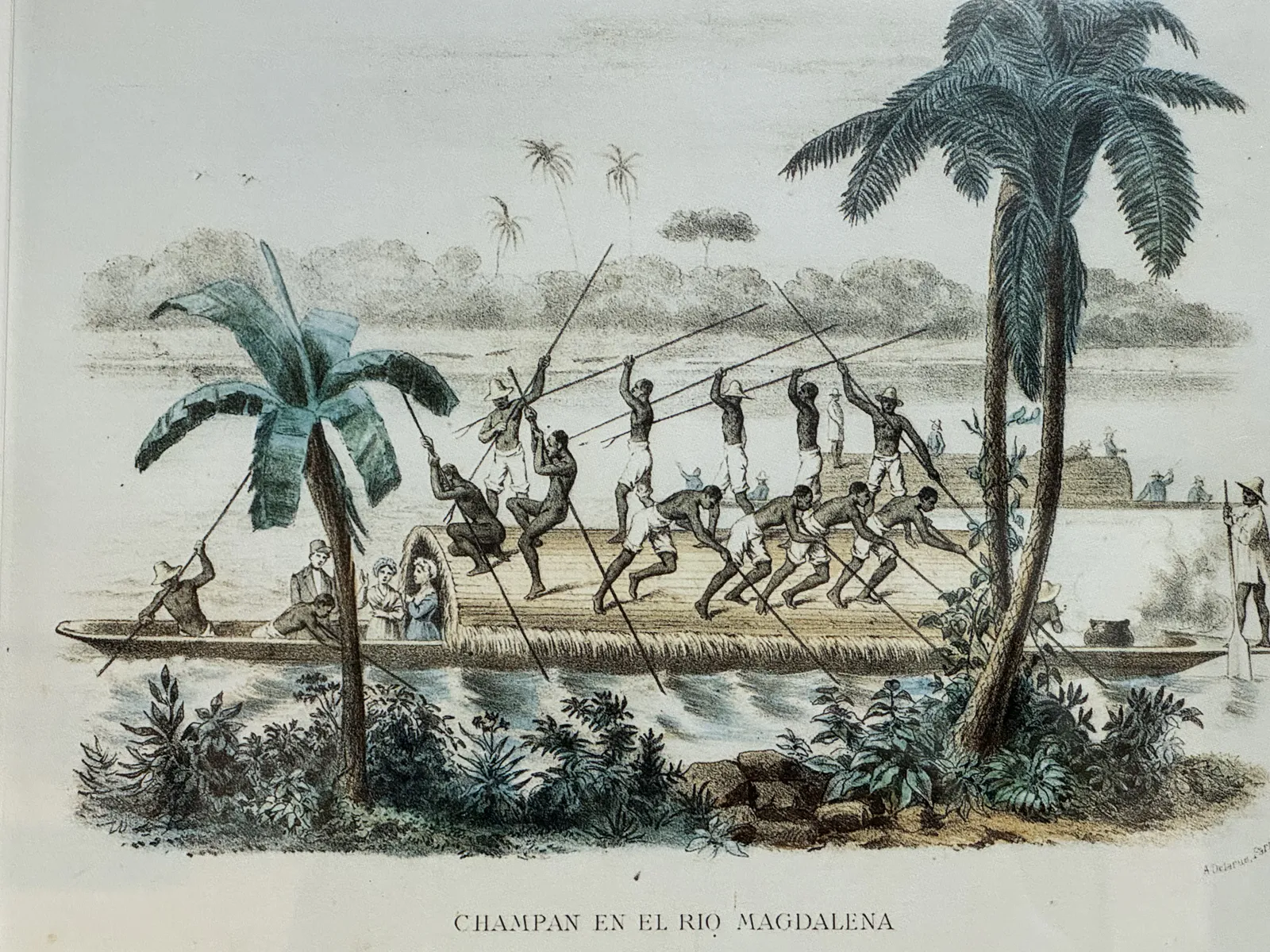
Champán en el río Magdalena
De la Rue & Torres Méndez
This 1878 lithograph depicts a champán, a flat-bottomed river raft common on the Magdalena River, propelled by Afro-Colombian workers using long poles. Wealthy passengers rest under a thatched shelter, highlighting the stark racial and class divisions of the era. The image captures both Colombia’s natural landscape and its colonial labor hierarchies in transition.
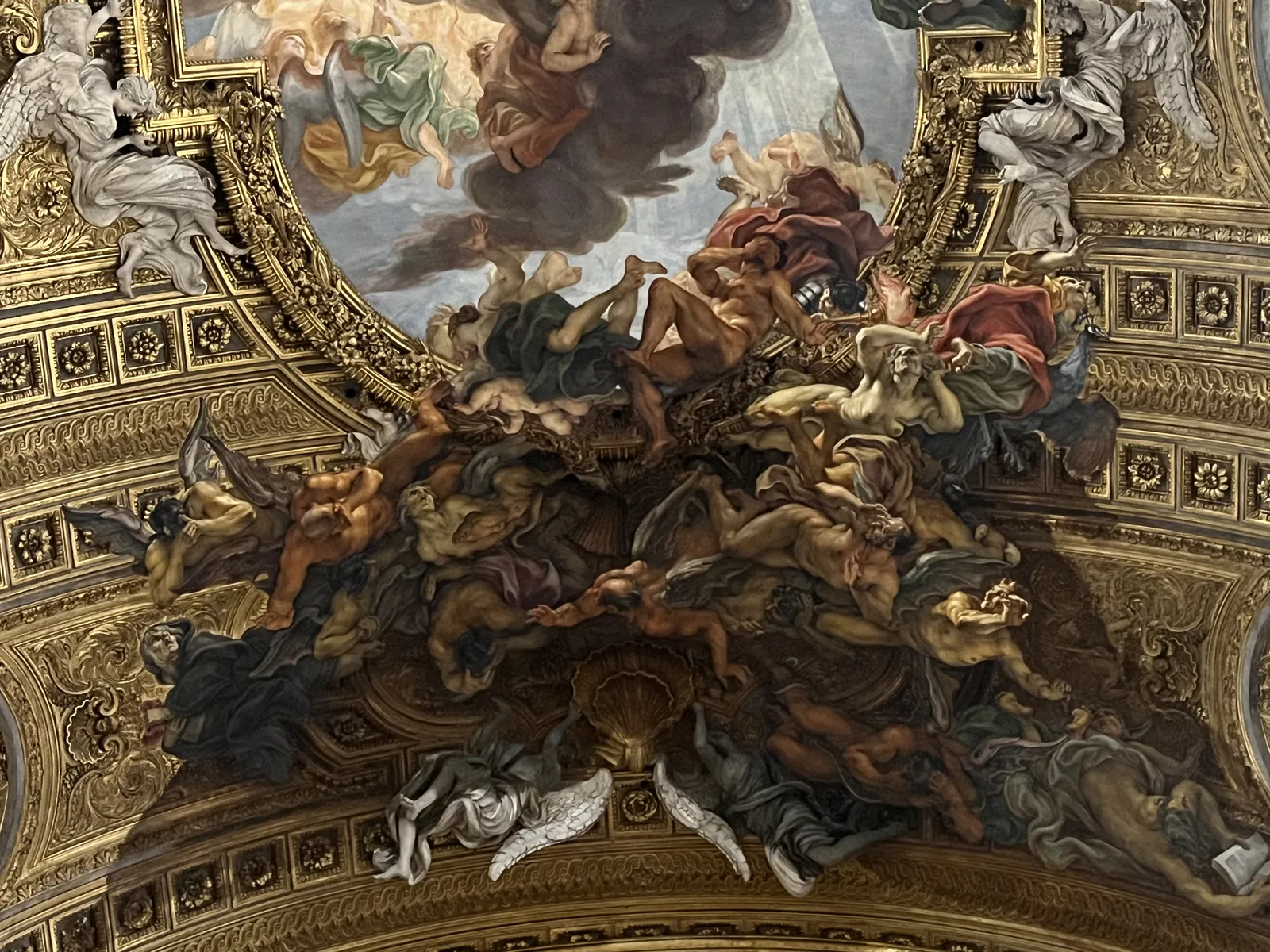
The Damned
Giovanni Battista Gaulli
In this dramatic segment (1676–79) from the Triumph of the Name of Jesus, Gaulli casts the damned from heaven into shadow and chaos. Their bodies twist, morph, and scream as they recoil from the divine light. Cloaked in darkness and shame, they contrast sharply with the radiant saved above—embodying Baroque emotion and the terrifying cost of spiritual failure.
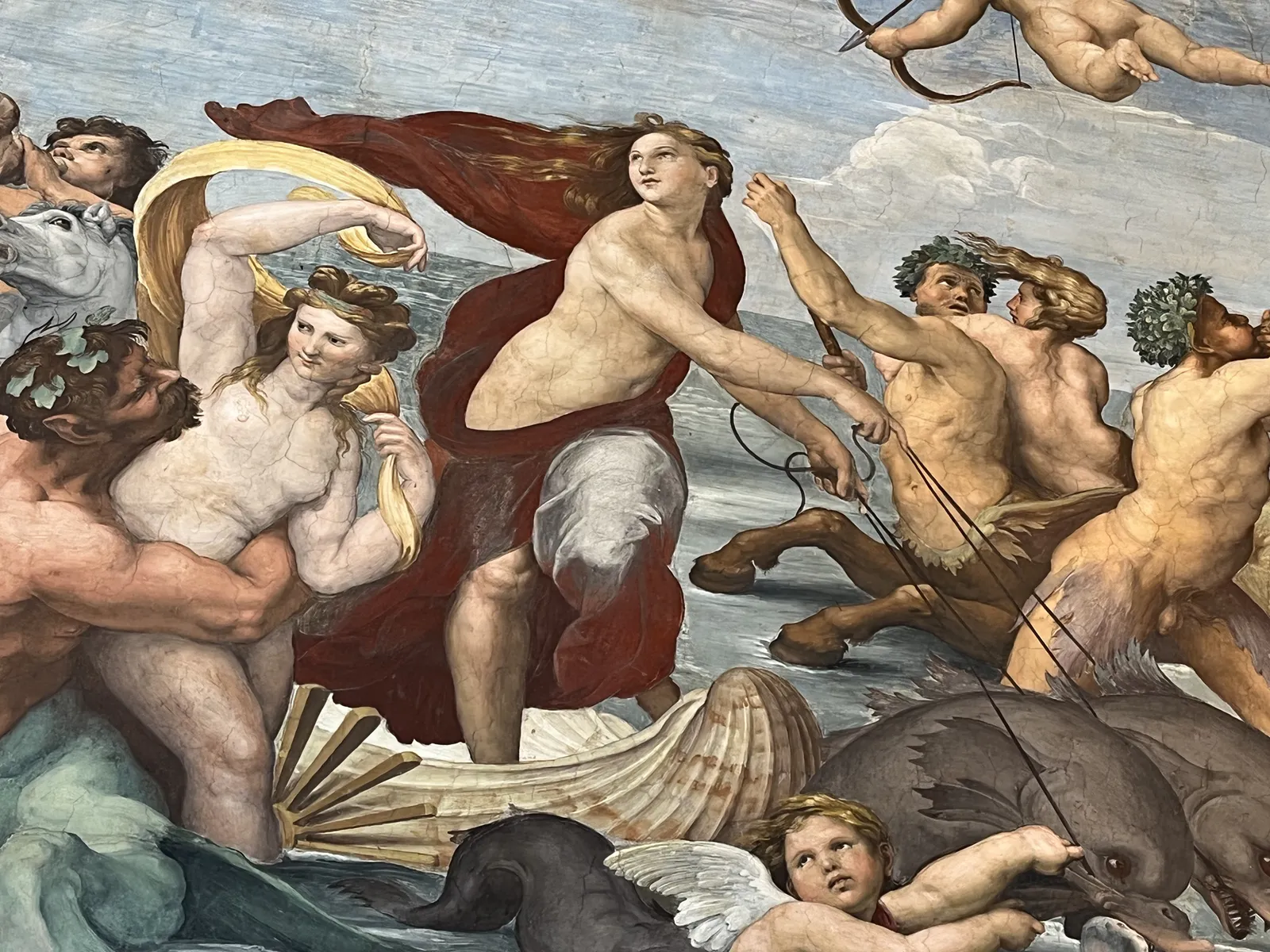
Triumph of Galatea (detail)
Raphael
Painted by Raphael’s workshop (1511–1512), this fragment depicts the sea nymph Galatea triumphantly riding a shell chariot, drawn by dolphins and surrounded by marine gods. Inspired by classical mythology, the scene celebrates ideal beauty, love, and movement, blending Renaissance harmony with dynamic mythological fantasy.
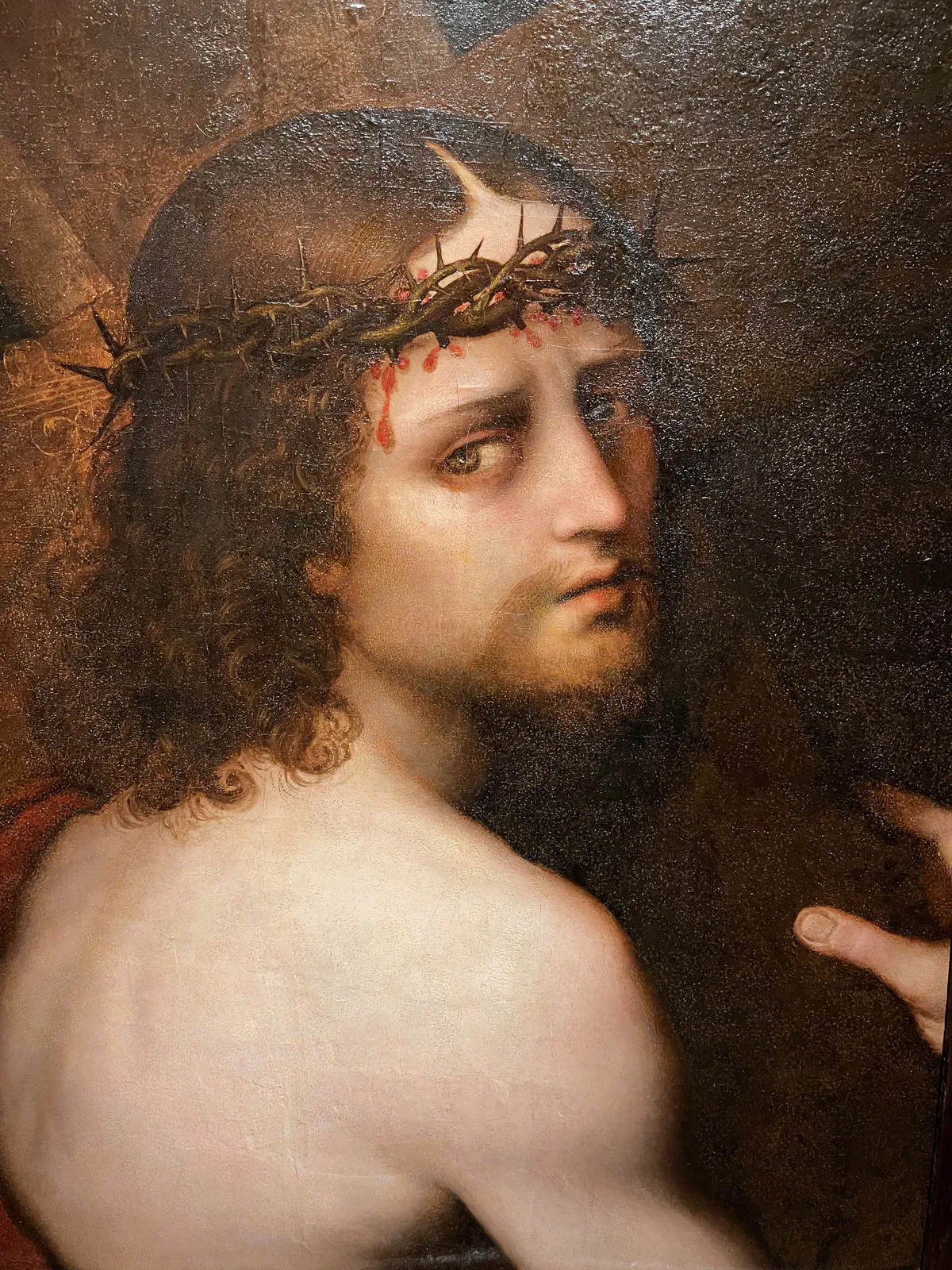
Christ Carrying His Cross
Giampietrino
This intense portrait (1520-30) captures the poignant moment of Christ's journey to crucifixion. The crown of thorns, with its vivid drops of blood, symbolizes suffering and sacrifice. Giampietrino, a follower of Leonardo da Vinci, employs chiaroscuro to enhance the emotional depth, highlighting Christ's resigned yet resolute expression. This work reflects Renaissance ideals of human emotion and divine purpose, illustrating the enduring narrative of redemption through suffering.
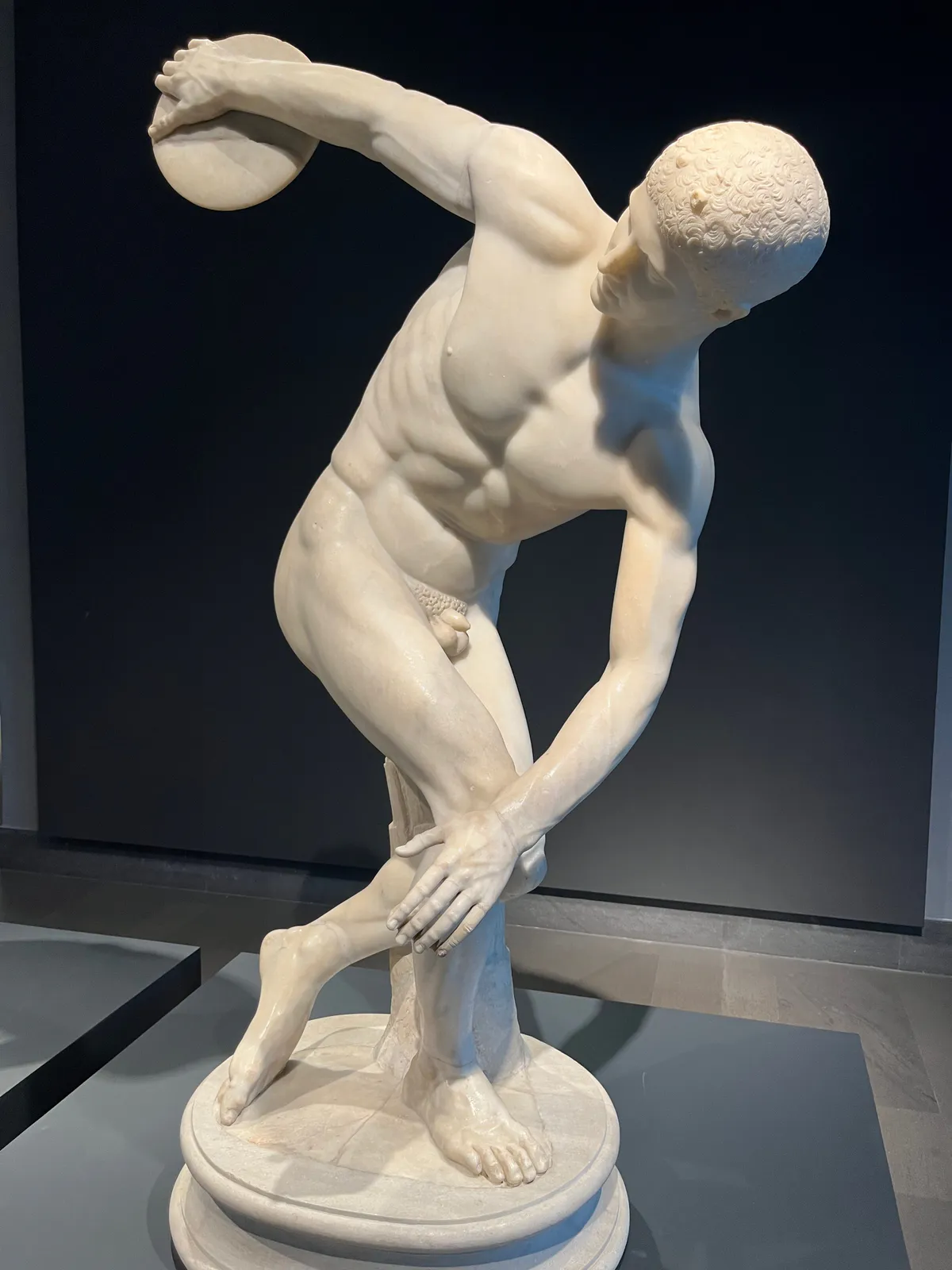
Discobolus
Myron
This Roman marble statue (mid-2nd c.) is a faithful copy of Myron’s Greek bronze Discobolus (c. 450 BC). It depicts an athlete in a dynamic pose, poised to release a discus, showcasing the Greek exploration of human form and movement. The sculpture highlights the tension and grace of athletic prowess, reflecting Roman admiration for Greek art and the enduring legacy of classical ideals in depicting the human body.
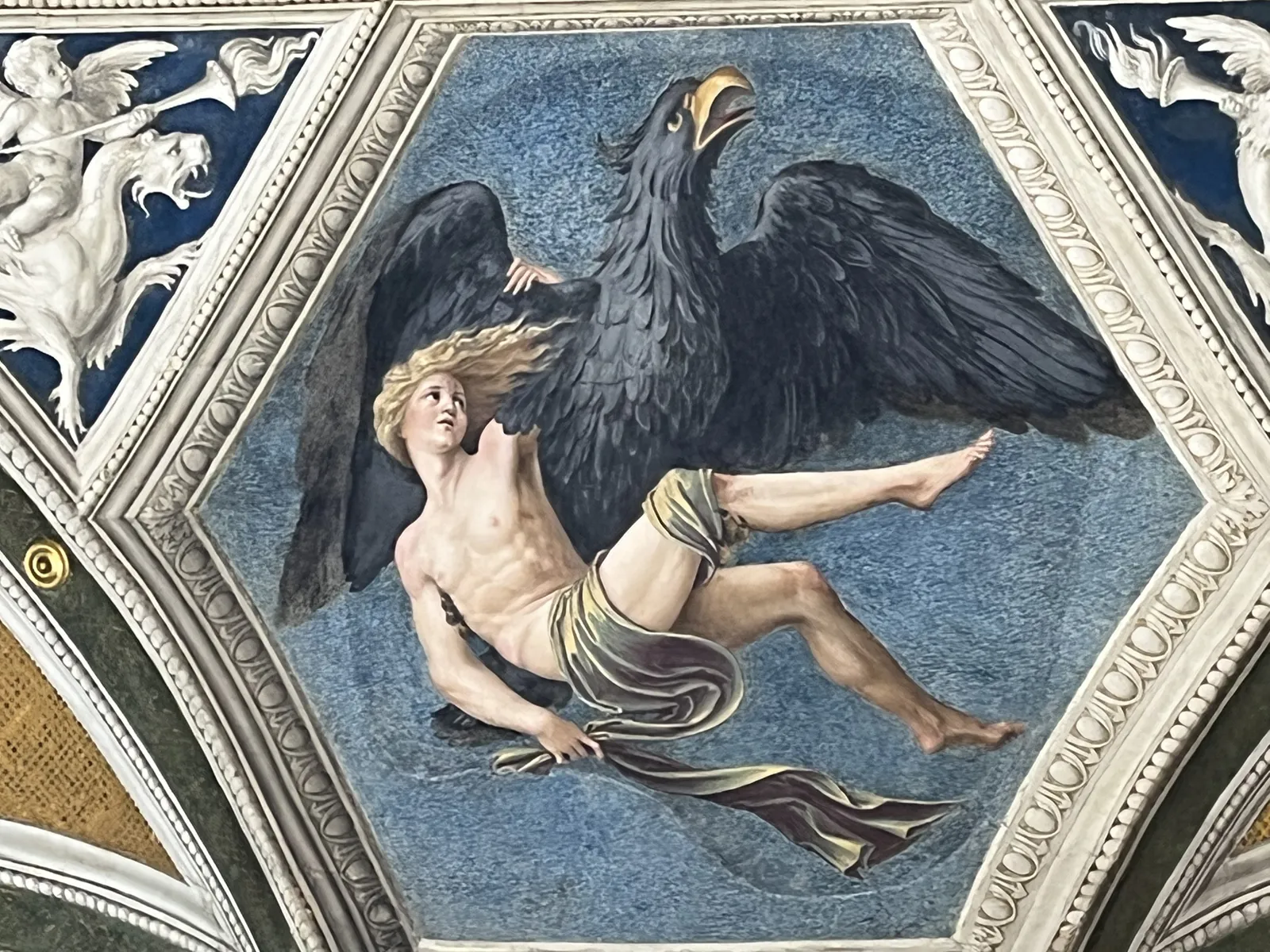
The Rape of Ganymede
Baldassarre Peruzzi
This Renaissance ceiling panel (1509–14) shows Zeus, in the form of an eagle, abducting the beautiful youth Ganymede to Olympus. The myth frames the act as a moment of divine erotic desire, with Ganymede raised to immortal companionship as Zeus’s beloved. The term rape follows the Latin raptus, meaning abduction, not its modern sense.
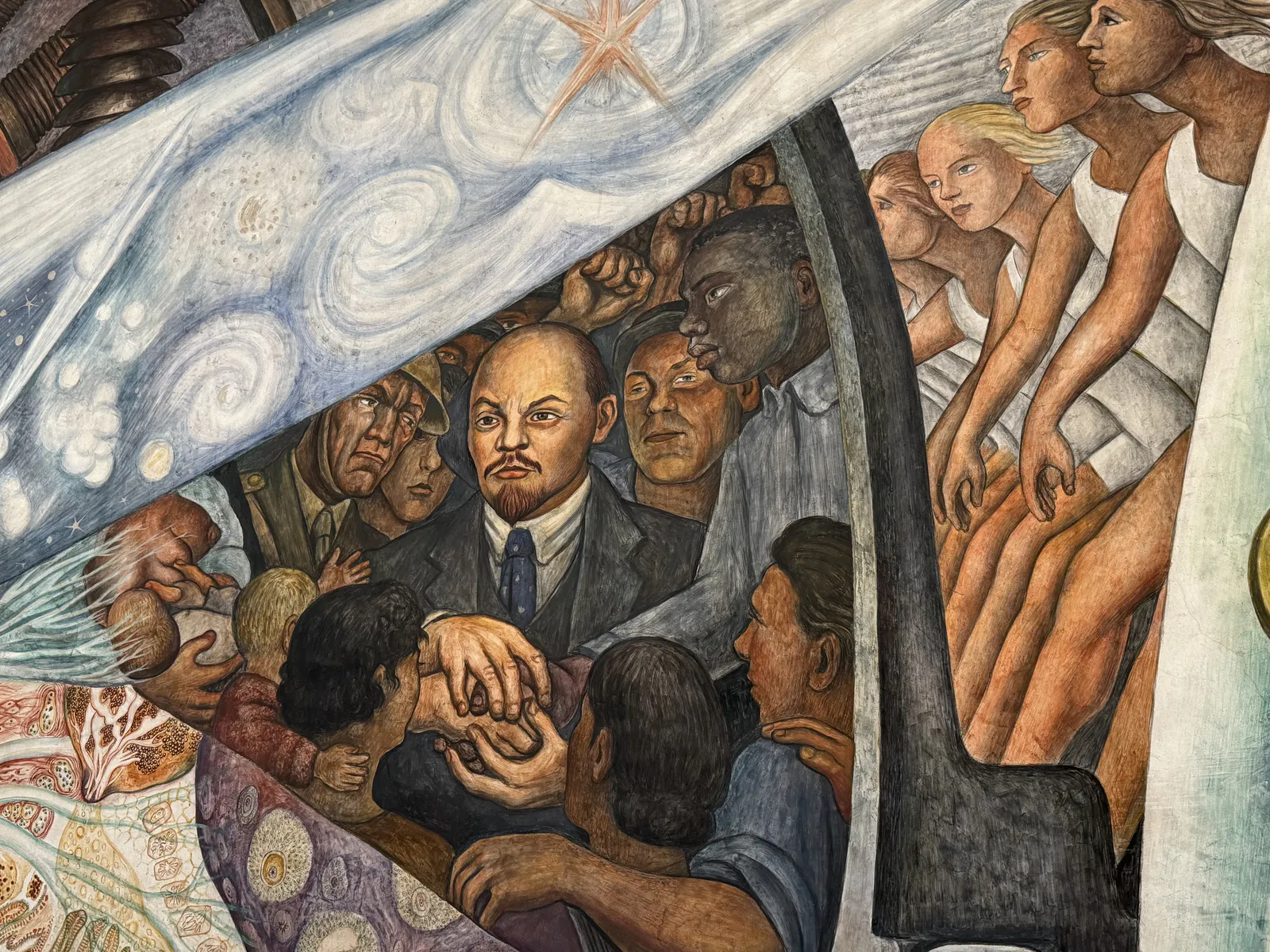
Lenin and the Workers (detail)
Diego Rivera
In this vivid section of Man, Controller of the Universe (1934), Lenin extends his hand to unite workers of different races and backgrounds. His central placement amid galaxies and scientific motifs reflects Rivera’s belief in a revolutionary, rational future led by socialist ideals and global class solidarity.
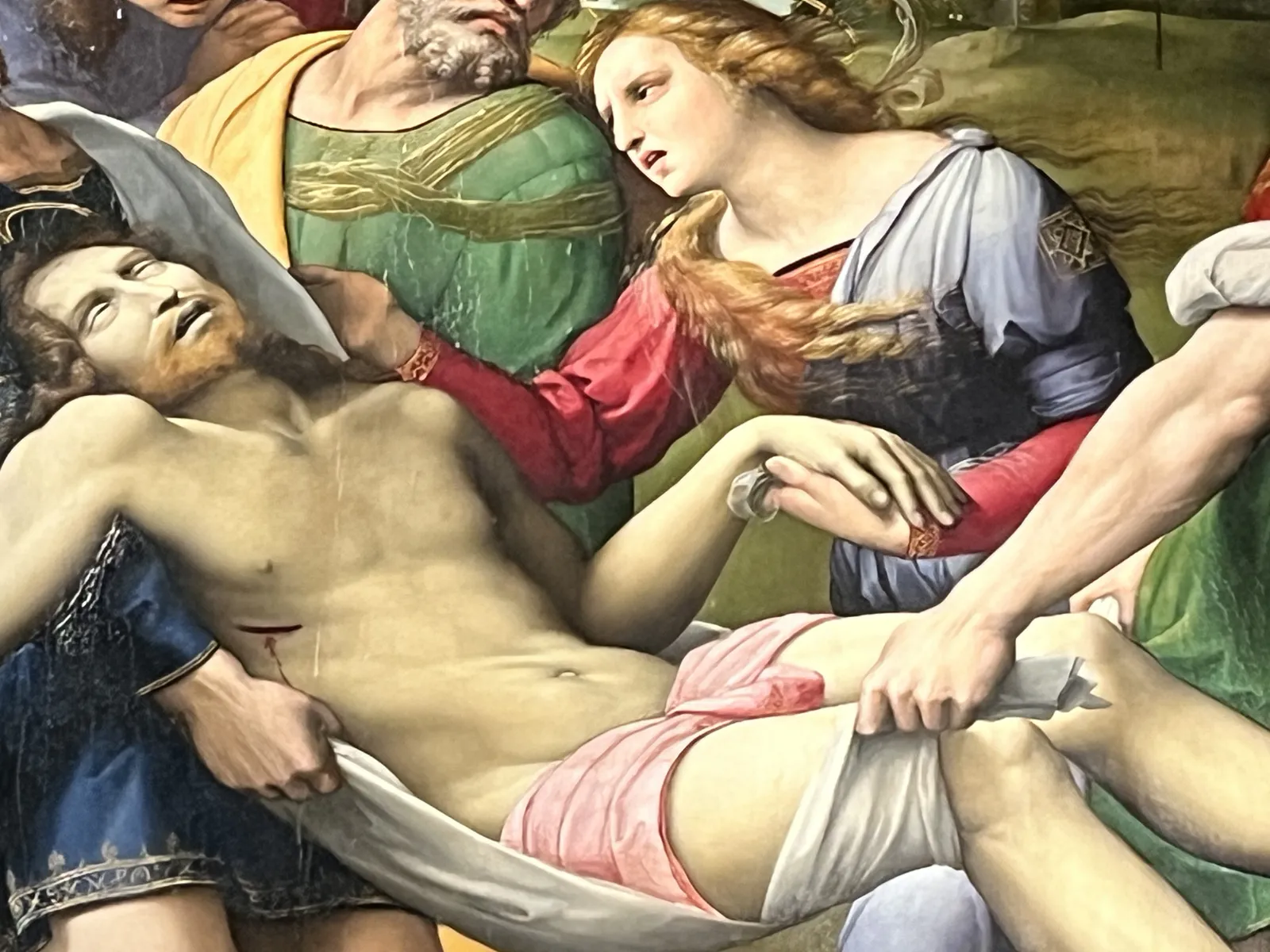
The Entombment (detail)
Raphael
This masterpiece (1507) shows a group of figures surrounding the lifeless body of Christ, merging themes of Deposition, Lamentation, and Entombment. Commissioned by Atalanta Baglioni, it honors her murdered son. Raphael’s composition shows Michelangelo’s influence in the sculptural form of Christ. A 2020 restoration revealed refinements in Raphael’s underdrawing, pigment choices, and layered modeling, clarifying how he built depth and anatomical precision.
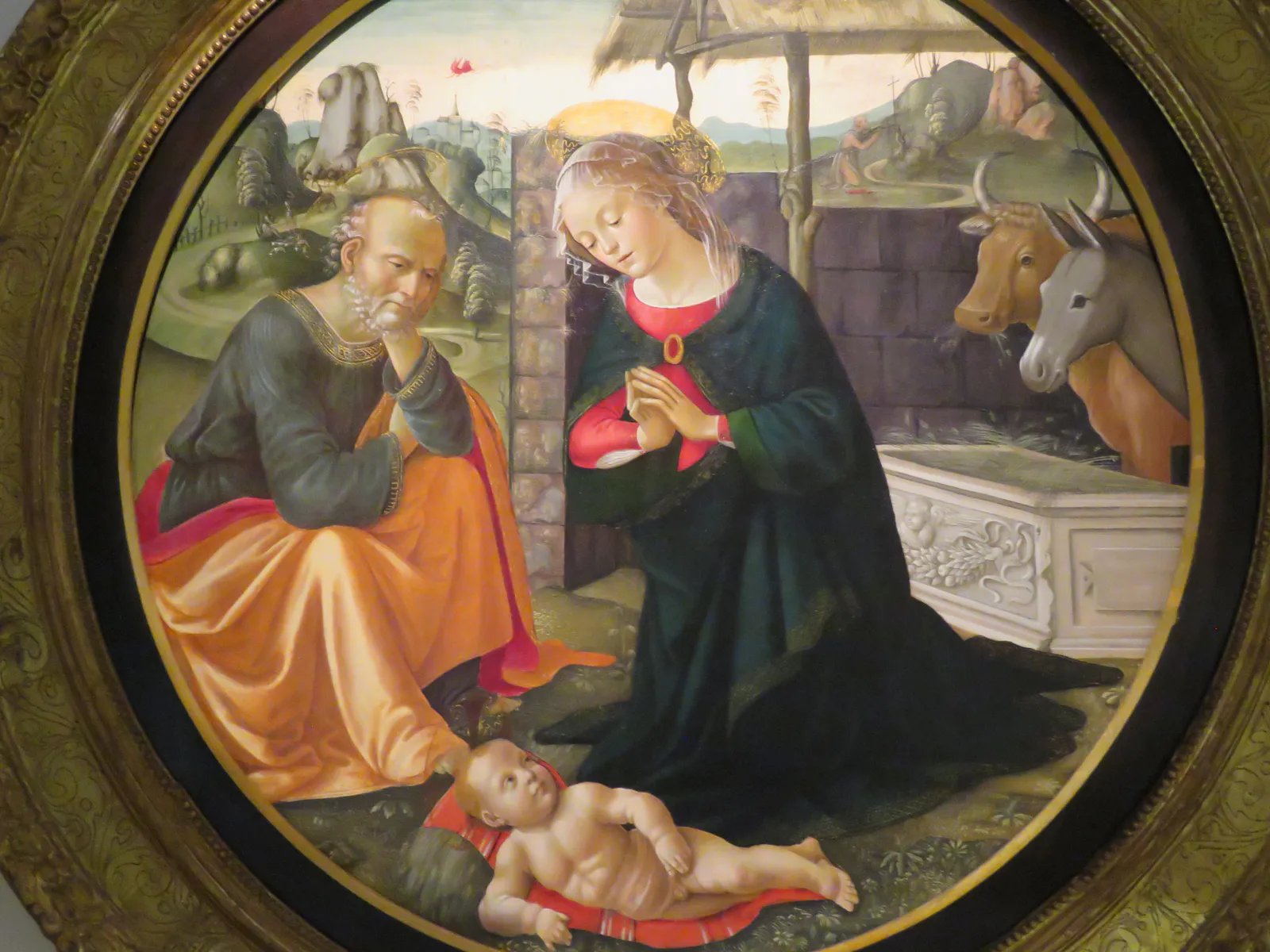
Adoration of the Christ Child
Workshop of Domenico Ghirlandaio
This tondo (c. 1485–1490) shows Mary and Joseph adoring the infant Christ, lying humbly on the earth. The sarcophagus-like manger prefigures his Passion, while the ox and donkey fulfill Isaiah and Habakkuk’s prophecy of animals recognizing the Lord. The scene binds intimacy, humility, and cosmic redemption.
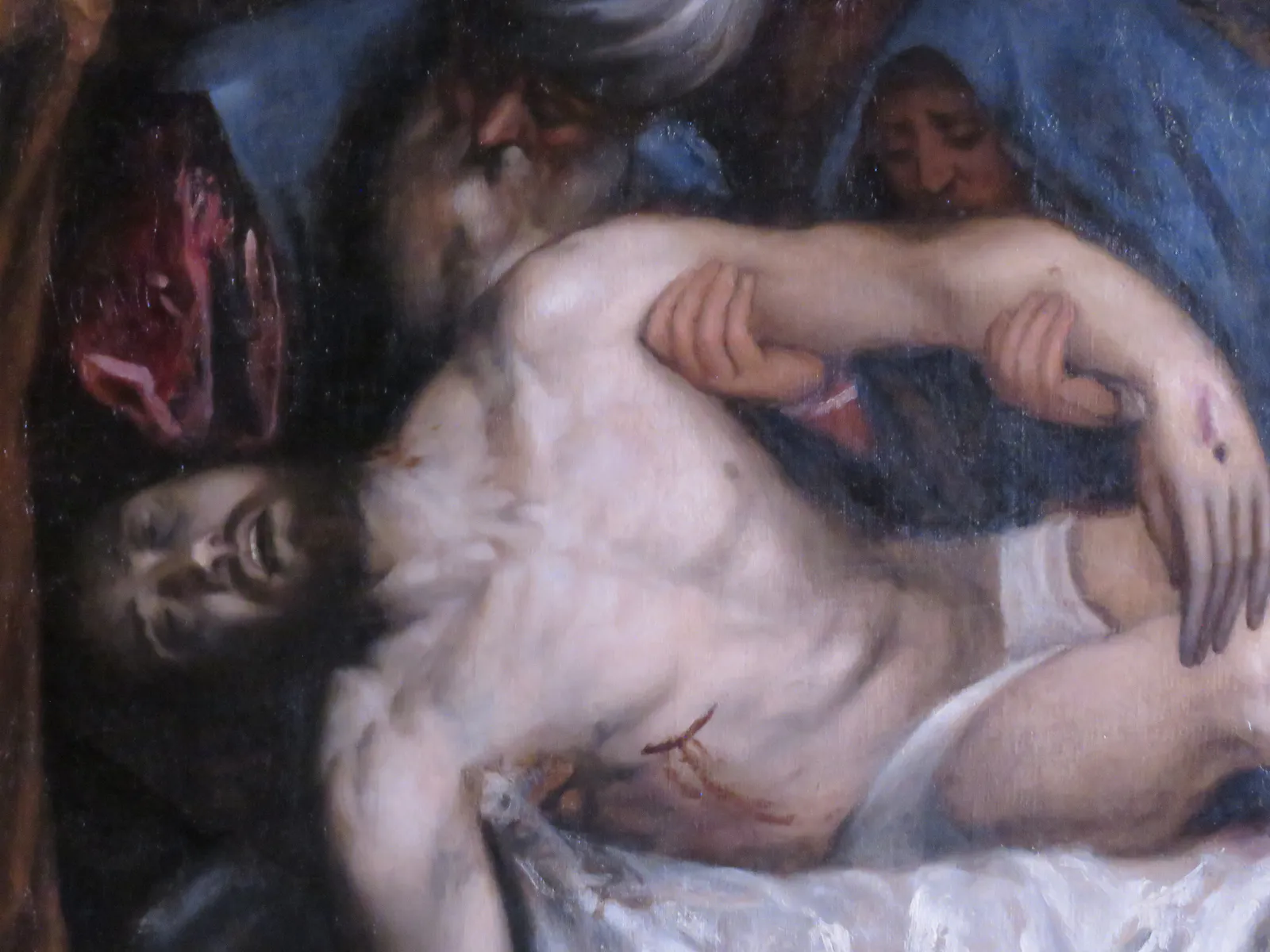
The Entombment of Christ (detail)
Titian and Palma the Younger
This fragment (1618) reveals Christ’s lifeless body marked by crucifixion wounds, cradled with reverence by mourning figures. The interplay of flesh, fabric, and sorrow exemplifies Titian’s emotive realism, while Palma the Younger completes the drama with expressive gestures—honoring human grief and divine sacrifice in one timeless moment.
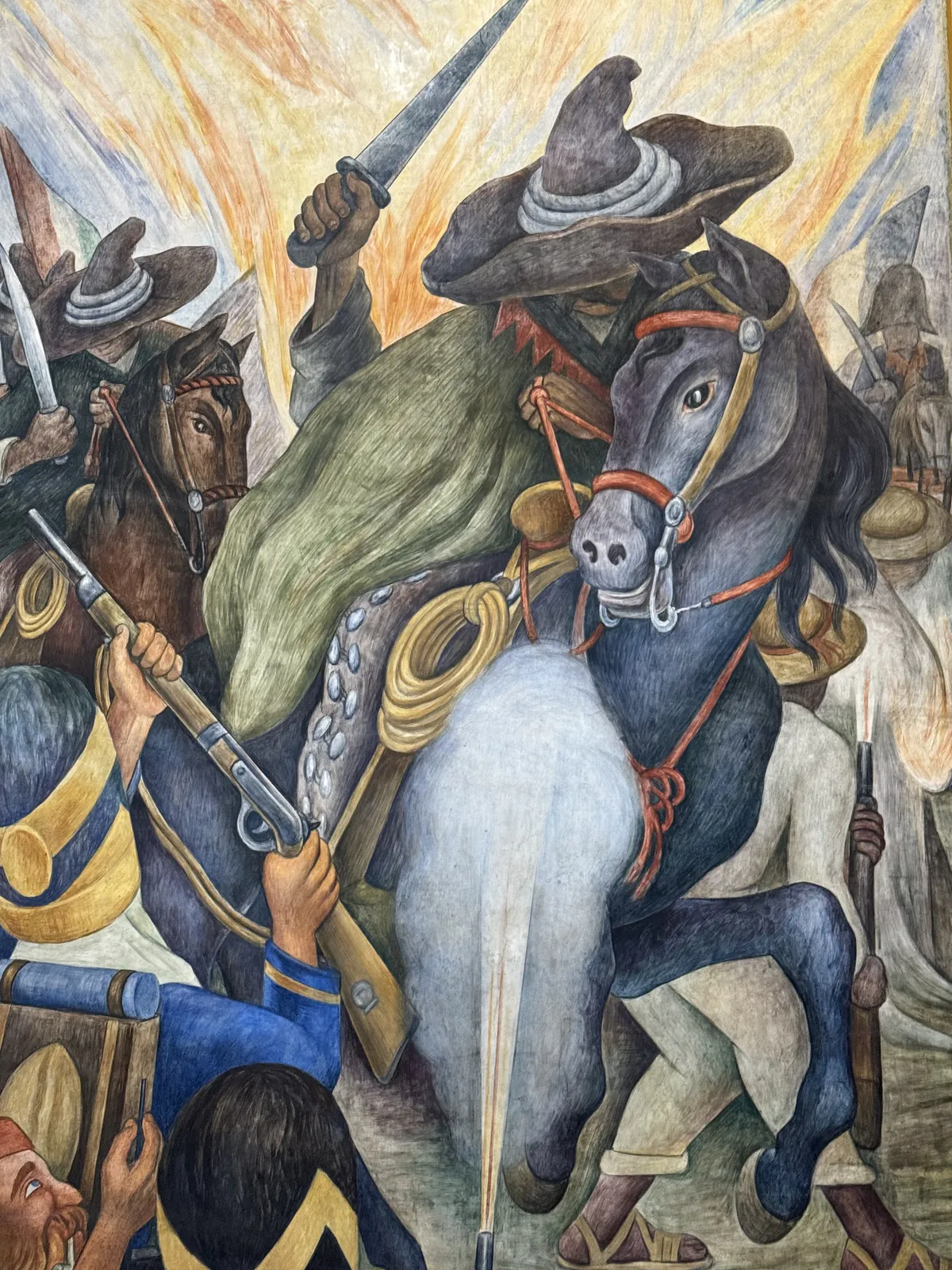
The Legend of Agustín Lorenzo (detail)
Diego Rivera
This 1936 fresco dramatizes the legendary outlaw Agustín Lorenzo as a symbol of resistance. Armed revolutionaries clash with government forces, their horses rearing amid smoke and flames. Rivera fuses myth and history, casting Lorenzo as a Mexican Robin Hood whose defiant struggle against injustice became folklore in the national imagination.
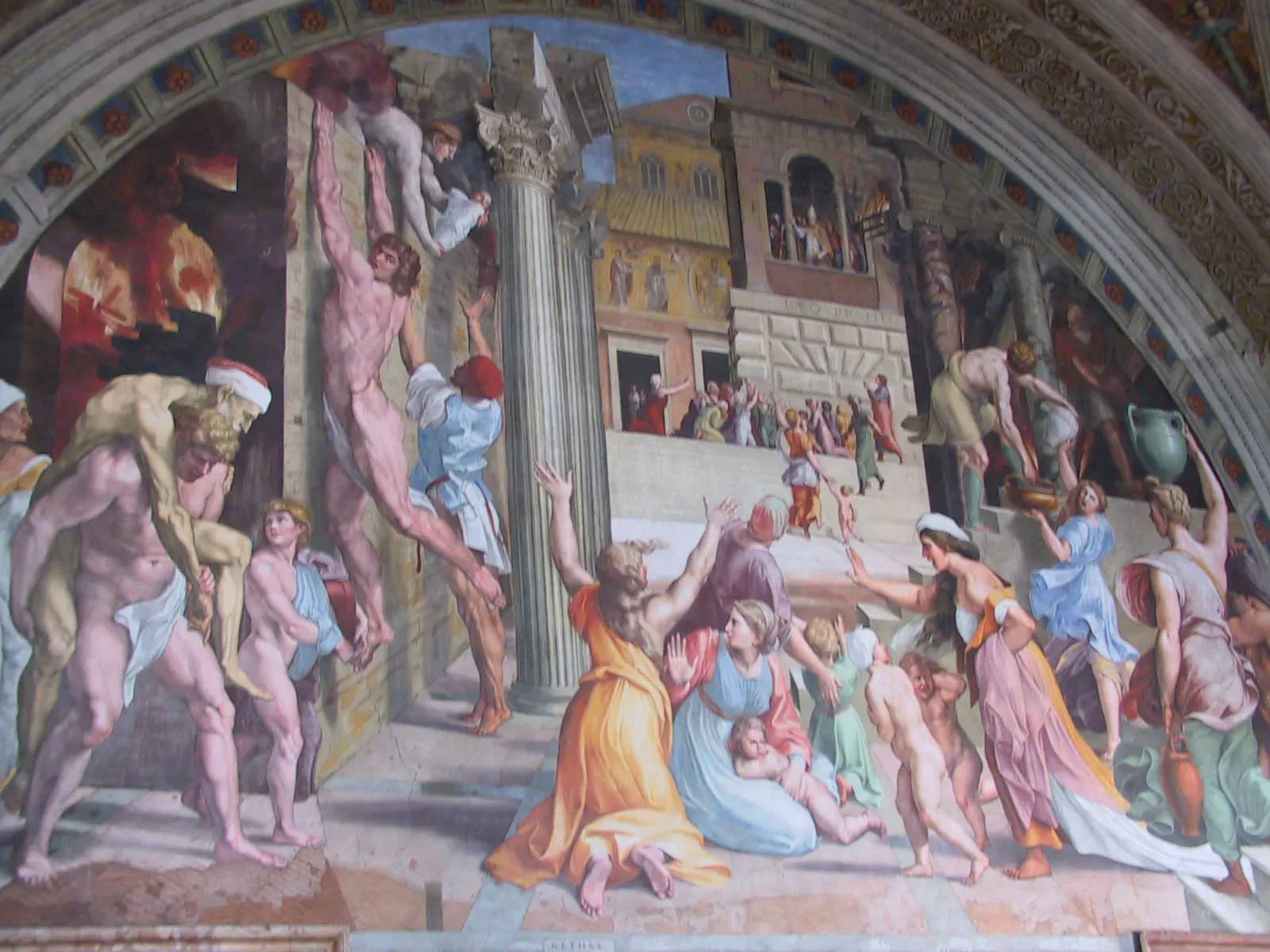
Fire in the Borgo
Rapahael and Giulio Romano
This fresco (1514) captures a legendary fire in Rome's Borgo district, illustrating divine intervention through Pope Leo IV's prayer. The fresco, part of the Raphael Rooms in the Vatican, blends classical and Renaissance elements, showcasing dynamic figures and architectural precision. This work reflects the era's belief in the power of faith and the church's central role in societal protection and order.
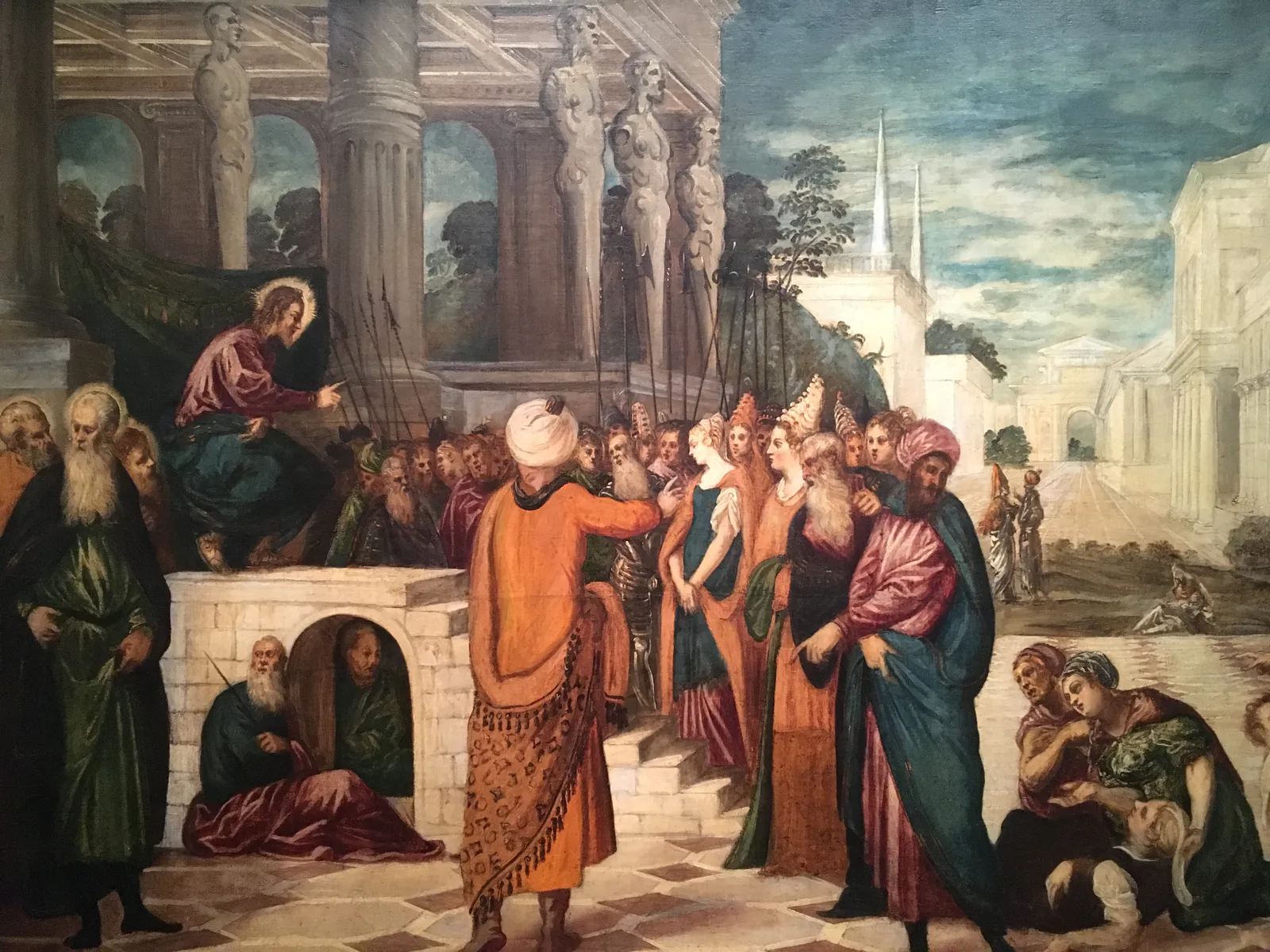
Christ and the Adulteress
Tintoretto
This scene (c. 1555) is from the Gospel of John: Jesus responds to scribes and Pharisees demanding judgment on an adulterous woman. His challenge—inviting the sinless to cast the first stone—teaches mercy over condemnation. Tintoretto’s dynamic style appears in the sharp contrasts of light and shadow, elongated figures, and oblique spatial arrangement that intensify the moral tension. Classical architectural elements frame the encounter, emphasizing the conflict between legalism and redemption.
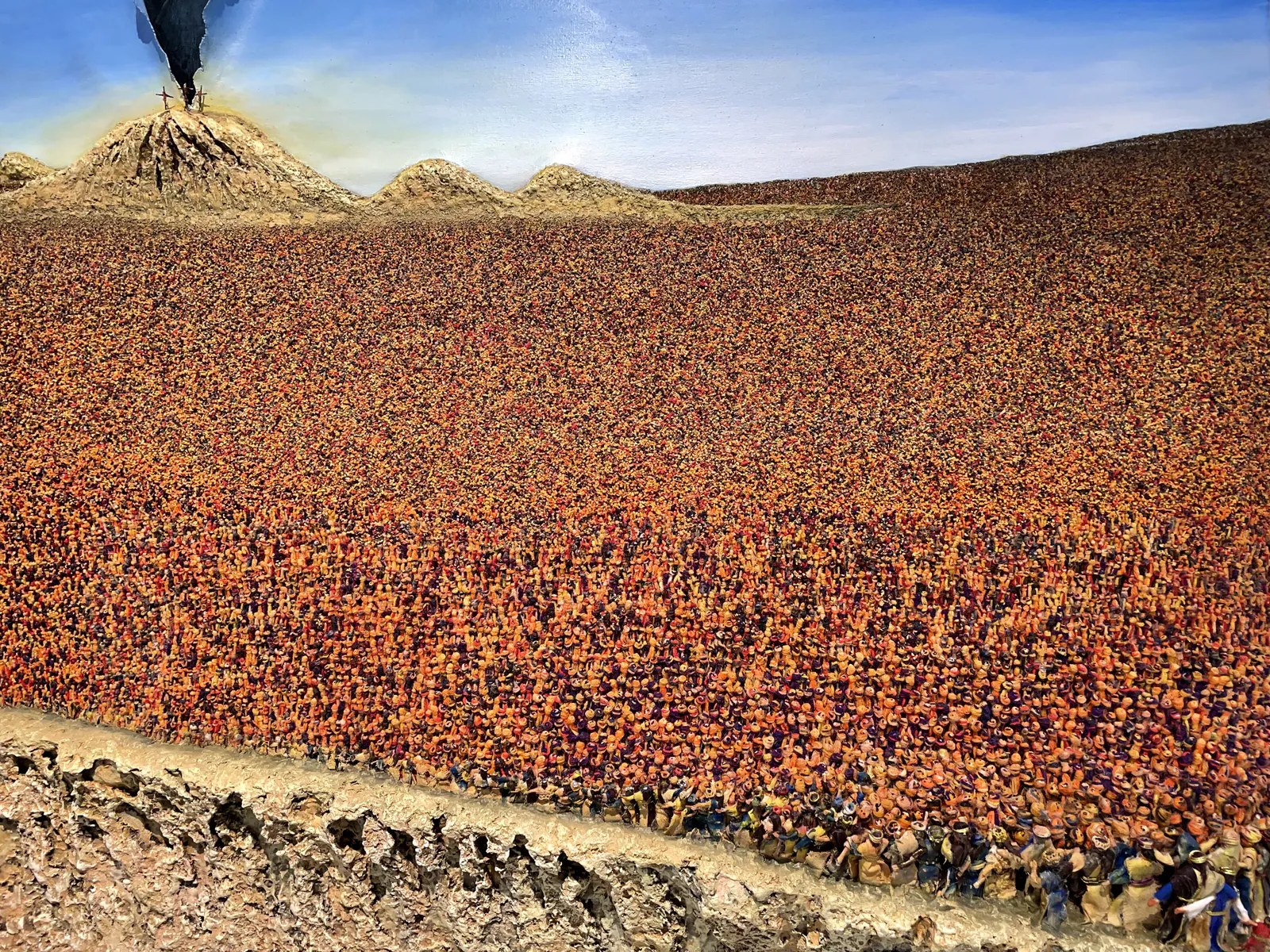
The Veil Torn (The Door to Heaven)
Mariano Bidó
In this mixed-media work (2018), a vast crowd moves toward a hill crowned by three crosses under a black veil of smoke. Referencing the crucifixion, the piece evokes mass devotion, suffering, and salvation. The dense humanity contrasts with the distant, divine climax—highlighting faith as both a collective journey and personal reckoning.
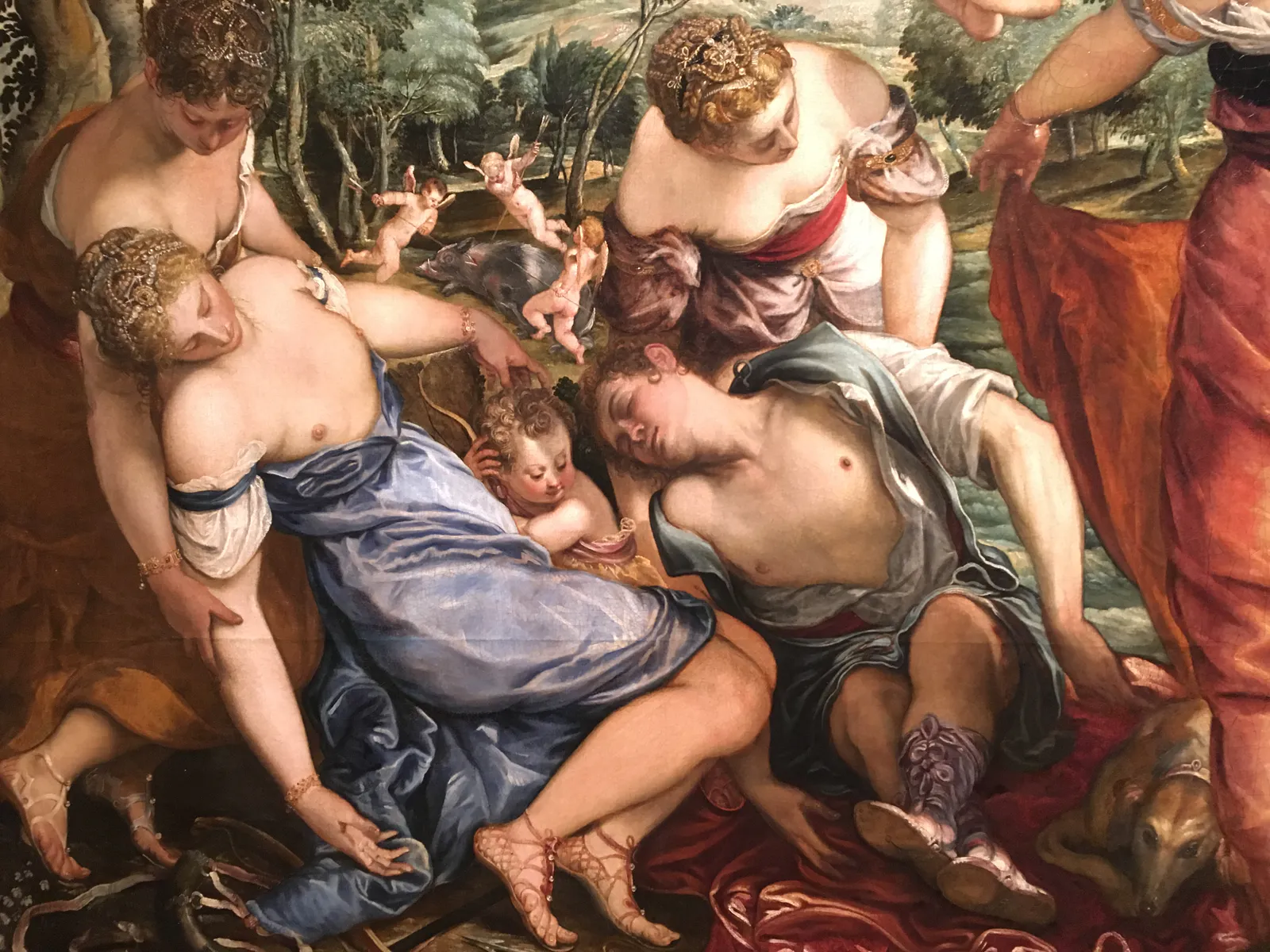
The Death of Adonis
Tintoretto's Workshop
The Death of Adonis (1550–55) captures Venus fainting at Adonis's death, diverging from Ovid’s Metamorphoses by including young women not in the original tale. Created by a Nordic artist in Tintoretto’s Venetian workshop, it blends Tintoretto’s dramatic style with the collaborator’s unique touch, evident in the expressive figures and vibrant colors. This fusion highlights the shared human themes of love and loss, inviting reflection on the timeless nature of myth and emotion.
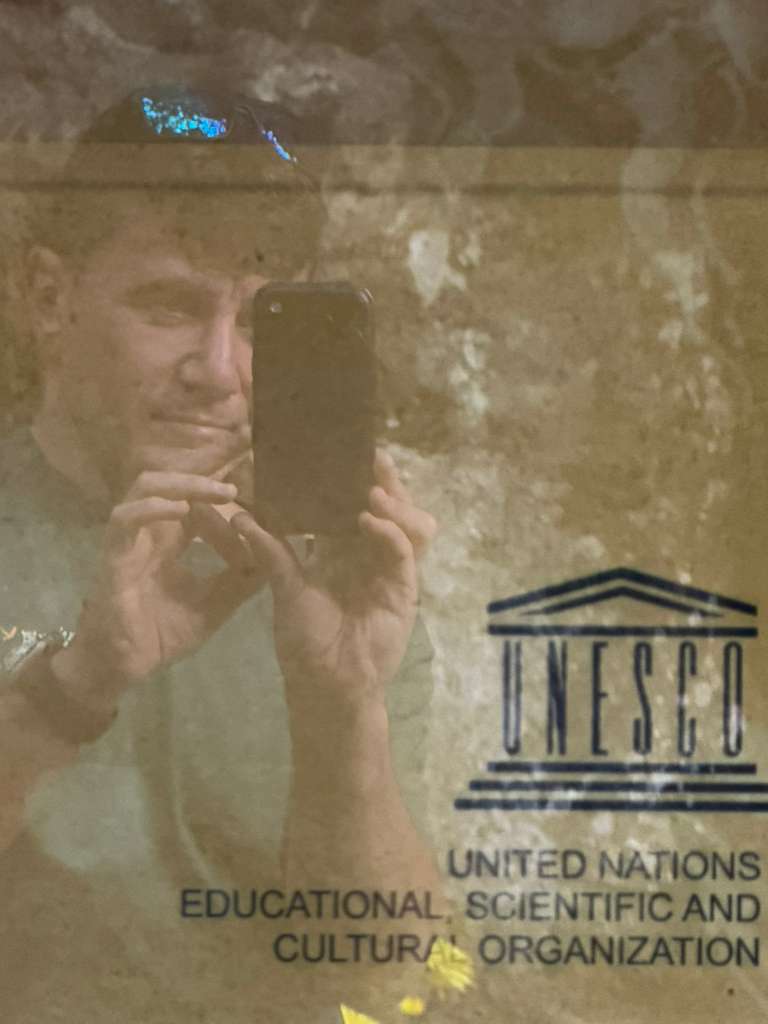
“When the path is beautiful, do not ask where it leads.” — Zen proverb
Welcome to my travel photography!
“When the path is beautiful, do not ask where it leads.” — Zen proverb
Welcome to my travel photography!
For as long as I can remember, my path has been one of discovery—seeking beauty, timelessness, and connection in every corner of the world. It has also been a journey of deep learning and understanding. I’ve been an avid traveler (or perhaps a travel addict?) for most of my life. My love for travel began long before I ever left home: as a child, I drew a fantasy map of my grandparents’ apartment and “traveled” through it with my cousin Sonya, imagining adventures in every corner. Nearly 90 countries and countless moments of awe later, I’m excited to share this journey with you.
Thanks to the tireless and ingenious programming of Diagilev, we’re now able to present about fifteen percent of the images I’ve accumulated over the years. More will be released in small batches depending on your interest. While the first release leans toward museum photography, later ones will include more nature, architecture, culture, and general travel experiences. If you’d like to receive email notifications about new releases, feel free to reach out—no commercial use, ever.
Throughout my travels, I’ve been drawn to two intertwined kinds of discovery. One is intellectual: learning why the world is the way it is. History became my guide, shaping my perspective and filling my camera roll with museums and old buildings. To me, history is not the past—it is the key to understanding the present and how the world became what it is. The other is emotional: seeking moments of elevation—spirituality, beauty, harmony—often found in nature, monasteries, and ancient sacred spaces. Together, these impulses shape my photography. It invites you to learn, admire, and soar—to rise above the mundane and see the world through a lens of curiosity and wonder.
Much of my later travel became possible thanks to my job with Delta Air Lines, but the wanderlust began years earlier. By the time I joined the industry, I had already visited over 35 countries and lived in several—largely thanks to a backpacking journey around the world with Luis León, whose face appears in many early photos. I grew up in Ufa in the USSR, and since leaving it I have lived, studied, and worked in Latvia, the United States, France, South Korea, Canada, Spain, Italy, Brazil, Japan, and Colombia.
A life of near-constant movement may seem a little crazy, but it has deepened my understanding of the world and produced the photography you are about to see. Over the years, my style has evolved—more intentional, more refined—yet its core remains the same: a search for understanding, timeless beauty, and a connection to those who walked this earth long before us.
I hope these photos stir something in your soul, just as they did in mine. I’d love to hear from you—whether reactions, suggestions, corrections, or a request to be added to the email list for new releases (no commercial use, I promise). You can learn more about my travels here, and my academic life here.
Enjoy our shared journey!