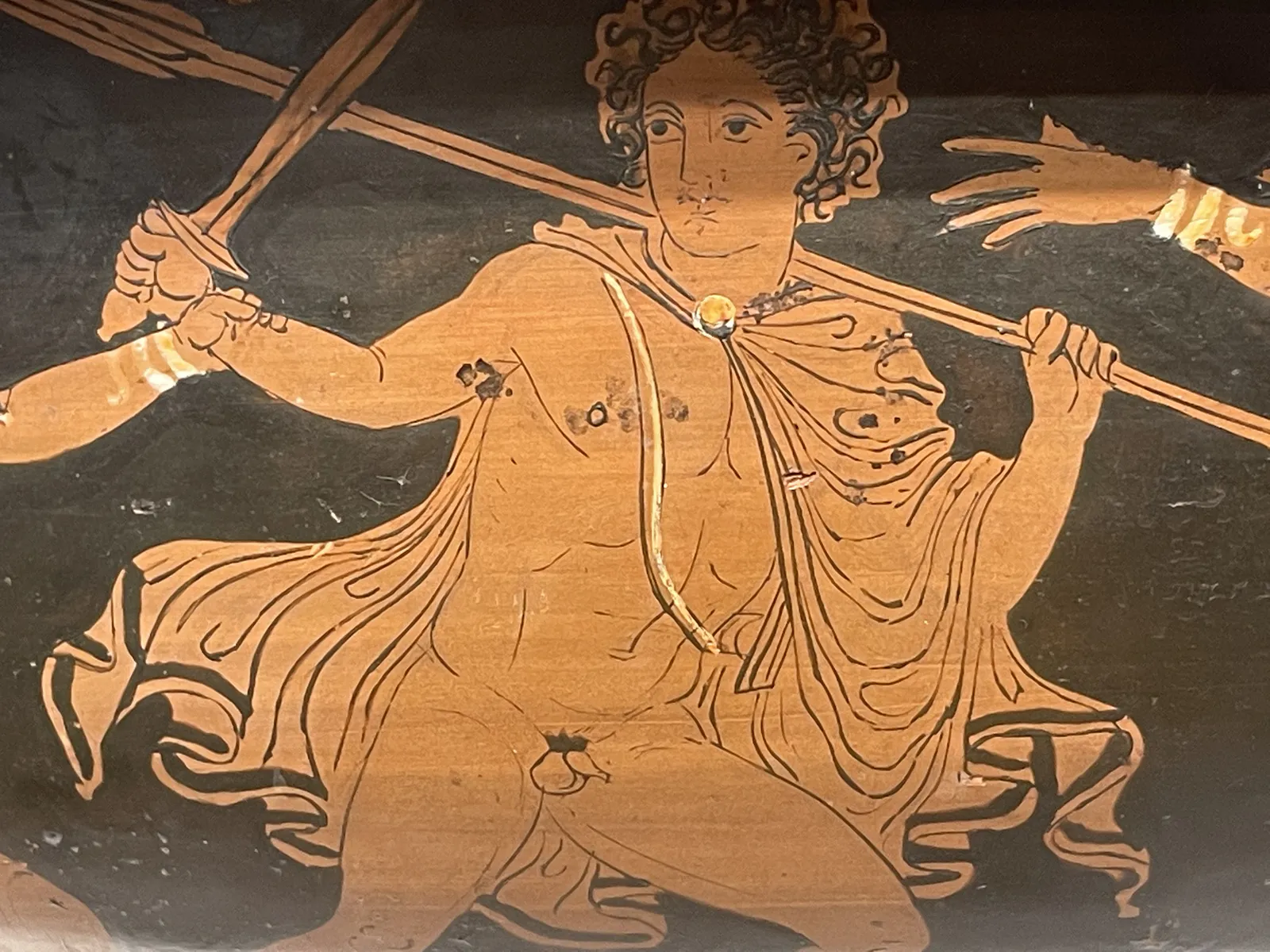
Pentheus Attacked by Bacchic Women
The Oxford Group Workshop
This Apulian red-figure plate (360–350 BC) shows Pentheus arming himself against Dionysus’ cult. In myth, he is seized by Bacchic women, including his mother Agave, who mistake him for prey and tear him apart. The scene warns against impiety and defying divine power, embodying the tragic cost of resisting Dionysian ecstasy and communal worship.
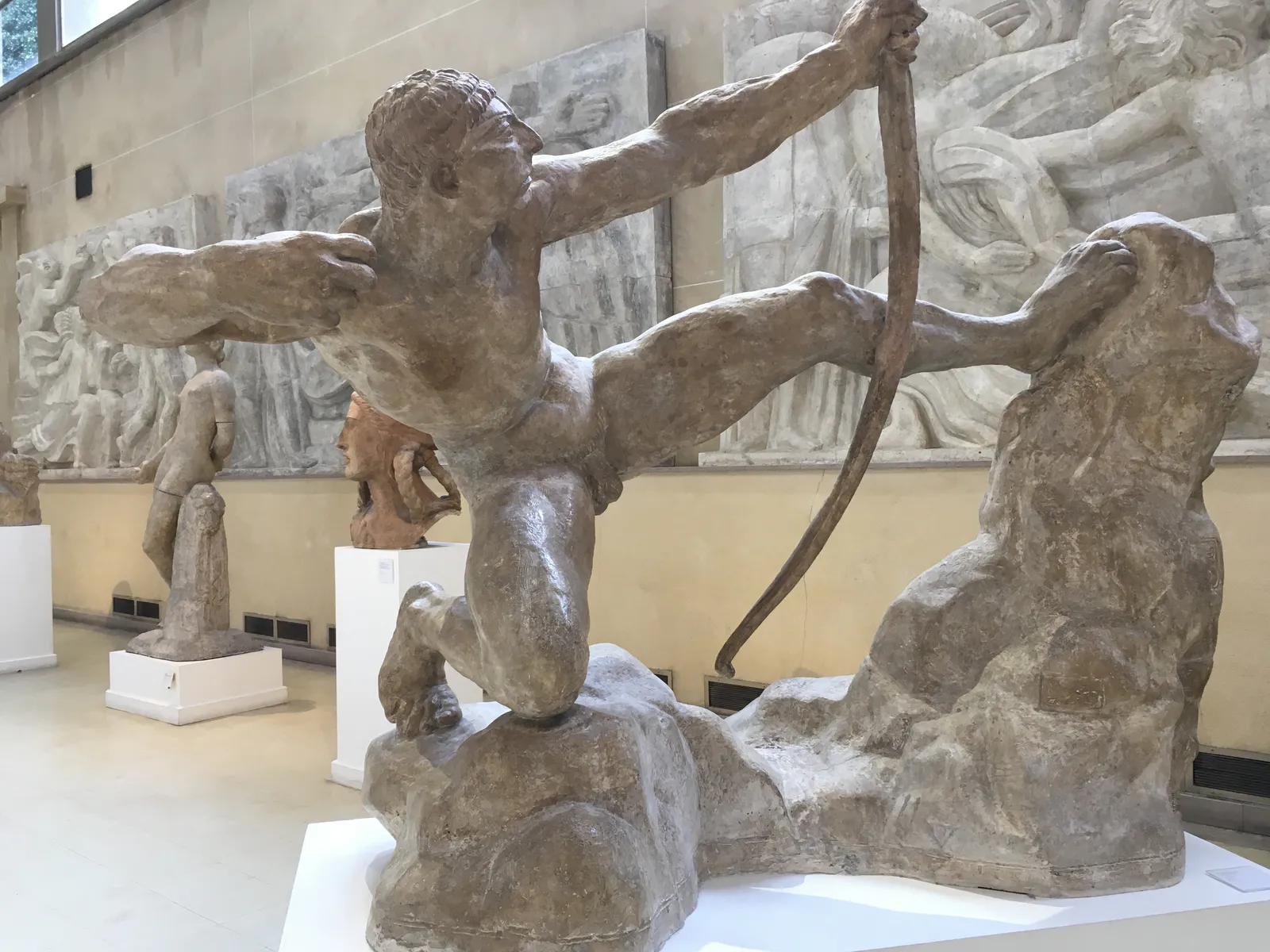
Hercules the Archer
Antoine Bourdelle
This plaster sculpture (1906–09) shows Hercules, the Greek hero, drawing his bow with taut energy. Bourdelle captures both physical strain and mythic power, fusing classical subject with modern dynamism. The work marks a turning point in early 20th-c. sculpture, bridging academic tradition with expressive innovation.
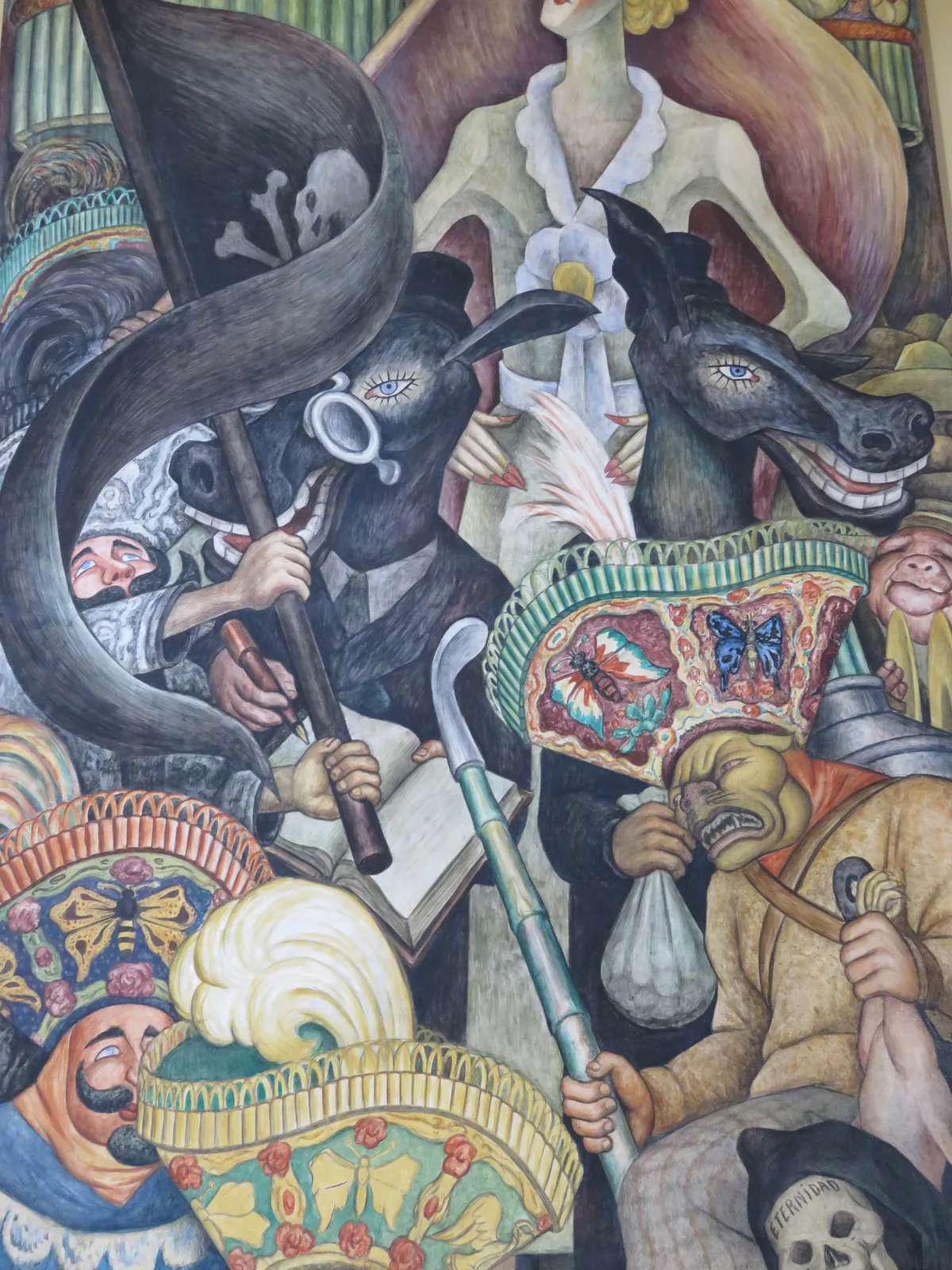
Carnival of Mexican Life (detail)
Diego Rivera
This scene from Carnival of Mexican Life (1936) mocks imperial and capitalist excess. Donkey-headed elites, masked peasants, and a skull-emblazoned flag form a surreal parade of corruption and resistance. Drawing on the Carnival of Huejotzingo, Rivera fuses satire, folk ritual, and political critique to expose social hypocrisy.
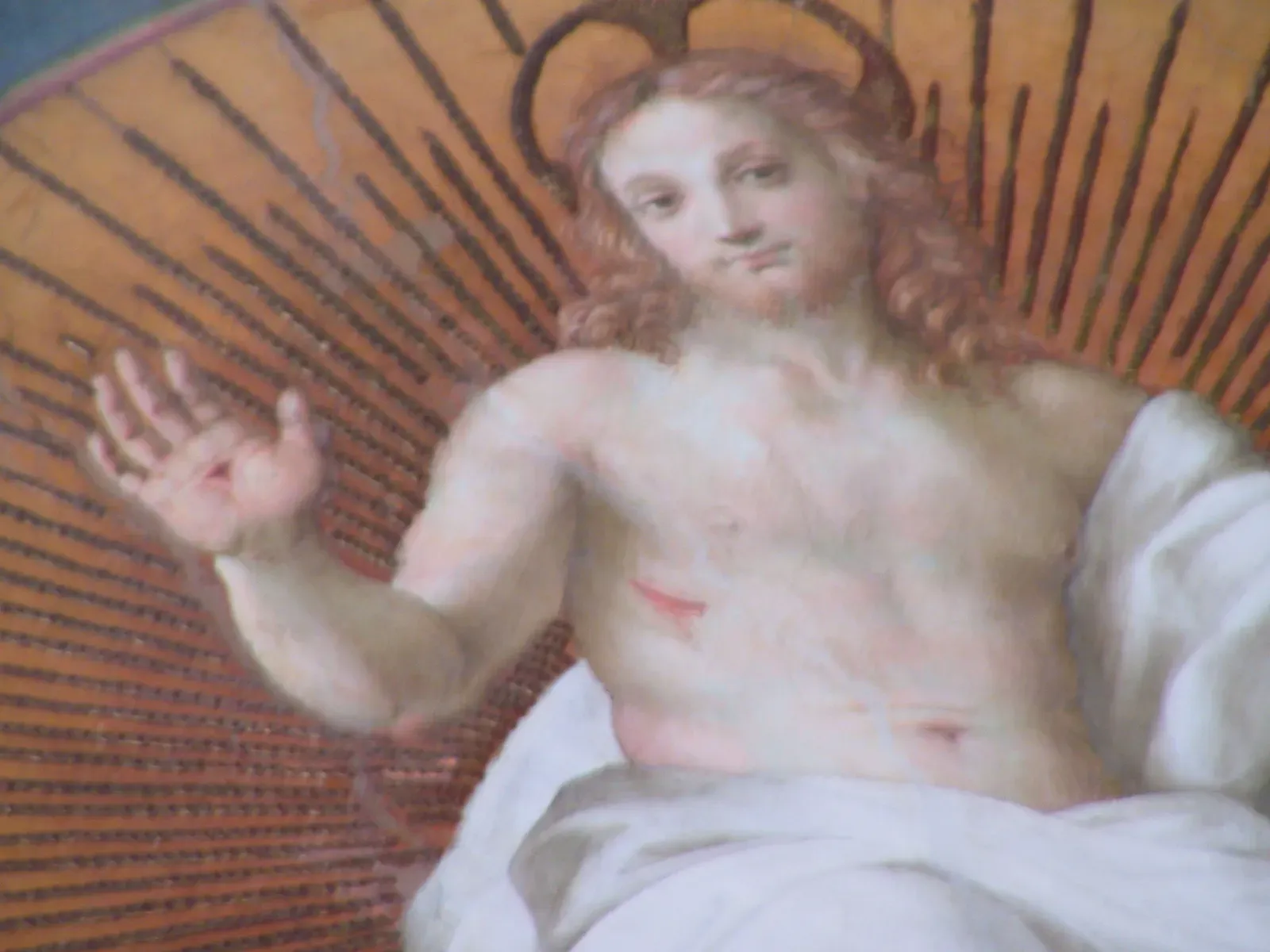
Christ in Glory (detail)
Raphael
The radiant figure of the risen Christ (1508–10) crowns the celestial register of The Disputation of the Sacrament. His raised hand and visible wounds recall both his Passion and his role as judge at the end of time. Encircled by golden rays, he visually affirms the doctrine of the Eucharist as the enduring, real presence of Christ.
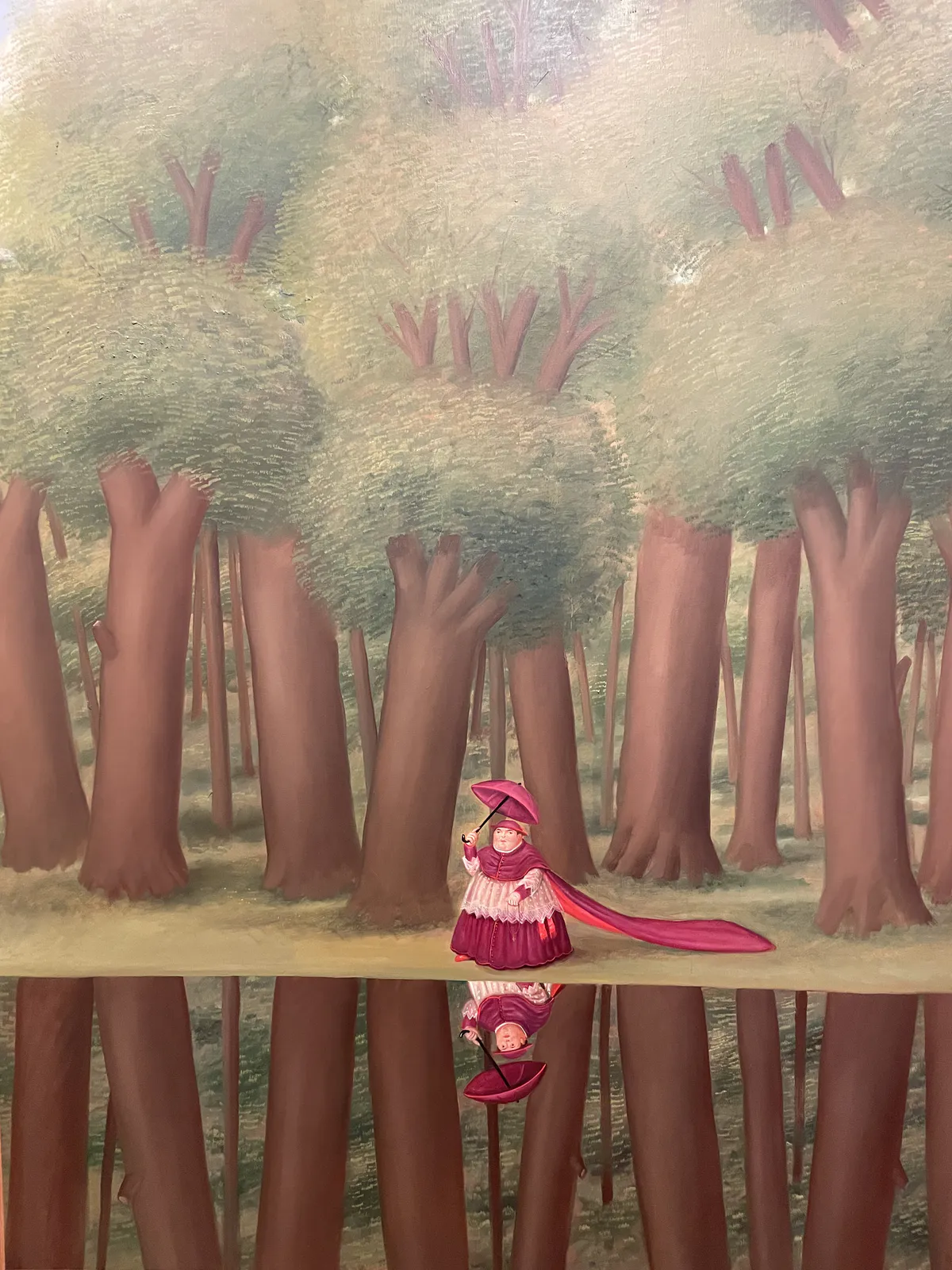
Woman with Umbrella
Fernando Botero
A solitary figure walks through a forest, her reflection mirrored below as if suspended between worlds. Her voluminous dress and umbrella contrast with the vertical rhythm of the trees. With surreal calm and poetic symmetry, Botero (1989) transforms a simple stroll into a meditation on solitude, identity, and the quiet theatricality of everyday life.
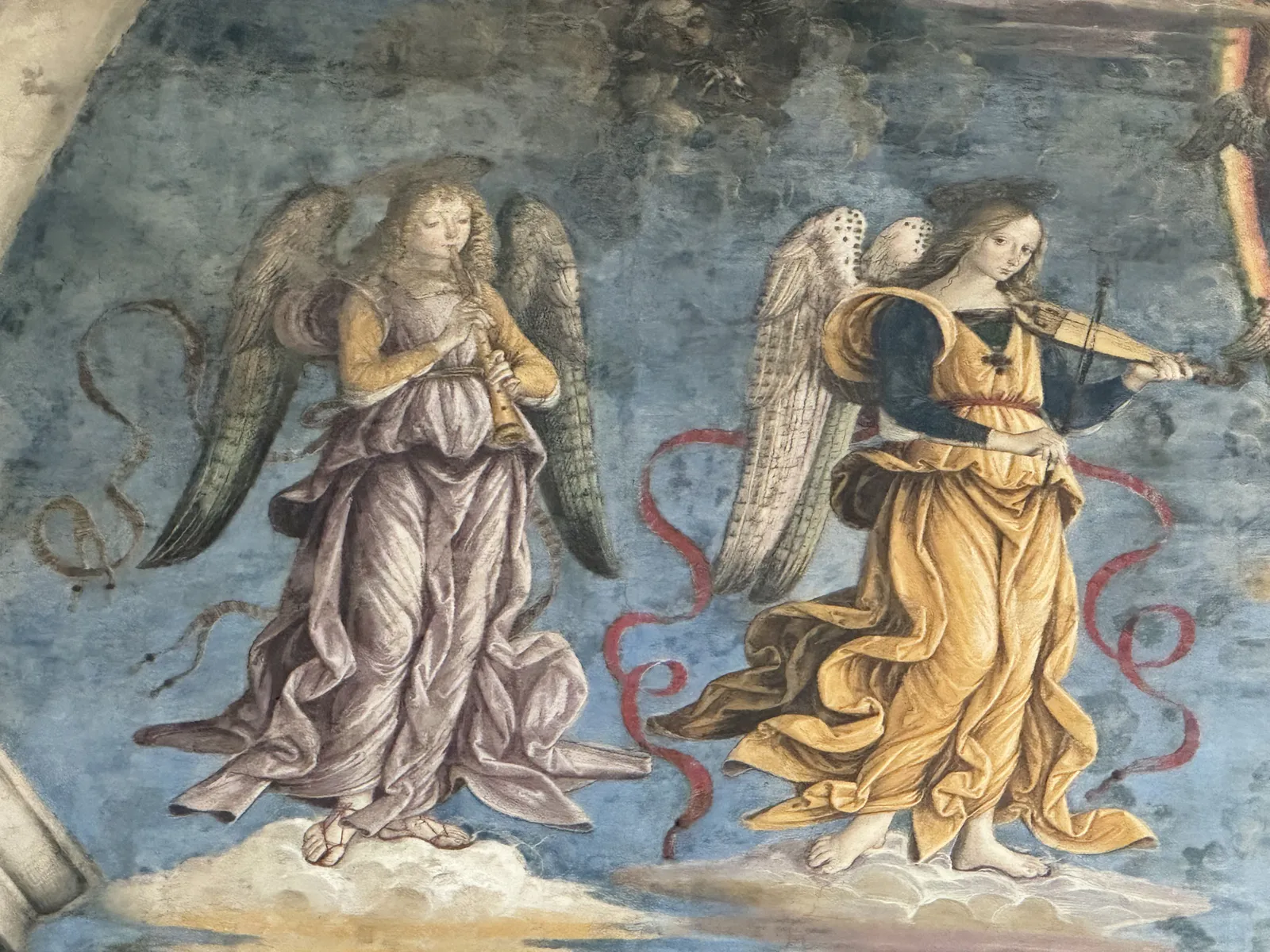
Musical Angels (detail)
Pinturicchio
In this detail (1484–86), Pinturicchio paints two angelic musicians, one playing a violin and the other a wind instrument. Floating on clouds, they contribute to the celestial harmony surrounding Christ in Majesty. The graceful movement of their garments reflects Pinturicchio’s refined sense of rhythm, light, and divine celebration.
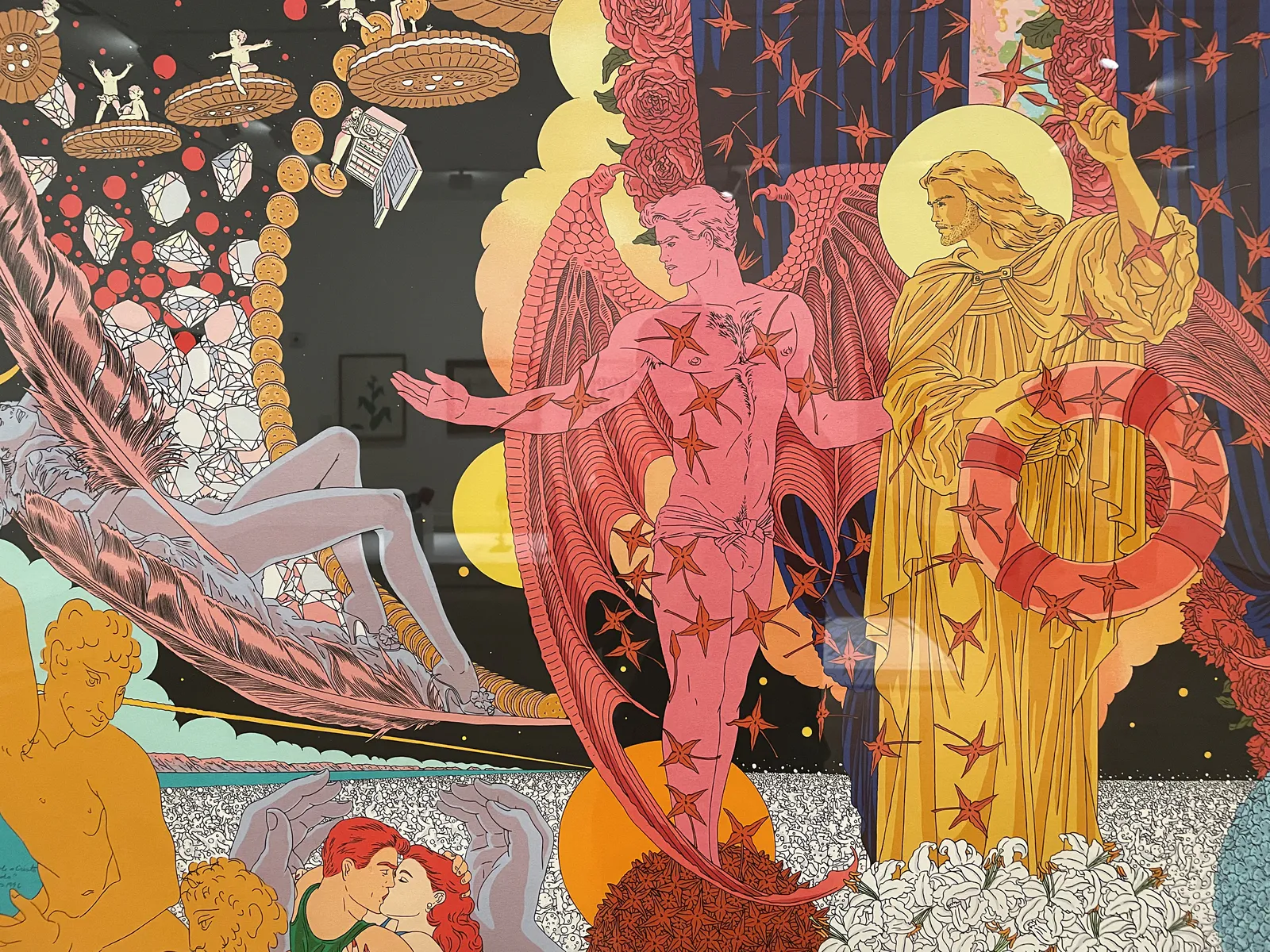
The Devil Showing Christ the Delights of the World
Álvaro Barrios
In this pop-infused lithograph (1996), Barrios reimagines Christ’s temptation with dazzling surrealism. A winged devil offers worldly pleasures—luxury, sex, and consumer goods—while Christ holds a lifebuoy, a symbol of spiritual rescue. Blending biblical narrative with pop culture, the work critiques material excess and invites reflection on salvation in an age of spectacle.
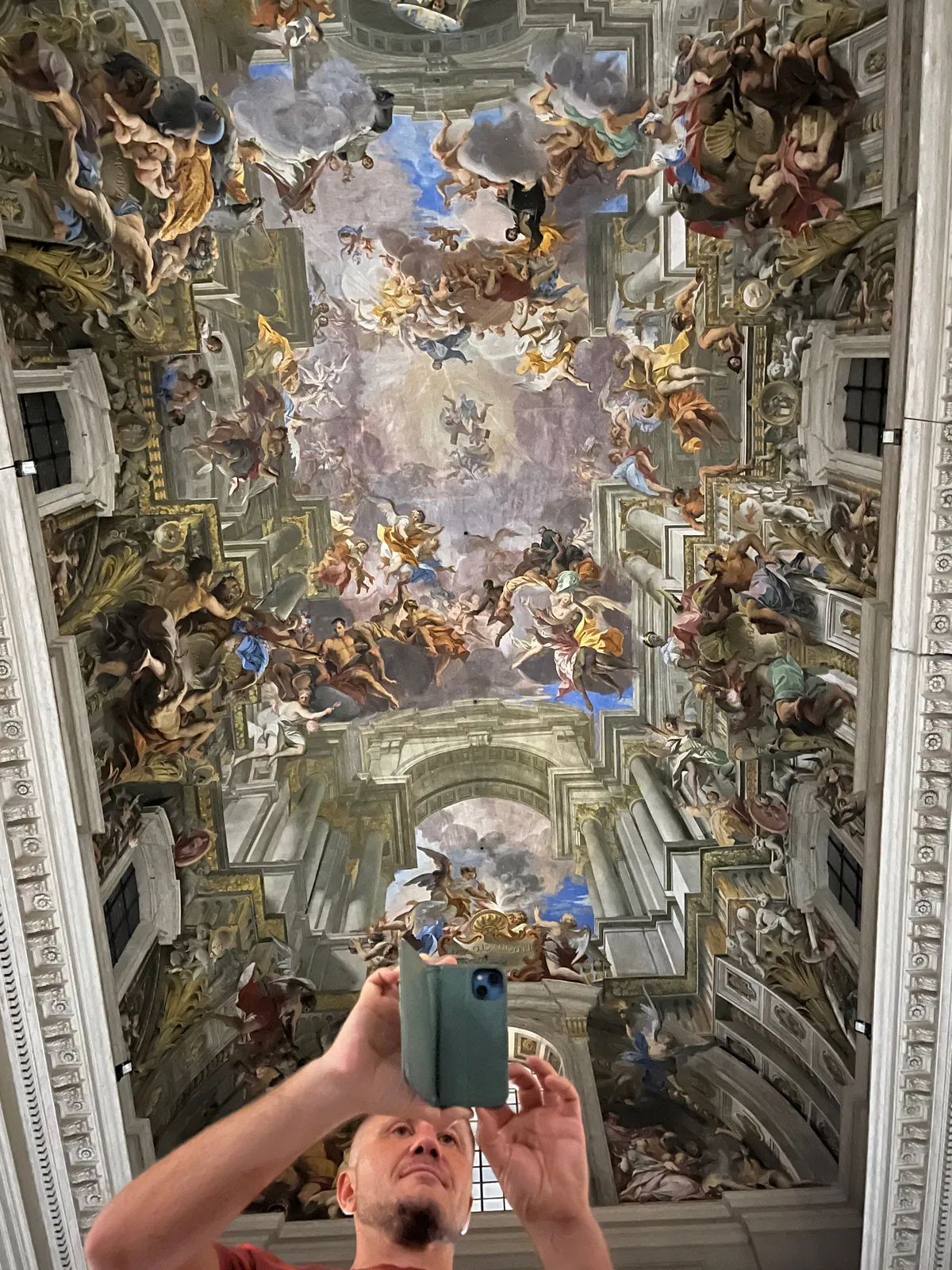
The Apotheosis of St. Ignatius
Andrea Pozzo
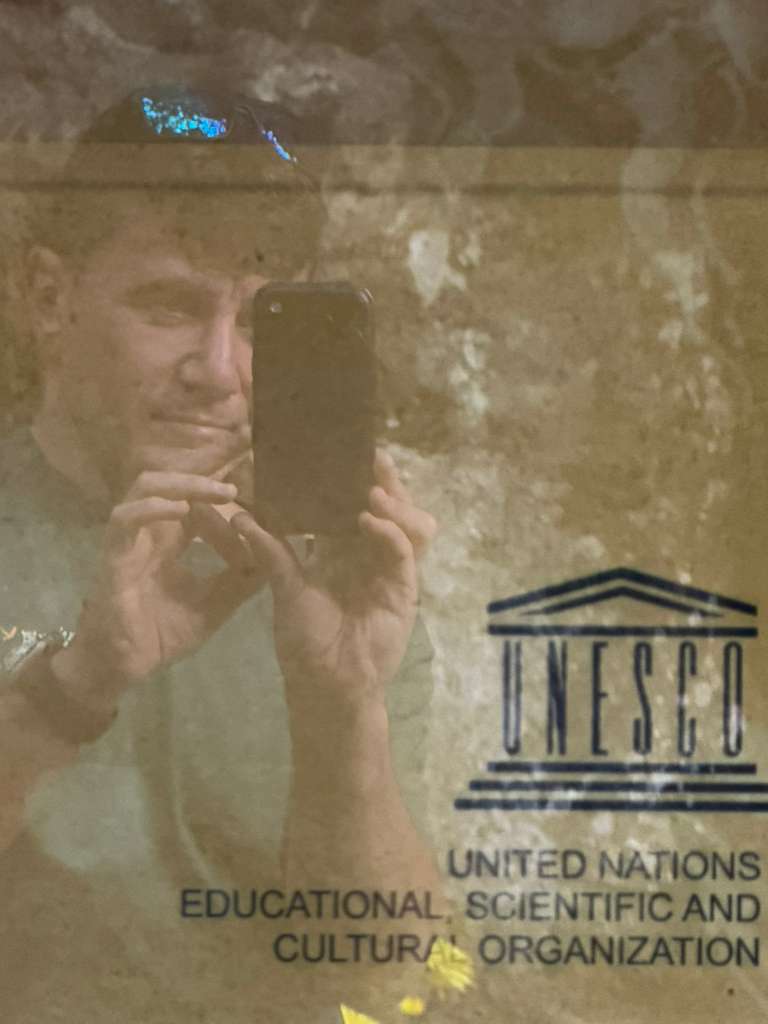
Max captures The Apotheosis of St. Ignatius (1685–1694) using a viewing mirror beneath the ceiling, enhancing Pozzo’s Baroque illusionism. This optical device unveils the masterful perspective that transforms the flat vault into a celestial vision, merging art and exemplifying the Baroque fascination with perspective: a dynamic interplay between earthly and divine realms.
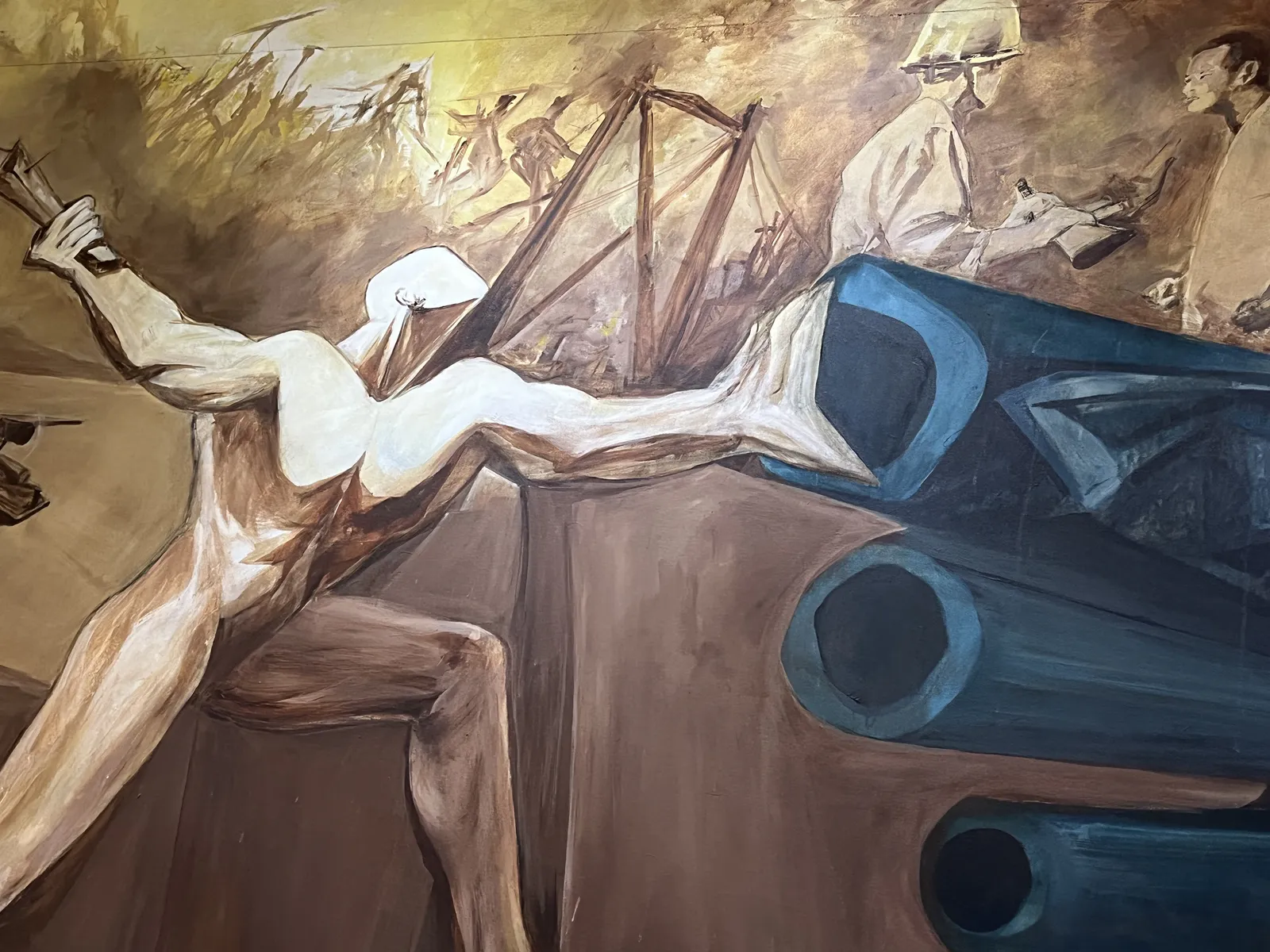
El pueblo en lucha
Ramón Oviedo
This mural (2013) shows a bound, faceless figure hurling itself toward the dark mouths of cannons, while ghostly soldiers and crowds emerge in the background. The scene recalls the Dominican struggle against dictatorship and foreign intervention in the 20th c. By fusing a single straining body with collective, blurred forms, Oviedo concentrates individual sacrifice into a broader history of resistance.
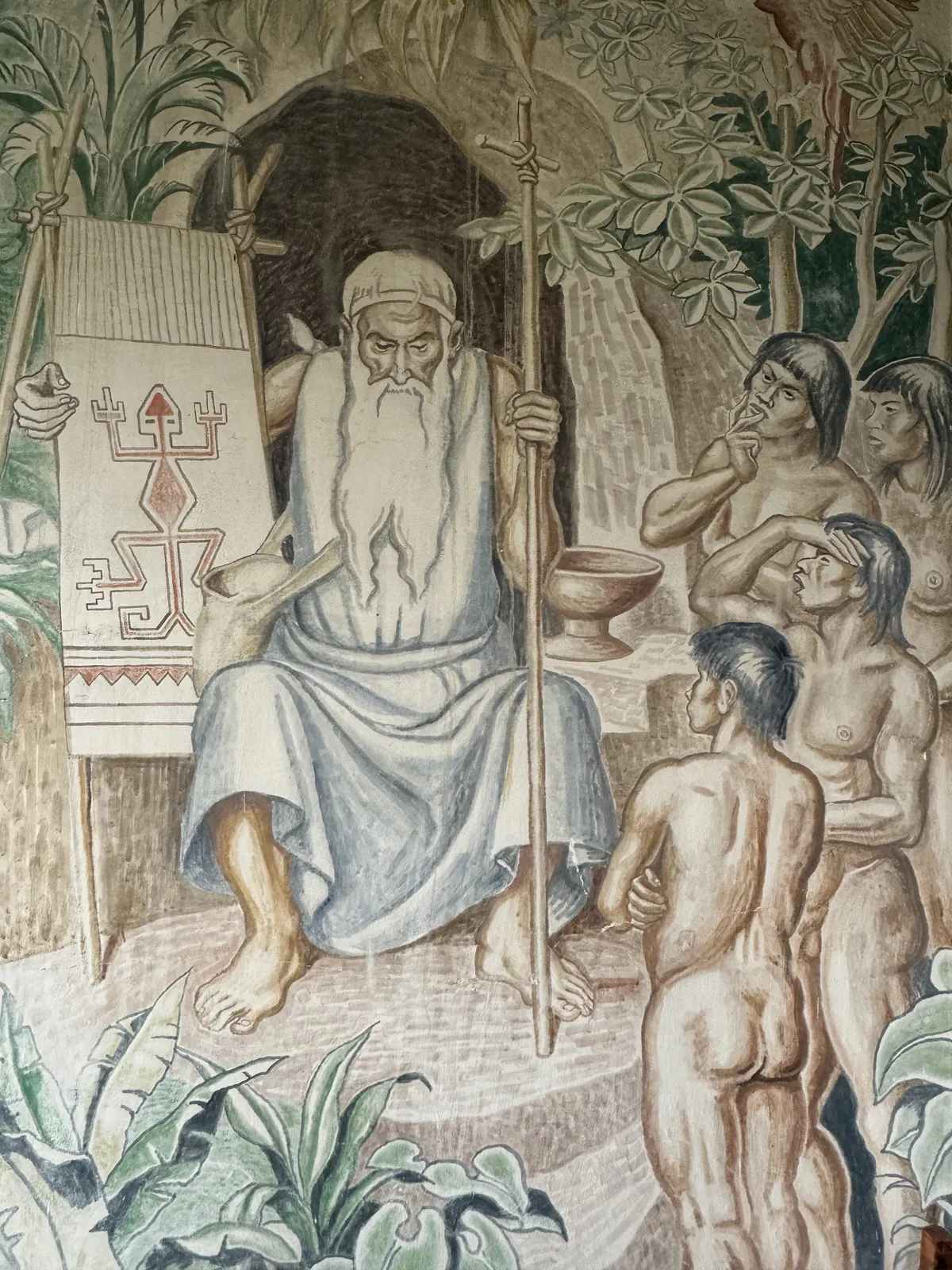
Bochica Teaching the Muisca
Luis Alberto Acuña
This 1960-70s mural depicts Bochica, the bearded sage and civilizing hero of Muisca mythology, imparting moral and spiritual lessons. Seated before young disciples, he holds symbols of power and knowledge, including a woven banner. A revered figure, Bochica was believed to have formed the Tequendama Falls and taught the Muisca how to live harmoniously.
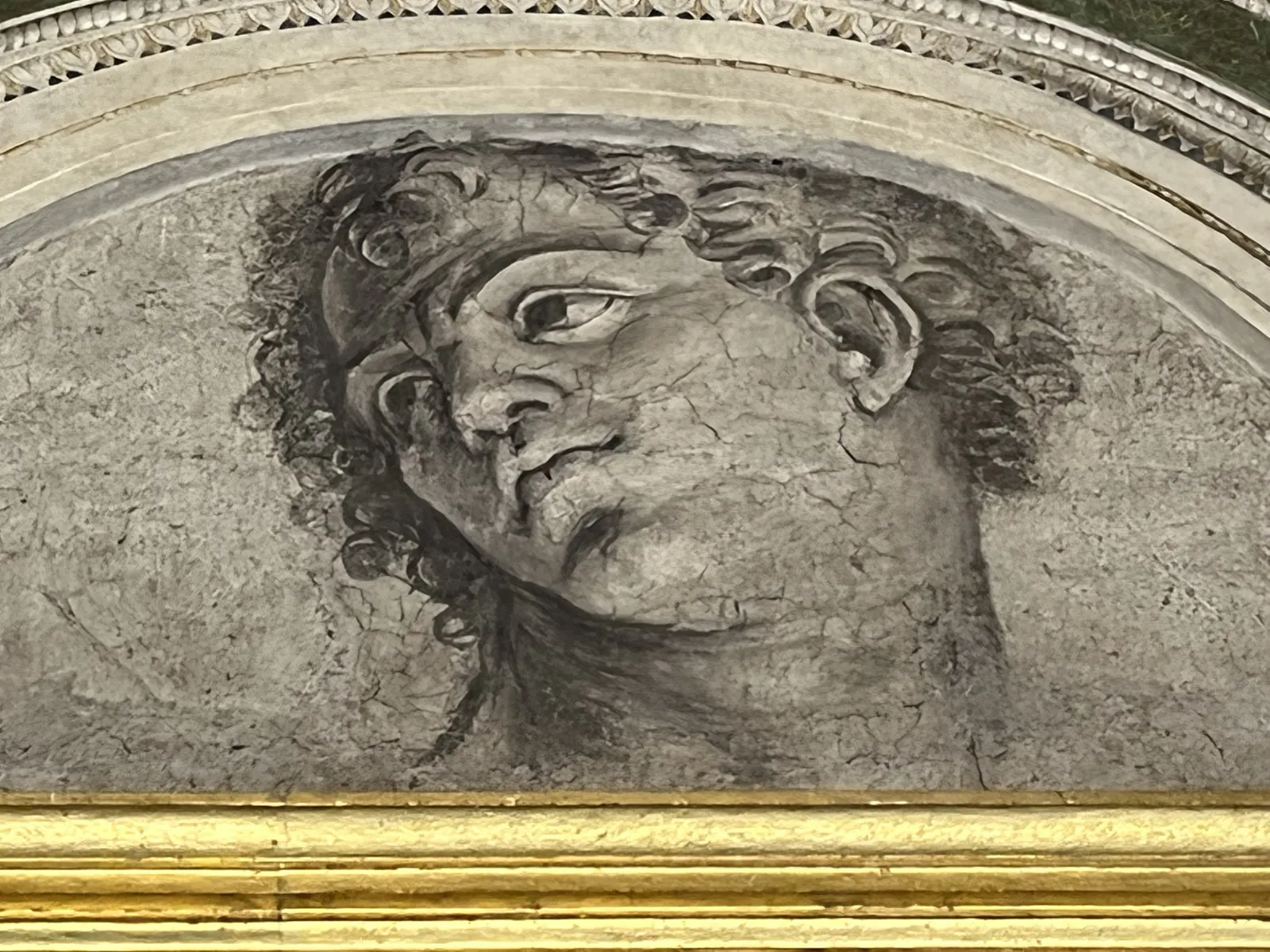
Head of a Youth
Michelangelo
This charcoal head of a youth (1511–12) fills a shallow lunette, the face turned sharply upward and modeled with dense, sculptural shading. Created while Michelangelo worked at Villa Farnesina, it is understood as a visual homage to Raphael’s work in the same setting. The fusion of muscular anatomy with a calm, idealized profile demonstrates how Michelangelo engaged directly with Raphael’s Renaissance style.
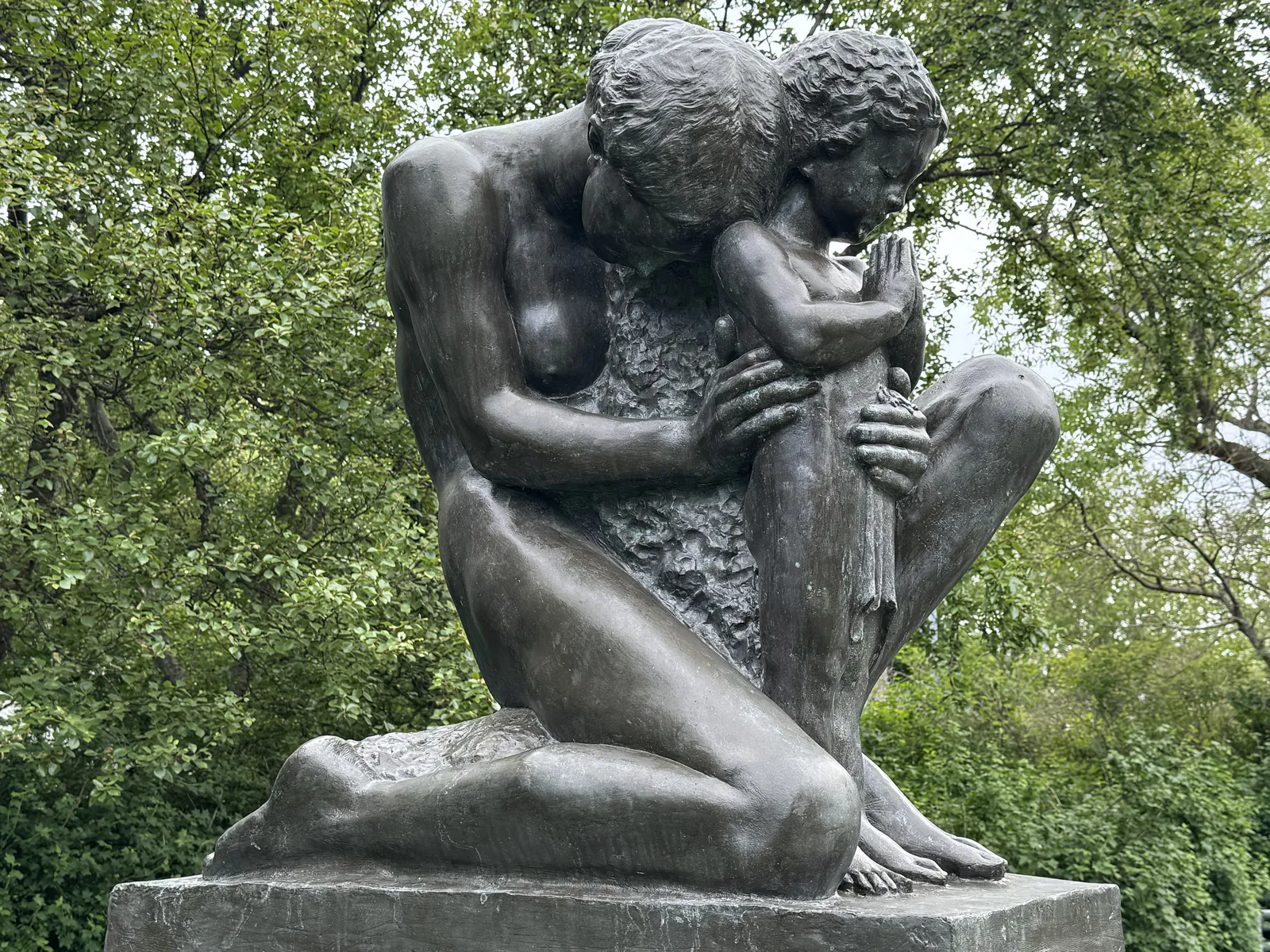
The Prayer
Einar Jónsson
Created in 1909 and later cast in bronze, this sculpture shows a kneeling woman embracing a praying child, merging maternal love with spiritual devotion. Jónsson, pioneer of Icelandic sculpture, wove Nordic symbolism into works that joined earthly care and divine aspiration. His 1909 donation of all his art to the nation ensured the founding of Iceland’s first art museum in 1923, making pieces like The Prayer central to national identity.
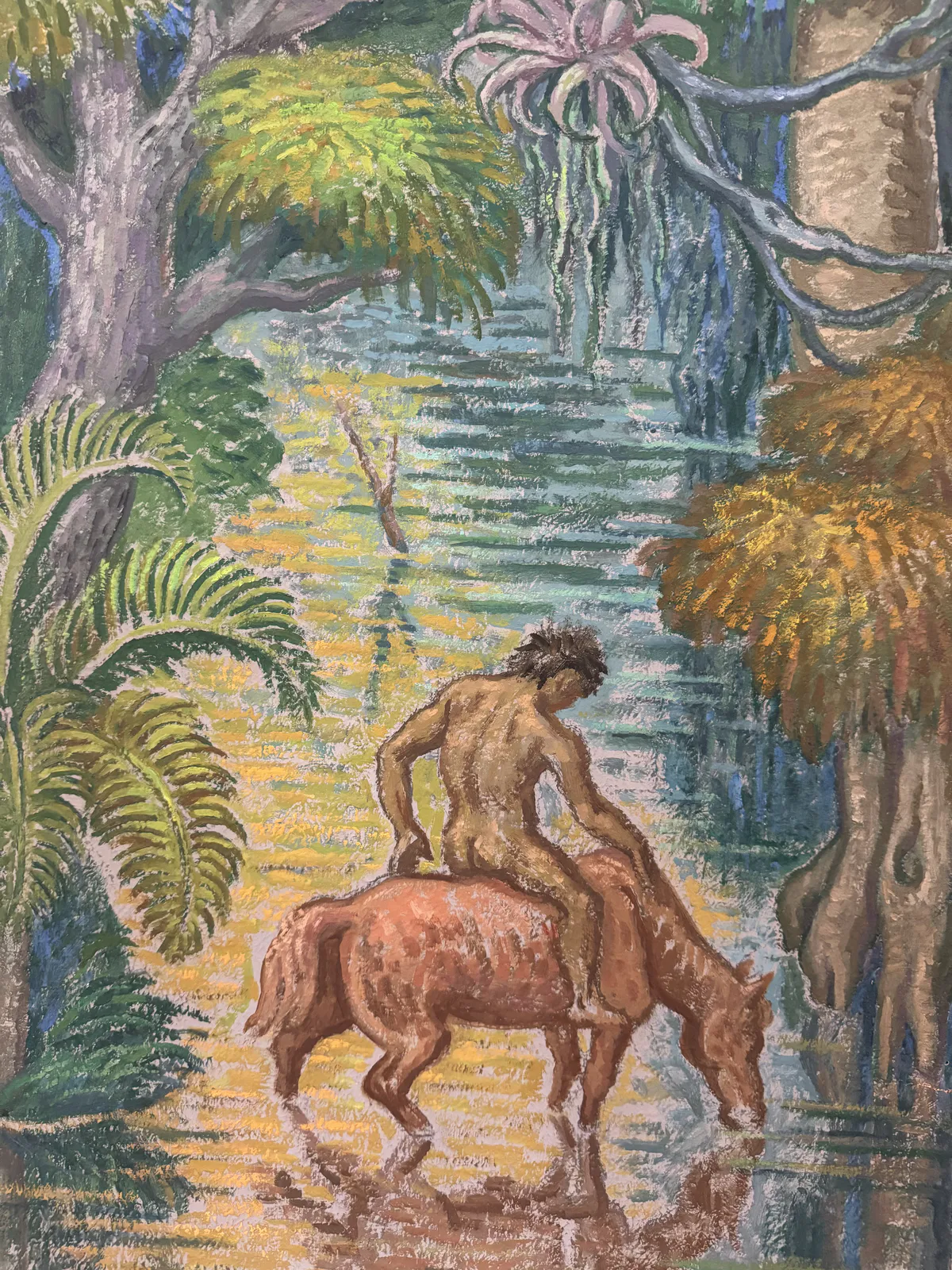
Indo-American Scene
Luis Alberto Acuña
A lone, naked rider on horseback drinks from a forest stream, immersed in a lush tropical setting. Acuña's painting (1950-60s) evokes a primordial connection between Indigenous people and the natural world, blending mythic and symbolic elements into a vision of harmony, solitude, and ancestral presence.
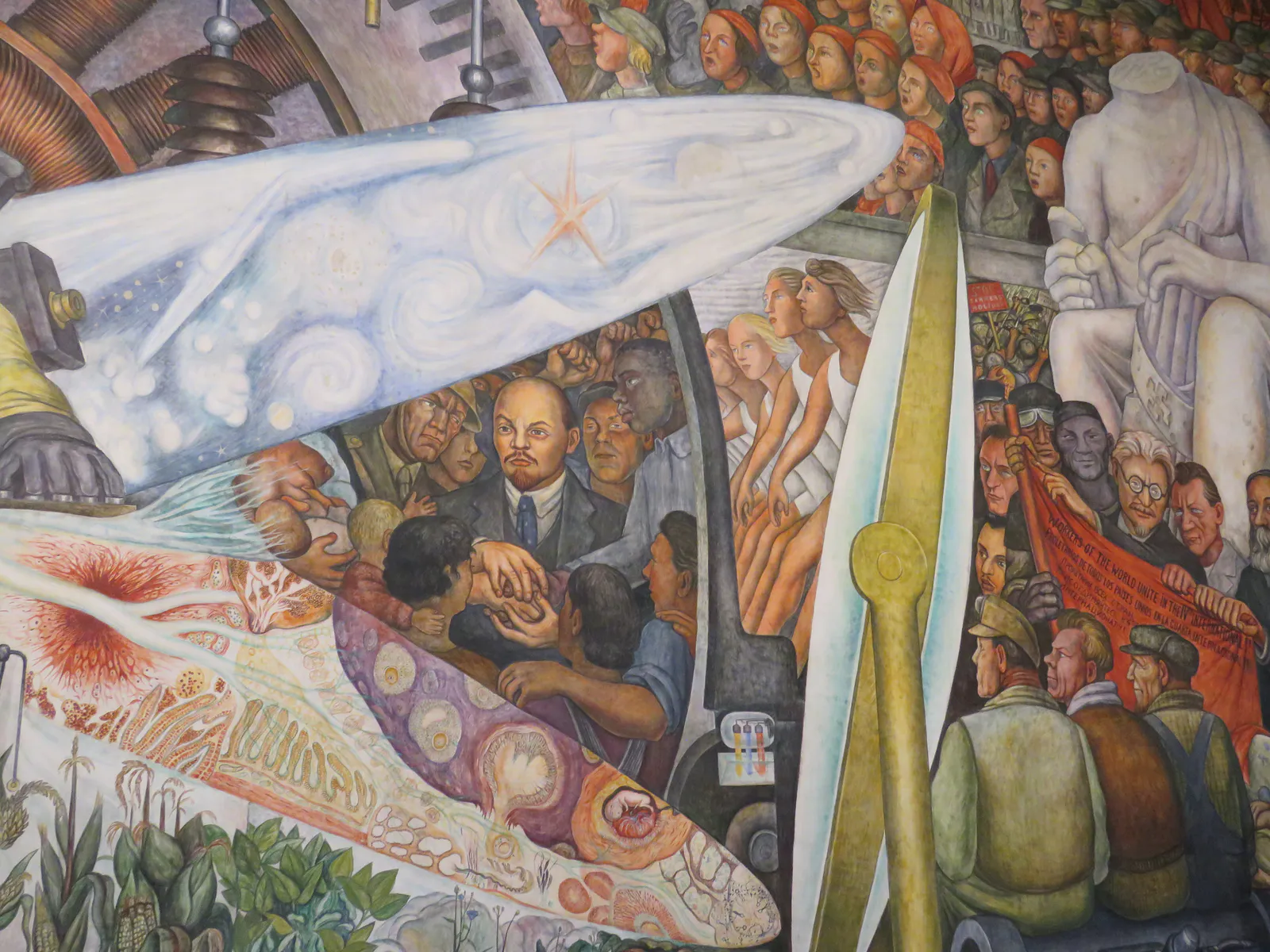
Man, Controller of the Universe (detail)
Diego Rivera
This section of Rivera’s 1934 recreated mural shows Lenin uniting workers of different races and nations, flanked by scientific, agricultural, and cosmic imagery. It contrasts socialism’s collective promise with capitalist individualism. The original was destroyed at Rockefeller Center.
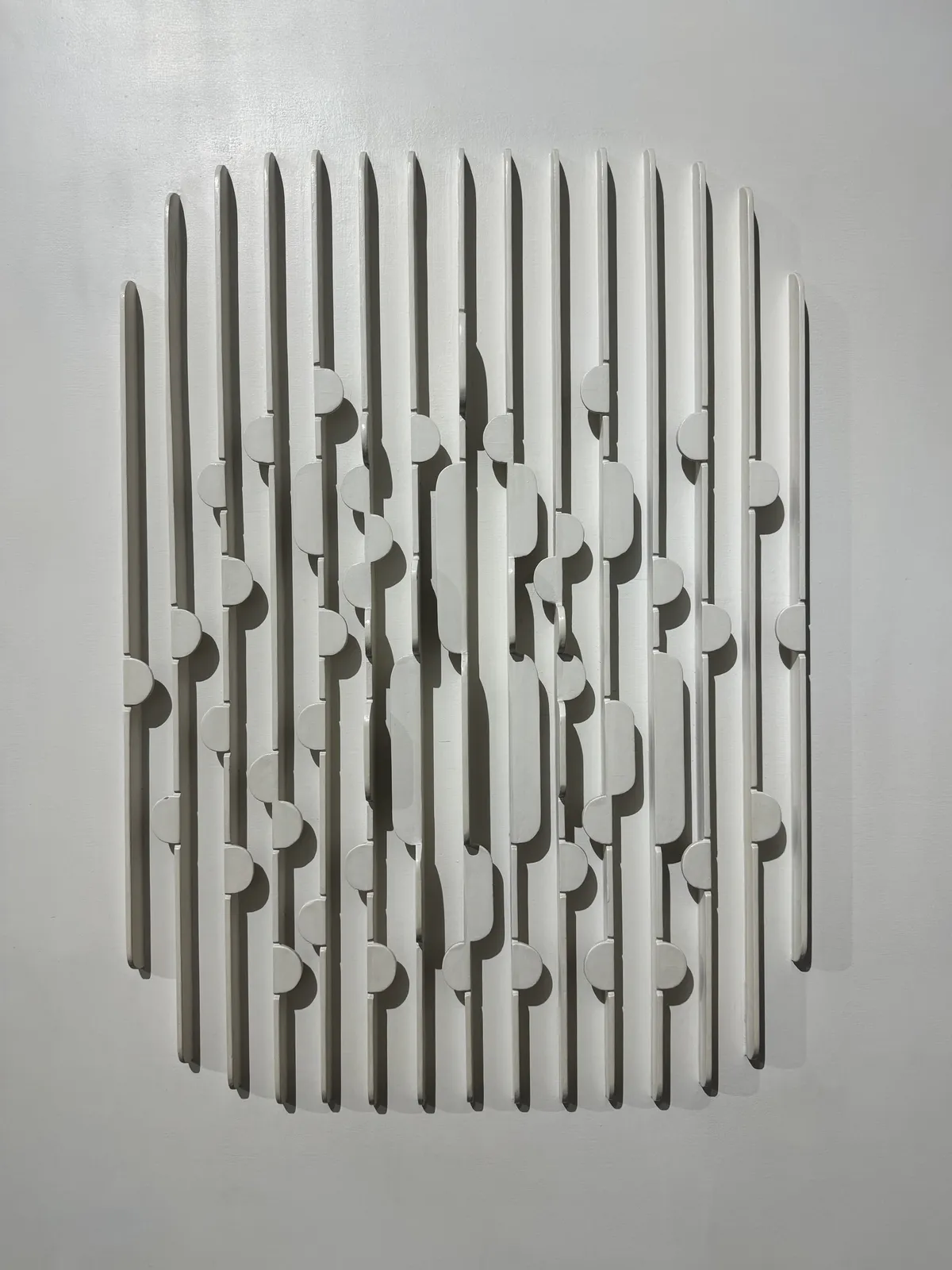
Homage to Vivaldi
Eduardo Ramírez Villamizar
This sculptural relief in painted wood (1963) reflects Villamizar’s fusion of geometric abstraction and musical rhythm. Vertical repetition and modulated forms evoke the structured elegance of Vivaldi’s compositions, transforming sound into visual cadence. It belongs to the museum’s permanent collection.
“When the path is beautiful, do not ask where it leads.” — Zen proverb
Welcome to my travel photography!
“When the path is beautiful, do not ask where it leads.” — Zen proverb
Welcome to my travel photography!
For as long as I can remember, my path has been one of discovery—seeking beauty, timelessness, and connection in every corner of the world. It has also been a journey of deep learning and understanding. I’ve been an avid traveler (or perhaps a travel addict?) for most of my life. My love for travel began long before I ever left home: as a child, I drew a fantasy map of my grandparents’ apartment and “traveled” through it with my cousin Sonya, imagining adventures in every corner. Nearly 90 countries and countless moments of awe later, I’m excited to share this journey with you.
Thanks to the tireless and ingenious programming of Diagilev, we’re now able to present about fifteen percent of the images I’ve accumulated over the years. More will be released in small batches depending on your interest. While the first release leans toward museum photography, later ones will include more nature, architecture, culture, and general travel experiences. If you’d like to receive email notifications about new releases, feel free to reach out—no commercial use, ever.
Throughout my travels, I’ve been drawn to two intertwined kinds of discovery. One is intellectual: learning why the world is the way it is. History became my guide, shaping my perspective and filling my camera roll with museums and old buildings. To me, history is not the past—it is the key to understanding the present and how the world became what it is. The other is emotional: seeking moments of elevation—spirituality, beauty, harmony—often found in nature, monasteries, and ancient sacred spaces. Together, these impulses shape my photography. It invites you to learn, admire, and soar—to rise above the mundane and see the world through a lens of curiosity and wonder.
Much of my later travel became possible thanks to my job with Delta Air Lines, but the wanderlust began years earlier. By the time I joined the industry, I had already visited over 35 countries and lived in several—largely thanks to a backpacking journey around the world with Luis León, whose face appears in many early photos. I grew up in Ufa in the USSR, and since leaving it I have lived, studied, and worked in Latvia, the United States, France, South Korea, Canada, Spain, Italy, Brazil, Japan, and Colombia.
A life of near-constant movement may seem a little crazy, but it has deepened my understanding of the world and produced the photography you are about to see. Over the years, my style has evolved—more intentional, more refined—yet its core remains the same: a search for understanding, timeless beauty, and a connection to those who walked this earth long before us.
I hope these photos stir something in your soul, just as they did in mine. I’d love to hear from you—whether reactions, suggestions, corrections, or a request to be added to the email list for new releases (no commercial use, I promise). You can learn more about my travels here, and my academic life here.
Enjoy our shared journey!