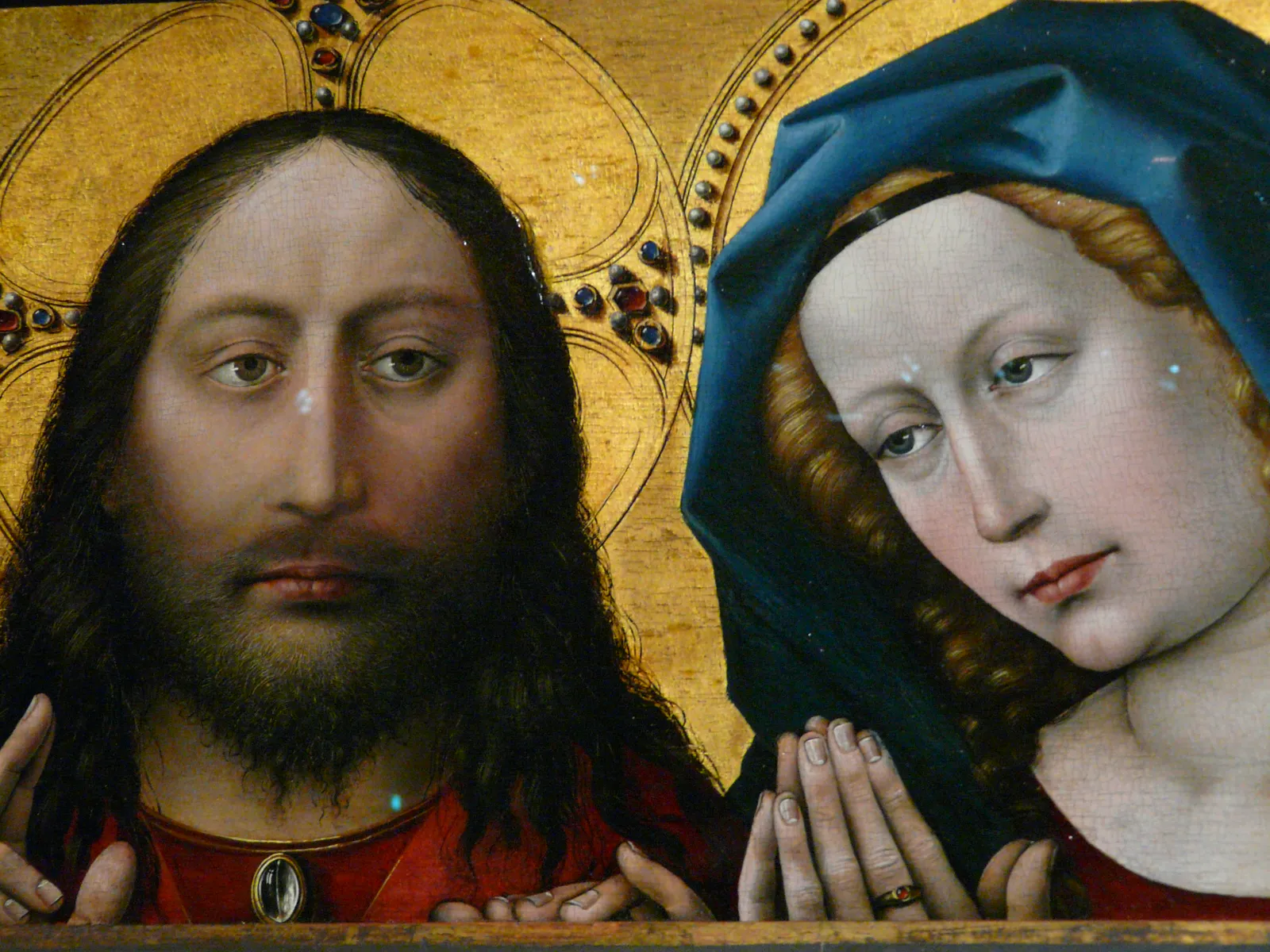
Christ Blessing with Virgin at Prayer
Master of Flémalle
This 15th-c. oak panel by the Master of Flémalle, often associated with Robert Campin, exemplifies early Netherlandish style. It showcases realistic detail through innovative oil paint use. The depiction of Christ blessing and the Virgin Mary at prayer reflects the era’s religious devotion and artistic innovation, marking a pivotal moment in European art’s evolution.
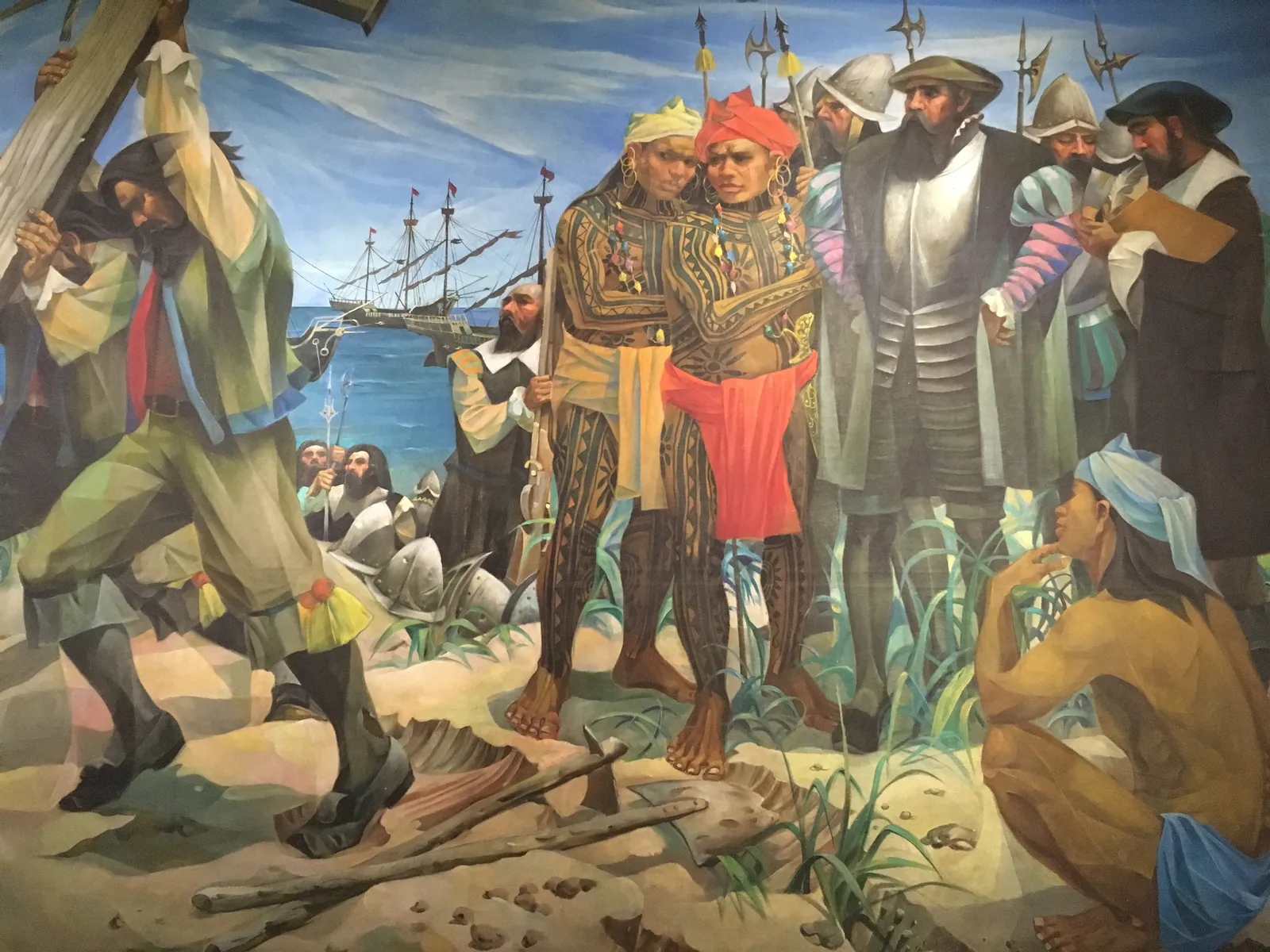
Planting of the First Cross
Vicente Manansala
The painting depicts the 1521 event in Cebu where Ferdinand Magellan and Spanish soldiers, with tattooed natives called pintados, planted a cross. Commissioned for the 400th anniversary of Philippine Christianization in 1965, it captures a pivotal historical moment. Manansala’s transparent cubism blends traditional and modern styles, highlighting cultural convergence. The original cross is a historical artifact in Cebu City.
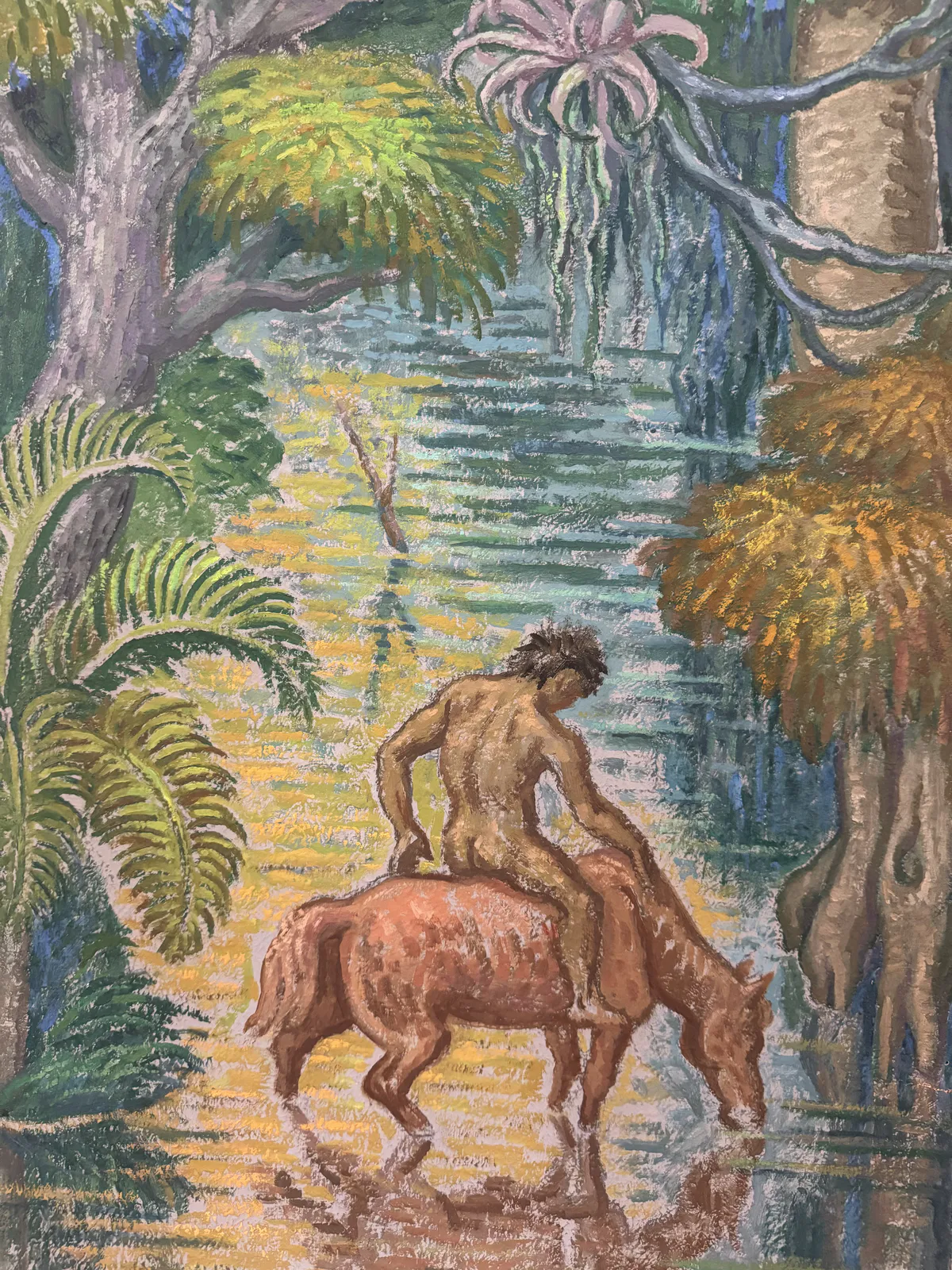
Indo-American Scene
Luis Alberto Acuña
A lone, naked rider on horseback drinks from a forest stream, immersed in a lush tropical setting. Acuña's painting (1950-60s) evokes a primordial connection between Indigenous people and the natural world, blending mythic and symbolic elements into a vision of harmony, solitude, and ancestral presence.
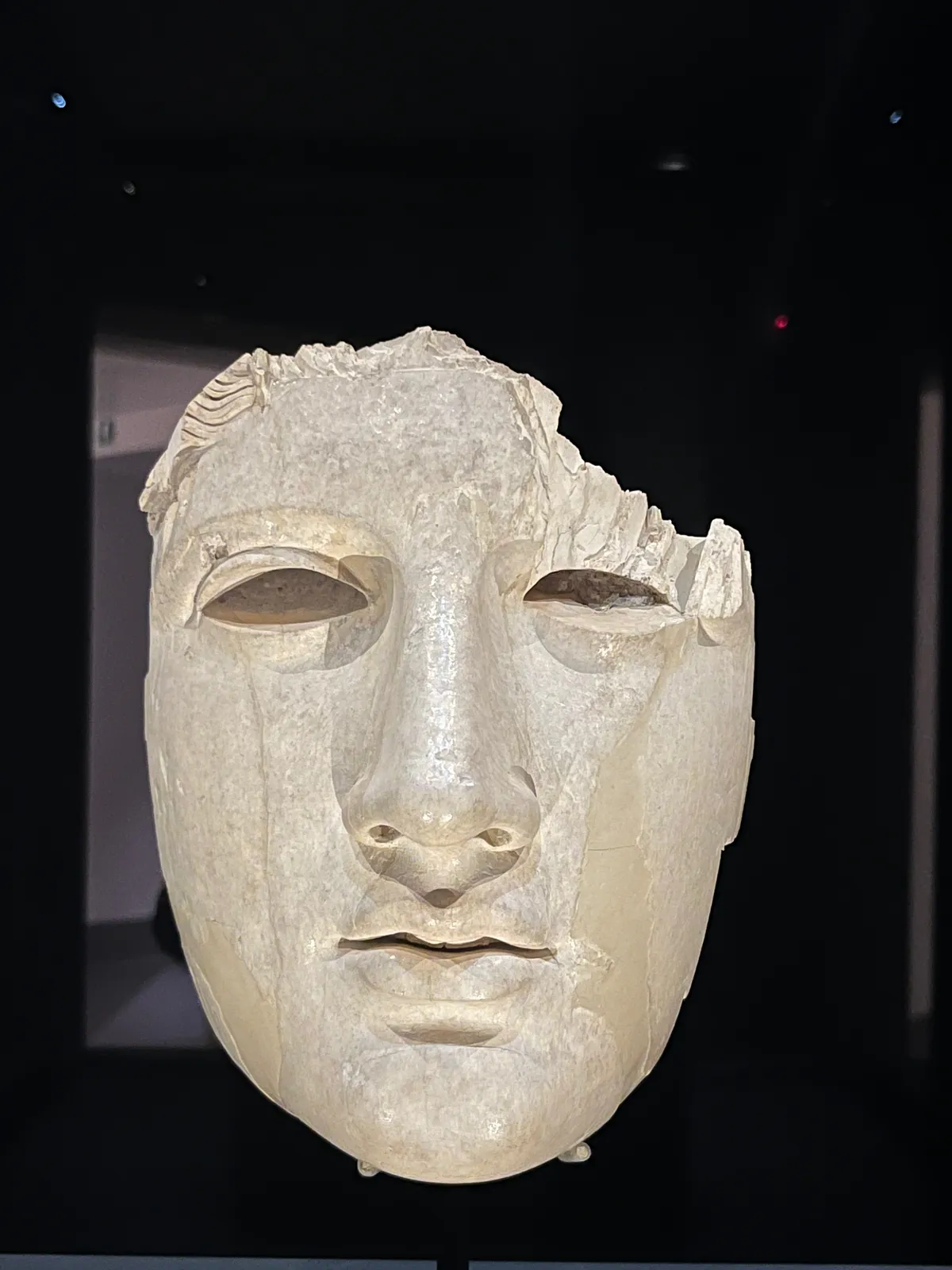
Apollo
Phidias
This ivory mask (5th c. BC) represents Apollo-Greek god of light, music, and prophecy-and once belonged to a chryselephantine statue (a prestigious cult image of ivory and gold). Attributed to Phidias, the master sculptor of classical Greece, it is an exceptionally rare survival of this luxury art form. Looted in 1995 and recovered in 2003, it now serves as both a rare survival of luxury cult sculpture and a reminder of ongoing threats to archaeological heritage.
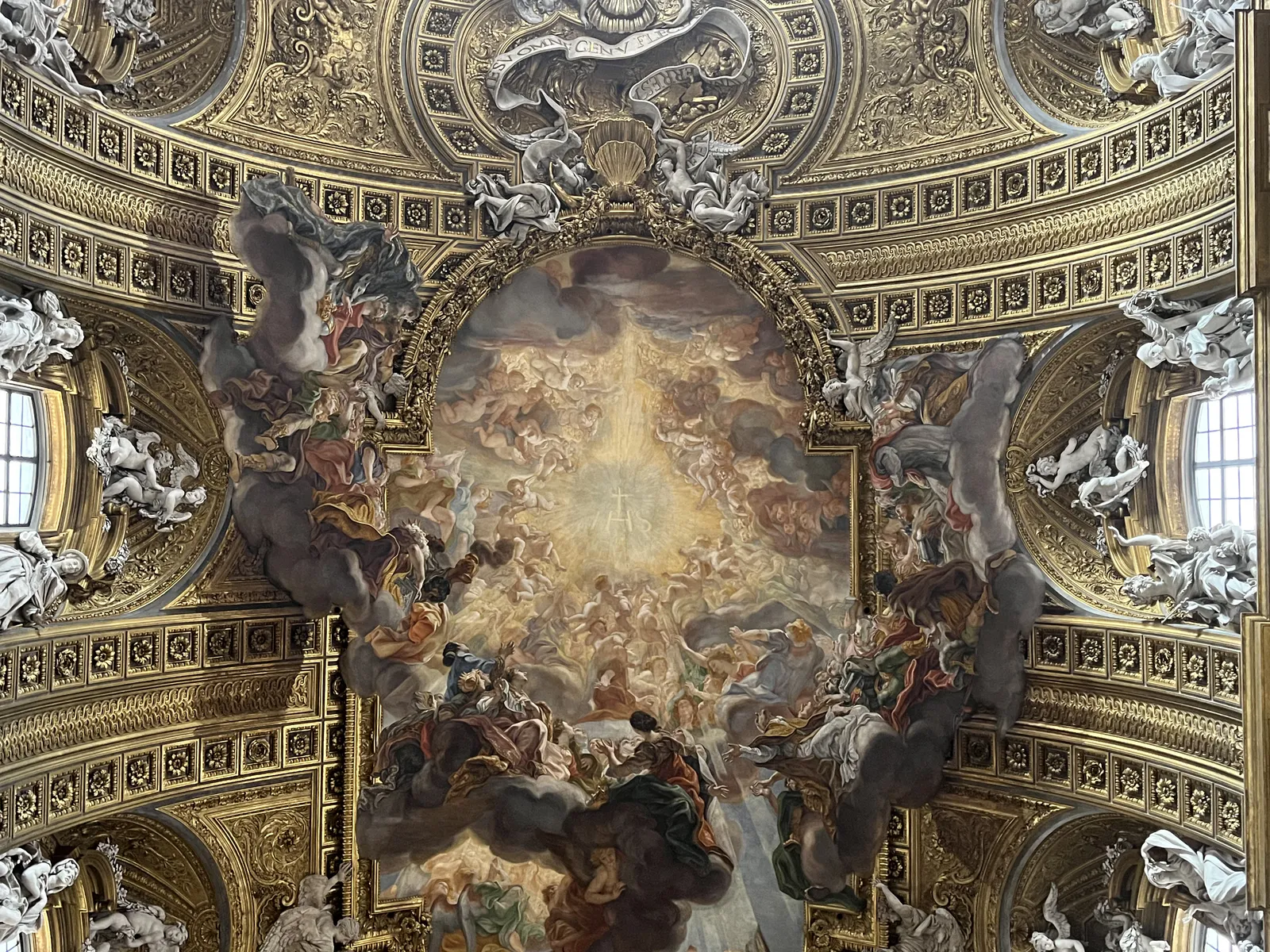
Triumph of the Name of Jesus
Giovanni Battista Gaulli
This dramatic fresco (1676–79) fills the nave ceiling with a celestial eruption of light and figures. At its center, divine radiance emanates from the monogram IHS, the symbol of Jesus. Saved souls rise toward the light, while sinners tumble into shadow. Blending paint and stucco, the work fuses heaven and church in Baroque theatricality.
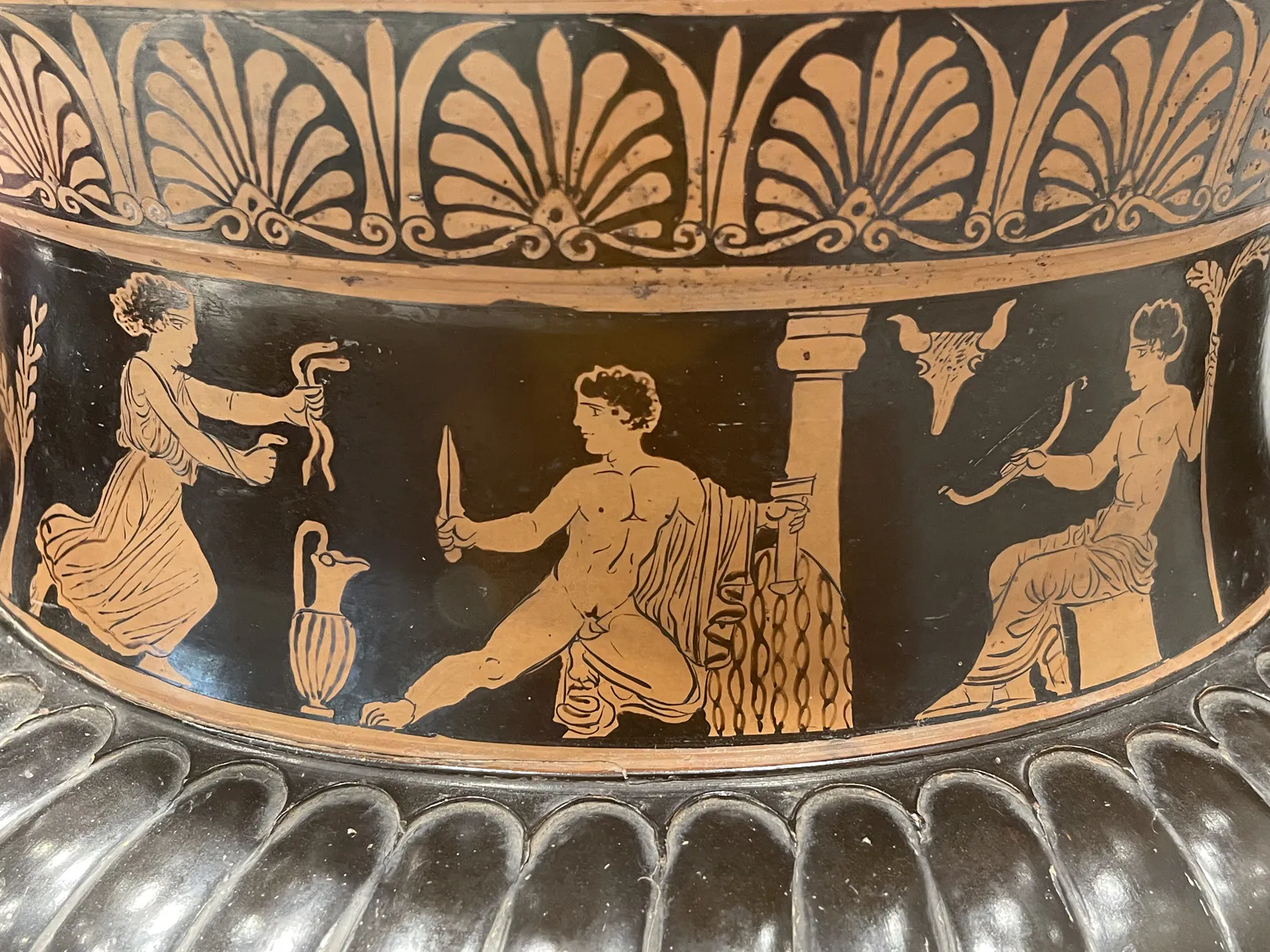
Orestes Pursued by the Furies
Painter of the Birth of Dionysus
This Apulian red-figure krater, used for mixing wine and water, (410–390 BC) depicts Orestes defending himself with a sword against the Erinyes, avenging his mother's death. Apollo, seated with a bow, offers protection, symbolizing divine sanction amid human guilt. This scene illustrates the complex interplay of justice and retribution in Greek mythology.
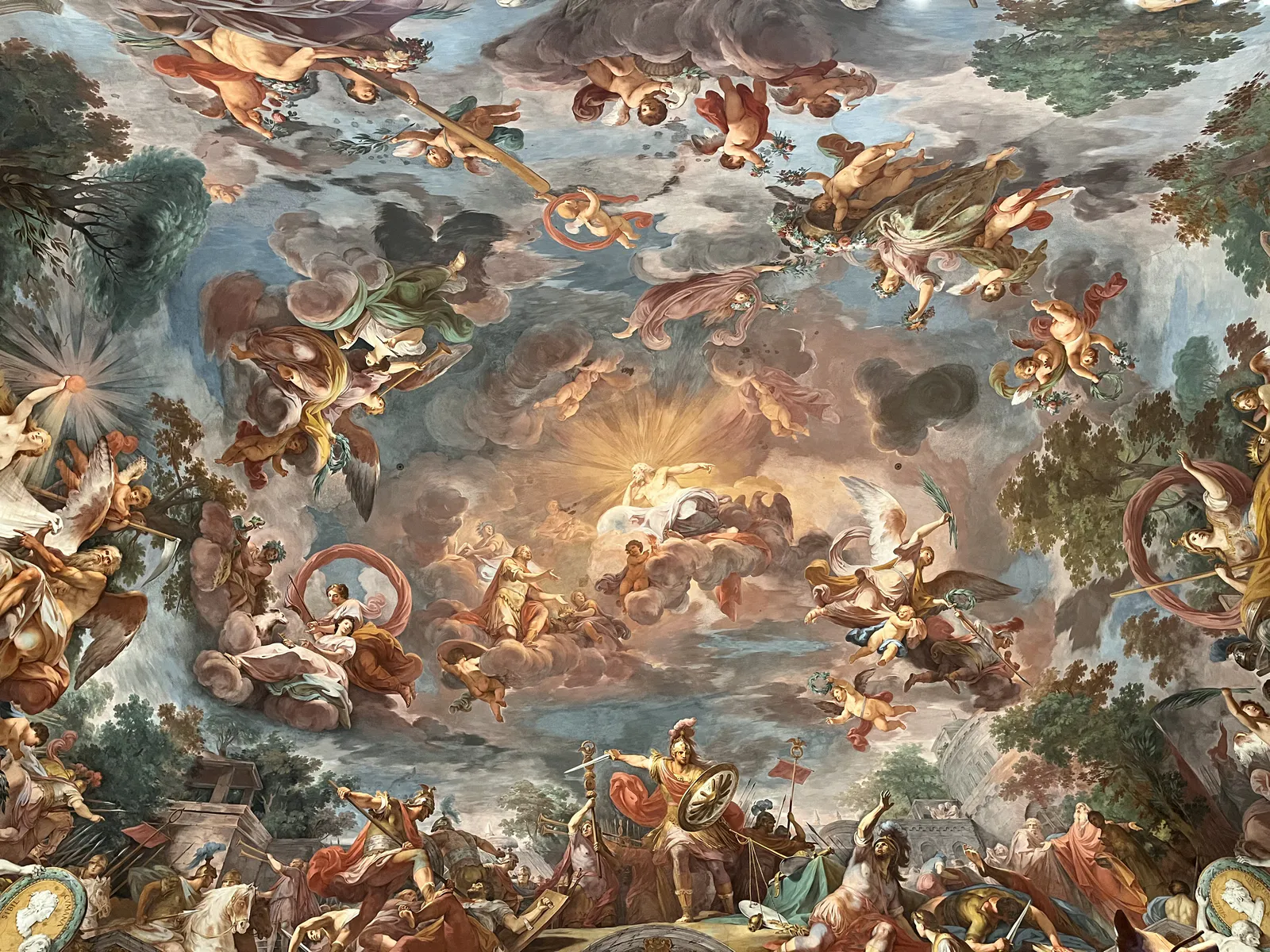
Roman Civilization and the Heroic Virtue of Honor
Mariano Rossi
This illusionistic ceiling (1775) shows a vortex of gods, heroes, and allegorical figures arranged in rising spirals. Rossi organized the composition with deep foreshortening to create a theatrical Baroque panorama. The central burst of light frames scenes of conflict and ascent, indicating how Roman culture linked civic honor with collective greatness.
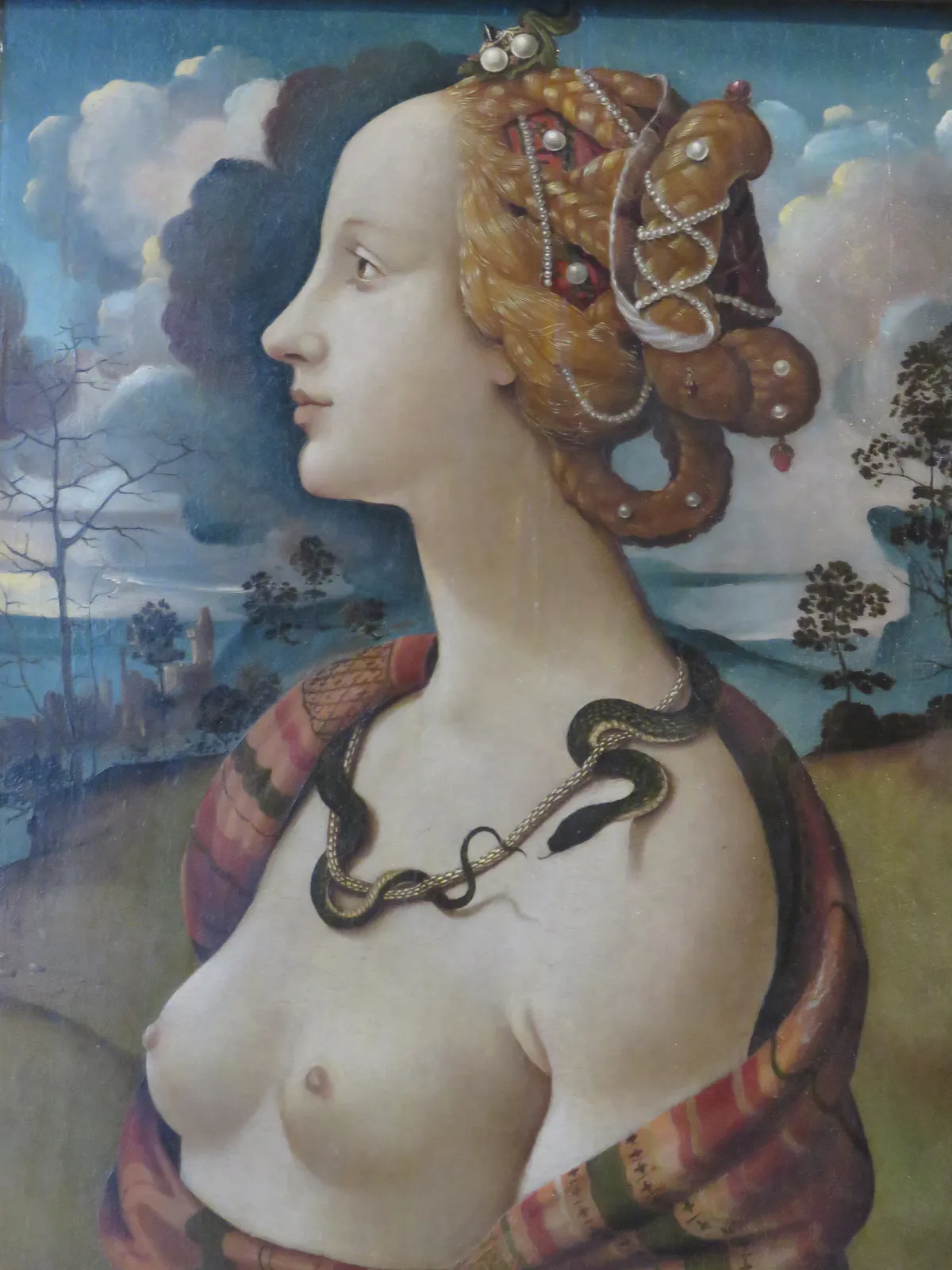
Simonetta Vespucci as Cleopatra
Piero di Cosimo
This painting (c. 1480) by di Cosimo depicts Simonetta Vespucci as Cleopatra, with an asp coiled around her neck. Created posthumously, it honors Vespucci’s beauty; she died in 1476 at 23. The profile view echoes medal portraits, while the snake may symbolize her death from tuberculosis. The serene landscape and sky enhance her ethereal presence, making this work a poignant tribute.
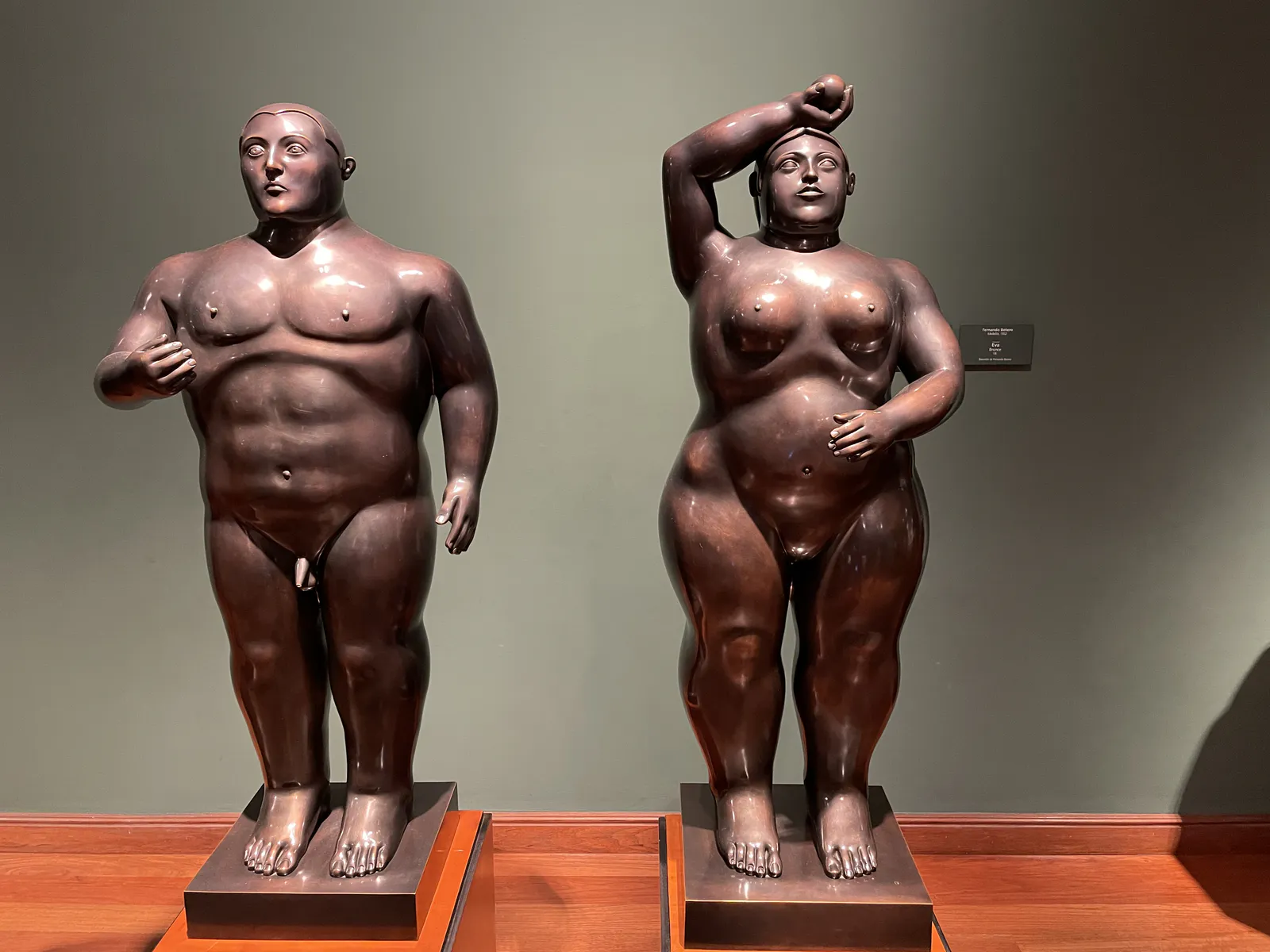
Adam and Eve
Fernando Botero
These 1999 bronze figures reimagine the biblical first humans with Botero’s hallmark voluminous style. Their serene, exaggerated forms strip the myth of guilt and drama, offering a playful yet dignified meditation on innocence, corporeality, and the timeless tension between flesh and spirit.
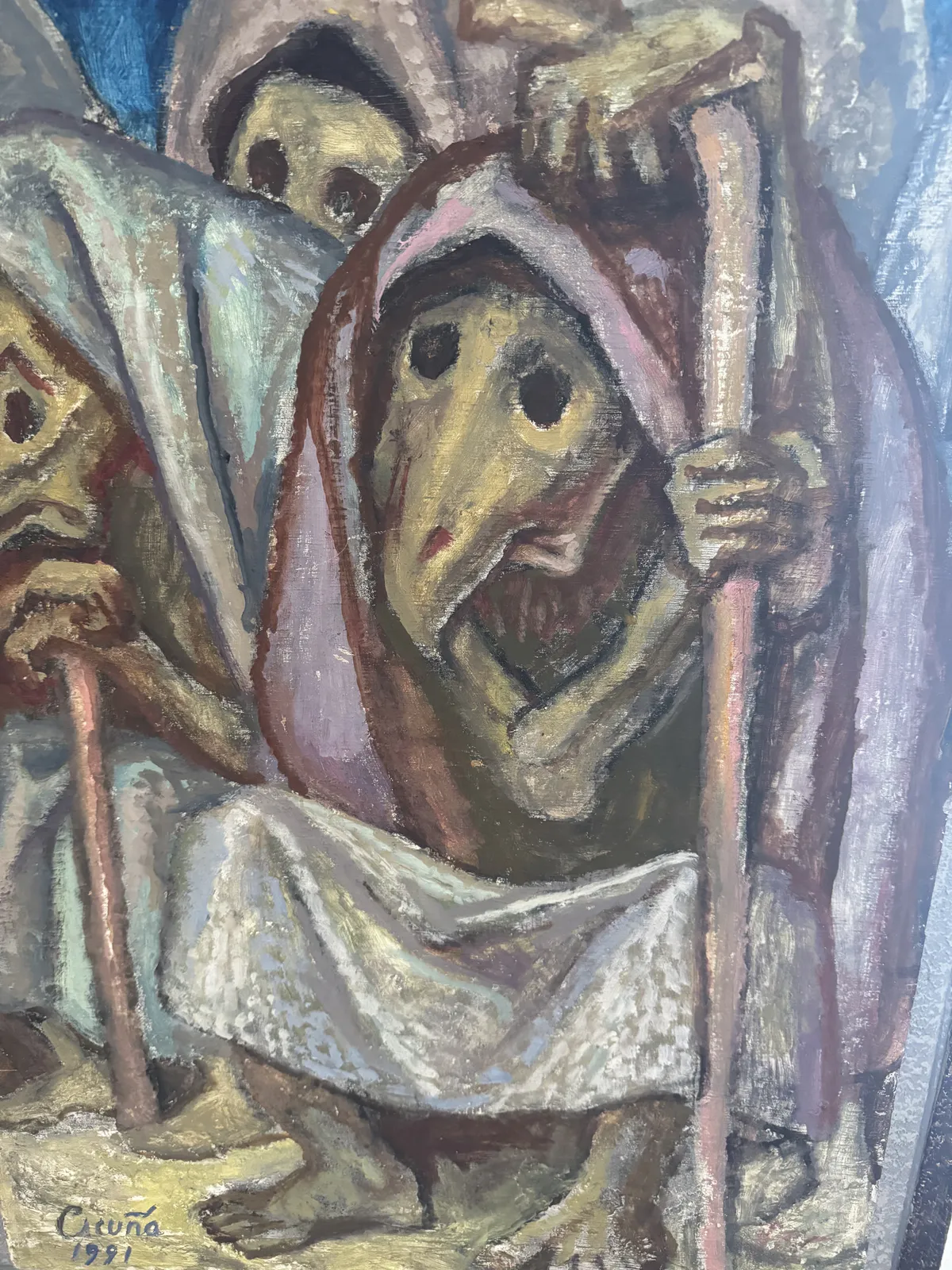
The Witch of Zascandil
Luis Alberto Acuña
This portrait (1991) shows the Witch of Zascandil, a figure rooted in Colombian folklore. Sharp features and widened eyes create a tense, exaggerated profile. The name Zascandil refers to a trickster or wandering mischief-maker in regional stories. The image indicates how rural mythology blends satire, fear, and ancestral belief.
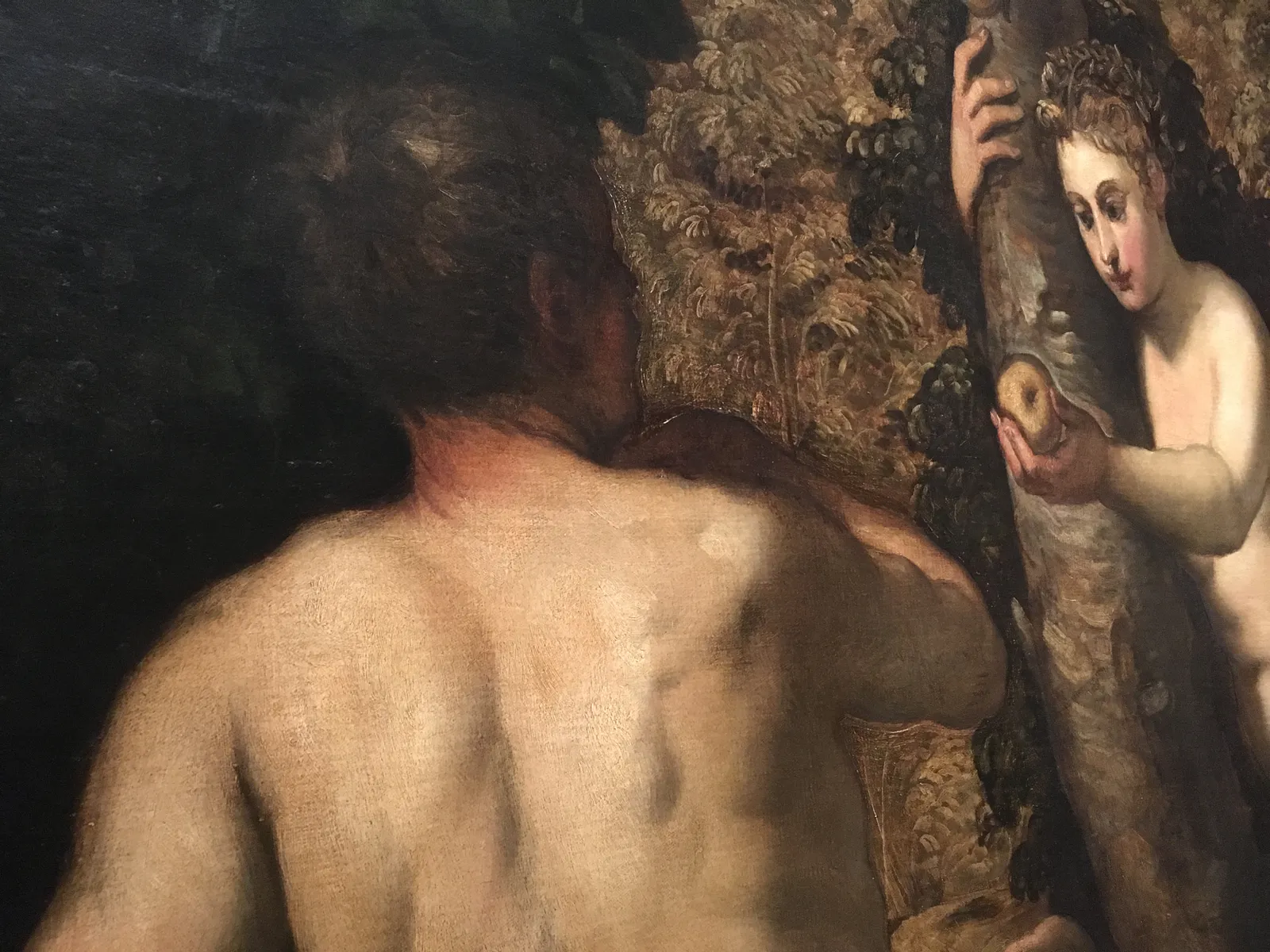
Adam and Eve
Tintoretto
Tintoretto’s painting (1550–53) depicts the biblical scene of temptation in the Garden of Eden. Eve offers the forbidden fruit to Adam, with their expulsion illustrated in the background. Influenced by Michelangelo, the composition emphasizes the nude figures and employs oblique lines to structure the landscape. This work reflects the Renaissance interest in human form and moral themes.
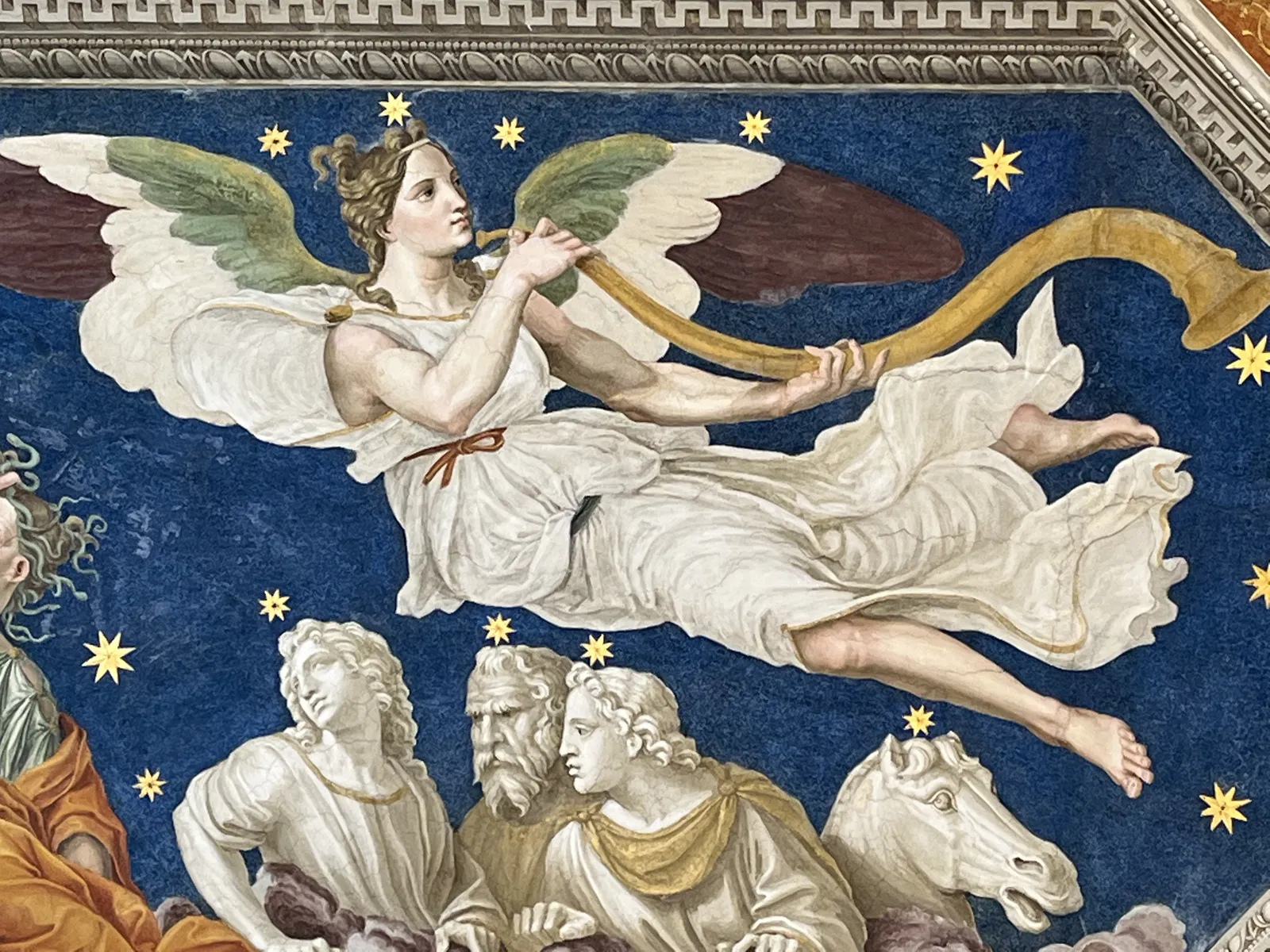
Fame and Medusa's Victims
Baldassarre Peruzzi
This fresco (1511) shows Fame soaring through the sky, announcing glory with her trumpet. Below, three men and a horse emerge from the clouds, their pallor and stiffness indicating they are victims turned to stone by Medusa's gaze. The composition reflects Renaissance interest in mythology, illustrating the power of reputation and the consequences of divine encounters.
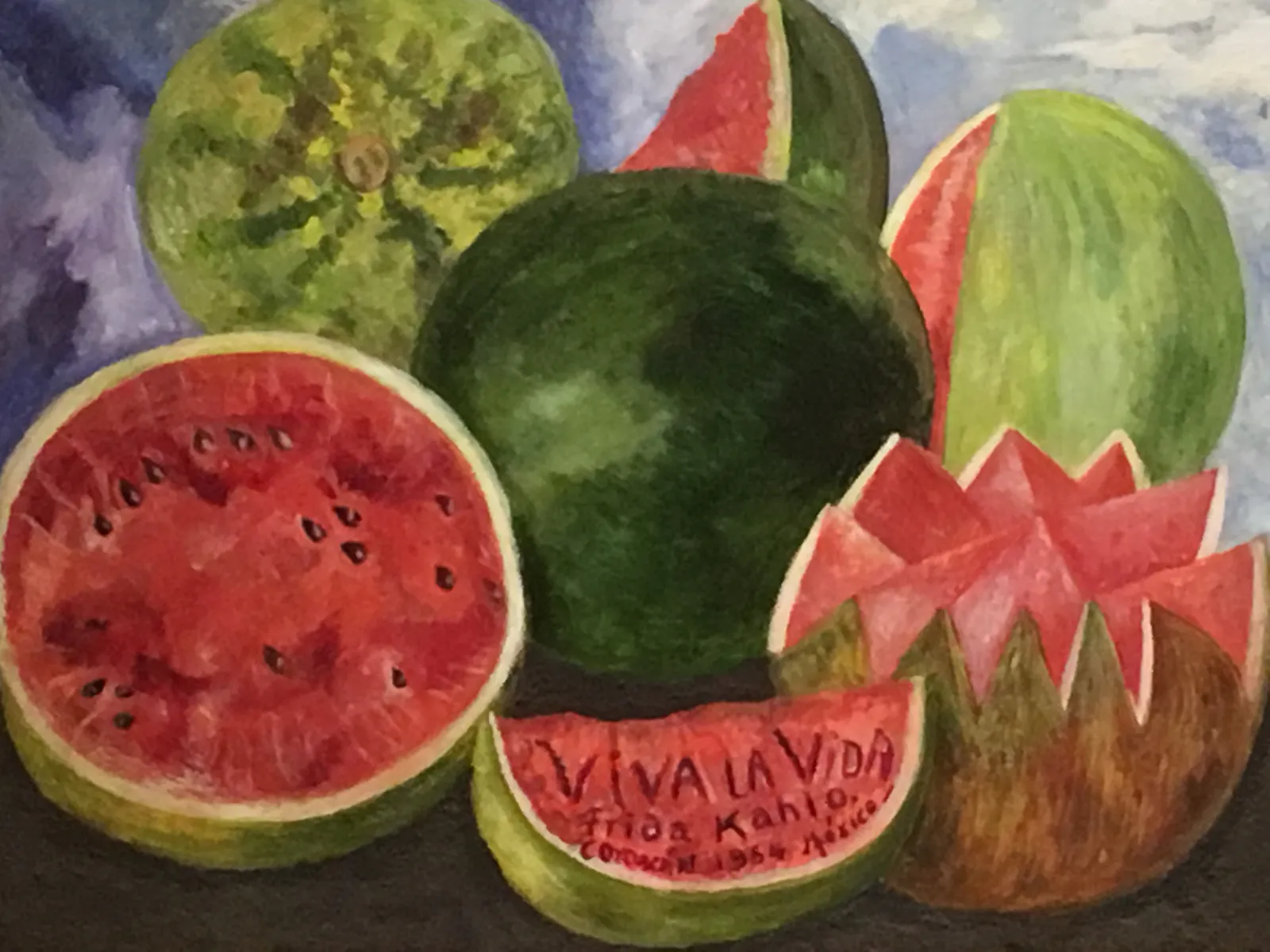
Viva la Vida, Watermelons
Frida Kahlo
Painted just days before her death in 1954, this still life features ripe watermelons—some whole, some cut—bursting with color and vitality. The inscription Viva la Vida (Long Live Life) appears carved into a slice, signed and dated by Kahlo. Though her body was failing, this joyful image radiates defiance and reverence for life’s beauty amid suffering.
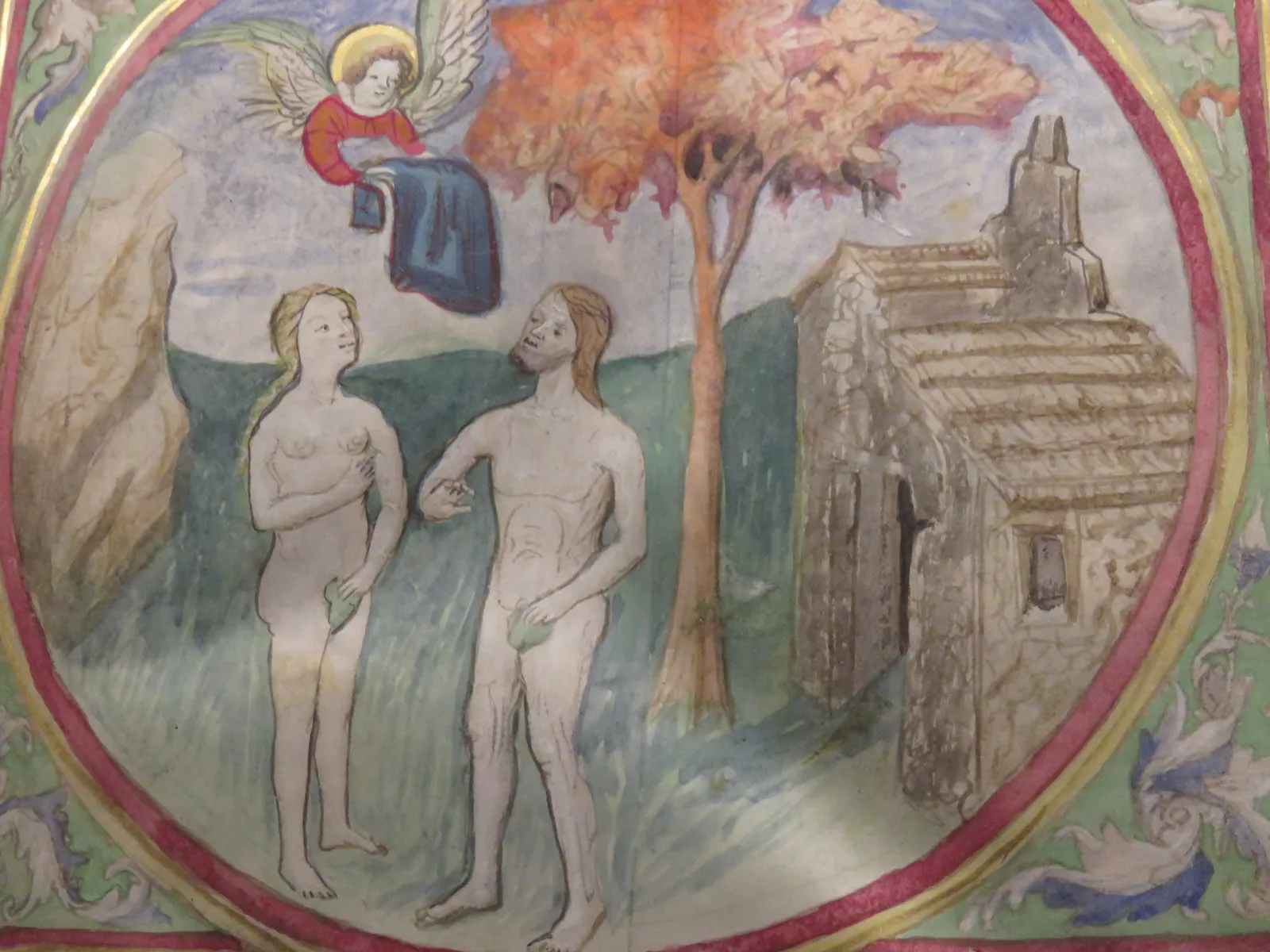
Expulsion from Eden
Maître des Médaillons
This French manuscript miniature (early 15th c.) shows Adam and Eve after the Fall, modestly covering themselves with leaves. An angel descends with a robe, while the Tree of Knowledge burns red above them. To the right stands a stone building, symbolizing exile from Paradise. The vivid colors and fine detail reflect late medieval devotional art.
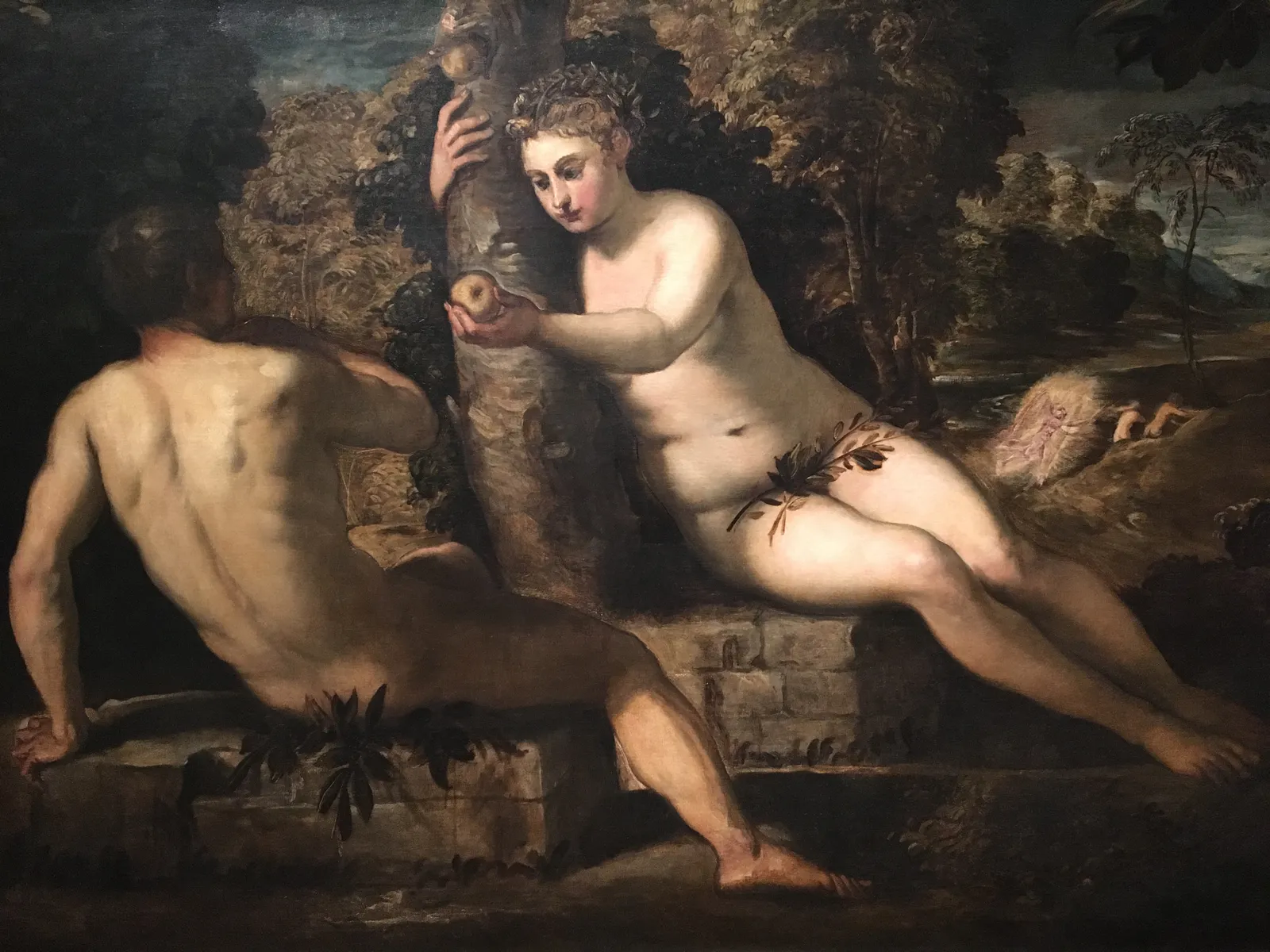
Adam and Eve in the Garden of Eden
Tintoretto
Tintoretto’s work (1550–1553) depicts the biblical moment of temptation in the Garden of Eden. Eve, holding the forbidden fruit, entices Adam, who hesitates, capturing the tension between desire and conscience. The background suggests their impending expulsion, a consequence of their choice. Dramatic lighting highlights the figures, emphasizing their forms and the scene’s gravity.
“When the path is beautiful, do not ask where it leads.” — Zen proverb
Welcome to my travel photography!
“When the path is beautiful, do not ask where it leads.” — Zen proverb
Welcome to my travel photography!
For as long as I can remember, my path has been one of discovery—seeking beauty, timelessness, and connection in every corner of the world. It has also been a journey of deep learning and understanding. I’ve been an avid traveler (or perhaps a travel addict?) for most of my life. My love for travel began long before I ever left home: as a child, I drew a fantasy map of my grandparents’ apartment and “traveled” through it with my cousin Sonya, imagining adventures in every corner. Nearly 90 countries and countless moments of awe later, I’m excited to share this journey with you.
Thanks to the tireless and ingenious programming of Diagilev, we’re now able to present about fifteen percent of the images I’ve accumulated over the years. More will be released in small batches depending on your interest. While the first release leans toward museum photography, later ones will include more nature, architecture, culture, and general travel experiences. If you’d like to receive email notifications about new releases, feel free to reach out—no commercial use, ever.
Throughout my travels, I’ve been drawn to two intertwined kinds of discovery. One is intellectual: learning why the world is the way it is. History became my guide, shaping my perspective and filling my camera roll with museums and old buildings. To me, history is not the past—it is the key to understanding the present and how the world became what it is. The other is emotional: seeking moments of elevation—spirituality, beauty, harmony—often found in nature, monasteries, and ancient sacred spaces. Together, these impulses shape my photography. It invites you to learn, admire, and soar—to rise above the mundane and see the world through a lens of curiosity and wonder.
Much of my later travel became possible thanks to my job with Delta Air Lines, but the wanderlust began years earlier. By the time I joined the industry, I had already visited over 35 countries and lived in several—largely thanks to a backpacking journey around the world with Luis León, whose face appears in many early photos. I grew up in Ufa in the USSR, and since leaving it I have lived, studied, and worked in Latvia, the United States, France, South Korea, Canada, Spain, Italy, Brazil, Japan, and Colombia.
A life of near-constant movement may seem a little crazy, but it has deepened my understanding of the world and produced the photography you are about to see. Over the years, my style has evolved—more intentional, more refined—yet its core remains the same: a search for understanding, timeless beauty, and a connection to those who walked this earth long before us.
I hope these photos stir something in your soul, just as they did in mine. I’d love to hear from you—whether reactions, suggestions, corrections, or a request to be added to the email list for new releases (no commercial use, I promise). You can learn more about my travels here, and my academic life here.
Enjoy our shared journey!