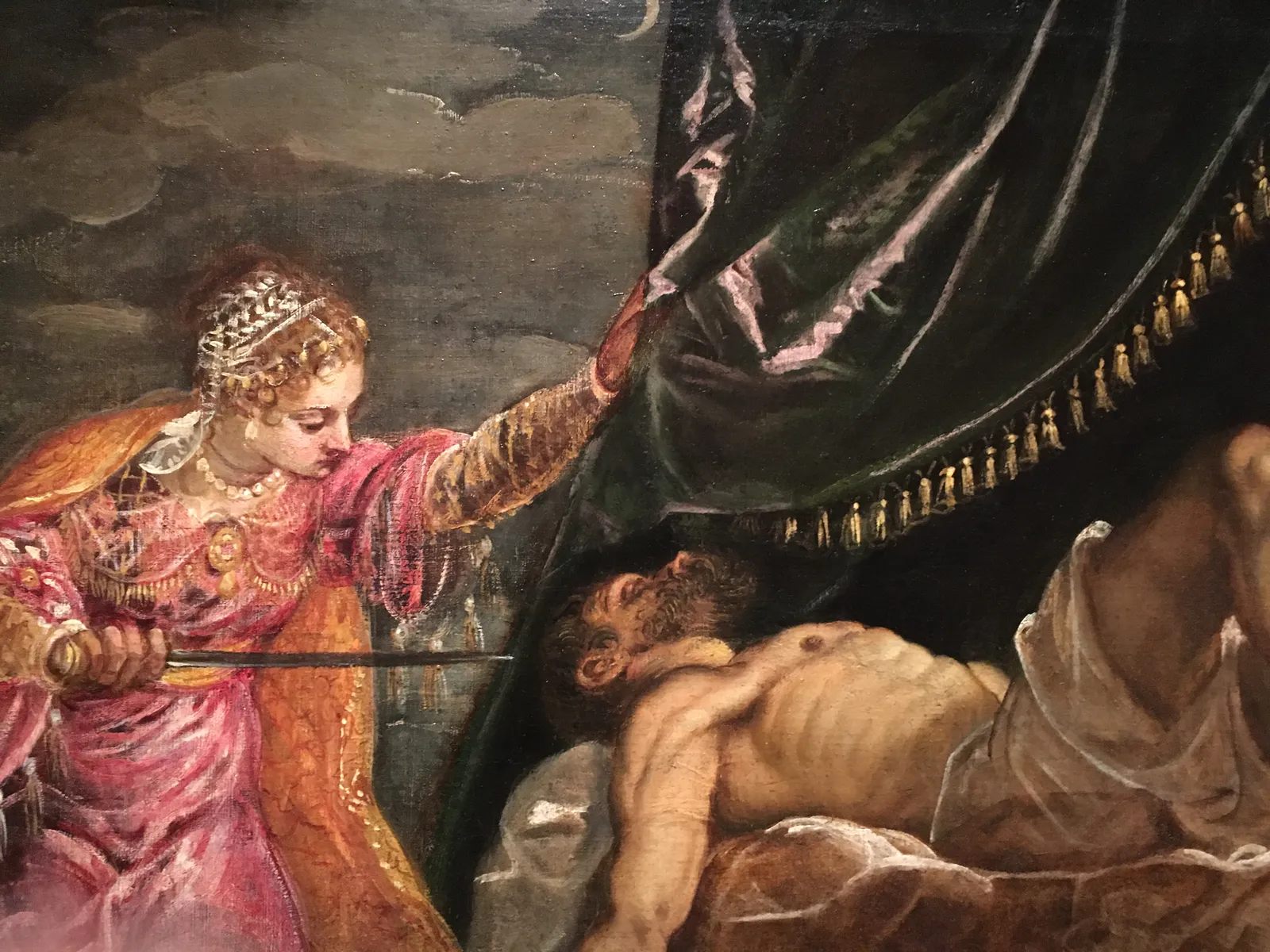
Judith Beheading Holofernes
Jacopo Tintoretto
This painting (c. 1577) by the studio of Jacopo Tintoretto depicts the biblical scene where Judith beheads Holofernes, an Assyrian general, to save her people. Executed in the Mannerist style, it emphasizes tension and emotion, typical of the Late Renaissance. The scene symbolizes courage and divine justice, reflecting the era’s interest in heroic narratives.
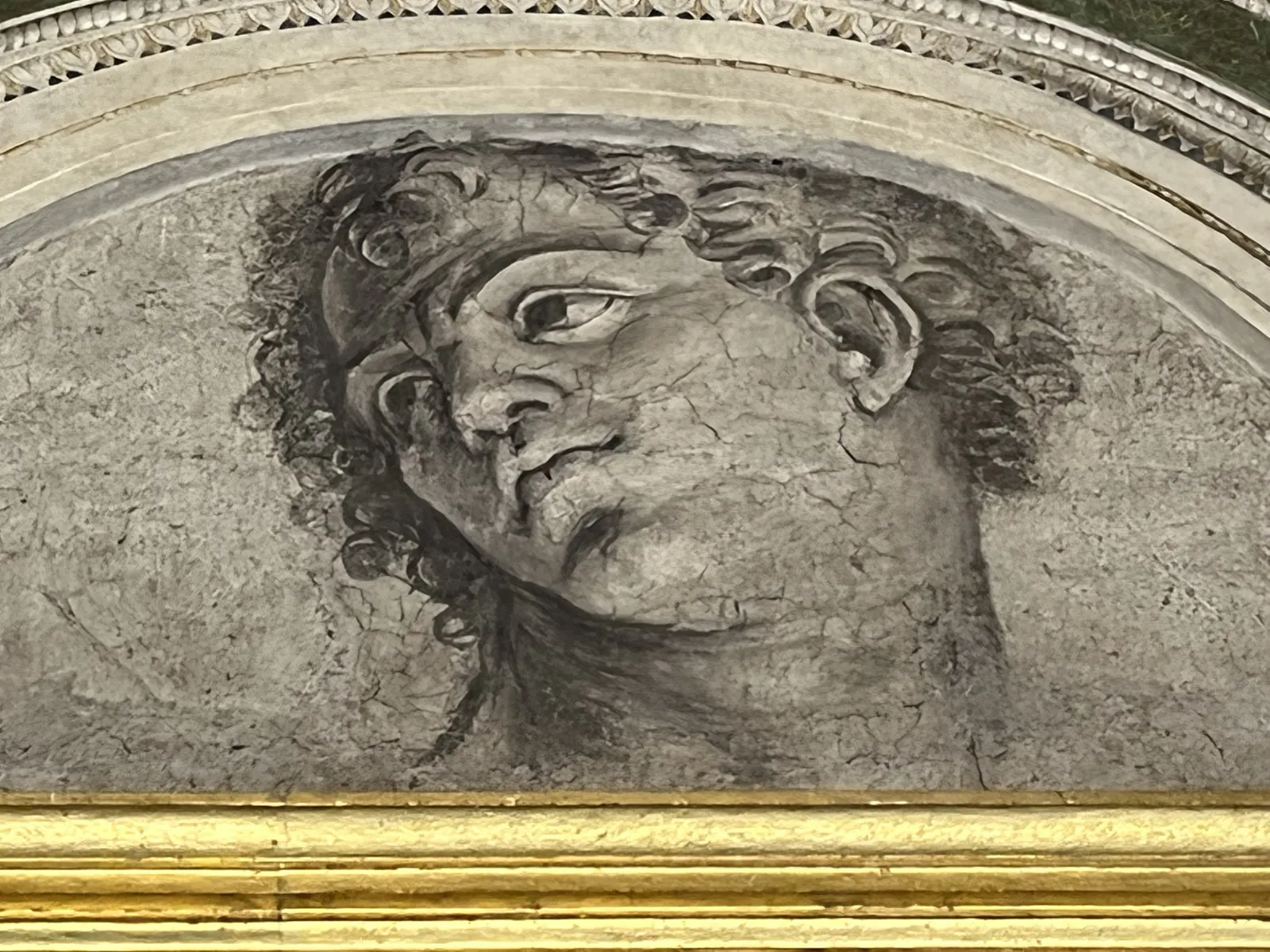
Head of a Youth
Michelangelo
This charcoal head of a youth (1511–12) fills a shallow lunette, the face turned sharply upward and modeled with dense, sculptural shading. Created while Michelangelo worked at Villa Farnesina, it is understood as a visual homage to Raphael’s work in the same setting. The fusion of muscular anatomy with a calm, idealized profile demonstrates how Michelangelo engaged directly with Raphael’s Renaissance style.
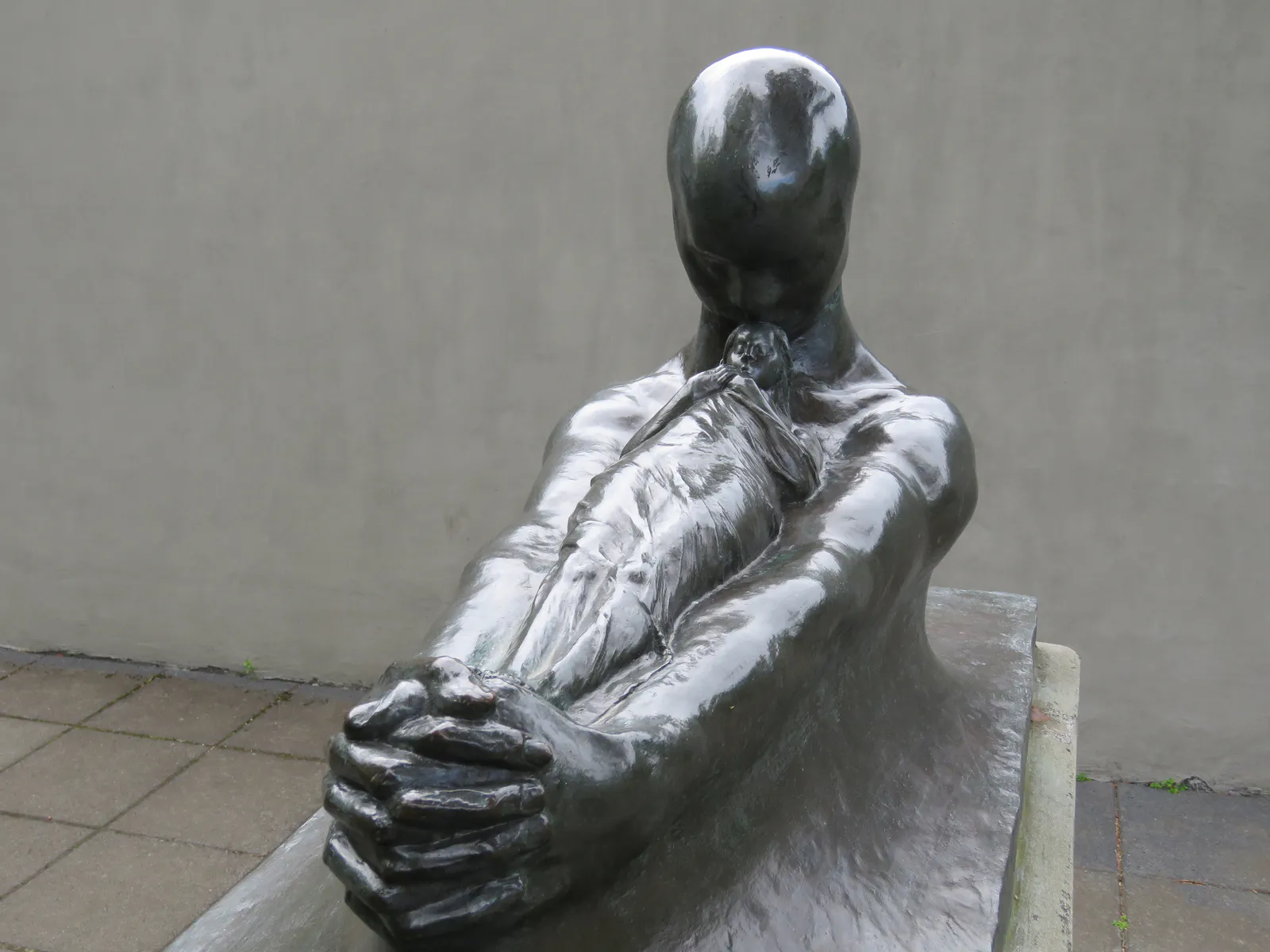
Earth
Einar Jónsson
This sculpture (1904–08) depicts a human figure cradling a smaller, draped form, symbolizing the Earth or nature. Jónsson, an Icelandic sculptor, is known for his symbolic and allegorical works exploring mythology, spirituality, and the human condition. This piece reflects his exploration of humanity’s connection to the natural world and the spiritual realm.
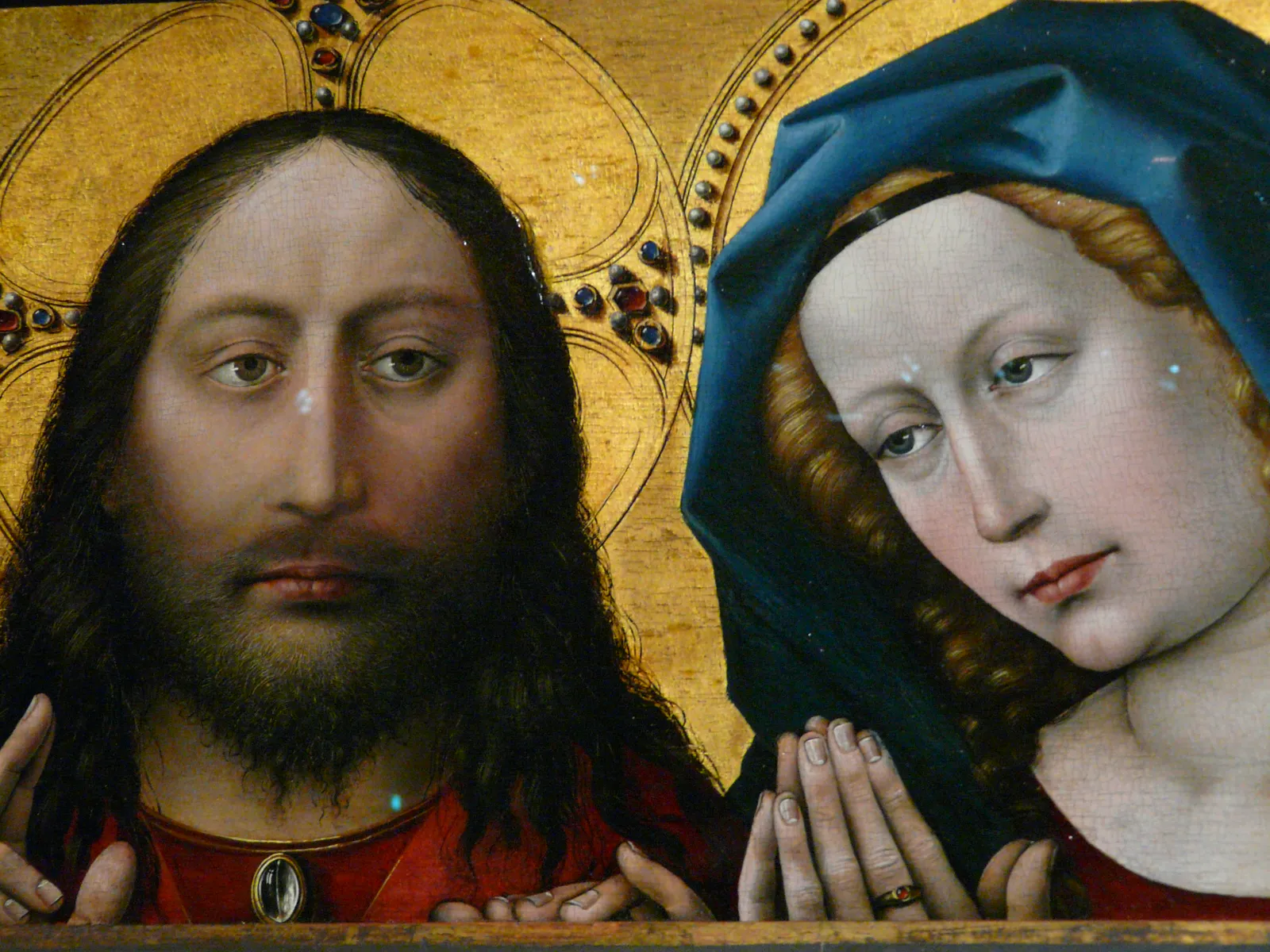
Christ Blessing with Virgin at Prayer
Master of Flémalle
This 15th-c. oak panel by the Master of Flémalle, often associated with Robert Campin, exemplifies early Netherlandish style. It showcases realistic detail through innovative oil paint use. The depiction of Christ blessing and the Virgin Mary at prayer reflects the era’s religious devotion and artistic innovation, marking a pivotal moment in European art’s evolution.
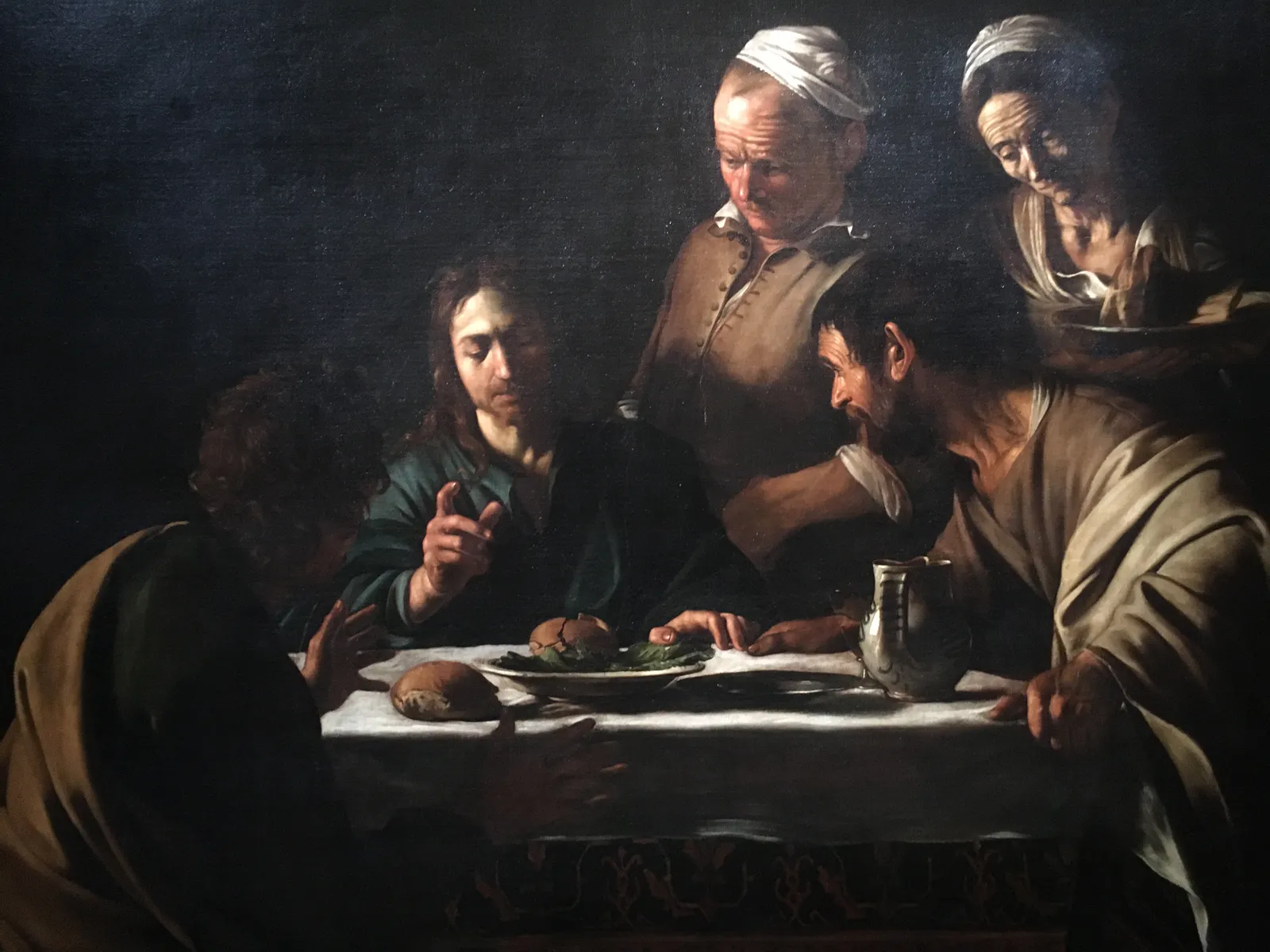
The Supper at Emmaus
Caravaggio
This painting (c.1606) was created after Caravaggio fled Rome for Naples. It depicts Christ revealing himself in Emmaus at the blessing of bread. Unlike Caravaggio’s earlier 1601 version, gestures are subdued and the table almost bare. In this darker vision, the recognition of the divine comes not in spectacle but in shadow and silence.
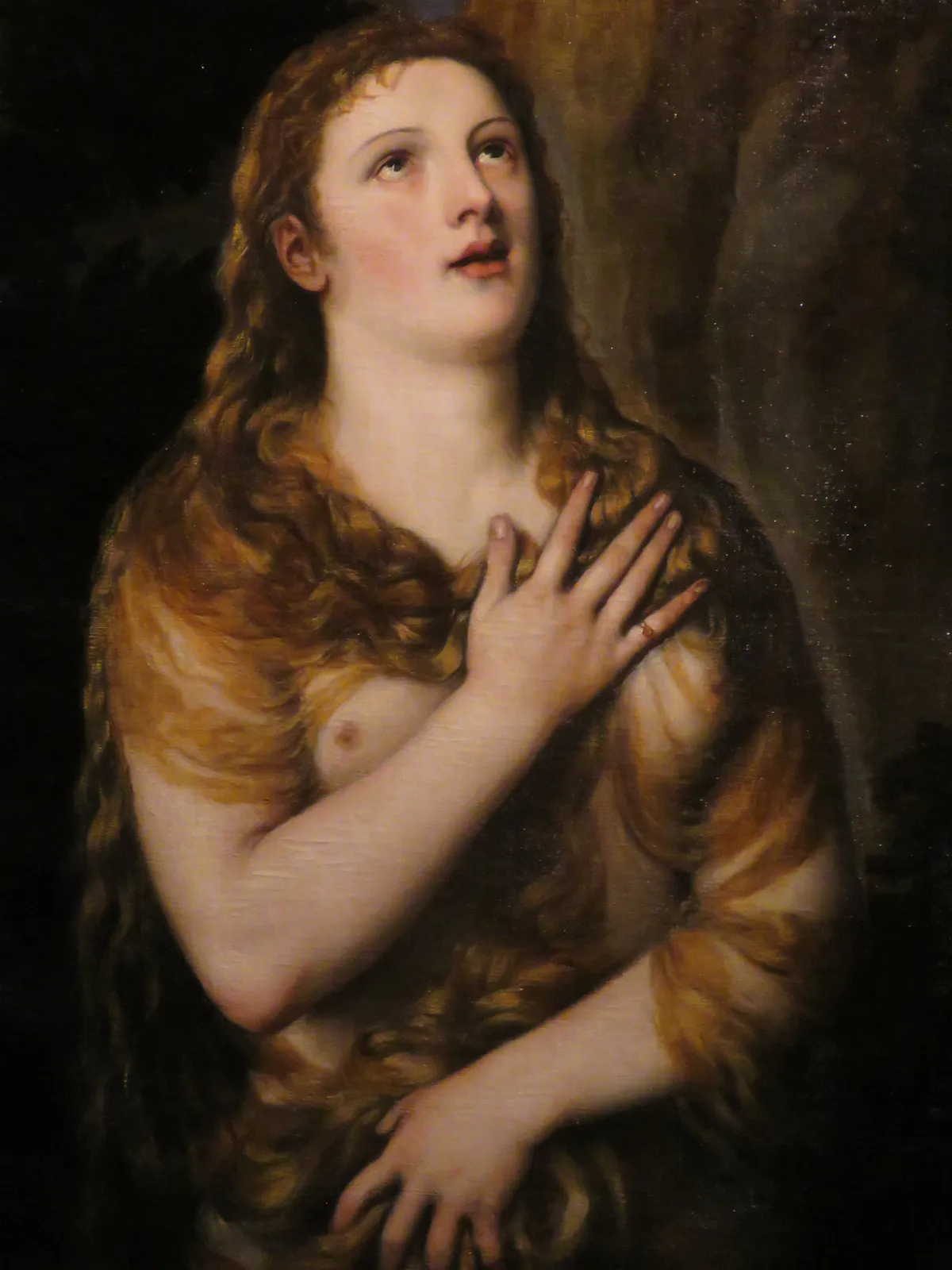
Mary Magdalene
Titian
This intimate portrayal of Mary Magdalene (c. 1560) captures the saint in a moment of spiritual ecstasy. Covered by cascading hair, her body becomes a vessel of penitence and divine grace. Titian’s sensual rendering reflects the Renaissance ideal of redemptive beauty and the transformative power of divine love.
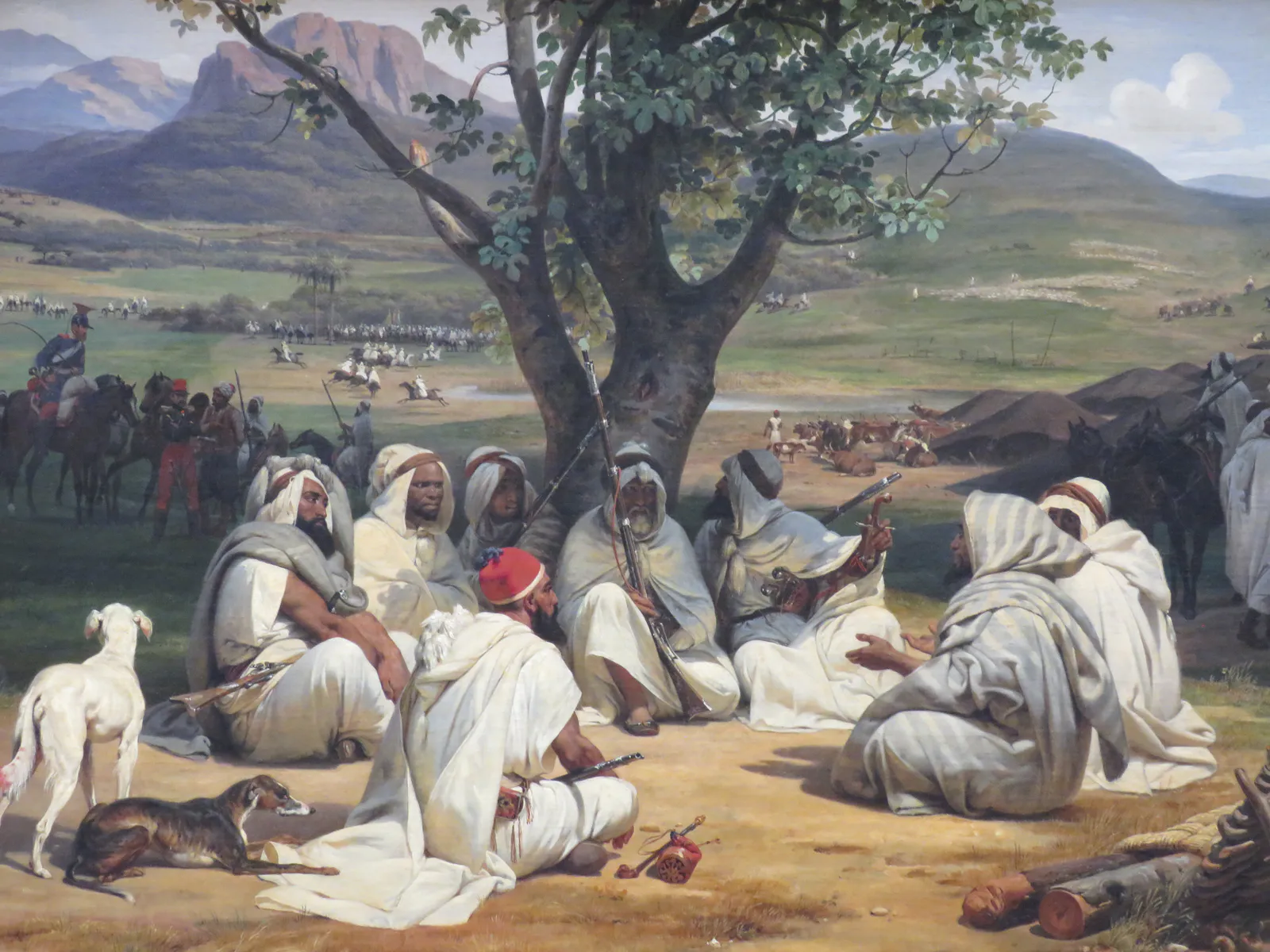
Arab Chieftains in Council
Horace Vernet
This 1834 work depicts Arab chieftains in council, likely discussing tribal matters or alliances. Vernet, a French artist known for battle scenes and Orientalist themes, illustrates the 19th-c. European interest in the Orient. The painting reflects the complex interplay of art, culture, and imperialism of the era.
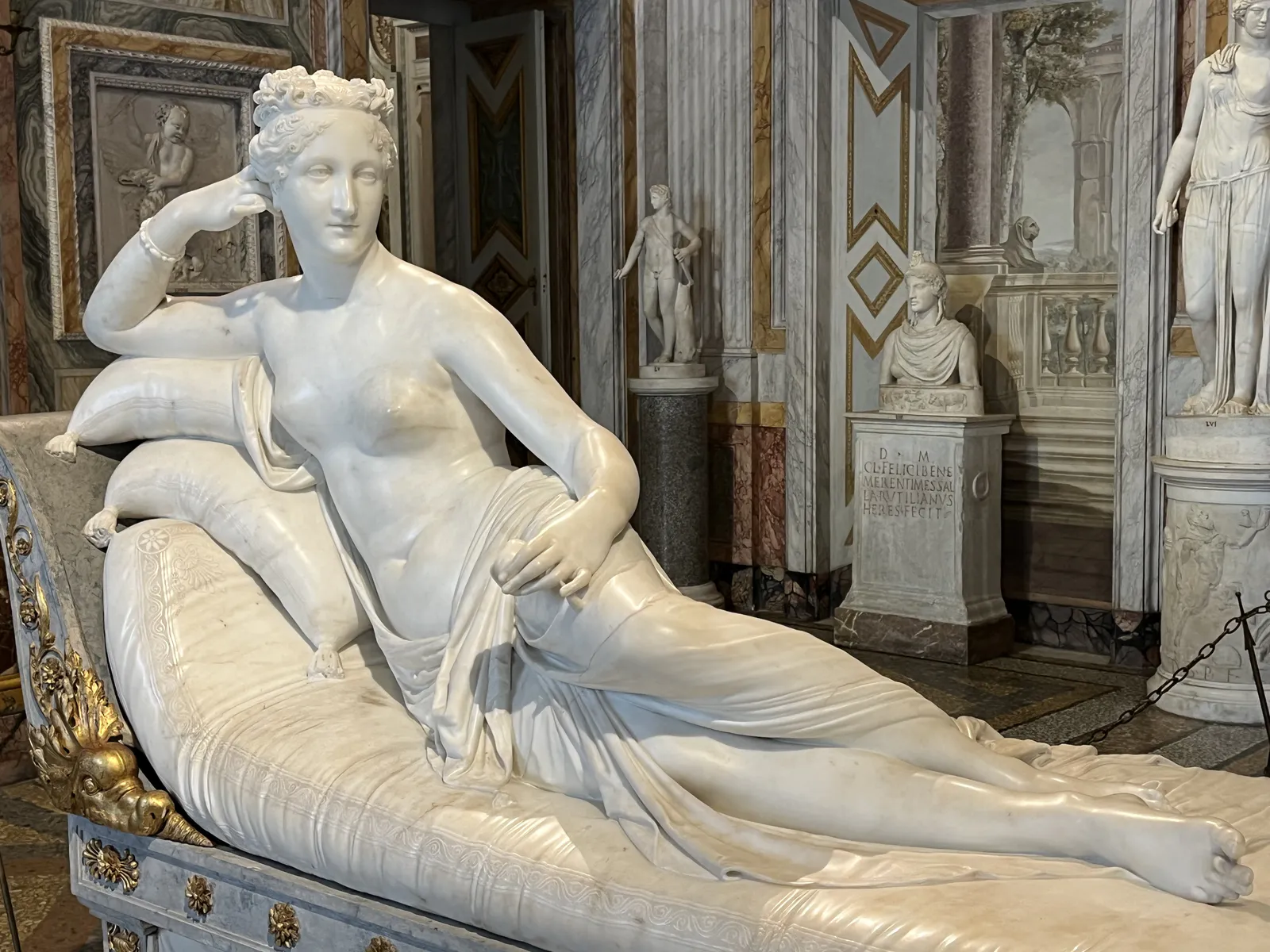
Pauline Bonaparte as Venus Victrix
Antonio Canova
This statue (1805–08) presents Pauline Bonaparte, sister of Napoleon, as Venus, reclining semi-nude and holding the golden apple of victory. Commissioned by her husband Camillo Borghese, the statue blends neoclassical elegance with sensual myth. Its rotating base once allowed viewers to admire it from every angle.
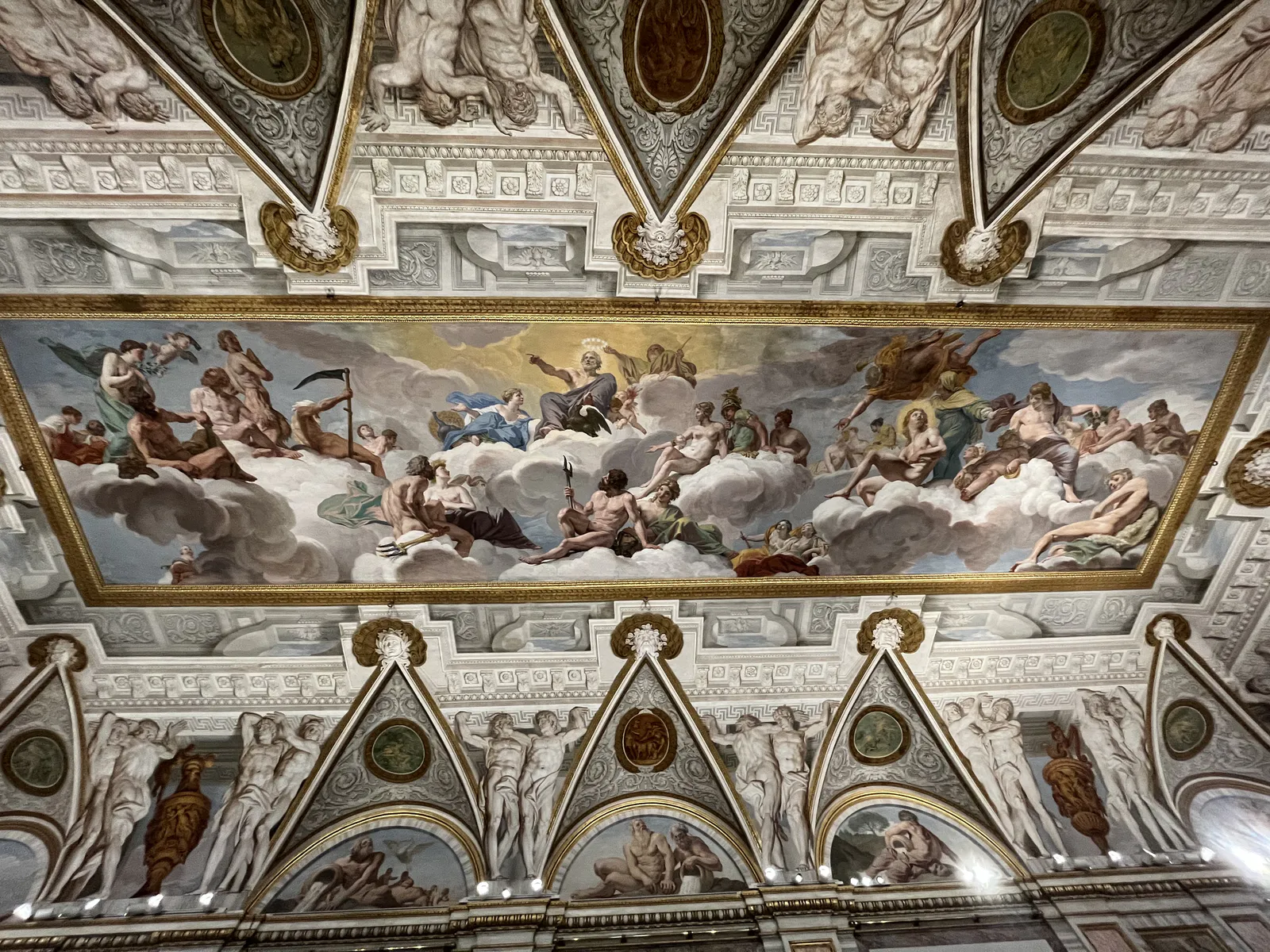
The Council of the Gods
Giovanni Lanfranco
Lanfranco’s grand ceiling fresco (1624–25) fills the Sala della Loggia with divine spectacle. Jupiter reigns at the center, surrounded by Roman deities including Venus, Mars, Pluto, and Juno. Designed to dissolve architectural limits, the illusionistic sky transforms the ceiling into a heavenly theater of Baroque power and myth.
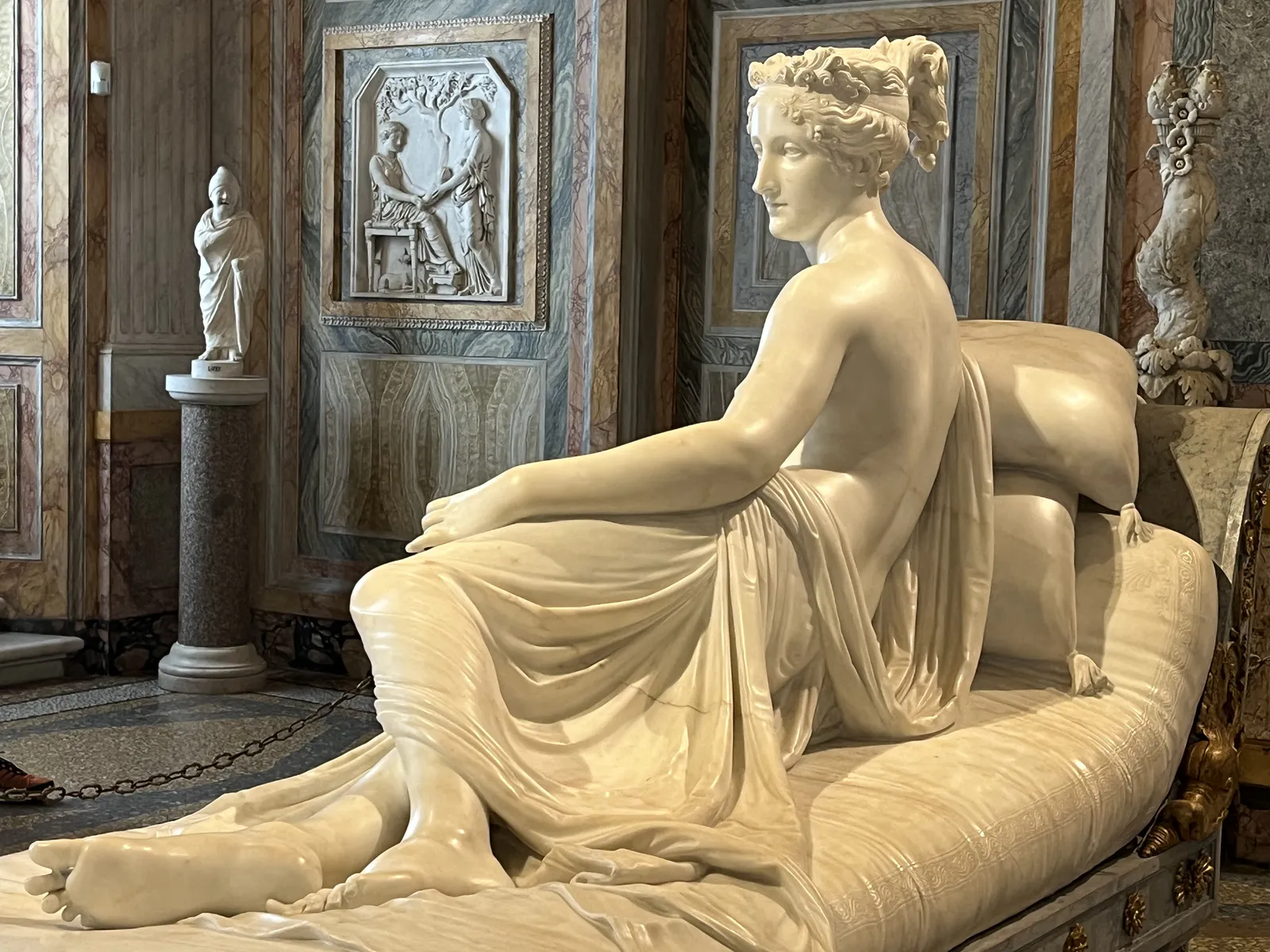
Pauline Bonaparte as Venus Victrix
Antonio Canova
Antonio Canova's marble masterpiece (1805–08) depicts Pauline Bonaparte as Venus Victrix, reclining semi-nude on a couch, holding an apple symbolizing Venus's triumph in the Judgement of Paris. Commissioned by her husband, Camillo Borghese, Pauline insisted on being portrayed as Venus rather than Diana. The sculpture, originally designed to rotate, reflects both personal ambition and classical beauty.
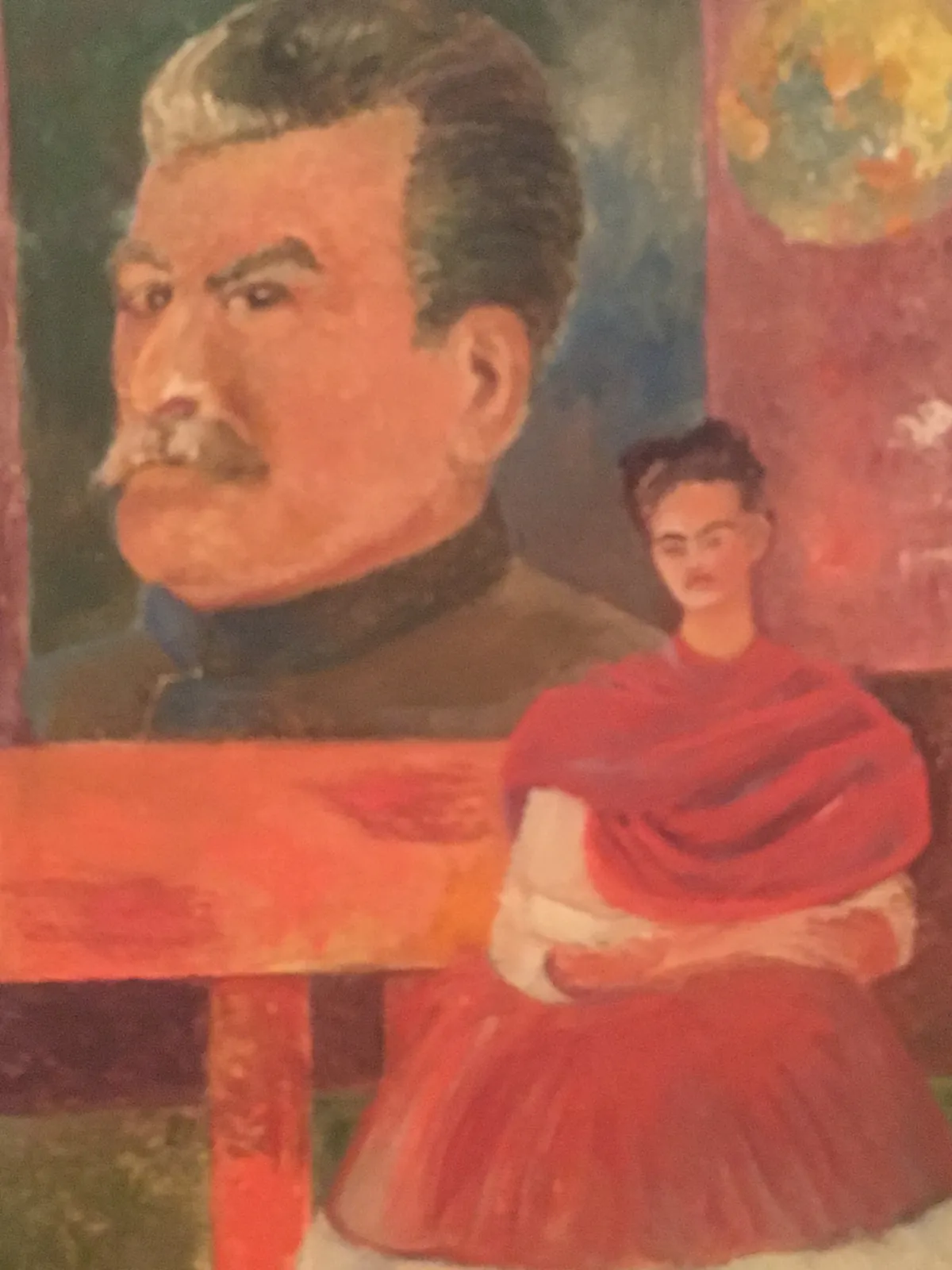
Self-Portrait with Stalin
Frida Kahlo
Painted in 1954, right before death, this political work shows Kahlo seated beside an imposing image of Stalin, whom she revered late in life. The portrait—originally titled Peace on Earth so the Marxist Science may Save the Sick and Those Oppressed by Criminal Yankee Capitalism—reflects her Marxist convictions and final artistic ideological defiance.
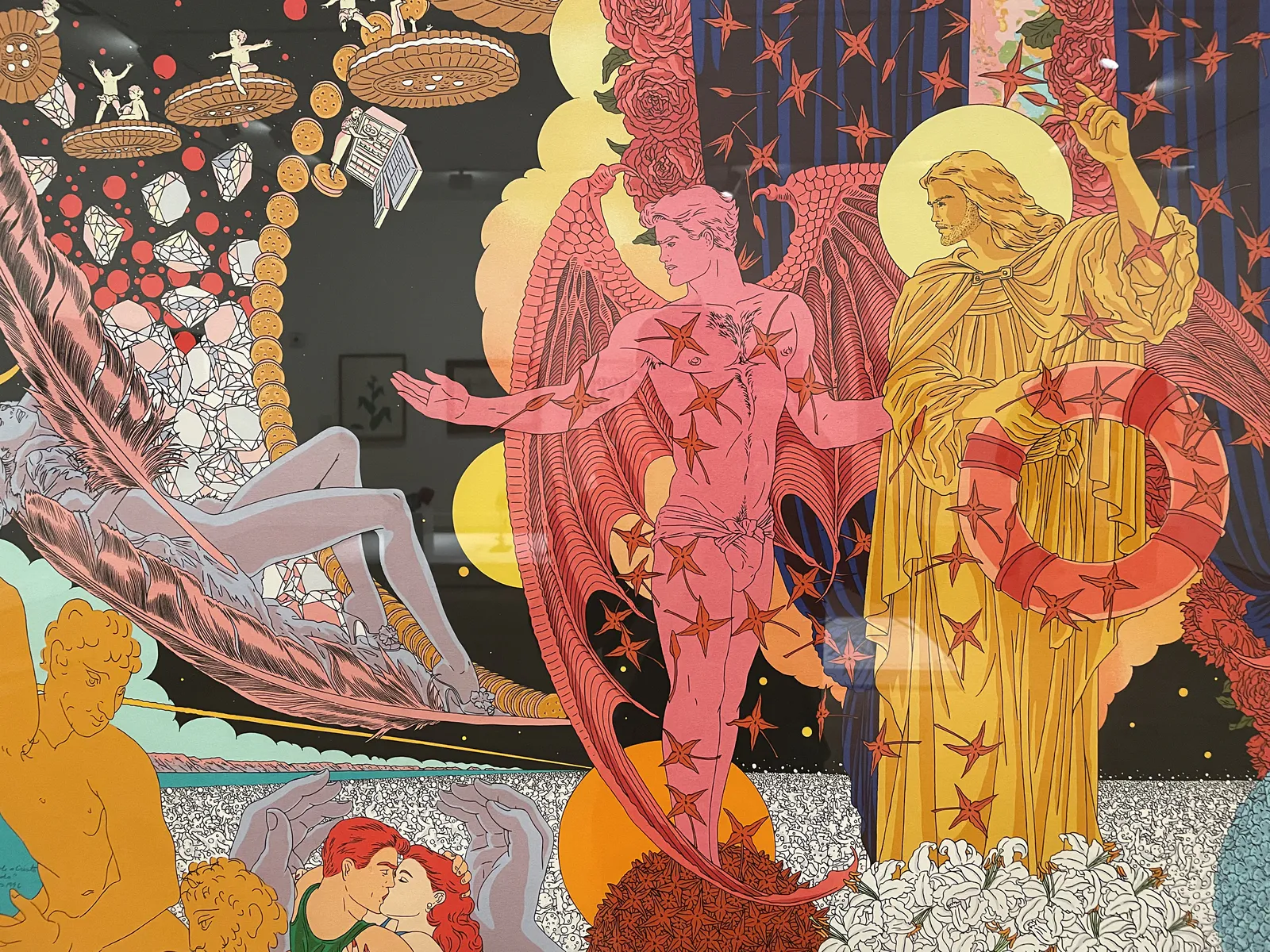
The Devil Showing Christ the Delights of the World
Álvaro Barrios
In this pop-infused lithograph (1996), Barrios reimagines Christ’s temptation with dazzling surrealism. A winged devil offers worldly pleasures—luxury, sex, and consumer goods—while Christ holds a lifebuoy, a symbol of spiritual rescue. Blending biblical narrative with pop culture, the work critiques material excess and invites reflection on salvation in an age of spectacle.
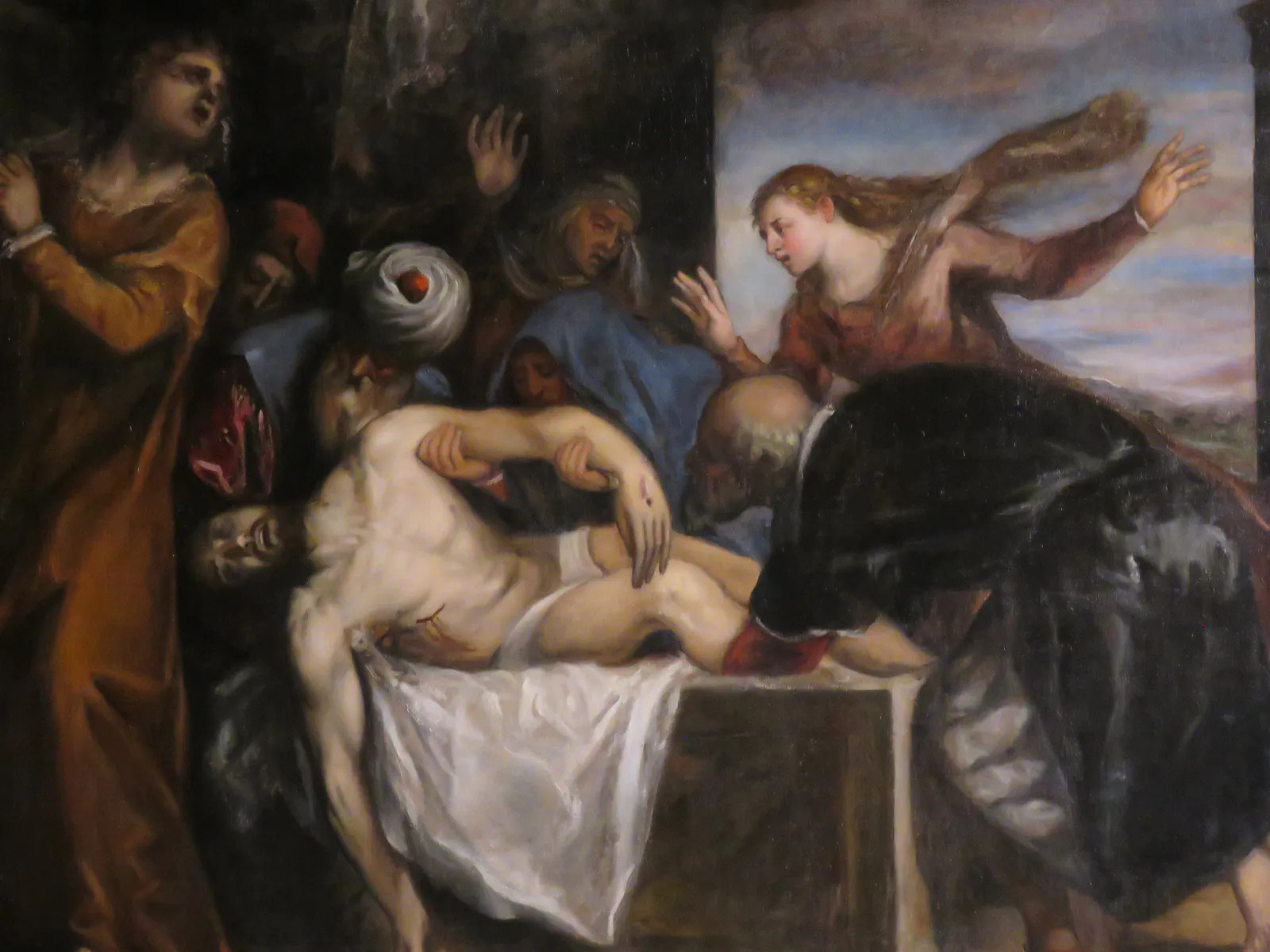
The Entombment of Christ
Titian and Palma the Younger
A poignant rendering of Christ’s burial, this oil on canvas (1618) was begun by Titian and completed by Palma the Younger. The composition captures collective grief, emphasizing the physical weight of death and the emotional weight of loss. The figures’ gestures and expressions mirror Renaissance ideals of pathos and human dignity.
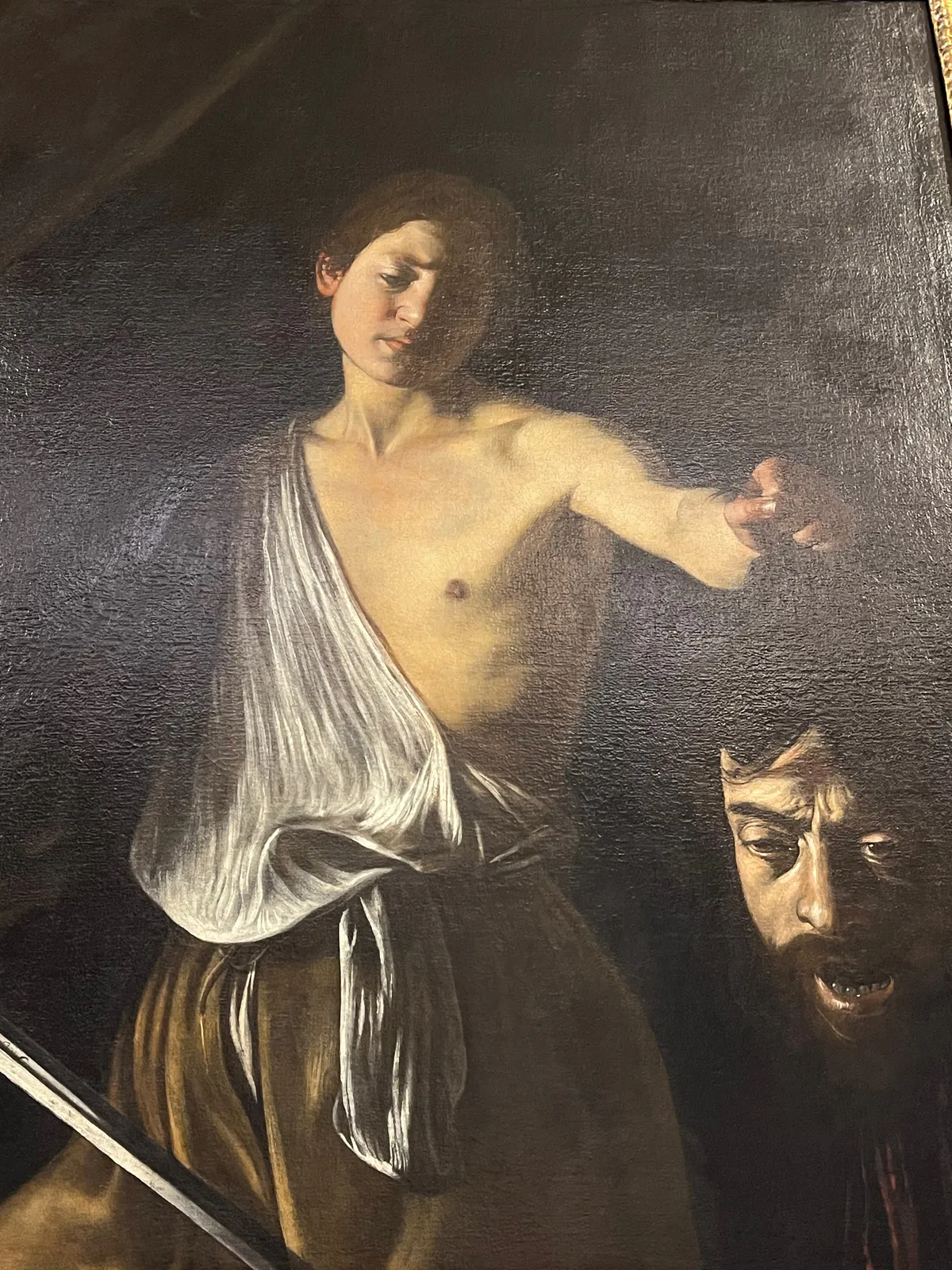
David with the Head of Goliath
Caravaggio
This haunting composition (1609–10) shows David holding Goliath’s severed head—modeled on Caravaggio himself. Rather than triumph, the mood is remorseful. The intense chiaroscuro, psychological realism, and moral ambiguity turn this biblical victory into a meditation on guilt, mortality, and inner torment.
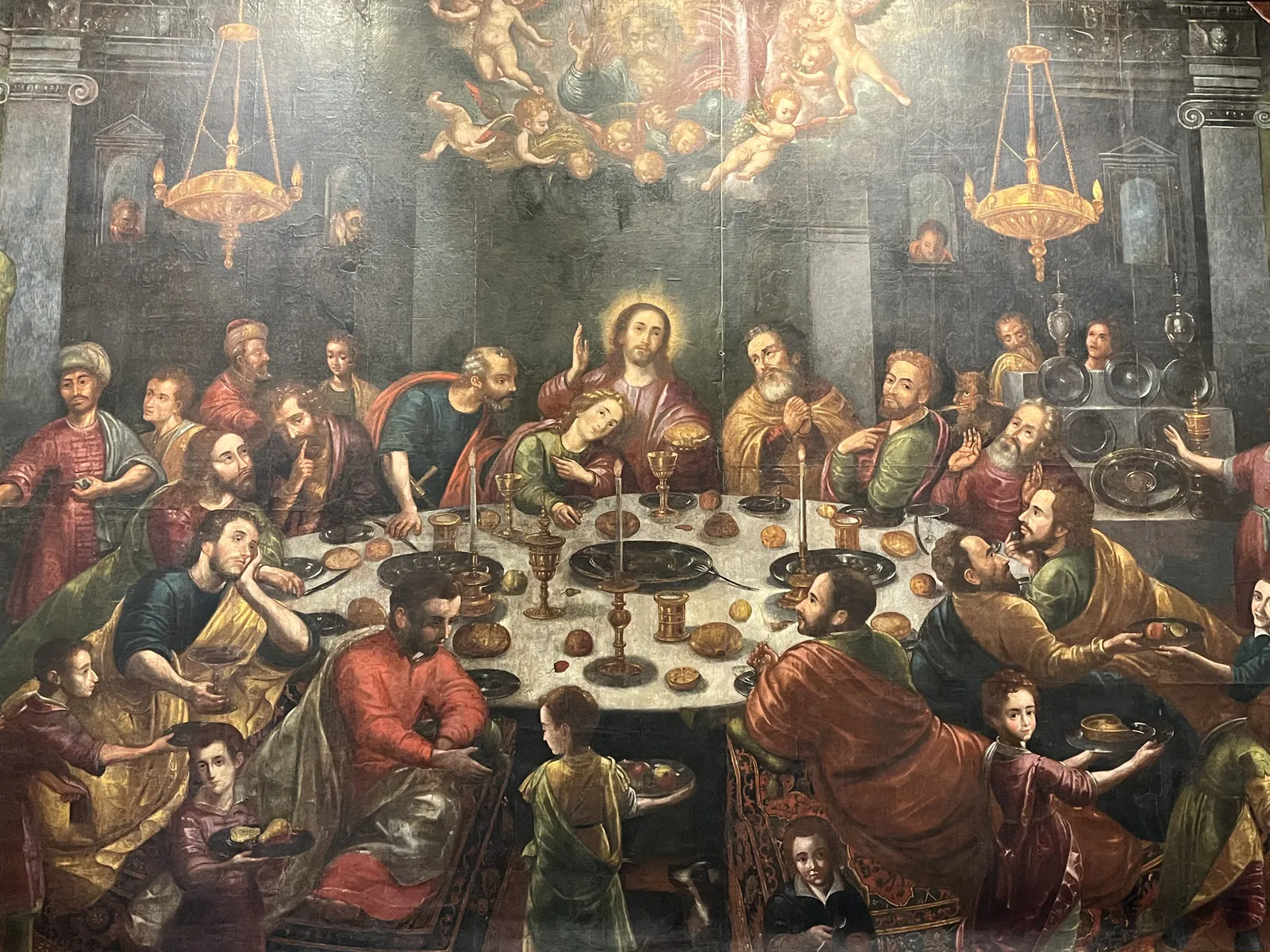
The Last Supper (with Cuy)
Diego de la Puente
De la Puente’s 1658 painting uniquely blends Spanish colonial art with Peruvian culture. It depicts Jesus and his disciples eating cuy (guinea pig), a local delicacy, instead of lamb. This substitution reflects how Catholic imagery was adapted to local customs, offering a clear example of the visual and cultural hybridization that shaped colonial Peru.
“When the path is beautiful, do not ask where it leads.” — Zen proverb
Welcome to my travel photography!
“When the path is beautiful, do not ask where it leads.” — Zen proverb
Welcome to my travel photography!
For as long as I can remember, my path has been one of discovery—seeking beauty, timelessness, and connection in every corner of the world. It has also been a journey of deep learning and understanding. I’ve been an avid traveler (or perhaps a travel addict?) for most of my life. My love for travel began long before I ever left home: as a child, I drew a fantasy map of my grandparents’ apartment and “traveled” through it with my cousin Sonya, imagining adventures in every corner. Nearly 90 countries and countless moments of awe later, I’m excited to share this journey with you.
Thanks to the tireless and ingenious programming of Diagilev, we’re now able to present about fifteen percent of the images I’ve accumulated over the years. More will be released in small batches depending on your interest. While the first release leans toward museum photography, later ones will include more nature, architecture, culture, and general travel experiences. If you’d like to receive email notifications about new releases, feel free to reach out—no commercial use, ever.
Throughout my travels, I’ve been drawn to two intertwined kinds of discovery. One is intellectual: learning why the world is the way it is. History became my guide, shaping my perspective and filling my camera roll with museums and old buildings. To me, history is not the past—it is the key to understanding the present and how the world became what it is. The other is emotional: seeking moments of elevation—spirituality, beauty, harmony—often found in nature, monasteries, and ancient sacred spaces. Together, these impulses shape my photography. It invites you to learn, admire, and soar—to rise above the mundane and see the world through a lens of curiosity and wonder.
Much of my later travel became possible thanks to my job with Delta Air Lines, but the wanderlust began years earlier. By the time I joined the industry, I had already visited over 35 countries and lived in several—largely thanks to a backpacking journey around the world with Luis León, whose face appears in many early photos. I grew up in Ufa in the USSR, and since leaving it I have lived, studied, and worked in Latvia, the United States, France, South Korea, Canada, Spain, Italy, Brazil, Japan, and Colombia.
A life of near-constant movement may seem a little crazy, but it has deepened my understanding of the world and produced the photography you are about to see. Over the years, my style has evolved—more intentional, more refined—yet its core remains the same: a search for understanding, timeless beauty, and a connection to those who walked this earth long before us.
I hope these photos stir something in your soul, just as they did in mine. I’d love to hear from you—whether reactions, suggestions, corrections, or a request to be added to the email list for new releases (no commercial use, I promise). You can learn more about my travels here, and my academic life here.
Enjoy our shared journey!