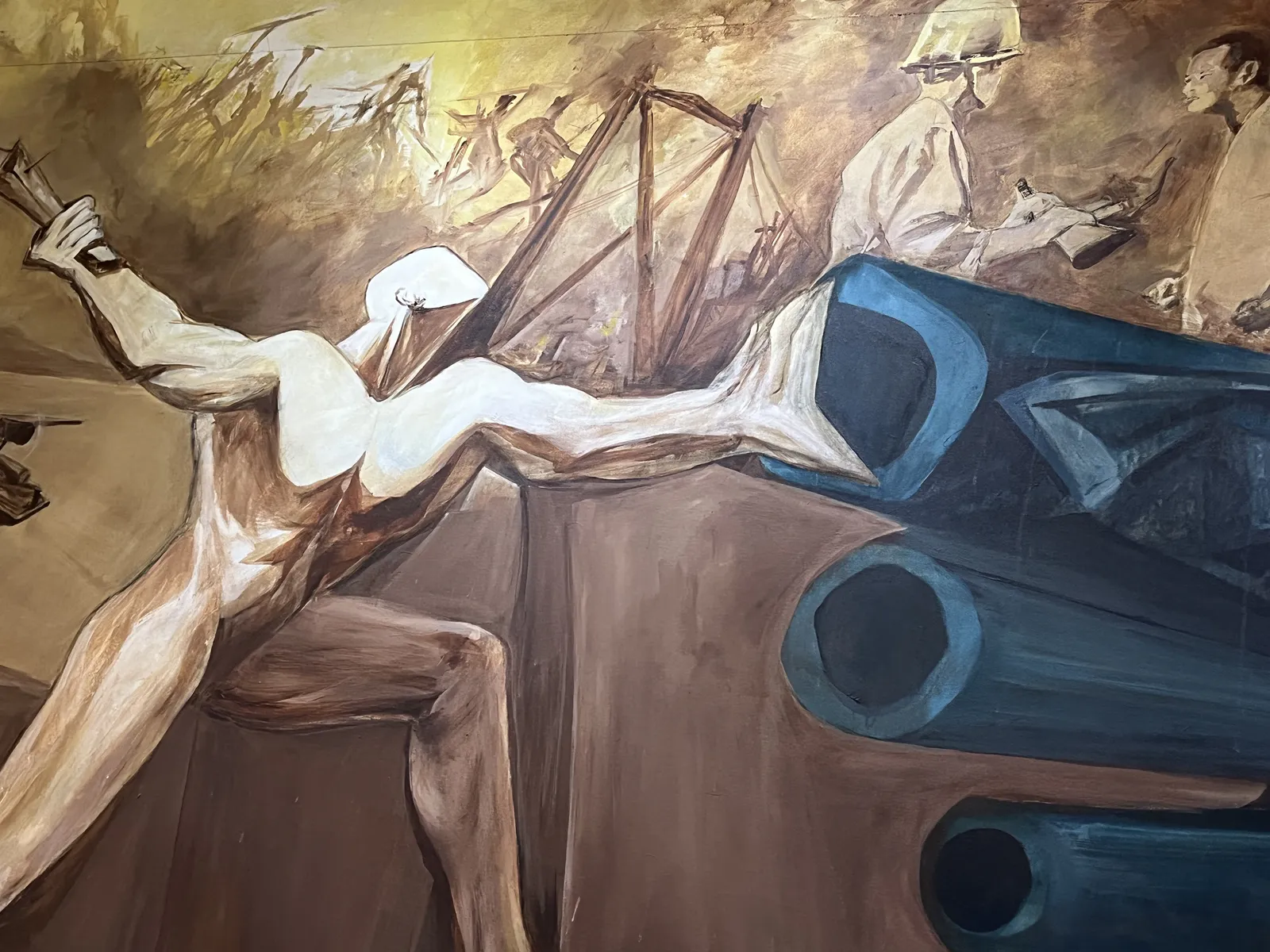
El pueblo en lucha
Ramón Oviedo
This mural (2013) shows a bound, faceless figure hurling itself toward the dark mouths of cannons, while ghostly soldiers and crowds emerge in the background. The scene recalls the Dominican struggle against dictatorship and foreign intervention in the 20th c. By fusing a single straining body with collective, blurred forms, Oviedo concentrates individual sacrifice into a broader history of resistance.
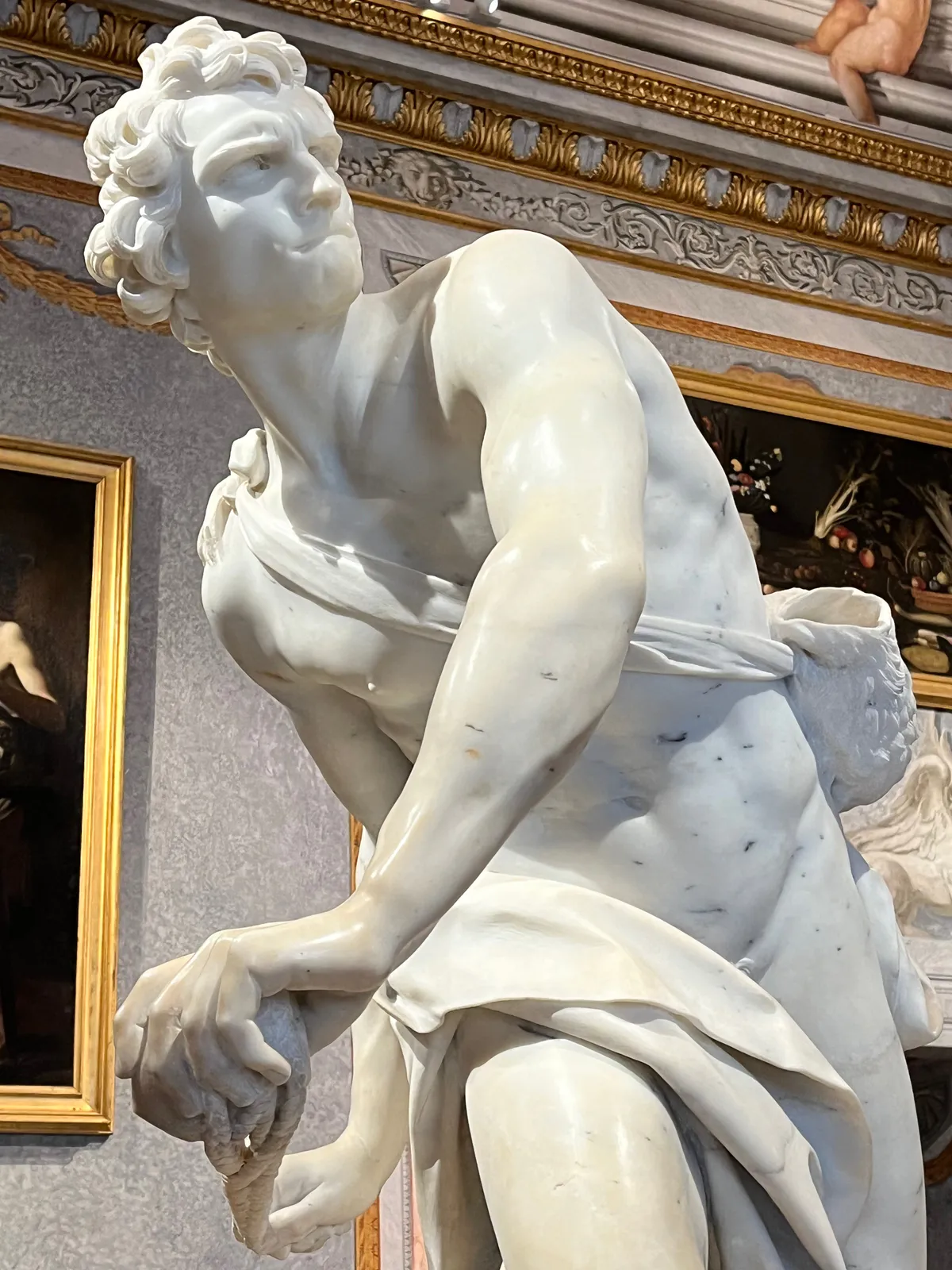
David
Gian Lorenzo Bernini
This marble sculpture (1623–24) captures David in a twisting stance, body coiled as his hand grips the sling. Muscles, drapery, and focused gaze all align with the implied arc of the stone. Commissioned by Cardinal Scipione Borghese, it exemplifies Baroque interest in movement and psychological intensity, turning a biblical hero into a study of concentrated action.
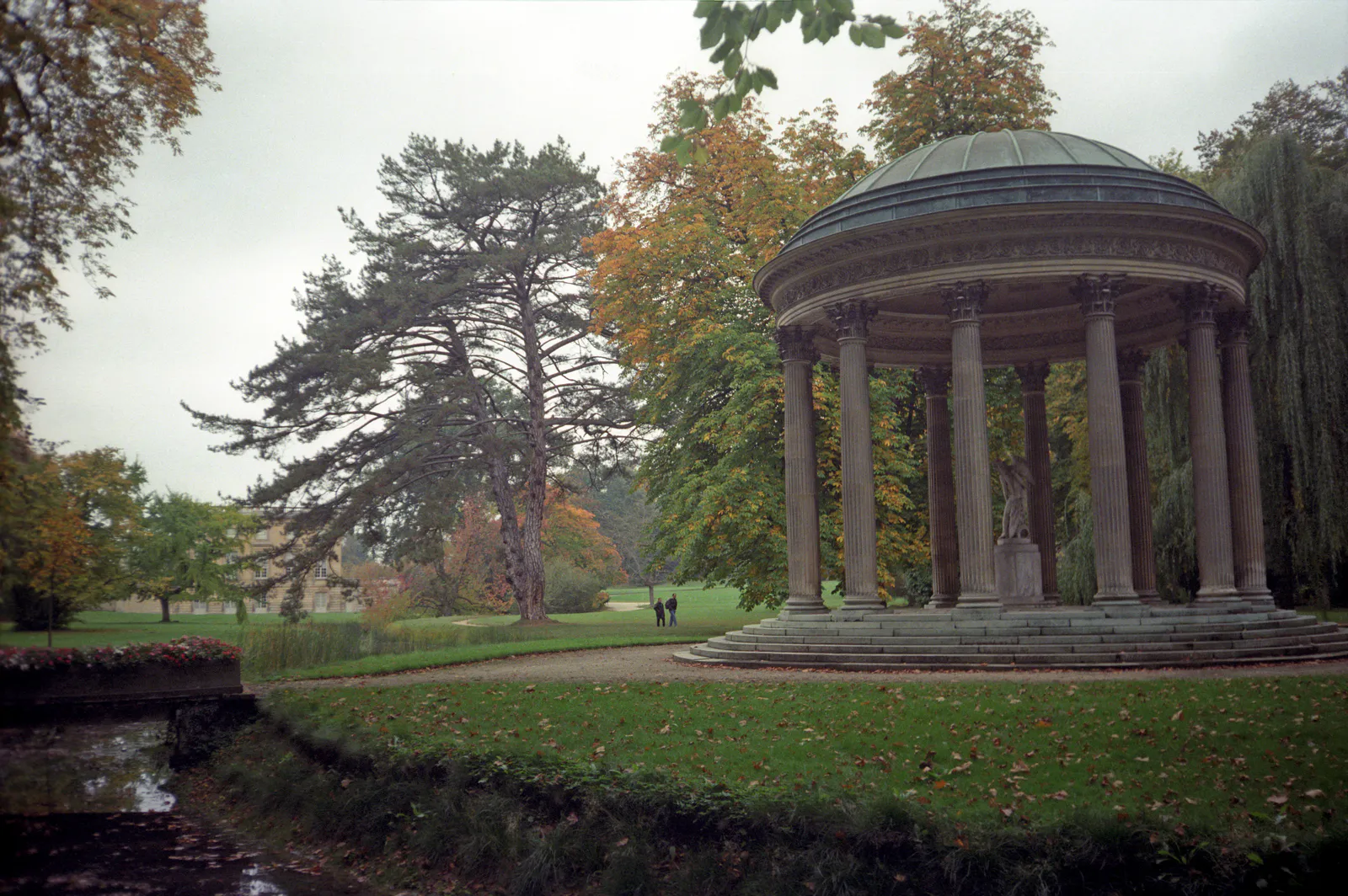
Temple of Love
Richard Mique
Erected in the gardens of the Petit Trianon (1778), this neoclassical rotunda shelters a sculpture of Cupid and symbolizes Marie Antoinette’s idealized vision of romance and pastoral escape. Designed by architect Richard Mique, the temple reflects Enlightenment-era aesthetics and the queen’s longing for simplicity within Versailles’ opulence.
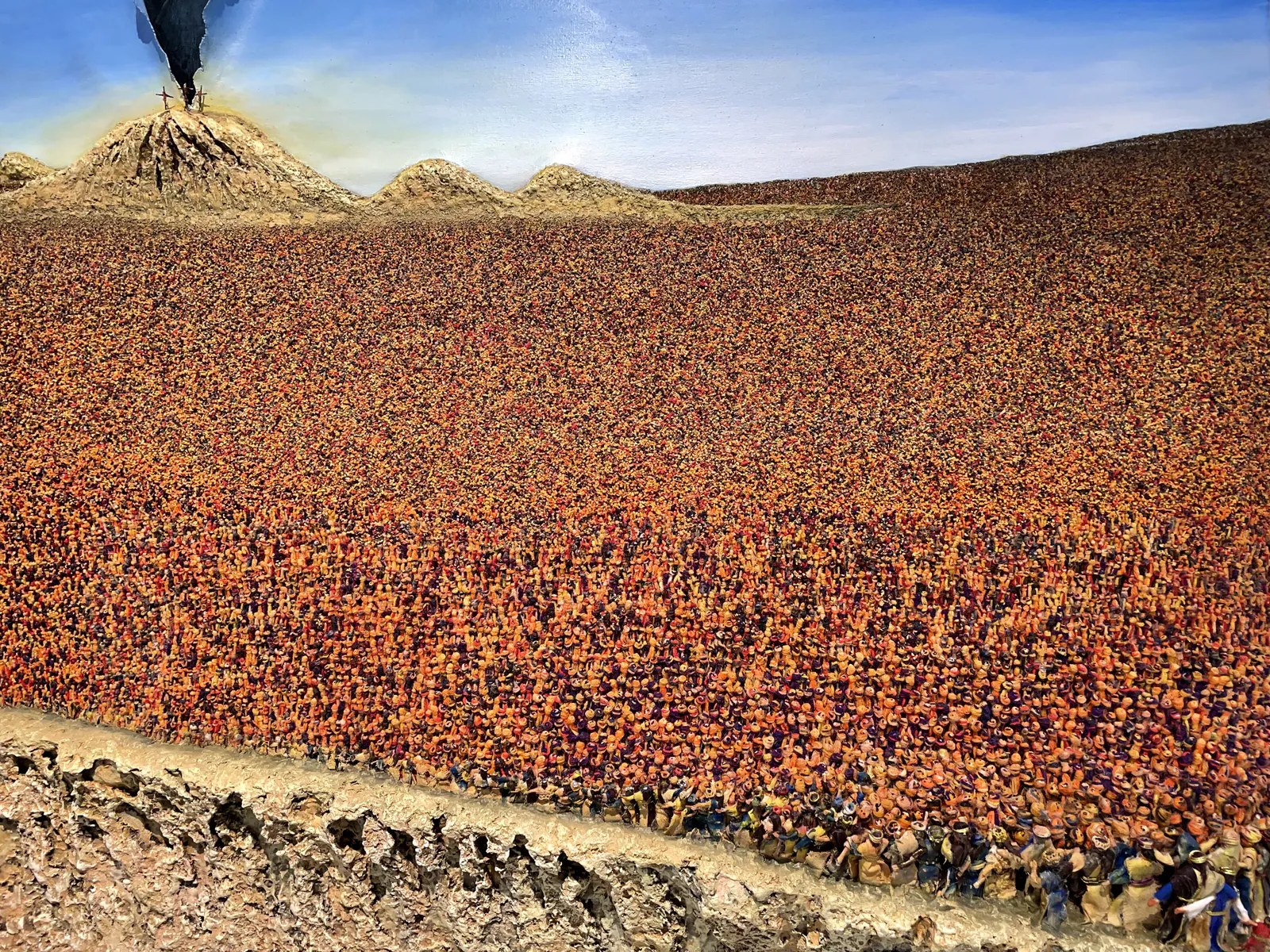
The Veil Torn (The Door to Heaven)
Mariano Bidó
In this mixed-media work (2018), a vast crowd moves toward a hill crowned by three crosses under a black veil of smoke. Referencing the crucifixion, the piece evokes mass devotion, suffering, and salvation. The dense humanity contrasts with the distant, divine climax—highlighting faith as both a collective journey and personal reckoning.
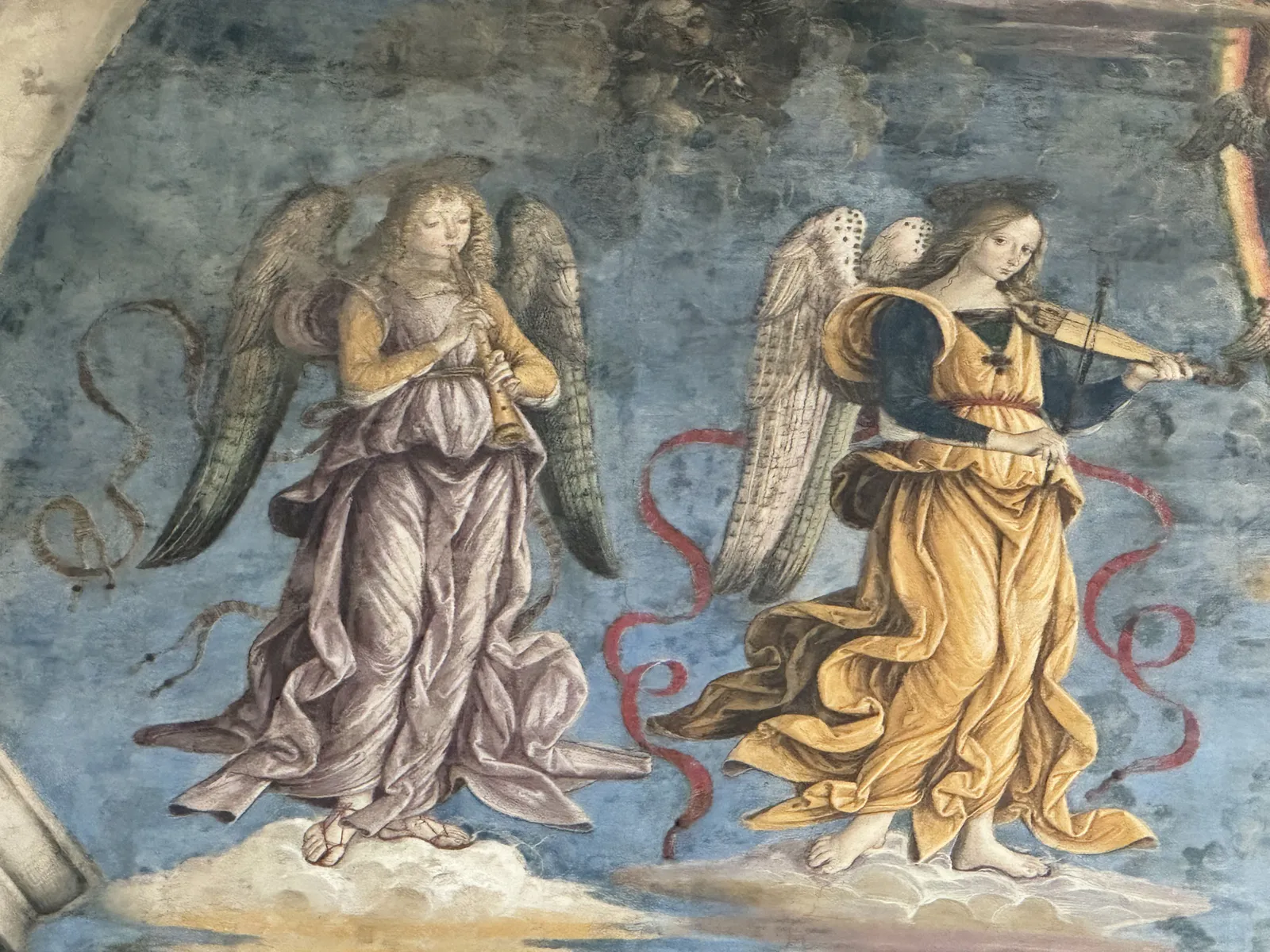
Musical Angels (detail)
Pinturicchio
In this detail (1484–86), Pinturicchio paints two angelic musicians, one playing a violin and the other a wind instrument. Floating on clouds, they contribute to the celestial harmony surrounding Christ in Majesty. The graceful movement of their garments reflects Pinturicchio’s refined sense of rhythm, light, and divine celebration.
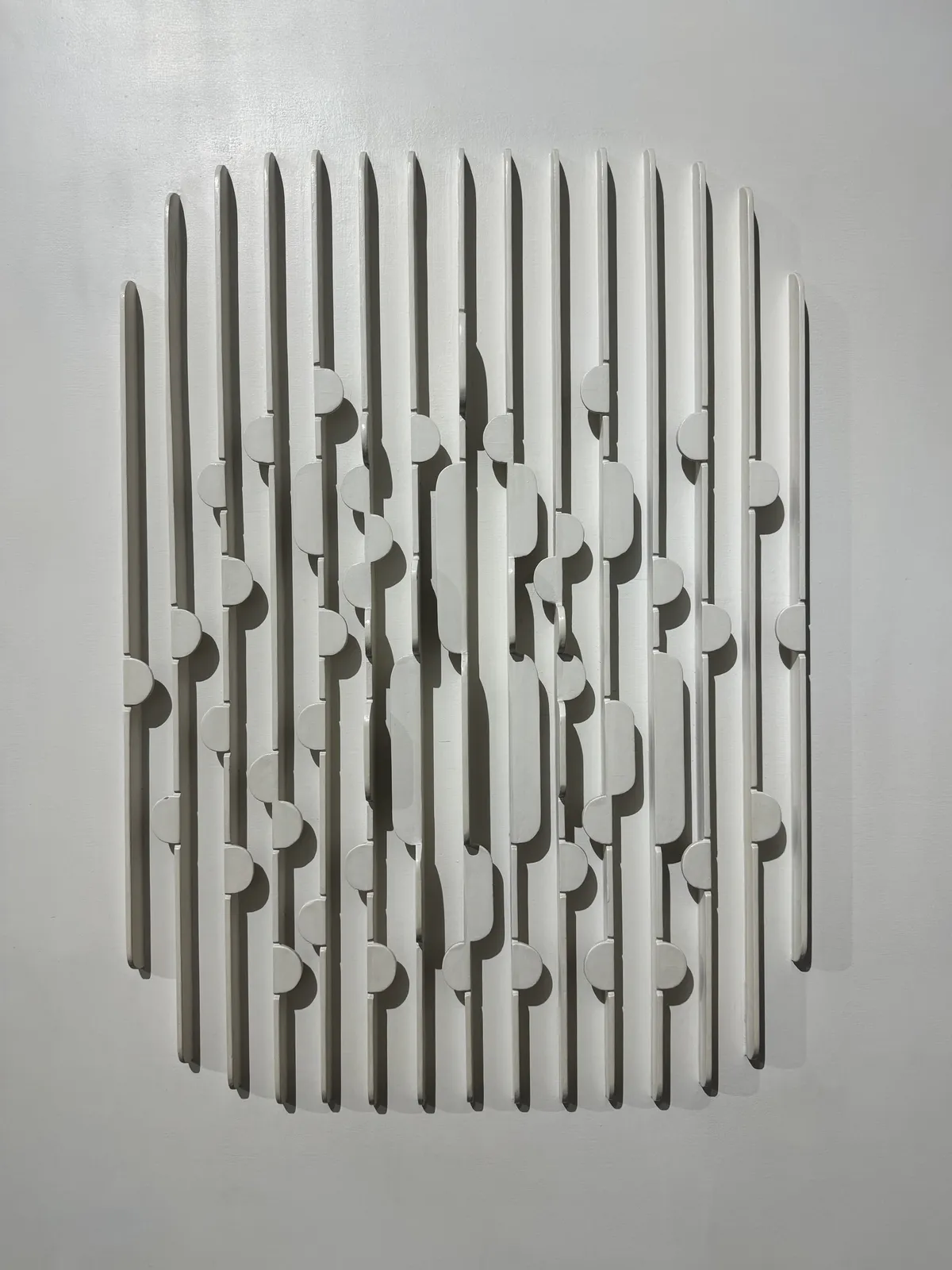
Homage to Vivaldi
Eduardo Ramírez Villamizar
This sculptural relief in painted wood (1963) reflects Villamizar’s fusion of geometric abstraction and musical rhythm. Vertical repetition and modulated forms evoke the structured elegance of Vivaldi’s compositions, transforming sound into visual cadence. It belongs to the museum’s permanent collection.
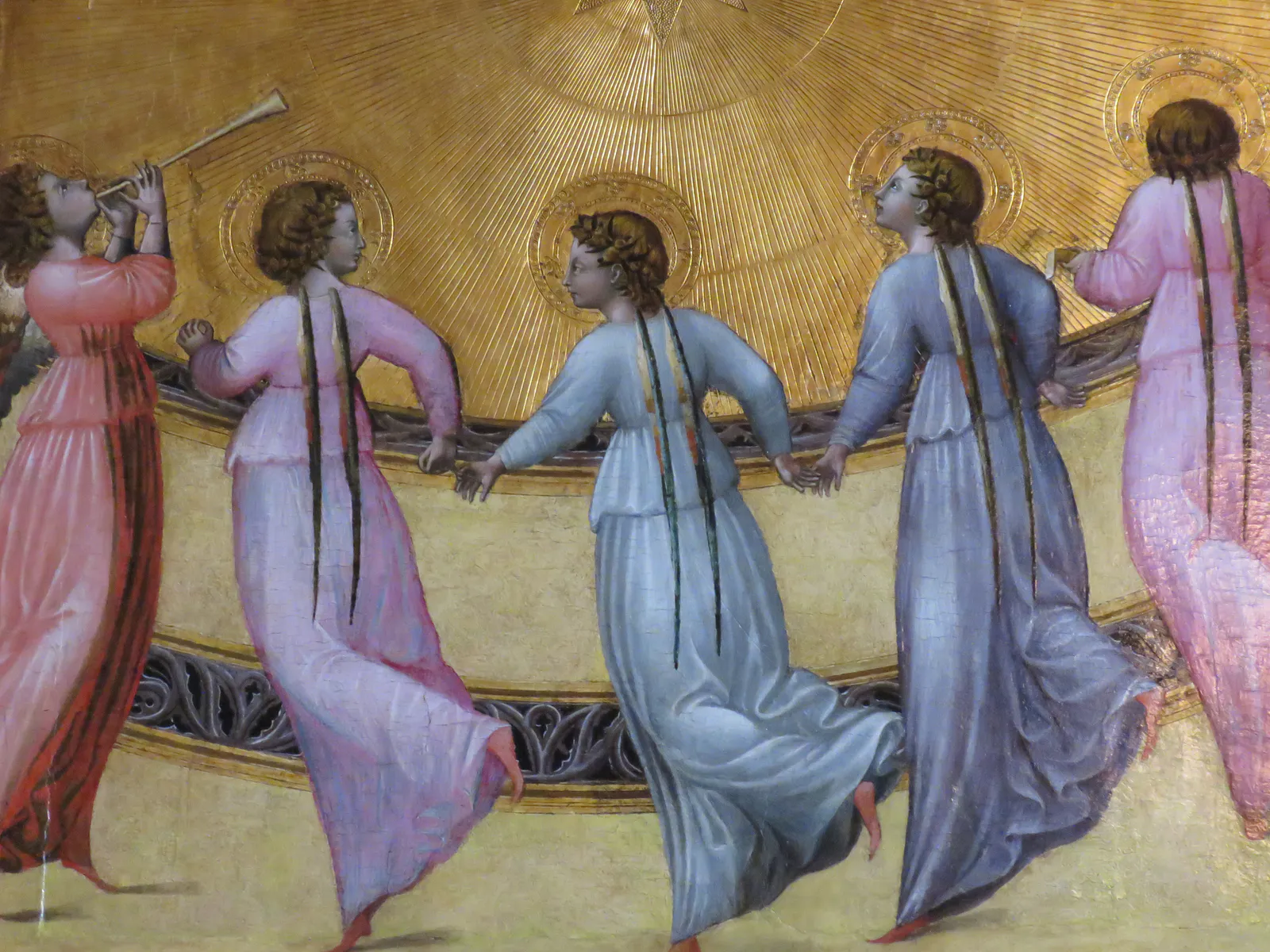
Five Dancing Angels (detail)
Giovanni di Paolo
This detail (c.1436) comes from Giovanni di Paolo’s Five Dancing Angels. Here, three angels join hands in a celestial dance while another plays the trumpet before a golden sun, symbolizing God. Their flowing robes and rhythmic gestures convey divine harmony, reflecting the spiritual intensity of 15th-c. Sienese art.
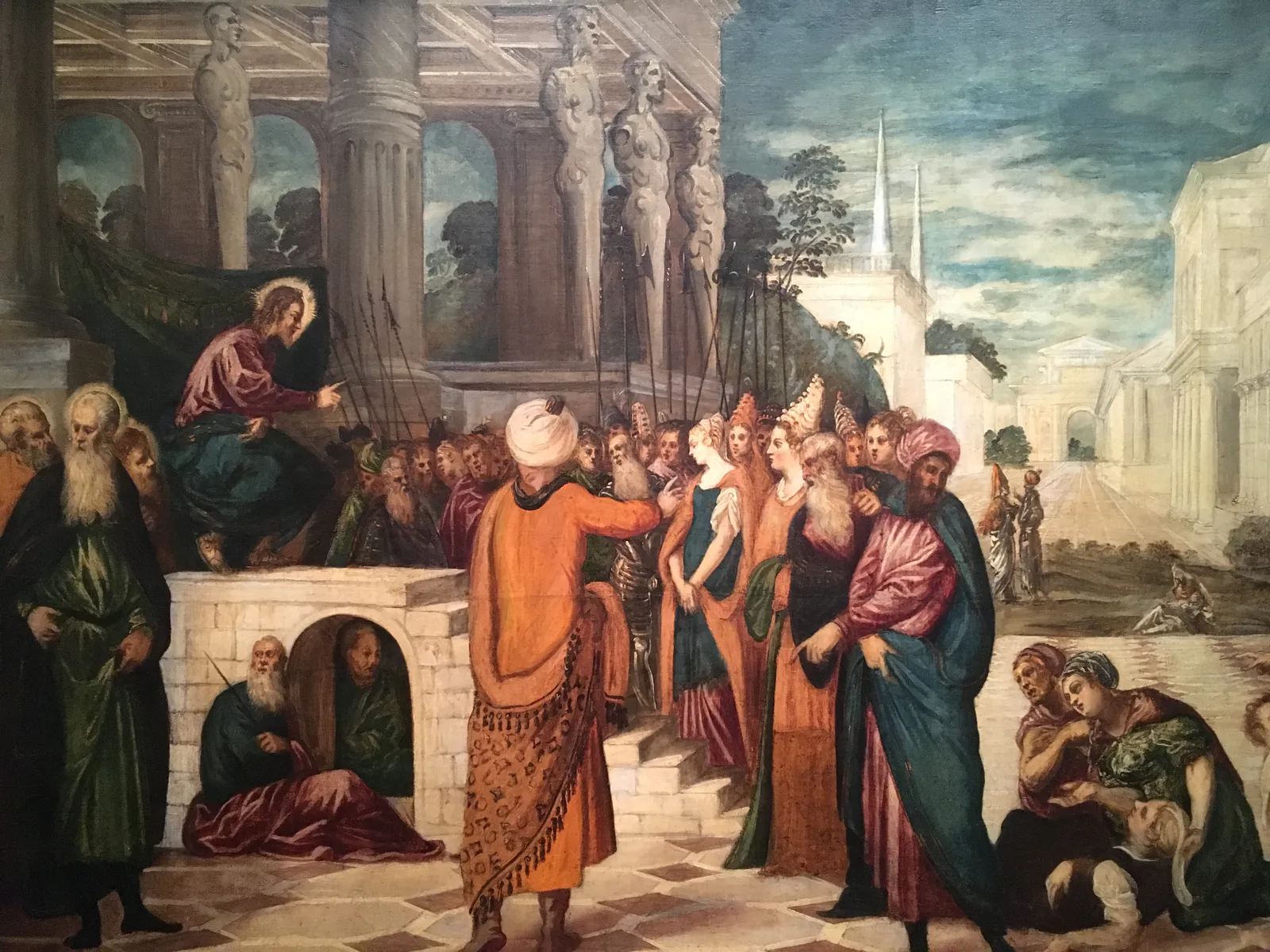
Christ and the Adulteress
Tintoretto
This scene (c. 1555) is from the Gospel of John: Jesus responds to scribes and Pharisees demanding judgment on an adulterous woman. His challenge—inviting the sinless to cast the first stone—teaches mercy over condemnation. Tintoretto’s dynamic style appears in the sharp contrasts of light and shadow, elongated figures, and oblique spatial arrangement that intensify the moral tension. Classical architectural elements frame the encounter, emphasizing the conflict between legalism and redemption.
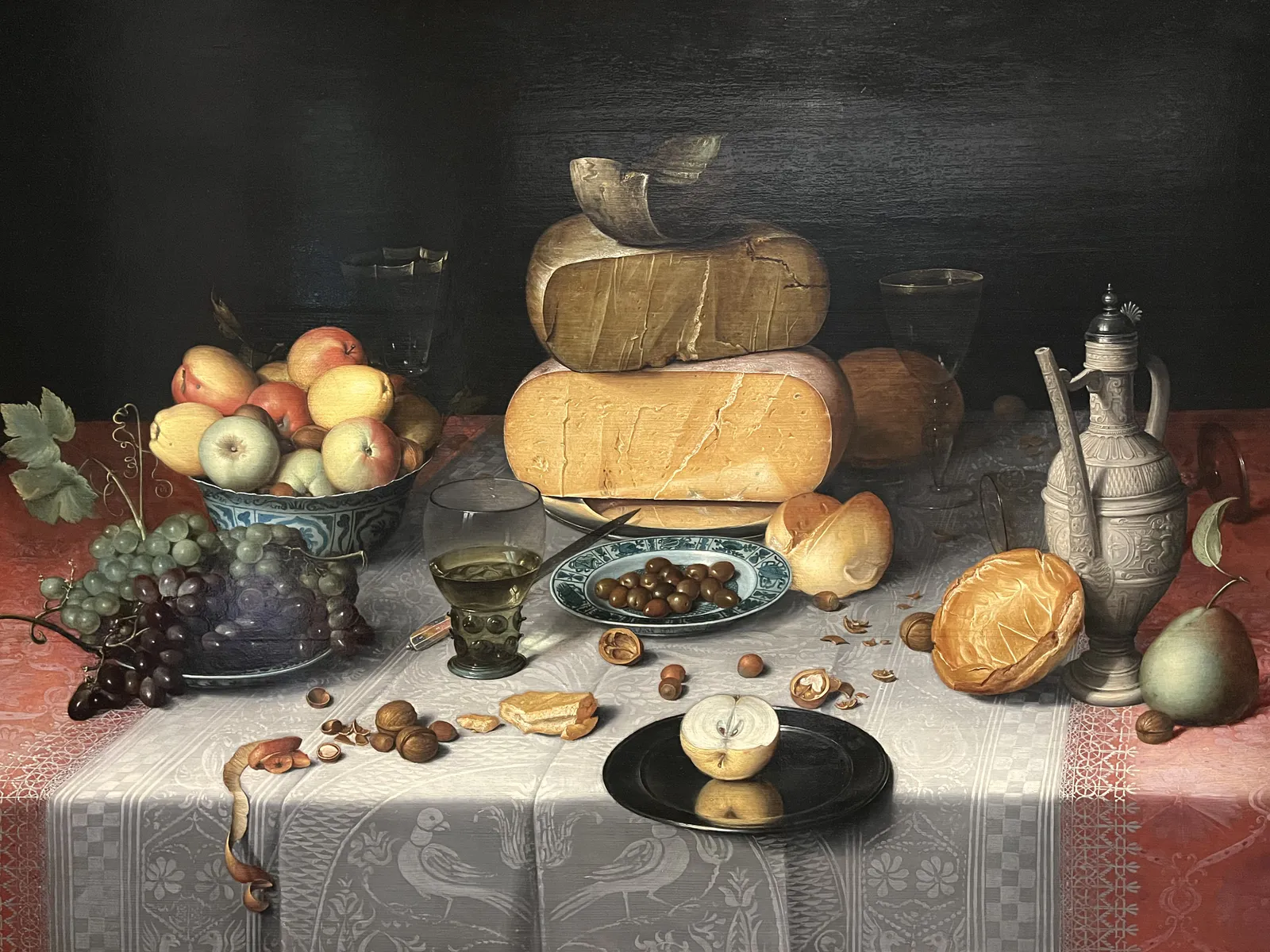
Still Life with Cheese
Floris Claesz van Dijck
On a damask-draped table (c.1615) lie fruit, bread, and three cheeses, carefully grouped by type. Floris van Dijck’s mastery of illusion is evident in the pewter plate jutting over the edge, as if within reach. A pioneer of Haarlem still-life painting, he helped establish the Dutch Golden Age tradition of rendering everyday abundance with startling realism.
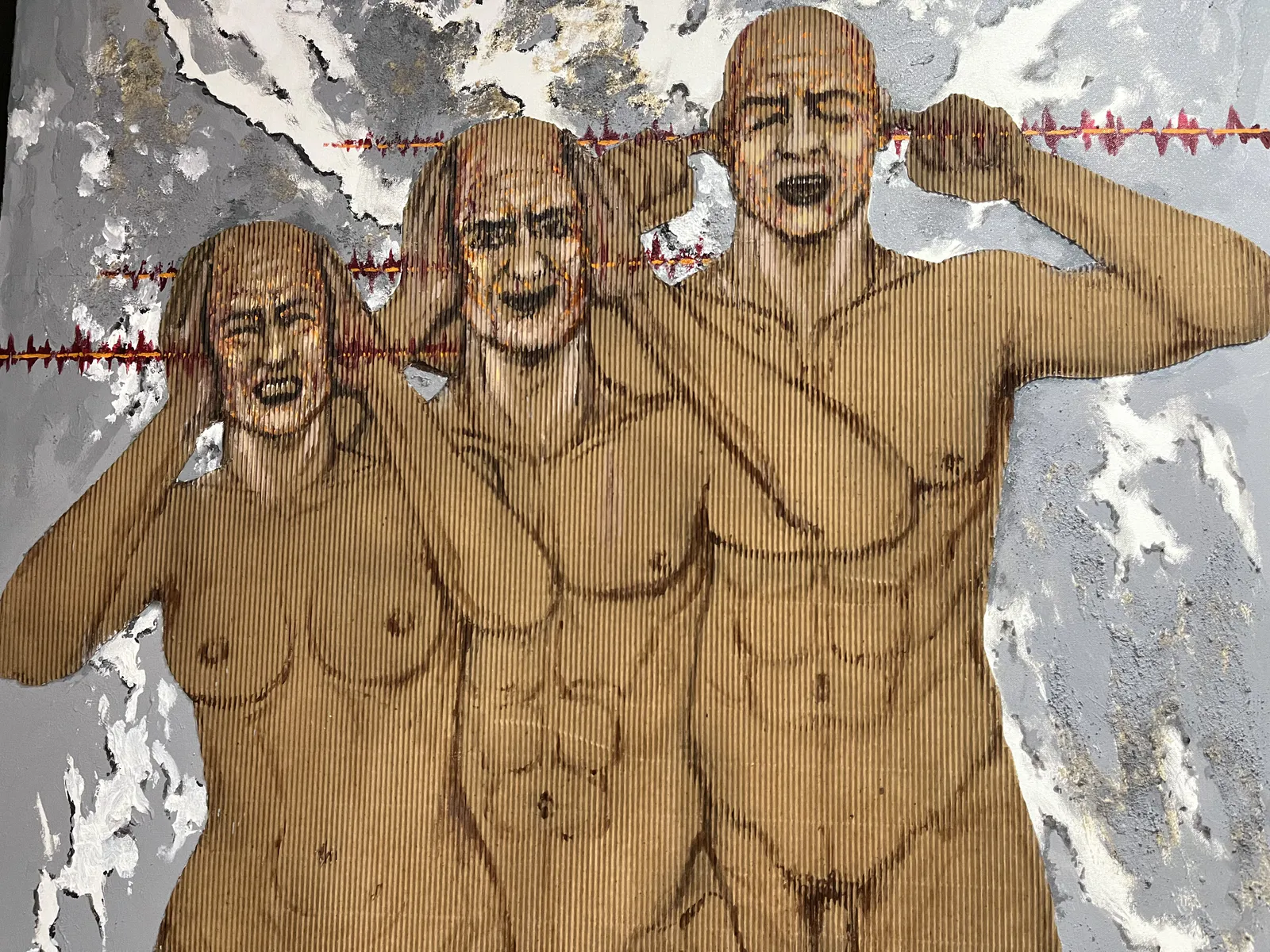
Silenced by Pain
Ángel Haché
This mixed-media work (2014) uses corrugated cardboard to depict three anguished nude figures pierced through the head by jagged red waves, symbols of auditory torture or psychological trauma. Their tense bodies and gestures of covering their ears suggest helplessness before systemic violence. The scene recalls the enforced silence and invisible suffering experienced under Trujillo’s dictatorship in the Dominican Republic.
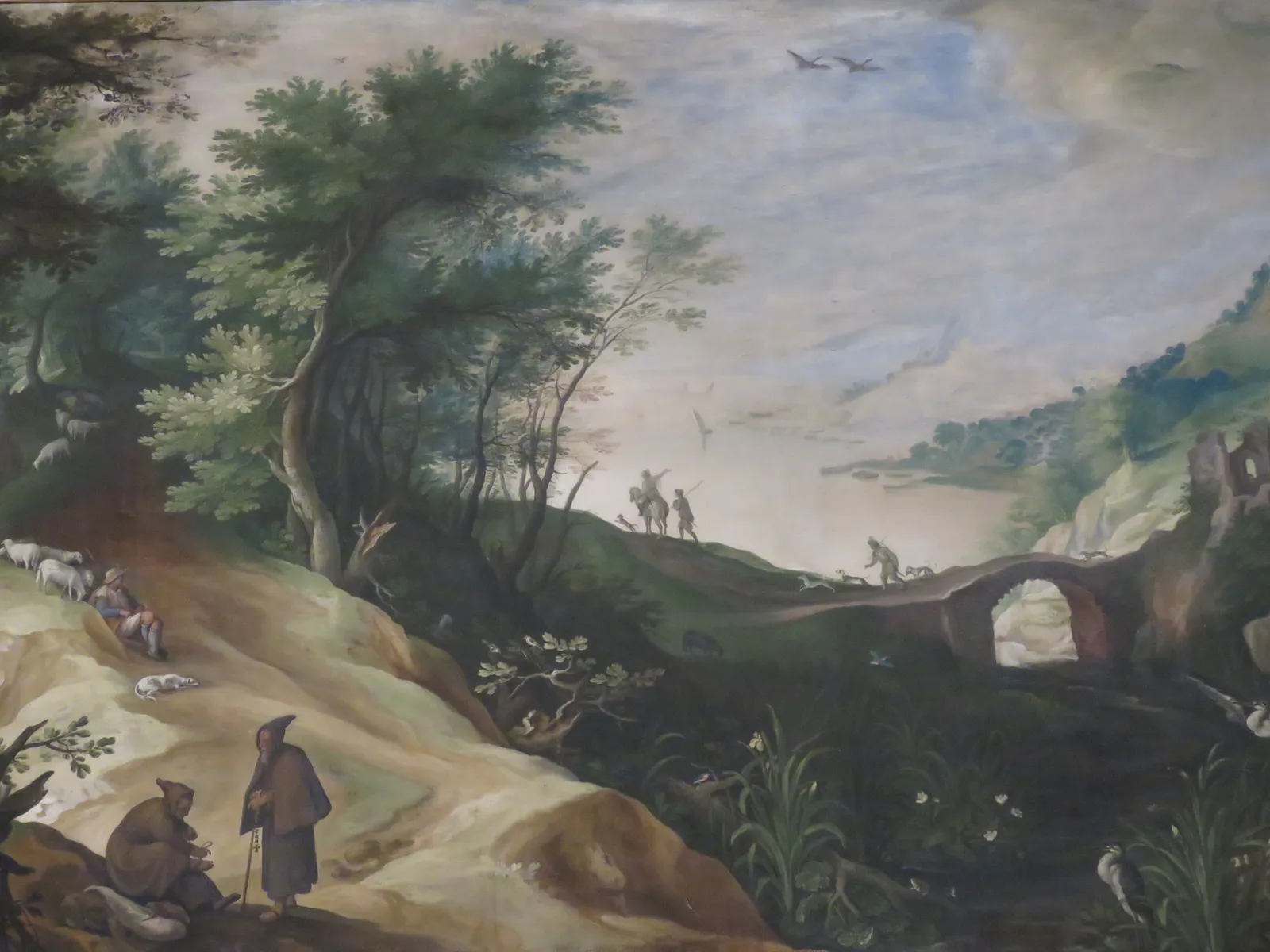
Landscape with Hermits
Paul Bril
This landscape (c. 1600) shows monks gathered in a wooded clearing beneath a broad, luminous sky. Their small figures sit or stand along a path that opens toward distant hills. Such scenes appeared in early Baroque painting, especially in northern regions where sacred retreat was a common theme. The composition indicates how artists linked hermitic life with the ordered quiet of nature.
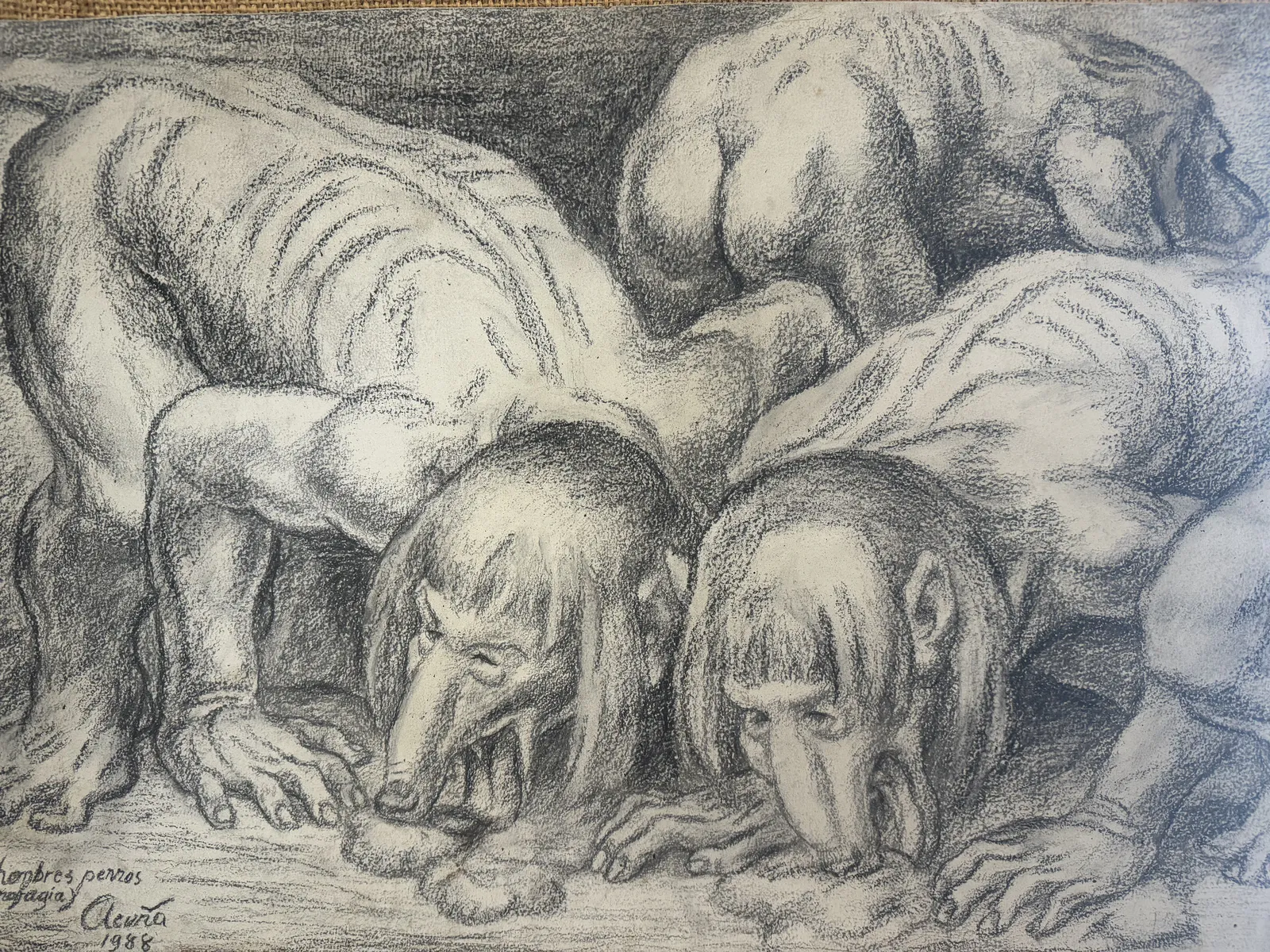
The Dog Men (Coprophagia)
Luis Alberto Acuña
This disturbing drawing (1988) shows three gaunt hybrid figures with human torsos and doglike heads crouched on all fours. Part of Acuña’s late series on distorted bodies, it examines the boundary between human and animal. The title refers to coprophagia (the consumption of excrement), which Acuña uses to articulate a vision of moral collapse and social dehumanization.
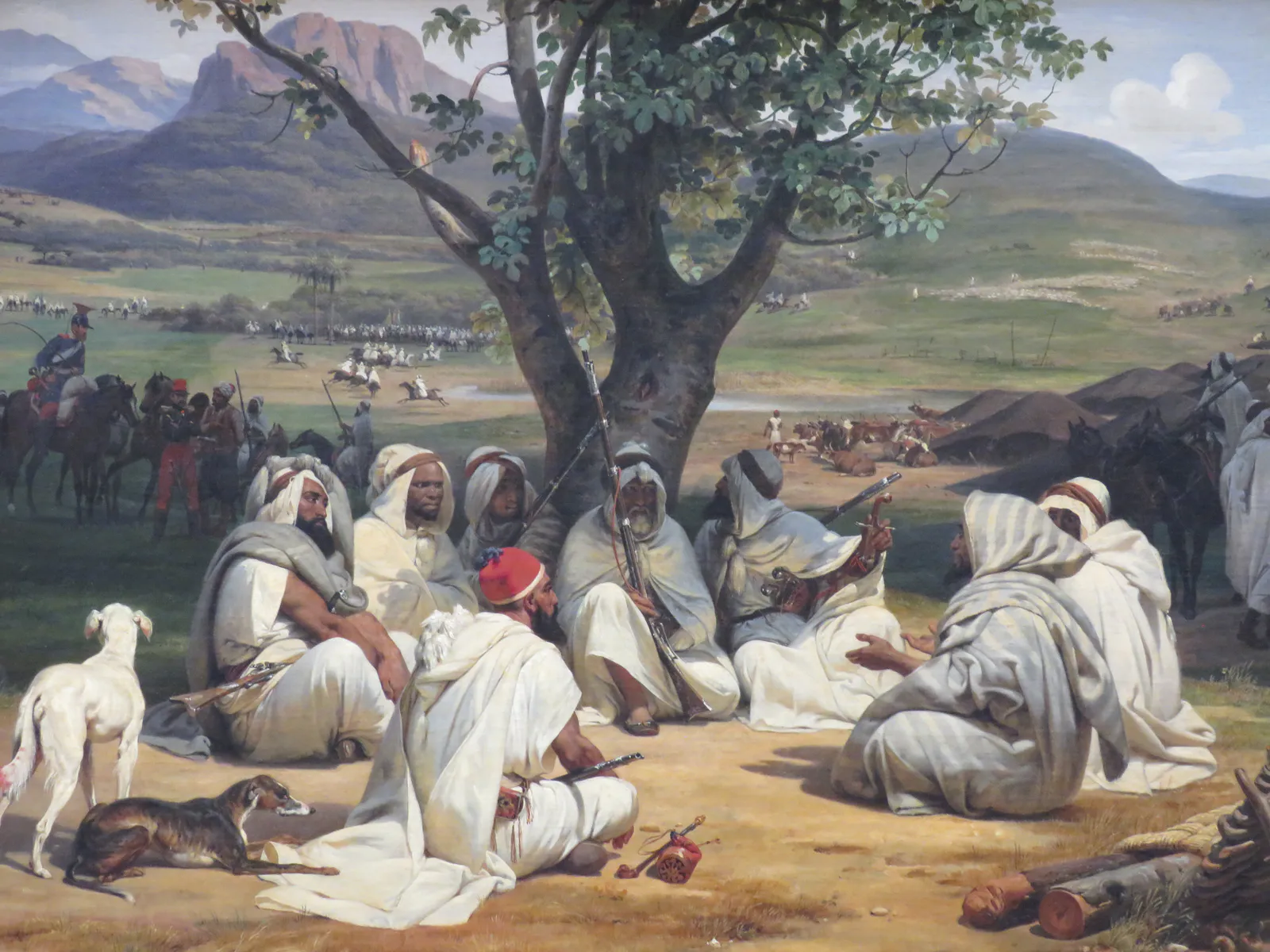
Arab Chieftains in Council
Horace Vernet
This 1834 work depicts Arab chieftains in council, likely discussing tribal matters or alliances. Vernet, a French artist known for battle scenes and Orientalist themes, illustrates the 19th-c. European interest in the Orient. The painting reflects the complex interplay of art, culture, and imperialism of the era.
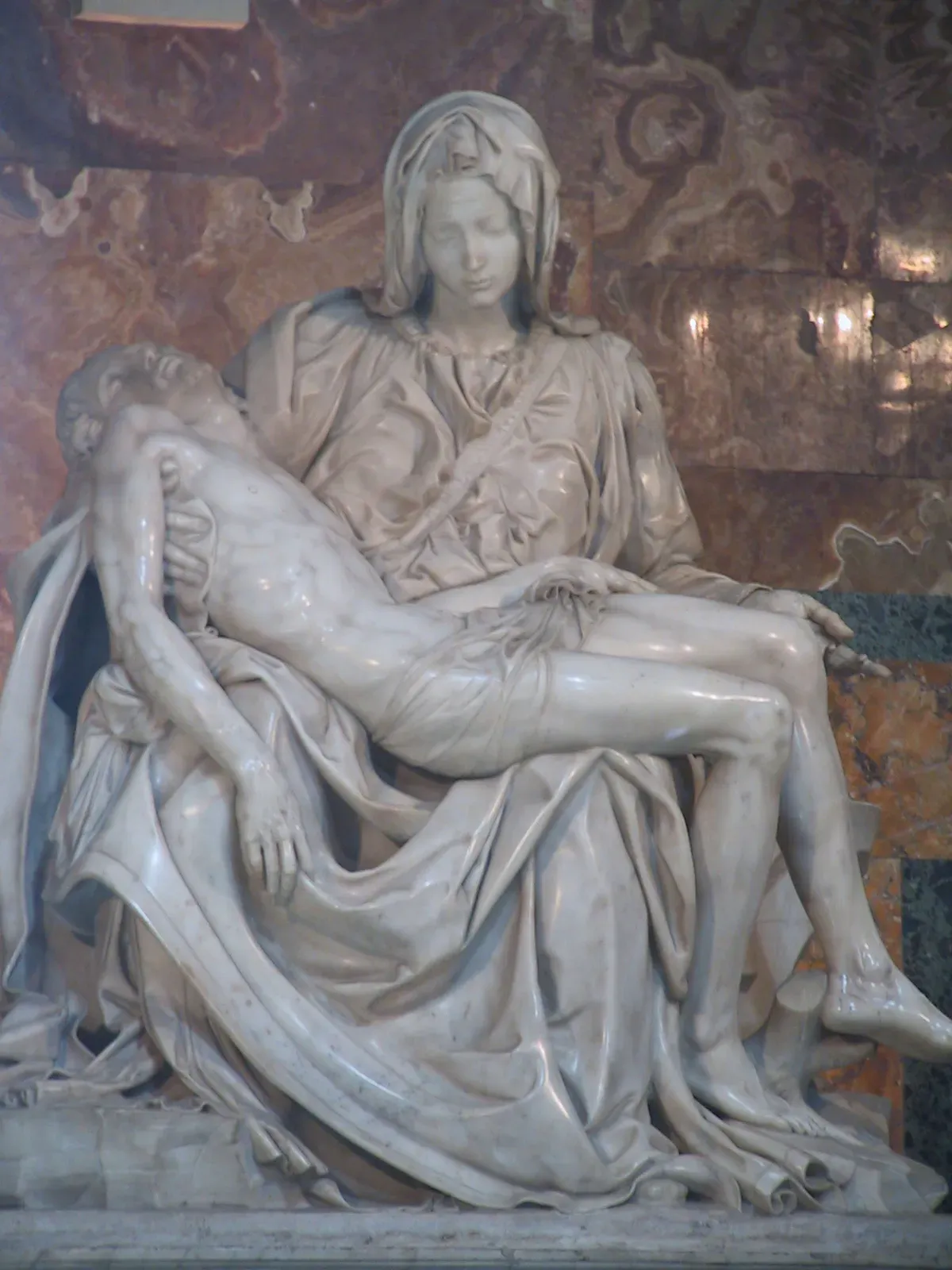
Pietà
Michelangelo
This marble sculpture (1498–99) shows the Virgin Mary holding the body of Christ after the Crucifixion. Carved by Michelangelo at age twenty-four, it unites idealized form and anatomical accuracy with restrained pathos. Commissioned for St. Peter’s Basilica, the Pietà exemplifies High Renaissance harmony between human beauty and divine suffering.
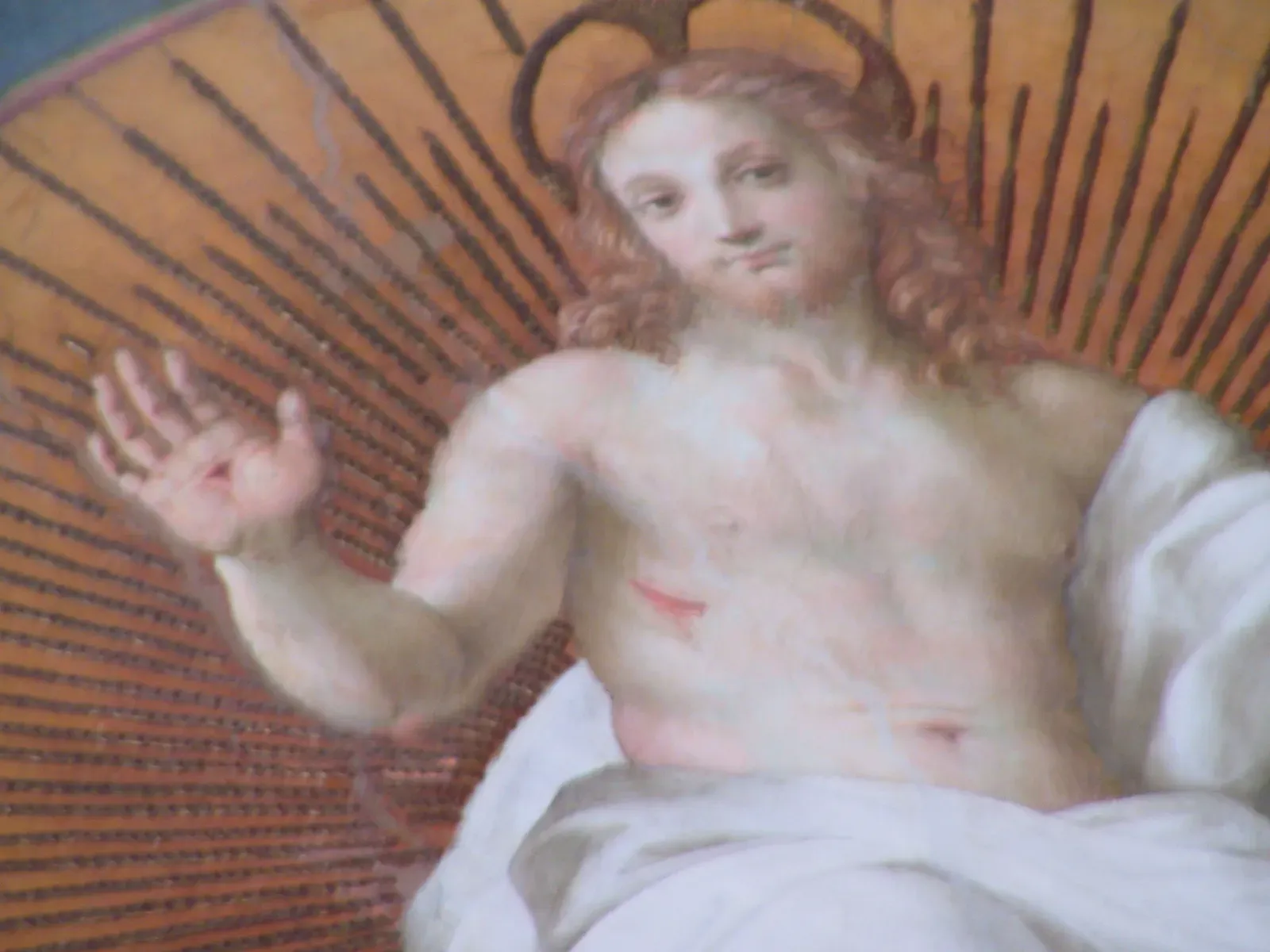
Christ in Glory (detail)
Raphael
The radiant figure of the risen Christ (1508–10) crowns the celestial register of The Disputation of the Sacrament. His raised hand and visible wounds recall both his Passion and his role as judge at the end of time. Encircled by golden rays, he visually affirms the doctrine of the Eucharist as the enduring, real presence of Christ.
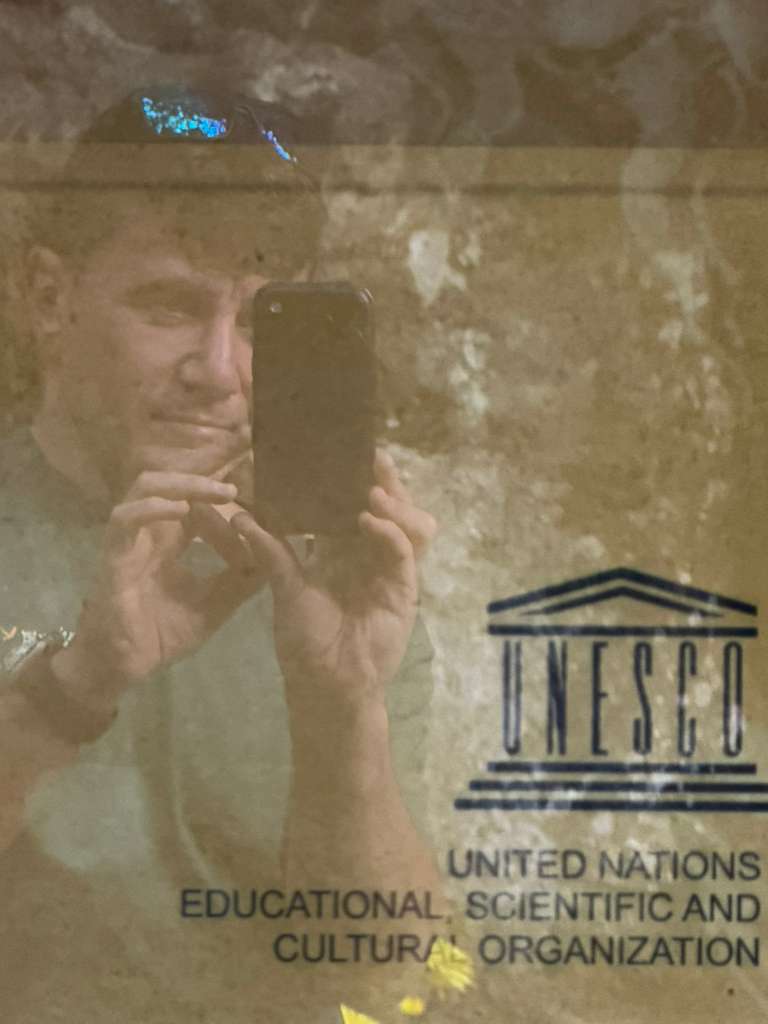
“When the path is beautiful, do not ask where it leads.” — Zen proverb
Welcome to my travel photography!
“When the path is beautiful, do not ask where it leads.” — Zen proverb
Welcome to my travel photography!
For as long as I can remember, my path has been one of discovery—seeking beauty, timelessness, and connection in every corner of the world. It has also been a journey of deep learning and understanding. I’ve been an avid traveler (or perhaps a travel addict?) for most of my life. My love for travel began long before I ever left home: as a child, I drew a fantasy map of my grandparents’ apartment and “traveled” through it with my cousin Sonya, imagining adventures in every corner. Nearly 90 countries and countless moments of awe later, I’m excited to share this journey with you.
Thanks to the tireless and ingenious programming of Diagilev, we’re now able to present about fifteen percent of the images I’ve accumulated over the years. More will be released in small batches depending on your interest. While the first release leans toward museum photography, later ones will include more nature, architecture, culture, and general travel experiences. If you’d like to receive email notifications about new releases, feel free to reach out—no commercial use, ever.
Throughout my travels, I’ve been drawn to two intertwined kinds of discovery. One is intellectual: learning why the world is the way it is. History became my guide, shaping my perspective and filling my camera roll with museums and old buildings. To me, history is not the past—it is the key to understanding the present and how the world became what it is. The other is emotional: seeking moments of elevation—spirituality, beauty, harmony—often found in nature, monasteries, and ancient sacred spaces. Together, these impulses shape my photography. It invites you to learn, admire, and soar—to rise above the mundane and see the world through a lens of curiosity and wonder.
Much of my later travel became possible thanks to my job with Delta Air Lines, but the wanderlust began years earlier. By the time I joined the industry, I had already visited over 35 countries and lived in several—largely thanks to a backpacking journey around the world with Luis León, whose face appears in many early photos. I grew up in Ufa in the USSR, and since leaving it I have lived, studied, and worked in Latvia, the United States, France, South Korea, Canada, Spain, Italy, Brazil, Japan, and Colombia.
A life of near-constant movement may seem a little crazy, but it has deepened my understanding of the world and produced the photography you are about to see. Over the years, my style has evolved—more intentional, more refined—yet its core remains the same: a search for understanding, timeless beauty, and a connection to those who walked this earth long before us.
I hope these photos stir something in your soul, just as they did in mine. I’d love to hear from you—whether reactions, suggestions, corrections, or a request to be added to the email list for new releases (no commercial use, I promise). You can learn more about my travels here, and my academic life here.
Enjoy our shared journey!