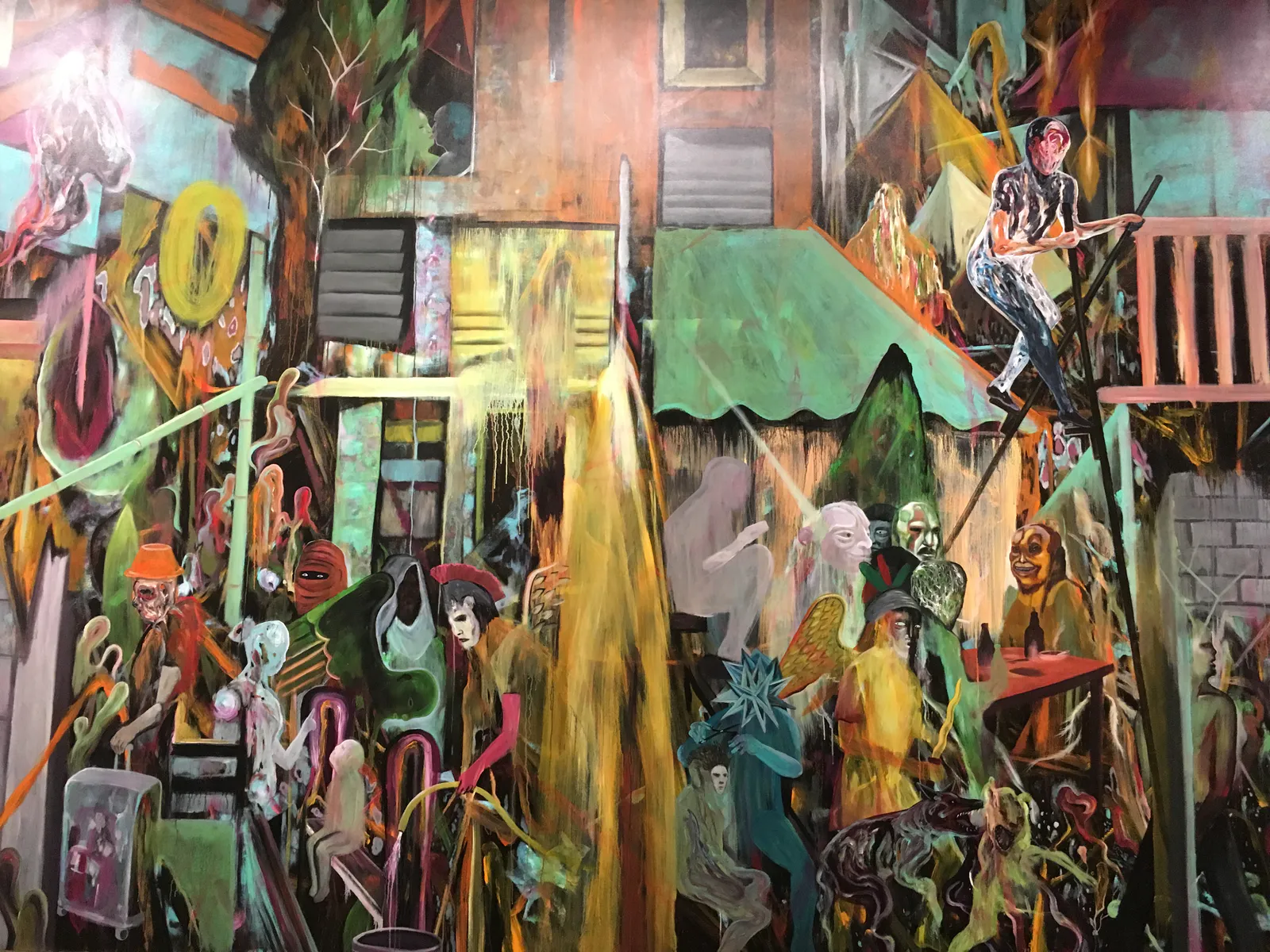
The Comedy, Parody, and Tragedy
Rodel Tapaya
This 2018 painting layers crowded shanties, billboards, and tangled walkways with mythic creatures from Philippine folklore. Human figures mingle with spirits and masked characters, blurring everyday life with the supernatural. Bright colors and abrupt shifts in scale evoke noise, congestion, and spectacle. Tapaya unfolds contemporary urban experience as a chaotic folk tale, where comedy, parody, and tragedy coexist in a single scene.
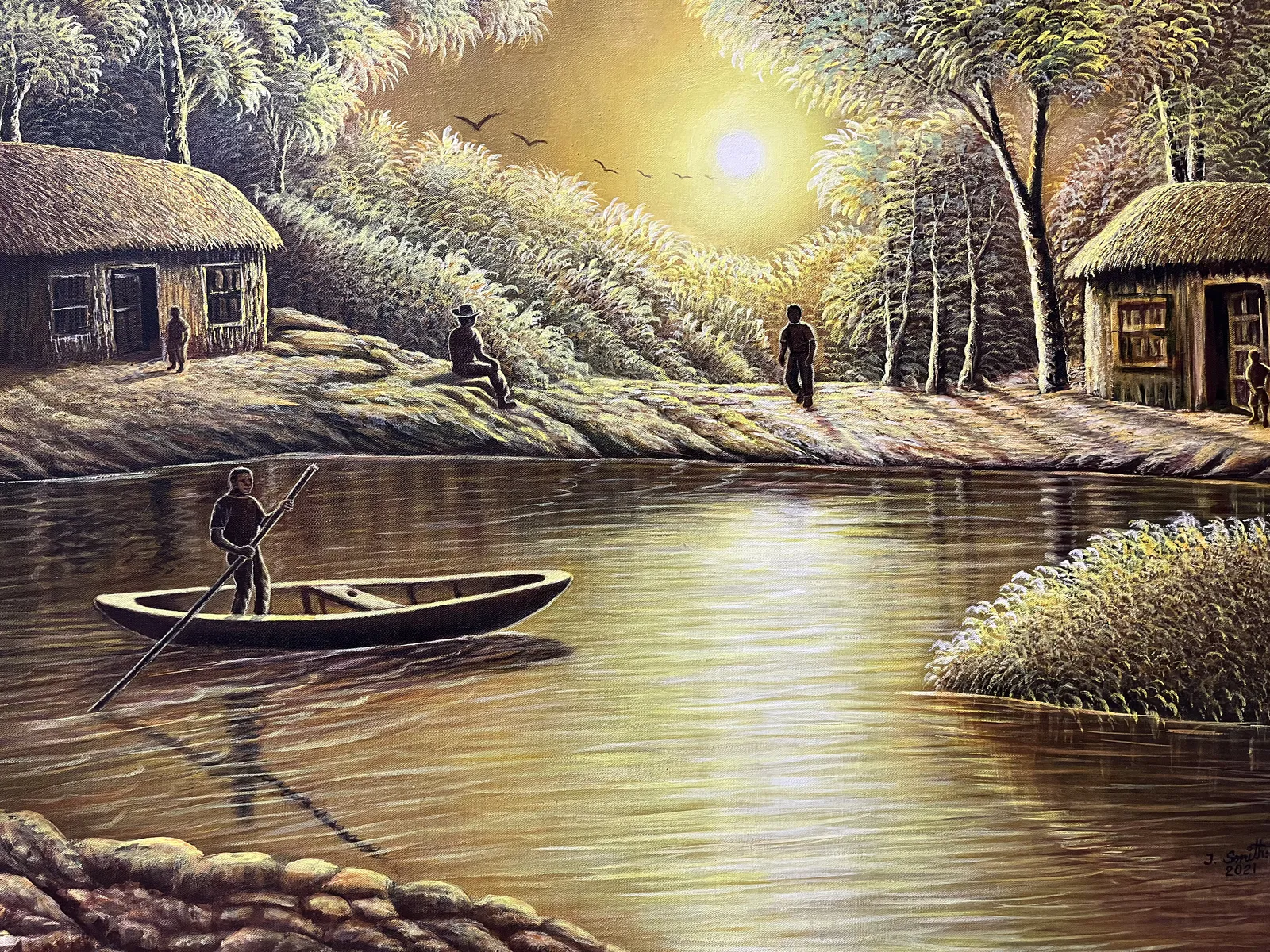
The Lagoon of Peace
Jorge Alberto Smith Ellas
This 2021 oil and acrylic painting evokes serenity and ancestral rhythm. A golden twilight bathes the rural scene, where everyday life unfolds by a calm lagoon. The composition speaks to Colombia’s Pacific and Caribbean heritage, honoring peace through stillness, memory, and connection to the land.
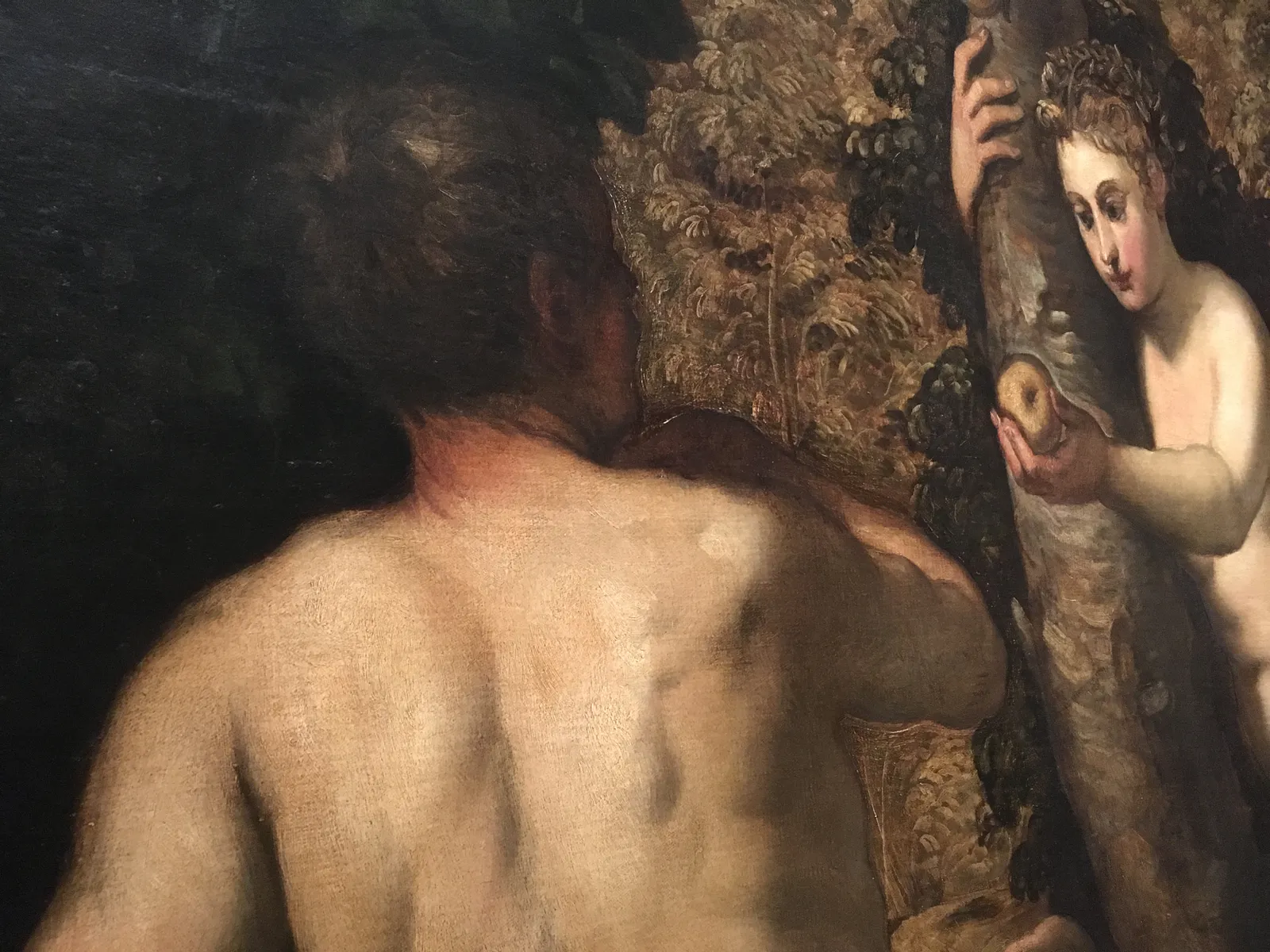
Adam and Eve
Tintoretto
Tintoretto’s painting (1550–53) depicts the biblical scene of temptation in the Garden of Eden. Eve offers the forbidden fruit to Adam, with their expulsion illustrated in the background. Influenced by Michelangelo, the composition emphasizes the nude figures and employs oblique lines to structure the landscape. This work reflects the Renaissance interest in human form and moral themes.
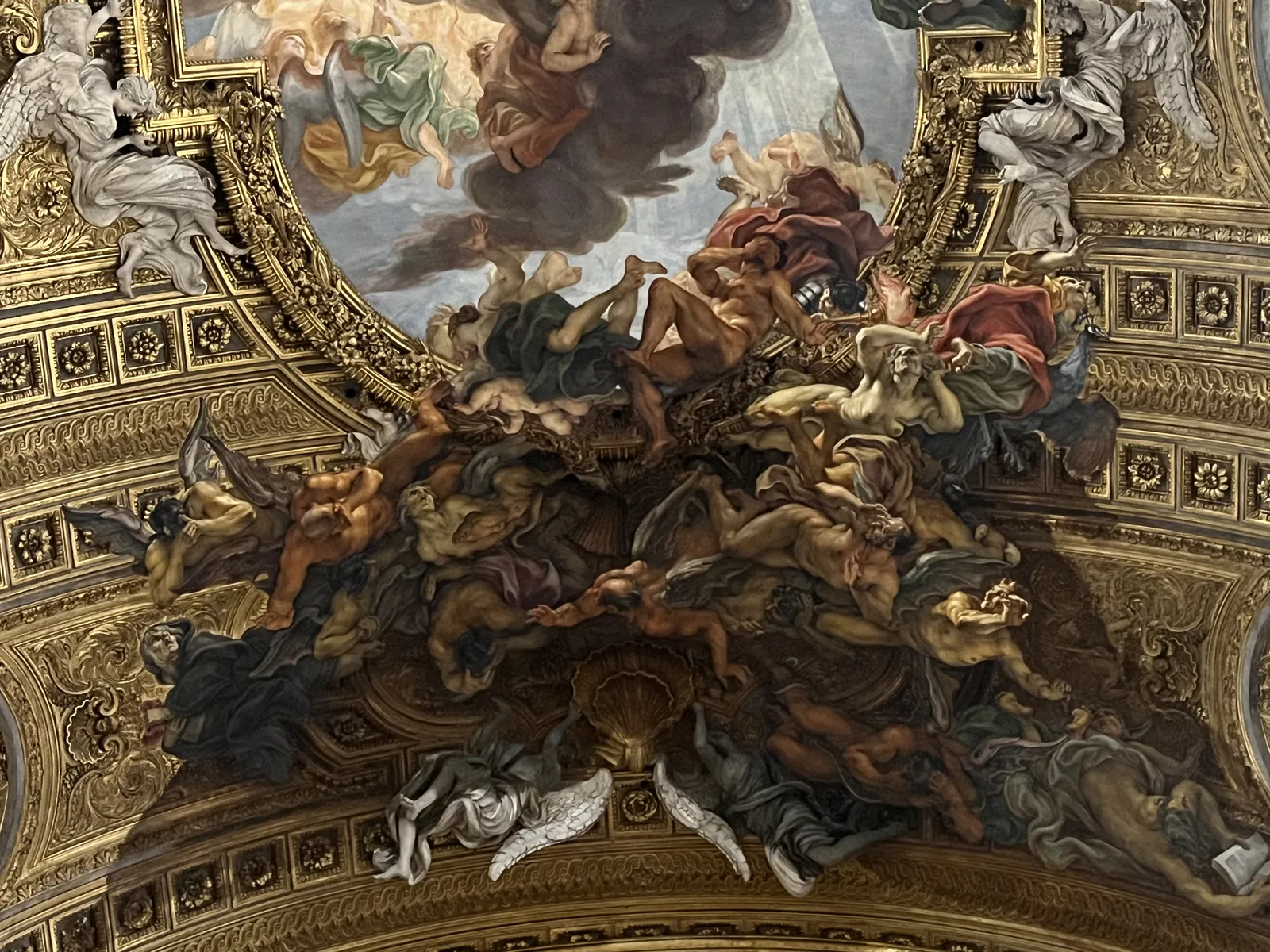
The Damned
Giovanni Battista Gaulli
In this dramatic segment (1676–79) from the Triumph of the Name of Jesus, Gaulli casts the damned from heaven into shadow and chaos. Their bodies twist, morph, and scream as they recoil from the divine light. Cloaked in darkness and shame, they contrast sharply with the radiant saved above—embodying Baroque emotion and the terrifying cost of spiritual failure.
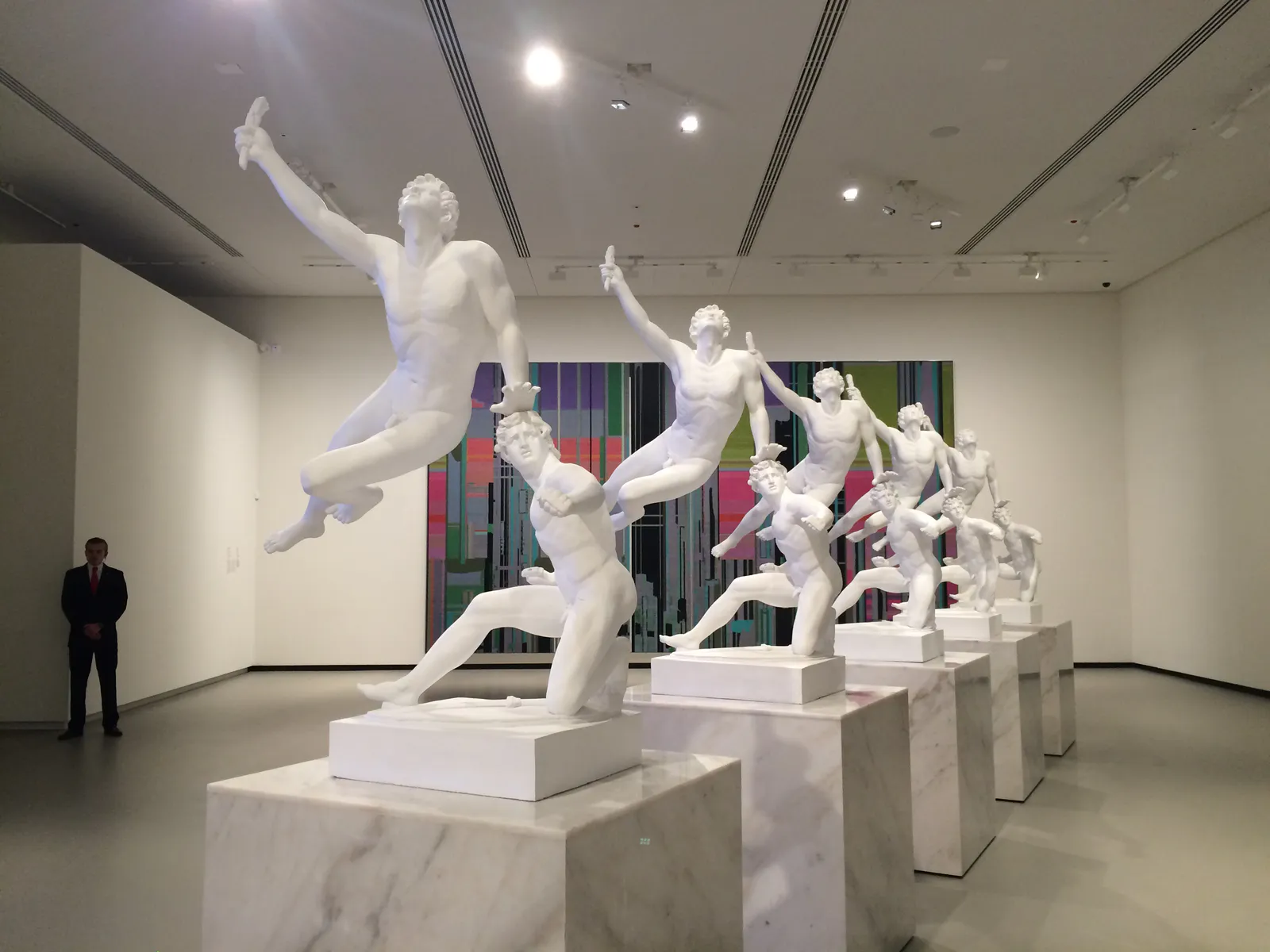
Eternity - The Soldier of Marathon Announcing Victory
Xu Zhen
This 2011 sculpture installation Eternity – Eternity - The Soldier of Marathon Announcing Victory, a Wounded Galatian fuses classical Greek forms with contemporary fragmentation. Crafted from concrete, fiberglass, marble powder, and metal, the sequence begins with a whole figure and gradually breaks apart, evoking cultural transformation and the erosion of historical continuity.
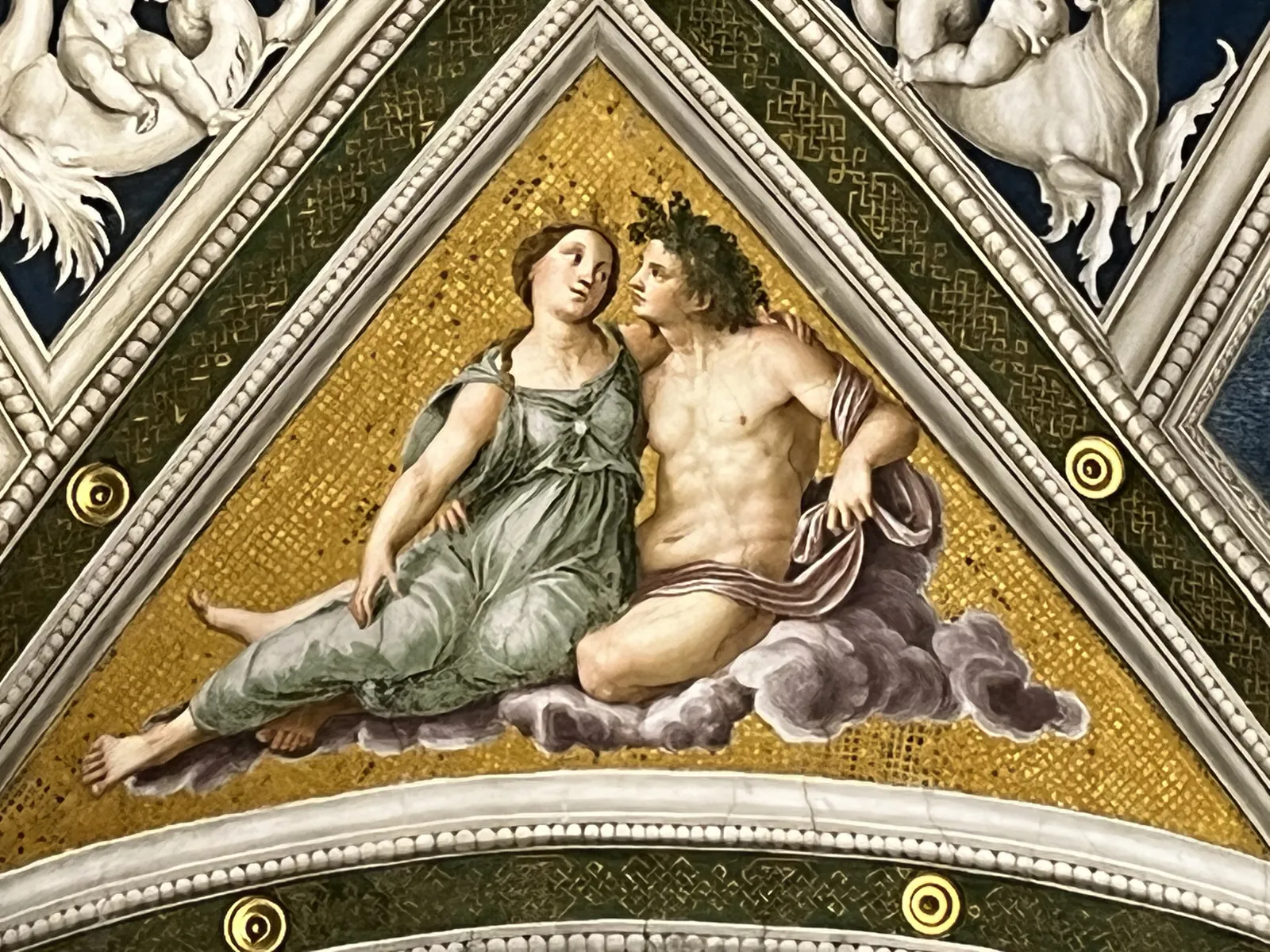
Bacchus and Ariadne
Baldassare Peruzzi
Painted c. 1511 in the Loggia of Galatea, Villa Farnesina, this scene depicts Bacchus, the god of wine, with Ariadne, whom he marries after her abandonment by Theseus. The golden mosaic-like background evokes classical luxury, while Peruzzi’s composition aligns with the villa’s mythological and astrological themes. This artwork reflects Renaissance fascination with classical mythology and the interplay of fate and divine intervention.
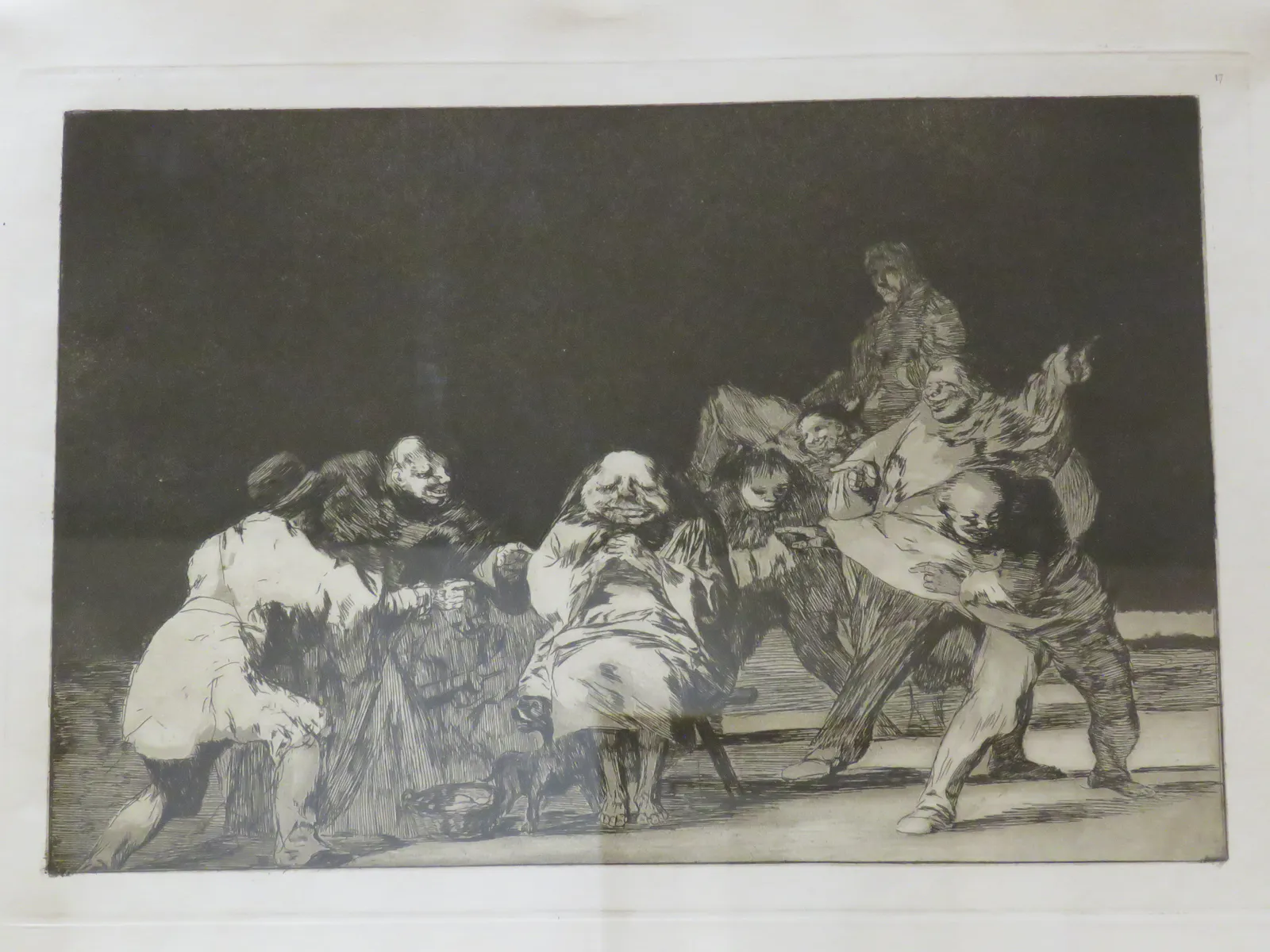
Loyalty from Los Disparates Series
Francisco Goya
This etching (1815–1823) by Francisco Goya, part of the Los Disparates series, explores themes of chaos and irrationality. Featuring grotesque figures, it suggests blind loyalty or foolishness, reflecting the turbulent era of Ferdinand VII’s reign in Spain. Goya’s use of aquatint and etching techniques enhances dramatic contrasts and textures, providing a dark commentary on the social and political upheavals of his time.
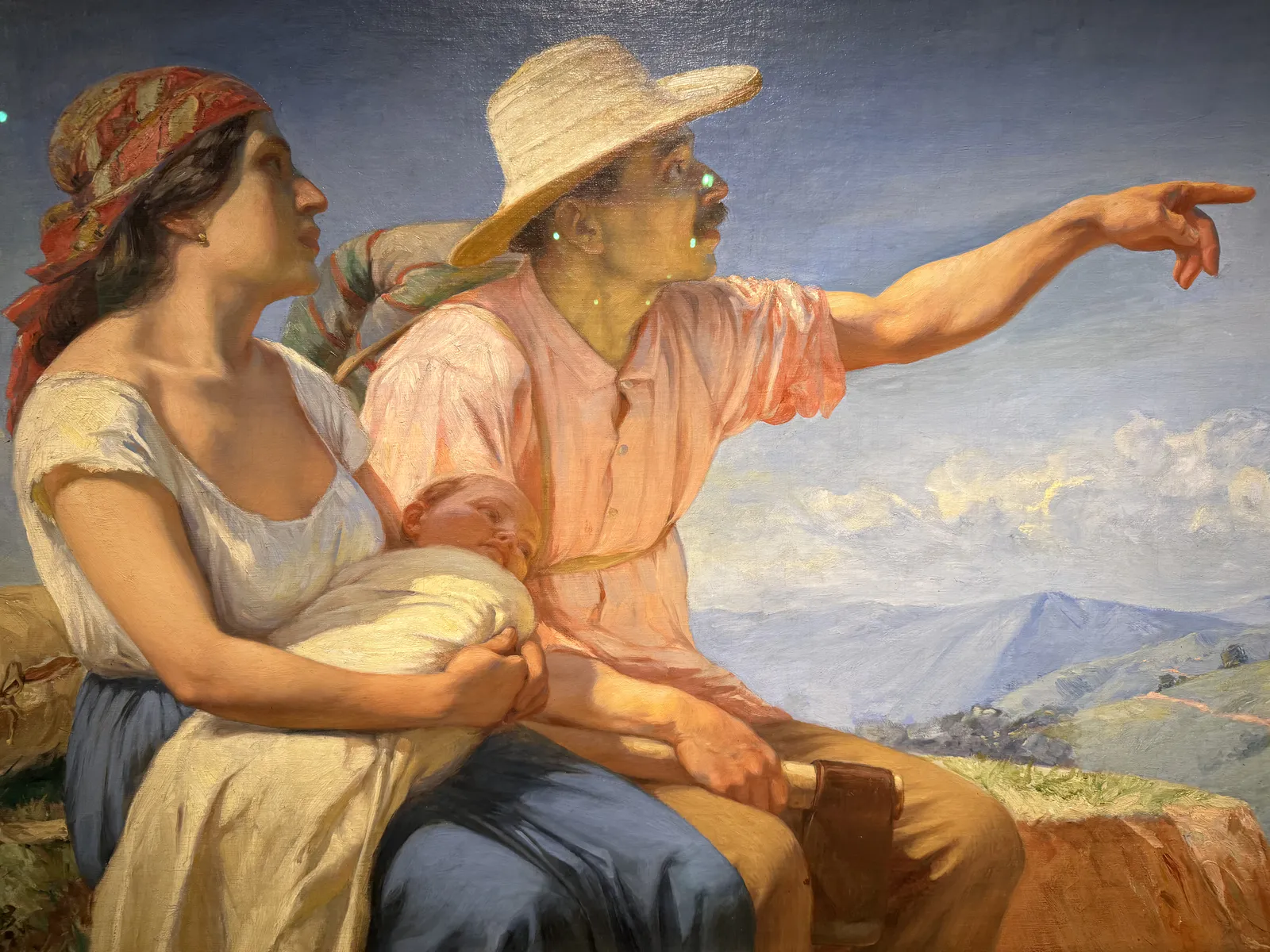
Horizons
Francisco Antonio Cano
Horizontes (1913) presents an idealized vision of Colombia’s settler frontier. The man's outstretched arm signifies hope and destiny, while the woman and child convey continuity and rootedness. This work by a leading Colombian academic painter uses the peasant family to symbolize national identity and the forging of a future in the Andean landscape.
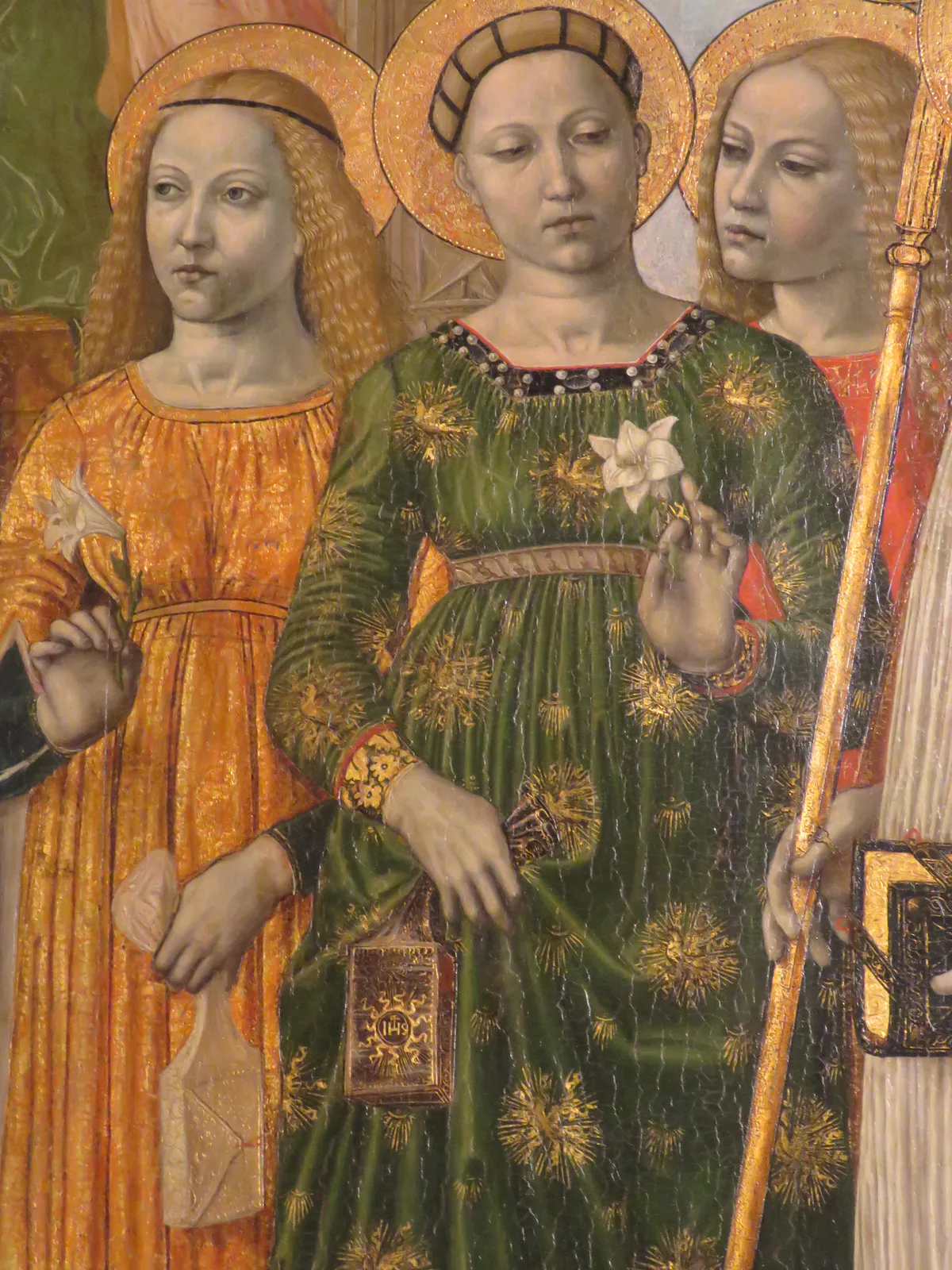
Santa Conversazione (detail)
Ambrogio Bergognone
This panel 1490-95) features a trio of female saints bearing lilies, symbolizing purity. Adorned with gold and intricate embroidery, their garments suggest sanctity and nobility. The solemn expressions and clasped books evoke wisdom and devotion, emphasizing the fusion of holiness and human dignity in late Gothic religious art.
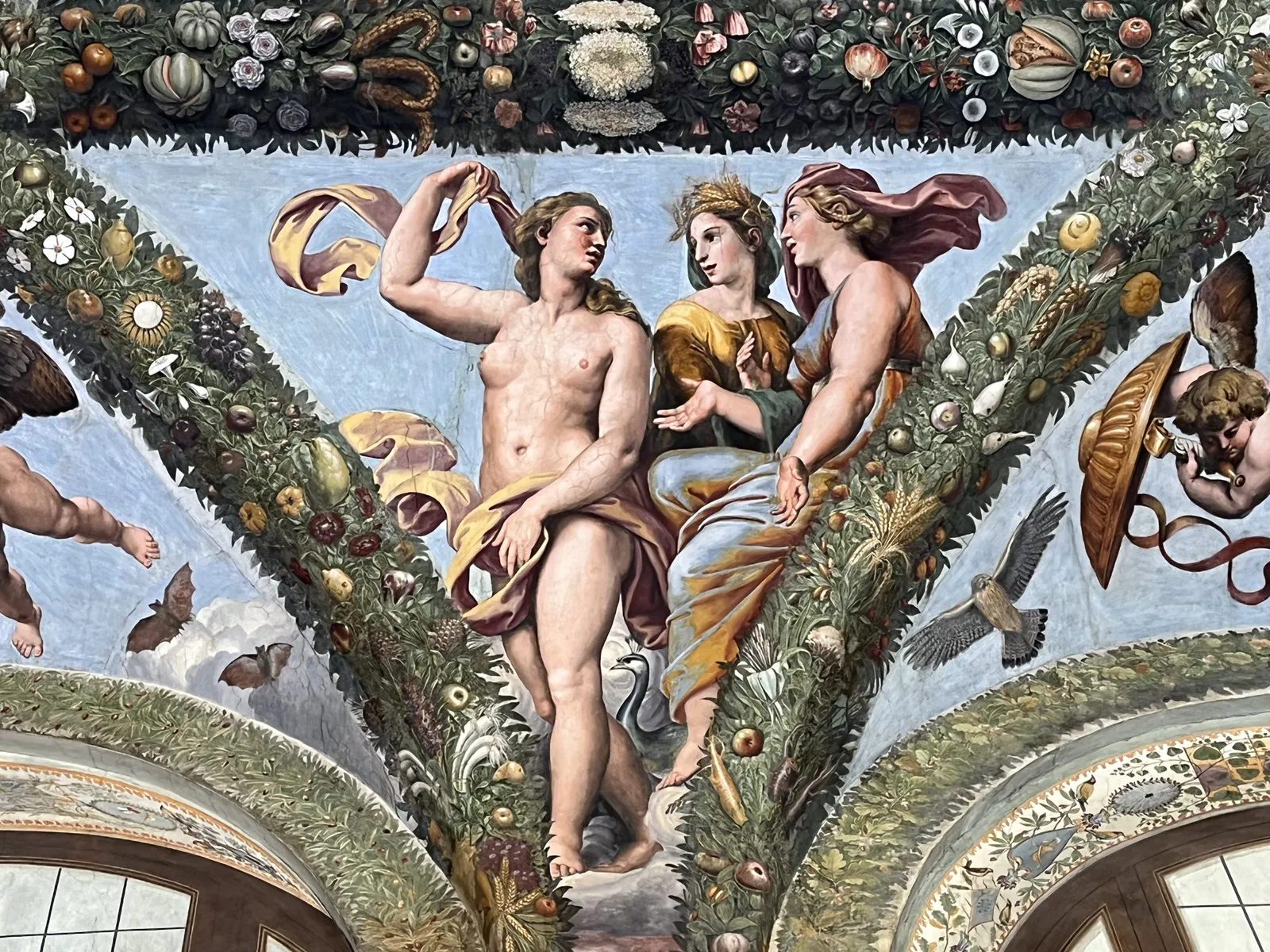
Venus Appeals to Ceres and Juno
Raphael, Giovanni da Udine
In this scene (1518), Raphael depicts Venus appealing to Ceres and Juno for vengeance on Psyche, but both goddesses refuse. The fresco illustrates the tension between divine power and mortal love. Da Udine’s elaborate botanical festoons frame the composition, enhancing its Renaissance richness.
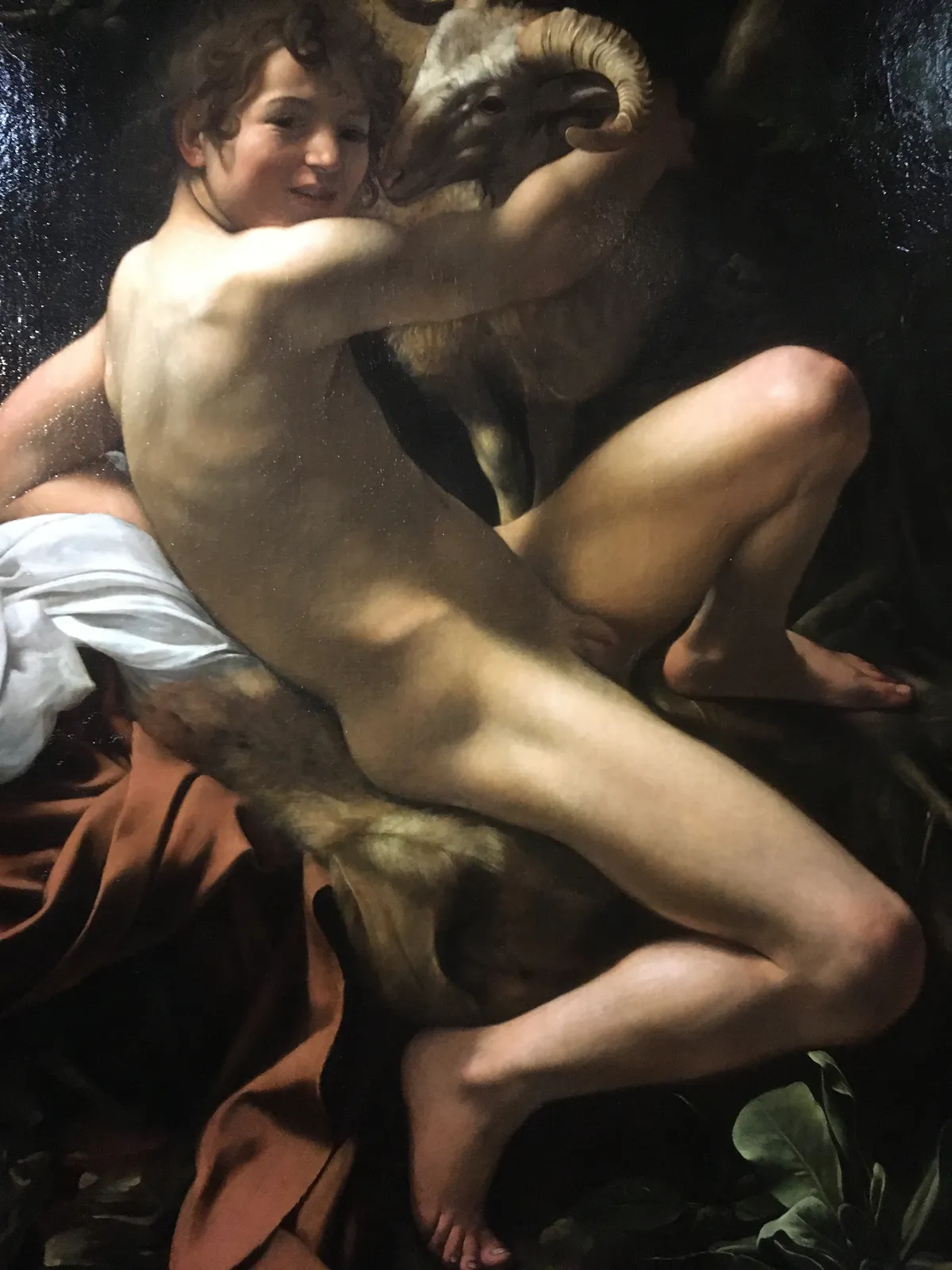
John the Baptist (Youth with a Ram)
Caravaggio
Painted around 1602, this work portrays John the Baptist as a youthful figure embracing a ram. Caravaggio departs from solemn prophecy to present vitality, sensuality, and human immediacy. The saint’s glance engages the viewer, while the animal evokes sacrifice and redemption. Through natural light and unidealized form, the painting fuses biblical meaning with raw, earthy presence.
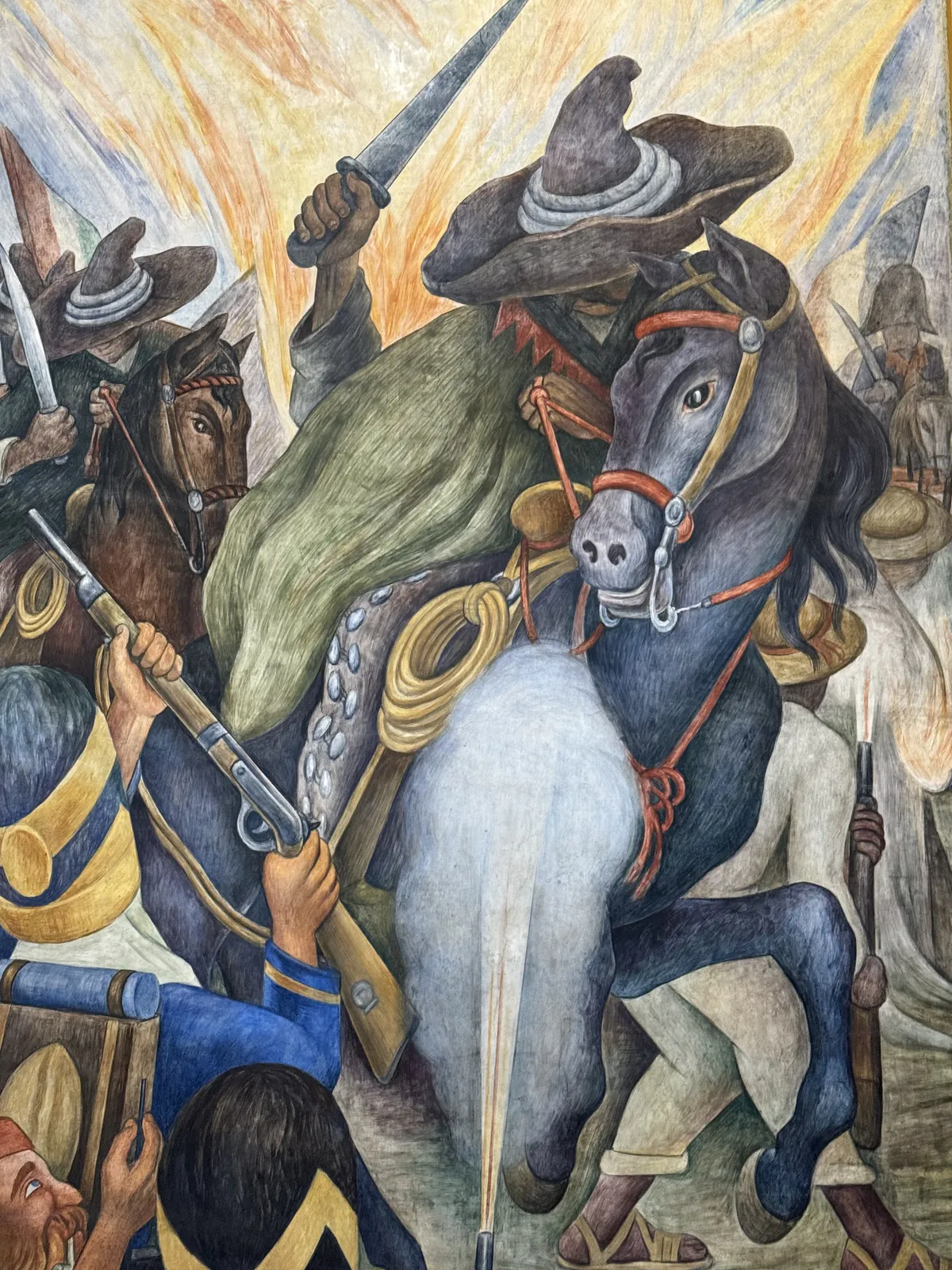
The Legend of Agustín Lorenzo (detail)
Diego Rivera
This 1936 fresco dramatizes the legendary outlaw Agustín Lorenzo as a symbol of resistance. Armed revolutionaries clash with government forces, their horses rearing amid smoke and flames. Rivera fuses myth and history, casting Lorenzo as a Mexican Robin Hood whose defiant struggle against injustice became folklore in the national imagination.
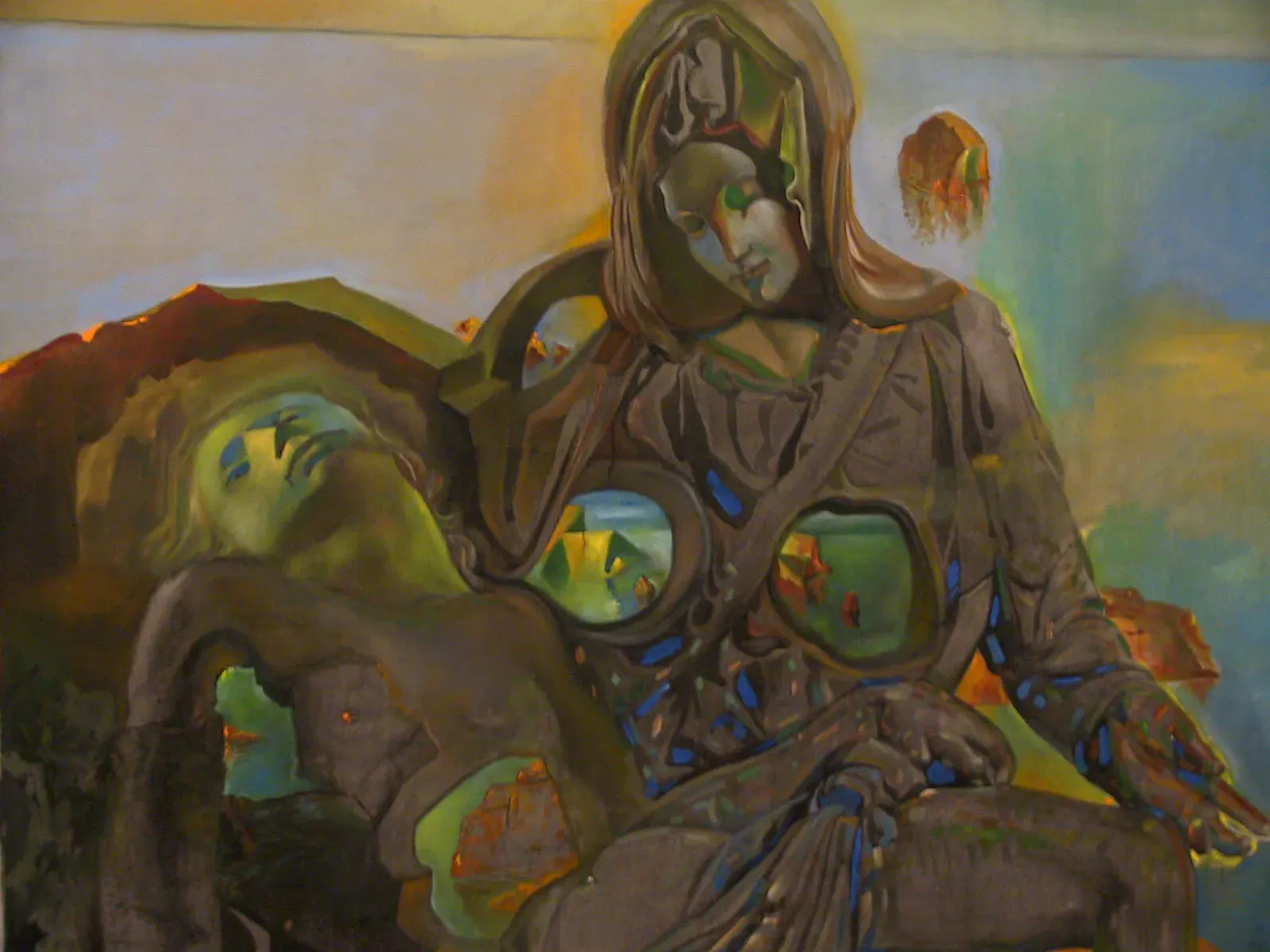
Geological Echo. La Pietà
Salvador Dalí
Dalí reinterprets Michelangelo’s La Pietà, merging sacred imagery with surreal geological forms (1982). The figures’ bodies become fragmented landscapes, symbolizing the erosion of memory and time. Created during Gala’s final years, the work reflects personal grief, exploring themes of love, loss, and the unconscious through voids that resonate with emotional depth and introspection.
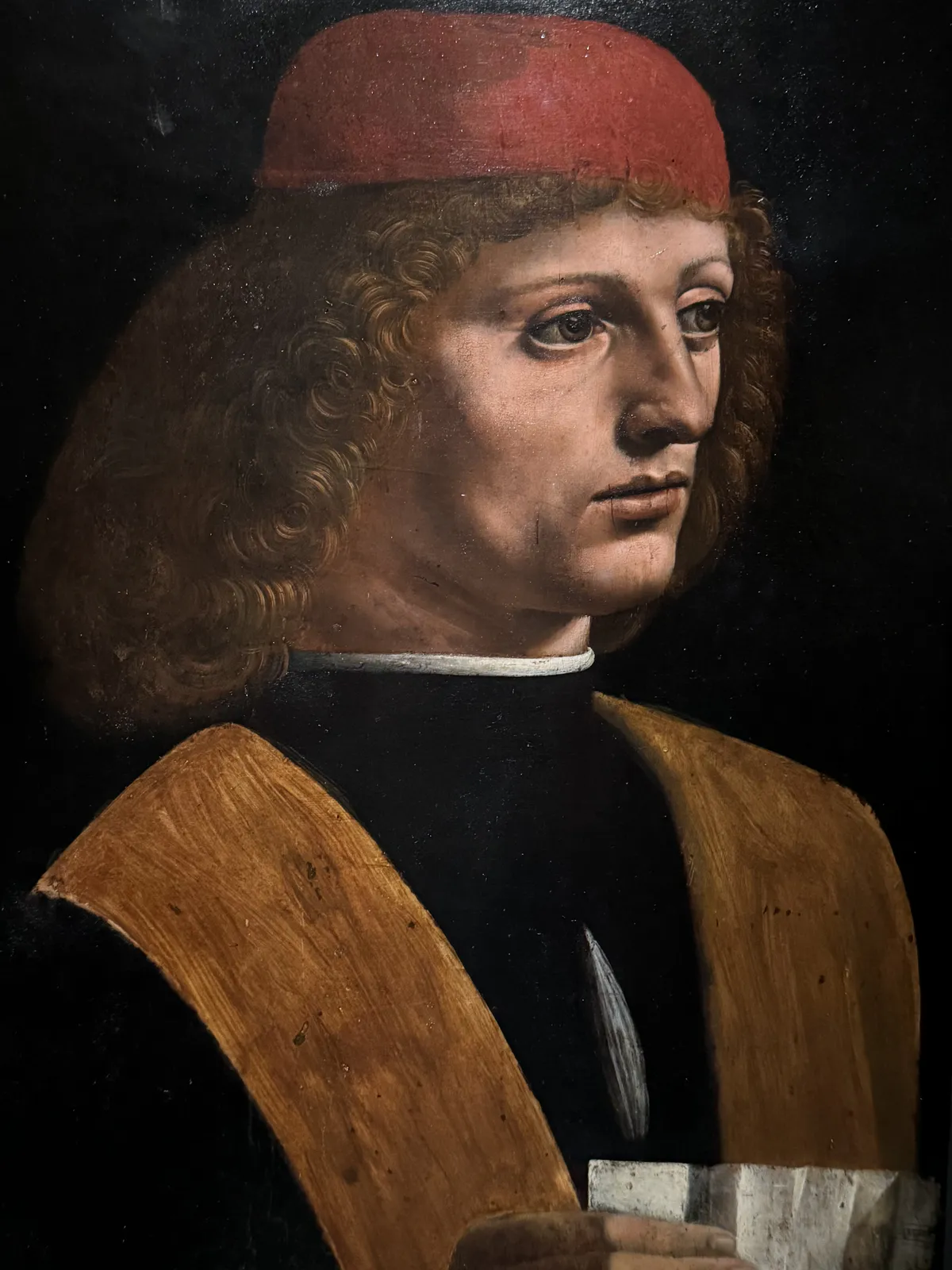
Portrait of a Musician
Leonardo da Vinci
This intimate oil on panel (c. 1485) is Leonardo da Vinci’s only known male portrait. Likely depicting a court musician in Milan, the sitter clutches a sheet of music, suggesting both profession and intellect. The unfinished lower section contrasts with the intense gaze, highlighting Leonardo’s interest in capturing psychological presence over ornamental finish.
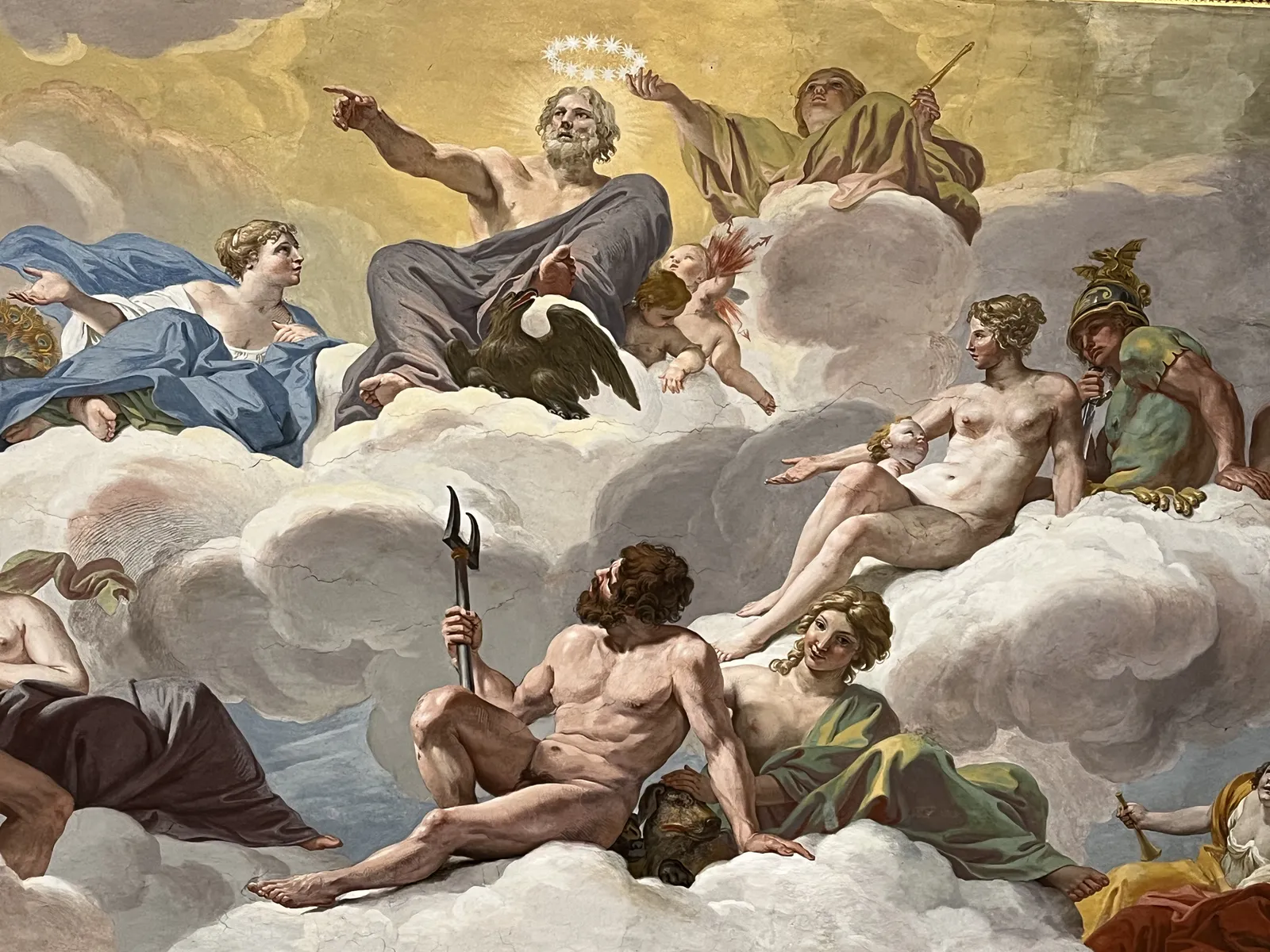
The Council of the Gods (detail)
Giovanni Lanfranco
In this celestial scene from The Council of the Gods (1624–25), Jupiter presides over Olympus, crowned with stars and flanked by his eagle. Surrounding him are Juno, Venus, Mars, and Pluto, their divine forms emerging from clouds. Painted for the Sala della Loggia in Villa Borghese, the fresco evokes the grandeur and illusionistic power of Baroque heaven.
“When the path is beautiful, do not ask where it leads.” — Zen proverb
Welcome to my travel photography!
“When the path is beautiful, do not ask where it leads.” — Zen proverb
Welcome to my travel photography!
For as long as I can remember, my path has been one of discovery—seeking beauty, timelessness, and connection in every corner of the world. It has also been a journey of deep learning and understanding. I’ve been an avid traveler (or perhaps a travel addict?) for most of my life. My love for travel began long before I ever left home: as a child, I drew a fantasy map of my grandparents’ apartment and “traveled” through it with my cousin Sonya, imagining adventures in every corner. Nearly 90 countries and countless moments of awe later, I’m excited to share this journey with you.
Thanks to the tireless and ingenious programming of Diagilev, we’re now able to present about fifteen percent of the images I’ve accumulated over the years. More will be released in small batches depending on your interest. While the first release leans toward museum photography, later ones will include more nature, architecture, culture, and general travel experiences. If you’d like to receive email notifications about new releases, feel free to reach out—no commercial use, ever.
Throughout my travels, I’ve been drawn to two intertwined kinds of discovery. One is intellectual: learning why the world is the way it is. History became my guide, shaping my perspective and filling my camera roll with museums and old buildings. To me, history is not the past—it is the key to understanding the present and how the world became what it is. The other is emotional: seeking moments of elevation—spirituality, beauty, harmony—often found in nature, monasteries, and ancient sacred spaces. Together, these impulses shape my photography. It invites you to learn, admire, and soar—to rise above the mundane and see the world through a lens of curiosity and wonder.
Much of my later travel became possible thanks to my job with Delta Air Lines, but the wanderlust began years earlier. By the time I joined the industry, I had already visited over 35 countries and lived in several—largely thanks to a backpacking journey around the world with Luis León, whose face appears in many early photos. I grew up in Ufa in the USSR, and since leaving it I have lived, studied, and worked in Latvia, the United States, France, South Korea, Canada, Spain, Italy, Brazil, Japan, and Colombia.
A life of near-constant movement may seem a little crazy, but it has deepened my understanding of the world and produced the photography you are about to see. Over the years, my style has evolved—more intentional, more refined—yet its core remains the same: a search for understanding, timeless beauty, and a connection to those who walked this earth long before us.
I hope these photos stir something in your soul, just as they did in mine. I’d love to hear from you—whether reactions, suggestions, corrections, or a request to be added to the email list for new releases (no commercial use, I promise). You can learn more about my travels here, and my academic life here.
Enjoy our shared journey!