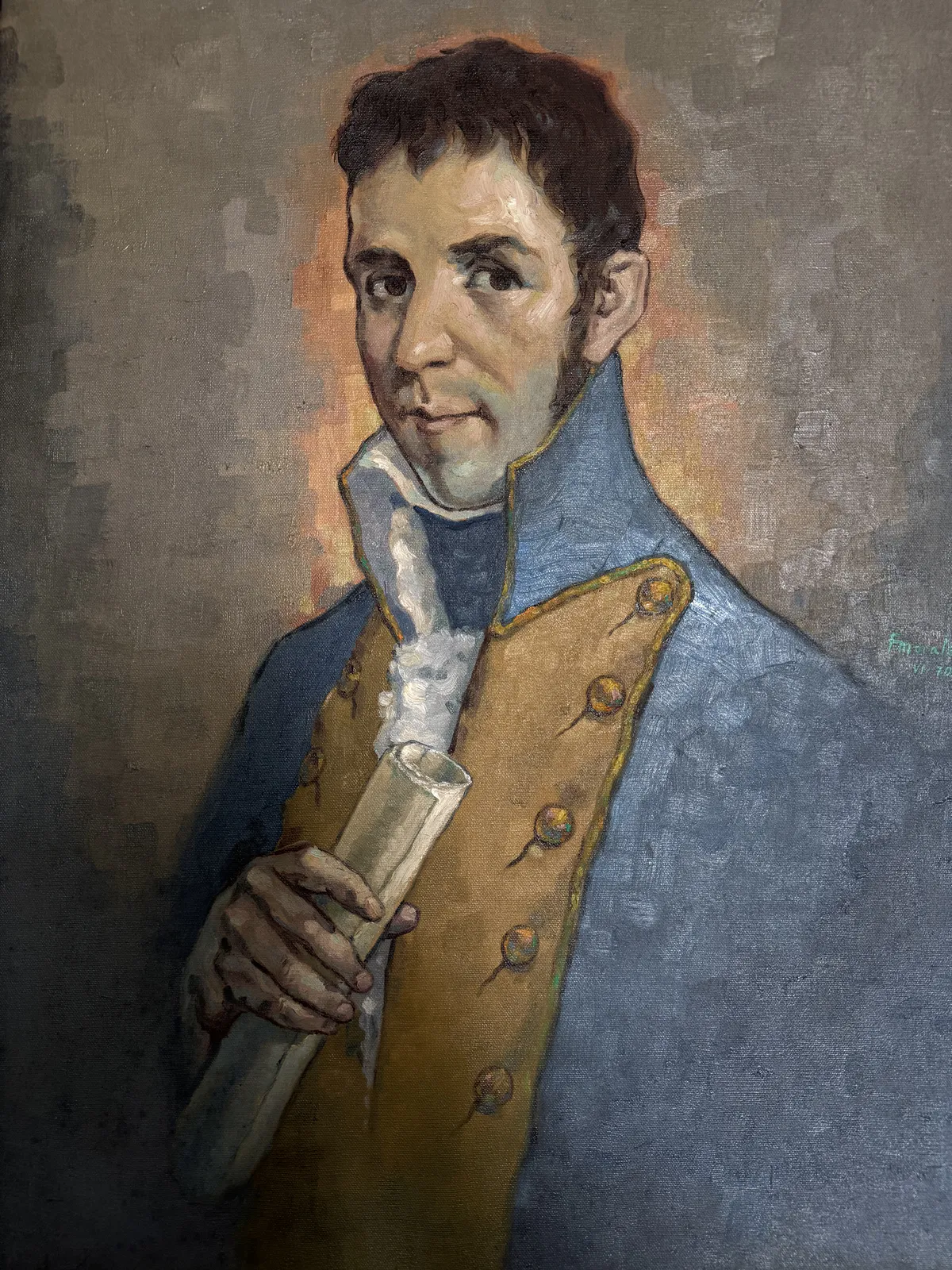
Don Juan del Corral
From Royal Province to Republic: Antioquia’s Independence
The Independence of Antioquia
In September 1810, the last royal governor of Antioquia, Francisco de Ayala, swore in as president of the Supreme Governing Junta, serving until early 1811. From January that year, Antioquia effectively had its own government, though still cloaked in the forms of the old regime, and sent delegates such as Juan Bautista del Corral and José Manuel Restrepo to the constituent congress in Bogotá. The province soon declared its sectional sovereignty as the Federal State of Antioquia, adopted a constitution in Rionegro in 1812, and organised its administration according to republican principles, while favouring a strong central authority.
In 1813 the Spanish brigadier Juan Sámano advanced from Popayán, threatening Antioquia and sharpening divisions between royalists and patriots. Amid a hesitant legislature, Del Corral rallied support for independence, placed the state on a war footing, and on 11 August 1813 proclaimed Antioquia’s separation from Spain. In 1814, under governor José Miguel de la Calle, the province approved a law of gradual manumission drafted by José Félix de Restrepo, but Del Corral died that same year, leaving few capable leaders. Local disputes and the lack of a unifying figure led to Antioquia’s relatively easy submission during the Spanish “pacification.” Sámano later appointed Carlos Tolrá as political and military governor, who fled after the patriot victory at Boyacá in 1819. That year, following independence triumphs, General José María Córdova, now military governor of Antioquia, ordered the execution of José María del Valle, a former royal treasury official—an episode that symbolised the final collapse of Spanish authority in the province.
In September 1810, the last royal governor of Antioquia, Francisco de Ayala, swore in as president of the Supreme Governing Junta, serving until early 1811. From January that year, Antioquia effectively had its own government, though still cloaked in the forms of the old regime, and sent delegates such as Juan Bautista del Corral and José Manuel Restrepo to the constituent congress in Bogotá. The province soon declared its sectional sovereignty as the Federal State of Antioquia, adopted a constitution in Rionegro in 1812, and organised its administration according to republican principles, while favouring a strong central authority.
In 1813 the Spanish brigadier Juan Sámano advanced from Popayán, threatening Antioquia and sharpening divisions between royalists and patriots. Amid a hesitant legislature, Del Corral rallied support for independence, placed the state on a war footing, and on 11 August 1813 proclaimed Antioquia’s separation from Spain. In 1814, under governor José Miguel de la Calle, the province approved a law of gradual manumission drafted by José Félix de Restrepo, but Del Corral died that same year, leaving few capable leaders. Local disputes and the lack of a unifying figure led to Antioquia’s relatively easy submission during the Spanish “pacification.” Sámano later appointed Carlos Tolrá as political and military governor, who fled after the patriot victory at Boyacá in 1819. That year, following independence triumphs, General José María Córdova, now military governor of Antioquia, ordered the execution of José María del Valle, a former royal treasury official—an episode that symbolised the final collapse of Spanish authority in the province.
Antioquia in Transition and Crisis, 1814–1819
Antioquia in Transition and Crisis (1814–1819)
In 1814, Governor José Miguel de la Calle signed the Law of Manumission of enslaved people, drafted by José Félix de Restrepo. Shortly afterward, Del Corral died of typhoid fever, leaving few capable leaders to stabilize the State. Local conflicts and internal weakness accelerated Antioquia’s collapse and its submission during the Spanish “Pacification.” In 1818 Sámano appointed Colonel Carlos Tolrá as political and military governor, who fled Santa Fe de Antioquia after the patriot triumph at Boyacá in 1819. That year, a royal decree confirmed the creation of the Diocese of Antioquia, and General José María Córdova, now military governor, ordered the execution of the Spaniard José María del Valle, former treasury officer.
In 1814, Governor José Miguel de la Calle signed the Law of Manumission of enslaved people, drafted by José Félix de Restrepo. Shortly afterward, Del Corral died of typhoid fever, leaving few capable leaders to stabilize the State. Local conflicts and internal weakness accelerated Antioquia’s collapse and its submission during the Spanish “Pacification.” In 1818 Sámano appointed Colonel Carlos Tolrá as political and military governor, who fled Santa Fe de Antioquia after the patriot triumph at Boyacá in 1819. That year, a royal decree confirmed the creation of the Diocese of Antioquia, and General José María Córdova, now military governor, ordered the execution of the Spaniard José María del Valle, former treasury officer.
Antioquia’s Early Autonomy and Break with Spain, 1810–1813
Antioquia’s Early Autonomy (1810–1813)
In September 1810, the last colonial governor, Francisco de Ayala, became president of the Supreme Governing Junta of Antioquia, serving until February 1811. By January, the province had formed its own government while still preserving forms of the old regime, sending Juan Bautista del Corral and José Manuel Restrepo to the Constituent Congress in Bogotá, with José María Montoya Duque as President of the State. That same year, Antioquia declared its sectional sovereignty and proclaimed the “Federal State of Antioquia,” electing José Antonio Gómez as president. On 1 January 1812, the Serenísimo Colegio Constituyente y Electoral met in Rionegro to draft a constitution rooted in republican ideas, dividing legislative, executive, and judicial powers and organizing public administration. In 1813, as brigadier Juan Sámano advanced from Popayán, tensions rose between royalists and patriots; Del Corral mobilized pro-independence sentiment, placed the State on a war footing, and on 11 August proclaimed Antioquia’s separation from Spain.
In September 1810, the last colonial governor, Francisco de Ayala, became president of the Supreme Governing Junta of Antioquia, serving until February 1811. By January, the province had formed its own government while still preserving forms of the old regime, sending Juan Bautista del Corral and José Manuel Restrepo to the Constituent Congress in Bogotá, with José María Montoya Duque as President of the State. That same year, Antioquia declared its sectional sovereignty and proclaimed the “Federal State of Antioquia,” electing José Antonio Gómez as president. On 1 January 1812, the Serenísimo Colegio Constituyente y Electoral met in Rionegro to draft a constitution rooted in republican ideas, dividing legislative, executive, and judicial powers and organizing public administration. In 1813, as brigadier Juan Sámano advanced from Popayán, tensions rose between royalists and patriots; Del Corral mobilized pro-independence sentiment, placed the State on a war footing, and on 11 August proclaimed Antioquia’s separation from Spain.
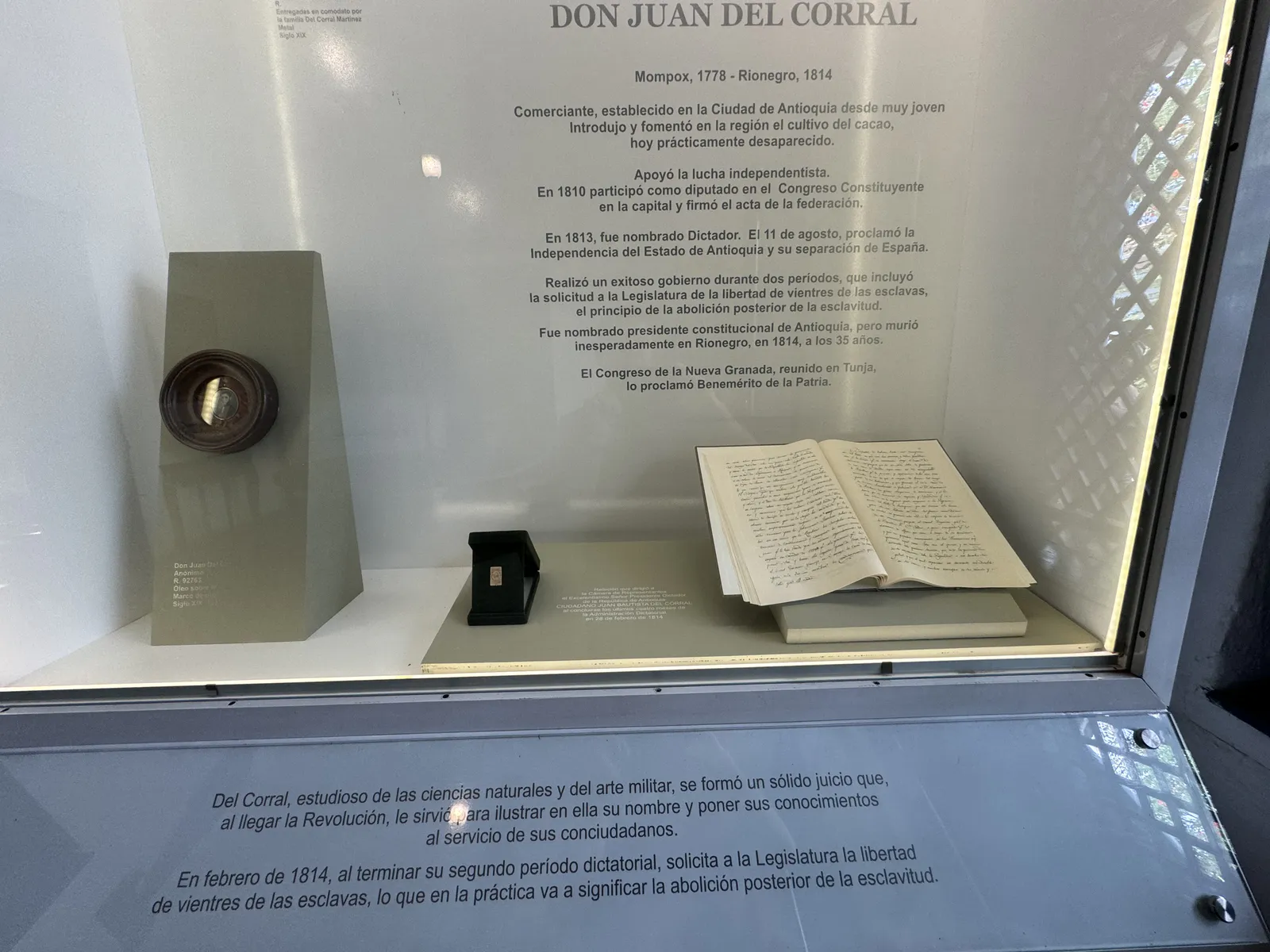
Portrait Medallion of Don Juan del Corral
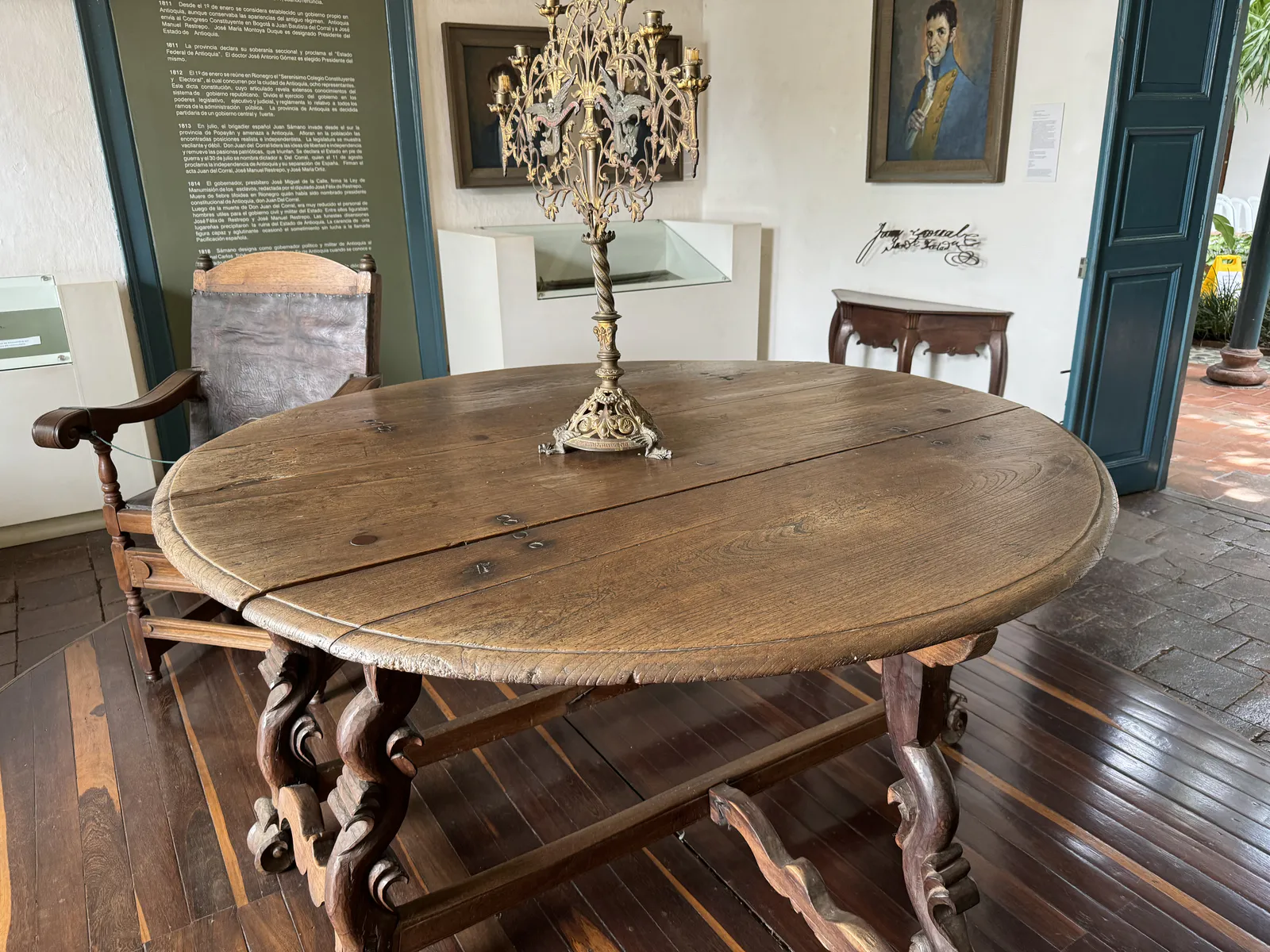
Table of Antioquia’s Independence
Museo Juan del Corral
Museo Juan del Corral, set in a historic residence in Santa Fe de Antioquia, leads visitors into the turbulent years when the region broke from Spanish rule. Through documents, portraits and carefully staged rooms, the museum evokes political debates, shifting loyalties and bold experiments in republican government that marked the early 1800s. Figures such as Juan del Corral, José Manuel Restrepo and José Félix de Restrepo appear not as distant names, but as protagonists in a local struggle with continental impact.
Exhibitions trace the creation of the Federal State of Antioquia, the drafting of its constitution, the declaration of independence and the dramatic military campaigns that followed. Visitors follow the rise and fall of this short‑lived state, from the proclamation of sovereignty and early reforms like the law of manumission, to internal divisions and Spanish reconquest. The atmosphere is intimate and reflective, showing how global ideas of liberty and citizenship were lived and contested in this colonial town.
Exhibitions trace the creation of the Federal State of Antioquia, the drafting of its constitution, the declaration of independence and the dramatic military campaigns that followed. Visitors follow the rise and fall of this short‑lived state, from the proclamation of sovereignty and early reforms like the law of manumission, to internal divisions and Spanish reconquest. The atmosphere is intimate and reflective, showing how global ideas of liberty and citizenship were lived and contested in this colonial town.
Popular categories
Advertising space