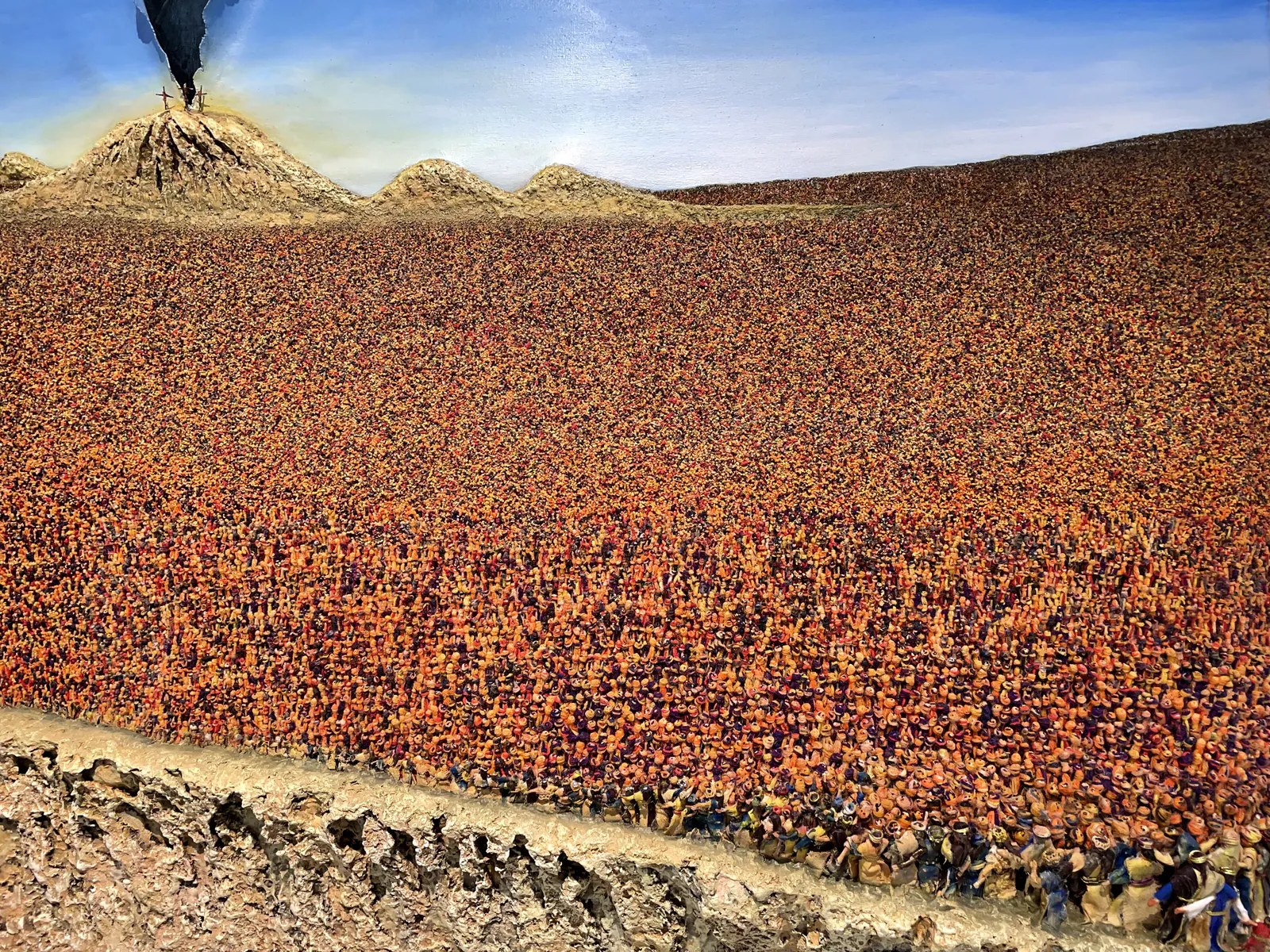
The Veil Torn (The Door to Heaven)
Mariano Bidó
In this mixed-media work (2018), a vast crowd moves toward a hill crowned by three crosses under a black veil of smoke. Referencing the crucifixion, the piece evokes mass devotion, suffering, and salvation. The dense humanity contrasts with the distant, divine climax—highlighting faith as both a collective journey and personal reckoning.
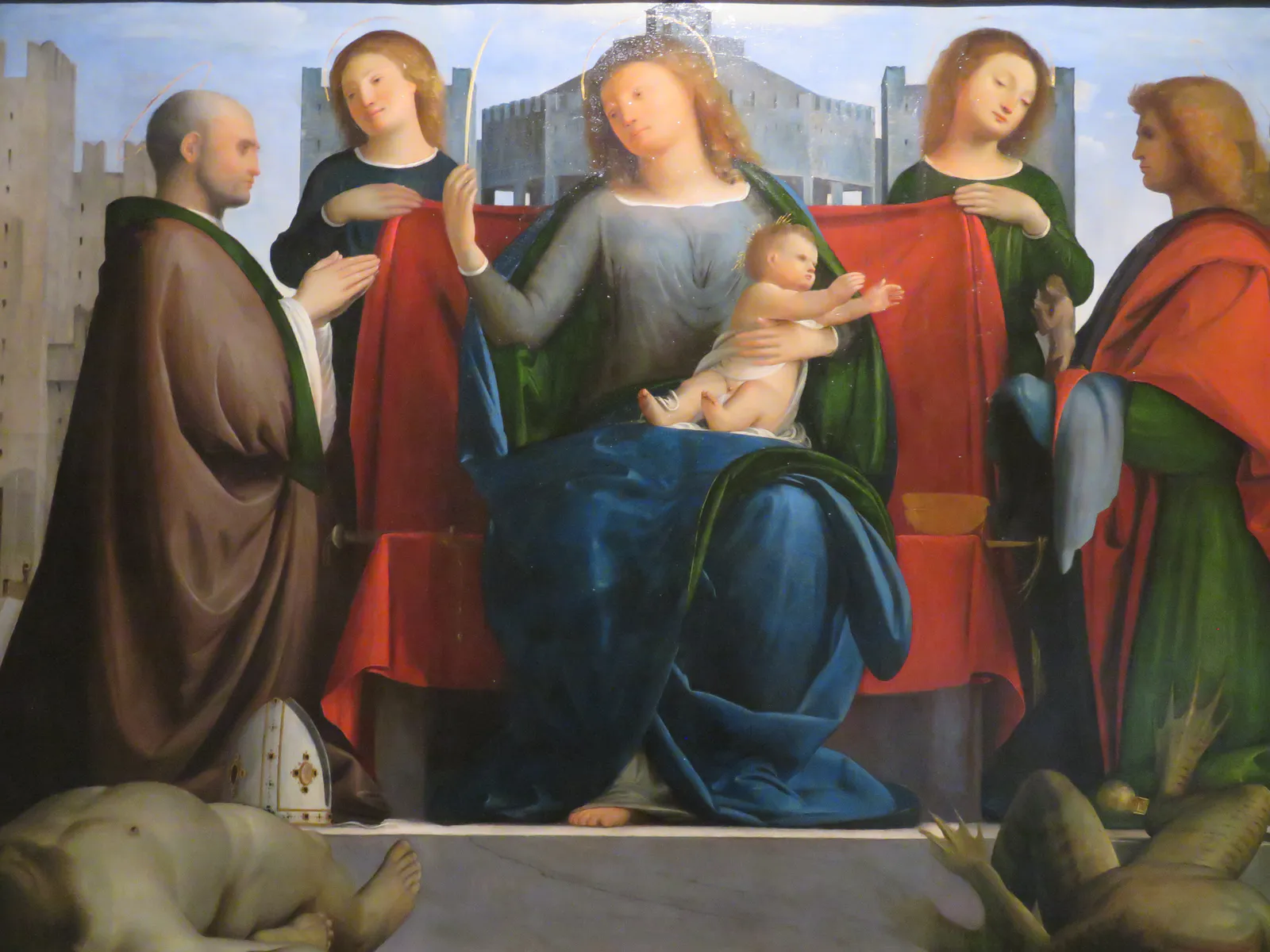
Madonna of the Towers
Bramantino
This tempera and oil painting (1515–20) presents the Madonna and Child enthroned between Saint Ambrose and Saint Michael. Set before fortified towers symbolizing Marian protection, the composition reflects Leonardo’s influence in its symmetry and restraint. Below, a toad representing the Devil lies defeated, underscoring the Virgin’s triumph over evil.
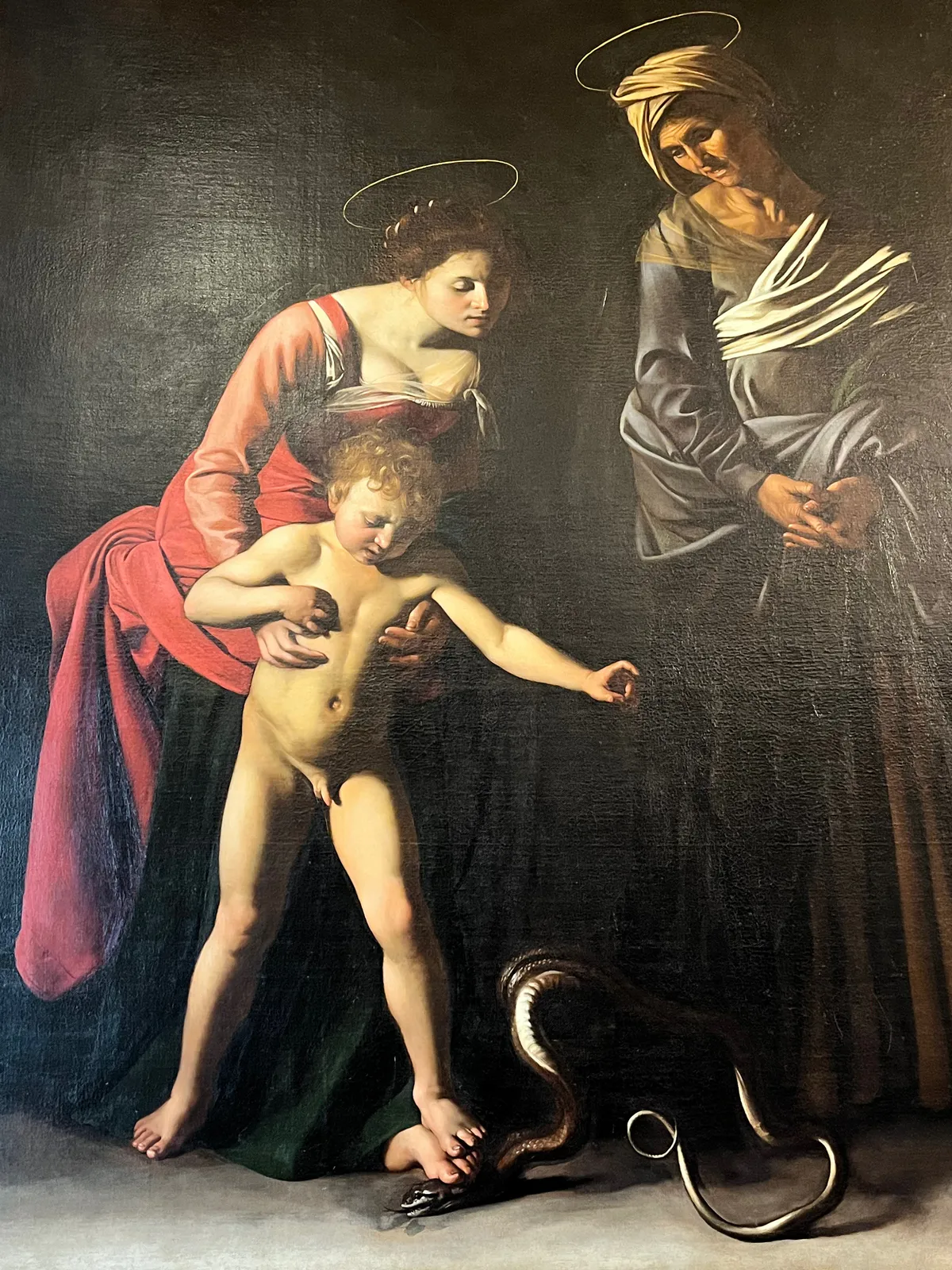
Madonna and Child with St Anne (Madonna dei Palafrenieri)
Caravaggio
This bold altarpiece (1605–06) shows the Virgin Mary guiding the Christ Child as he crushes a serpent—symbol of original sin. St Anne watches solemnly, evoking generational grace. Caravaggio’s realism and chiaroscuro infuse the holy scene with human emotion, provoking awe and controversy upon its brief display in St Peter’s.
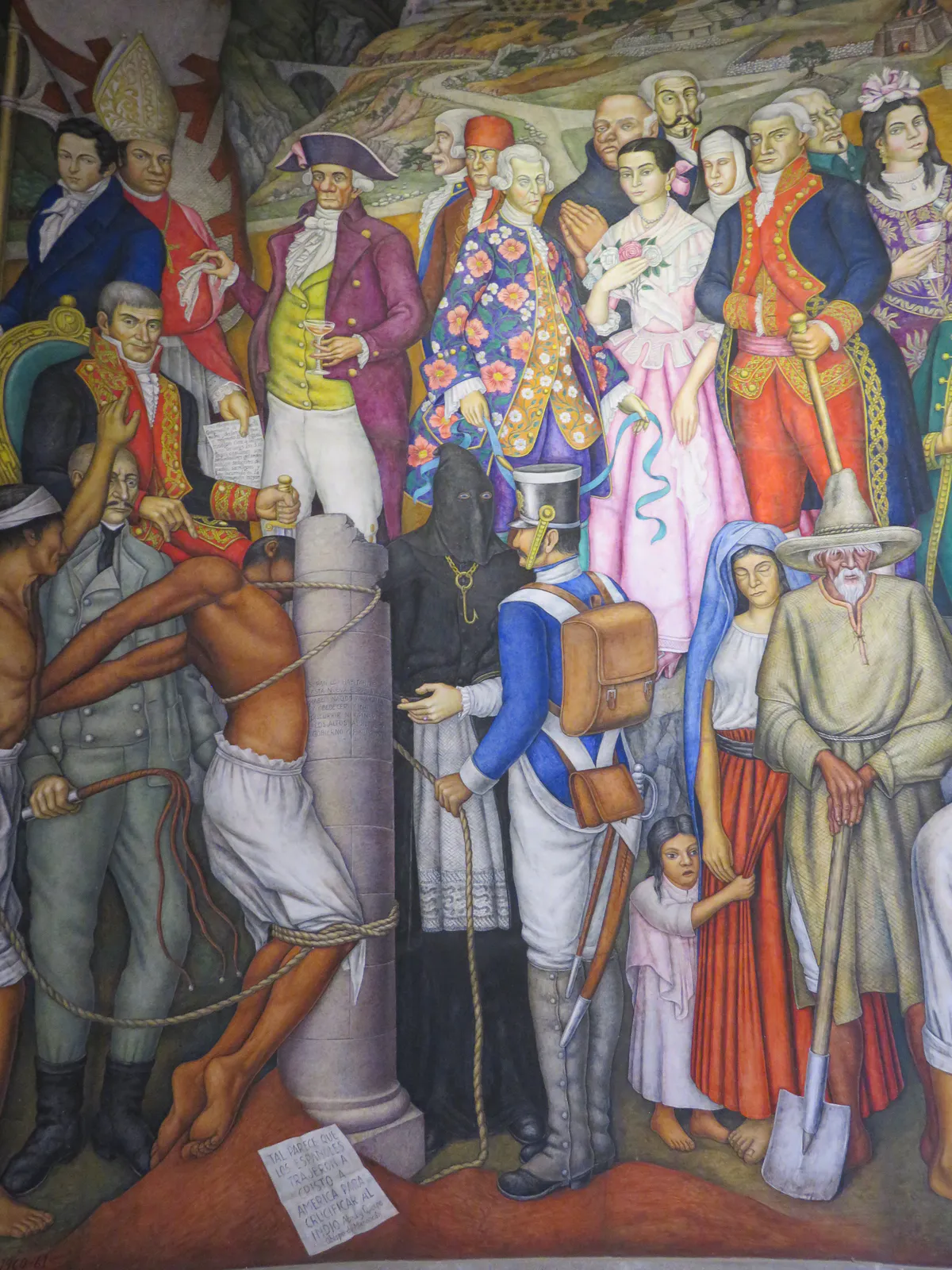
Detail from Retablo de la Independencia
Juan O'Gorman
This mural detail (1960–61) dramatizes colonial brutality during Mexico’s struggle for independence (1810–1821). A near-nude man is tortured before Spanish troops and clergy, symbolizing oppression. At left appear insurgent leaders Miguel Hidalgo and José María Morelos, while nobles and clerics in bright dress embody privilege. The peasants and child at right embody the pueblo whose suffering and resilience fueled the revolt for freedom.
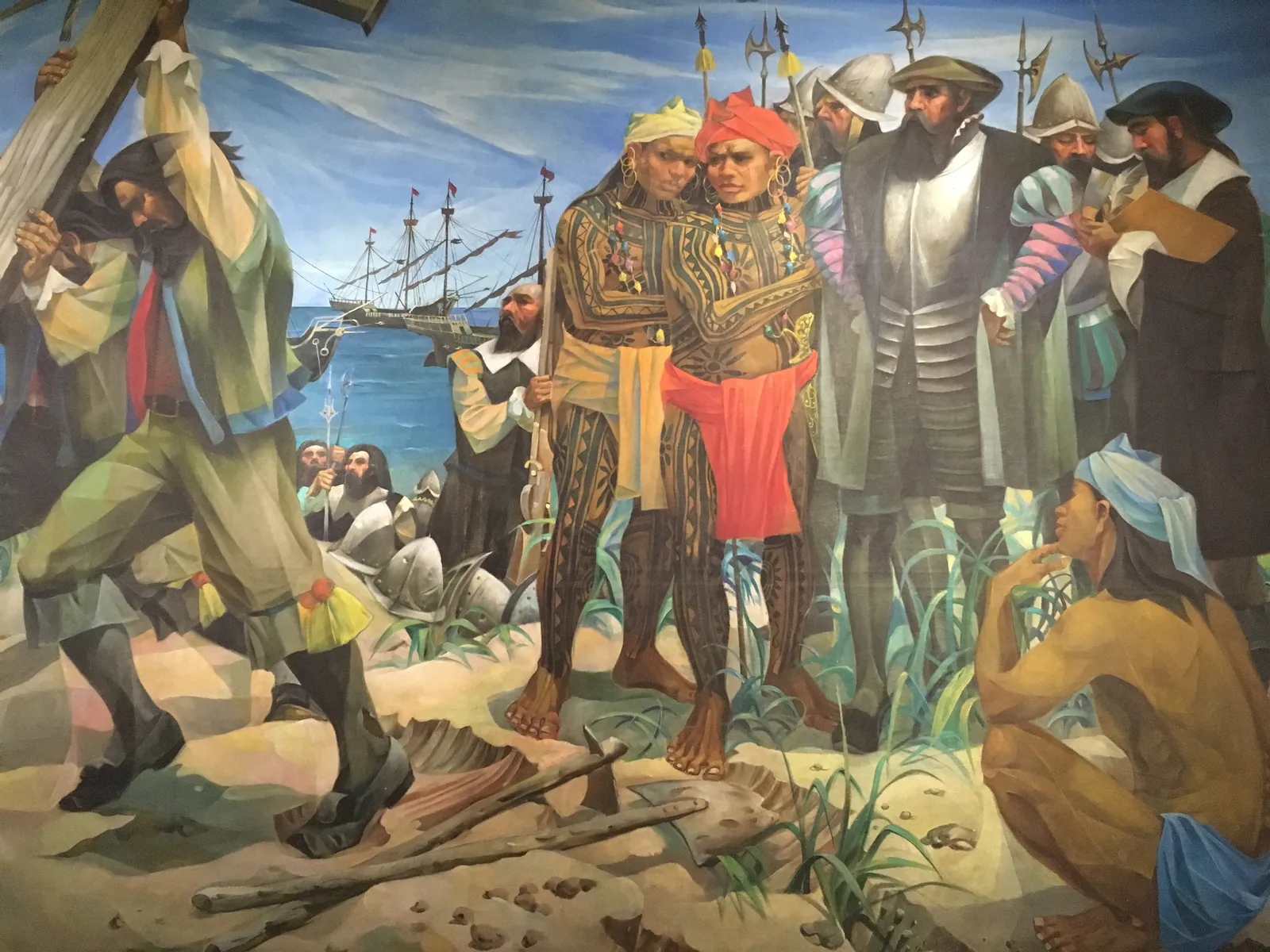
Planting of the First Cross
Vicente Manansala
The painting depicts the 1521 event in Cebu where Ferdinand Magellan and Spanish soldiers, with tattooed natives called pintados, planted a cross. Commissioned for the 400th anniversary of Philippine Christianization in 1965, it captures a pivotal historical moment. Manansala’s transparent cubism blends traditional and modern styles, highlighting cultural convergence. The original cross is a historical artifact in Cebu City.
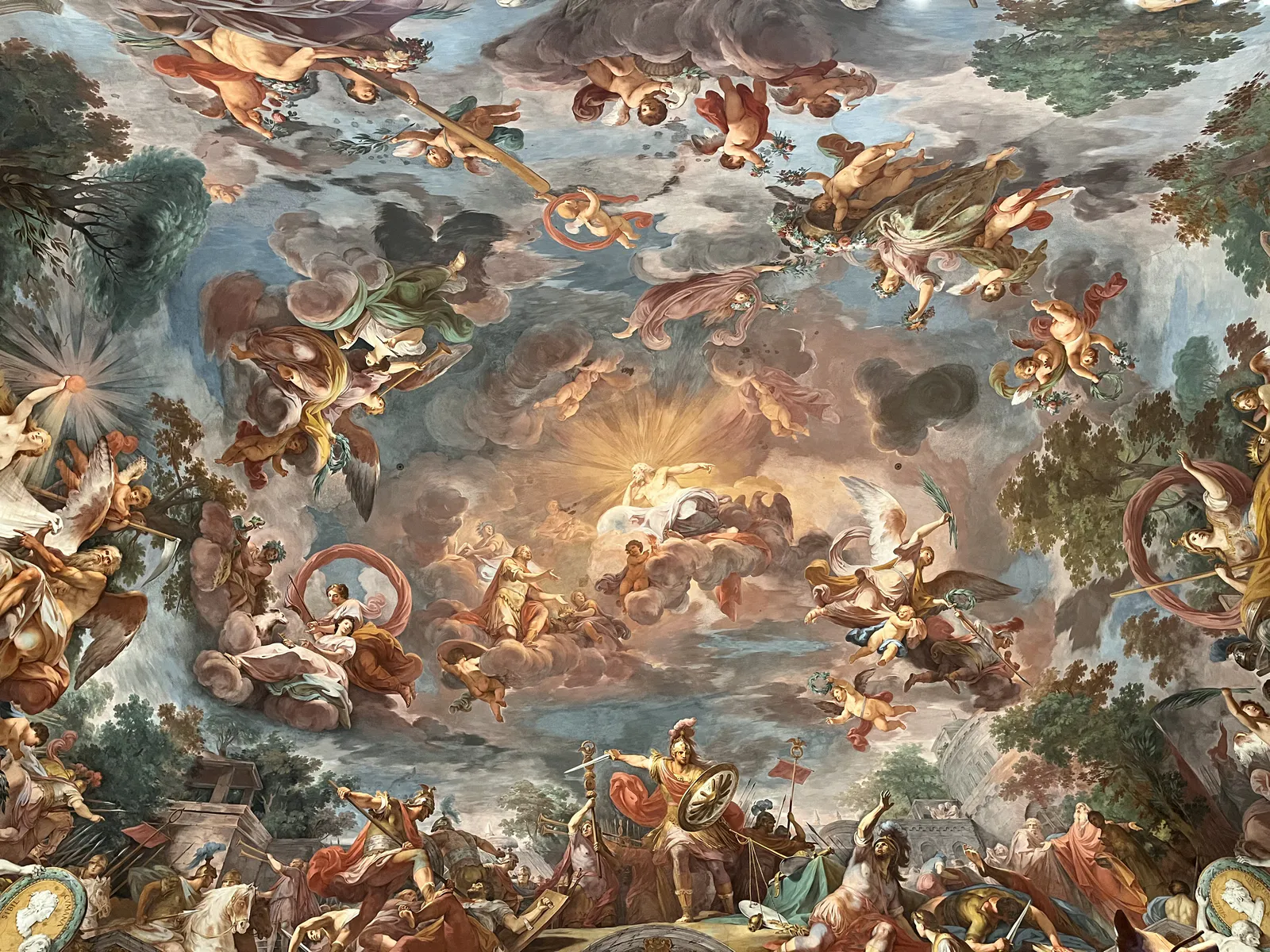
Roman Civilization and the Heroic Virtue of Honor
Mariano Rossi
This illusionistic ceiling (1775) shows a vortex of gods, heroes, and allegorical figures arranged in rising spirals. Rossi organized the composition with deep foreshortening to create a theatrical Baroque panorama. The central burst of light frames scenes of conflict and ascent, indicating how Roman culture linked civic honor with collective greatness.
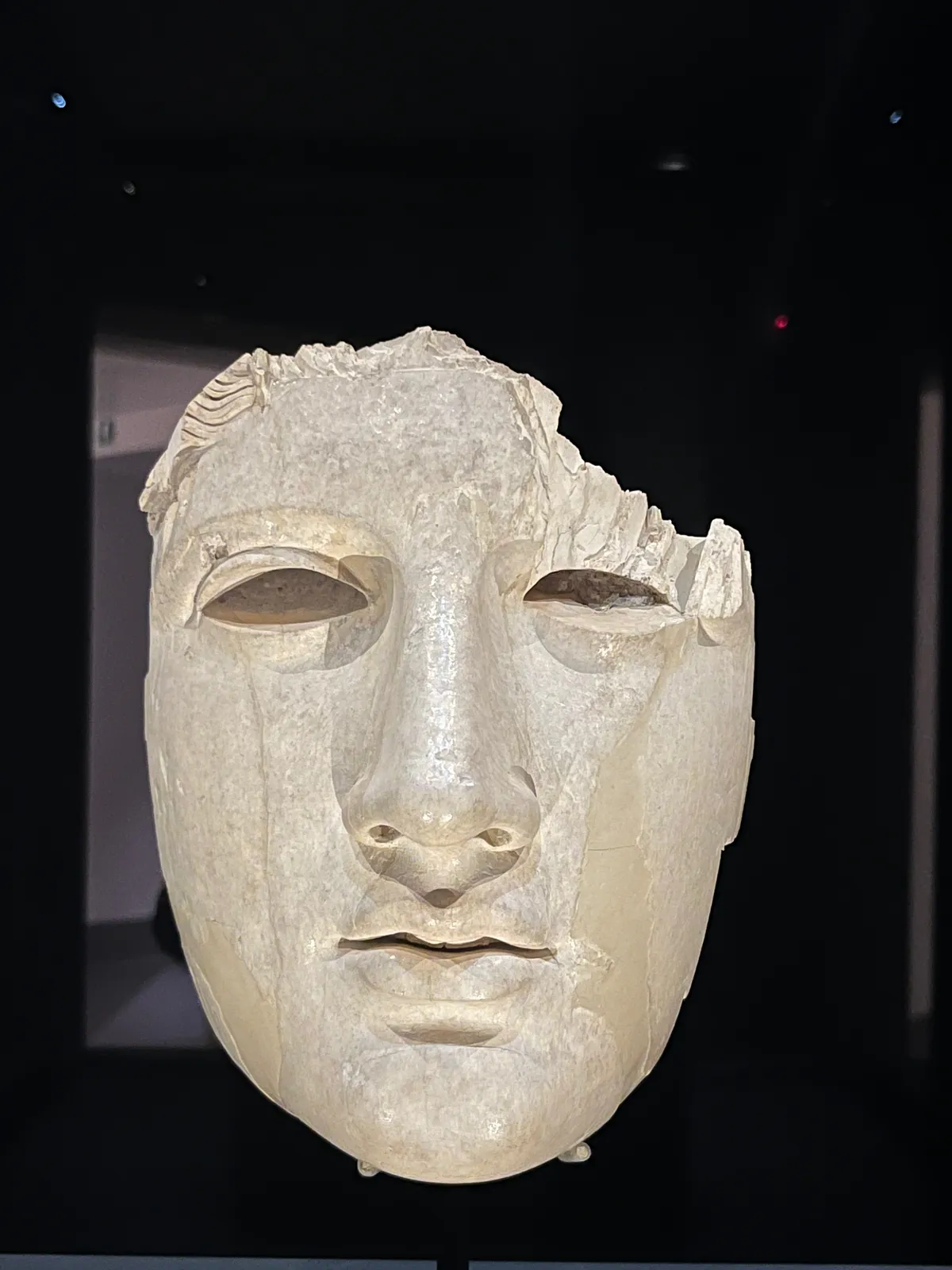
Apollo
Phidias
This ivory mask (5th c. BC) represents Apollo-Greek god of light, music, and prophecy-and once belonged to a chryselephantine statue (a prestigious cult image of ivory and gold). Attributed to Phidias, the master sculptor of classical Greece, it is an exceptionally rare survival of this luxury art form. Looted in 1995 and recovered in 2003, it now serves as both a rare survival of luxury cult sculpture and a reminder of ongoing threats to archaeological heritage.
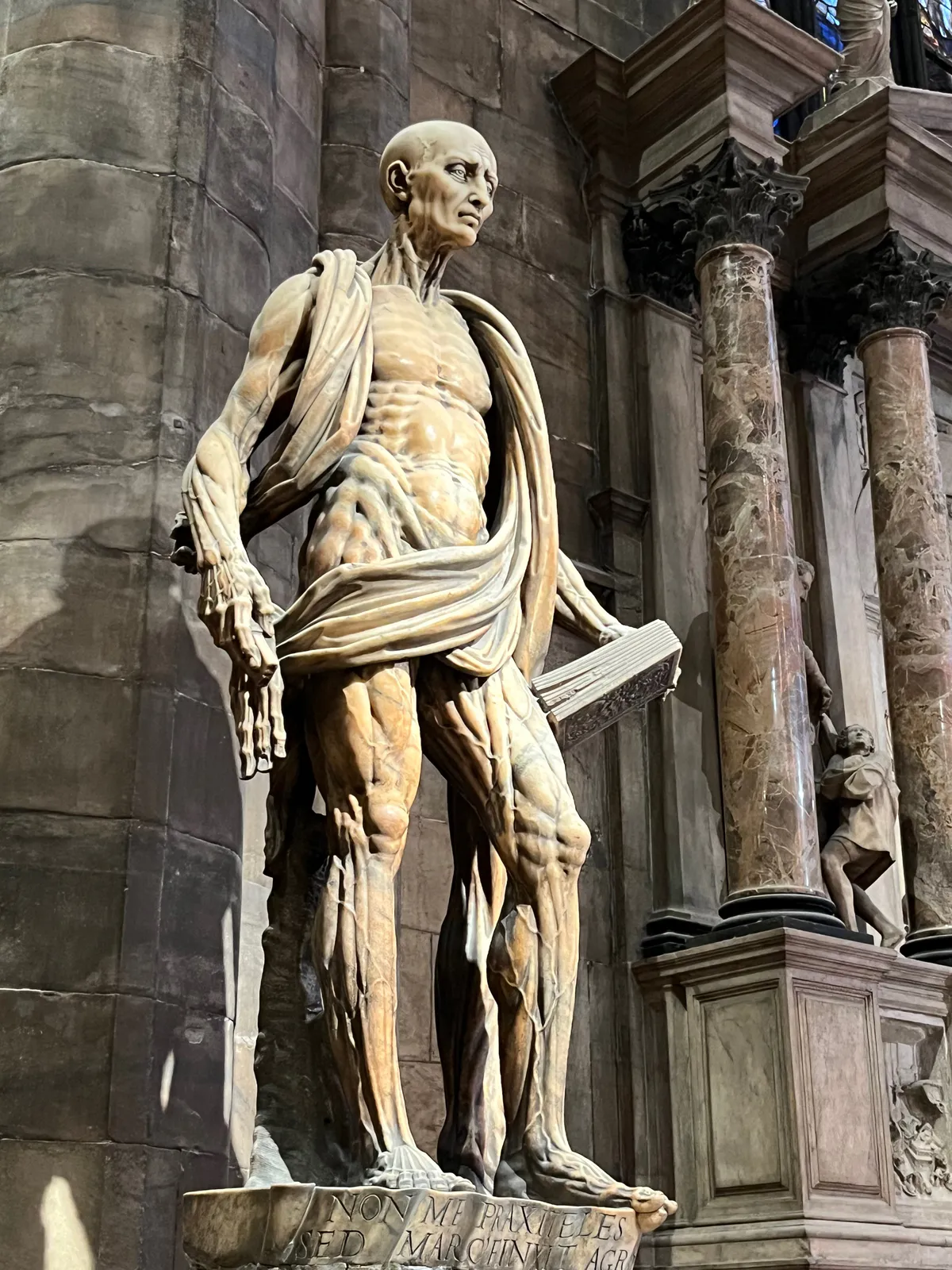
St Bartholomew Flayed
Marco d’Agrate
This marble statue (1562) shows St Bartholomew as a flayed figure, his own skin arranged like a draped garment around an exposed muscular body. Such extreme anatomical precision draws on Renaissance study of dissected cadavers. The saint’s upright stance and calm, frontal gaze demonstrate how martyrdom could be articulated as steadfast faith rather than physical defeat.
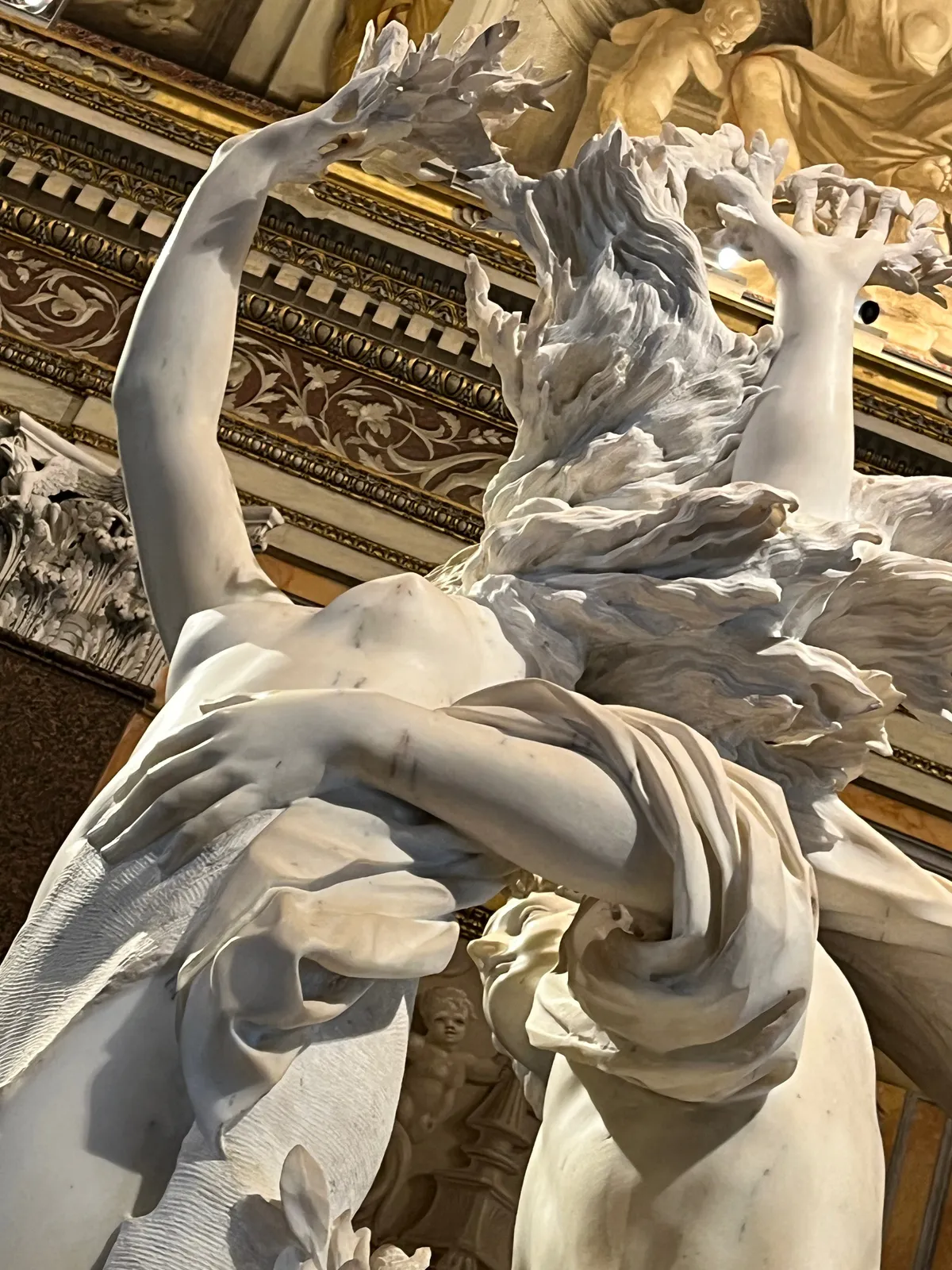
Apollo and Daphne (detail)
Gian Lorenzo Bernini
In this electrifying detail from Apollo and Daphne (1622–25), Daphne’s transformation peaks: her fingers stretch skyward as they fracture into laurel branches. Bernini’s carving achieves an uncanny fluidity—Apollo’s embrace contrasts her fleeing limbs, while bark and hair blur into motion, embodying divine metamorphosis and tragic escape.
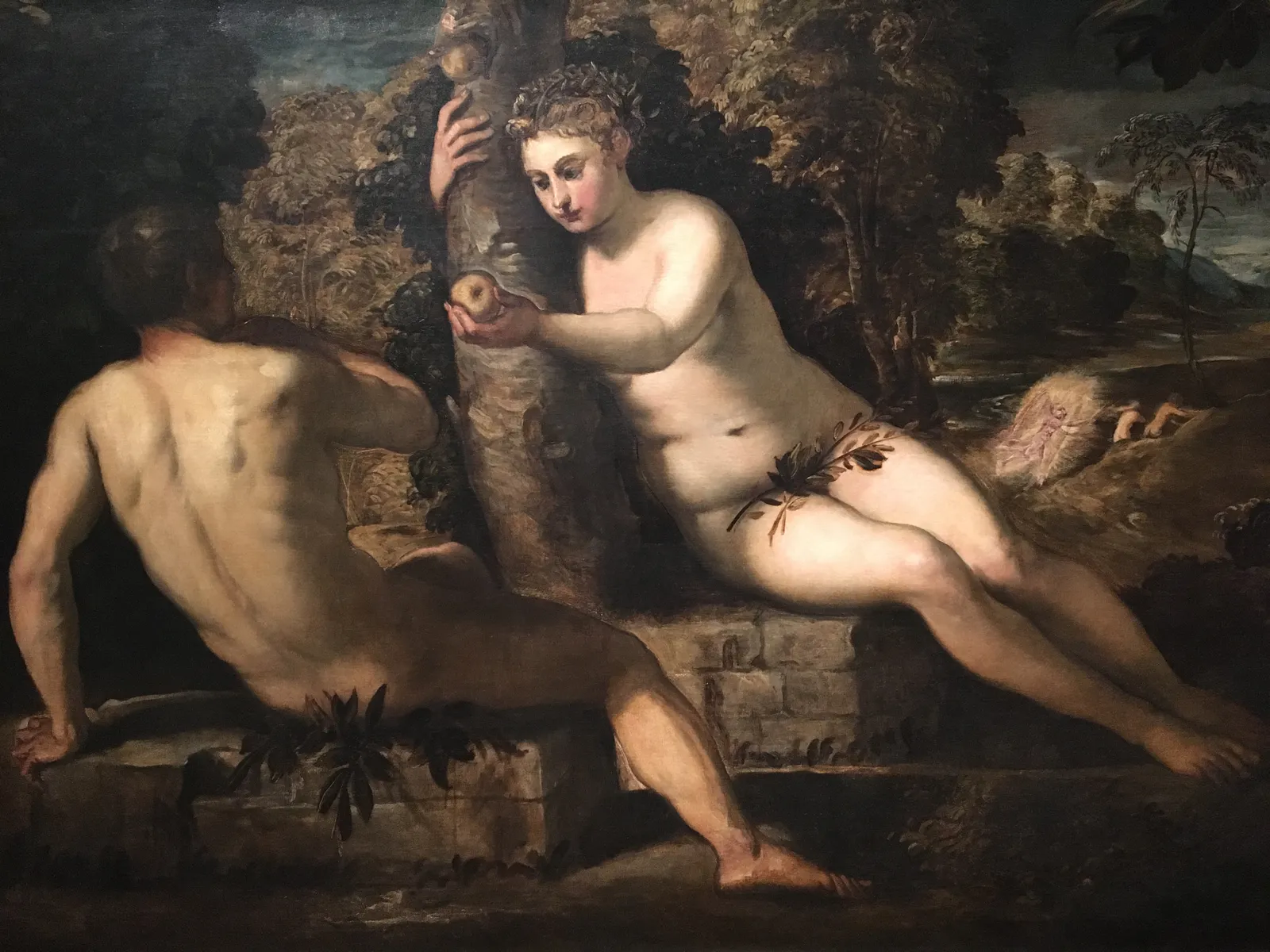
Adam and Eve in the Garden of Eden
Tintoretto
Tintoretto’s work (1550–1553) depicts the biblical moment of temptation in the Garden of Eden. Eve, holding the forbidden fruit, entices Adam, who hesitates, capturing the tension between desire and conscience. The background suggests their impending expulsion, a consequence of their choice. Dramatic lighting highlights the figures, emphasizing their forms and the scene’s gravity.
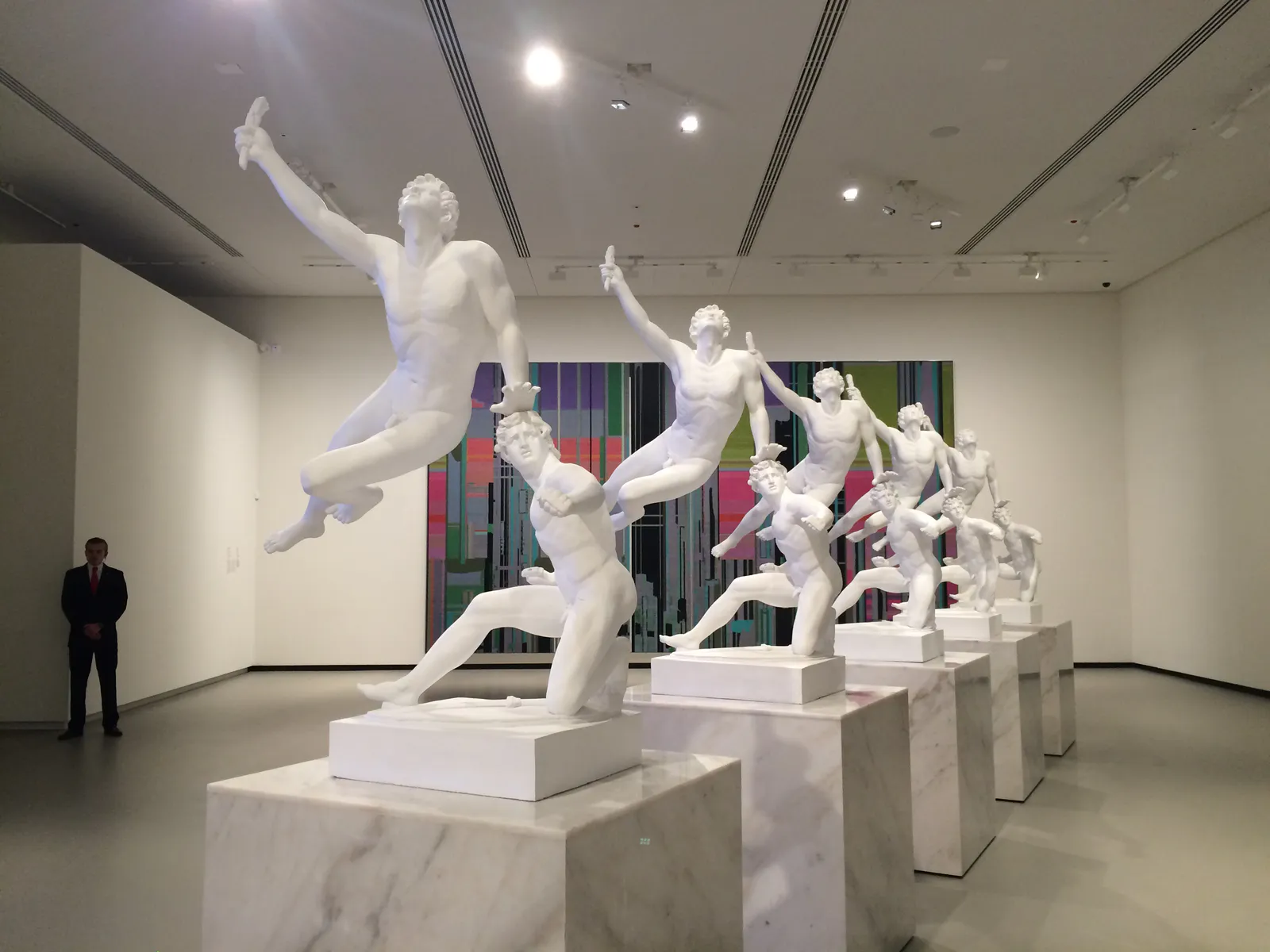
Eternity - The Soldier of Marathon Announcing Victory
Xu Zhen
This 2011 sculpture installation Eternity – Eternity - The Soldier of Marathon Announcing Victory, a Wounded Galatian fuses classical Greek forms with contemporary fragmentation. Crafted from concrete, fiberglass, marble powder, and metal, the sequence begins with a whole figure and gradually breaks apart, evoking cultural transformation and the erosion of historical continuity.
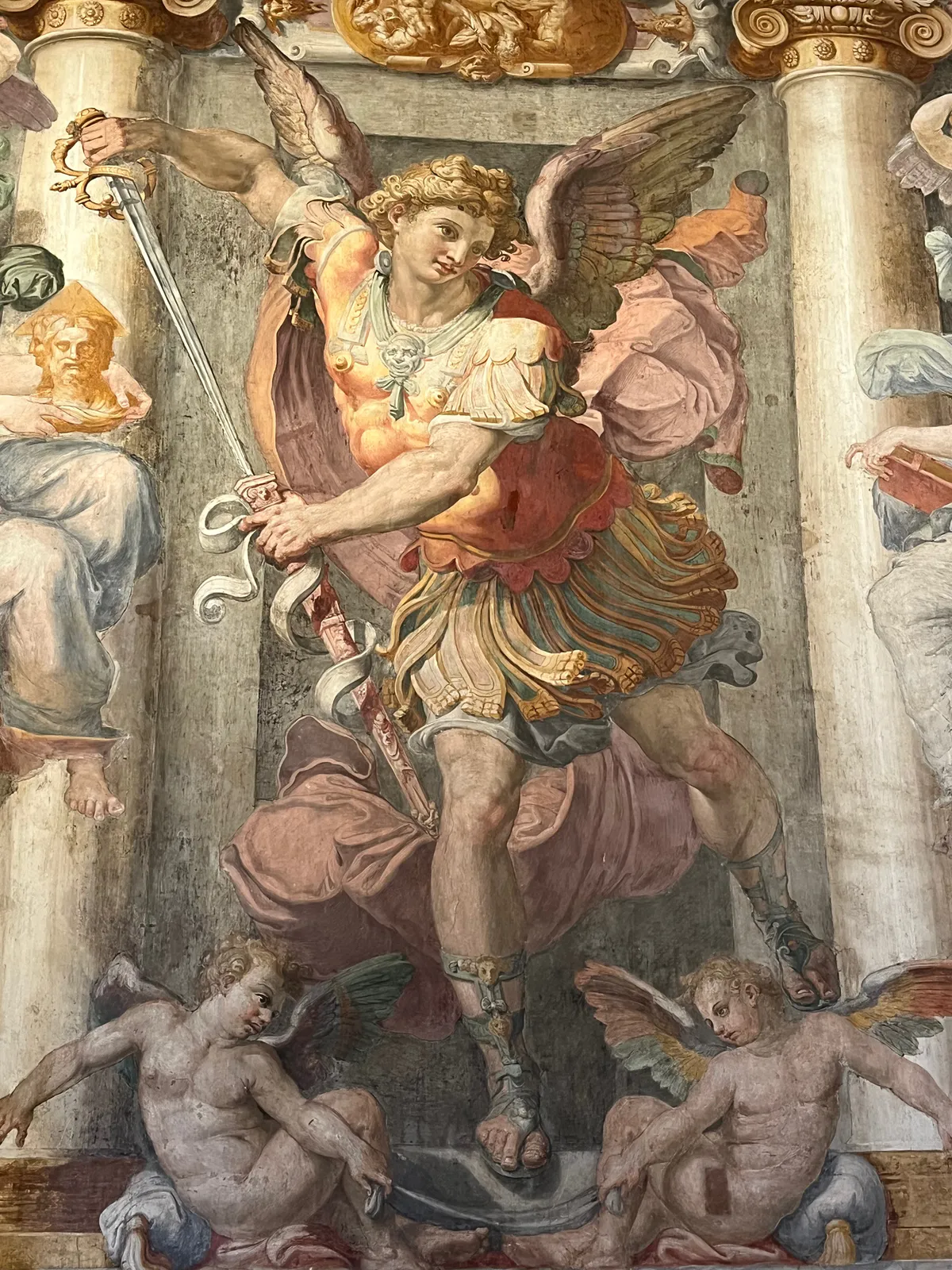
Saint Michael the Archangel
Pellegrino Tibaldi
This fresco (1545–46) in the Sala Paolina at Castel Sant'Angelo depicts the Archangel Michael sheathing his sword, symbolizing the end of the plague in 590. His muscular form and gilded armor convey divine justice and Roman salvation, highlighting the spiritual and civic authority of angelic intervention.
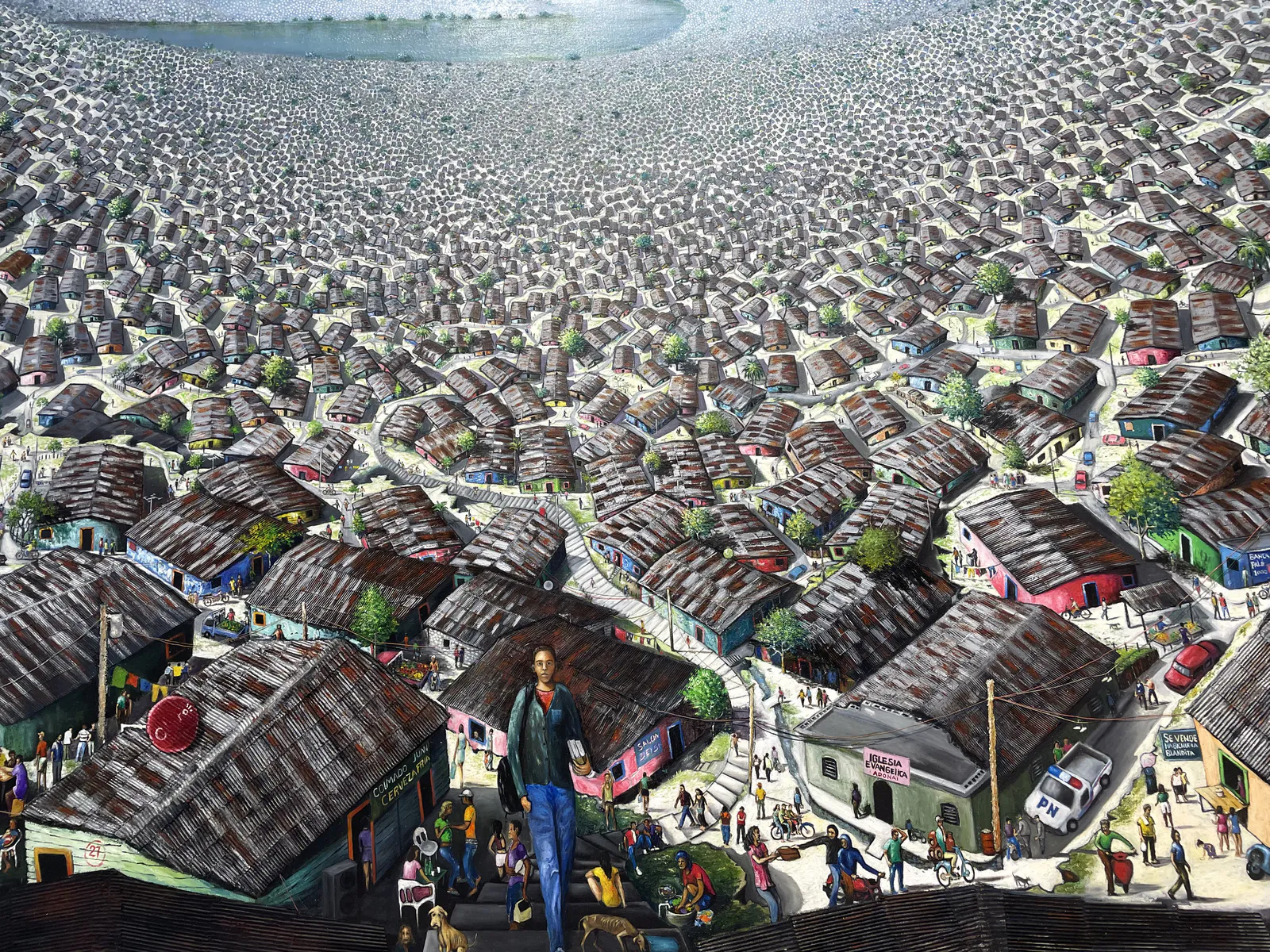
It’s Not Where You Come From, but Where You’re Going
Ramón Calcaño
This oil painting (2018), entitled No importa de dónde vienes, sino hacia dónde vas, Calcaño presents a vast view of informal housing. Central to the scene is a figure holding books, emerging from the margins. The work highlights resilience and the transformative power of education, emphasizing the pursuit of a better future beyond one's origins.
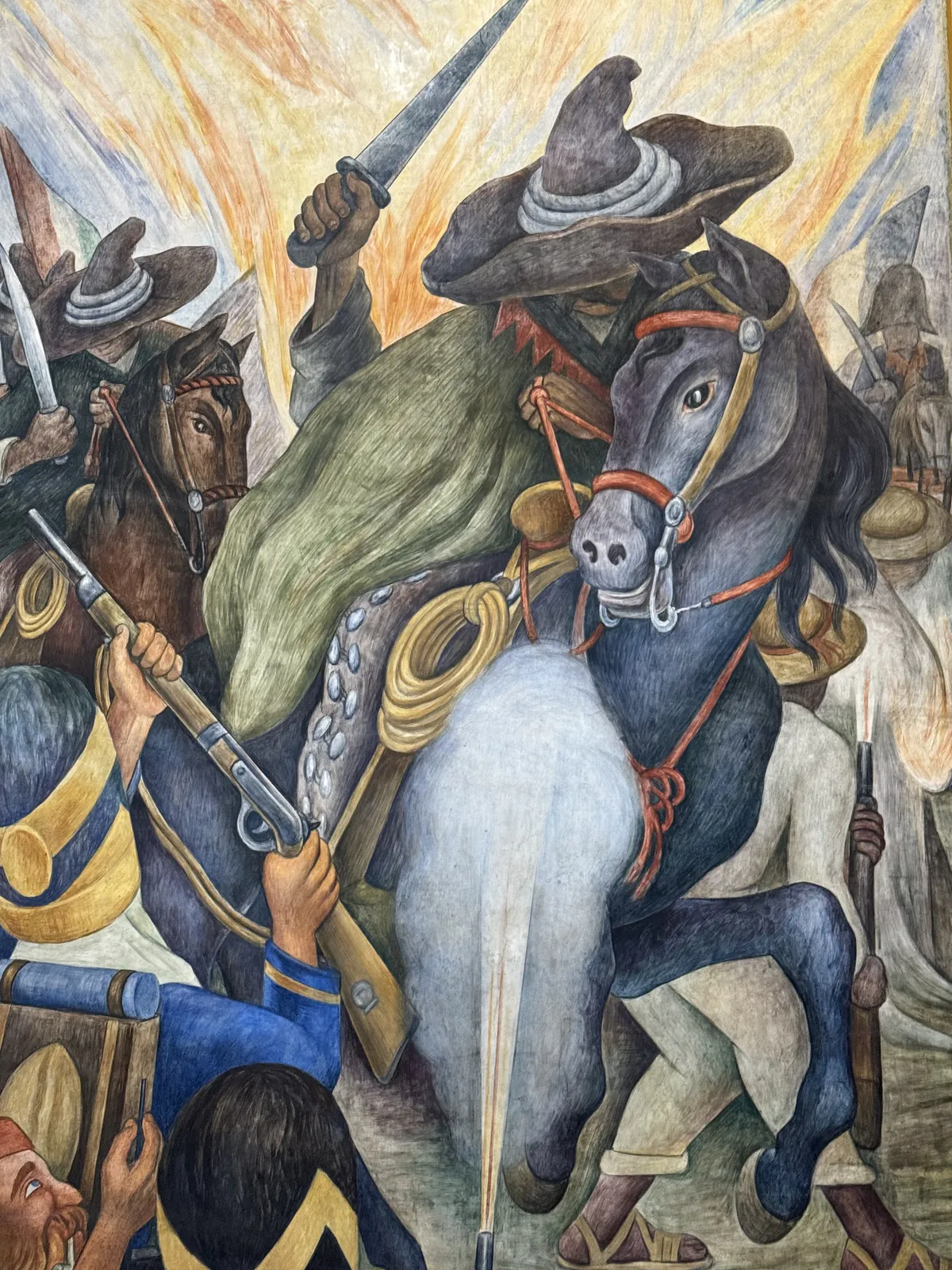
The Legend of Agustín Lorenzo (detail)
Diego Rivera
This 1936 fresco dramatizes the legendary outlaw Agustín Lorenzo as a symbol of resistance. Armed revolutionaries clash with government forces, their horses rearing amid smoke and flames. Rivera fuses myth and history, casting Lorenzo as a Mexican Robin Hood whose defiant struggle against injustice became folklore in the national imagination.
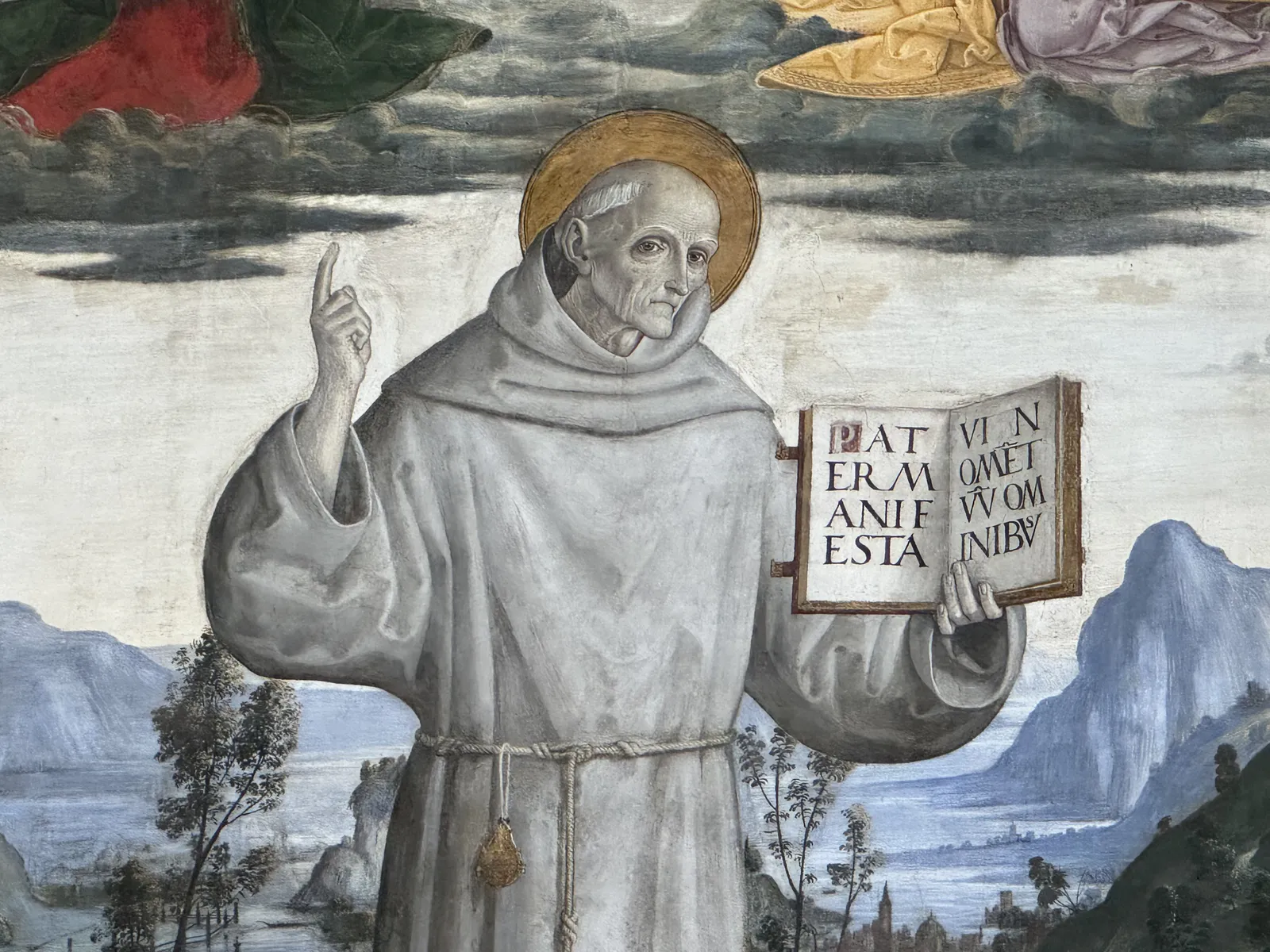
St. Bernardino (detail)
Pinturicchio
In this detail (1484–1486), Pinturicchio portrays St. Bernardino holding an open book inscribed PATER MANIFESTA NOMEN TUUM OMNIBUS (Father, manifest Your name to all). His raised finger points toward heaven, symbolizing his mission to glorify the Holy Name of Jesus and promote peace amid social discord.
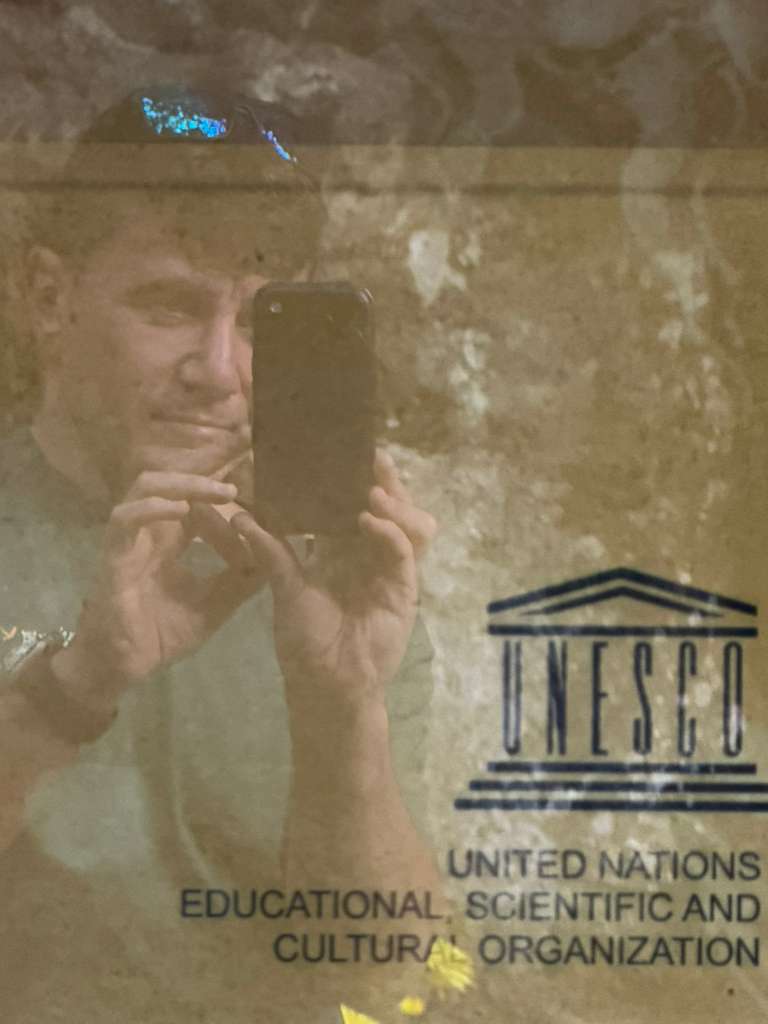
“When the path is beautiful, do not ask where it leads.” — Zen proverb
Welcome to my travel photography!
“When the path is beautiful, do not ask where it leads.” — Zen proverb
Welcome to my travel photography!
For as long as I can remember, my path has been one of discovery—seeking beauty, timelessness, and connection in every corner of the world. It has also been a journey of deep learning and understanding. I’ve been an avid traveler (or perhaps a travel addict?) for most of my life. My love for travel began long before I ever left home: as a child, I drew a fantasy map of my grandparents’ apartment and “traveled” through it with my cousin Sonya, imagining adventures in every corner. Nearly 90 countries and countless moments of awe later, I’m excited to share this journey with you.
Thanks to the tireless and ingenious programming of Diagilev, we’re now able to present about fifteen percent of the images I’ve accumulated over the years. More will be released in small batches depending on your interest. While the first release leans toward museum photography, later ones will include more nature, architecture, culture, and general travel experiences. If you’d like to receive email notifications about new releases, feel free to reach out—no commercial use, ever.
Throughout my travels, I’ve been drawn to two intertwined kinds of discovery. One is intellectual: learning why the world is the way it is. History became my guide, shaping my perspective and filling my camera roll with museums and old buildings. To me, history is not the past—it is the key to understanding the present and how the world became what it is. The other is emotional: seeking moments of elevation—spirituality, beauty, harmony—often found in nature, monasteries, and ancient sacred spaces. Together, these impulses shape my photography. It invites you to learn, admire, and soar—to rise above the mundane and see the world through a lens of curiosity and wonder.
Much of my later travel became possible thanks to my job with Delta Air Lines, but the wanderlust began years earlier. By the time I joined the industry, I had already visited over 35 countries and lived in several—largely thanks to a backpacking journey around the world with Luis León, whose face appears in many early photos. I grew up in Ufa in the USSR, and since leaving it I have lived, studied, and worked in Latvia, the United States, France, South Korea, Canada, Spain, Italy, Brazil, Japan, and Colombia.
A life of near-constant movement may seem a little crazy, but it has deepened my understanding of the world and produced the photography you are about to see. Over the years, my style has evolved—more intentional, more refined—yet its core remains the same: a search for understanding, timeless beauty, and a connection to those who walked this earth long before us.
I hope these photos stir something in your soul, just as they did in mine. I’d love to hear from you—whether reactions, suggestions, corrections, or a request to be added to the email list for new releases (no commercial use, I promise). You can learn more about my travels here, and my academic life here.
Enjoy our shared journey!