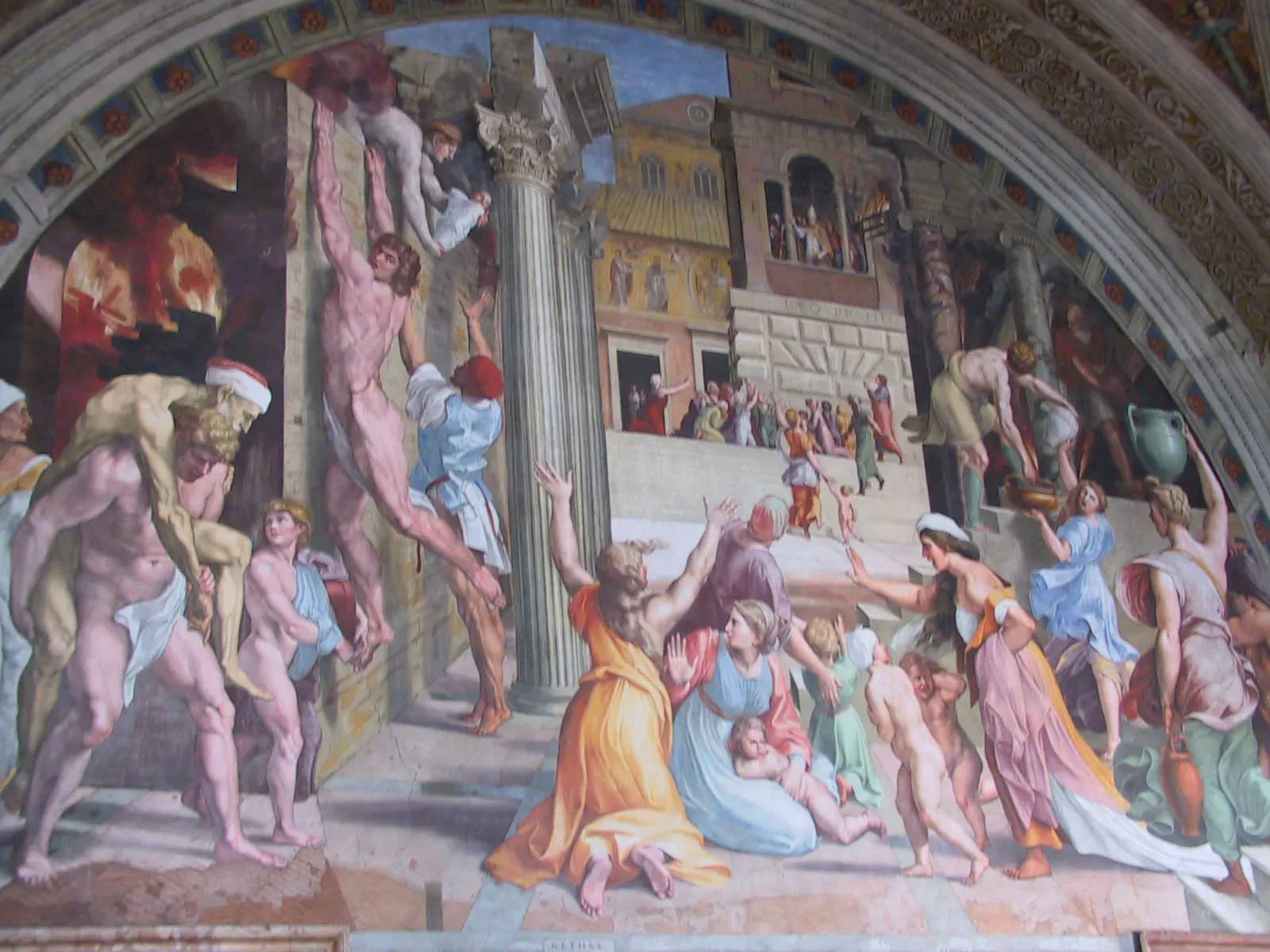
Fire in the Borgo
Rapahael and Giulio Romano
This fresco (1514) captures a legendary fire in Rome's Borgo district, illustrating divine intervention through Pope Leo IV's prayer. The fresco, part of the Raphael Rooms in the Vatican, blends classical and Renaissance elements, showcasing dynamic figures and architectural precision. This work reflects the era's belief in the power of faith and the church's central role in societal protection and order.
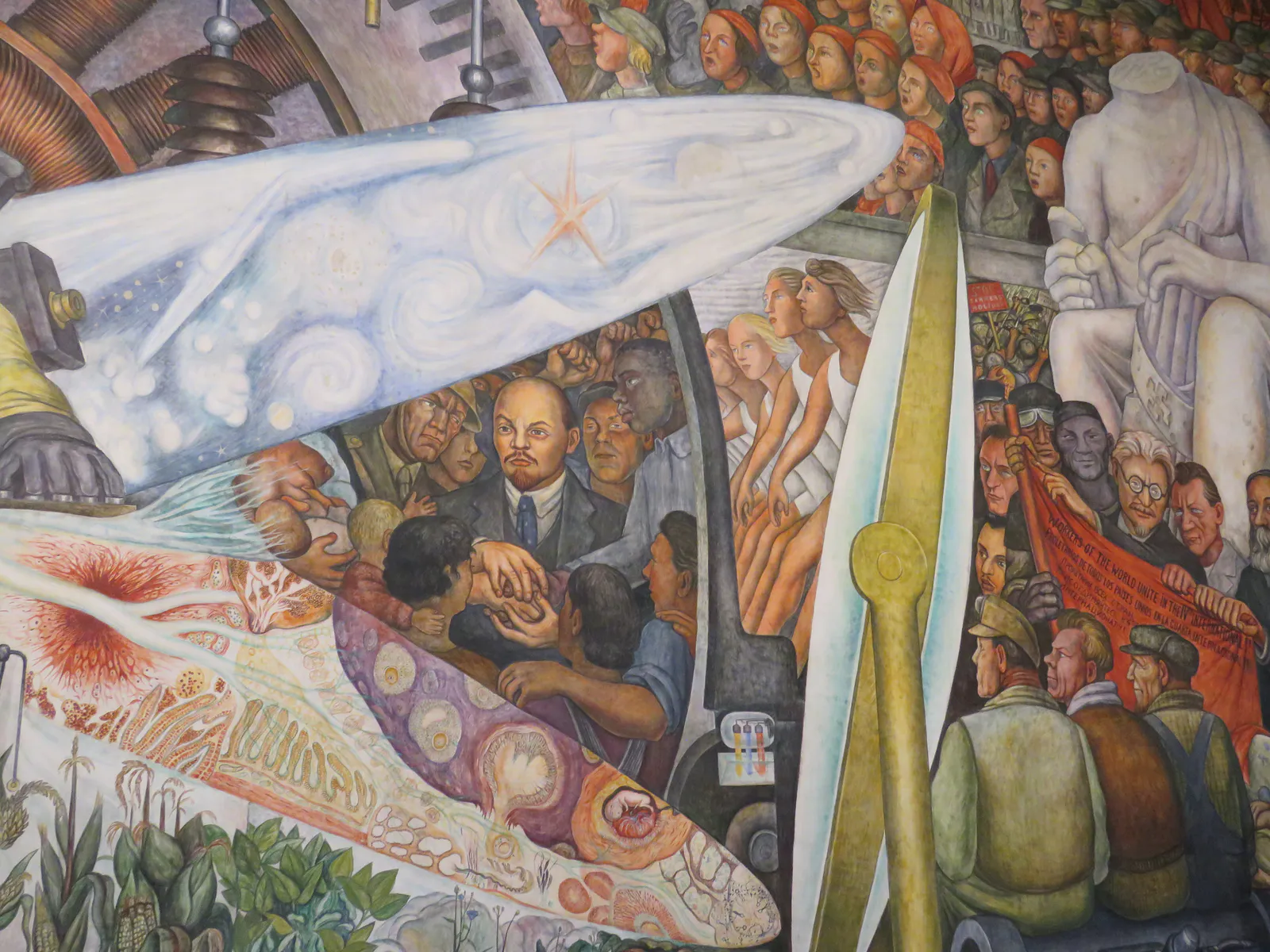
Man, Controller of the Universe (detail)
Diego Rivera
This section of Rivera’s 1934 recreated mural shows Lenin uniting workers of different races and nations, flanked by scientific, agricultural, and cosmic imagery. It contrasts socialism’s collective promise with capitalist individualism. The original was destroyed at Rockefeller Center.
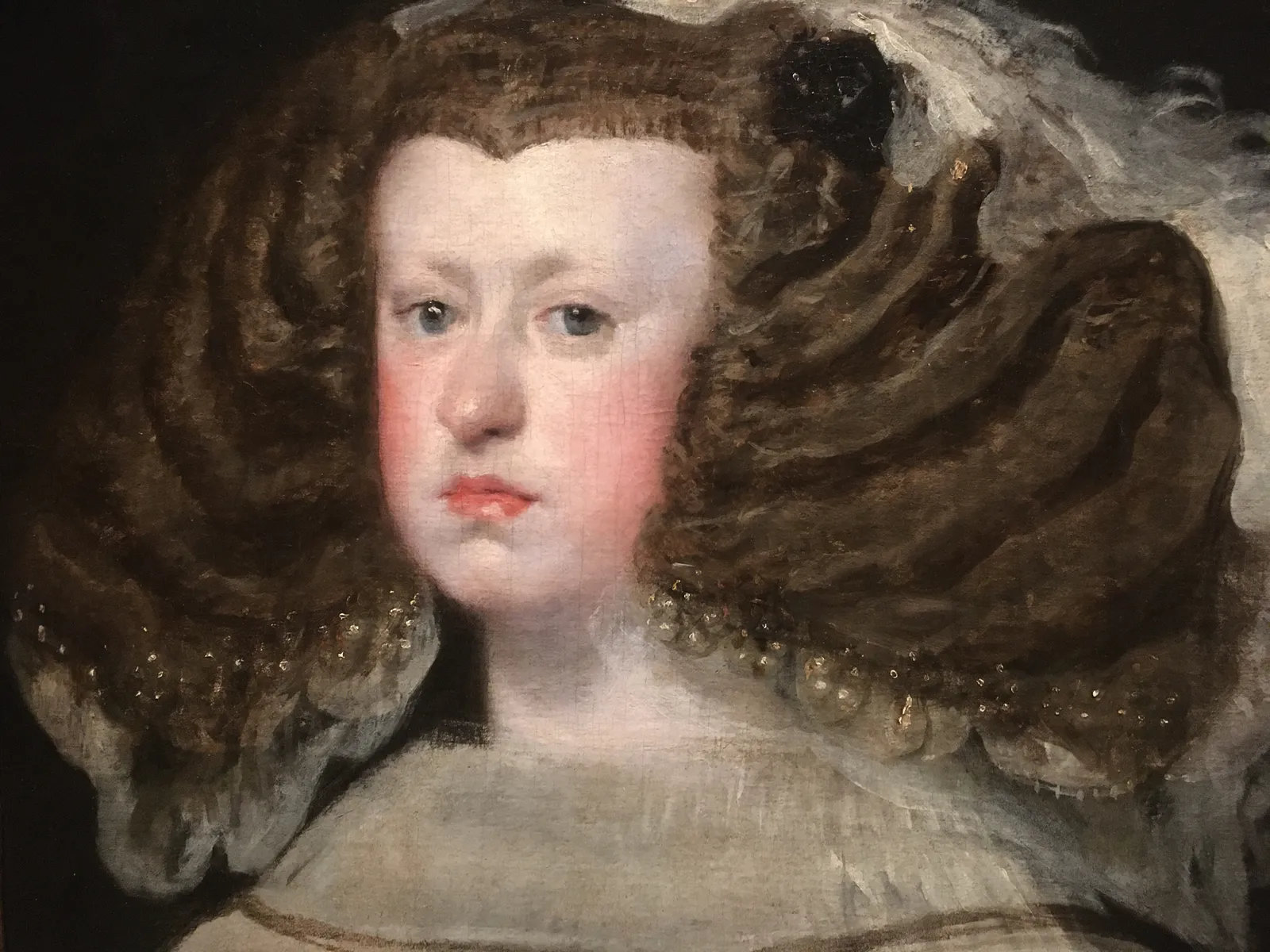
Queen Mariana
Diego Velázquez
Diego Velázquez’s portrait of Queen Mariana (c. 1656) captures the young queen with sensitivity, highlighting her regal authority and personal nuance. Painted during her early years as Philip IV’s wife, it is part of a series of likenesses that served as studies for larger compositions. These studies influenced other works, including those in Barcelona and Madrid.
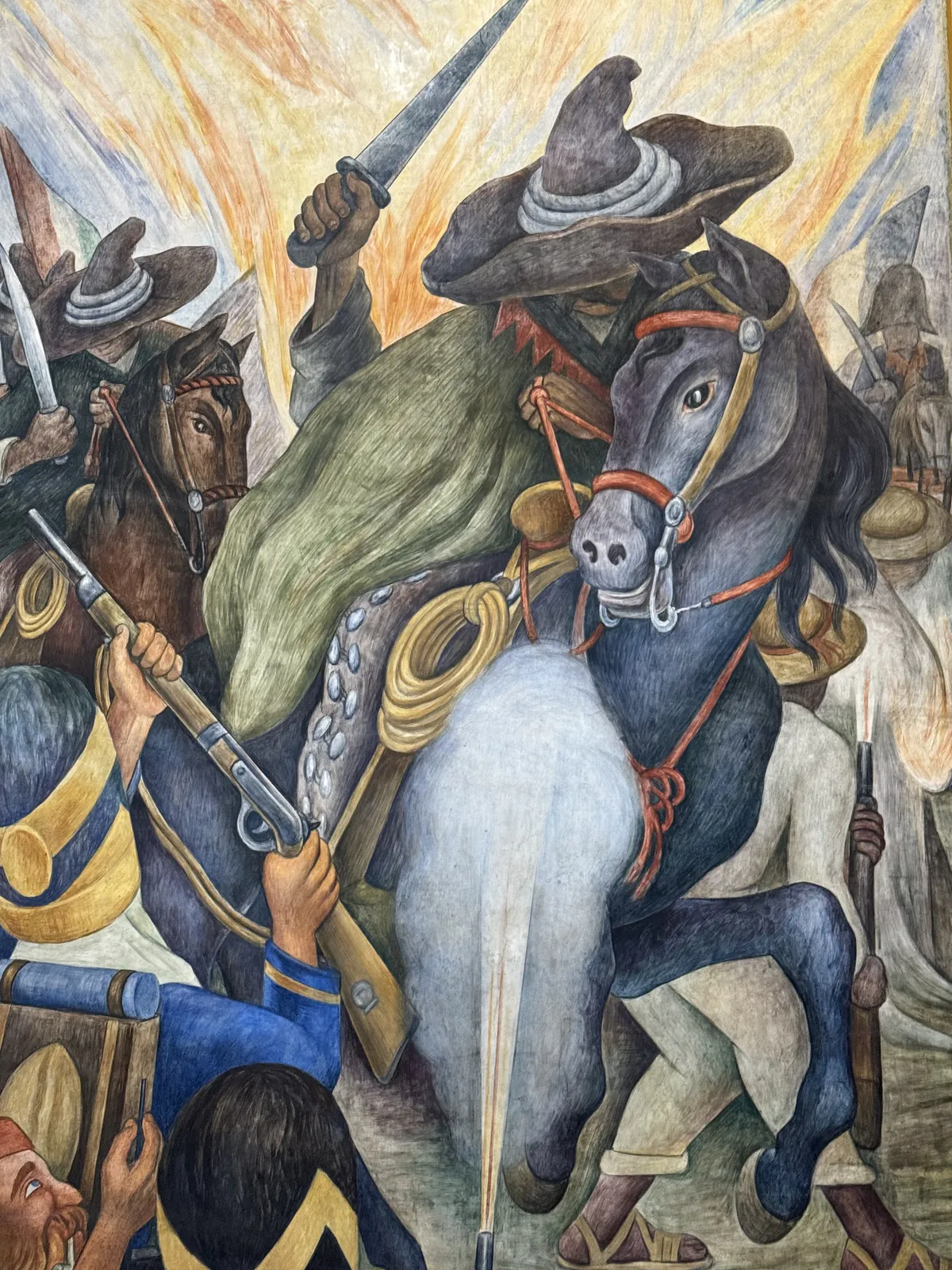
The Legend of Agustín Lorenzo (detail)
Diego Rivera
This 1936 fresco dramatizes the legendary outlaw Agustín Lorenzo as a symbol of resistance. Armed revolutionaries clash with government forces, their horses rearing amid smoke and flames. Rivera fuses myth and history, casting Lorenzo as a Mexican Robin Hood whose defiant struggle against injustice became folklore in the national imagination.
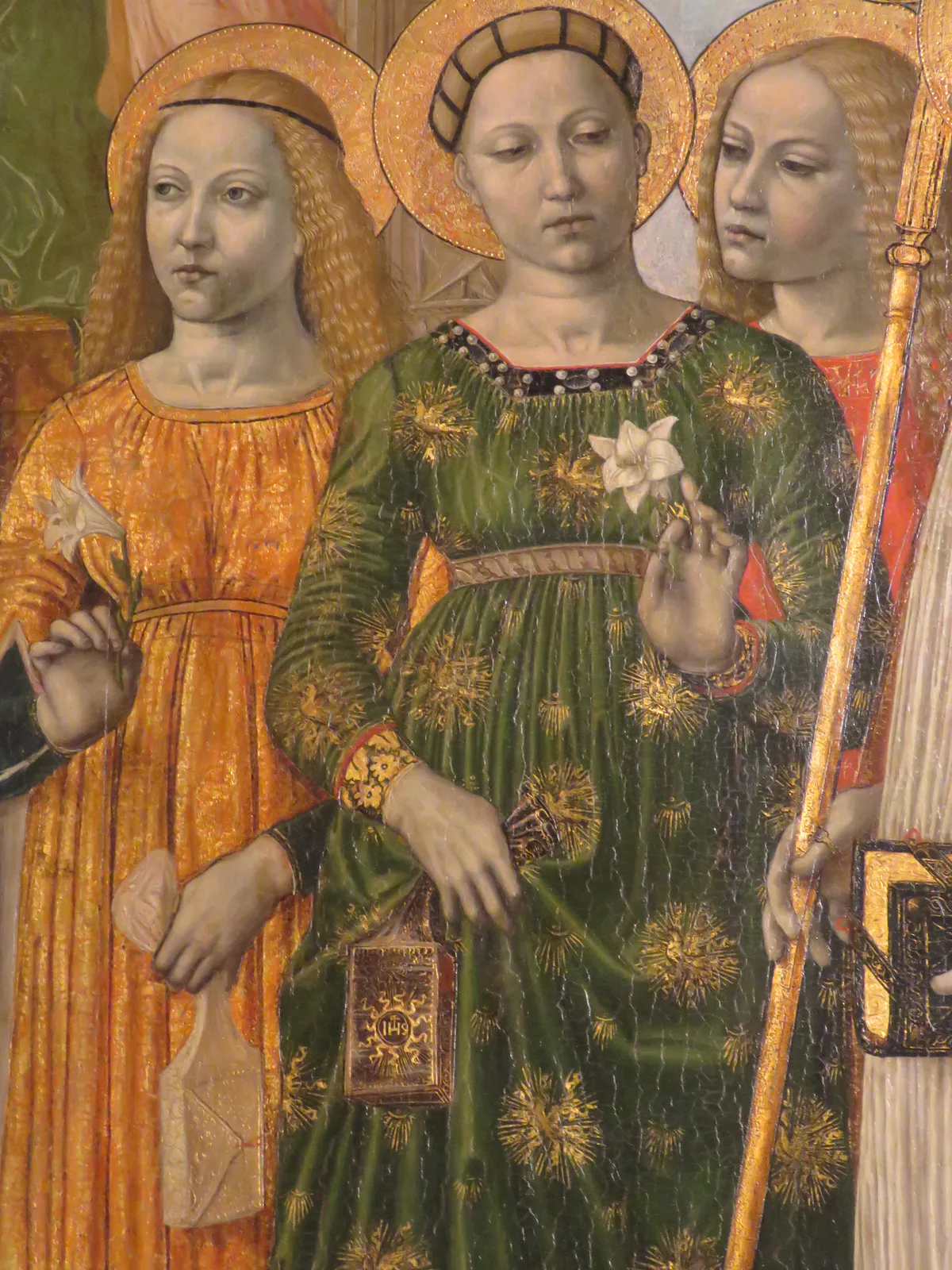
Santa Conversazione (detail)
Ambrogio Bergognone
This panel 1490-95) features a trio of female saints bearing lilies, symbolizing purity. Adorned with gold and intricate embroidery, their garments suggest sanctity and nobility. The solemn expressions and clasped books evoke wisdom and devotion, emphasizing the fusion of holiness and human dignity in late Gothic religious art.
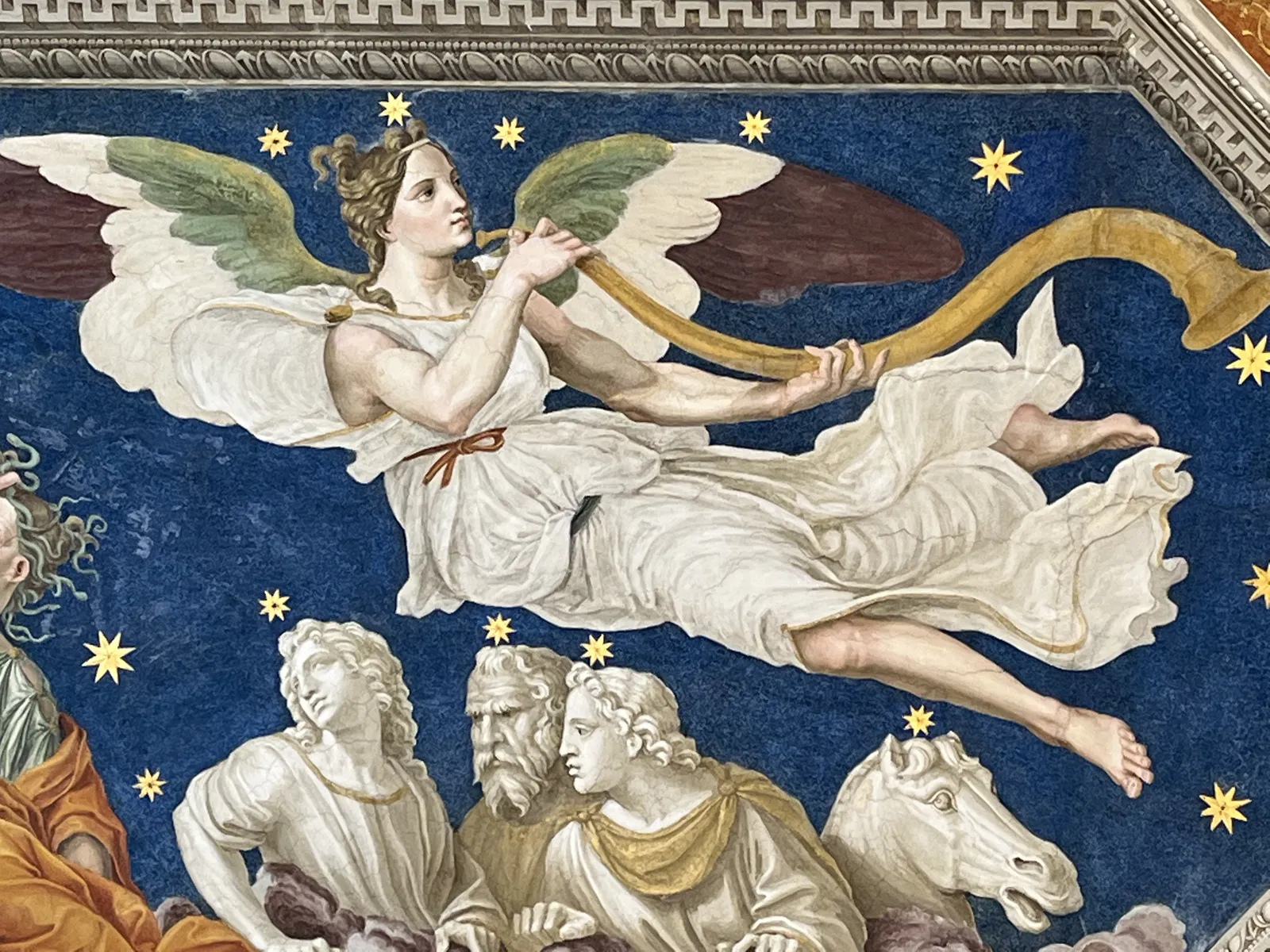
Fame and Medusa's Victims
Baldassarre Peruzzi
This fresco (1511) shows Fame soaring through the sky, announcing glory with her trumpet. Below, three men and a horse emerge from the clouds, their pallor and stiffness indicating they are victims turned to stone by Medusa's gaze. The composition reflects Renaissance interest in mythology, illustrating the power of reputation and the consequences of divine encounters.
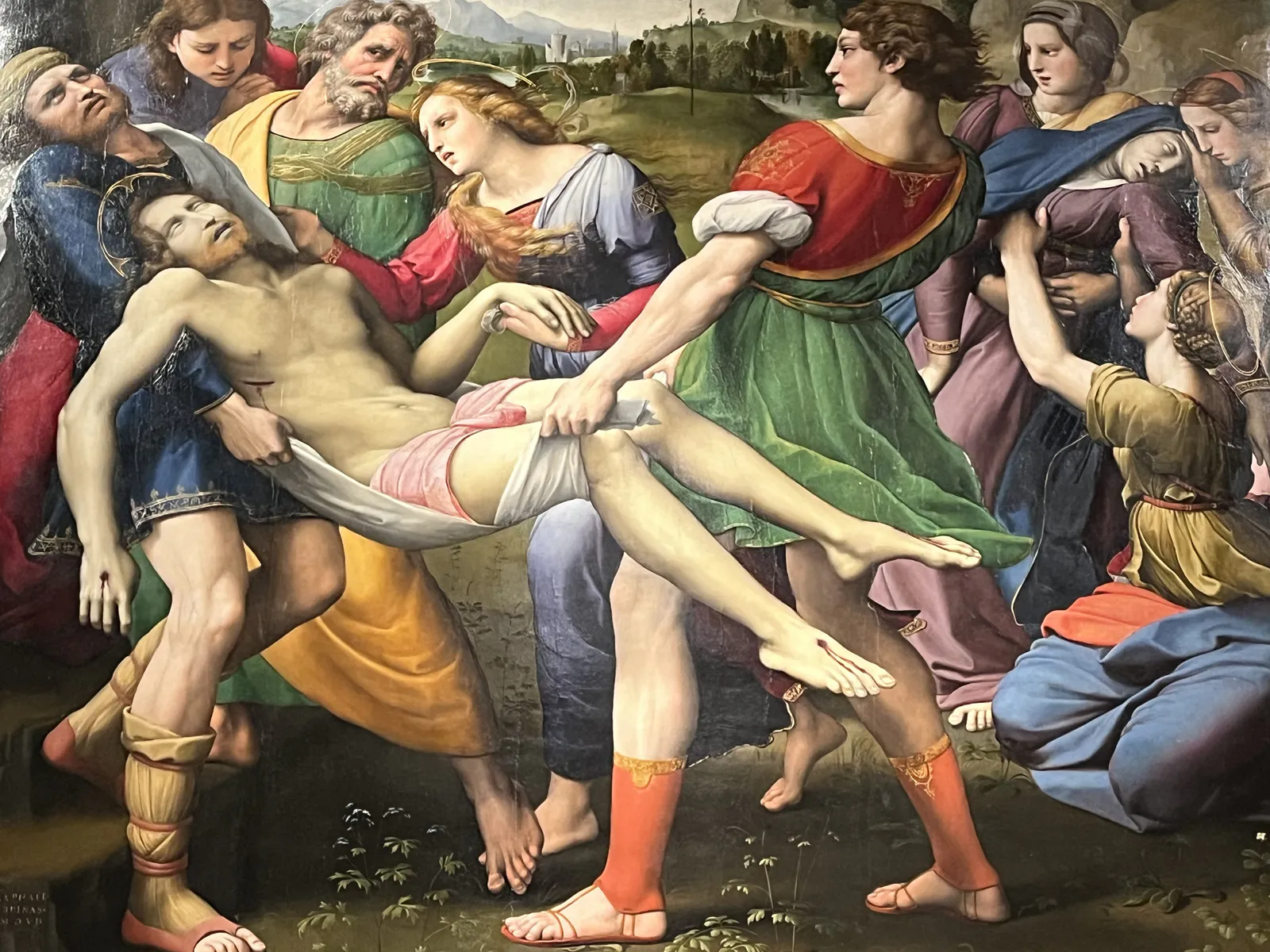
The Entombment
Raphael
Commissioned in 1507 by Atalanta Baglioni to honor her slain son, this painting unites the Deposition, Lamentation, and Entombment in one scene. Raphael’s dynamic figures, especially Christ’s, show Michelangelo’s influence. Stolen in 1608 by agents of Cardinal Borghese, it now hangs in the Galleria Borghese. A 2020 restoration revealed vivid colors, delicate sfumato (soft tonal blending), and adjustments in Raphael’s evolving design.
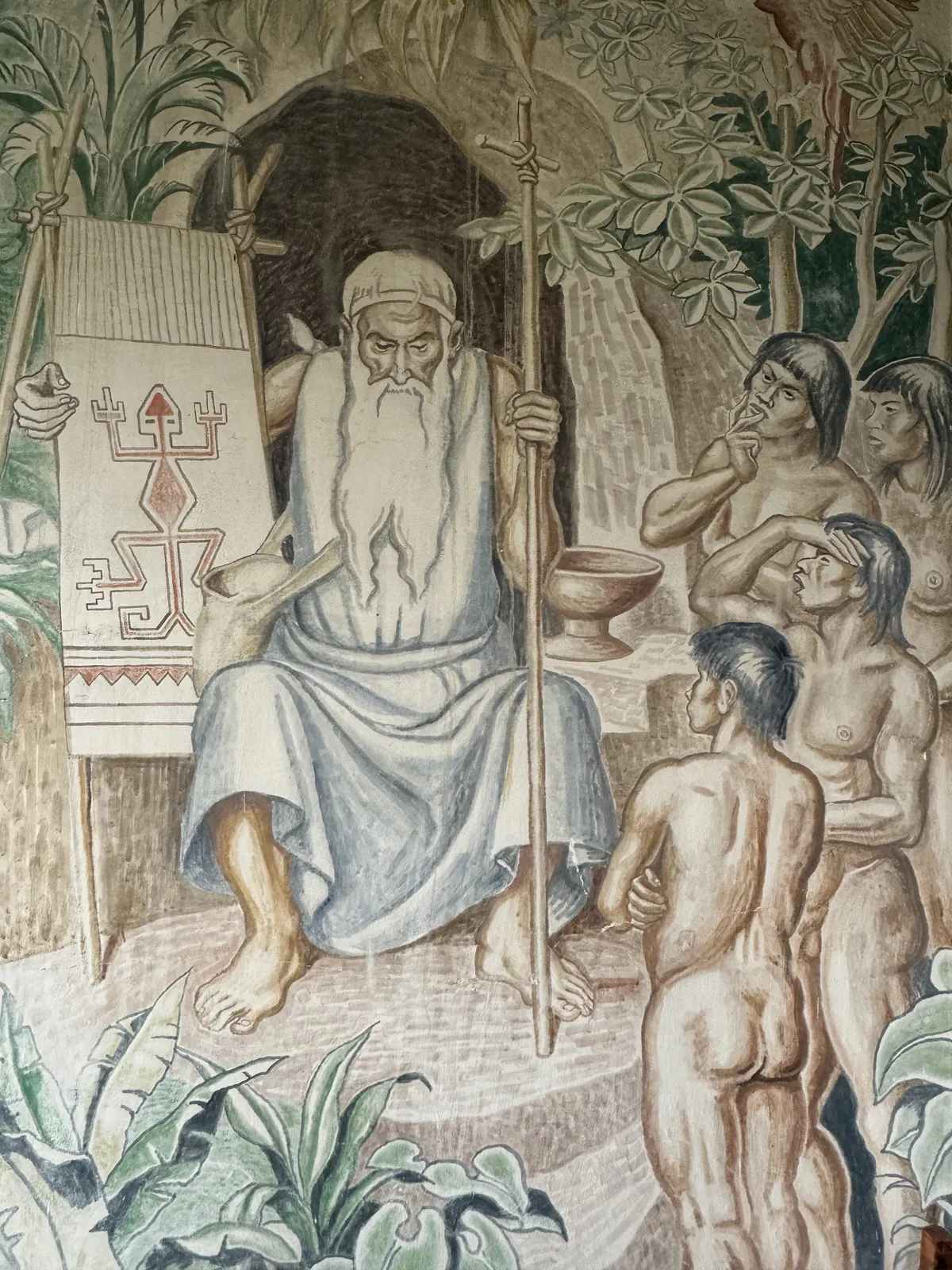
Bochica Teaching the Muisca
Luis Alberto Acuña
This 1960-70s mural depicts Bochica, the bearded sage and civilizing hero of Muisca mythology, imparting moral and spiritual lessons. Seated before young disciples, he holds symbols of power and knowledge, including a woven banner. A revered figure, Bochica was believed to have formed the Tequendama Falls and taught the Muisca how to live harmoniously.
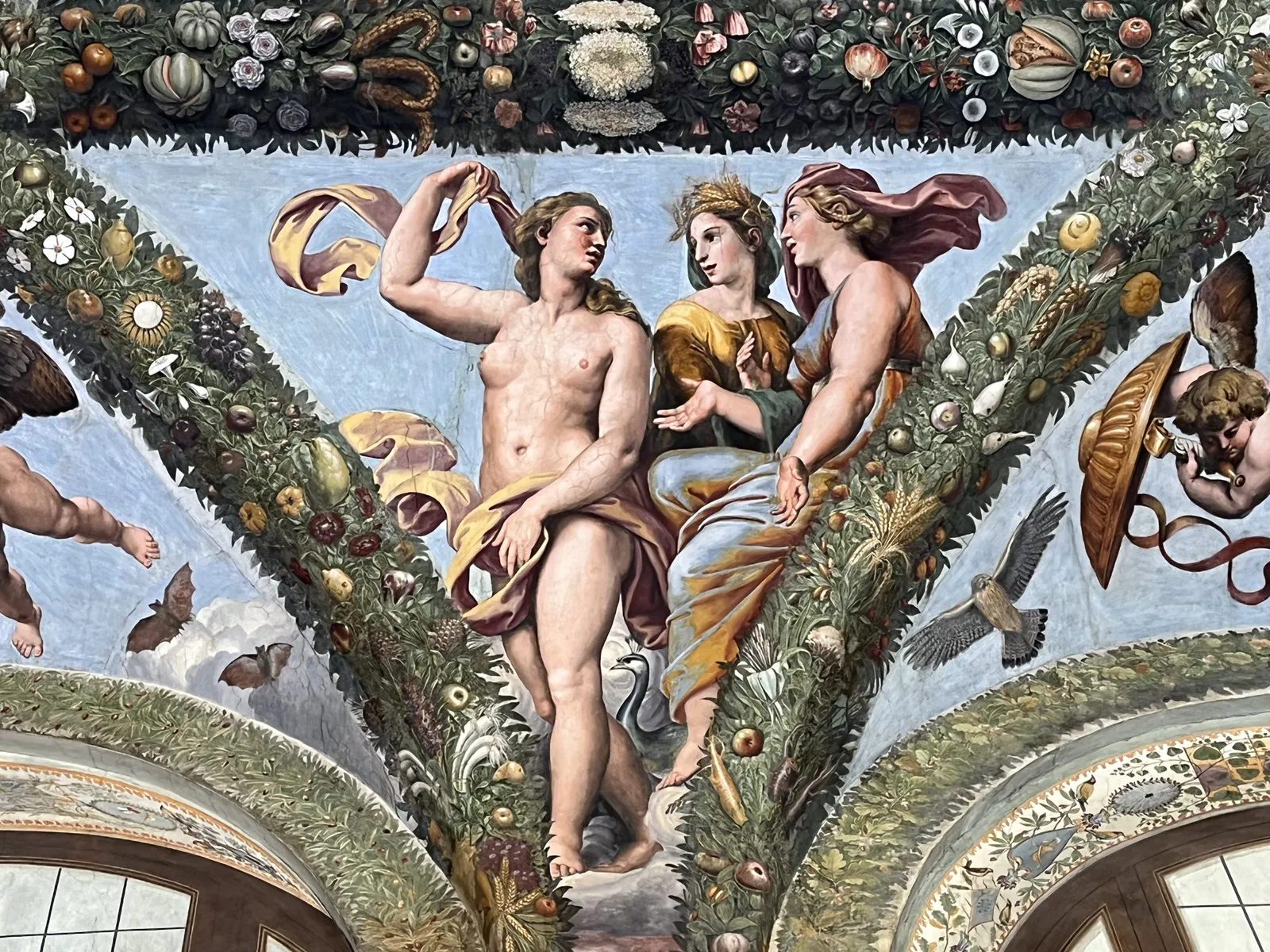
Venus Appeals to Ceres and Juno
Raphael, Giovanni da Udine
In this scene (1518), Raphael depicts Venus appealing to Ceres and Juno for vengeance on Psyche, but both goddesses refuse. The fresco illustrates the tension between divine power and mortal love. Da Udine’s elaborate botanical festoons frame the composition, enhancing its Renaissance richness.
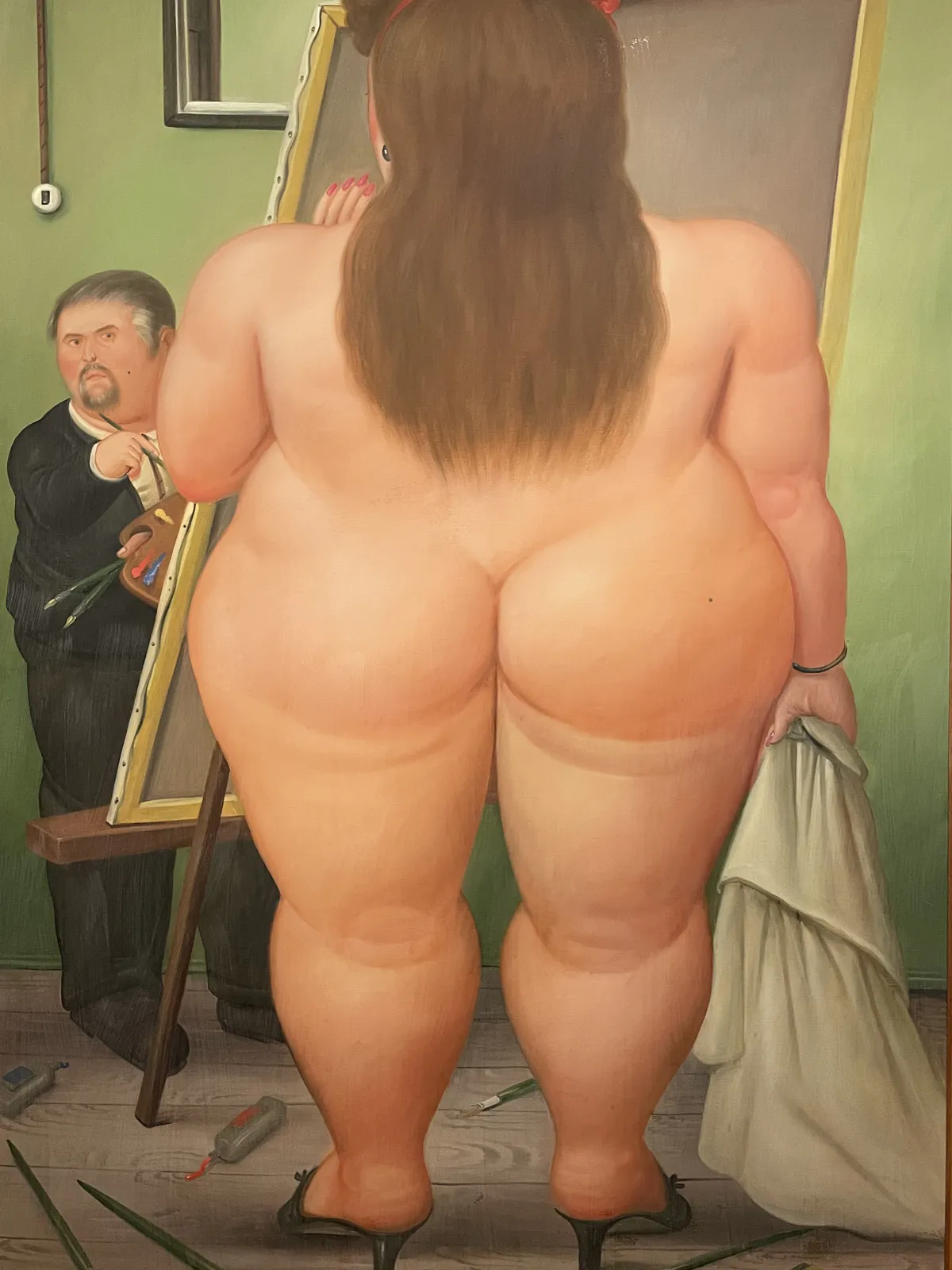
The Painter and His Model
Fernando Botero
Fernando Botero's The Painter and His Model (1984) humorously subverts the traditional artist-muse dynamic. The painting features a voluptuous nude model dominating the canvas, while the artist, dwarfed behind his easel, peers out with a palette in hand. This playful inversion highlights themes of power, beauty, and authorship, celebrating physical abundance with irony and affection. Botero's work invites reflection on the nature of artistic creation and the roles within it.
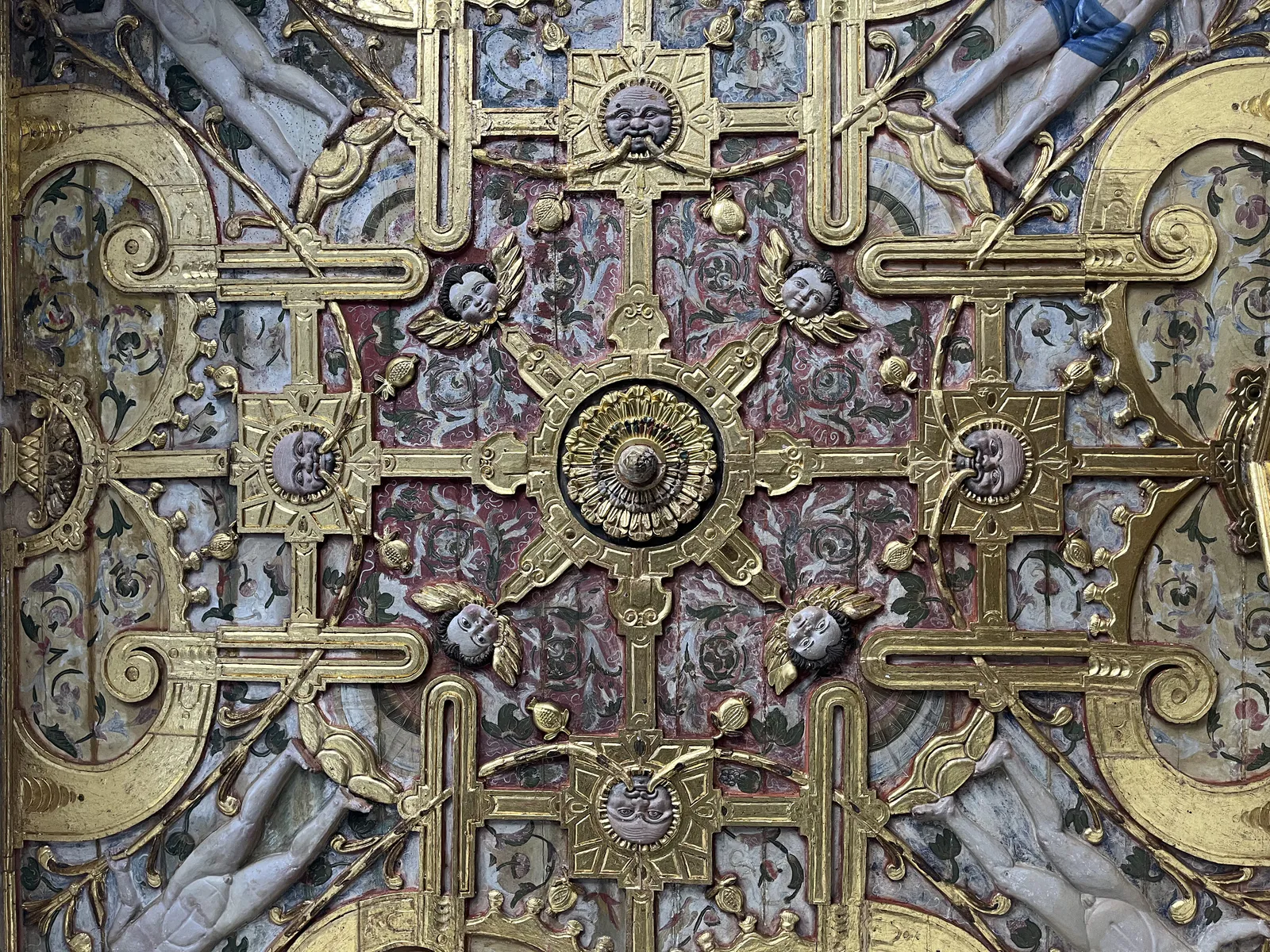
Andean Baroque Ceiling Panel
Manuel Chili (Capiscara)
This carved and gilded ceiling panel (1770–80) shows radiant faces, golden beams, and floral motifs arranged around a central sunburst. Produced in late-colonial Quito, it aligns with the Andean baroque’s celestial imagery. Caspicara joined Catholic cosmology with Indigenous conceptions of ordered, sacred geometry.
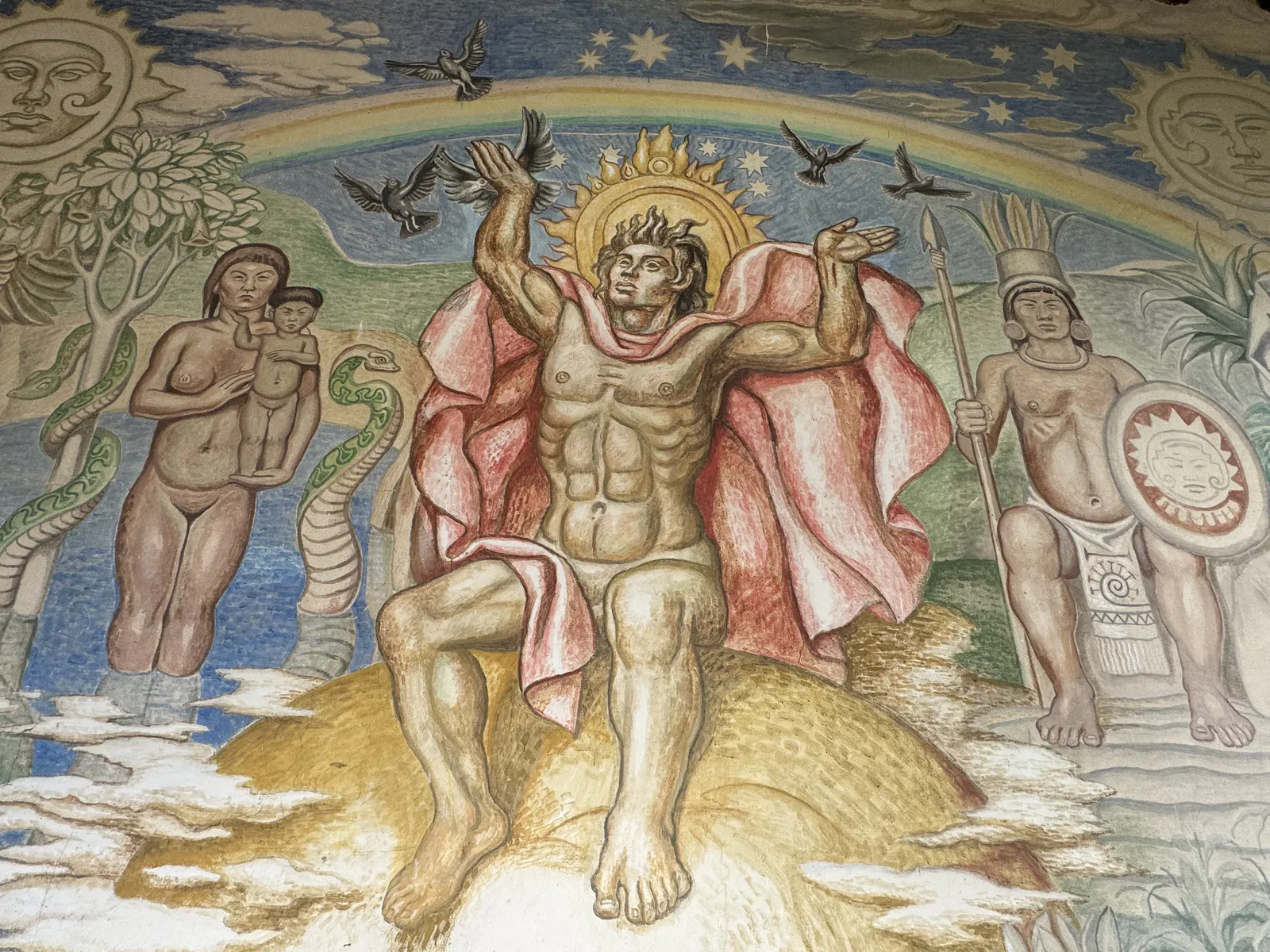
Chiminigagua and the Origen of Chibcha
Luis Alberto Acuña
This mural (1960–70s) reimagines the Chibcha creation myth. At center, the god Chiminigagua releases radiant birds to bring light to the cosmos. To his right stands Bachué with her son Iguaque, founders of the Muisca people. At left is Chaquén, guardian of lands and borders. The scene is set at the sacred Iguaque Lagoon, the cradle of Muisca origin.
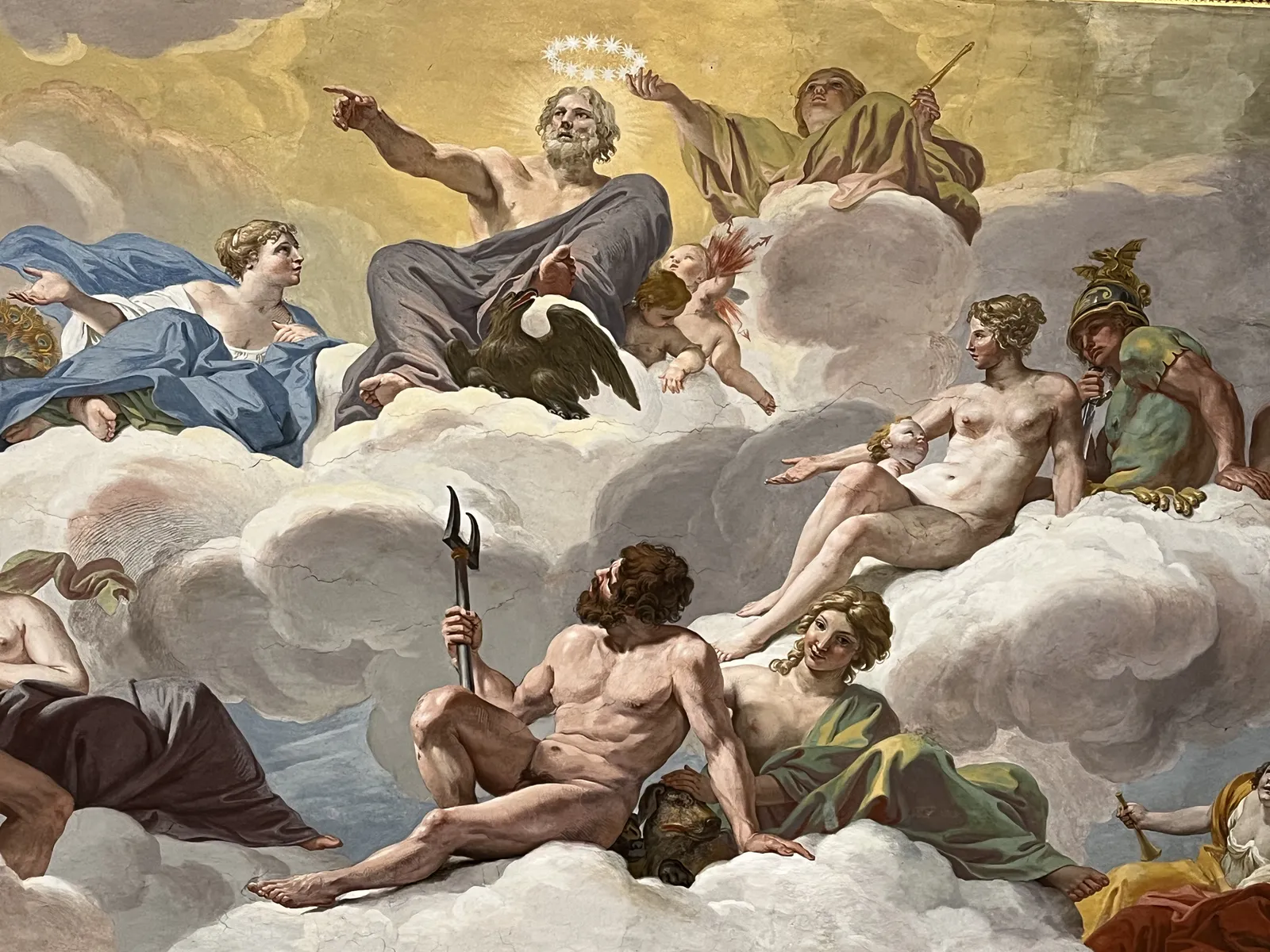
The Council of the Gods (detail)
Giovanni Lanfranco
In this celestial scene from The Council of the Gods (1624–25), Jupiter presides over Olympus, crowned with stars and flanked by his eagle. Surrounding him are Juno, Venus, Mars, and Pluto, their divine forms emerging from clouds. Painted for the Sala della Loggia in Villa Borghese, the fresco evokes the grandeur and illusionistic power of Baroque heaven.
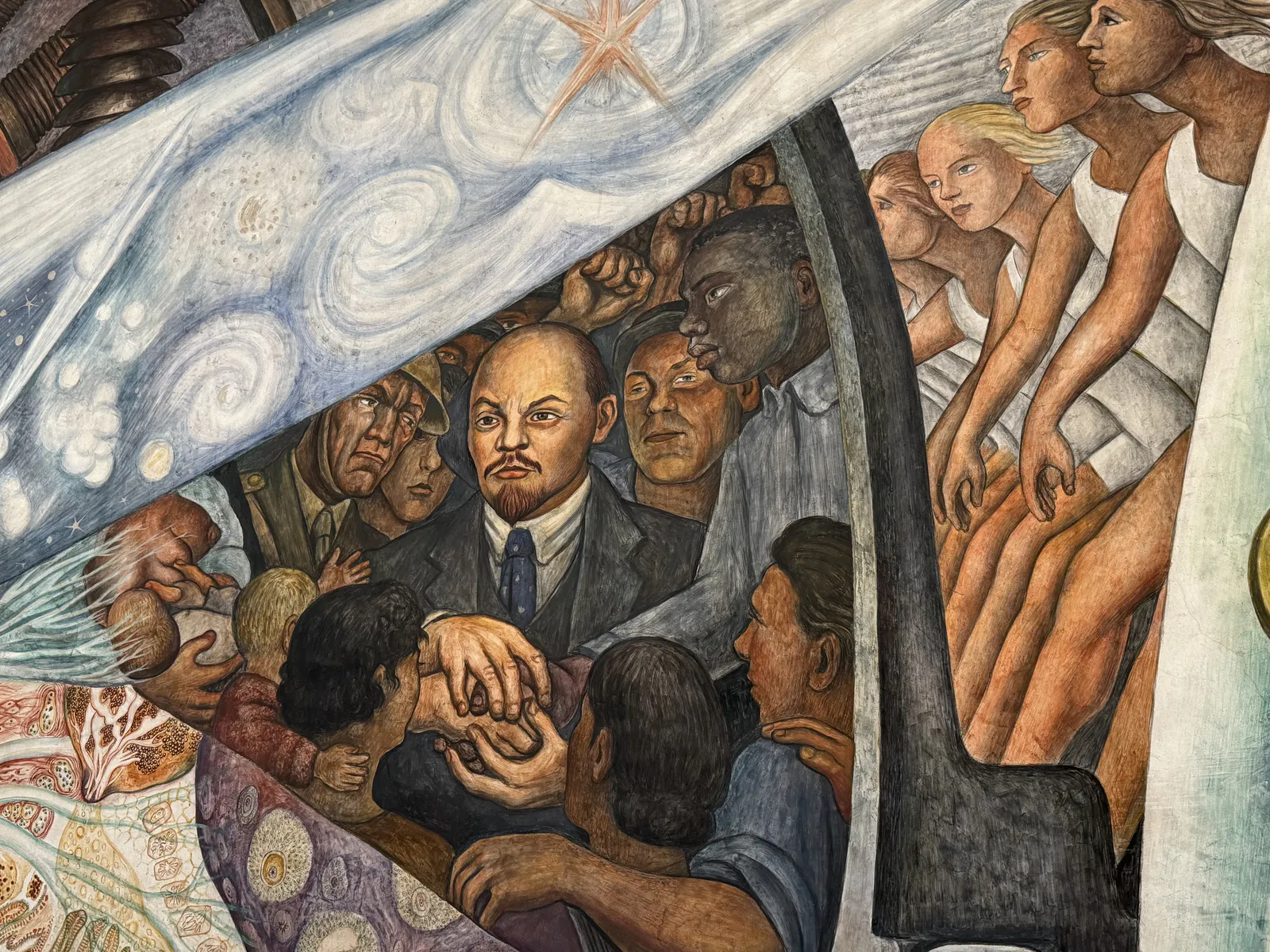
Lenin and the Workers (detail)
Diego Rivera
In this vivid section of Man, Controller of the Universe (1934), Lenin extends his hand to unite workers of different races and backgrounds. His central placement amid galaxies and scientific motifs reflects Rivera’s belief in a revolutionary, rational future led by socialist ideals and global class solidarity.
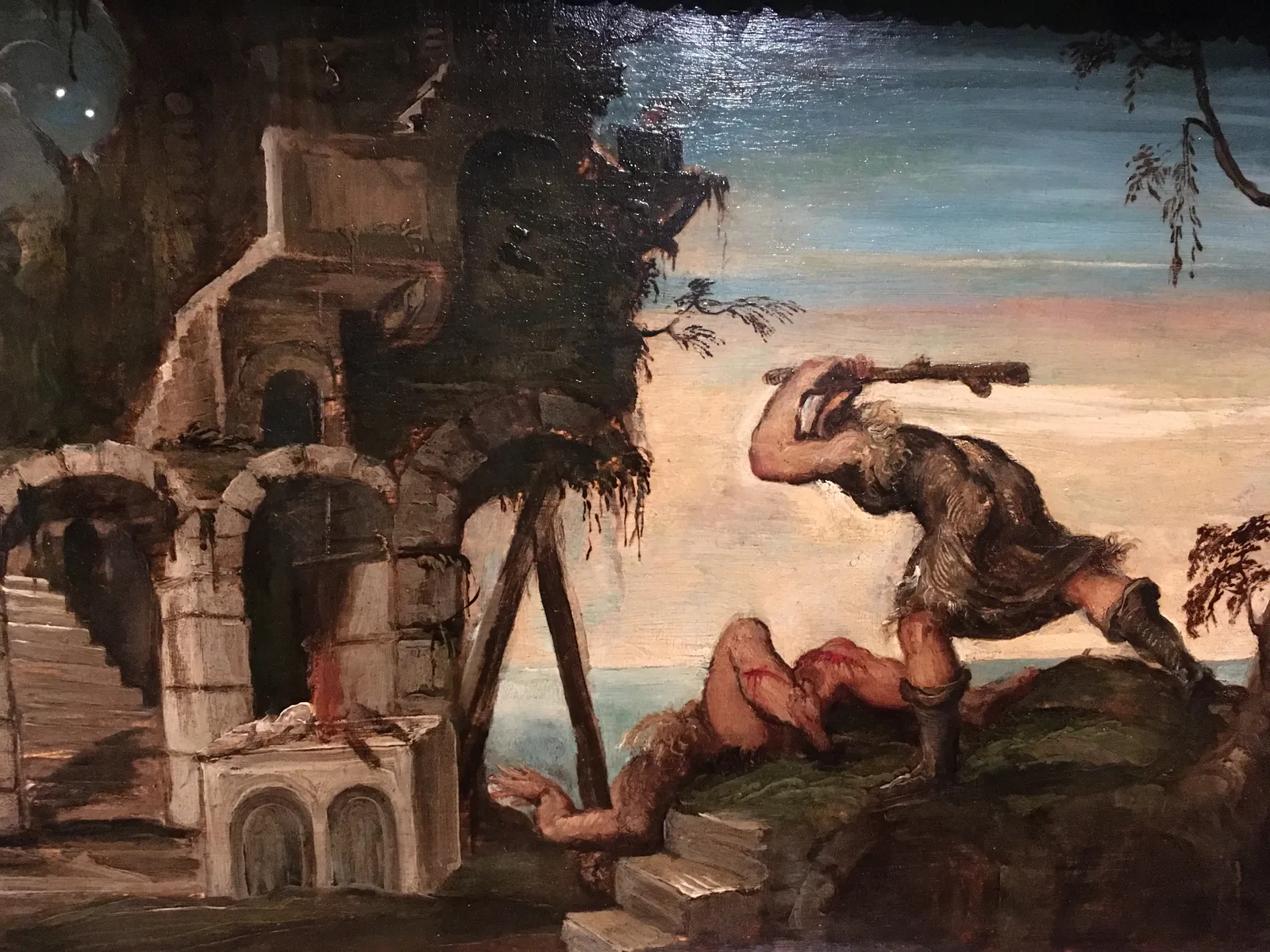
Cain and Abel
Tintoretto
The scene (1550–53) shows the biblical story of Cain’s jealousy and the murder of his brother Abel. The work reflects the Mannerist style through sharp contrasts of light and shadow, twisting poses, and tense, compressed space. Tintoretto’s hallmark energy appears in the sweeping gestures and urgent brushwork that heighten the scene’s violence, underscoring the enduring power of biblical themes in Renaissance art.
“When the path is beautiful, do not ask where it leads.” — Zen proverb
Welcome to my travel photography!
“When the path is beautiful, do not ask where it leads.” — Zen proverb
Welcome to my travel photography!
For as long as I can remember, my path has been one of discovery—seeking beauty, timelessness, and connection in every corner of the world. It has also been a journey of deep learning and understanding. I’ve been an avid traveler (or perhaps a travel addict?) for most of my life. My love for travel began long before I ever left home: as a child, I drew a fantasy map of my grandparents’ apartment and “traveled” through it with my cousin Sonya, imagining adventures in every corner. Nearly 90 countries and countless moments of awe later, I’m excited to share this journey with you.
Thanks to the tireless and ingenious programming of Diagilev, we’re now able to present about fifteen percent of the images I’ve accumulated over the years. More will be released in small batches depending on your interest. While the first release leans toward museum photography, later ones will include more nature, architecture, culture, and general travel experiences. If you’d like to receive email notifications about new releases, feel free to reach out—no commercial use, ever.
Throughout my travels, I’ve been drawn to two intertwined kinds of discovery. One is intellectual: learning why the world is the way it is. History became my guide, shaping my perspective and filling my camera roll with museums and old buildings. To me, history is not the past—it is the key to understanding the present and how the world became what it is. The other is emotional: seeking moments of elevation—spirituality, beauty, harmony—often found in nature, monasteries, and ancient sacred spaces. Together, these impulses shape my photography. It invites you to learn, admire, and soar—to rise above the mundane and see the world through a lens of curiosity and wonder.
Much of my later travel became possible thanks to my job with Delta Air Lines, but the wanderlust began years earlier. By the time I joined the industry, I had already visited over 35 countries and lived in several—largely thanks to a backpacking journey around the world with Luis León, whose face appears in many early photos. I grew up in Ufa in the USSR, and since leaving it I have lived, studied, and worked in Latvia, the United States, France, South Korea, Canada, Spain, Italy, Brazil, Japan, and Colombia.
A life of near-constant movement may seem a little crazy, but it has deepened my understanding of the world and produced the photography you are about to see. Over the years, my style has evolved—more intentional, more refined—yet its core remains the same: a search for understanding, timeless beauty, and a connection to those who walked this earth long before us.
I hope these photos stir something in your soul, just as they did in mine. I’d love to hear from you—whether reactions, suggestions, corrections, or a request to be added to the email list for new releases (no commercial use, I promise). You can learn more about my travels here, and my academic life here.
Enjoy our shared journey!