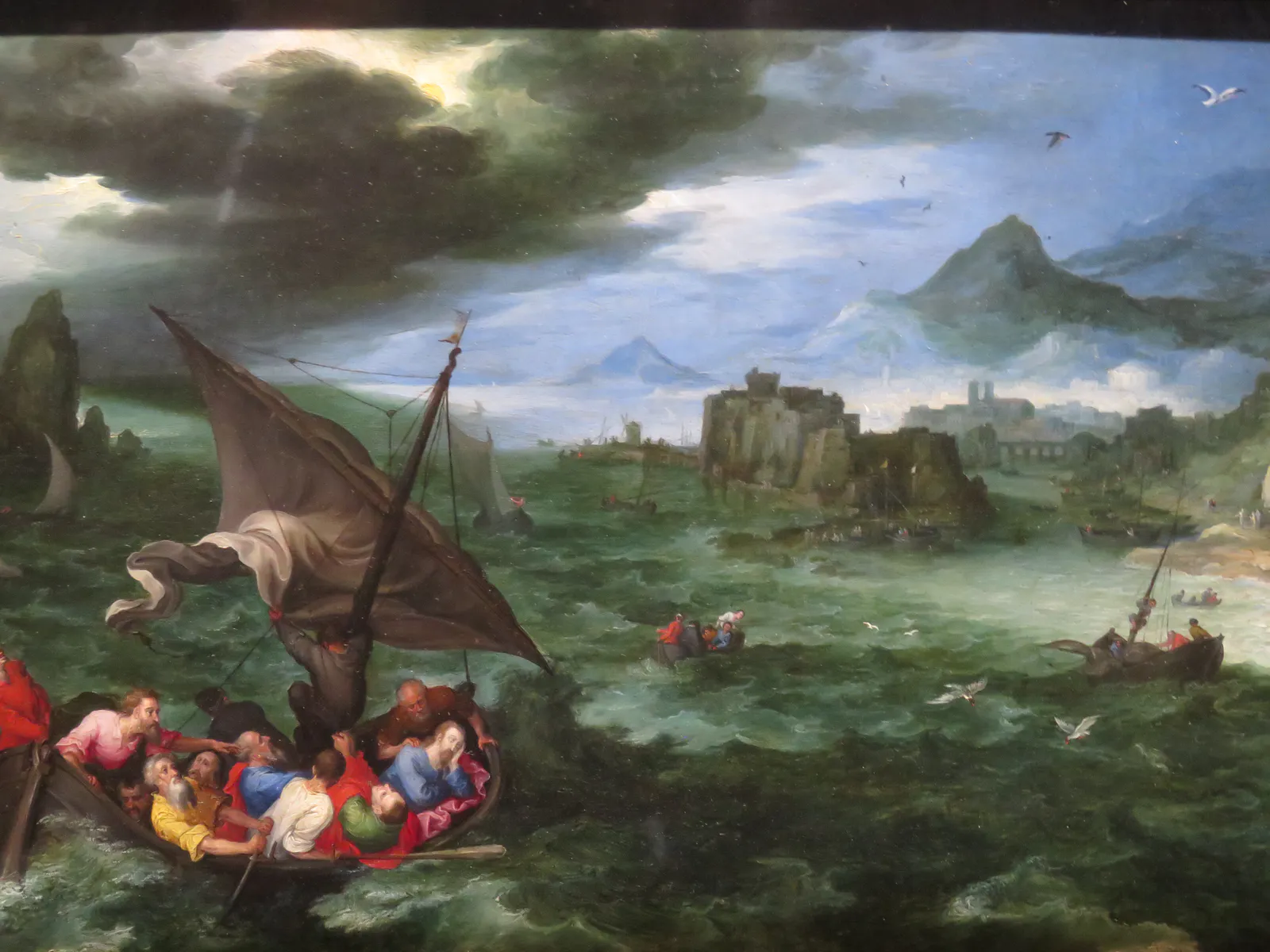
Christ in the Storm on the Sea of Galilee
Jan Brueghel
This oil on copper (1596) shows Christ asleep during a storm as an apostle wakes him amid violent waves on the Sea of Galilee. The heeling boat and twisted sail convey imminent peril, while the darkened sky dramatizes the disciples’ fear. Brueghel’s vivid rendering turns natural turbulence into a meditation on faith and divine control.
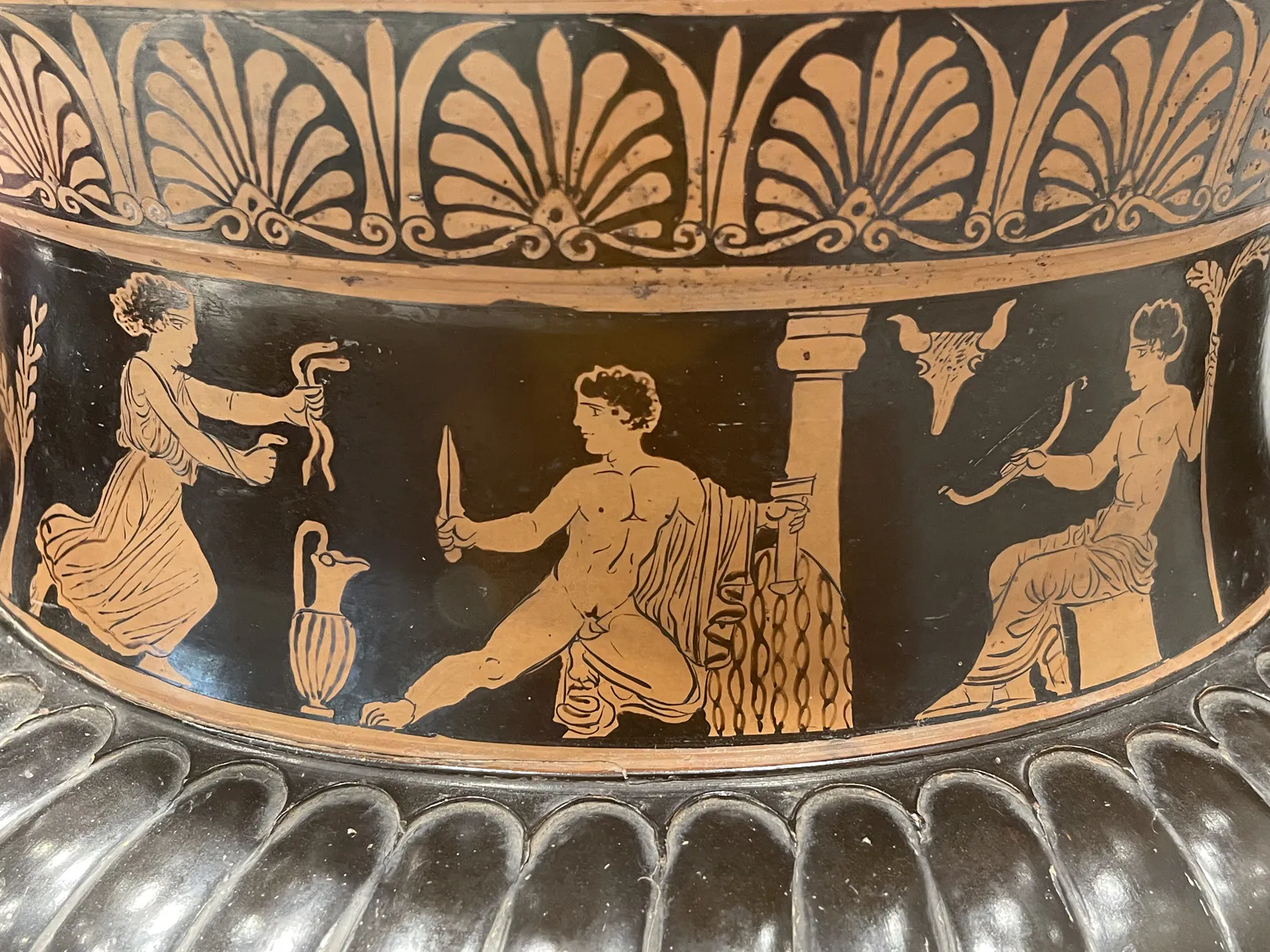
Orestes Pursued by the Furies
Painter of the Birth of Dionysus
This Apulian red-figure krater, used for mixing wine and water, (410–390 BC) depicts Orestes defending himself with a sword against the Erinyes, avenging his mother's death. Apollo, seated with a bow, offers protection, symbolizing divine sanction amid human guilt. This scene illustrates the complex interplay of justice and retribution in Greek mythology.
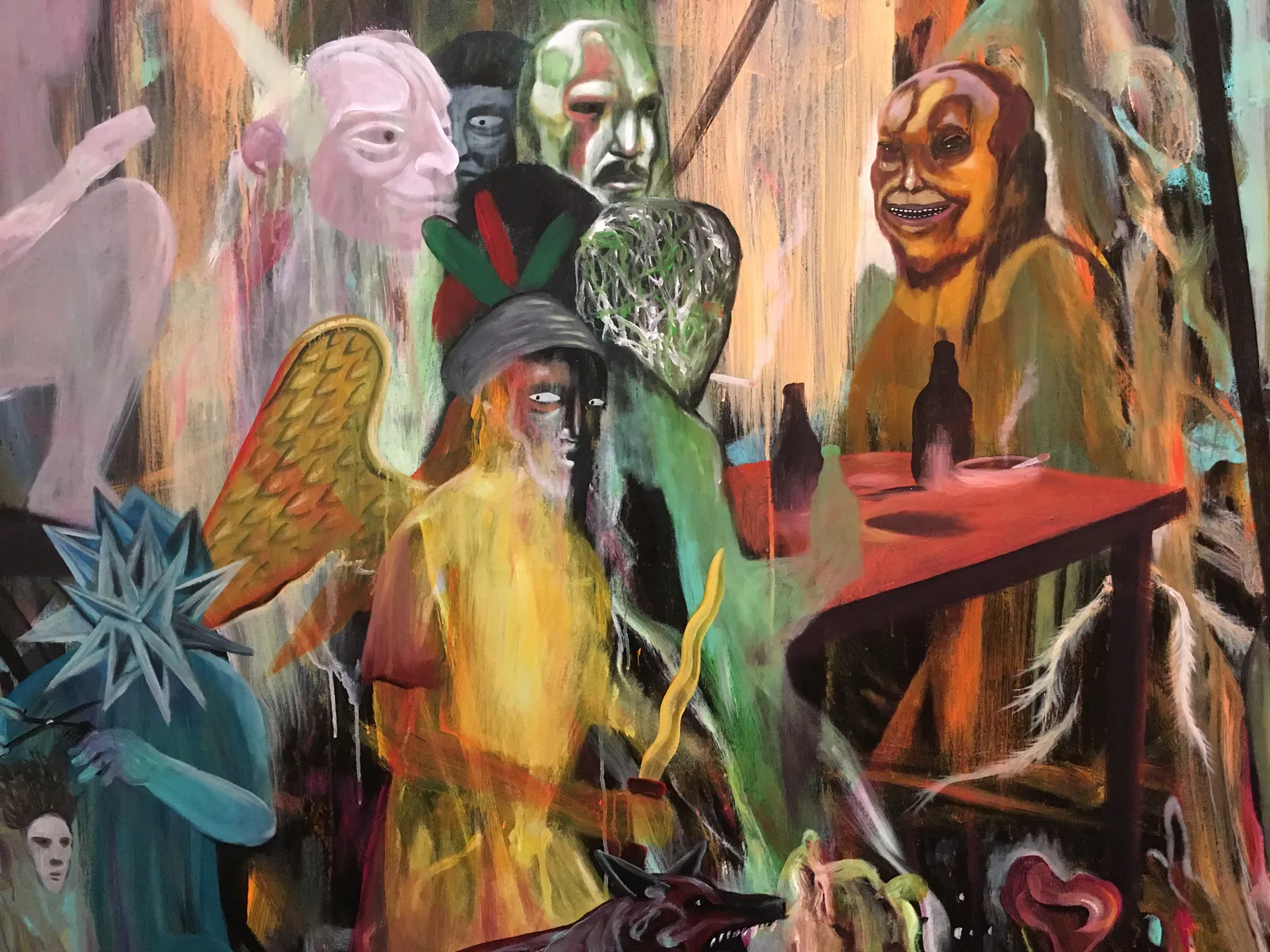
The Comedy, Parody, and Tragedy
Rodel Tapaya
This painting (2018) from Tapaya’s Urban Labyrinth series swirls with hybrid beings, masks, and mythic figures at a chaotic table. Angelic wings, demonic grins, and spectral visages blur folk imagination with urban satire. Tapaya weaves Philippine mythology into contemporary critique, where humor and menace mirror the fractured realities of modern city life.
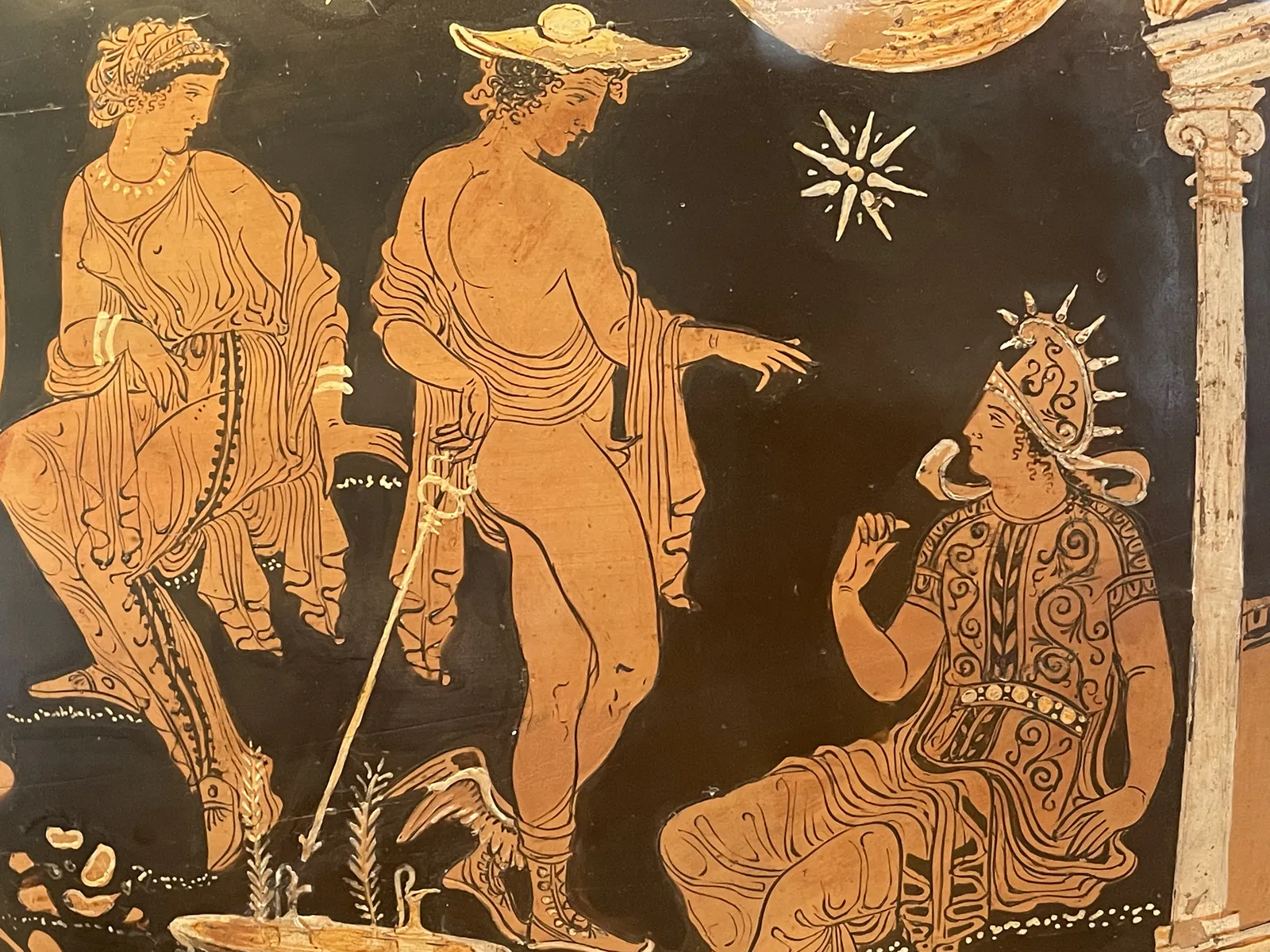
Orestes and Apollo at Delphi
Painter of the Birth of Dionysus
This Apulian red-figure volute krater (410–390 BC) depicts Apollo aiding Orestes at Delphi. After avenging Agamemnon by killing Clytemnestra, Orestes seeks refuge from the Furies. Apollo's protection symbolizes divine support for justice. This piece highlights the intersection of myth and morality in ancient Greek culture.
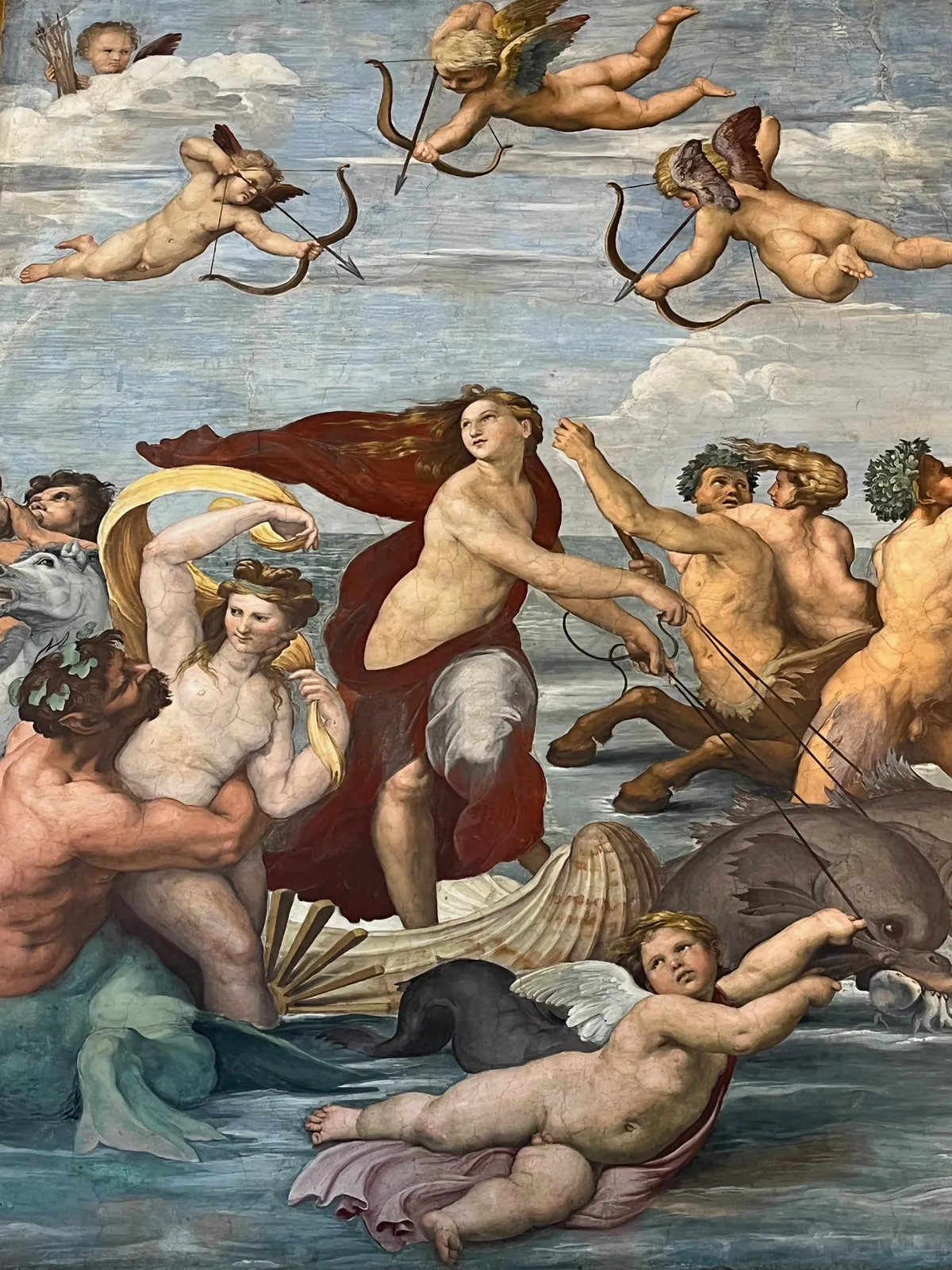
The Triumph of Galatea
Raphael
In this fresco (c. 1512), Raphael transforms Galatea’s myth into a celebration of divine beauty. The sea nymph rides a shell chariot drawn by dolphins (linked to Venus), while cupids shoot arrows symbolizing love’s universal power. Though the original tale includes jealousy and tragedy, Raphael omits them, presenting an idealized vision of harmony and grace.
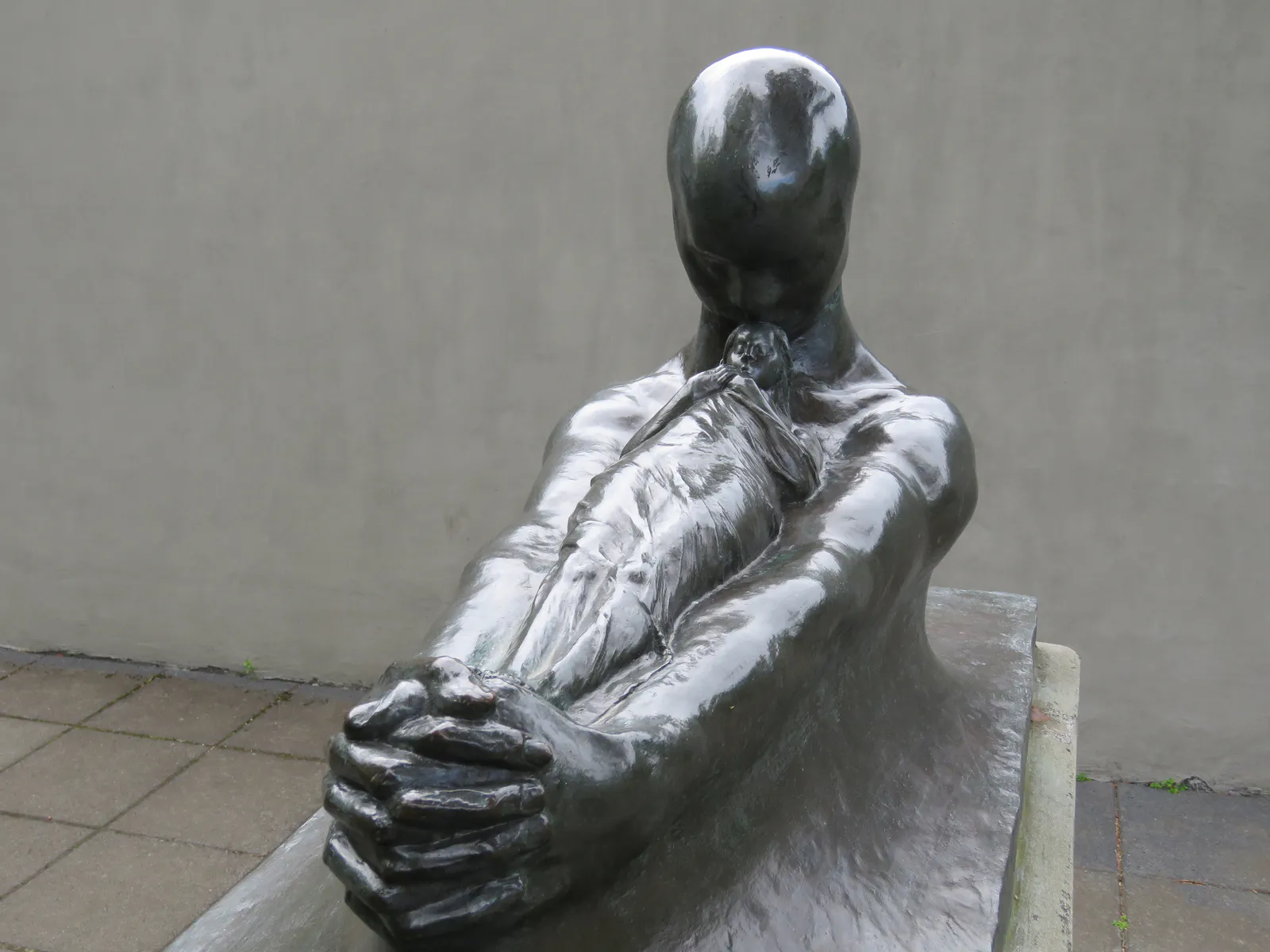
Earth
Einar Jónsson
This sculpture (1904–08) depicts a human figure cradling a smaller, draped form, symbolizing the Earth or nature. Jónsson, an Icelandic sculptor, is known for his symbolic and allegorical works exploring mythology, spirituality, and the human condition. This piece reflects his exploration of humanity’s connection to the natural world and the spiritual realm.
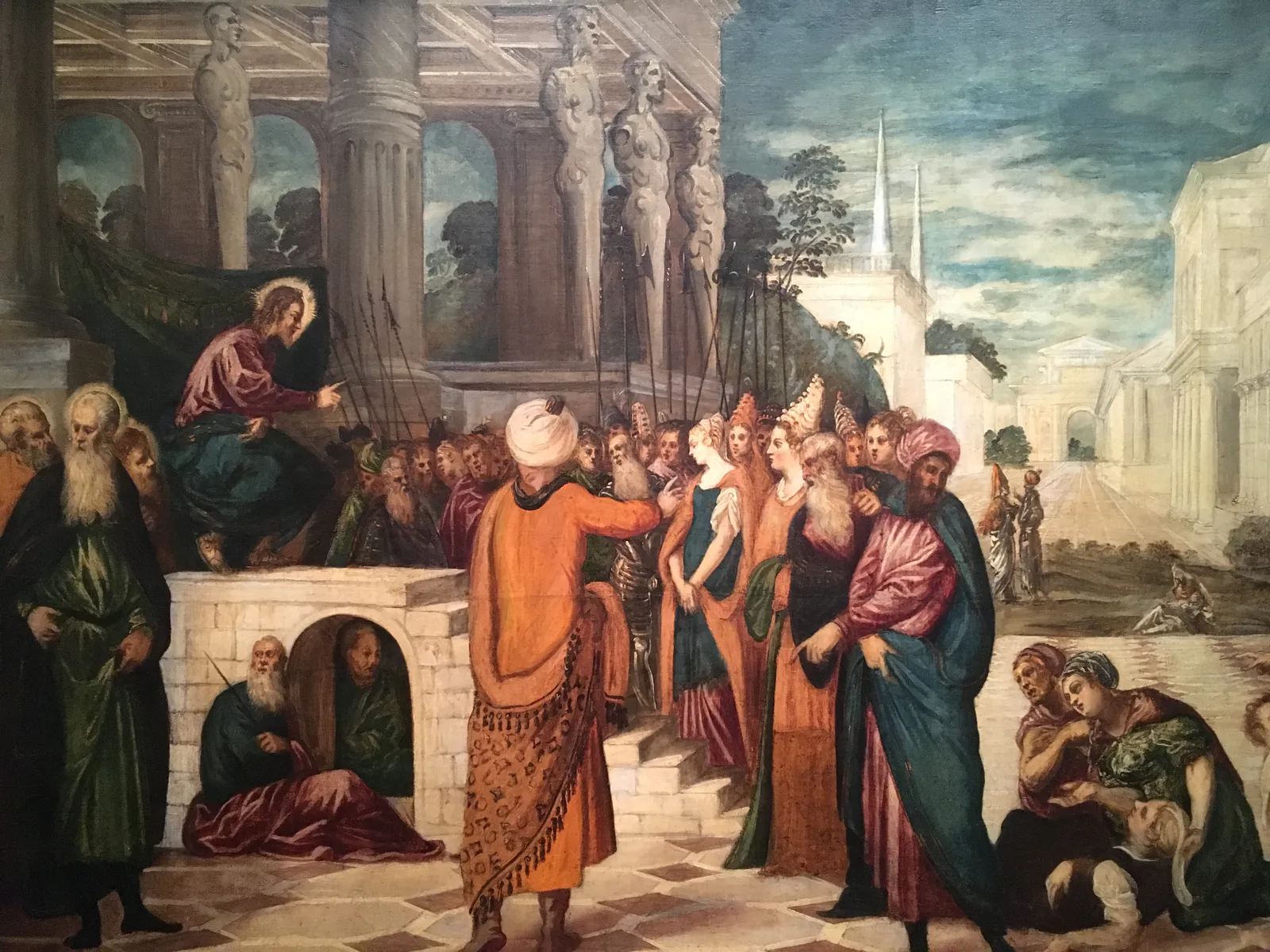
Christ and the Adulteress
Tintoretto
This scene (c. 1555) is from the Gospel of John: Jesus responds to scribes and Pharisees demanding judgment on an adulterous woman. His challenge—inviting the sinless to cast the first stone—teaches mercy over condemnation. Tintoretto’s dynamic style appears in the sharp contrasts of light and shadow, elongated figures, and oblique spatial arrangement that intensify the moral tension. Classical architectural elements frame the encounter, emphasizing the conflict between legalism and redemption.
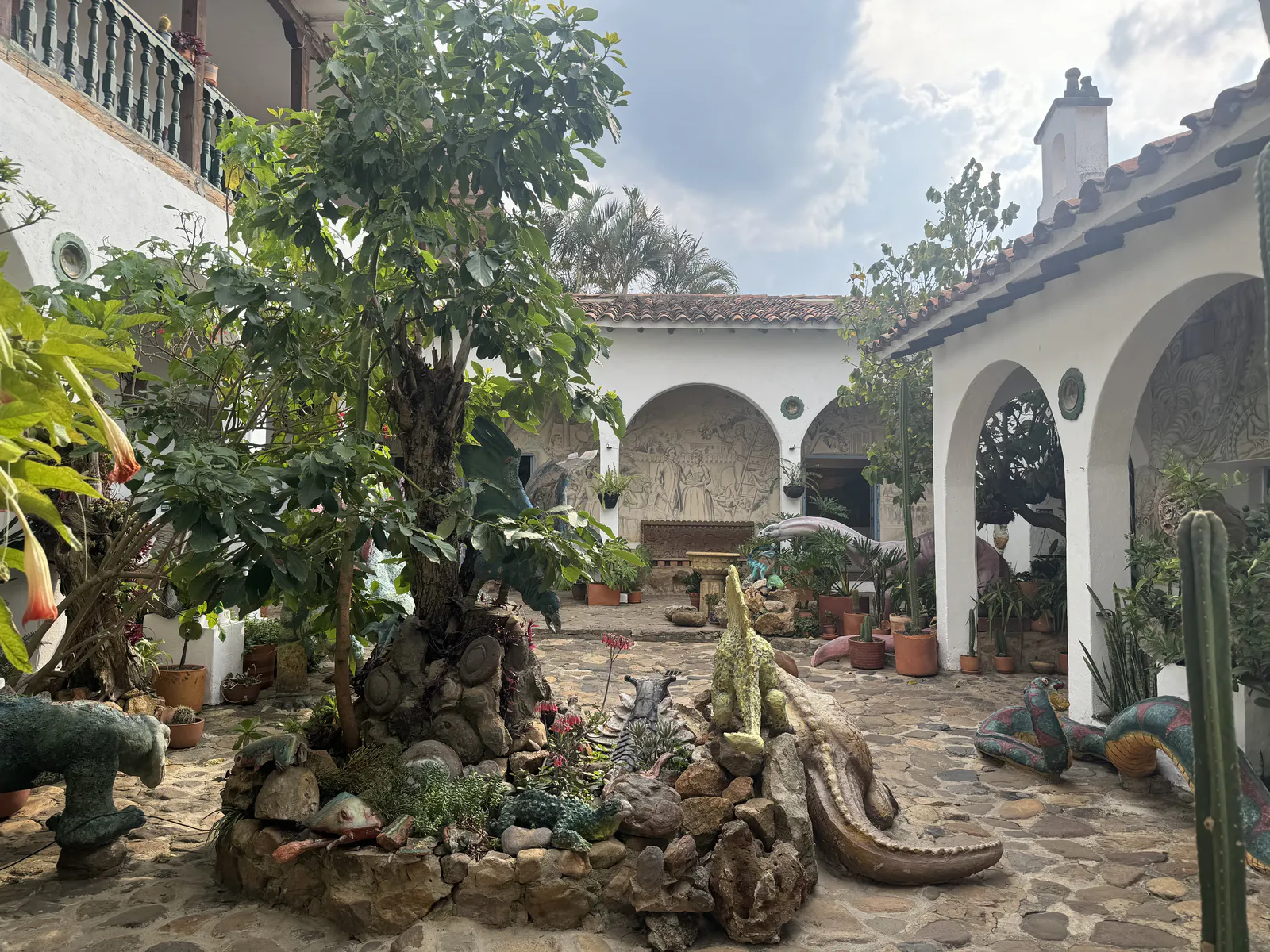
Museum Courtyard
Luis Alberto Acuña
This eclectic courtyard blends colonial architecture with fantastical sculptures and lush vegetation. Dinosaurs, jaguars, and snakes emerge from the stone paths, reflecting Acuña’s imaginative fusion of pre-Columbian, mythological, and surrealist influences.
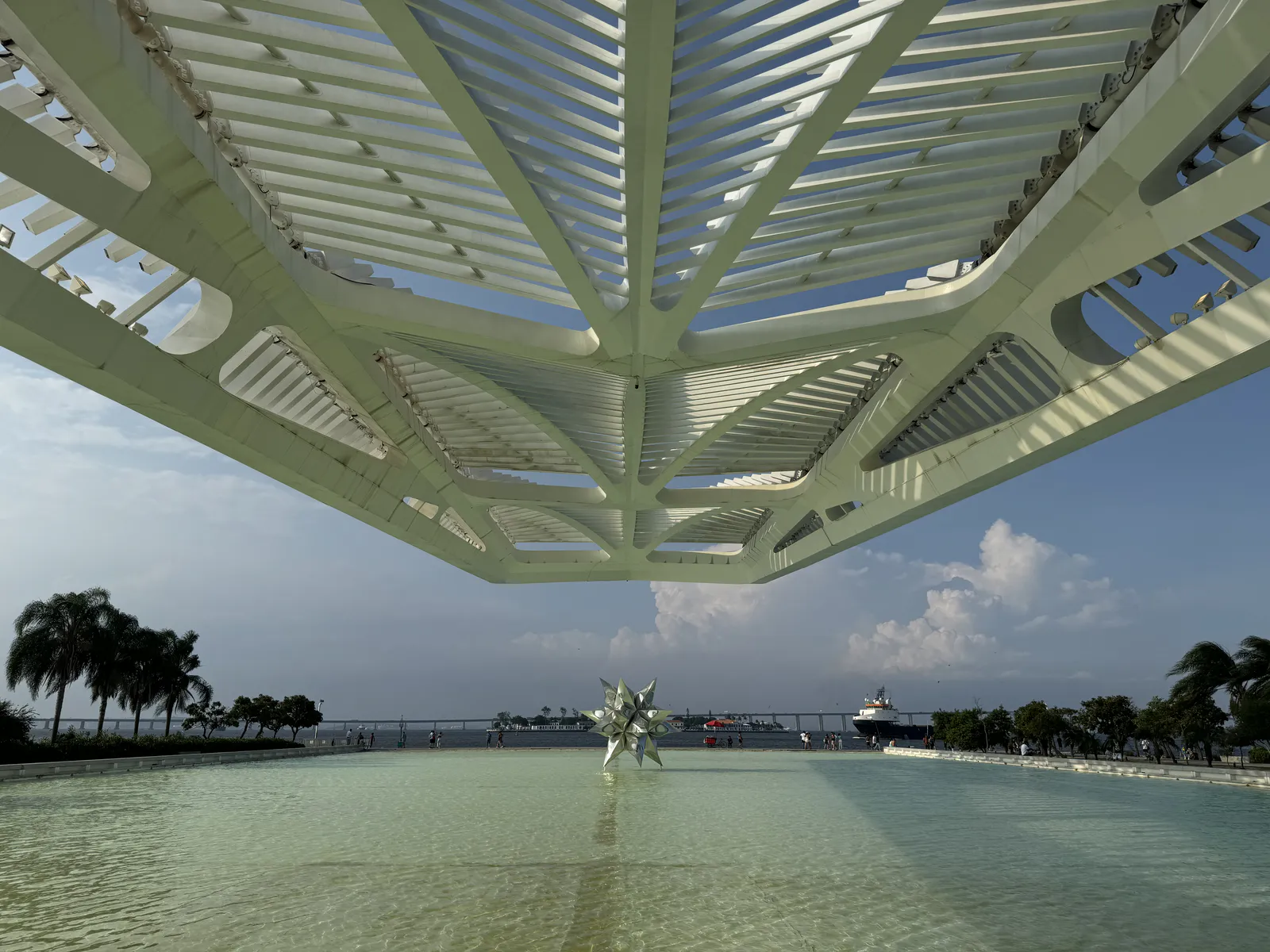
Puffed Star
Frank Stella
Installed before the Museum of Tomorrow in Rio de Janeiro (2016), this metallic sculpture by American artist Frank Stella dazzles with radiating points and mirrored planes. Its star-like form evokes cosmology and perception, inviting reflection on the interconnectedness of space, matter, and human imagination.
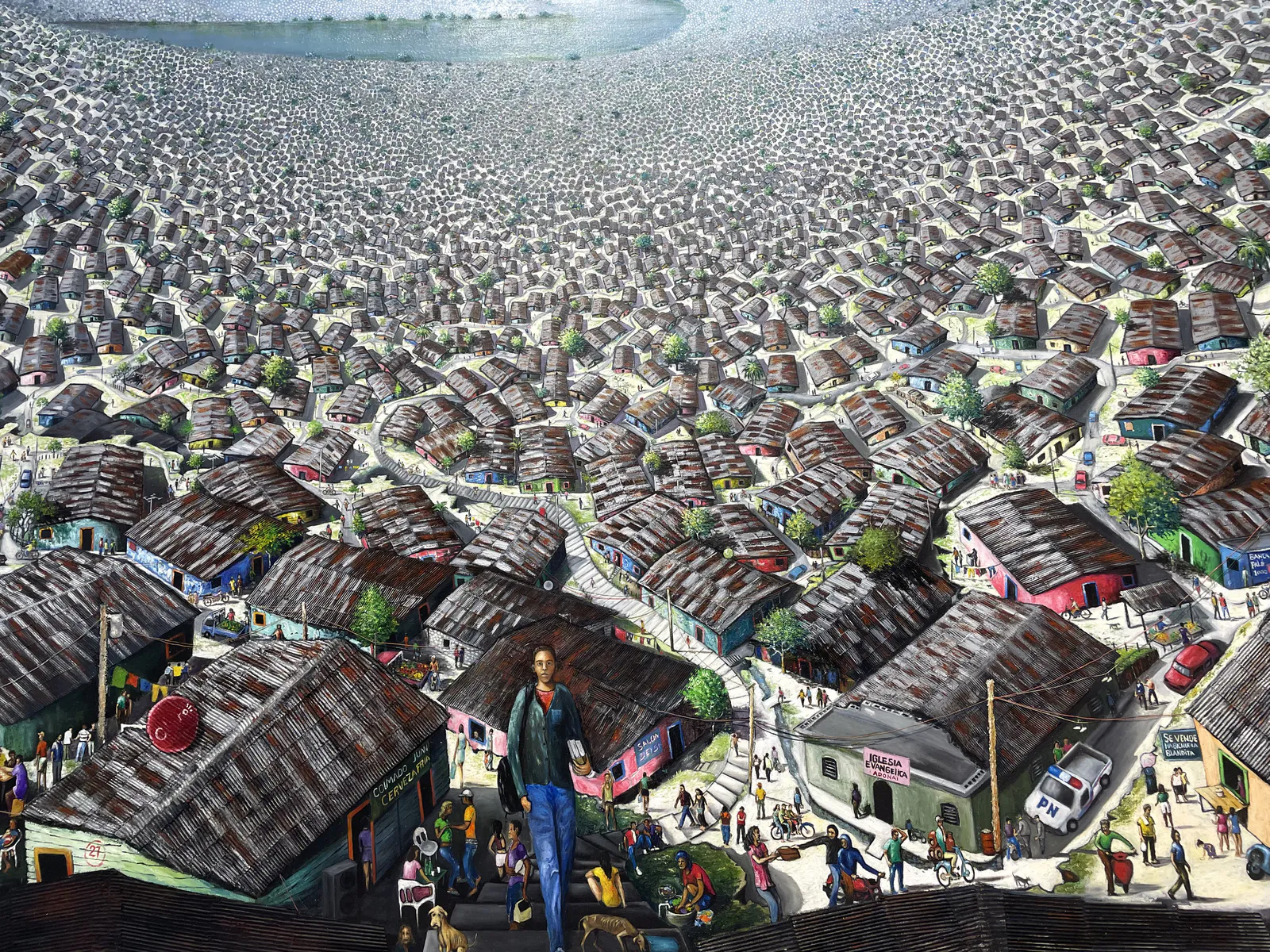
It’s Not Where You Come From, but Where You’re Going
Ramón Calcaño
This oil painting (2018), entitled No importa de dónde vienes, sino hacia dónde vas, Calcaño presents a vast view of informal housing. Central to the scene is a figure holding books, emerging from the margins. The work highlights resilience and the transformative power of education, emphasizing the pursuit of a better future beyond one's origins.
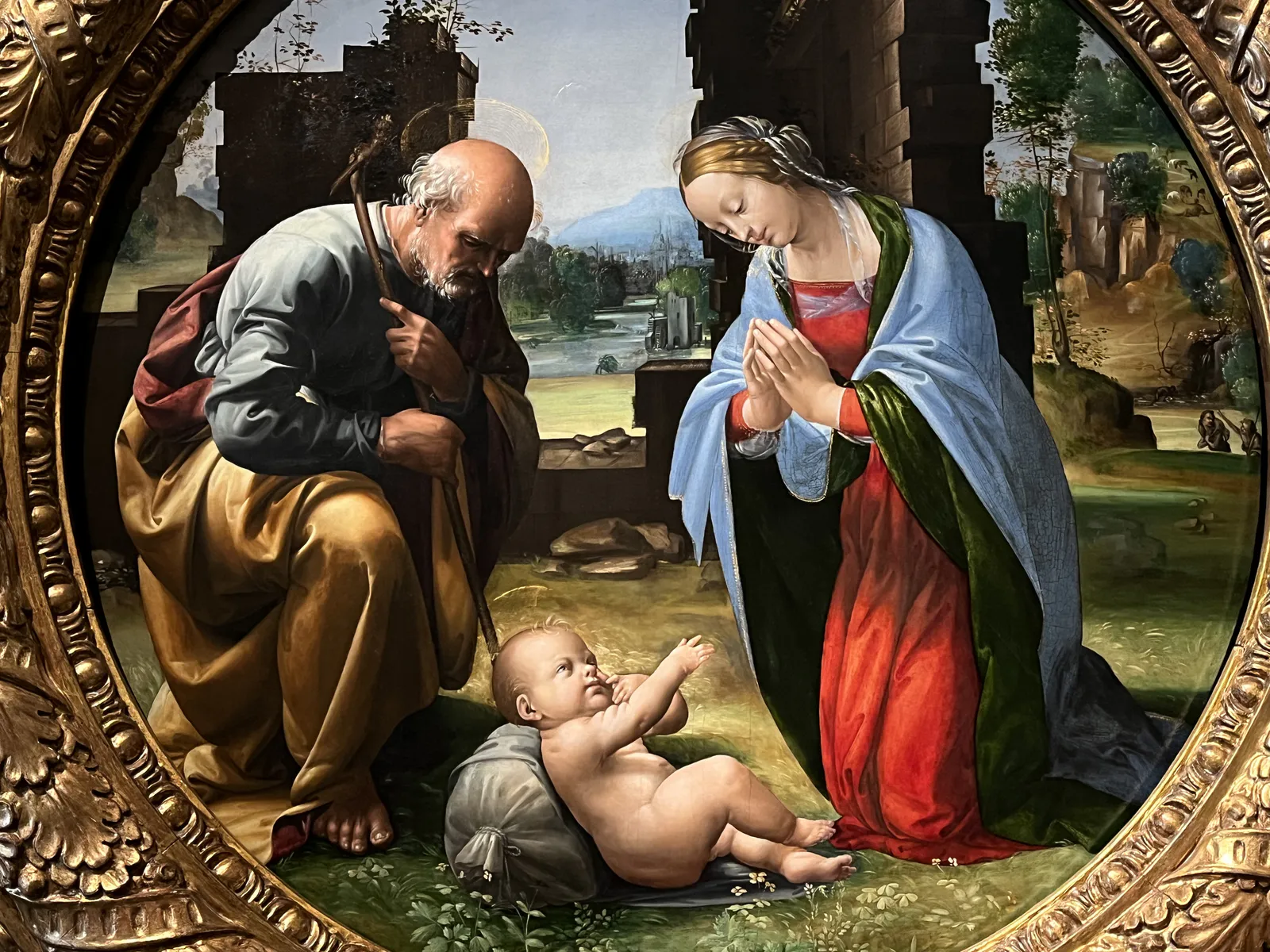
Adoration of the Child (detail)
Fra Bartolomeo
This tondo or circular painting (c.1495), Mary and Joseph kneel in reverence before the infant Christ, who rests on a sack amid delicate vegetation. The ruined architecture behind them symbolizes the fall of paganism, while the balanced composition and radiant palette reflect Bartolomeo’s early embrace of Renaissance ideals.
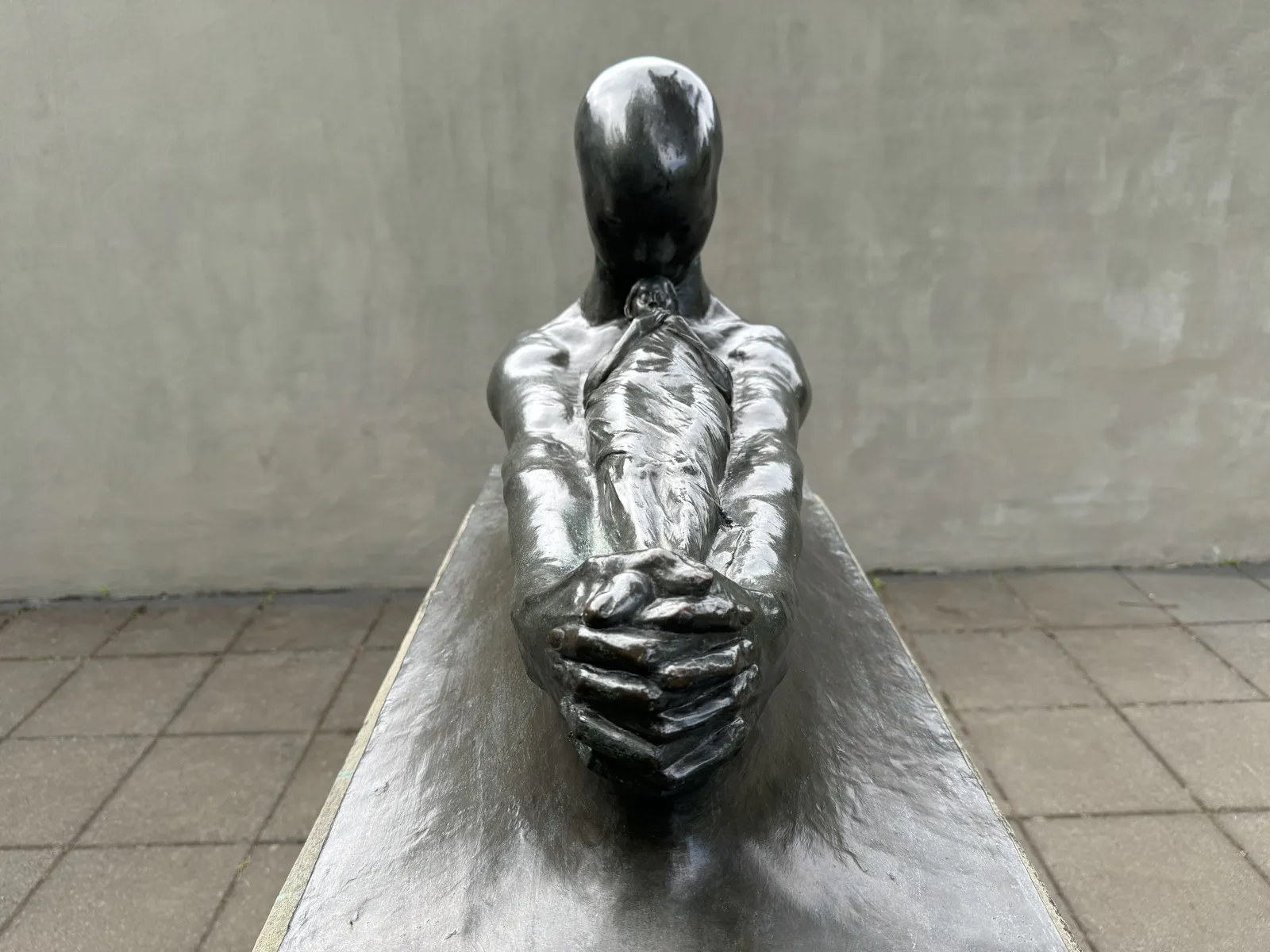
The Earth
Einar Jónsson
Jónsson’s bronze sculpture, The Earth (1904–1908), features a seated figure cradling a smaller form, reflecting his shift to Symbolism after 1903. It explores themes of life, death, and the cyclical nature of existence. Jónsson, a pioneering Icelandic sculptor, studied at the Royal Danish Academy of Fine Arts, significantly influencing the evolution of Icelandic art.
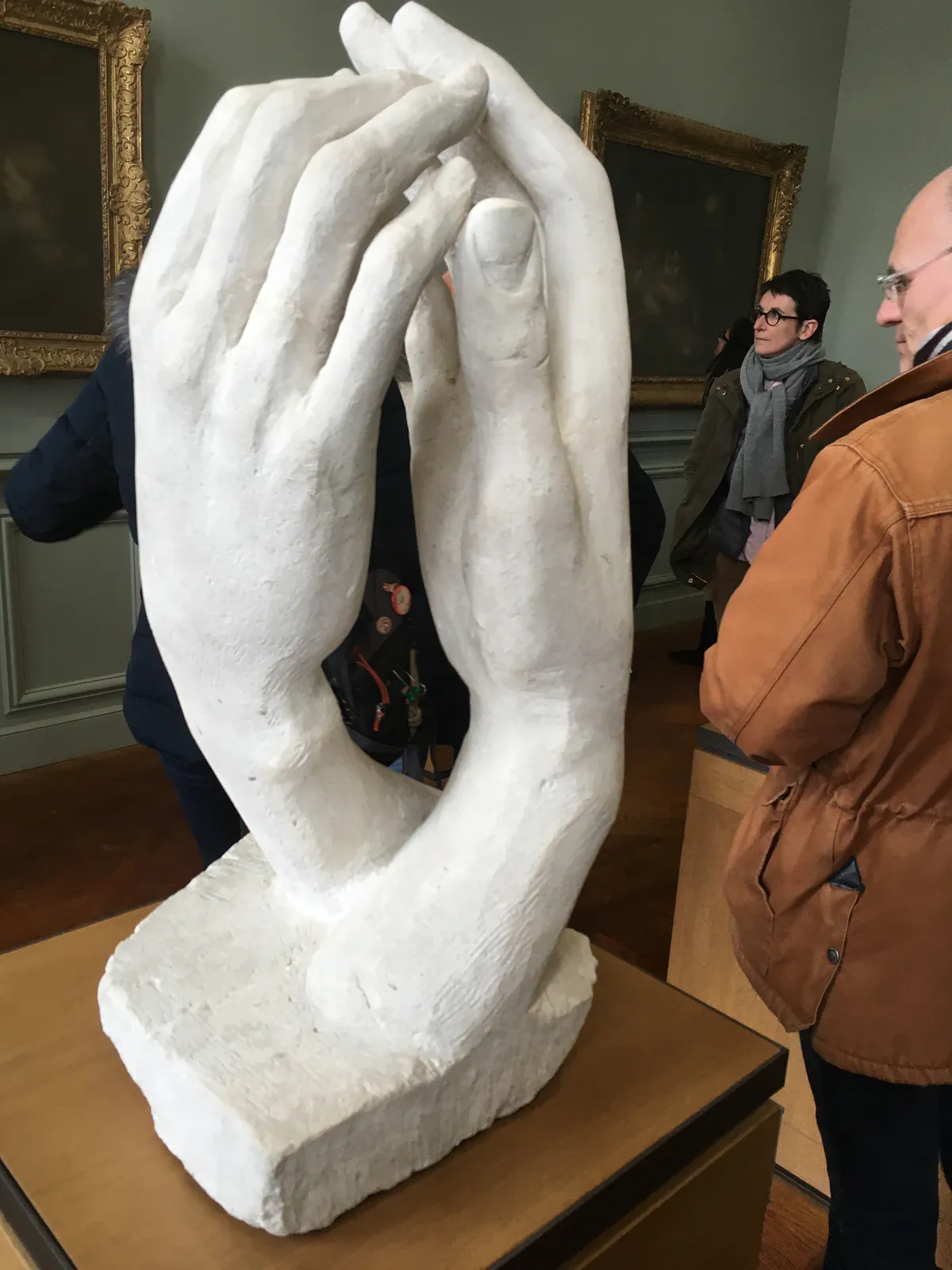
The Cathedral
Auguste Rodin
This 1908 sculpture features two right hands reaching towards each other, symbolizing connection and unity. Initially named The Arch of Alliance, it was inspired by Gothic cathedral rib vaults and renamed in 1914. The texture and interplay of light and shadow evoke prayer and contemplation. This work marks Rodin’s shift from realism to modernism, emphasizing emotional depth over physical form.
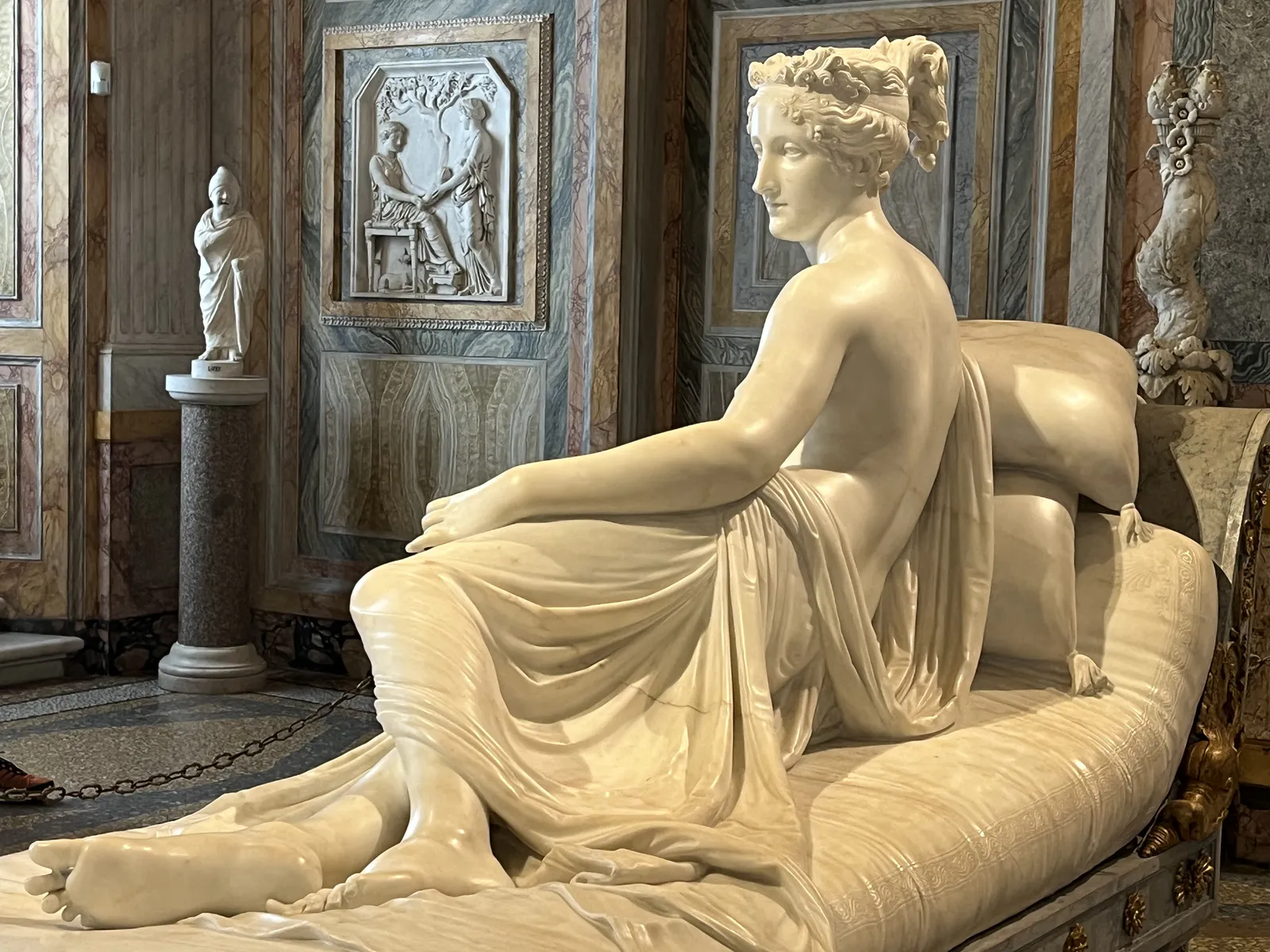
Pauline Bonaparte as Venus Victrix
Antonio Canova
Antonio Canova's marble masterpiece (1805–08) depicts Pauline Bonaparte as Venus Victrix, reclining semi-nude on a couch, holding an apple symbolizing Venus's triumph in the Judgement of Paris. Commissioned by her husband, Camillo Borghese, Pauline insisted on being portrayed as Venus rather than Diana. The sculpture, originally designed to rotate, reflects both personal ambition and classical beauty.
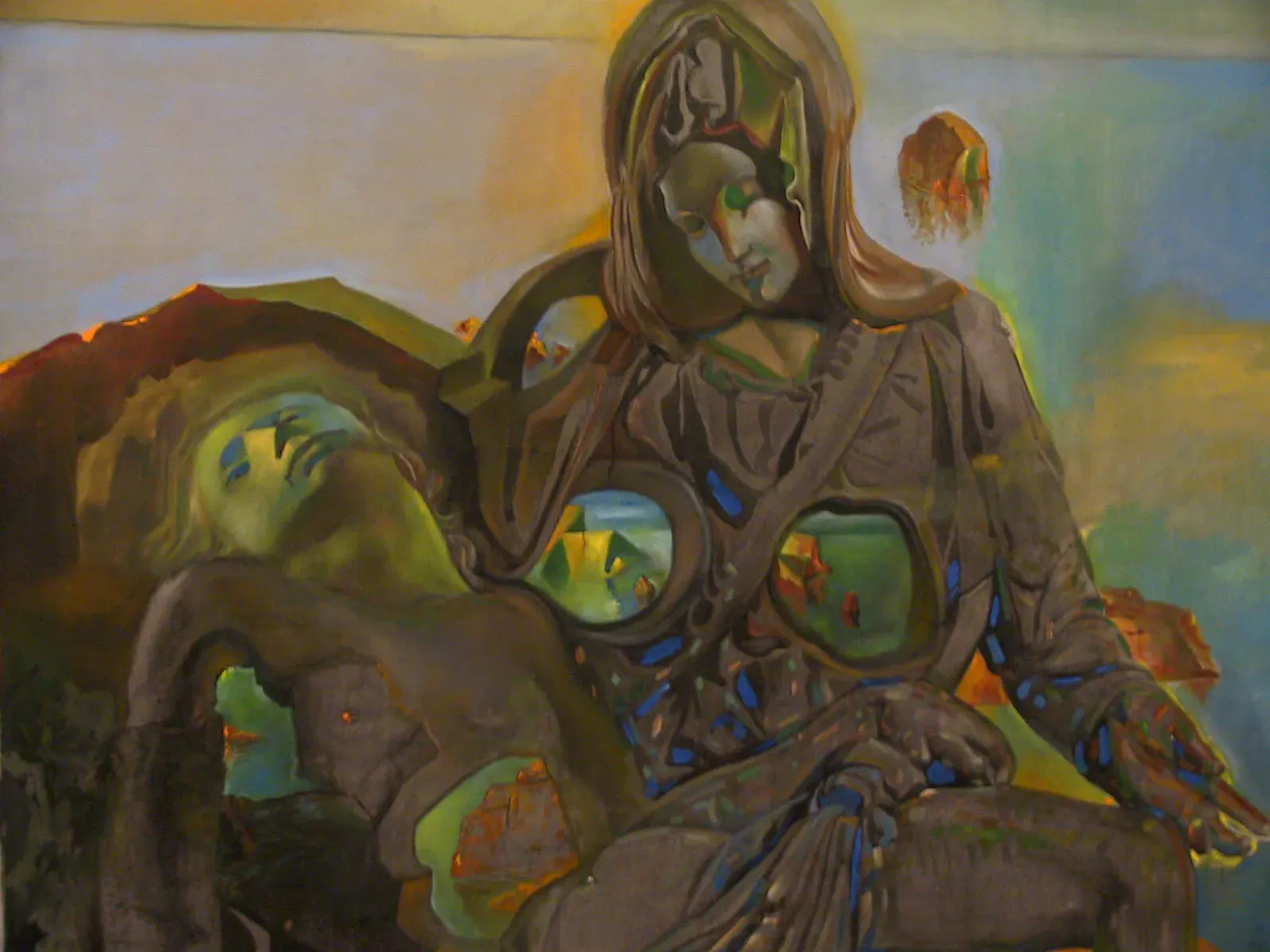
Geological Echo. La Pietà
Salvador Dalí
Dalí reinterprets Michelangelo’s La Pietà, merging sacred imagery with surreal geological forms (1982). The figures’ bodies become fragmented landscapes, symbolizing the erosion of memory and time. Created during Gala’s final years, the work reflects personal grief, exploring themes of love, loss, and the unconscious through voids that resonate with emotional depth and introspection.
“When the path is beautiful, do not ask where it leads.” — Zen proverb
Welcome to my travel photography!
“When the path is beautiful, do not ask where it leads.” — Zen proverb
Welcome to my travel photography!
For as long as I can remember, my path has been one of discovery—seeking beauty, timelessness, and connection in every corner of the world. It has also been a journey of deep learning and understanding. I’ve been an avid traveler (or perhaps a travel addict?) for most of my life. My love for travel began long before I ever left home: as a child, I drew a fantasy map of my grandparents’ apartment and “traveled” through it with my cousin Sonya, imagining adventures in every corner. Nearly 90 countries and countless moments of awe later, I’m excited to share this journey with you.
Thanks to the tireless and ingenious programming of Diagilev, we’re now able to present about fifteen percent of the images I’ve accumulated over the years. More will be released in small batches depending on your interest. While the first release leans toward museum photography, later ones will include more nature, architecture, culture, and general travel experiences. If you’d like to receive email notifications about new releases, feel free to reach out—no commercial use, ever.
Throughout my travels, I’ve been drawn to two intertwined kinds of discovery. One is intellectual: learning why the world is the way it is. History became my guide, shaping my perspective and filling my camera roll with museums and old buildings. To me, history is not the past—it is the key to understanding the present and how the world became what it is. The other is emotional: seeking moments of elevation—spirituality, beauty, harmony—often found in nature, monasteries, and ancient sacred spaces. Together, these impulses shape my photography. It invites you to learn, admire, and soar—to rise above the mundane and see the world through a lens of curiosity and wonder.
Much of my later travel became possible thanks to my job with Delta Air Lines, but the wanderlust began years earlier. By the time I joined the industry, I had already visited over 35 countries and lived in several—largely thanks to a backpacking journey around the world with Luis León, whose face appears in many early photos. I grew up in Ufa in the USSR, and since leaving it I have lived, studied, and worked in Latvia, the United States, France, South Korea, Canada, Spain, Italy, Brazil, Japan, and Colombia.
A life of near-constant movement may seem a little crazy, but it has deepened my understanding of the world and produced the photography you are about to see. Over the years, my style has evolved—more intentional, more refined—yet its core remains the same: a search for understanding, timeless beauty, and a connection to those who walked this earth long before us.
I hope these photos stir something in your soul, just as they did in mine. I’d love to hear from you—whether reactions, suggestions, corrections, or a request to be added to the email list for new releases (no commercial use, I promise). You can learn more about my travels here, and my academic life here.
Enjoy our shared journey!