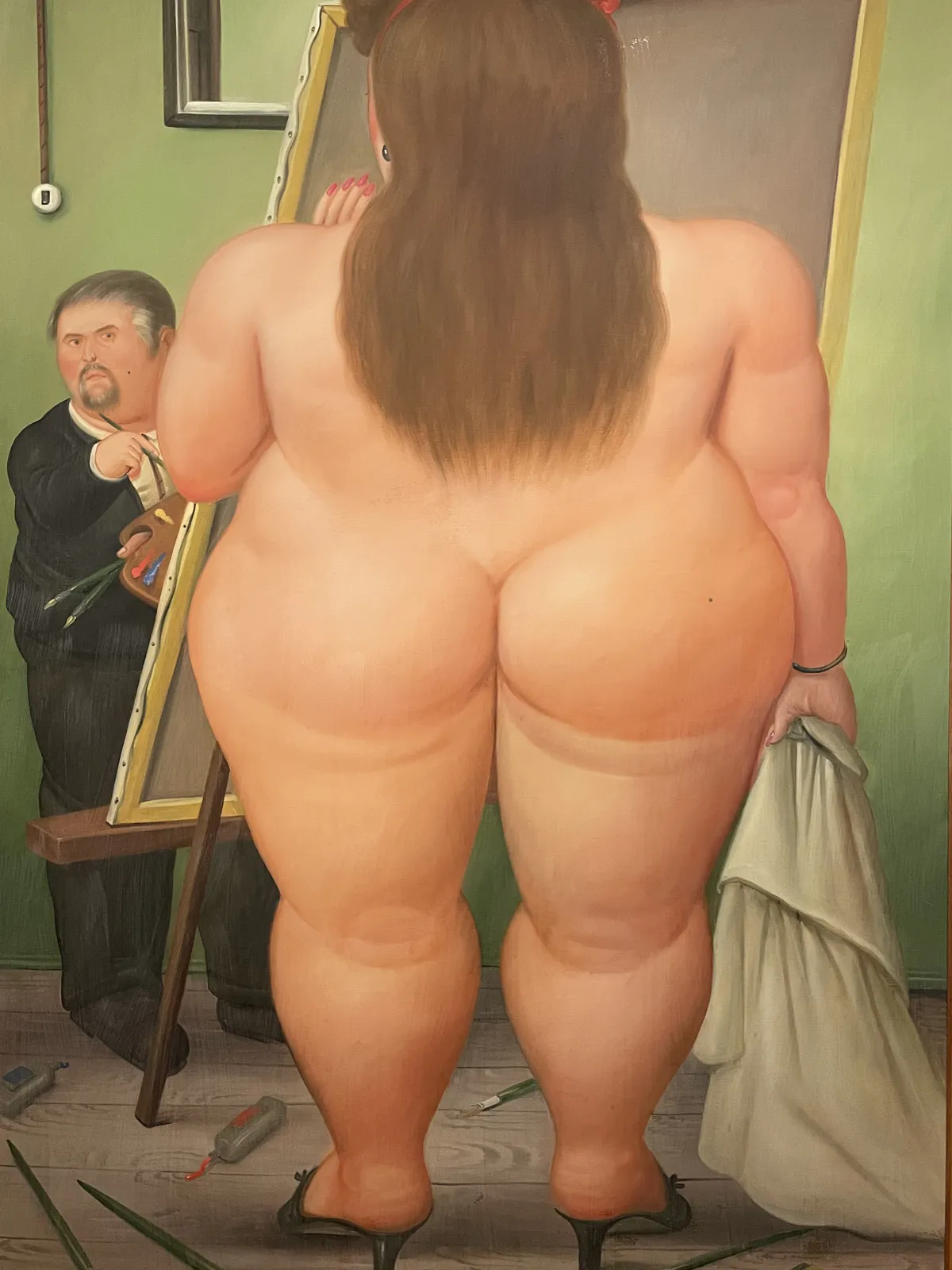
The Painter and His Model
Fernando Botero
Fernando Botero's The Painter and His Model (1984) humorously subverts the traditional artist-muse dynamic. The painting features a voluptuous nude model dominating the canvas, while the artist, dwarfed behind his easel, peers out with a palette in hand. This playful inversion highlights themes of power, beauty, and authorship, celebrating physical abundance with irony and affection. Botero's work invites reflection on the nature of artistic creation and the roles within it.
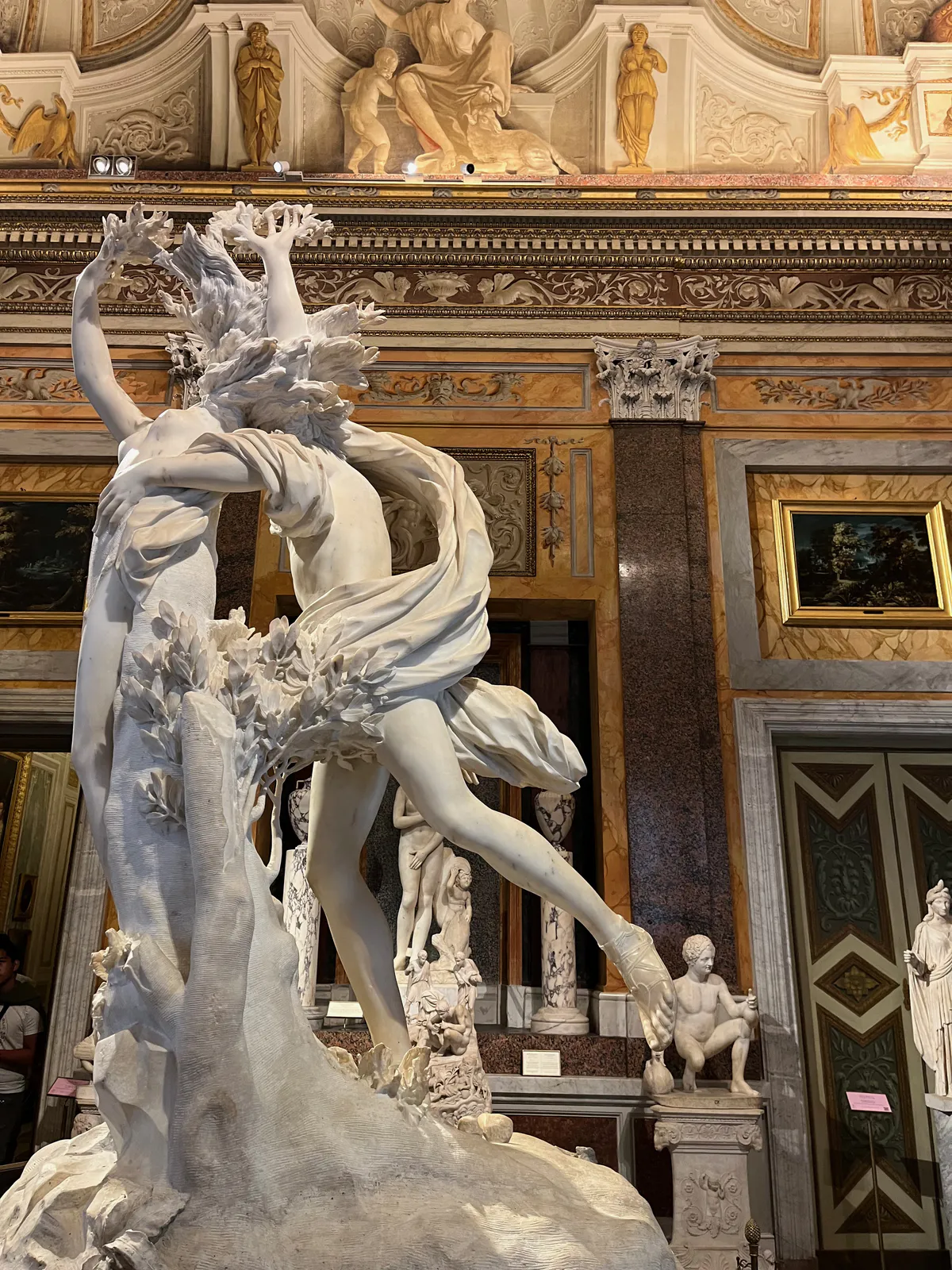
Apollo and Daphne
Bernini
Seen from behind, Bernini’s Apollo and Daphne (1622–25) reveals the spiraling tension of flight and pursuit. Daphne’s transformation accelerates—branches burst from her hair as Apollo strains forward, barely grounded. This angle heightens the illusion of motion, capturing the myth’s fleeting climax with lyrical virtuosity.
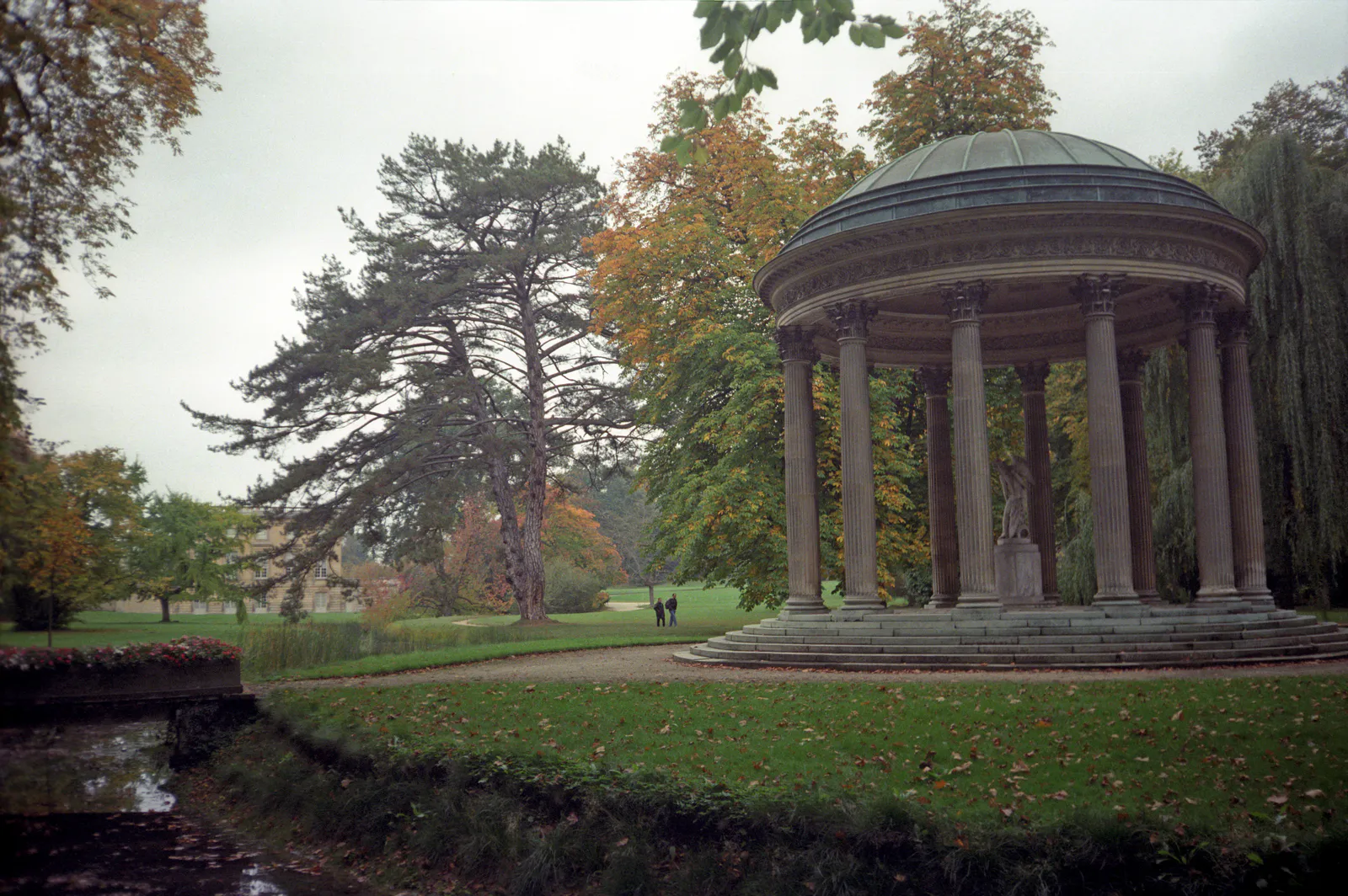
Temple of Love
Richard Mique
Erected in the gardens of the Petit Trianon (1778), this neoclassical rotunda shelters a sculpture of Cupid and symbolizes Marie Antoinette’s idealized vision of romance and pastoral escape. Designed by architect Richard Mique, the temple reflects Enlightenment-era aesthetics and the queen’s longing for simplicity within Versailles’ opulence.
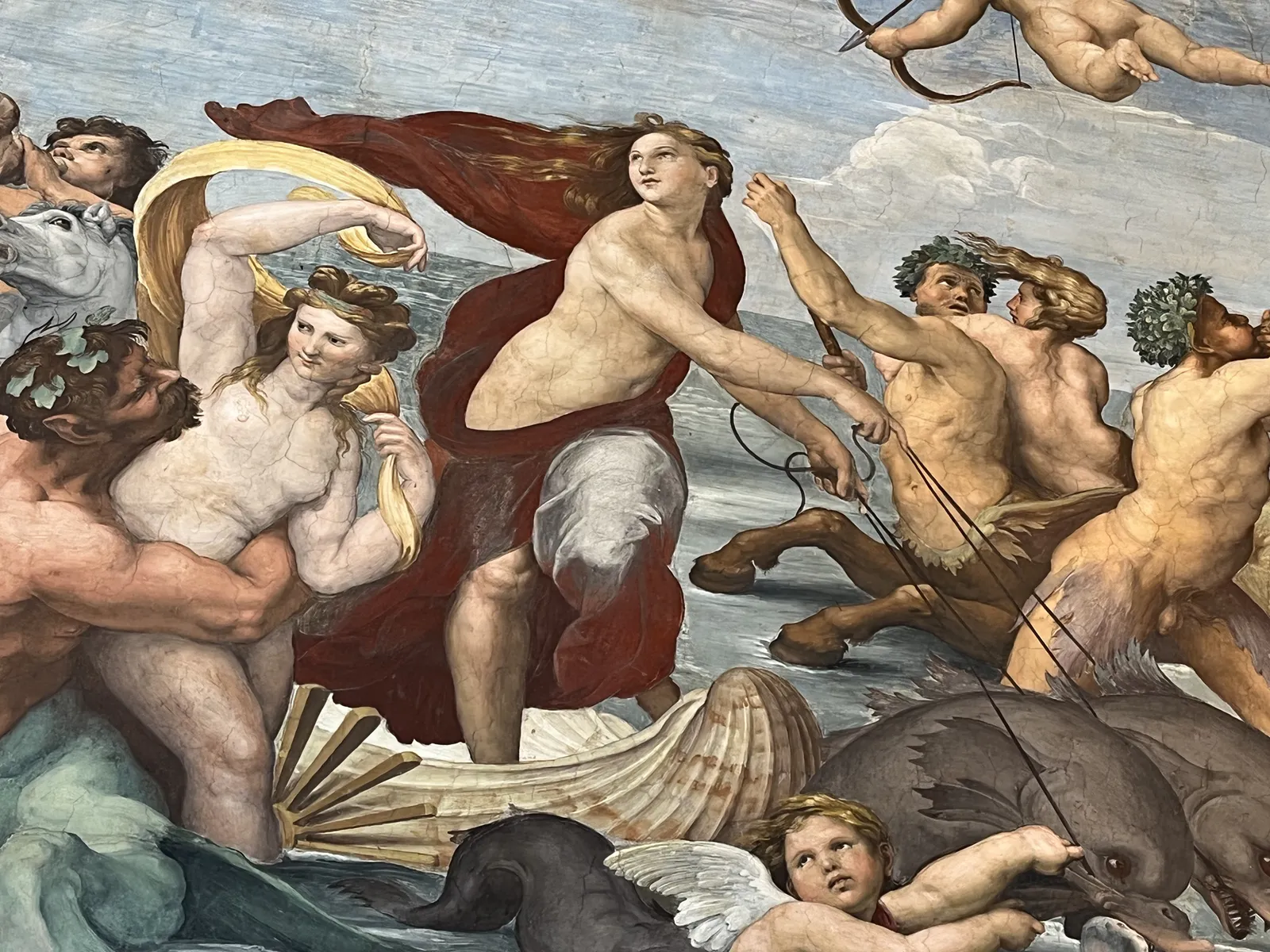
Triumph of Galatea (detail)
Raphael
Painted by Raphael’s workshop (1511–1512), this fragment depicts the sea nymph Galatea triumphantly riding a shell chariot, drawn by dolphins and surrounded by marine gods. Inspired by classical mythology, the scene celebrates ideal beauty, love, and movement, blending Renaissance harmony with dynamic mythological fantasy.
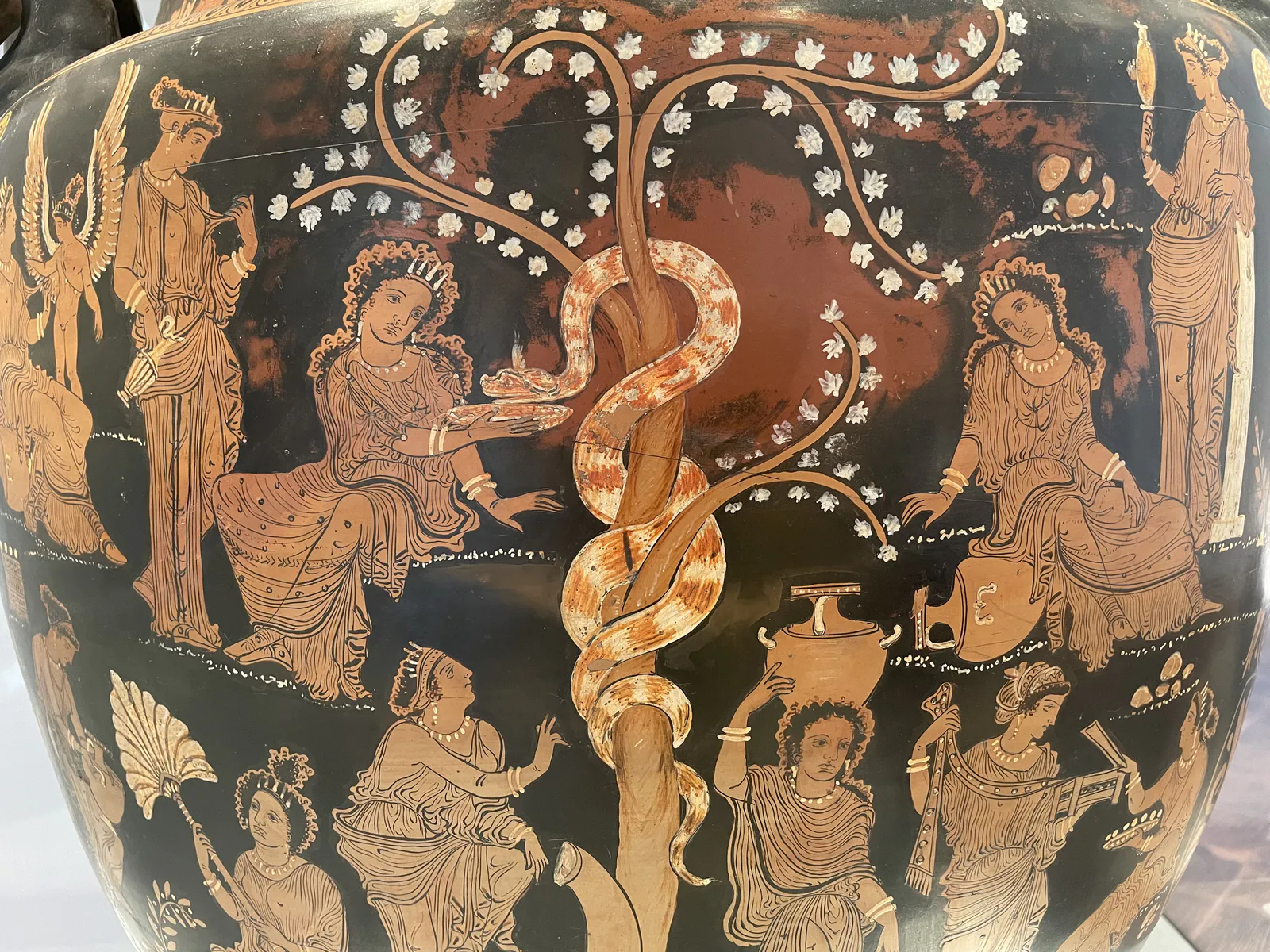
The Garden of the Hesperides
Lycurgus Painter
This Apulian red-figure volute krater (360–345 BC) shows maidens guarding the golden apples gifted by Gaia, with the serpent Ladon coiling around the sacred tree. Heracles is tasked with retrieving these apples in his final labor. The scene symbolizes the hero's triumph over peril, reflecting the ancient Greek themes of challenge and victory.
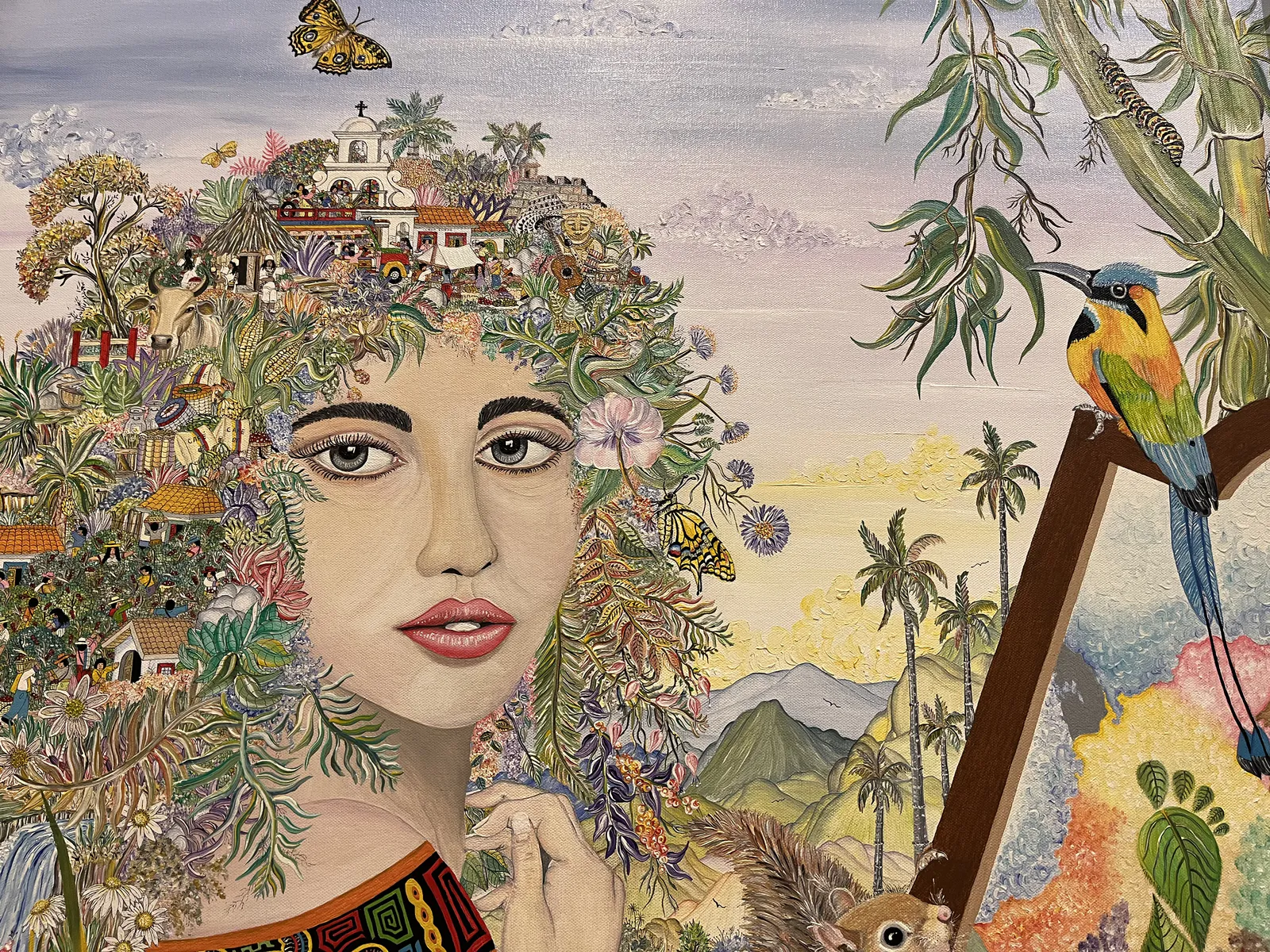
Aún Hay Tiempo
Julio César Ojeda Ariza
This 2021 work blends oil and ink to portray a woman whose hair becomes a lush tapestry of biodiversity and rural life. Symbolizing Colombia’s natural and cultural abundance, it warns of its fragility. The title, There’s Still Time, urges collective action to preserve the environment and ancestral wisdom.
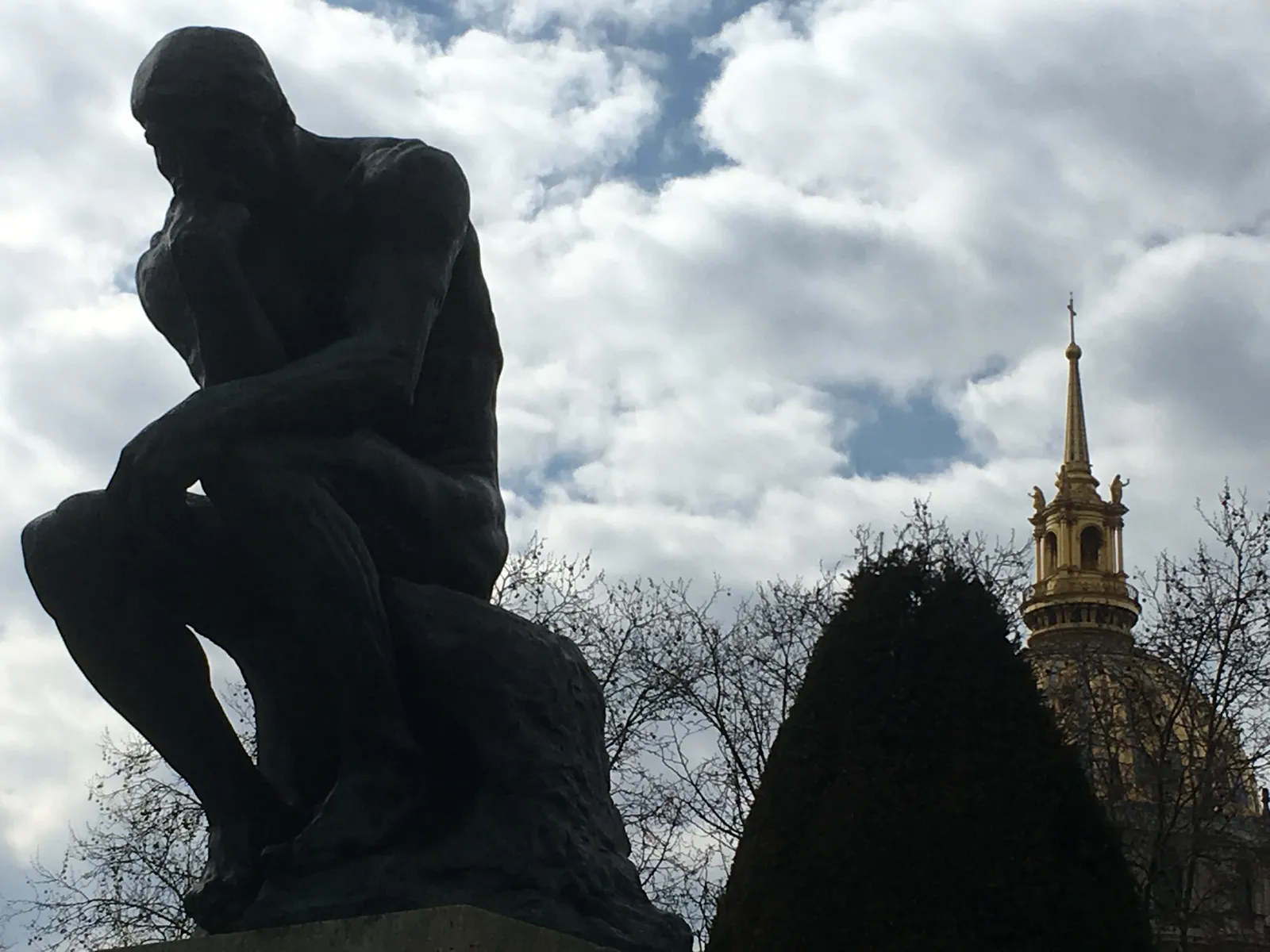
The Thinker
Auguste Rodin
Rodin's iconic bronze sculpture, The Thinker(1904), depicts a nude male figure in deep contemplation, symbolizing profound thought. Originally part of The Gates of Hell, it reflects on philosophy and introspection. This one is the monumental casting, with 27 full-sized versions worldwide. The masterpiece invites viewers to ponder life's complexities, embodying the universal quest for understanding and intellectual pursuit.
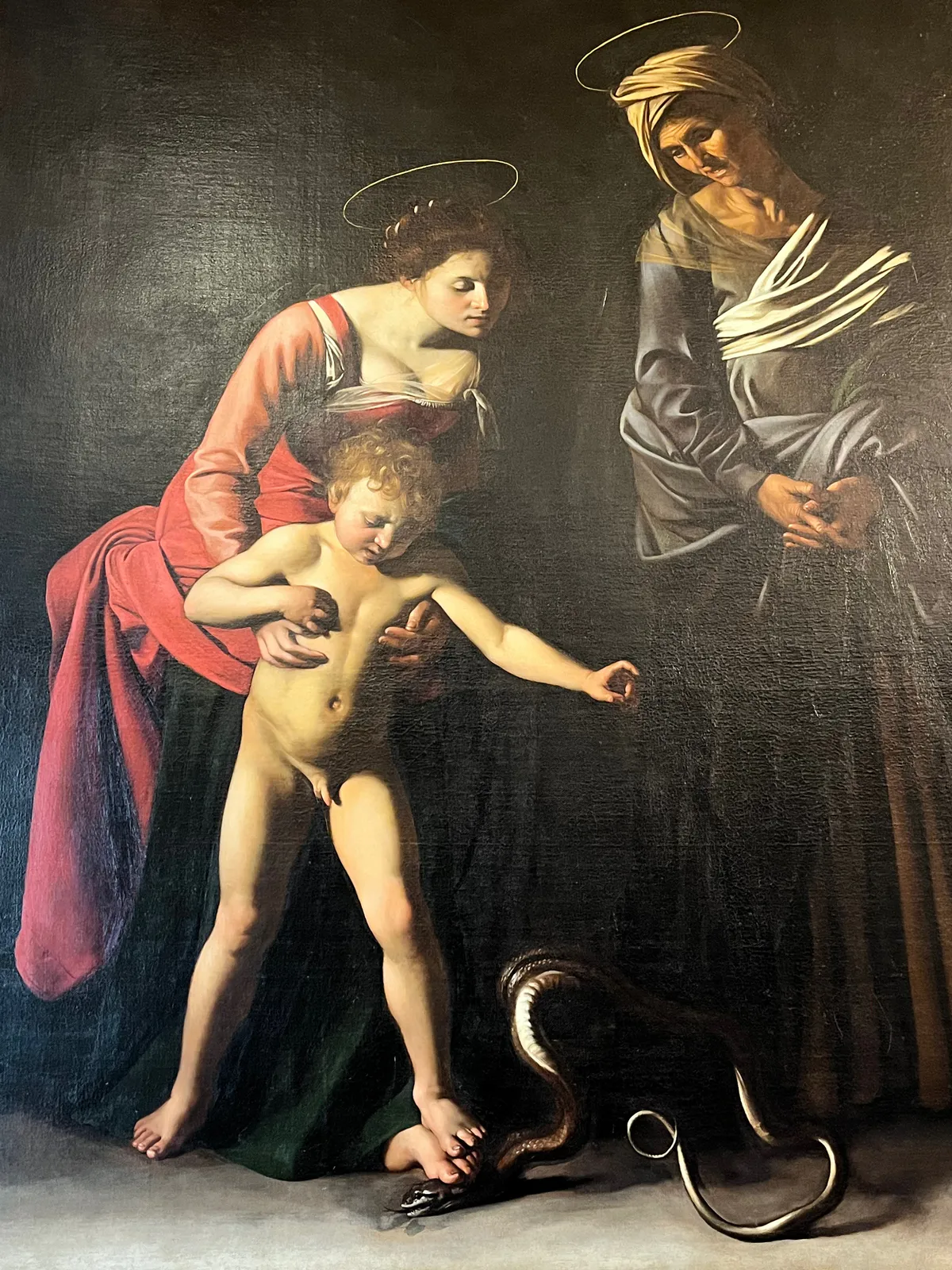
Madonna and Child with St Anne (Madonna dei Palafrenieri)
Caravaggio
This bold altarpiece (1605–06) shows the Virgin Mary guiding the Christ Child as he crushes a serpent—symbol of original sin. St Anne watches solemnly, evoking generational grace. Caravaggio’s realism and chiaroscuro infuse the holy scene with human emotion, provoking awe and controversy upon its brief display in St Peter’s.
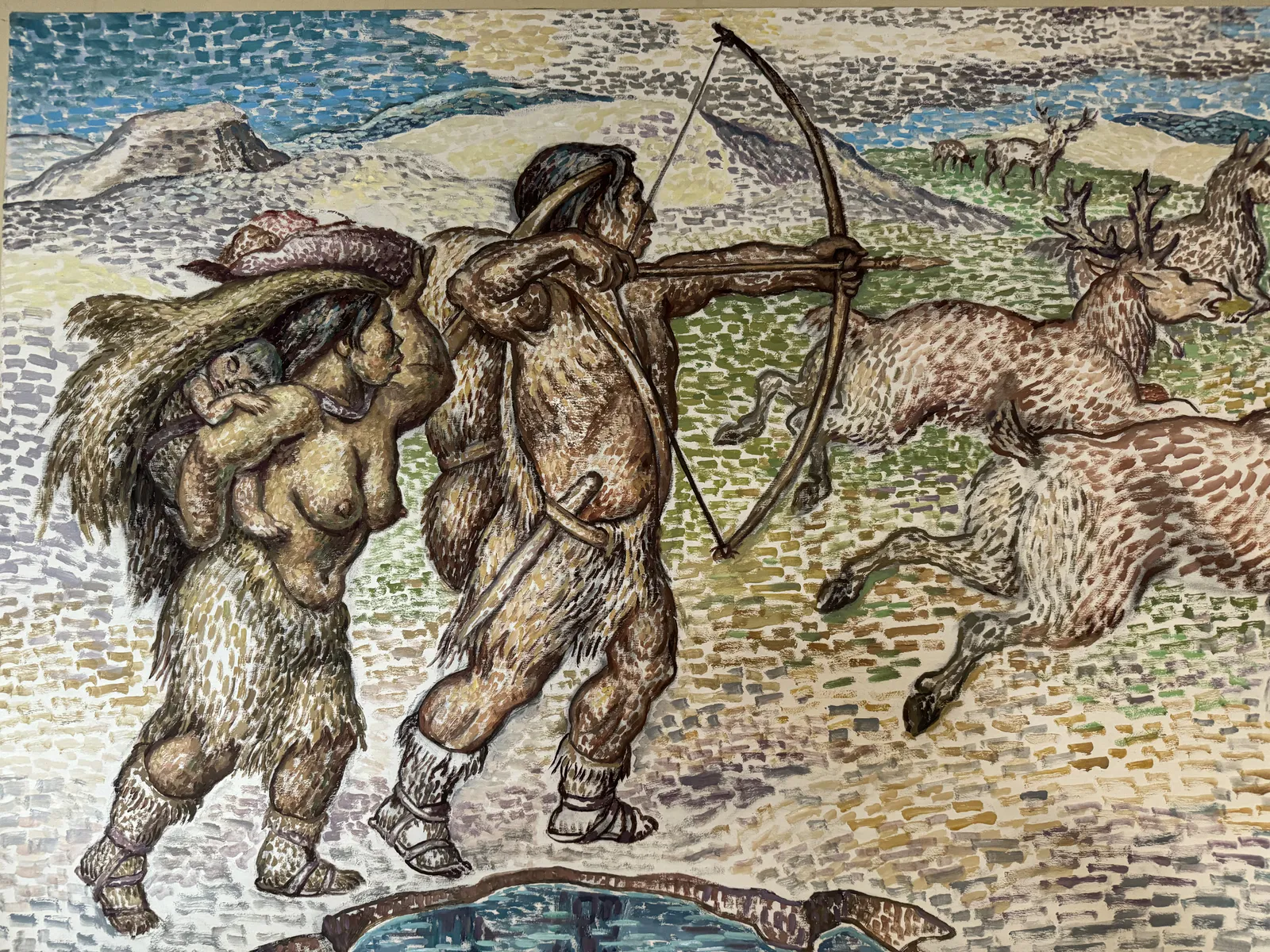
Prehistoric Hunt
Luis Alberto Acuña
This dynamic mural depicts a prehistoric hunting scene, with a male figure aiming his bow at deer while a woman, carrying a child and bundled goods, follows closely. Painted in Acuña’s signature neo-primitivist style (late 1960s-early 1970s), it reflects his interest in the mythic foundations of civilization and the daily heroism of early human life. The textured brushwork echoes rock art while grounding the composition in a modern, expressive idiom rooted in Colombian identity.
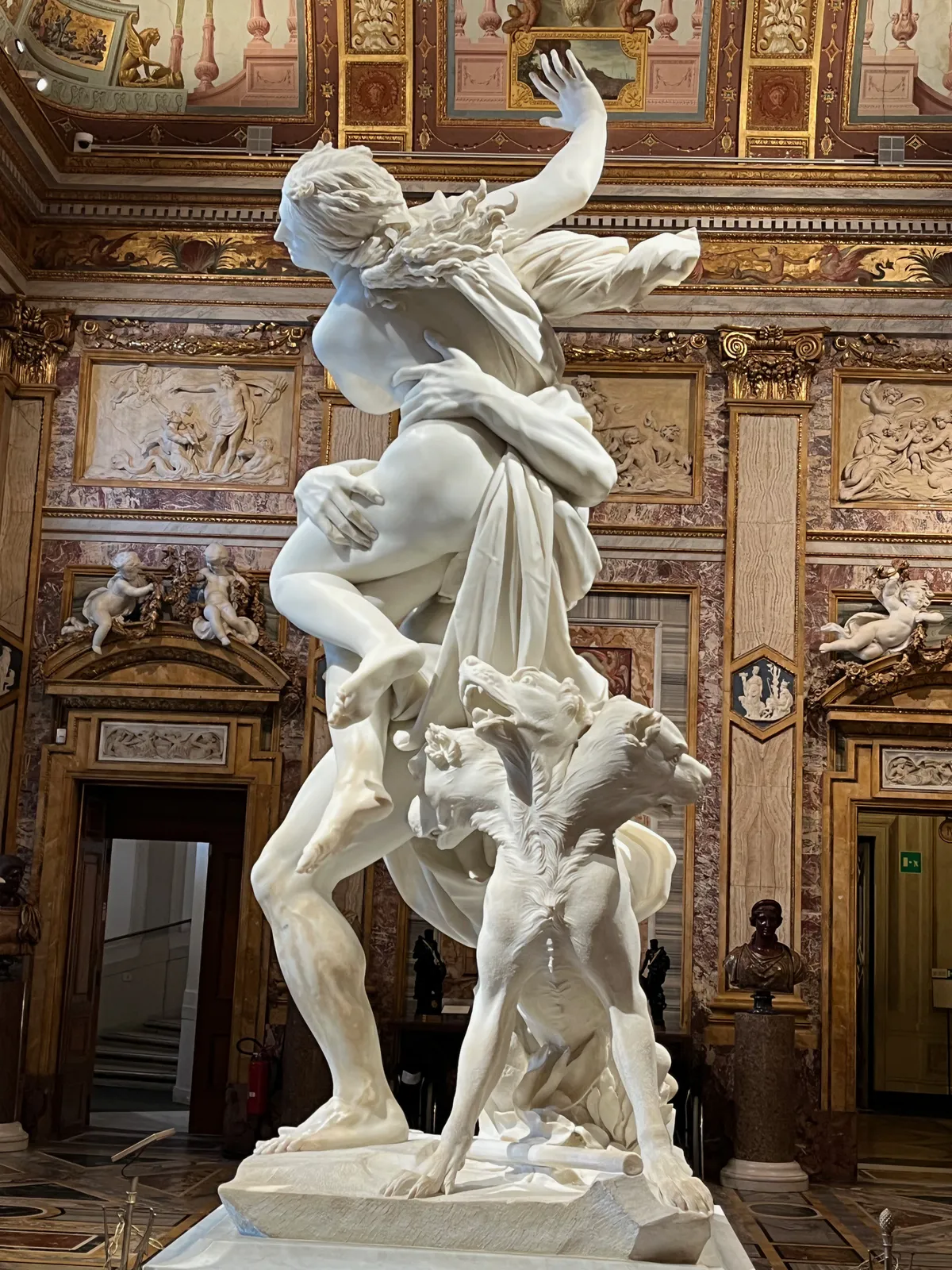
The Rape of Proserpina
Bernini
This angle captures the emotional arc of Proserpina’s resistance as she twists away from Pluto’s grasp. Her outstretched arm and flowing hair dramatize the violence of the abduction. Cerberus, the infernal hound, reinforces the mythological setting, while the composition’s spiral motion showcases Bernini’s virtuosity in carving living flesh from marble.
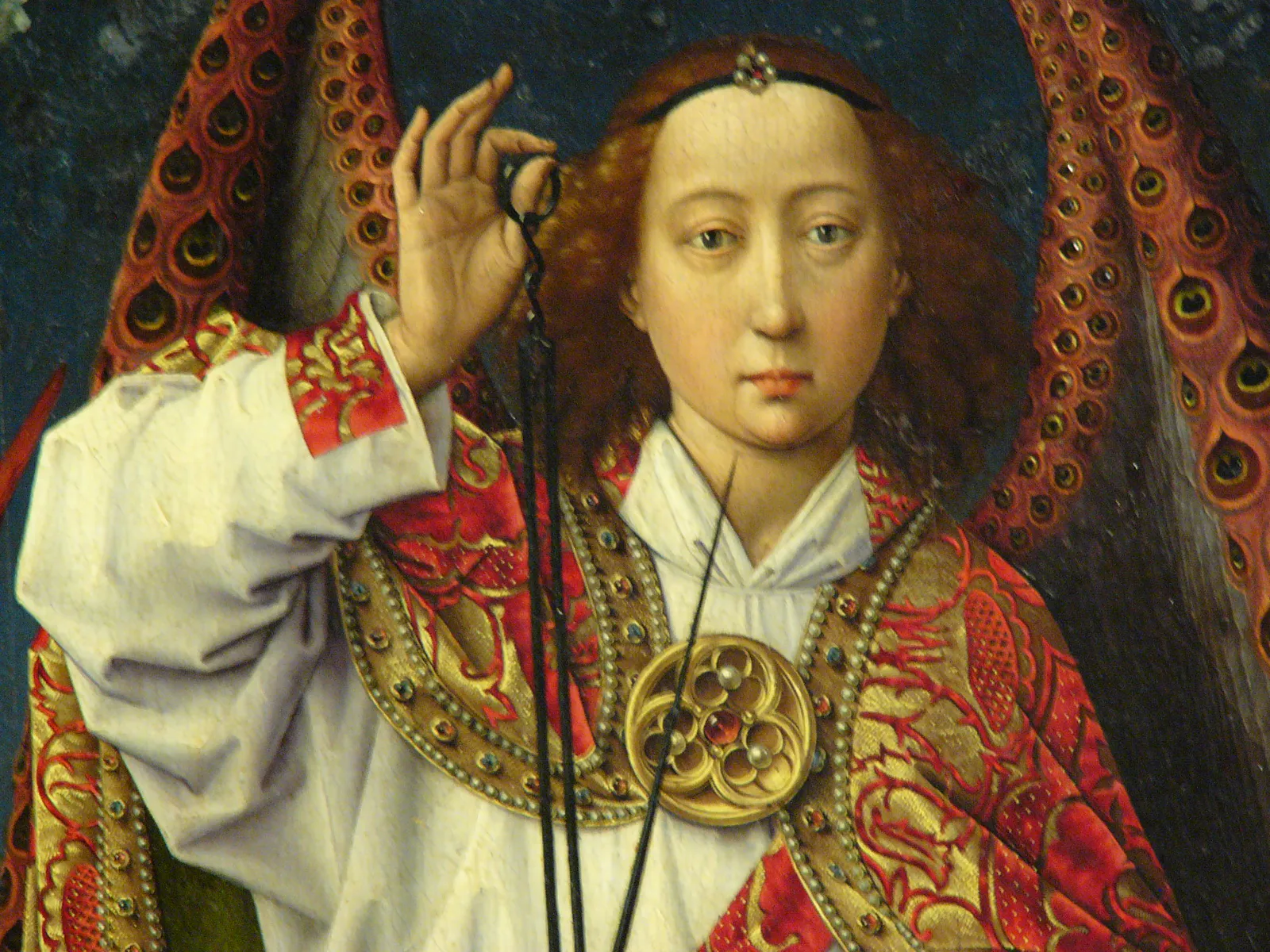
Archangel Michael
Rogier van der Weyden
This panel (1445–50) from the Beaune Altarpiece shows Archangel Michael weighing souls on Judgment Day. His youthful calm contrasts with the gravity of divine judgment. The richly patterned brocade and peacock-feather wings reflect Burgundian court opulence, linking celestial imagery with the devotional grandeur of 15th-century Flanders.
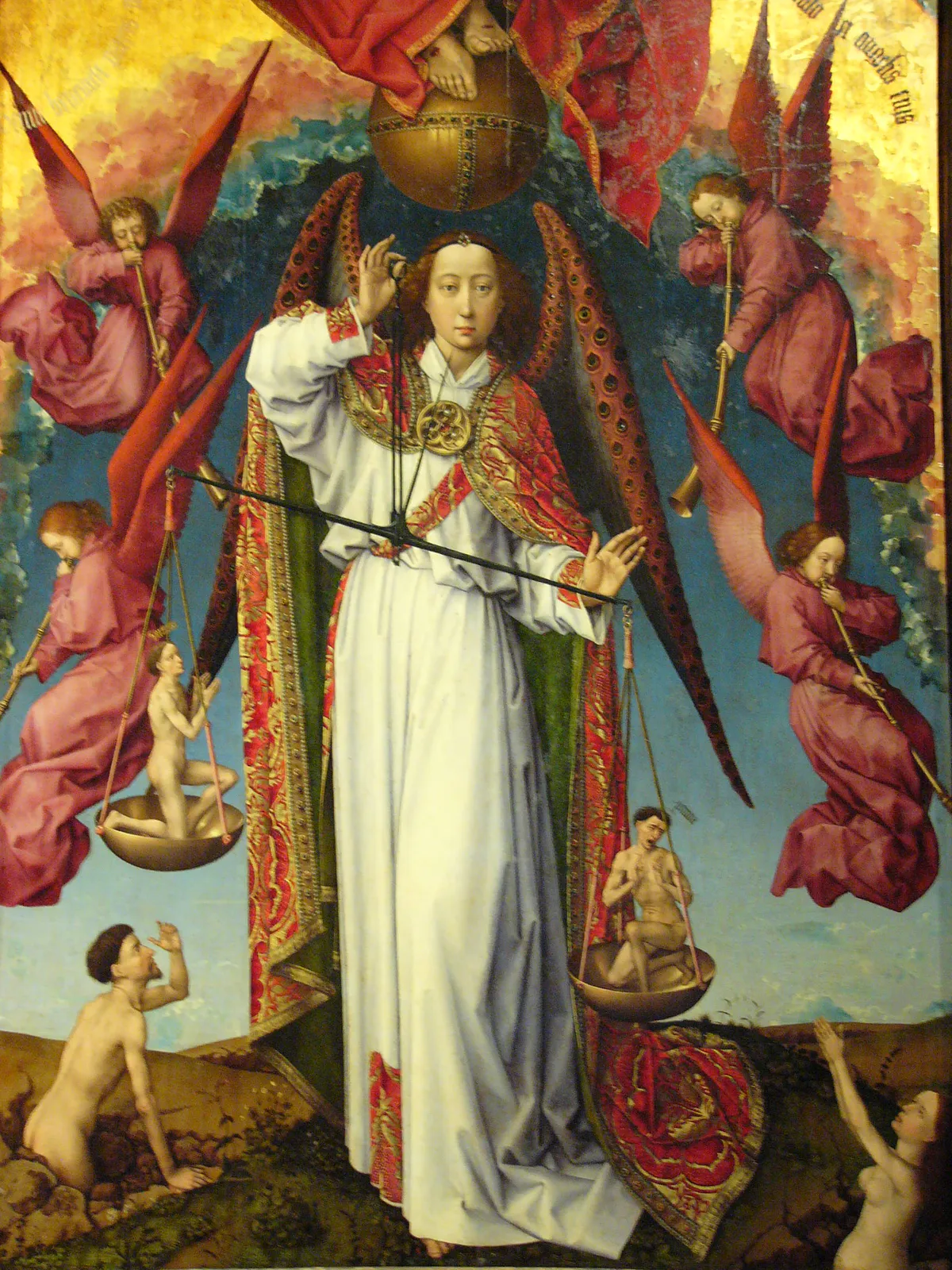
Archangel Michael Weighing Souls
Rogier van der Weyden
In this panel from the Last Judgment Altarpiece (1445–50), Archangel Michael dominates the scene, balancing souls in golden scales as Christ presides above. Trumpeting angels herald resurrection while the blessed and damned await their fate. Painted for Beaune’s Hôtel-Dieu, the work reminded patients that earthly suffering was framed within the ultimate hope of divine justice and salvation.
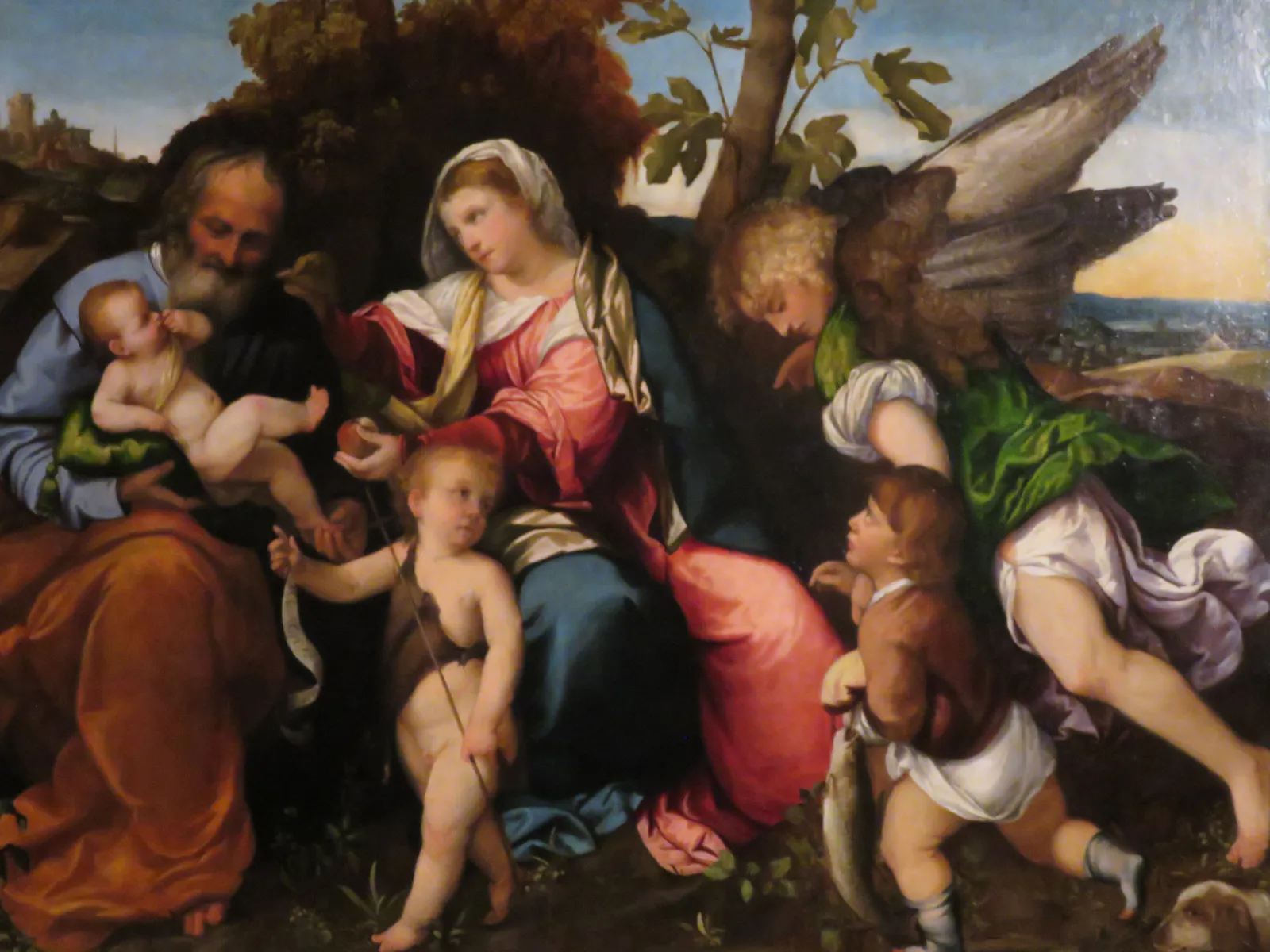
The Holy Family with Sts. Francis, Anthony, Magdalene, John and Elizabeth
Bonifazio Veronese
This oil on canvas (1525–27) shows the Holy Family seated outdoors, with Mary offering fruit to the Christ Child held by Joseph. At their side stand the young Saint John the Baptist and the Archangel Raphael guiding Tobias, who carries a fish. The combination of figures from different episodes may connect to Renaissance interest in linking domestic piety with protective intercession.
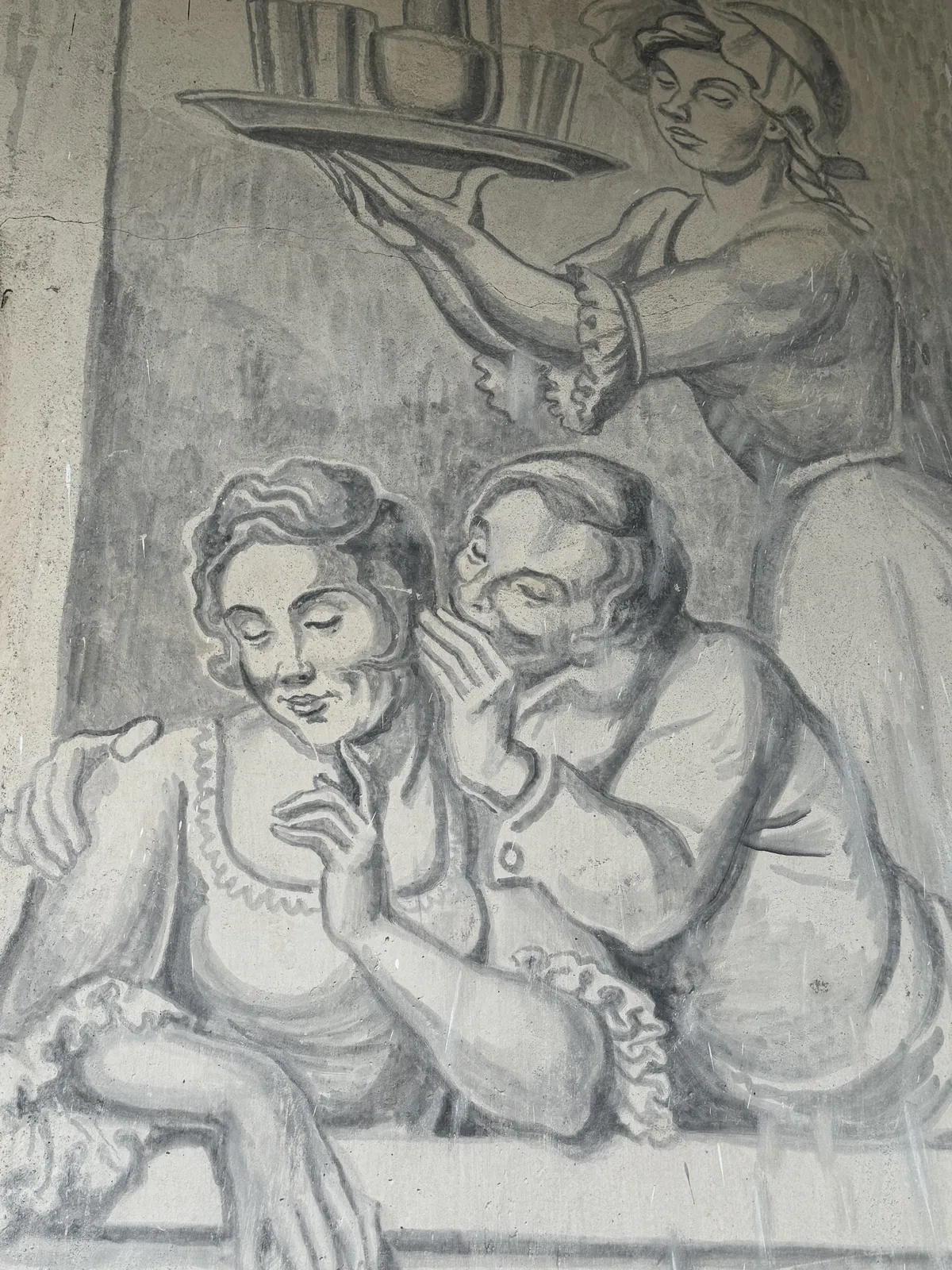
A Dangerous Whisper
Luis Alberto Acuña
This mural (1950s) by Luis Alberto Acuña depicts a man whispering seductively into a woman’s ear while she listens with a mix of curiosity and restraint. The intimate gesture contrasts with the servant above, who quietly performs her duties, reinforcing themes of gender dynamics, social roles, and the tension between desire and decorum in colonial society.
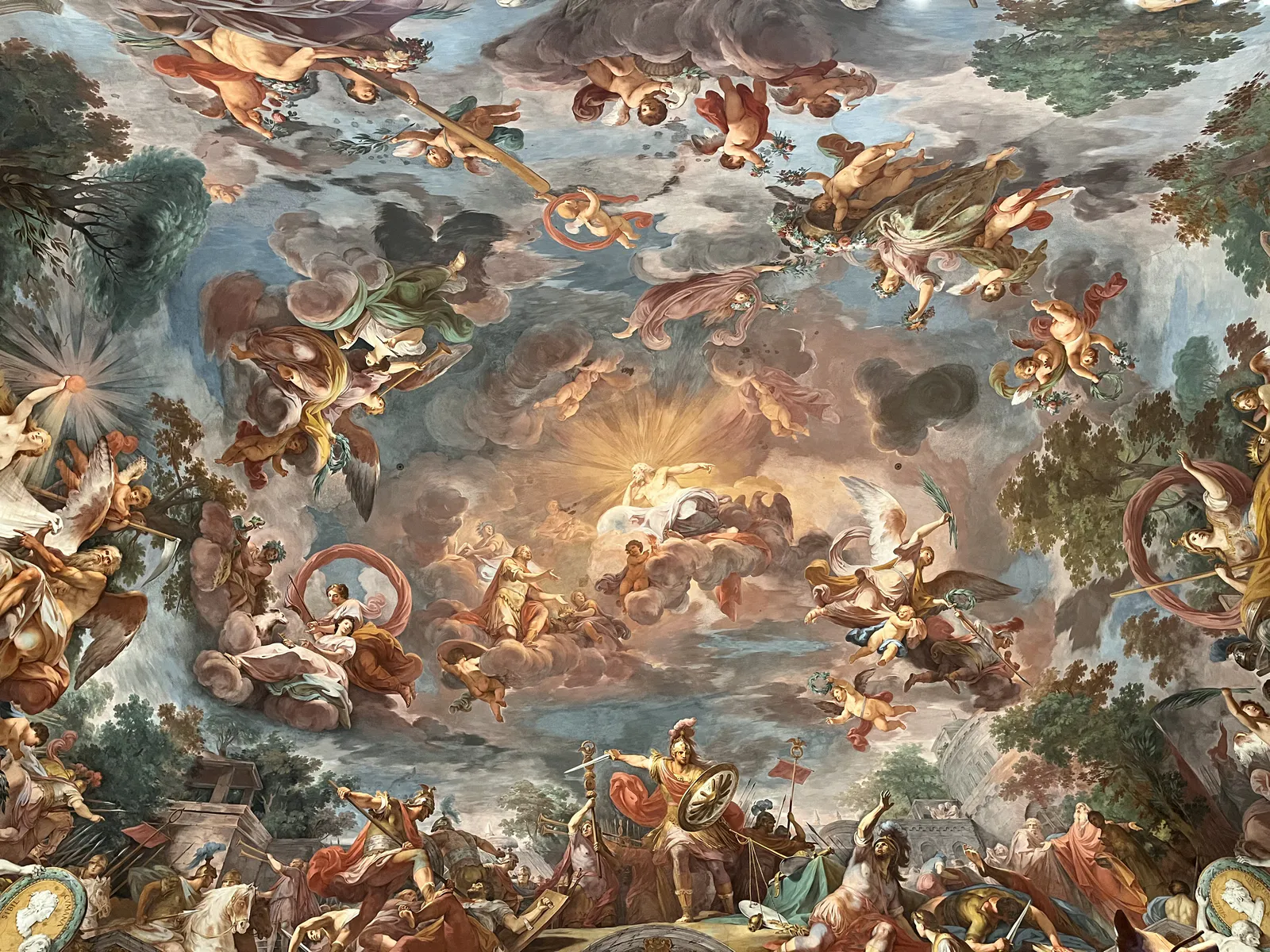
Roman Civilization and the Heroic Virtue of Honor
Mariano Rossi
This illusionistic ceiling (1775) shows a vortex of gods, heroes, and allegorical figures arranged in rising spirals. Rossi organized the composition with deep foreshortening to create a theatrical Baroque panorama. The central burst of light frames scenes of conflict and ascent, indicating how Roman culture linked civic honor with collective greatness.
“When the path is beautiful, do not ask where it leads.” — Zen proverb
Welcome to my travel photography!
“When the path is beautiful, do not ask where it leads.” — Zen proverb
Welcome to my travel photography!
For as long as I can remember, my path has been one of discovery—seeking beauty, timelessness, and connection in every corner of the world. It has also been a journey of deep learning and understanding. I’ve been an avid traveler (or perhaps a travel addict?) for most of my life. My love for travel began long before I ever left home: as a child, I drew a fantasy map of my grandparents’ apartment and “traveled” through it with my cousin Sonya, imagining adventures in every corner. Nearly 90 countries and countless moments of awe later, I’m excited to share this journey with you.
Thanks to the tireless and ingenious programming of Diagilev, we’re now able to present about fifteen percent of the images I’ve accumulated over the years. More will be released in small batches depending on your interest. While the first release leans toward museum photography, later ones will include more nature, architecture, culture, and general travel experiences. If you’d like to receive email notifications about new releases, feel free to reach out—no commercial use, ever.
Throughout my travels, I’ve been drawn to two intertwined kinds of discovery. One is intellectual: learning why the world is the way it is. History became my guide, shaping my perspective and filling my camera roll with museums and old buildings. To me, history is not the past—it is the key to understanding the present and how the world became what it is. The other is emotional: seeking moments of elevation—spirituality, beauty, harmony—often found in nature, monasteries, and ancient sacred spaces. Together, these impulses shape my photography. It invites you to learn, admire, and soar—to rise above the mundane and see the world through a lens of curiosity and wonder.
Much of my later travel became possible thanks to my job with Delta Air Lines, but the wanderlust began years earlier. By the time I joined the industry, I had already visited over 35 countries and lived in several—largely thanks to a backpacking journey around the world with Luis León, whose face appears in many early photos. I grew up in Ufa in the USSR, and since leaving it I have lived, studied, and worked in Latvia, the United States, France, South Korea, Canada, Spain, Italy, Brazil, Japan, and Colombia.
A life of near-constant movement may seem a little crazy, but it has deepened my understanding of the world and produced the photography you are about to see. Over the years, my style has evolved—more intentional, more refined—yet its core remains the same: a search for understanding, timeless beauty, and a connection to those who walked this earth long before us.
I hope these photos stir something in your soul, just as they did in mine. I’d love to hear from you—whether reactions, suggestions, corrections, or a request to be added to the email list for new releases (no commercial use, I promise). You can learn more about my travels here, and my academic life here.
Enjoy our shared journey!