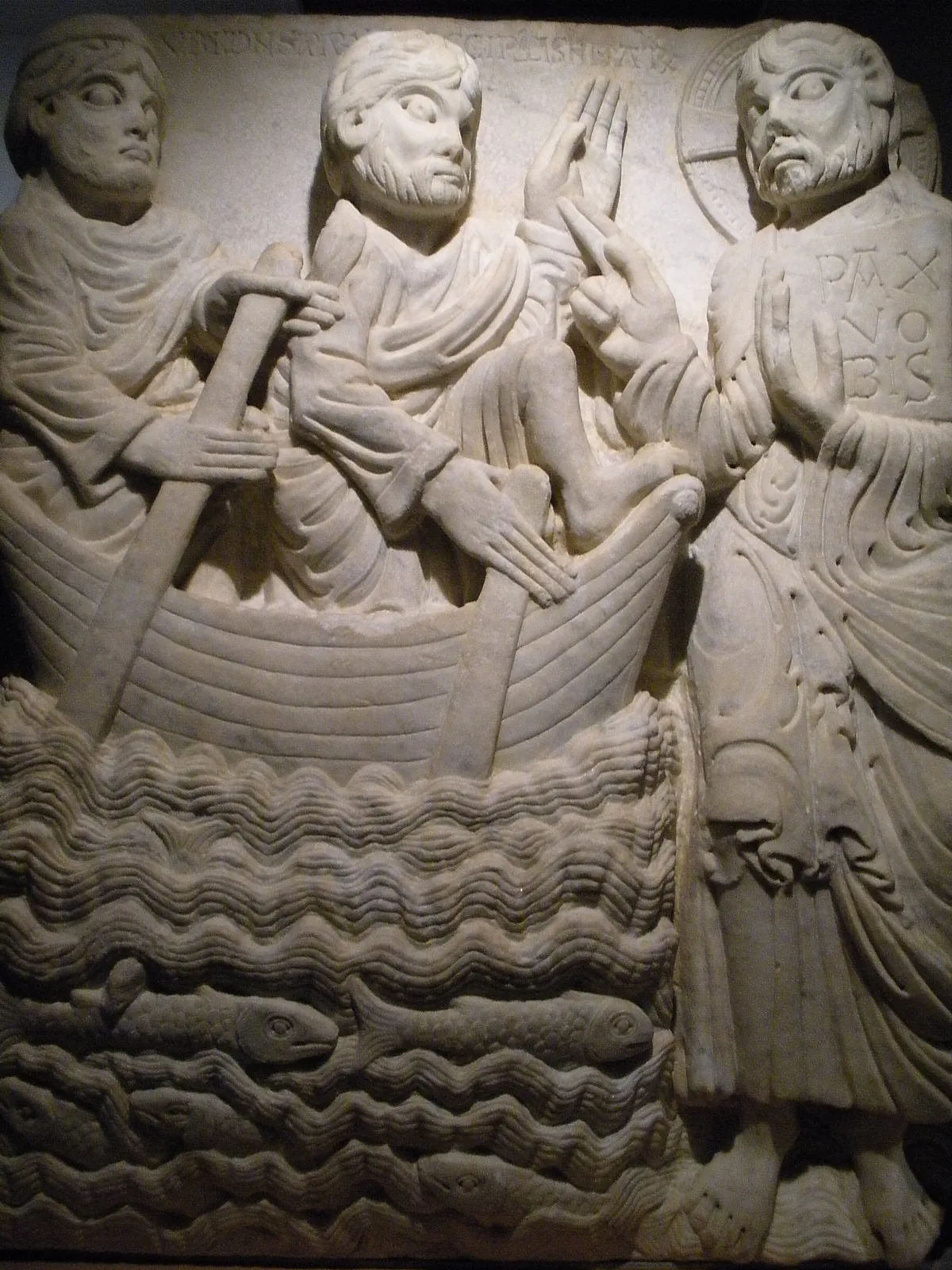
The Appearance of Christ to the Disciples
Master of Cabestany
This 12th-c. Romanesque sculpture by the Master of Cabestany depicts Christ revealing himself to his disciples after the resurrection. The artist is known for figures with large heads, flat foreheads, long noses, and almond-shaped eyes. Likely from the monastery of Sant Pere de Rodes, the work exemplifies the Master of Cabestany’s influence across Southern Europe, from Tuscany to Navarre.
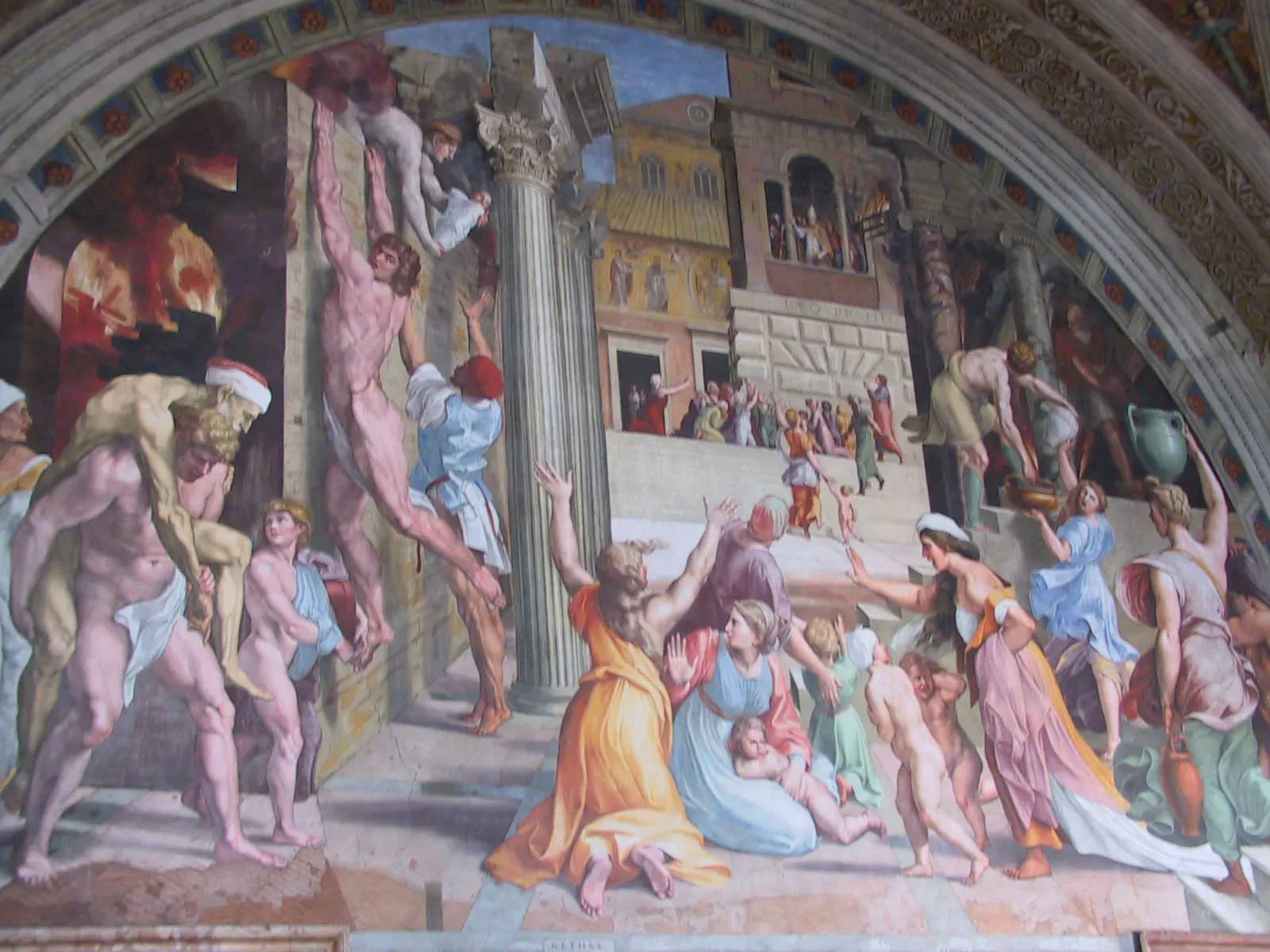
Fire in the Borgo
Rapahael and Giulio Romano
This fresco (1514) captures a legendary fire in Rome's Borgo district, illustrating divine intervention through Pope Leo IV's prayer. The fresco, part of the Raphael Rooms in the Vatican, blends classical and Renaissance elements, showcasing dynamic figures and architectural precision. This work reflects the era's belief in the power of faith and the church's central role in societal protection and order.
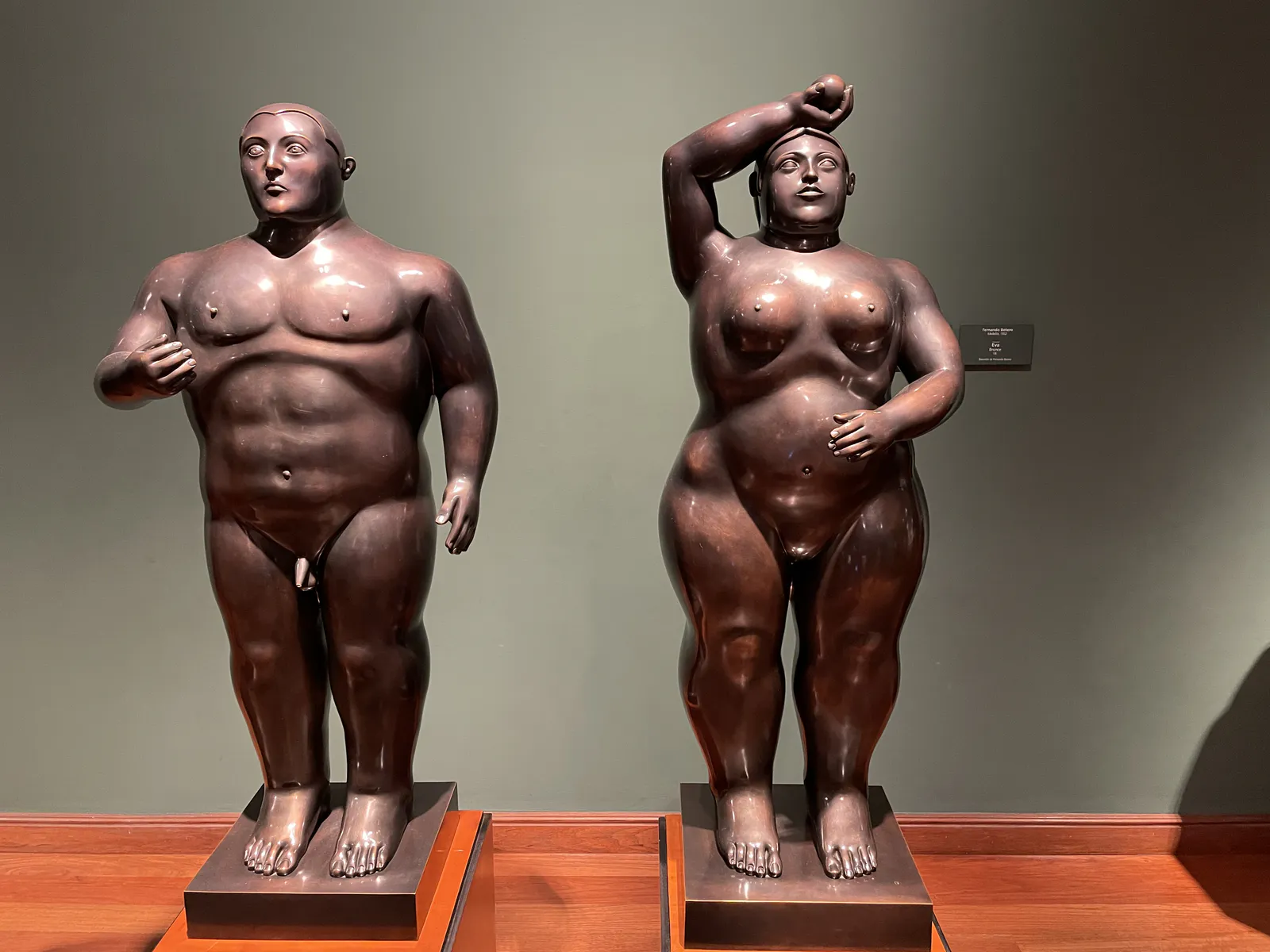
Adam and Eve
Fernando Botero
These 1999 bronze figures reimagine the biblical first humans with Botero’s hallmark voluminous style. Their serene, exaggerated forms strip the myth of guilt and drama, offering a playful yet dignified meditation on innocence, corporeality, and the timeless tension between flesh and spirit.
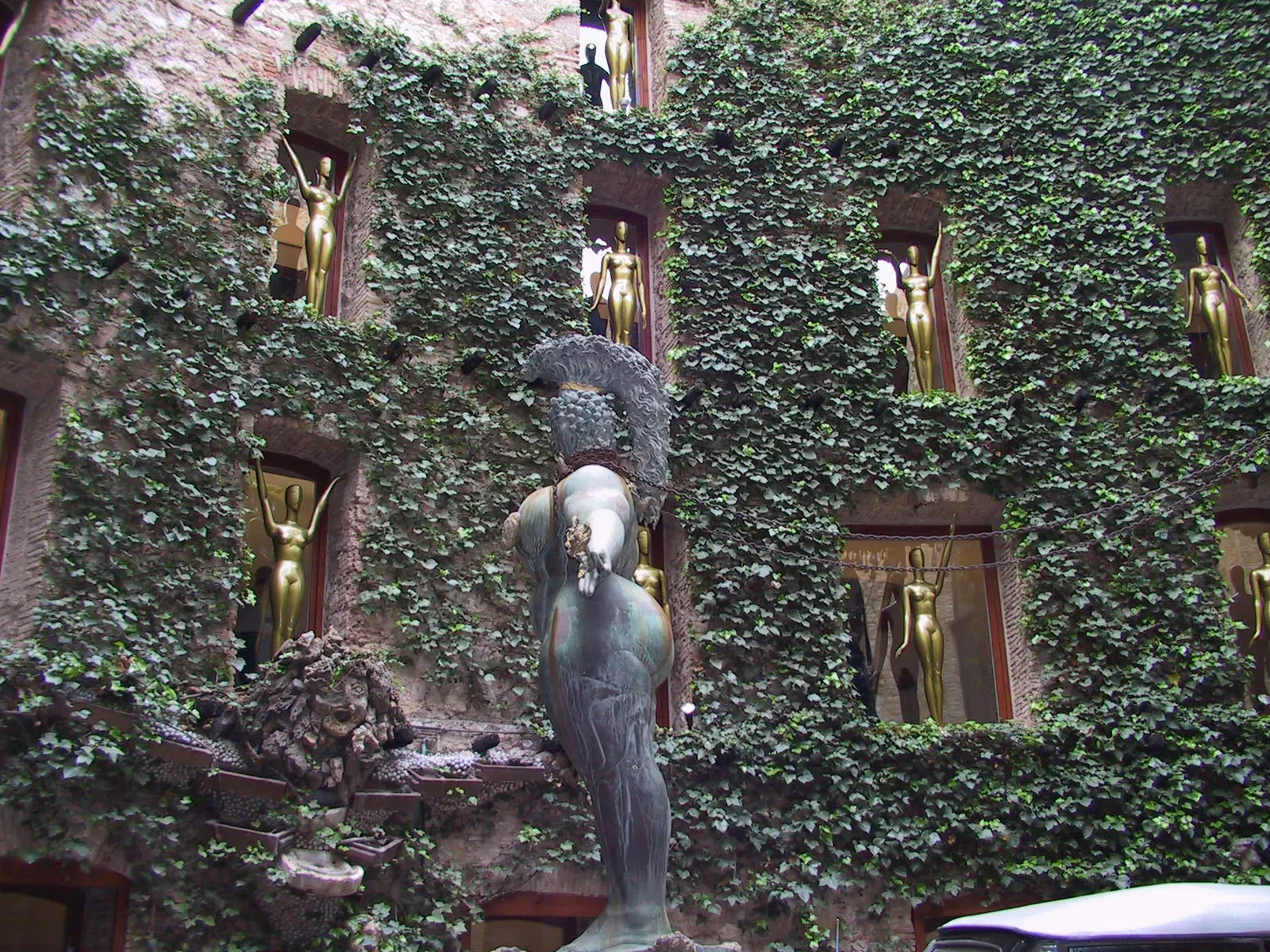
The Courtyard of the Wind Palace
Salvador Dalí
Dalí’s surreal installation (1970s) features golden female mannequins resembling votive icons in windows surrounding a central bronze figure of Venus crowned with a ship. This work merges classical motifs with theatrical elements, creating a fantastical vision of fertility, mythology, and voyeurism, showcasing Dalí’s unique blend of art and architecture.
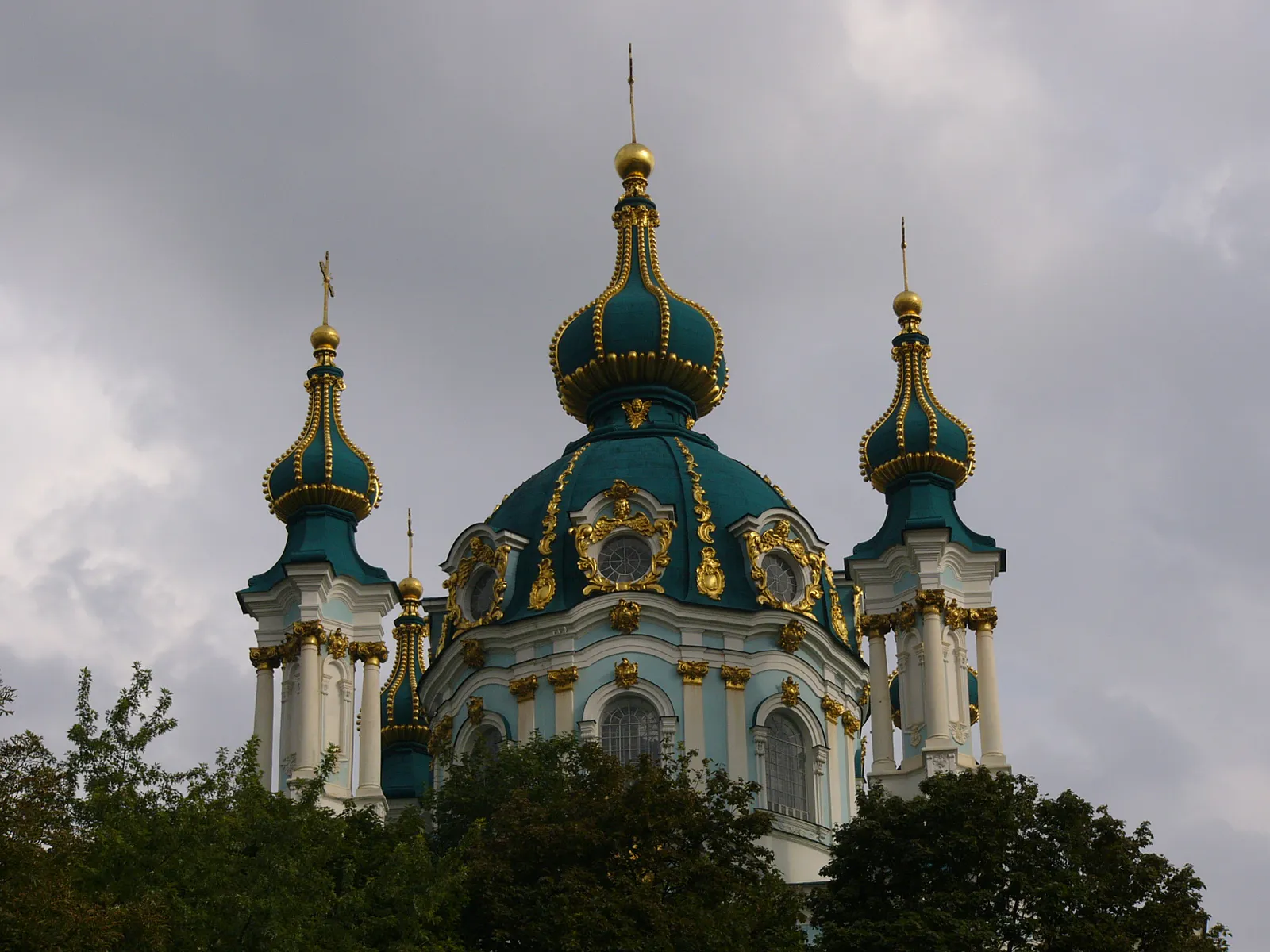
St. Andrew's Church
Bartolomeo Rastrelli
St. Andrew’s Church (1747–54) crowns a Kyiv hill with gilded domes and turquoise ornament typical of late Baroque design introduced by the Italian architect Bartolomeo Rastrelli. Its dynamic composition and elaborate detailing adapt Western forms to Orthodox liturgy. The church stands as a landmark of 18th-c. imperial architecture in Eastern Europe.
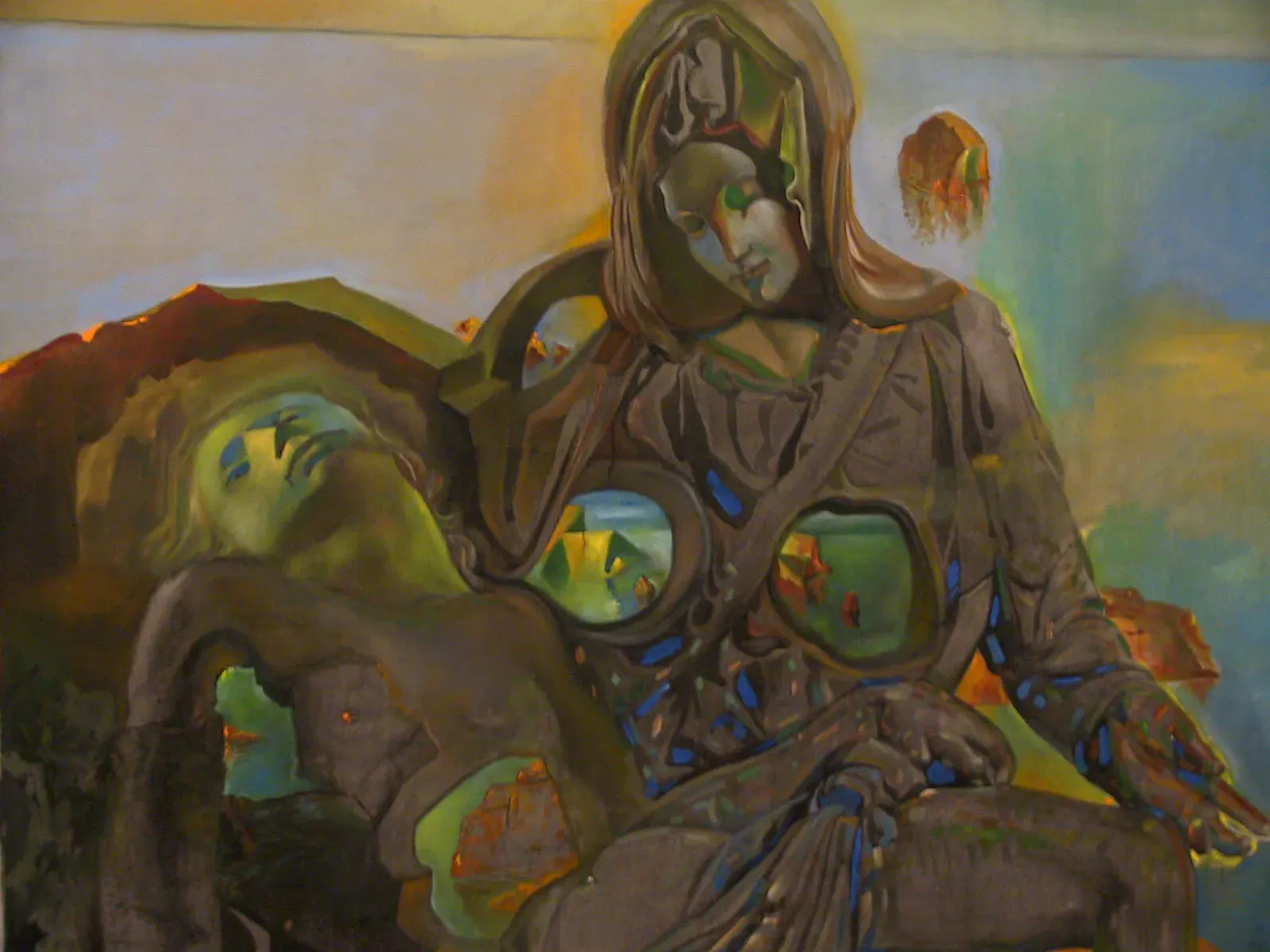
Geological Echo. La Pietà
Salvador Dalí
Dalí reinterprets Michelangelo’s La Pietà, merging sacred imagery with surreal geological forms (1982). The figures’ bodies become fragmented landscapes, symbolizing the erosion of memory and time. Created during Gala’s final years, the work reflects personal grief, exploring themes of love, loss, and the unconscious through voids that resonate with emotional depth and introspection.
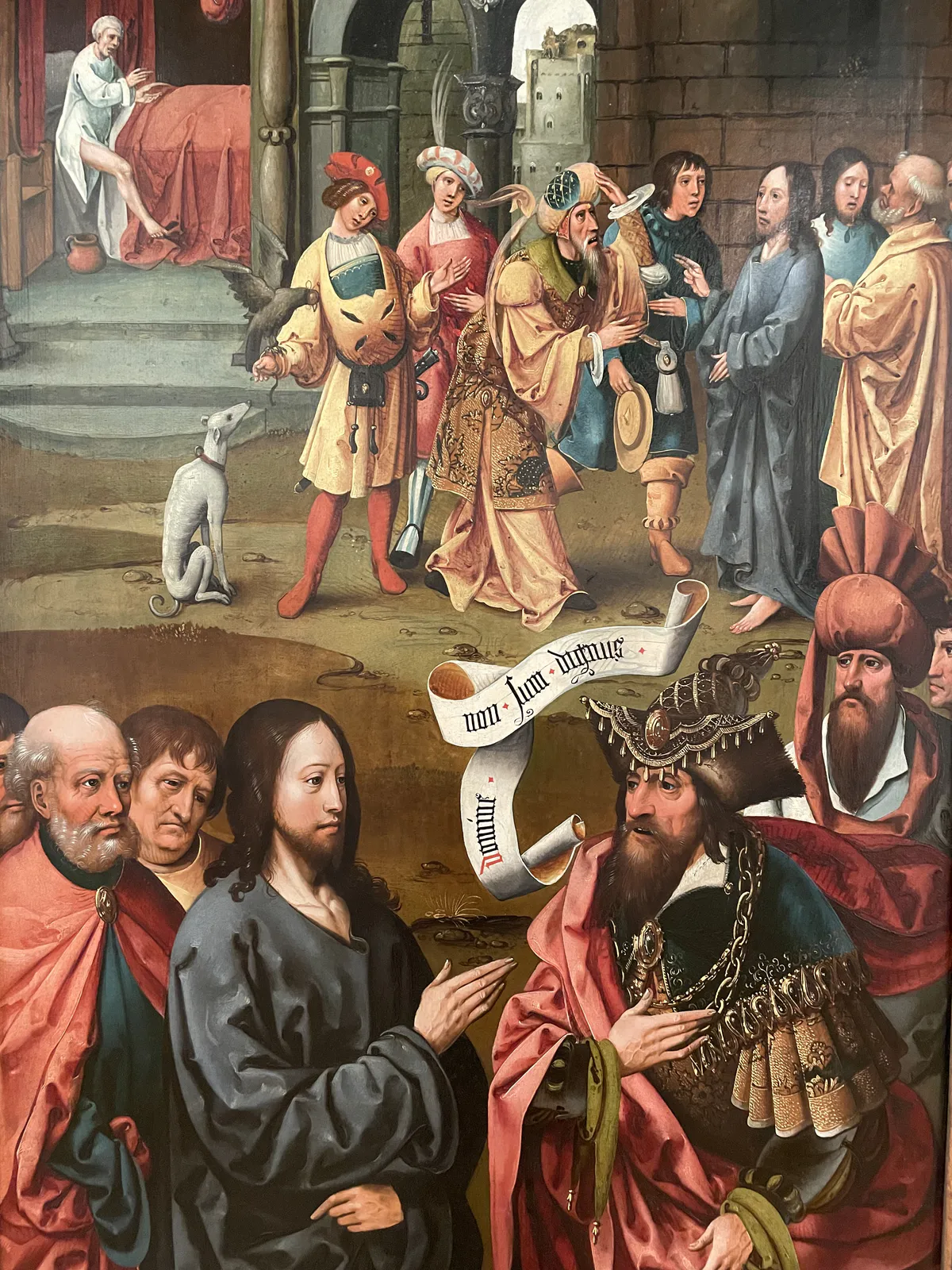
Christ and the Centurion of Capernaum
Master of Adoration of Amberes
This Northern Renaissance panel (1520–30) captures the moment a Roman centurion asks Christ to heal his servant, saying Lord, I am not worthy. The scene blends biblical narrative with contemporary Flemish attire, highlighting faith over status. The expressive gestures and rich details emphasize humility and the universal appeal of compassion, reflecting the era's fusion of religious and cultural elements.
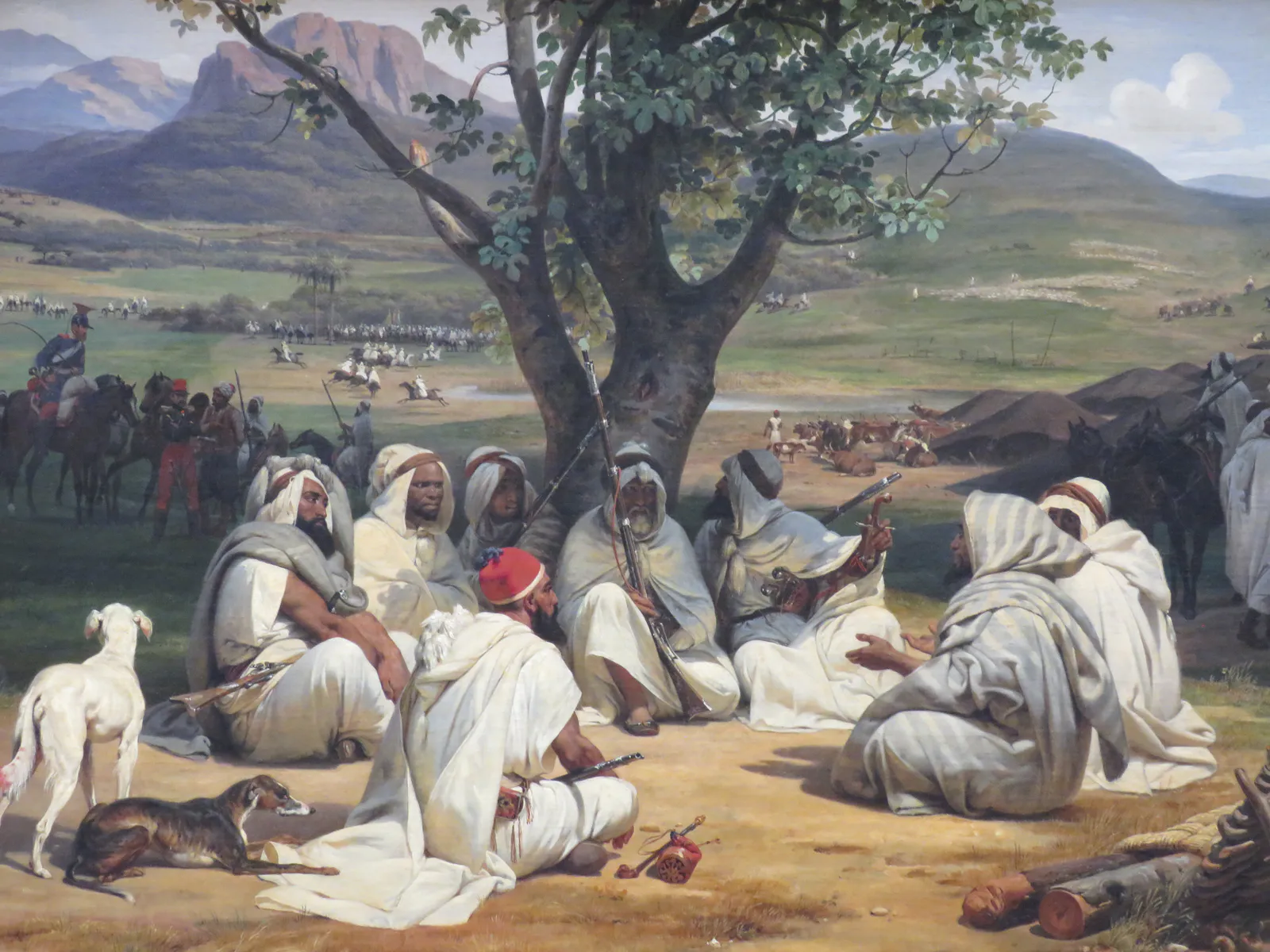
Arab Chieftains in Council
Horace Vernet
This 1834 work depicts Arab chieftains in council, likely discussing tribal matters or alliances. Vernet, a French artist known for battle scenes and Orientalist themes, illustrates the 19th-c. European interest in the Orient. The painting reflects the complex interplay of art, culture, and imperialism of the era.
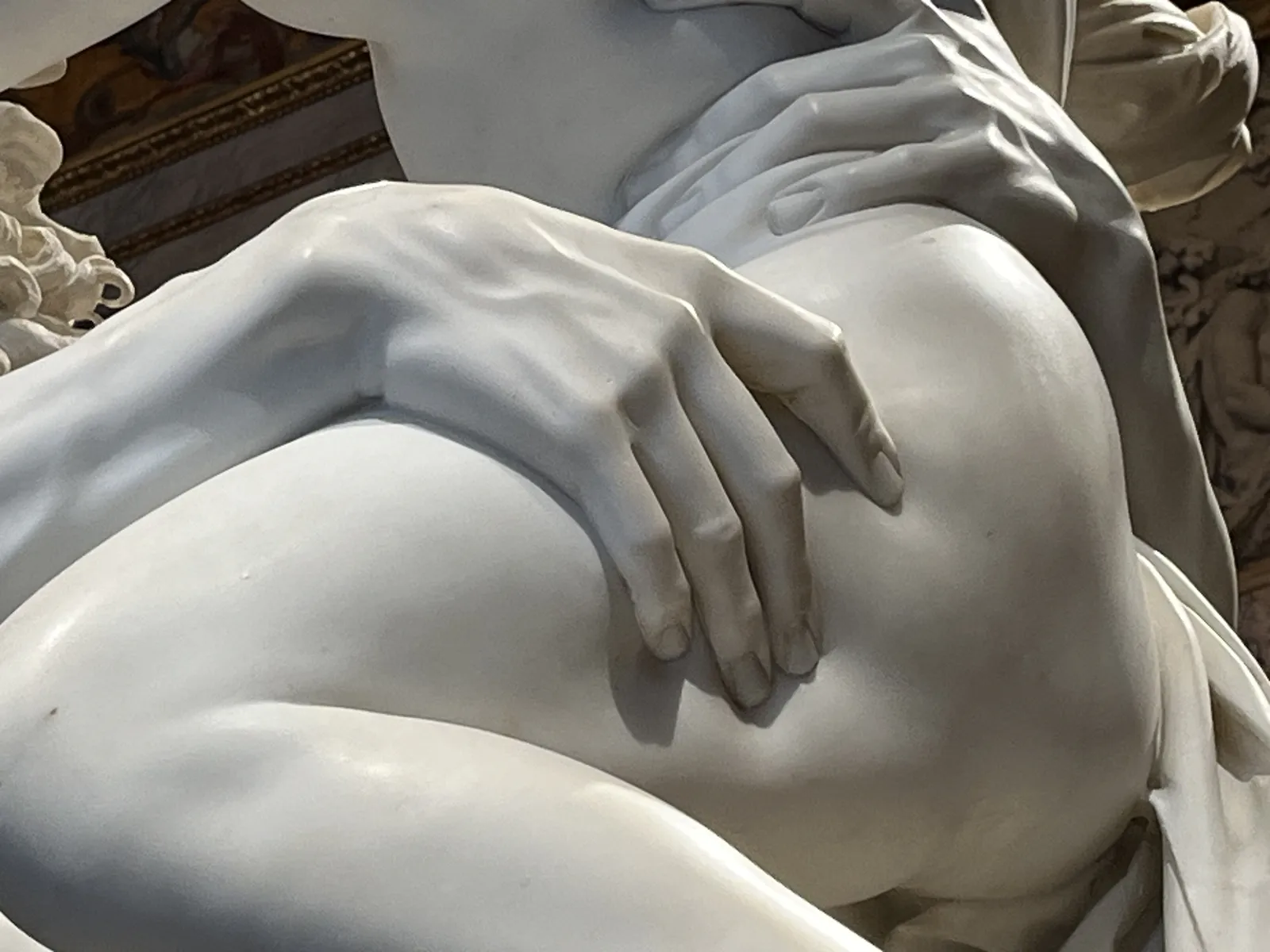
The Rape of Proserpina (detail)
Gian Lorenzo Bernini
This gripping close-up from Bernini’s marble group (1621–22) captures Pluto’s hand pressing into Proserpina’s flesh. The marble appears to yield under his grip, a dazzling illusion of softness and force. Bernini’s technical brilliance here transforms stone into living drama, amplifying the sculpture’s emotional and physical realism.
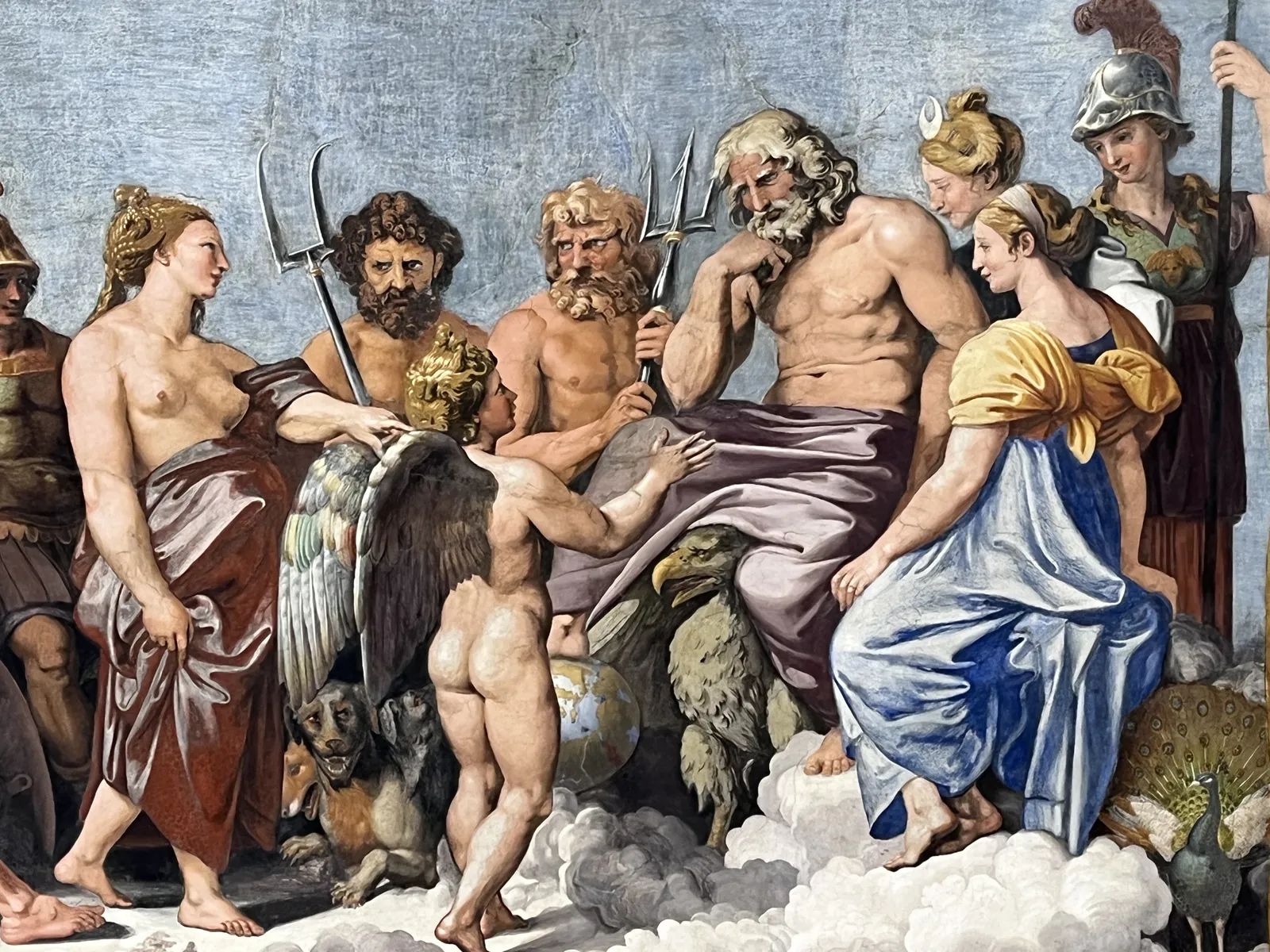
The Council of the Gods (detail)
Raphael
In this scene (1518), Raphael depicts Cupid pleading with Jupiter to grant Psyche immortality and approve their union. Jupiter, seated with his eagle, listens thoughtfully. Beside him are Juno (with peacock), Diana (with crescent moon), and Minerva (in armor). Venus stands bare-breasted beside her son, while Neptune (with trident) and Pluto (with bident and dog Cerberus) and Mars (in armor) observe from behind.
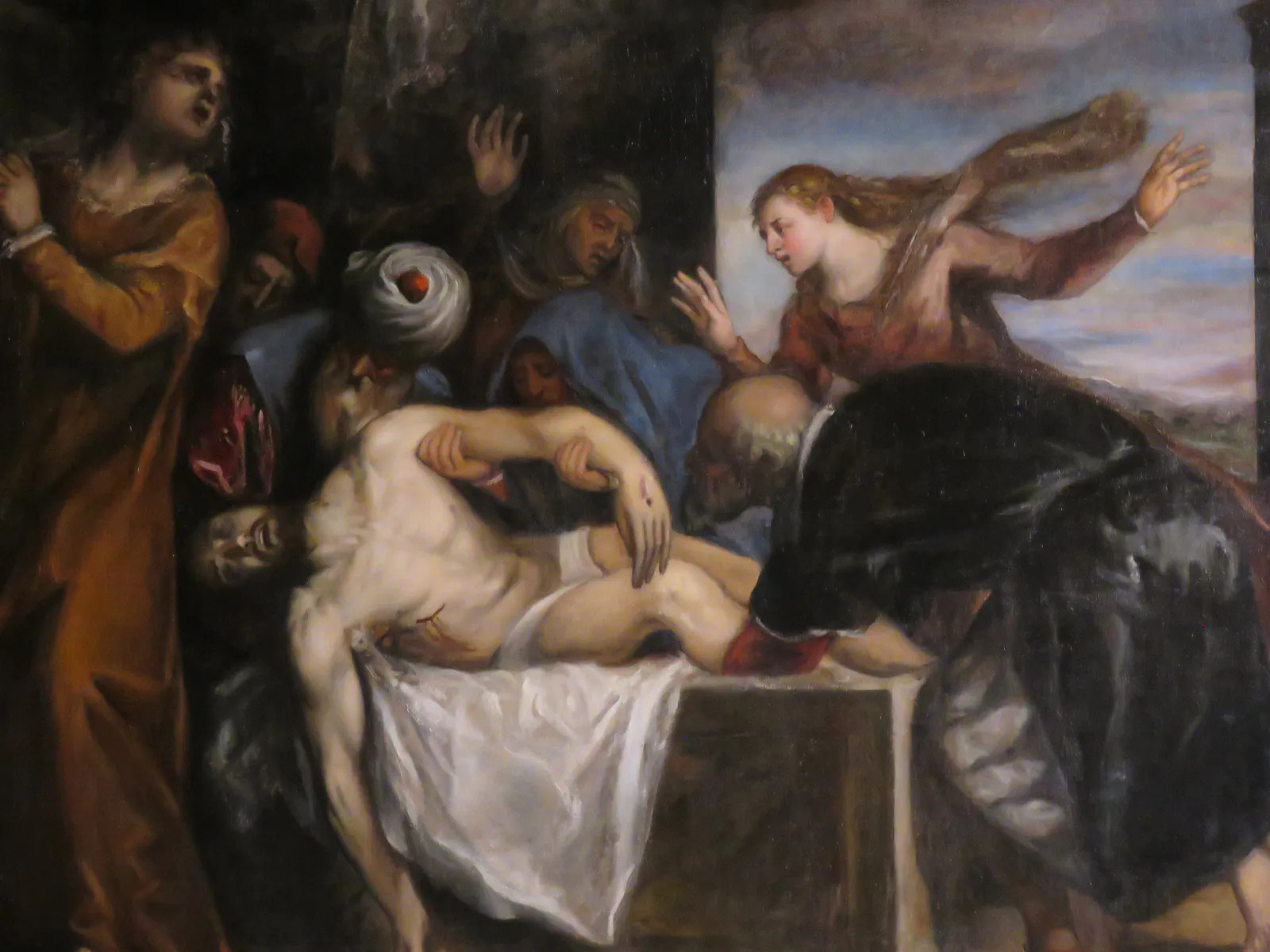
The Entombment of Christ
Titian and Palma the Younger
A poignant rendering of Christ’s burial, this oil on canvas (1618) was begun by Titian and completed by Palma the Younger. The composition captures collective grief, emphasizing the physical weight of death and the emotional weight of loss. The figures’ gestures and expressions mirror Renaissance ideals of pathos and human dignity.
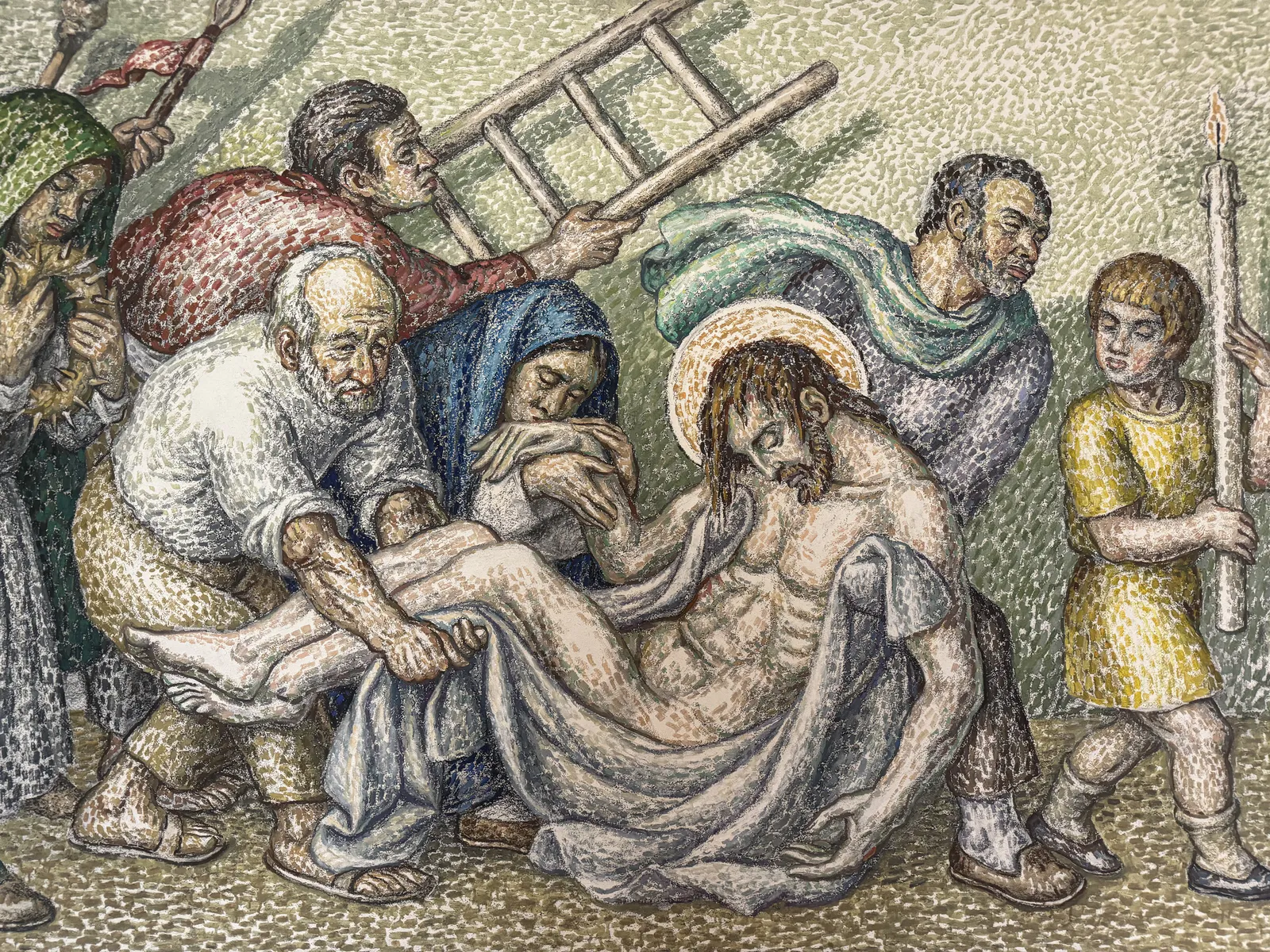
Descent from the Cross
Luis Alberto Acuña
Acuña (mid-1950s) renders the moment of Christ’s body being lowered from the cross with emotional gravity and communal sorrow. The composition emphasizes solidarity in grief, surrounding Christ with figures of all ages and backgrounds, reinforcing the universality of human suffering and compassion.
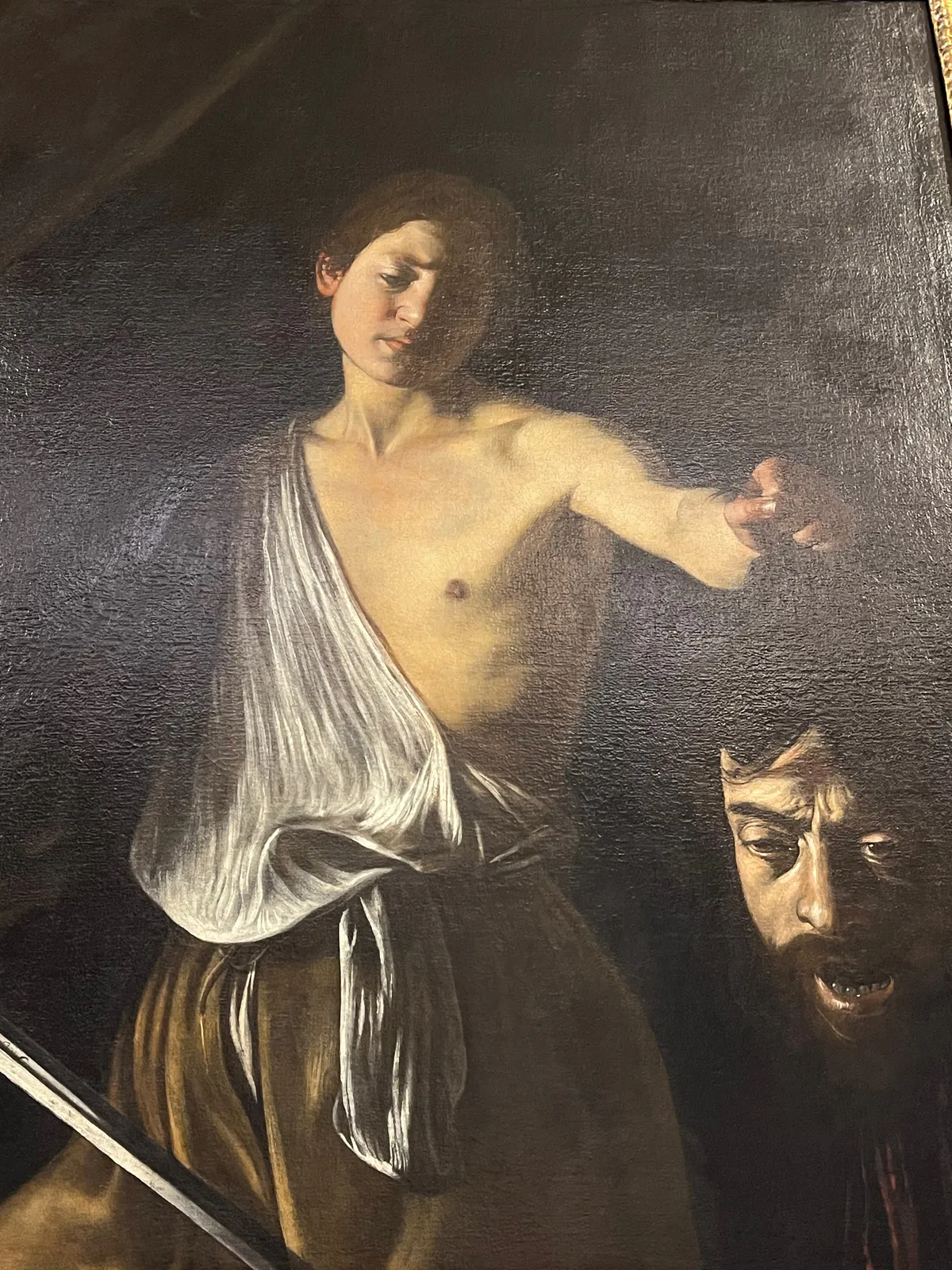
David with the Head of Goliath
Caravaggio
This haunting composition (1609–10) shows David holding Goliath’s severed head—modeled on Caravaggio himself. Rather than triumph, the mood is remorseful. The intense chiaroscuro, psychological realism, and moral ambiguity turn this biblical victory into a meditation on guilt, mortality, and inner torment.
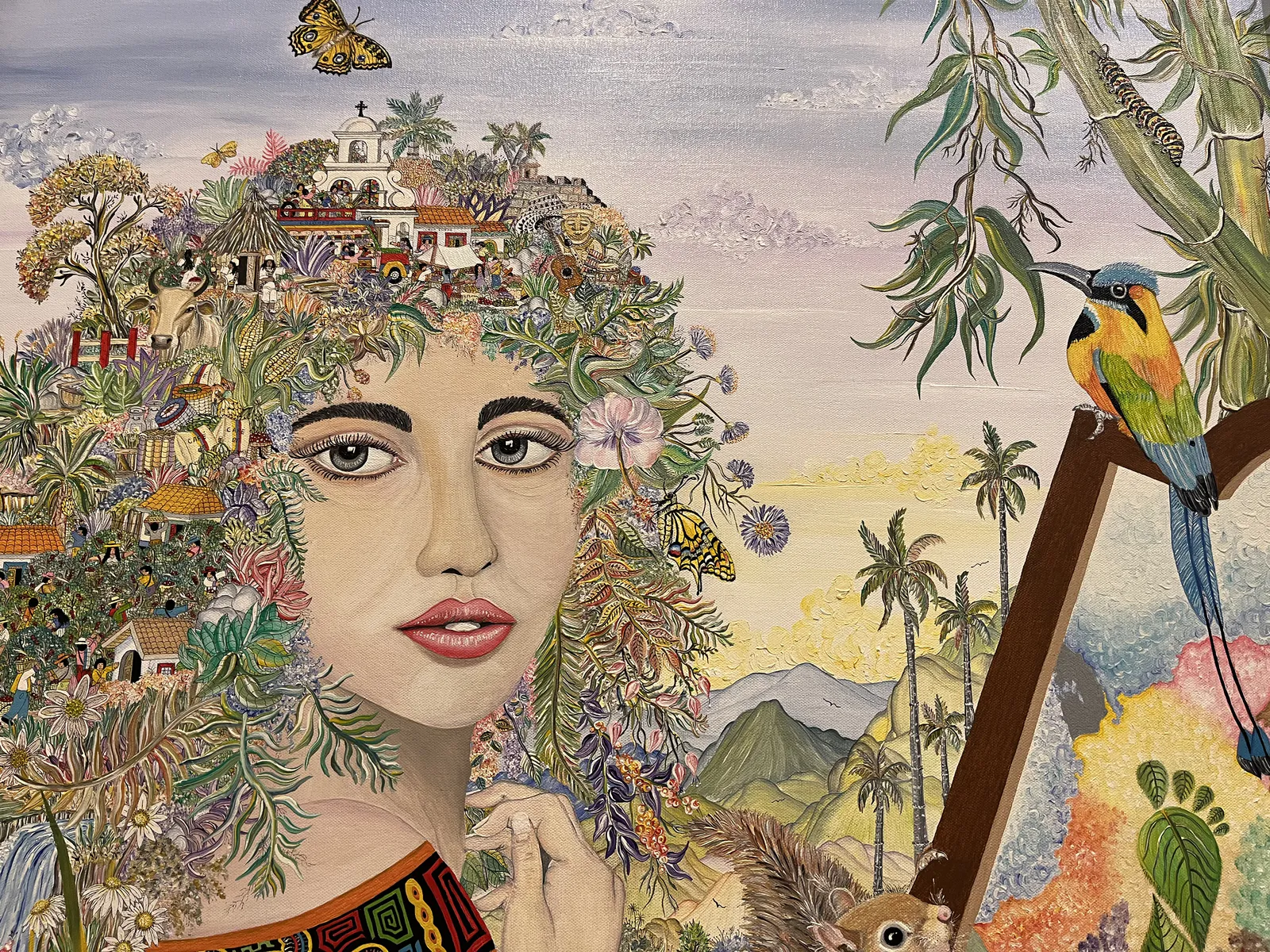
Aún Hay Tiempo
Julio César Ojeda Ariza
This 2021 work blends oil and ink to portray a woman whose hair becomes a lush tapestry of biodiversity and rural life. Symbolizing Colombia’s natural and cultural abundance, it warns of its fragility. The title, There’s Still Time, urges collective action to preserve the environment and ancestral wisdom.
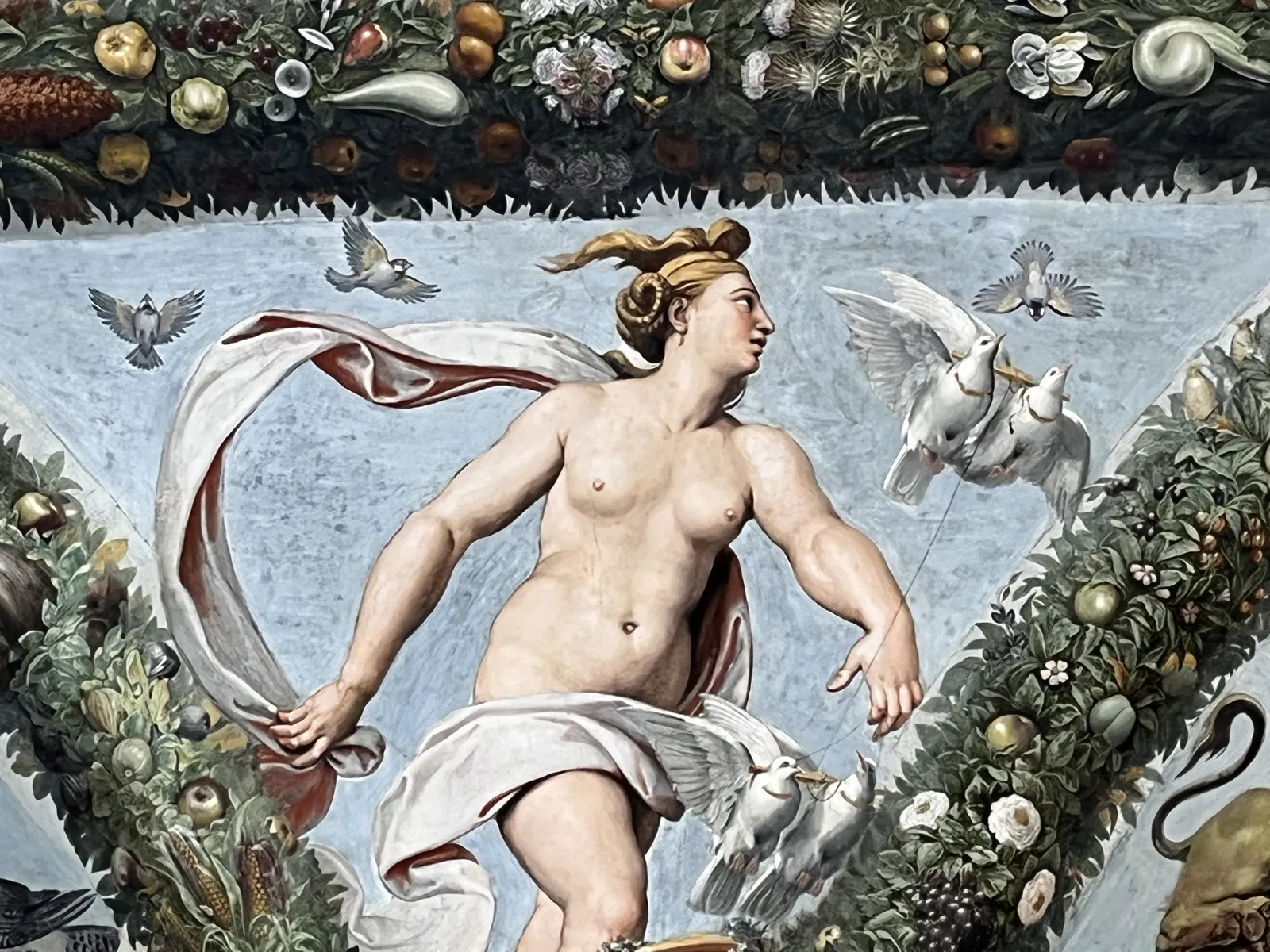
Venus and the Doves
Raphael
In this fresco (1518), Raphael presents Venus, goddess of love, gracefully accompanied by doves, her sacred birds. The flowing ribbon emphasizes her divine beauty and motion, while the doves allude to purity and erotic desire. The image echoes Venus’ central role in the myth of Cupid and Psyche, where love governs both divine and mortal fates.
“When the path is beautiful, do not ask where it leads.” — Zen proverb
Welcome to my travel photography!
“When the path is beautiful, do not ask where it leads.” — Zen proverb
Welcome to my travel photography!
For as long as I can remember, my path has been one of discovery—seeking beauty, timelessness, and connection in every corner of the world. It has also been a journey of deep learning and understanding. I’ve been an avid traveler (or perhaps a travel addict?) for most of my life. My love for travel began long before I ever left home: as a child, I drew a fantasy map of my grandparents’ apartment and “traveled” through it with my cousin Sonya, imagining adventures in every corner. Nearly 90 countries and countless moments of awe later, I’m excited to share this journey with you.
Thanks to the tireless and ingenious programming of Diagilev, we’re now able to present about fifteen percent of the images I’ve accumulated over the years. More will be released in small batches depending on your interest. While the first release leans toward museum photography, later ones will include more nature, architecture, culture, and general travel experiences. If you’d like to receive email notifications about new releases, feel free to reach out—no commercial use, ever.
Throughout my travels, I’ve been drawn to two intertwined kinds of discovery. One is intellectual: learning why the world is the way it is. History became my guide, shaping my perspective and filling my camera roll with museums and old buildings. To me, history is not the past—it is the key to understanding the present and how the world became what it is. The other is emotional: seeking moments of elevation—spirituality, beauty, harmony—often found in nature, monasteries, and ancient sacred spaces. Together, these impulses shape my photography. It invites you to learn, admire, and soar—to rise above the mundane and see the world through a lens of curiosity and wonder.
Much of my later travel became possible thanks to my job with Delta Air Lines, but the wanderlust began years earlier. By the time I joined the industry, I had already visited over 35 countries and lived in several—largely thanks to a backpacking journey around the world with Luis León, whose face appears in many early photos. I grew up in Ufa in the USSR, and since leaving it I have lived, studied, and worked in Latvia, the United States, France, South Korea, Canada, Spain, Italy, Brazil, Japan, and Colombia.
A life of near-constant movement may seem a little crazy, but it has deepened my understanding of the world and produced the photography you are about to see. Over the years, my style has evolved—more intentional, more refined—yet its core remains the same: a search for understanding, timeless beauty, and a connection to those who walked this earth long before us.
I hope these photos stir something in your soul, just as they did in mine. I’d love to hear from you—whether reactions, suggestions, corrections, or a request to be added to the email list for new releases (no commercial use, I promise). You can learn more about my travels here, and my academic life here.
Enjoy our shared journey!