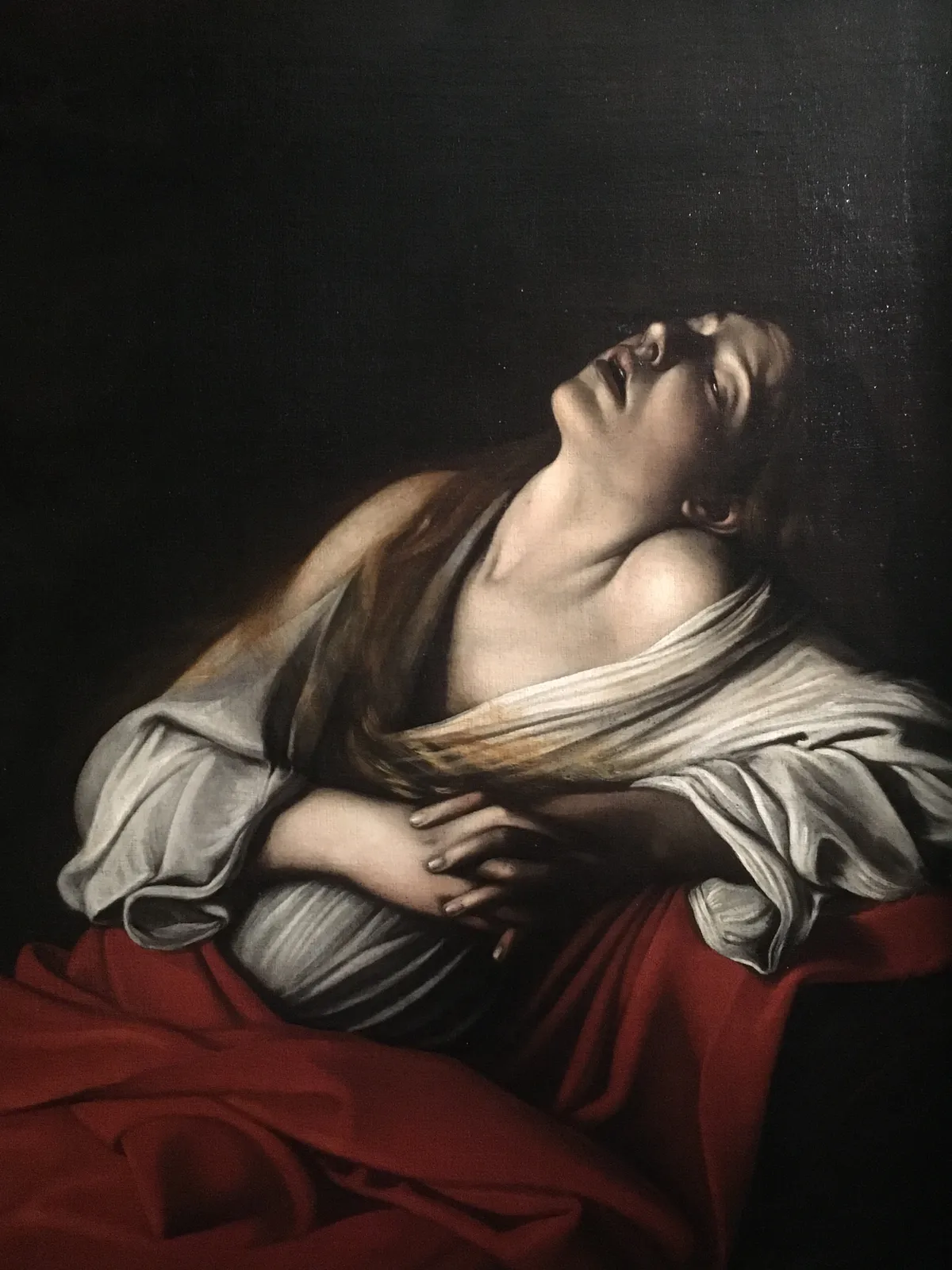
The Penitent Magdalene
Caravaggio
This painting (1594–95) shows Mary Magdalene seated in repentance, jewels cast aside at her feet. With downcast eyes and folded hands, she embodies both sensual beauty and spiritual transformation. Caravaggio merges naturalism with sacred symbolism, turning penitence into a deeply human, intimate moment of grace.
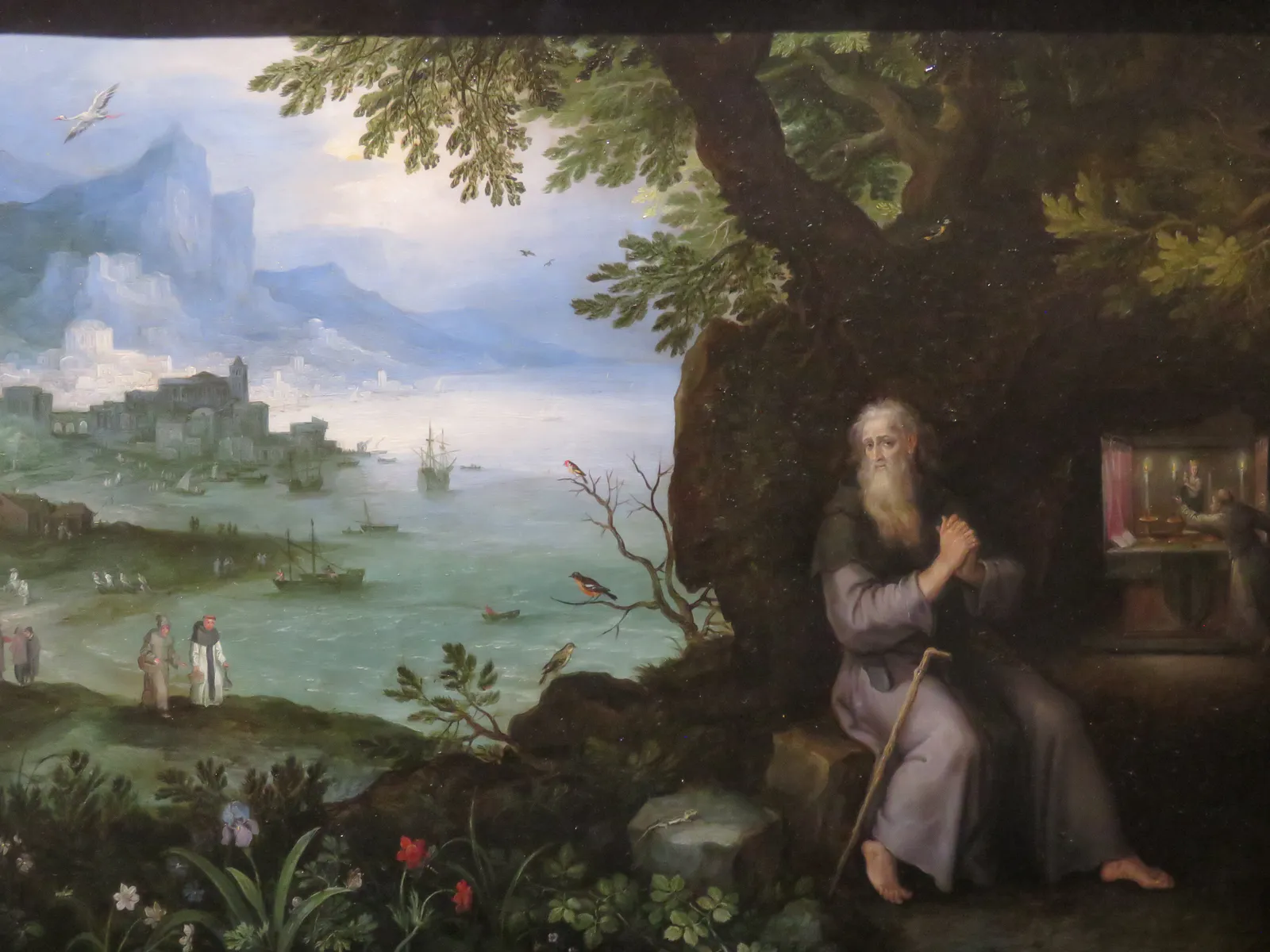
Saint Anthony the Hermit
Jan Brueghel
This tranquil painting (early 17th c.) shows Saint Anthony seated at the mouth of a cave, gazing contemplatively toward the city and sea. The vivid flora and distant harbor contrast with his solitude, symbolizing the tension between worldly life and spiritual retreat. A vision of a sacred altar within the cave suggests divine presence in the midst of earthly temptation.
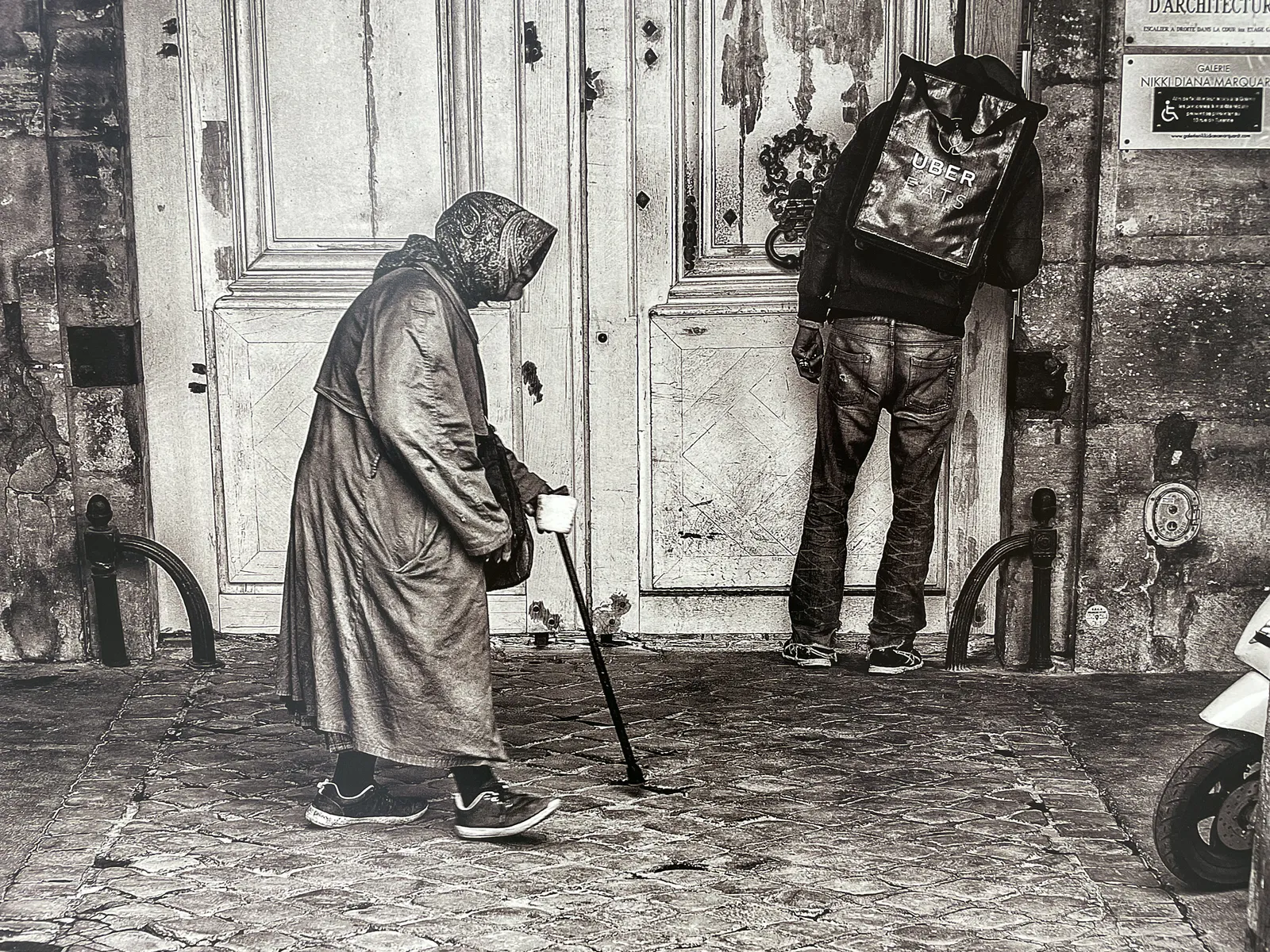
Uber Eats
Roger Zayas
This photo (2017), taken in the historic Marais district of Paris, captures a striking urban contrast: an elderly woman with a cane passes a food courier bent over a doorway. Zayas underscores generational divides and social invisibility, reflecting on aging and shifting economic realities in the European metropolis.
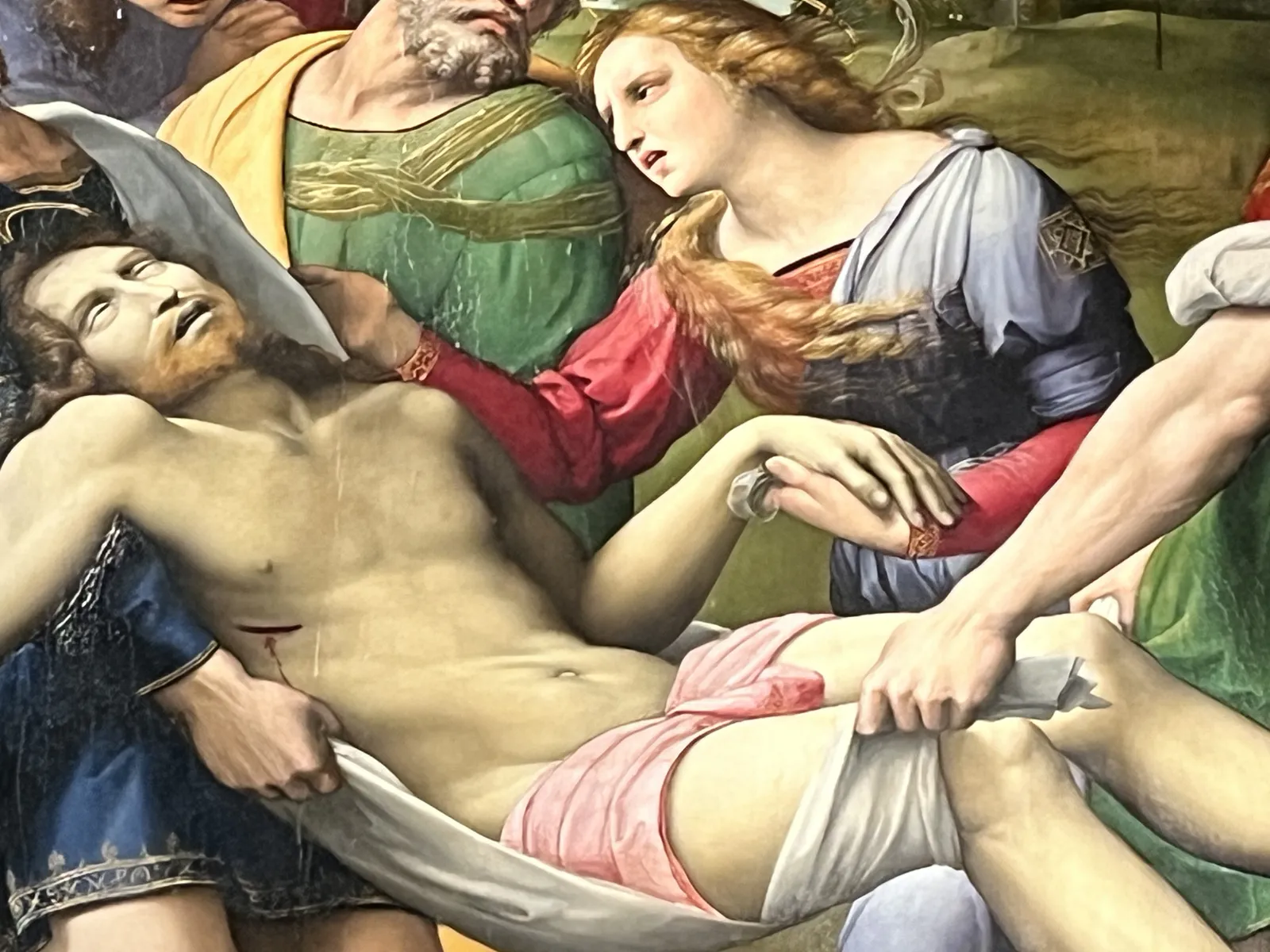
The Entombment (detail)
Raphael
This masterpiece (1507) shows a group of figures surrounding the lifeless body of Christ, merging themes of Deposition, Lamentation, and Entombment. Commissioned by Atalanta Baglioni, it honors her murdered son. Raphael’s composition shows Michelangelo’s influence in the sculptural form of Christ. A 2020 restoration revealed refinements in Raphael’s underdrawing, pigment choices, and layered modeling, clarifying how he built depth and anatomical precision.
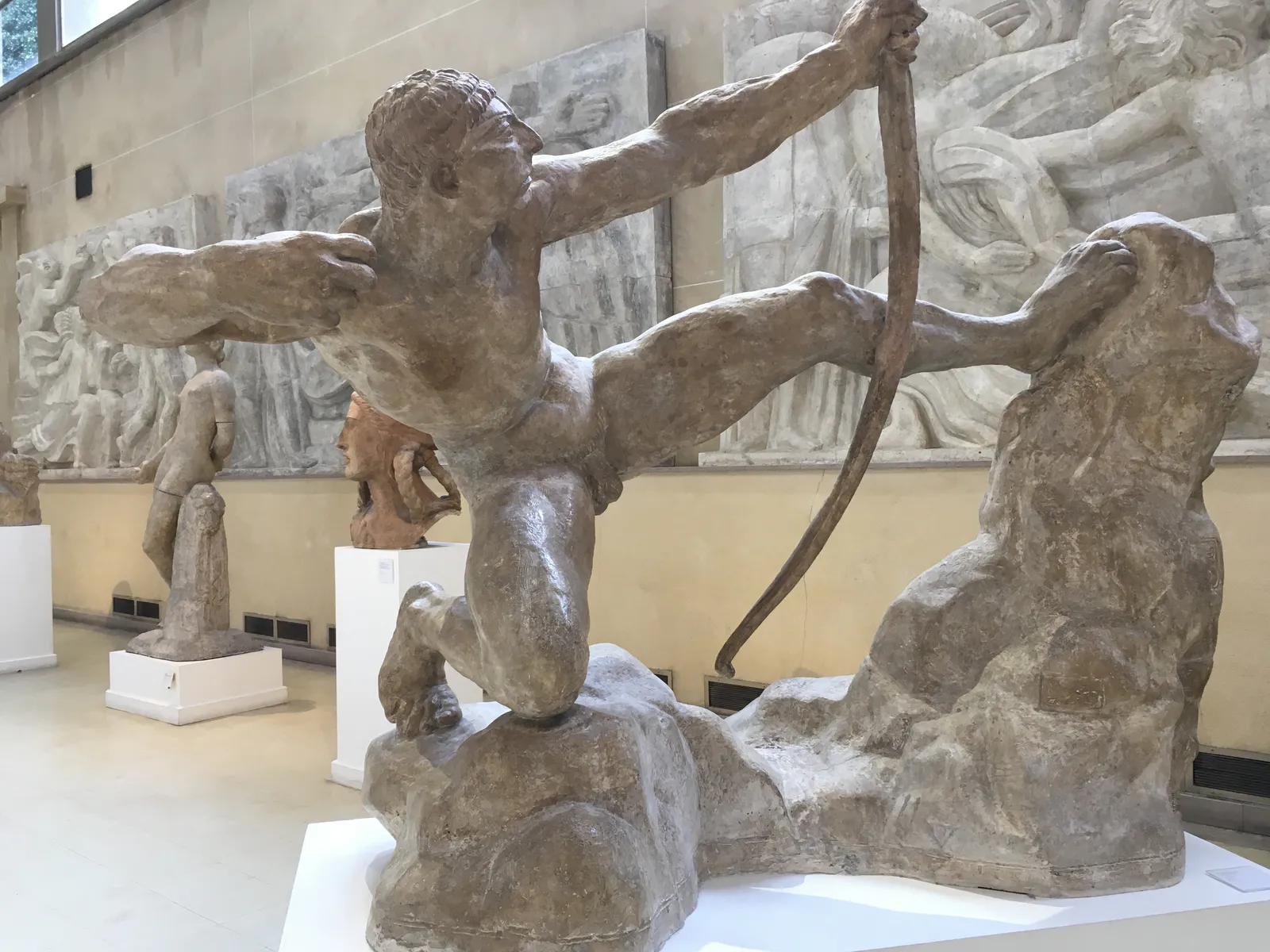
Hercules the Archer
Antoine Bourdelle
This plaster sculpture (1906–09) shows Hercules, the Greek hero, drawing his bow with taut energy. Bourdelle captures both physical strain and mythic power, fusing classical subject with modern dynamism. The work marks a turning point in early 20th-c. sculpture, bridging academic tradition with expressive innovation.
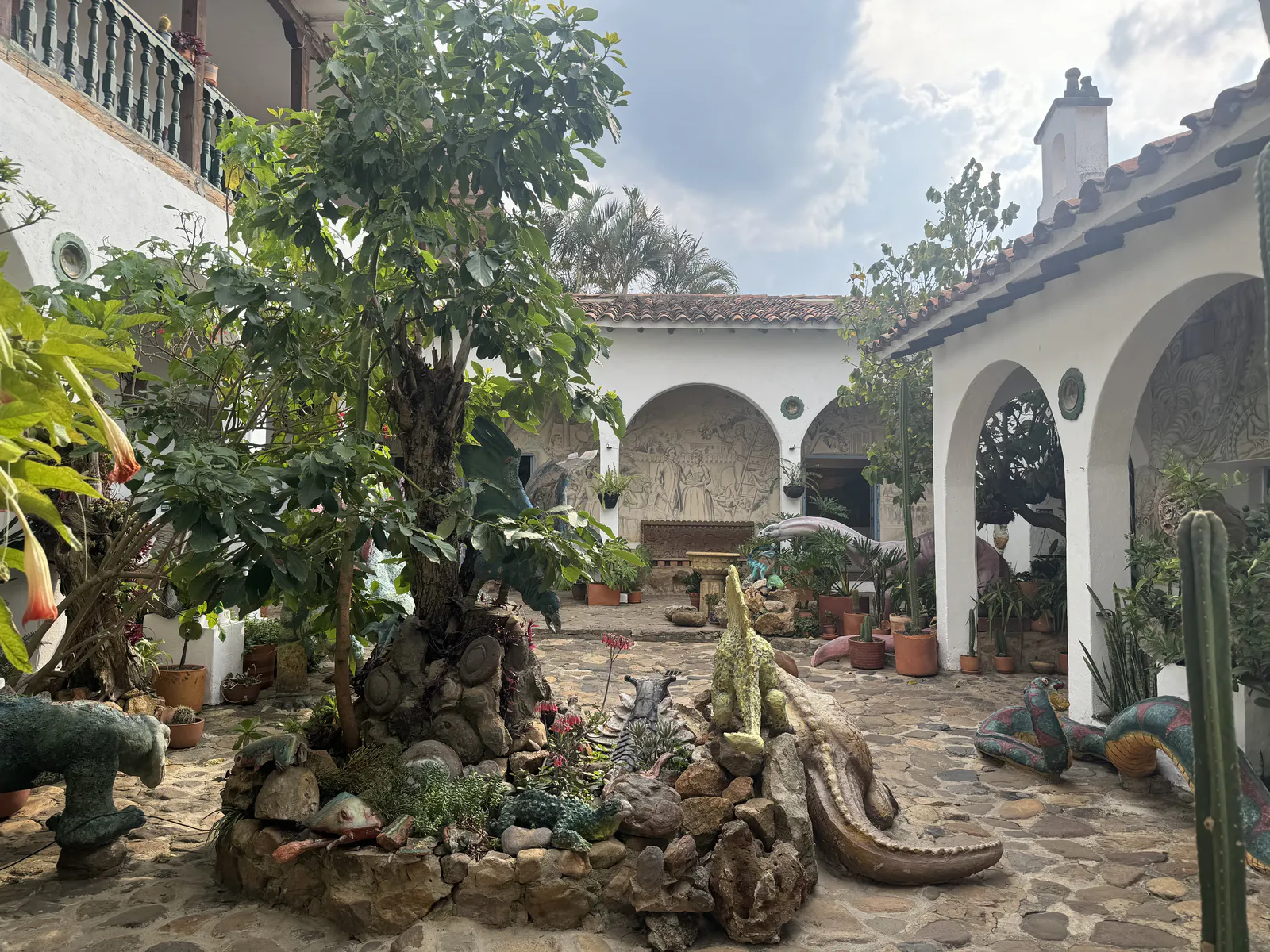
Museum Courtyard
Luis Alberto Acuña
This eclectic courtyard blends colonial architecture with fantastical sculptures and lush vegetation. Dinosaurs, jaguars, and snakes emerge from the stone paths, reflecting Acuña’s imaginative fusion of pre-Columbian, mythological, and surrealist influences.
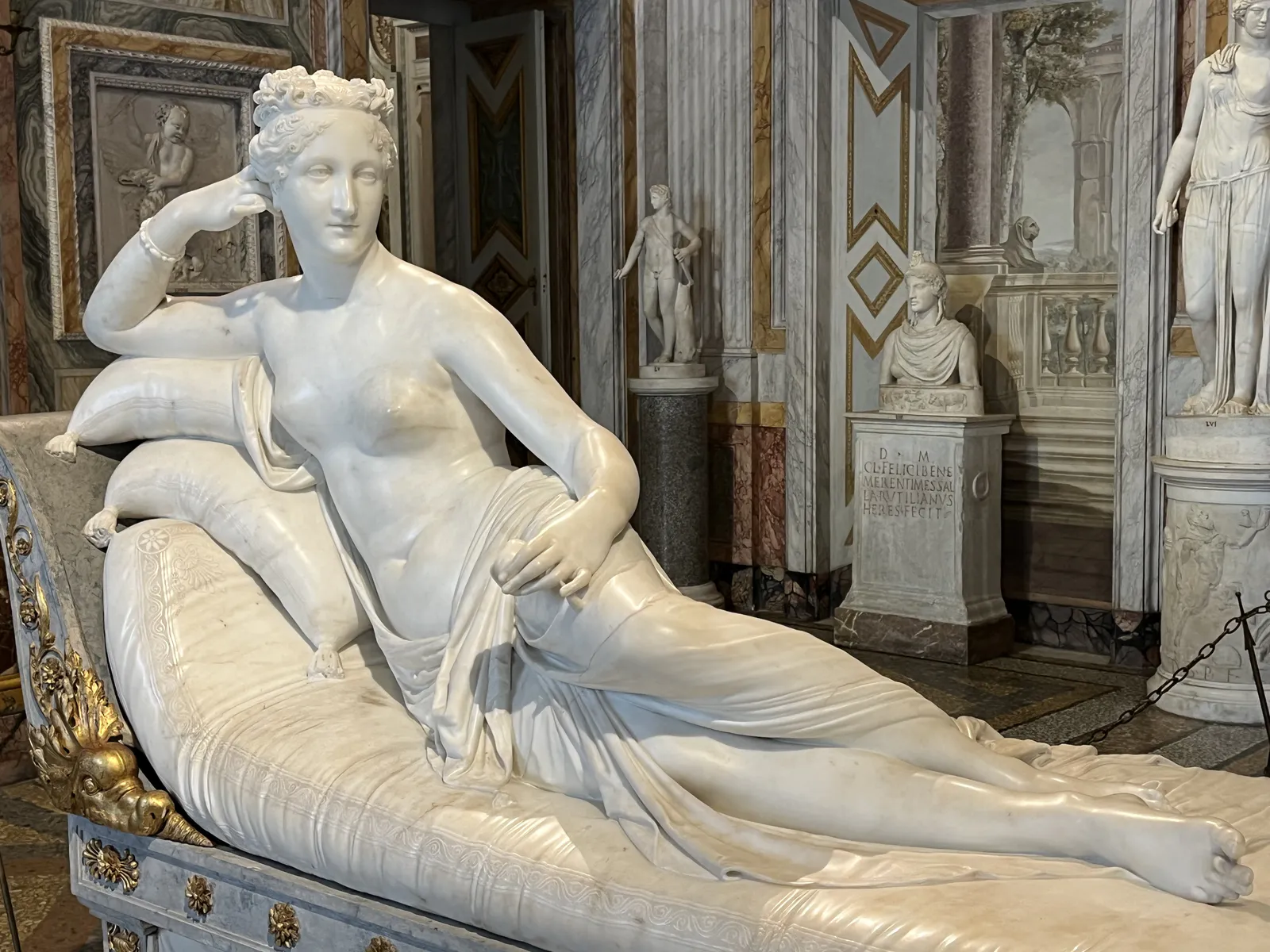
Pauline Bonaparte as Venus Victrix
Antonio Canova
This statue (1805–08) presents Pauline Bonaparte, sister of Napoleon, as Venus, reclining semi-nude and holding the golden apple of victory. Commissioned by her husband Camillo Borghese, the statue blends neoclassical elegance with sensual myth. Its rotating base once allowed viewers to admire it from every angle.
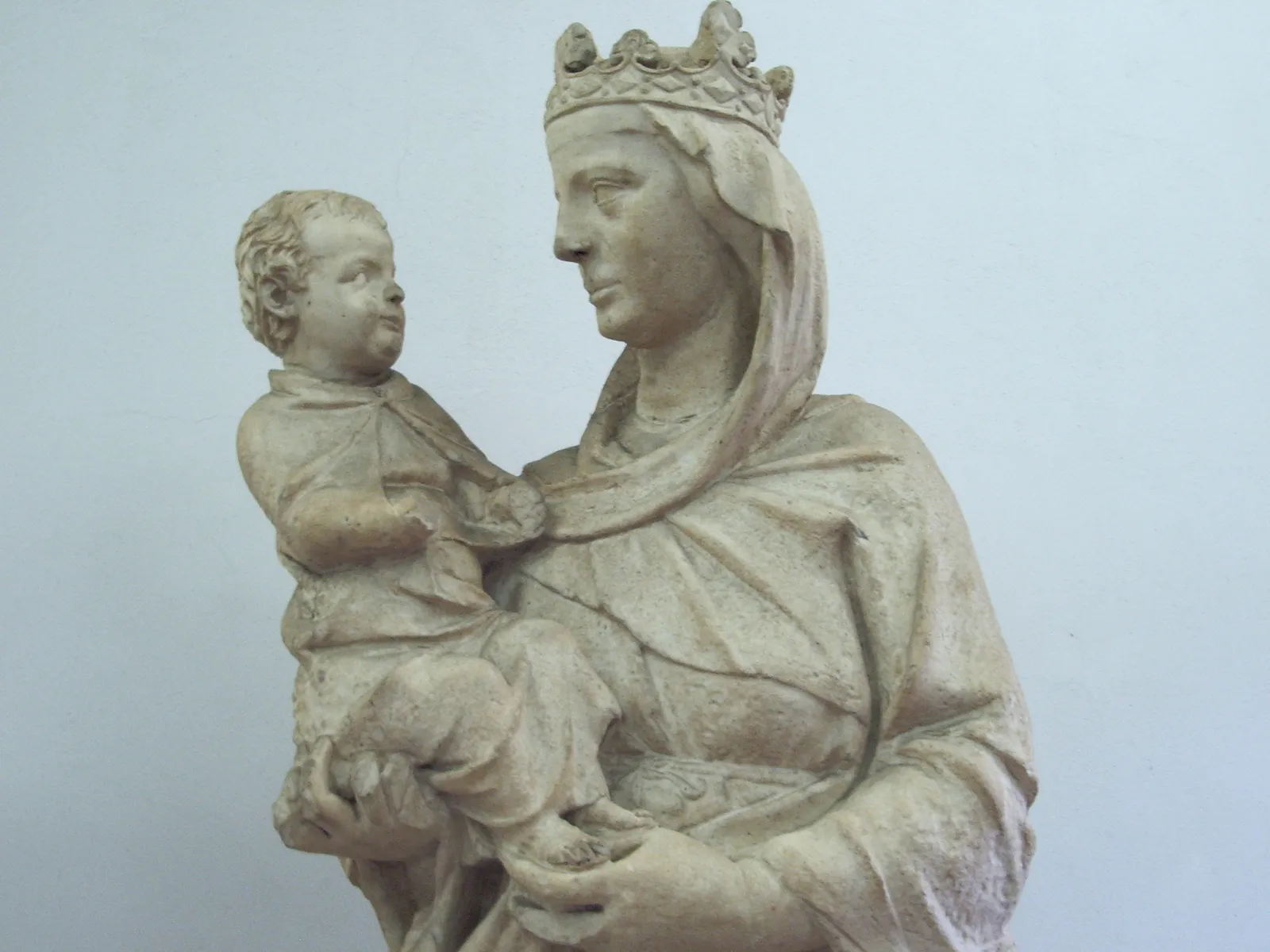
Madonna del colloquio
Giovanni Pisano
This half-length marble Virgin and Child (c. 1280–1284) originally stood at the south transept portal of Pisa Cathedral. Now, it captures a striking emotional exchange between mother and son. The Child gently grasps Mary’s veil, emphasizing Pisano’s innovative focus on tenderness and psychological realism in sacred art.
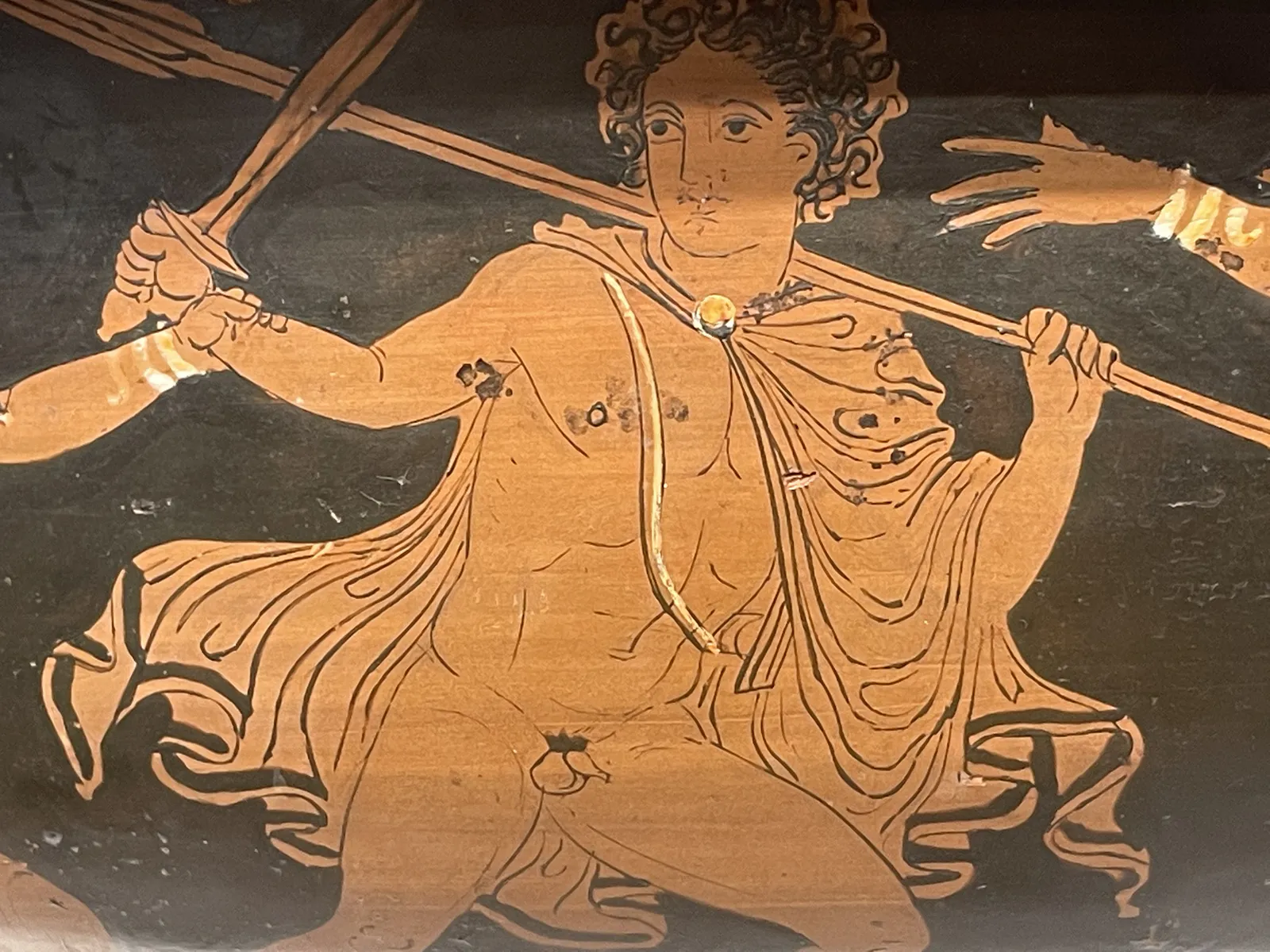
Pentheus Attacked by Bacchic Women
The Oxford Group Workshop
This Apulian red-figure plate (360–350 BC) shows Pentheus arming himself against Dionysus’ cult. In myth, he is seized by Bacchic women, including his mother Agave, who mistake him for prey and tear him apart. The scene warns against impiety and defying divine power, embodying the tragic cost of resisting Dionysian ecstasy and communal worship.
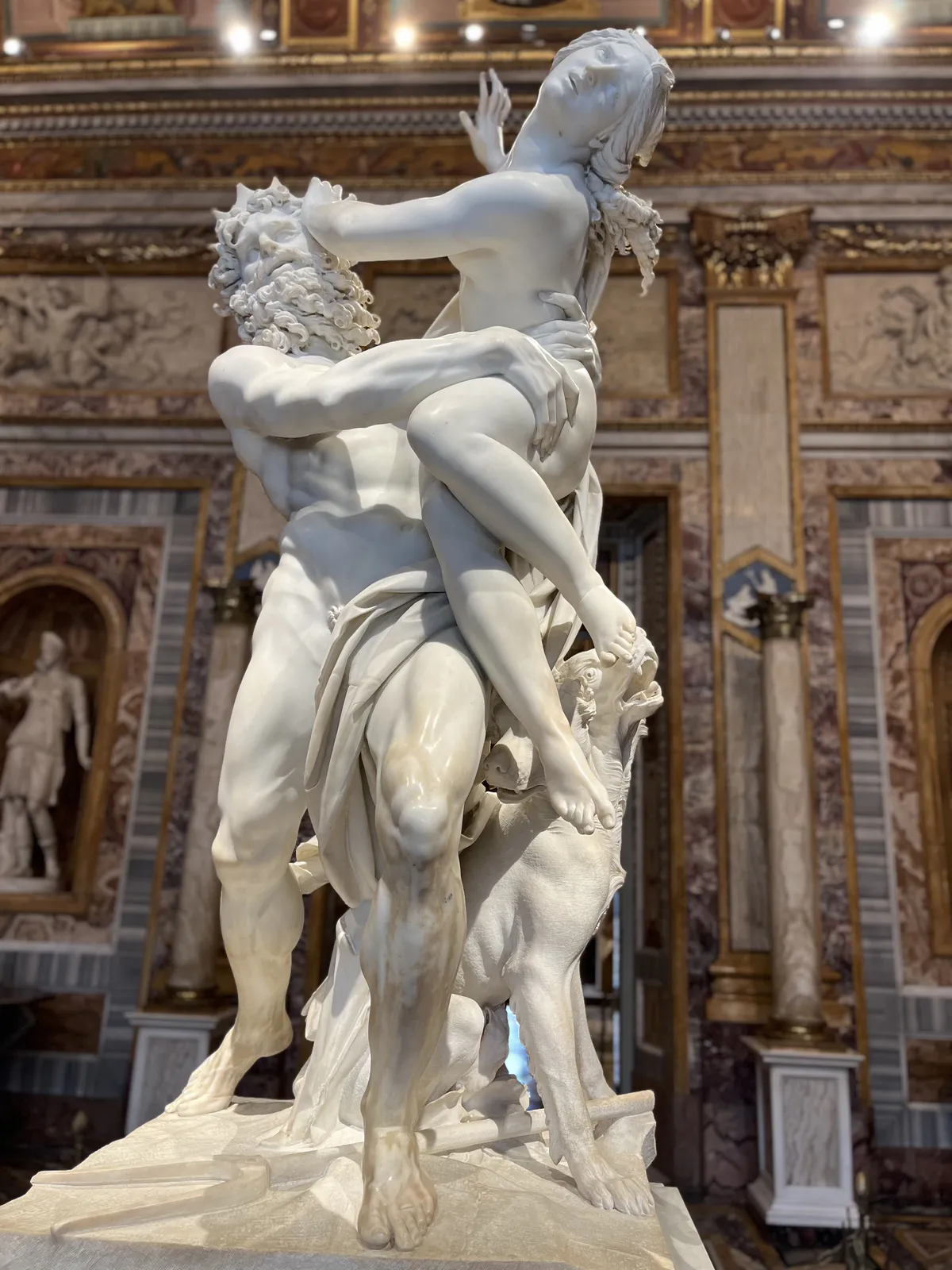
The Rape of Proserpina
Bernini
In this masterful marble (1621–22), Bernini captures Pluto’s violent abduction of Proserpina—an allegory for the changing seasons from Roman myth. Her twisting body and anguished face contrast Pluto’s force, while Cerberus, the underworld’s three-headed hound, reinforces the drama. At just 23, Bernini infused the stone with breathless motion and tactile realism, anchoring the Borghese legacy in Baroque brilliance.
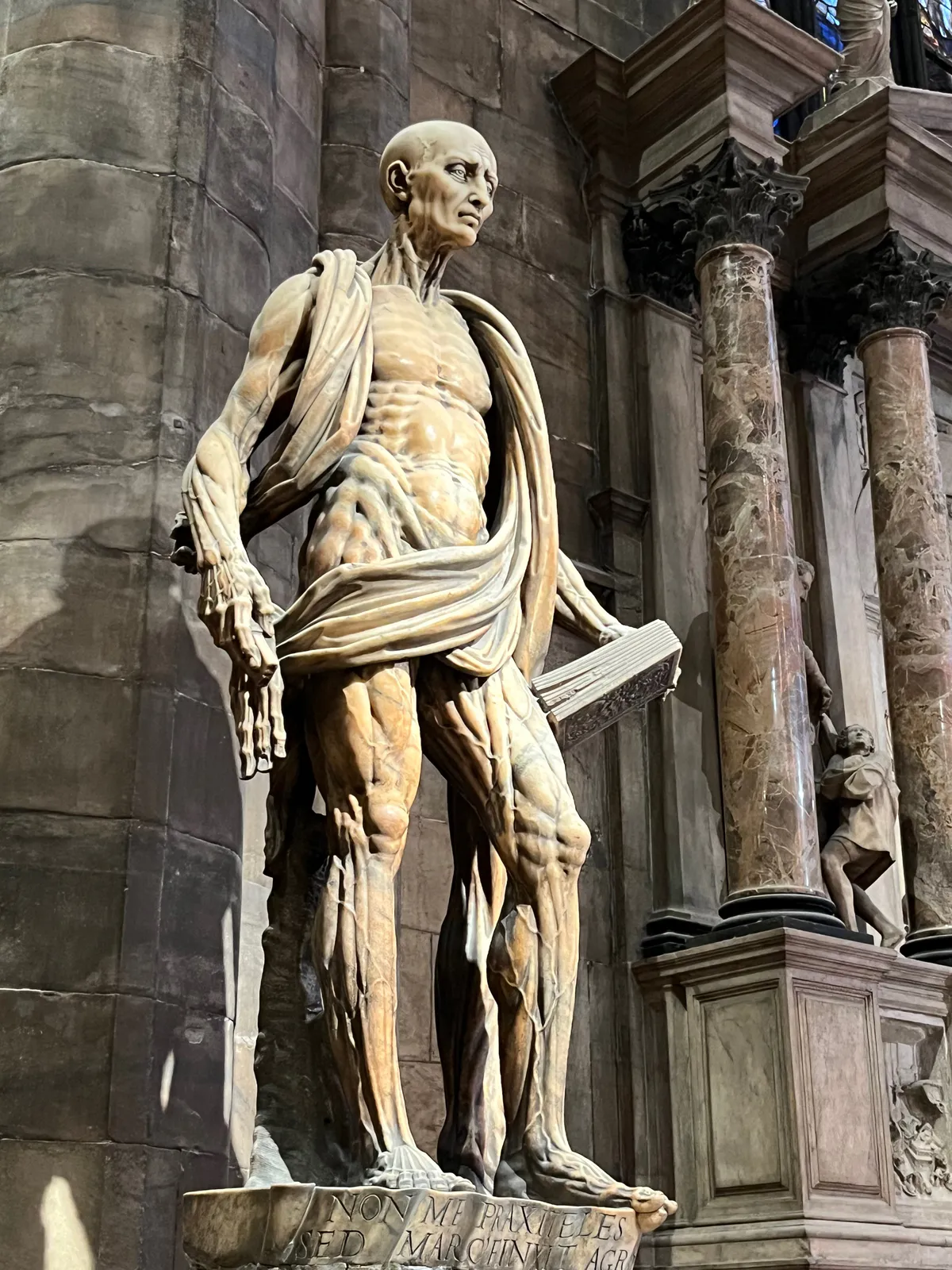
St Bartholomew Flayed
Marco d’Agrate
This marble statue (1562) shows St Bartholomew as a flayed figure, his own skin arranged like a draped garment around an exposed muscular body. Such extreme anatomical precision draws on Renaissance study of dissected cadavers. The saint’s upright stance and calm, frontal gaze demonstrate how martyrdom could be articulated as steadfast faith rather than physical defeat.
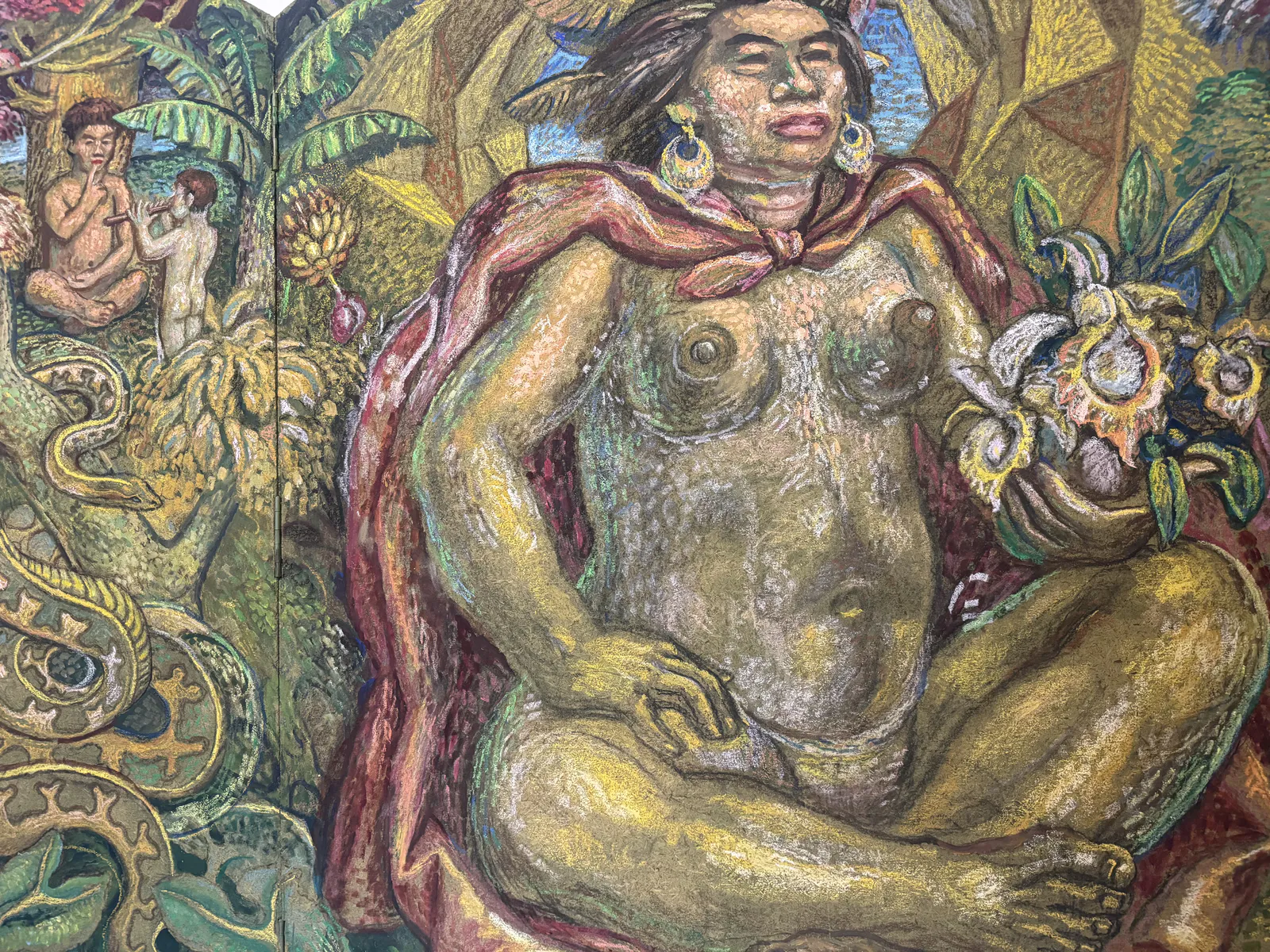
Mapiripana
Luis Alberto Acuña
Inspired by a myth from La Vorágine (a novel by José Eustasio Rivera), this 1950s painting depicts Mapiripana, a river spirit who guards silence and nature’s purity. When a missionary attempts to capture her, she punishes him by birthing monstrous twins—a vampire and an owl. In his final feverish agony, he sees a blue butterfly, symbol of his soul’s escape and eternal remorse.
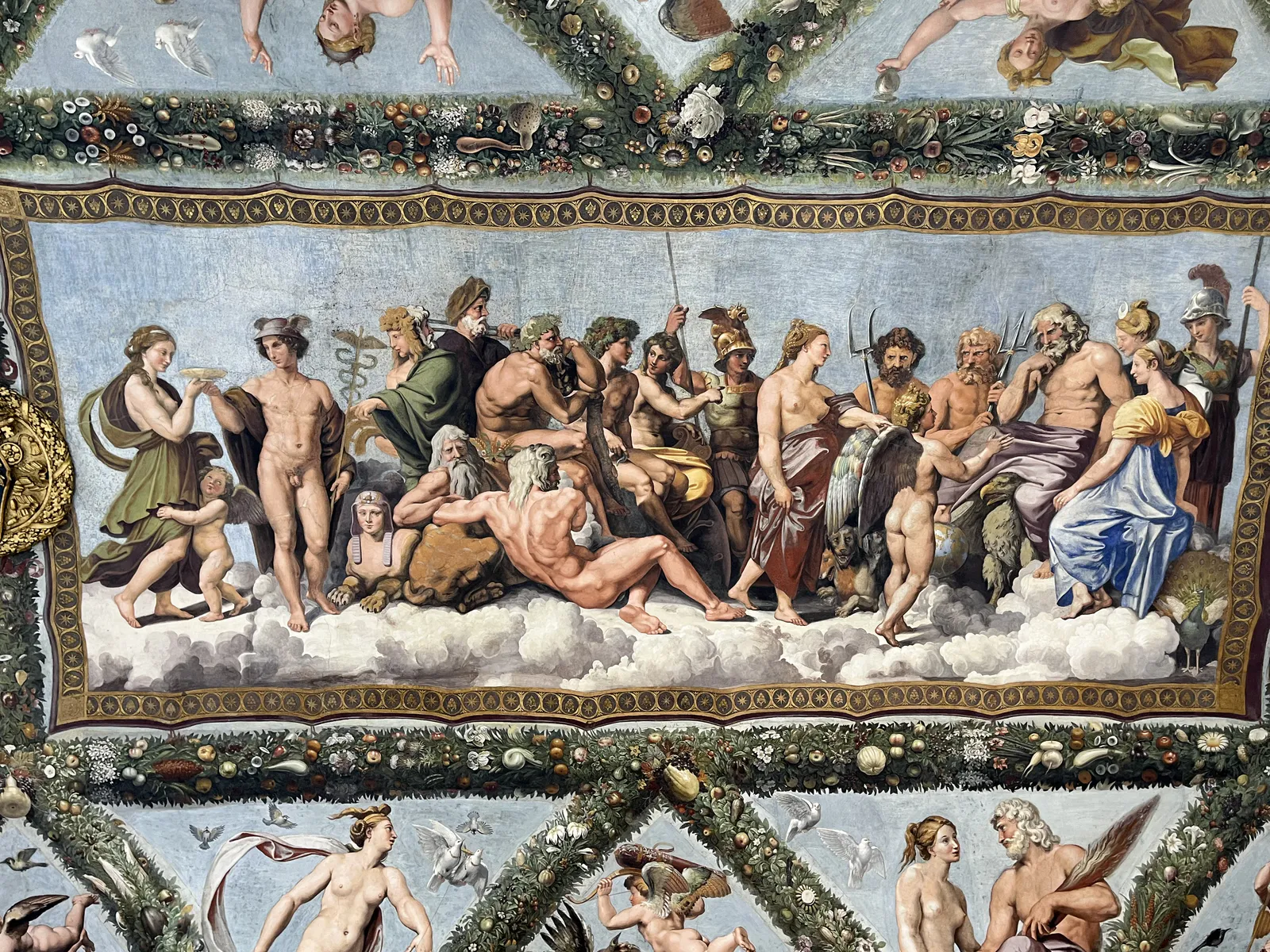
Council of the Gods
Raphael
In this scene (1518), Raphael depicts the gods deciding Psyche’s fate. Right to left: Minerva (helmet), Diana (with crescent moon), Jupiter (eagle below), Juno (blue robe), Neptune (trident), Pluto (bident, dog Cerberus), Venus (semi-nude, pointing), Mars (helmet). On the far left, Mercury (caduceus) leads Psyche to Olympus. Cupid kneels before Jupiter, pleading for Psyche’s immortality. The council embodies divine justice, granting the soul eternal union with love.
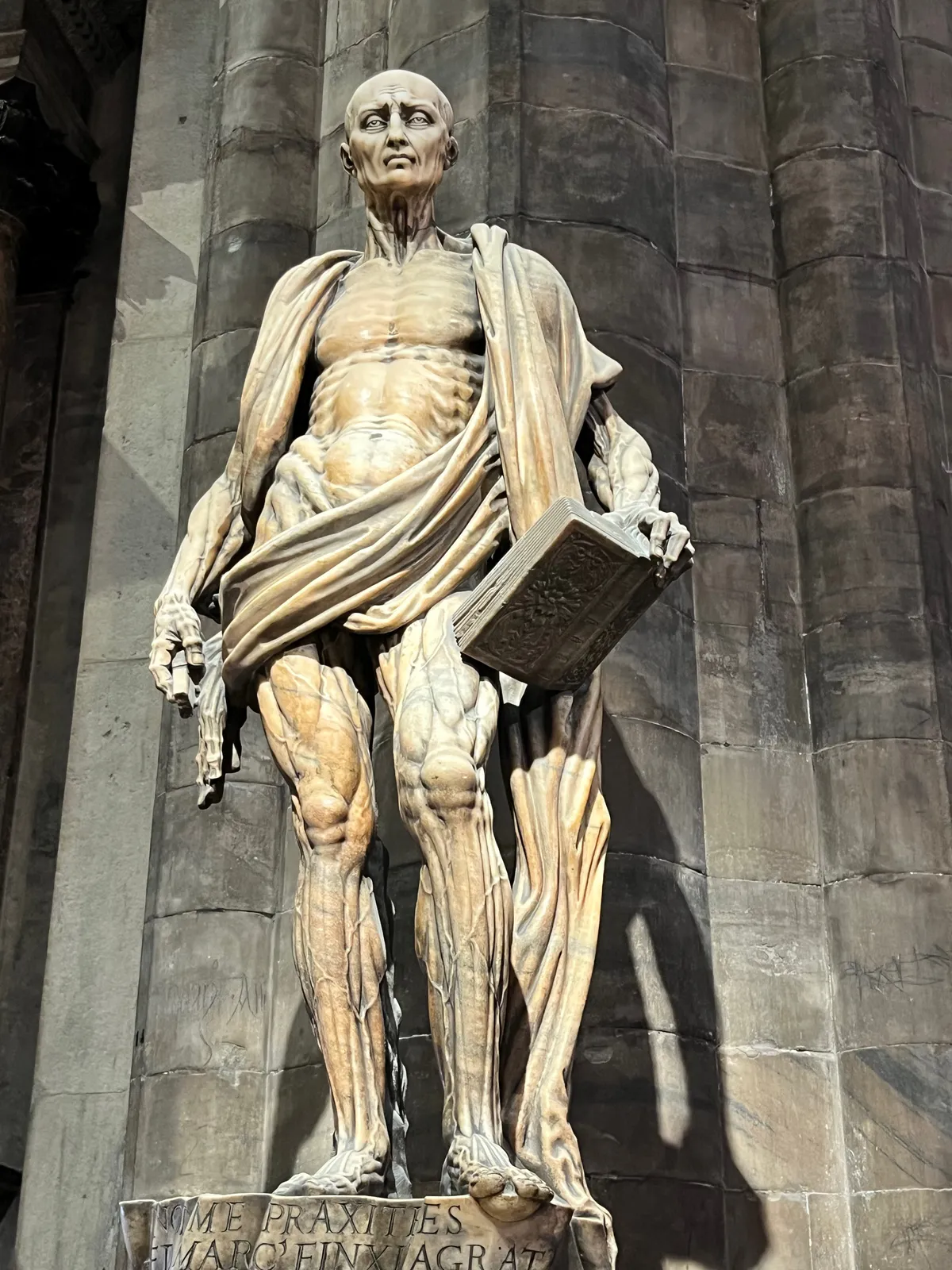
St Bartholomew Flayed
Marco d’Agrate
This haunting statue of Saint Bartholomew (1562) shows the martyr after being skinned alive, wearing his own flayed skin like a cloak. The anatomical precision reveals a Renaissance fascination with the human body, while the calm expression evokes spiritual endurance beyond physical torment.
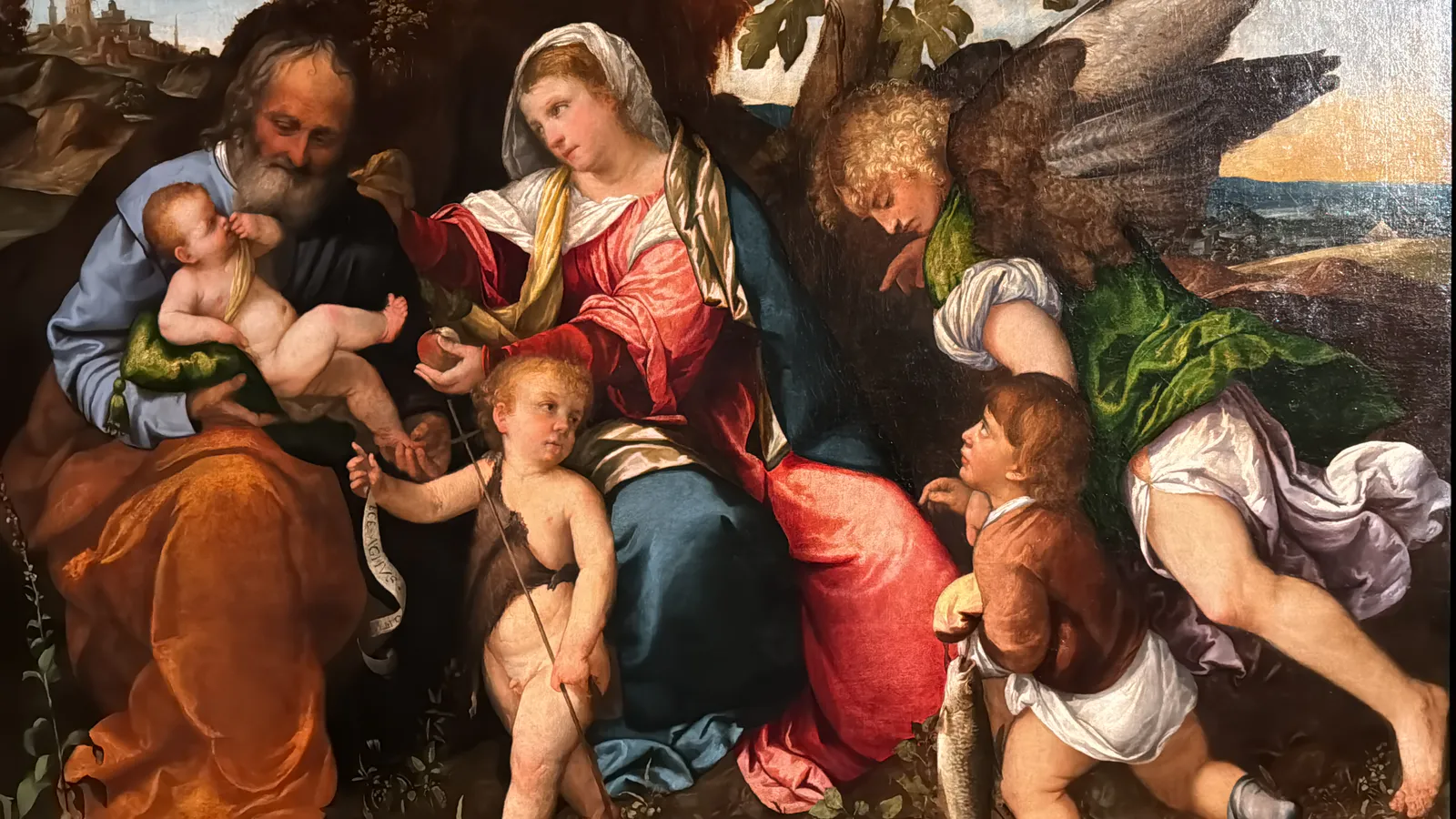
Holy Family with Saints John, Tobias, and Raphael
Bonifazio Veronese
This Venetian Renaissance oil-on-canvas work (1525–27) expands the traditional Holy Family to include St John, Tobias, and the Archangel Raphael. Rich in color and detail, it blends divine iconography with human warmth, echoing the era’s interest in sacred storytelling through vivid, earthly scenes.
“When the path is beautiful, do not ask where it leads.” — Zen proverb
Welcome to my travel photography!
“When the path is beautiful, do not ask where it leads.” — Zen proverb
Welcome to my travel photography!
For as long as I can remember, my path has been one of discovery—seeking beauty, timelessness, and connection in every corner of the world. It has also been a journey of deep learning and understanding. I’ve been an avid traveler (or perhaps a travel addict?) for most of my life. My love for travel began long before I ever left home: as a child, I drew a fantasy map of my grandparents’ apartment and “traveled” through it with my cousin Sonya, imagining adventures in every corner. Nearly 90 countries and countless moments of awe later, I’m excited to share this journey with you.
Thanks to the tireless and ingenious programming of Diagilev, we’re now able to present about fifteen percent of the images I’ve accumulated over the years. More will be released in small batches depending on your interest. While the first release leans toward museum photography, later ones will include more nature, architecture, culture, and general travel experiences. If you’d like to receive email notifications about new releases, feel free to reach out—no commercial use, ever.
Throughout my travels, I’ve been drawn to two intertwined kinds of discovery. One is intellectual: learning why the world is the way it is. History became my guide, shaping my perspective and filling my camera roll with museums and old buildings. To me, history is not the past—it is the key to understanding the present and how the world became what it is. The other is emotional: seeking moments of elevation—spirituality, beauty, harmony—often found in nature, monasteries, and ancient sacred spaces. Together, these impulses shape my photography. It invites you to learn, admire, and soar—to rise above the mundane and see the world through a lens of curiosity and wonder.
Much of my later travel became possible thanks to my job with Delta Air Lines, but the wanderlust began years earlier. By the time I joined the industry, I had already visited over 35 countries and lived in several—largely thanks to a backpacking journey around the world with Luis León, whose face appears in many early photos. I grew up in Ufa in the USSR, and since leaving it I have lived, studied, and worked in Latvia, the United States, France, South Korea, Canada, Spain, Italy, Brazil, Japan, and Colombia.
A life of near-constant movement may seem a little crazy, but it has deepened my understanding of the world and produced the photography you are about to see. Over the years, my style has evolved—more intentional, more refined—yet its core remains the same: a search for understanding, timeless beauty, and a connection to those who walked this earth long before us.
I hope these photos stir something in your soul, just as they did in mine. I’d love to hear from you—whether reactions, suggestions, corrections, or a request to be added to the email list for new releases (no commercial use, I promise). You can learn more about my travels here, and my academic life here.
Enjoy our shared journey!