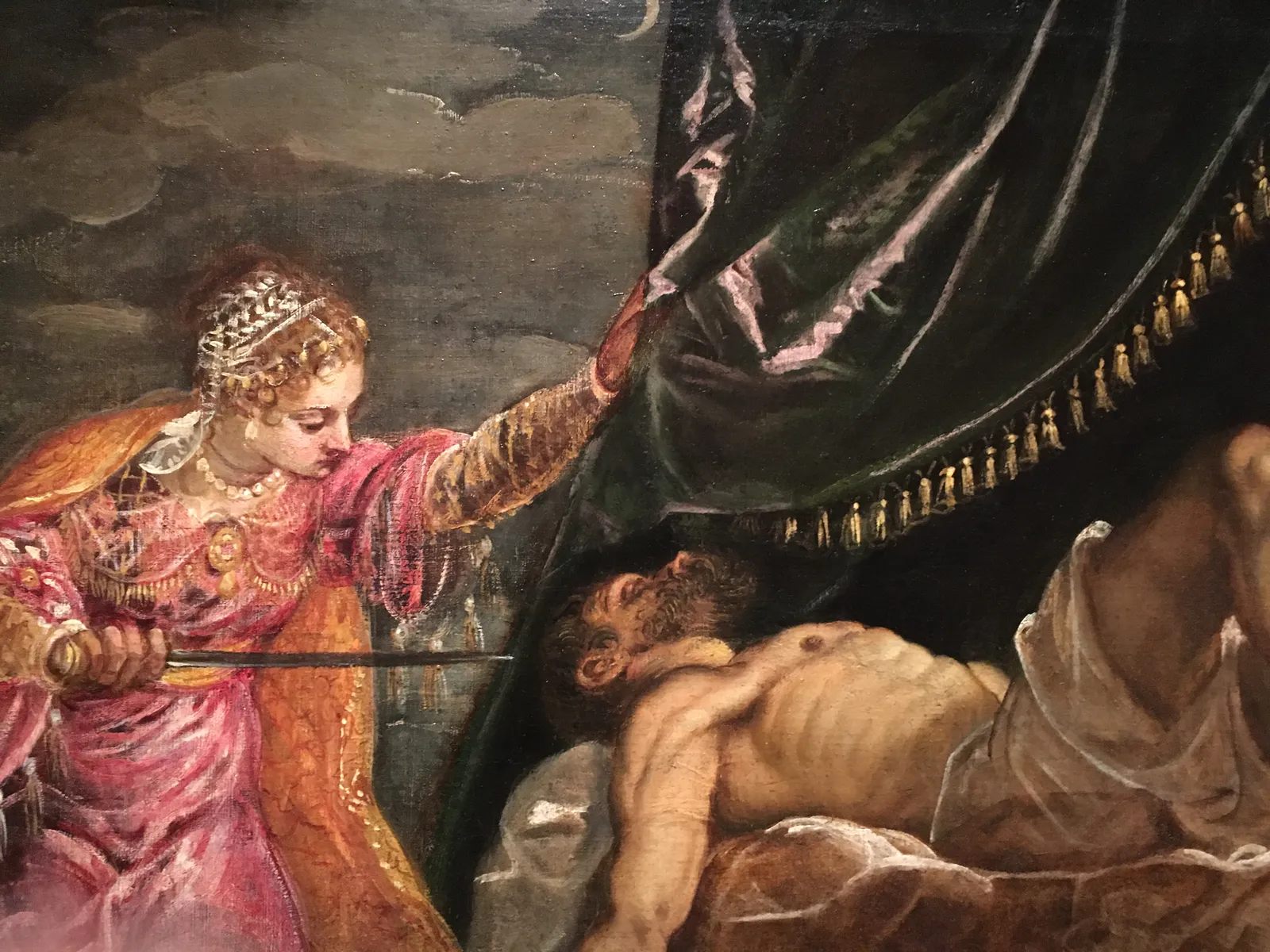
Judith Beheading Holofernes
Jacopo Tintoretto
This painting (c. 1577) by the studio of Jacopo Tintoretto depicts the biblical scene where Judith beheads Holofernes, an Assyrian general, to save her people. Executed in the Mannerist style, it emphasizes tension and emotion, typical of the Late Renaissance. The scene symbolizes courage and divine justice, reflecting the era’s interest in heroic narratives.
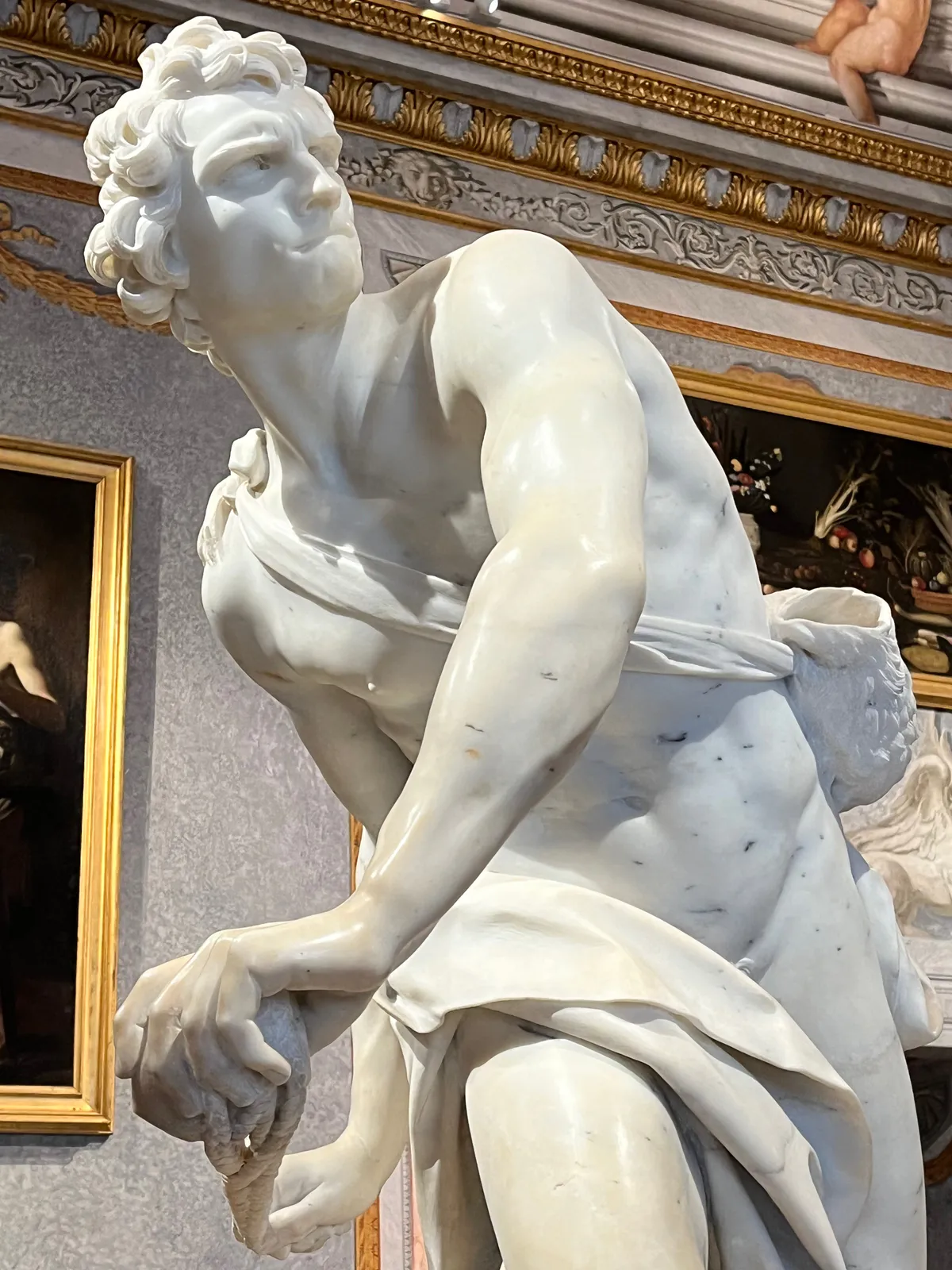
David
Gian Lorenzo Bernini
This marble sculpture (1623–24) captures David in a twisting stance, body coiled as his hand grips the sling. Muscles, drapery, and focused gaze all align with the implied arc of the stone. Commissioned by Cardinal Scipione Borghese, it exemplifies Baroque interest in movement and psychological intensity, turning a biblical hero into a study of concentrated action.
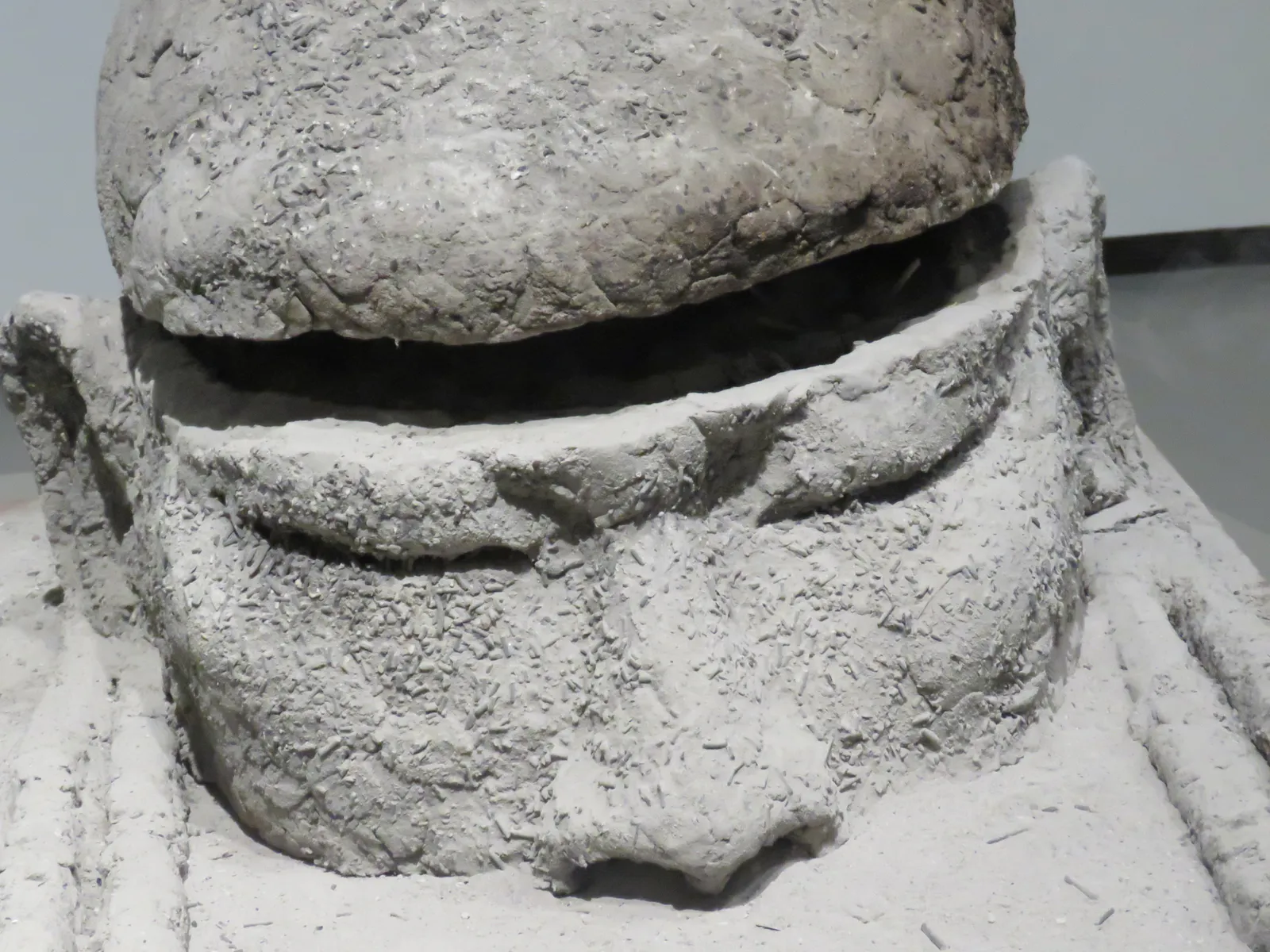
Sudden Awakening
Zhang Huan
This large Buddha head sculpture (2006) lies fragmented on the ground, its heavy upper section slightly shifted above closed eyes and rough, ash-coated features. Formed from ash and steel, it draws on materials linked to ritual burning and industrial residue. The broken, weighty face reveals how contemporary Buddhist art confronts impermanence and the tension between spiritual ideals and material collapse.
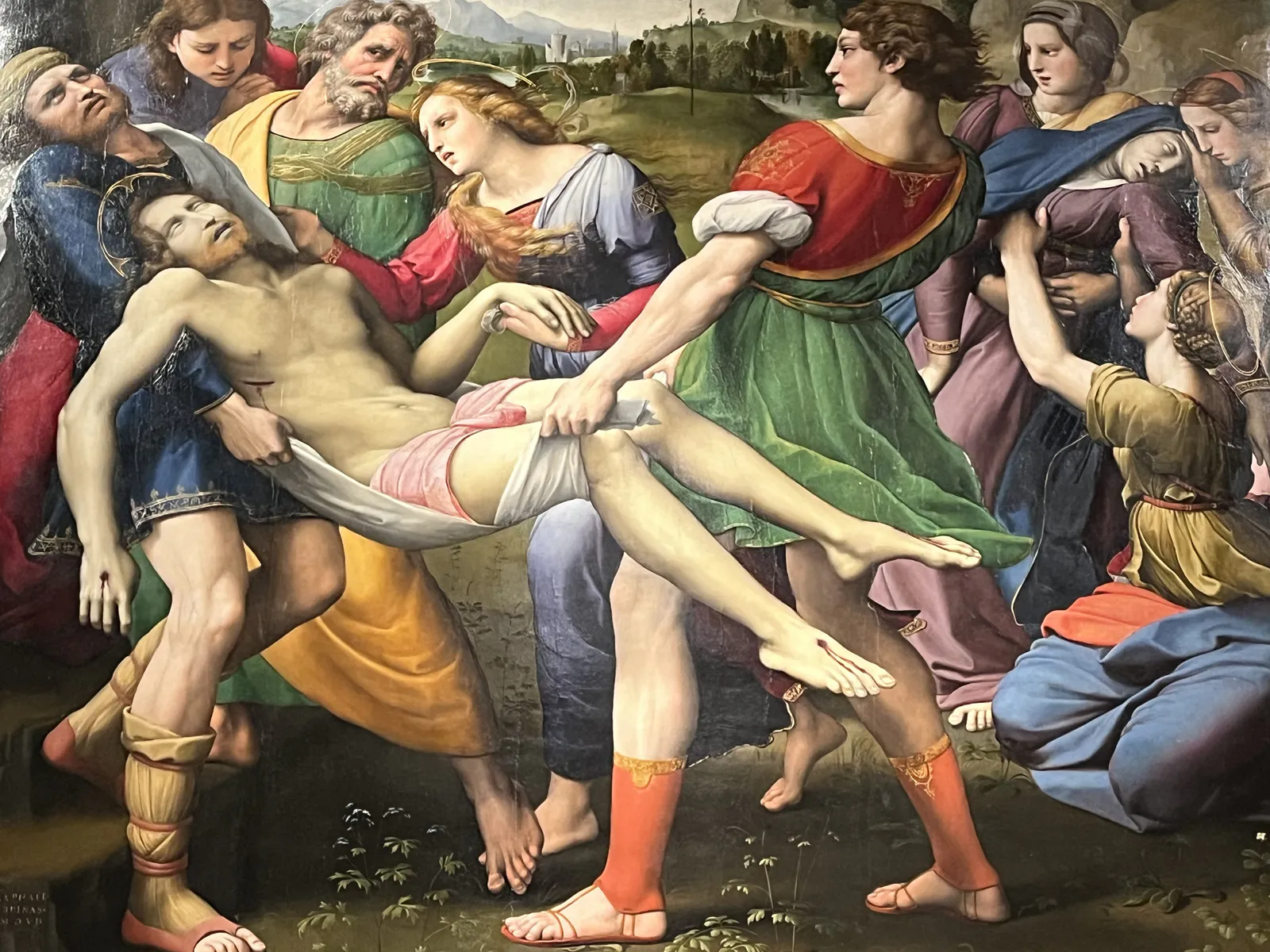
The Entombment
Raphael
Commissioned in 1507 by Atalanta Baglioni to honor her slain son, this painting unites the Deposition, Lamentation, and Entombment in one scene. Raphael’s dynamic figures, especially Christ’s, show Michelangelo’s influence. Stolen in 1608 by agents of Cardinal Borghese, it now hangs in the Galleria Borghese. A 2020 restoration revealed vivid colors, delicate sfumato (soft tonal blending), and adjustments in Raphael’s evolving design.
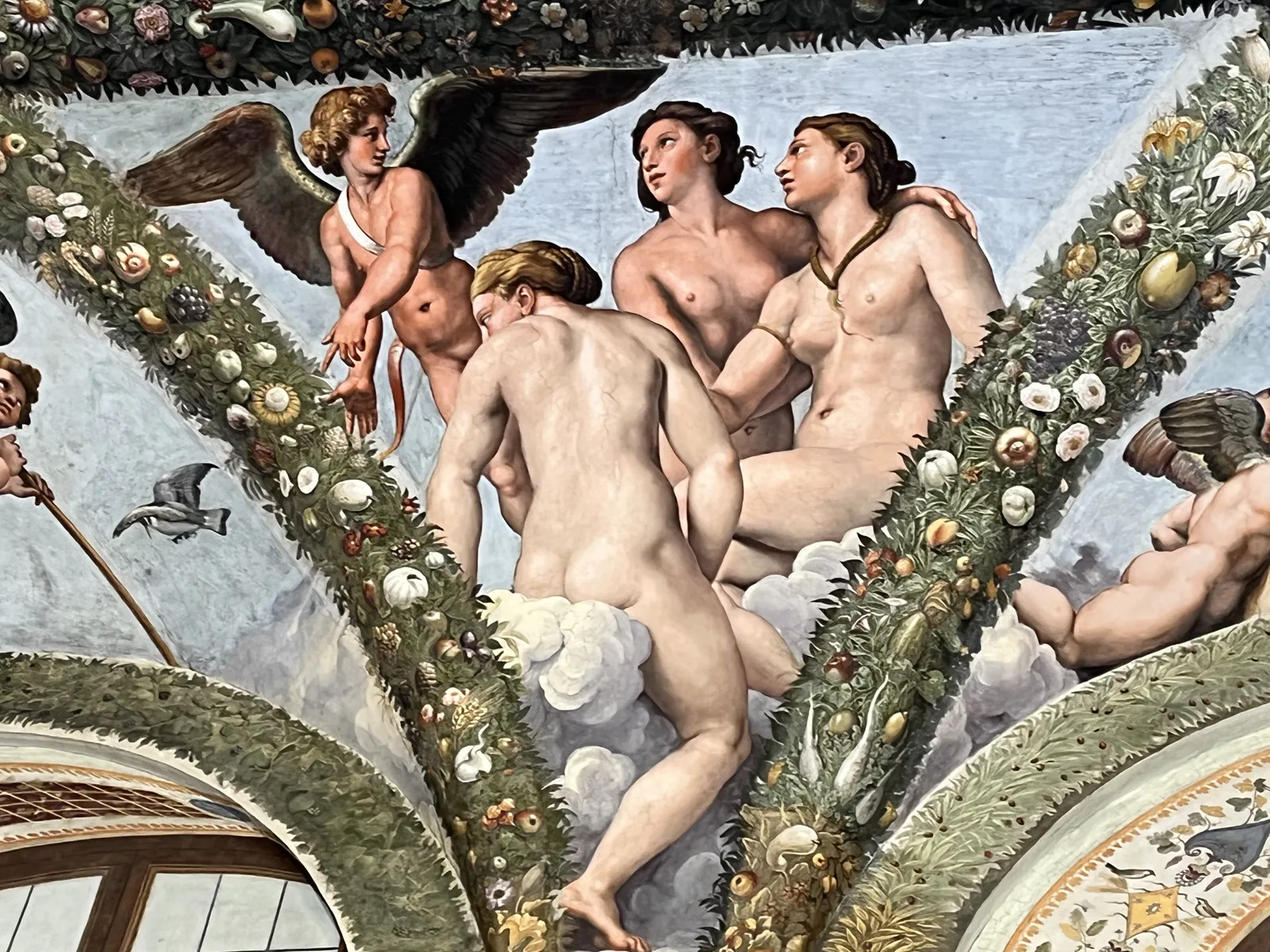
Cupid and the Three Graces
Raphael
In this fresco (1518), Raphael portrays Cupid with the Three Graces, who embody beauty, charm, and joy. The scene reflects the harmony of love and divine favor, integral to Psyche’s myth. Framed by Giovanni da Udine’s botanical festoons, it blends mythology with Renaissance ideals of grace and abundance.
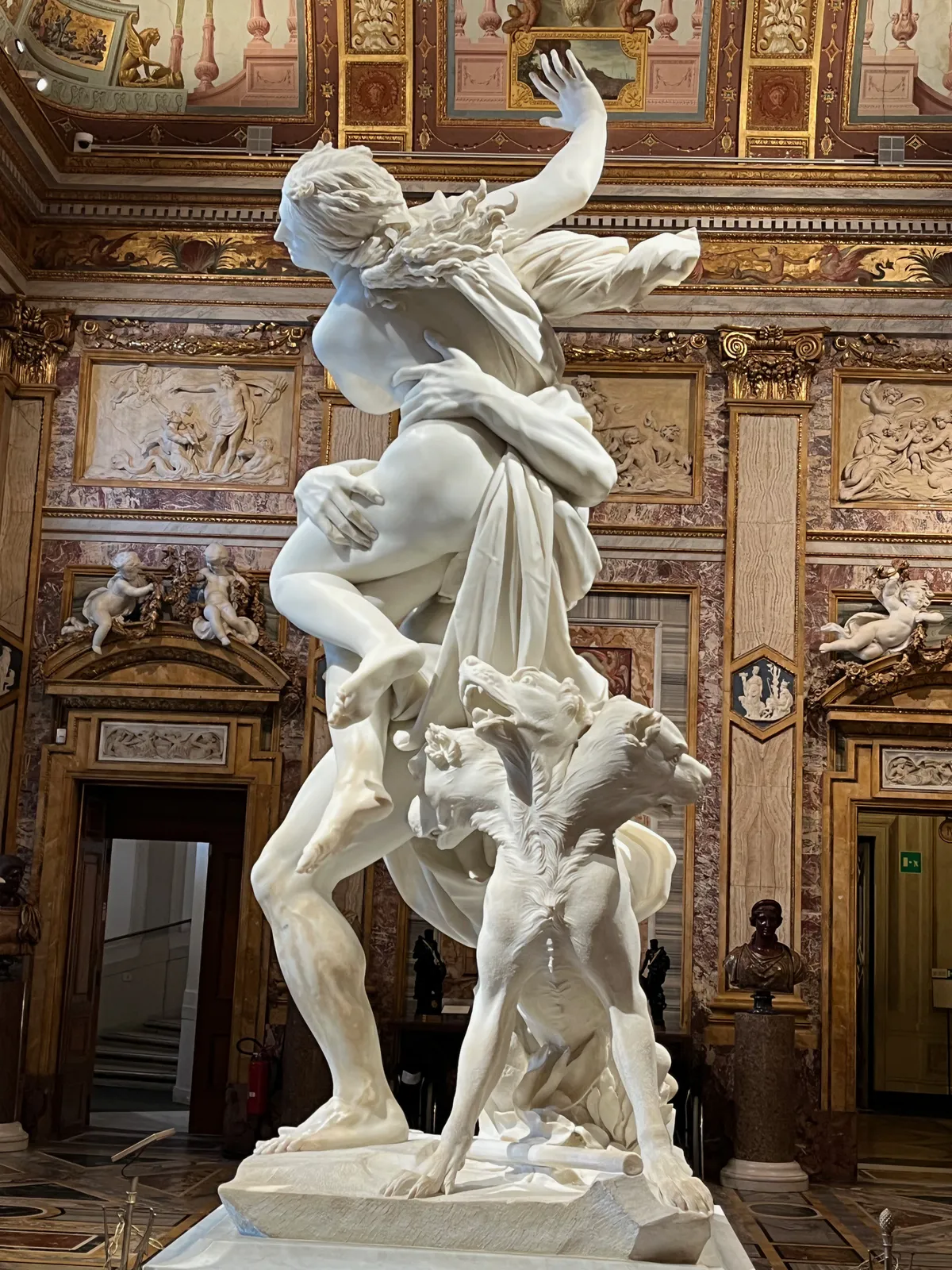
The Rape of Proserpina
Bernini
This angle captures the emotional arc of Proserpina’s resistance as she twists away from Pluto’s grasp. Her outstretched arm and flowing hair dramatize the violence of the abduction. Cerberus, the infernal hound, reinforces the mythological setting, while the composition’s spiral motion showcases Bernini’s virtuosity in carving living flesh from marble.
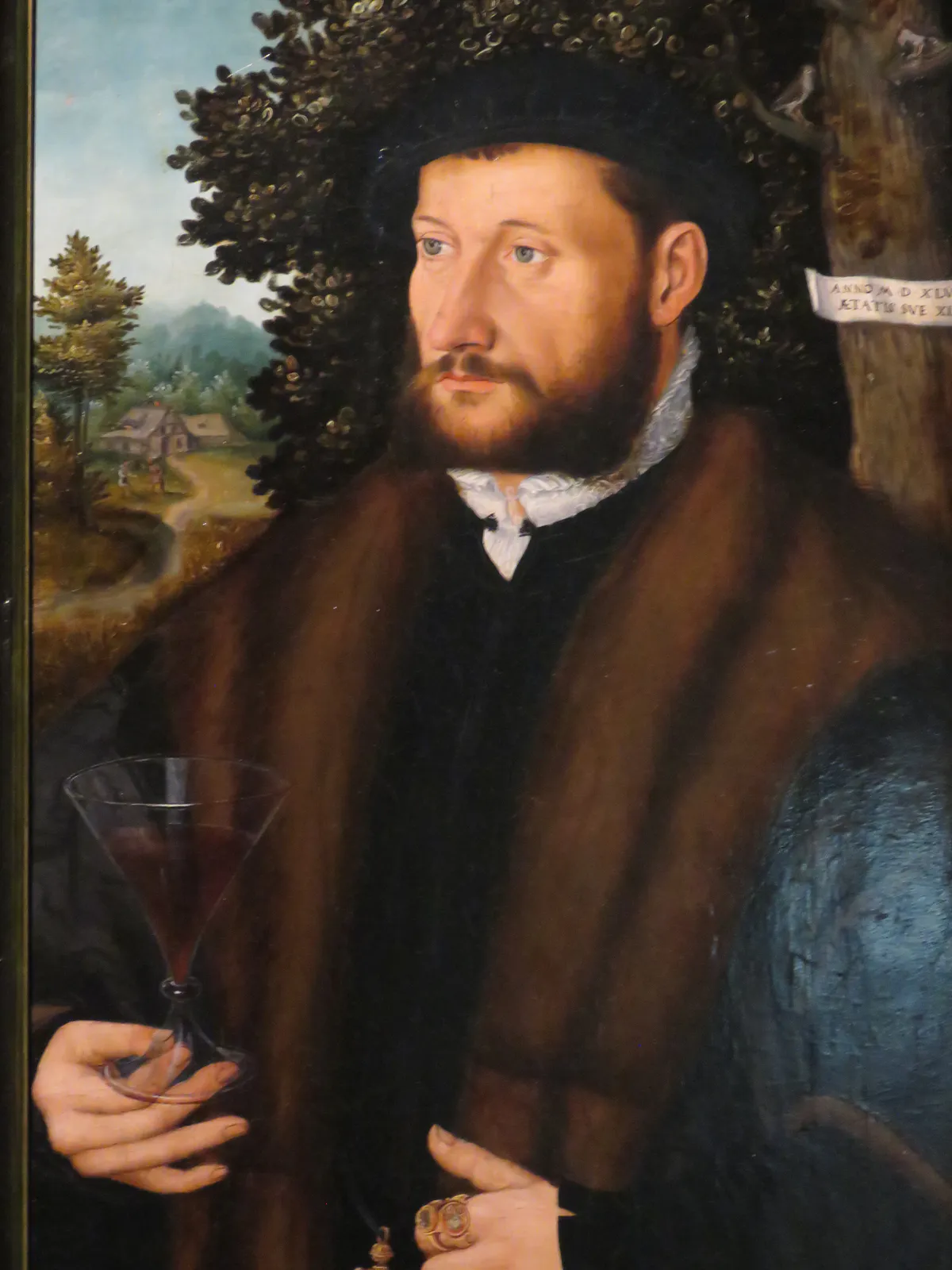
Male Portrait
Hans Muelich
This portrait (c. 1550) reflects the refined realism of the German Renaissance. The sitter’s composed gaze, luxurious attire, and elegant glass signify affluence and cultured leisure. The distant path and village in the background may allude to the subject’s journey, social standing, or inner world.
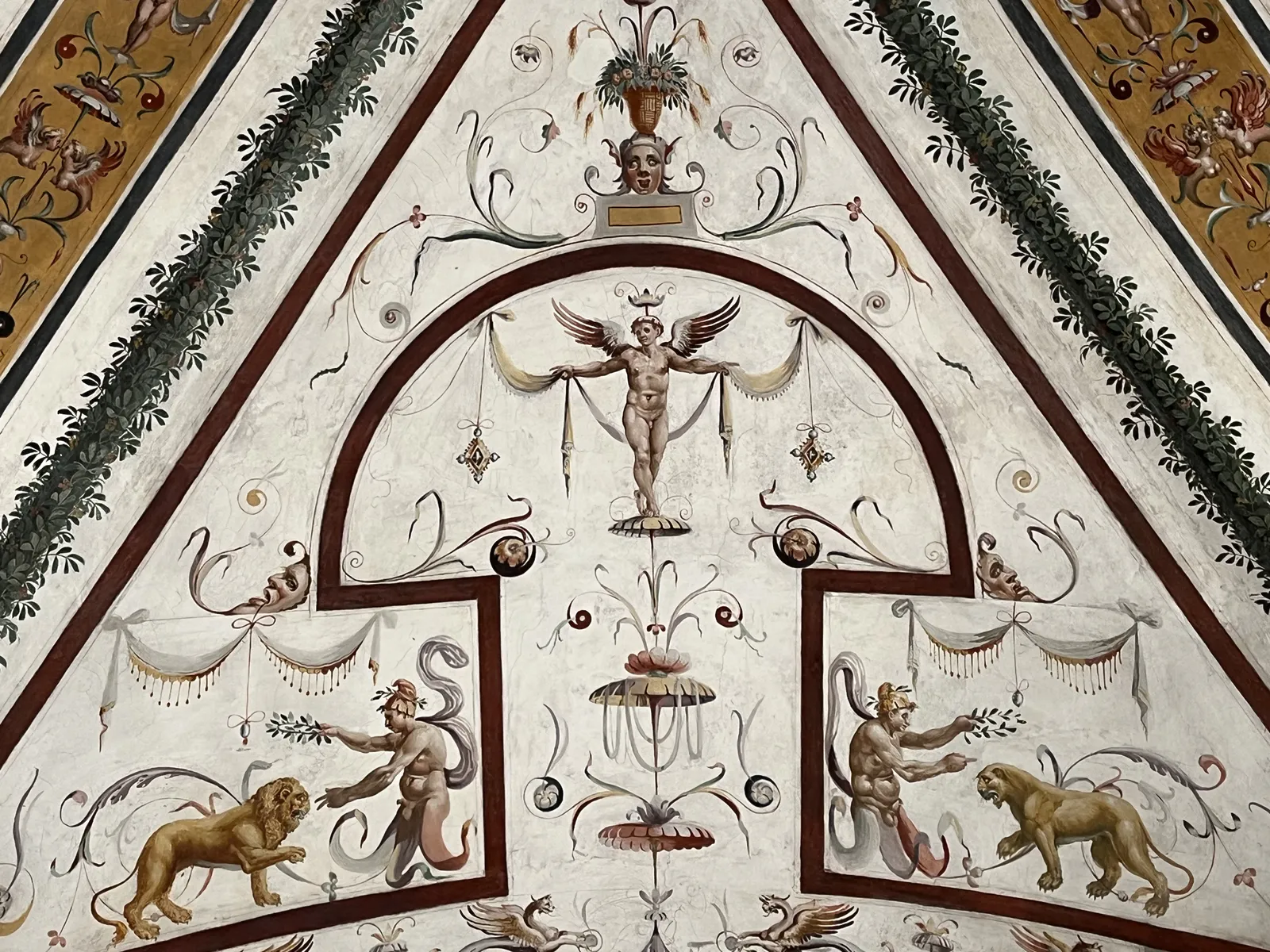
Grotesque Ceiling Decoration
Bonaccorsi Pietro (Perin del Vaga) and Rietti Domenico
This fresco (c. 16th c.) blends Renaissance whimsy with ancient Roman influence, reviving the grotesque style unearthed in Nero’s Domus Aurea. Figures with human and animal features balance symmetrical vines, mythical beasts, and theatrical masks. The composition celebrates harmony through fantasy, playfully bridging antiquity and imagination.
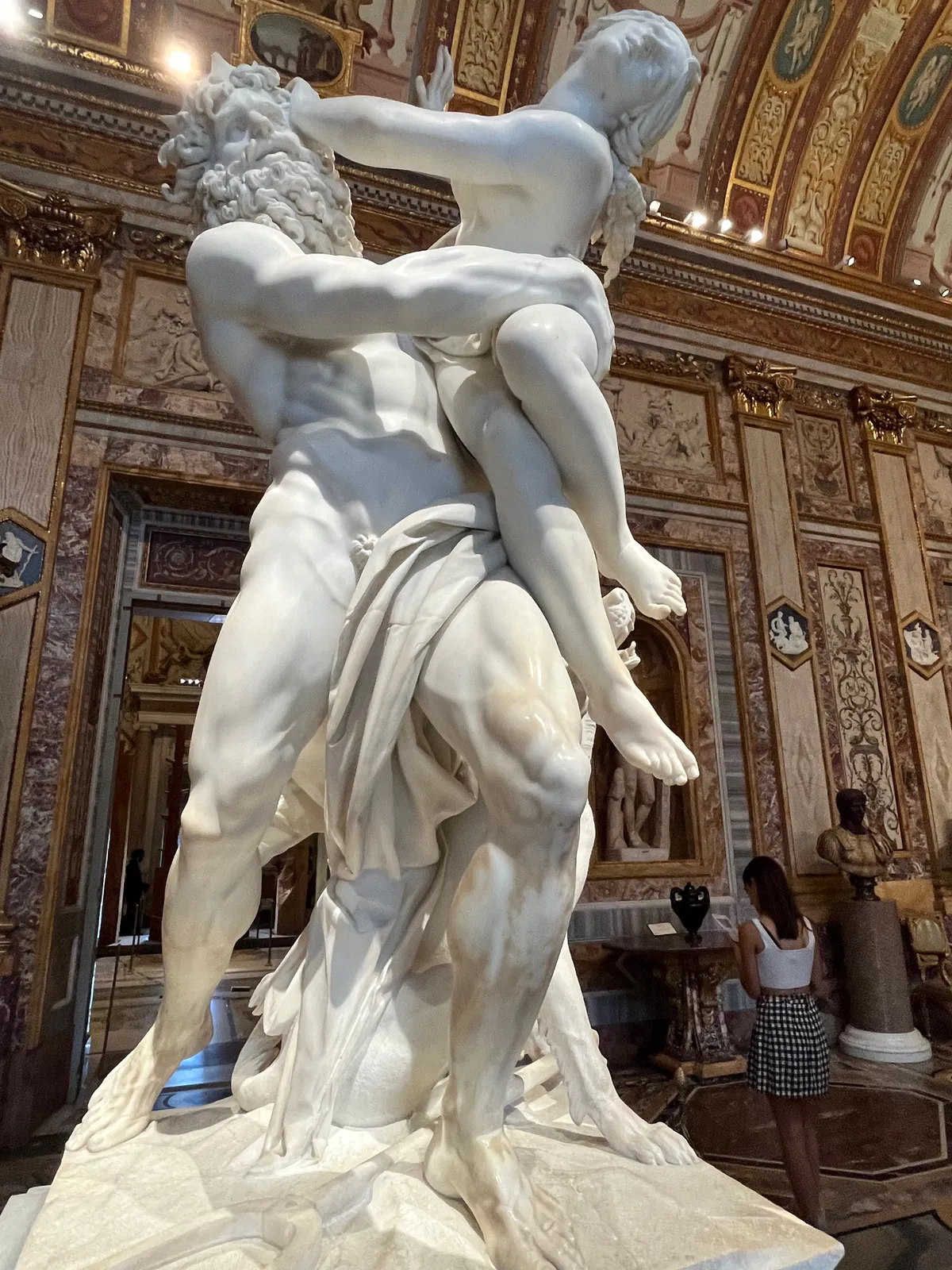
The Rape of Proserpina
Gian Lorenzo Bernini
From this angle, Bernini’s technical genius is apparent. Pluto’s gripping hands sink into Proserpina’s flesh with astonishing realism, turning marble into living form. The work (1621–22) stages emotional and physical tension at its peak, embodying the Baroque goal of stirring awe, drama, and pathos in a single breathtaking moment.
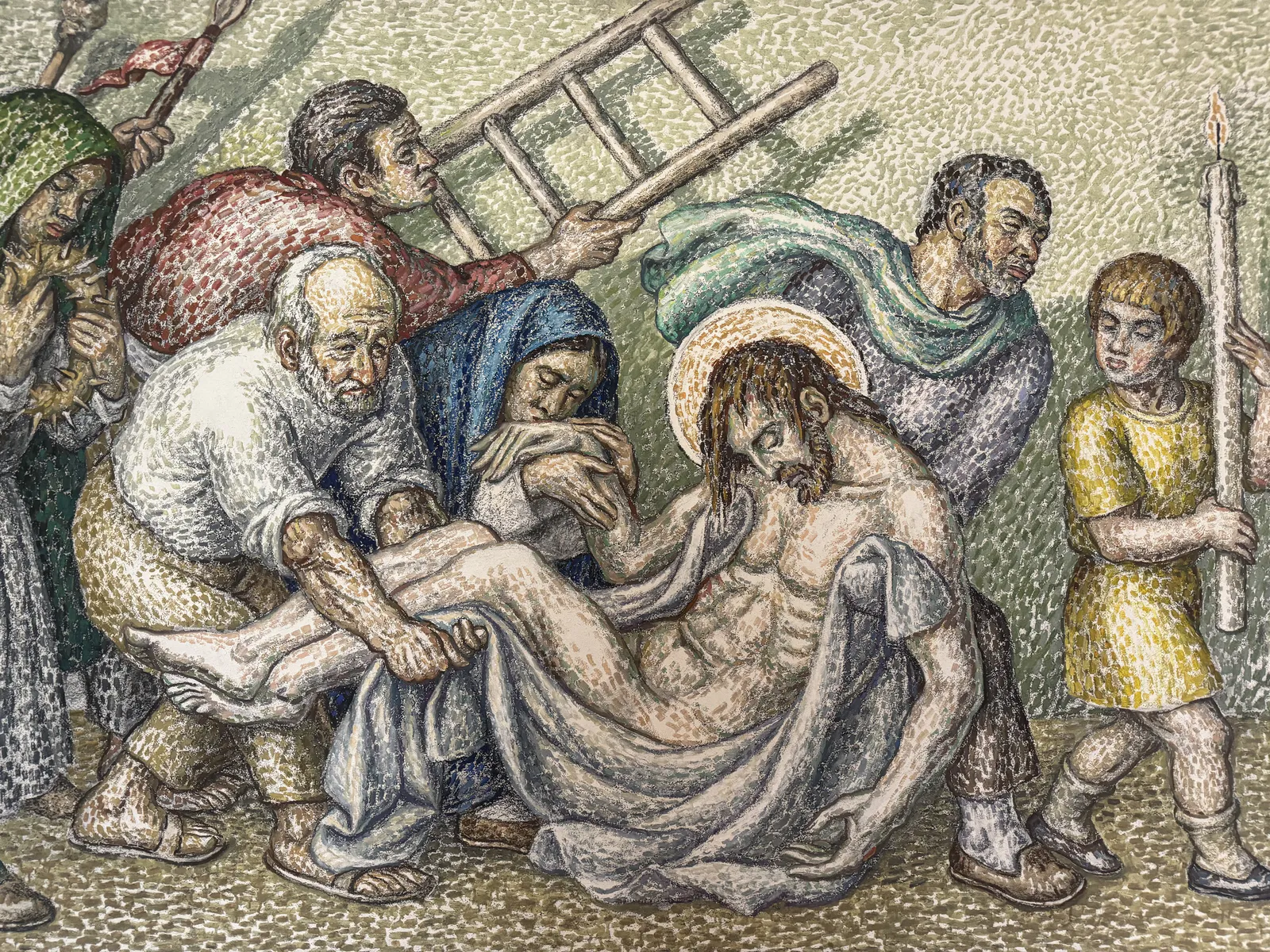
Descent from the Cross
Luis Alberto Acuña
Acuña (mid-1950s) renders the moment of Christ’s body being lowered from the cross with emotional gravity and communal sorrow. The composition emphasizes solidarity in grief, surrounding Christ with figures of all ages and backgrounds, reinforcing the universality of human suffering and compassion.
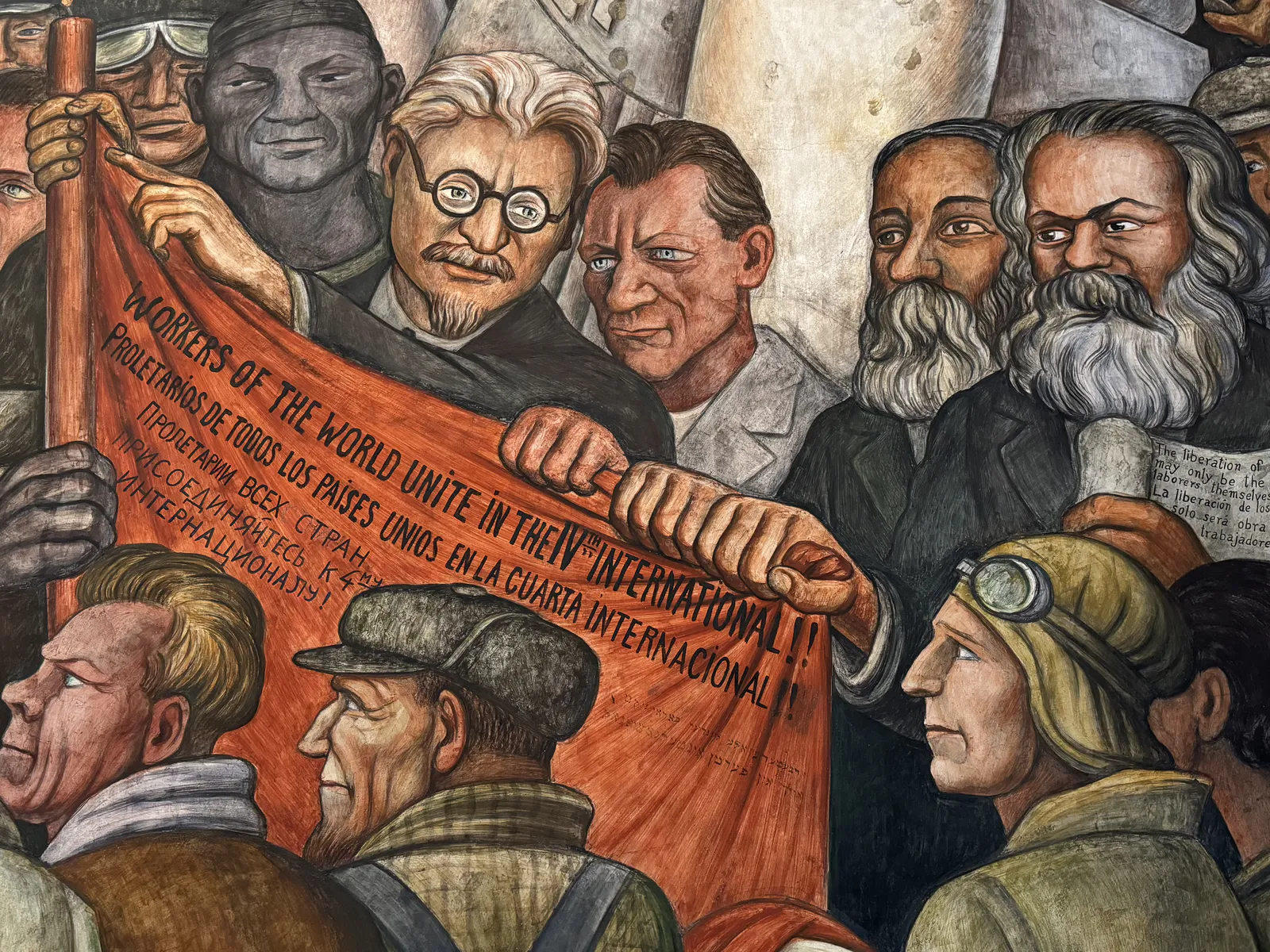
Fourth International (detail)
Diego Rivera
This segment of Rivera’s 1934 mural shows Marx, Engels, and Trotsky rallying workers beneath a red banner proclaiming unity across nations. The multilingual call to join the Fourth International affirms Rivera’s radical vision: true liberation must come from the workers themselves, guided by socialist ideals and international solidarity.
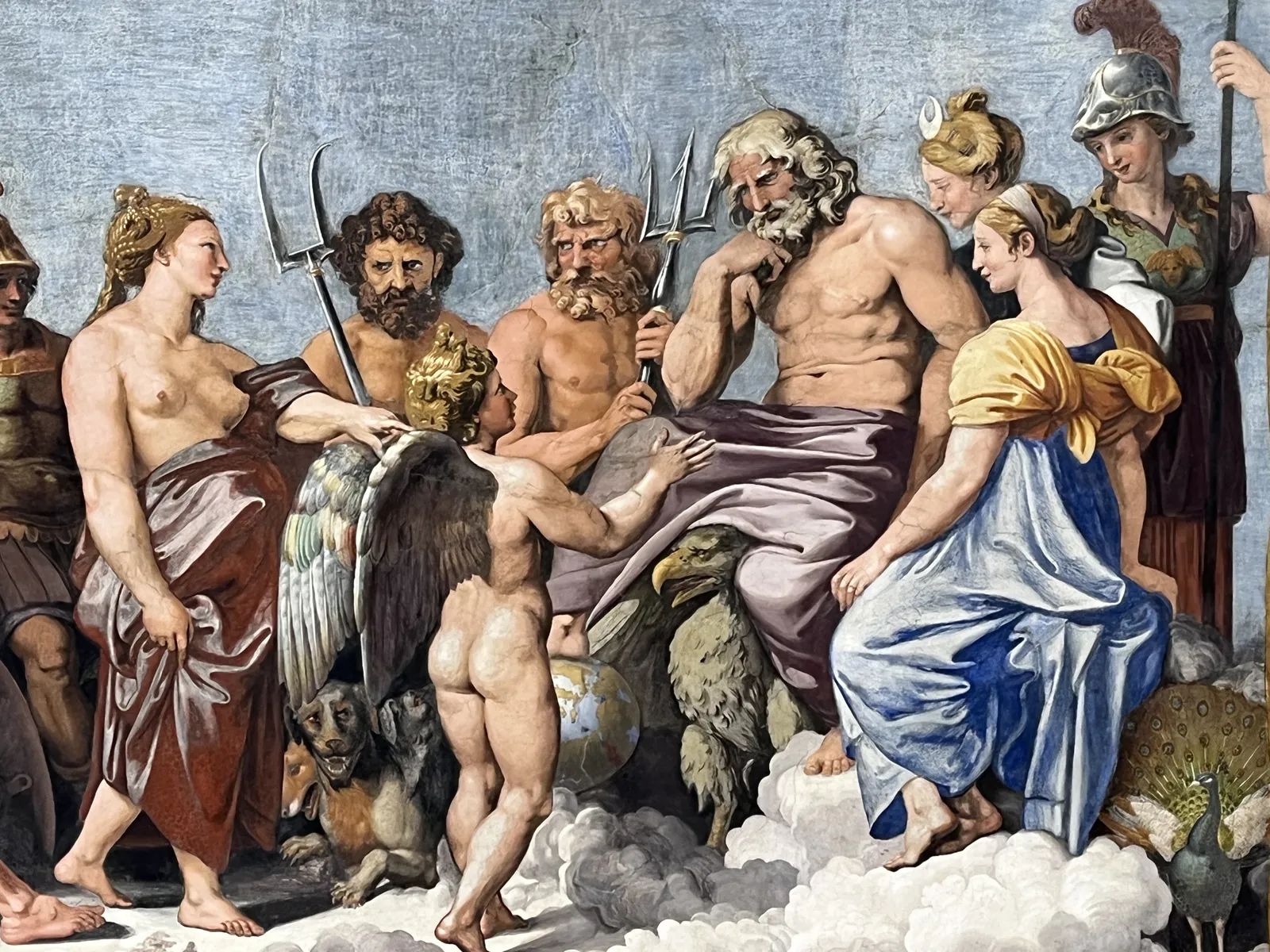
The Council of the Gods (detail)
Raphael
In this scene (1518), Raphael depicts Cupid pleading with Jupiter to grant Psyche immortality and approve their union. Jupiter, seated with his eagle, listens thoughtfully. Beside him are Juno (with peacock), Diana (with crescent moon), and Minerva (in armor). Venus stands bare-breasted beside her son, while Neptune (with trident) and Pluto (with bident and dog Cerberus) and Mars (in armor) observe from behind.
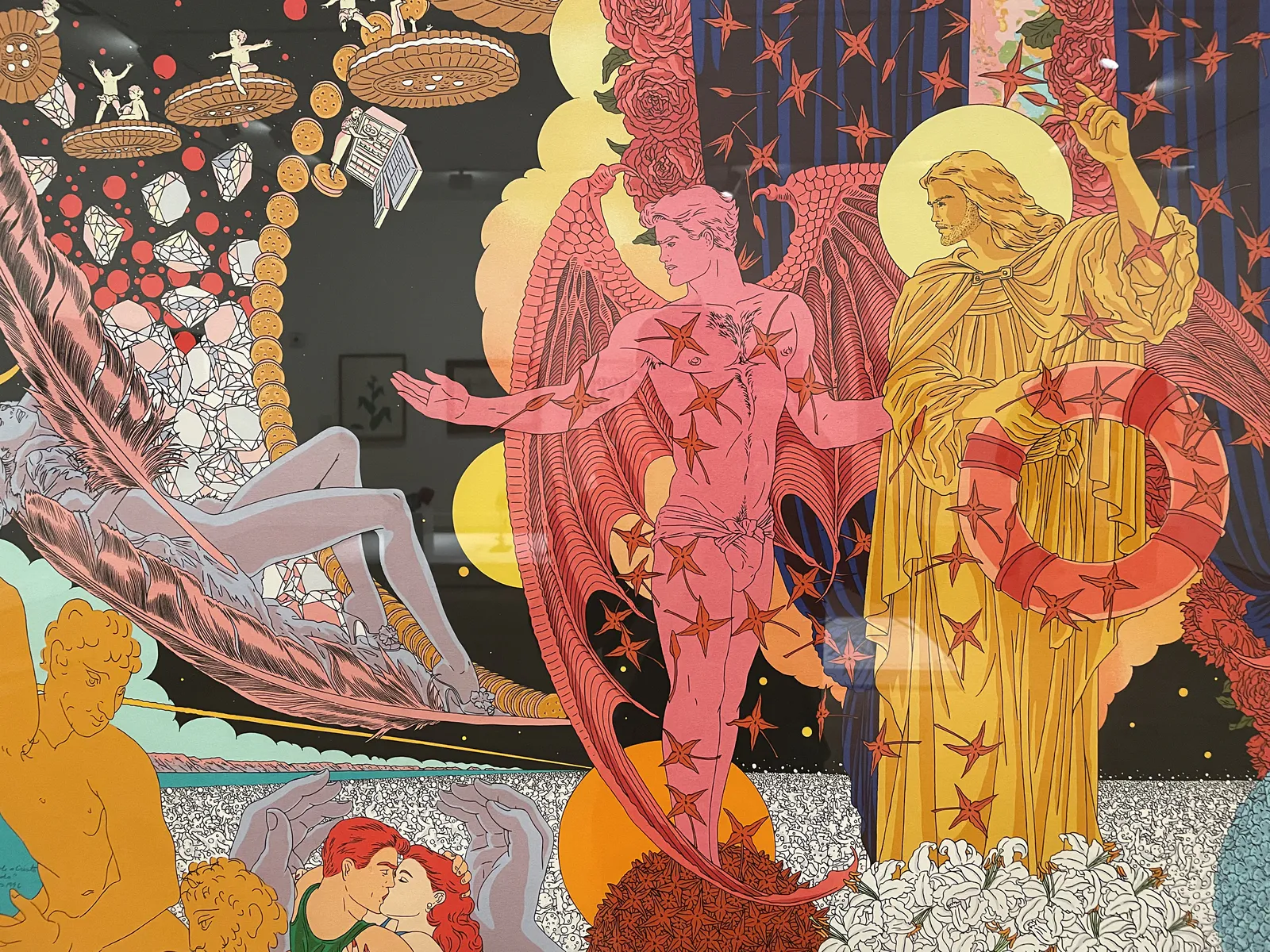
The Devil Showing Christ the Delights of the World
Álvaro Barrios
In this pop-infused lithograph (1996), Barrios reimagines Christ’s temptation with dazzling surrealism. A winged devil offers worldly pleasures—luxury, sex, and consumer goods—while Christ holds a lifebuoy, a symbol of spiritual rescue. Blending biblical narrative with pop culture, the work critiques material excess and invites reflection on salvation in an age of spectacle.
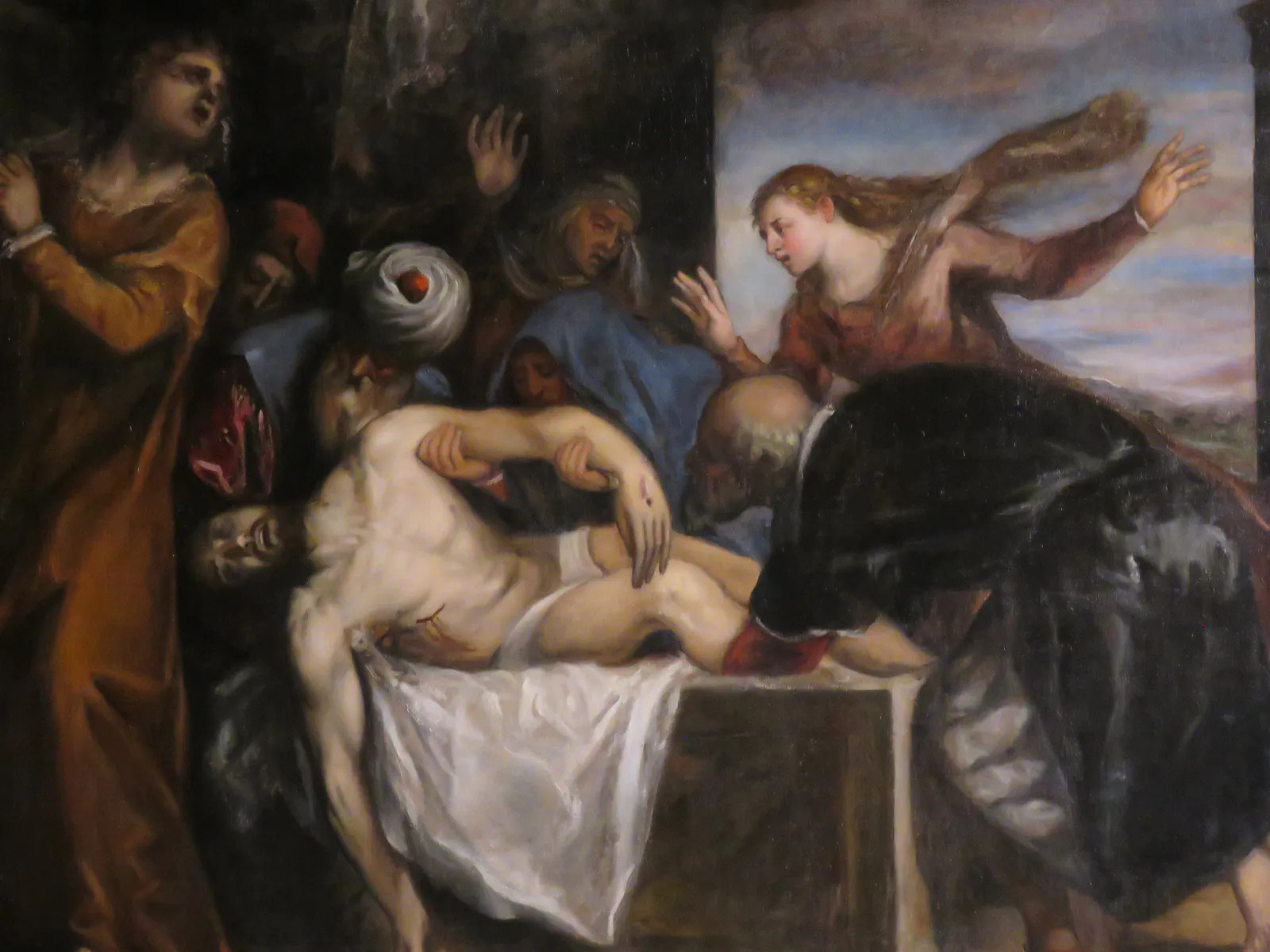
The Entombment of Christ
Titian and Palma the Younger
A poignant rendering of Christ’s burial, this oil on canvas (1618) was begun by Titian and completed by Palma the Younger. The composition captures collective grief, emphasizing the physical weight of death and the emotional weight of loss. The figures’ gestures and expressions mirror Renaissance ideals of pathos and human dignity.
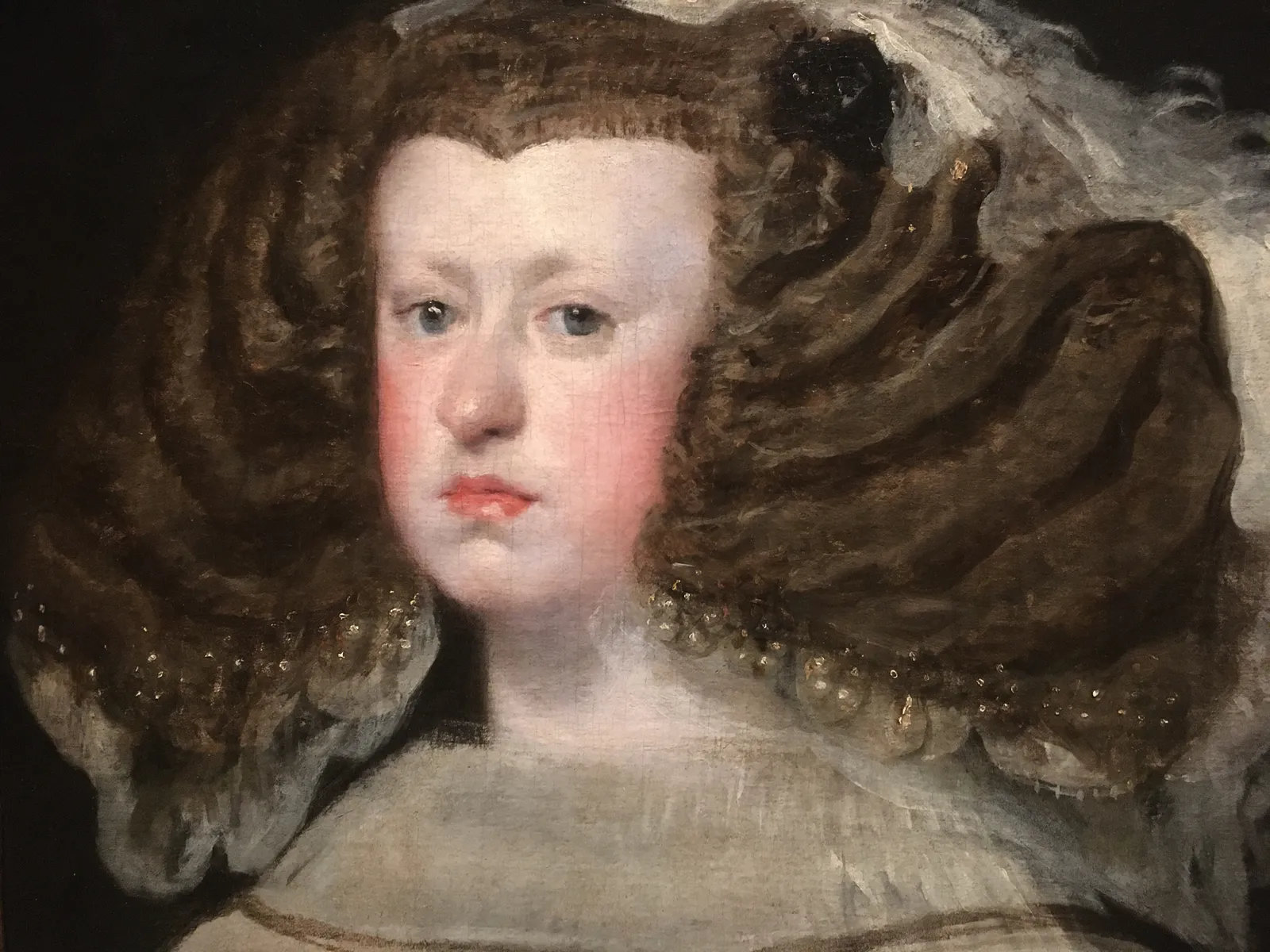
Queen Mariana
Diego Velázquez
Diego Velázquez’s portrait of Queen Mariana (c. 1656) captures the young queen with sensitivity, highlighting her regal authority and personal nuance. Painted during her early years as Philip IV’s wife, it is part of a series of likenesses that served as studies for larger compositions. These studies influenced other works, including those in Barcelona and Madrid.
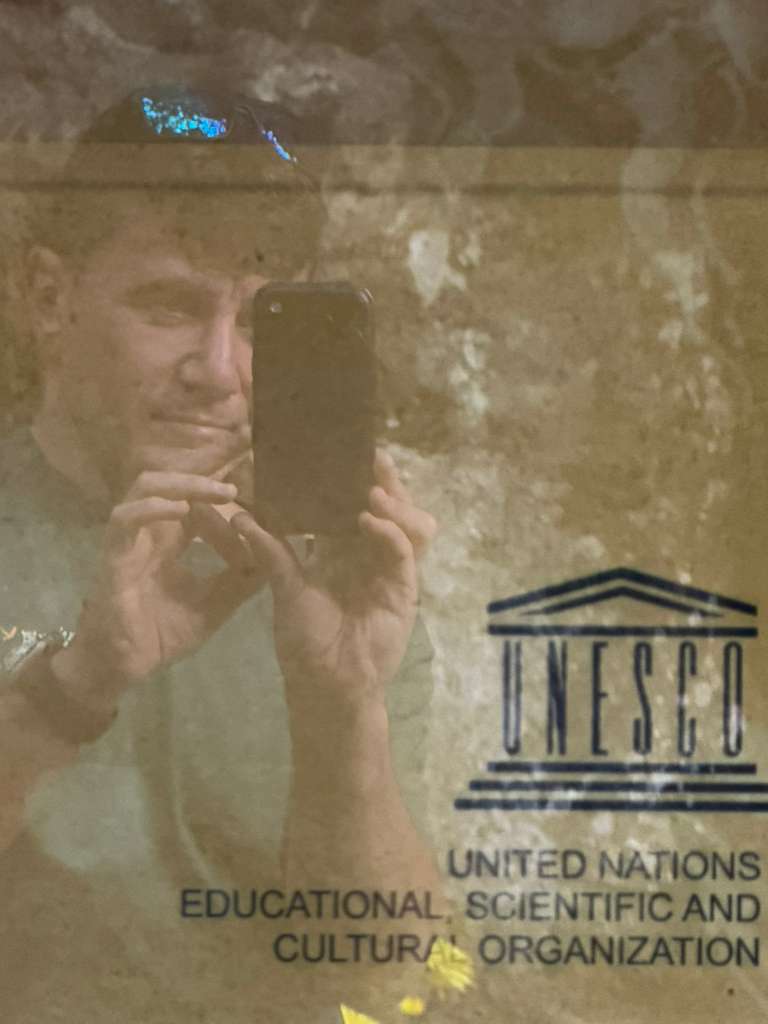
“When the path is beautiful, do not ask where it leads.” — Zen proverb
Welcome to my travel photography!
“When the path is beautiful, do not ask where it leads.” — Zen proverb
Welcome to my travel photography!
For as long as I can remember, my path has been one of discovery—seeking beauty, timelessness, and connection in every corner of the world. It has also been a journey of deep learning and understanding. I’ve been an avid traveler (or perhaps a travel addict?) for most of my life. My love for travel began long before I ever left home: as a child, I drew a fantasy map of my grandparents’ apartment and “traveled” through it with my cousin Sonya, imagining adventures in every corner. Nearly 90 countries and countless moments of awe later, I’m excited to share this journey with you.
Thanks to the tireless and ingenious programming of Diagilev, we’re now able to present about fifteen percent of the images I’ve accumulated over the years. More will be released in small batches depending on your interest. While the first release leans toward museum photography, later ones will include more nature, architecture, culture, and general travel experiences. If you’d like to receive email notifications about new releases, feel free to reach out—no commercial use, ever.
Throughout my travels, I’ve been drawn to two intertwined kinds of discovery. One is intellectual: learning why the world is the way it is. History became my guide, shaping my perspective and filling my camera roll with museums and old buildings. To me, history is not the past—it is the key to understanding the present and how the world became what it is. The other is emotional: seeking moments of elevation—spirituality, beauty, harmony—often found in nature, monasteries, and ancient sacred spaces. Together, these impulses shape my photography. It invites you to learn, admire, and soar—to rise above the mundane and see the world through a lens of curiosity and wonder.
Much of my later travel became possible thanks to my job with Delta Air Lines, but the wanderlust began years earlier. By the time I joined the industry, I had already visited over 35 countries and lived in several—largely thanks to a backpacking journey around the world with Luis León, whose face appears in many early photos. I grew up in Ufa in the USSR, and since leaving it I have lived, studied, and worked in Latvia, the United States, France, South Korea, Canada, Spain, Italy, Brazil, Japan, and Colombia.
A life of near-constant movement may seem a little crazy, but it has deepened my understanding of the world and produced the photography you are about to see. Over the years, my style has evolved—more intentional, more refined—yet its core remains the same: a search for understanding, timeless beauty, and a connection to those who walked this earth long before us.
I hope these photos stir something in your soul, just as they did in mine. I’d love to hear from you—whether reactions, suggestions, corrections, or a request to be added to the email list for new releases (no commercial use, I promise). You can learn more about my travels here, and my academic life here.
Enjoy our shared journey!