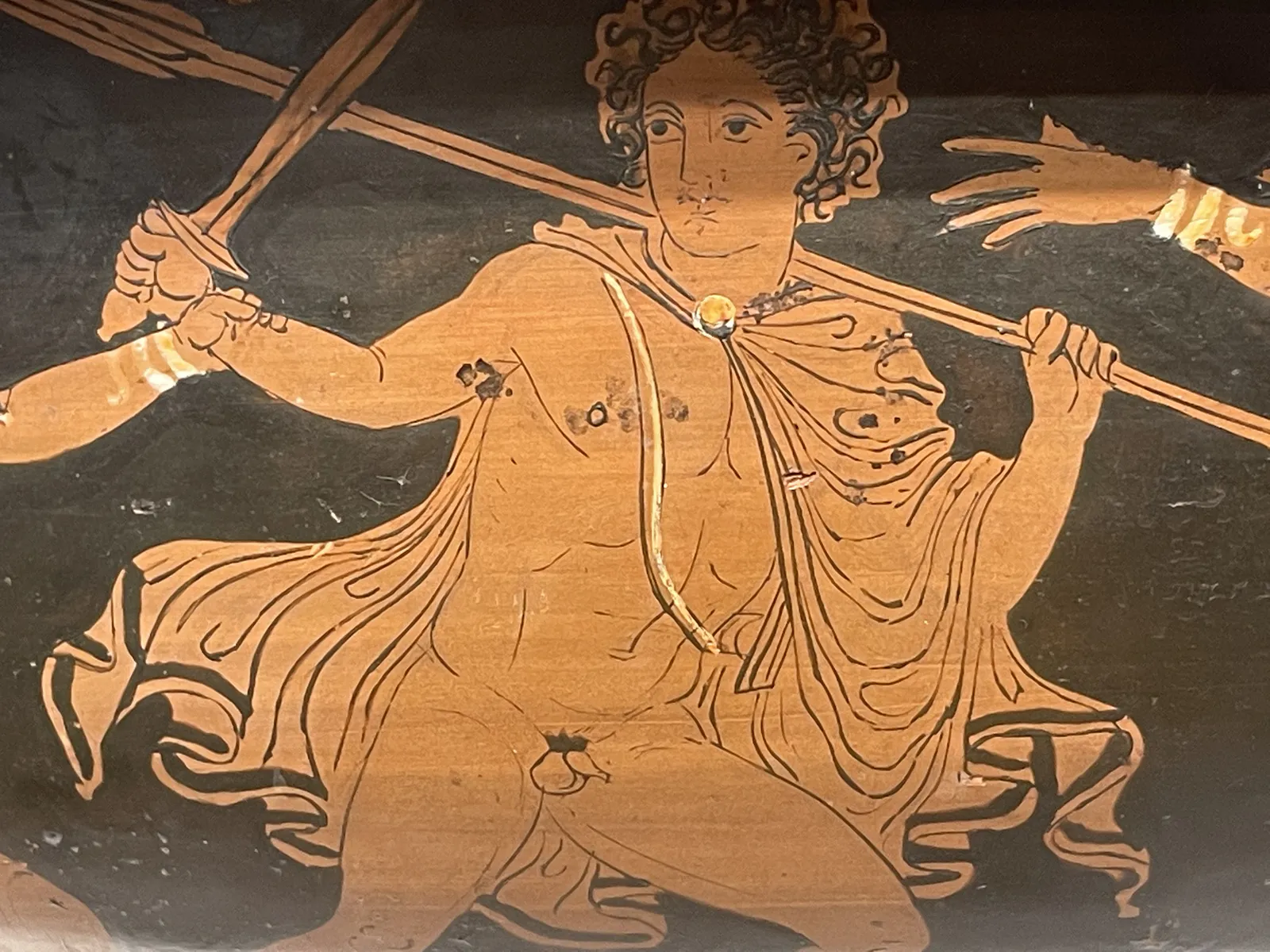
Pentheus Attacked by Bacchic Women
The Oxford Group Workshop
This Apulian red-figure plate (360–350 BC) shows Pentheus arming himself against Dionysus’ cult. In myth, he is seized by Bacchic women, including his mother Agave, who mistake him for prey and tear him apart. The scene warns against impiety and defying divine power, embodying the tragic cost of resisting Dionysian ecstasy and communal worship.
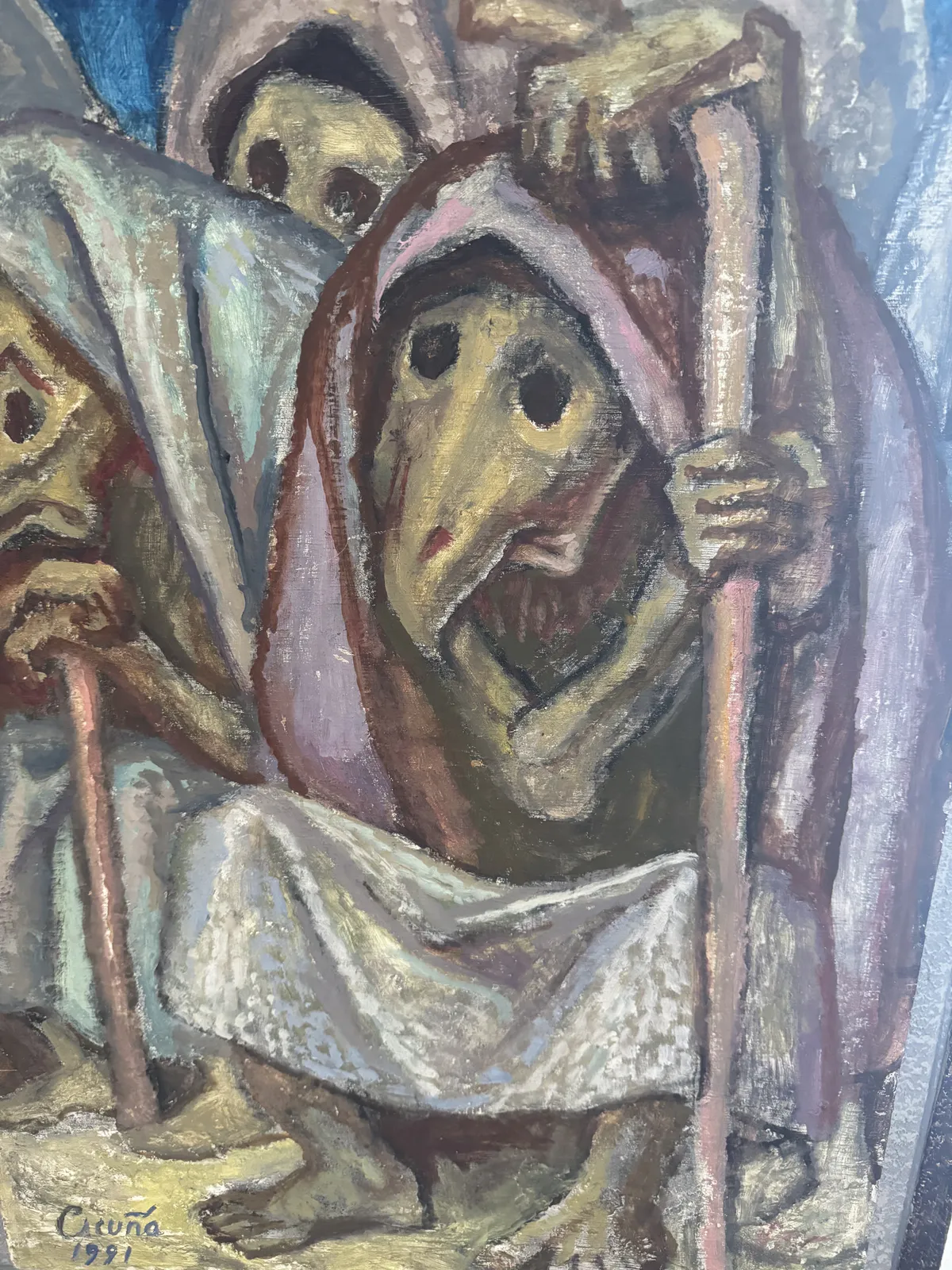
The Witch of Zascandil
Luis Alberto Acuña
This portrait (1991) shows the Witch of Zascandil, a figure rooted in Colombian folklore. Sharp features and widened eyes create a tense, exaggerated profile. The name Zascandil refers to a trickster or wandering mischief-maker in regional stories. The image indicates how rural mythology blends satire, fear, and ancestral belief.
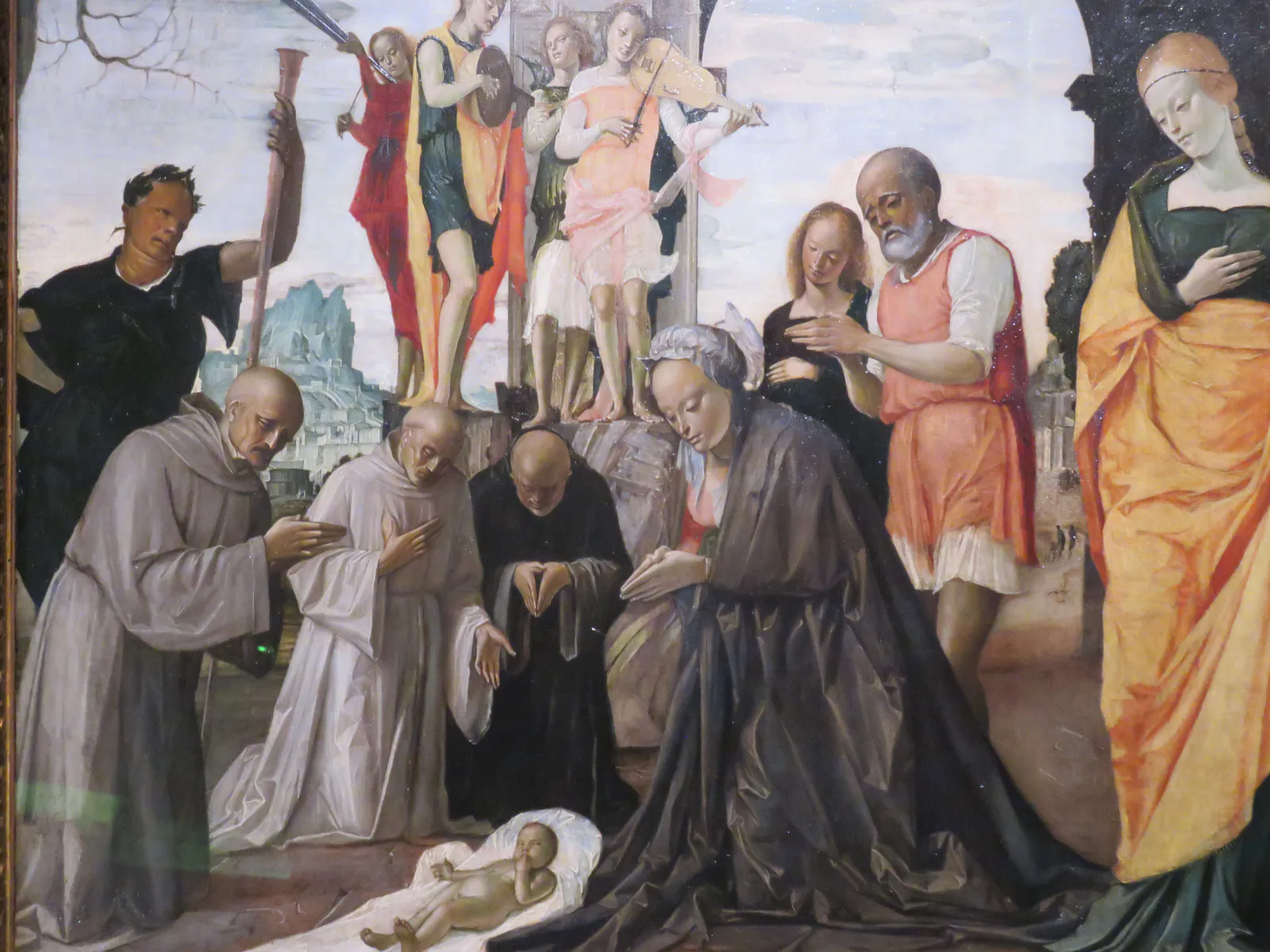
Adoration of the Christ Child
Bramantino
In this tempera panel (c. 1485), the Milanese innovator arranges the Nativity as a cool study of space. The Child rests on a stone slab, flanked by Mary and Saints Bernardino, Francis, and Benedict, while angel musicians provide a celestial motet. Rigid perspective, sculptural figures, and an architectonic backdrop reveal Bramantino’s quest for mathematical order within devotional feeling.
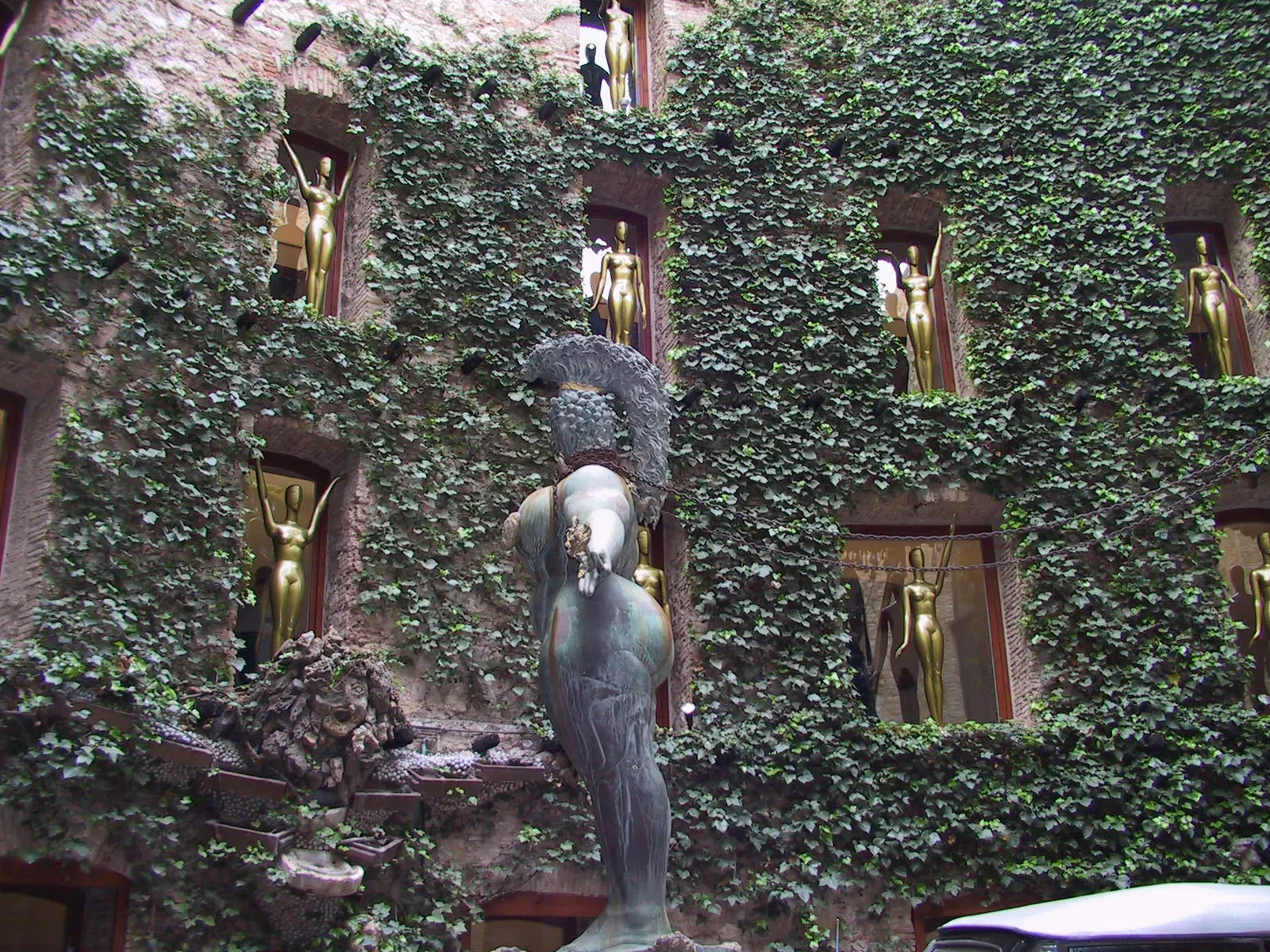
The Courtyard of the Wind Palace
Salvador Dalí
Dalí’s surreal installation (1970s) features golden female mannequins resembling votive icons in windows surrounding a central bronze figure of Venus crowned with a ship. This work merges classical motifs with theatrical elements, creating a fantastical vision of fertility, mythology, and voyeurism, showcasing Dalí’s unique blend of art and architecture.
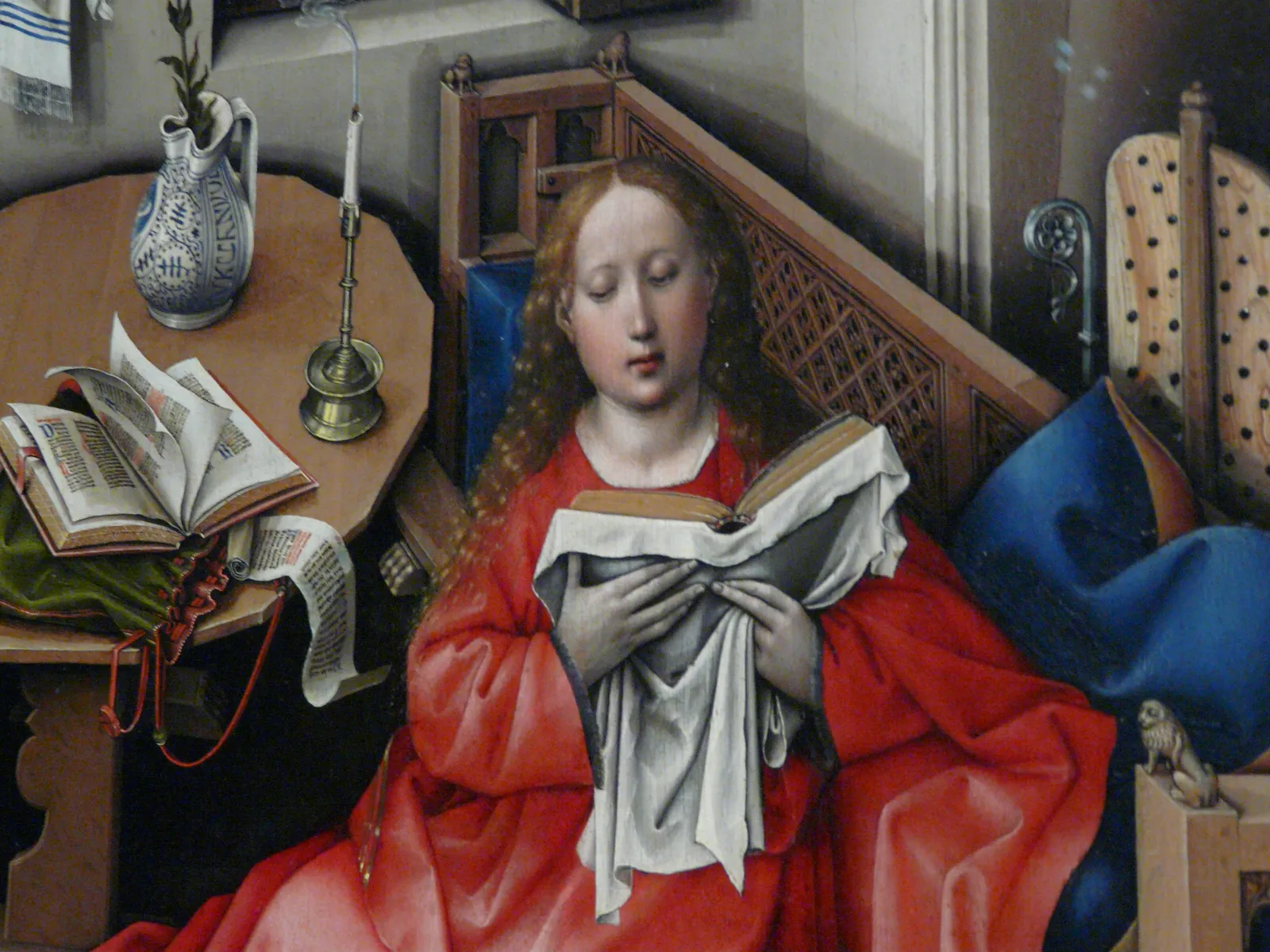
Mérode Altarpiece Central Panel
Robert Campin
This panel (c.1425–1428) shows Mary reading as Gabriel arrives. Domestic details carry layered meaning: the open book signals devotion, the lily purity, and the candle the Incarnation. The water jug with a white cloth evokes Mary’s virginity, while the enclosed garden glimpsed outside recalls her chastity. Named after later owners, the Mérode family, the work unites divine mystery with Flemish household realism.
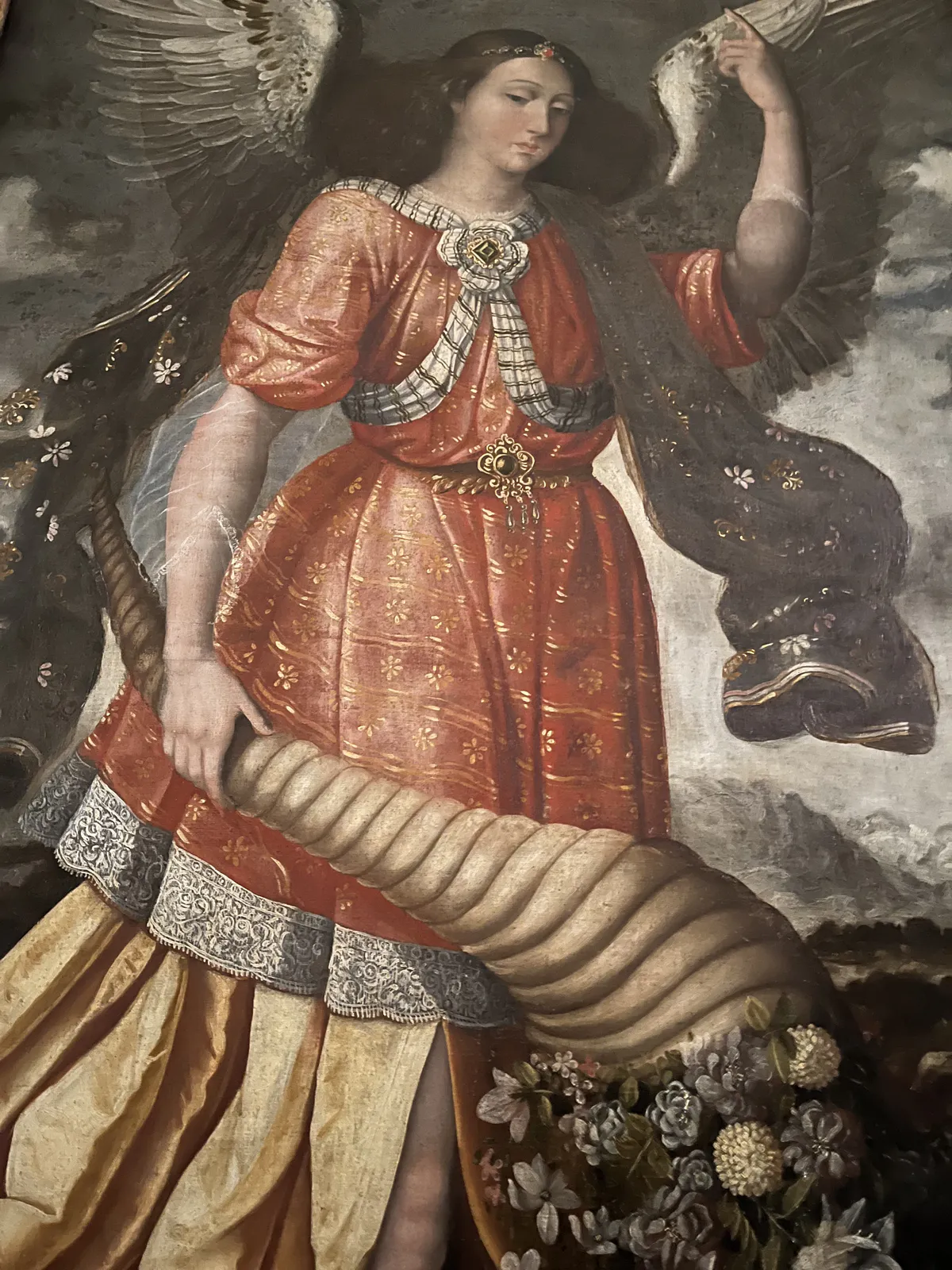
Isabel de Santiago
Archangel Gabriel
This early 18th-c. work by Isabel de Santiago—a rare female artist of the Quito School—portrays Gabriel as a celestial messenger of abundance. Draped in luminous textiles, the archangel holds a cornucopia, blending classical fertility symbols with baroque angelology in a uniquely Andean devotional image.
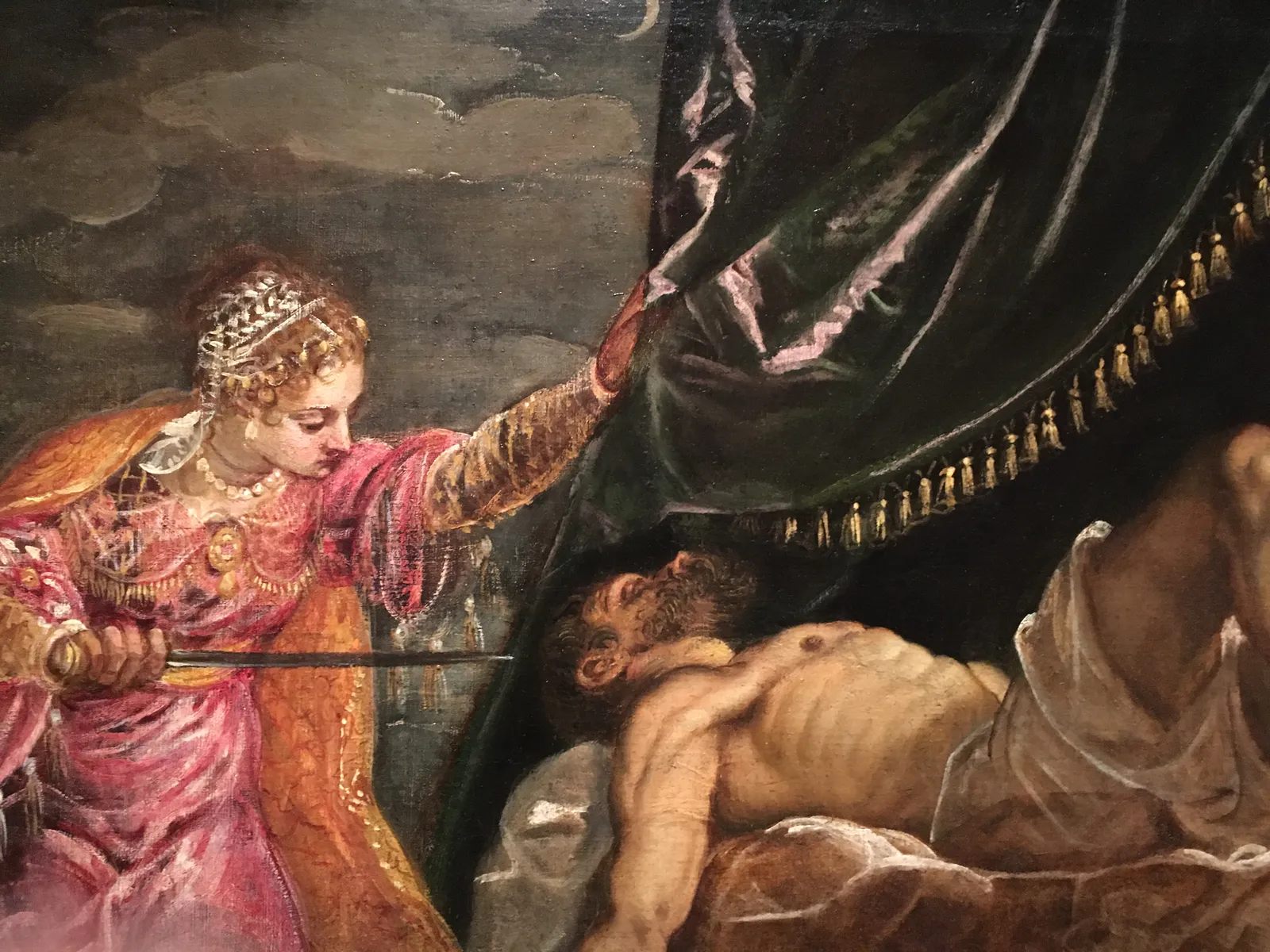
Judith Beheading Holofernes
Jacopo Tintoretto
This painting (c. 1577) by the studio of Jacopo Tintoretto depicts the biblical scene where Judith beheads Holofernes, an Assyrian general, to save her people. Executed in the Mannerist style, it emphasizes tension and emotion, typical of the Late Renaissance. The scene symbolizes courage and divine justice, reflecting the era’s interest in heroic narratives.
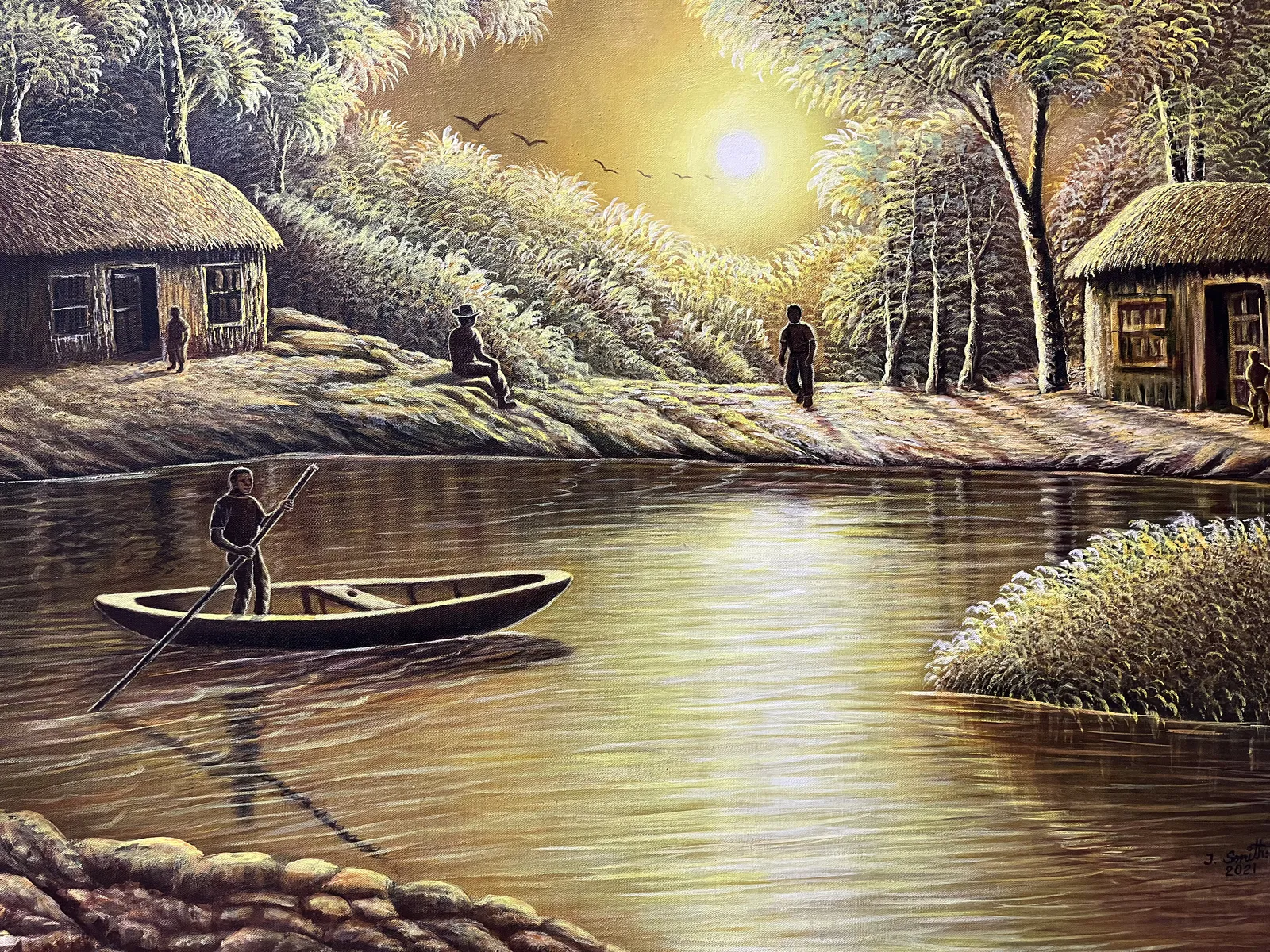
The Lagoon of Peace
Jorge Alberto Smith Ellas
This 2021 oil and acrylic painting evokes serenity and ancestral rhythm. A golden twilight bathes the rural scene, where everyday life unfolds by a calm lagoon. The composition speaks to Colombia’s Pacific and Caribbean heritage, honoring peace through stillness, memory, and connection to the land.
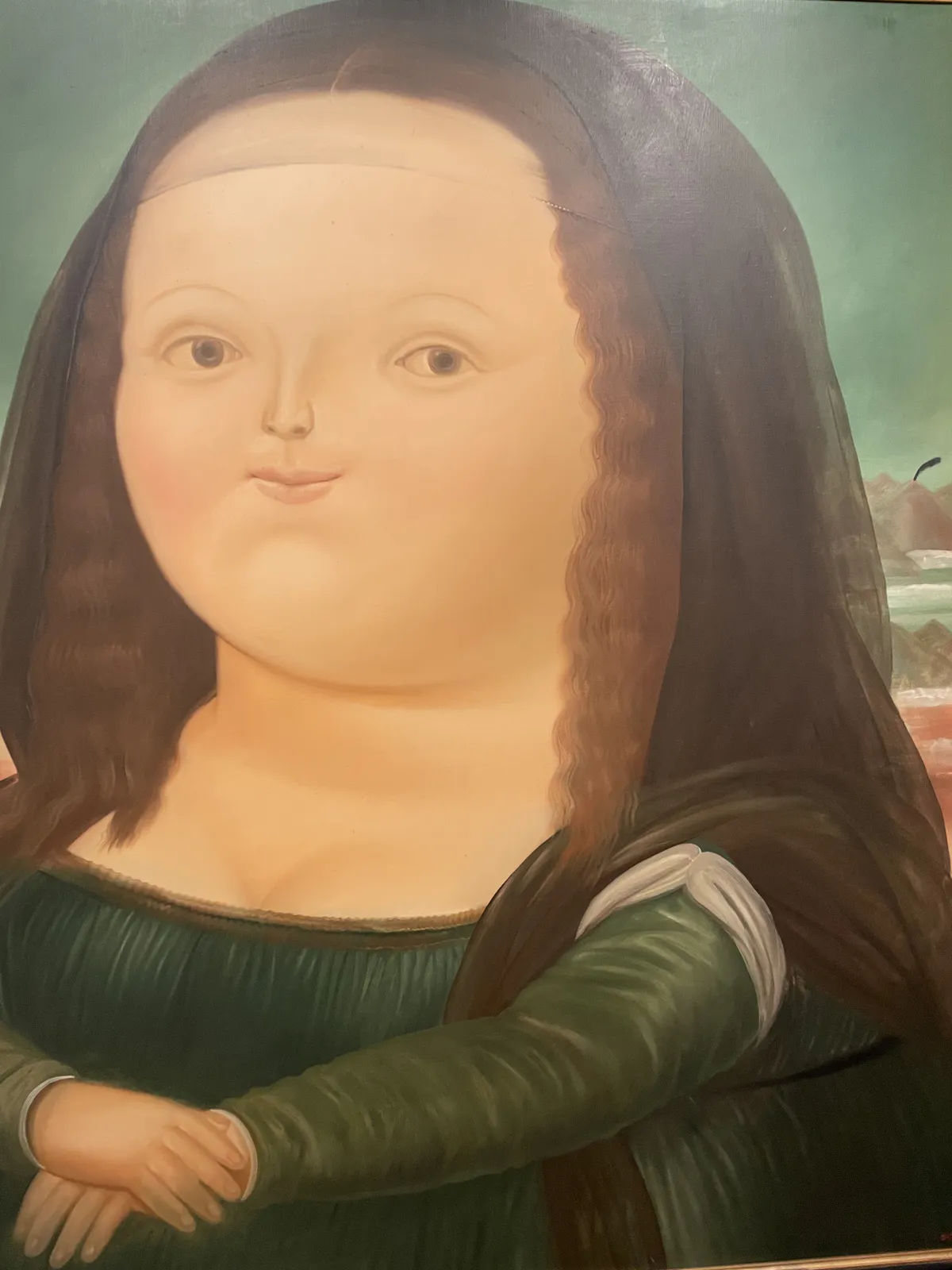
Mona Lisa, Age Twelve
Fernando Botero
In this whimsical reimagining (1959), Botero transforms da Vinci’s iconic subject into a voluminous child. Created in his signature Boterismo style, the painting blends parody with homage. Born from a cleaning lady’s remark, the work helped launch Botero’s career, celebrating exaggerated form as a tool for both humor and artistic identity.
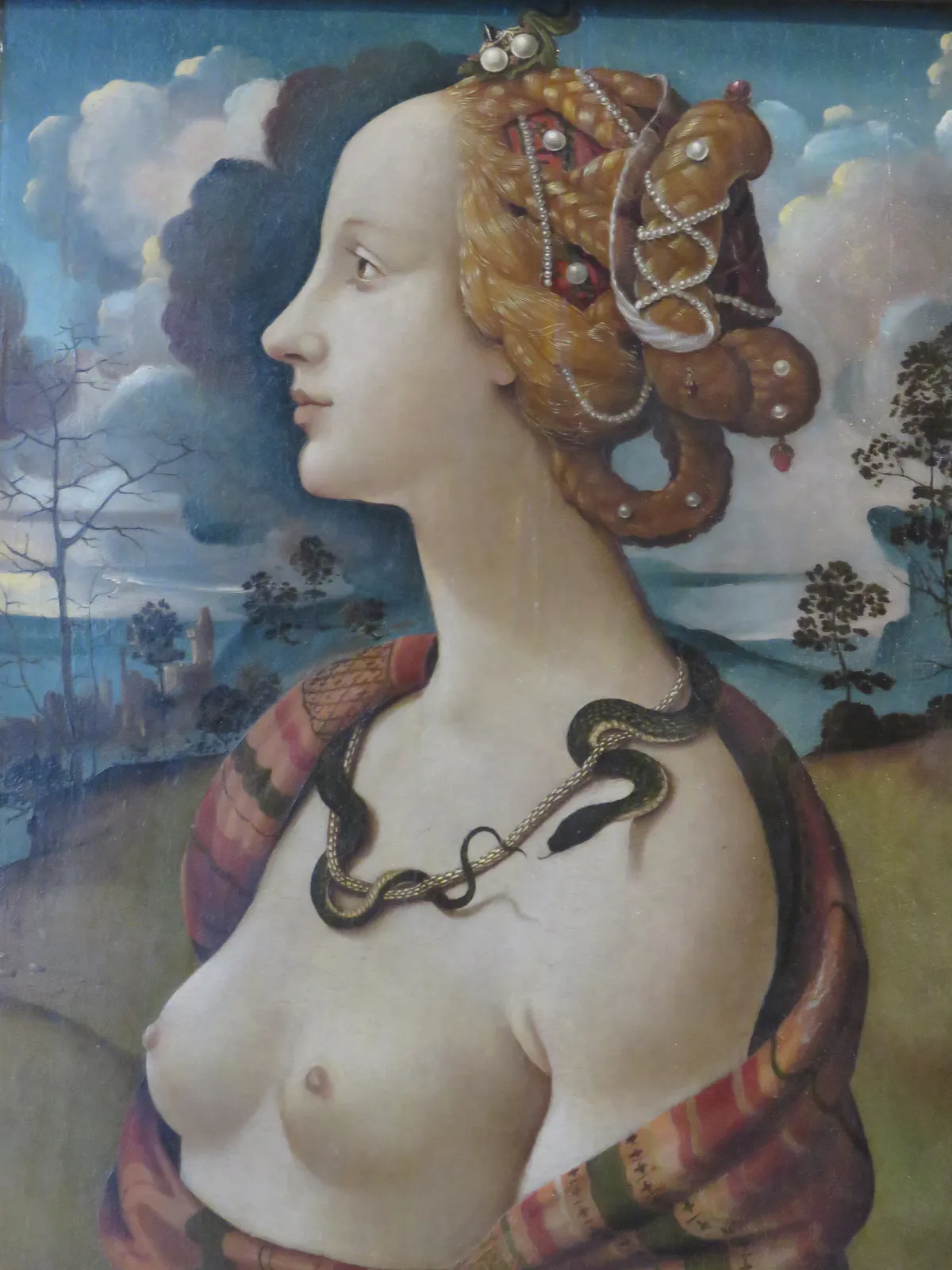
Simonetta Vespucci as Cleopatra
Piero di Cosimo
This painting (c. 1480) by di Cosimo depicts Simonetta Vespucci as Cleopatra, with an asp coiled around her neck. Created posthumously, it honors Vespucci’s beauty; she died in 1476 at 23. The profile view echoes medal portraits, while the snake may symbolize her death from tuberculosis. The serene landscape and sky enhance her ethereal presence, making this work a poignant tribute.
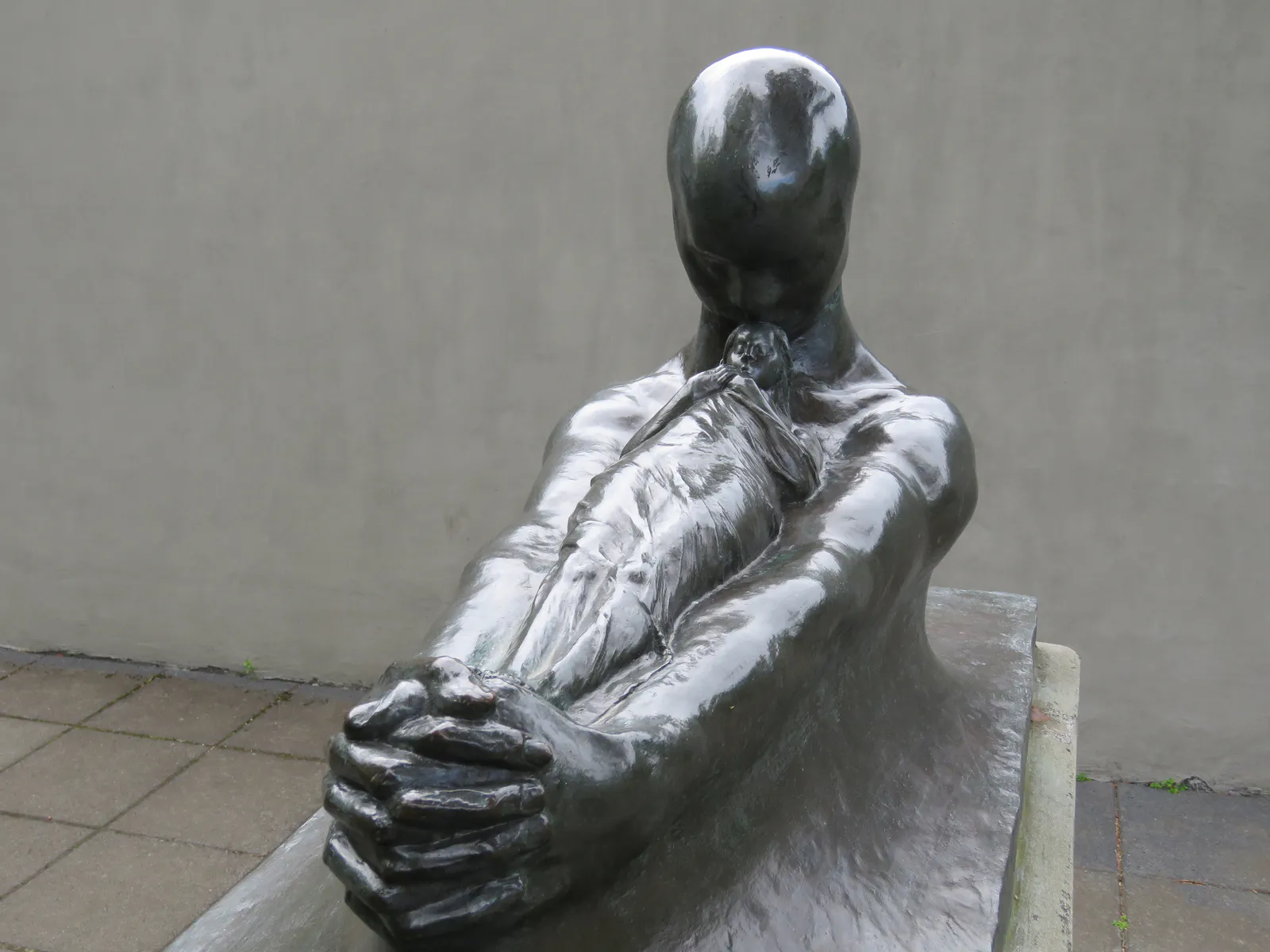
Earth
Einar Jónsson
This sculpture (1904–08) depicts a human figure cradling a smaller, draped form, symbolizing the Earth or nature. Jónsson, an Icelandic sculptor, is known for his symbolic and allegorical works exploring mythology, spirituality, and the human condition. This piece reflects his exploration of humanity’s connection to the natural world and the spiritual realm.
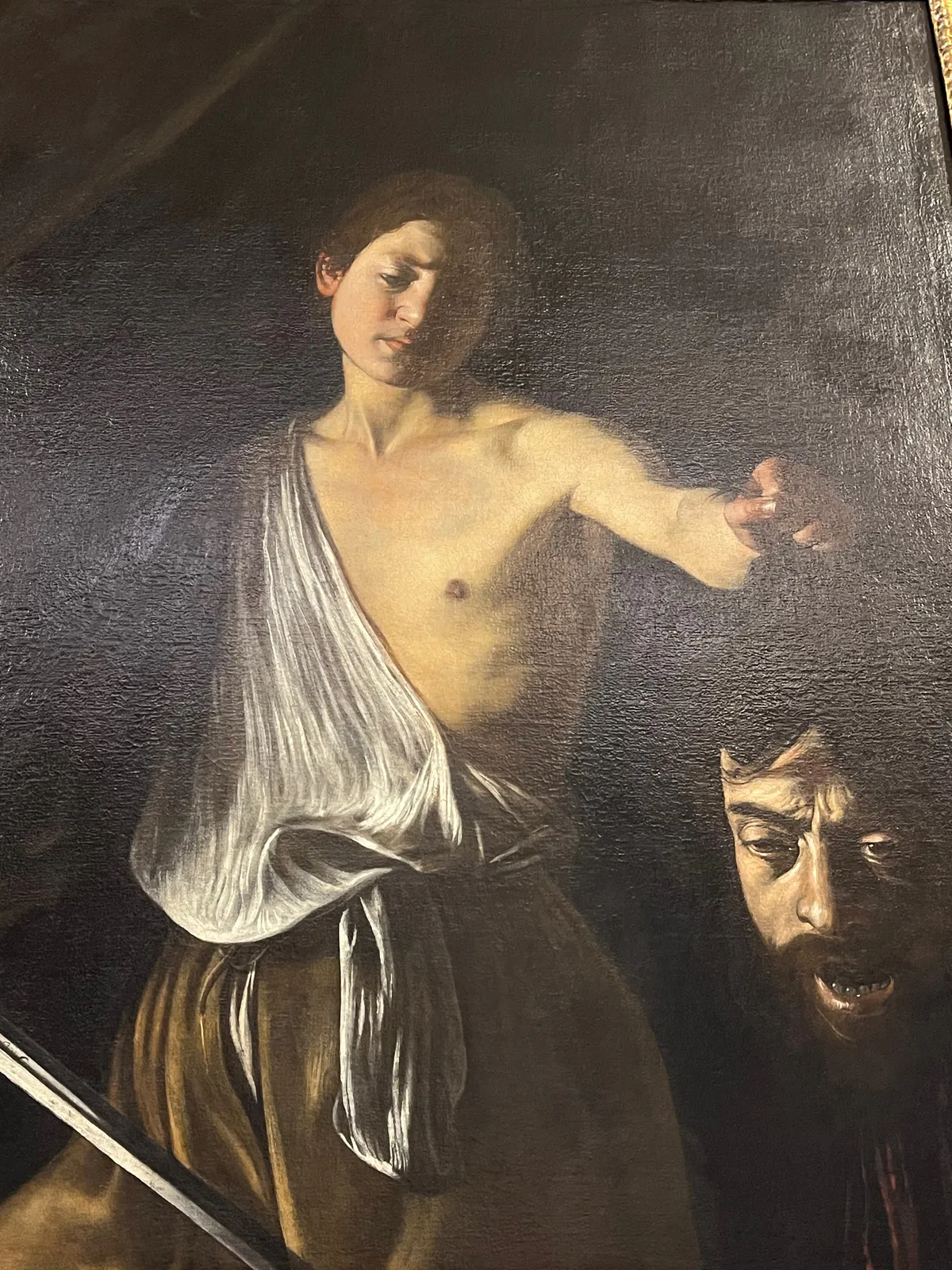
David with the Head of Goliath
Caravaggio
This haunting composition (1609–10) shows David holding Goliath’s severed head—modeled on Caravaggio himself. Rather than triumph, the mood is remorseful. The intense chiaroscuro, psychological realism, and moral ambiguity turn this biblical victory into a meditation on guilt, mortality, and inner torment.
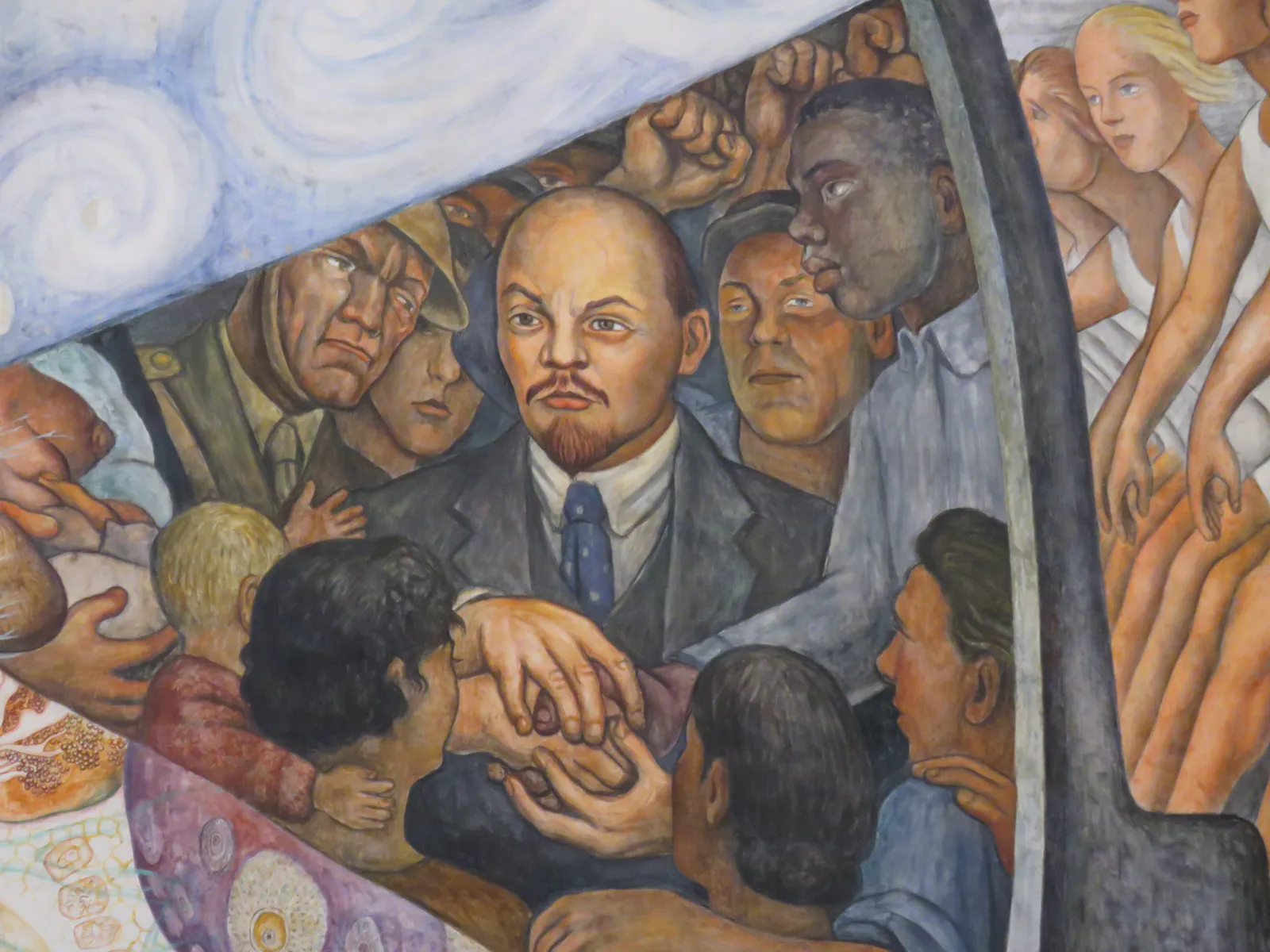
Lenin
Diego Rivera
This mural fragment (1934) shows Vladimir Lenin at the center, joining the hands of workers of different races in a dense crowd. The scene comes from Rivera’s Man at the Crossroads mural destroyed at Rockefeller Center, whose inclusion of Lenin provoked its removal. By recreating the composition at the Palacio de Bellas Artes, Rivera reaffirmed his Marxist political stance.
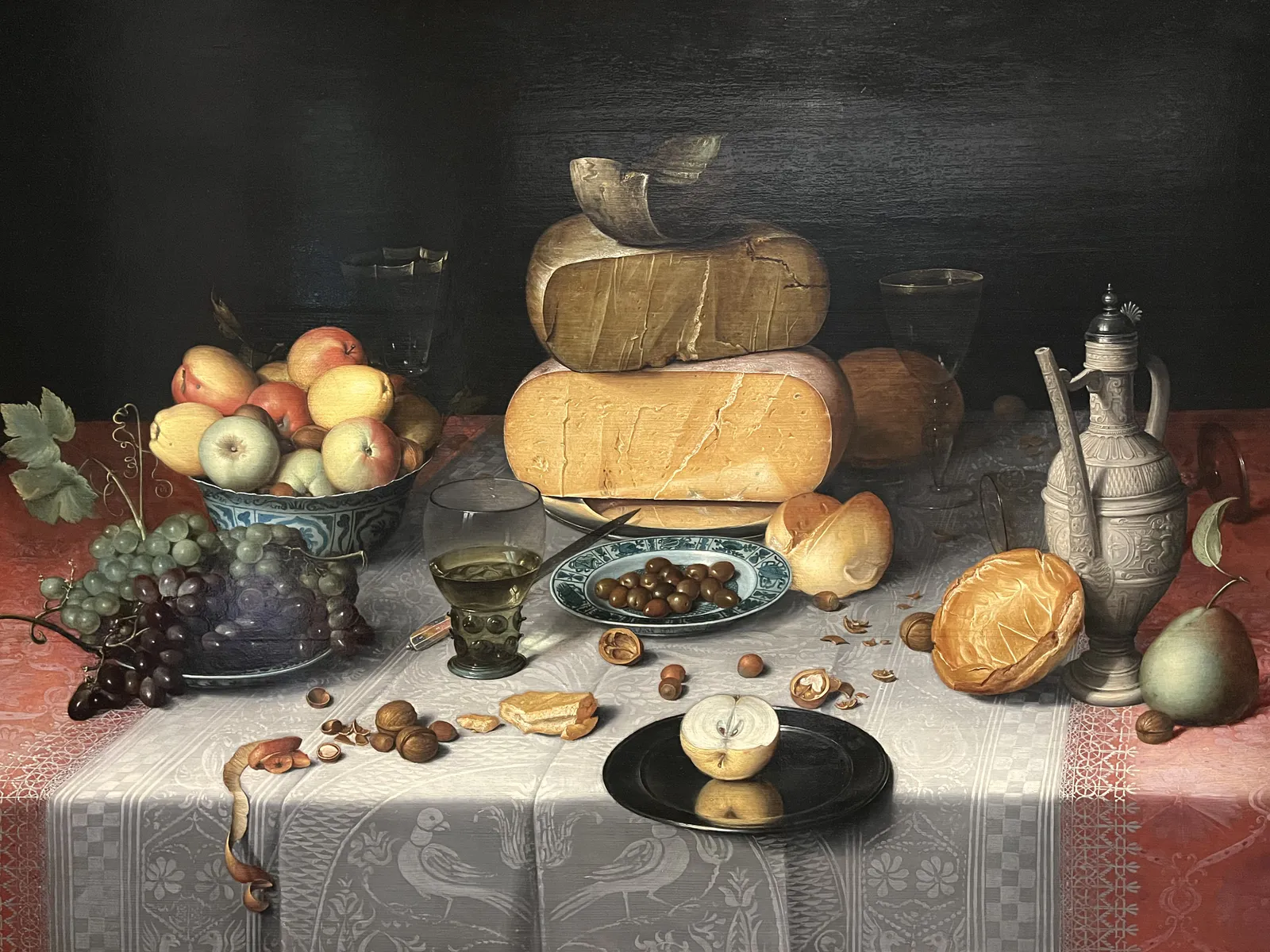
Still Life with Cheese
Floris Claesz van Dijck
On a damask-draped table (c.1615) lie fruit, bread, and three cheeses, carefully grouped by type. Floris van Dijck’s mastery of illusion is evident in the pewter plate jutting over the edge, as if within reach. A pioneer of Haarlem still-life painting, he helped establish the Dutch Golden Age tradition of rendering everyday abundance with startling realism.
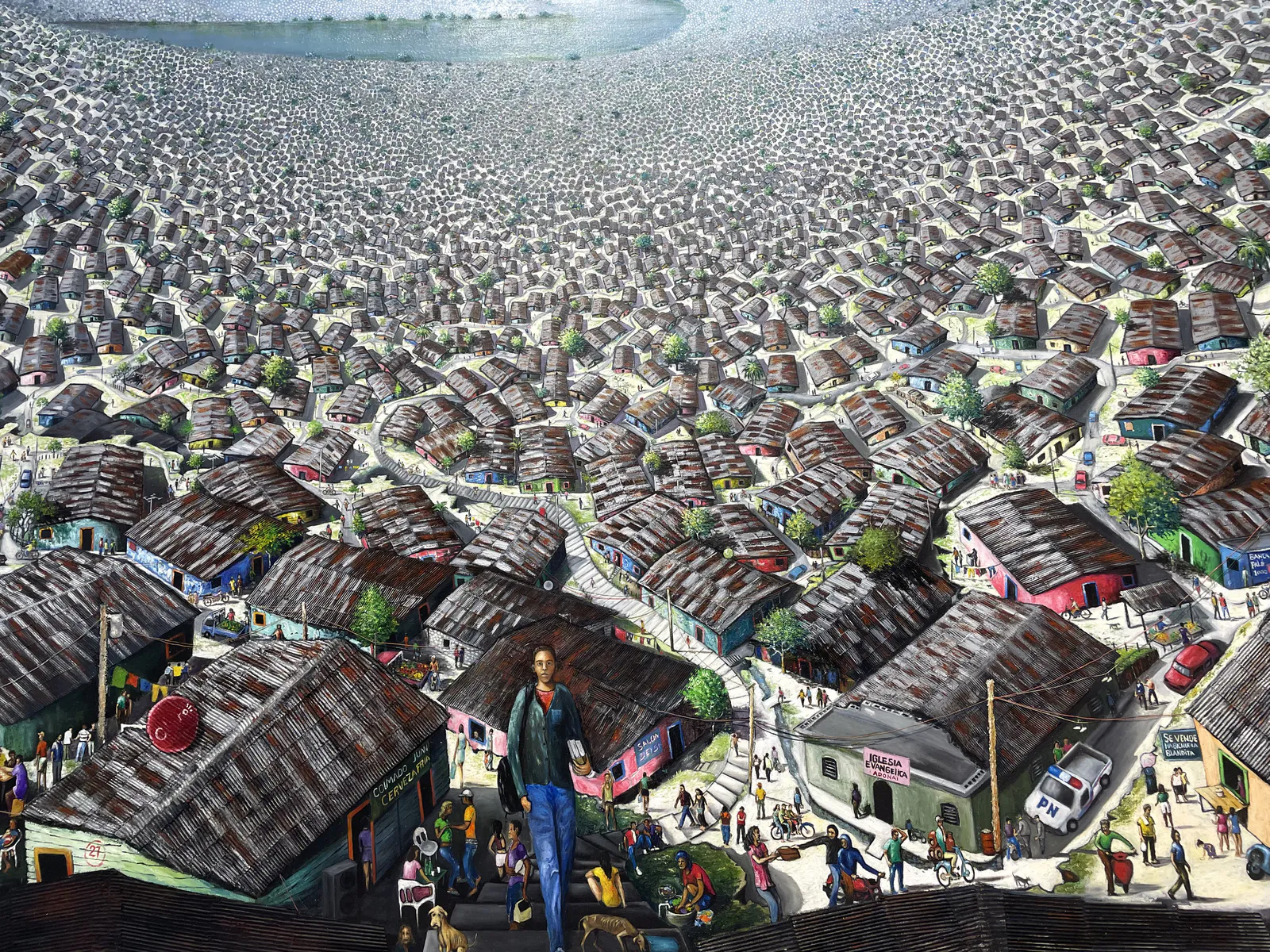
It’s Not Where You Come From, but Where You’re Going
Ramón Calcaño
This oil painting (2018), entitled No importa de dónde vienes, sino hacia dónde vas, Calcaño presents a vast view of informal housing. Central to the scene is a figure holding books, emerging from the margins. The work highlights resilience and the transformative power of education, emphasizing the pursuit of a better future beyond one's origins.
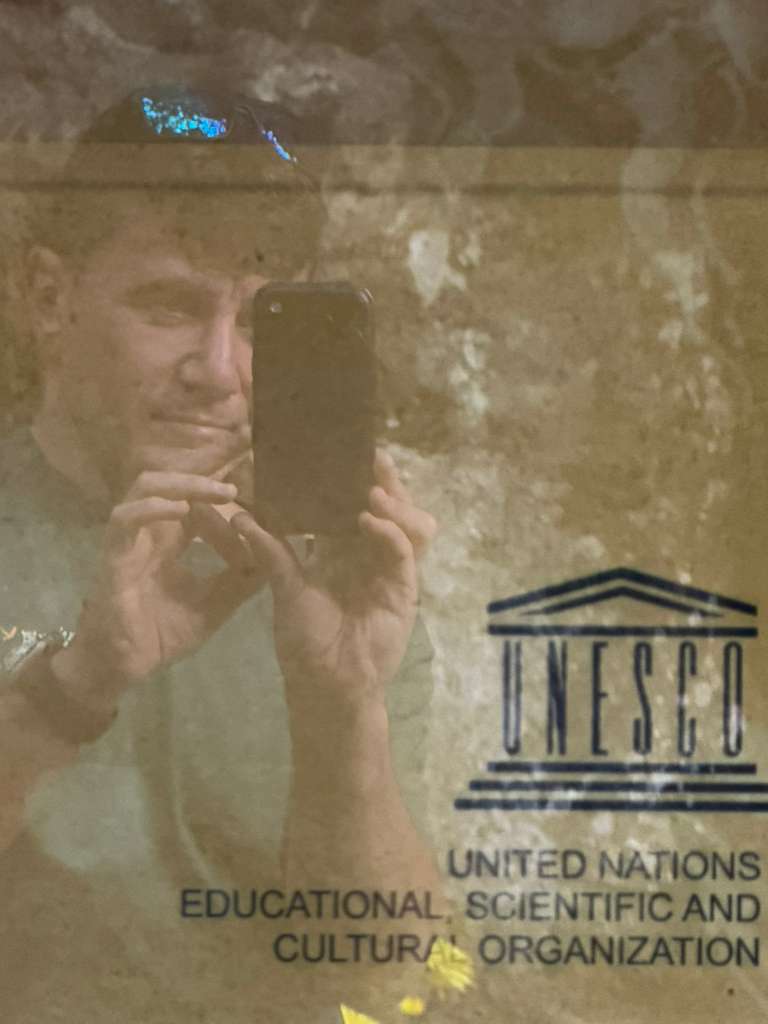
“When the path is beautiful, do not ask where it leads.” — Zen proverb
Welcome to my travel photography!
“When the path is beautiful, do not ask where it leads.” — Zen proverb
Welcome to my travel photography!
For as long as I can remember, my path has been one of discovery—seeking beauty, timelessness, and connection in every corner of the world. It has also been a journey of deep learning and understanding. I’ve been an avid traveler (or perhaps a travel addict?) for most of my life. My love for travel began long before I ever left home: as a child, I drew a fantasy map of my grandparents’ apartment and “traveled” through it with my cousin Sonya, imagining adventures in every corner. Nearly 90 countries and countless moments of awe later, I’m excited to share this journey with you.
Thanks to the tireless and ingenious programming of Diagilev, we’re now able to present about fifteen percent of the images I’ve accumulated over the years. More will be released in small batches depending on your interest. While the first release leans toward museum photography, later ones will include more nature, architecture, culture, and general travel experiences. If you’d like to receive email notifications about new releases, feel free to reach out—no commercial use, ever.
Throughout my travels, I’ve been drawn to two intertwined kinds of discovery. One is intellectual: learning why the world is the way it is. History became my guide, shaping my perspective and filling my camera roll with museums and old buildings. To me, history is not the past—it is the key to understanding the present and how the world became what it is. The other is emotional: seeking moments of elevation—spirituality, beauty, harmony—often found in nature, monasteries, and ancient sacred spaces. Together, these impulses shape my photography. It invites you to learn, admire, and soar—to rise above the mundane and see the world through a lens of curiosity and wonder.
Much of my later travel became possible thanks to my job with Delta Air Lines, but the wanderlust began years earlier. By the time I joined the industry, I had already visited over 35 countries and lived in several—largely thanks to a backpacking journey around the world with Luis León, whose face appears in many early photos. I grew up in Ufa in the USSR, and since leaving it I have lived, studied, and worked in Latvia, the United States, France, South Korea, Canada, Spain, Italy, Brazil, Japan, and Colombia.
A life of near-constant movement may seem a little crazy, but it has deepened my understanding of the world and produced the photography you are about to see. Over the years, my style has evolved—more intentional, more refined—yet its core remains the same: a search for understanding, timeless beauty, and a connection to those who walked this earth long before us.
I hope these photos stir something in your soul, just as they did in mine. I’d love to hear from you—whether reactions, suggestions, corrections, or a request to be added to the email list for new releases (no commercial use, I promise). You can learn more about my travels here, and my academic life here.
Enjoy our shared journey!