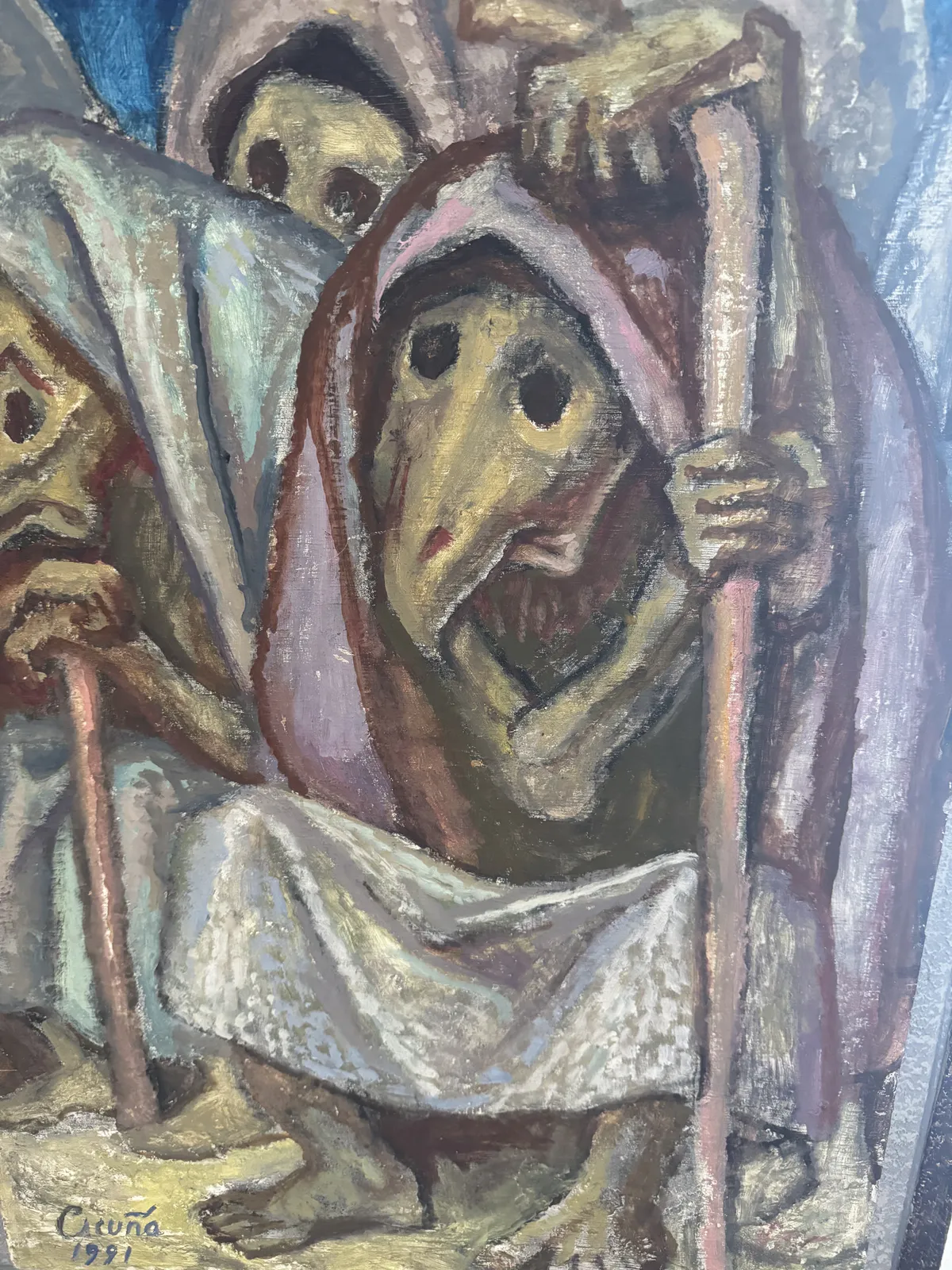
The Witch of Zascandil
Luis Alberto Acuña
This portrait (1991) shows the Witch of Zascandil, a figure rooted in Colombian folklore. Sharp features and widened eyes create a tense, exaggerated profile. The name Zascandil refers to a trickster or wandering mischief-maker in regional stories. The image indicates how rural mythology blends satire, fear, and ancestral belief.
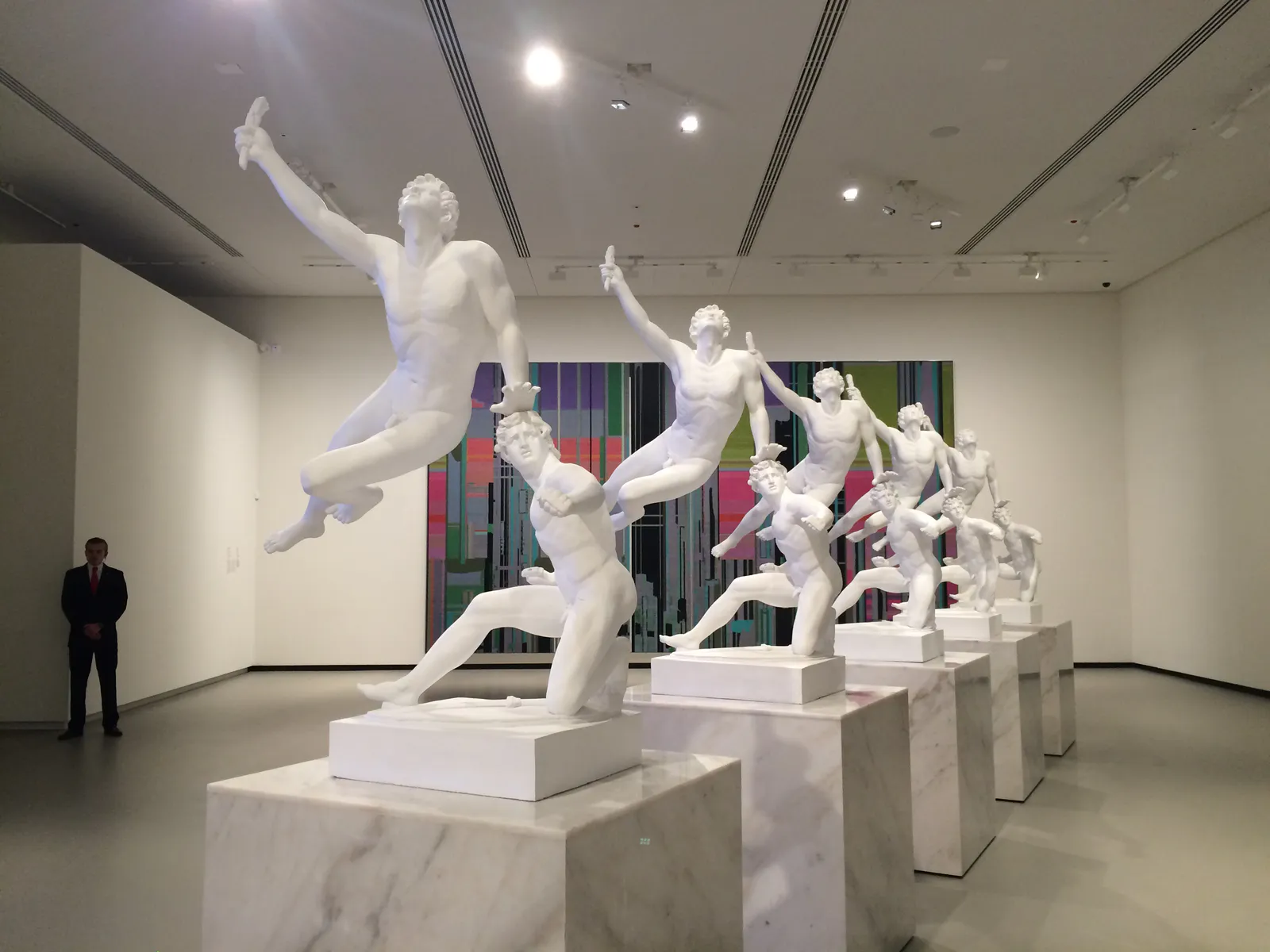
Eternity - The Soldier of Marathon Announcing Victory
Xu Zhen
This 2011 sculpture installation Eternity – Eternity - The Soldier of Marathon Announcing Victory, a Wounded Galatian fuses classical Greek forms with contemporary fragmentation. Crafted from concrete, fiberglass, marble powder, and metal, the sequence begins with a whole figure and gradually breaks apart, evoking cultural transformation and the erosion of historical continuity.
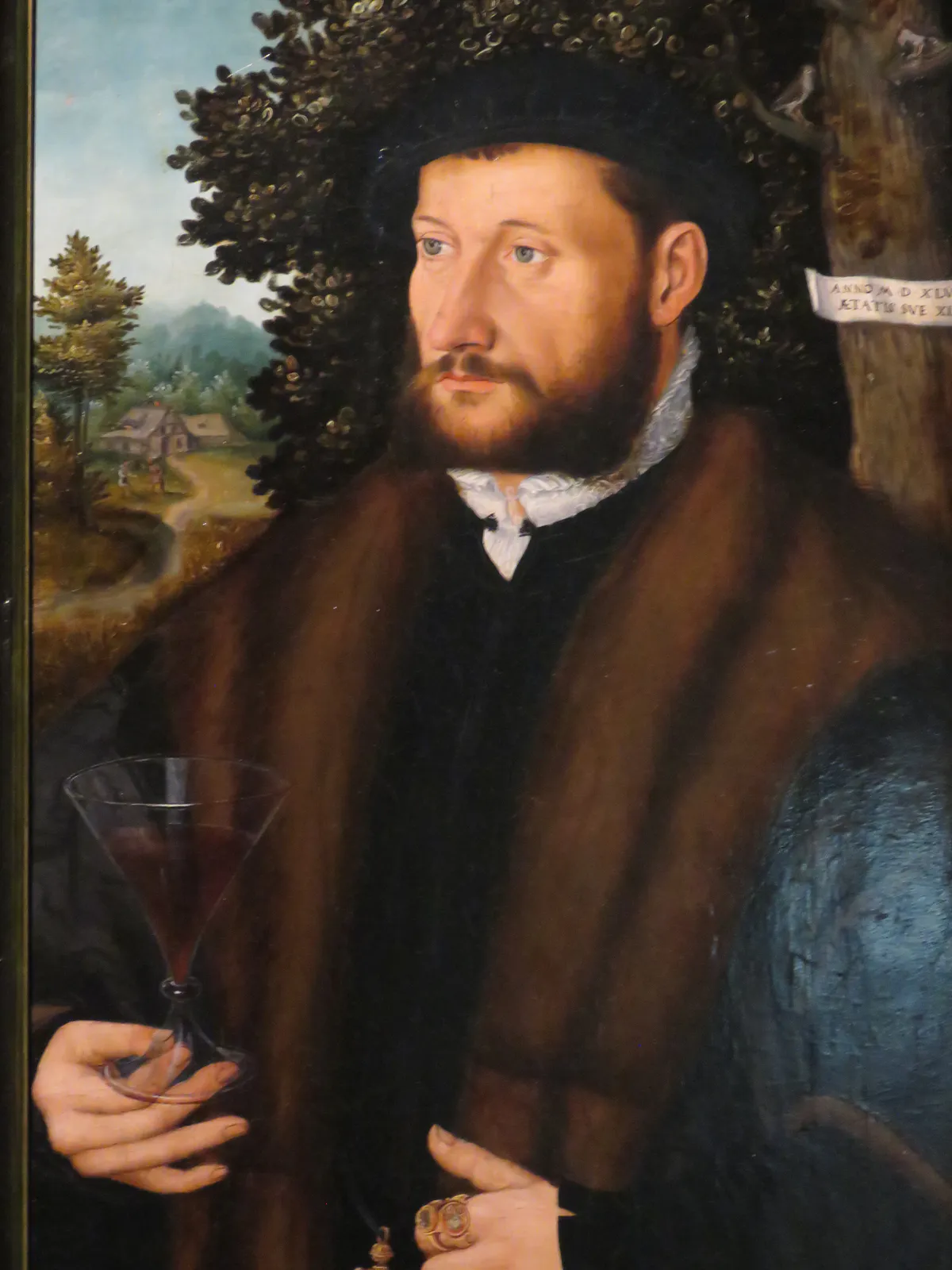
Male Portrait
Hans Muelich
This portrait (c. 1550) reflects the refined realism of the German Renaissance. The sitter’s composed gaze, luxurious attire, and elegant glass signify affluence and cultured leisure. The distant path and village in the background may allude to the subject’s journey, social standing, or inner world.
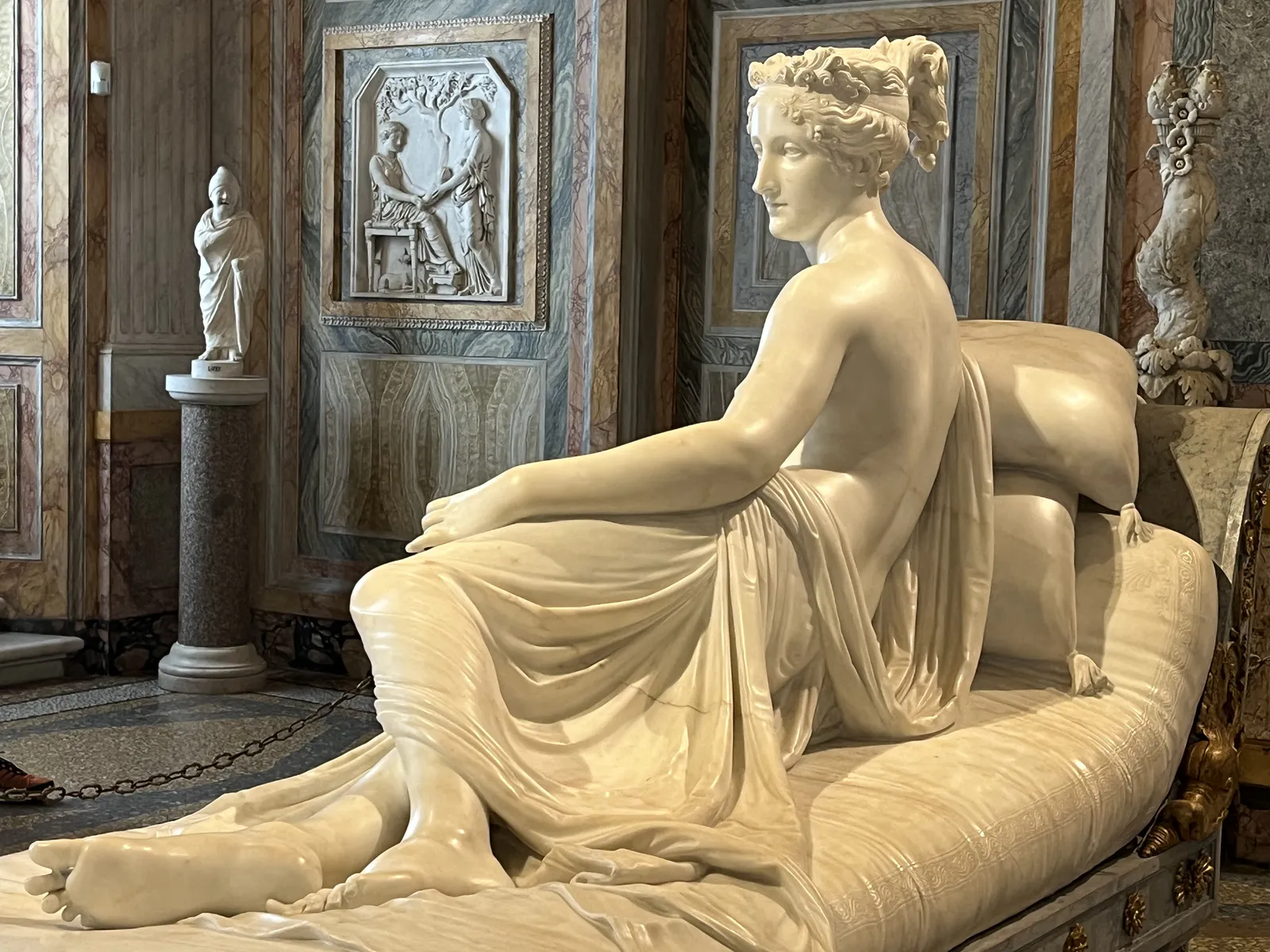
Pauline Bonaparte as Venus Victrix
Antonio Canova
Antonio Canova's marble masterpiece (1805–08) depicts Pauline Bonaparte as Venus Victrix, reclining semi-nude on a couch, holding an apple symbolizing Venus's triumph in the Judgement of Paris. Commissioned by her husband, Camillo Borghese, Pauline insisted on being portrayed as Venus rather than Diana. The sculpture, originally designed to rotate, reflects both personal ambition and classical beauty.
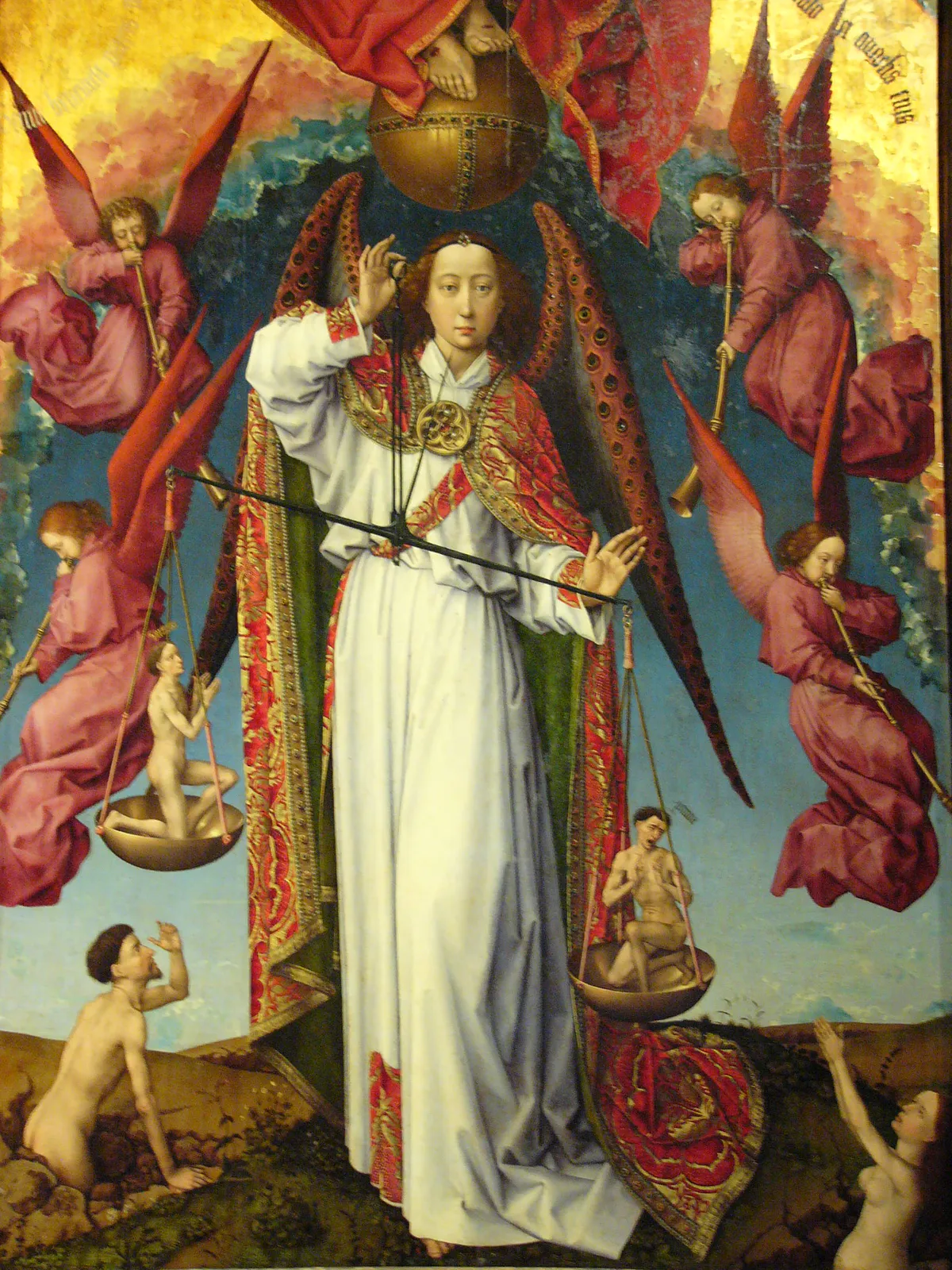
Archangel Michael Weighing Souls
Rogier van der Weyden
In this panel from the Last Judgment Altarpiece (1445–50), Archangel Michael dominates the scene, balancing souls in golden scales as Christ presides above. Trumpeting angels herald resurrection while the blessed and damned await their fate. Painted for Beaune’s Hôtel-Dieu, the work reminded patients that earthly suffering was framed within the ultimate hope of divine justice and salvation.
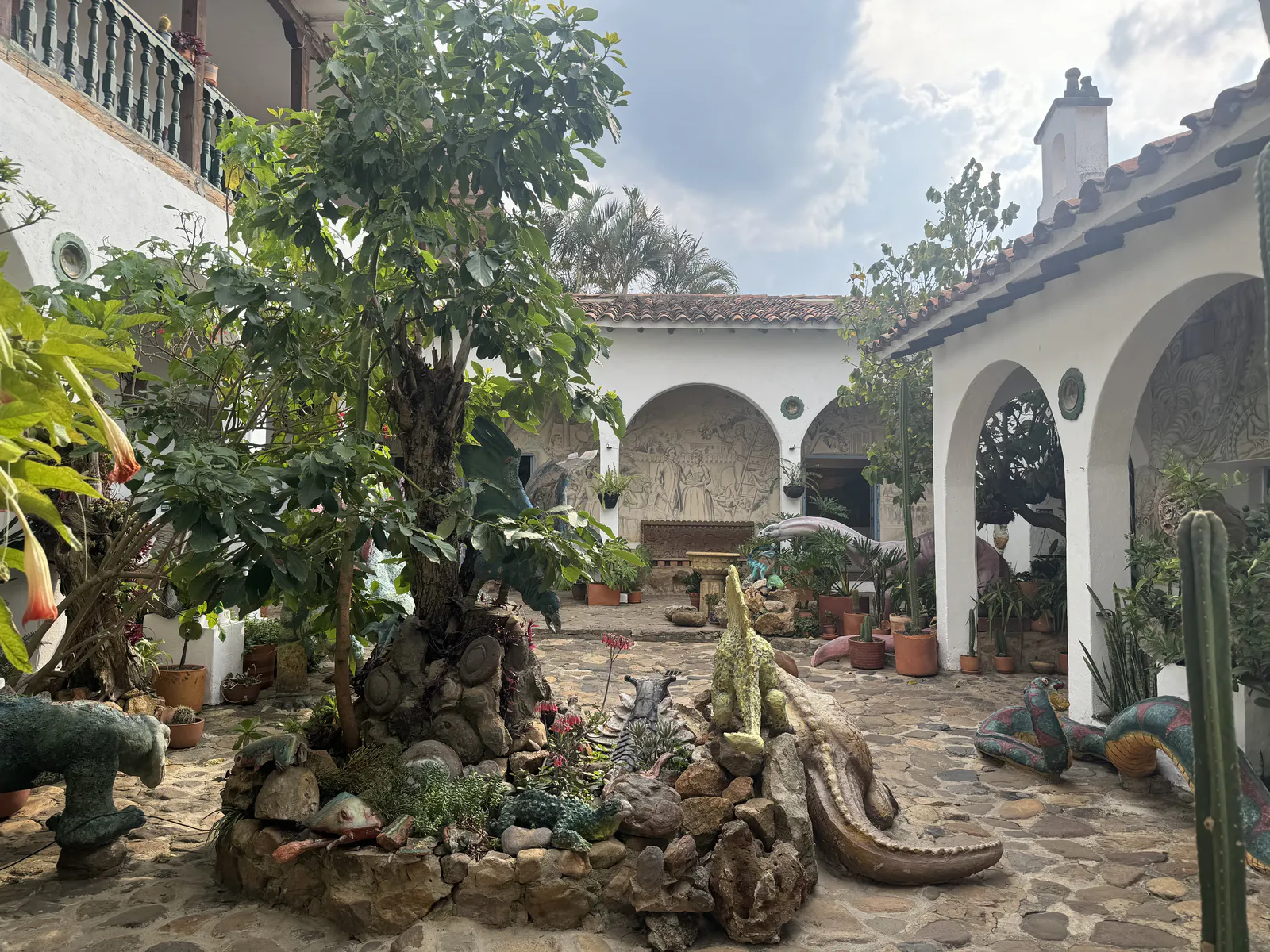
Museum Courtyard
Luis Alberto Acuña
This eclectic courtyard blends colonial architecture with fantastical sculptures and lush vegetation. Dinosaurs, jaguars, and snakes emerge from the stone paths, reflecting Acuña’s imaginative fusion of pre-Columbian, mythological, and surrealist influences.
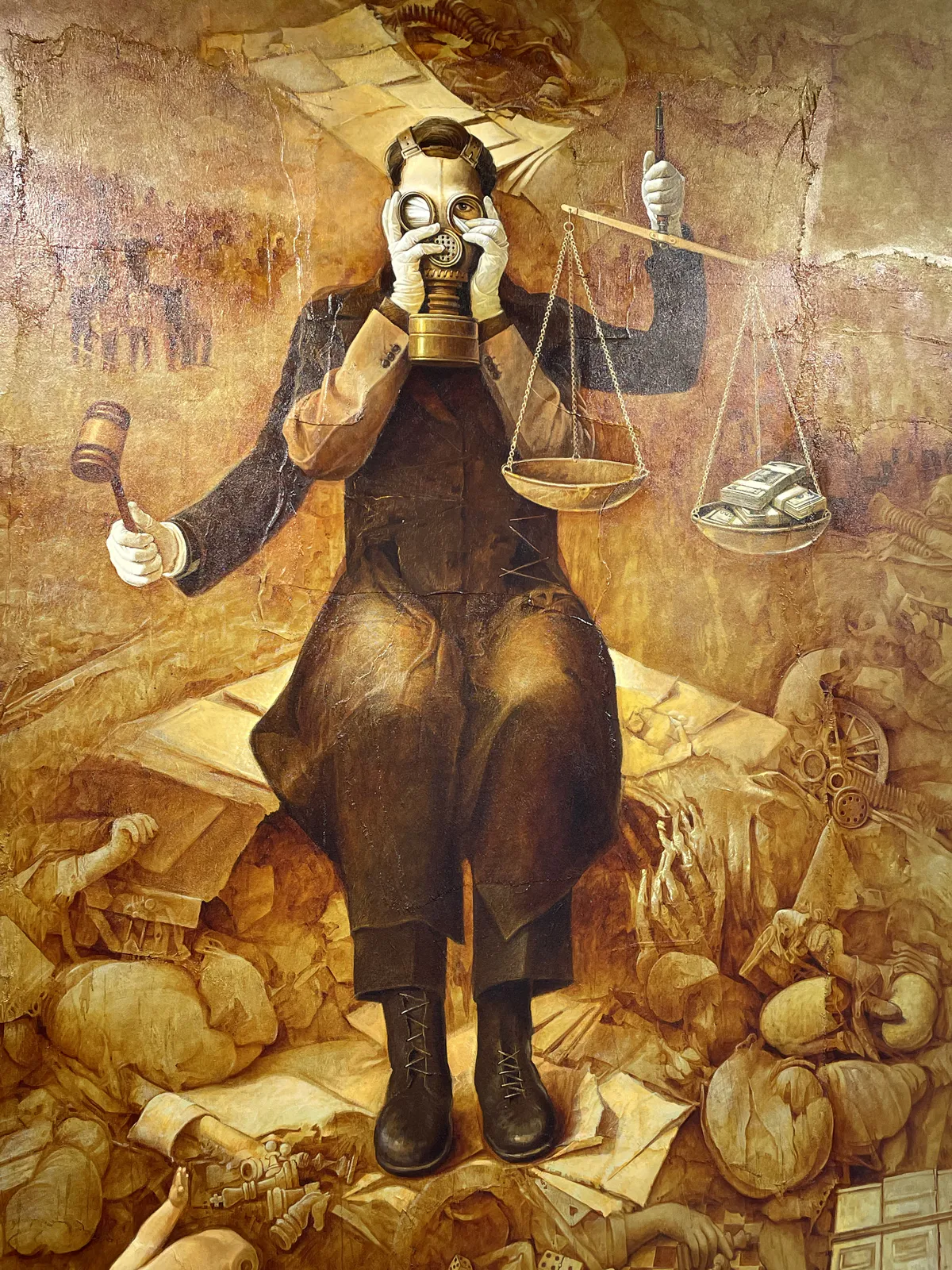
Retrato alegórico de la injusticia
Dustín Muñoz
In his powerful Allegoric Portrait of Justice (2018), Muñoz portrays a masked judge seated atop chaos, weighing gold bars against an empty scale. His gavel and gas mask signal institutional blindness and moral decay. Painted in acrylic on canvas, the work denounces injustice as systemic, silencing truth and privileging wealth over human life.
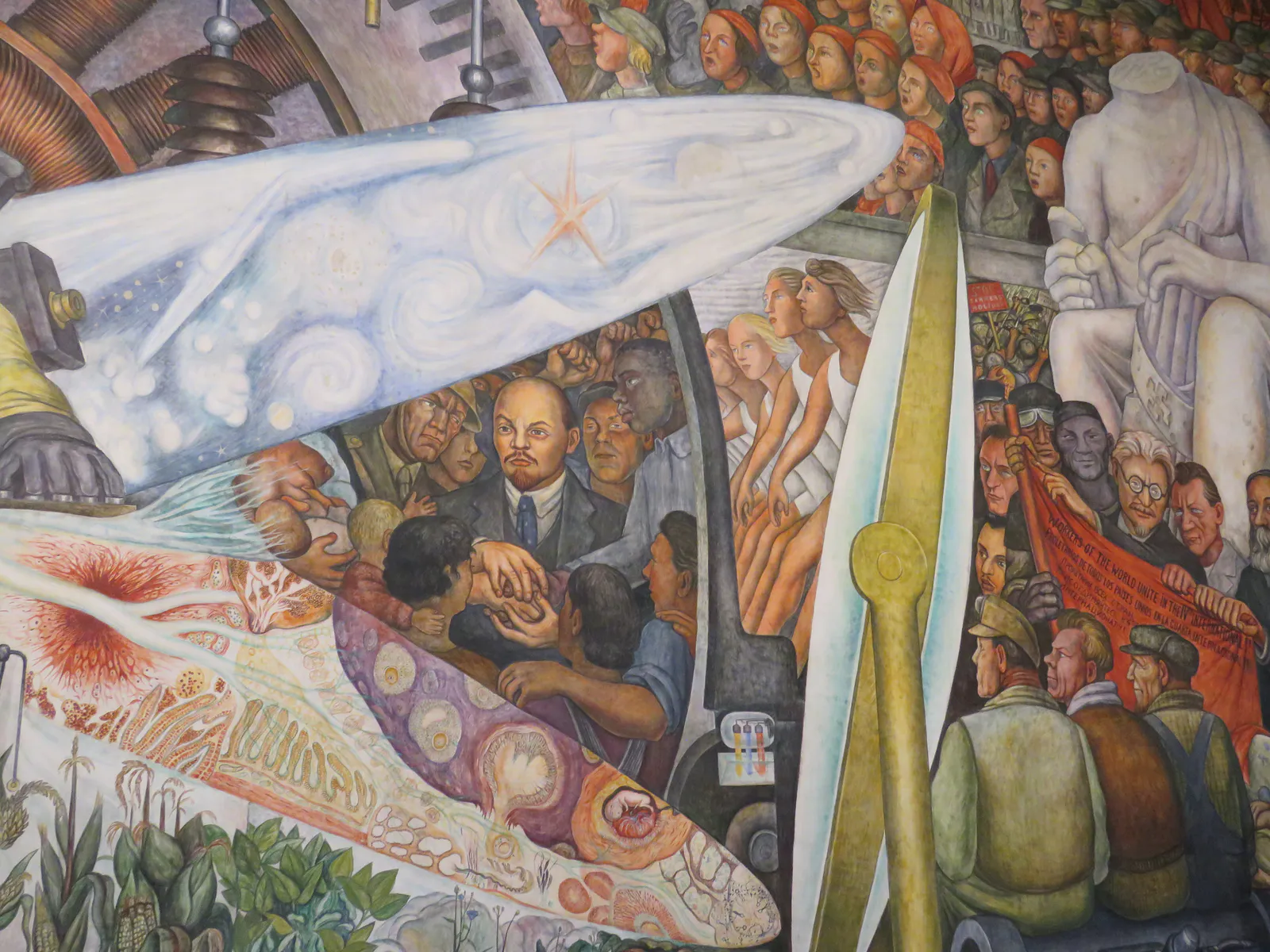
Man, Controller of the Universe (detail)
Diego Rivera
This section of Rivera’s 1934 recreated mural shows Lenin uniting workers of different races and nations, flanked by scientific, agricultural, and cosmic imagery. It contrasts socialism’s collective promise with capitalist individualism. The original was destroyed at Rockefeller Center.
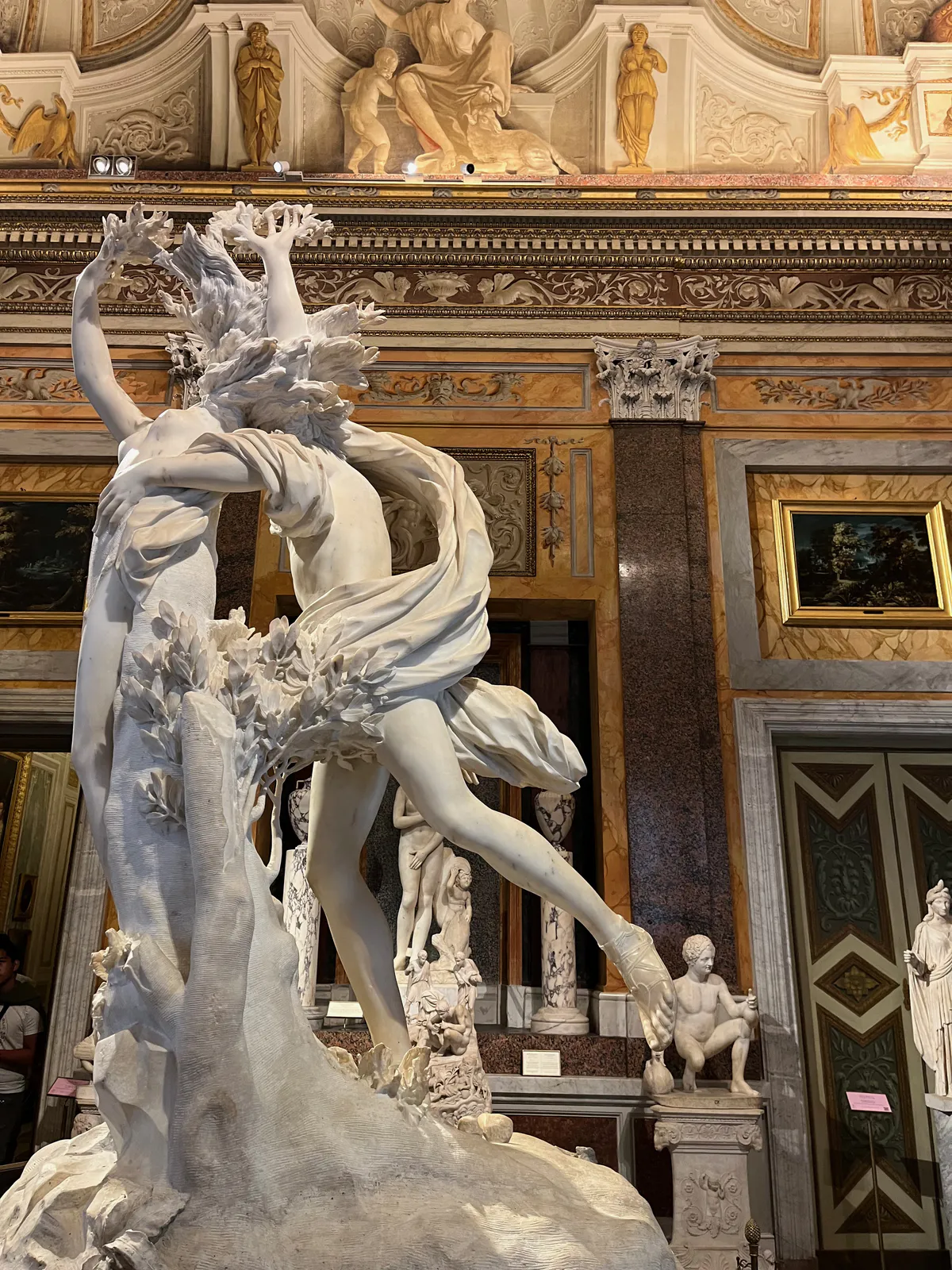
Apollo and Daphne
Bernini
Seen from behind, Bernini’s Apollo and Daphne (1622–25) reveals the spiraling tension of flight and pursuit. Daphne’s transformation accelerates—branches burst from her hair as Apollo strains forward, barely grounded. This angle heightens the illusion of motion, capturing the myth’s fleeting climax with lyrical virtuosity.
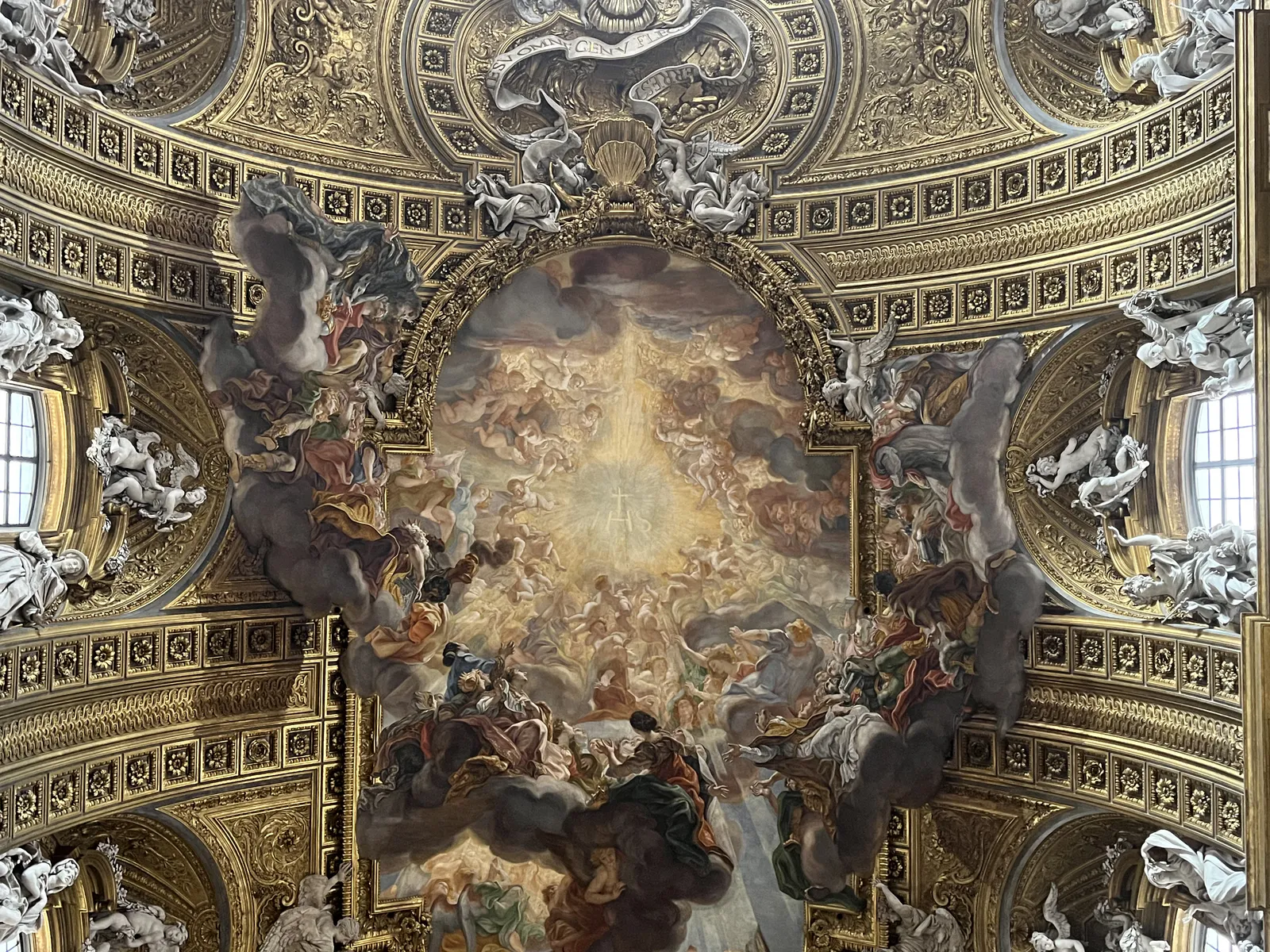
Triumph of the Name of Jesus
Giovanni Battista Gaulli
This dramatic fresco (1676–79) fills the nave ceiling with a celestial eruption of light and figures. At its center, divine radiance emanates from the monogram IHS, the symbol of Jesus. Saved souls rise toward the light, while sinners tumble into shadow. Blending paint and stucco, the work fuses heaven and church in Baroque theatricality.
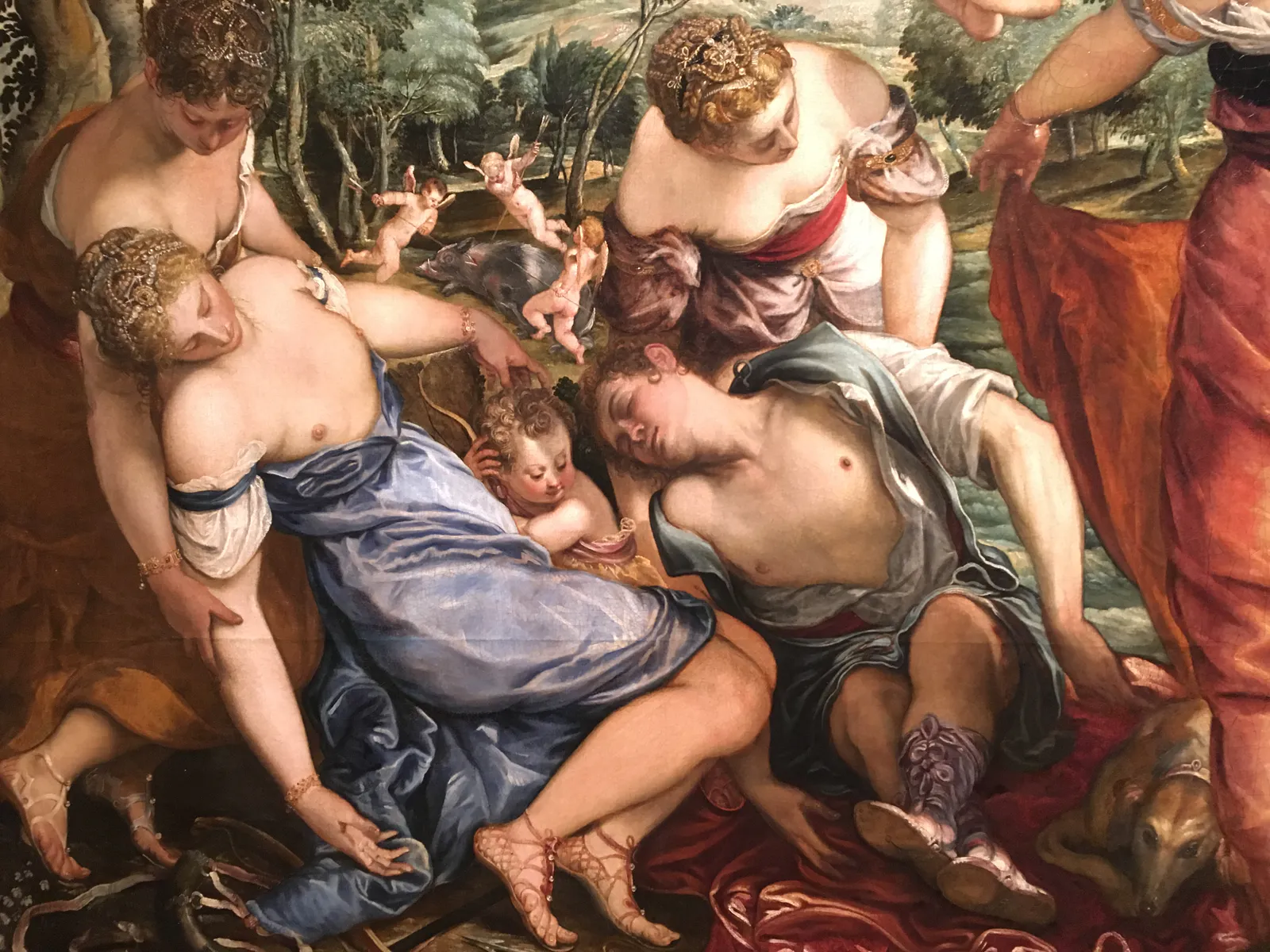
The Death of Adonis
Tintoretto's Workshop
The Death of Adonis (1550–55) captures Venus fainting at Adonis's death, diverging from Ovid’s Metamorphoses by including young women not in the original tale. Created by a Nordic artist in Tintoretto’s Venetian workshop, it blends Tintoretto’s dramatic style with the collaborator’s unique touch, evident in the expressive figures and vibrant colors. This fusion highlights the shared human themes of love and loss, inviting reflection on the timeless nature of myth and emotion.
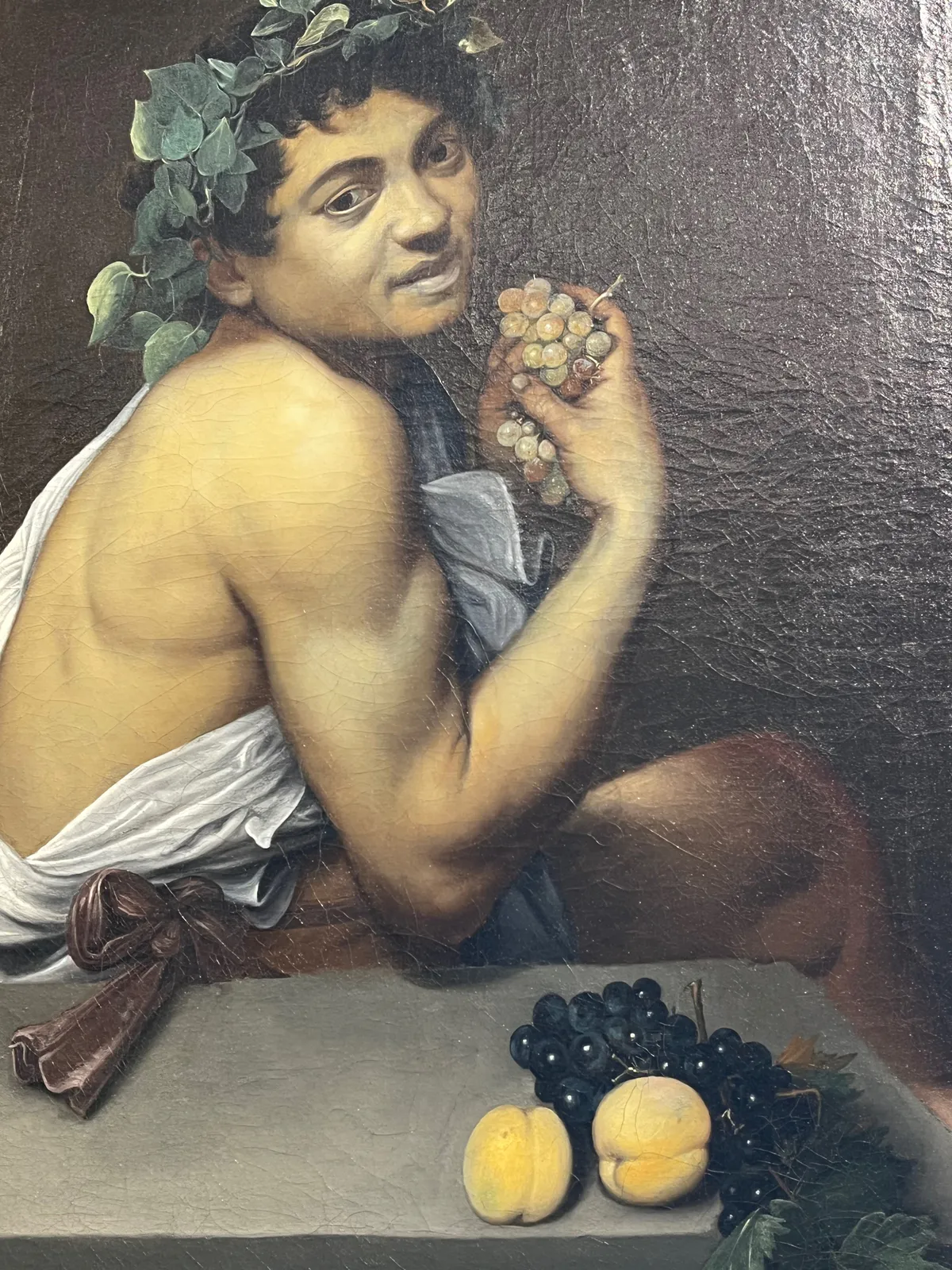
Young Sick Bacchus
Caravaggio
This self-portrait (c. 1593) shows Caravaggio as Bacchus with jaundiced skin and tense features, painted while recovering from illness. The ivy crown replaces the usual vine leaves, subverting divine idealism. Both sensual and unsettling, the image mocks classical beauty and reveals the artist’s own physical vulnerability.
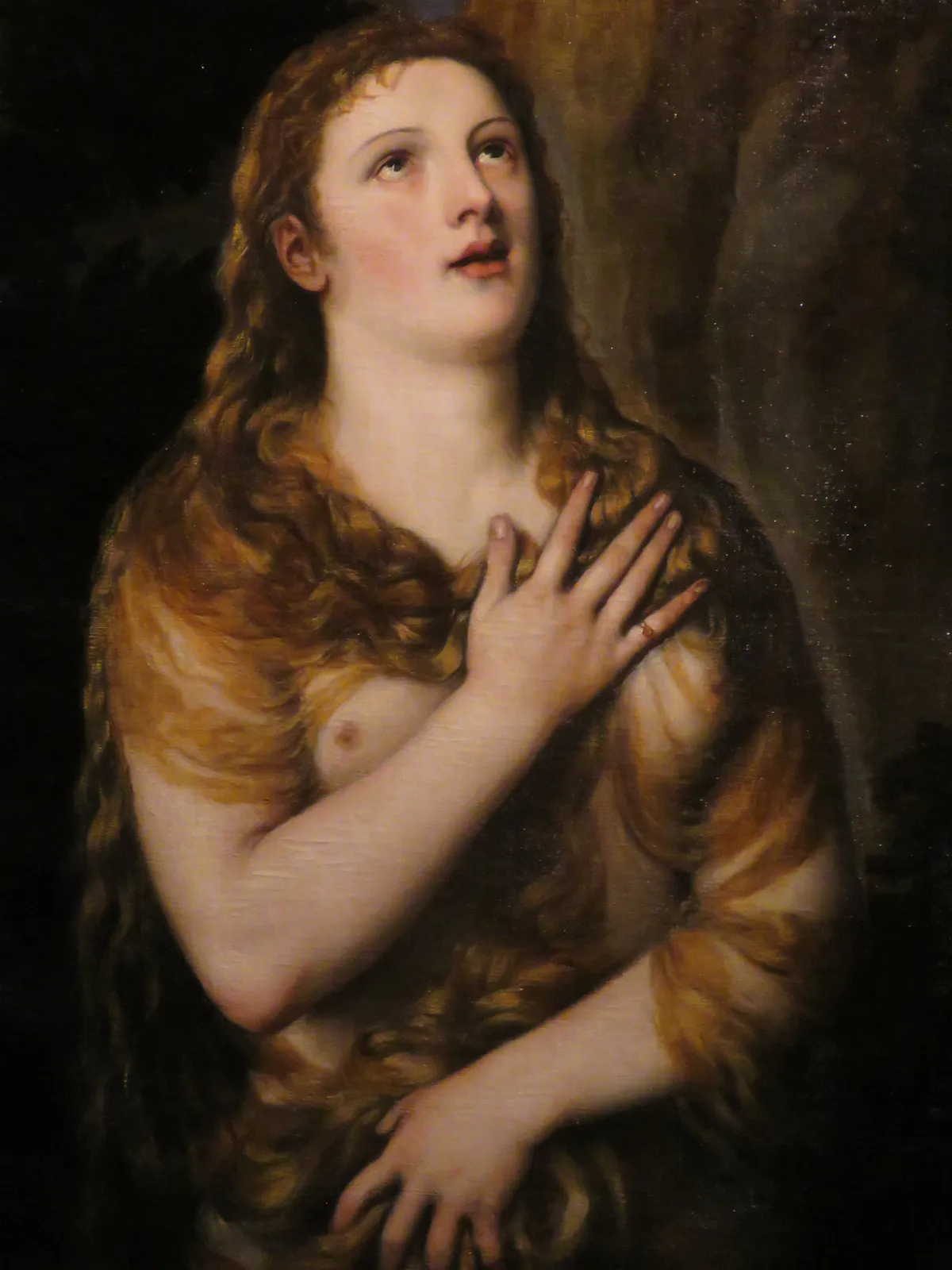
Mary Magdalene
Titian
This intimate portrayal of Mary Magdalene (c. 1560) captures the saint in a moment of spiritual ecstasy. Covered by cascading hair, her body becomes a vessel of penitence and divine grace. Titian’s sensual rendering reflects the Renaissance ideal of redemptive beauty and the transformative power of divine love.
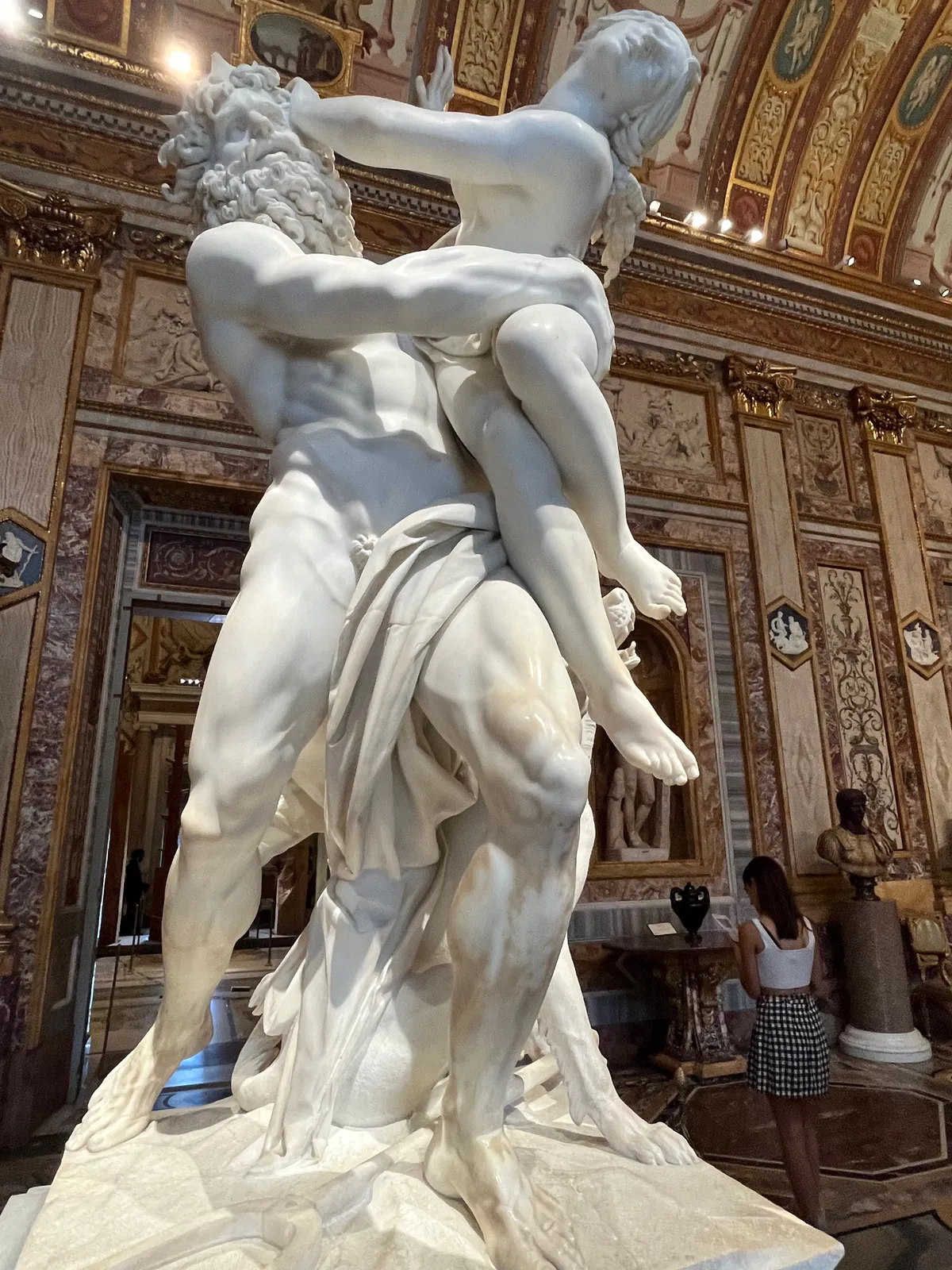
The Rape of Proserpina
Gian Lorenzo Bernini
From this angle, Bernini’s technical genius is apparent. Pluto’s gripping hands sink into Proserpina’s flesh with astonishing realism, turning marble into living form. The work (1621–22) stages emotional and physical tension at its peak, embodying the Baroque goal of stirring awe, drama, and pathos in a single breathtaking moment.
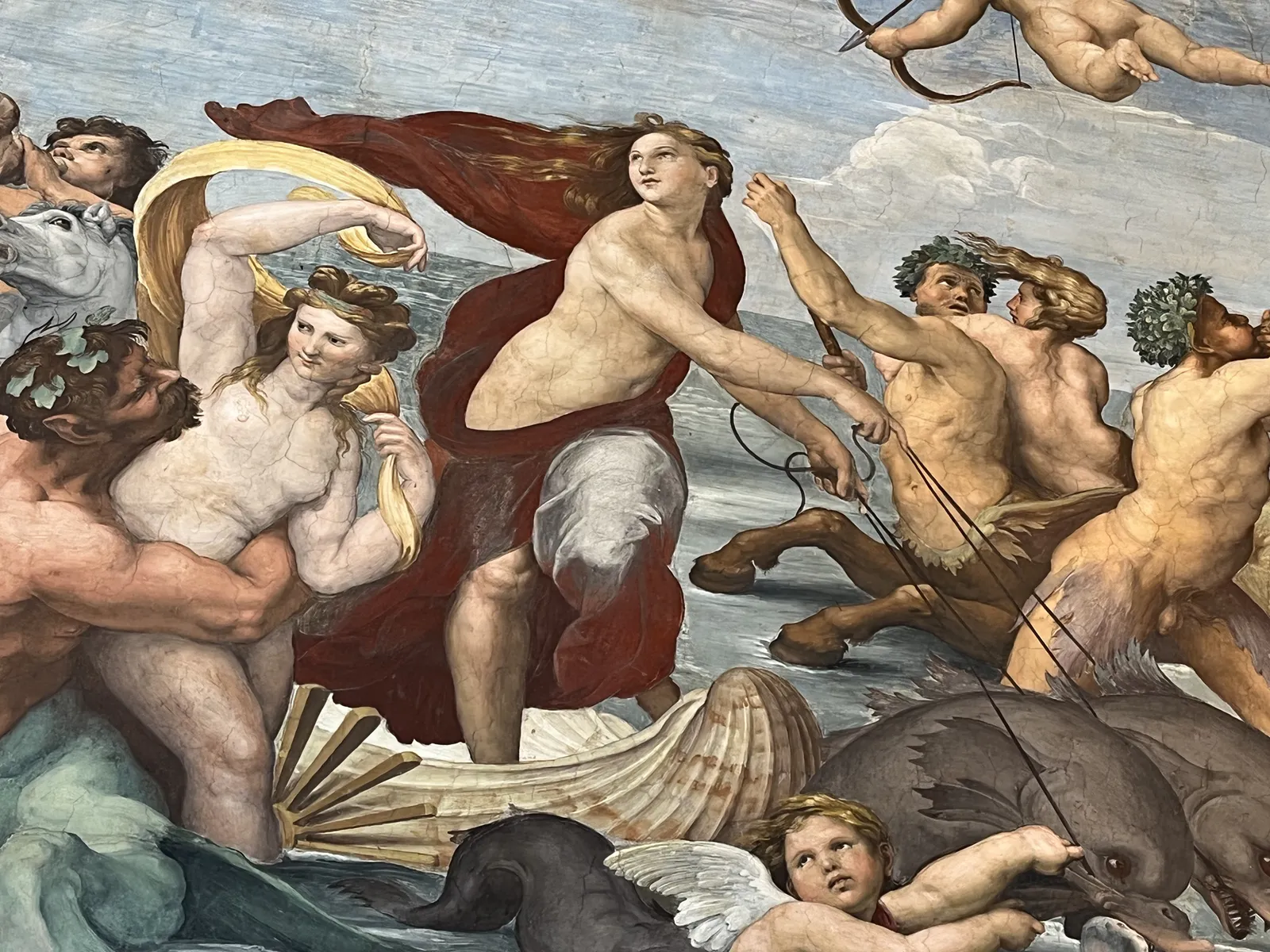
Triumph of Galatea (detail)
Raphael
Painted by Raphael’s workshop (1511–1512), this fragment depicts the sea nymph Galatea triumphantly riding a shell chariot, drawn by dolphins and surrounded by marine gods. Inspired by classical mythology, the scene celebrates ideal beauty, love, and movement, blending Renaissance harmony with dynamic mythological fantasy.
“When the path is beautiful, do not ask where it leads.” — Zen proverb
Welcome to my travel photography!
“When the path is beautiful, do not ask where it leads.” — Zen proverb
Welcome to my travel photography!
For as long as I can remember, my path has been one of discovery—seeking beauty, timelessness, and connection in every corner of the world. It has also been a journey of deep learning and understanding. I’ve been an avid traveler (or perhaps a travel addict?) for most of my life. My love for travel began long before I ever left home: as a child, I drew a fantasy map of my grandparents’ apartment and “traveled” through it with my cousin Sonya, imagining adventures in every corner. Nearly 90 countries and countless moments of awe later, I’m excited to share this journey with you.
Thanks to the tireless and ingenious programming of Diagilev, we’re now able to present about fifteen percent of the images I’ve accumulated over the years. More will be released in small batches depending on your interest. While the first release leans toward museum photography, later ones will include more nature, architecture, culture, and general travel experiences. If you’d like to receive email notifications about new releases, feel free to reach out—no commercial use, ever.
Throughout my travels, I’ve been drawn to two intertwined kinds of discovery. One is intellectual: learning why the world is the way it is. History became my guide, shaping my perspective and filling my camera roll with museums and old buildings. To me, history is not the past—it is the key to understanding the present and how the world became what it is. The other is emotional: seeking moments of elevation—spirituality, beauty, harmony—often found in nature, monasteries, and ancient sacred spaces. Together, these impulses shape my photography. It invites you to learn, admire, and soar—to rise above the mundane and see the world through a lens of curiosity and wonder.
Much of my later travel became possible thanks to my job with Delta Air Lines, but the wanderlust began years earlier. By the time I joined the industry, I had already visited over 35 countries and lived in several—largely thanks to a backpacking journey around the world with Luis León, whose face appears in many early photos. I grew up in Ufa in the USSR, and since leaving it I have lived, studied, and worked in Latvia, the United States, France, South Korea, Canada, Spain, Italy, Brazil, Japan, and Colombia.
A life of near-constant movement may seem a little crazy, but it has deepened my understanding of the world and produced the photography you are about to see. Over the years, my style has evolved—more intentional, more refined—yet its core remains the same: a search for understanding, timeless beauty, and a connection to those who walked this earth long before us.
I hope these photos stir something in your soul, just as they did in mine. I’d love to hear from you—whether reactions, suggestions, corrections, or a request to be added to the email list for new releases (no commercial use, I promise). You can learn more about my travels here, and my academic life here.
Enjoy our shared journey!