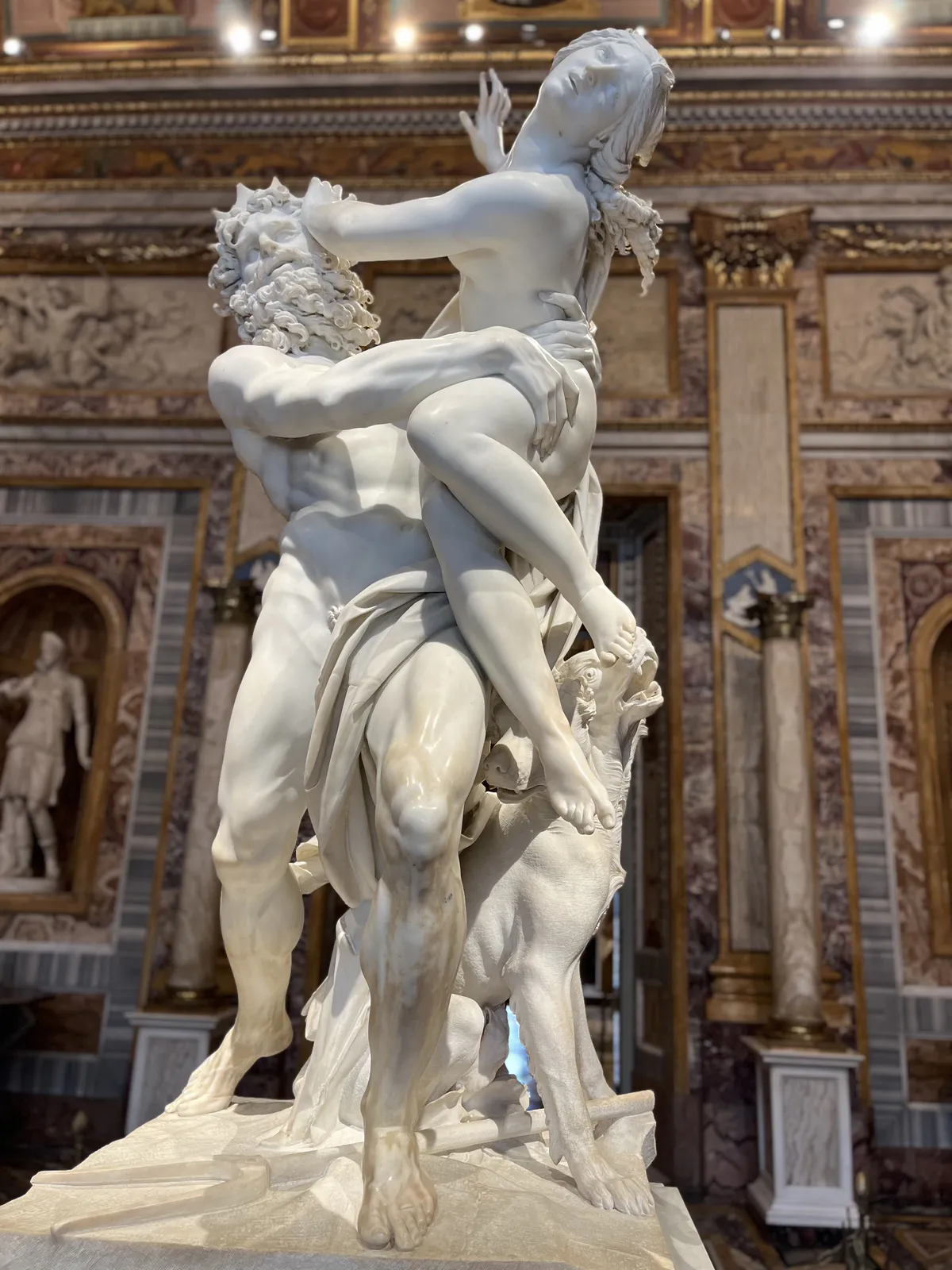
The Rape of Proserpina
Bernini
In this masterful marble (1621–22), Bernini captures Pluto’s violent abduction of Proserpina—an allegory for the changing seasons from Roman myth. Her twisting body and anguished face contrast Pluto’s force, while Cerberus, the underworld’s three-headed hound, reinforces the drama. At just 23, Bernini infused the stone with breathless motion and tactile realism, anchoring the Borghese legacy in Baroque brilliance.
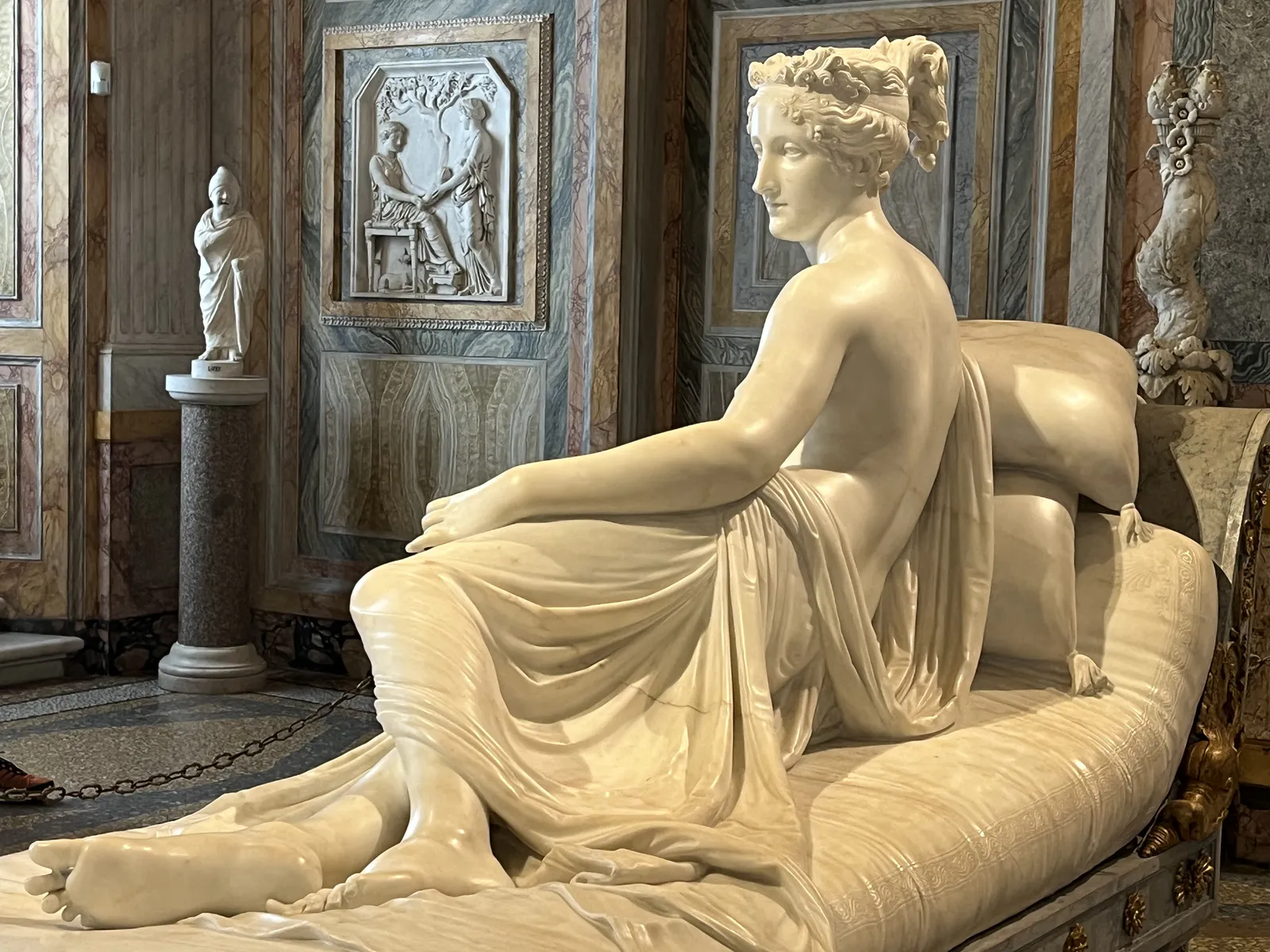
Pauline Bonaparte as Venus Victrix
Antonio Canova
Antonio Canova's marble masterpiece (1805–08) depicts Pauline Bonaparte as Venus Victrix, reclining semi-nude on a couch, holding an apple symbolizing Venus's triumph in the Judgement of Paris. Commissioned by her husband, Camillo Borghese, Pauline insisted on being portrayed as Venus rather than Diana. The sculpture, originally designed to rotate, reflects both personal ambition and classical beauty.
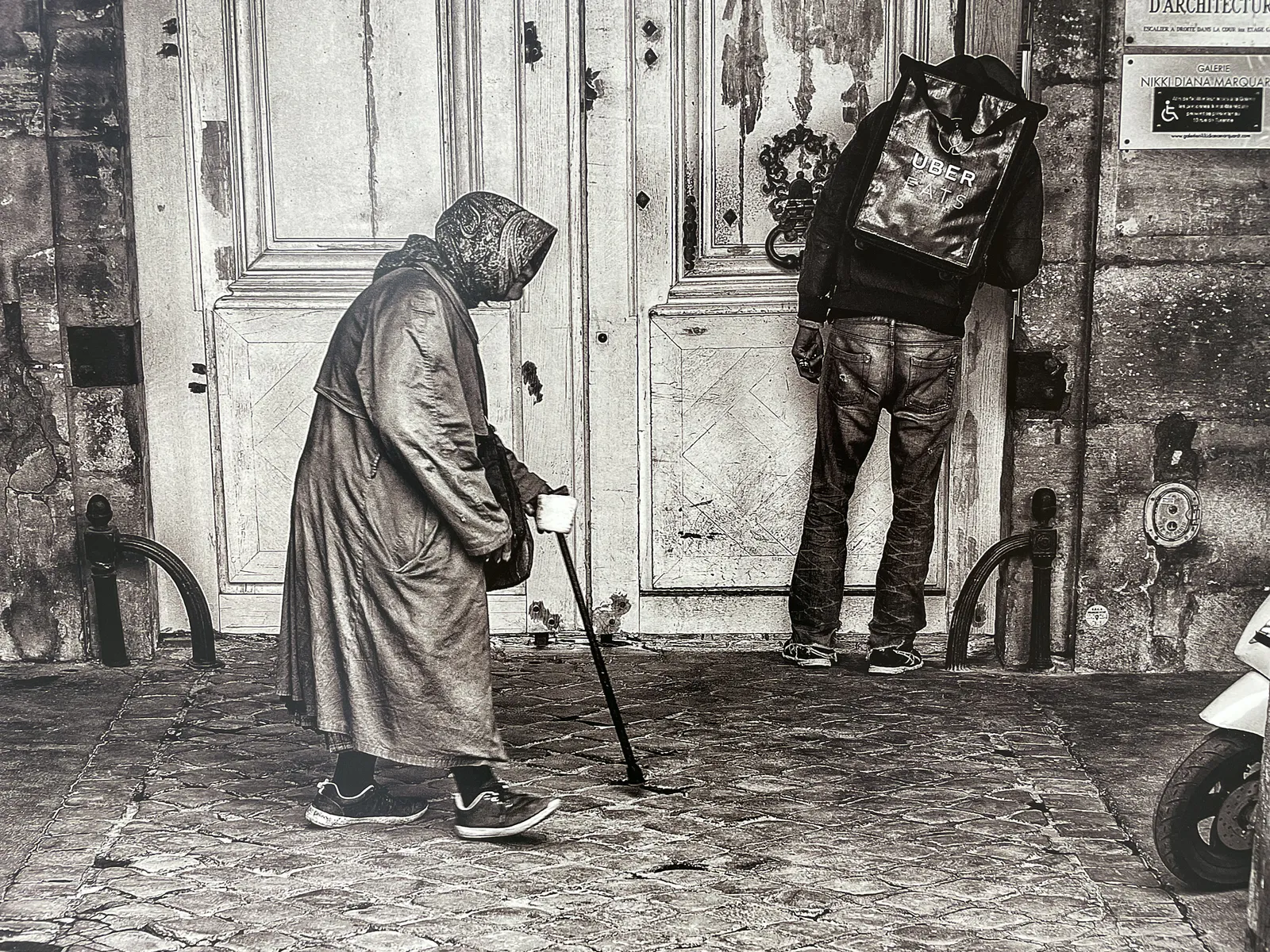
Uber Eats
Roger Zayas
This photo (2017), taken in the historic Marais district of Paris, captures a striking urban contrast: an elderly woman with a cane passes a food courier bent over a doorway. Zayas underscores generational divides and social invisibility, reflecting on aging and shifting economic realities in the European metropolis.
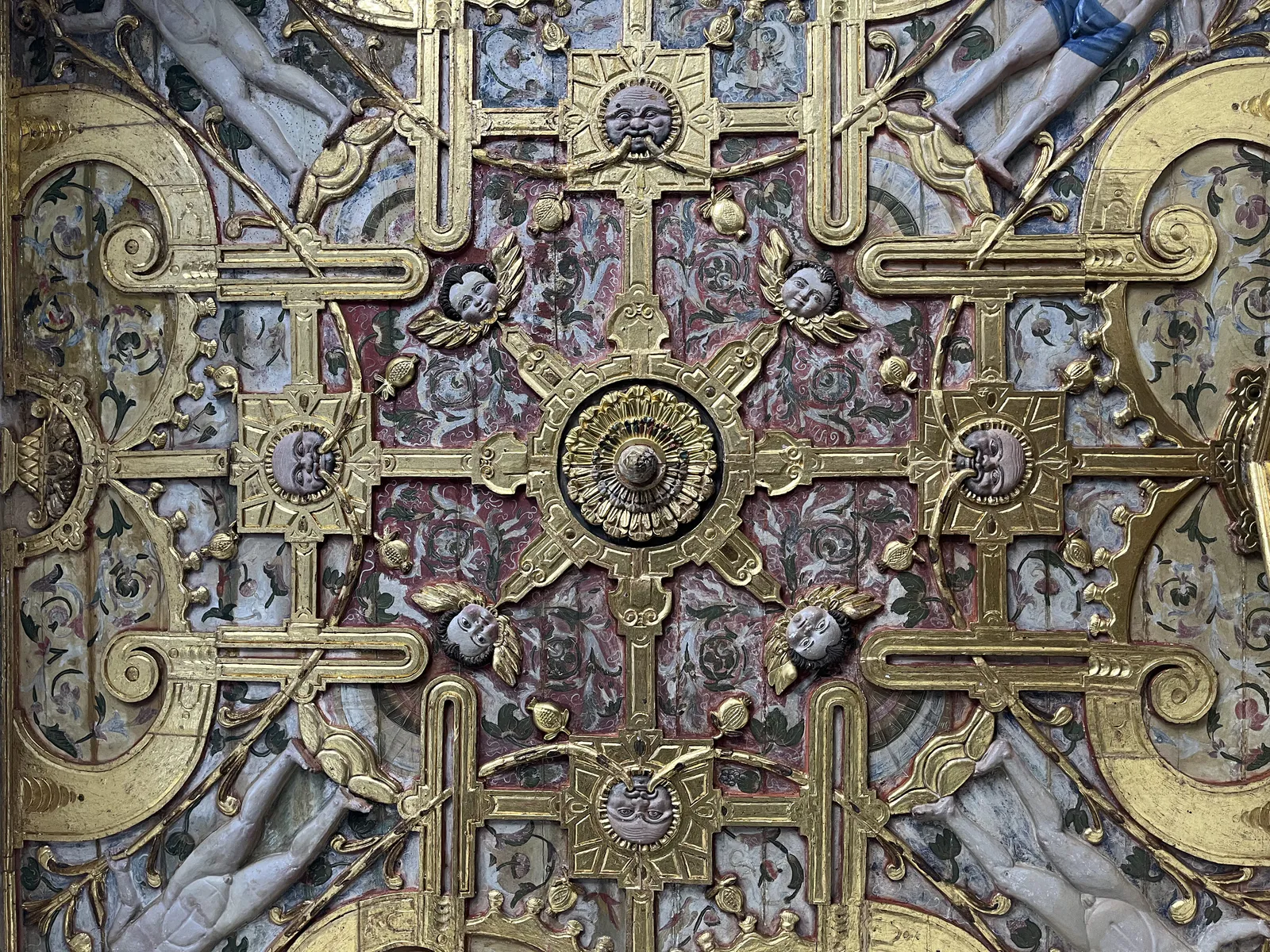
Andean Baroque Ceiling Panel
Manuel Chili (Capiscara)
This carved and gilded ceiling panel (1770–80) shows radiant faces, golden beams, and floral motifs arranged around a central sunburst. Produced in late-colonial Quito, it aligns with the Andean baroque’s celestial imagery. Caspicara joined Catholic cosmology with Indigenous conceptions of ordered, sacred geometry.
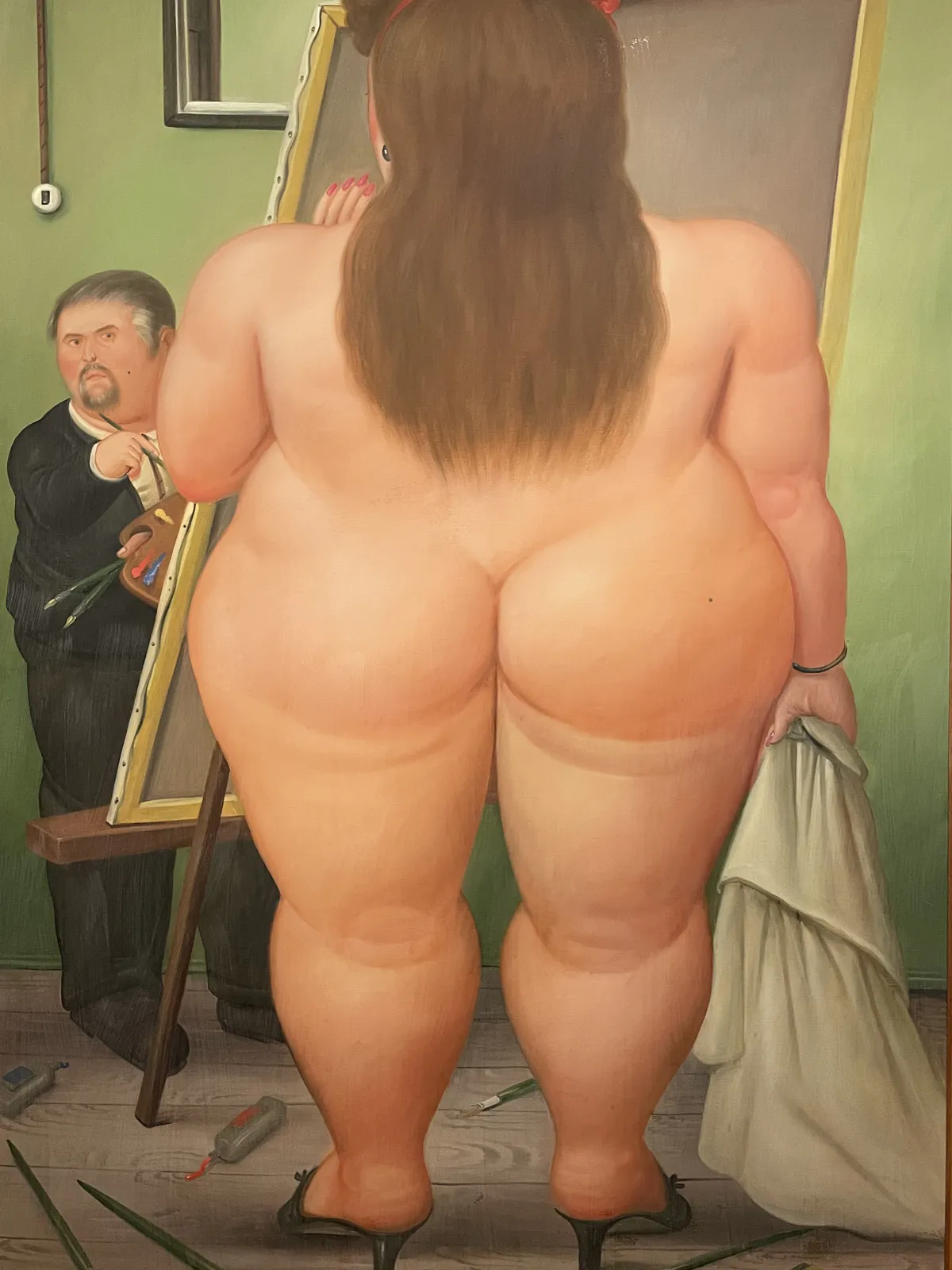
The Painter and His Model
Fernando Botero
Fernando Botero's The Painter and His Model (1984) humorously subverts the traditional artist-muse dynamic. The painting features a voluptuous nude model dominating the canvas, while the artist, dwarfed behind his easel, peers out with a palette in hand. This playful inversion highlights themes of power, beauty, and authorship, celebrating physical abundance with irony and affection. Botero's work invites reflection on the nature of artistic creation and the roles within it.
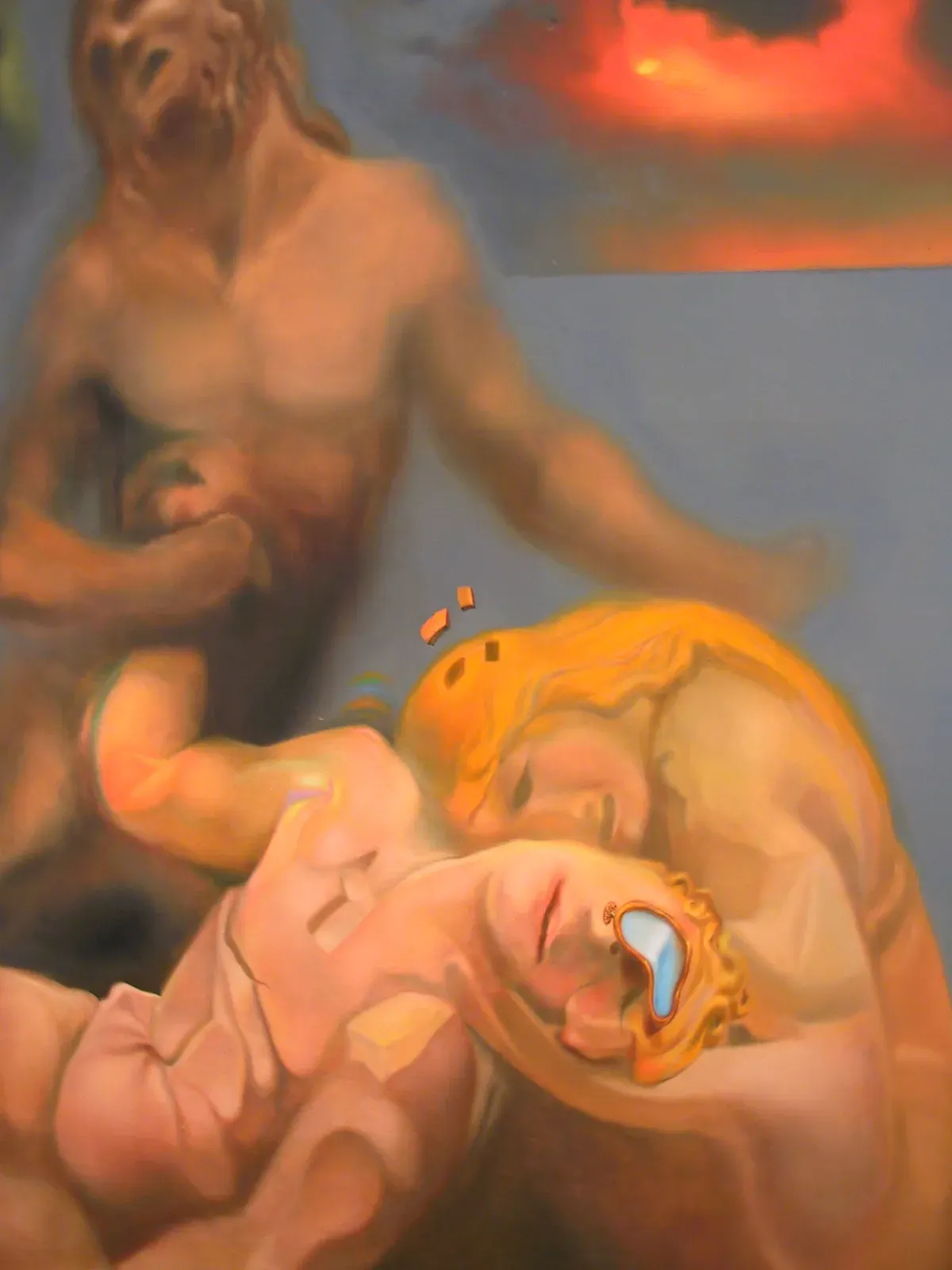
A Soft Watch to Cause a Young Ephebe to Die
Salvador Dalí
Dalí’s 1971 painting explores surrealist themes of time and mortality. A lifeless youth draped in a melting clock symbolizes the decay of ideal beauty. Hovering figures and a burning sky enhance the dreamlike tragedy, reflecting Dalí’s interest in the collapse of classical ideals. The work underscores his preoccupation with the relentless passage of time and its impact on human existence.
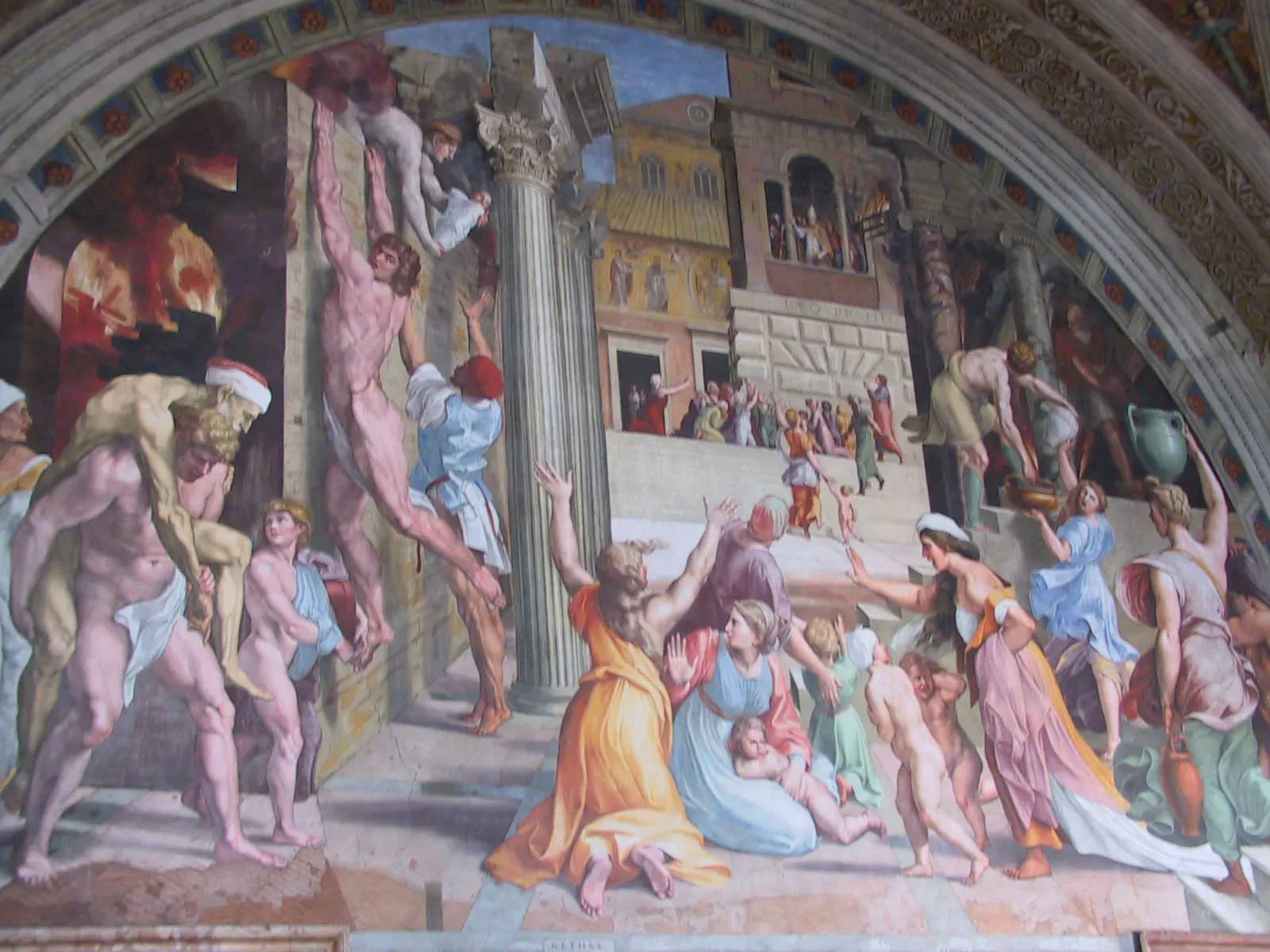
Fire in the Borgo
Rapahael and Giulio Romano
This fresco (1514) captures a legendary fire in Rome's Borgo district, illustrating divine intervention through Pope Leo IV's prayer. The fresco, part of the Raphael Rooms in the Vatican, blends classical and Renaissance elements, showcasing dynamic figures and architectural precision. This work reflects the era's belief in the power of faith and the church's central role in societal protection and order.
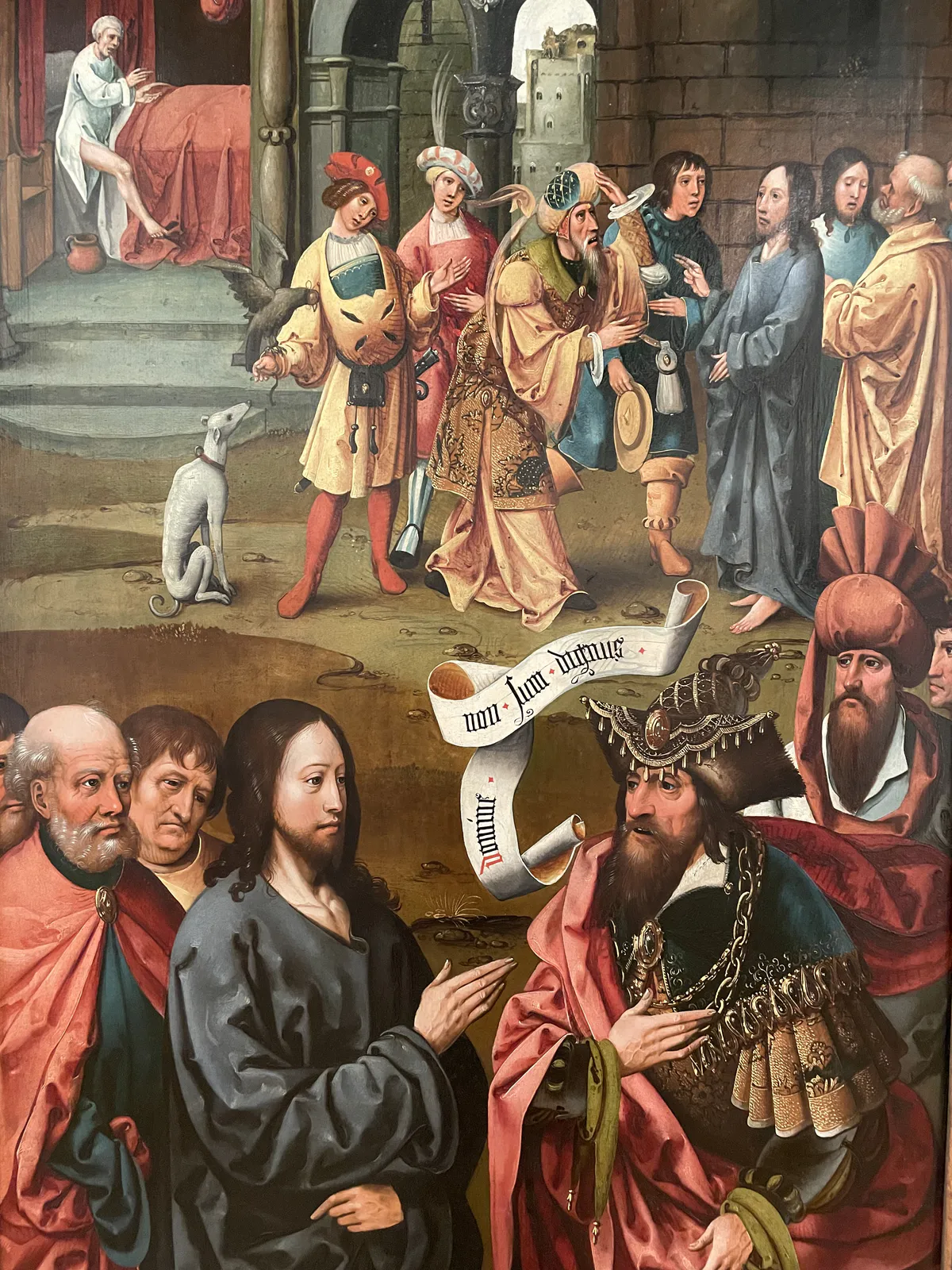
Christ and the Centurion of Capernaum
Master of Adoration of Amberes
This Northern Renaissance panel (1520–30) captures the moment a Roman centurion asks Christ to heal his servant, saying Lord, I am not worthy. The scene blends biblical narrative with contemporary Flemish attire, highlighting faith over status. The expressive gestures and rich details emphasize humility and the universal appeal of compassion, reflecting the era's fusion of religious and cultural elements.
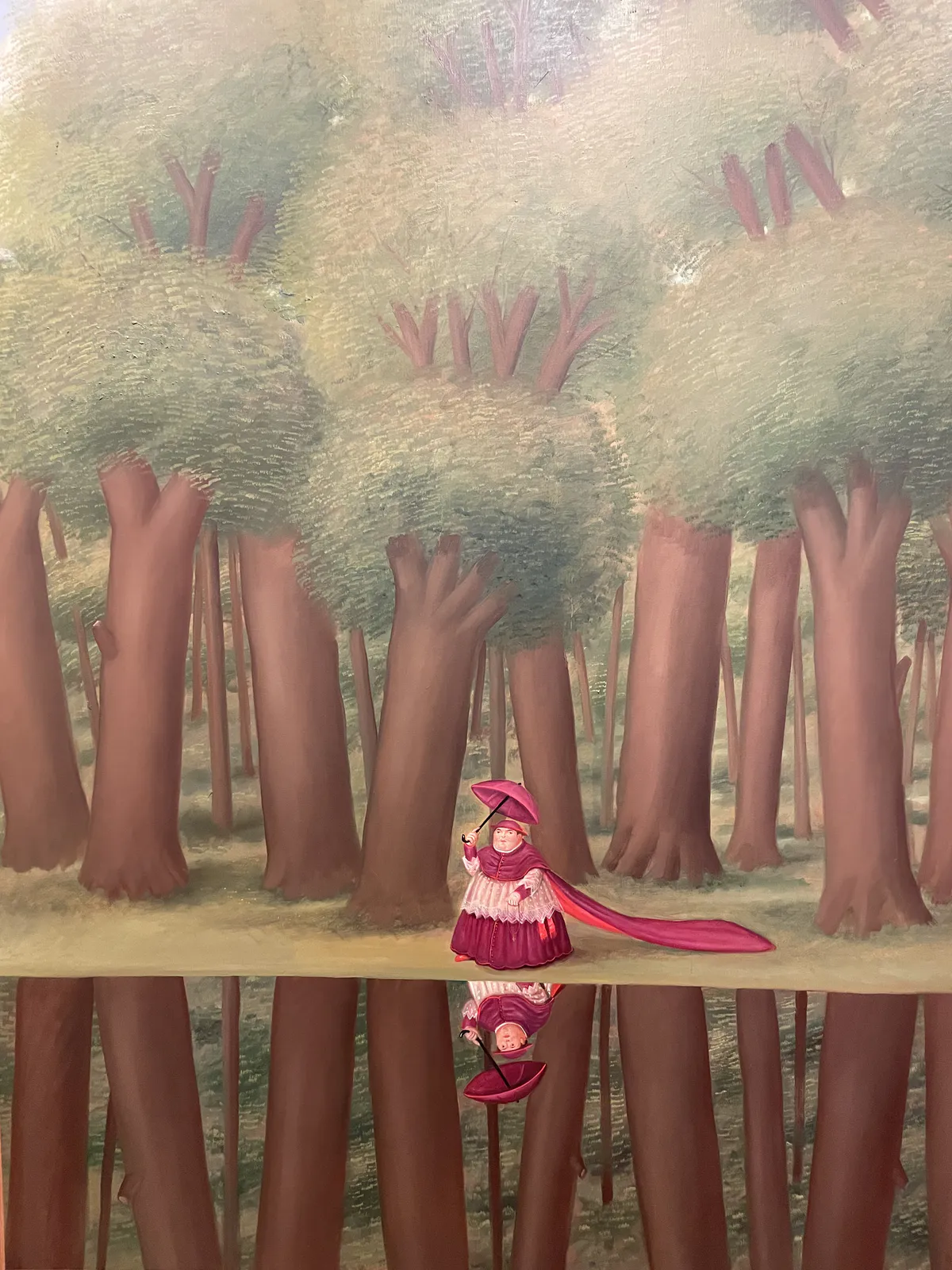
Woman with Umbrella
Fernando Botero
A solitary figure walks through a forest, her reflection mirrored below as if suspended between worlds. Her voluminous dress and umbrella contrast with the vertical rhythm of the trees. With surreal calm and poetic symmetry, Botero (1989) transforms a simple stroll into a meditation on solitude, identity, and the quiet theatricality of everyday life.
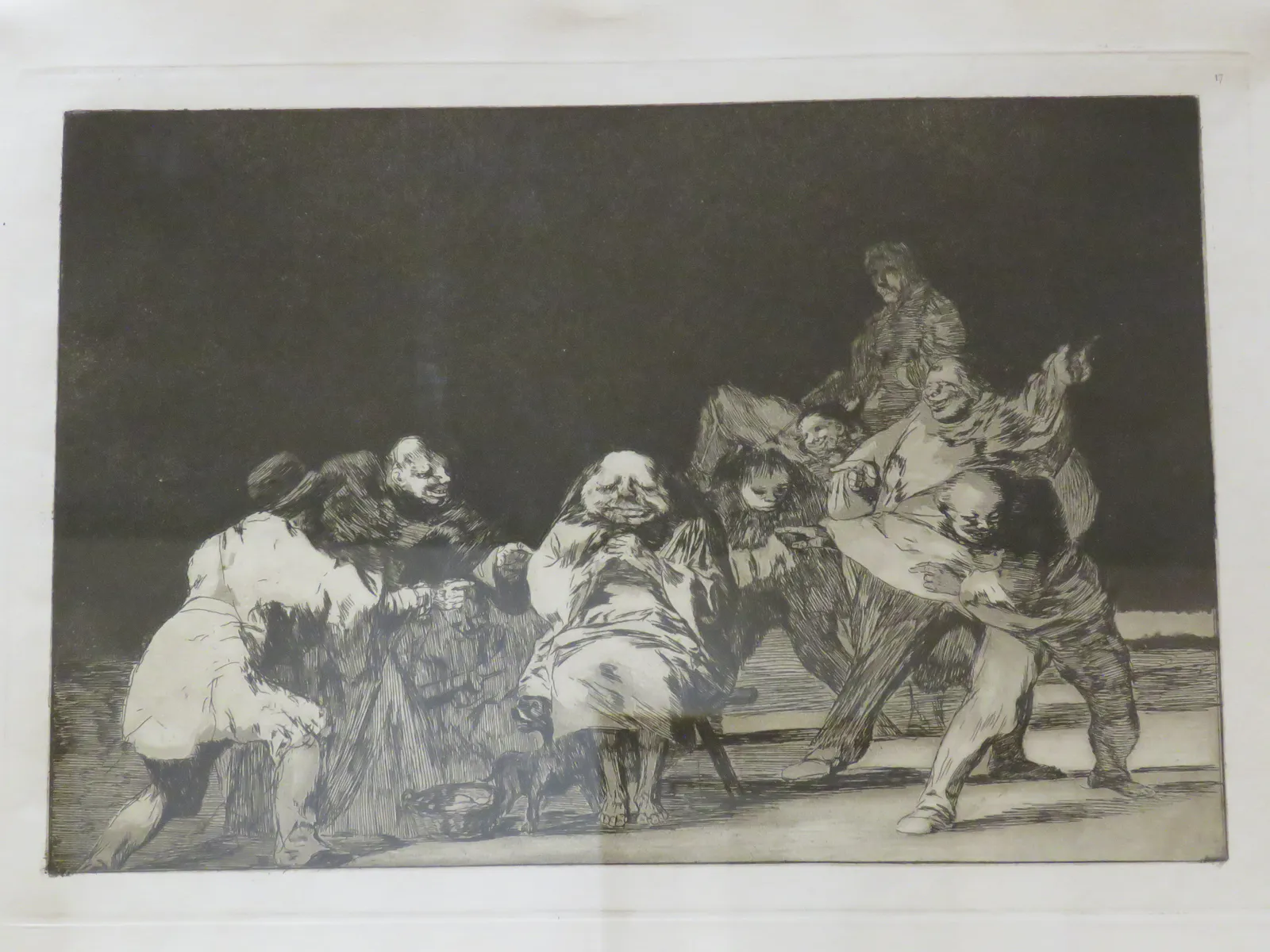
Loyalty from Los Disparates Series
Francisco Goya
This etching (1815–1823) by Francisco Goya, part of the Los Disparates series, explores themes of chaos and irrationality. Featuring grotesque figures, it suggests blind loyalty or foolishness, reflecting the turbulent era of Ferdinand VII’s reign in Spain. Goya’s use of aquatint and etching techniques enhances dramatic contrasts and textures, providing a dark commentary on the social and political upheavals of his time.
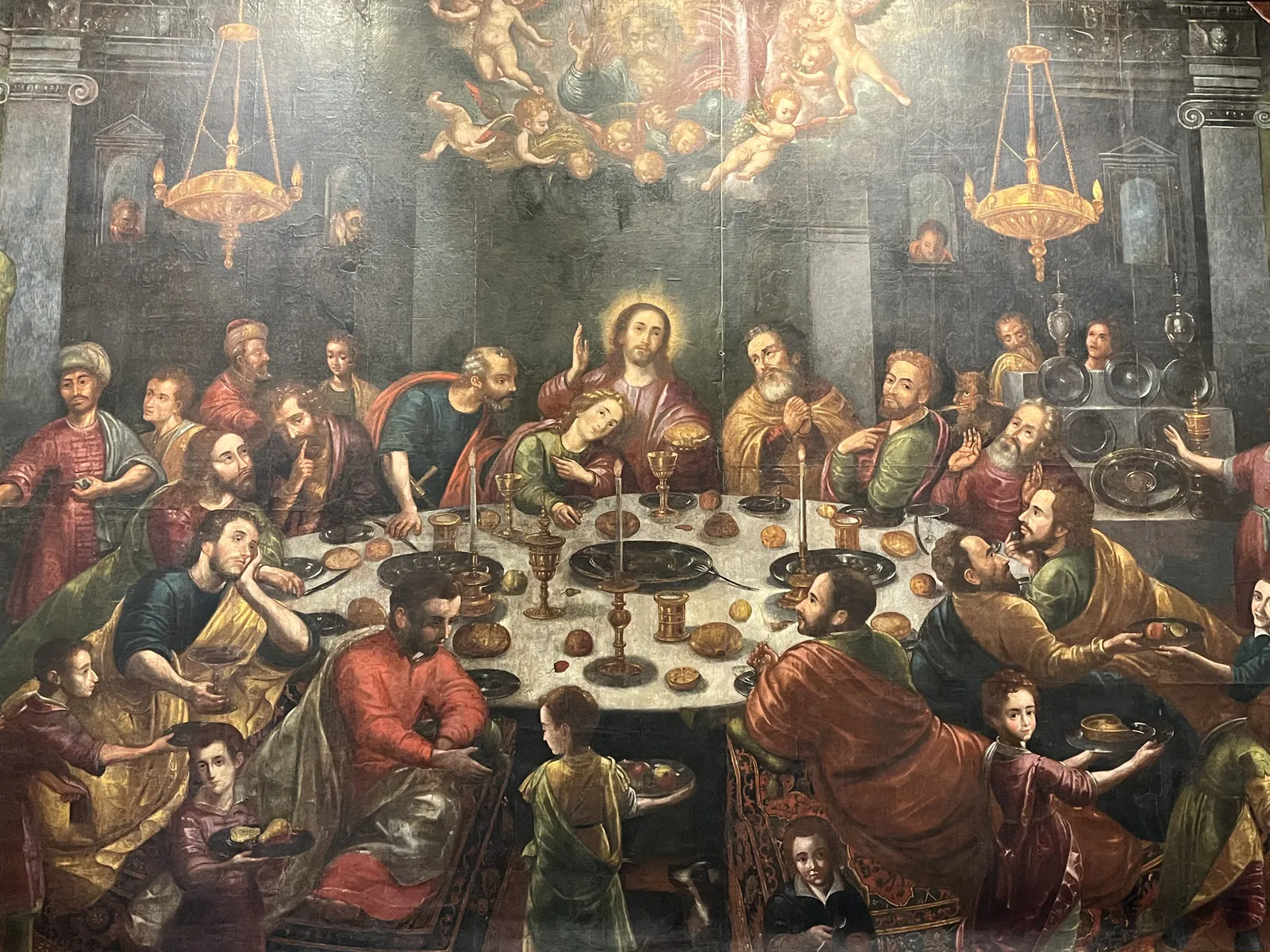
The Last Supper (with Cuy)
Diego de la Puente
De la Puente’s 1658 painting uniquely blends Spanish colonial art with Peruvian culture. It depicts Jesus and his disciples eating cuy (guinea pig), a local delicacy, instead of lamb. This substitution reflects how Catholic imagery was adapted to local customs, offering a clear example of the visual and cultural hybridization that shaped colonial Peru.
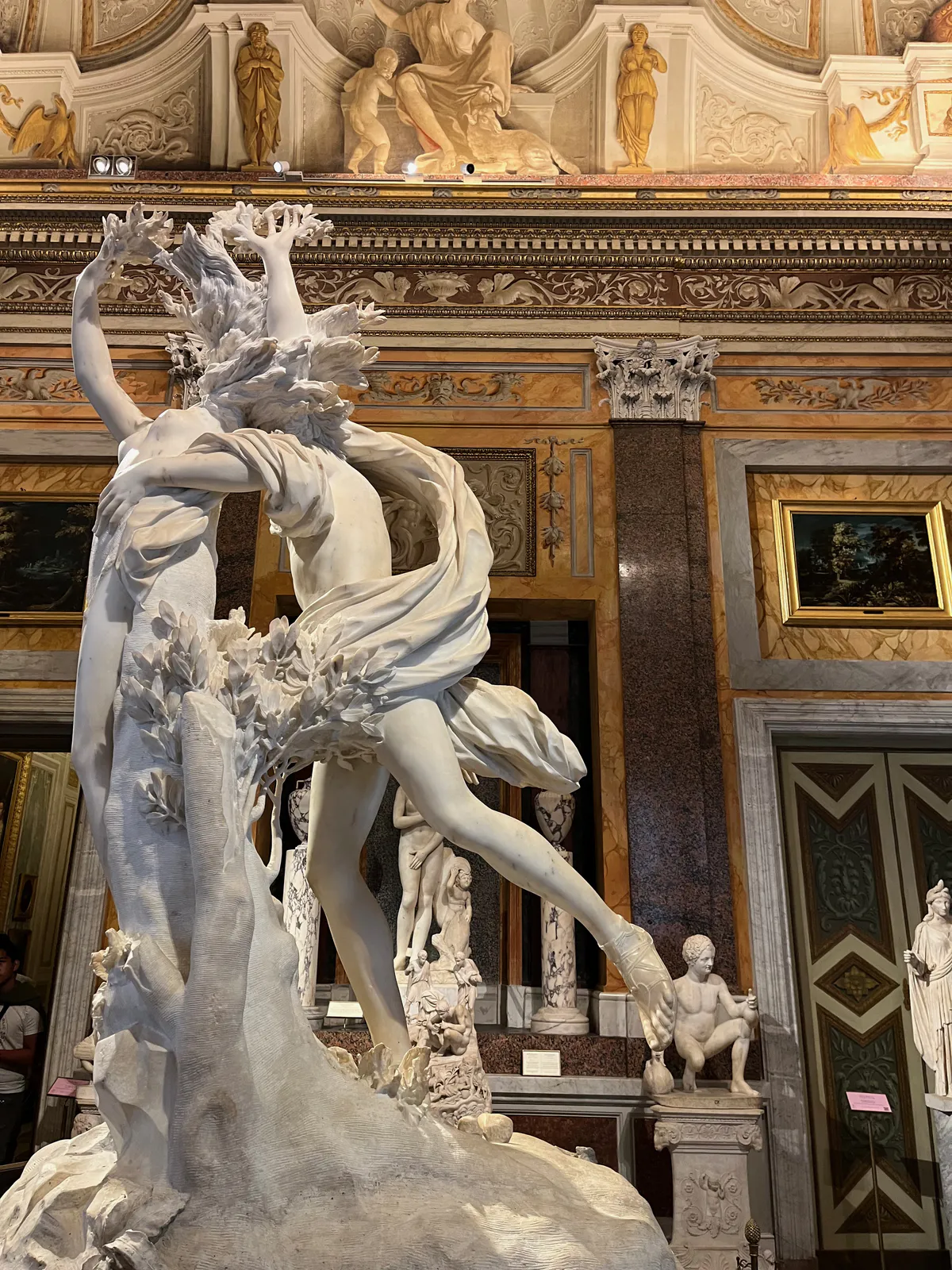
Apollo and Daphne
Bernini
Seen from behind, Bernini’s Apollo and Daphne (1622–25) reveals the spiraling tension of flight and pursuit. Daphne’s transformation accelerates—branches burst from her hair as Apollo strains forward, barely grounded. This angle heightens the illusion of motion, capturing the myth’s fleeting climax with lyrical virtuosity.
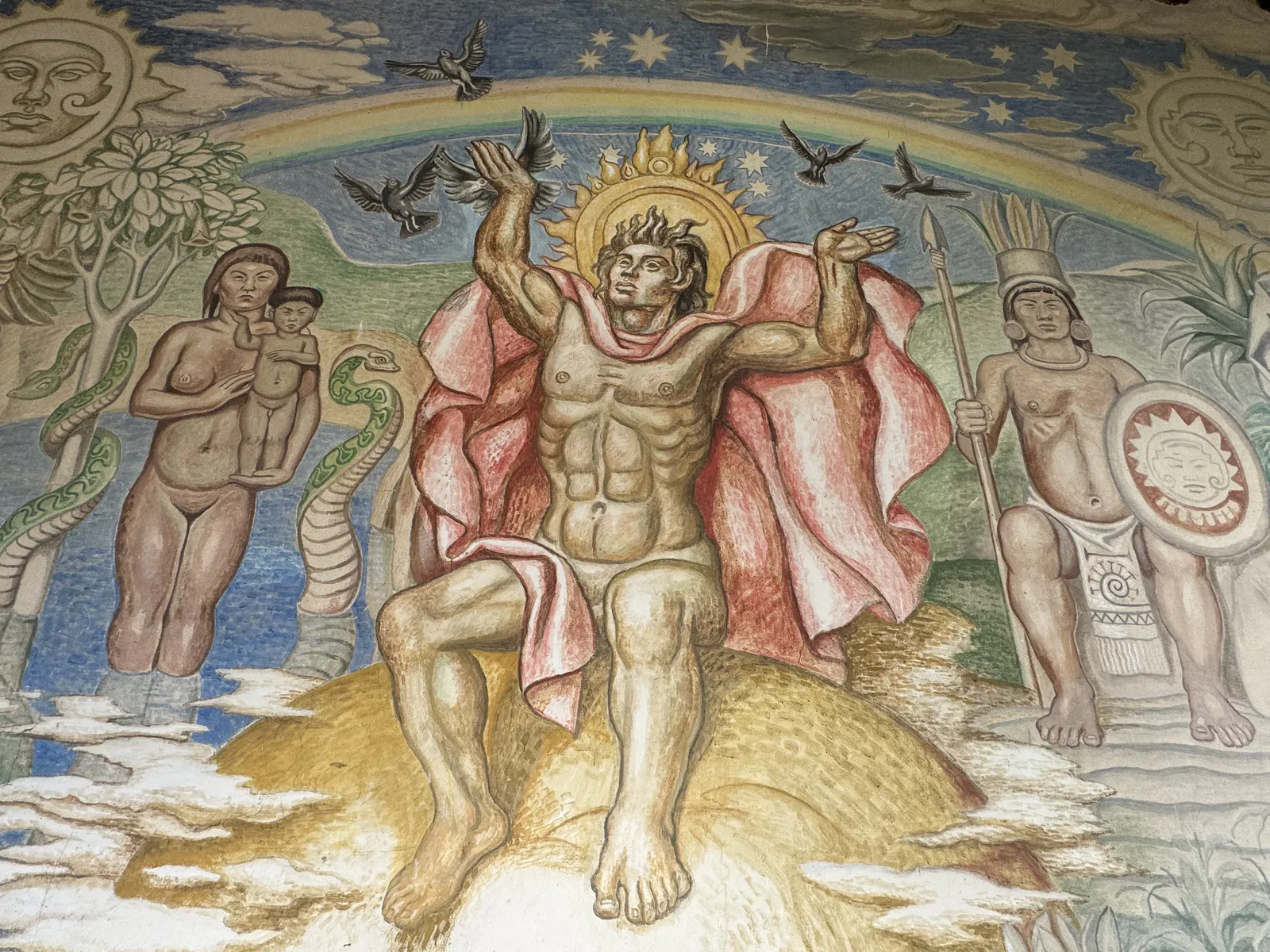
Chiminigagua and the Origen of Chibcha
Luis Alberto Acuña
This mural (1960–70s) reimagines the Chibcha creation myth. At center, the god Chiminigagua releases radiant birds to bring light to the cosmos. To his right stands Bachué with her son Iguaque, founders of the Muisca people. At left is Chaquén, guardian of lands and borders. The scene is set at the sacred Iguaque Lagoon, the cradle of Muisca origin.
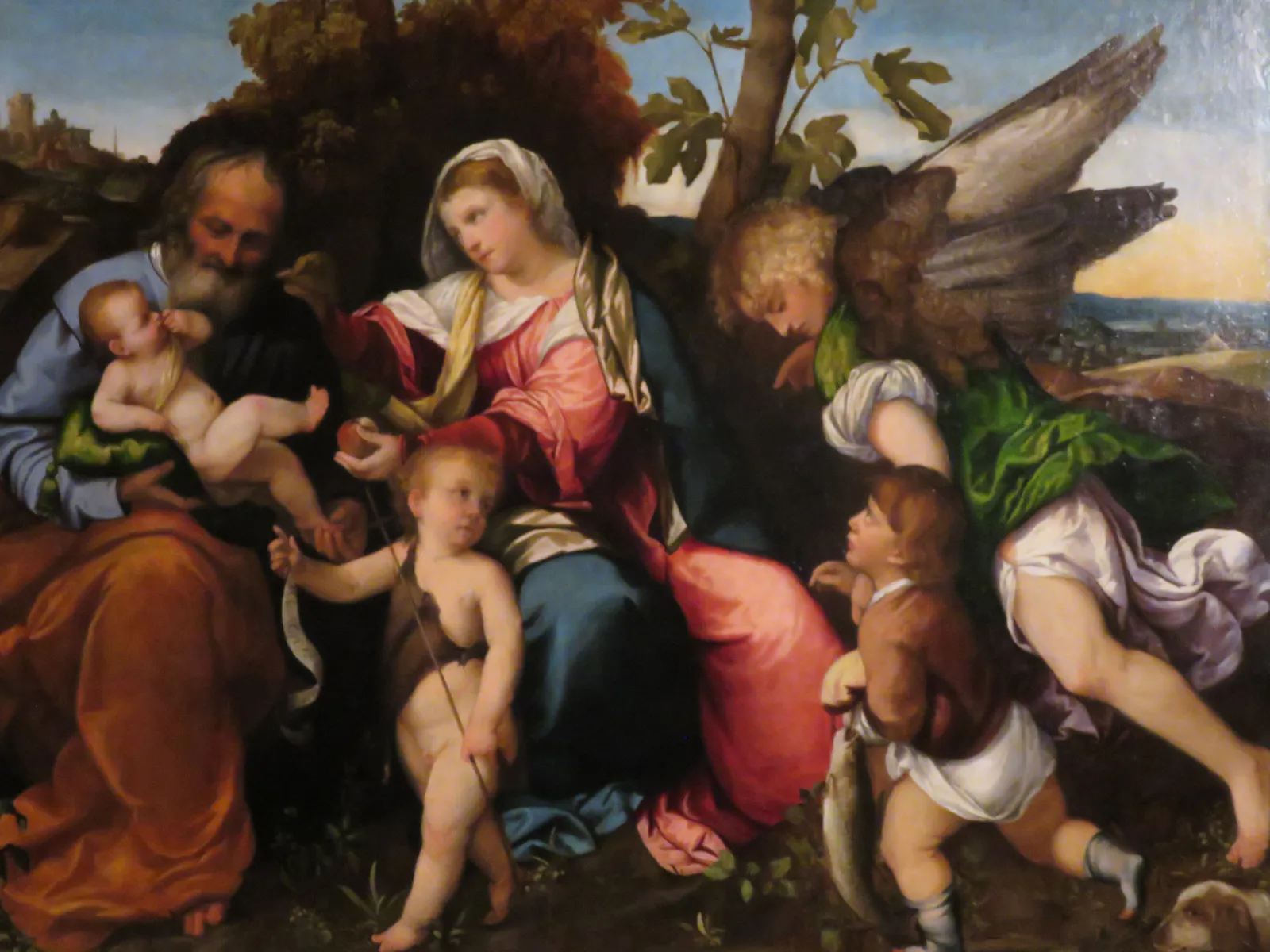
The Holy Family with Sts. Francis, Anthony, Magdalene, John and Elizabeth
Bonifazio Veronese
This oil on canvas (1525–27) shows the Holy Family seated outdoors, with Mary offering fruit to the Christ Child held by Joseph. At their side stand the young Saint John the Baptist and the Archangel Raphael guiding Tobias, who carries a fish. The combination of figures from different episodes may connect to Renaissance interest in linking domestic piety with protective intercession.
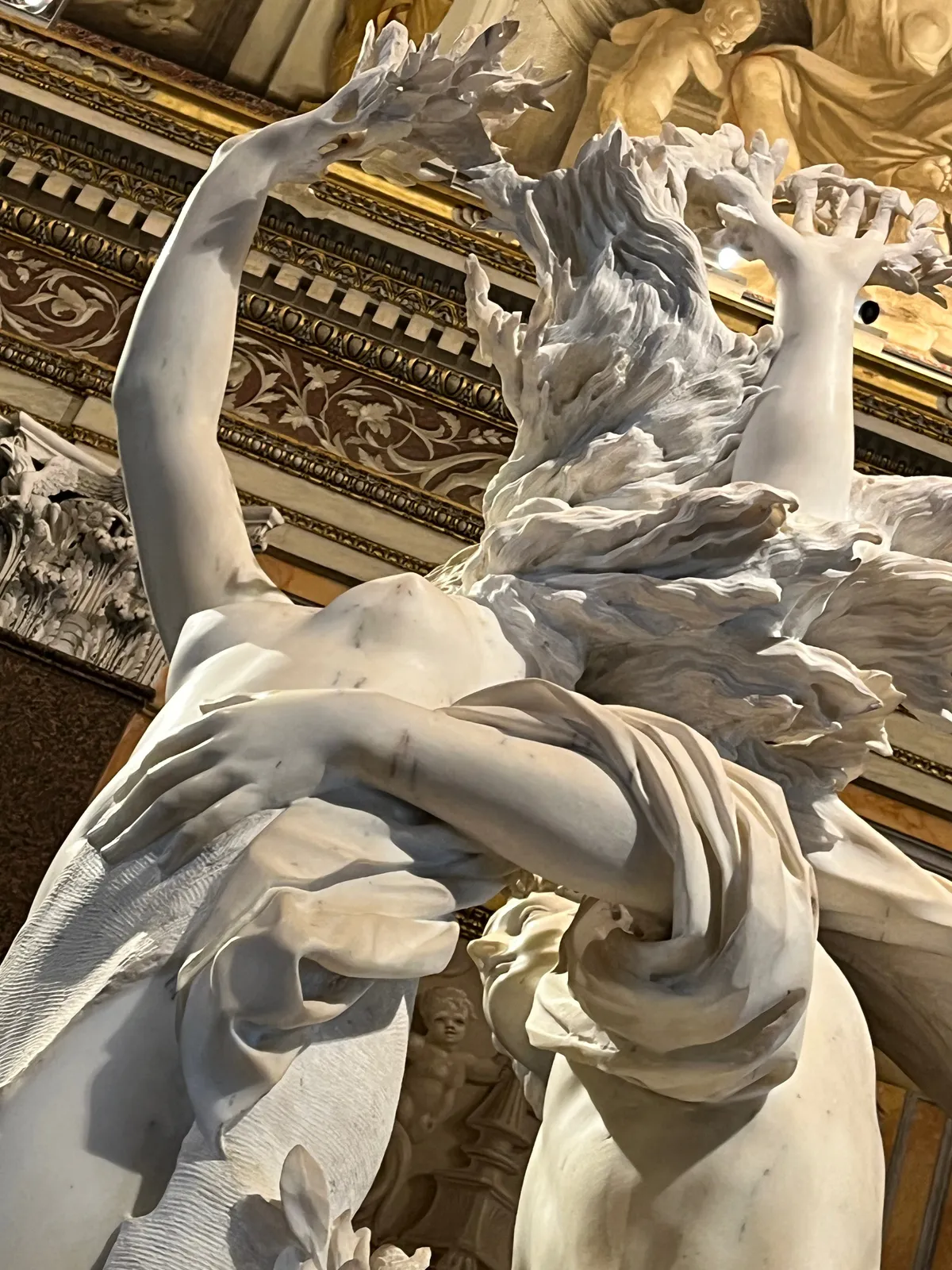
Apollo and Daphne (detail)
Gian Lorenzo Bernini
In this electrifying detail from Apollo and Daphne (1622–25), Daphne’s transformation peaks: her fingers stretch skyward as they fracture into laurel branches. Bernini’s carving achieves an uncanny fluidity—Apollo’s embrace contrasts her fleeing limbs, while bark and hair blur into motion, embodying divine metamorphosis and tragic escape.
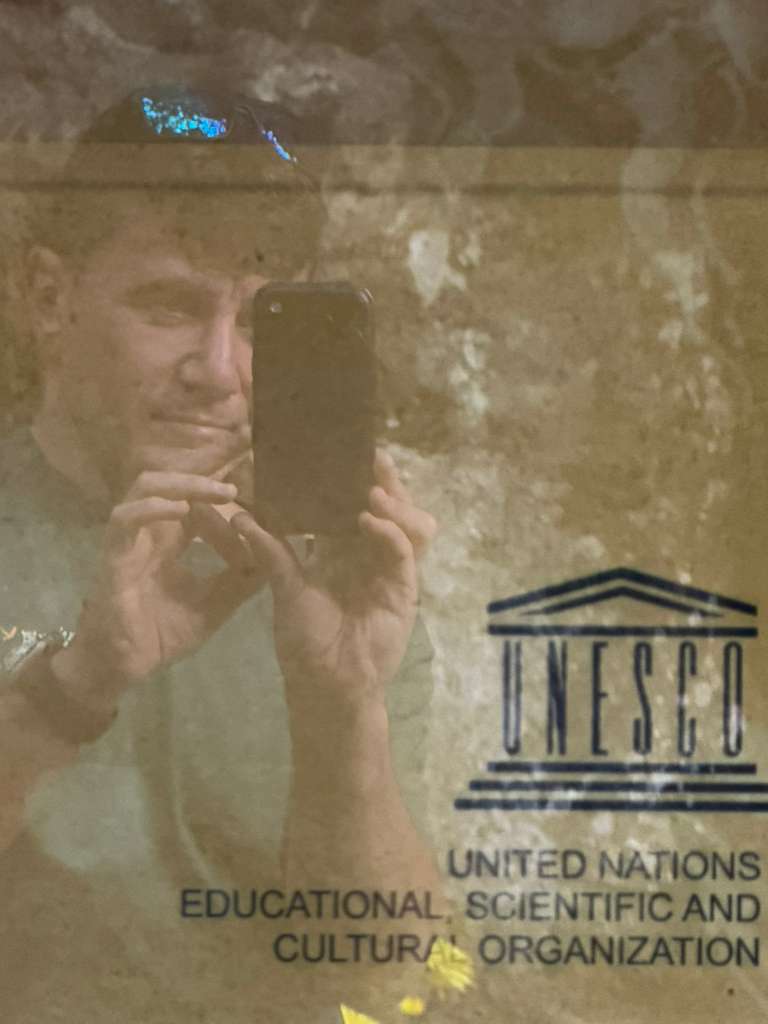
“When the path is beautiful, do not ask where it leads.” — Zen proverb
Welcome to my travel photography!
“When the path is beautiful, do not ask where it leads.” — Zen proverb
Welcome to my travel photography!
For as long as I can remember, my path has been one of discovery—seeking beauty, timelessness, and connection in every corner of the world. It has also been a journey of deep learning and understanding. I’ve been an avid traveler (or perhaps a travel addict?) for most of my life. My love for travel began long before I ever left home: as a child, I drew a fantasy map of my grandparents’ apartment and “traveled” through it with my cousin Sonya, imagining adventures in every corner. Nearly 90 countries and countless moments of awe later, I’m excited to share this journey with you.
Thanks to the tireless and ingenious programming of Diagilev, we’re now able to present about fifteen percent of the images I’ve accumulated over the years. More will be released in small batches depending on your interest. While the first release leans toward museum photography, later ones will include more nature, architecture, culture, and general travel experiences. If you’d like to receive email notifications about new releases, feel free to reach out—no commercial use, ever.
Throughout my travels, I’ve been drawn to two intertwined kinds of discovery. One is intellectual: learning why the world is the way it is. History became my guide, shaping my perspective and filling my camera roll with museums and old buildings. To me, history is not the past—it is the key to understanding the present and how the world became what it is. The other is emotional: seeking moments of elevation—spirituality, beauty, harmony—often found in nature, monasteries, and ancient sacred spaces. Together, these impulses shape my photography. It invites you to learn, admire, and soar—to rise above the mundane and see the world through a lens of curiosity and wonder.
Much of my later travel became possible thanks to my job with Delta Air Lines, but the wanderlust began years earlier. By the time I joined the industry, I had already visited over 35 countries and lived in several—largely thanks to a backpacking journey around the world with Luis León, whose face appears in many early photos. I grew up in Ufa in the USSR, and since leaving it I have lived, studied, and worked in Latvia, the United States, France, South Korea, Canada, Spain, Italy, Brazil, Japan, and Colombia.
A life of near-constant movement may seem a little crazy, but it has deepened my understanding of the world and produced the photography you are about to see. Over the years, my style has evolved—more intentional, more refined—yet its core remains the same: a search for understanding, timeless beauty, and a connection to those who walked this earth long before us.
I hope these photos stir something in your soul, just as they did in mine. I’d love to hear from you—whether reactions, suggestions, corrections, or a request to be added to the email list for new releases (no commercial use, I promise). You can learn more about my travels here, and my academic life here.
Enjoy our shared journey!