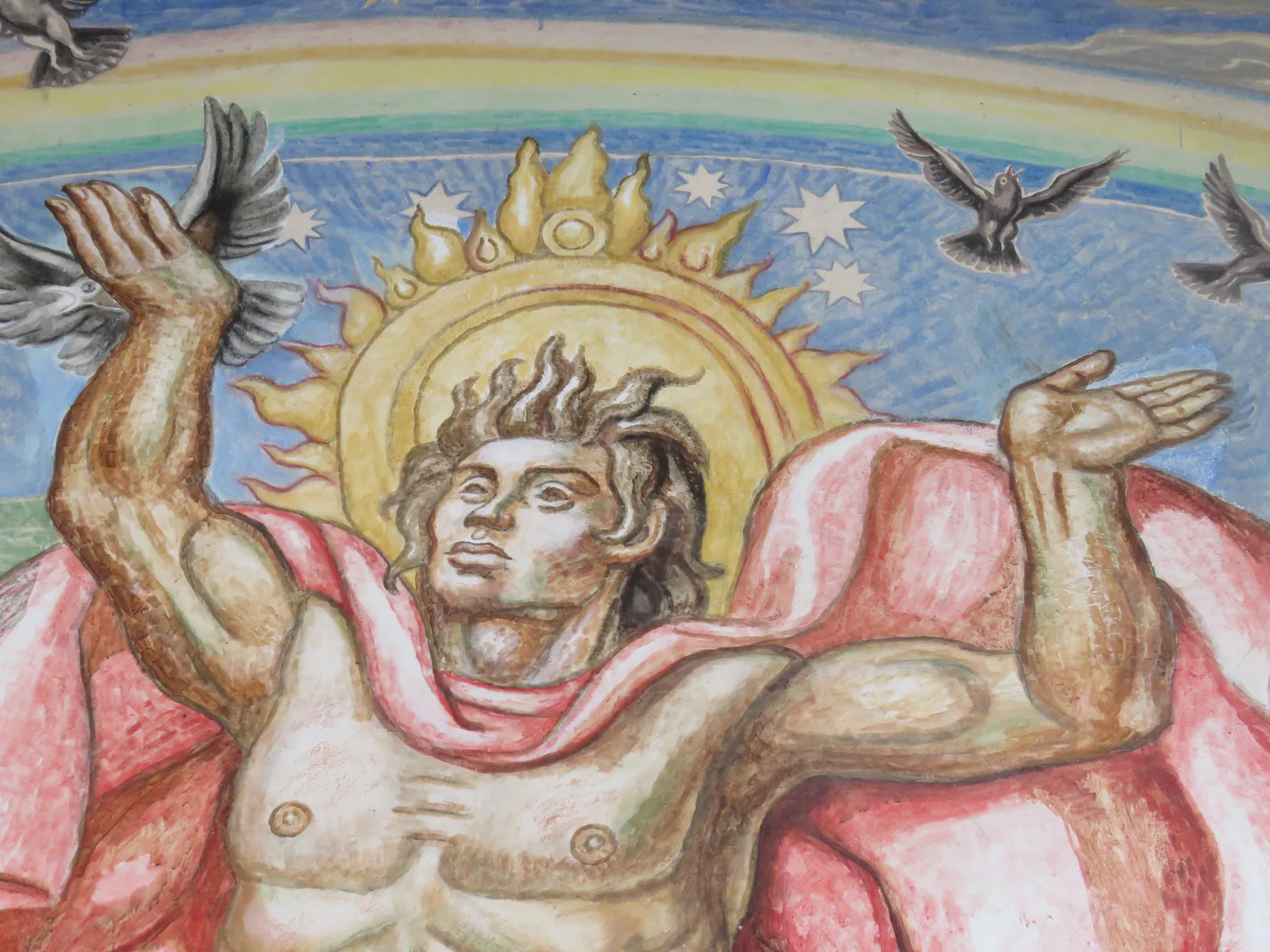
Chiminigagua Releases Light
Luis Alberto Acuña
Detail from a mural (1960–70s) reimagining the Chibcha creation myth. The supreme god Chiminigagua raises his arms as radiant birds burst forth, bringing light to the cosmos. A glowing sun and celestial rainbow crown the scene, marking the divine act that initiated life and order in the Muisca universe.
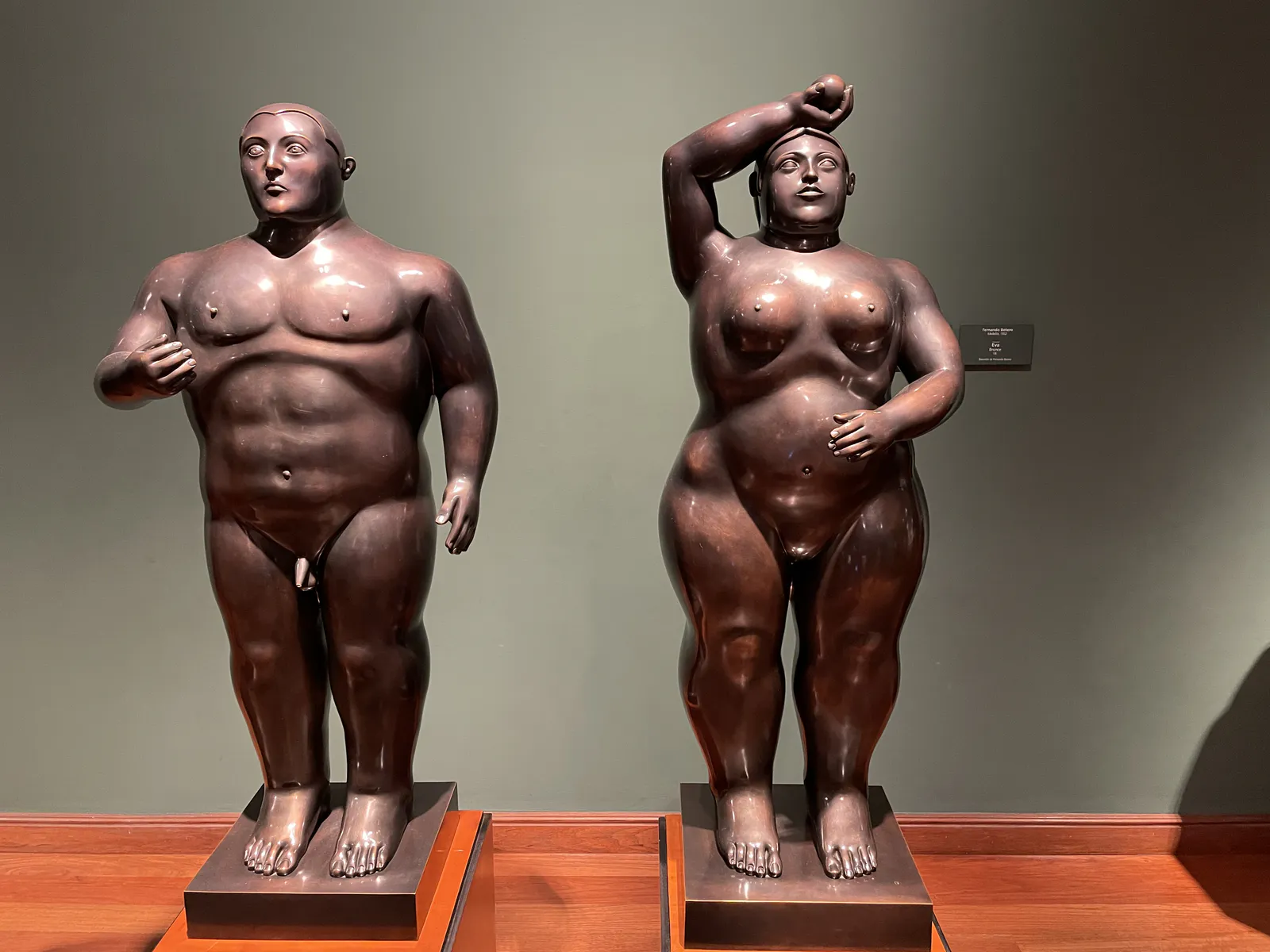
Adam and Eve
Fernando Botero
These 1999 bronze figures reimagine the biblical first humans with Botero’s hallmark voluminous style. Their serene, exaggerated forms strip the myth of guilt and drama, offering a playful yet dignified meditation on innocence, corporeality, and the timeless tension between flesh and spirit.
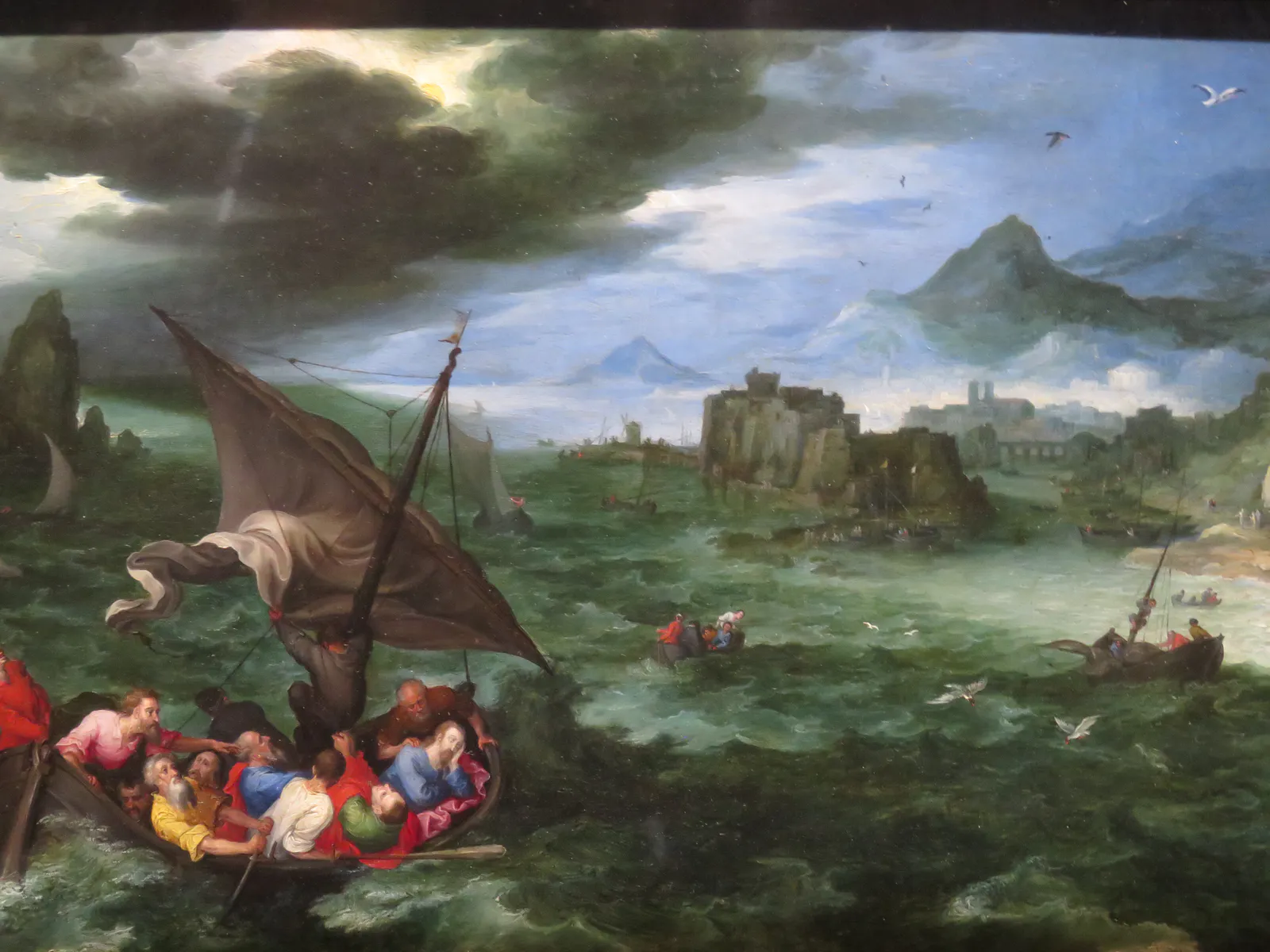
Christ in the Storm on the Sea of Galilee
Jan Brueghel
This oil on copper (1596) shows Christ asleep during a storm as an apostle wakes him amid violent waves on the Sea of Galilee. The heeling boat and twisted sail convey imminent peril, while the darkened sky dramatizes the disciples’ fear. Brueghel’s vivid rendering turns natural turbulence into a meditation on faith and divine control.
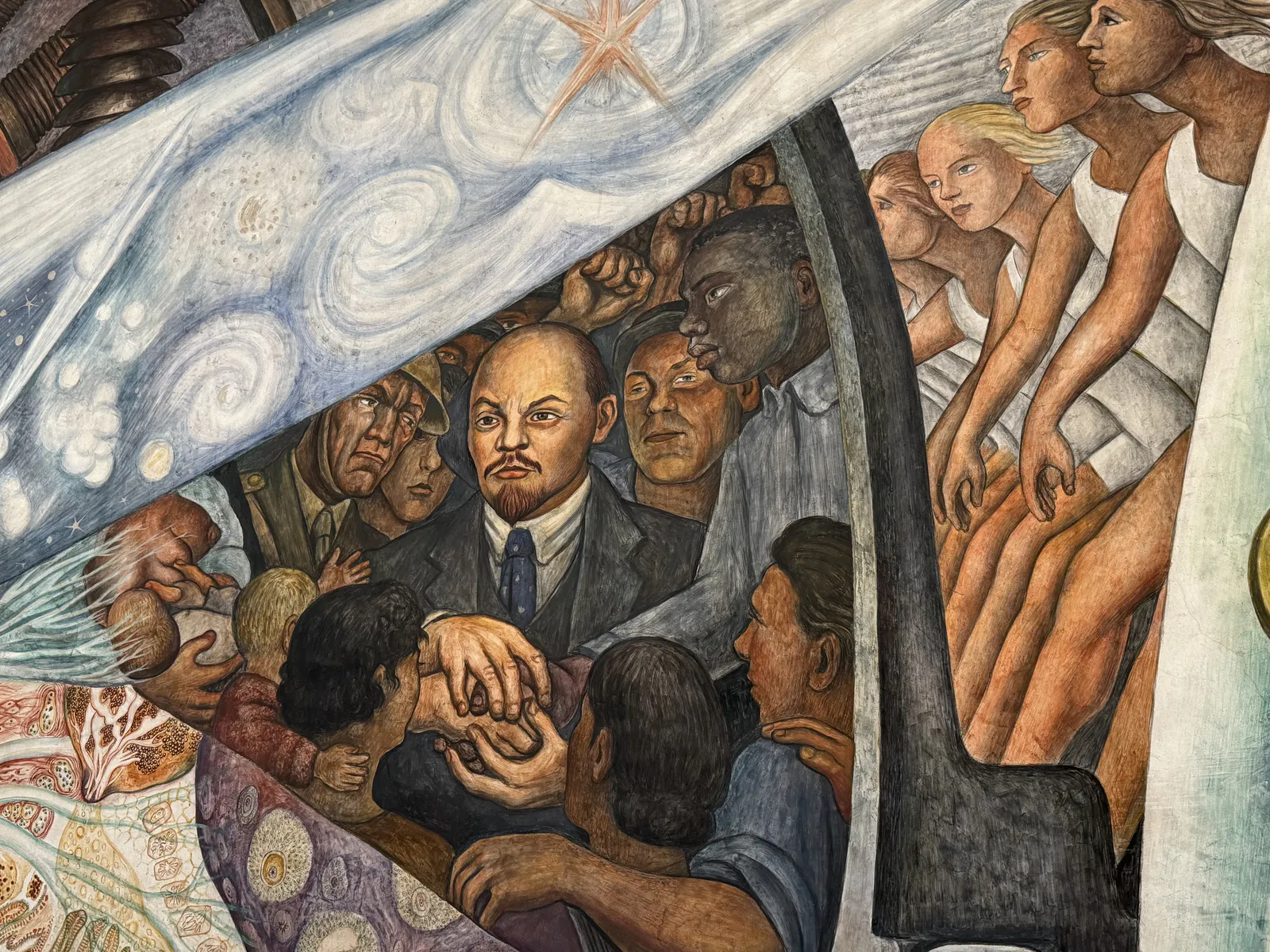
Lenin and the Workers (detail)
Diego Rivera
In this vivid section of Man, Controller of the Universe (1934), Lenin extends his hand to unite workers of different races and backgrounds. His central placement amid galaxies and scientific motifs reflects Rivera’s belief in a revolutionary, rational future led by socialist ideals and global class solidarity.
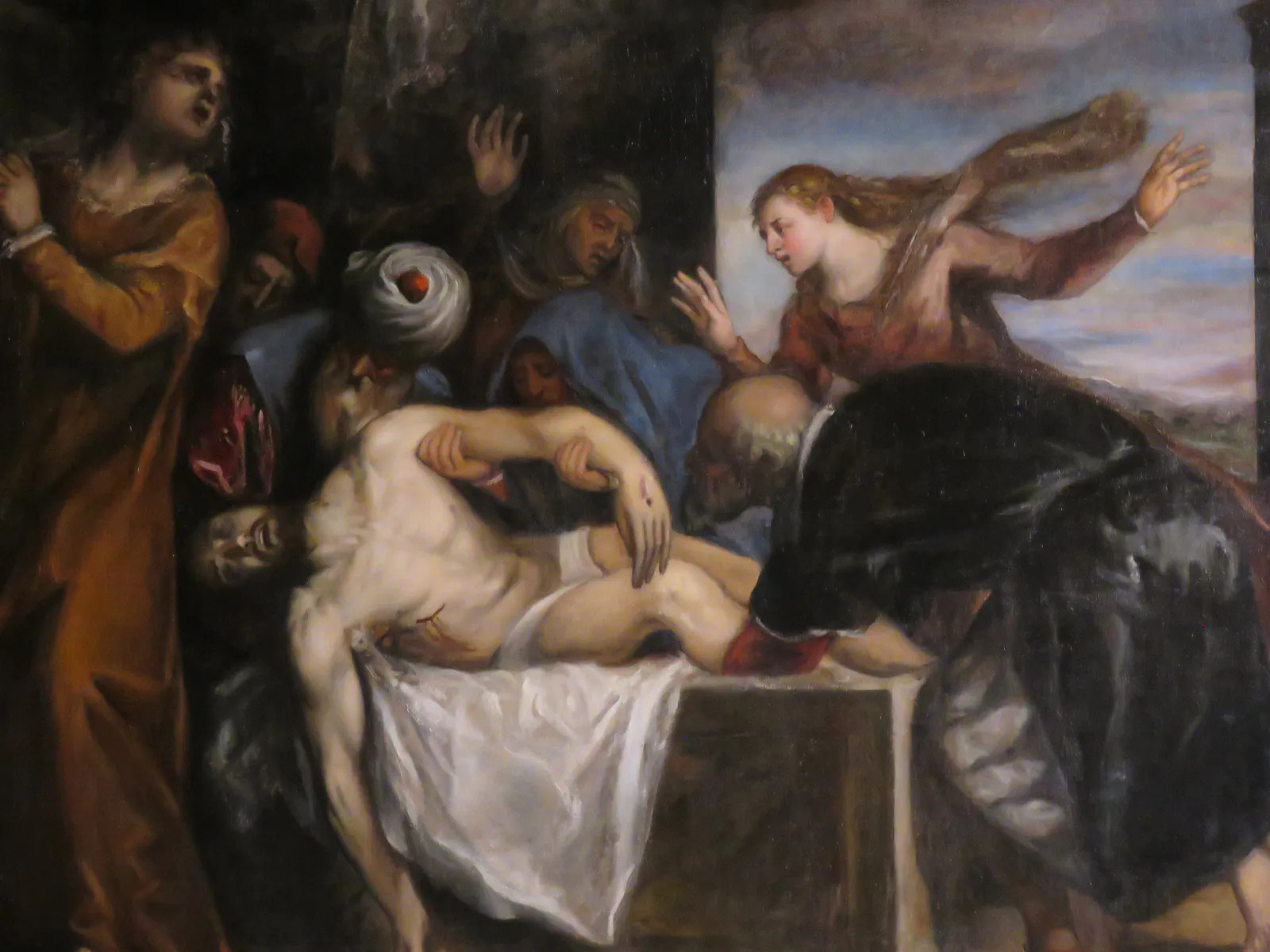
The Entombment of Christ
Titian and Palma the Younger
A poignant rendering of Christ’s burial, this oil on canvas (1618) was begun by Titian and completed by Palma the Younger. The composition captures collective grief, emphasizing the physical weight of death and the emotional weight of loss. The figures’ gestures and expressions mirror Renaissance ideals of pathos and human dignity.
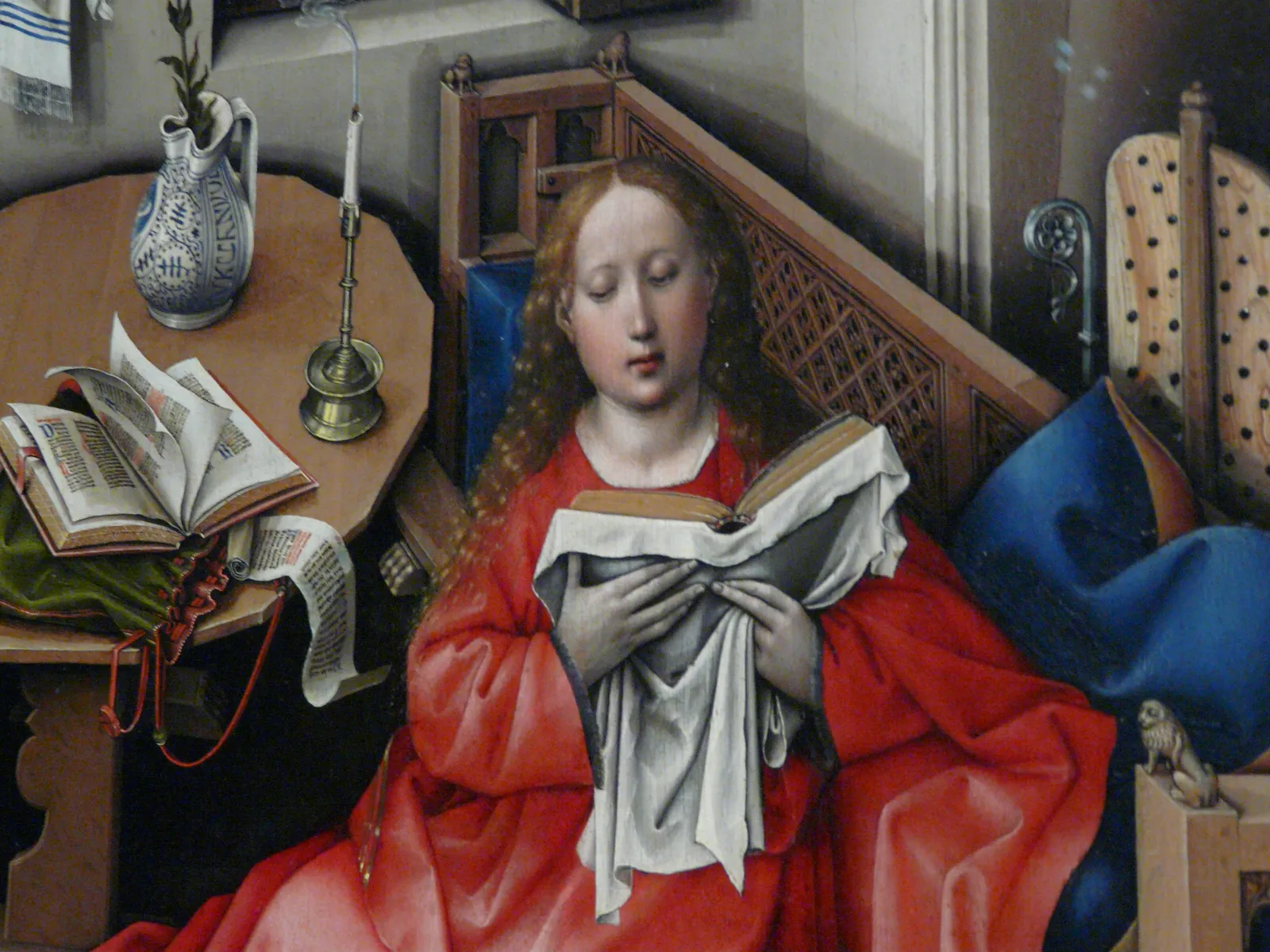
Mérode Altarpiece Central Panel
Robert Campin
This panel (c.1425–1428) shows Mary reading as Gabriel arrives. Domestic details carry layered meaning: the open book signals devotion, the lily purity, and the candle the Incarnation. The water jug with a white cloth evokes Mary’s virginity, while the enclosed garden glimpsed outside recalls her chastity. Named after later owners, the Mérode family, the work unites divine mystery with Flemish household realism.
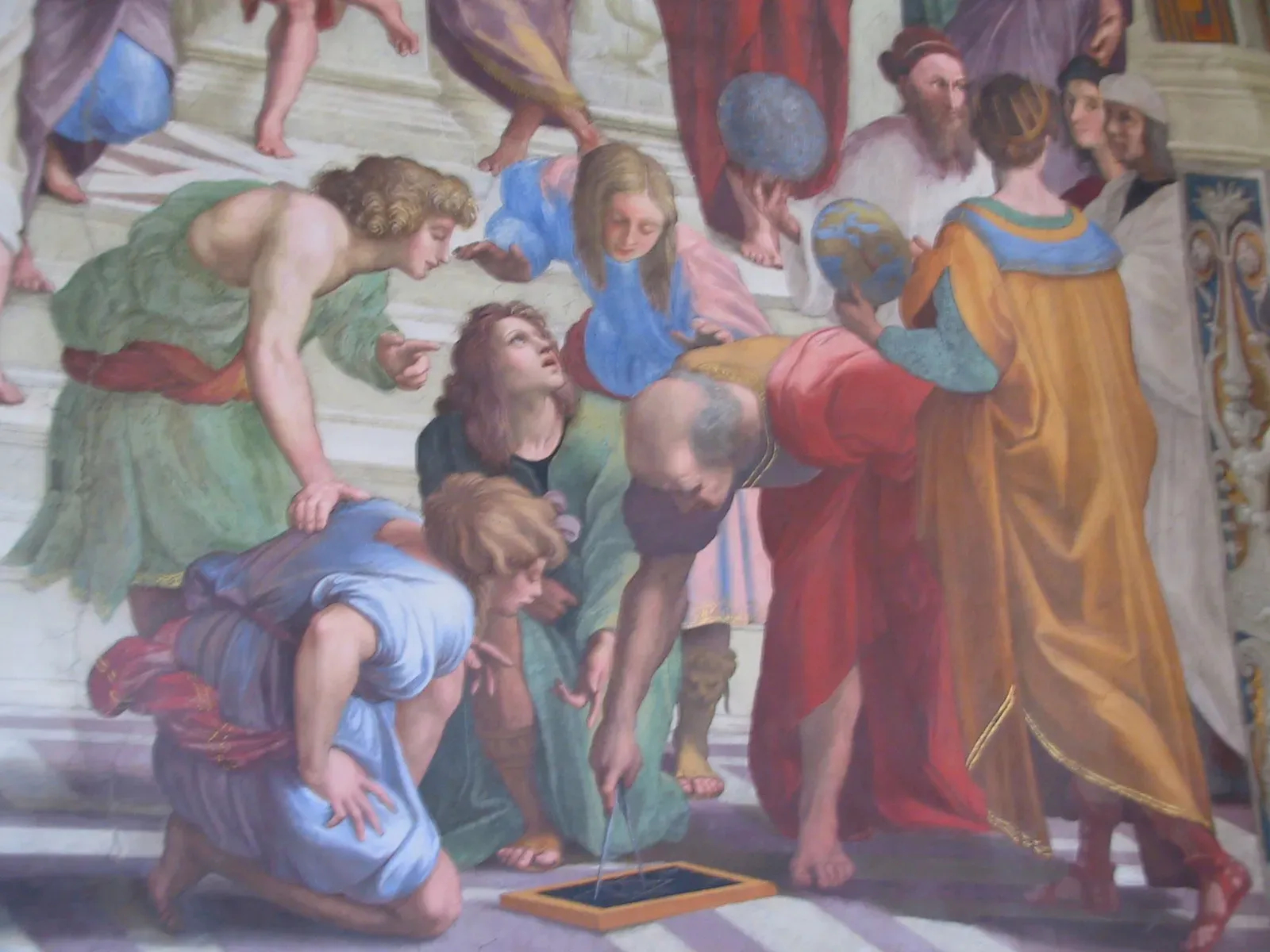
Euclid Teaching Geometry
Rapahel
In this vibrant lower-right scene from The School of Athens (1509–1511), Raphael presents Euclid demonstrating geometric principles with a compass. Painted in Rome during the High Renaissance, this detail celebrates empirical learning as foundational to human knowledge. The intense focus of his young onlookers reflects the Renaissance ideal of rediscovering ancient scientific wisdom through observation and reason.
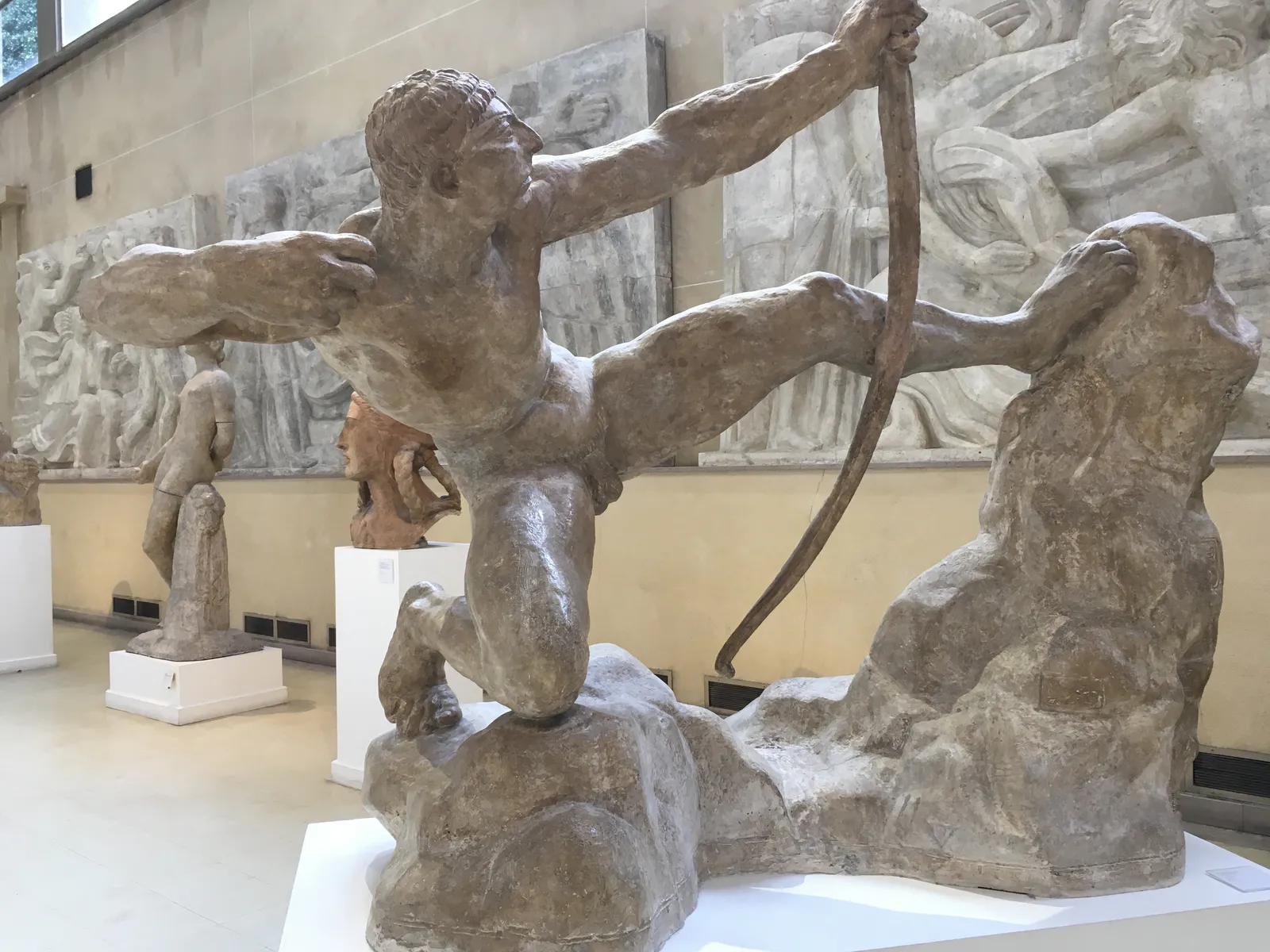
Hercules the Archer
Antoine Bourdelle
This plaster sculpture (1906–09) shows Hercules, the Greek hero, drawing his bow with taut energy. Bourdelle captures both physical strain and mythic power, fusing classical subject with modern dynamism. The work marks a turning point in early 20th-c. sculpture, bridging academic tradition with expressive innovation.
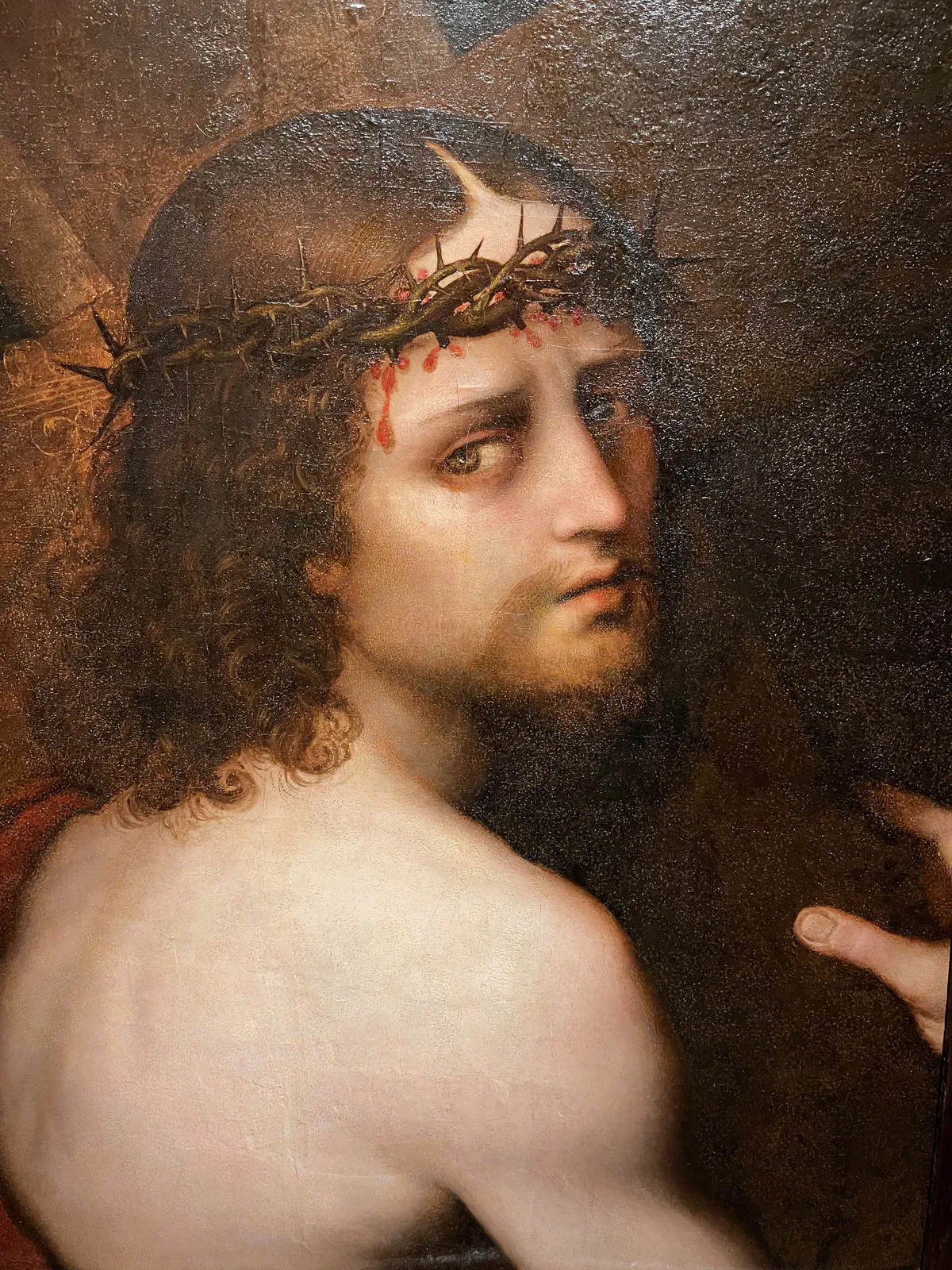
Christ Carrying His Cross
Giampietrino
This intense portrait (1520-30) captures the poignant moment of Christ's journey to crucifixion. The crown of thorns, with its vivid drops of blood, symbolizes suffering and sacrifice. Giampietrino, a follower of Leonardo da Vinci, employs chiaroscuro to enhance the emotional depth, highlighting Christ's resigned yet resolute expression. This work reflects Renaissance ideals of human emotion and divine purpose, illustrating the enduring narrative of redemption through suffering.
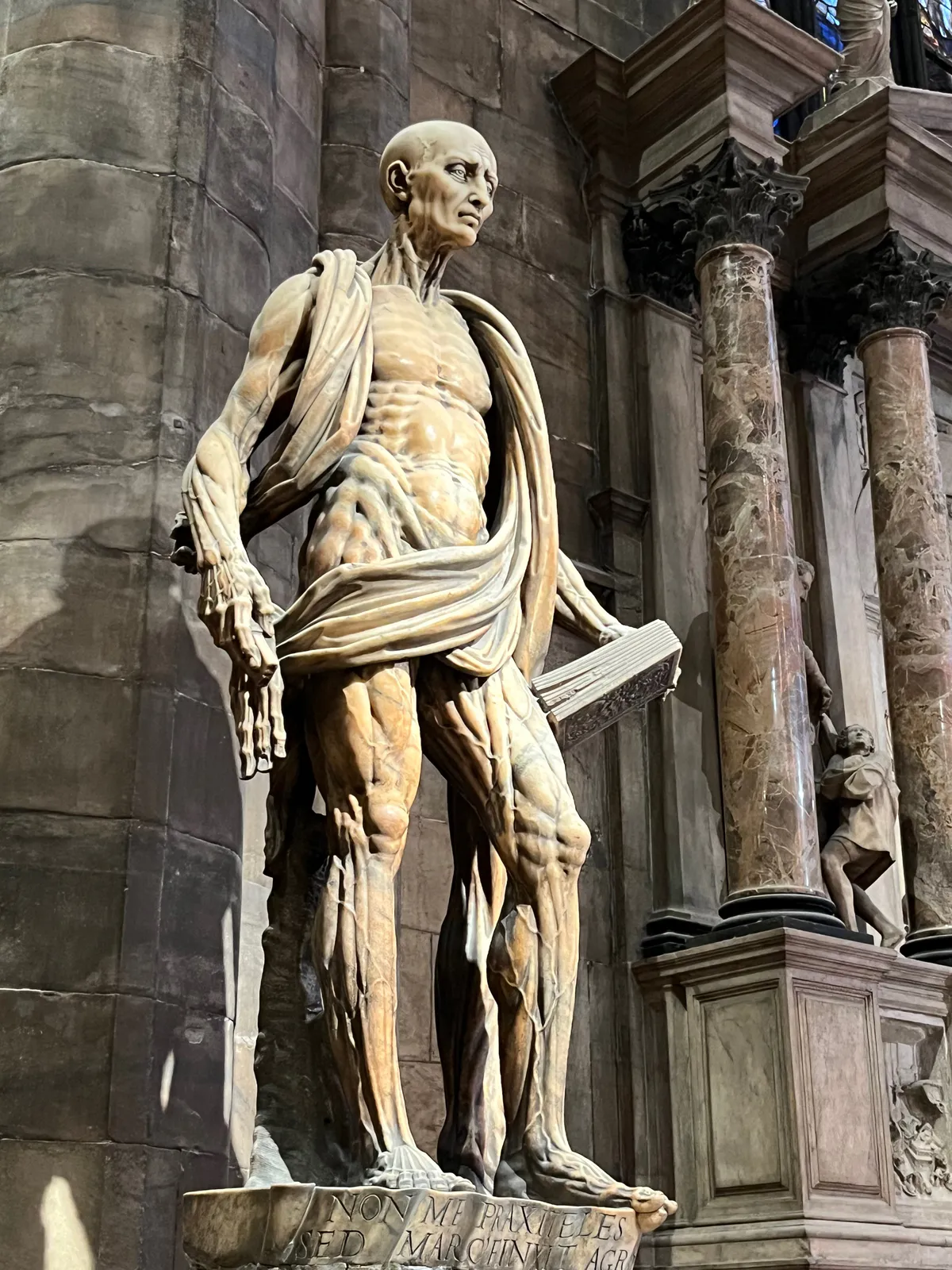
St Bartholomew Flayed
Marco d’Agrate
This marble statue (1562) shows St Bartholomew as a flayed figure, his own skin arranged like a draped garment around an exposed muscular body. Such extreme anatomical precision draws on Renaissance study of dissected cadavers. The saint’s upright stance and calm, frontal gaze demonstrate how martyrdom could be articulated as steadfast faith rather than physical defeat.
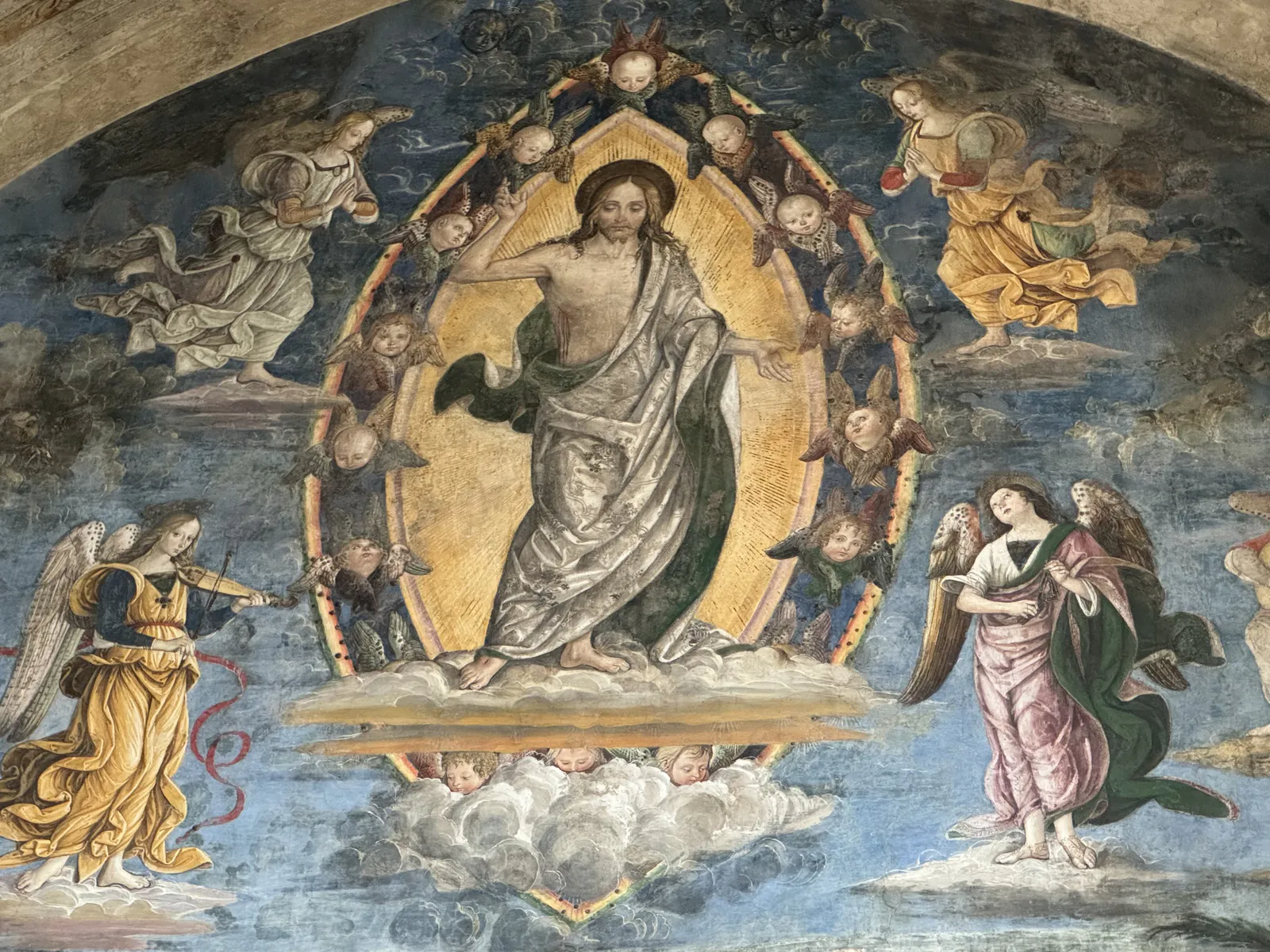
Christ in Majesty
Pinturicchio
Nikolo-Dvorishchensky Cathedral (1113) rises in compact tiers with clustered domes and narrow slit windows. Its pale plaster, often pink in daylight, stands in Yaroslav’s Court, the precinct founded by Yaroslav the Wise. Commissioned by Prince Mstislav to honor St Nicholas, it shaped the civic core of the Novgorod Republic and adapted Byzantine forms locally. The white building behind is part of the 17th-c. Merchant Court complex.
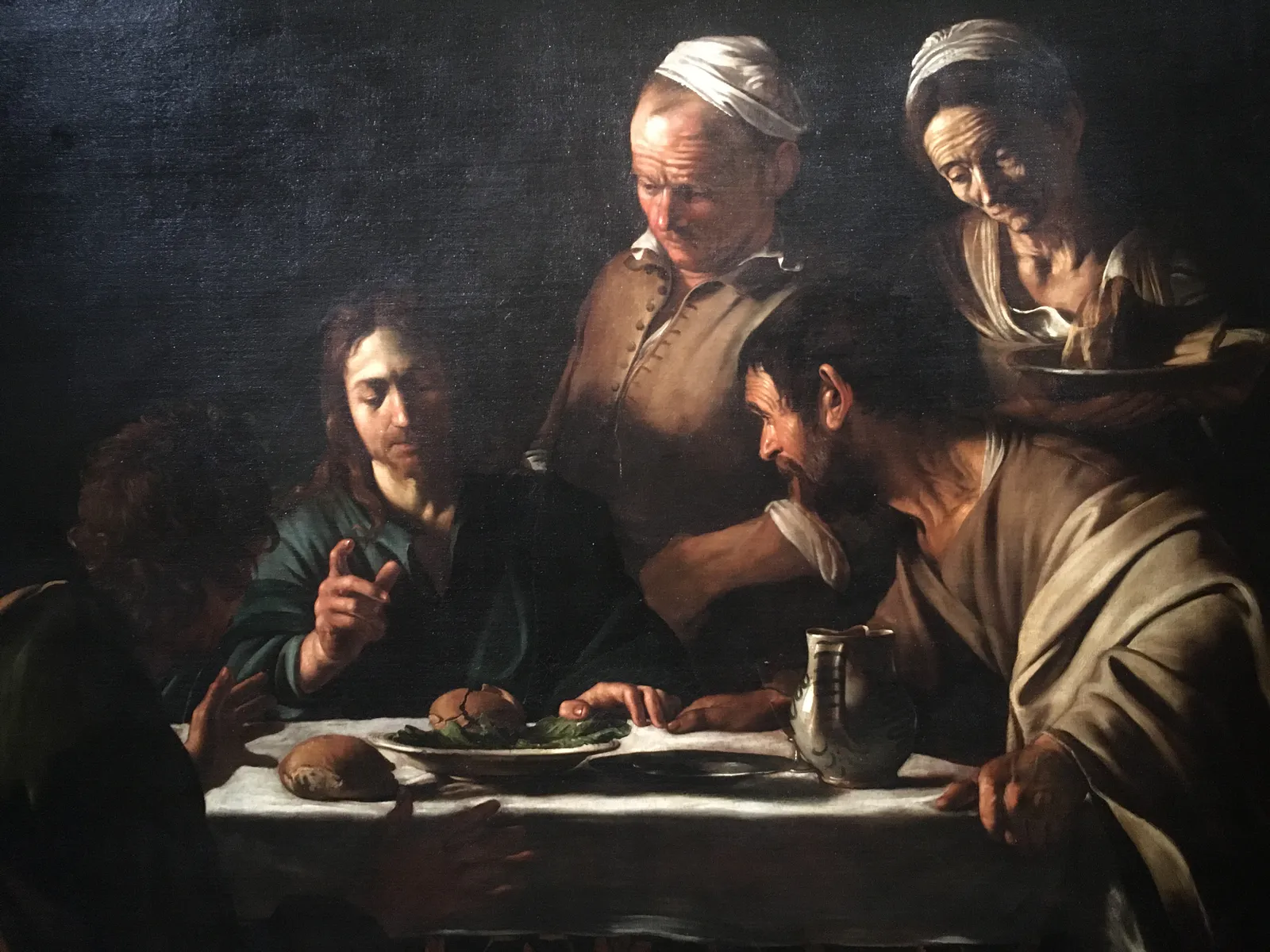
The Supper at Emmaus
Caravaggio
This painting (c.1606) focuses on Christ’s quiet gesture and the attentive figures around him. Subtle expressions replace dramatic shock, emphasizing intimacy over display. Caravaggio draws revelation into the realm of the ordinary, showing faith as recognition that dawns quietly amid human fragility.
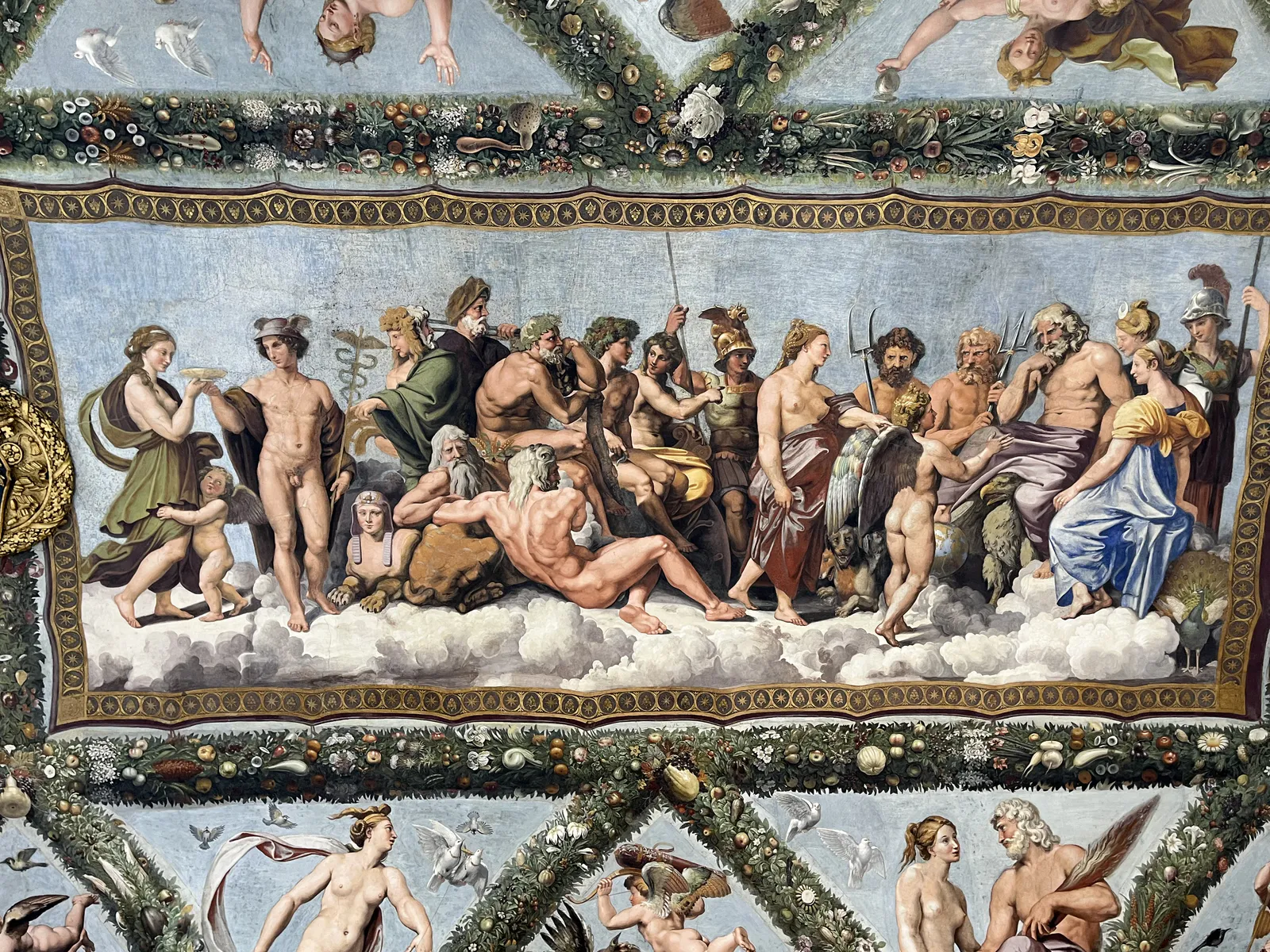
Council of the Gods
Raphael
In this scene (1518), Raphael depicts the gods deciding Psyche’s fate. Right to left: Minerva (helmet), Diana (with crescent moon), Jupiter (eagle below), Juno (blue robe), Neptune (trident), Pluto (bident, dog Cerberus), Venus (semi-nude, pointing), Mars (helmet). On the far left, Mercury (caduceus) leads Psyche to Olympus. Cupid kneels before Jupiter, pleading for Psyche’s immortality. The council embodies divine justice, granting the soul eternal union with love.
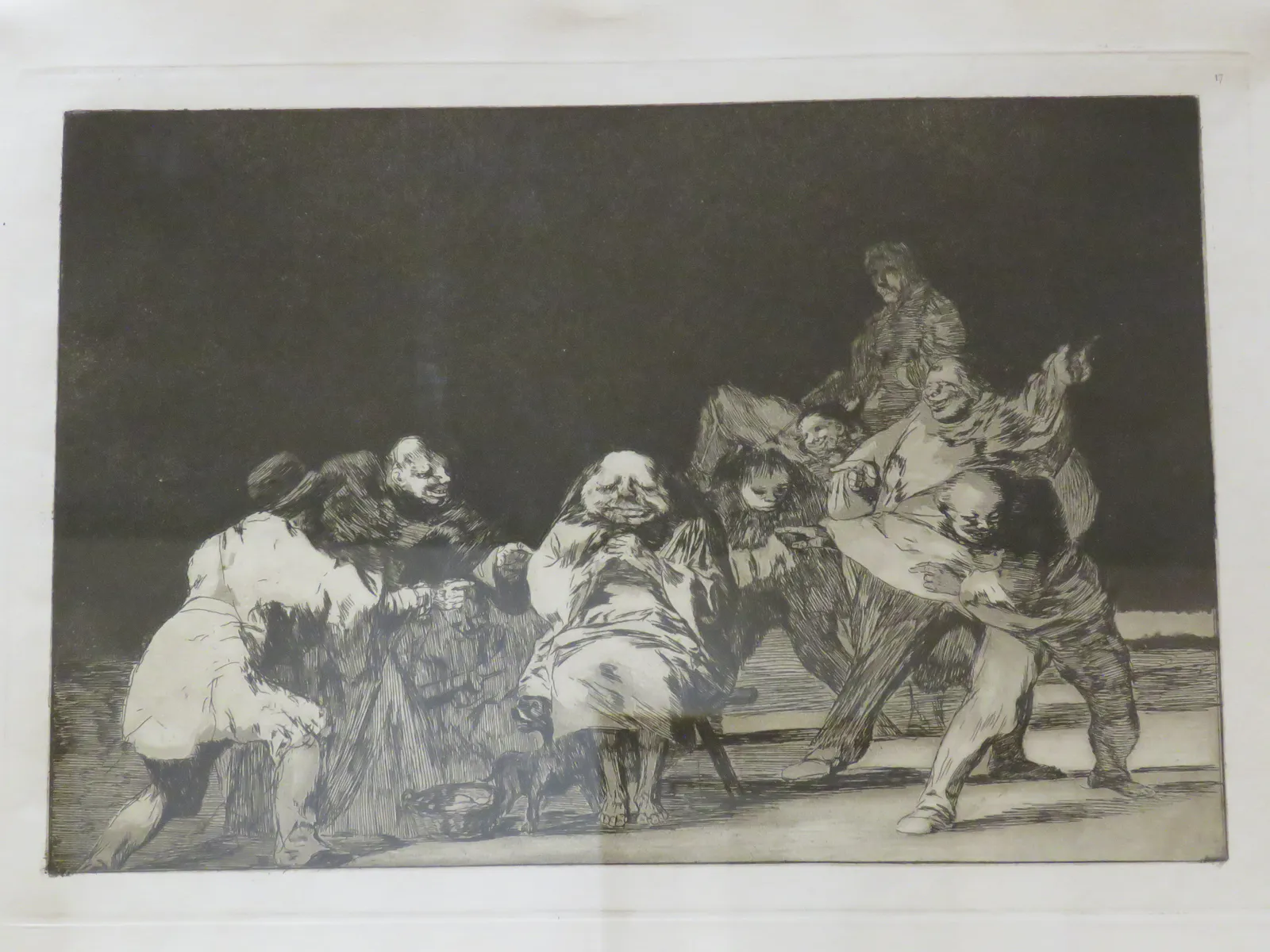
Loyalty from Los Disparates Series
Francisco Goya
This etching (1815–1823) by Francisco Goya, part of the Los Disparates series, explores themes of chaos and irrationality. Featuring grotesque figures, it suggests blind loyalty or foolishness, reflecting the turbulent era of Ferdinand VII’s reign in Spain. Goya’s use of aquatint and etching techniques enhances dramatic contrasts and textures, providing a dark commentary on the social and political upheavals of his time.
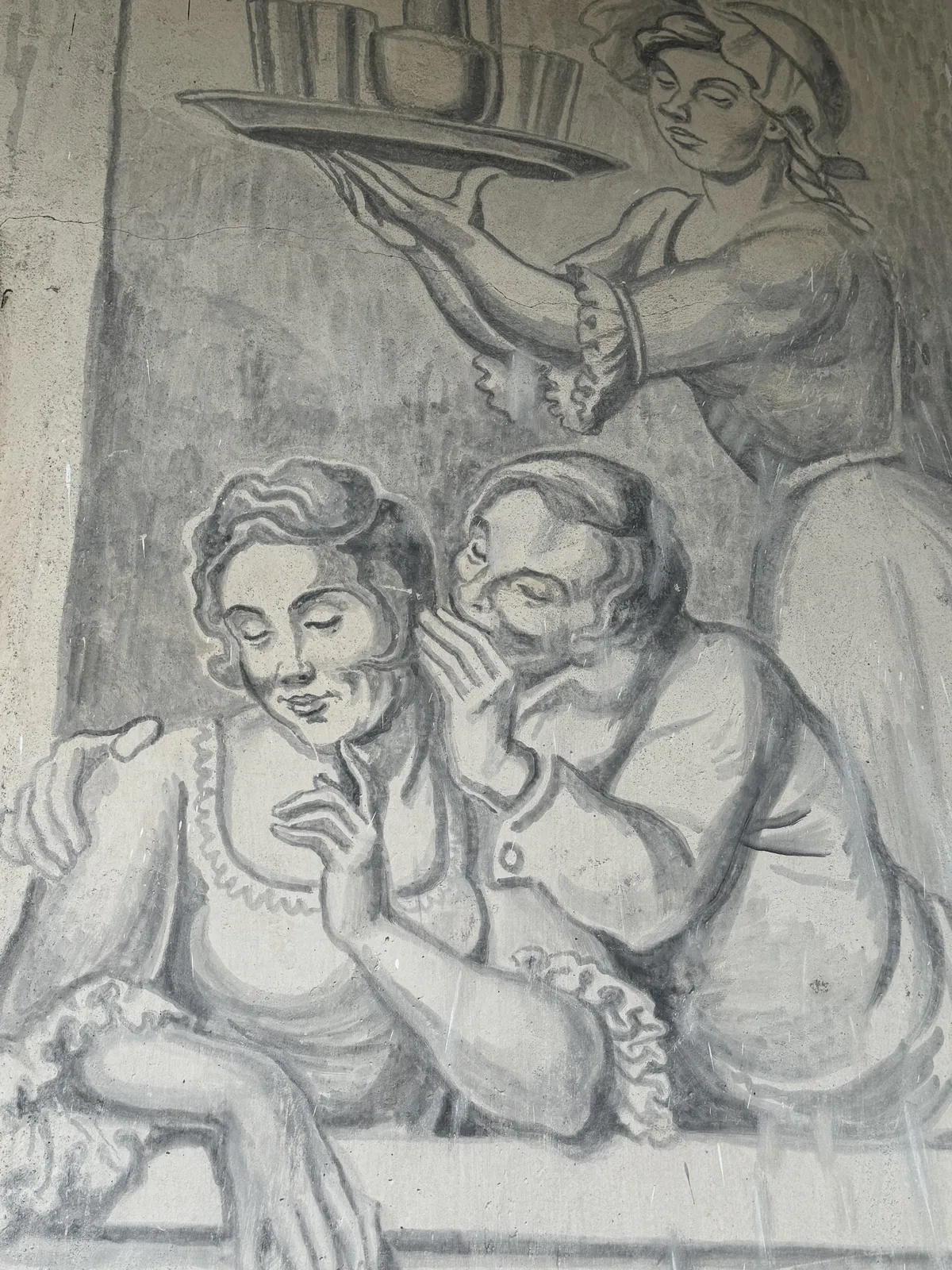
A Dangerous Whisper
Luis Alberto Acuña
This mural (1950s) by Luis Alberto Acuña depicts a man whispering seductively into a woman’s ear while she listens with a mix of curiosity and restraint. The intimate gesture contrasts with the servant above, who quietly performs her duties, reinforcing themes of gender dynamics, social roles, and the tension between desire and decorum in colonial society.
“When the path is beautiful, do not ask where it leads.” — Zen proverb
Welcome to my travel photography!
“When the path is beautiful, do not ask where it leads.” — Zen proverb
Welcome to my travel photography!
For as long as I can remember, my path has been one of discovery—seeking beauty, timelessness, and connection in every corner of the world. It has also been a journey of deep learning and understanding. I’ve been an avid traveler (or perhaps a travel addict?) for most of my life. My love for travel began long before I ever left home: as a child, I drew a fantasy map of my grandparents’ apartment and “traveled” through it with my cousin Sonya, imagining adventures in every corner. Nearly 90 countries and countless moments of awe later, I’m excited to share this journey with you.
Thanks to the tireless and ingenious programming of Diagilev, we’re now able to present about fifteen percent of the images I’ve accumulated over the years. More will be released in small batches depending on your interest. While the first release leans toward museum photography, later ones will include more nature, architecture, culture, and general travel experiences. If you’d like to receive email notifications about new releases, feel free to reach out—no commercial use, ever.
Throughout my travels, I’ve been drawn to two intertwined kinds of discovery. One is intellectual: learning why the world is the way it is. History became my guide, shaping my perspective and filling my camera roll with museums and old buildings. To me, history is not the past—it is the key to understanding the present and how the world became what it is. The other is emotional: seeking moments of elevation—spirituality, beauty, harmony—often found in nature, monasteries, and ancient sacred spaces. Together, these impulses shape my photography. It invites you to learn, admire, and soar—to rise above the mundane and see the world through a lens of curiosity and wonder.
Much of my later travel became possible thanks to my job with Delta Air Lines, but the wanderlust began years earlier. By the time I joined the industry, I had already visited over 35 countries and lived in several—largely thanks to a backpacking journey around the world with Luis León, whose face appears in many early photos. I grew up in Ufa in the USSR, and since leaving it I have lived, studied, and worked in Latvia, the United States, France, South Korea, Canada, Spain, Italy, Brazil, Japan, and Colombia.
A life of near-constant movement may seem a little crazy, but it has deepened my understanding of the world and produced the photography you are about to see. Over the years, my style has evolved—more intentional, more refined—yet its core remains the same: a search for understanding, timeless beauty, and a connection to those who walked this earth long before us.
I hope these photos stir something in your soul, just as they did in mine. I’d love to hear from you—whether reactions, suggestions, corrections, or a request to be added to the email list for new releases (no commercial use, I promise). You can learn more about my travels here, and my academic life here.
Enjoy our shared journey!