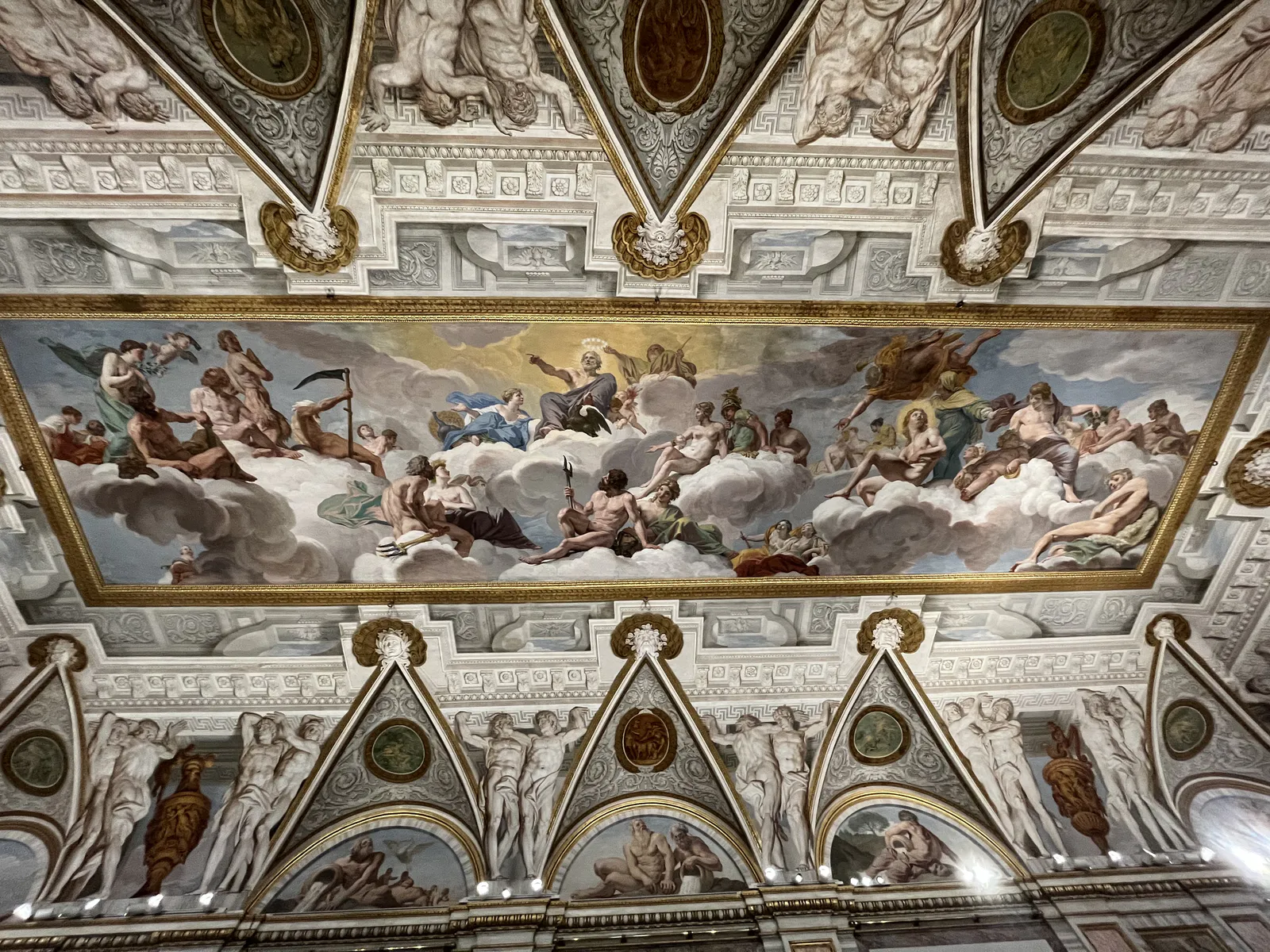
The Council of the Gods
Giovanni Lanfranco
Lanfranco’s grand ceiling fresco (1624–25) fills the Sala della Loggia with divine spectacle. Jupiter reigns at the center, surrounded by Roman deities including Venus, Mars, Pluto, and Juno. Designed to dissolve architectural limits, the illusionistic sky transforms the ceiling into a heavenly theater of Baroque power and myth.
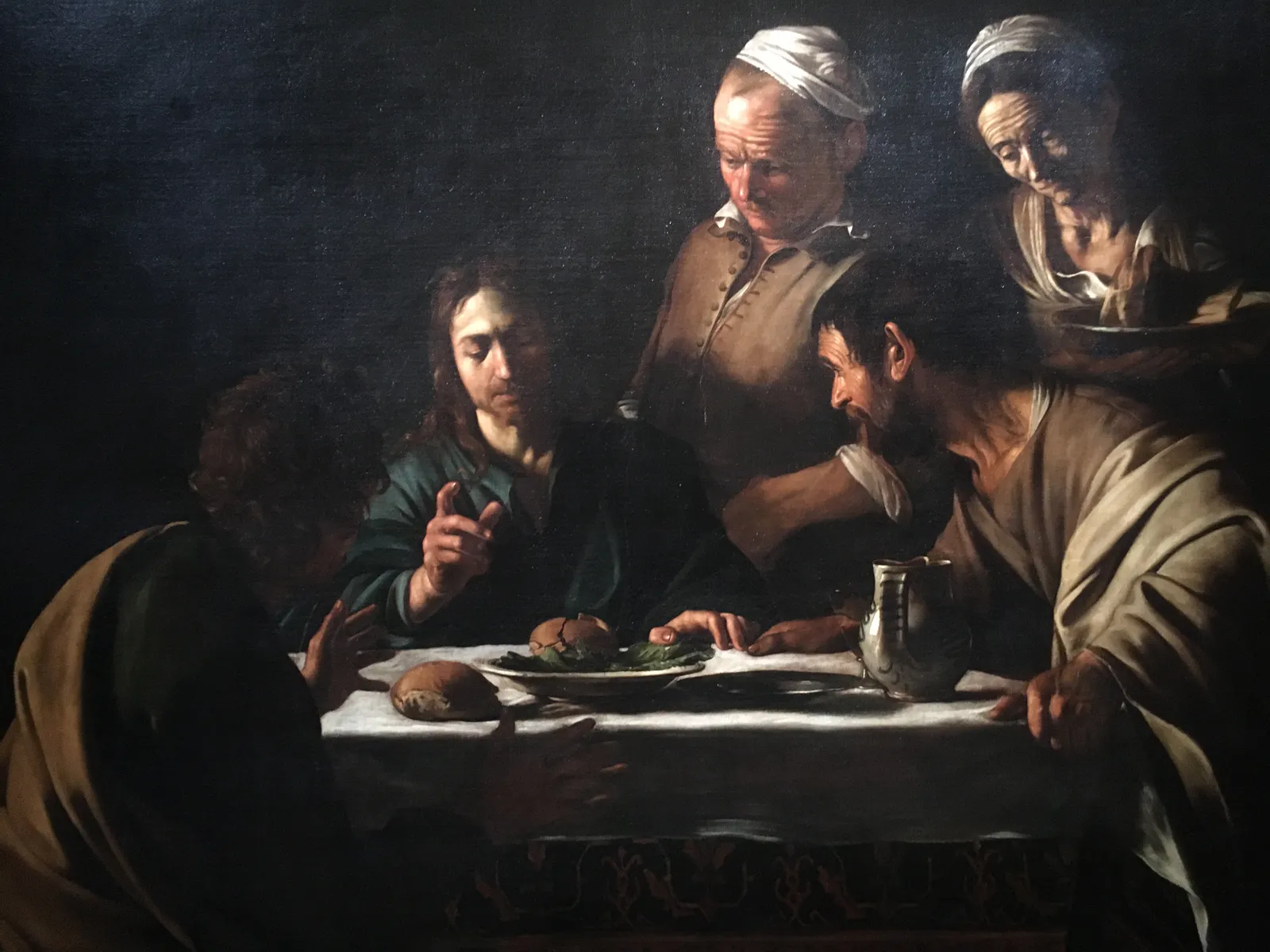
The Supper at Emmaus
Caravaggio
This painting (c.1606) was created after Caravaggio fled Rome for Naples. It depicts Christ revealing himself in Emmaus at the blessing of bread. Unlike Caravaggio’s earlier 1601 version, gestures are subdued and the table almost bare. In this darker vision, the recognition of the divine comes not in spectacle but in shadow and silence.
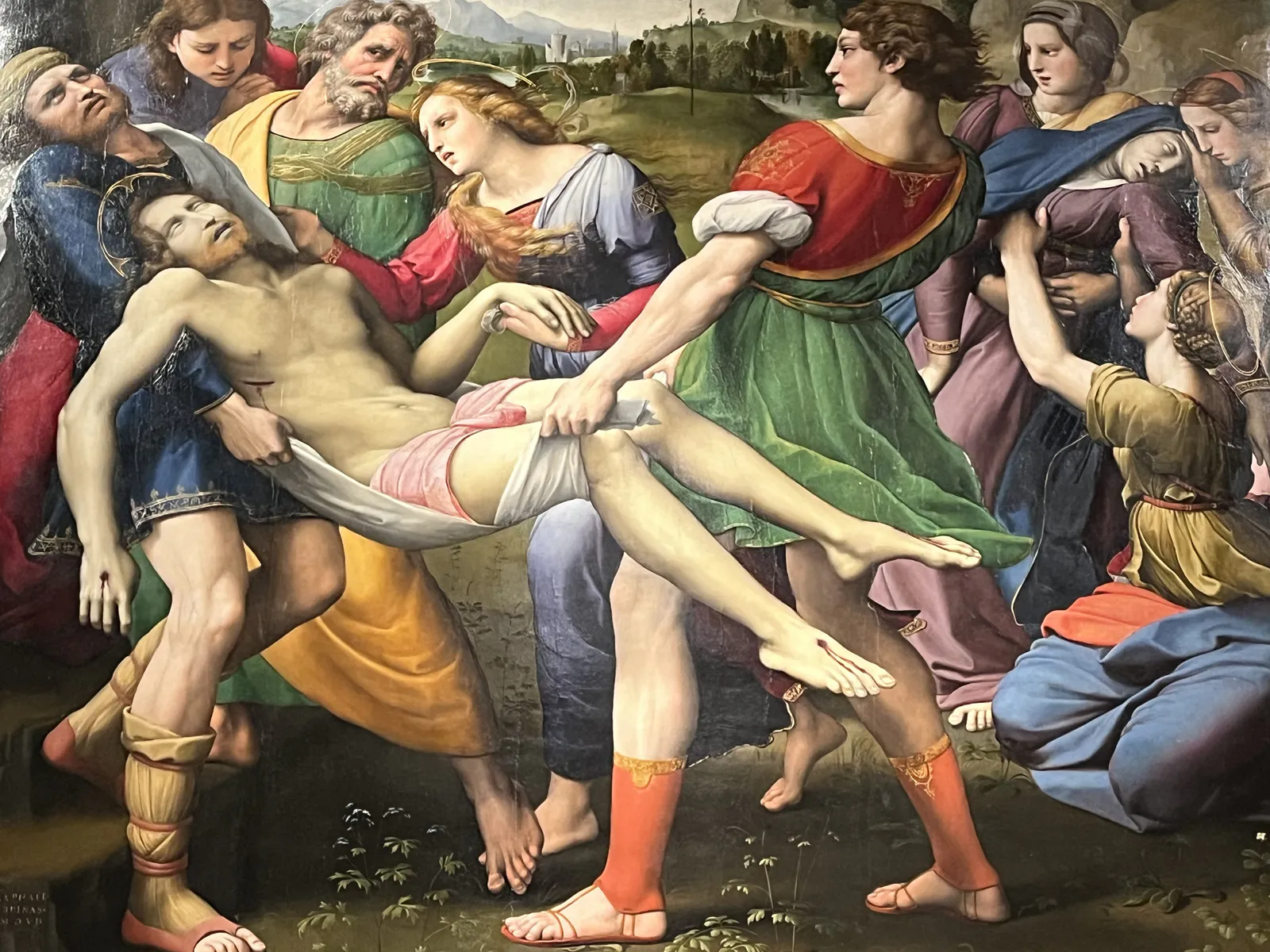
The Entombment
Raphael
Commissioned in 1507 by Atalanta Baglioni to honor her slain son, this painting unites the Deposition, Lamentation, and Entombment in one scene. Raphael’s dynamic figures, especially Christ’s, show Michelangelo’s influence. Stolen in 1608 by agents of Cardinal Borghese, it now hangs in the Galleria Borghese. A 2020 restoration revealed vivid colors, delicate sfumato (soft tonal blending), and adjustments in Raphael’s evolving design.
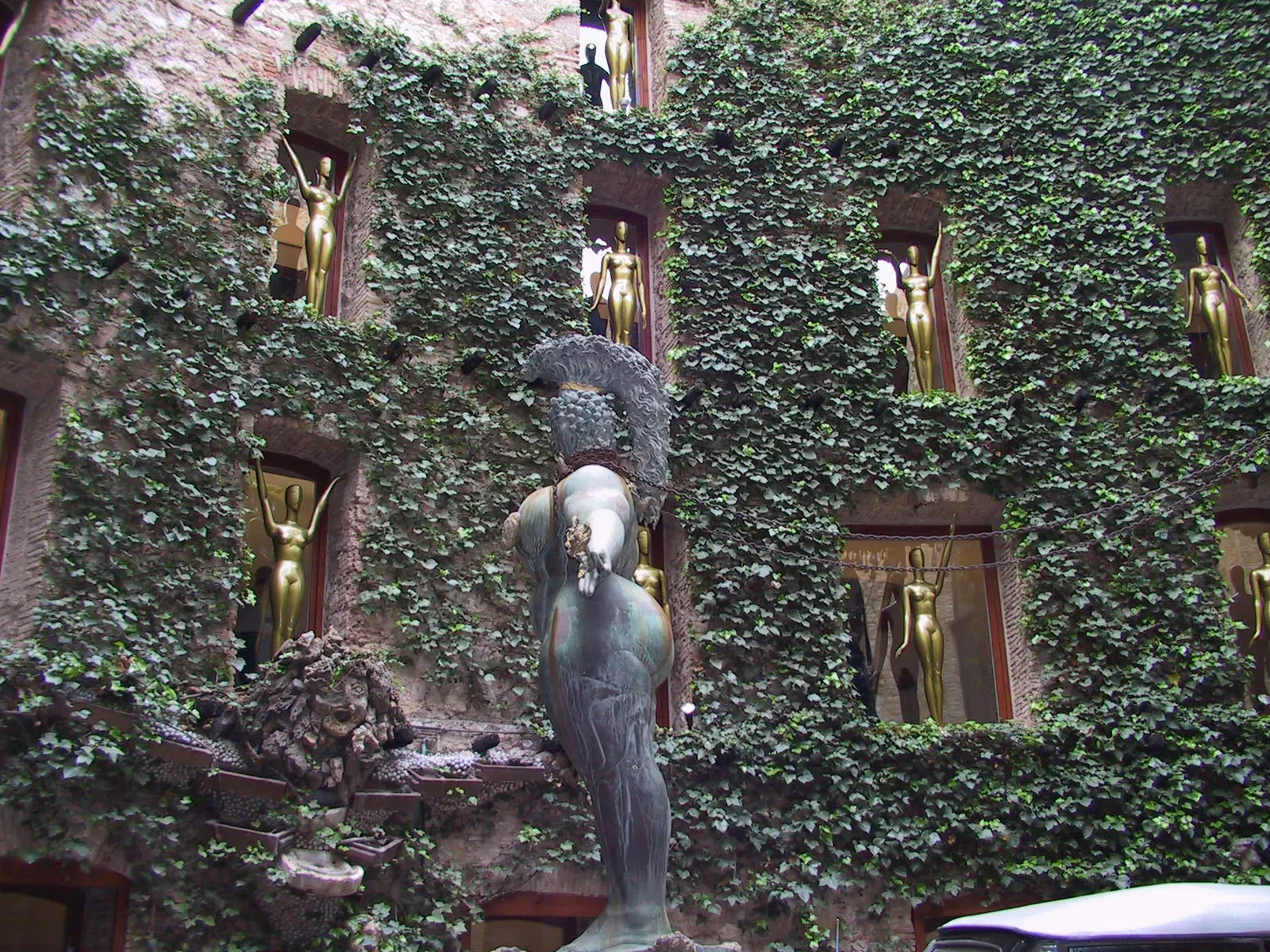
The Courtyard of the Wind Palace
Salvador Dalí
Dalí’s surreal installation (1970s) features golden female mannequins resembling votive icons in windows surrounding a central bronze figure of Venus crowned with a ship. This work merges classical motifs with theatrical elements, creating a fantastical vision of fertility, mythology, and voyeurism, showcasing Dalí’s unique blend of art and architecture.
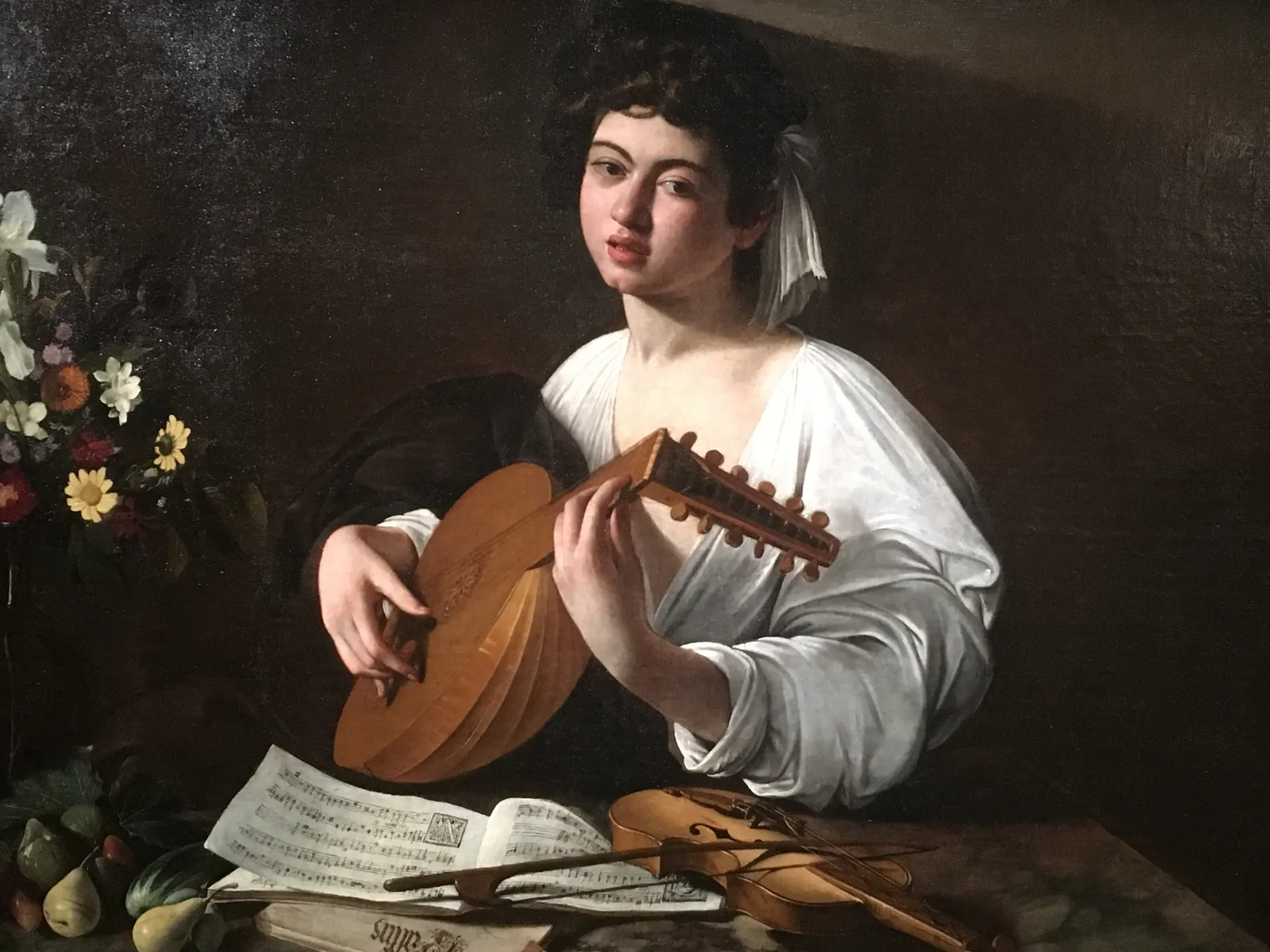
The Lute Player
Caravaggio
This painting (c. 1596) portrays a young musician absorbed in performance. Before him lie a violin, scores, and fruit, symbols of sensuality and transience. Caravaggio uses natural light to animate the delicate textures of skin, cloth, and petals. The figure embodies the Renaissance ideal of harmony between music and emotion, while also hinting at life’s fragility and fleeting pleasures.
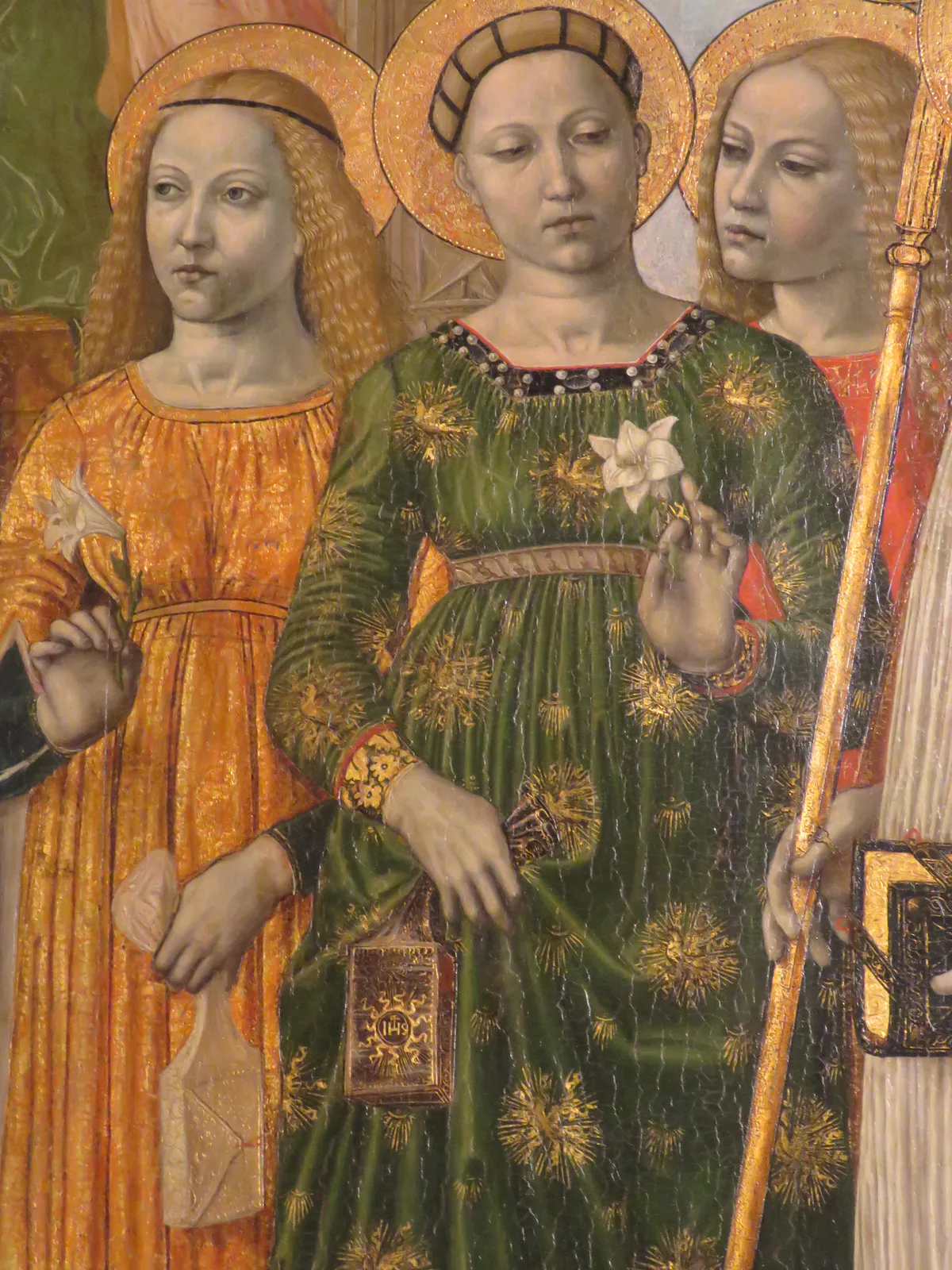
Santa Conversazione (detail)
Ambrogio Bergognone
This panel 1490-95) features a trio of female saints bearing lilies, symbolizing purity. Adorned with gold and intricate embroidery, their garments suggest sanctity and nobility. The solemn expressions and clasped books evoke wisdom and devotion, emphasizing the fusion of holiness and human dignity in late Gothic religious art.
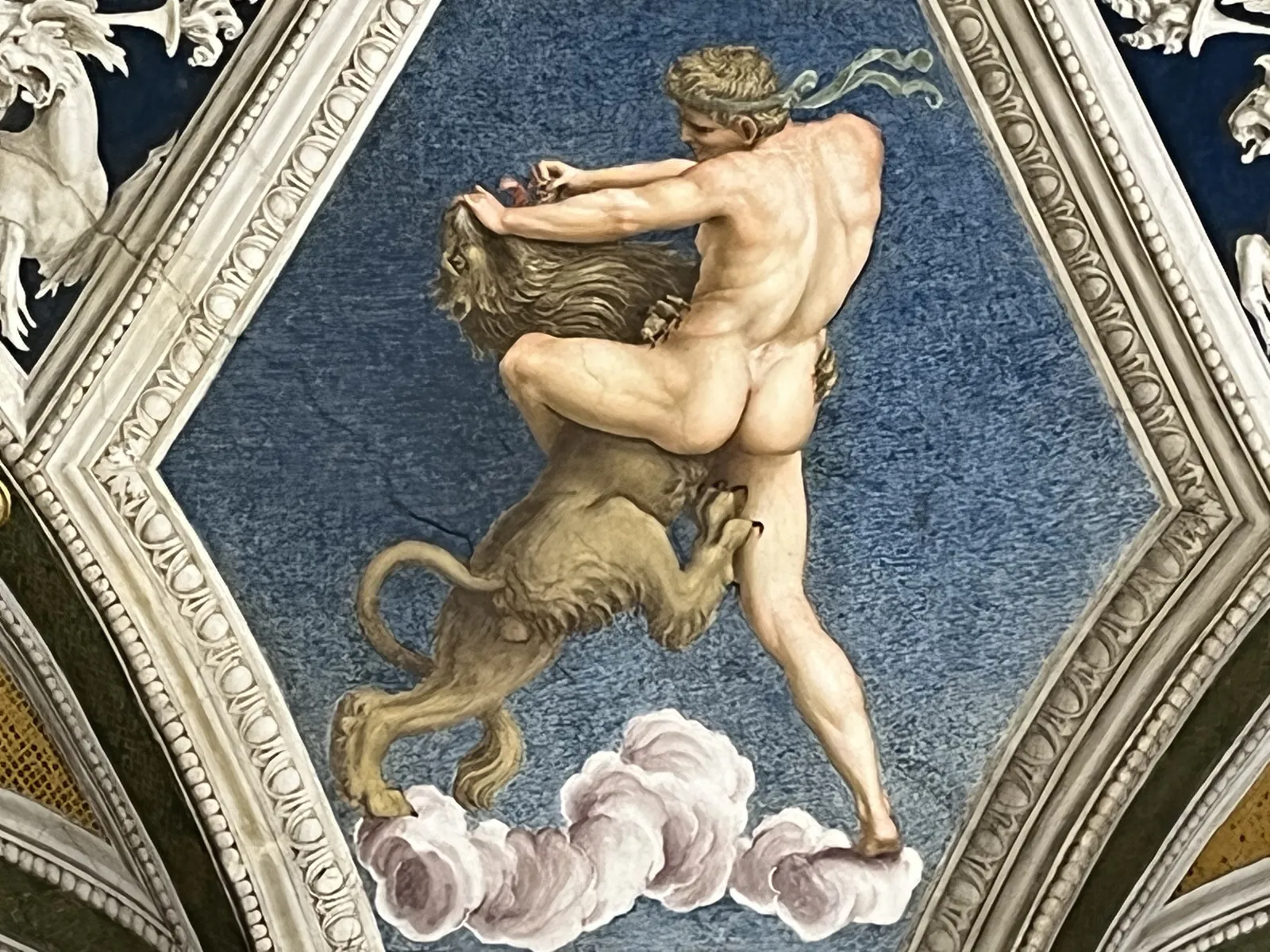
Hercules Defeating the Nemean Lion
Baldassare Peruzzi
This fresco (c. 1511) in the Loggia of Galatea shows Hercules wrestling the invulnerable Nemean Lion, one of his Twelve Labors. The hero’s twisting nude body and the lion’s straining muscles emphasize physical struggle and controlled force. As part of a zodiac cycle, the scene represents the sign of Leo and links mythological heroism to Renaissance interests in astrology and humanist virtue.
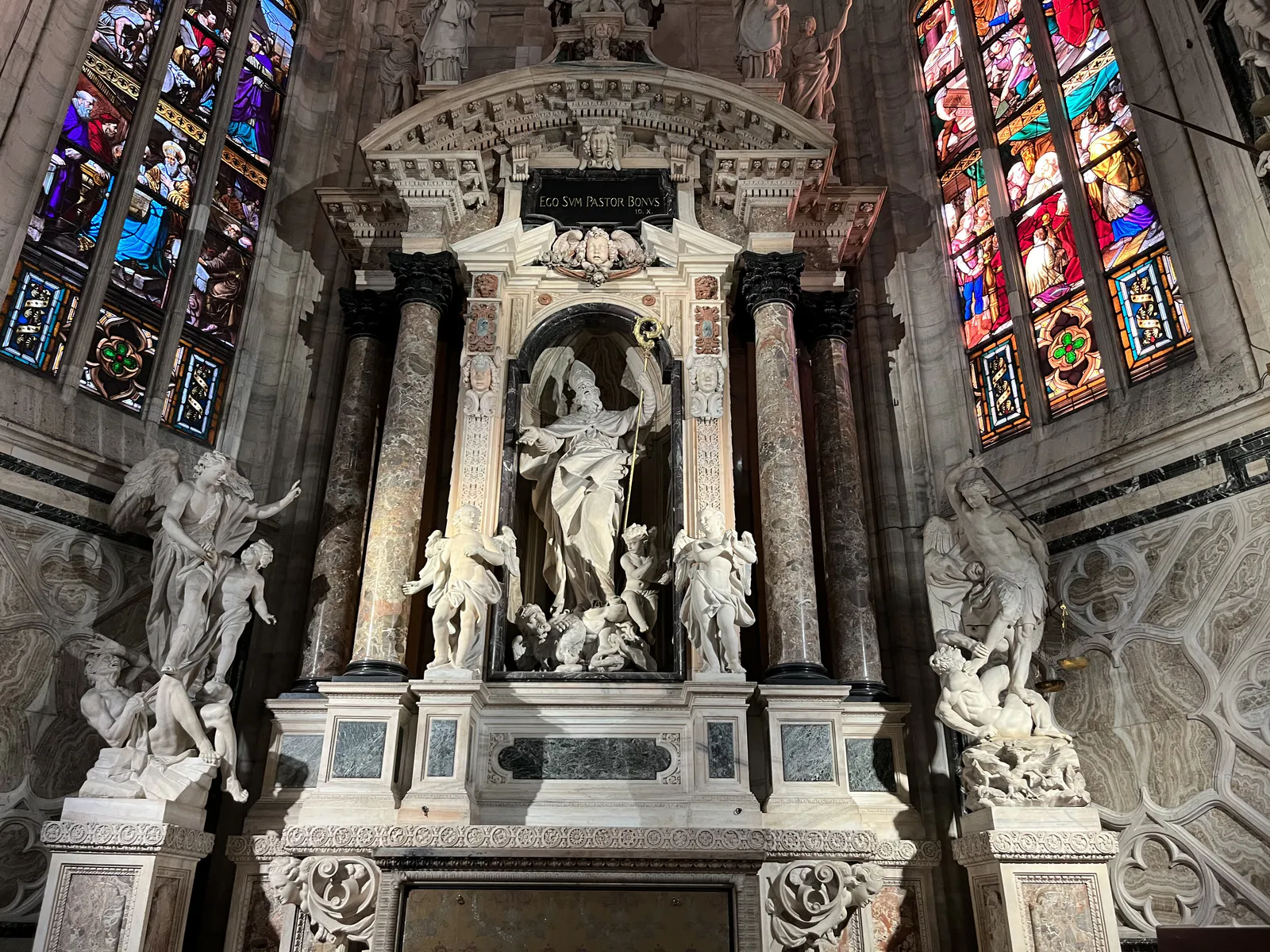
Altar of Saint John Bono
Elia Vincenzo Buzzi
This monumental altar (c. 1763) in the Milan Cathedral honors Saint John Bono, a 13th-c. bishop known for his piety and service. The central figure is framed by angels and crowned by the inscription Ego sum pastor bonus (I am the Good Shepherd), evoking Christ-like compassion and episcopal authority.
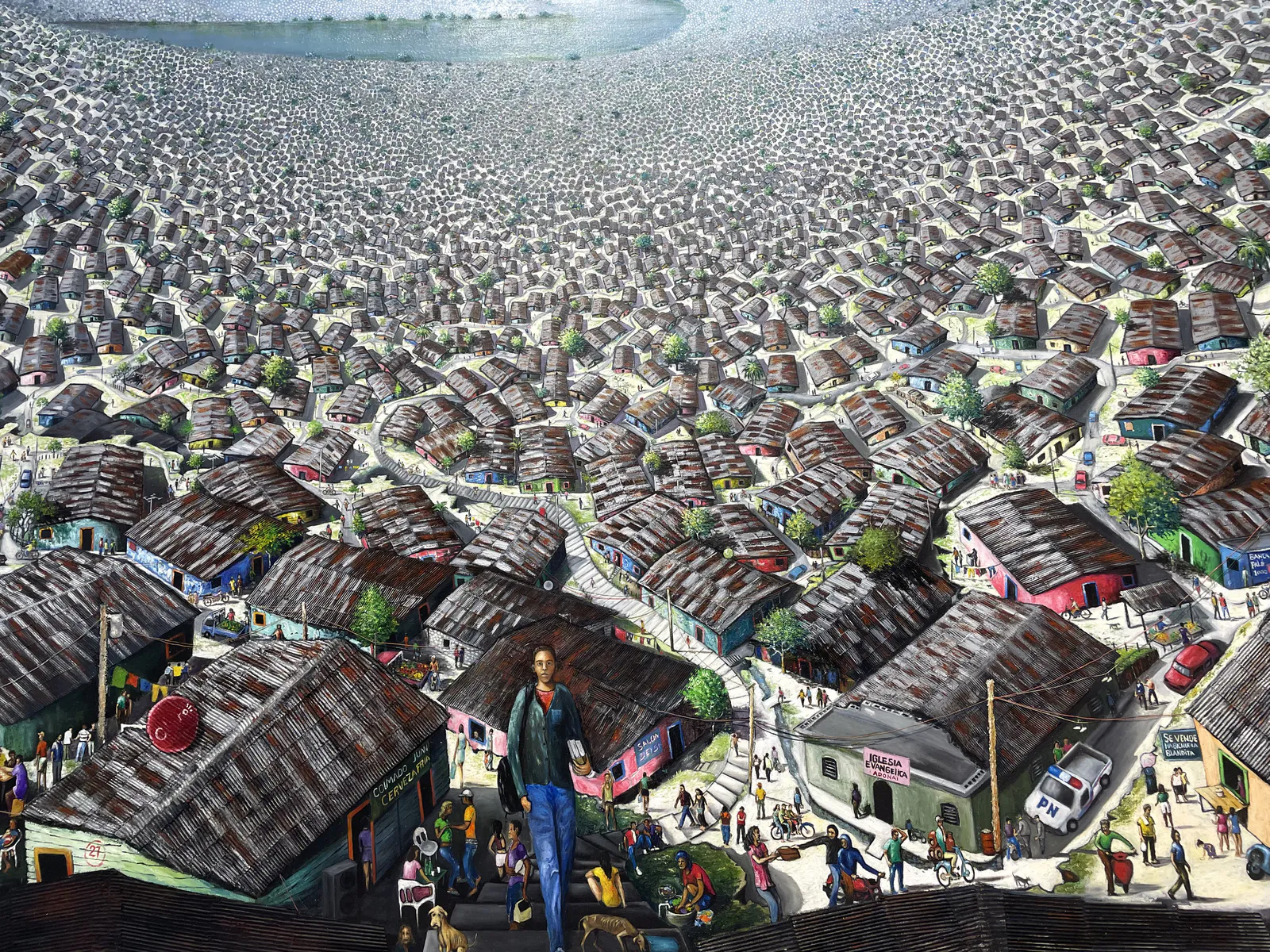
It’s Not Where You Come From, but Where You’re Going
Ramón Calcaño
This oil painting (2018), entitled No importa de dónde vienes, sino hacia dónde vas, Calcaño presents a vast view of informal housing. Central to the scene is a figure holding books, emerging from the margins. The work highlights resilience and the transformative power of education, emphasizing the pursuit of a better future beyond one's origins.
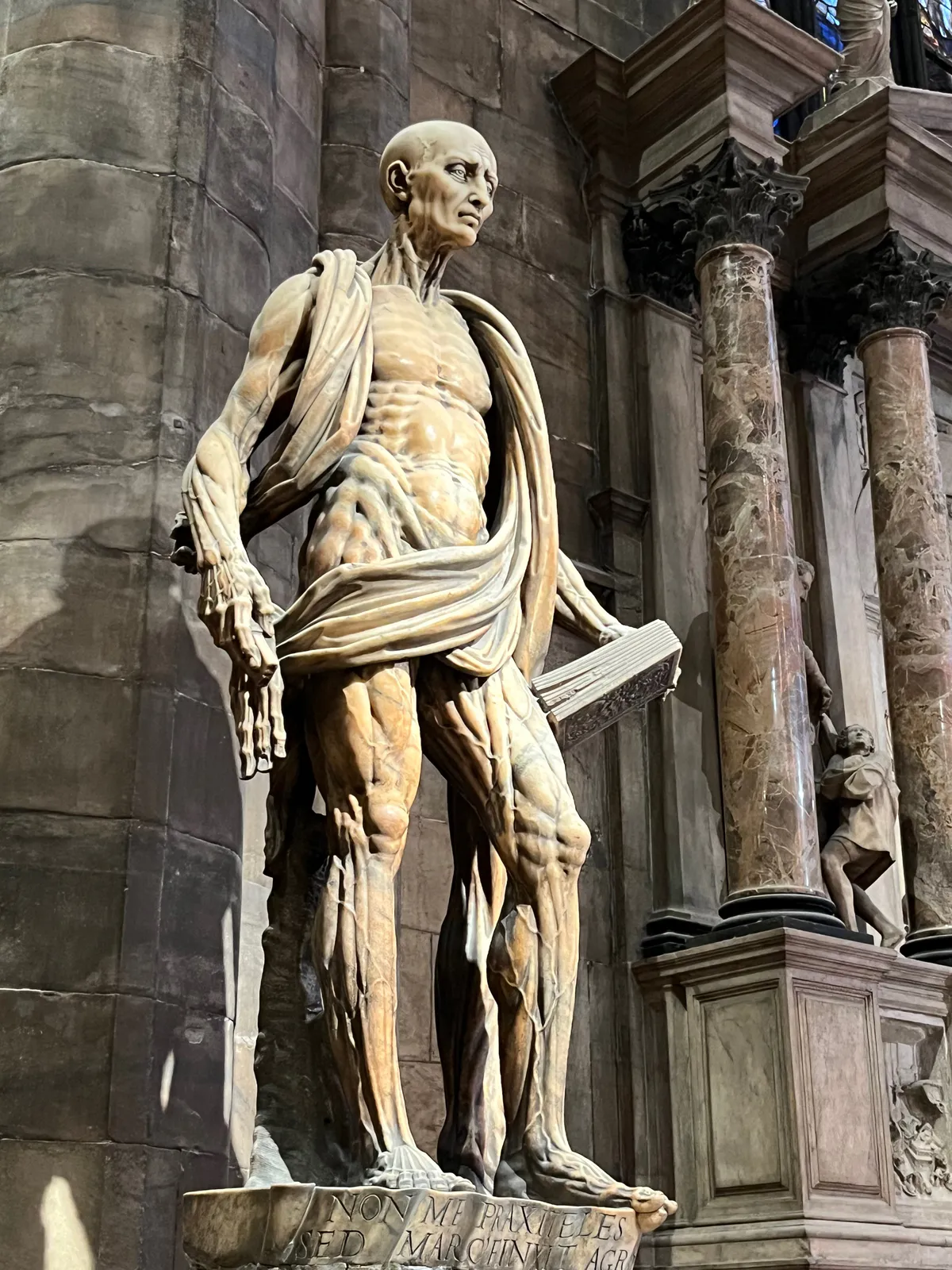
St Bartholomew Flayed
Marco d’Agrate
This marble statue (1562) shows St Bartholomew as a flayed figure, his own skin arranged like a draped garment around an exposed muscular body. Such extreme anatomical precision draws on Renaissance study of dissected cadavers. The saint’s upright stance and calm, frontal gaze demonstrate how martyrdom could be articulated as steadfast faith rather than physical defeat.
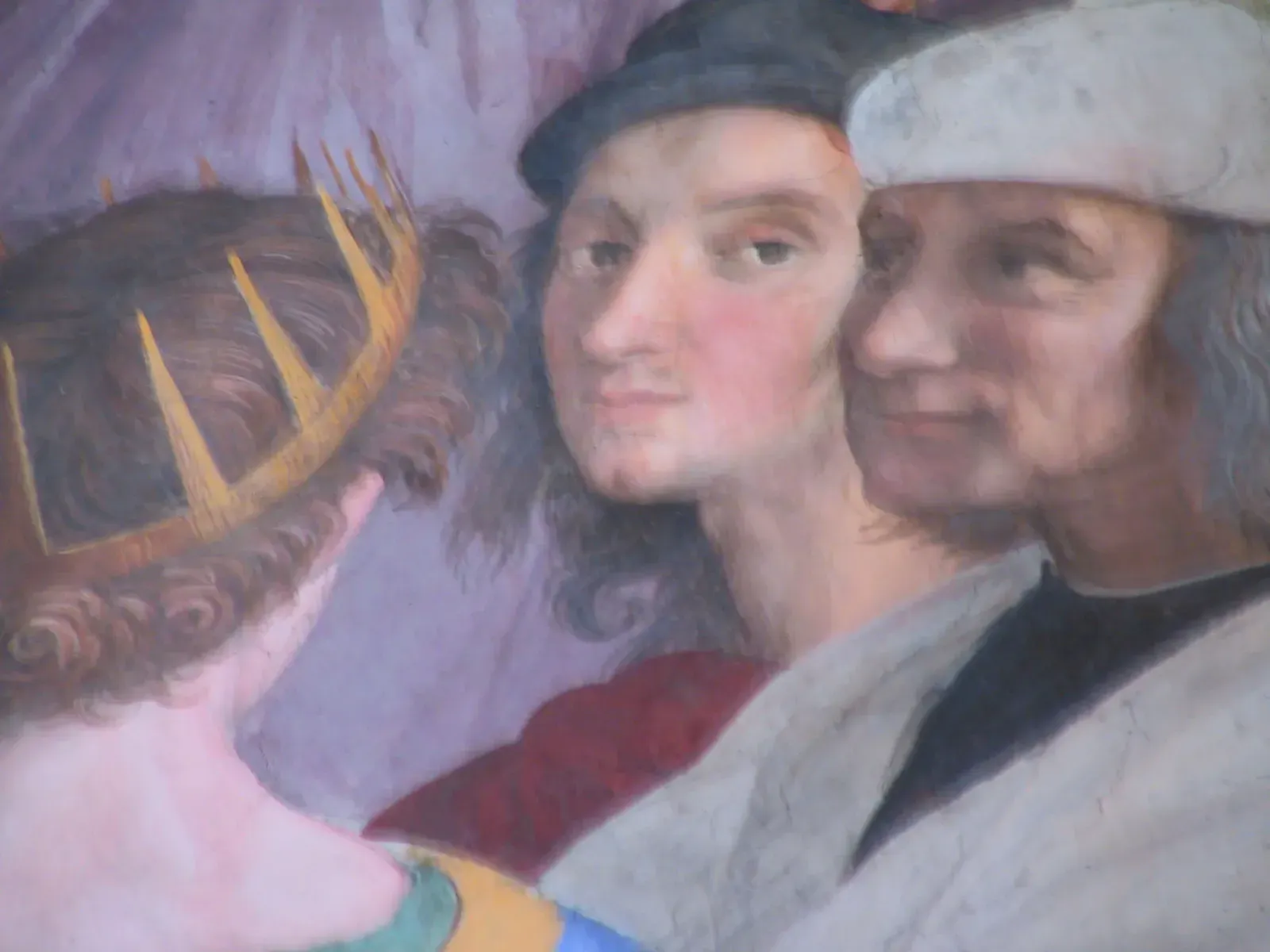
Raphael and Perugino (detail)
Raphael
This section of The School of Athens (1509-11) features a rare self-portrait of Raphael (center) alongside his teacher Perugino (right). Originating from the Italian High Renaissance, the work subtly inserts the artist into the legacy of classical knowledge, aligning painters with philosophers as bearers of intellectual ideals.
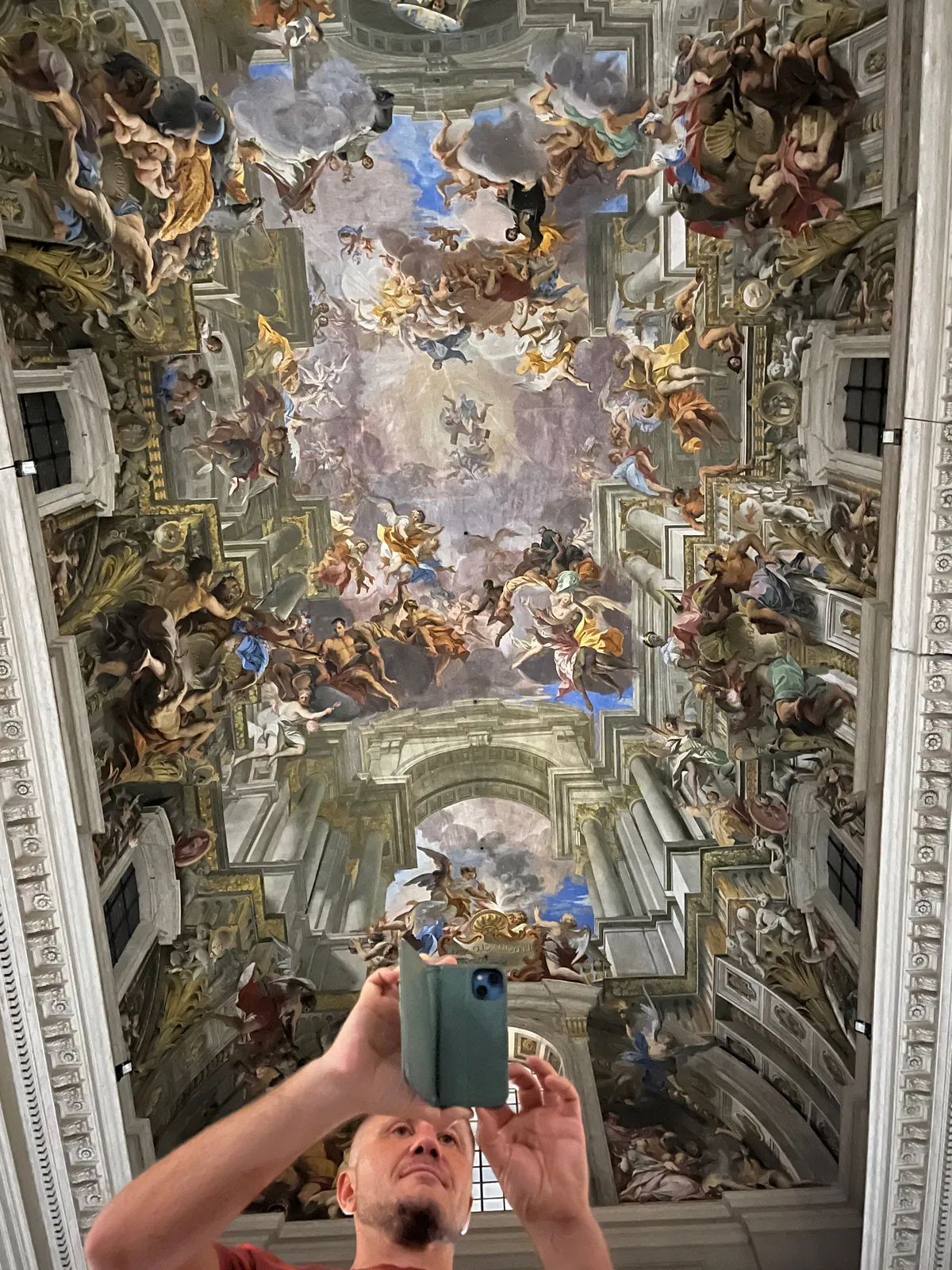
The Apotheosis of St. Ignatius
Andrea Pozzo
Max captures The Apotheosis of St. Ignatius (1685–1694) using a viewing mirror beneath the ceiling, enhancing Pozzo’s Baroque illusionism. This optical device unveils the masterful perspective that transforms the flat vault into a celestial vision, merging art and exemplifying the Baroque fascination with perspective: a dynamic interplay between earthly and divine realms.
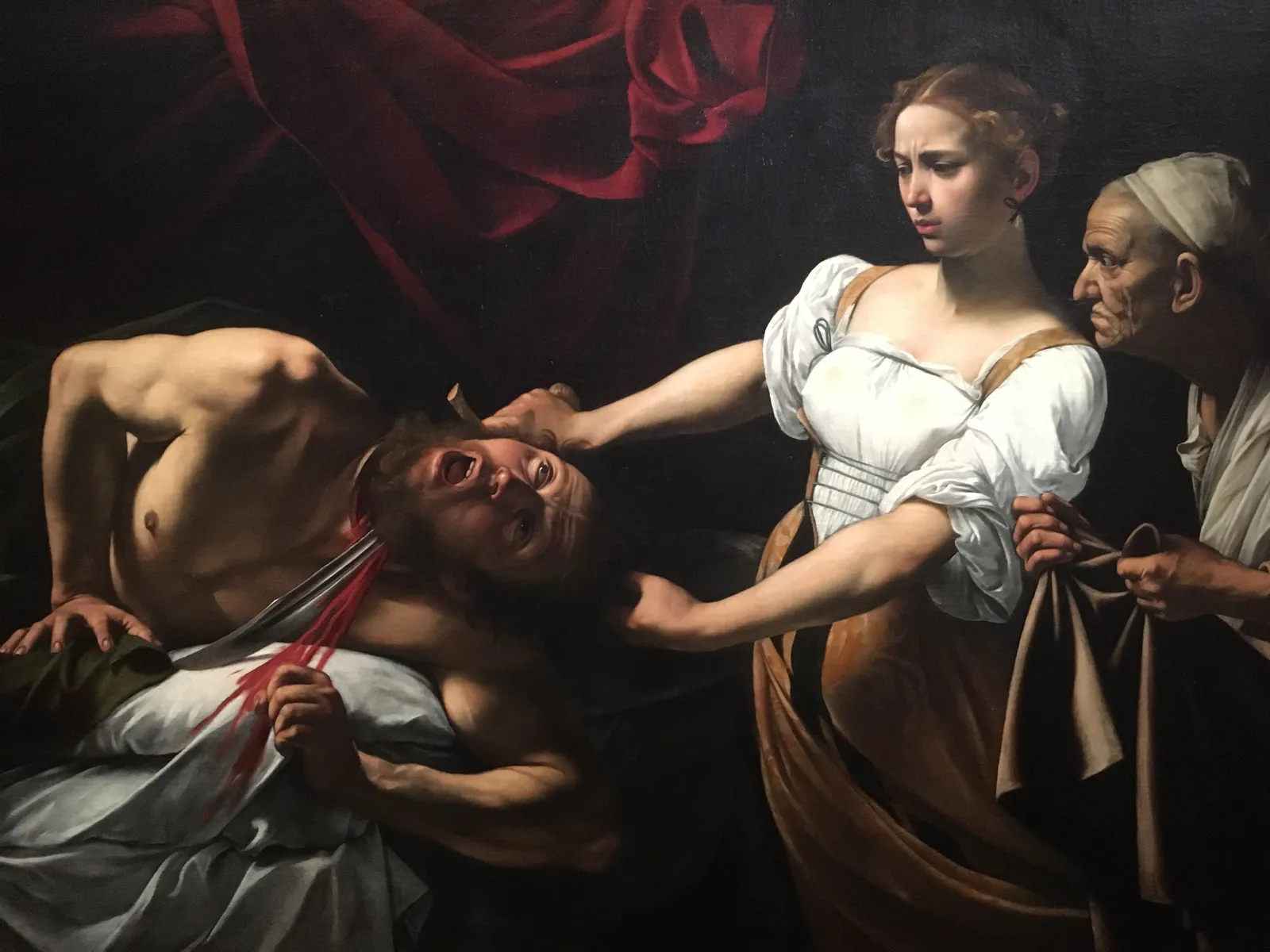
Judith Beheading Holofernes
Caravaggio
This canvas (c. 1599) painted in Rome embodies Caravaggio’s radical realism and theatrical chiaroscuro. Judith, a young widow, slays the Assyrian general Holofernes to save her people. Her calm determination contrasts with his violent death and the maid’s aged pragmatism. By staging sacred violence with unflinching naturalism, Caravaggio redefined biblical painting as a drama of human courage and divine justice.
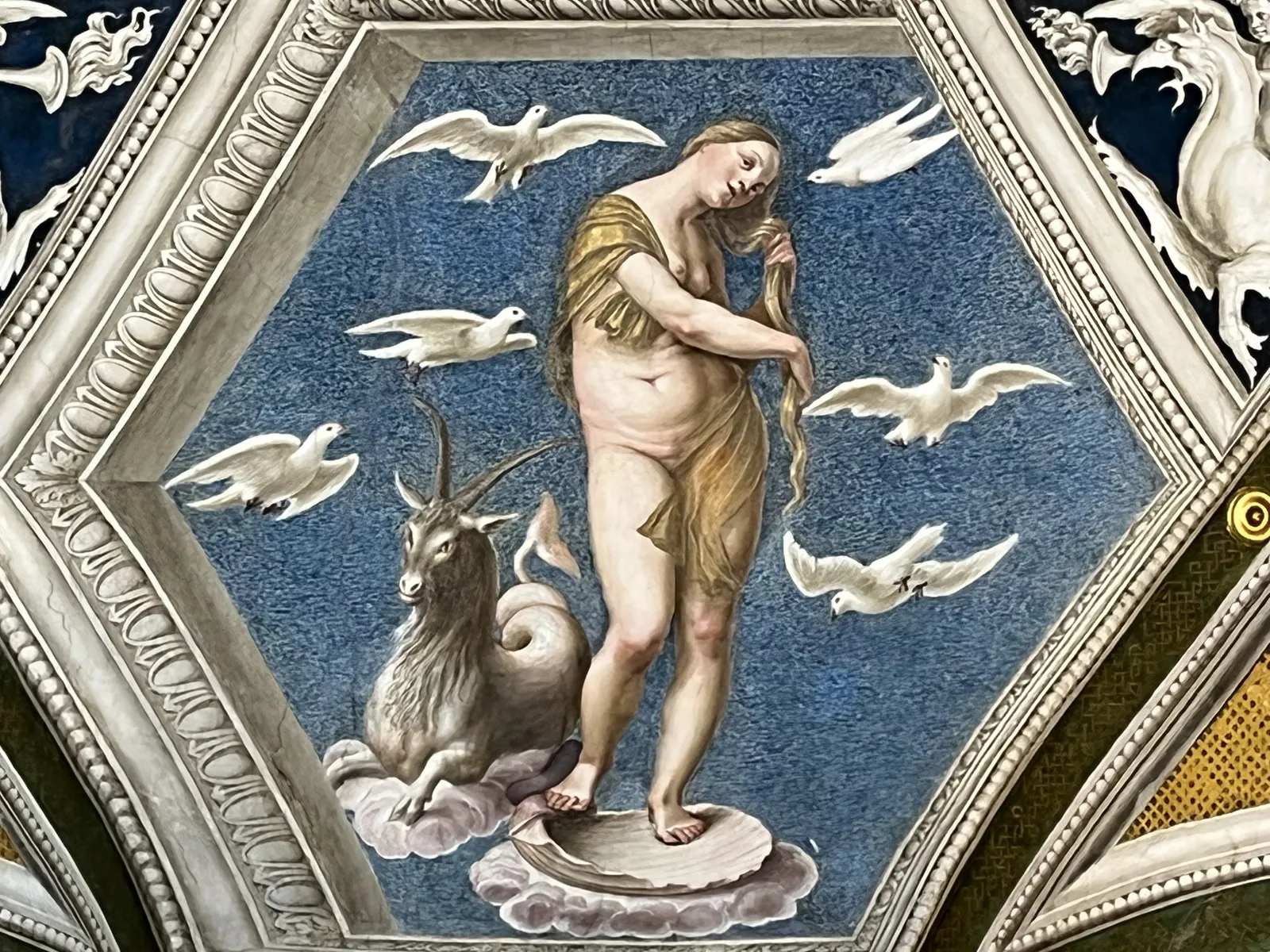
Venus and Capricorn
Baldassarre Peruzzi
The painting (c.1511) in the Loggia of Galatea depicts Venus, the goddess of love, on a shell surrounded by doves, symbols of love. Beside her, Capricorn, a hybrid creature, represents astrological wisdom. This artwork merges mythological beauty with cosmic symbolism, reflecting the Renaissance fascination with harmony between earthly and celestial realms. The inclusion of Capricorn underscores the era's belief in astrology's influence on human affairs.
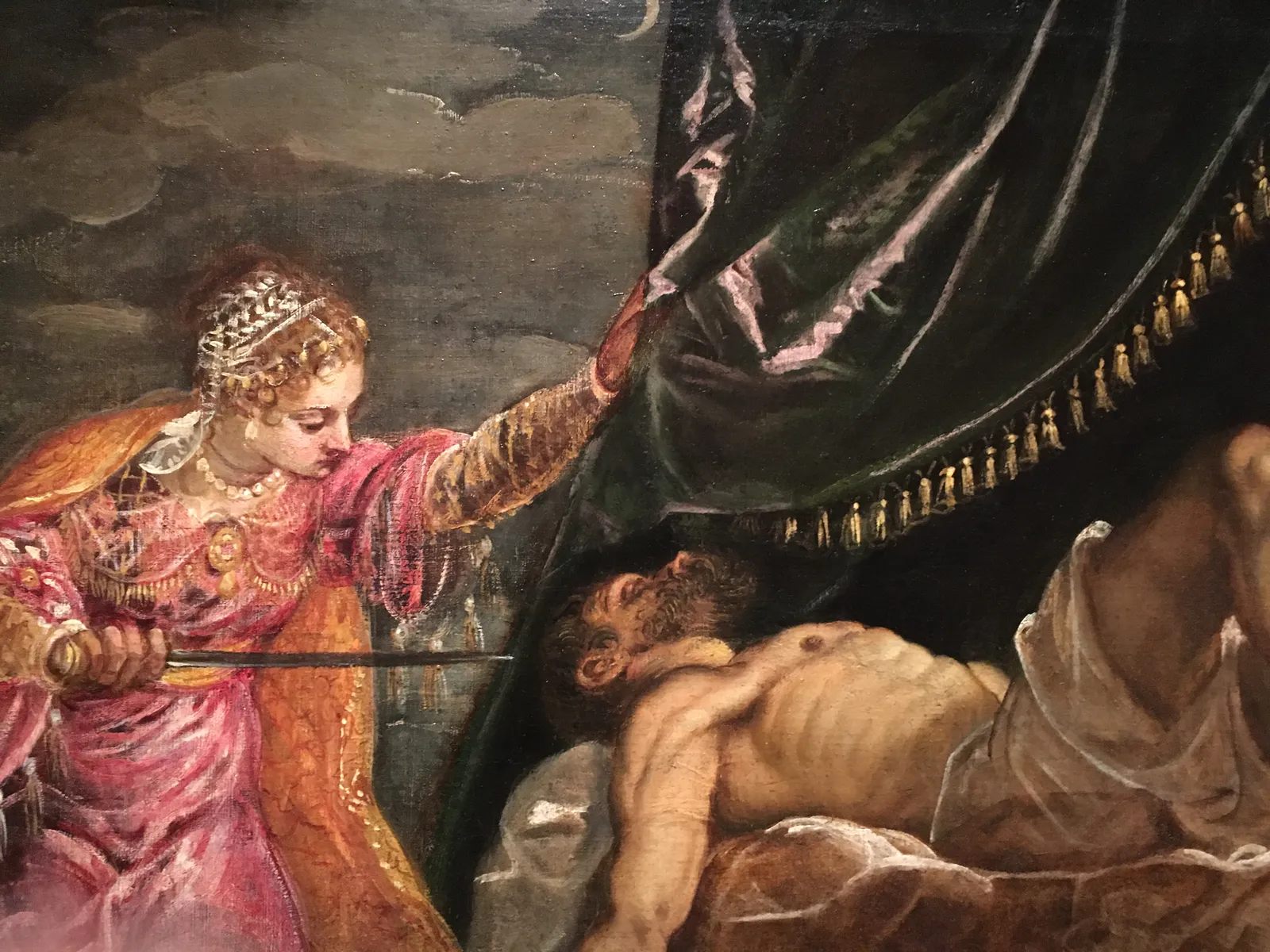
Judith Beheading Holofernes
Jacopo Tintoretto
This painting (c. 1577) by the studio of Jacopo Tintoretto depicts the biblical scene where Judith beheads Holofernes, an Assyrian general, to save her people. Executed in the Mannerist style, it emphasizes tension and emotion, typical of the Late Renaissance. The scene symbolizes courage and divine justice, reflecting the era’s interest in heroic narratives.
“When the path is beautiful, do not ask where it leads.” — Zen proverb
Welcome to my travel photography!
“When the path is beautiful, do not ask where it leads.” — Zen proverb
Welcome to my travel photography!
For as long as I can remember, my path has been one of discovery—seeking beauty, timelessness, and connection in every corner of the world. It has also been a journey of deep learning and understanding. I’ve been an avid traveler (or perhaps a travel addict?) for most of my life. My love for travel began long before I ever left home: as a child, I drew a fantasy map of my grandparents’ apartment and “traveled” through it with my cousin Sonya, imagining adventures in every corner. Nearly 90 countries and countless moments of awe later, I’m excited to share this journey with you.
Thanks to the tireless and ingenious programming of Diagilev, we’re now able to present about fifteen percent of the images I’ve accumulated over the years. More will be released in small batches depending on your interest. While the first release leans toward museum photography, later ones will include more nature, architecture, culture, and general travel experiences. If you’d like to receive email notifications about new releases, feel free to reach out—no commercial use, ever.
Throughout my travels, I’ve been drawn to two intertwined kinds of discovery. One is intellectual: learning why the world is the way it is. History became my guide, shaping my perspective and filling my camera roll with museums and old buildings. To me, history is not the past—it is the key to understanding the present and how the world became what it is. The other is emotional: seeking moments of elevation—spirituality, beauty, harmony—often found in nature, monasteries, and ancient sacred spaces. Together, these impulses shape my photography. It invites you to learn, admire, and soar—to rise above the mundane and see the world through a lens of curiosity and wonder.
Much of my later travel became possible thanks to my job with Delta Air Lines, but the wanderlust began years earlier. By the time I joined the industry, I had already visited over 35 countries and lived in several—largely thanks to a backpacking journey around the world with Luis León, whose face appears in many early photos. I grew up in Ufa in the USSR, and since leaving it I have lived, studied, and worked in Latvia, the United States, France, South Korea, Canada, Spain, Italy, Brazil, Japan, and Colombia.
A life of near-constant movement may seem a little crazy, but it has deepened my understanding of the world and produced the photography you are about to see. Over the years, my style has evolved—more intentional, more refined—yet its core remains the same: a search for understanding, timeless beauty, and a connection to those who walked this earth long before us.
I hope these photos stir something in your soul, just as they did in mine. I’d love to hear from you—whether reactions, suggestions, corrections, or a request to be added to the email list for new releases (no commercial use, I promise). You can learn more about my travels here, and my academic life here.
Enjoy our shared journey!