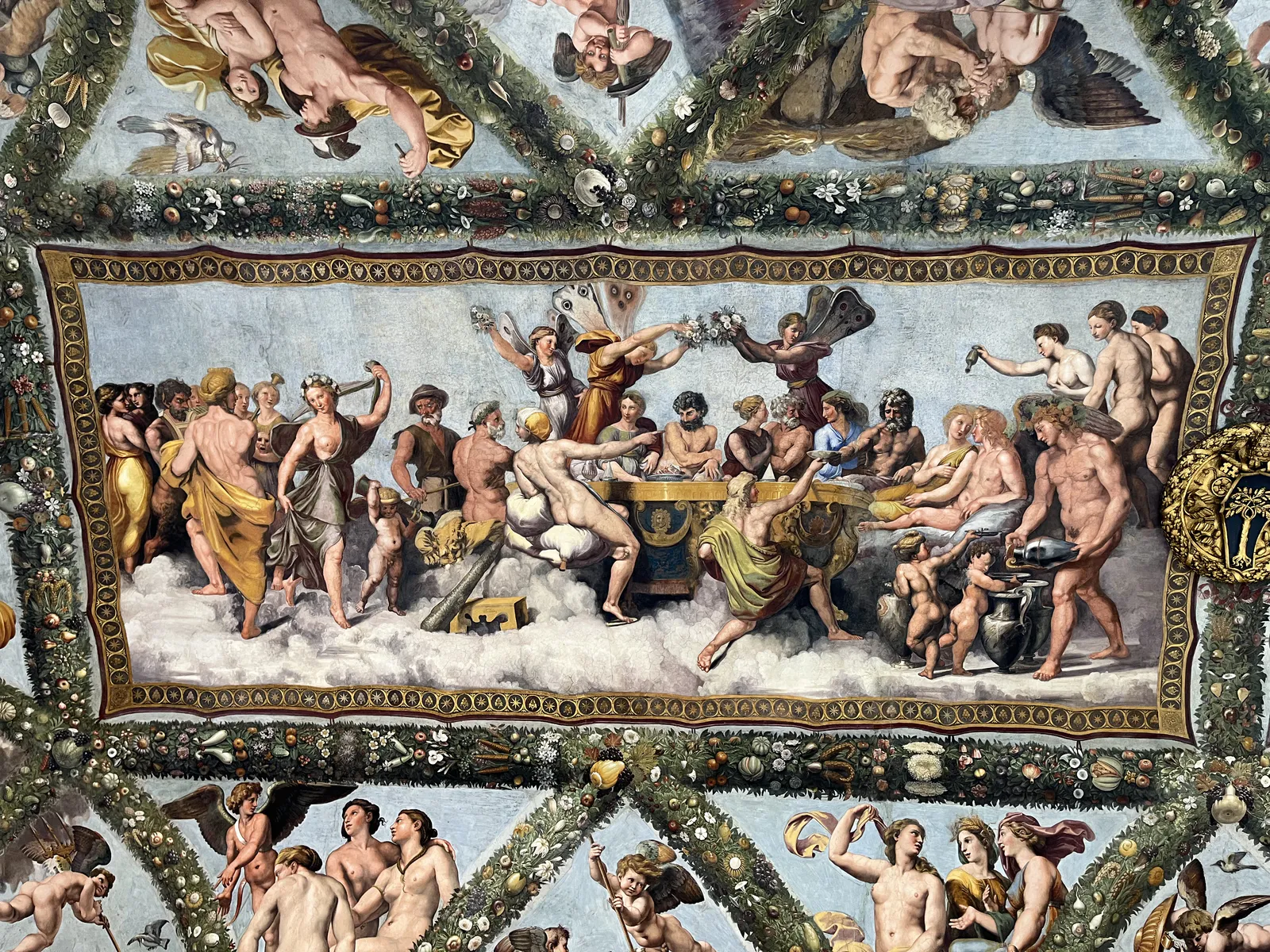
The Wedding Banquet of Cupid and Psyche
Raphael
In this grand fresco (1518), Raphael depicts the divine banquet celebrating the marriage of Cupid and Psyche. At the center, Jupiter and Juno preside; beside them sit Pluto, Persephone, Neptune, and Venus. Ganymede offers wine to Jupiter, while Bacchus (Dionysus), assisted by putti, pours wine at the right. The scene embodies divine harmony, joy, and the union of soul and love.
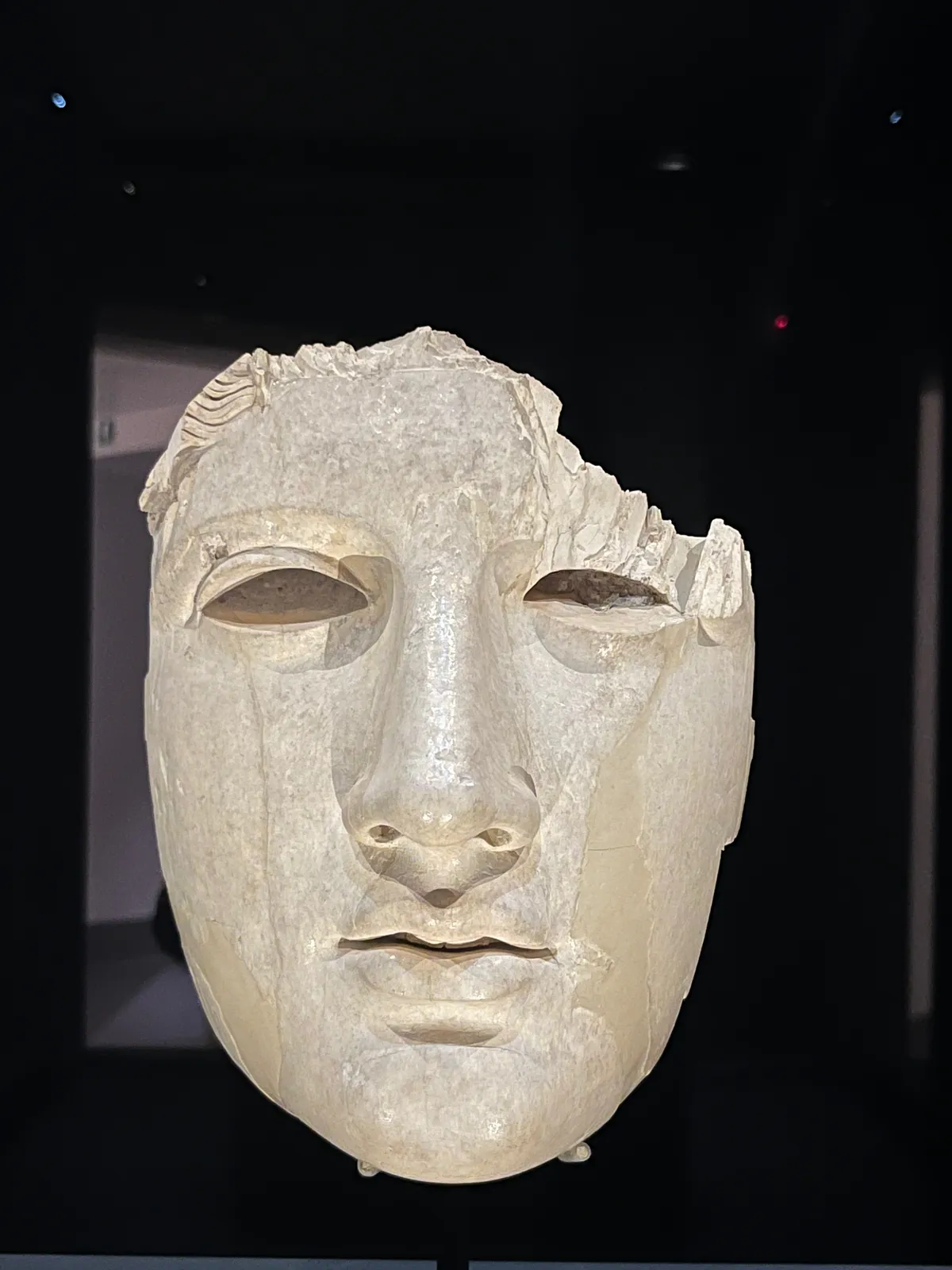
Apollo
Phidias
This ivory mask (5th c. BC) represents Apollo-Greek god of light, music, and prophecy-and once belonged to a chryselephantine statue (a prestigious cult image of ivory and gold). Attributed to Phidias, the master sculptor of classical Greece, it is an exceptionally rare survival of this luxury art form. Looted in 1995 and recovered in 2003, it now serves as both a rare survival of luxury cult sculpture and a reminder of ongoing threats to archaeological heritage.
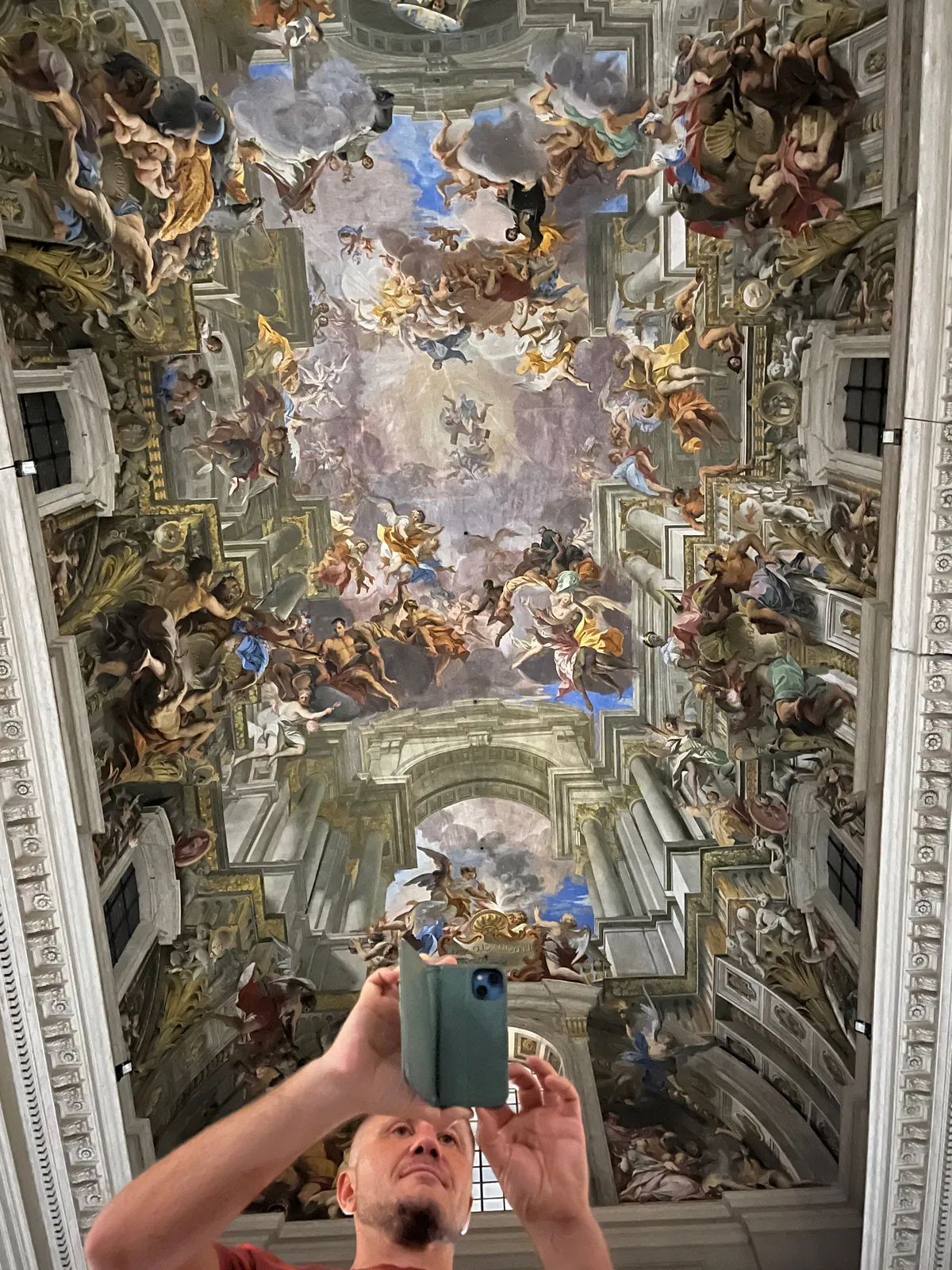
The Apotheosis of St. Ignatius
Andrea Pozzo
Max captures The Apotheosis of St. Ignatius (1685–1694) using a viewing mirror beneath the ceiling, enhancing Pozzo’s Baroque illusionism. This optical device unveils the masterful perspective that transforms the flat vault into a celestial vision, merging art and exemplifying the Baroque fascination with perspective: a dynamic interplay between earthly and divine realms.
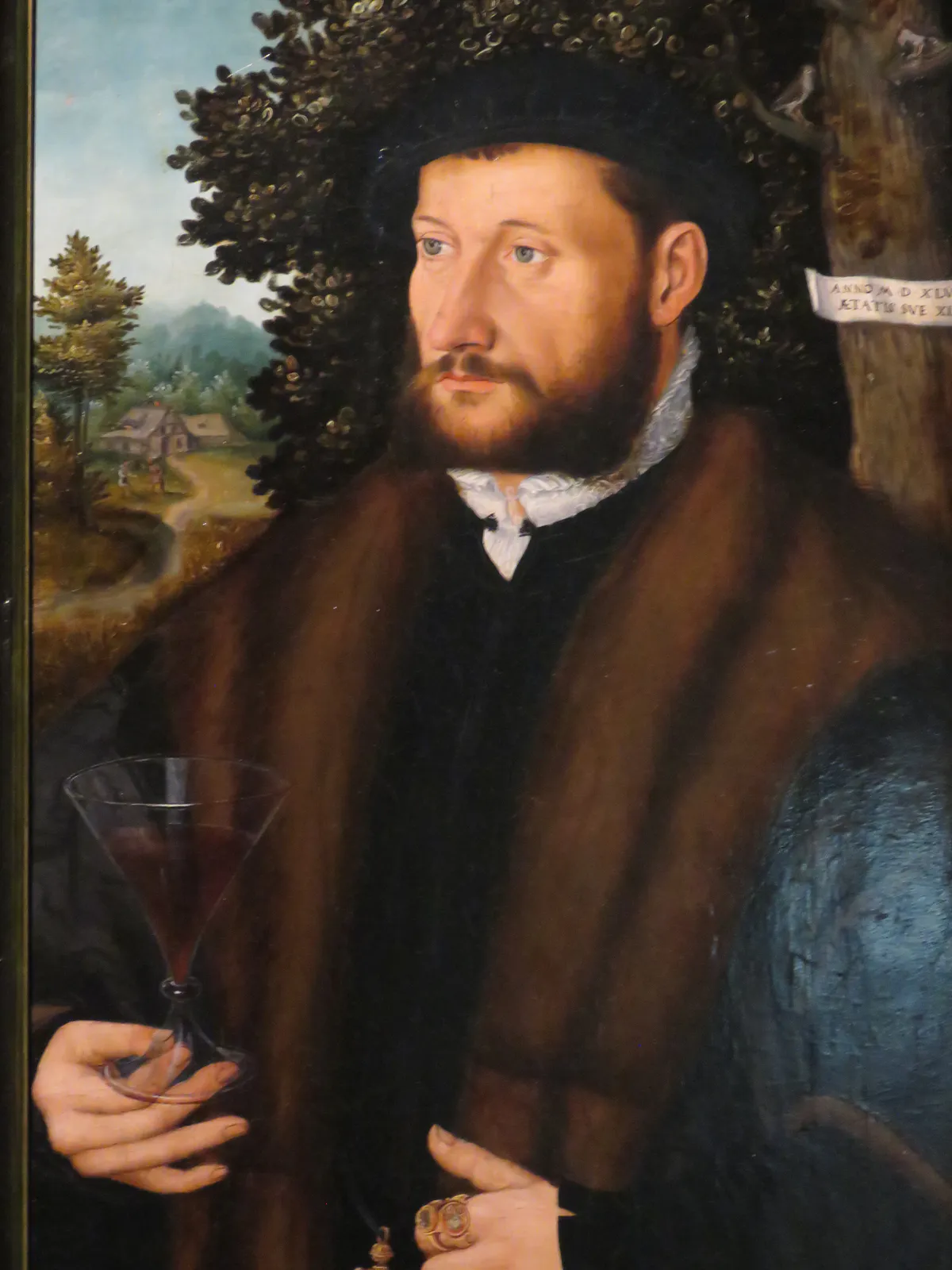
Male Portrait
Hans Muelich
This portrait (c. 1550) reflects the refined realism of the German Renaissance. The sitter’s composed gaze, luxurious attire, and elegant glass signify affluence and cultured leisure. The distant path and village in the background may allude to the subject’s journey, social standing, or inner world.
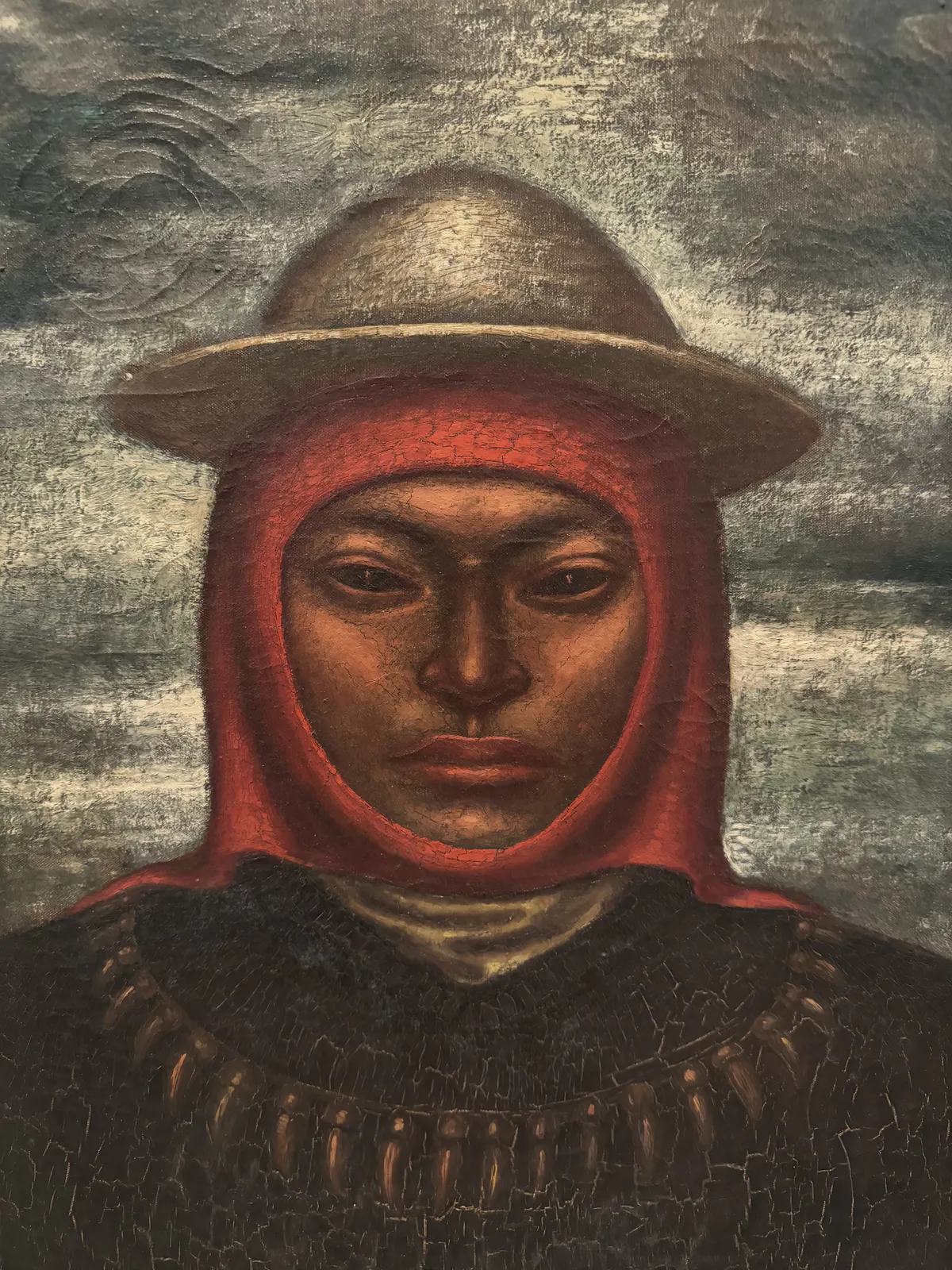
Portrait of Indigenous Person
Luis Alberto Acuña
This striking 1934 oil painting reflects the artist’s deep engagement with indigenous identity and pre-Columbian heritage. The stoic, symmetrical face, wrapped in a red hood beneath a wide-brimmed hat, evokes dignity and resilience. Acuña, a key figure in Colombian modernism, often highlighted native ancestry as a counter-narrative to Eurocentric ideals.
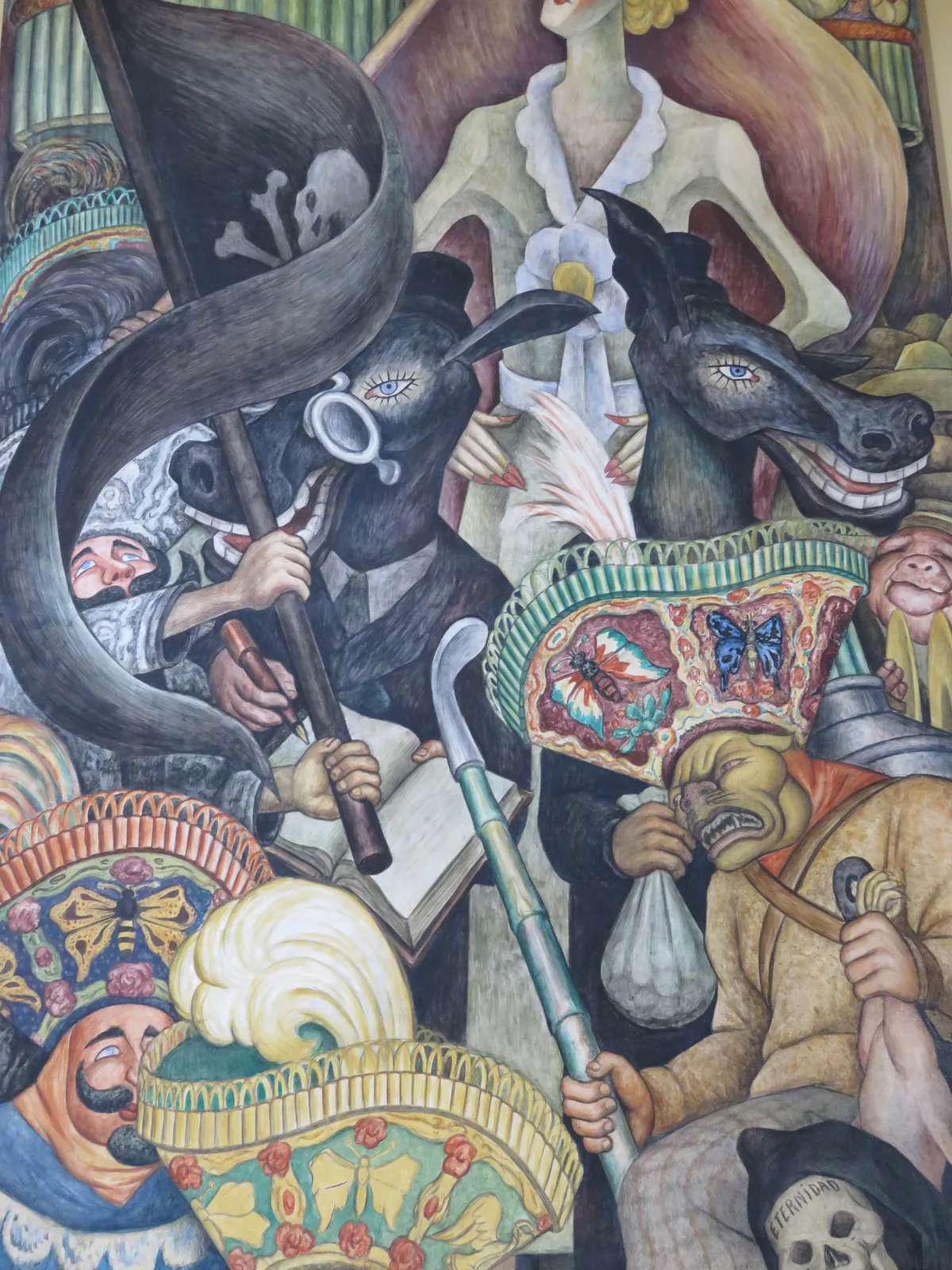
Carnival of Mexican Life (detail)
Diego Rivera
This scene from Carnival of Mexican Life (1936) mocks imperial and capitalist excess. Donkey-headed elites, masked peasants, and a skull-emblazoned flag form a surreal parade of corruption and resistance. Drawing on the Carnival of Huejotzingo, Rivera fuses satire, folk ritual, and political critique to expose social hypocrisy.
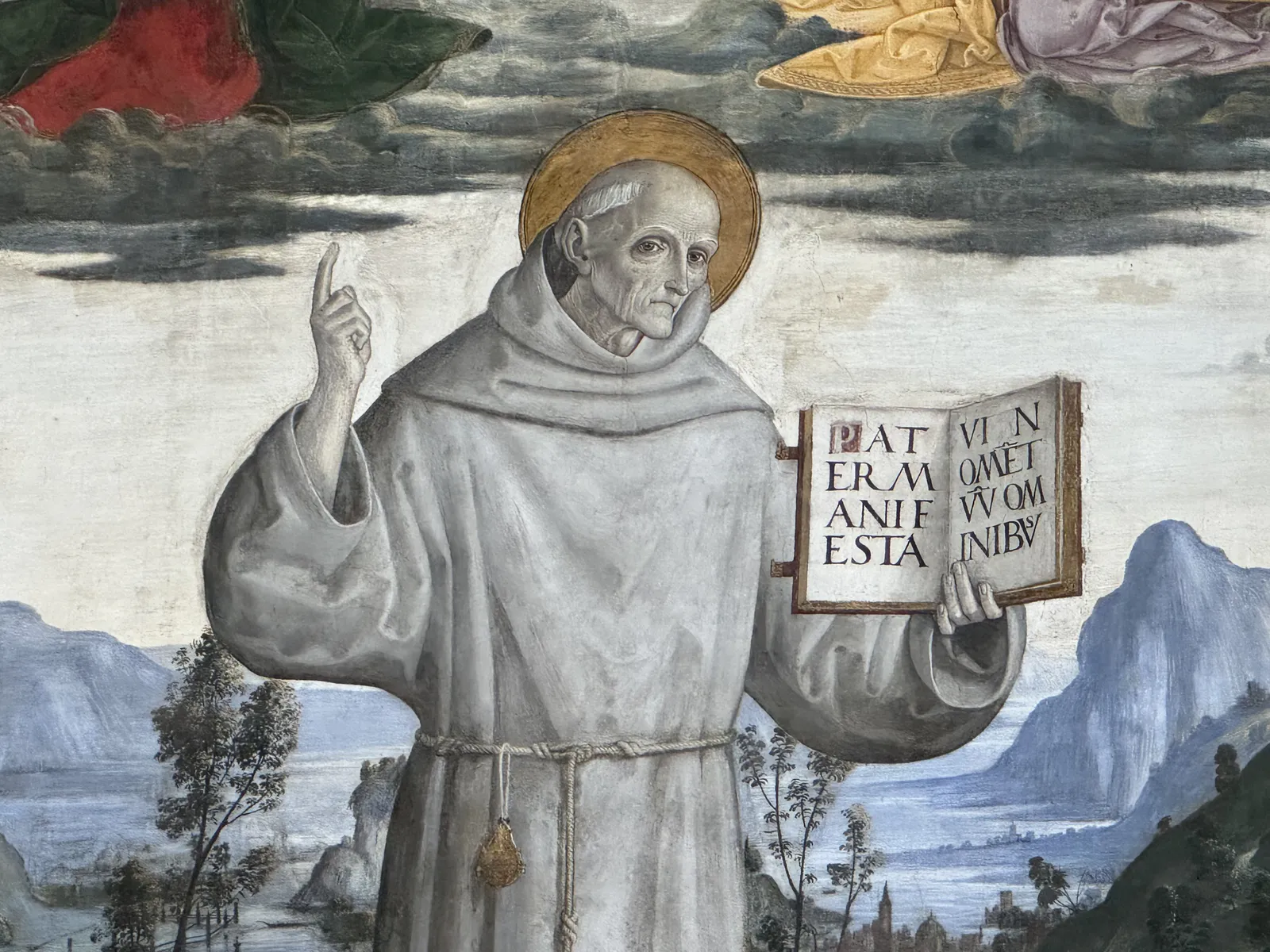
St. Bernardino (detail)
Pinturicchio
In this detail (1484–1486), Pinturicchio portrays St. Bernardino holding an open book inscribed PATER MANIFESTA NOMEN TUUM OMNIBUS (Father, manifest Your name to all). His raised finger points toward heaven, symbolizing his mission to glorify the Holy Name of Jesus and promote peace amid social discord.
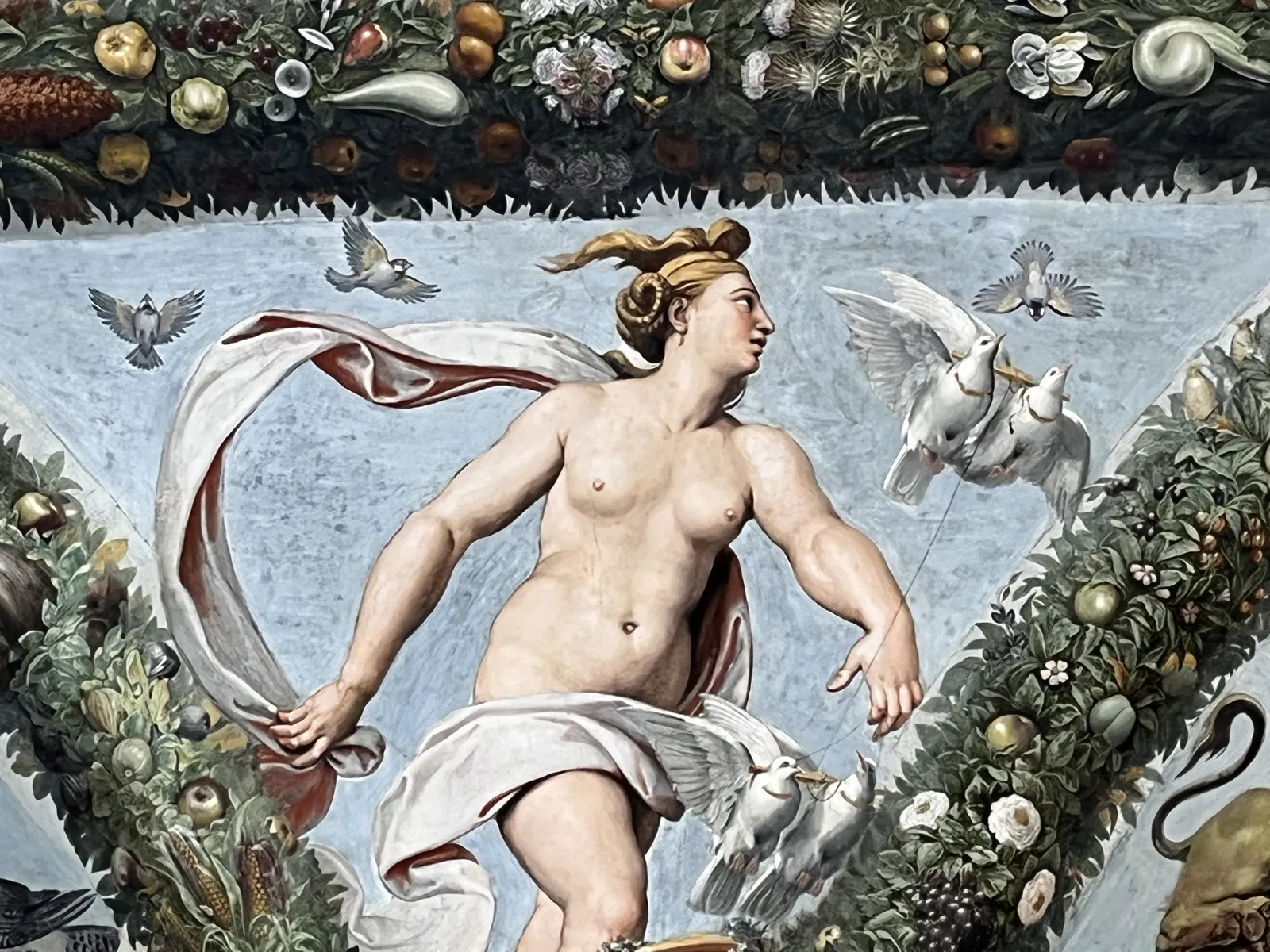
Venus and the Doves
Raphael
In this fresco (1518), Raphael presents Venus, goddess of love, gracefully accompanied by doves, her sacred birds. The flowing ribbon emphasizes her divine beauty and motion, while the doves allude to purity and erotic desire. The image echoes Venus’ central role in the myth of Cupid and Psyche, where love governs both divine and mortal fates.
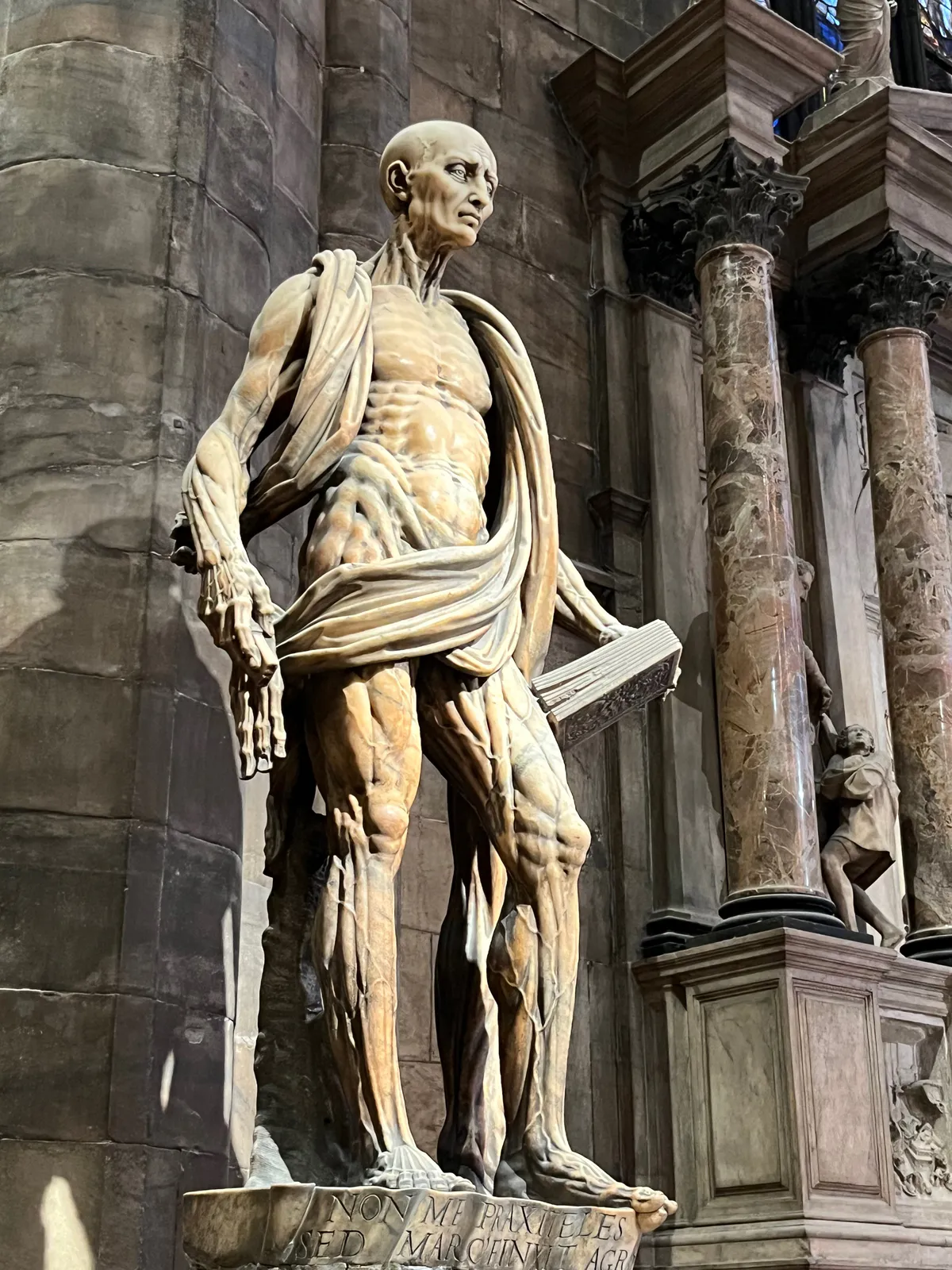
St Bartholomew Flayed
Marco d’Agrate
This marble statue (1562) shows St Bartholomew as a flayed figure, his own skin arranged like a draped garment around an exposed muscular body. Such extreme anatomical precision draws on Renaissance study of dissected cadavers. The saint’s upright stance and calm, frontal gaze demonstrate how martyrdom could be articulated as steadfast faith rather than physical defeat.
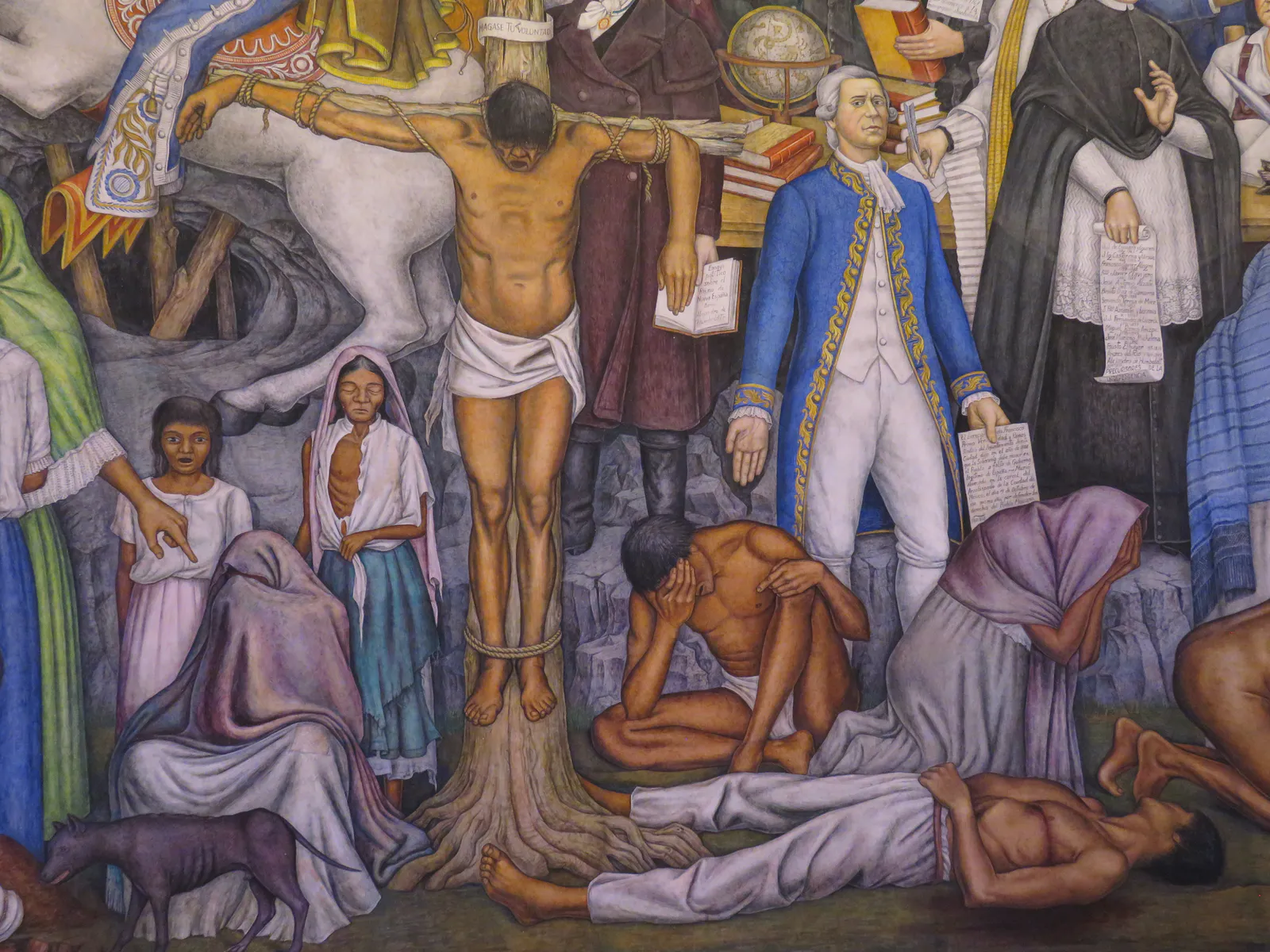
Mexican War of Independence (detail)
Juan OGorman
This mural detail (1960–61) depicts Mexico’s struggle against colonial rule. At center, an Indigenous man is crucified on a tree, symbolizing the suffering of native peoples. Around him, women and children grieve, while men collapse in despair. To the right, Miguel Hidalgo in blue and José María Morelos in clerical robes embody the revolution’s leaders, joined by thinkers holding books and scrolls of Enlightenment ideals.
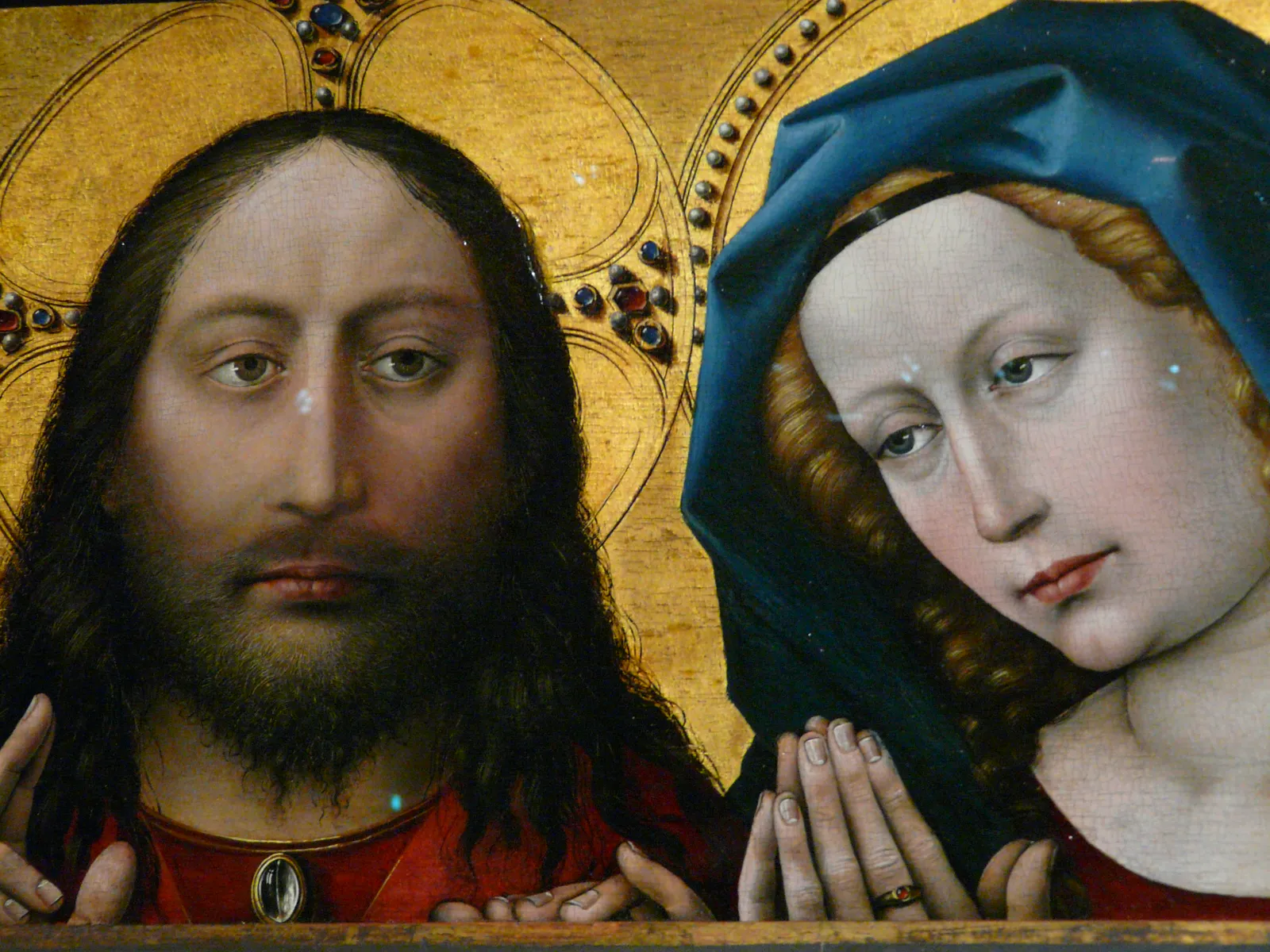
Christ Blessing with Virgin at Prayer
Master of Flémalle
This 15th-c. oak panel by the Master of Flémalle, often associated with Robert Campin, exemplifies early Netherlandish style. It showcases realistic detail through innovative oil paint use. The depiction of Christ blessing and the Virgin Mary at prayer reflects the era’s religious devotion and artistic innovation, marking a pivotal moment in European art’s evolution.
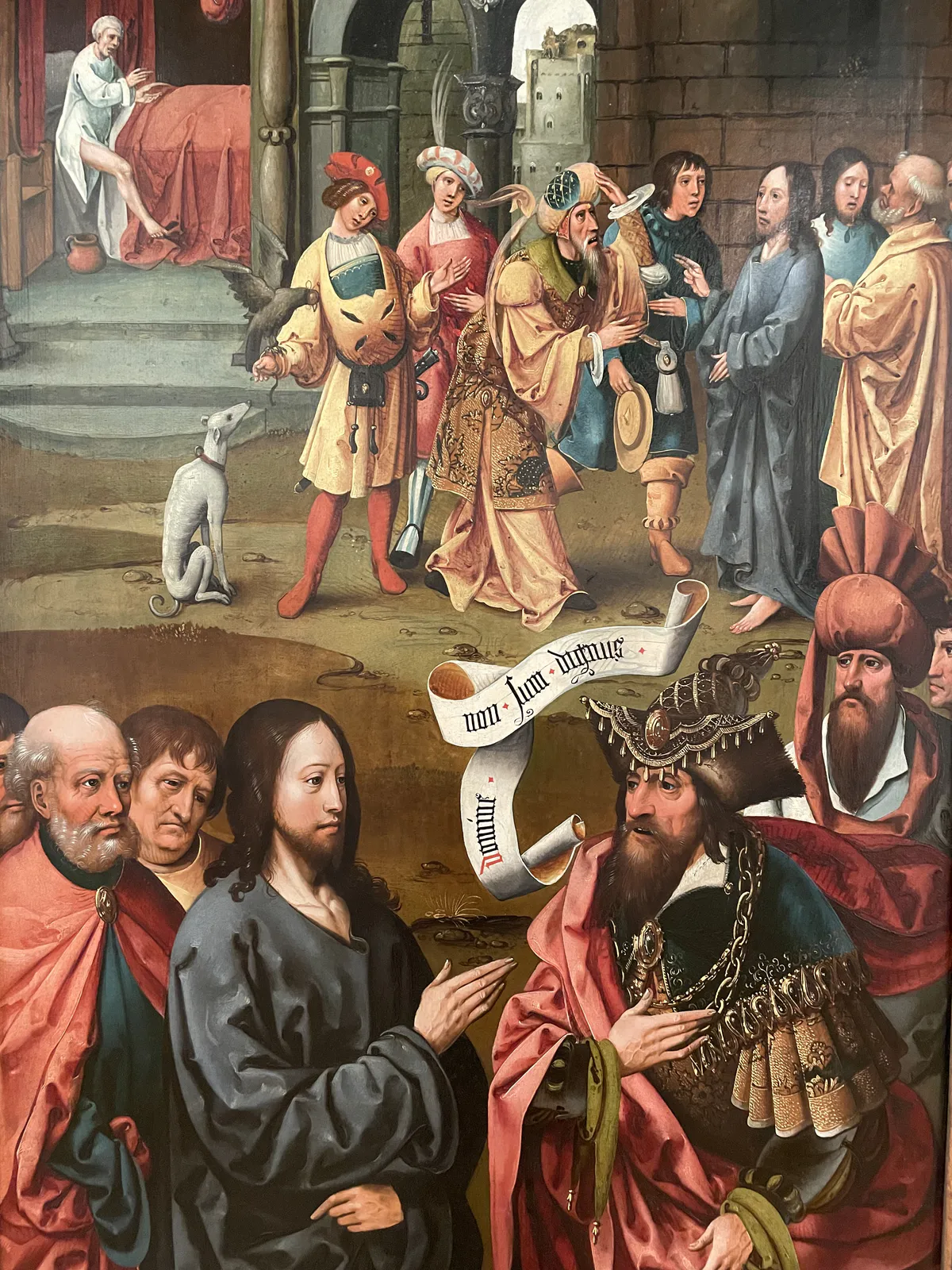
Christ and the Centurion of Capernaum
Master of Adoration of Amberes
This Northern Renaissance panel (1520–30) captures the moment a Roman centurion asks Christ to heal his servant, saying Lord, I am not worthy. The scene blends biblical narrative with contemporary Flemish attire, highlighting faith over status. The expressive gestures and rich details emphasize humility and the universal appeal of compassion, reflecting the era's fusion of religious and cultural elements.
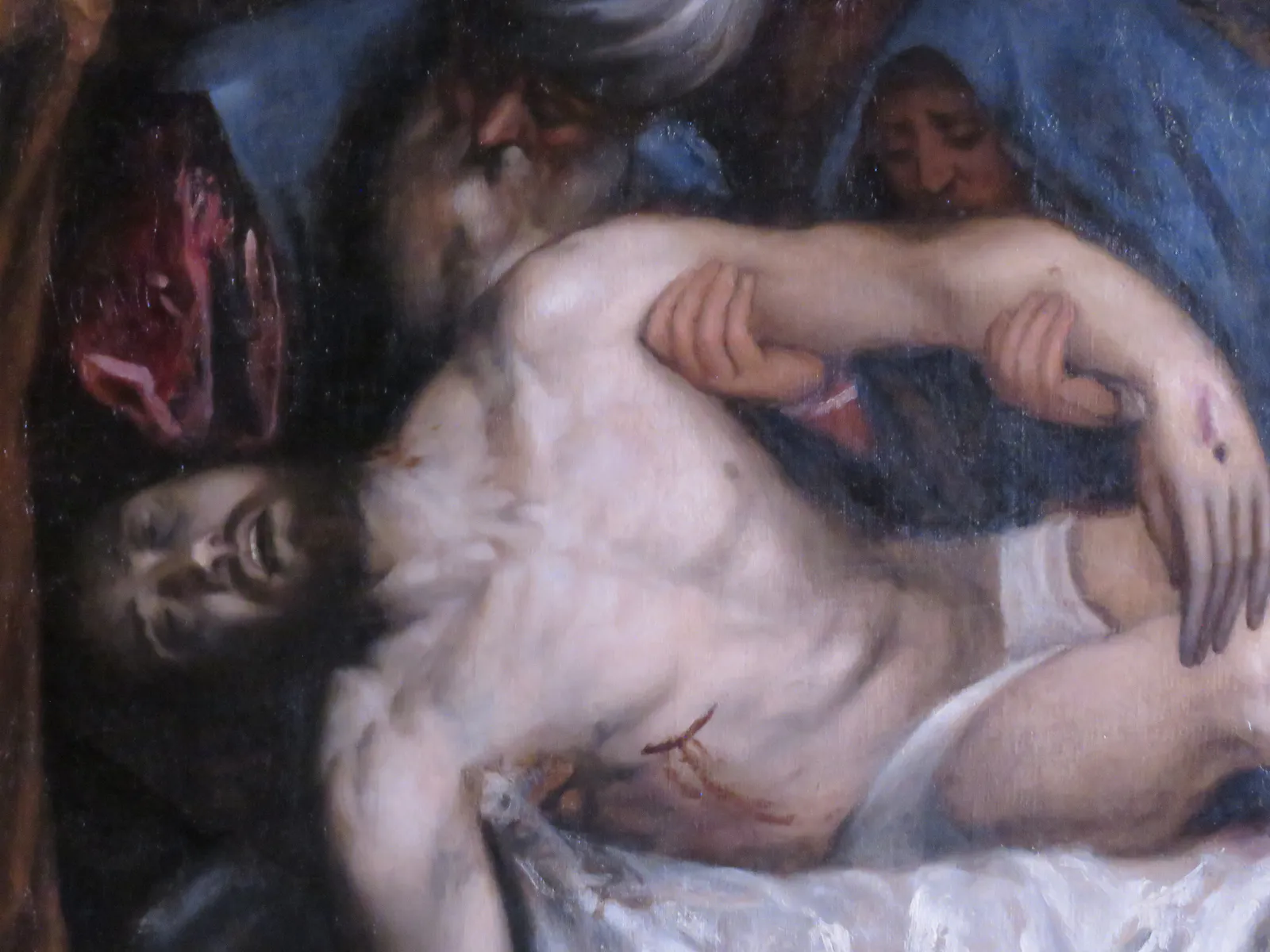
The Entombment of Christ (detail)
Titian and Palma the Younger
This fragment (1618) reveals Christ’s lifeless body marked by crucifixion wounds, cradled with reverence by mourning figures. The interplay of flesh, fabric, and sorrow exemplifies Titian’s emotive realism, while Palma the Younger completes the drama with expressive gestures—honoring human grief and divine sacrifice in one timeless moment.
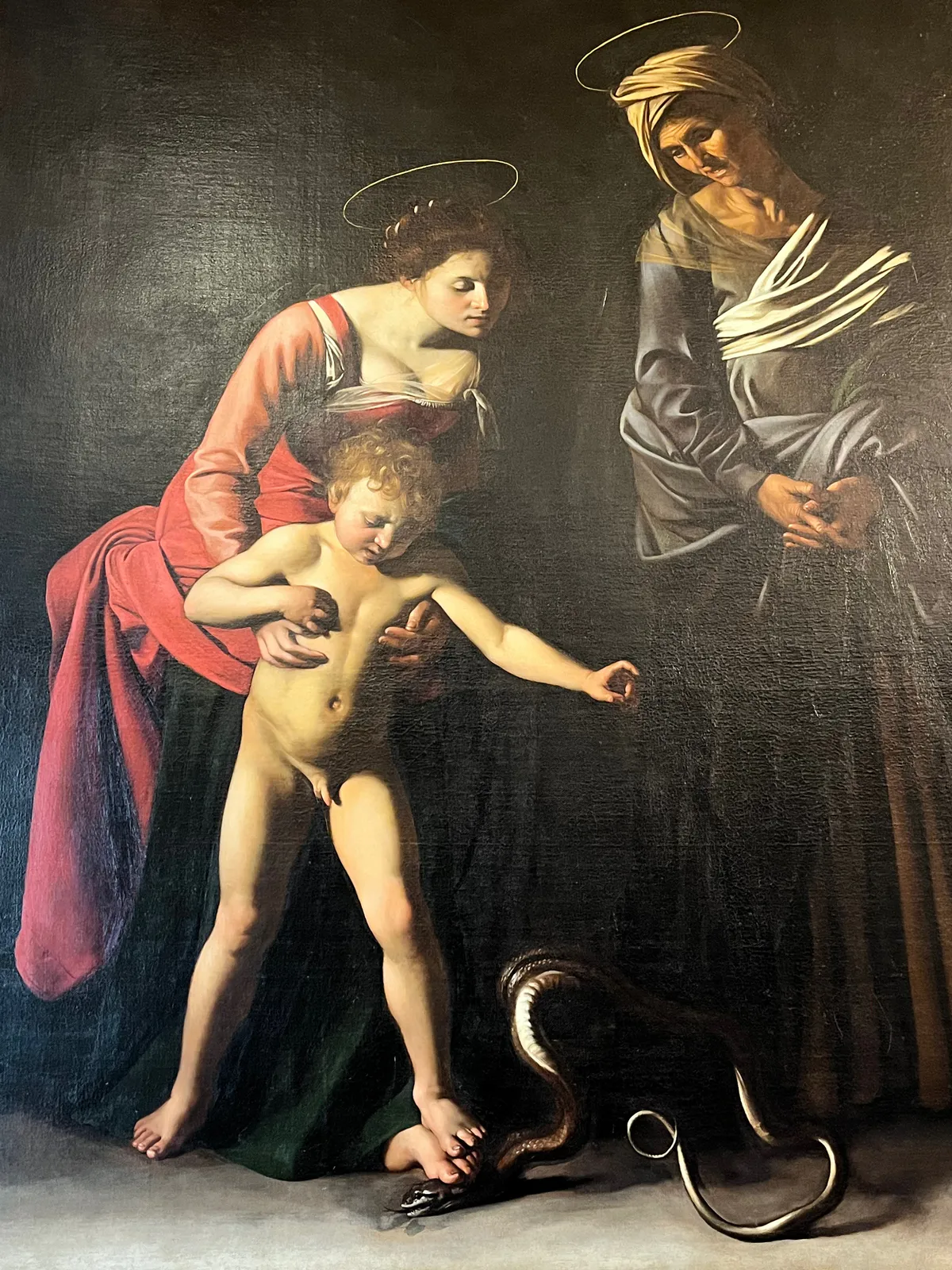
Madonna and Child with St Anne (Madonna dei Palafrenieri)
Caravaggio
This bold altarpiece (1605–06) shows the Virgin Mary guiding the Christ Child as he crushes a serpent—symbol of original sin. St Anne watches solemnly, evoking generational grace. Caravaggio’s realism and chiaroscuro infuse the holy scene with human emotion, provoking awe and controversy upon its brief display in St Peter’s.
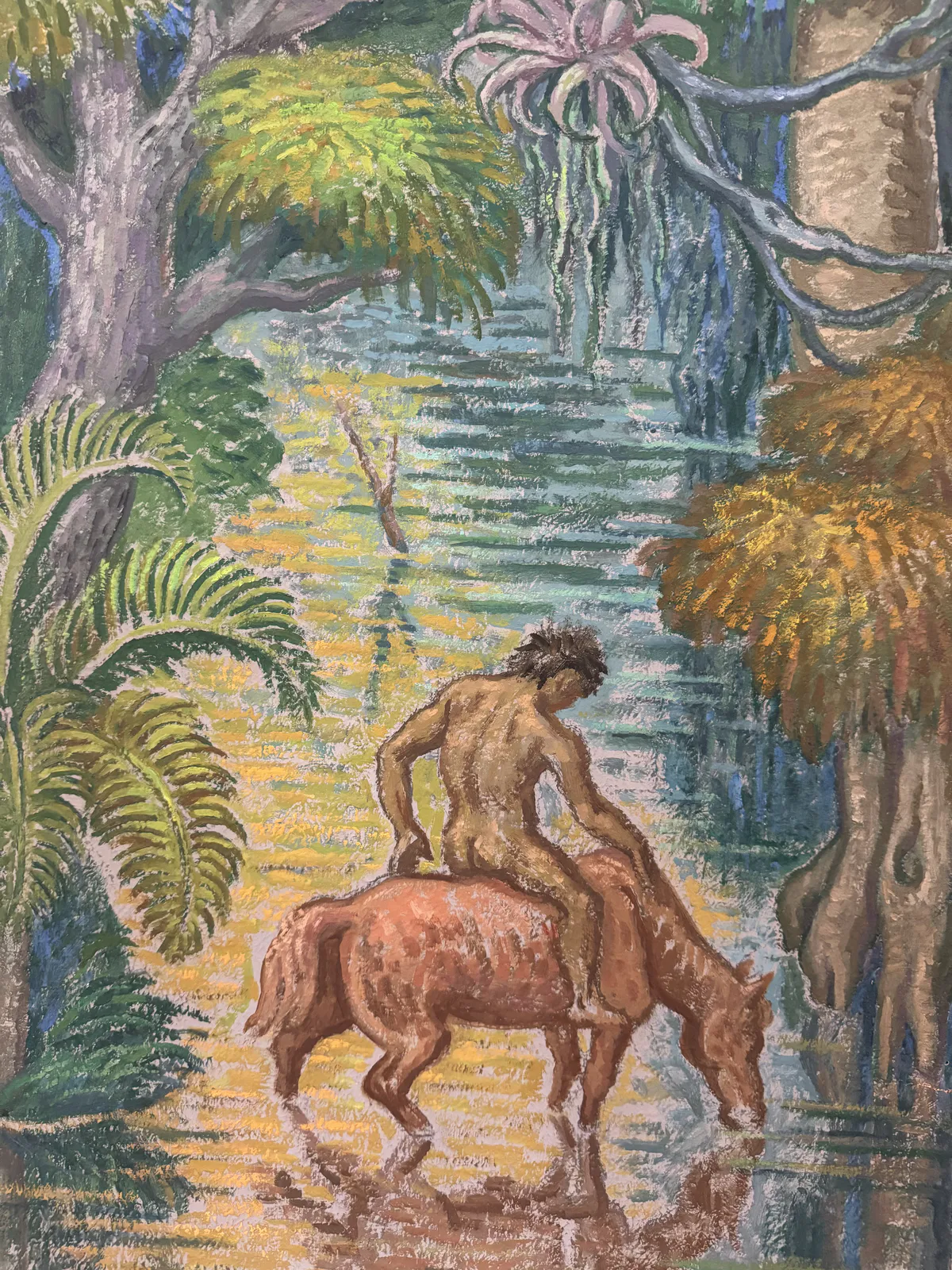
Indo-American Scene
Luis Alberto Acuña
A lone, naked rider on horseback drinks from a forest stream, immersed in a lush tropical setting. Acuña's painting (1950-60s) evokes a primordial connection between Indigenous people and the natural world, blending mythic and symbolic elements into a vision of harmony, solitude, and ancestral presence.
“When the path is beautiful, do not ask where it leads.” — Zen proverb
Welcome to my travel photography!
“When the path is beautiful, do not ask where it leads.” — Zen proverb
Welcome to my travel photography!
For as long as I can remember, my path has been one of discovery—seeking beauty, timelessness, and connection in every corner of the world. It has also been a journey of deep learning and understanding. I’ve been an avid traveler (or perhaps a travel addict?) for most of my life. My love for travel began long before I ever left home: as a child, I drew a fantasy map of my grandparents’ apartment and “traveled” through it with my cousin Sonya, imagining adventures in every corner. Nearly 90 countries and countless moments of awe later, I’m excited to share this journey with you.
Thanks to the tireless and ingenious programming of Diagilev, we’re now able to present about fifteen percent of the images I’ve accumulated over the years. More will be released in small batches depending on your interest. While the first release leans toward museum photography, later ones will include more nature, architecture, culture, and general travel experiences. If you’d like to receive email notifications about new releases, feel free to reach out—no commercial use, ever.
Throughout my travels, I’ve been drawn to two intertwined kinds of discovery. One is intellectual: learning why the world is the way it is. History became my guide, shaping my perspective and filling my camera roll with museums and old buildings. To me, history is not the past—it is the key to understanding the present and how the world became what it is. The other is emotional: seeking moments of elevation—spirituality, beauty, harmony—often found in nature, monasteries, and ancient sacred spaces. Together, these impulses shape my photography. It invites you to learn, admire, and soar—to rise above the mundane and see the world through a lens of curiosity and wonder.
Much of my later travel became possible thanks to my job with Delta Air Lines, but the wanderlust began years earlier. By the time I joined the industry, I had already visited over 35 countries and lived in several—largely thanks to a backpacking journey around the world with Luis León, whose face appears in many early photos. I grew up in Ufa in the USSR, and since leaving it I have lived, studied, and worked in Latvia, the United States, France, South Korea, Canada, Spain, Italy, Brazil, Japan, and Colombia.
A life of near-constant movement may seem a little crazy, but it has deepened my understanding of the world and produced the photography you are about to see. Over the years, my style has evolved—more intentional, more refined—yet its core remains the same: a search for understanding, timeless beauty, and a connection to those who walked this earth long before us.
I hope these photos stir something in your soul, just as they did in mine. I’d love to hear from you—whether reactions, suggestions, corrections, or a request to be added to the email list for new releases (no commercial use, I promise). You can learn more about my travels here, and my academic life here.
Enjoy our shared journey!