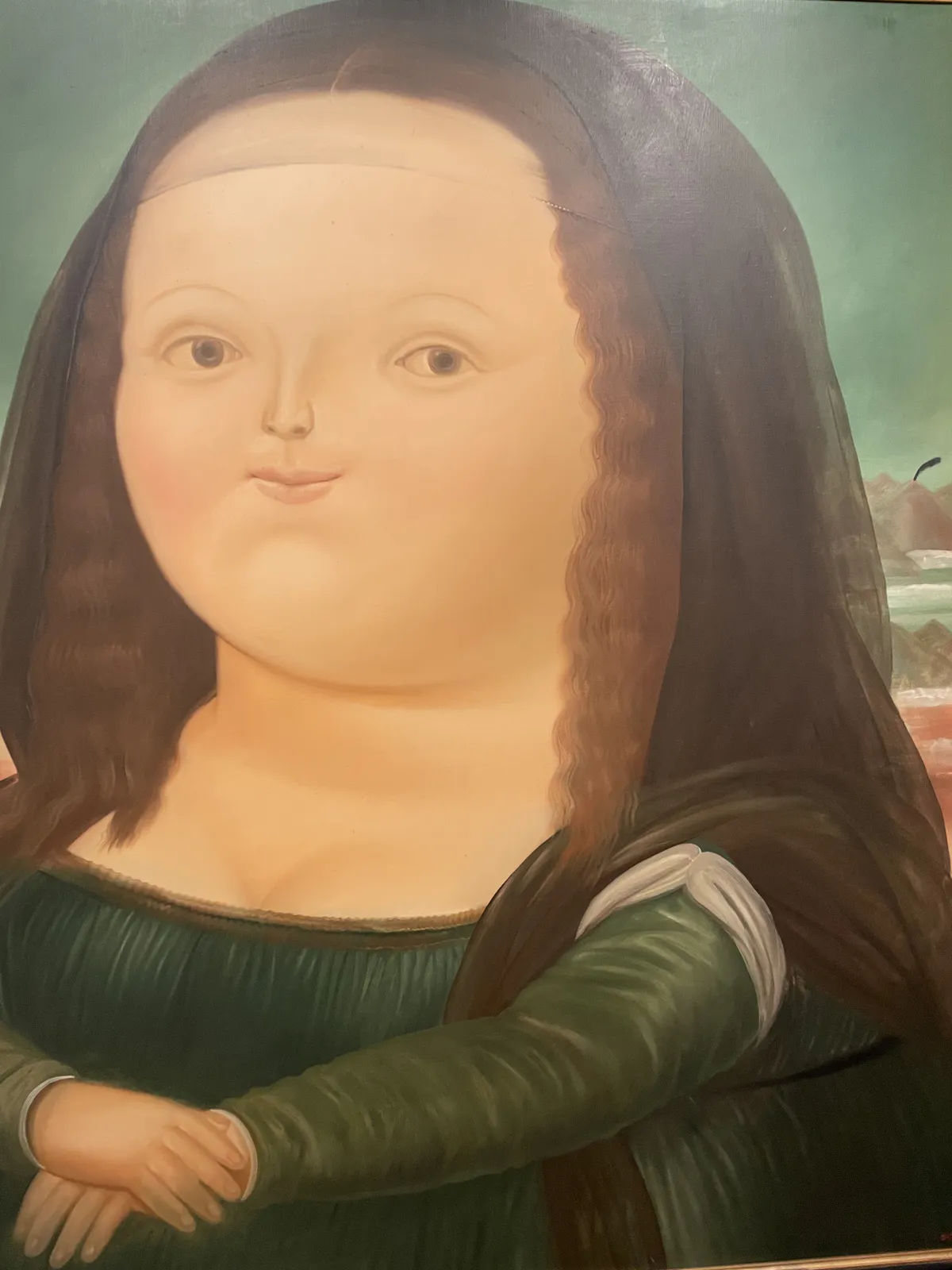
Mona Lisa, Age Twelve
Fernando Botero
In this whimsical reimagining (1959), Botero transforms da Vinci’s iconic subject into a voluminous child. Created in his signature Boterismo style, the painting blends parody with homage. Born from a cleaning lady’s remark, the work helped launch Botero’s career, celebrating exaggerated form as a tool for both humor and artistic identity.
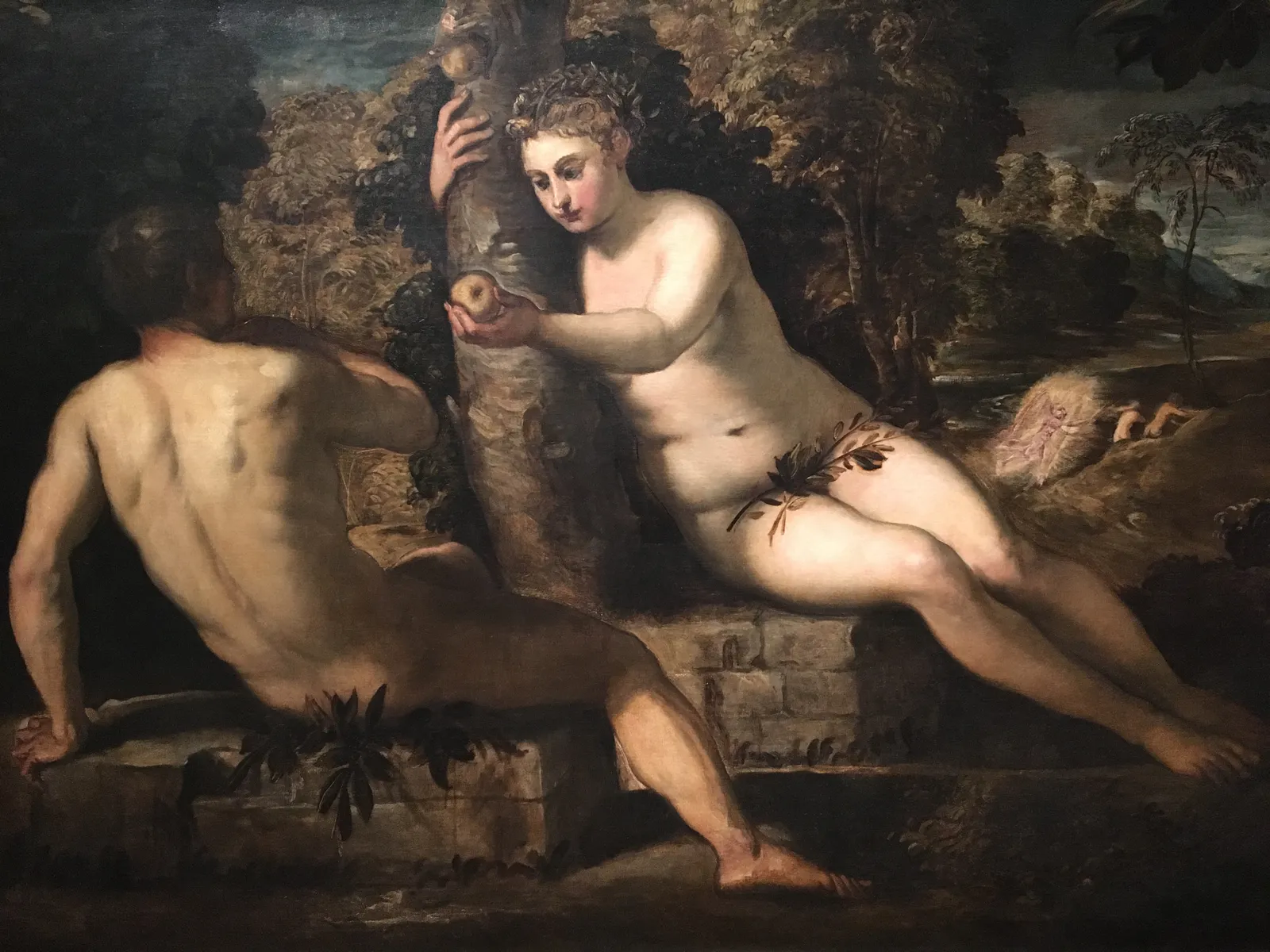
Adam and Eve in the Garden of Eden
Tintoretto
Tintoretto’s work (1550–1553) depicts the biblical moment of temptation in the Garden of Eden. Eve, holding the forbidden fruit, entices Adam, who hesitates, capturing the tension between desire and conscience. The background suggests their impending expulsion, a consequence of their choice. Dramatic lighting highlights the figures, emphasizing their forms and the scene’s gravity.
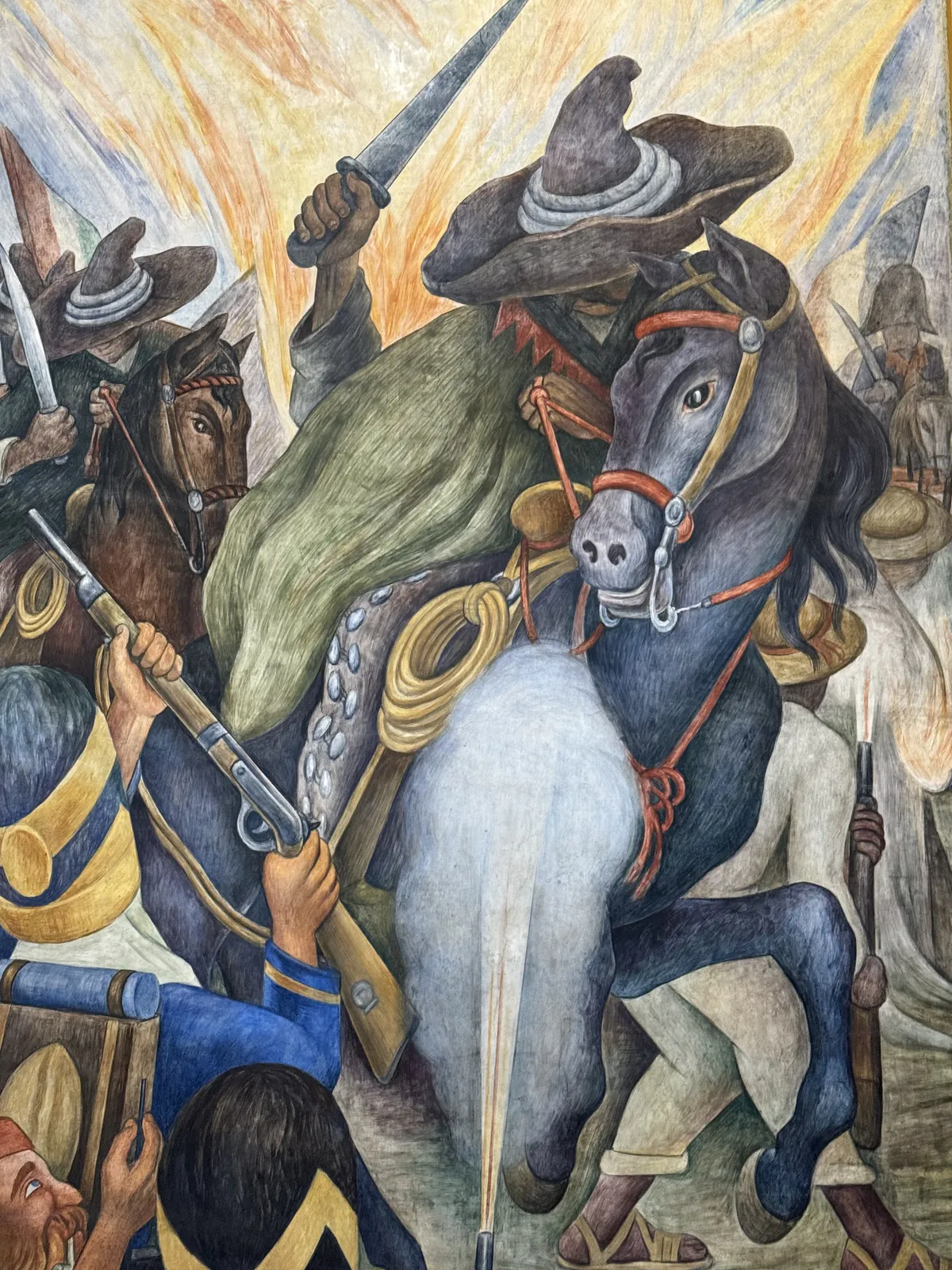
The Legend of Agustín Lorenzo (detail)
Diego Rivera
This 1936 fresco dramatizes the legendary outlaw Agustín Lorenzo as a symbol of resistance. Armed revolutionaries clash with government forces, their horses rearing amid smoke and flames. Rivera fuses myth and history, casting Lorenzo as a Mexican Robin Hood whose defiant struggle against injustice became folklore in the national imagination.
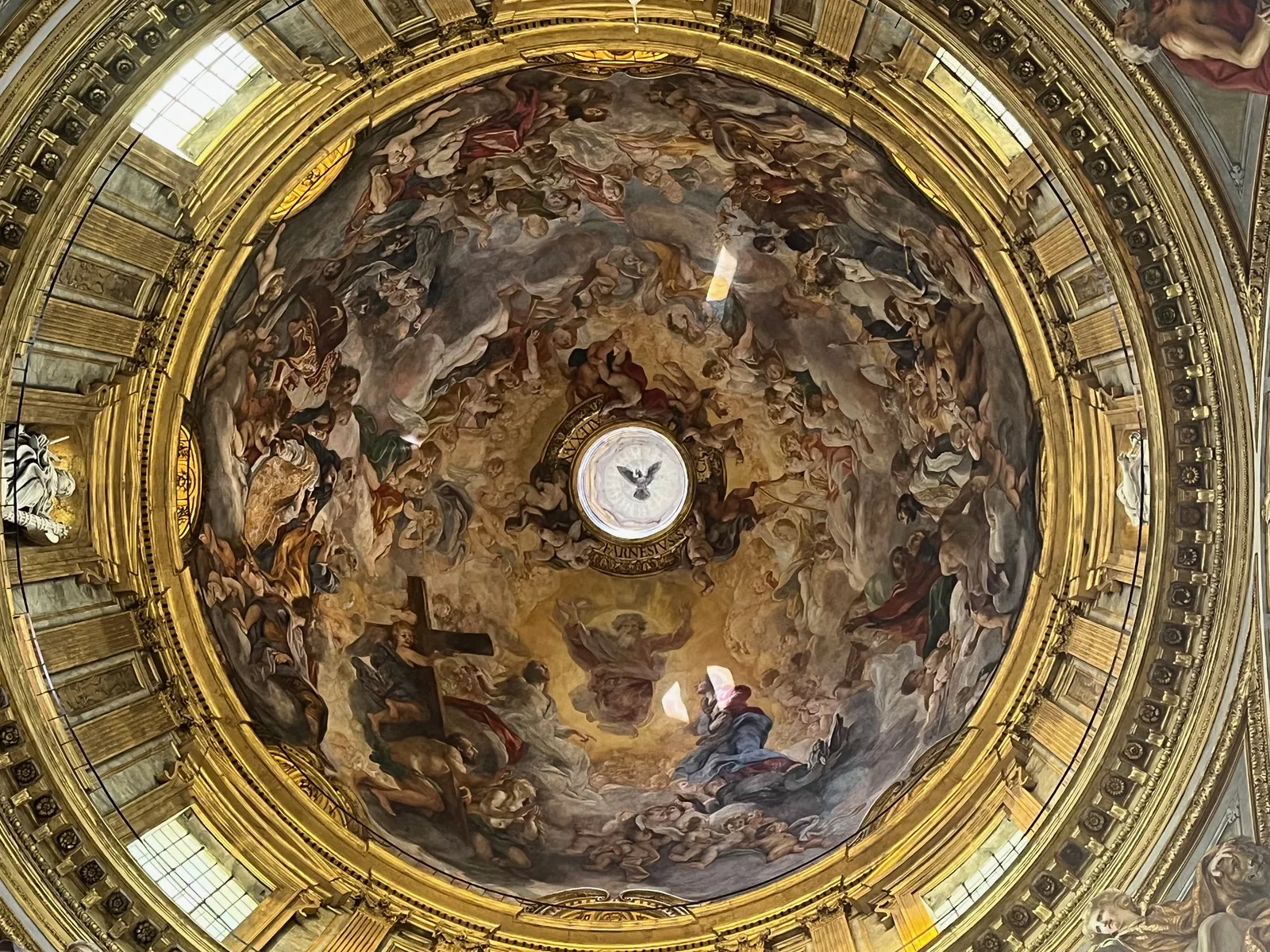
The Glory of the Holy Spirit
Giovanni Battista Gaulli
This radiant fresco (c. 1679) fills the dome with concentric rings of clouds, gilded ribs, and crowded figures. At the center, the Holy Spirit appears as a white dove in a glowing medallion, encircled by saints and angels swept upward in swirling light. The painted architecture merges with the real cornice, a Baroque illusion that makes the vault seem to open into a realm of revelation.
The Damned in Torment
Rogier van der Weyden
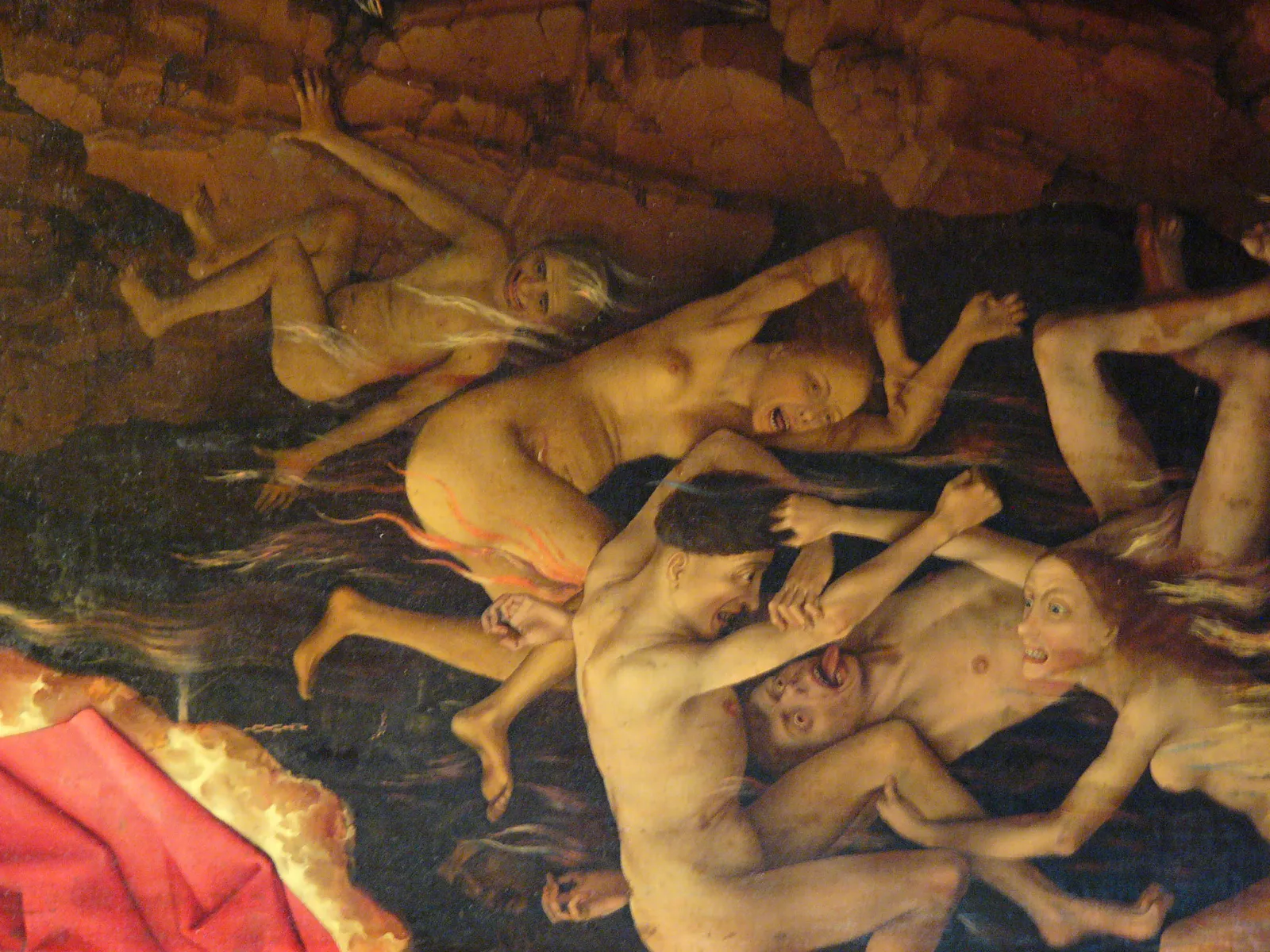
This detail from the Last Judgment Altarpiece (1445–50) intensifies the vision of damnation. Naked figures twist and collide as they plunge into dark flames, their limbs tangled in chaotic knots. Strained muscles and distorted faces display a studied range of terror and despair. For patients and caregivers at the Hôtel-Dieu, such visceral imagery sharpened awareness of sin, repentance, and the uncertainty of salvation.
David with the Head of Goliath
Caravaggio
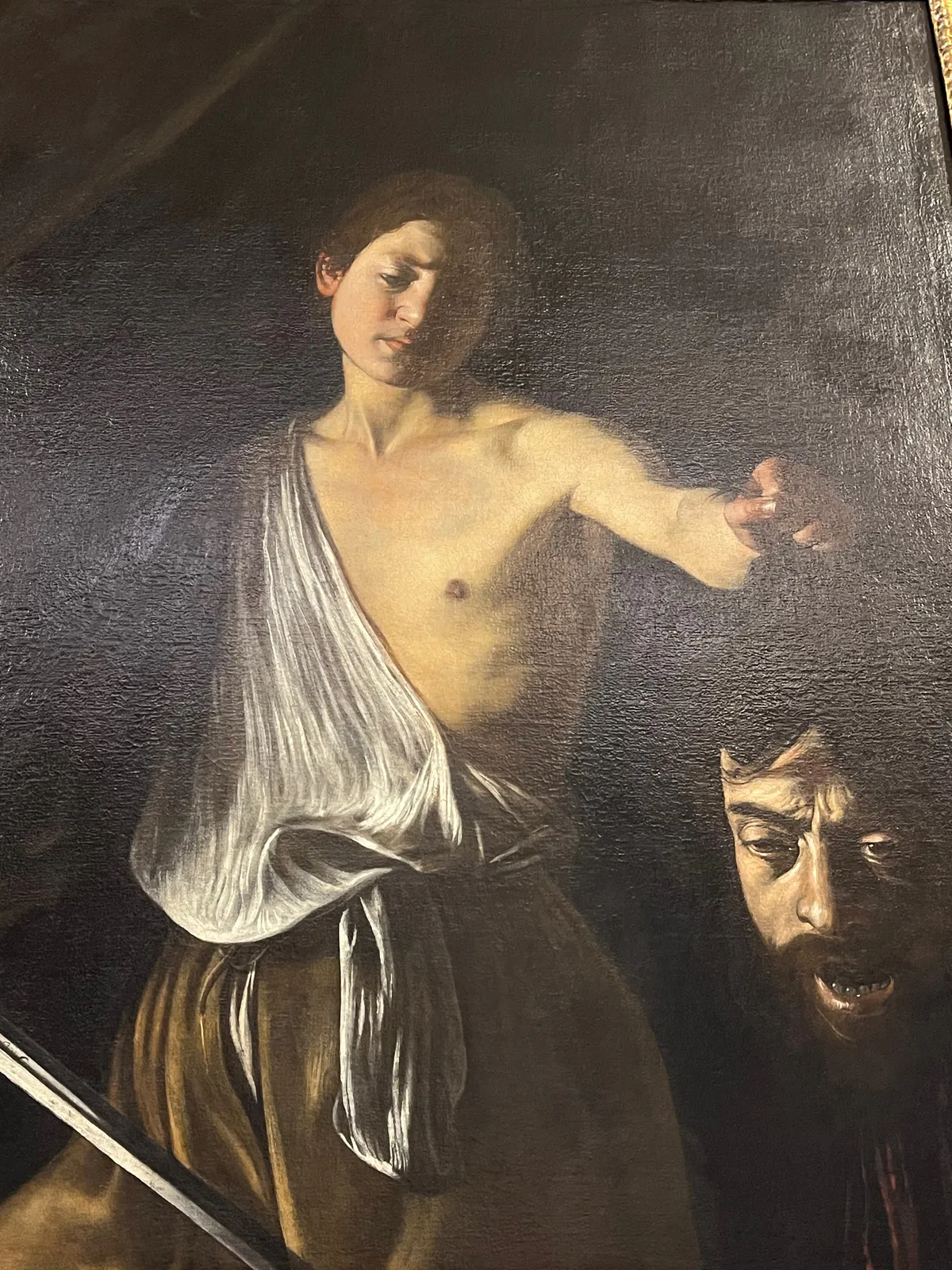
This haunting composition (1609–10) shows David holding Goliath’s severed head—modeled on Caravaggio himself. Rather than triumph, the mood is remorseful. The intense chiaroscuro, psychological realism, and moral ambiguity turn this biblical victory into a meditation on guilt, mortality, and inner torment.
The Fall of Phaeton
Sebastiano del Piombo
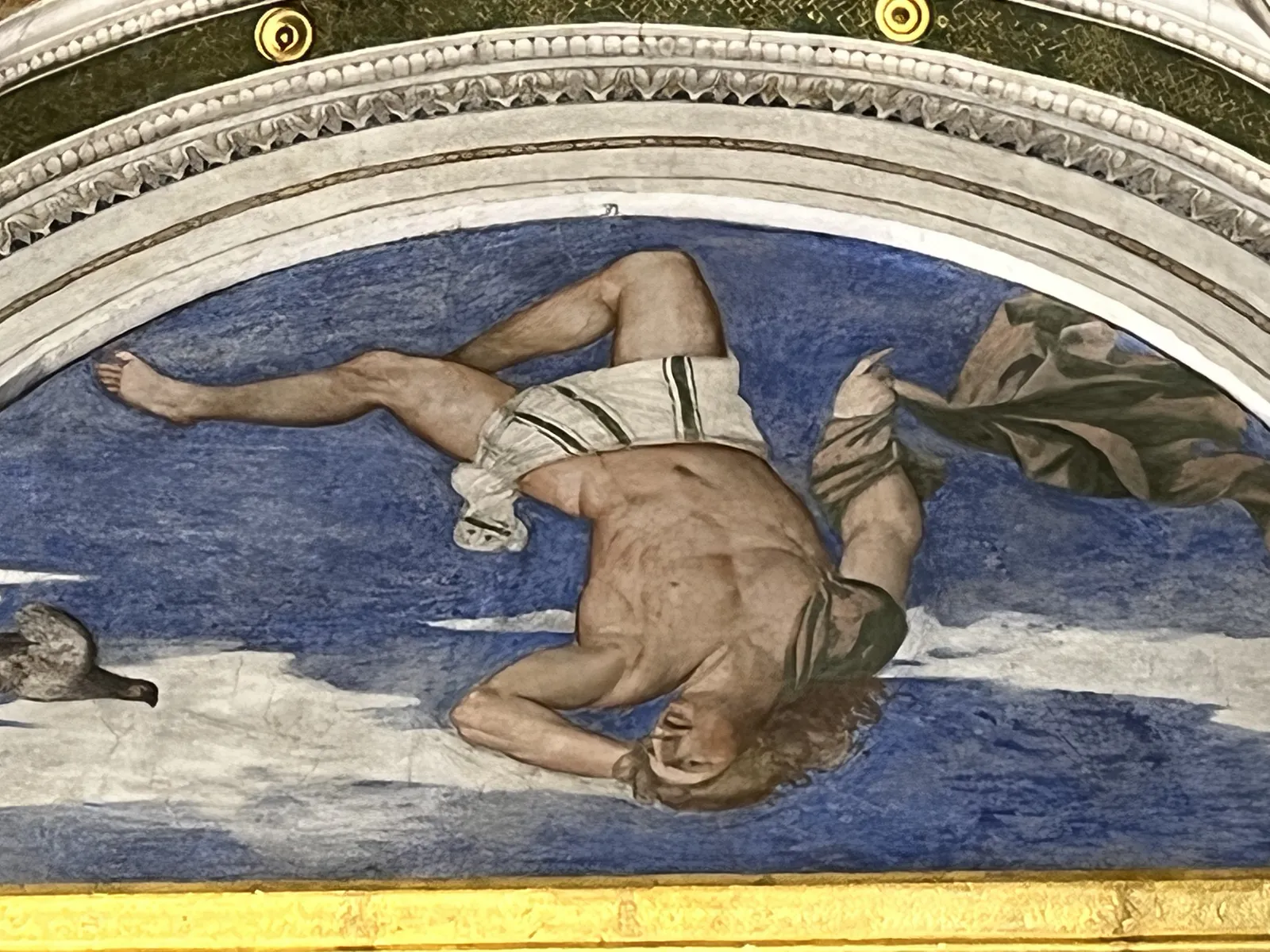
This fragment (c. 1511) shows Phaeton falling from the sky after failing to control the sun chariot of his father Helios. To save the world, Zeus strikes him down. Part of Sebastiano del Piombo’s mythological cycle at Villa Farnesina, it complements Raphael’s Triumph of Galatea with a dramatic warning against hubris.
The Holy Family with Sts. Francis, Anthony, Magdalene, John and Elizabeth
Bonifazio Veronese
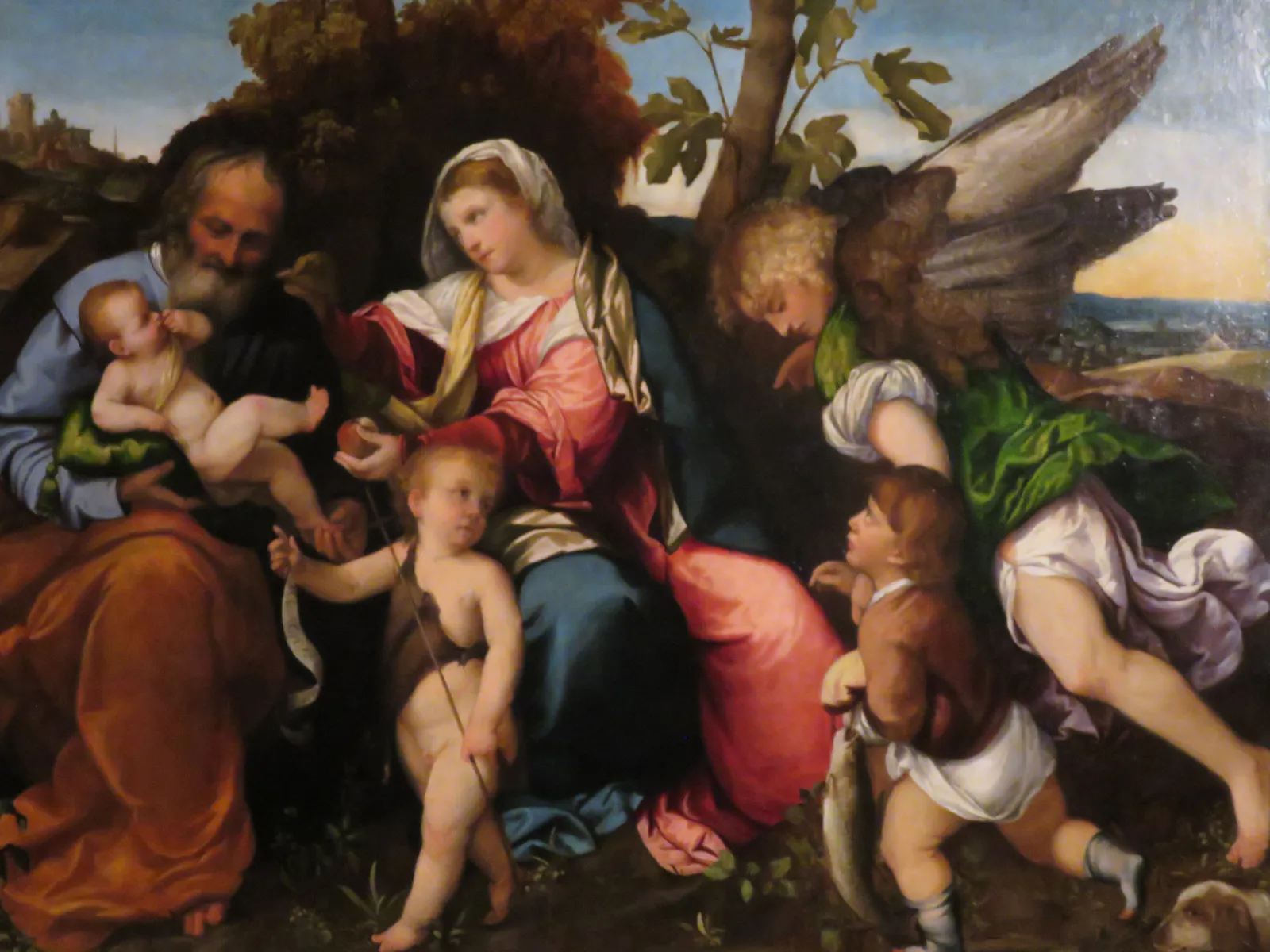
This oil on canvas (1525–27) shows the Holy Family seated outdoors, with Mary offering fruit to the Christ Child held by Joseph. At their side stand the young Saint John the Baptist and the Archangel Raphael guiding Tobias, who carries a fish. The combination of figures from different episodes may connect to Renaissance interest in linking domestic piety with protective intercession.
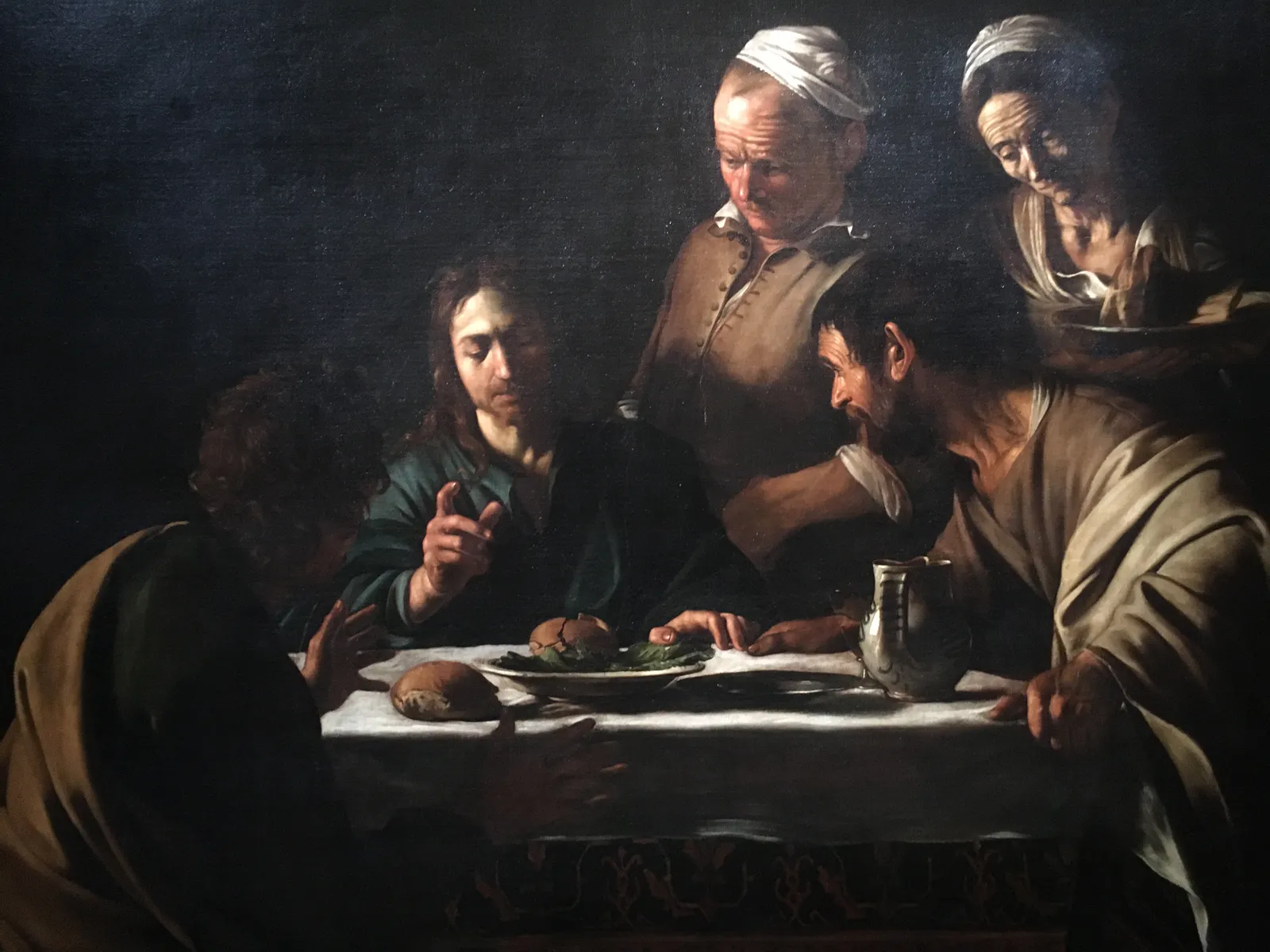
The Supper at Emmaus
Caravaggio
This painting (c.1606) was created after Caravaggio fled Rome for Naples. It depicts Christ revealing himself in Emmaus at the blessing of bread. Unlike Caravaggio’s earlier 1601 version, gestures are subdued and the table almost bare. In this darker vision, the recognition of the divine comes not in spectacle but in shadow and silence.
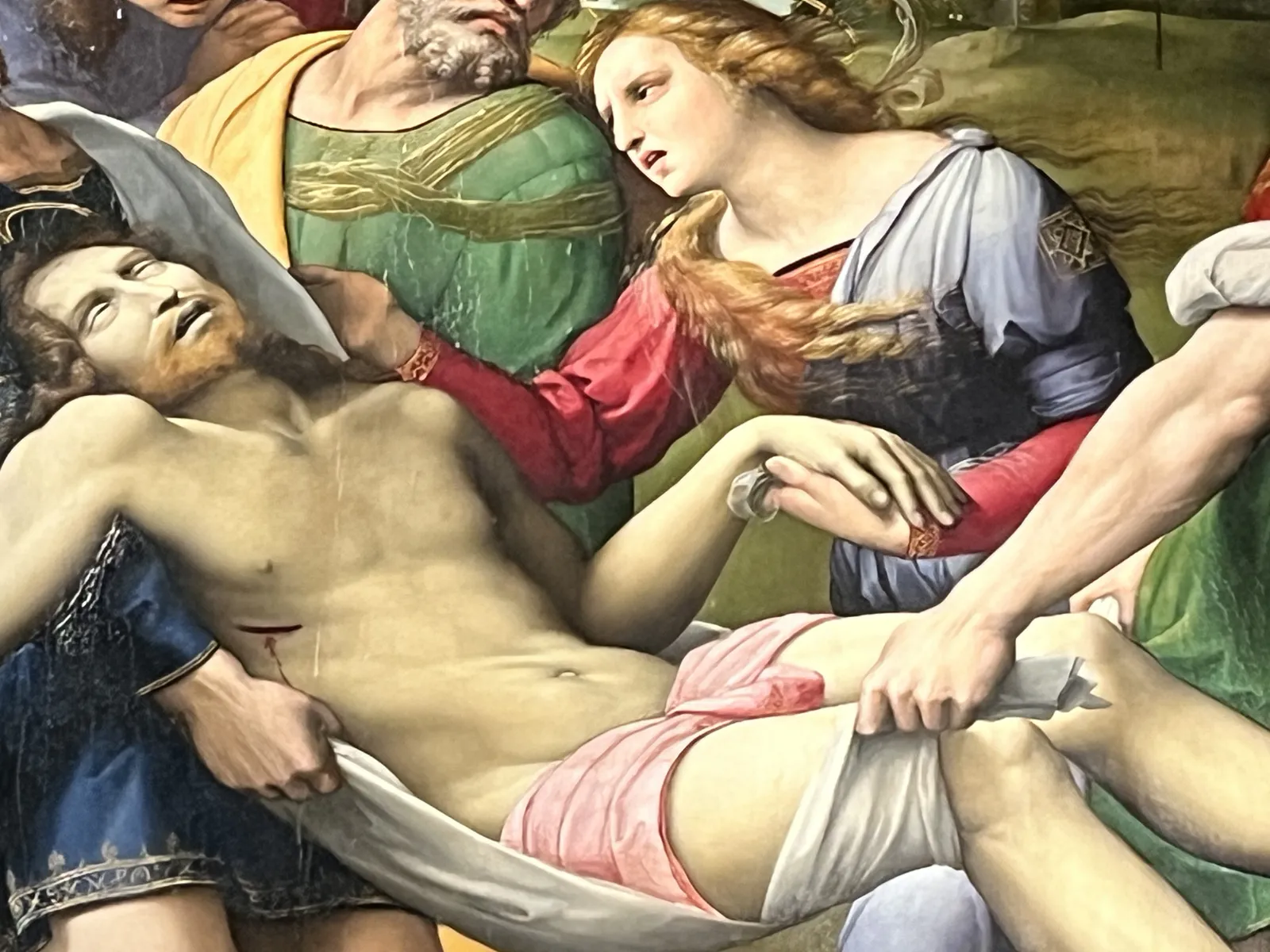
The Entombment (detail)
Raphael
This masterpiece (1507) shows a group of figures surrounding the lifeless body of Christ, merging themes of Deposition, Lamentation, and Entombment. Commissioned by Atalanta Baglioni, it honors her murdered son. Raphael’s composition shows Michelangelo’s influence in the sculptural form of Christ. A 2020 restoration revealed refinements in Raphael’s underdrawing, pigment choices, and layered modeling, clarifying how he built depth and anatomical precision.
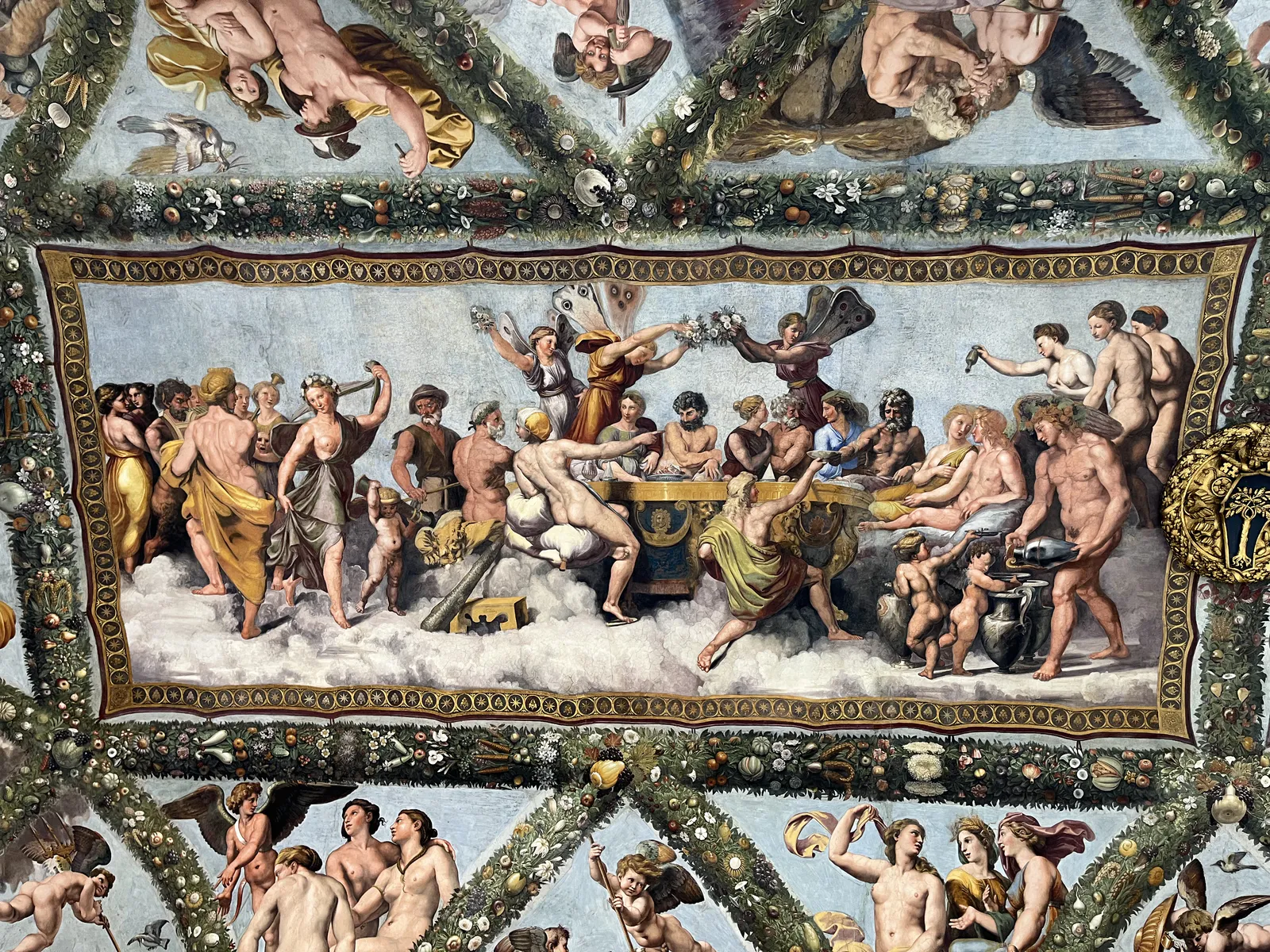
The Wedding Banquet of Cupid and Psyche
Raphael
In this grand fresco (1518), Raphael depicts the divine banquet celebrating the marriage of Cupid and Psyche. At the center, Jupiter and Juno preside; beside them sit Pluto, Persephone, Neptune, and Venus. Ganymede offers wine to Jupiter, while Bacchus (Dionysus), assisted by putti, pours wine at the right. The scene embodies divine harmony, joy, and the union of soul and love.
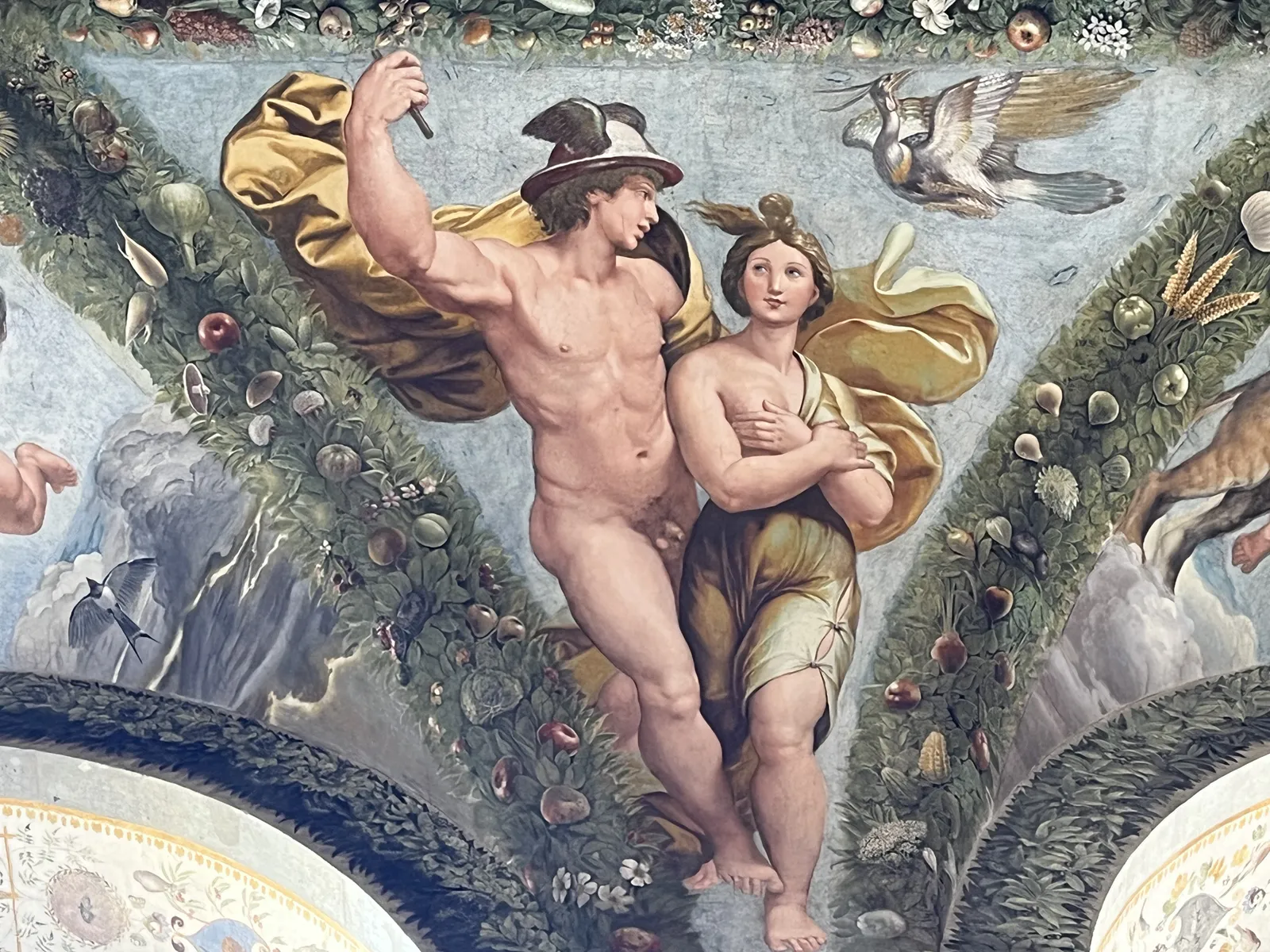
Mercury Brings Psyche up to Olympus
Raphael
In this fresco (1517–18), Raphael depicts Mercury escorting Psyche to Olympus, symbolizing her apotheosis. Mercury’s winged hat and caduceus highlight his role as divine messenger, while Psyche embodies the soul’s ascent to immortality. The scene reflects Renaissance fascination with classical myths as allegories of spiritual transformation.
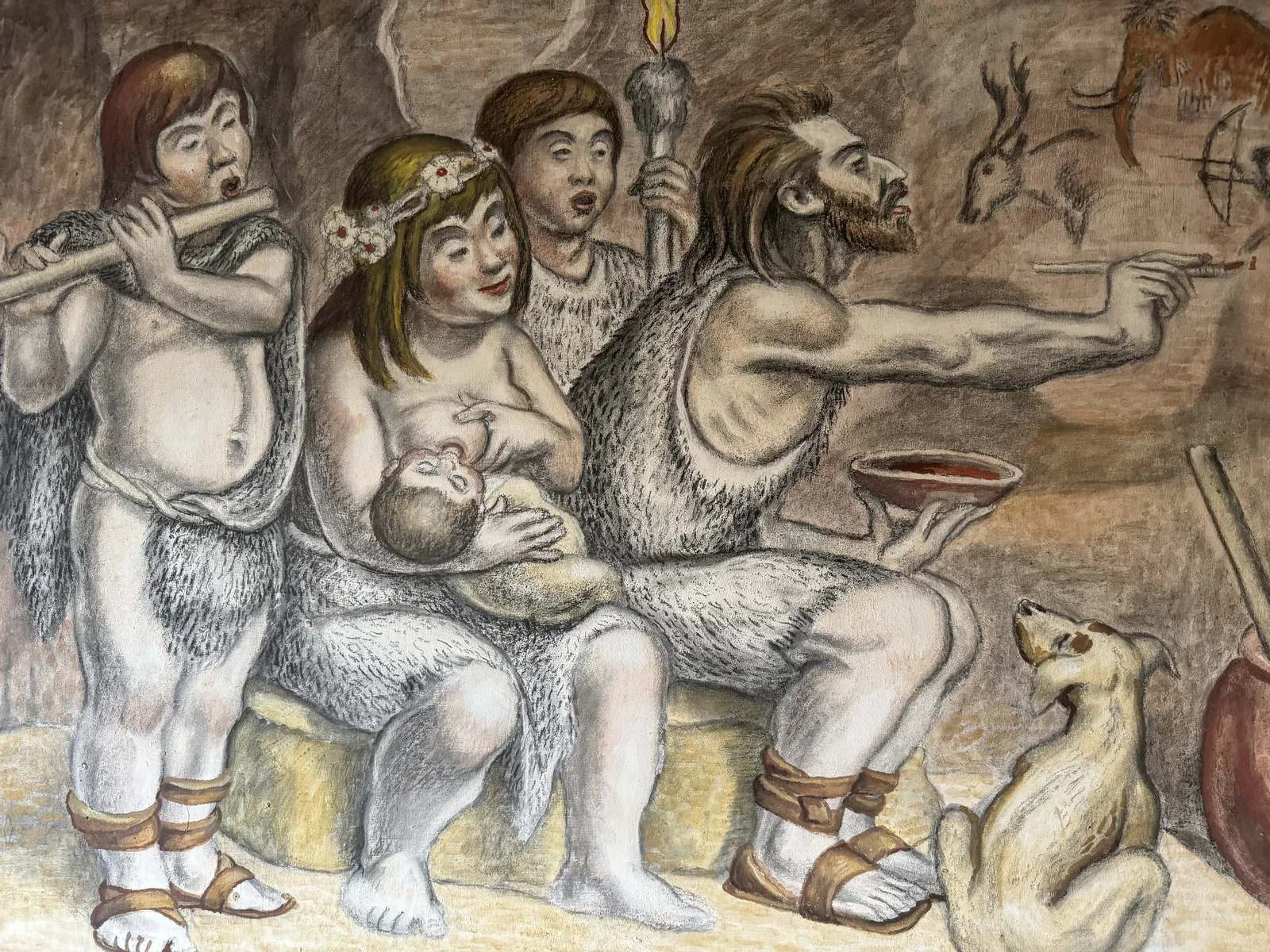
Cave Painter
Luis Alberto Acuña
In this mural (1960-75), Acuña imagines a prehistoric family gathered as the father paints on a cave wall. The scene blends idealized innocence with artistic origin: music, fire, and breastfeeding evoke harmony, while the act of painting becomes a metaphor for humanity’s first attempt to narrate its world. This work reflects Acuña’s fascination with the roots of civilization and his desire to forge a national artistic identity that honors both primitivism and cultural continuity.
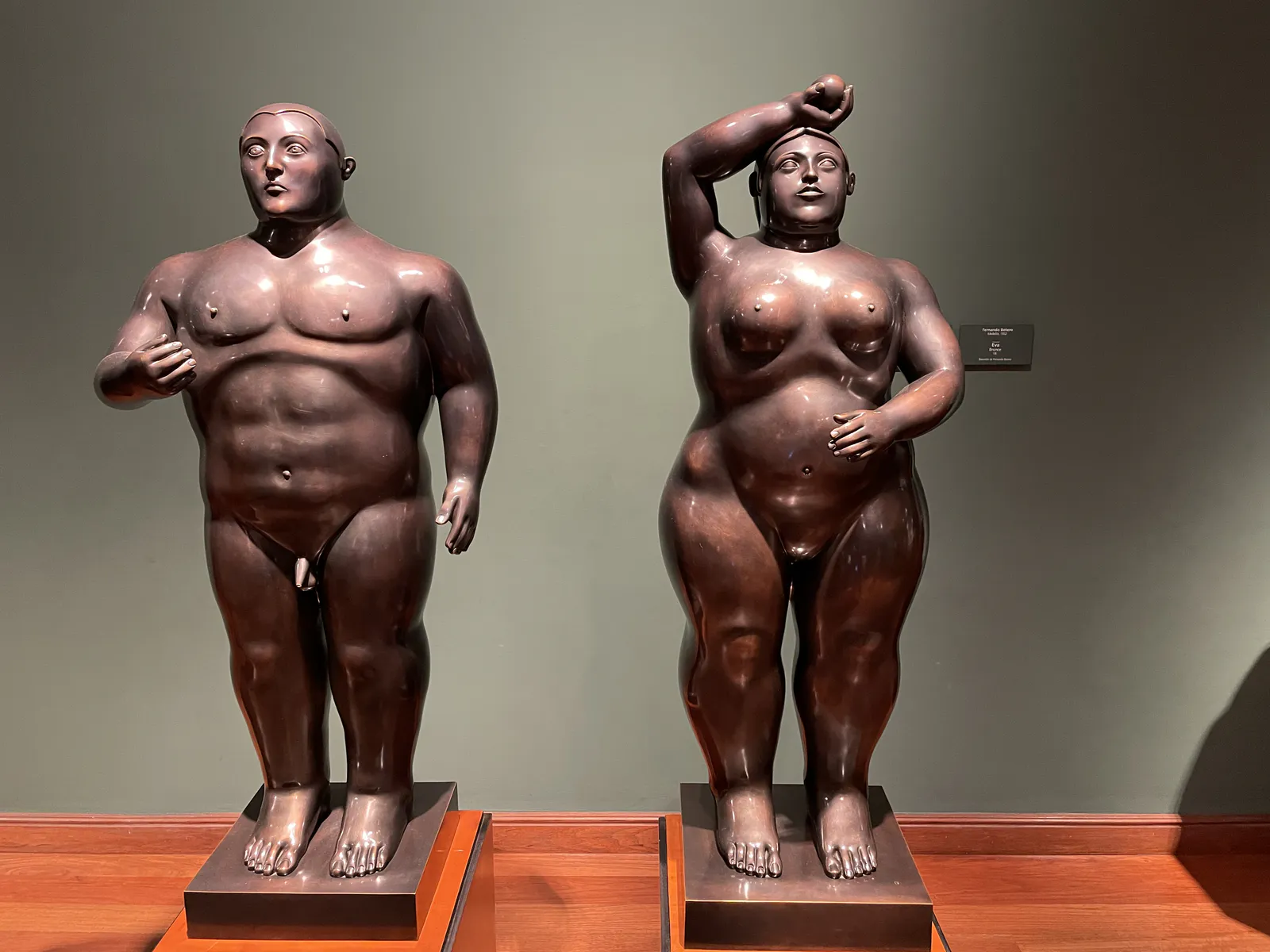
Adam and Eve
Fernando Botero
These 1999 bronze figures reimagine the biblical first humans with Botero’s hallmark voluminous style. Their serene, exaggerated forms strip the myth of guilt and drama, offering a playful yet dignified meditation on innocence, corporeality, and the timeless tension between flesh and spirit.
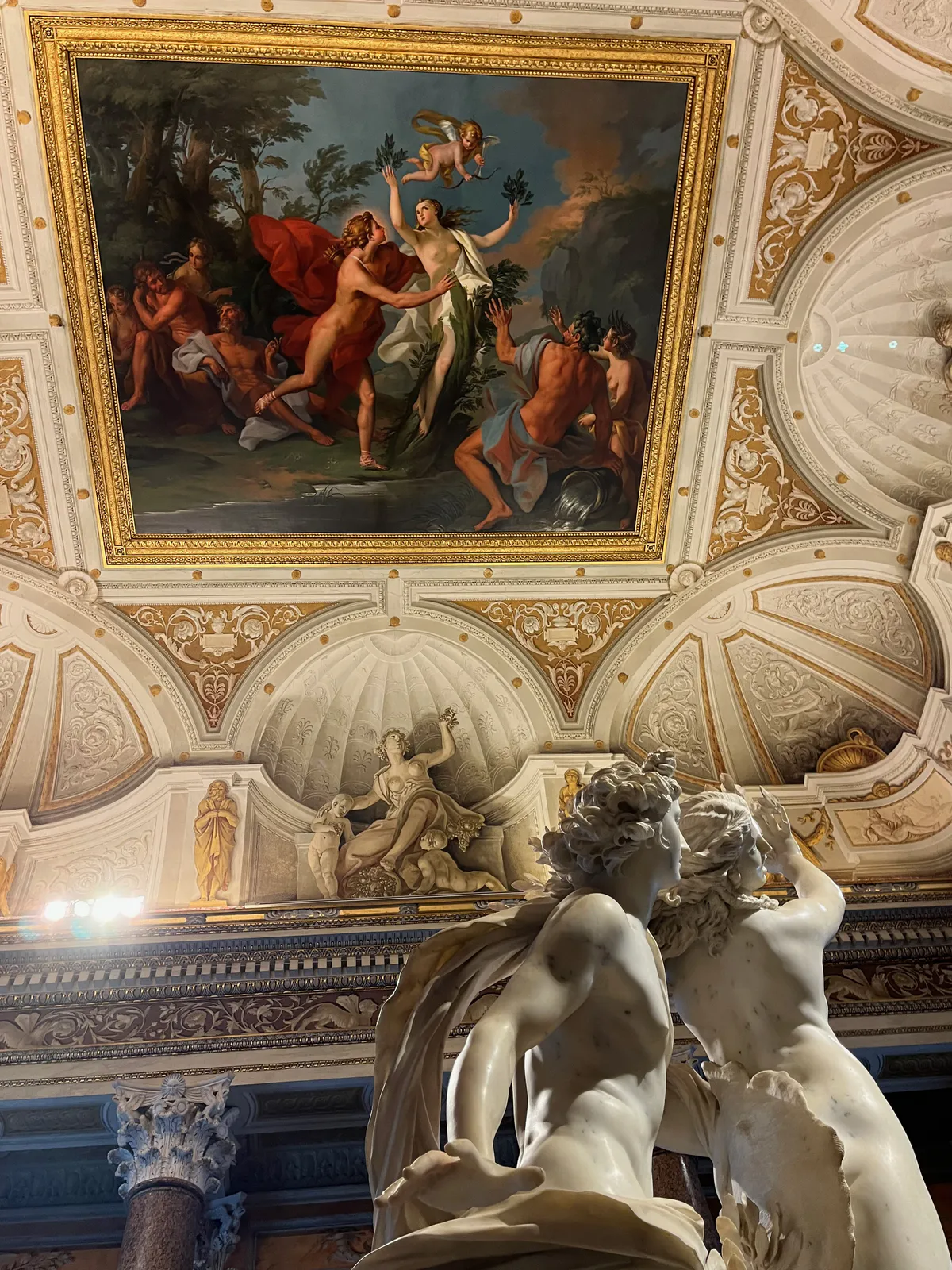
Apollo and Daphne with The Apotheosis of Romulus
Gian Lorenzo Bernini, Mariano Rossi
Bernini’s sculpture (1622–25) captures the climactic moment in Ovid’s Metamorphoses when the nymph Daphne, fleeing Apollo’s desire, transforms into a laurel tree. Above, Rossi’s Apotheosis of Romulus celebrates Rome’s divine origins. Romulus ascends, clutching Roma—helmeted symbol of the eternal city—while Fame, winged and bearing a trumpet, heralds his glory with laurel crowns. Together, sculpture and fresco exalt mythic transformation and Rome’s enduring legacy.
“When the path is beautiful, do not ask where it leads.” — Zen proverb
Welcome to my travel photography!
“When the path is beautiful, do not ask where it leads.” — Zen proverb
Welcome to my travel photography!
For as long as I can remember, my path has been one of discovery—seeking beauty, timelessness, and connection in every corner of the world. It has also been a journey of deep learning and understanding. I’ve been an avid traveler (or perhaps a travel addict?) for most of my life. My love for travel began long before I ever left home: as a child, I drew a fantasy map of my grandparents’ apartment and “traveled” through it with my cousin Sonya, imagining adventures in every corner. Nearly 90 countries and countless moments of awe later, I’m excited to share this journey with you.
Thanks to the tireless and ingenious programming of Diagilev, we’re now able to present about fifteen percent of the images I’ve accumulated over the years. More will be released in small batches depending on your interest. While the first release leans toward museum photography, later ones will include more nature, architecture, culture, and general travel experiences. If you’d like to receive email notifications about new releases, feel free to reach out—no commercial use, ever.
Throughout my travels, I’ve been drawn to two intertwined kinds of discovery. One is intellectual: learning why the world is the way it is. History became my guide, shaping my perspective and filling my camera roll with museums and old buildings. To me, history is not the past—it is the key to understanding the present and how the world became what it is. The other is emotional: seeking moments of elevation—spirituality, beauty, harmony—often found in nature, monasteries, and ancient sacred spaces. Together, these impulses shape my photography. It invites you to learn, admire, and soar—to rise above the mundane and see the world through a lens of curiosity and wonder.
Much of my later travel became possible thanks to my job with Delta Air Lines, but the wanderlust began years earlier. By the time I joined the industry, I had already visited over 35 countries and lived in several—largely thanks to a backpacking journey around the world with Luis León, whose face appears in many early photos. I grew up in Ufa in the USSR, and since leaving it I have lived, studied, and worked in Latvia, the United States, France, South Korea, Canada, Spain, Italy, Brazil, Japan, and Colombia.
A life of near-constant movement may seem a little crazy, but it has deepened my understanding of the world and produced the photography you are about to see. Over the years, my style has evolved—more intentional, more refined—yet its core remains the same: a search for understanding, timeless beauty, and a connection to those who walked this earth long before us.
I hope these photos stir something in your soul, just as they did in mine. I’d love to hear from you—whether reactions, suggestions, corrections, or a request to be added to the email list for new releases (no commercial use, I promise). You can learn more about my travels here, and my academic life here.
Enjoy our shared journey!