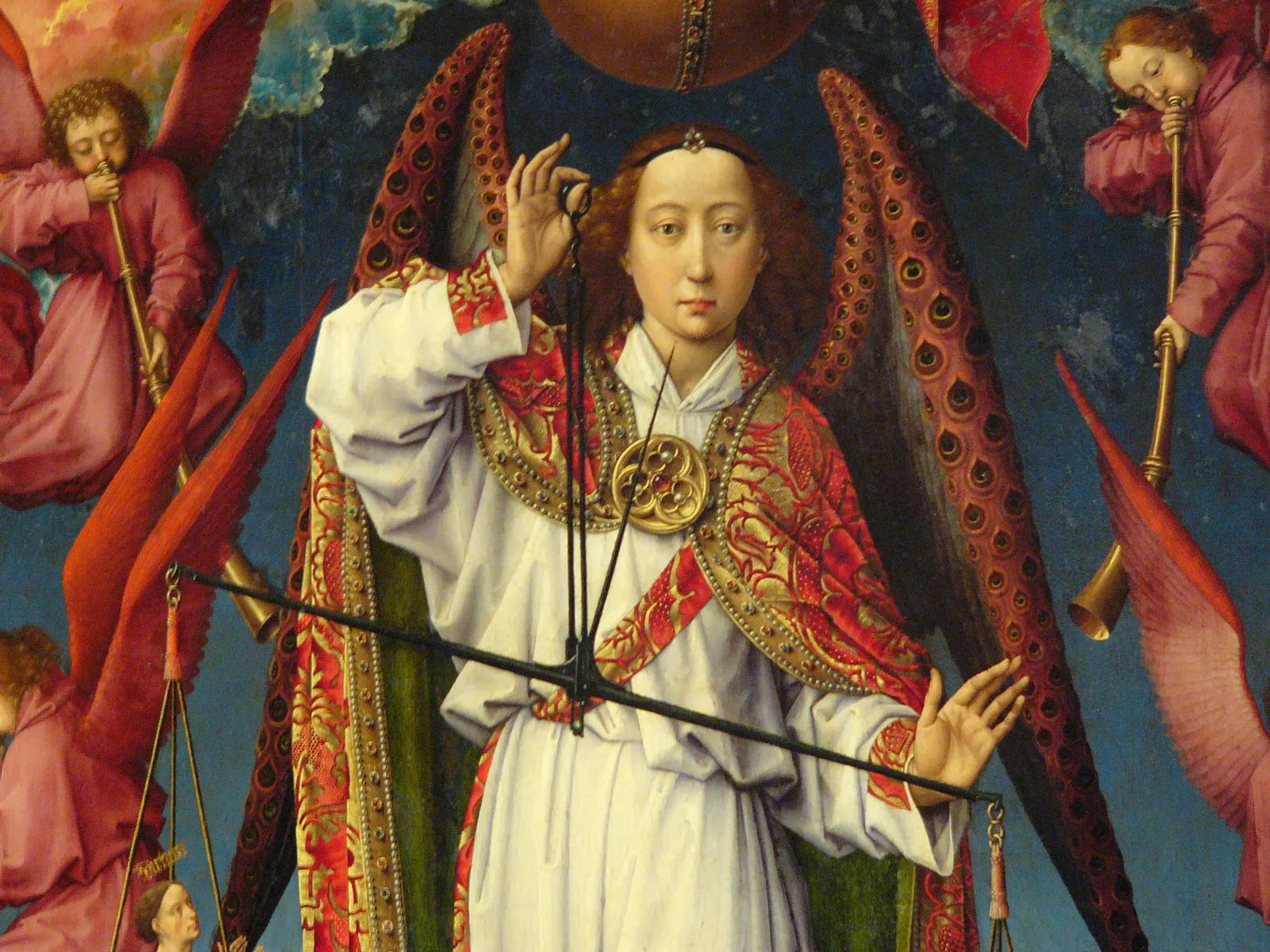
Archangel Michael Weighing Souls
Rogier van der Weyden
Detail from the Last Judgment Altarpiece (1445–50), created for Beaune’s Hôtel-Dieu. Archangel Michael holds scales to weigh souls, his calm gaze contrasting with the cosmic drama around him. Trumpeting angels herald resurrection, while Michael’s jeweled vestments and red wings embody divine authority. For the hospital’s patients, this image linked earthly suffering to the hope of eternal salvation.
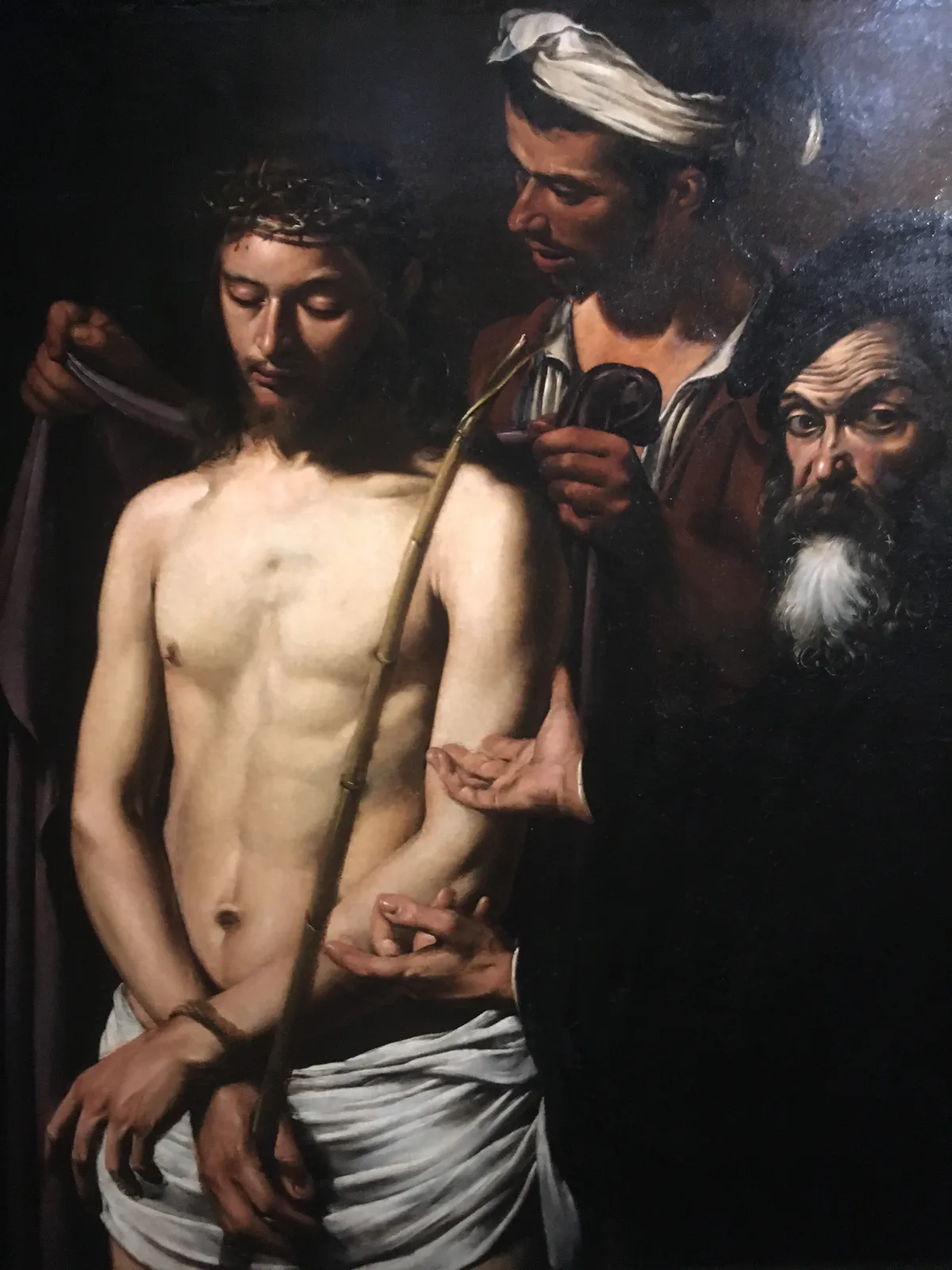
The Crowning with Thorns
Caravaggio
This painting (1602–04) depicts Christ humiliated before crucifixion. Crowned with thorns and bound, he stands in silent suffering as soldiers force the reed into his hand and mock him as king. Caravaggio’s harsh chiaroscuro strips away grandeur, presenting raw cruelty and dignity in contrast. The work confronts viewers with the violence of power and the endurance of faith.
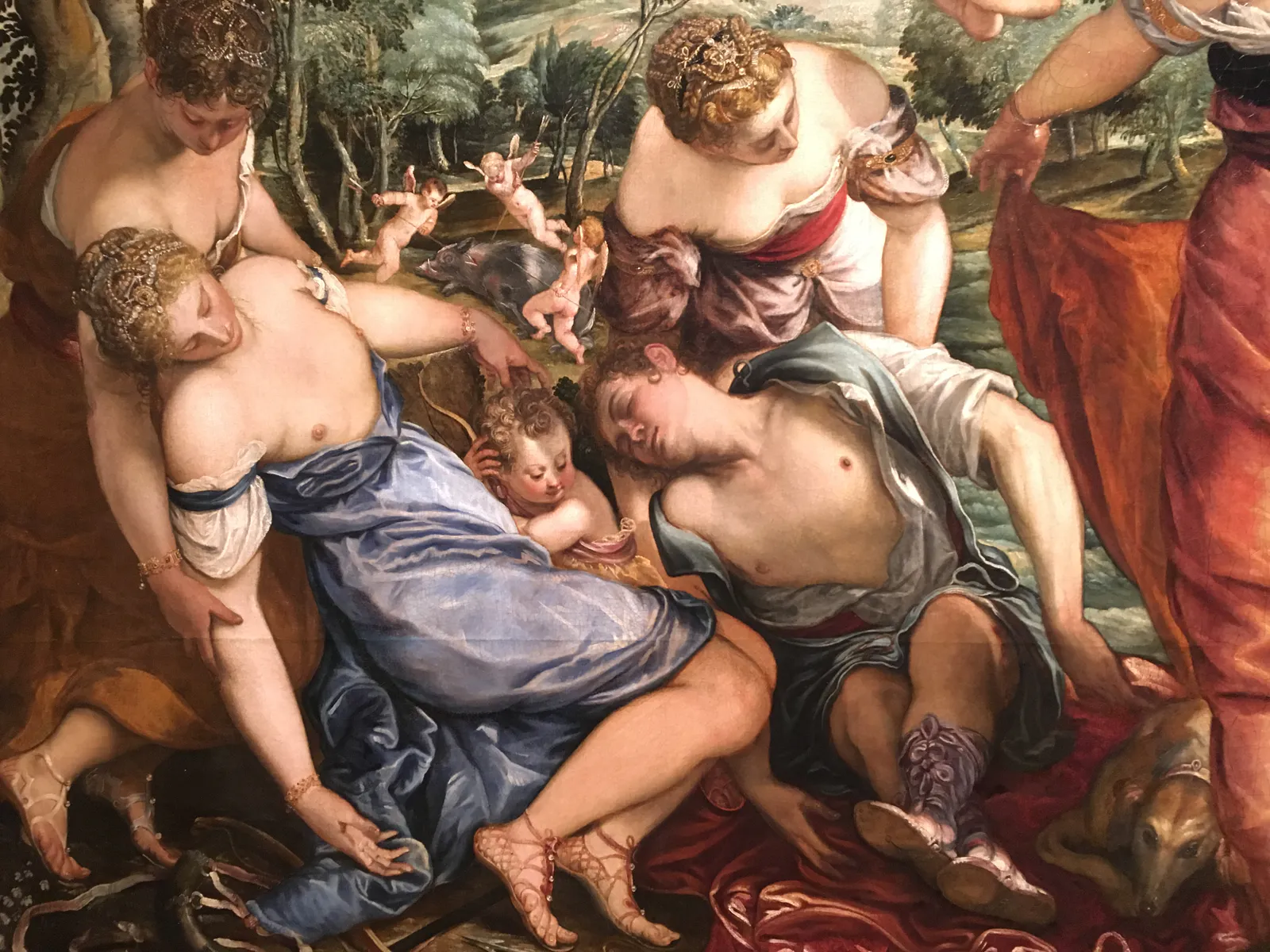
The Death of Adonis
Tintoretto's Workshop
The Death of Adonis (1550–55) captures Venus fainting at Adonis's death, diverging from Ovid’s Metamorphoses by including young women not in the original tale. Created by a Nordic artist in Tintoretto’s Venetian workshop, it blends Tintoretto’s dramatic style with the collaborator’s unique touch, evident in the expressive figures and vibrant colors. This fusion highlights the shared human themes of love and loss, inviting reflection on the timeless nature of myth and emotion.
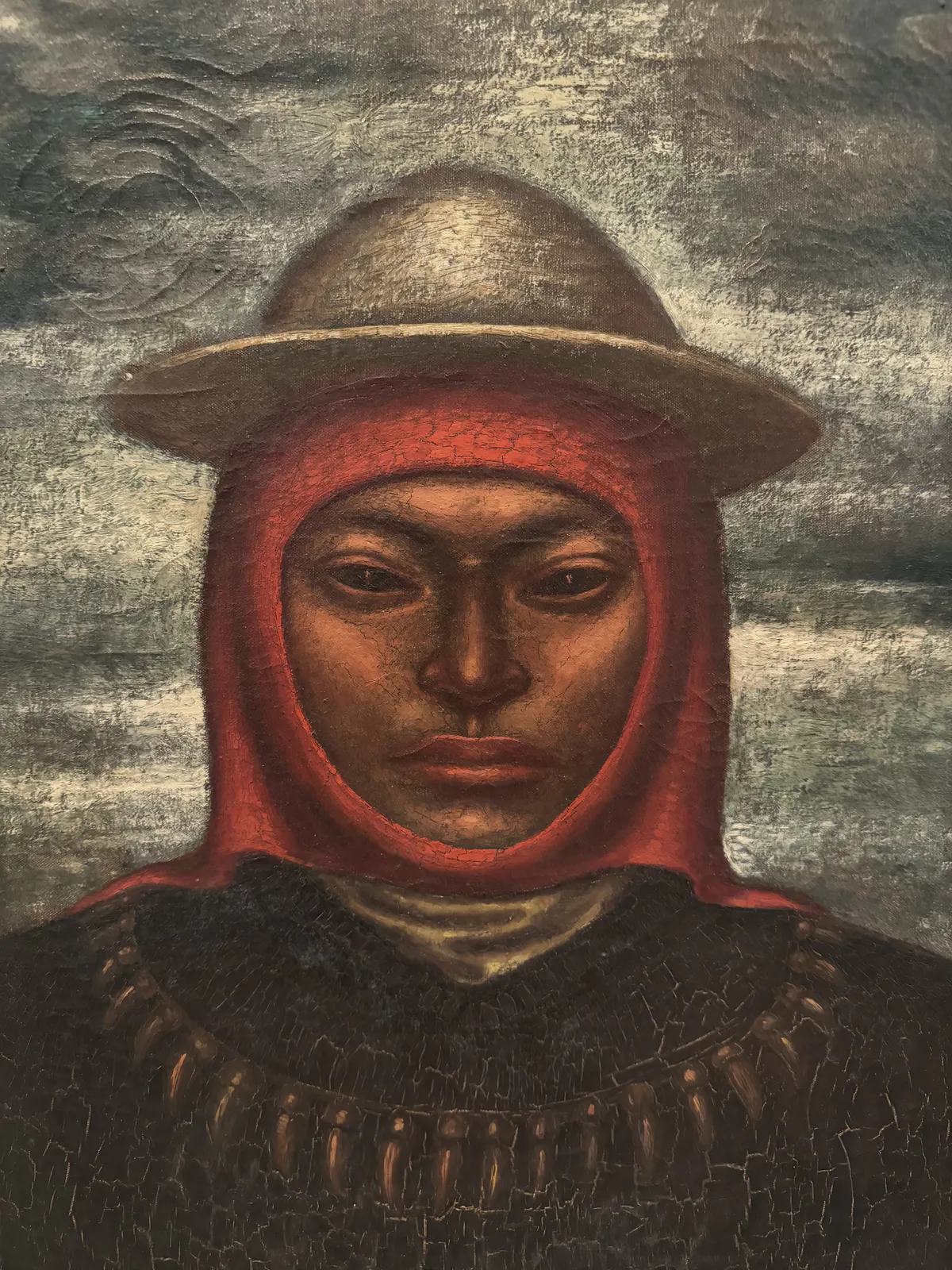
Portrait of Indigenous Person
Luis Alberto Acuña
This striking 1934 oil painting reflects the artist’s deep engagement with indigenous identity and pre-Columbian heritage. The stoic, symmetrical face, wrapped in a red hood beneath a wide-brimmed hat, evokes dignity and resilience. Acuña, a key figure in Colombian modernism, often highlighted native ancestry as a counter-narrative to Eurocentric ideals.
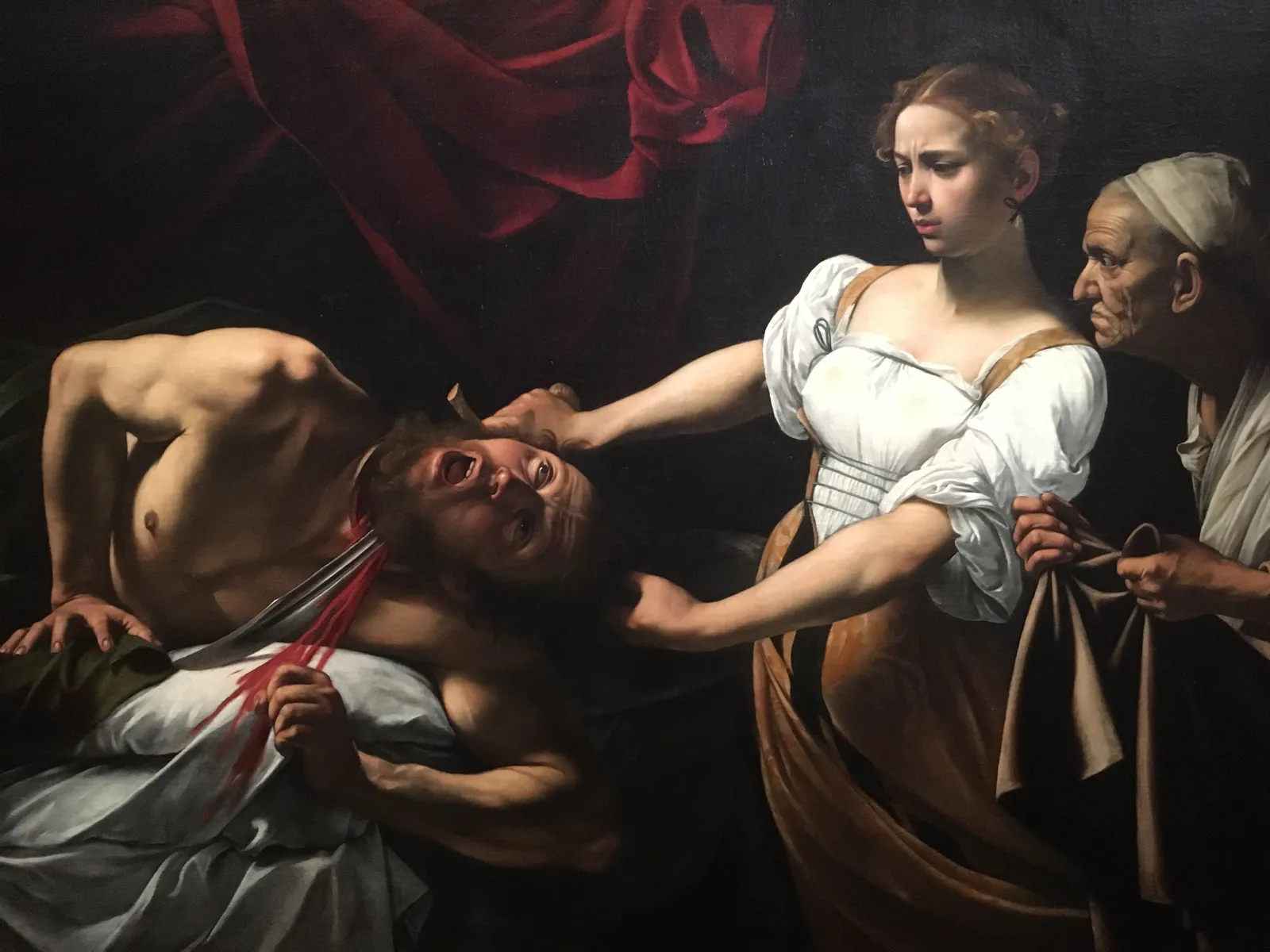
Judith Beheading Holofernes
Caravaggio
This canvas (c. 1599) painted in Rome embodies Caravaggio’s radical realism and theatrical chiaroscuro. Judith, a young widow, slays the Assyrian general Holofernes to save her people. Her calm determination contrasts with his violent death and the maid’s aged pragmatism. By staging sacred violence with unflinching naturalism, Caravaggio redefined biblical painting as a drama of human courage and divine justice.
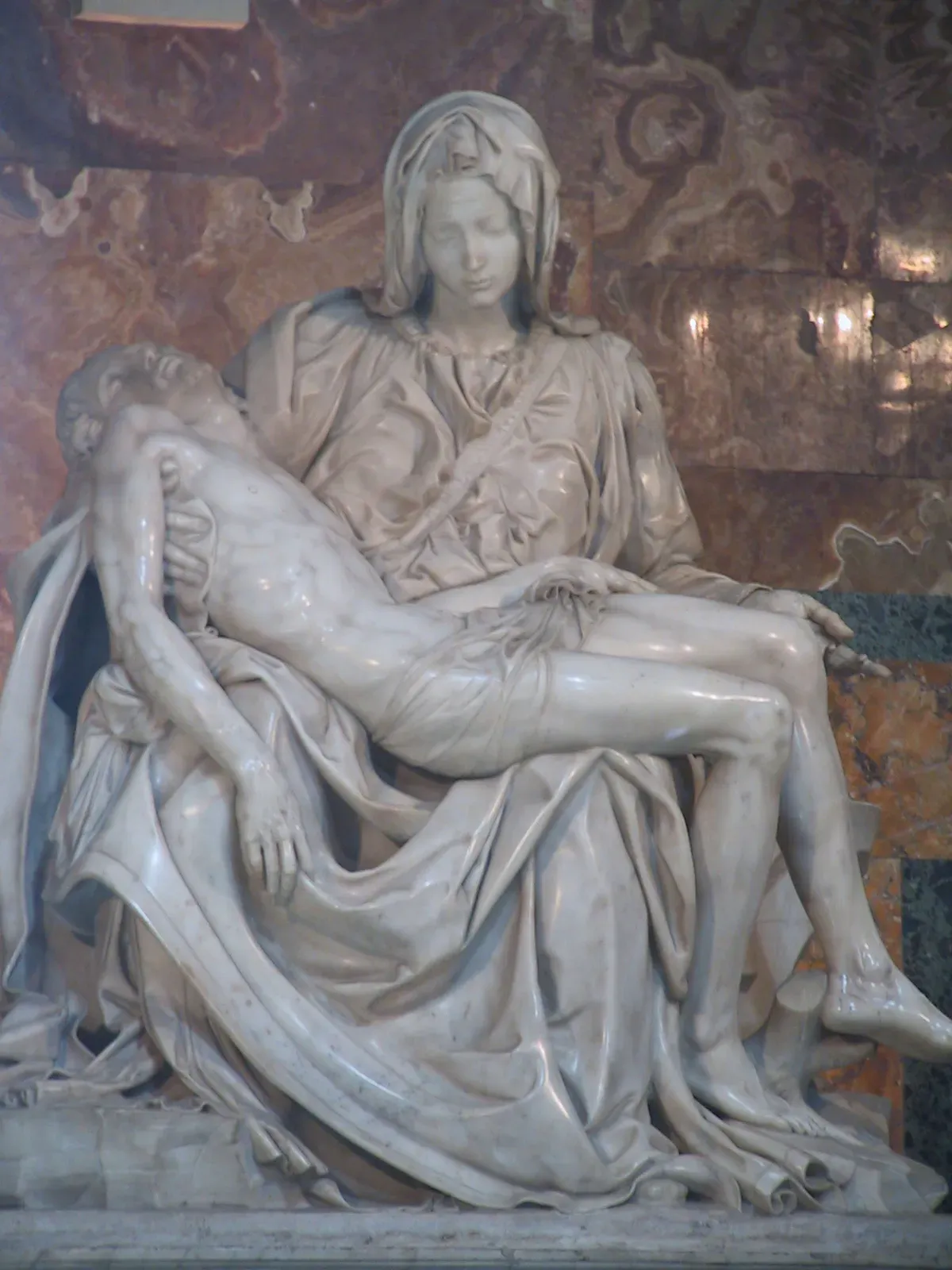
Pietà
Michelangelo
This marble sculpture (1498–99) shows the Virgin Mary holding the body of Christ after the Crucifixion. Carved by Michelangelo at age twenty-four, it unites idealized form and anatomical accuracy with restrained pathos. Commissioned for St. Peter’s Basilica, the Pietà exemplifies High Renaissance harmony between human beauty and divine suffering.
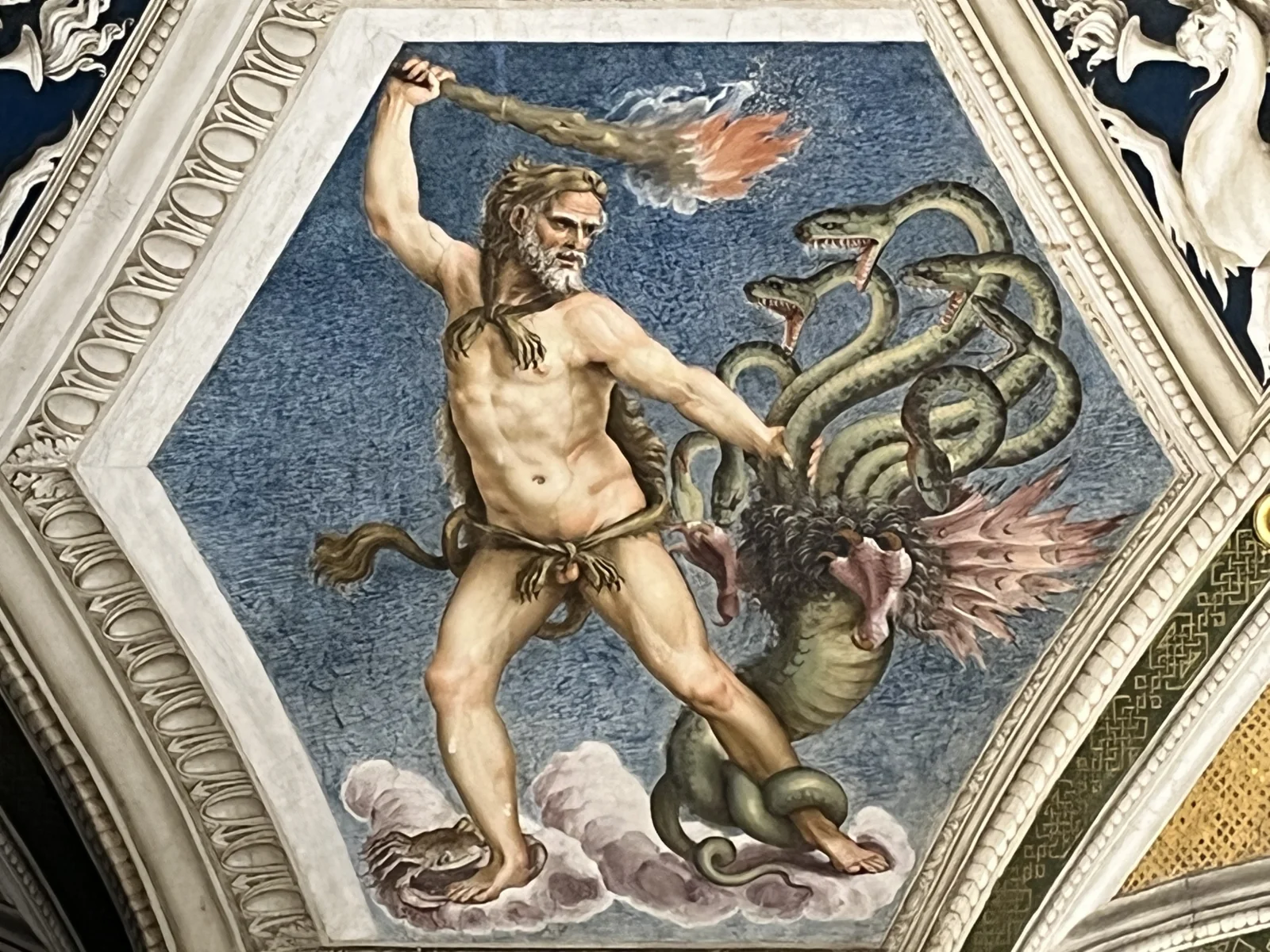
Hercules and the Hydra
Baldassarre Peruzzi
This ceiling fresco (c. 1510) in the Hall of the Perspectives shows Hercules battling the multi-headed Hydra. The creature symbolizes the zodiac sign Cancer, aligning with the room’s astrological theme. Peruzzi demonstrates heroic virtue triumphing over chaos and earthly temptation, reflecting Renaissance ideals of order and moral strength.
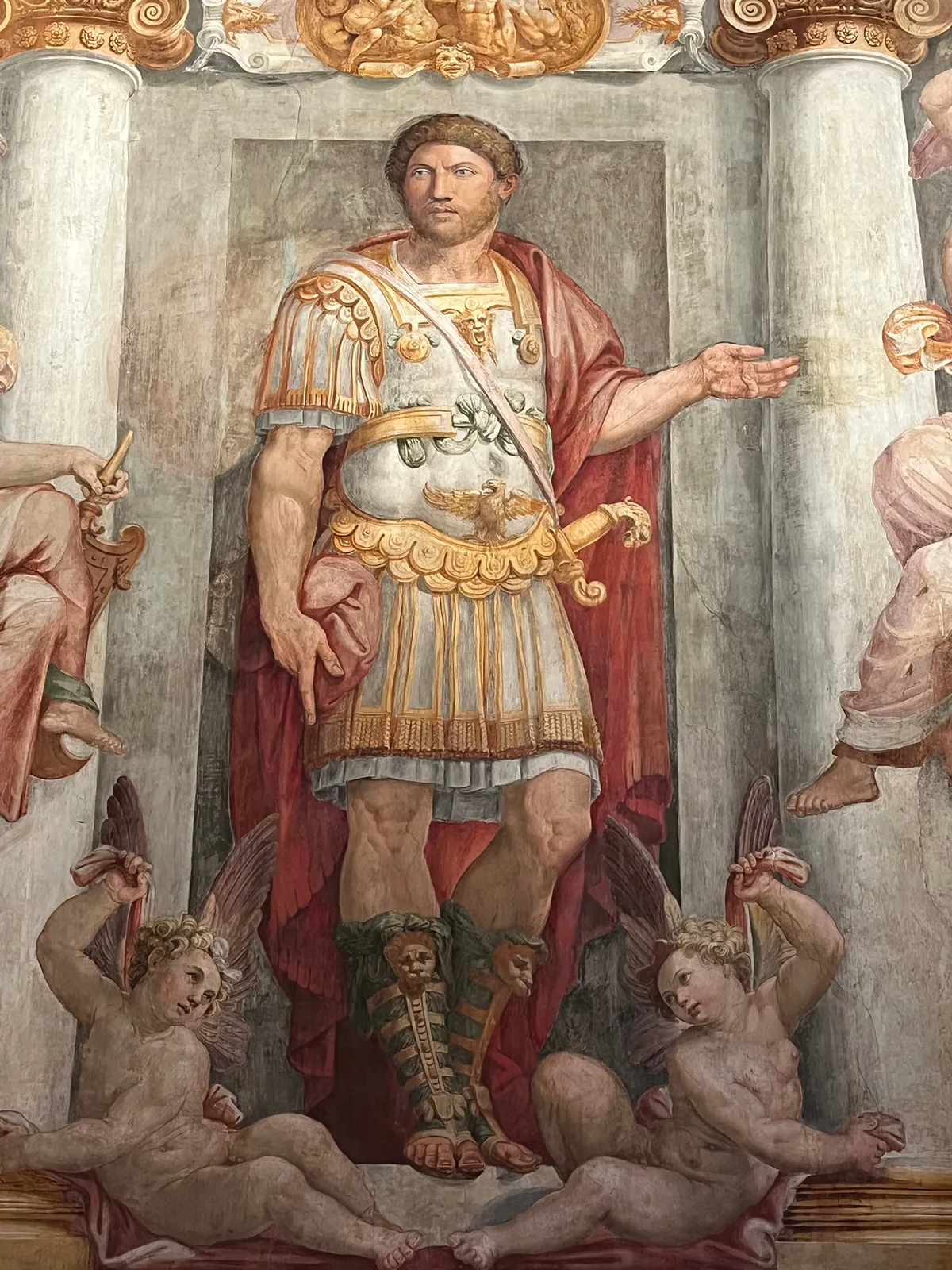
Emperor Hadrian
Girolamo Siciolante da Sermoneta (attrib.)
This 16th-c. fresco from the Sala Paolina depicts Emperor Hadrian in idealized Roman military attire. Portrayed with commanding calm, Hadrian stands framed by classical architecture and winged putti, symbolizing both earthly rule and divine favor. The work affirms his legacy as builder, humanist, and guardian of imperial order—within the very mausoleum he commissioned.
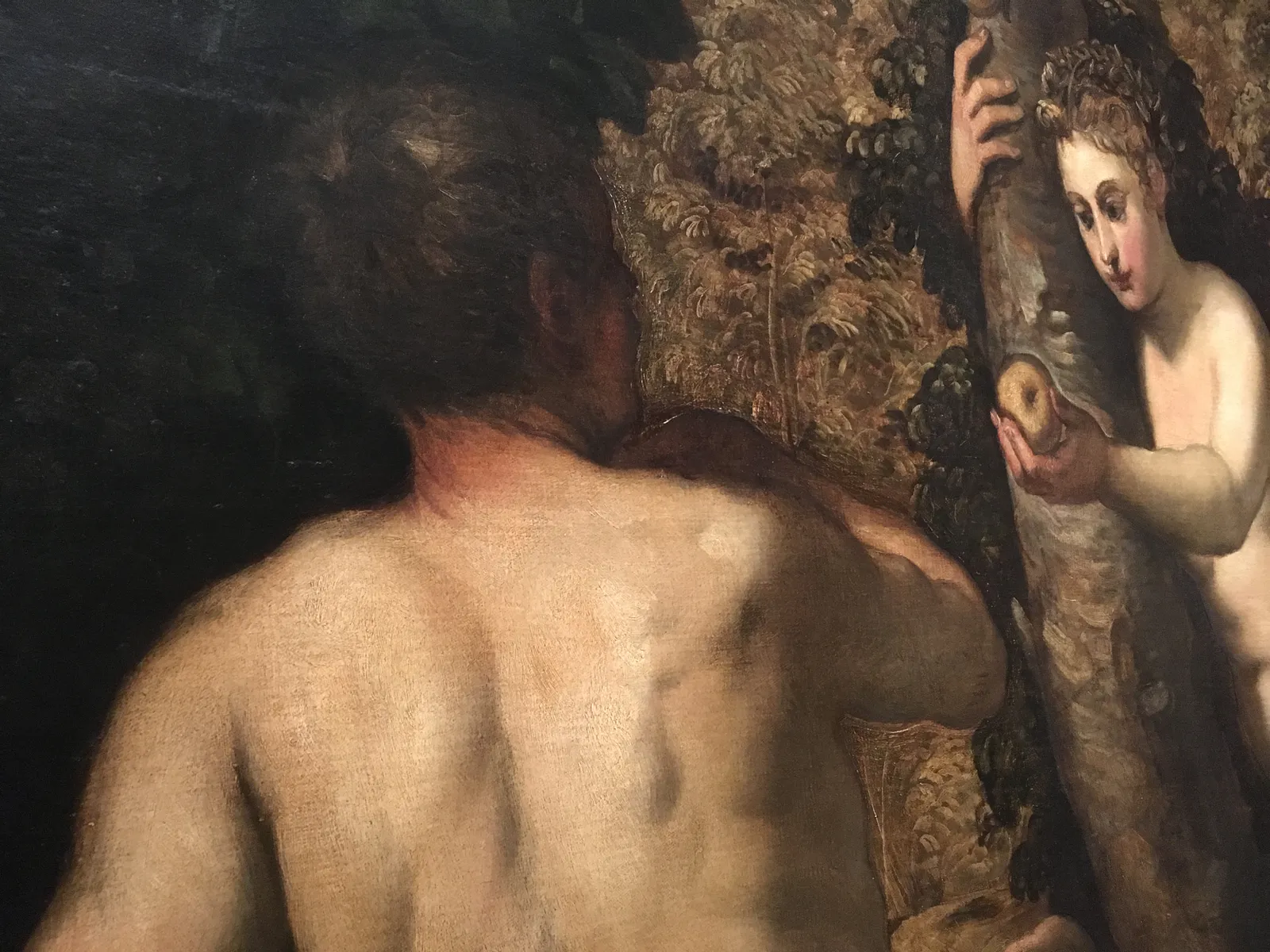
Adam and Eve
Tintoretto
Tintoretto’s painting (1550–53) depicts the biblical scene of temptation in the Garden of Eden. Eve offers the forbidden fruit to Adam, with their expulsion illustrated in the background. Influenced by Michelangelo, the composition emphasizes the nude figures and employs oblique lines to structure the landscape. This work reflects the Renaissance interest in human form and moral themes.
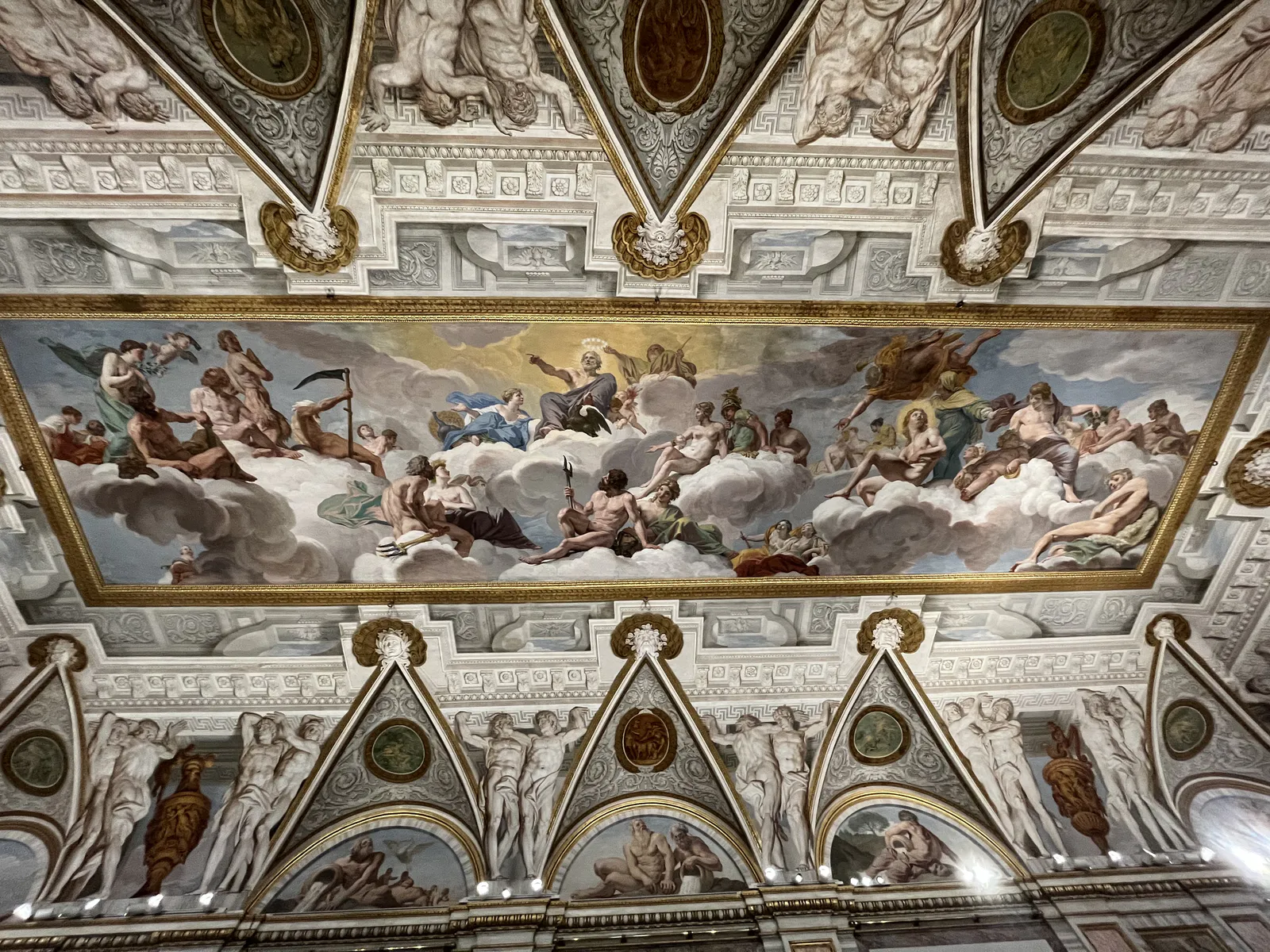
The Council of the Gods
Giovanni Lanfranco
Lanfranco’s grand ceiling fresco (1624–25) fills the Sala della Loggia with divine spectacle. Jupiter reigns at the center, surrounded by Roman deities including Venus, Mars, Pluto, and Juno. Designed to dissolve architectural limits, the illusionistic sky transforms the ceiling into a heavenly theater of Baroque power and myth.
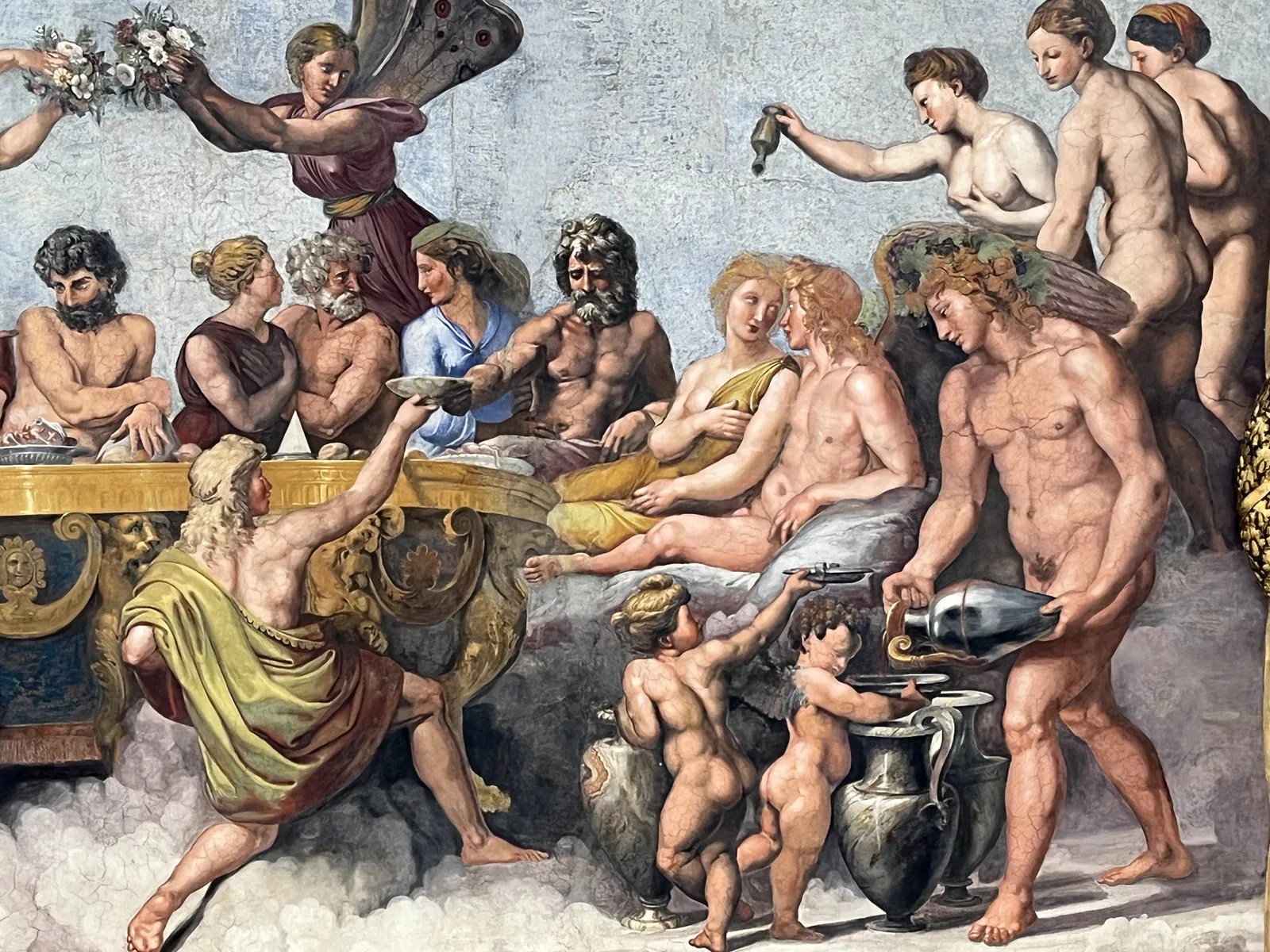
The Wedding Banquet of Cupid and Psyche
Raphael
In this fresco (1518–19), Raphael presents the divine banquet:on the left are Neptune, Persephone, Pluto, Juno, and Jupiter receiving a drink from Ganymede. On the right sit Psyche and Cupid, gazing at each other. In the foreground, Bacchus and a young satyr pour wine, highlighting the festive nature of Cupid’s immortal union with Psyche.
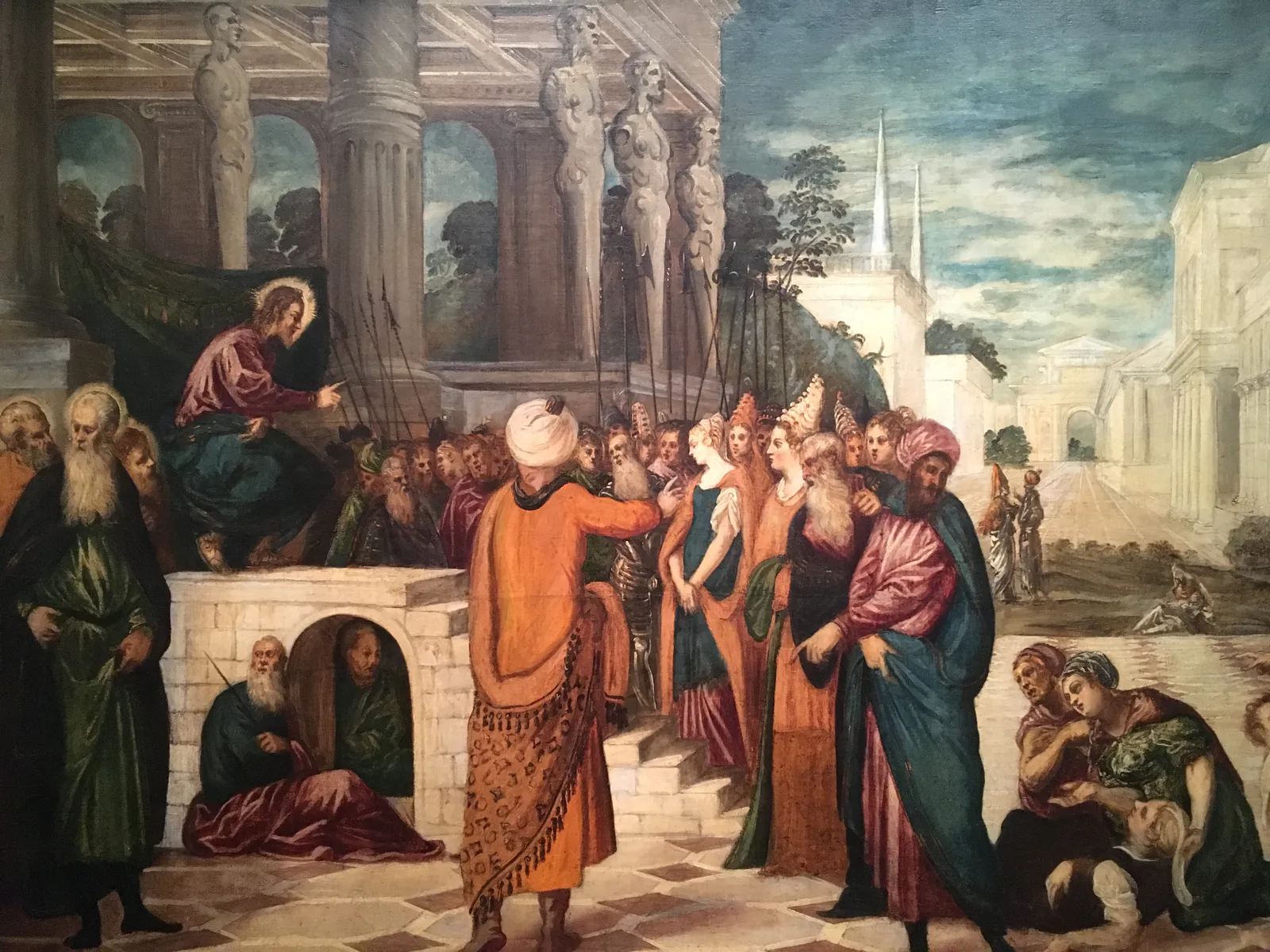
Christ and the Adulteress
Tintoretto
This scene (c. 1555) is from the Gospel of John: Jesus responds to scribes and Pharisees demanding judgment on an adulterous woman. His challenge—inviting the sinless to cast the first stone—teaches mercy over condemnation. Tintoretto’s dynamic style appears in the sharp contrasts of light and shadow, elongated figures, and oblique spatial arrangement that intensify the moral tension. Classical architectural elements frame the encounter, emphasizing the conflict between legalism and redemption.
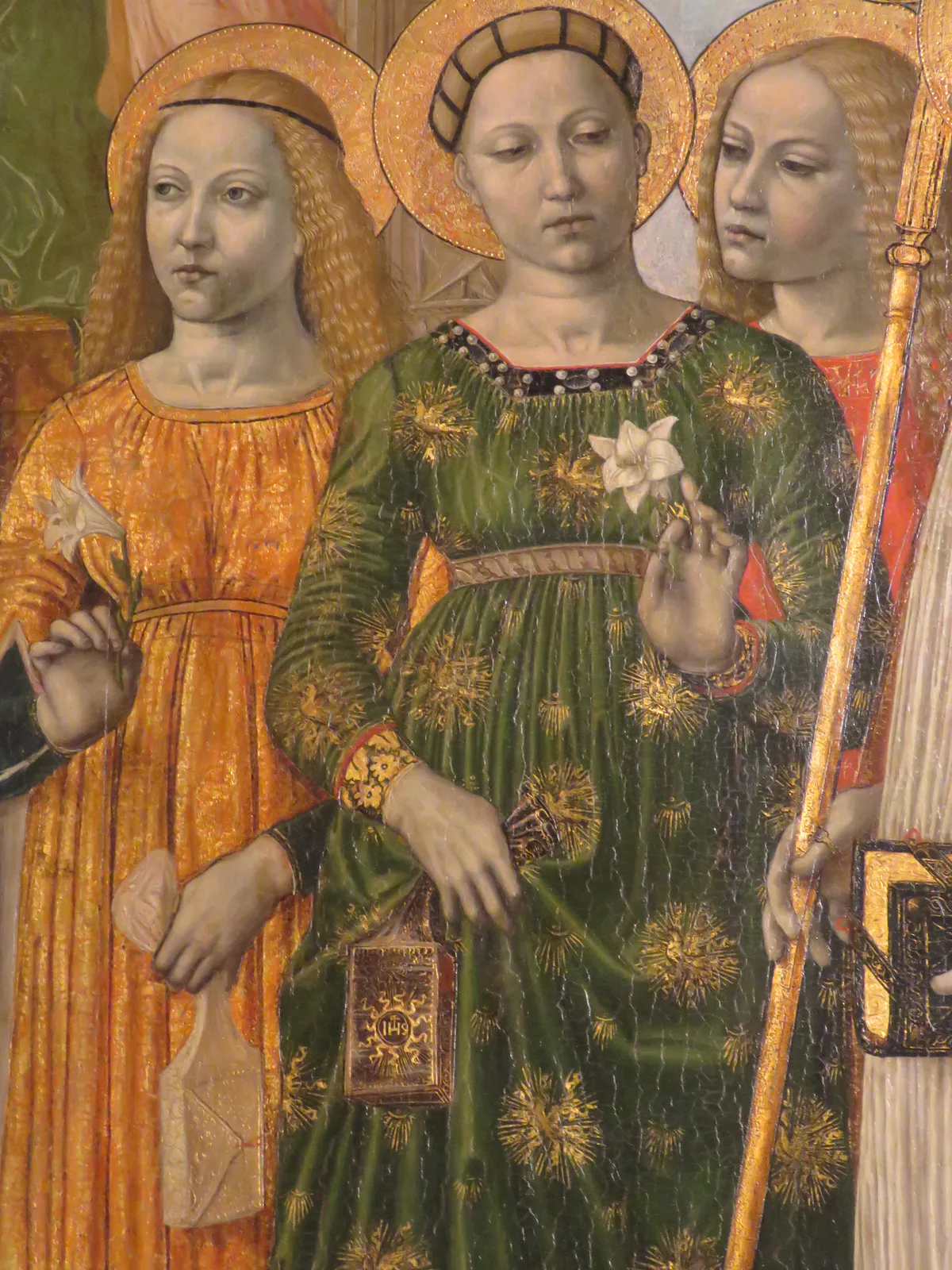
Santa Conversazione (detail)
Ambrogio Bergognone
This panel 1490-95) features a trio of female saints bearing lilies, symbolizing purity. Adorned with gold and intricate embroidery, their garments suggest sanctity and nobility. The solemn expressions and clasped books evoke wisdom and devotion, emphasizing the fusion of holiness and human dignity in late Gothic religious art.
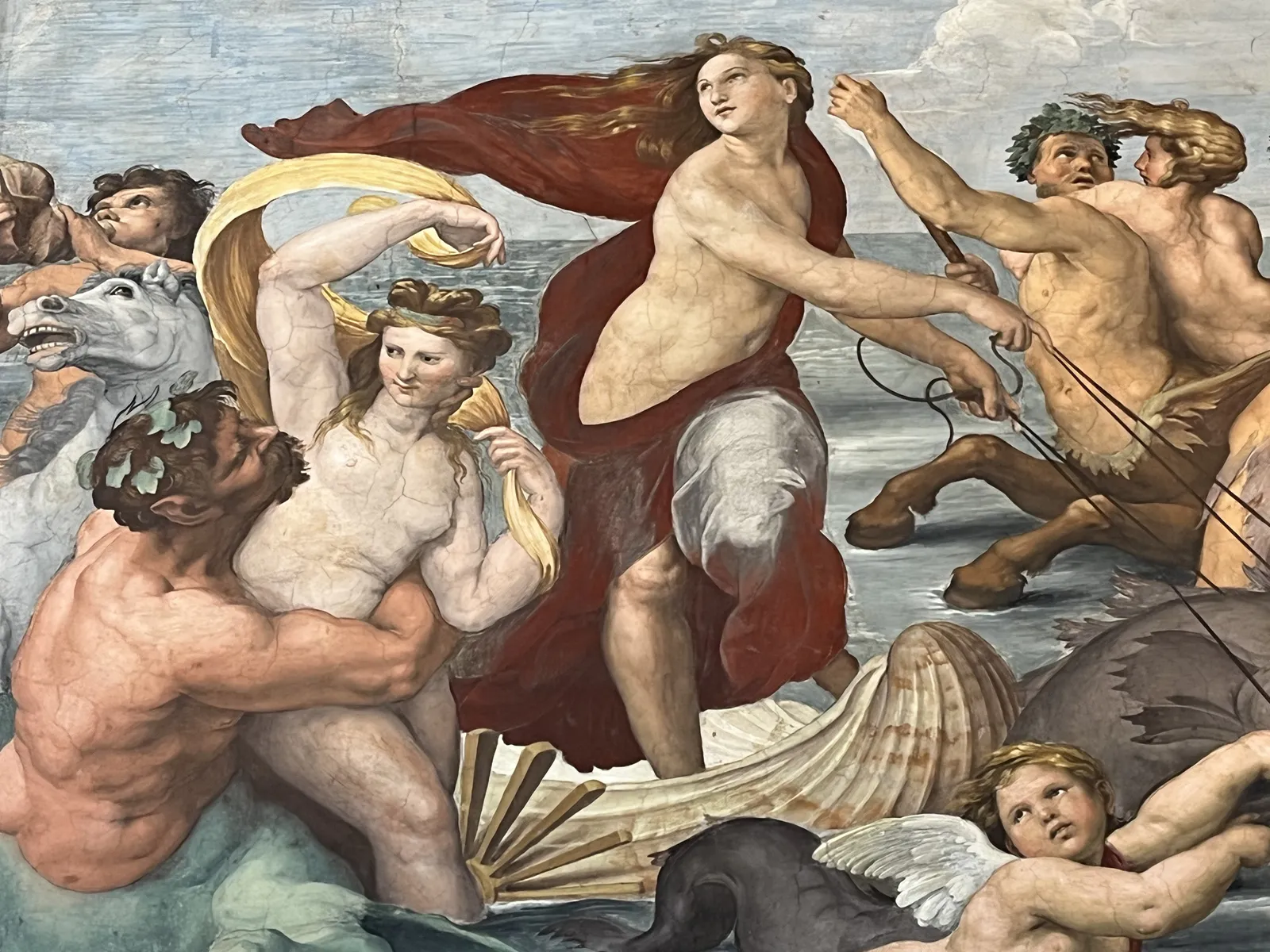
Triumph of Galatea (detail)
Raphael
This portion (1511–12) shows Galatea, the sea nymph of Greek myth, riding a dolphin-drawn shell chariot. Around her, tritons and nereids embody the vibrant energy of the sea. Raphael’s design celebrates Galatea’s beauty and grace, while capturing the joyful movement of the marine procession.
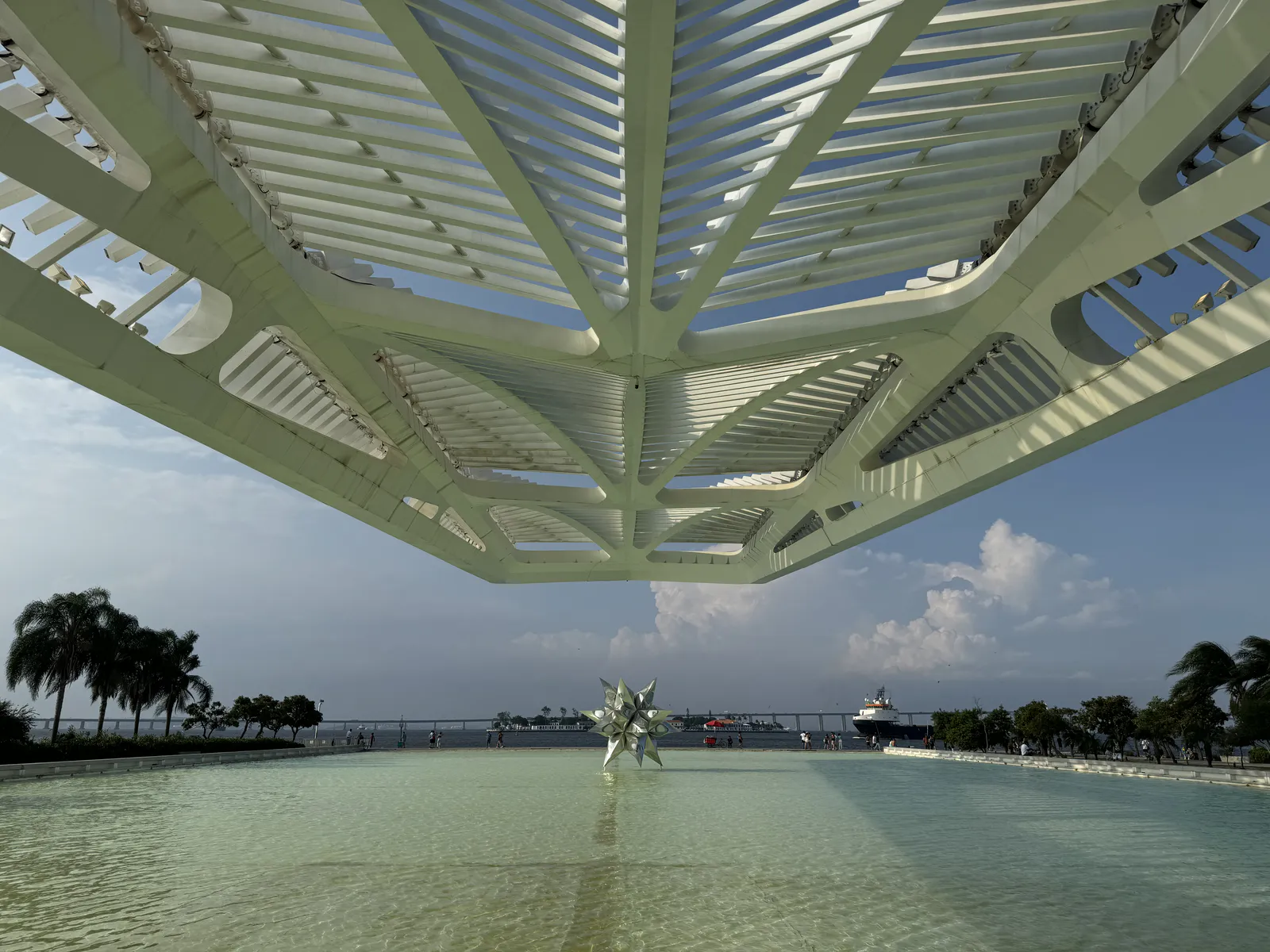
Puffed Star
Frank Stella
Installed before the Museum of Tomorrow in Rio de Janeiro (2016), this metallic sculpture by American artist Frank Stella dazzles with radiating points and mirrored planes. Its star-like form evokes cosmology and perception, inviting reflection on the interconnectedness of space, matter, and human imagination.
“When the path is beautiful, do not ask where it leads.” — Zen proverb
Welcome to my travel photography!
“When the path is beautiful, do not ask where it leads.” — Zen proverb
Welcome to my travel photography!
For as long as I can remember, my path has been one of discovery—seeking beauty, timelessness, and connection in every corner of the world. It has also been a journey of deep learning and understanding. I’ve been an avid traveler (or perhaps a travel addict?) for most of my life. My love for travel began long before I ever left home: as a child, I drew a fantasy map of my grandparents’ apartment and “traveled” through it with my cousin Sonya, imagining adventures in every corner. Nearly 90 countries and countless moments of awe later, I’m excited to share this journey with you.
Thanks to the tireless and ingenious programming of Diagilev, we’re now able to present about fifteen percent of the images I’ve accumulated over the years. More will be released in small batches depending on your interest. While the first release leans toward museum photography, later ones will include more nature, architecture, culture, and general travel experiences. If you’d like to receive email notifications about new releases, feel free to reach out—no commercial use, ever.
Throughout my travels, I’ve been drawn to two intertwined kinds of discovery. One is intellectual: learning why the world is the way it is. History became my guide, shaping my perspective and filling my camera roll with museums and old buildings. To me, history is not the past—it is the key to understanding the present and how the world became what it is. The other is emotional: seeking moments of elevation—spirituality, beauty, harmony—often found in nature, monasteries, and ancient sacred spaces. Together, these impulses shape my photography. It invites you to learn, admire, and soar—to rise above the mundane and see the world through a lens of curiosity and wonder.
Much of my later travel became possible thanks to my job with Delta Air Lines, but the wanderlust began years earlier. By the time I joined the industry, I had already visited over 35 countries and lived in several—largely thanks to a backpacking journey around the world with Luis León, whose face appears in many early photos. I grew up in Ufa in the USSR, and since leaving it I have lived, studied, and worked in Latvia, the United States, France, South Korea, Canada, Spain, Italy, Brazil, Japan, and Colombia.
A life of near-constant movement may seem a little crazy, but it has deepened my understanding of the world and produced the photography you are about to see. Over the years, my style has evolved—more intentional, more refined—yet its core remains the same: a search for understanding, timeless beauty, and a connection to those who walked this earth long before us.
I hope these photos stir something in your soul, just as they did in mine. I’d love to hear from you—whether reactions, suggestions, corrections, or a request to be added to the email list for new releases (no commercial use, I promise). You can learn more about my travels here, and my academic life here.
Enjoy our shared journey!