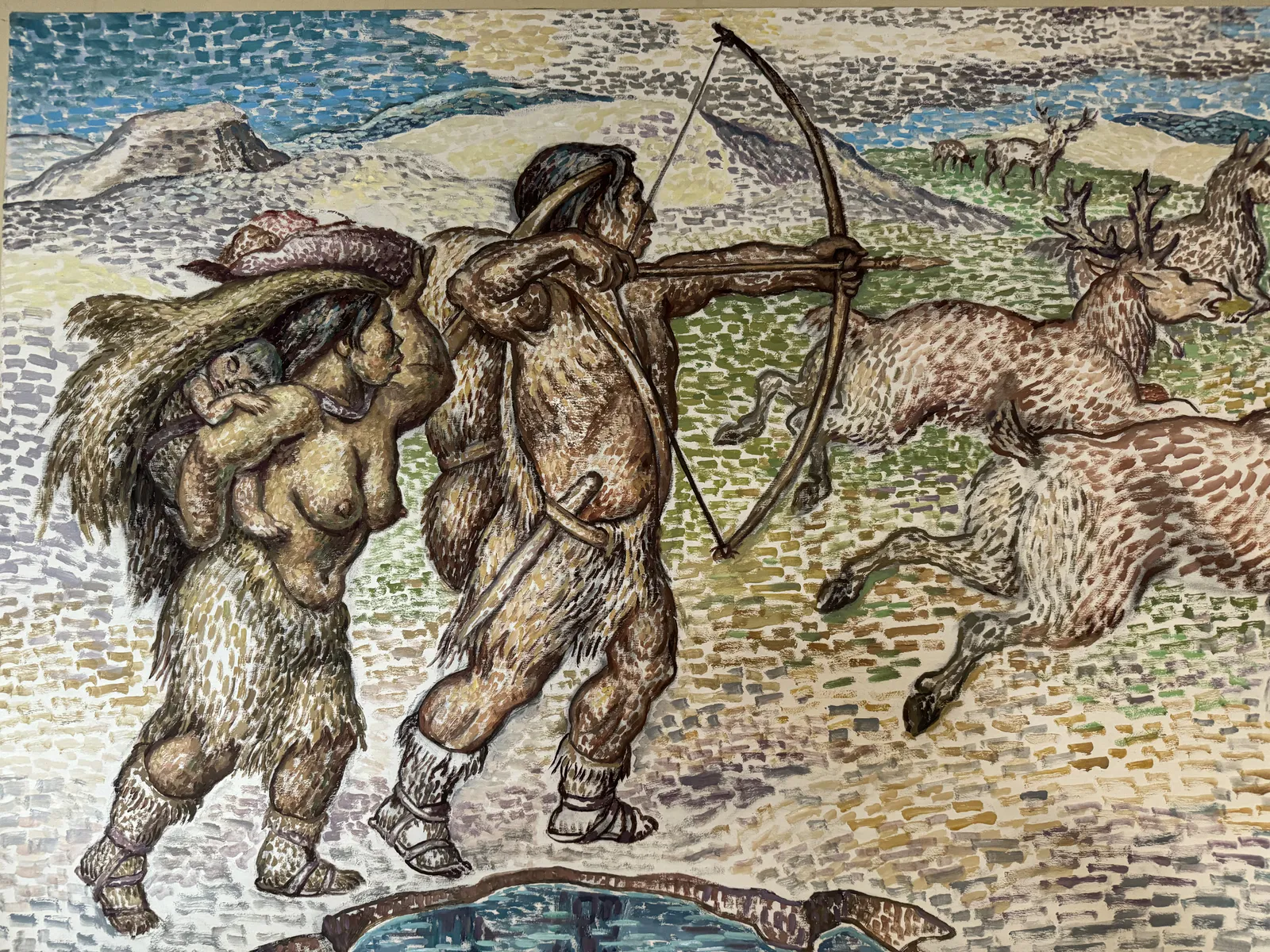
Prehistoric Hunt
Luis Alberto Acuña
This dynamic mural depicts a prehistoric hunting scene, with a male figure aiming his bow at deer while a woman, carrying a child and bundled goods, follows closely. Painted in Acuña’s signature neo-primitivist style (late 1960s-early 1970s), it reflects his interest in the mythic foundations of civilization and the daily heroism of early human life. The textured brushwork echoes rock art while grounding the composition in a modern, expressive idiom rooted in Colombian identity.
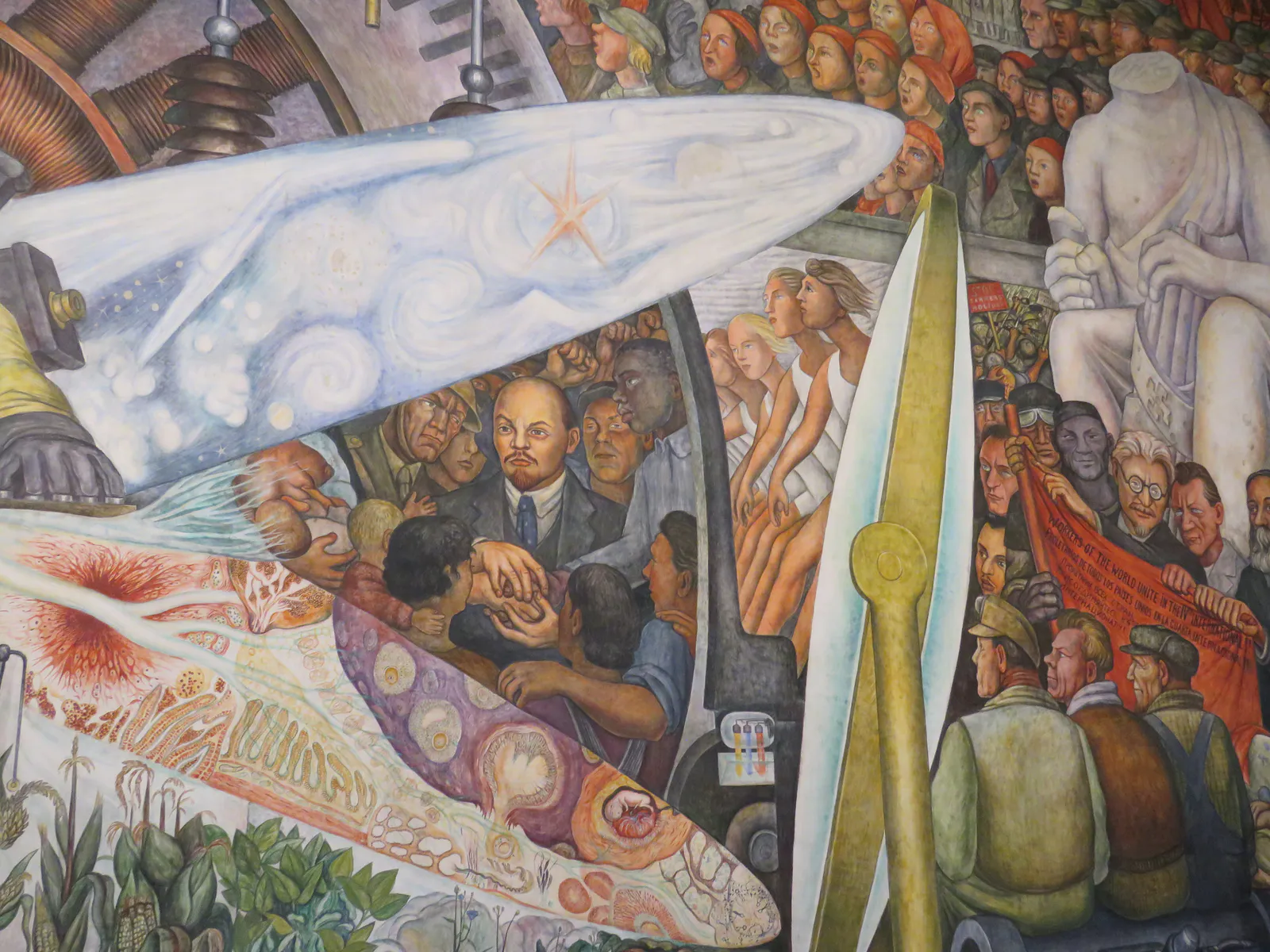
Man, Controller of the Universe (detail)
Diego Rivera
This section of Rivera’s 1934 recreated mural shows Lenin uniting workers of different races and nations, flanked by scientific, agricultural, and cosmic imagery. It contrasts socialism’s collective promise with capitalist individualism. The original was destroyed at Rockefeller Center.
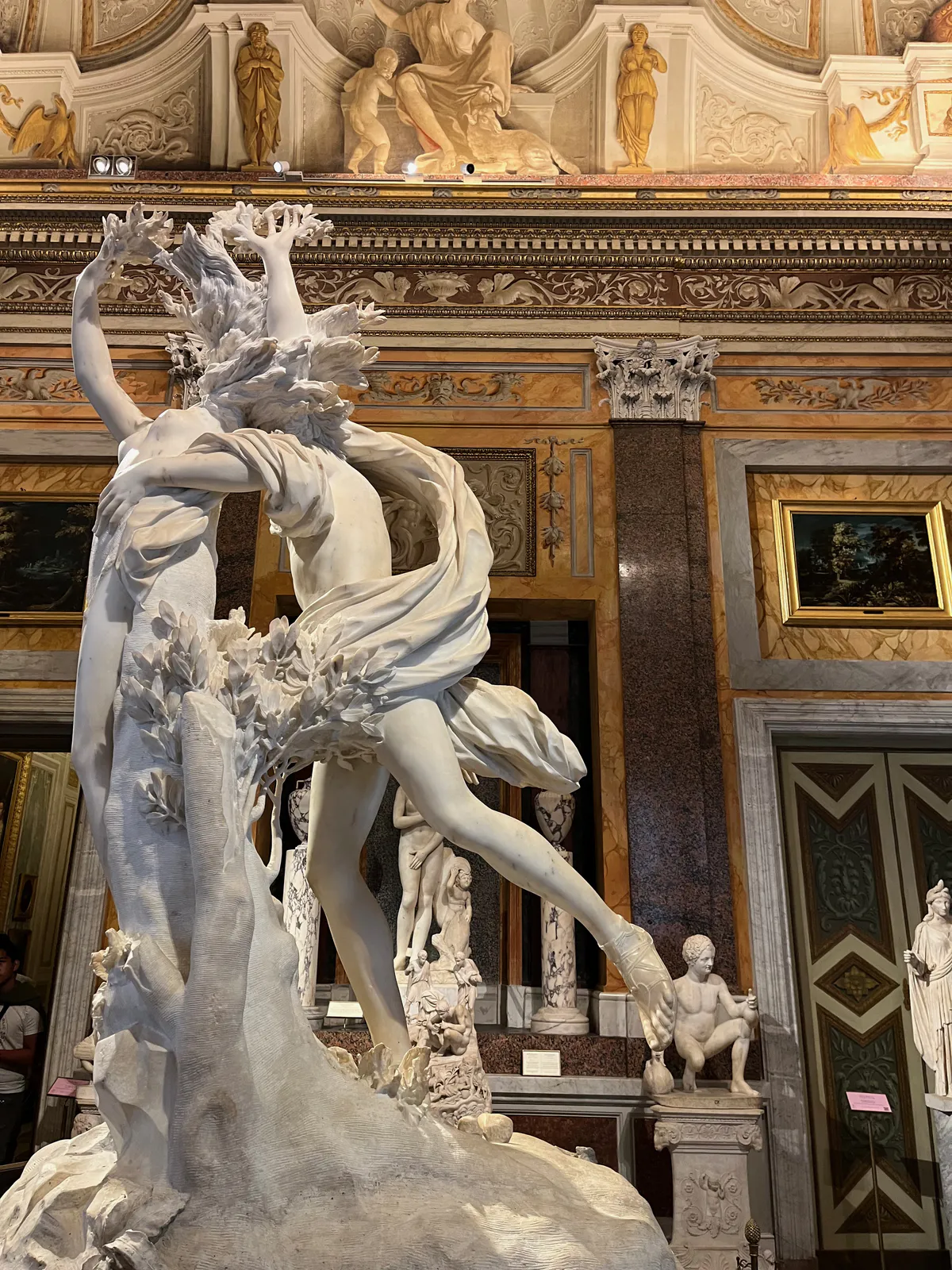
Apollo and Daphne
Bernini
Seen from behind, Bernini’s Apollo and Daphne (1622–25) reveals the spiraling tension of flight and pursuit. Daphne’s transformation accelerates—branches burst from her hair as Apollo strains forward, barely grounded. This angle heightens the illusion of motion, capturing the myth’s fleeting climax with lyrical virtuosity.
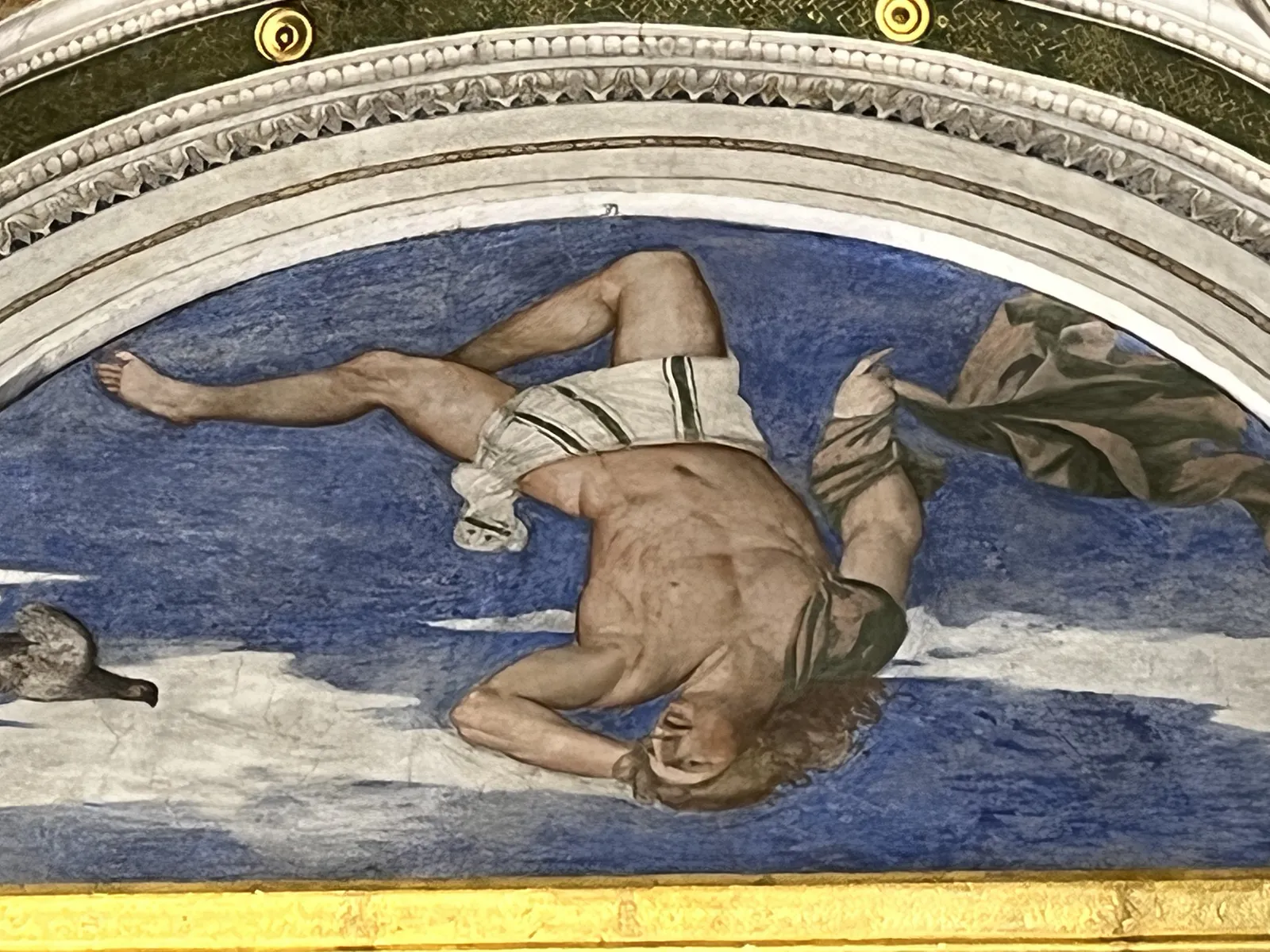
The Fall of Phaeton
Sebastiano del Piombo
This fragment (c. 1511) shows Phaeton falling from the sky after failing to control the sun chariot of his father Helios. To save the world, Zeus strikes him down. Part of Sebastiano del Piombo’s mythological cycle at Villa Farnesina, it complements Raphael’s Triumph of Galatea with a dramatic warning against hubris.
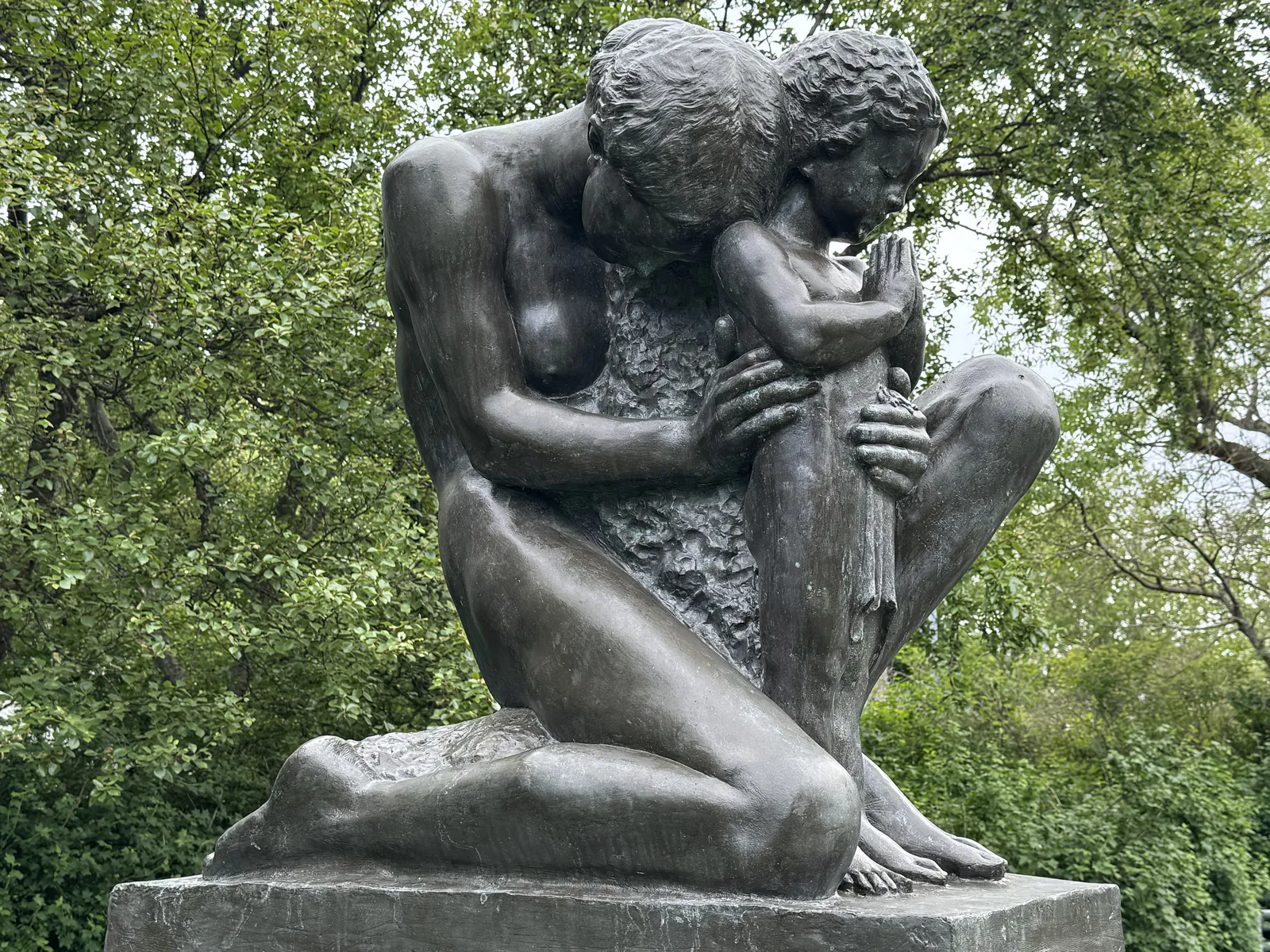
The Prayer
Einar Jónsson
Created in 1909 and later cast in bronze, this sculpture shows a kneeling woman embracing a praying child, merging maternal love with spiritual devotion. Jónsson, pioneer of Icelandic sculpture, wove Nordic symbolism into works that joined earthly care and divine aspiration. His 1909 donation of all his art to the nation ensured the founding of Iceland’s first art museum in 1923, making pieces like The Prayer central to national identity.
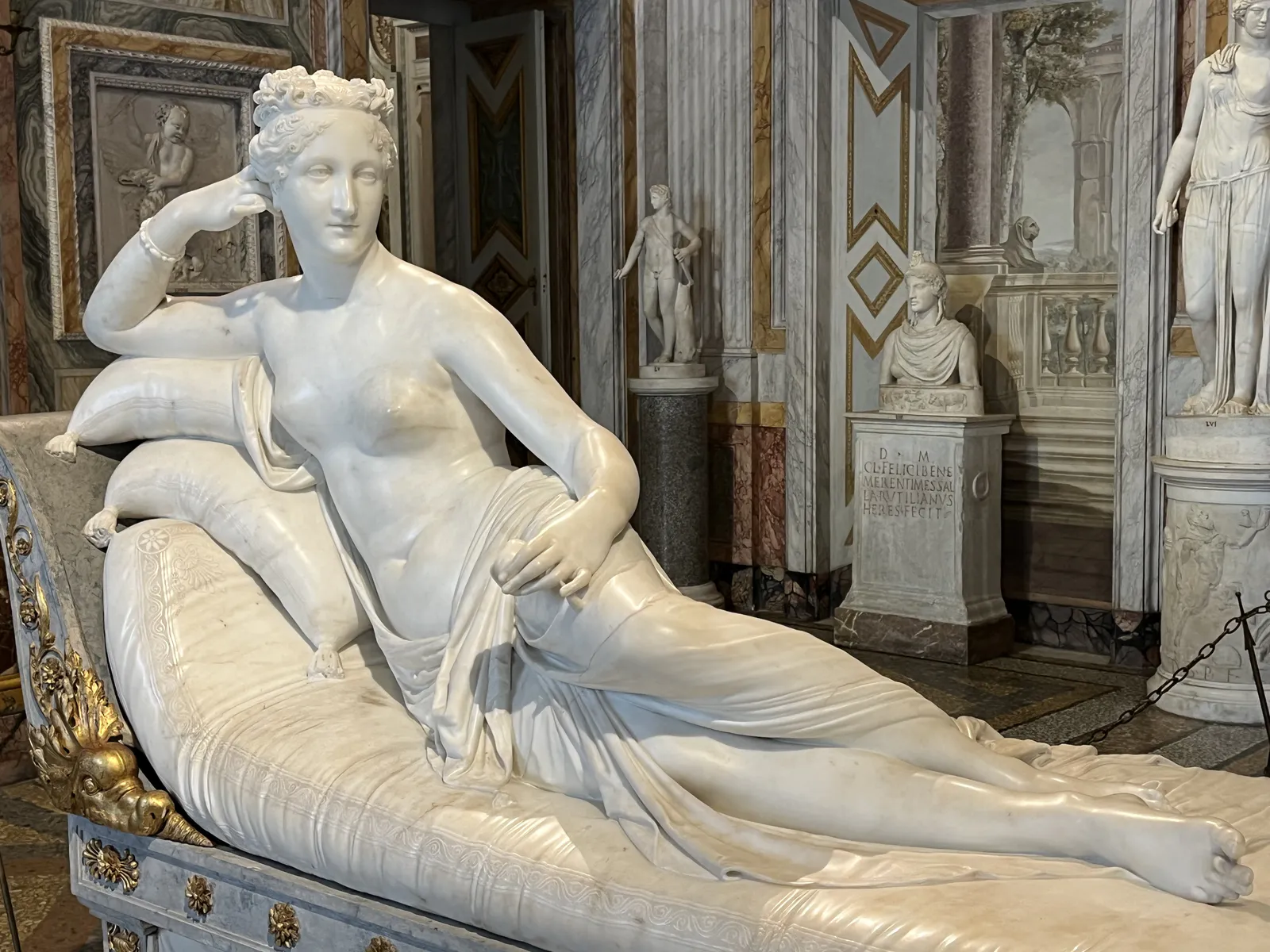
Pauline Bonaparte as Venus Victrix
Antonio Canova
This statue (1805–08) presents Pauline Bonaparte, sister of Napoleon, as Venus, reclining semi-nude and holding the golden apple of victory. Commissioned by her husband Camillo Borghese, the statue blends neoclassical elegance with sensual myth. Its rotating base once allowed viewers to admire it from every angle.
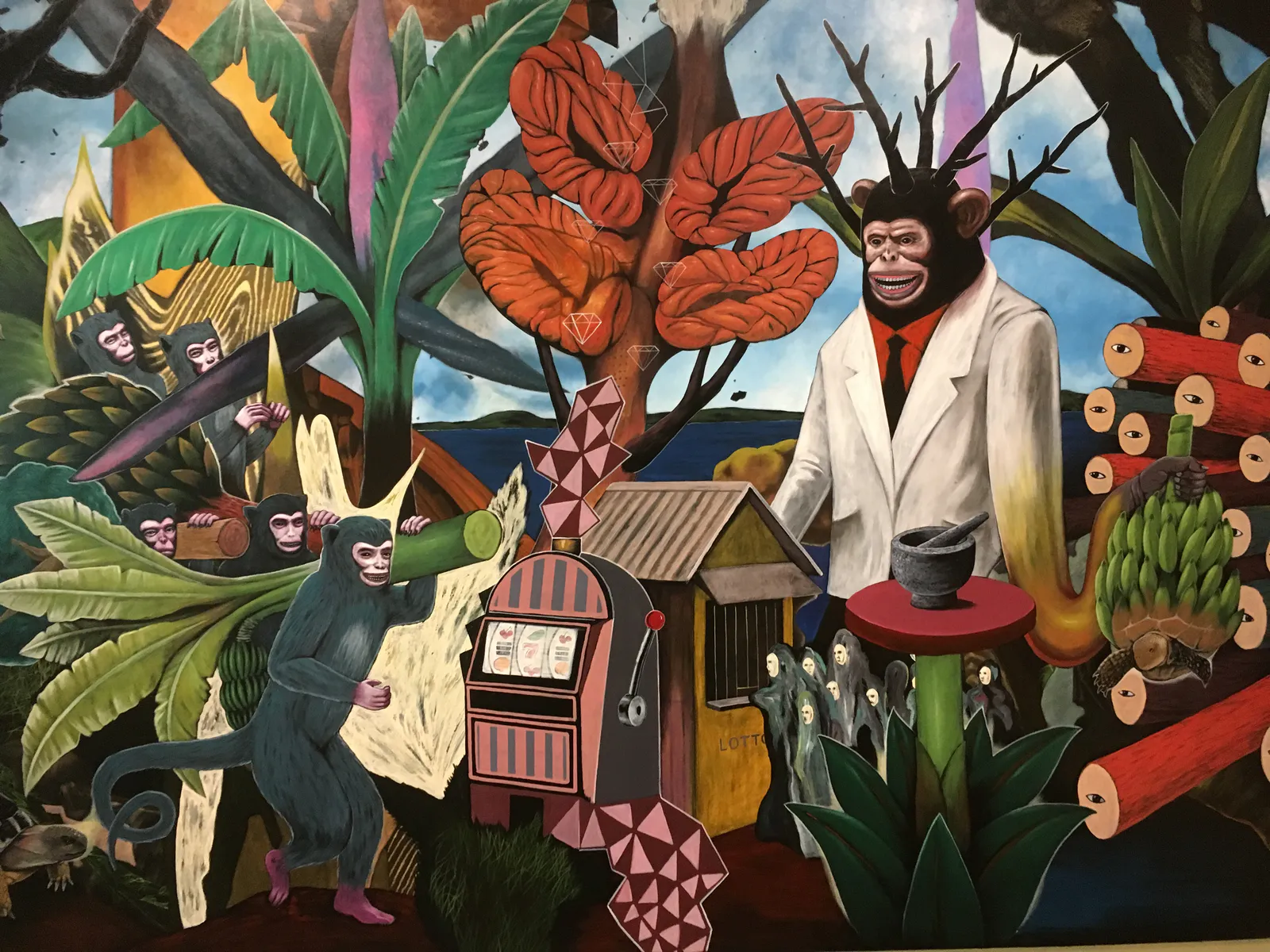
Instant Gratification
Rodel Tapaya
This work (2018) reinterprets the Filipino fable of The Monkey and the Turtle, placing its lesson within a crowded jungle of gambling stalls and restless figures. Monkeys embody the tale’s impatience and hunger for quick gain, while a small turtle-the steady effort outlasts reckless desire. Log piles, patterned trunks, and theatrical foliage frame a world driven by instant gratification and easy profit. Tapaya adapts indigenous storytelling to expose modern cycles of greed.
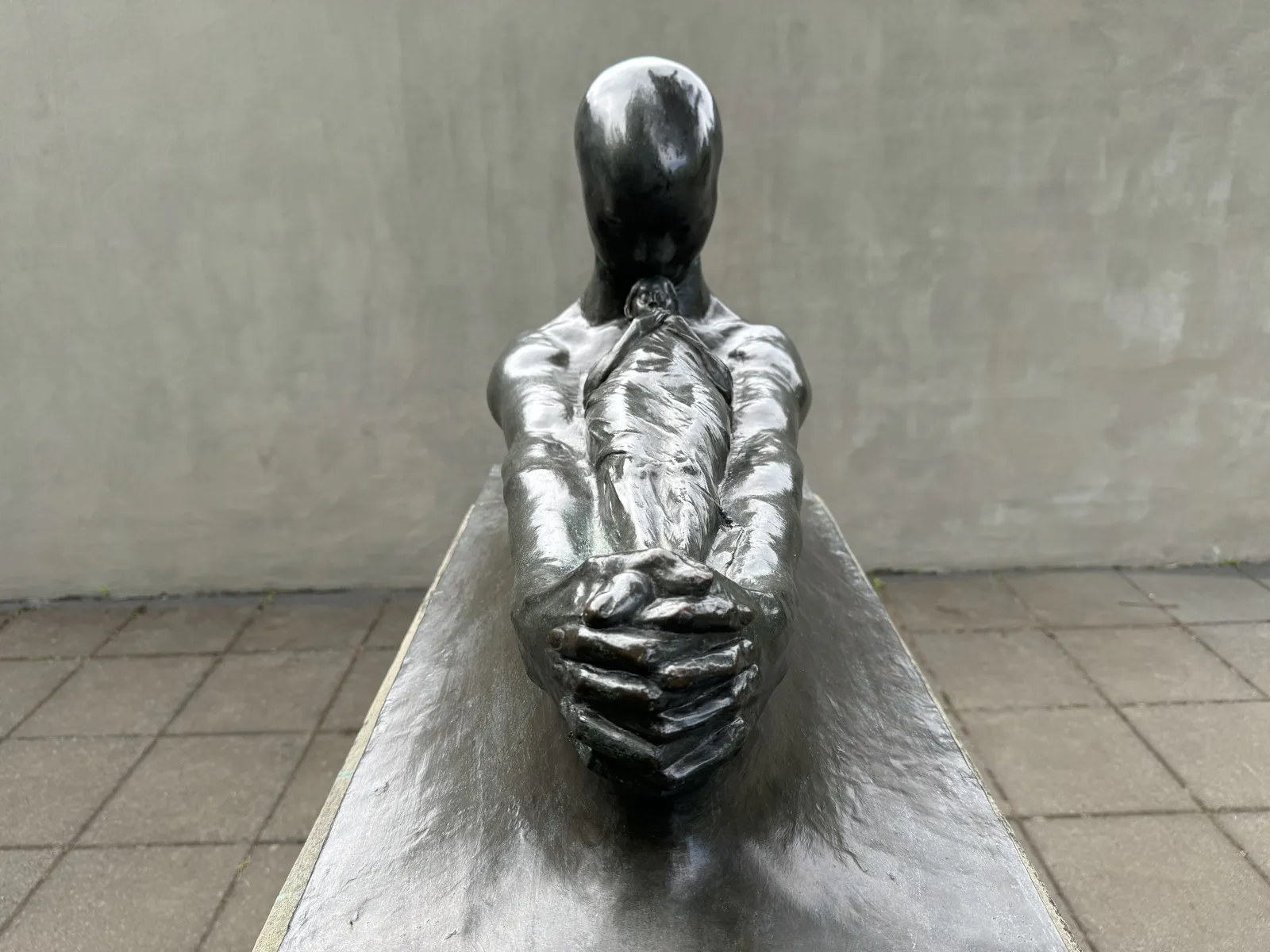
The Earth
Einar Jónsson
Jónsson’s bronze sculpture, The Earth (1904–1908), features a seated figure cradling a smaller form, reflecting his shift to Symbolism after 1903. It explores themes of life, death, and the cyclical nature of existence. Jónsson, a pioneering Icelandic sculptor, studied at the Royal Danish Academy of Fine Arts, significantly influencing the evolution of Icelandic art.
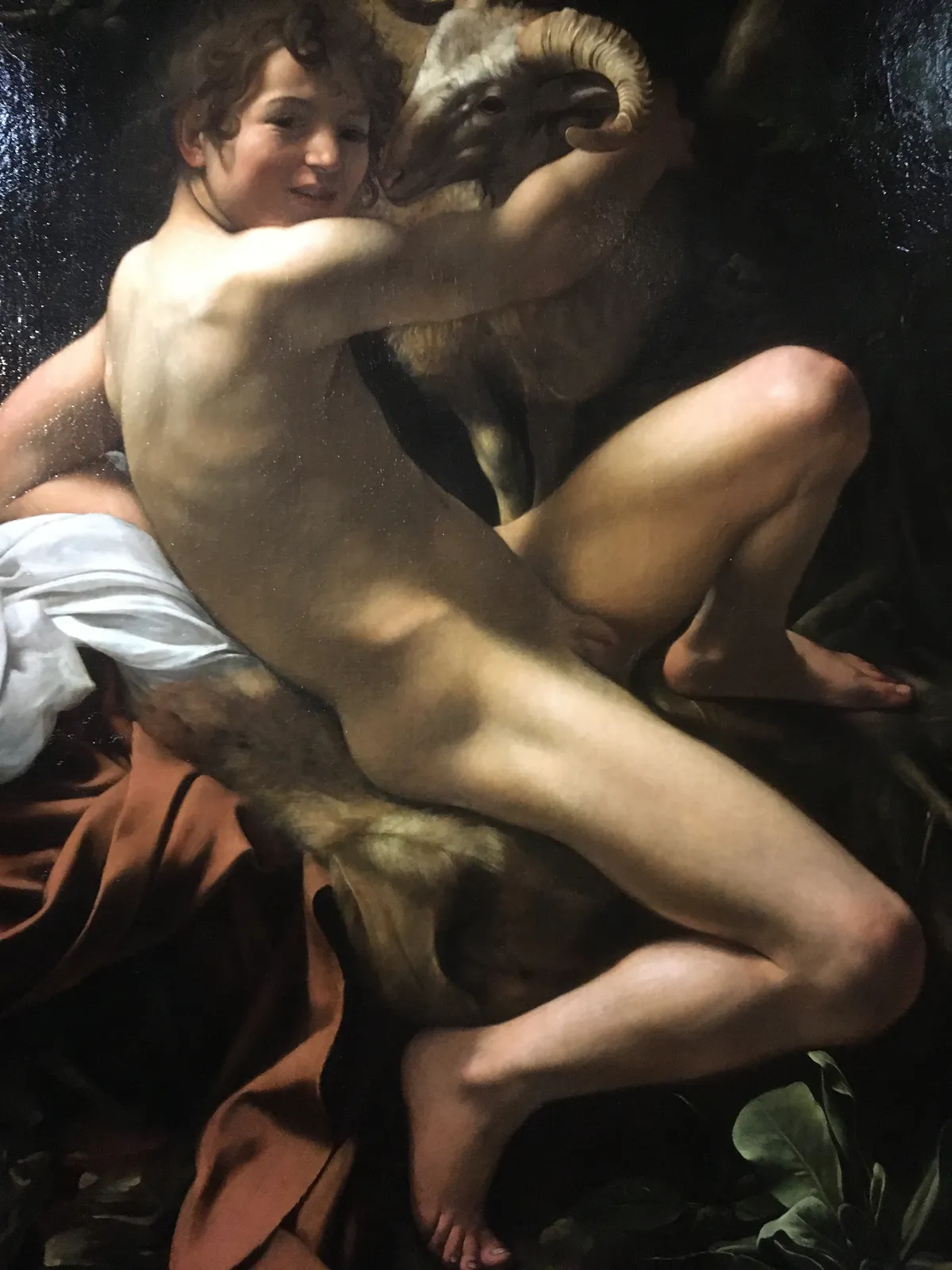
John the Baptist (Youth with a Ram)
Caravaggio
Painted around 1602, this work portrays John the Baptist as a youthful figure embracing a ram. Caravaggio departs from solemn prophecy to present vitality, sensuality, and human immediacy. The saint’s glance engages the viewer, while the animal evokes sacrifice and redemption. Through natural light and unidealized form, the painting fuses biblical meaning with raw, earthy presence.
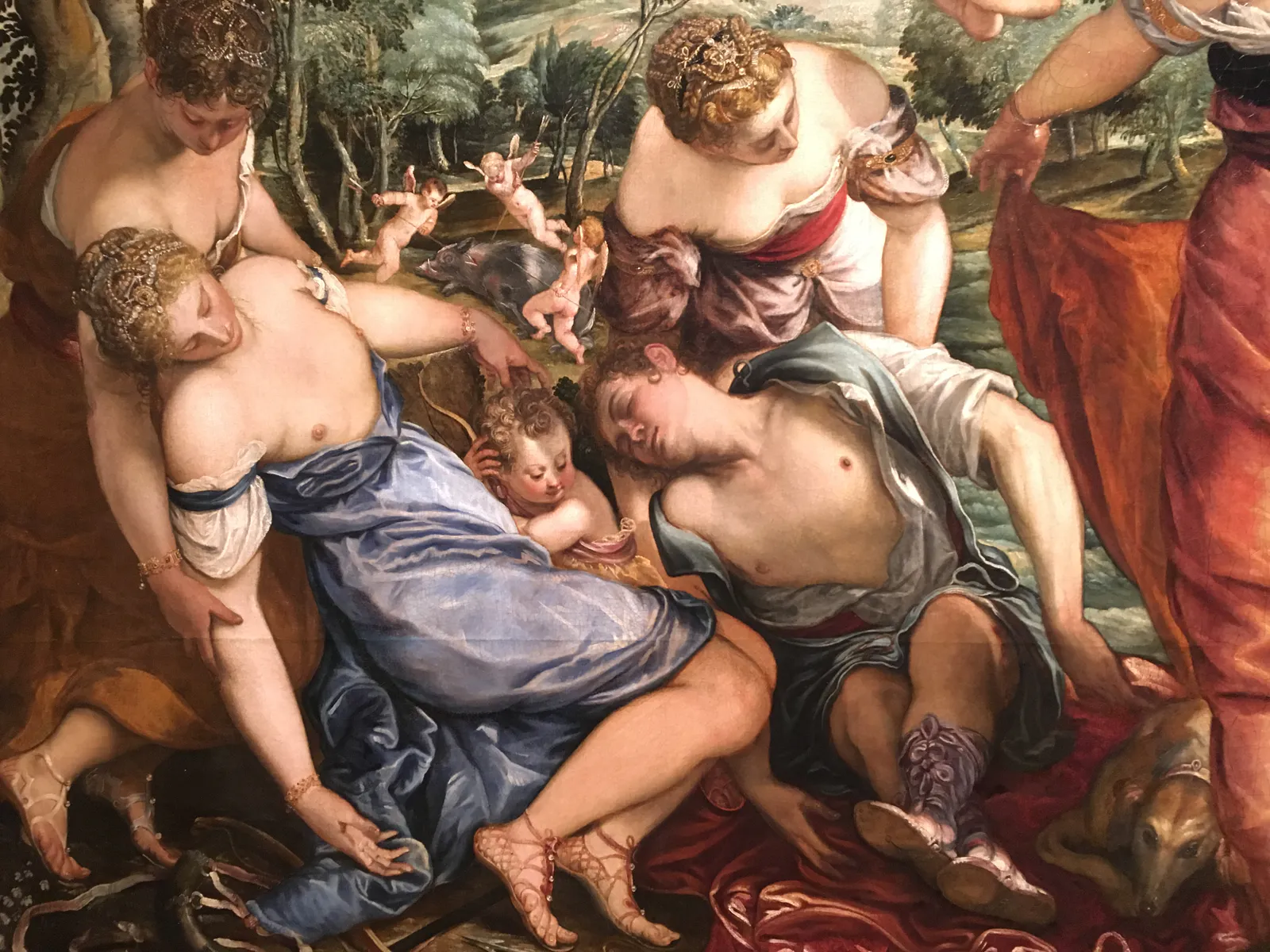
The Death of Adonis
Tintoretto's Workshop
The Death of Adonis (1550–55) captures Venus fainting at Adonis's death, diverging from Ovid’s Metamorphoses by including young women not in the original tale. Created by a Nordic artist in Tintoretto’s Venetian workshop, it blends Tintoretto’s dramatic style with the collaborator’s unique touch, evident in the expressive figures and vibrant colors. This fusion highlights the shared human themes of love and loss, inviting reflection on the timeless nature of myth and emotion.
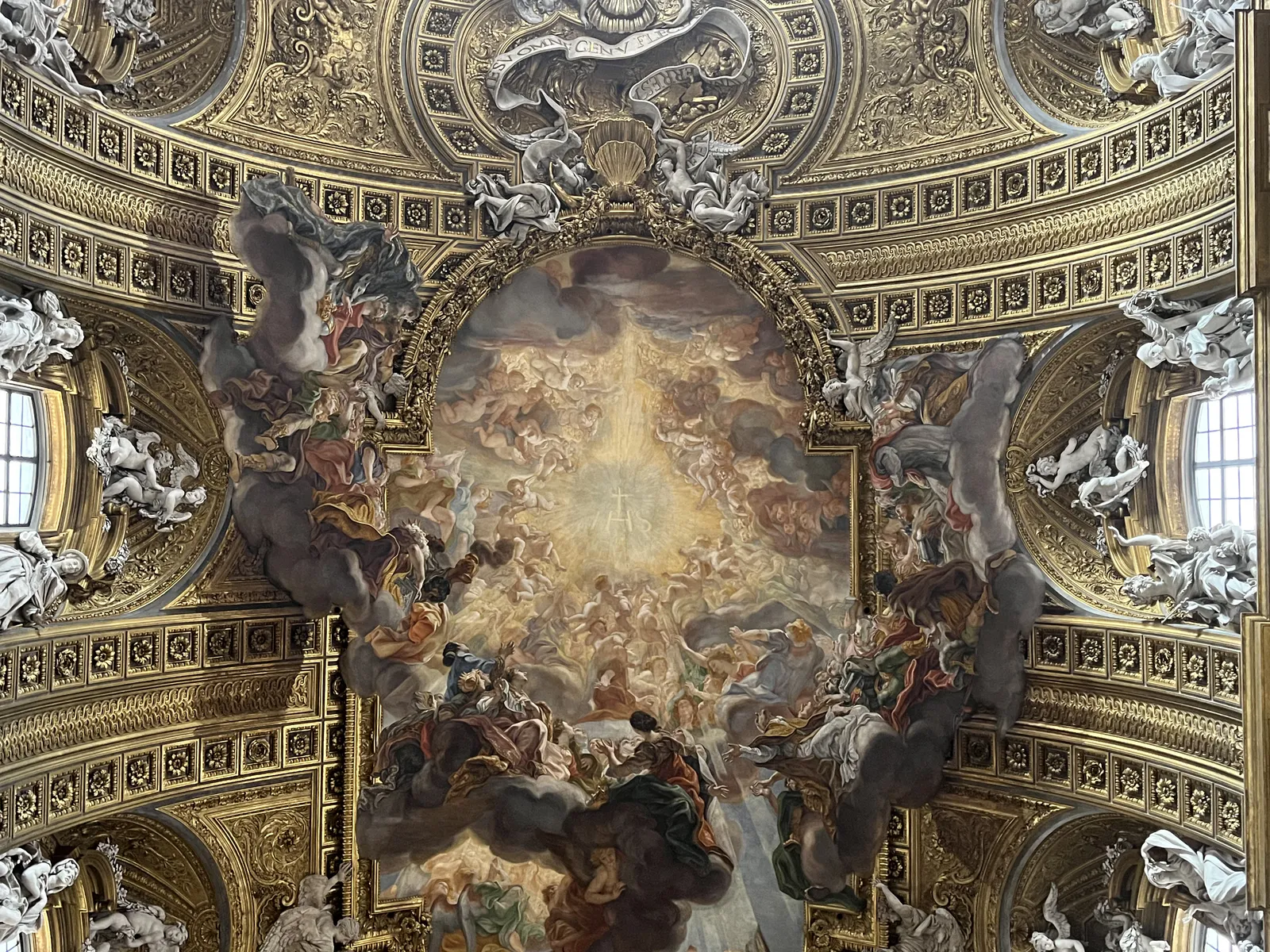
Triumph of the Name of Jesus
Giovanni Battista Gaulli
This dramatic fresco (1676–79) fills the nave ceiling with a celestial eruption of light and figures. At its center, divine radiance emanates from the monogram IHS, the symbol of Jesus. Saved souls rise toward the light, while sinners tumble into shadow. Blending paint and stucco, the work fuses heaven and church in Baroque theatricality.
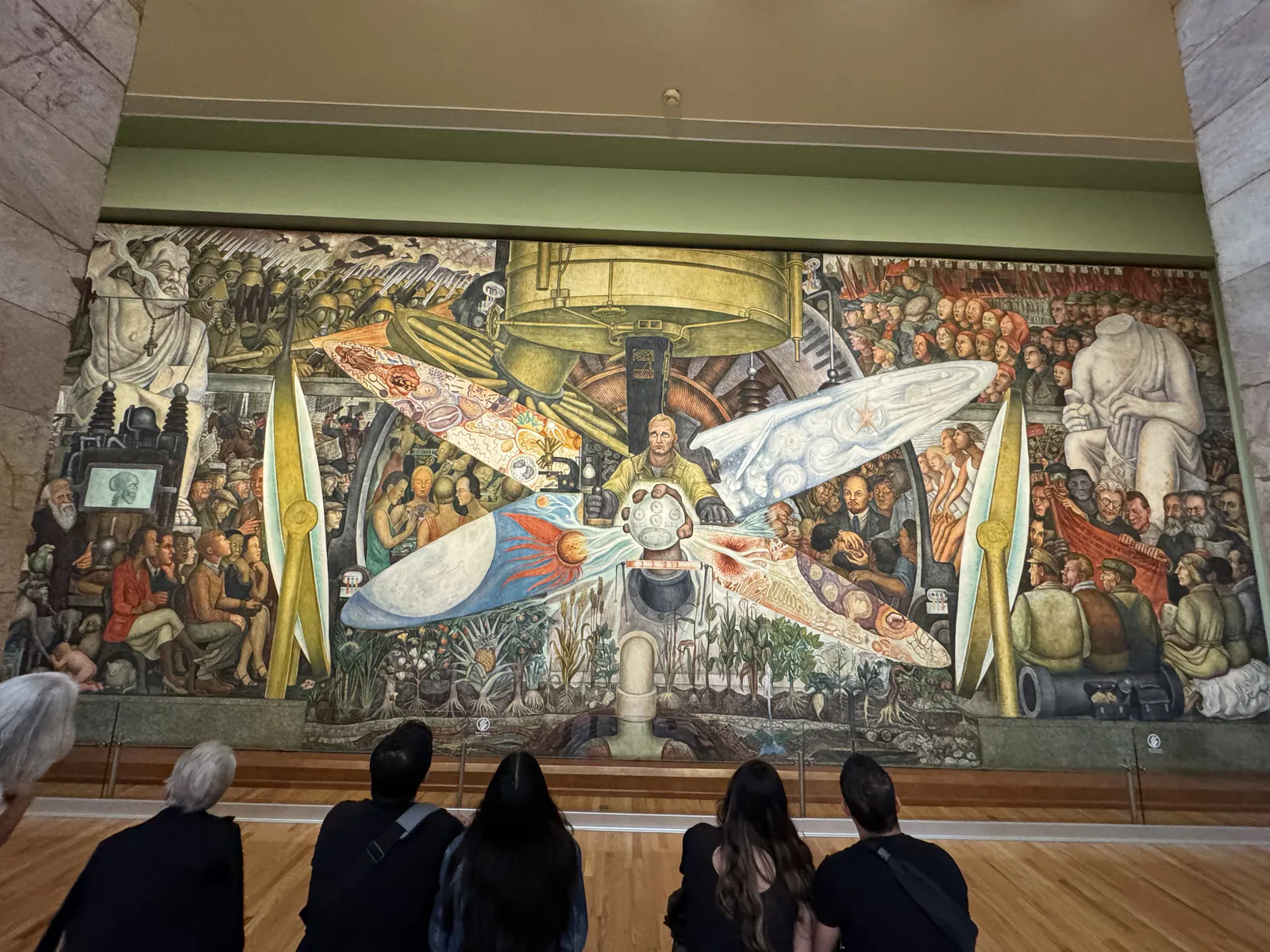
Man, Controller of the Universe
Diego Rivera
This monumental mural (1934) shows a central worker operating a machine that aligns planetary, biological, and industrial forces. Rivera recreates and expands his destroyed Rockefeller Center fresco for a Mexican audience, filling the scene with scientists, workers, and political leaders. The contrast between capitalist luxury and organized labor articulates his Marxist belief that technology should serve collective progress.
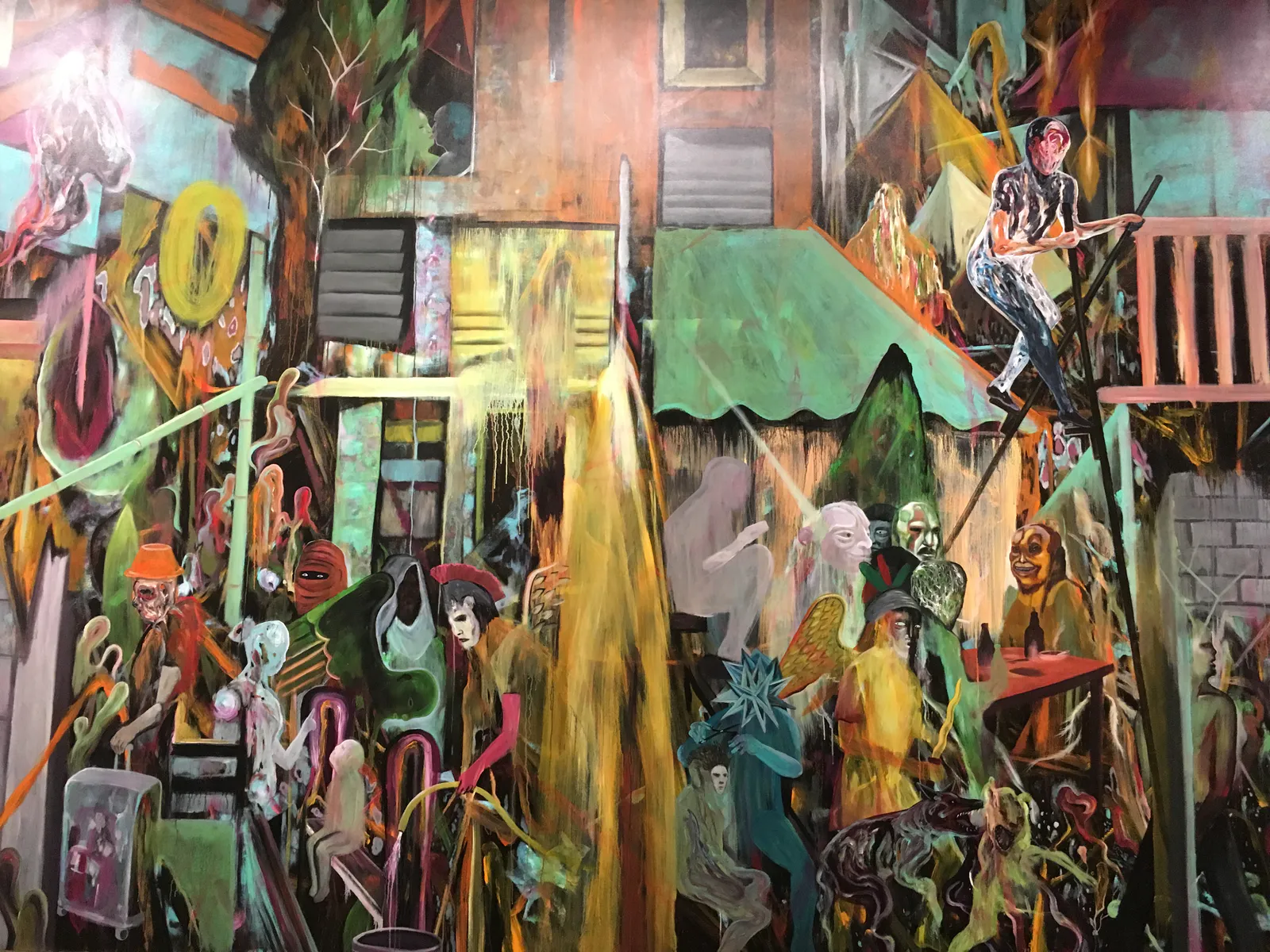
The Comedy, Parody, and Tragedy
Rodel Tapaya
This 2018 painting layers crowded shanties, billboards, and tangled walkways with mythic creatures from Philippine folklore. Human figures mingle with spirits and masked characters, blurring everyday life with the supernatural. Bright colors and abrupt shifts in scale evoke noise, congestion, and spectacle. Tapaya unfolds contemporary urban experience as a chaotic folk tale, where comedy, parody, and tragedy coexist in a single scene.
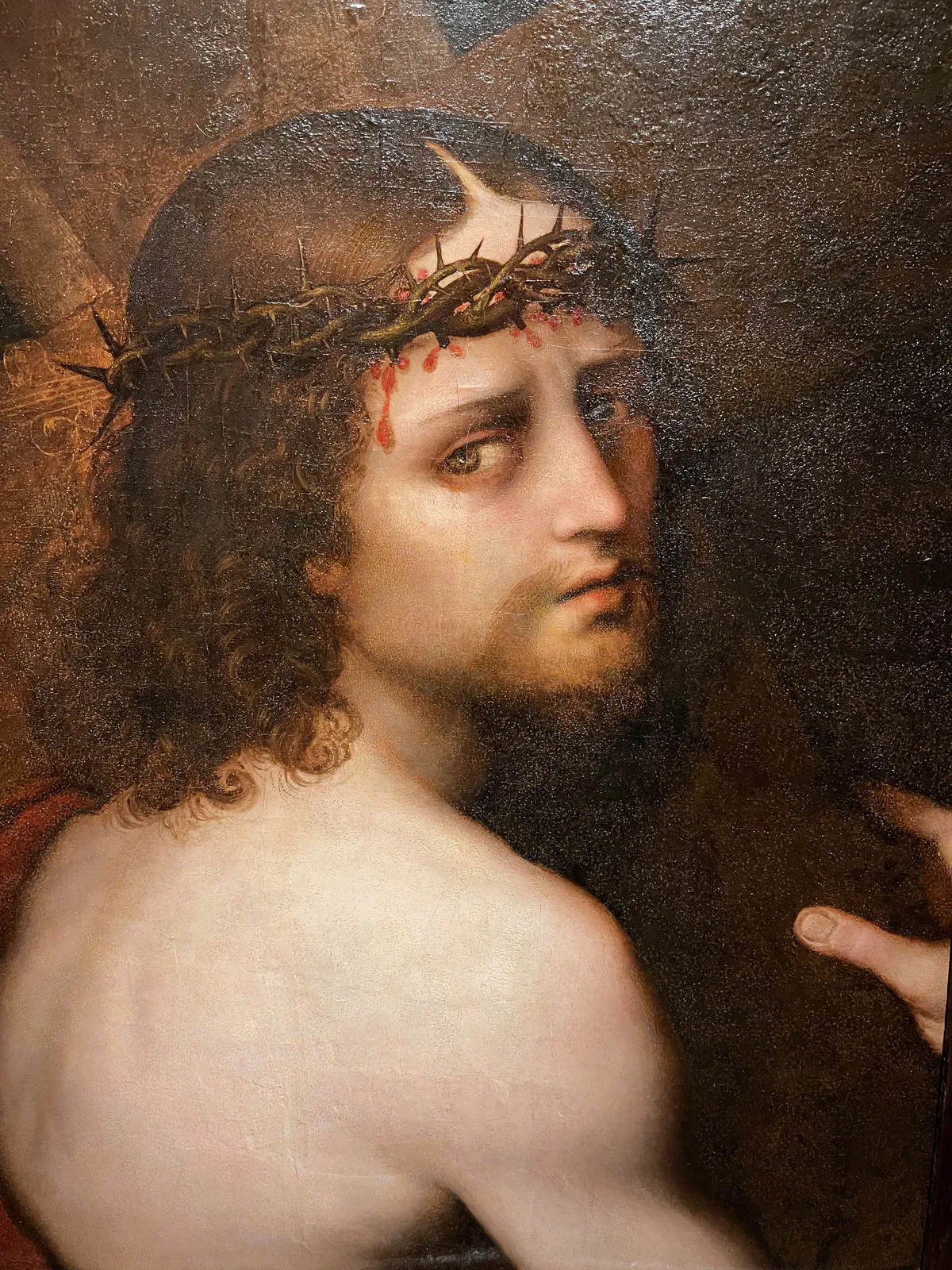
Christ Carrying His Cross
Giampietrino
This intense portrait (1520-30) captures the poignant moment of Christ's journey to crucifixion. The crown of thorns, with its vivid drops of blood, symbolizes suffering and sacrifice. Giampietrino, a follower of Leonardo da Vinci, employs chiaroscuro to enhance the emotional depth, highlighting Christ's resigned yet resolute expression. This work reflects Renaissance ideals of human emotion and divine purpose, illustrating the enduring narrative of redemption through suffering.
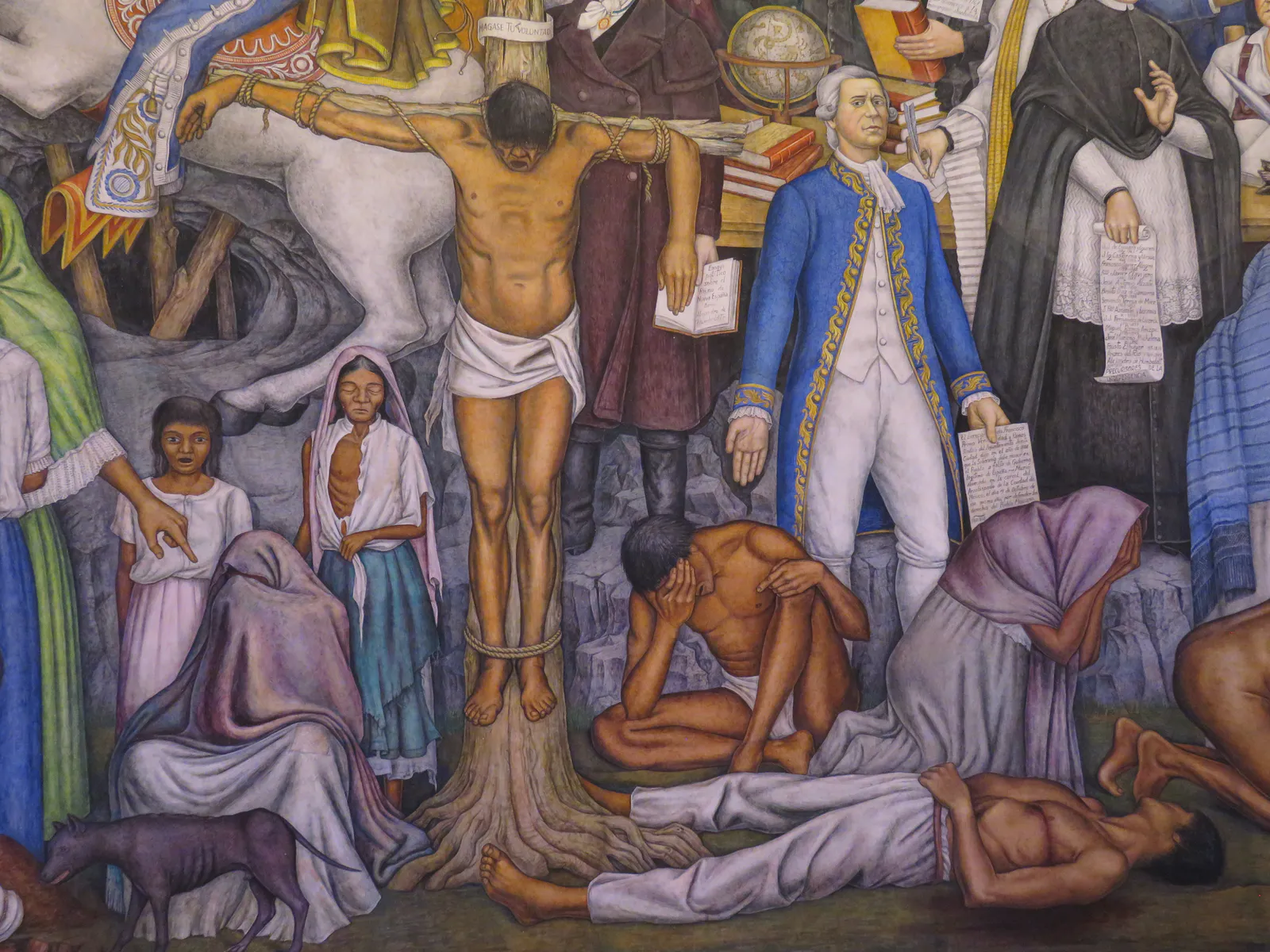
Mexican War of Independence (detail)
Juan OGorman
This mural detail (1960–61) depicts Mexico’s struggle against colonial rule. At center, an Indigenous man is crucified on a tree, symbolizing the suffering of native peoples. Around him, women and children grieve, while men collapse in despair. To the right, Miguel Hidalgo in blue and José María Morelos in clerical robes embody the revolution’s leaders, joined by thinkers holding books and scrolls of Enlightenment ideals.
“When the path is beautiful, do not ask where it leads.” — Zen proverb
Welcome to my travel photography!
“When the path is beautiful, do not ask where it leads.” — Zen proverb
Welcome to my travel photography!
For as long as I can remember, my path has been one of discovery—seeking beauty, timelessness, and connection in every corner of the world. It has also been a journey of deep learning and understanding. I’ve been an avid traveler (or perhaps a travel addict?) for most of my life. My love for travel began long before I ever left home: as a child, I drew a fantasy map of my grandparents’ apartment and “traveled” through it with my cousin Sonya, imagining adventures in every corner. Nearly 90 countries and countless moments of awe later, I’m excited to share this journey with you.
Thanks to the tireless and ingenious programming of Diagilev, we’re now able to present about fifteen percent of the images I’ve accumulated over the years. More will be released in small batches depending on your interest. While the first release leans toward museum photography, later ones will include more nature, architecture, culture, and general travel experiences. If you’d like to receive email notifications about new releases, feel free to reach out—no commercial use, ever.
Throughout my travels, I’ve been drawn to two intertwined kinds of discovery. One is intellectual: learning why the world is the way it is. History became my guide, shaping my perspective and filling my camera roll with museums and old buildings. To me, history is not the past—it is the key to understanding the present and how the world became what it is. The other is emotional: seeking moments of elevation—spirituality, beauty, harmony—often found in nature, monasteries, and ancient sacred spaces. Together, these impulses shape my photography. It invites you to learn, admire, and soar—to rise above the mundane and see the world through a lens of curiosity and wonder.
Much of my later travel became possible thanks to my job with Delta Air Lines, but the wanderlust began years earlier. By the time I joined the industry, I had already visited over 35 countries and lived in several—largely thanks to a backpacking journey around the world with Luis León, whose face appears in many early photos. I grew up in Ufa in the USSR, and since leaving it I have lived, studied, and worked in Latvia, the United States, France, South Korea, Canada, Spain, Italy, Brazil, Japan, and Colombia.
A life of near-constant movement may seem a little crazy, but it has deepened my understanding of the world and produced the photography you are about to see. Over the years, my style has evolved—more intentional, more refined—yet its core remains the same: a search for understanding, timeless beauty, and a connection to those who walked this earth long before us.
I hope these photos stir something in your soul, just as they did in mine. I’d love to hear from you—whether reactions, suggestions, corrections, or a request to be added to the email list for new releases (no commercial use, I promise). You can learn more about my travels here, and my academic life here.
Enjoy our shared journey!