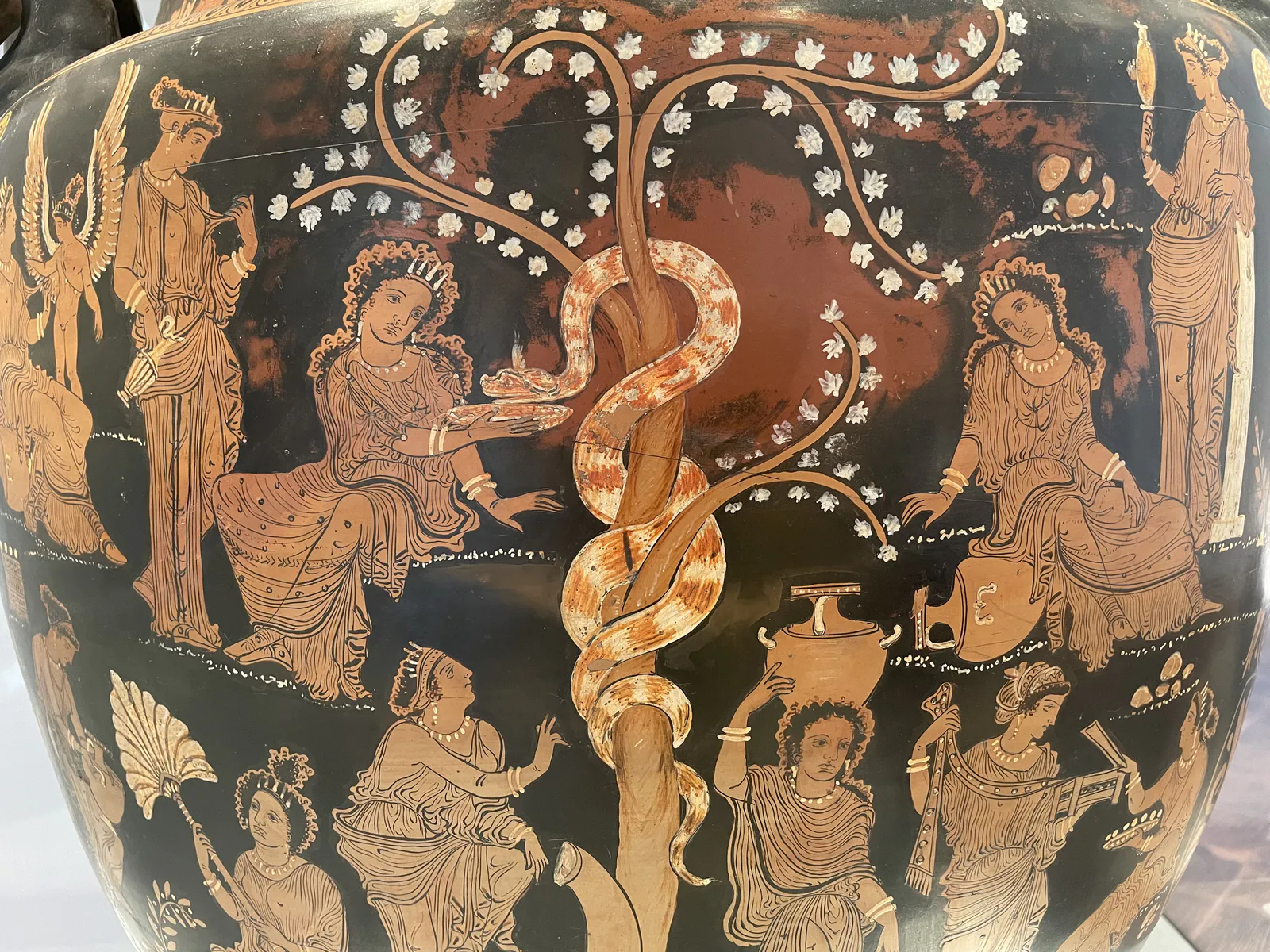
The Garden of the Hesperides
Lycurgus Painter
This Apulian red-figure volute krater (360–345 BC) shows maidens guarding the golden apples gifted by Gaia, with the serpent Ladon coiling around the sacred tree. Heracles is tasked with retrieving these apples in his final labor. The scene symbolizes the hero's triumph over peril, reflecting the ancient Greek themes of challenge and victory.
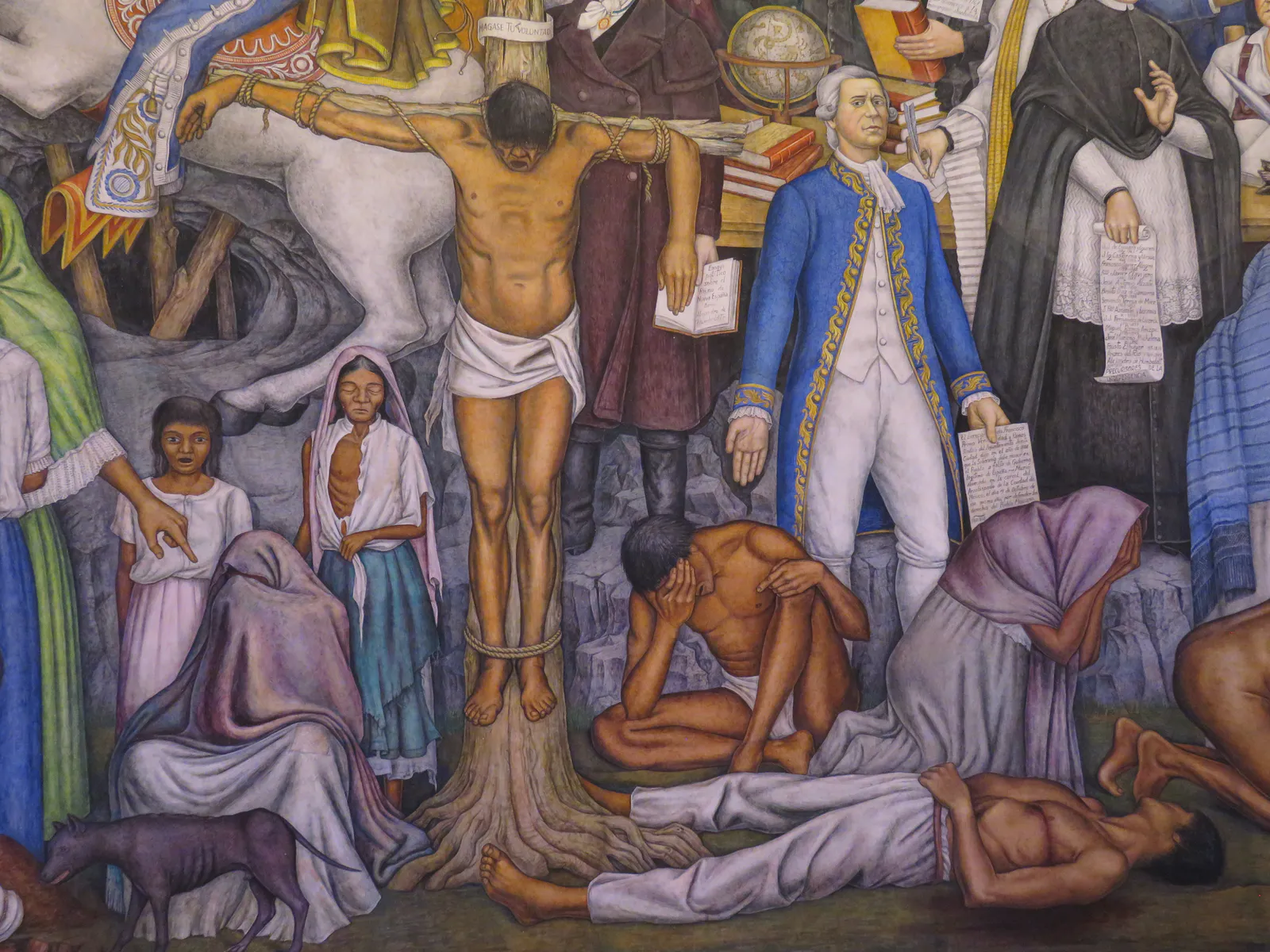
Mexican War of Independence (detail)
Juan OGorman
This mural detail (1960–61) depicts Mexico’s struggle against colonial rule. At center, an Indigenous man is crucified on a tree, symbolizing the suffering of native peoples. Around him, women and children grieve, while men collapse in despair. To the right, Miguel Hidalgo in blue and José María Morelos in clerical robes embody the revolution’s leaders, joined by thinkers holding books and scrolls of Enlightenment ideals.
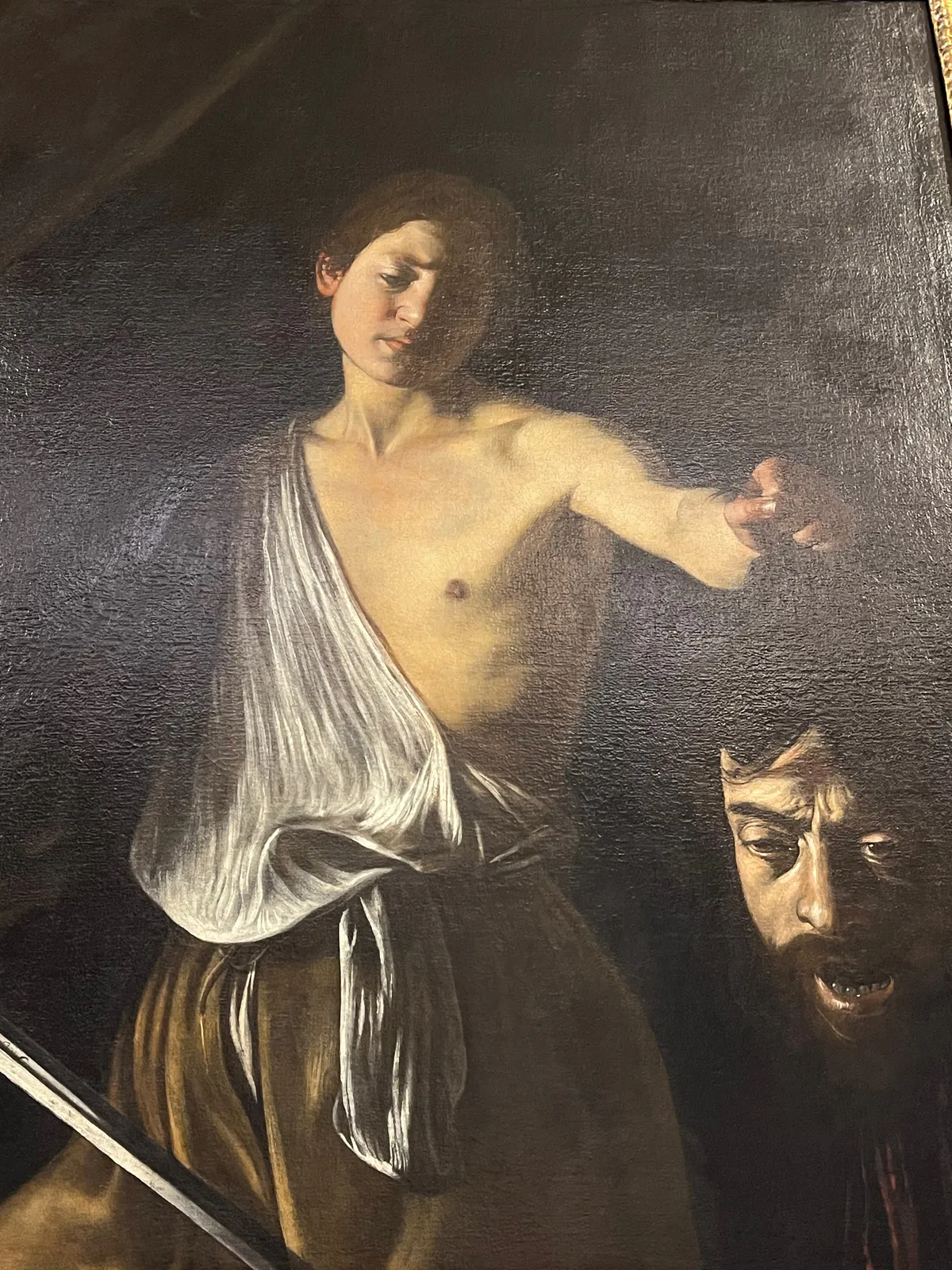
David with the Head of Goliath
Caravaggio
This haunting composition (1609–10) shows David holding Goliath’s severed head—modeled on Caravaggio himself. Rather than triumph, the mood is remorseful. The intense chiaroscuro, psychological realism, and moral ambiguity turn this biblical victory into a meditation on guilt, mortality, and inner torment.
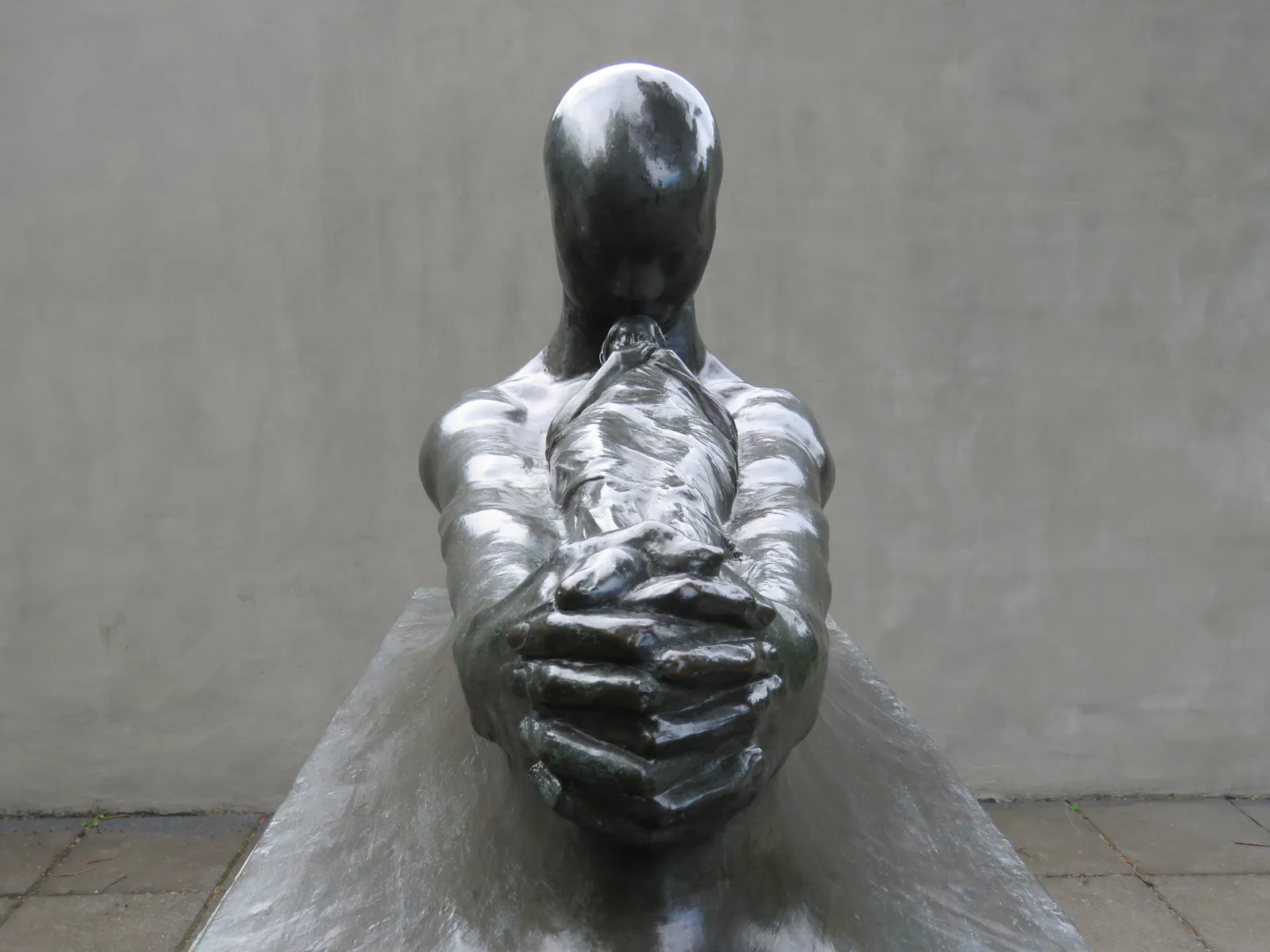
Earth (Mother Earth)
Einar Jónsson
Einar Jónsson’s sculpture (1904–1908) portrays a monumental figure cradling a smaller, draped form symbolizing Earth. Blending allegory and myth, it reflects Icelandic spirituality and cultural narratives. The work embodies humanity’s protective yet dependent bond with nature, inviting reflection on cosmic order and the fragility of existence.
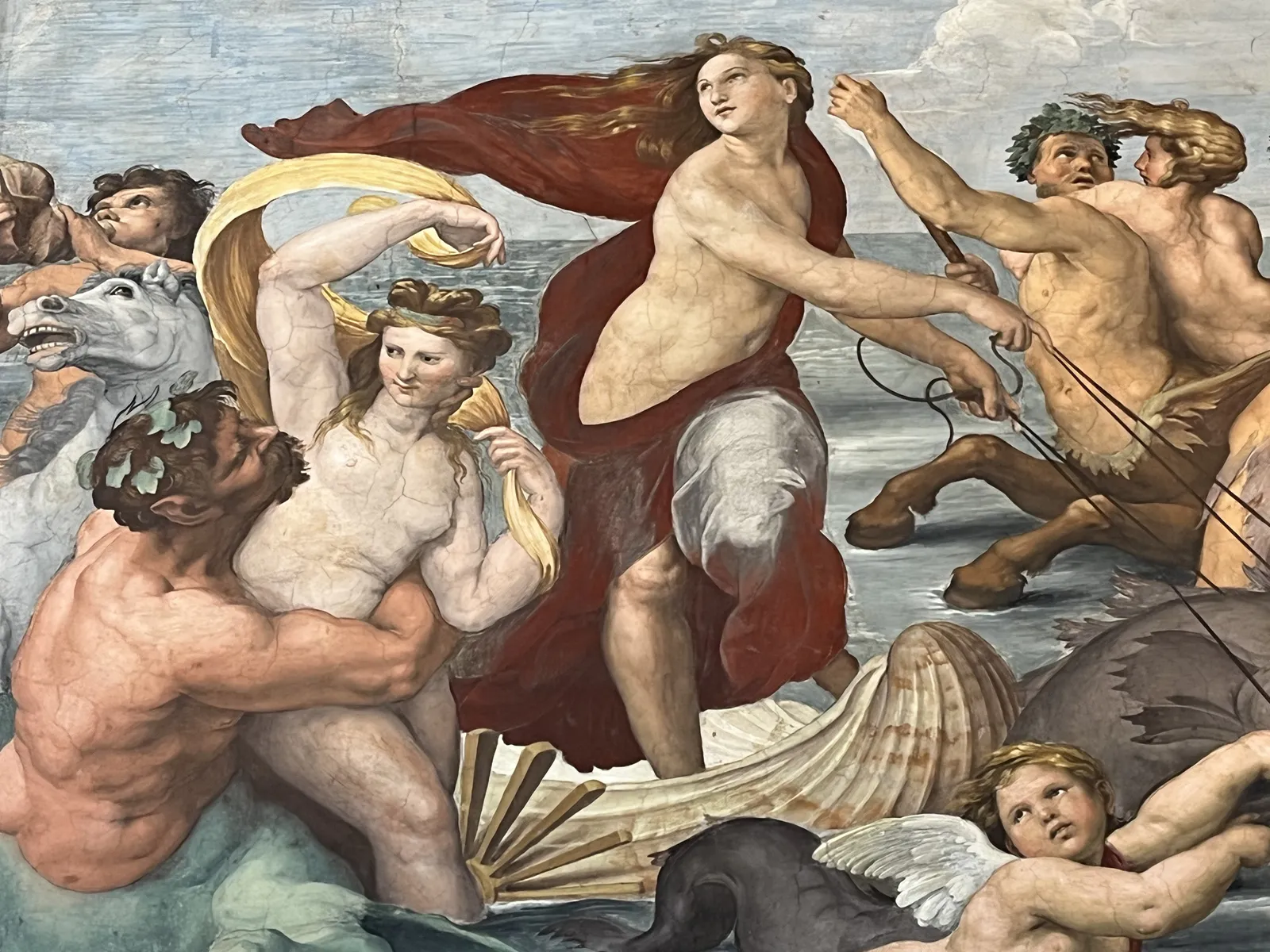
Triumph of Galatea (detail)
Raphael
This portion (1511–12) shows Galatea, the sea nymph of Greek myth, riding a dolphin-drawn shell chariot. Around her, tritons and nereids embody the vibrant energy of the sea. Raphael’s design celebrates Galatea’s beauty and grace, while capturing the joyful movement of the marine procession.
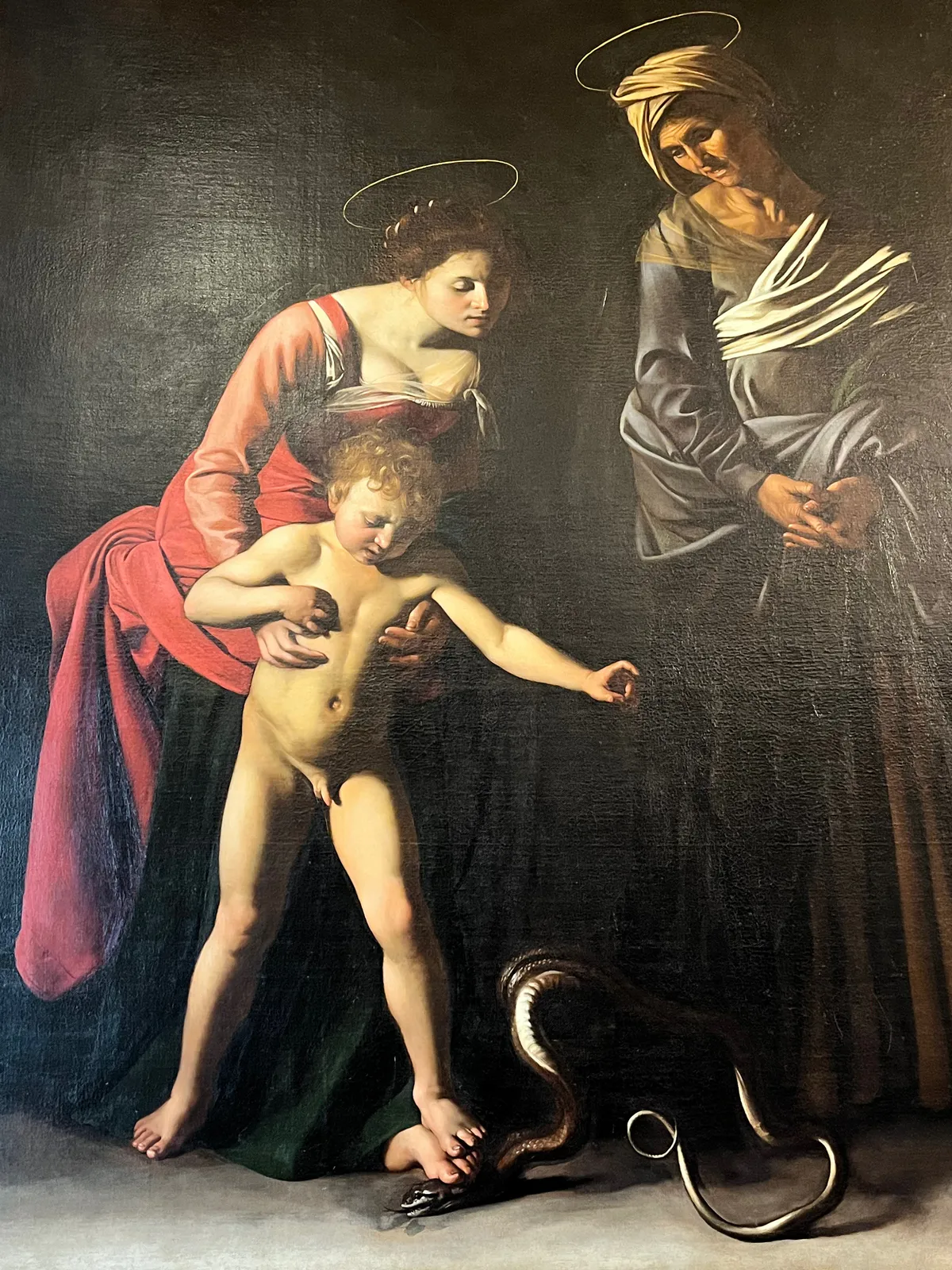
Madonna and Child with St Anne (Madonna dei Palafrenieri)
Caravaggio
This bold altarpiece (1605–06) shows the Virgin Mary guiding the Christ Child as he crushes a serpent—symbol of original sin. St Anne watches solemnly, evoking generational grace. Caravaggio’s realism and chiaroscuro infuse the holy scene with human emotion, provoking awe and controversy upon its brief display in St Peter’s.
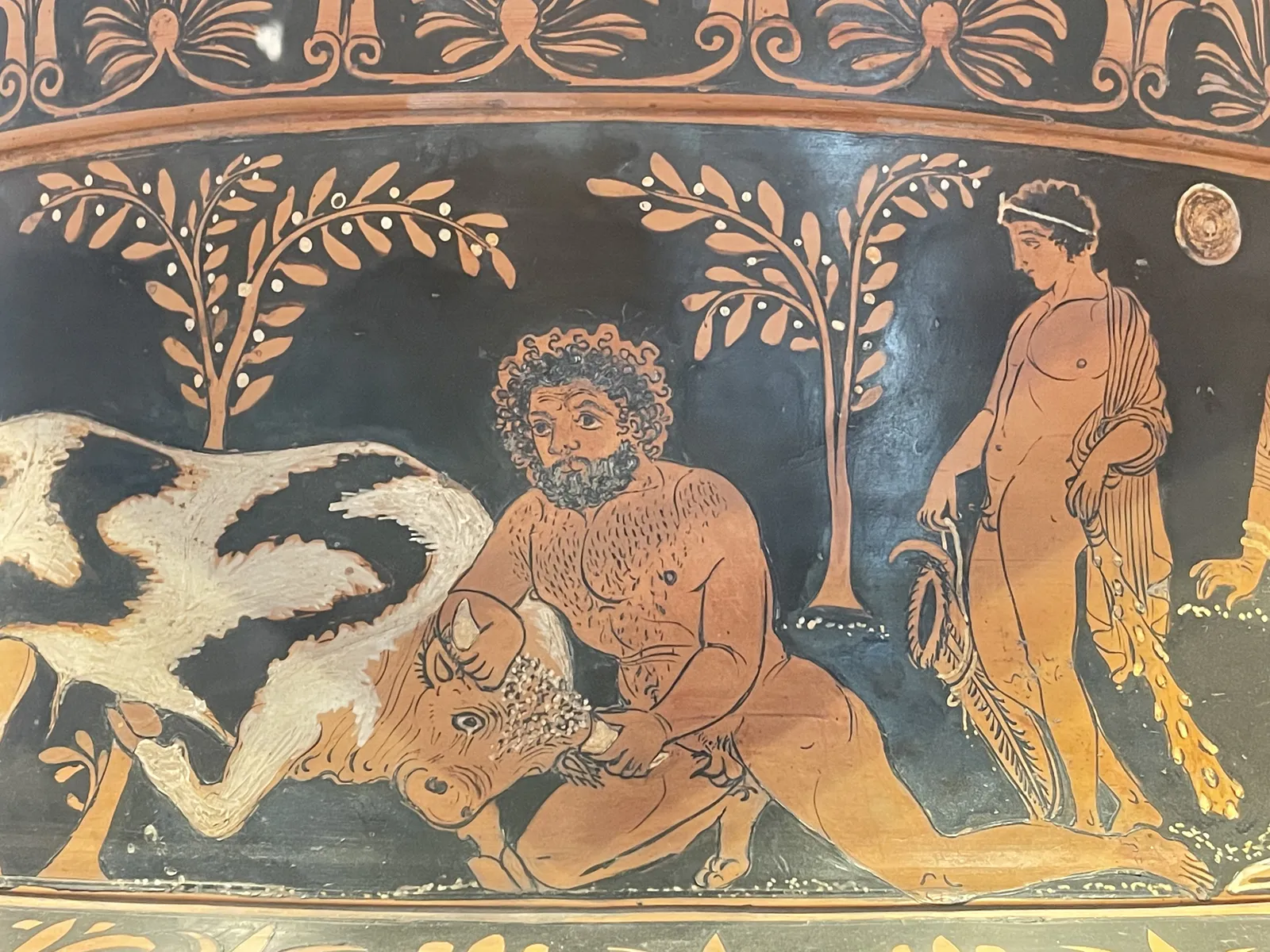
The Capture of the Cretan Bull
Lycungus Painter
Heracles grapples with the Cretan bull, locking its horns as the animal lunges, while Athena and a youthful attendant stand calmly among stylized trees. The scene represents his seventh labour, subduing the bull sent by Poseidon after King Minos withheld a promised sacrifice. This Apulian red-figure volute krater (mixing bowl) (360–345 BC) reflects South Italian interest in myth as a drama of human strength under divine supervision.
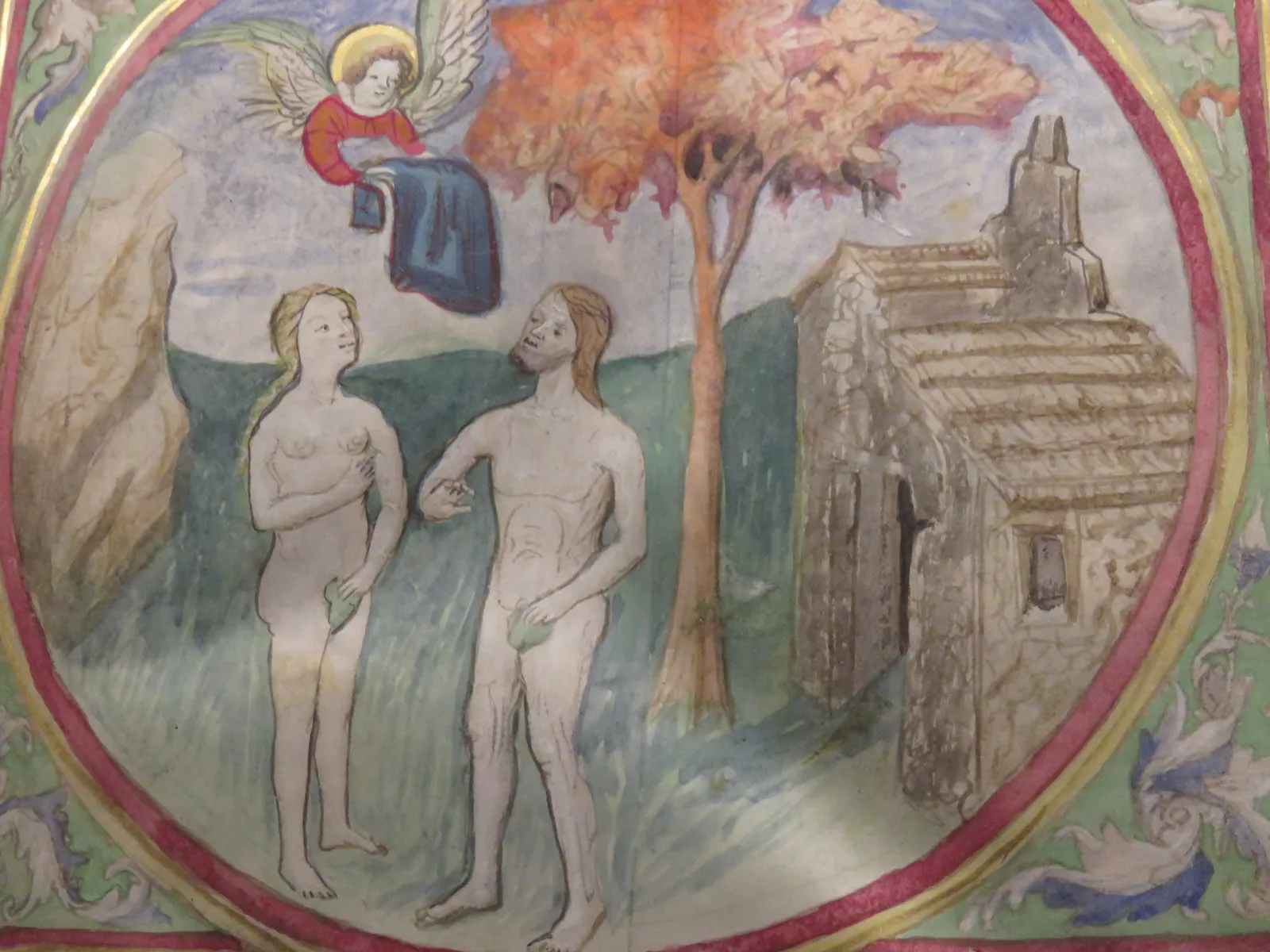
Expulsion from Eden
Maître des Médaillons
This French manuscript miniature (early 15th c.) shows Adam and Eve after the Fall, modestly covering themselves with leaves. An angel descends with a robe, while the Tree of Knowledge burns red above them. To the right stands a stone building, symbolizing exile from Paradise. The vivid colors and fine detail reflect late medieval devotional art.
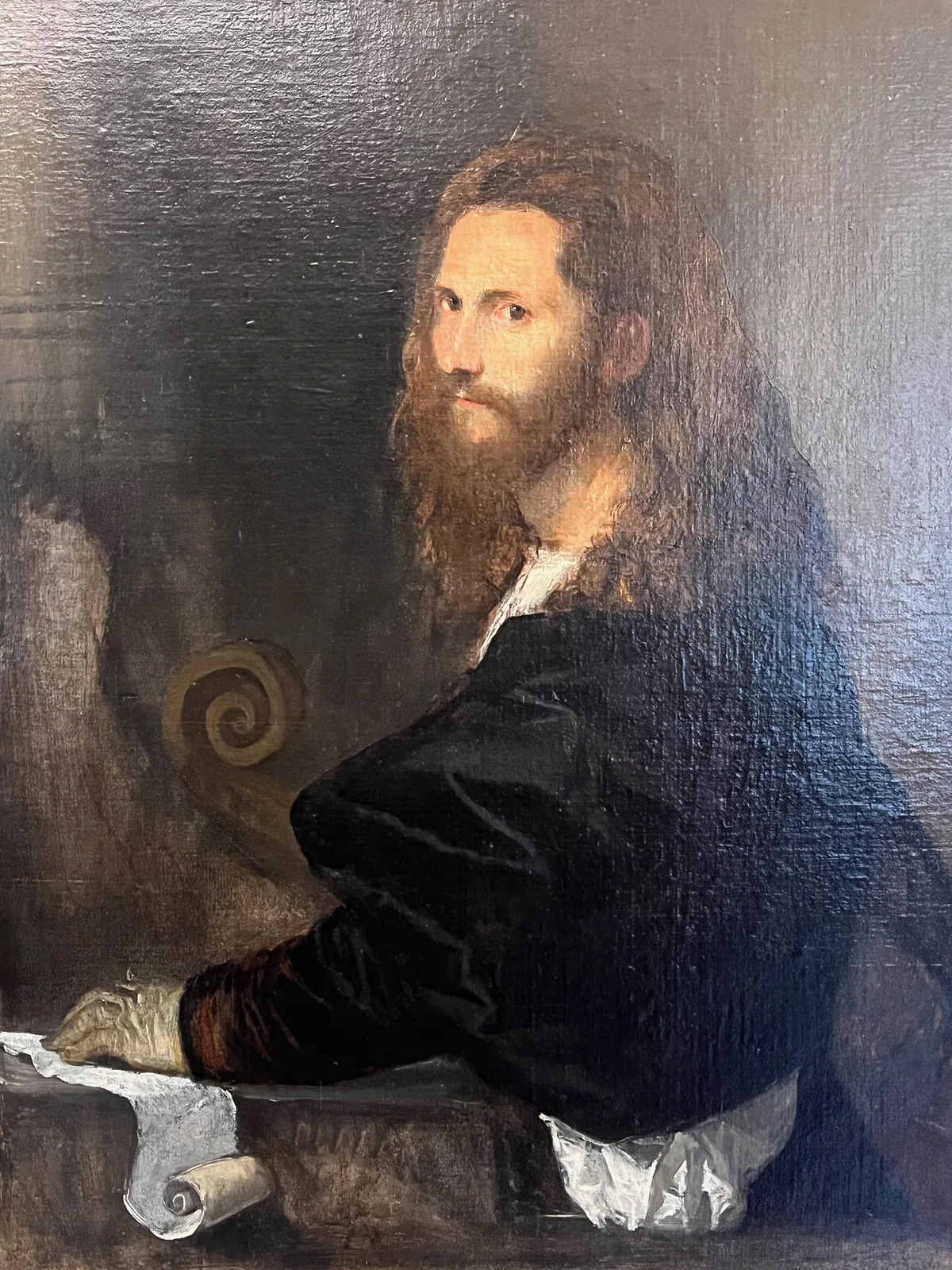
A Man with a Glove
Titian
This introspective portrait (c. 1515) captures a bearded man in mid-turn, scroll in hand, his gaze piercing yet reserved. Rendered with Venetian richness, the work highlights the sitter’s intellect and social poise. The subtle play of light on fabric and flesh reveals Titian’s early mastery of psychological depth and painterly nuance.
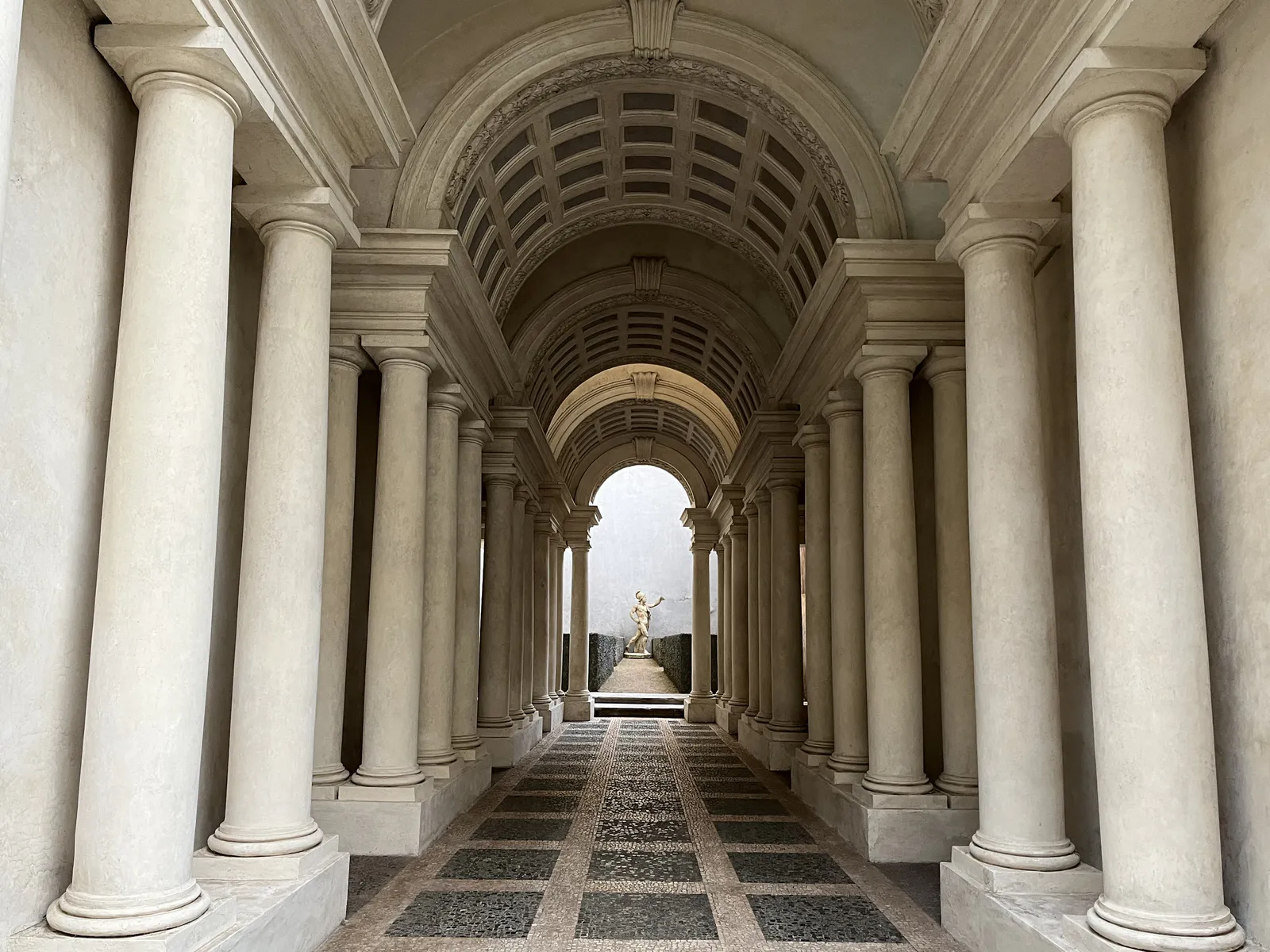
Perspective Gallery
Francesco Borromini
Created for Cardinal Spada, this architectural illusion (1653) compresses nine meters into an illusion of great depth. By subtly reducing the size of columns, floor tiles, and ceiling coffers, Borromini crafted a vanishing point that evokes grandeur. The statue at the end, appearing monumental, is just 90 cm tall—transforming scale into metaphysical reflection.
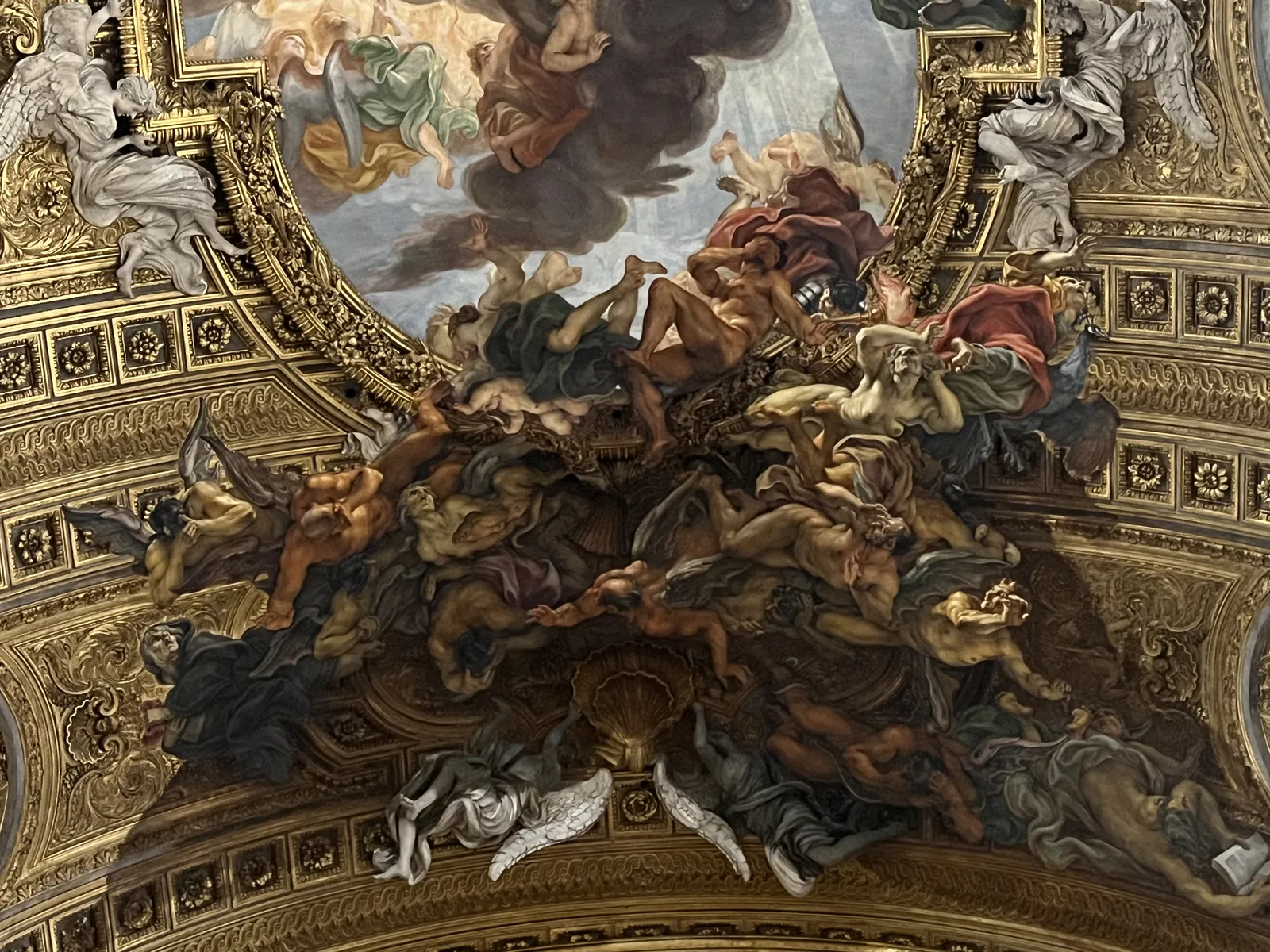
The Damned
Giovanni Battista Gaulli
In this dramatic segment (1676–79) from the Triumph of the Name of Jesus, Gaulli casts the damned from heaven into shadow and chaos. Their bodies twist, morph, and scream as they recoil from the divine light. Cloaked in darkness and shame, they contrast sharply with the radiant saved above—embodying Baroque emotion and the terrifying cost of spiritual failure.
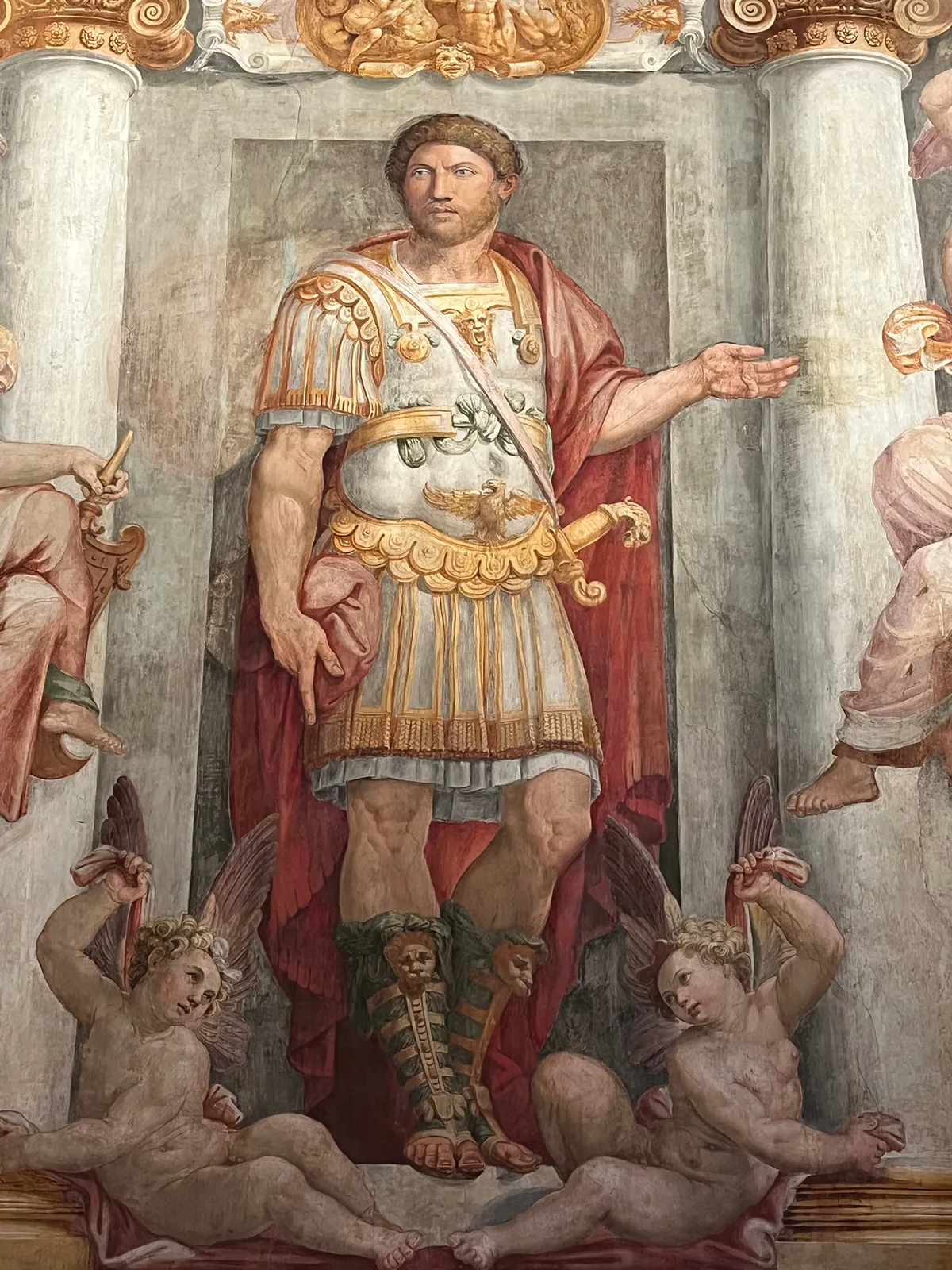
Emperor Hadrian
Girolamo Siciolante da Sermoneta (attrib.)
This 16th-c. fresco from the Sala Paolina depicts Emperor Hadrian in idealized Roman military attire. Portrayed with commanding calm, Hadrian stands framed by classical architecture and winged putti, symbolizing both earthly rule and divine favor. The work affirms his legacy as builder, humanist, and guardian of imperial order—within the very mausoleum he commissioned.
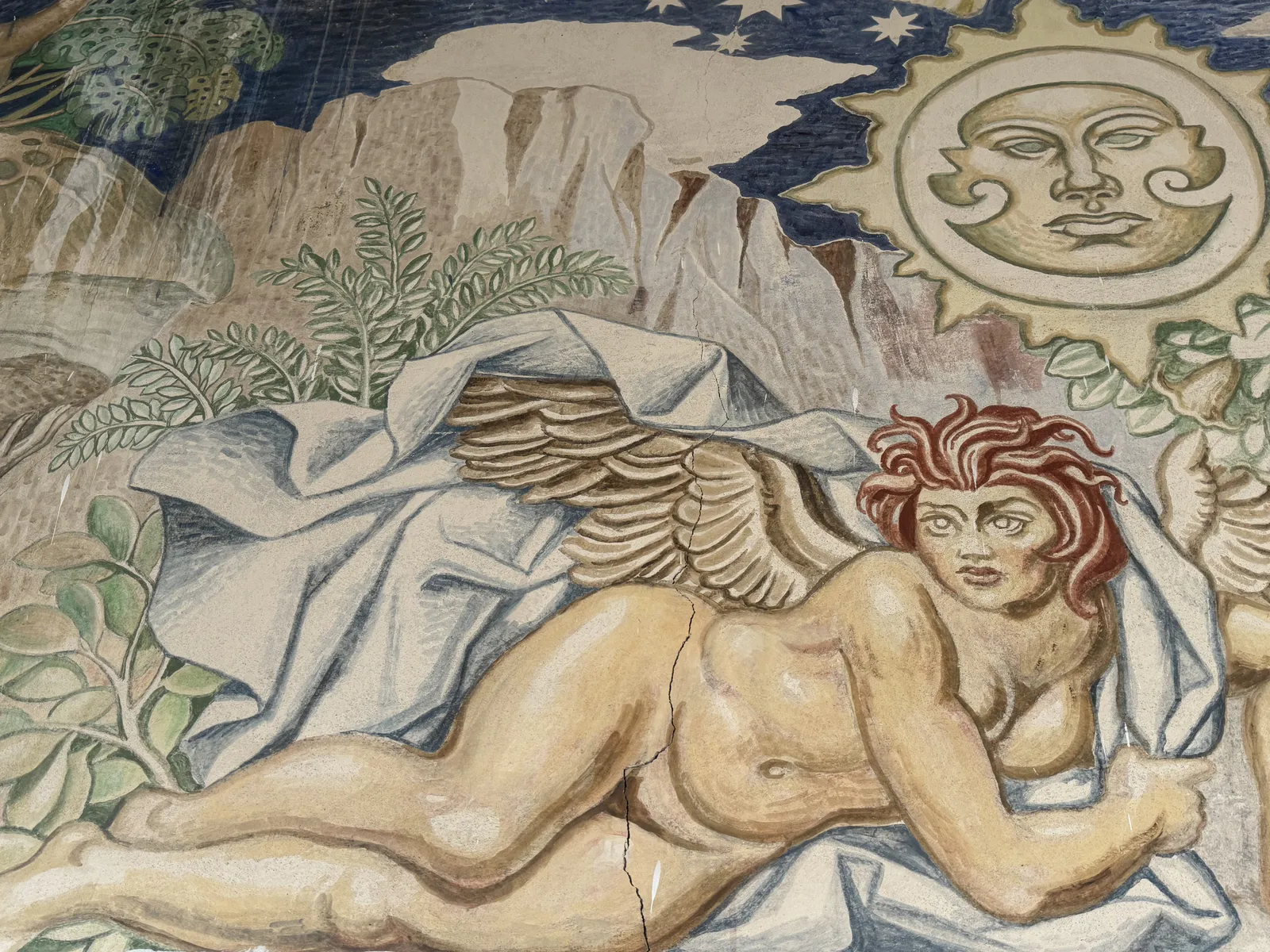
Mural of Huitaca the Rebellious Deity
Luis Alberto Acuña
This mural (1950s) portrays Huitaca, a sensual Muisca goddess of pleasure and disorder, who defied Bochica, the culture hero who taught law, farming, and morality. Condemned for her rebellion, she was transformed into an owl. Her winged form here embodies the clash between instinct and discipline, chaos and cosmic order at the heart of Muisca belief.
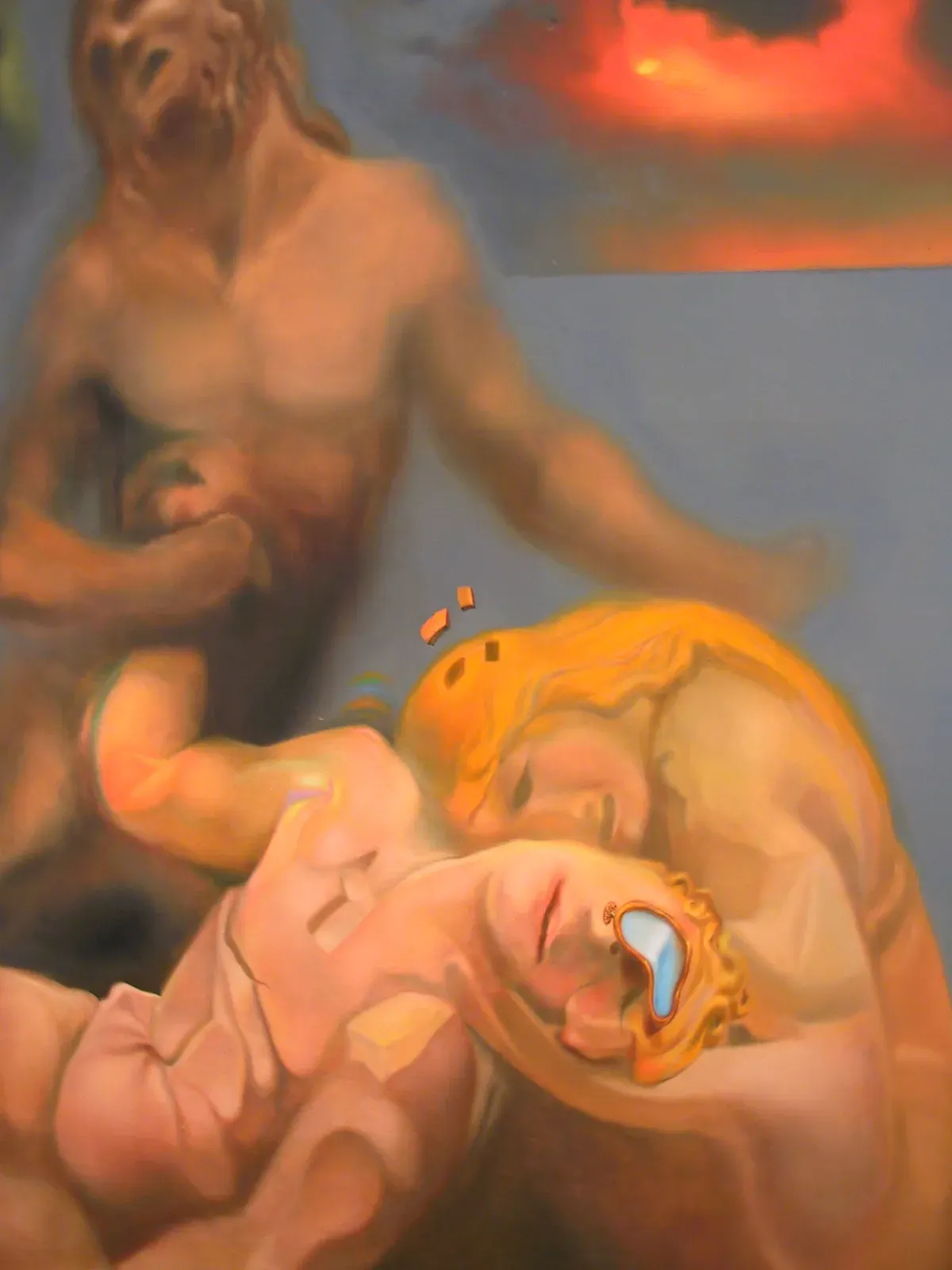
A Soft Watch to Cause a Young Ephebe to Die
Salvador Dalí
Dalí’s 1971 painting explores surrealist themes of time and mortality. A lifeless youth draped in a melting clock symbolizes the decay of ideal beauty. Hovering figures and a burning sky enhance the dreamlike tragedy, reflecting Dalí’s interest in the collapse of classical ideals. The work underscores his preoccupation with the relentless passage of time and its impact on human existence.
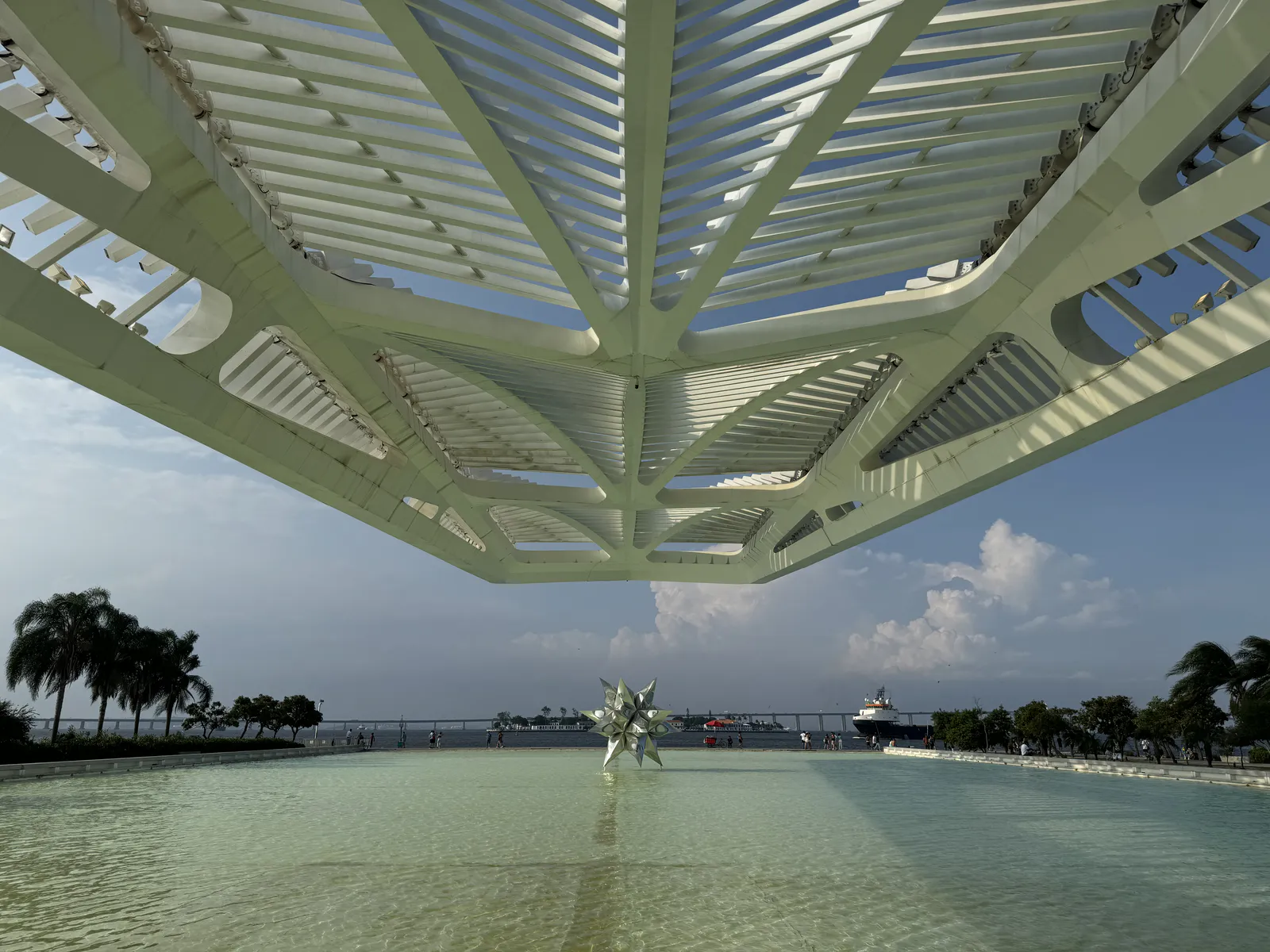
Puffed Star
Frank Stella
Installed before the Museum of Tomorrow in Rio de Janeiro (2016), this metallic sculpture by American artist Frank Stella dazzles with radiating points and mirrored planes. Its star-like form evokes cosmology and perception, inviting reflection on the interconnectedness of space, matter, and human imagination.
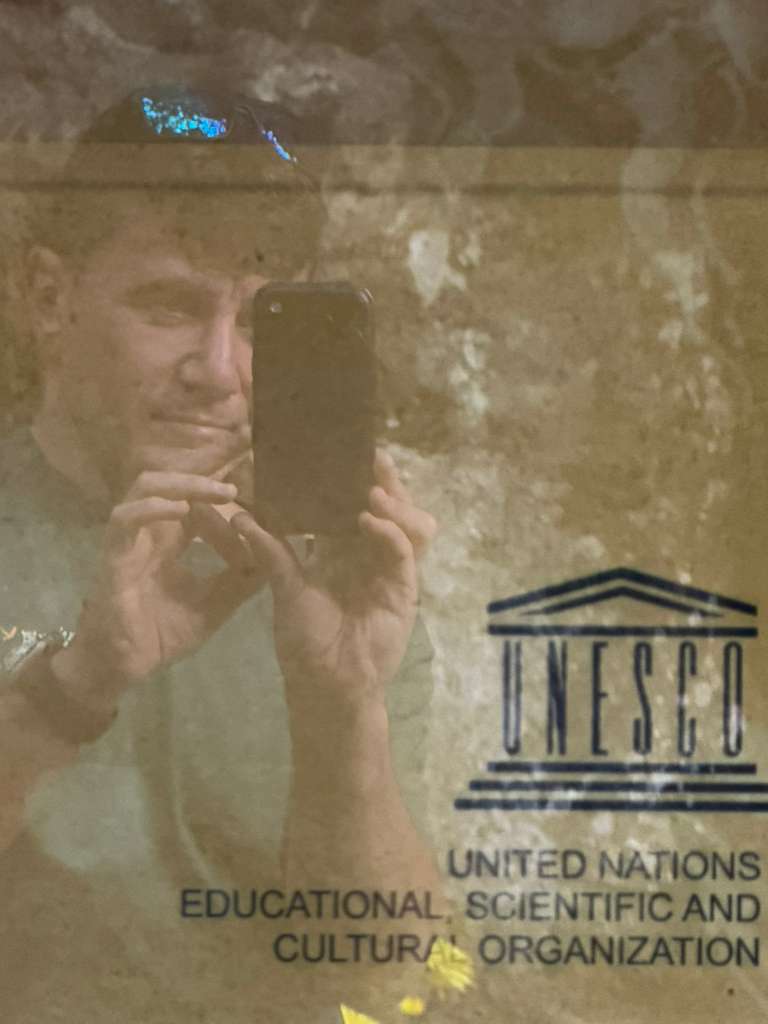
“When the path is beautiful, do not ask where it leads.” — Zen proverb
Welcome to my travel photography!
“When the path is beautiful, do not ask where it leads.” — Zen proverb
Welcome to my travel photography!
For as long as I can remember, my path has been one of discovery—seeking beauty, timelessness, and connection in every corner of the world. It has also been a journey of deep learning and understanding. I’ve been an avid traveler (or perhaps a travel addict?) for most of my life. My love for travel began long before I ever left home: as a child, I drew a fantasy map of my grandparents’ apartment and “traveled” through it with my cousin Sonya, imagining adventures in every corner. Nearly 90 countries and countless moments of awe later, I’m excited to share this journey with you.
Thanks to the tireless and ingenious programming of Diagilev, we’re now able to present about fifteen percent of the images I’ve accumulated over the years. More will be released in small batches depending on your interest. While the first release leans toward museum photography, later ones will include more nature, architecture, culture, and general travel experiences. If you’d like to receive email notifications about new releases, feel free to reach out—no commercial use, ever.
Throughout my travels, I’ve been drawn to two intertwined kinds of discovery. One is intellectual: learning why the world is the way it is. History became my guide, shaping my perspective and filling my camera roll with museums and old buildings. To me, history is not the past—it is the key to understanding the present and how the world became what it is. The other is emotional: seeking moments of elevation—spirituality, beauty, harmony—often found in nature, monasteries, and ancient sacred spaces. Together, these impulses shape my photography. It invites you to learn, admire, and soar—to rise above the mundane and see the world through a lens of curiosity and wonder.
Much of my later travel became possible thanks to my job with Delta Air Lines, but the wanderlust began years earlier. By the time I joined the industry, I had already visited over 35 countries and lived in several—largely thanks to a backpacking journey around the world with Luis León, whose face appears in many early photos. I grew up in Ufa in the USSR, and since leaving it I have lived, studied, and worked in Latvia, the United States, France, South Korea, Canada, Spain, Italy, Brazil, Japan, and Colombia.
A life of near-constant movement may seem a little crazy, but it has deepened my understanding of the world and produced the photography you are about to see. Over the years, my style has evolved—more intentional, more refined—yet its core remains the same: a search for understanding, timeless beauty, and a connection to those who walked this earth long before us.
I hope these photos stir something in your soul, just as they did in mine. I’d love to hear from you—whether reactions, suggestions, corrections, or a request to be added to the email list for new releases (no commercial use, I promise). You can learn more about my travels here, and my academic life here.
Enjoy our shared journey!