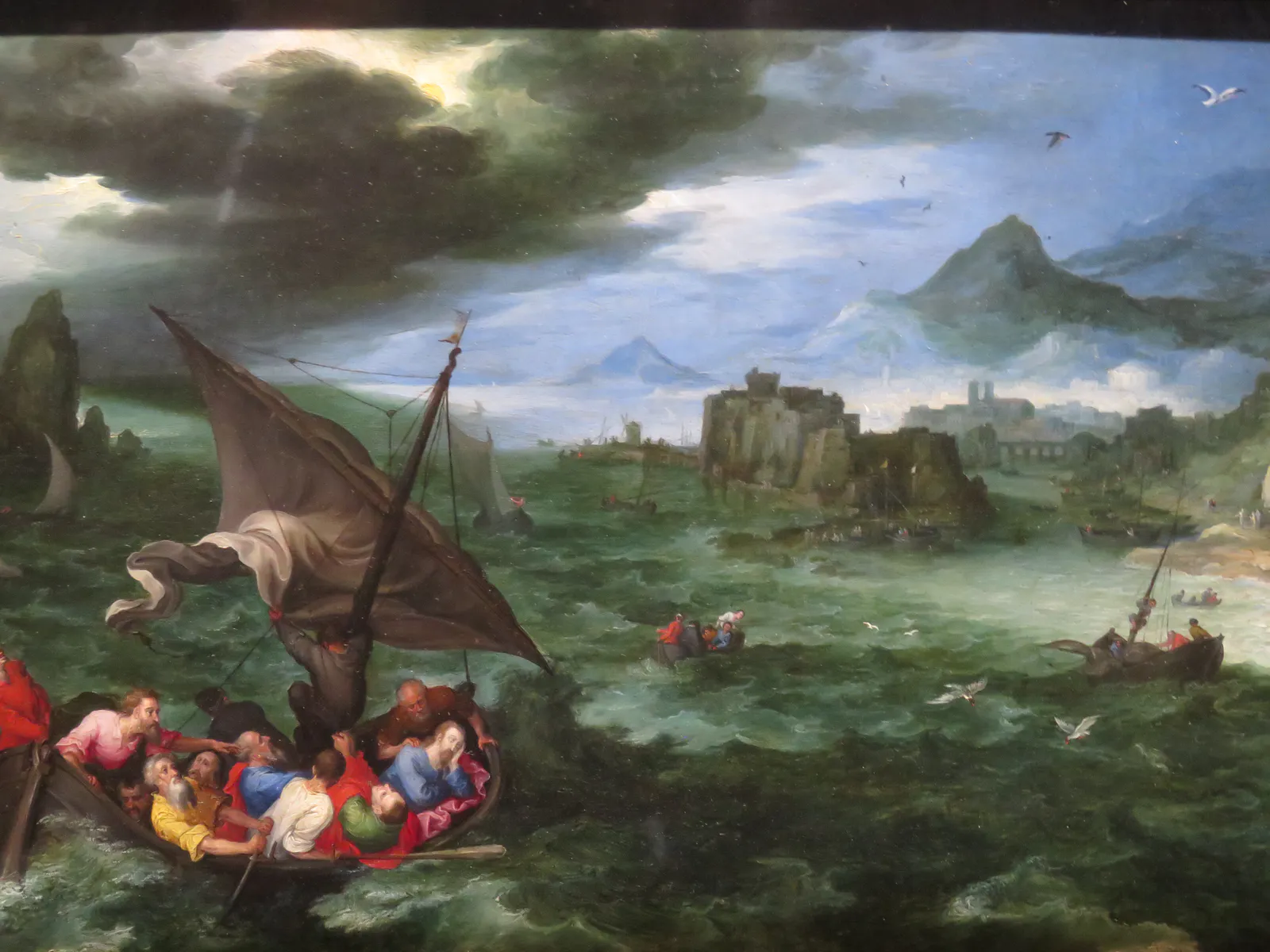
Christ in the Storm on the Sea of Galilee
Jan Brueghel
This oil on copper (1596) shows Christ asleep during a storm as an apostle wakes him amid violent waves on the Sea of Galilee. The heeling boat and twisted sail convey imminent peril, while the darkened sky dramatizes the disciples’ fear. Brueghel’s vivid rendering turns natural turbulence into a meditation on faith and divine control.
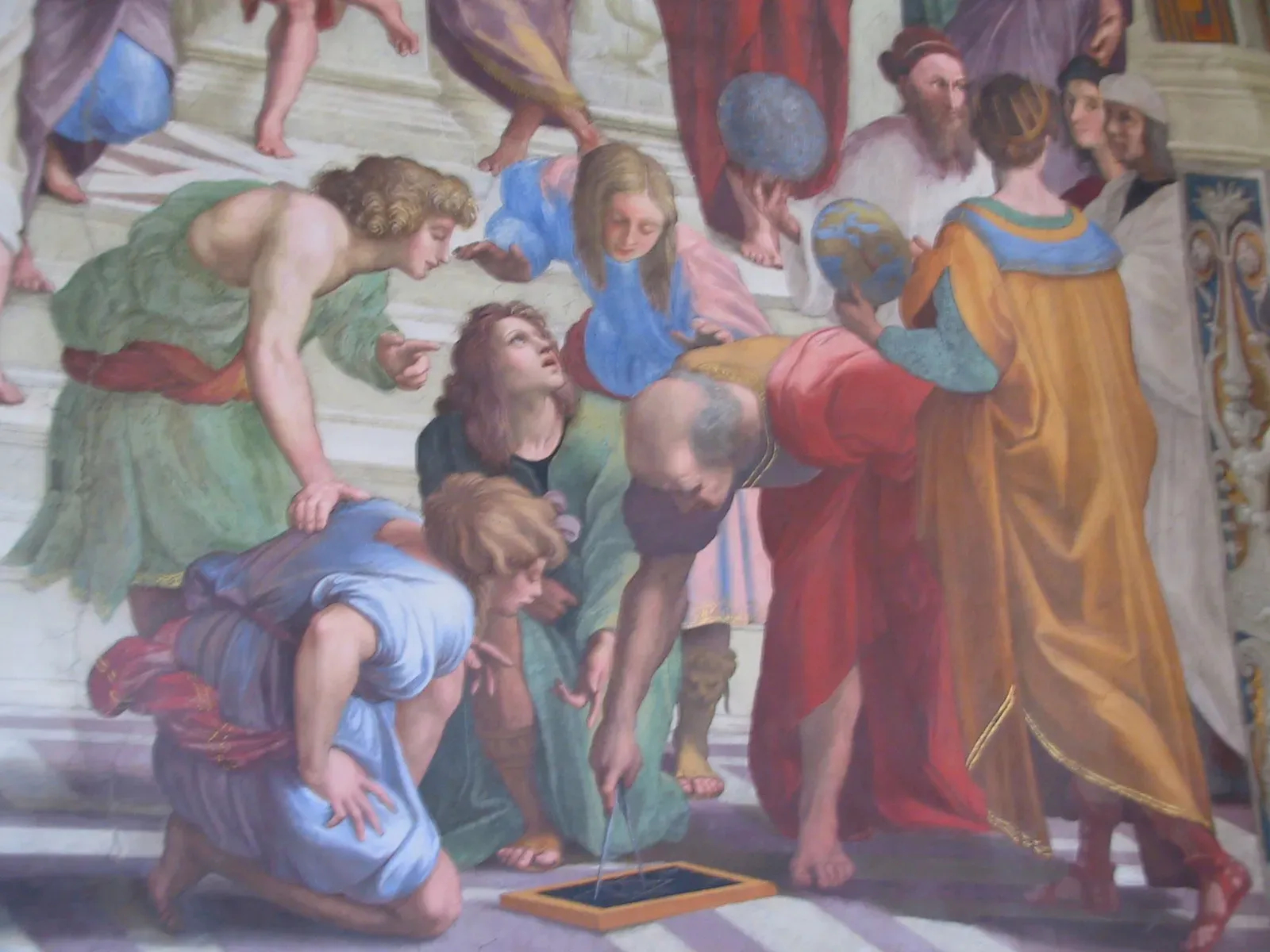
Euclid Teaching Geometry
Rapahel
In this vibrant lower-right scene from The School of Athens (1509–1511), Raphael presents Euclid demonstrating geometric principles with a compass. Painted in Rome during the High Renaissance, this detail celebrates empirical learning as foundational to human knowledge. The intense focus of his young onlookers reflects the Renaissance ideal of rediscovering ancient scientific wisdom through observation and reason.
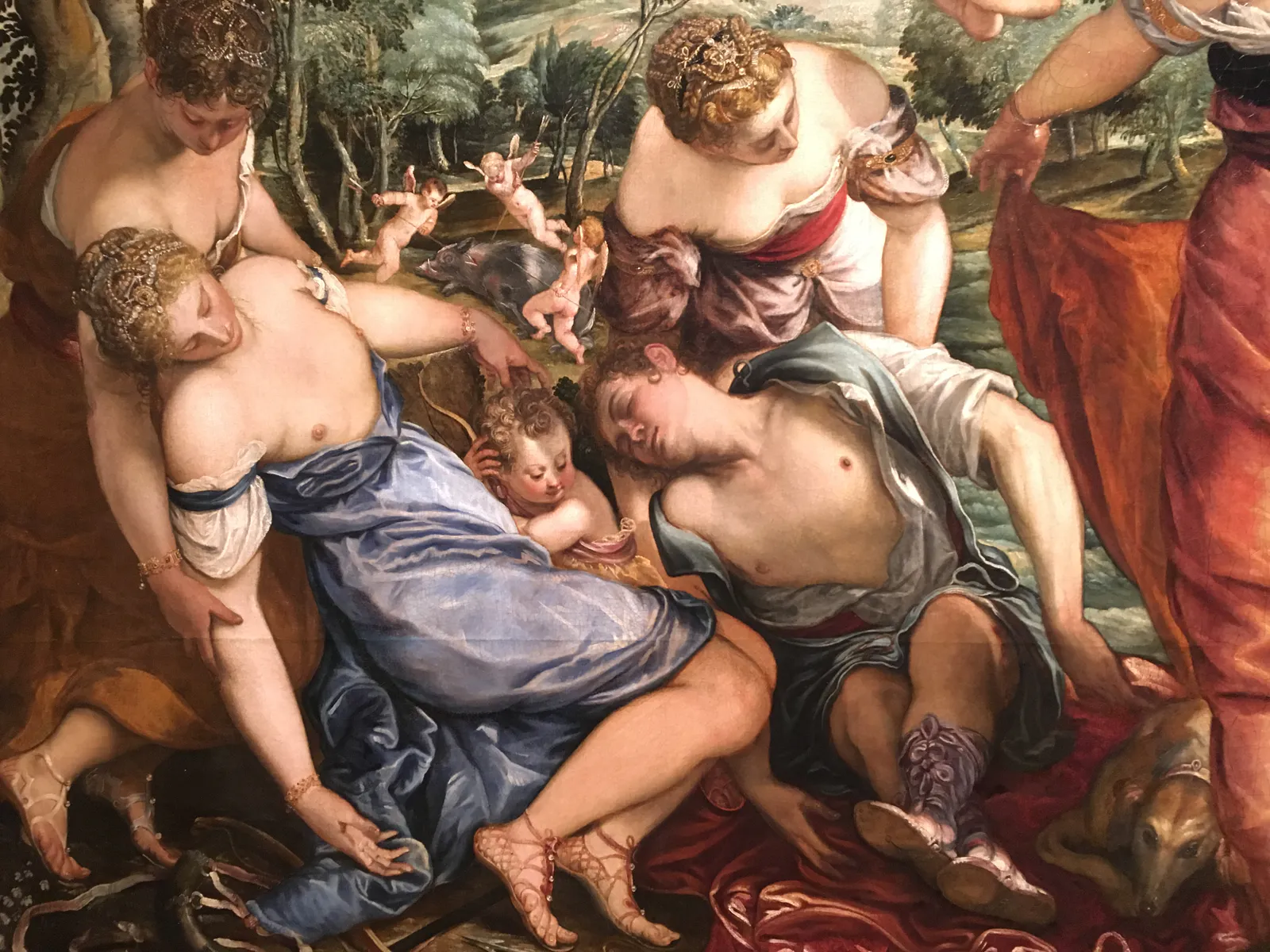
The Death of Adonis
Tintoretto's Workshop
The Death of Adonis (1550–55) captures Venus fainting at Adonis's death, diverging from Ovid’s Metamorphoses by including young women not in the original tale. Created by a Nordic artist in Tintoretto’s Venetian workshop, it blends Tintoretto’s dramatic style with the collaborator’s unique touch, evident in the expressive figures and vibrant colors. This fusion highlights the shared human themes of love and loss, inviting reflection on the timeless nature of myth and emotion.
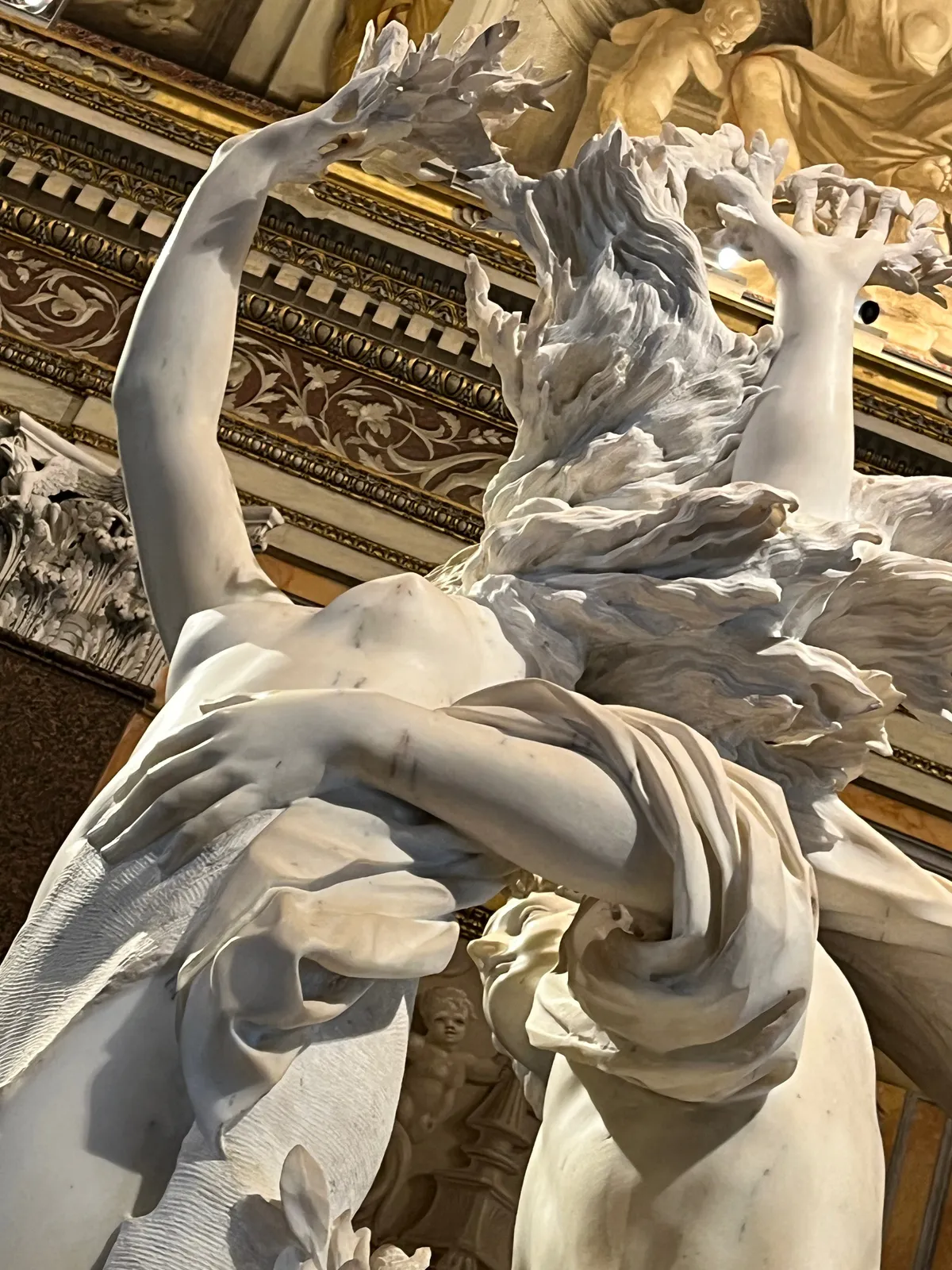
Apollo and Daphne (detail)
Gian Lorenzo Bernini
In this electrifying detail from Apollo and Daphne (1622–25), Daphne’s transformation peaks: her fingers stretch skyward as they fracture into laurel branches. Bernini’s carving achieves an uncanny fluidity—Apollo’s embrace contrasts her fleeing limbs, while bark and hair blur into motion, embodying divine metamorphosis and tragic escape.
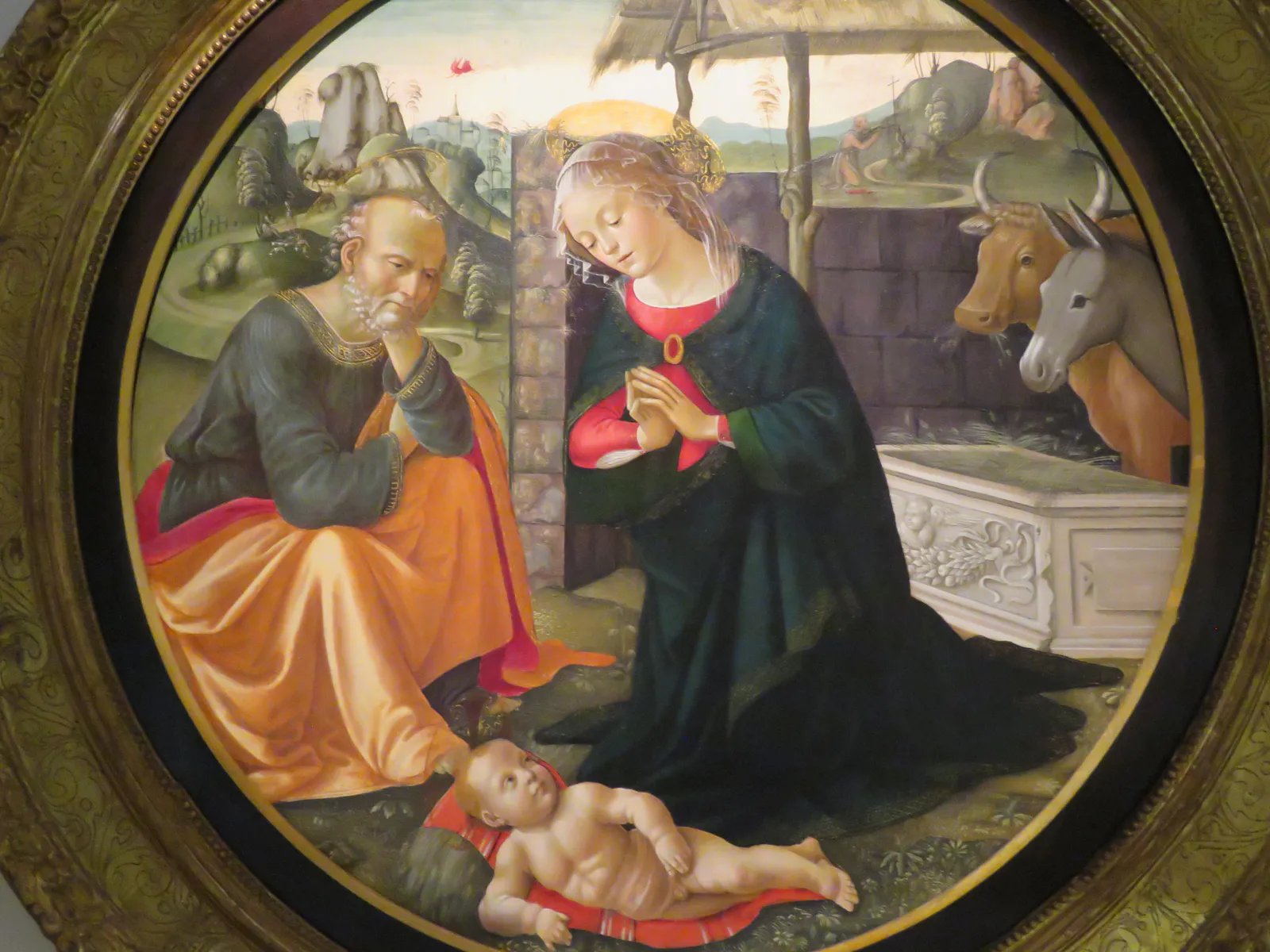
Adoration of the Christ Child
Workshop of Domenico Ghirlandaio
This tondo (c. 1485–1490) shows Mary and Joseph adoring the infant Christ, lying humbly on the earth. The sarcophagus-like manger prefigures his Passion, while the ox and donkey fulfill Isaiah and Habakkuk’s prophecy of animals recognizing the Lord. The scene binds intimacy, humility, and cosmic redemption.
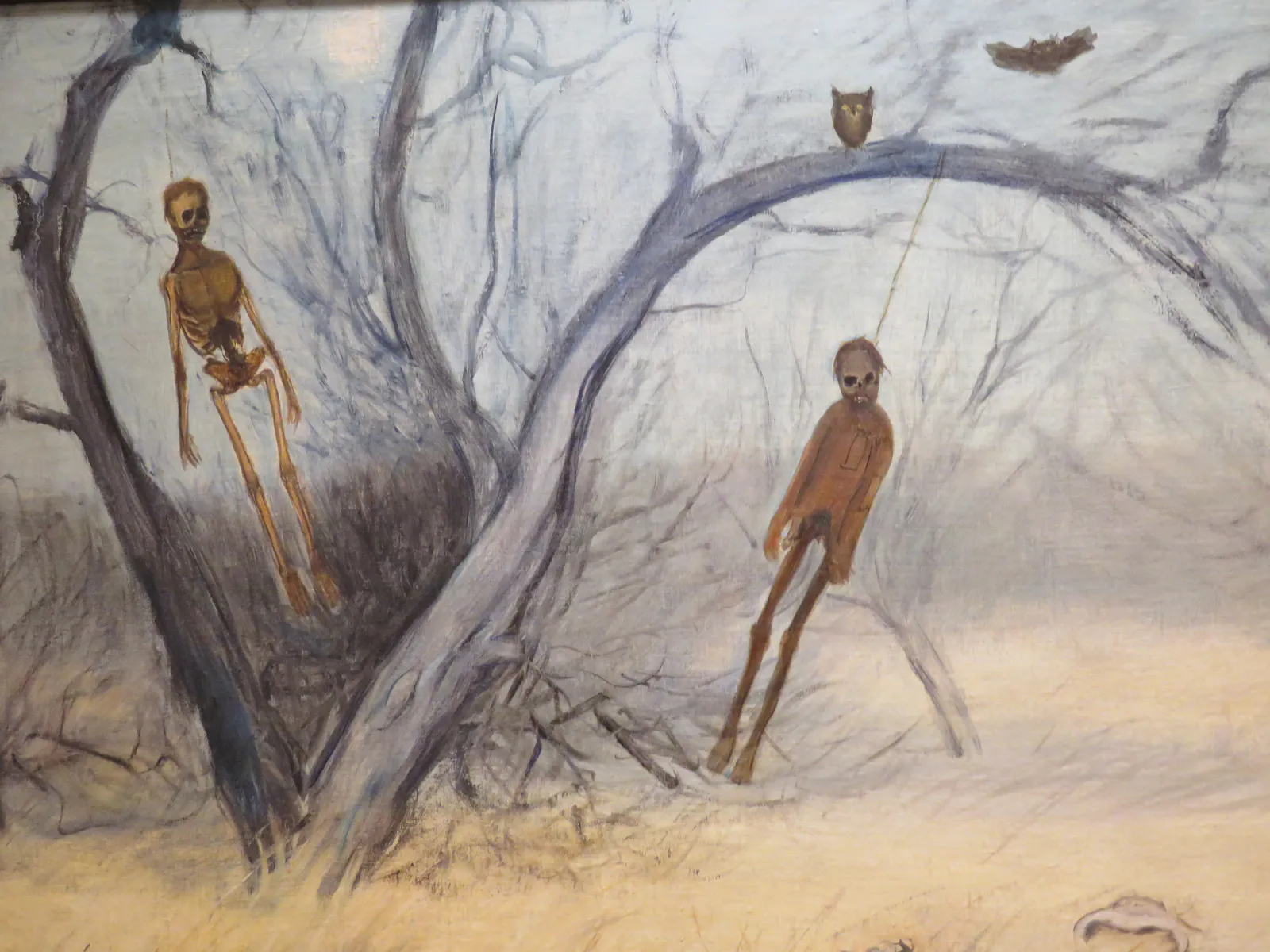
Zacatecas Landscape with Hanged Men
Francisco Goitia
This 1914 canvas exposes the horrors of the Mexican Revolution. Two skeletal corpses hang from a barren tree, their twisted bodies blending with the lifeless landscape, while an owl perches above as a symbol of death. Goitia, who witnessed the battle of Zacatecas, rejected heroic depictions in favor of brutal realism. His work stands as both testimony and condemnation, capturing the trauma of a nation torn by war.
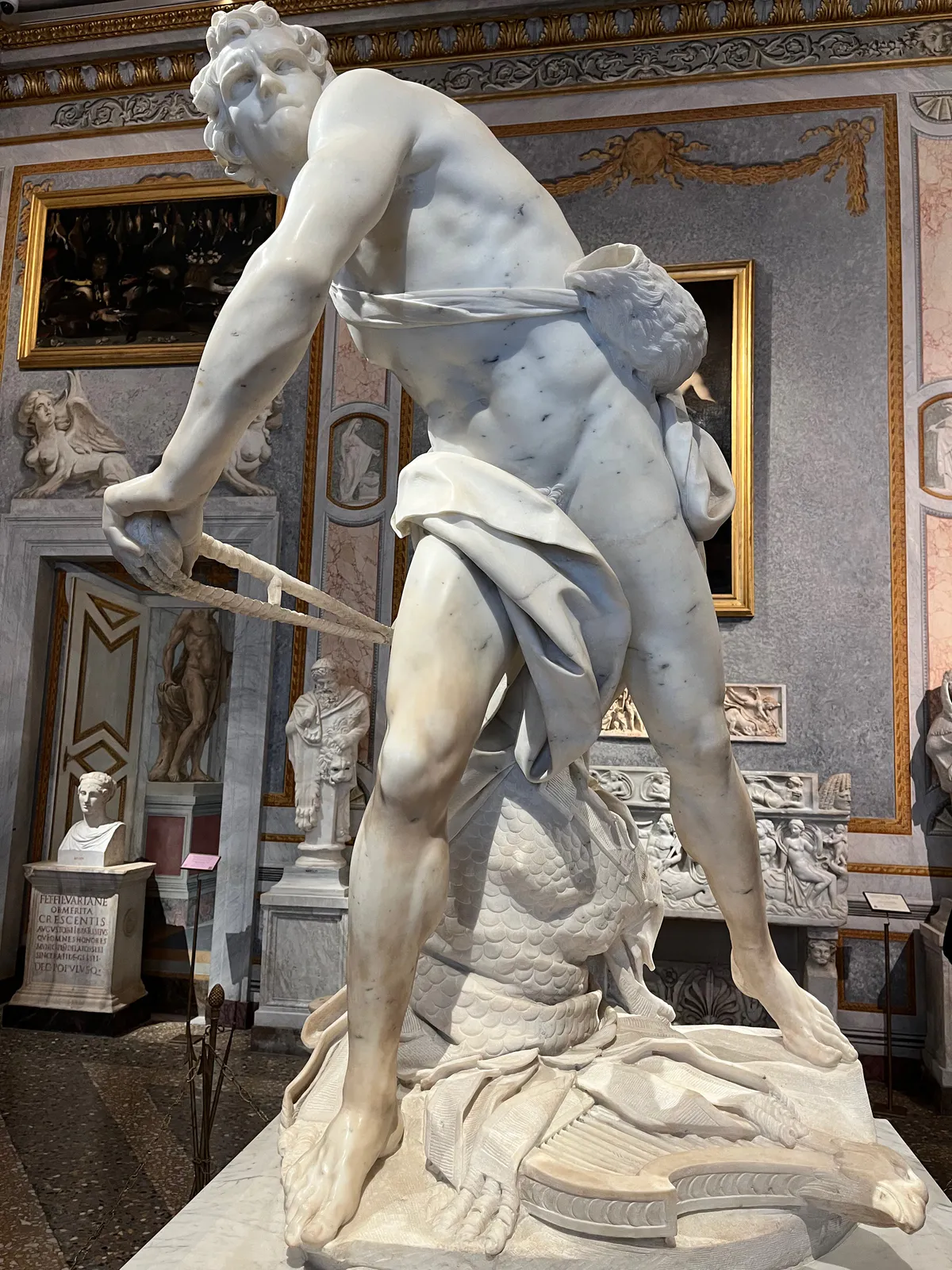
David
Gian Lorenzo Bernini
This electrifying sculpture (1623–24) captures David mid-swing as he prepares to strike Goliath. Commissioned by Cardinal Scipione Borghese, it breaks from static Renaissance models by freezing a moment of intense motion and psychological resolve. Bernini’s vivid realism and spiraling pose typify the Baroque celebration of drama and energy.
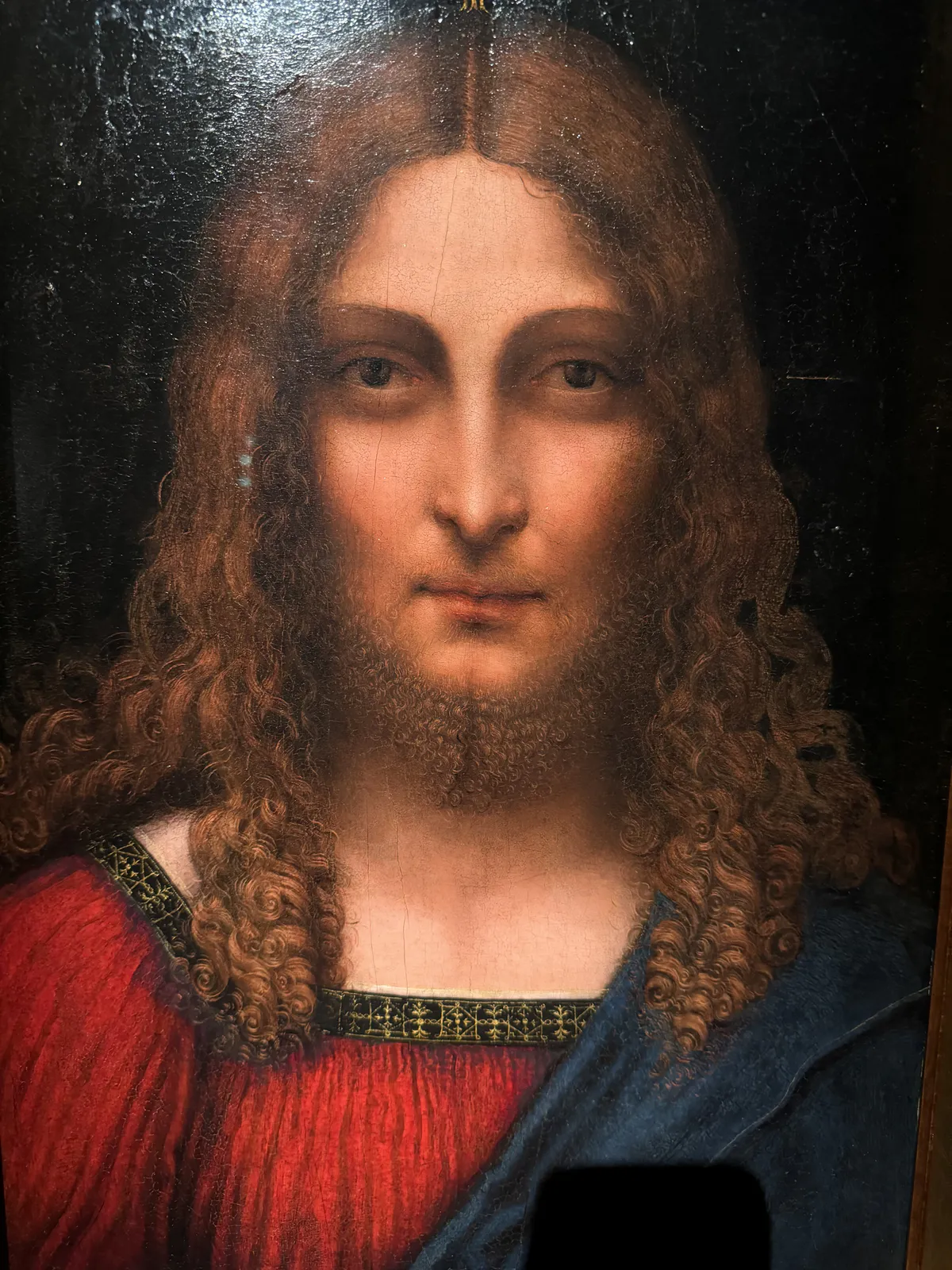
Christ the Redeemer
Salaì
This compelling portrait (1511), often attributed to Salaì—Leonardo’s apprentice—depicts Christ with idealized serenity and ambiguous allure. Sometimes called the male Mona Lisa, it showcases the sfumato technique pioneered by Leonardo. Though some argue it is da Vinci’s own work, its authorship remains debated. It reflects the spiritual humanism of the Renaissance and holds the record as the most expensive artwork ever sold at auction.
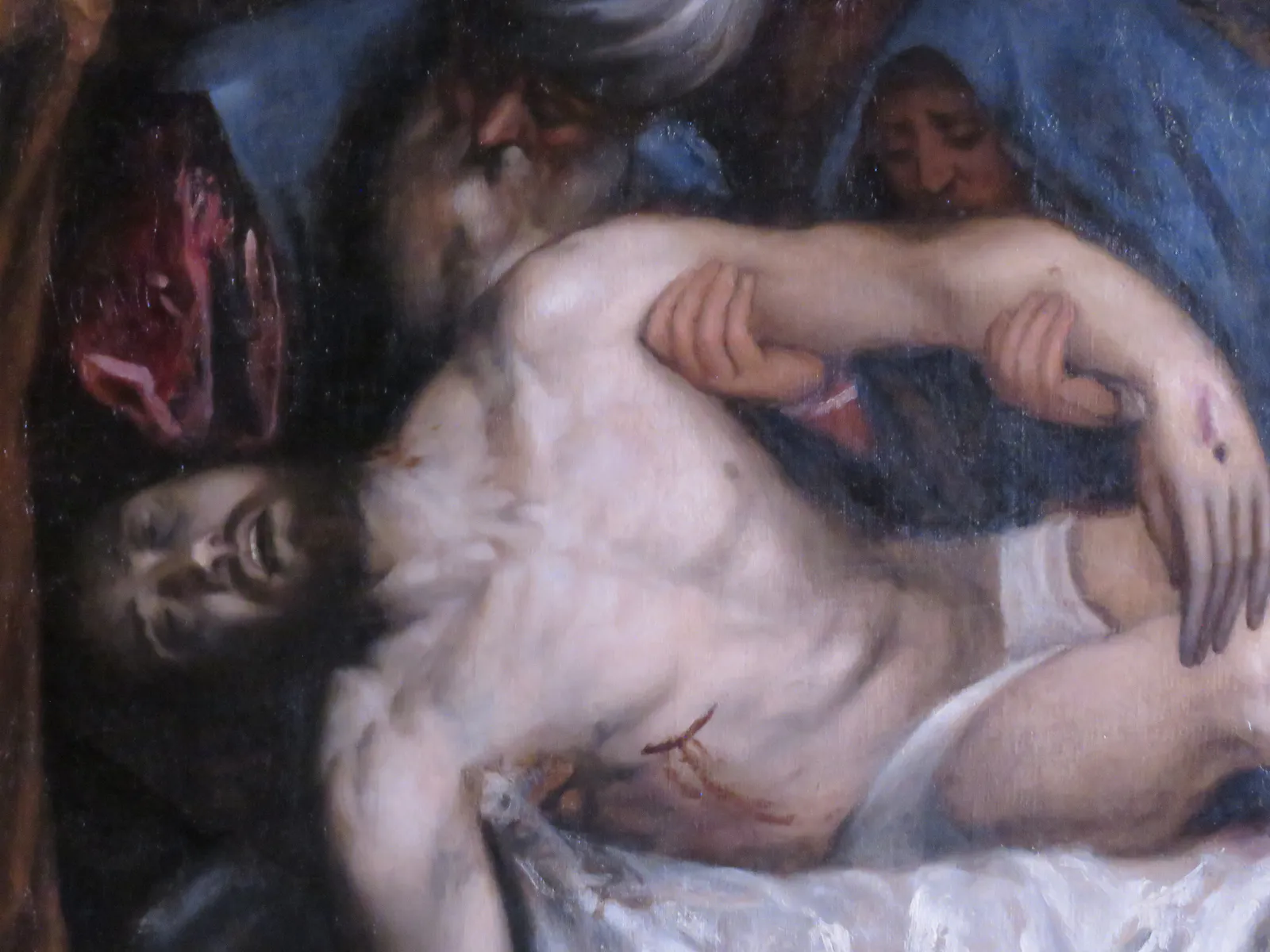
The Entombment of Christ (detail)
Titian and Palma the Younger
This fragment (1618) reveals Christ’s lifeless body marked by crucifixion wounds, cradled with reverence by mourning figures. The interplay of flesh, fabric, and sorrow exemplifies Titian’s emotive realism, while Palma the Younger completes the drama with expressive gestures—honoring human grief and divine sacrifice in one timeless moment.
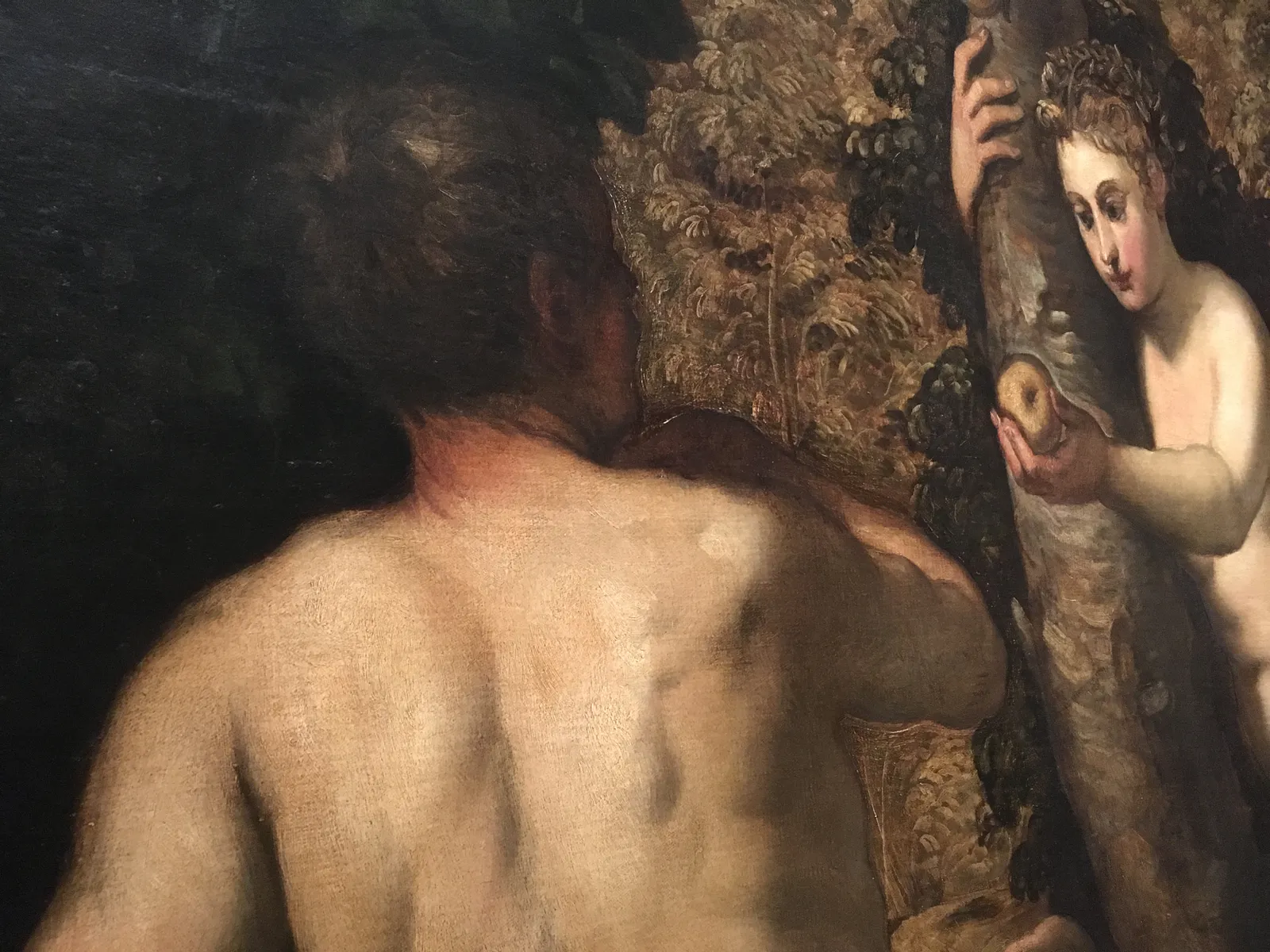
Adam and Eve
Tintoretto
Tintoretto’s painting (1550–53) depicts the biblical scene of temptation in the Garden of Eden. Eve offers the forbidden fruit to Adam, with their expulsion illustrated in the background. Influenced by Michelangelo, the composition emphasizes the nude figures and employs oblique lines to structure the landscape. This work reflects the Renaissance interest in human form and moral themes.
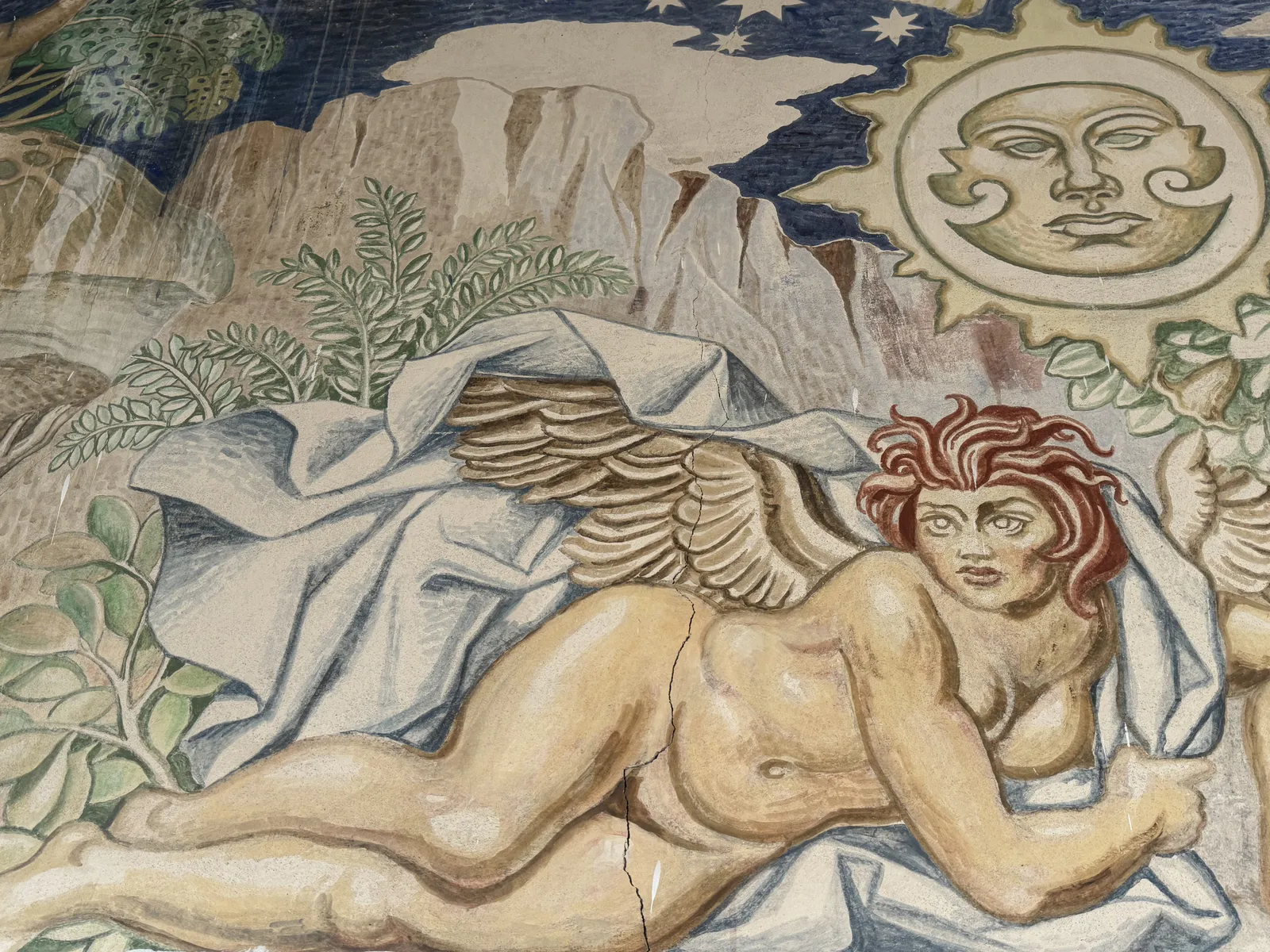
Mural of Huitaca the Rebellious Deity
Luis Alberto Acuña
This mural (1950s) portrays Huitaca, a sensual Muisca goddess of pleasure and disorder, who defied Bochica, the culture hero who taught law, farming, and morality. Condemned for her rebellion, she was transformed into an owl. Her winged form here embodies the clash between instinct and discipline, chaos and cosmic order at the heart of Muisca belief.
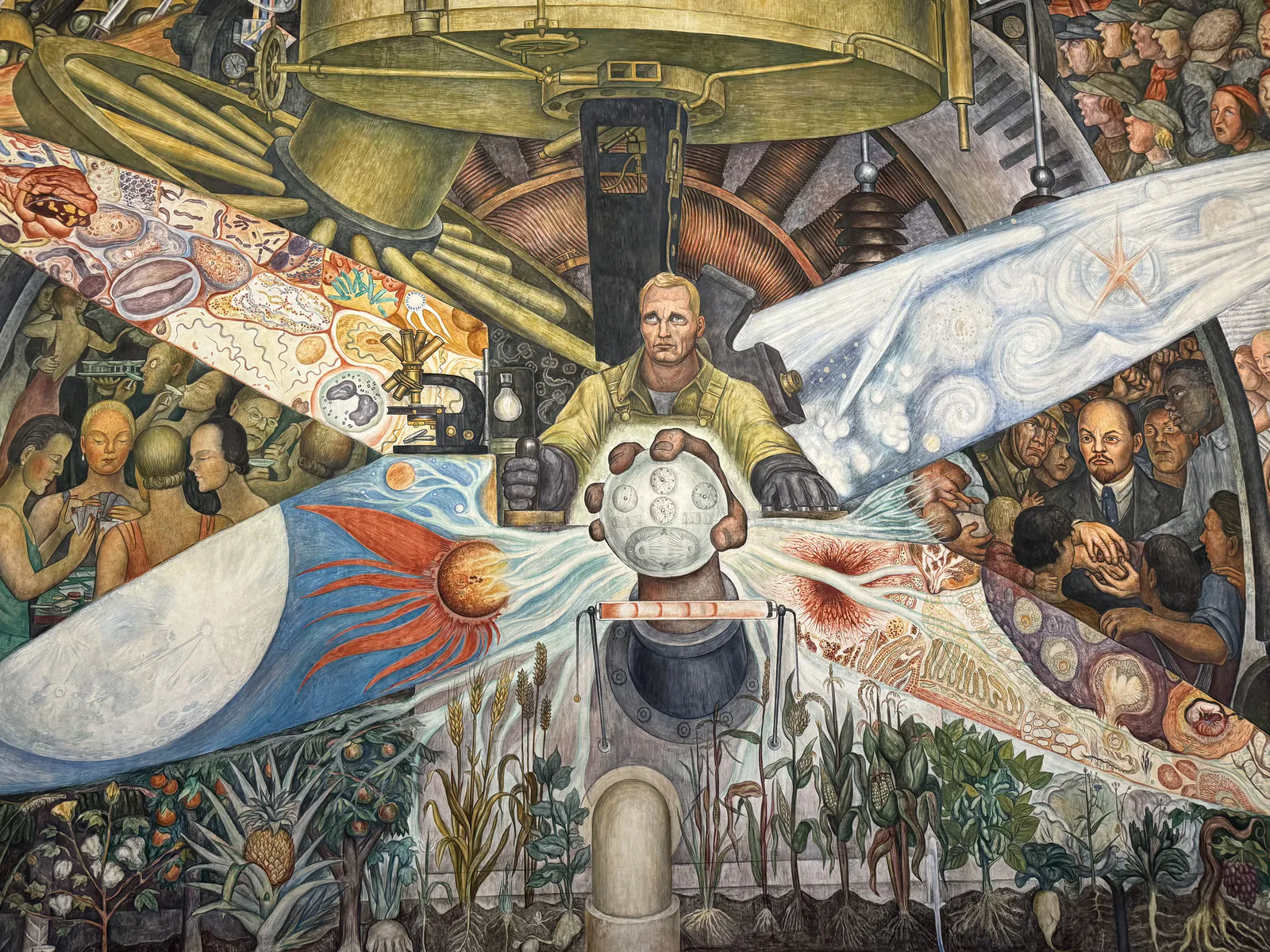
Man, Controller of the Universe
Diego Rivera
This mural (1934), a replica of Rivera’s censored Rockefeller Center fresco, places a worker at the symbolic axis of modernity. He guides cosmic, scientific, and political forces—flanked by socialism on the left and capitalism on the right. Lenin’s presence affirms Rivera’s Marxist ideals, asserting art’s power to envision revolutionary futures.
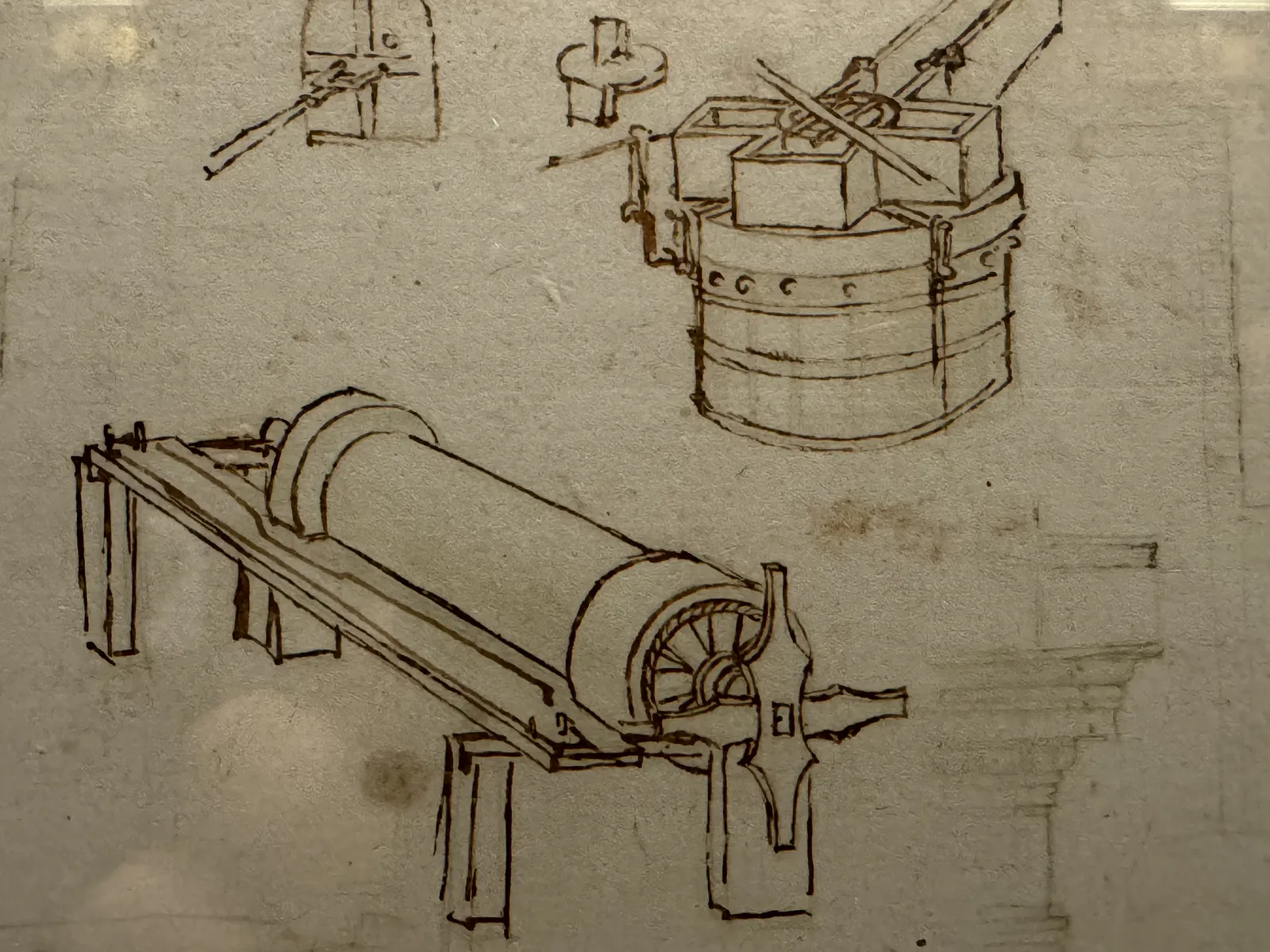
Machine for Polishing Mirrors
Leonardo da Vinci
This technical drawing (c. 1490) shows Leonardo’s device for polishing concave mirrors, likely used in optical or experimental studies. Its mechanism demonstrates advanced knowledge of geometry, motion, and material tension. The design reflects his pursuit of instruments that could extend human perception through mechanical precision.
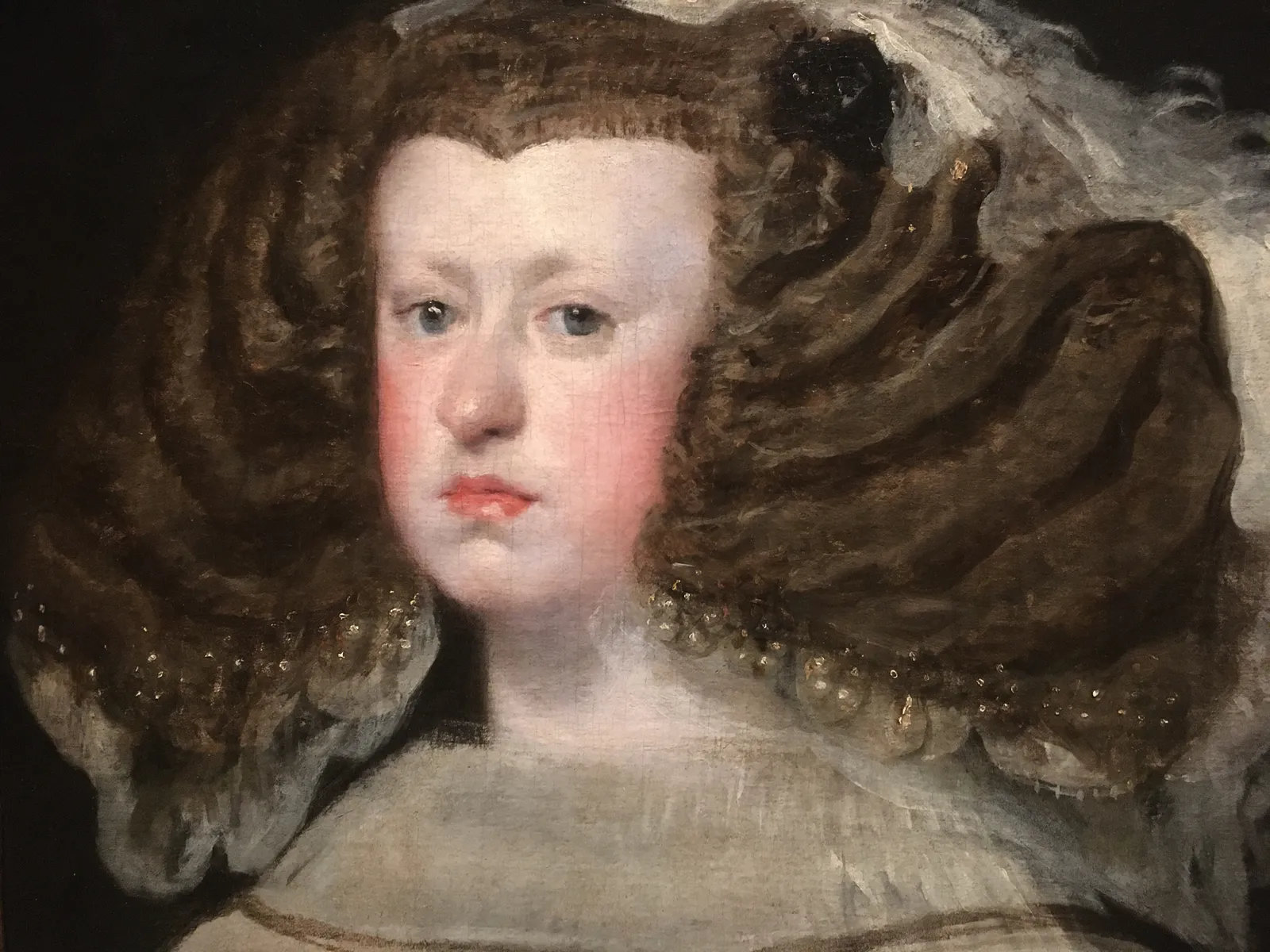
Queen Mariana
Diego Velázquez
Diego Velázquez’s portrait of Queen Mariana (c. 1656) captures the young queen with sensitivity, highlighting her regal authority and personal nuance. Painted during her early years as Philip IV’s wife, it is part of a series of likenesses that served as studies for larger compositions. These studies influenced other works, including those in Barcelona and Madrid.
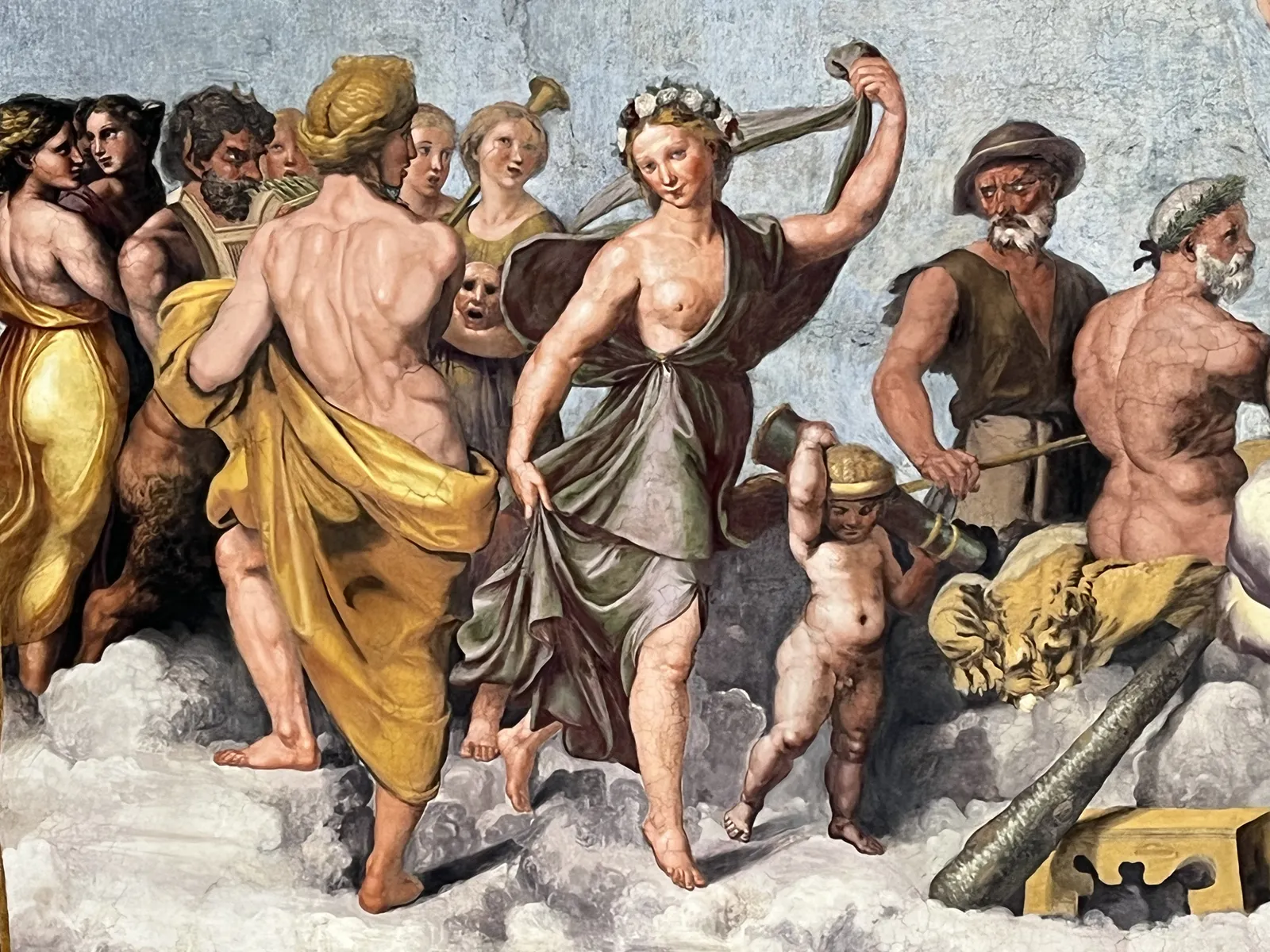
Dionysian Procession
Raphael
In this scene (1518), Raphael depicts Bacchus (Dionysus) leading a joyful procession of Maenads, Satyrs toward Cupid and Psyche’s wedding. The central Maenad, in ecstasy, embodies the Dionysian cult of revelry, blending divine intoxication with theatrical festivity.
“When the path is beautiful, do not ask where it leads.” — Zen proverb
Welcome to my travel photography!
“When the path is beautiful, do not ask where it leads.” — Zen proverb
Welcome to my travel photography!
For as long as I can remember, my path has been one of discovery—seeking beauty, timelessness, and connection in every corner of the world. It has also been a journey of deep learning and understanding. I’ve been an avid traveler (or perhaps a travel addict?) for most of my life. My love for travel began long before I ever left home: as a child, I drew a fantasy map of my grandparents’ apartment and “traveled” through it with my cousin Sonya, imagining adventures in every corner. Nearly 90 countries and countless moments of awe later, I’m excited to share this journey with you.
Thanks to the tireless and ingenious programming of Diagilev, we’re now able to present about fifteen percent of the images I’ve accumulated over the years. More will be released in small batches depending on your interest. While the first release leans toward museum photography, later ones will include more nature, architecture, culture, and general travel experiences. If you’d like to receive email notifications about new releases, feel free to reach out—no commercial use, ever.
Throughout my travels, I’ve been drawn to two intertwined kinds of discovery. One is intellectual: learning why the world is the way it is. History became my guide, shaping my perspective and filling my camera roll with museums and old buildings. To me, history is not the past—it is the key to understanding the present and how the world became what it is. The other is emotional: seeking moments of elevation—spirituality, beauty, harmony—often found in nature, monasteries, and ancient sacred spaces. Together, these impulses shape my photography. It invites you to learn, admire, and soar—to rise above the mundane and see the world through a lens of curiosity and wonder.
Much of my later travel became possible thanks to my job with Delta Air Lines, but the wanderlust began years earlier. By the time I joined the industry, I had already visited over 35 countries and lived in several—largely thanks to a backpacking journey around the world with Luis León, whose face appears in many early photos. I grew up in Ufa in the USSR, and since leaving it I have lived, studied, and worked in Latvia, the United States, France, South Korea, Canada, Spain, Italy, Brazil, Japan, and Colombia.
A life of near-constant movement may seem a little crazy, but it has deepened my understanding of the world and produced the photography you are about to see. Over the years, my style has evolved—more intentional, more refined—yet its core remains the same: a search for understanding, timeless beauty, and a connection to those who walked this earth long before us.
I hope these photos stir something in your soul, just as they did in mine. I’d love to hear from you—whether reactions, suggestions, corrections, or a request to be added to the email list for new releases (no commercial use, I promise). You can learn more about my travels here, and my academic life here.
Enjoy our shared journey!