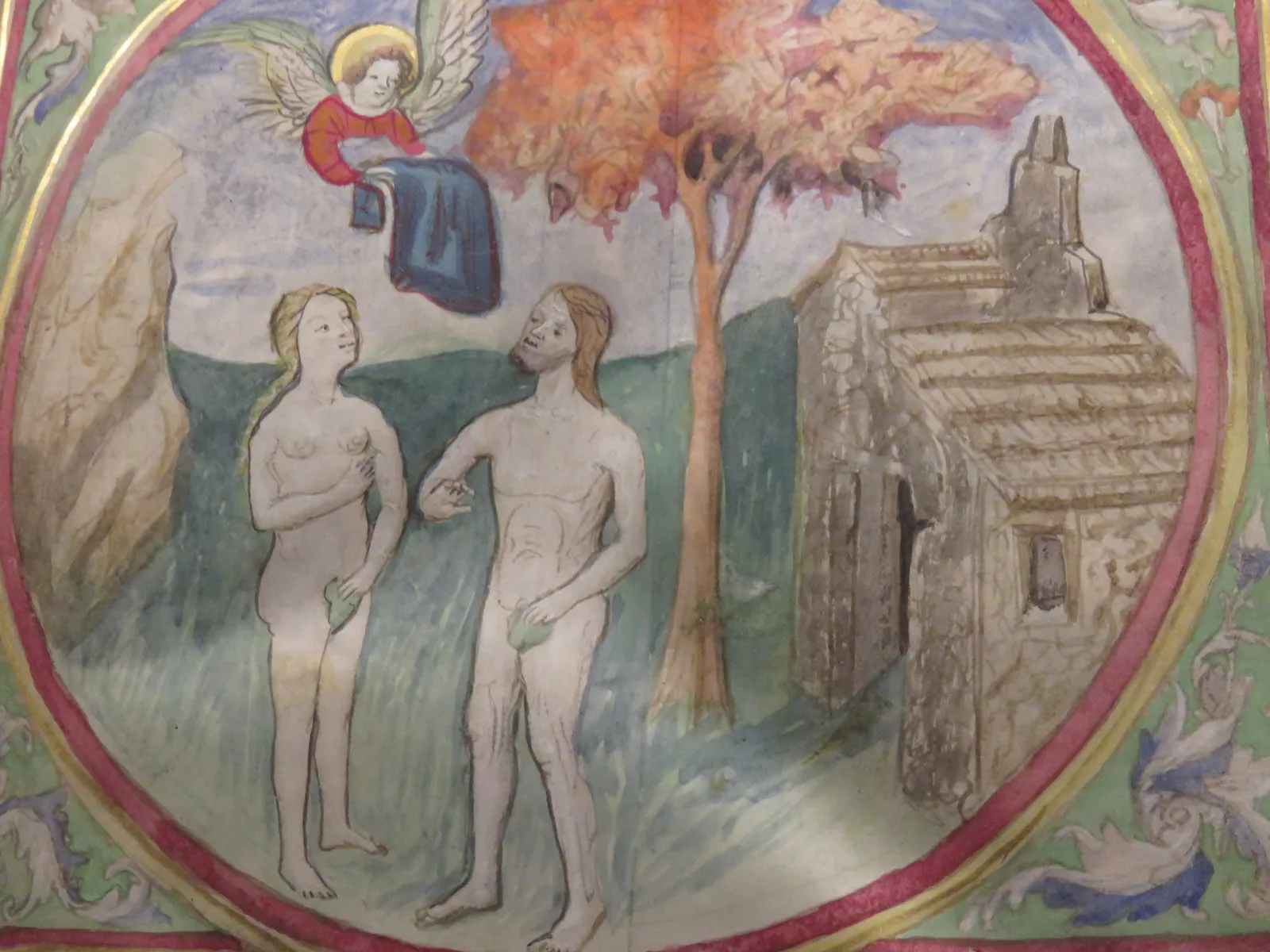
Expulsion from Eden
Maître des Médaillons
This French manuscript miniature (early 15th c.) shows Adam and Eve after the Fall, modestly covering themselves with leaves. An angel descends with a robe, while the Tree of Knowledge burns red above them. To the right stands a stone building, symbolizing exile from Paradise. The vivid colors and fine detail reflect late medieval devotional art.
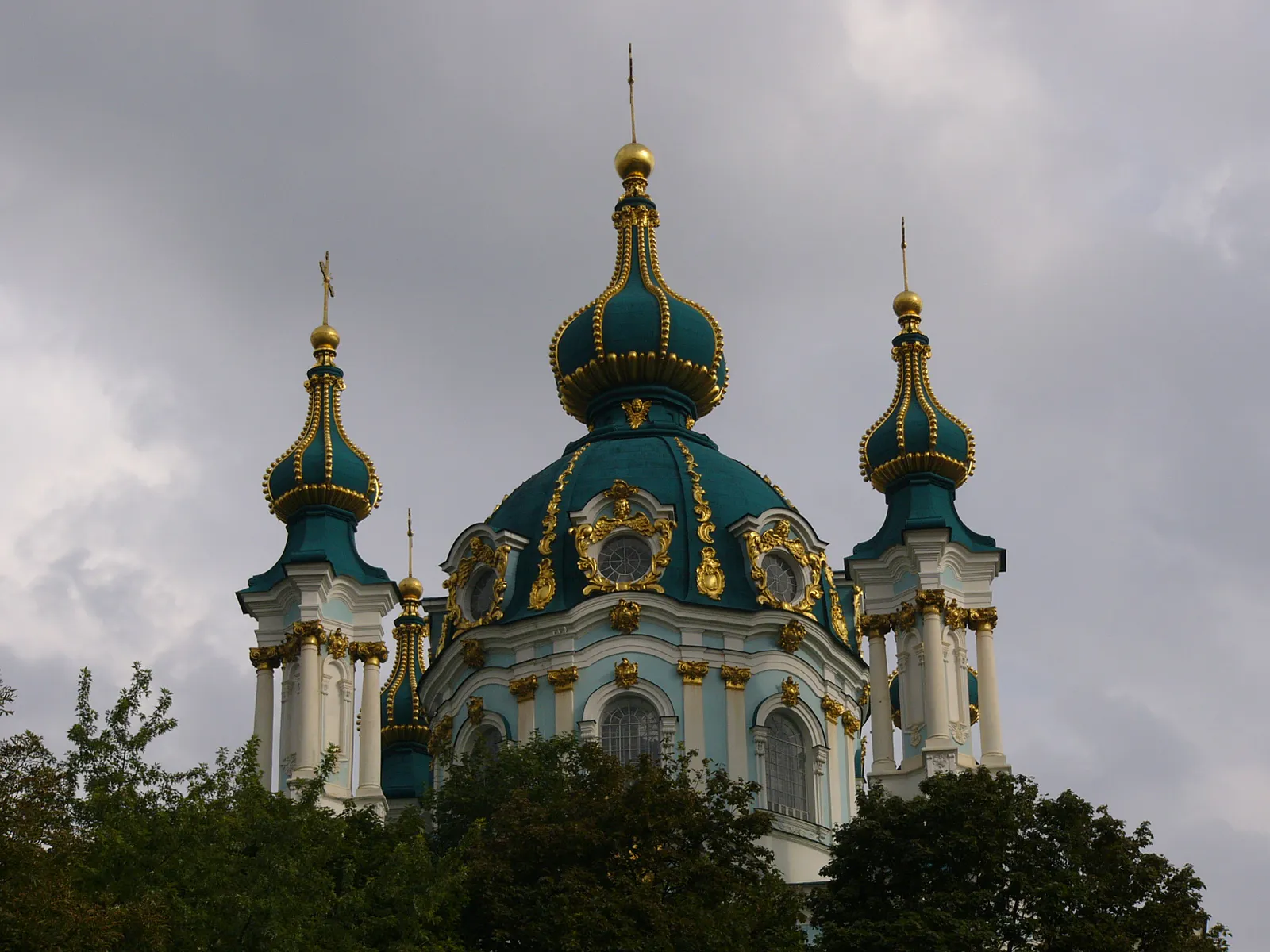
St. Andrew's Church
Bartolomeo Rastrelli
St. Andrew’s Church (1747–54) crowns a Kyiv hill with gilded domes and turquoise ornament typical of late Baroque design introduced by the Italian architect Bartolomeo Rastrelli. Its dynamic composition and elaborate detailing adapt Western forms to Orthodox liturgy. The church stands as a landmark of 18th-c. imperial architecture in Eastern Europe.
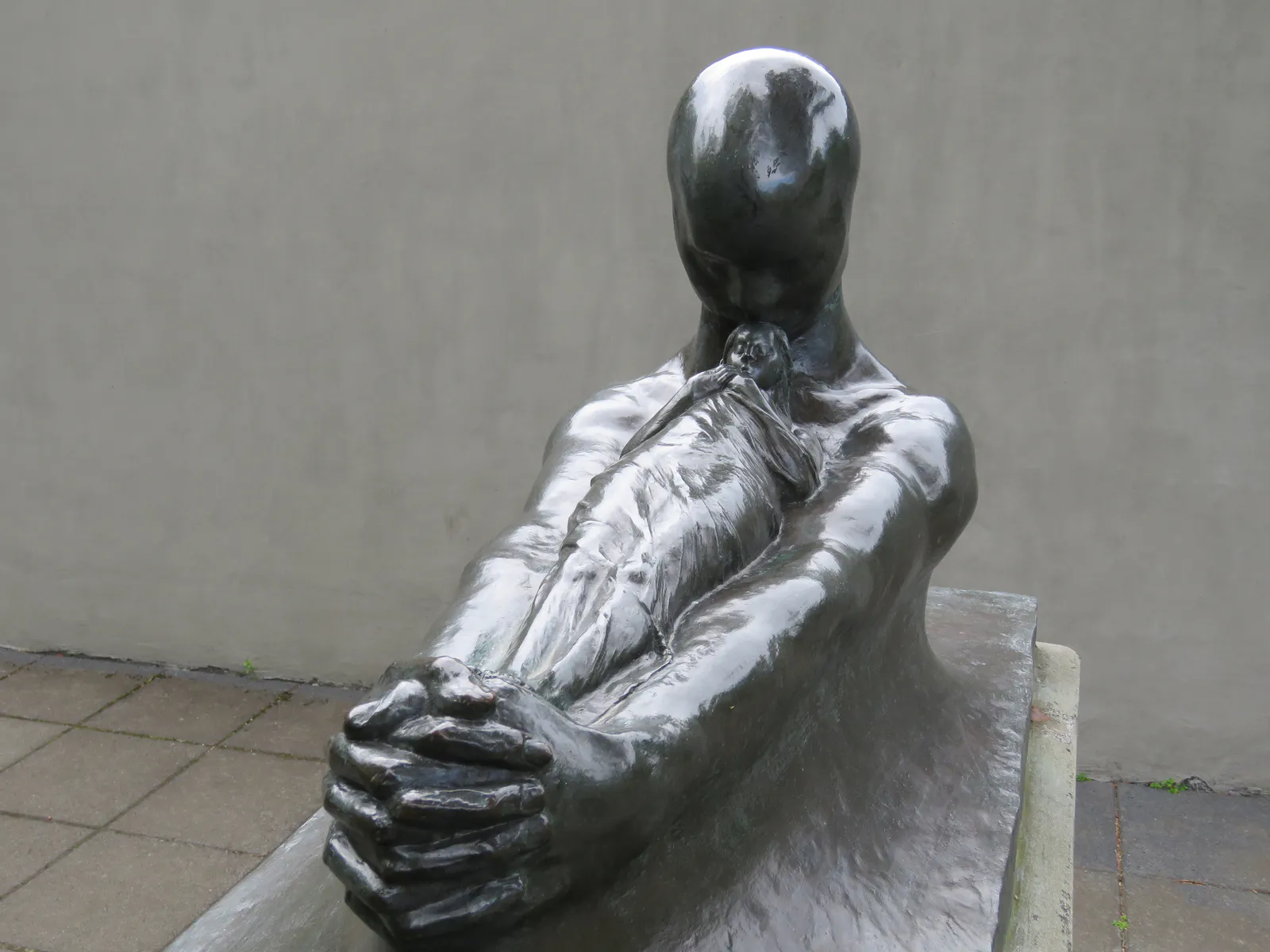
Earth
Einar Jónsson
This sculpture (1904–08) depicts a human figure cradling a smaller, draped form, symbolizing the Earth or nature. Jónsson, an Icelandic sculptor, is known for his symbolic and allegorical works exploring mythology, spirituality, and the human condition. This piece reflects his exploration of humanity’s connection to the natural world and the spiritual realm.
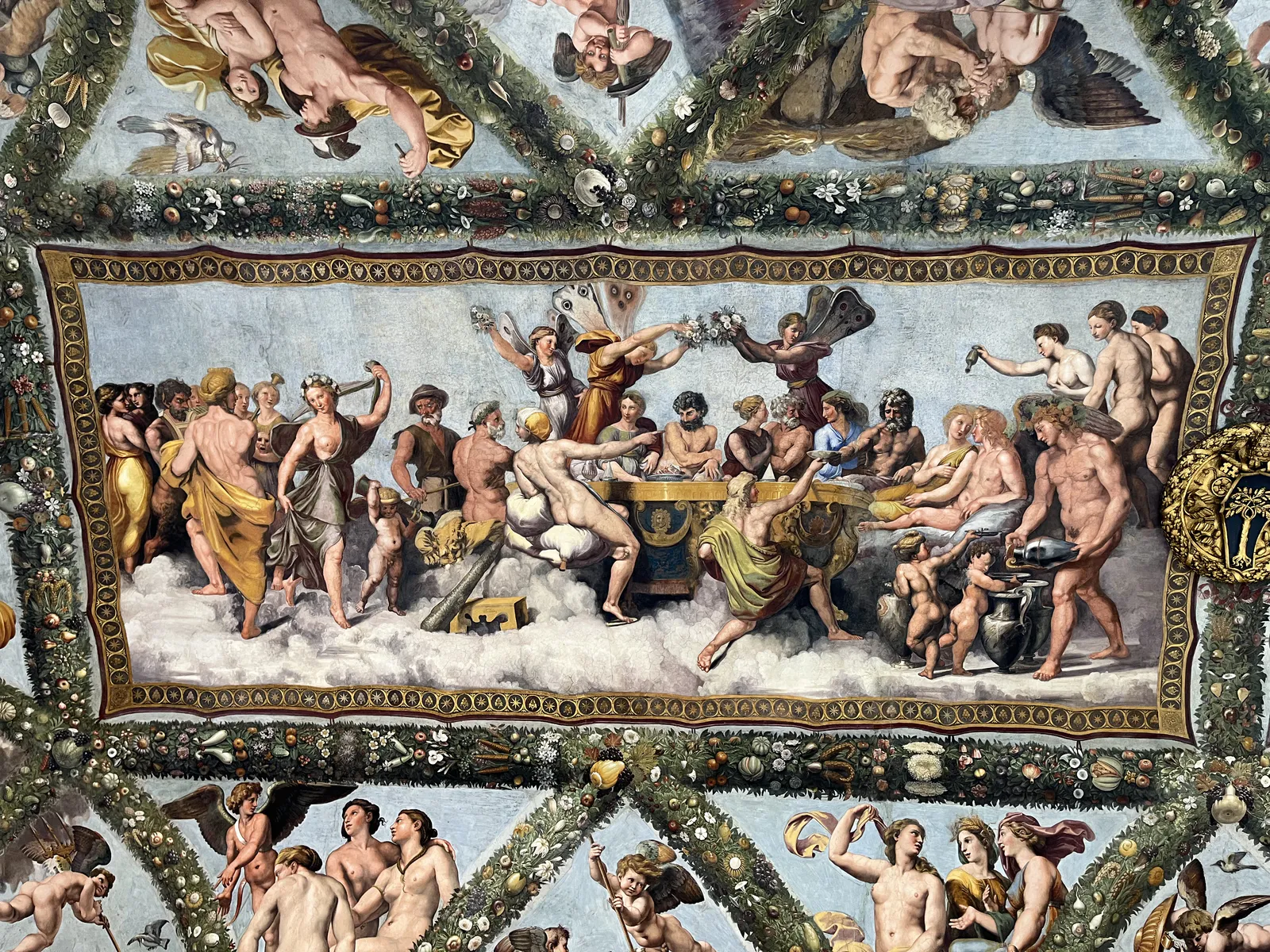
The Wedding Banquet of Cupid and Psyche
Raphael
In this grand fresco (1518), Raphael depicts the divine banquet celebrating the marriage of Cupid and Psyche. At the center, Jupiter and Juno preside; beside them sit Pluto, Persephone, Neptune, and Venus. Ganymede offers wine to Jupiter, while Bacchus (Dionysus), assisted by putti, pours wine at the right. The scene embodies divine harmony, joy, and the union of soul and love.
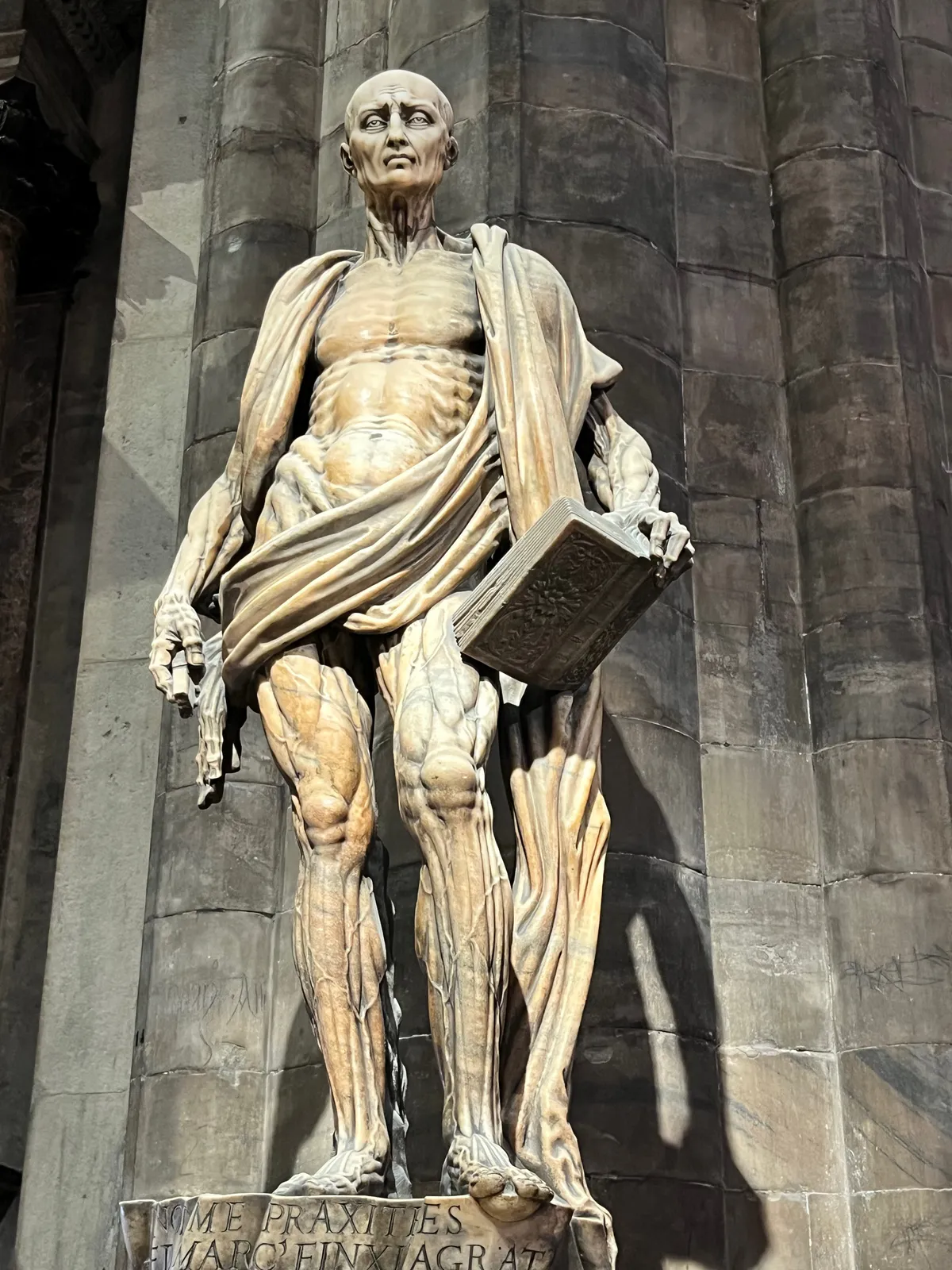
St Bartholomew Flayed
Marco d’Agrate
This haunting statue of Saint Bartholomew (1562) shows the martyr after being skinned alive, wearing his own flayed skin like a cloak. The anatomical precision reveals a Renaissance fascination with the human body, while the calm expression evokes spiritual endurance beyond physical torment.
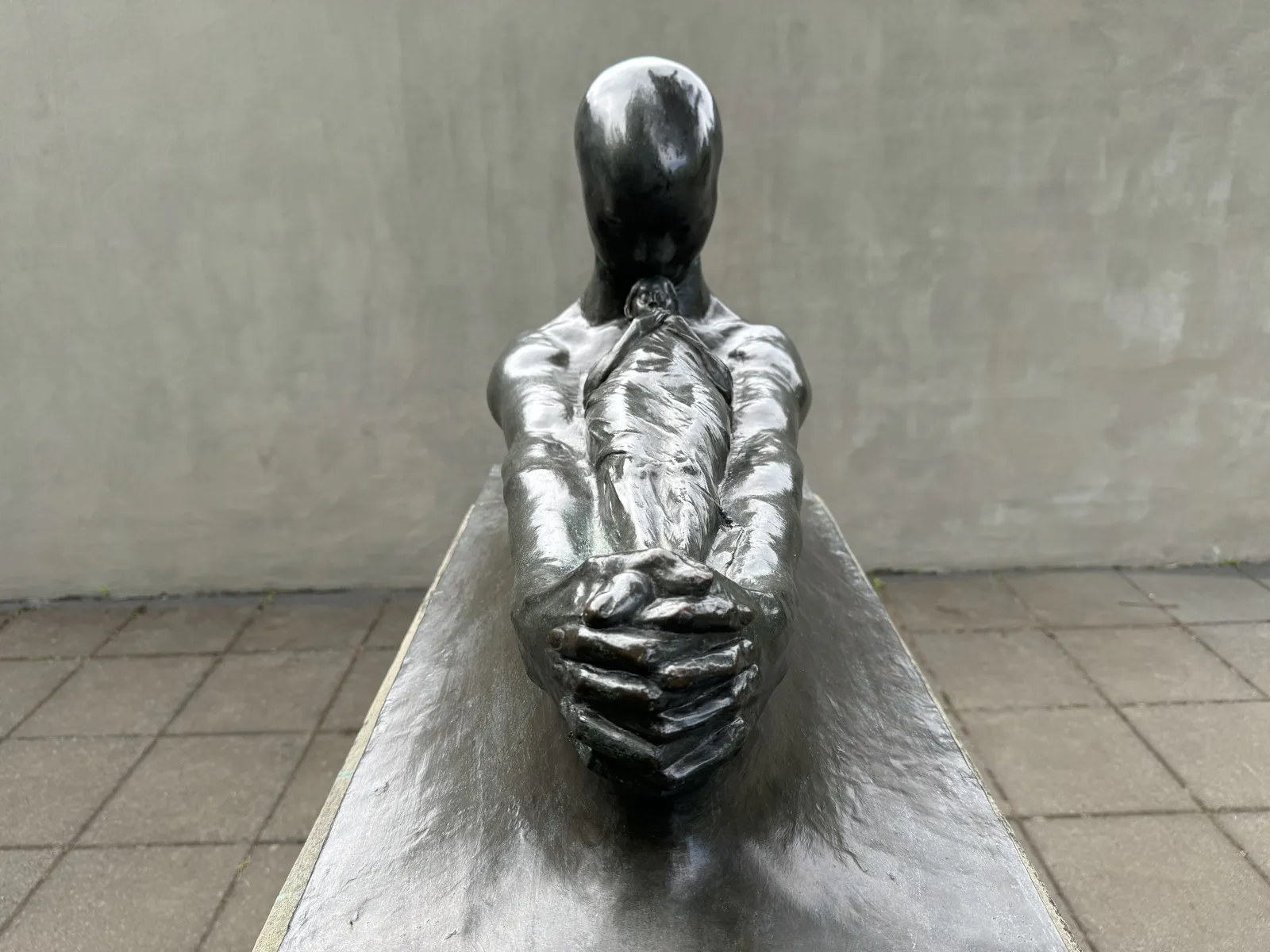
The Earth
Einar Jónsson
Jónsson’s bronze sculpture, The Earth (1904–1908), features a seated figure cradling a smaller form, reflecting his shift to Symbolism after 1903. It explores themes of life, death, and the cyclical nature of existence. Jónsson, a pioneering Icelandic sculptor, studied at the Royal Danish Academy of Fine Arts, significantly influencing the evolution of Icelandic art.
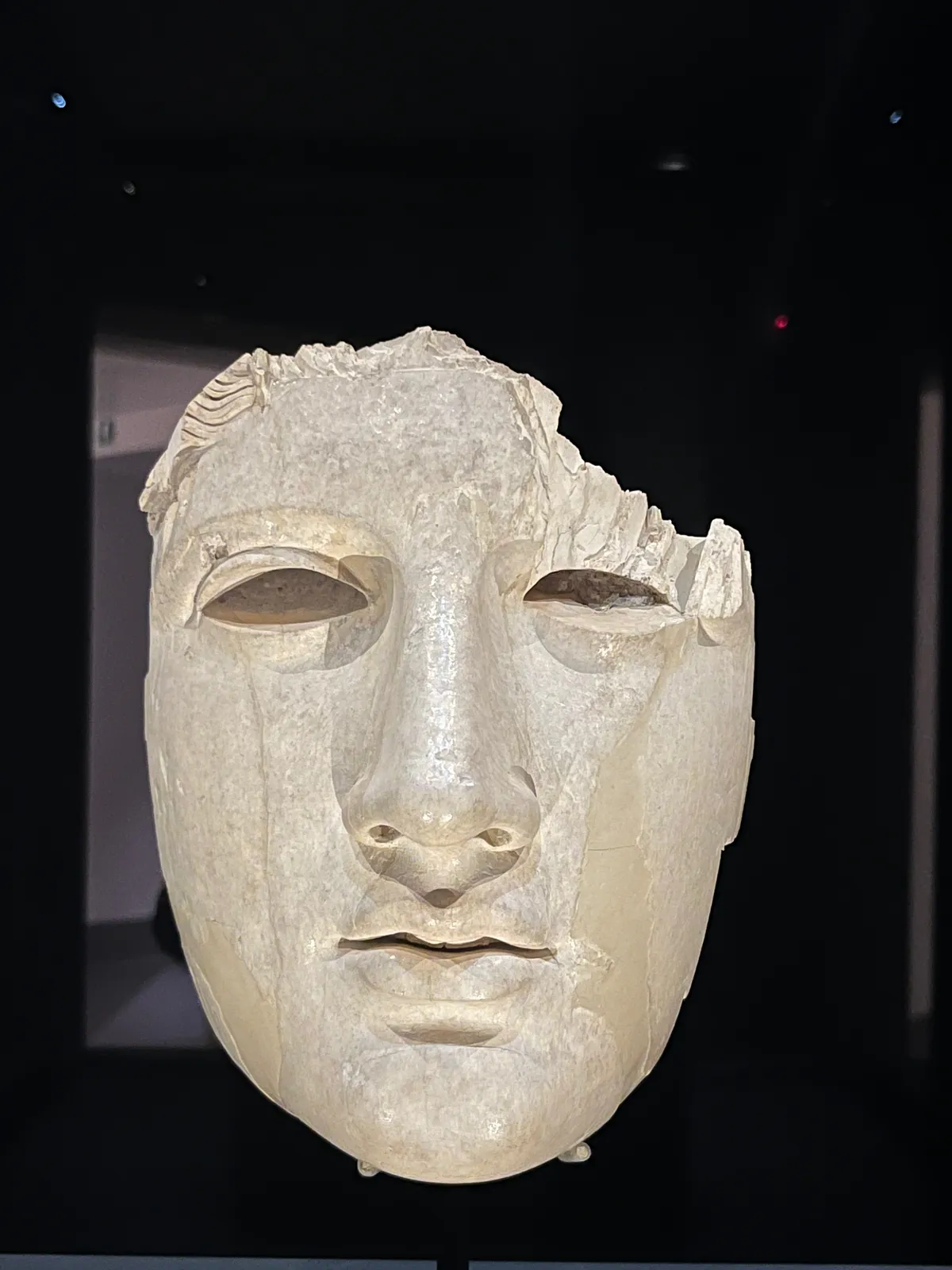
Apollo
Phidias
This ivory mask (5th c. BC) represents Apollo-Greek god of light, music, and prophecy-and once belonged to a chryselephantine statue (a prestigious cult image of ivory and gold). Attributed to Phidias, the master sculptor of classical Greece, it is an exceptionally rare survival of this luxury art form. Looted in 1995 and recovered in 2003, it now serves as both a rare survival of luxury cult sculpture and a reminder of ongoing threats to archaeological heritage.
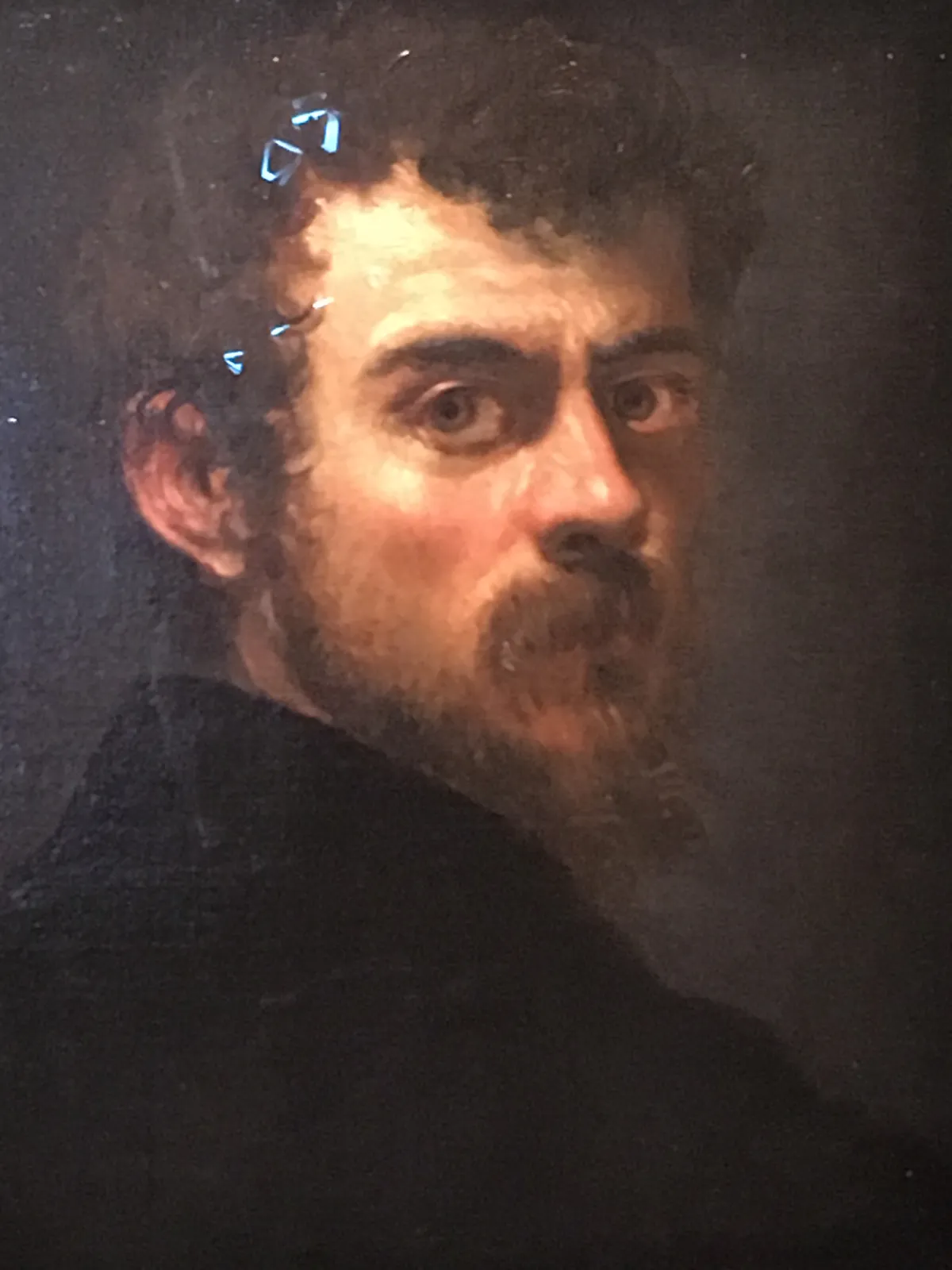
Self-Portrait
Tintoretto
This self-portrait (1546–48) by Tintoretto, a leading figure of the Venetian Renaissance, presents the artist with an intense, direct gaze that suggests introspection and resolve. The subdued palette and earthy tones create a solemn mood, yet the brisk, energetic handling of paint hints at the dramatic style that defined his larger works. Emphasizing inner character over setting, the portrait later entered the Orleans Collection and was acquired for Marie Antoinette in 1785.
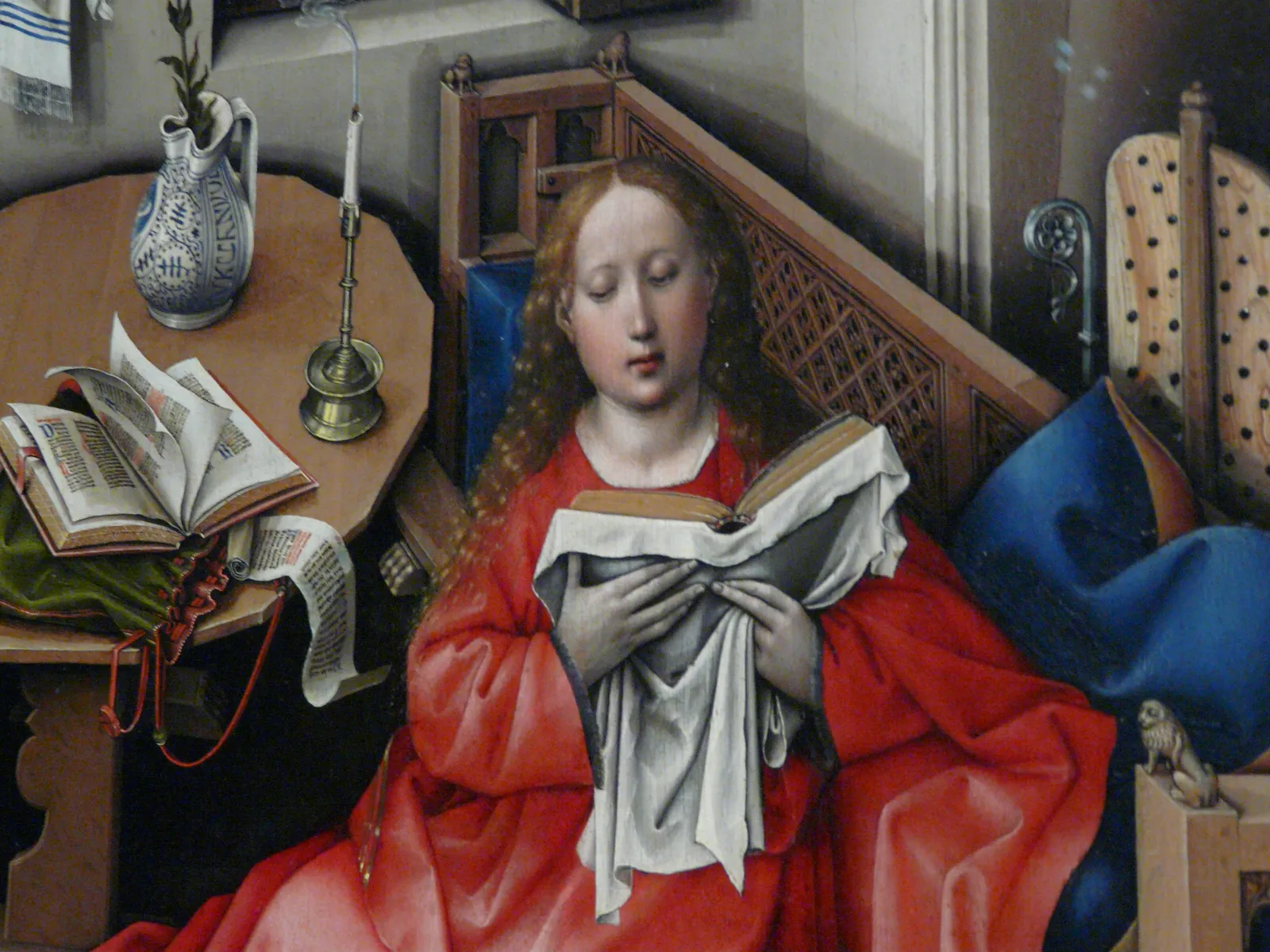
Mérode Altarpiece Central Panel
Robert Campin
This panel (c.1425–1428) shows Mary reading as Gabriel arrives. Domestic details carry layered meaning: the open book signals devotion, the lily purity, and the candle the Incarnation. The water jug with a white cloth evokes Mary’s virginity, while the enclosed garden glimpsed outside recalls her chastity. Named after later owners, the Mérode family, the work unites divine mystery with Flemish household realism.
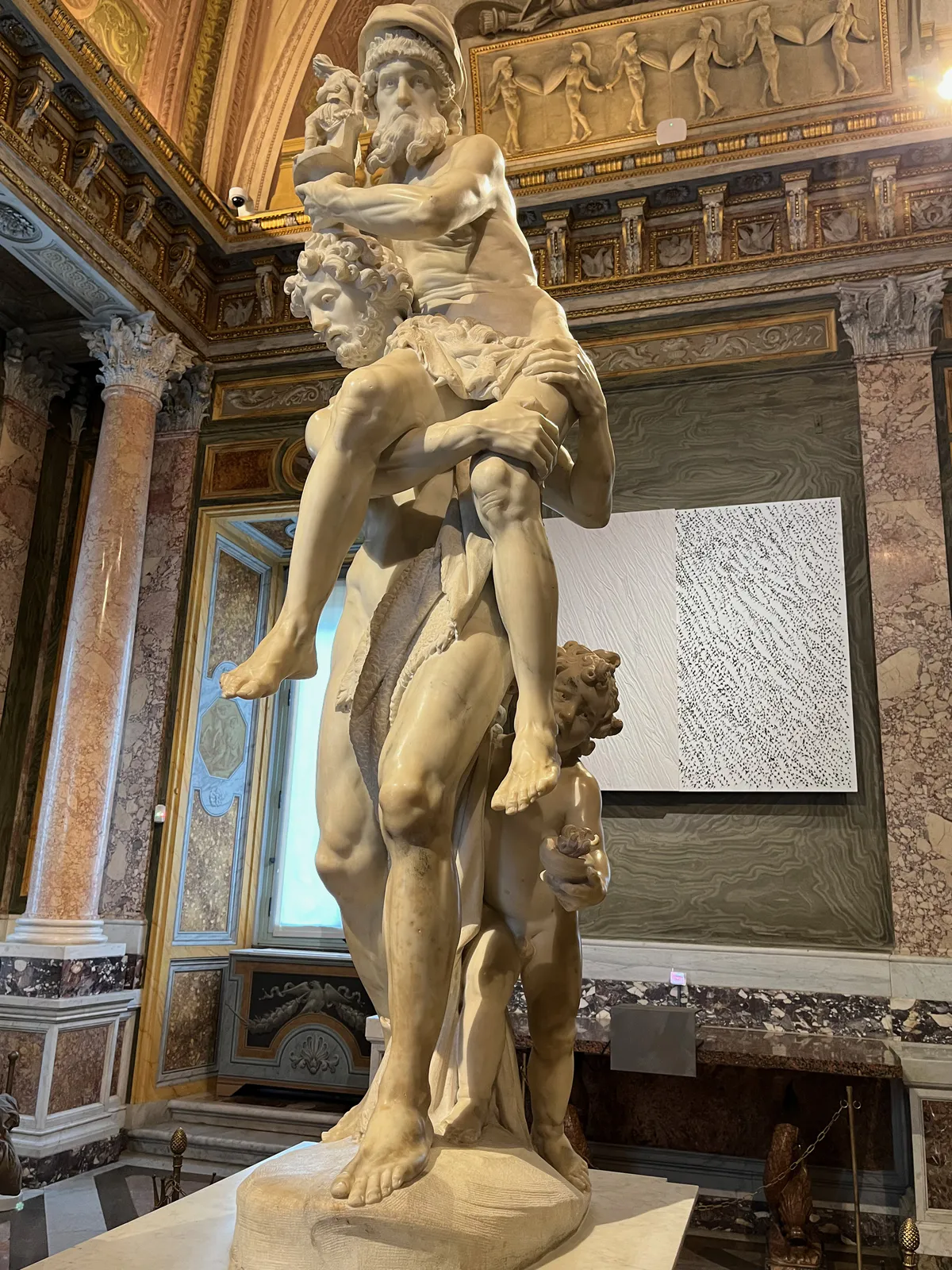
Aeneas, Anchises, and Ascanius
Bernini
This early masterpiece (1618–19) shows Aeneas carrying his father Anchises and leading his son Ascanius as they flee Troy. Anchises holds the Penates (household gods safeguarding family and hearth), while Ascanius carries a flame, symbol of Rome’s divine lineage. Bernini unites filial duty, piety, and sacrifice with striking youthful vigor.
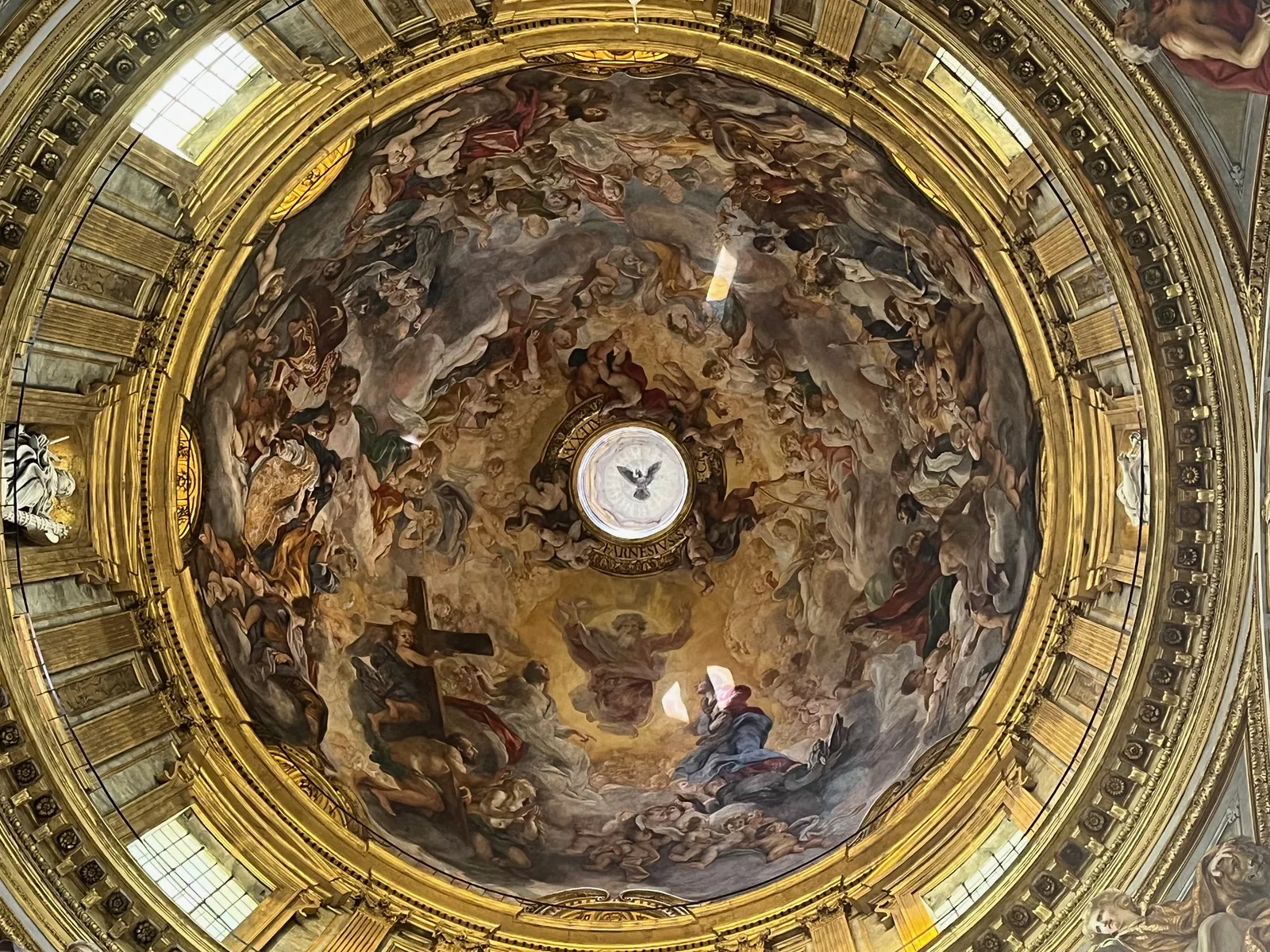
The Glory of the Holy Spirit
Giovanni Battista Gaulli
This radiant fresco (c. 1679) fills the dome with concentric rings of clouds, gilded ribs, and crowded figures. At the center, the Holy Spirit appears as a white dove in a glowing medallion, encircled by saints and angels swept upward in swirling light. The painted architecture merges with the real cornice, a Baroque illusion that makes the vault seem to open into a realm of revelation.
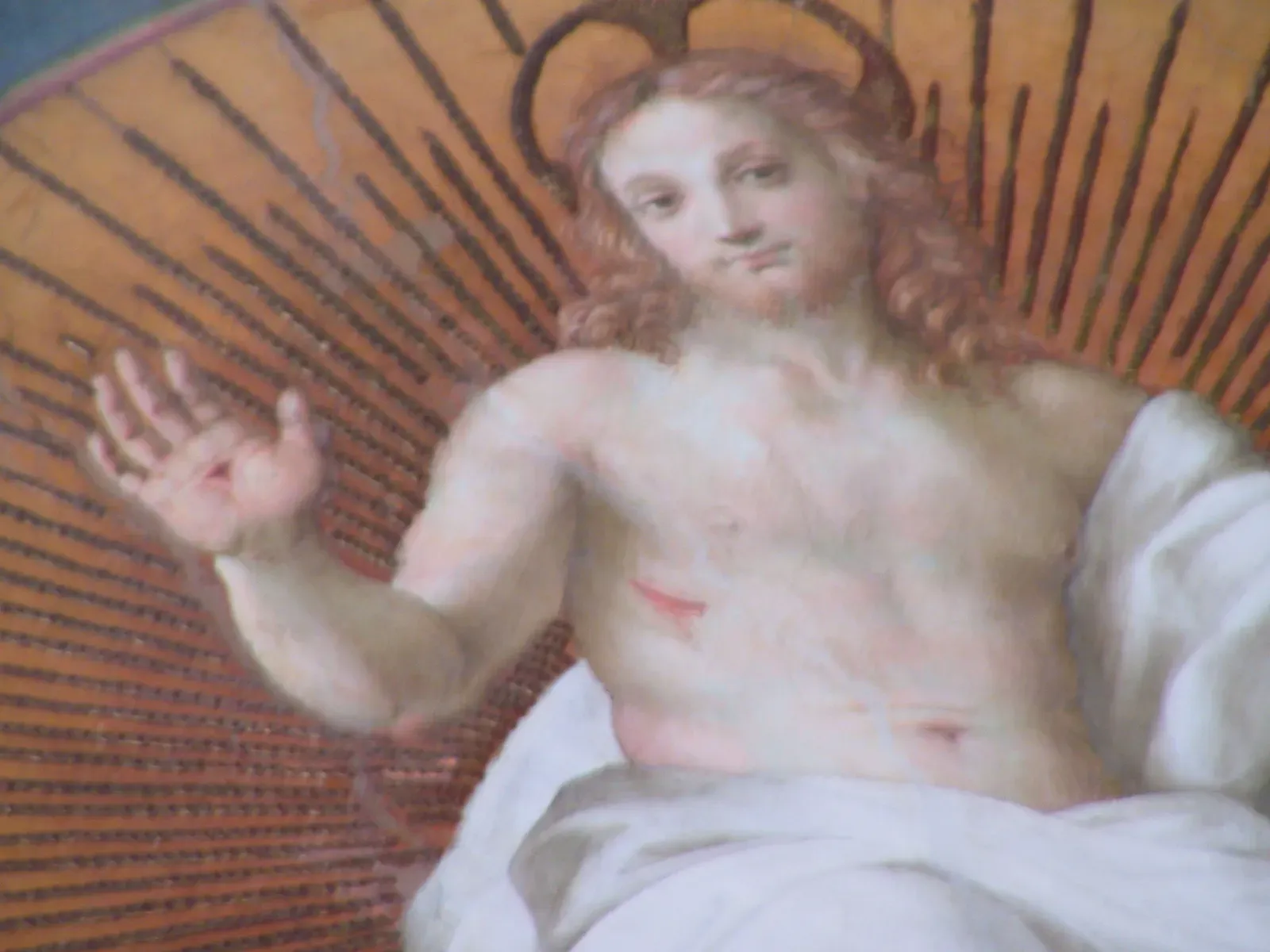
Christ in Glory (detail)
Raphael
The radiant figure of the risen Christ (1508–10) crowns the celestial register of The Disputation of the Sacrament. His raised hand and visible wounds recall both his Passion and his role as judge at the end of time. Encircled by golden rays, he visually affirms the doctrine of the Eucharist as the enduring, real presence of Christ.
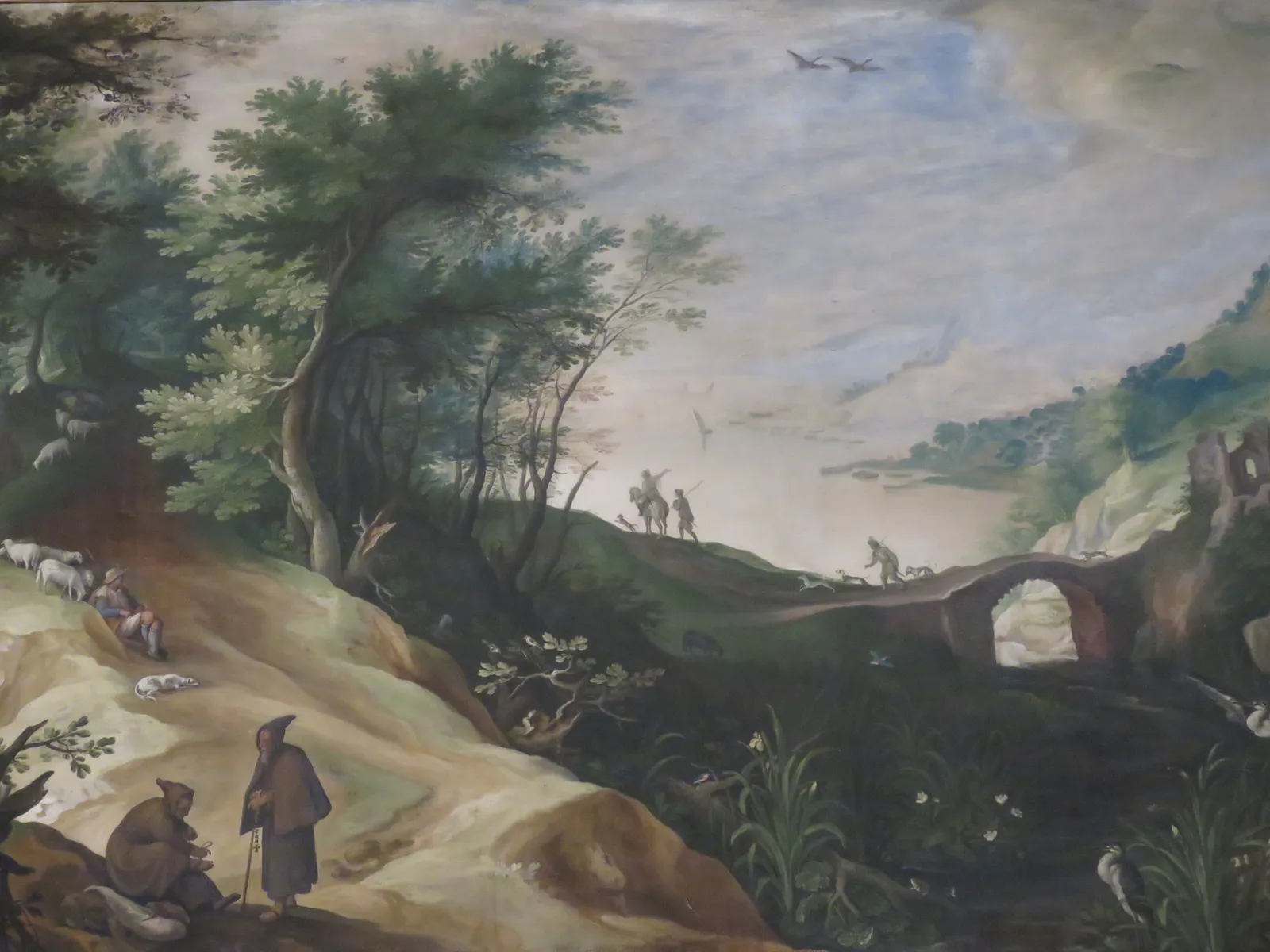
Landscape with Hermits
Paul Bril
This landscape (c. 1600) shows monks gathered in a wooded clearing beneath a broad, luminous sky. Their small figures sit or stand along a path that opens toward distant hills. Such scenes appeared in early Baroque painting, especially in northern regions where sacred retreat was a common theme. The composition indicates how artists linked hermitic life with the ordered quiet of nature.
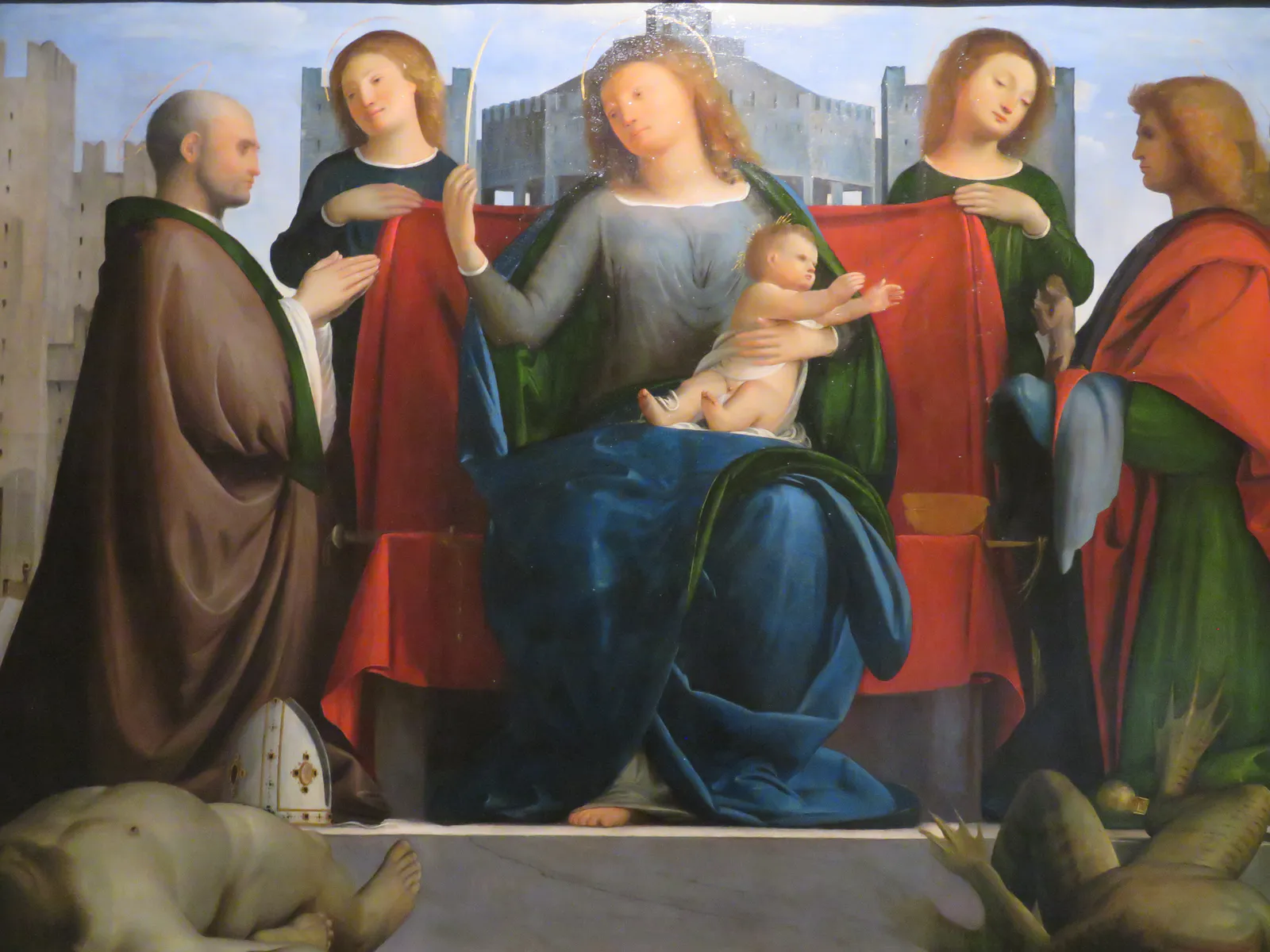
Madonna of the Towers
Bramantino
This tempera and oil painting (1515–20) presents the Madonna and Child enthroned between Saint Ambrose and Saint Michael. Set before fortified towers symbolizing Marian protection, the composition reflects Leonardo’s influence in its symmetry and restraint. Below, a toad representing the Devil lies defeated, underscoring the Virgin’s triumph over evil.
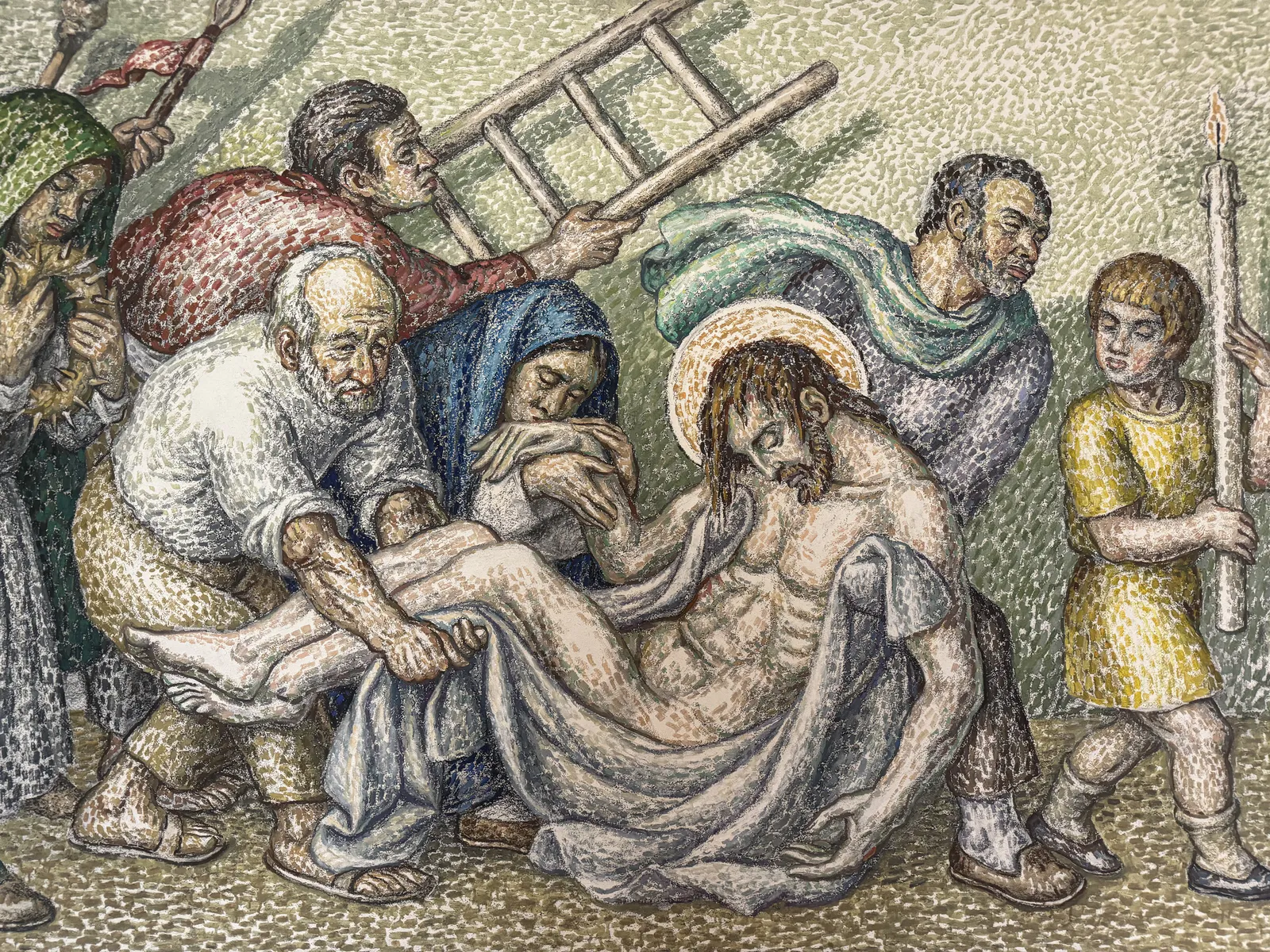
Descent from the Cross
Luis Alberto Acuña
Acuña (mid-1950s) renders the moment of Christ’s body being lowered from the cross with emotional gravity and communal sorrow. The composition emphasizes solidarity in grief, surrounding Christ with figures of all ages and backgrounds, reinforcing the universality of human suffering and compassion.
“When the path is beautiful, do not ask where it leads.” — Zen proverb
Welcome to my travel photography!
“When the path is beautiful, do not ask where it leads.” — Zen proverb
Welcome to my travel photography!
For as long as I can remember, my path has been one of discovery—seeking beauty, timelessness, and connection in every corner of the world. It has also been a journey of deep learning and understanding. I’ve been an avid traveler (or perhaps a travel addict?) for most of my life. My love for travel began long before I ever left home: as a child, I drew a fantasy map of my grandparents’ apartment and “traveled” through it with my cousin Sonya, imagining adventures in every corner. Nearly 90 countries and countless moments of awe later, I’m excited to share this journey with you.
Thanks to the tireless and ingenious programming of Diagilev, we’re now able to present about fifteen percent of the images I’ve accumulated over the years. More will be released in small batches depending on your interest. While the first release leans toward museum photography, later ones will include more nature, architecture, culture, and general travel experiences. If you’d like to receive email notifications about new releases, feel free to reach out—no commercial use, ever.
Throughout my travels, I’ve been drawn to two intertwined kinds of discovery. One is intellectual: learning why the world is the way it is. History became my guide, shaping my perspective and filling my camera roll with museums and old buildings. To me, history is not the past—it is the key to understanding the present and how the world became what it is. The other is emotional: seeking moments of elevation—spirituality, beauty, harmony—often found in nature, monasteries, and ancient sacred spaces. Together, these impulses shape my photography. It invites you to learn, admire, and soar—to rise above the mundane and see the world through a lens of curiosity and wonder.
Much of my later travel became possible thanks to my job with Delta Air Lines, but the wanderlust began years earlier. By the time I joined the industry, I had already visited over 35 countries and lived in several—largely thanks to a backpacking journey around the world with Luis León, whose face appears in many early photos. I grew up in Ufa in the USSR, and since leaving it I have lived, studied, and worked in Latvia, the United States, France, South Korea, Canada, Spain, Italy, Brazil, Japan, and Colombia.
A life of near-constant movement may seem a little crazy, but it has deepened my understanding of the world and produced the photography you are about to see. Over the years, my style has evolved—more intentional, more refined—yet its core remains the same: a search for understanding, timeless beauty, and a connection to those who walked this earth long before us.
I hope these photos stir something in your soul, just as they did in mine. I’d love to hear from you—whether reactions, suggestions, corrections, or a request to be added to the email list for new releases (no commercial use, I promise). You can learn more about my travels here, and my academic life here.
Enjoy our shared journey!