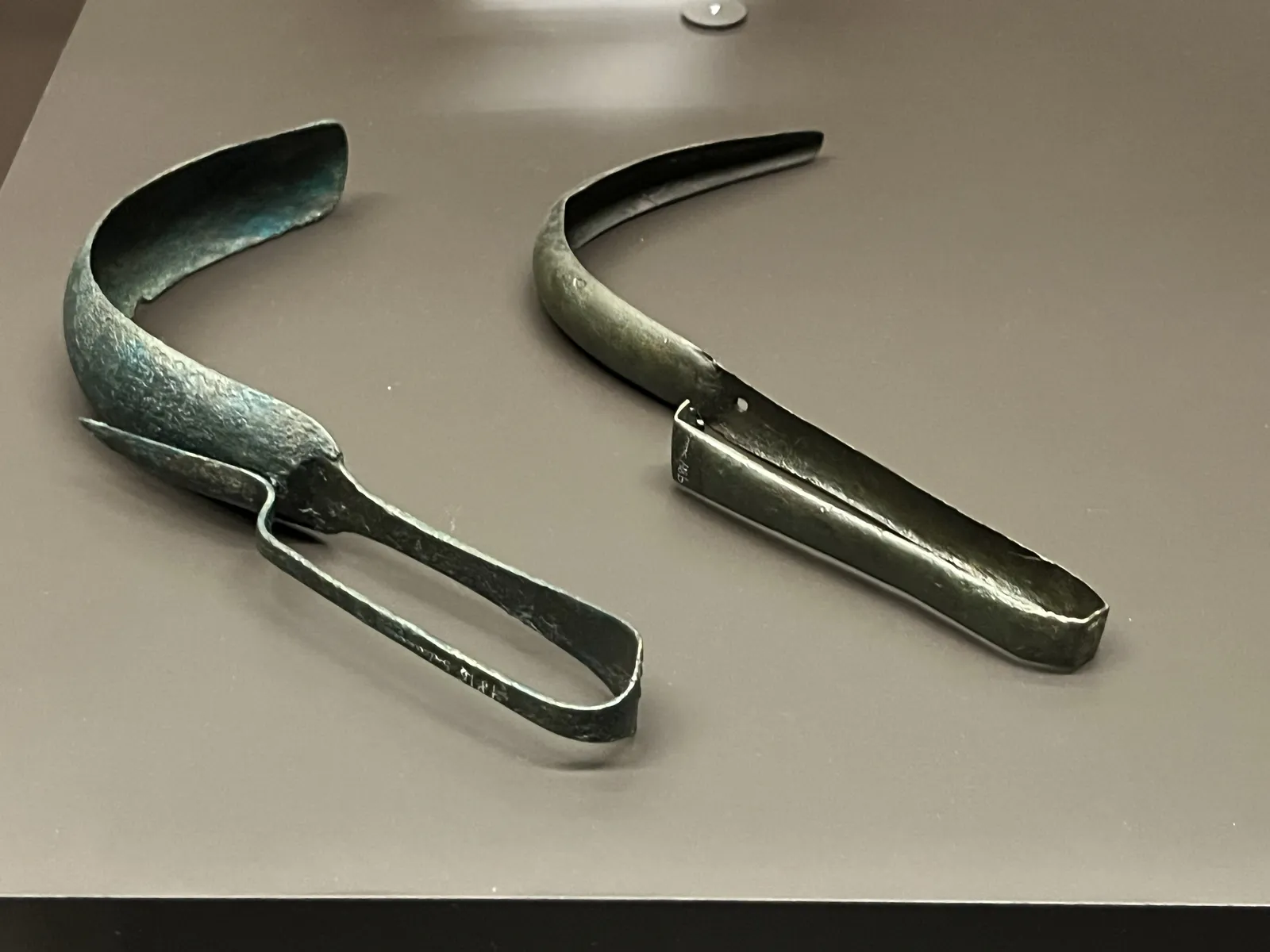
Ancient Greek Bronze Strigiles
Symposion: The Male Banquet in Ancient Greek Society
Symposion: The Male Banquet
Social life among Greek men centered on the symposion, the drinking party that followed a shared meal. As the main collective leisure space for citizens of the same class, it combined pleasure, friendship, religion, and politics. After dinner, a first cup of scented wine was dedicated to Dionysos, god of the vine, and then an evening of songs, poetry, and conversations on philosophy and public affairs could last until dawn. The banquet was often enlivened by hetairai (courtesans), who played an important role in male entertainment. As the night wore on and the effects of wine increased, symposia frequently slid into excess, revealing the more unruly side of convivial culture.
Social life among Greek men centered on the symposion, the drinking party that followed a shared meal. As the main collective leisure space for citizens of the same class, it combined pleasure, friendship, religion, and politics. After dinner, a first cup of scented wine was dedicated to Dionysos, god of the vine, and then an evening of songs, poetry, and conversations on philosophy and public affairs could last until dawn. The banquet was often enlivened by hetairai (courtesans), who played an important role in male entertainment. As the night wore on and the effects of wine increased, symposia frequently slid into excess, revealing the more unruly side of convivial culture.
Greece and the Birth of the Western Individual
Greece in History
Greece was the protagonist of a decisive period in the history of Western civilisation. One of its defining traits was the Greeks’ unique concept of the individual.
From the entrenched aristocratic society of Sparta to the first democracy forged in Athens, Greek history was shaped by the values of the individual. The Greek male became the protagonist of social, political and cultural life.
Competitiveness and self-improvement were the twin pillars of excellence and justified the triumph of the finest. Reason and critical thought broke with tradition, and the spirit of community and cooperation managed—for a time—to create a society of justice and equality.
Macedonian imperialism, the Hellenistic kingdoms and the Roman conquest later reinstated the predominance of the state over the individual. The Greek legacy took root in the history of the West and became part of our cultural heritage.
Greece was the protagonist of a decisive period in the history of Western civilisation. One of its defining traits was the Greeks’ unique concept of the individual.
From the entrenched aristocratic society of Sparta to the first democracy forged in Athens, Greek history was shaped by the values of the individual. The Greek male became the protagonist of social, political and cultural life.
Competitiveness and self-improvement were the twin pillars of excellence and justified the triumph of the finest. Reason and critical thought broke with tradition, and the spirit of community and cooperation managed—for a time—to create a society of justice and equality.
Macedonian imperialism, the Hellenistic kingdoms and the Roman conquest later reinstated the predominance of the state over the individual. The Greek legacy took root in the history of the West and became part of our cultural heritage.
The Gymnasium in Aristophanes: An Ideal of Youthful Masculinity
The Gymnasium in Aristophanes
In The Clouds, Aristophanes presents the gymnasium as the proper place for youths to grow “sleek and blooming,” not gossiping in the marketplace but running beneath sacred olives with companions, crowned with green reeds and carefree. If they follow this life, he promises, they will have a strong chest, shining skin, broad shoulders, a “little tongue,” a large bottom, and a small penis—an ideal of modest, disciplined masculinity.
In The Clouds, Aristophanes presents the gymnasium as the proper place for youths to grow “sleek and blooming,” not gossiping in the marketplace but running beneath sacred olives with companions, crowned with green reeds and carefree. If they follow this life, he promises, they will have a strong chest, shining skin, broad shoulders, a “little tongue,” a large bottom, and a small penis—an ideal of modest, disciplined masculinity.
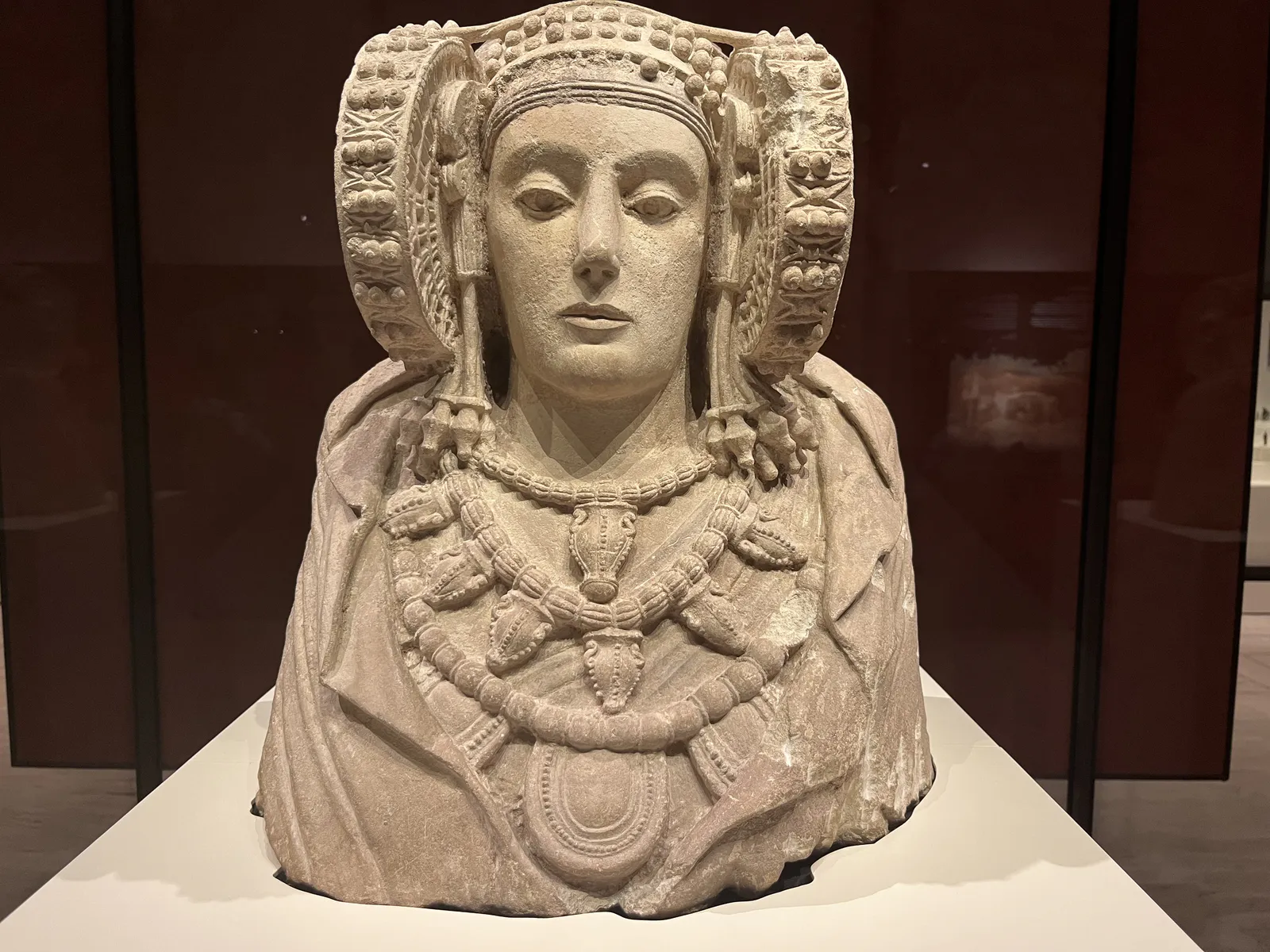
Lady of Elche
Greece and the Birth of the Western Individual
Greece in Western History
Greece played a decisive role in Western history through its distinctive concept of the individual. From Sparta’s enduring aristocratic order to the first democracy in Athens, Greek society was shaped by values that placed the free male citizen at the center of social, political, and cultural life. Competitiveness and self-improvement defined excellence and justified the success of the “best,” while reason and critical thought challenged tradition. For a time, a strong communal spirit fostered ideals of justice and equality. Later, Macedonian imperialism, the Hellenistic kingdoms, and Roman conquest reasserted the predominance of the state over the individual. Even so, the Greek legacy—its ideas of citizenship, critical inquiry, and personal excellence—took root in Western civilization and remains part of our cultural foundations.
Greece played a decisive role in Western history through its distinctive concept of the individual. From Sparta’s enduring aristocratic order to the first democracy in Athens, Greek society was shaped by values that placed the free male citizen at the center of social, political, and cultural life. Competitiveness and self-improvement defined excellence and justified the success of the “best,” while reason and critical thought challenged tradition. For a time, a strong communal spirit fostered ideals of justice and equality. Later, Macedonian imperialism, the Hellenistic kingdoms, and Roman conquest reasserted the predominance of the state over the individual. Even so, the Greek legacy—its ideas of citizenship, critical inquiry, and personal excellence—took root in Western civilization and remains part of our cultural foundations.
Athletic Gear and the Ideal Nude Body in Ancient Greece
Athletic Gear and the Nude Body
Greek athletes trained completely naked. The young, healthy male body in its physical prime was seen as the very image of beauty, and the nude (gymnos in Greek) was not something to be concealed but displayed and celebrated. A perfectly proportioned body was taken as visible confirmation of a man’s virtue and self-control.
Standard athletic equipment included oil aryballoi, sponges, strigils, discuses, and halteres (hand weights used to gain momentum in the long jump. Before training, young men rubbed their bodies with oil and softened the ground with a pick. After exercise, they scraped the dusty, sweaty oil from their skin using a curved bronze strigil. This careful attention to the body—oiling, training, and cleansing—expressed both aesthetic ideals and civic values.
Greek athletes trained completely naked. The young, healthy male body in its physical prime was seen as the very image of beauty, and the nude (gymnos in Greek) was not something to be concealed but displayed and celebrated. A perfectly proportioned body was taken as visible confirmation of a man’s virtue and self-control.
Standard athletic equipment included oil aryballoi, sponges, strigils, discuses, and halteres (hand weights used to gain momentum in the long jump. Before training, young men rubbed their bodies with oil and softened the ground with a pick. After exercise, they scraped the dusty, sweaty oil from their skin using a curved bronze strigil. This careful attention to the body—oiling, training, and cleansing—expressed both aesthetic ideals and civic values.
Athletes, Equipment, and the Ideal Naked Body in Greece
Athletes, Equipment, and the Naked Body
Greek athletes trained nude in the gymnasium, where the youthful, healthy male body in its prime was seen as the very image of beauty. The naked body (gymnos in Greek) was not hidden but displayed and praised; a perfected physique was taken as proof of male virtue. Their basic equipment included oil flasks, sponges, strigils, discuses, and halteres (weights used to gain momentum in the long jump). Before exercise, young men rubbed oil over their bodies and softened the ground with picks. After training, they scraped off the oil mixed with dust and sweat using a curved bronze strigil.
Greek athletes trained nude in the gymnasium, where the youthful, healthy male body in its prime was seen as the very image of beauty. The naked body (gymnos in Greek) was not hidden but displayed and praised; a perfected physique was taken as proof of male virtue. Their basic equipment included oil flasks, sponges, strigils, discuses, and halteres (weights used to gain momentum in the long jump). Before exercise, young men rubbed oil over their bodies and softened the ground with picks. After training, they scraped off the oil mixed with dust and sweat using a curved bronze strigil.
Male Identity and Virtue in the Ancient World
Men
The male defined his identity through forms of behaviour that were regarded as virtues. He was supposed to be aggressive, competitive, self-disciplined, sociable and respectful of the gods. In sum, he was to be excellent. The immortals—the mirror of male conduct—embodied these virtues in their highest form of expression.
The male defined his identity through forms of behaviour that were regarded as virtues. He was supposed to be aggressive, competitive, self-disciplined, sociable and respectful of the gods. In sum, he was to be excellent. The immortals—the mirror of male conduct—embodied these virtues in their highest form of expression.
Gymnasion: Education, the Male Body, and Sexuality
Gymnasion: Education, Body, and Sexuality
Teaching young men to value and strive for excellence was considered the responsibility of the city. A well-rounded education combined lessons in music and poetry at school with physical training and competition in the gymnasium and the palaestra, so as to acquire the elegance that characterised freeborn men. The ideal Greek man was expected to be strong and beautiful in both mind and body.
The gymnasium and the palaestra were communal educational spaces with crucial ethical and political functions: they helped shape citizens and served as places where adolescent and adult men met. In this context, homoerotic relationships between an older citizen (the erastēs, “lover”) and an adolescent (erōmenos, “beloved”) were not only accepted but regarded as an important part of education. The older partner acted as mentor and moral guide. In keeping with broader Greek sexual norms, roles were clearly defined: the adult citizen was dominant, while the youth—uniquely in this phase of his life—occupied a more passive position. In a patriarchal and unequal society, the emotional bonds between erastēs and erōmenos were often idealised as the closest approximation to a relationship between equals, as reflected in the dialogues of Plato.
A famous passage from Aristophanes’ comedy The Clouds evokes the gymnasium as the proper environment for the young citizen, contrasting it with idle chatter in the marketplace. The young man is urged to spend his time training “sleek and blooming… running beneath the sacred olives along with some young fellows, crowned with green reeds,” promising a strong chest, shining skin and broad shoulders. Comic exaggeration aside, the passage underlines how physical discipline, modest speech and controlled desire were seen as marks of the well-educated male citizen.
Teaching young men to value and strive for excellence was considered the responsibility of the city. A well-rounded education combined lessons in music and poetry at school with physical training and competition in the gymnasium and the palaestra, so as to acquire the elegance that characterised freeborn men. The ideal Greek man was expected to be strong and beautiful in both mind and body.
The gymnasium and the palaestra were communal educational spaces with crucial ethical and political functions: they helped shape citizens and served as places where adolescent and adult men met. In this context, homoerotic relationships between an older citizen (the erastēs, “lover”) and an adolescent (erōmenos, “beloved”) were not only accepted but regarded as an important part of education. The older partner acted as mentor and moral guide. In keeping with broader Greek sexual norms, roles were clearly defined: the adult citizen was dominant, while the youth—uniquely in this phase of his life—occupied a more passive position. In a patriarchal and unequal society, the emotional bonds between erastēs and erōmenos were often idealised as the closest approximation to a relationship between equals, as reflected in the dialogues of Plato.
A famous passage from Aristophanes’ comedy The Clouds evokes the gymnasium as the proper environment for the young citizen, contrasting it with idle chatter in the marketplace. The young man is urged to spend his time training “sleek and blooming… running beneath the sacred olives along with some young fellows, crowned with green reeds,” promising a strong chest, shining skin and broad shoulders. Comic exaggeration aside, the passage underlines how physical discipline, modest speech and controlled desire were seen as marks of the well-educated male citizen.
Women as a Social Counter-Model in a Male-Ordered World
Women
The female world represented a threat, something with the potential to undermine the order of men. Women were regarded as irrational, deranged creatures who allowed themselves to be carried away by their impulses and emotions and had to be socialised through education and marriage. Only men were equipped to inculcate the values of domesticated femininity. Women were the social counter-model.
The female world represented a threat, something with the potential to undermine the order of men. Women were regarded as irrational, deranged creatures who allowed themselves to be carried away by their impulses and emotions and had to be socialised through education and marriage. Only men were equipped to inculcate the values of domesticated femininity. Women were the social counter-model.
Symposion: Greek Banquets, Pleasure and Politics
Symposion: The Banquet
Social interaction between Greek men also centred on drinking parties known as symposia. As the main collective male leisure activity, the symposium allowed members of the same social class to share friendship, pleasures, and intellectual interests. It combined recreation, ritual and politics in a single setting.
After dinner, the first cup of scented wine was passed around and the drinkers toasted Dionysos, god of the vine and of wine. Only then did the celebration of conviviality begin. Songs, recitations of poetry and discussions of philosophy and politics could continue long into the night. The presence of hetairai (courtesans) formed another important aspect of male entertainment, and in the small hours, when the party broke up, the streets often bore witness to the excesses that were the other side of wine-induced euphoria.
Together, the gymnasion and the symposion framed the social world of many Greek male citizens: one shaped their bodies and civic virtues, the other their conversation, pleasure and bonds of loyalty.
Social interaction between Greek men also centred on drinking parties known as symposia. As the main collective male leisure activity, the symposium allowed members of the same social class to share friendship, pleasures, and intellectual interests. It combined recreation, ritual and politics in a single setting.
After dinner, the first cup of scented wine was passed around and the drinkers toasted Dionysos, god of the vine and of wine. Only then did the celebration of conviviality begin. Songs, recitations of poetry and discussions of philosophy and politics could continue long into the night. The presence of hetairai (courtesans) formed another important aspect of male entertainment, and in the small hours, when the party broke up, the streets often bore witness to the excesses that were the other side of wine-induced euphoria.
Together, the gymnasion and the symposion framed the social world of many Greek male citizens: one shaped their bodies and civic virtues, the other their conversation, pleasure and bonds of loyalty.
A Cosmopolitan Hellenistic World of Art and Ideas
A Cosmopolitan World
From the fourth century BC until the Roman conquest in 150 BC, Greece’s political and cultural influence spread across the entire known world. Alexander the Great conquered Persia, Egypt, Babylon and India. Individualistic, multicultural Hellenism was born. A new concept of citizenship was embraced by both East and West: the universal Hellas, an explosion of creativity, self-criticism, science and the quest for knowledge.
Under this influence, the Greek cities of southern Italy became important artistic and commercial hubs whose products were exported to the Western Mediterranean. Images of Greek myths, the feminine world, love and death adorned their pottery vases, expressing new aesthetic preoccupations, individuality, emotions and sensuality, and the universal and the trivial. It was a contradictory, cosmopolitan world.
From the fourth century BC until the Roman conquest in 150 BC, Greece’s political and cultural influence spread across the entire known world. Alexander the Great conquered Persia, Egypt, Babylon and India. Individualistic, multicultural Hellenism was born. A new concept of citizenship was embraced by both East and West: the universal Hellas, an explosion of creativity, self-criticism, science and the quest for knowledge.
Under this influence, the Greek cities of southern Italy became important artistic and commercial hubs whose products were exported to the Western Mediterranean. Images of Greek myths, the feminine world, love and death adorned their pottery vases, expressing new aesthetic preoccupations, individuality, emotions and sensuality, and the universal and the trivial. It was a contradictory, cosmopolitan world.
A Cosmopolitan Hellenistic World of Art and Ideas
A Cosmopolitan Hellenistic World
From the 4th c. BC until the Roman conquest in 150 BC, Greek political and cultural influence spread widely. Alexander the Great’s conquests in Persia, Egypt, Babylon, and India created a multicultural Hellenistic world in which a more universal idea of Greek citizenship emerged, uniting East and West. This period saw intense creativity, self-criticism, scientific inquiry, and a passion for knowledge. Greek cities in southern Italy became major artistic and commercial centers whose products circulated across the western Mediterranean. Pottery decorated with myths, scenes of women’s lives, love, and death reflected new aesthetic concerns, emotional expression, sensuality, and the interplay of the universal and the everyday, capturing the contradictions of an increasingly cosmopolitan world.
From the 4th c. BC until the Roman conquest in 150 BC, Greek political and cultural influence spread widely. Alexander the Great’s conquests in Persia, Egypt, Babylon, and India created a multicultural Hellenistic world in which a more universal idea of Greek citizenship emerged, uniting East and West. This period saw intense creativity, self-criticism, scientific inquiry, and a passion for knowledge. Greek cities in southern Italy became major artistic and commercial centers whose products circulated across the western Mediterranean. Pottery decorated with myths, scenes of women’s lives, love, and death reflected new aesthetic concerns, emotional expression, sensuality, and the interplay of the universal and the everyday, capturing the contradictions of an increasingly cosmopolitan world.
Men, Women, and Education in Classical Greek Society
Men, Women, and Education in Classical Greece
In classical Greek thought, male identity was defined through virtues: aggression in battle, competitiveness, self-discipline, sociability, and piety toward the gods. The gods themselves were seen as the highest mirror of male conduct. By contrast, women were often portrayed as irrational and chaotic, governed by impulse and emotion. They were expected to be “civilized” through education and marriage, under male control, and became a kind of social counter-model that reinforced male dominance.
Education aimed to instill excellence in young men. School instruction in music and poetry was combined with physical training and competition in the gymnasion and palaestra to shape freeborn citizens who were strong and beautiful in body and mind. These communal spaces had crucial ethical and political functions and also served as meeting places between adolescents and adults. Homoerotic relationships formed part of this educational world, introducing youths into the collective male identity and marking the transition from puberty to adulthood.
In classical Greek thought, male identity was defined through virtues: aggression in battle, competitiveness, self-discipline, sociability, and piety toward the gods. The gods themselves were seen as the highest mirror of male conduct. By contrast, women were often portrayed as irrational and chaotic, governed by impulse and emotion. They were expected to be “civilized” through education and marriage, under male control, and became a kind of social counter-model that reinforced male dominance.
Education aimed to instill excellence in young men. School instruction in music and poetry was combined with physical training and competition in the gymnasion and palaestra to shape freeborn citizens who were strong and beautiful in body and mind. These communal spaces had crucial ethical and political functions and also served as meeting places between adolescents and adults. Homoerotic relationships formed part of this educational world, introducing youths into the collective male identity and marking the transition from puberty to adulthood.
Greek Male–Male Desire, Education, and Civic Ideals
Greek Male–Male Sexuality
In many Greek cities, certain erotic and emotional relationships between male citizens were not only accepted but common. They joined an adult citizen, the erastēs (lover), with an adolescent, the erōmenos (beloved). These bonds were considered a crucial part of civic education: the erastēs acted as mentor and guide, while the erōmenos temporarily adopted a more passive role—an exception within an otherwise highly patriarchal life. Greek sexuality relied on sharply defined roles: the adult citizen was dominant and active, the youth receptive. Yet in a deeply unequal society, the relationship between erastēs and erōmenos was often idealized as the closest approximation to a union of near equals, as reflected in Plato’s writings.
In many Greek cities, certain erotic and emotional relationships between male citizens were not only accepted but common. They joined an adult citizen, the erastēs (lover), with an adolescent, the erōmenos (beloved). These bonds were considered a crucial part of civic education: the erastēs acted as mentor and guide, while the erōmenos temporarily adopted a more passive role—an exception within an otherwise highly patriarchal life. Greek sexuality relied on sharply defined roles: the adult citizen was dominant and active, the youth receptive. Yet in a deeply unequal society, the relationship between erastēs and erōmenos was often idealized as the closest approximation to a union of near equals, as reflected in Plato’s writings.
National Archaeological Museum
The National Archaeological Museum invites visitors into the world of ancient Greece, showing how a civilisation built its identity around the ideal of the citizen. Through sculpture, pottery, everyday objects and inscriptions, the galleries trace the rise of the city-states, the birth of democracy and the central role of the male citizen in politics, religion and culture. Displays on education, the gymnasium and athletic competition reveal how physical beauty, discipline and excellence were cultivated as civic virtues.
At the same time, the museum explores the tensions and inequalities that underpinned this society. Sections on women, sexuality and the symposium illuminate domestic life, gender roles and the complex codes that governed desire and social interaction. The spread of Hellenic culture across the Mediterranean appears both creative and contradictory, giving context to Greece’s enduring legacy in Western thought and offering a nuanced portrait of a cosmopolitan ancient world.
At the same time, the museum explores the tensions and inequalities that underpinned this society. Sections on women, sexuality and the symposium illuminate domestic life, gender roles and the complex codes that governed desire and social interaction. The spread of Hellenic culture across the Mediterranean appears both creative and contradictory, giving context to Greece’s enduring legacy in Western thought and offering a nuanced portrait of a cosmopolitan ancient world.
Popular categories
Advertising space